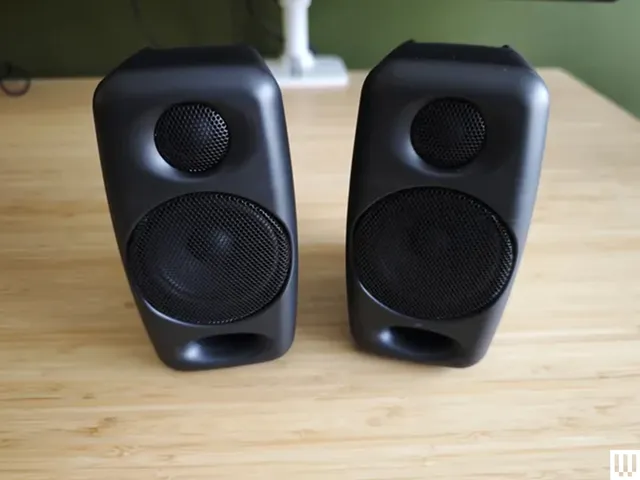
Looking for a great set of computer speakers that still sound awesome? You can grab a pair of the IK Multimedia iLoud Micro Monitor desktop speakers in either black or white from Amazon for just $250, a $100 discount from their usual price. They’re a perfect pick for aspiring music producers, audiophiles, or anyone who just wants a premium audio experience while scrolling YouTube videos.
IK Multimedia
iLoud Micro Monitor
One thing that both our computer speaker reviewer and audio expert agree on is that these speakers sound awesome, particularly for their size and power. Because they’re intended to work as studio monitors, they have a nice flat midrange that makes it easier to mix or balance, bold bass response, and detailed high-end for getting those little details dialed in. They sound great for just sitting back and listening to music or watching a movie, too, but anyone working on production audio or video might appreciate them more than your average PC gamer.
While they sport both RCA and 3.5-mm TRS inputs for your desktop connections, they also have Bluetooth in case you’d like to hook up your phone for some jams, or even a turntable that has its own phono preamp. The included stands point them up right at your face, and they’re tuned for near field listening, so they’re perfectly setup for sitting at your computer and getting audio work done. If you’ve got a more dedicated setup, there are 3/8-inch 16-threaded inserts on the bottom of each, so you can mount them to dedicated mic stands for even better positioning.
Advertisement
While the audio capabilities impressed us universally, there are some usability concerns for everyday users that might give you some pause. The onboard controls are all stashed around the back of the left speaker, so you may need to reach a bit depending on where you mount them. These do include a set of three equalizer switches, in case you need to really dial in the audio levels, which is a nice touch for desktop speakers that don’t usually include any kind of EQ.
If you can manage those concerns, we think you’ll be really impressed by the IK Multimedia iLoud Micro Monitors, and the $100 discount makes the deal even sweeter. Amazon has both colors, black and white, on sale for just $250, or you can check out our guides to computer speakers and standalone bookshelf speakers for other options.
Each spring, the global hi-fi industry makes its pilgrimage to the Chicago suburbs for AXPONA, and AXPONA 2026 is shaping up to be one of the busiest yet. The Windy City show has become the premier North American stage for new hi-fi product launches, drawing hundreds of exhibitors from around the world and filling the halls with everything from statement loudspeakers and cutting edge amplifiers to the latest digital streaming gear and personal audio.
This year’s event (April 10-12, 2026 at the Renaissance Schaumburg Hotel & Convention Center near Chicago, IL) will once again offer a maze of listening rooms, product debuts, and late night industry debates about whether vinyl really does sound better than streaming. World premieres, U.S. debuts, and technology showcases are expected across the Exhibit Hall, Ear Gear section, Experience Car Audio showcase, and dozens of hotel listening rooms.
The eCoustics team will be there in force. Six of us are heading to Chicago to cover the show from every angle with daily reporting, listening impressions, interviews, podcasts, and video coverage. If something new, strange, brilliant, or outrageously expensive appears at AXPONA 2026, we’ll be in the room listening to it. And probably arguing about it five minutes later.
New Hi-Fi Product Launches Expected at AXPONA 2026
While AXPONA is always a great place to reconnect with the industry and hear familiar systems pushed to their limits, the real draw is the steady stream of new hi-fi products making their debut. Manufacturers routinely use the Chicago show as the North American launchpad for new loudspeakers, amplifiers, DACs, and source components, knowing that thousands of enthusiasts, dealers, and journalists will be walking the halls looking for the next big thing.
Advertisement
Audio Note (UK)
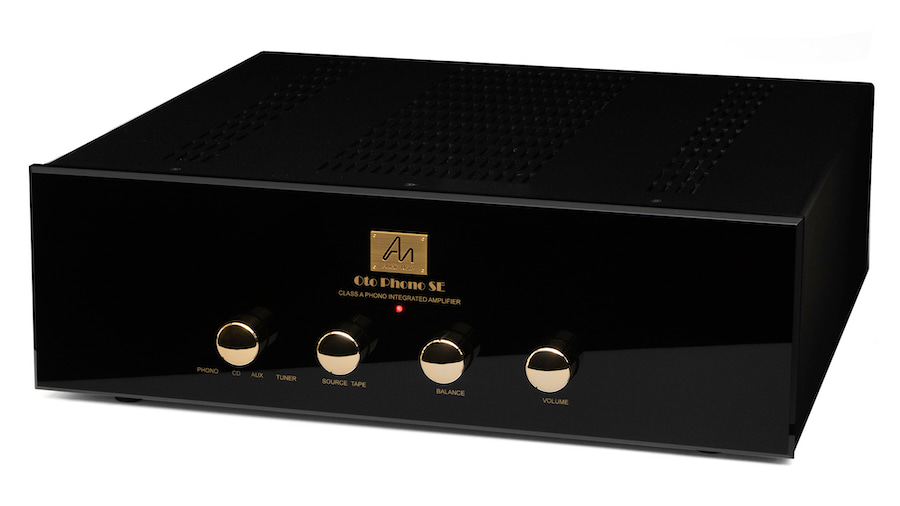
Audio Note (UK) will present the U.S. premiere of the latest version of its Oto integrated amplifier at AXPONA 2026. The Oto remains one of the company’s most recognizable tube integrated designs and continues Audio Note’s focus on minimalist circuits and traditional analog amplification. The new Oto SE 35 is available as of February 2026 starting at $5,950.
Location: Room 1403
AXISS Audio Distribution
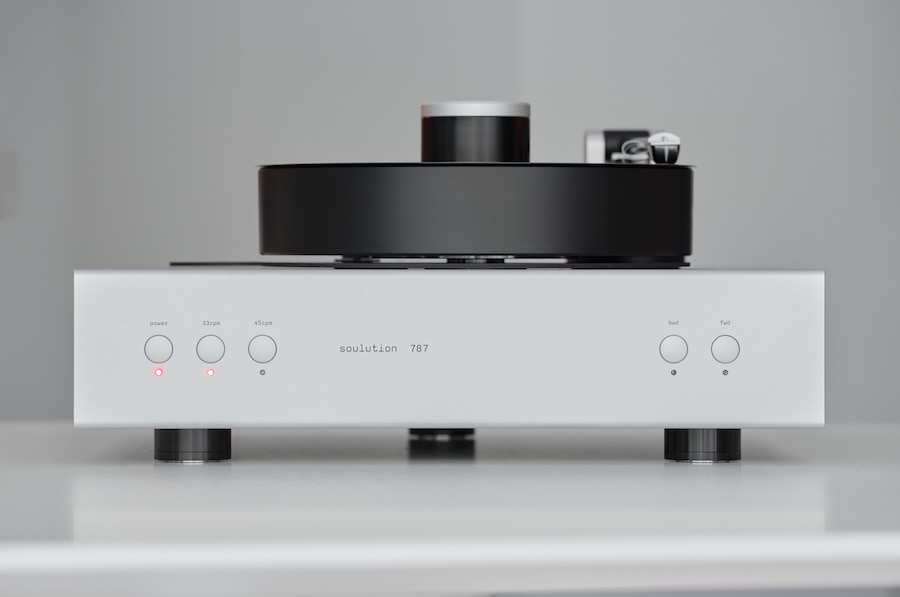
AXISS Audio Distribution will host two notable debuts. The first is the U.S. introduction of a new optical phono system from Reed, which includes a customized optical cartridge paired with a dedicated phono EQ stage and an external power supply designed specifically for optical signal conversion. AXISS will also present the North American debut of the Soulution 787 turntable, a reference level linear tracking design that uses a moving platter combined with a pivoted tonearm architecture. Pricing for both products has not been announced.
Location: Room 1128 and Aster Suite (16th Floor)
Decibel+
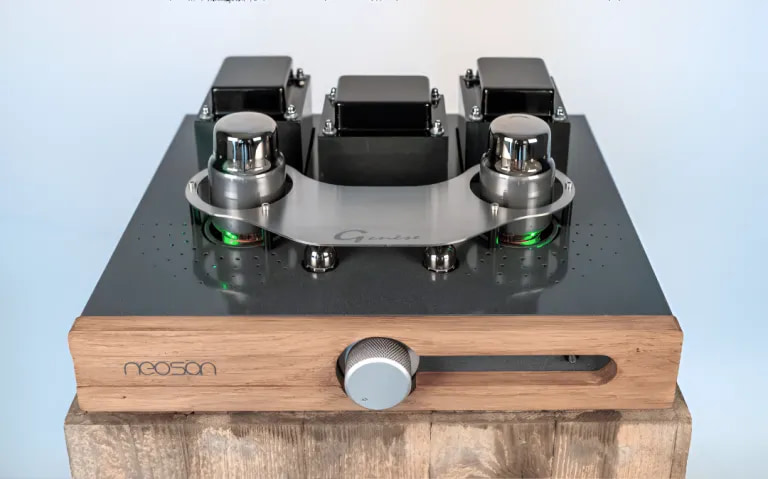
Decibel Plus will showcase several new components including the Neoson Genèse integrated amplifier ($7,885), the SoulNoteA-1 ver2 integrated amplifier, Atlantis Lab AT-16 and AT-21 loudspeakers, and the AudioByte SuperVOX DAC and SuperHUB streaming hub. The systems are aimed at building complete high performance systems available through the retailer’s online store. Pricing for the individual products varies by component and has not been fully confirmed ahead of the show.
Location: Room 1109
Dinaburg Technology
Dinaburg Technology will debut its C2S (Concentric Coplanar Stabilizer) driver architecture at AXPONA 2026. Demonstrations will include a 60 x 72 mm headphone transducer and a 6.5-inch loudspeaker driver built around the same architecture, which is designed to repurpose energy typically lost in traditional driver designs. Pricing and commercial product timelines have not yet been announced.
Advertisement
Advertisement. Scroll to continue reading.
Location: Ear Gear Booth 9425
Gato Audio & Copenhagen Loudspeaker Company
Gato Audio and Copenhagen Loudspeaker Company will introduce the CLC65 loudspeaker, described as the first commercially available three way loudspeaker built exclusively with Purifi drivers. The system is intended to demonstrate advanced driver integration and system coherence using Purifi’s driver technology. Pricing has not yet been announced.
Location: Room 731
Goldmund
Goldmund will present the Telos 8800 monoblock amplifiers, rated at 1,400 watts of Class AB power and priced at $790,000 per pair. The system will also include the Mimesis Reference preamplifier, priced at $159,000, both intended to drive reference level loudspeaker systems.
Location: Utopia Lounge
Advertisement
Jorma
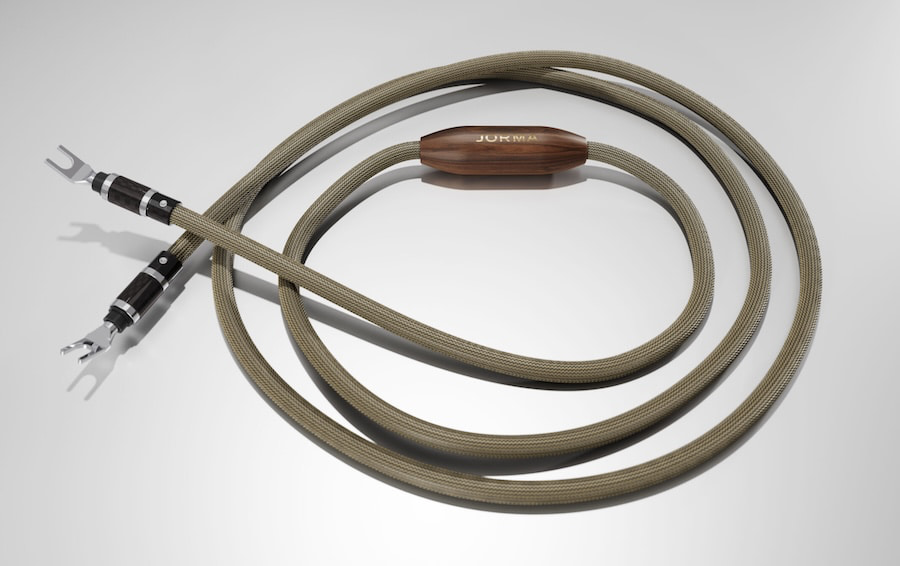
Jorma will introduce the Paragon flagship cable series, designed as the company’s highest level signal transmission product line. Pricing varies depending on cable type and configuration.
Location: Utopia Lounge
Luxman
Luxman will showcase the L100-C integrated amplifier, a pure Class-A design priced at $11,995, alongside the D100-C SACD/CD player and DAC, priced at $18,995.
Location: Prosperity Room
Magico
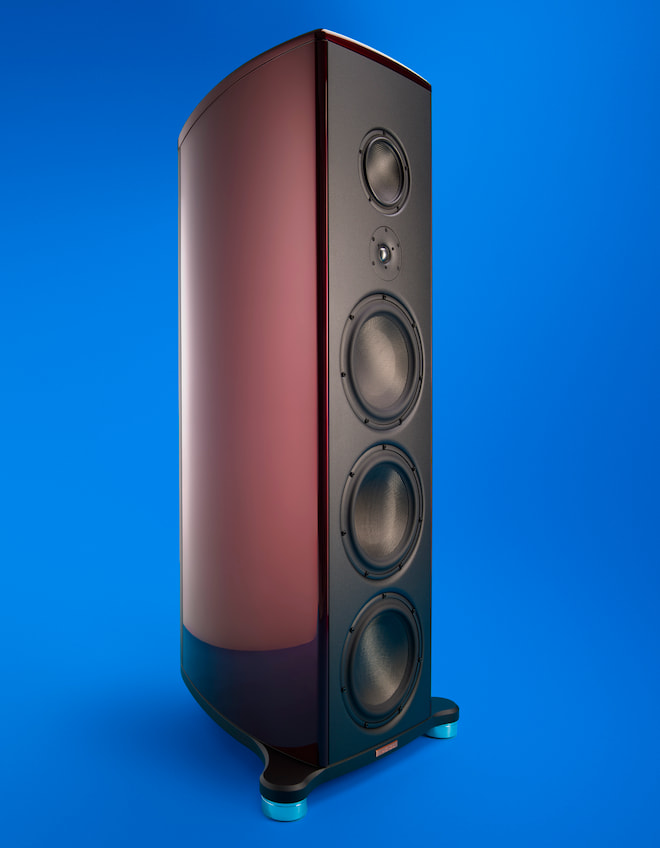
Magico will host the world premiere of the new S7 (2026) loudspeaker, a five driver, three way floorstanding system that weighs approximately 384 pounds per speaker. The S7 represents the latest model in Magico’s S-Series lineup, priced at $200,000 per pair.
Location: Club Room 15
Marten
Marten Coltrane Quintet Loudspeaker in Dark Grey
Marten will demonstrate the Coltrane Quintet Extreme loudspeakers, priced at $510,000 per pair. The speakers incorporate beryllium and diamond drivers and are derived from the company’s flagship Coltrane series.
Advertisement. Scroll to continue reading.
Advertisement
Location: Utopia Lounge
Mojo Audio
Mojo Audio will demonstrate the Mystique Z Quantum DAC (from $12,999) alongside its “One Box Wonder” music server (from $6,999), a single chassis server designed to function as a central digital source component in high end audio systems.
Location: Room 360
Nobius Audio
Nobius Audio N1-9
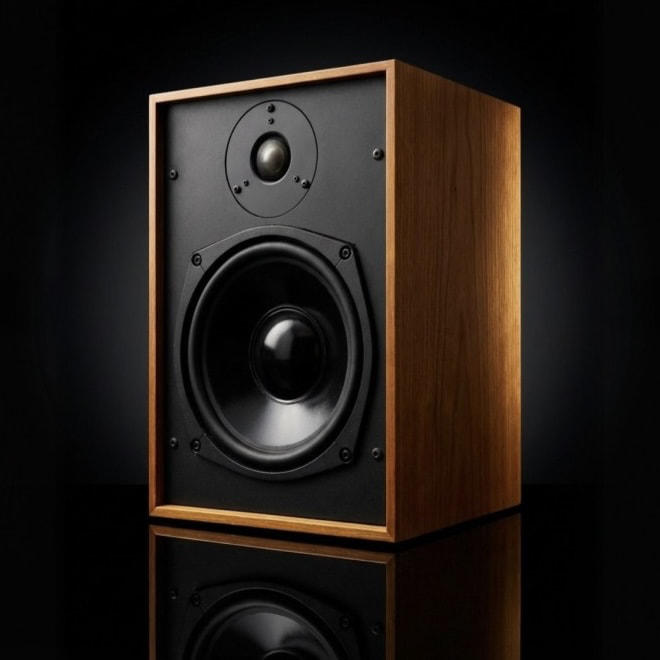
Nobius Audio will introduce several loudspeaker products including the N1-9B bass module, designed to complement the N1-9 bookshelf speaker, along with the S2-5 and S1-2 bookshelf loudspeakers. Pricing for the new models has not yet been confirmed.
Location: EX9315
Orchestalls
Orchestalls will showcase compact versions of its existing loudspeaker models, offering smaller scale versions of previously introduced designs intended to make the brand’s speaker lineup more accessible. Pricing has not been announced.
Advertisement
Location: Room 728
Paramax Corporation
Paramax Corporation will debut a new powered monitor speaker, representing the company’s entry into the powered speaker category. Pricing and final specifications have not yet been released.
Location: EX9326
Rockna (via Mimic Audio)
Mimic Audio will feature the Rockna Sinum digital source component, highlighting the company’s proprietary DAC architecture and digital signal processing design. Pricing has not yet been announced.
Advertisement
Location: Ear Gear Booth 8119
Quintessence Audio
Dohmann Helix One MKIII turntable (titanium)
Quintessence Audio will feature several notable systems including the Dohmann Helix One MKIII turntable, the dCS Varese digital playback system, and the Innuos Nazare music server. Pricing varies significantly depending on system configuration and was not fully confirmed prior to the show.
Advertisement. Scroll to continue reading.
Location: Connection 1, Perfection 1, Knowledge 1
Silent Angel
Silent Angel will present the MX flagship audiophile network streamer and a new version of the N8 network switch, both designed for use in dedicated streaming audio systems. Pricing has not yet been confirmed.
Advertisement
Location: EX9112
SoundCrewe Audio
SoundCrewe SC-450 Loudspeakers
SoundCrewe Audio will display several models from its SC-750 loudspeaker lineup, including the Model 350 desktop speaker, Model 450 and Model 550 bookshelf speakers, and the Model 750 flagship loudspeaker using Accuton CELL drivers. Pricing varies depending on configuration and finish.
Location: Room 546
SVS
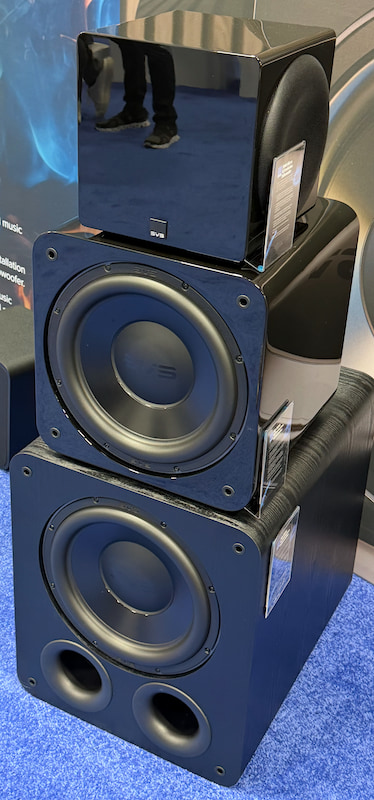
SVS 3000 Micro R|Evolution at CES 2026 atop stack of SVS 3000 Series subwoofers
SVS will debut the 3000 Micro R|Evolution compact subwoofer, which uses dual opposing 9-inch drivers powered by a 1,200-watt amplifier with over 4,000 watts peak output in an 11-inch enclosure. The smallest subwoofer in the SVS line-up replaces the original 3000 Micro, and completes the new 3000 R|Evolution series we first saw at CES 2026. Pricing has not yet been announced.
Location: Rooms 1442 and 1444
Swan Song Audio
Swan Song Audio will introduce several new products including 3D printed loudspeakers, a 3D printed turntable, battery powered phono and DAC preamplifiers, 11.5-watt battery powered Class A monoblock amplifiers, Argentium silver cables, and acoustic treatment products. Pricing varies by product and has not been finalized.
Advertisement
Location: Room 1644
T+A
T+A will demonstrate its new SDX 3100 HV streamer/DAC/preamplifier, along with the A 3100 HV stereo amplifier and PS 3100 HV external power supply, which together form part of the company’s HV electronics lineup. Pricing has not yet been confirmed.
Location: Schaumburg G
Vandersteen
Vandersteen will debut a new line stage preamplifier featuring purist circuitry and defeatable tone, stereo/mono, and matrix functions. Pricing has not yet been announced.
Advertisement
Advertisement. Scroll to continue reading.
Location: Room 1434
VPE Electrodynamics
VPE Electrodynamics will introduce the Elevon active DSP loudspeaker, a three way powered speaker system with DSP based crossover and room adjustment controls, along with the Aileron bookshelf speaker that can function as a stereo or center channel design. Pricing has not yet been confirmed.
Location: Room 502
Advertisement
Woo Audio
Woo Audio will debut the WA300B-BAL tube power amplifier, designed and assembled in New York. The amplifier will be demonstrated driving Ø Audio and Aretai loudspeakers. Pricing has not yet been announced.
Location: Room 1125
The Bottom Line
AXPONA 2026 is already shaping up to deliver a wide range of new loudspeakers, amplifiers, turntables, DACs, and streaming components from across the high end audio world. The list above represents just the products we know about today, and we expect additional announcements and surprise debuts as April approaches. We will continue updating this preview as more manufacturers confirm launches and will also highlight the new products we expect to see and hear once the show begins. One thing is certain: when the industry gathers in the Chicago suburbs this spring, the Windy City is going to get very loud.
The Parallels Desktop virtualization tool is confirmed to work on Apple’s new MacBook Neo, but there are enough caveats to suggest that you’d be better off buying a MacBook Air or MacBook Pro instead.
Apple’s MacBook Neo works just fine with Parallels Desktop
Parallels Desktop has long been the go-to app for people who need to run virtualized machines on a Mac. It’s a great way for people to use Windows apps without having to use a separate machine or switch entirely. With the release of the MacBook Neo, some had wondered whether its A18 Pro chip would be capable of running Parallels Desktop. The A18 Pro first debuted in the iPhone 16 Pro, and this is the first time a Mac has used an iPhone A-series chip. M-series chips are normally found in Apple’s computers. Continue Reading on AppleInsider | Discuss on our Forums
Training standard AI models against a diverse pool of opponents — rather than building complex hardcoded coordination rules — is enough to produce cooperative multi-agent systems that adapt to each other on the fly. That’s the finding from Google’s Paradigms of Intelligence team, which argues the approach offers a scalable and computationally efficient blueprint for enterprise multi-agent deployments without requiring specialized scaffolding.
The technique works by training an LLM agent via decentralized reinforcement learning against a mixed pool of opponents — some actively learning, some static and rule-based. Instead of hardcoded rules, the agent uses in-context learning to read each interaction and adapt its behavior in real time.
Why multi-agent systems keep fighting each other
The AI landscape is rapidly shifting away from isolated systems toward a fleet of agents that must negotiate, collaborate, and operate in shared spaces simultaneously. In multi-agent systems, the success of a task depends on the interactions and behaviors of multiple entities as opposed to a single agent.
The central friction in these multi-agent systems is that their interactions frequently involve competing goals. Because these autonomous agents are designed to maximize their own specific metrics, ensuring they don’t actively undermine one another in these mixed-motive scenarios is incredibly difficult.
Advertisement
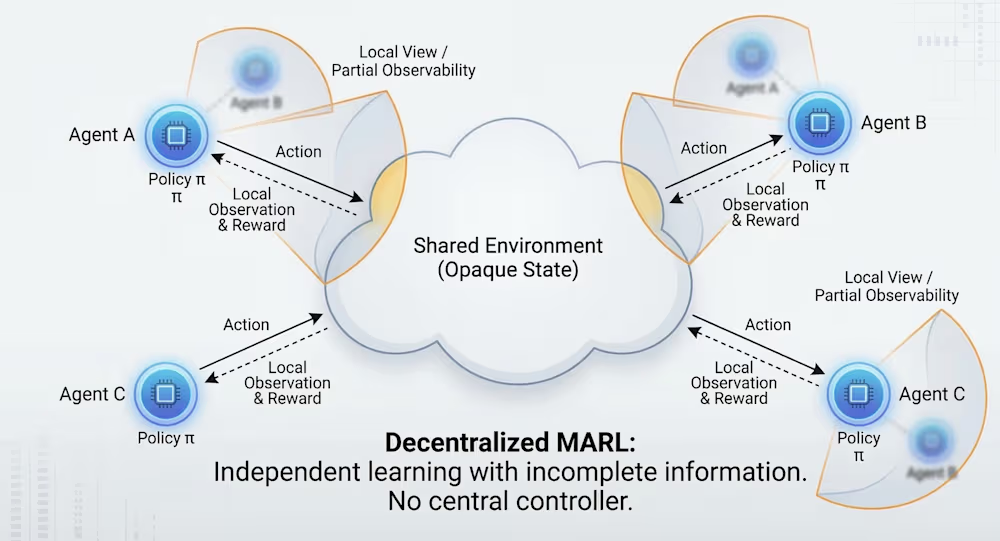
Multi-agent reinforcement learning (MARL) tries to address this problem by training multiple AI agents operating, interacting, and learning in the same shared environment at the same time. However, in real-world enterprise architectures, a single, centralized system rarely has visibility over or controls every moving part. Developers must rely on decentralized MARL, where individual agents must figure out how to interact with others while only having access to their own limited, local data and observations.
Multi-agent reinforcement learning
One of the main problems with decentralized MARL is that the agents frequently get stuck in suboptimal states as they try to maximize their own specific rewards. The researchers refer to it as “mutual defection,” based on the Prisoner’s Dilemma puzzle used in game theory. For example, think of two automated pricing algorithms locked in a destructive race to the bottom. Because each agent optimizes strictly for its own selfish reward, they arrive at a stalemate where the broader enterprise loses.
Another problem is that traditional training frameworks are designed for stationary environments, meaning the rules of the game and the behavior of the environment are relatively fixed. In a multi-agent system, from the perspective of any single agent, the environment is fundamentally unpredictable and constantly shifting because the other agents are simultaneously learning and adapting their own policies.
Advertisement
While enterprise developers currently rely on frameworks that use rigid state machines, these methods often hit a scalability wall in complex deployments.
“The primary limitation of hardcoded orchestration is its lack of flexibility,” Alexander Meulemans, co-author of the paper and Senior Research Scientist on Google’s Paradigms of Intelligence team, told VentureBeat. “While rigid state machines function adequately in narrow domains, they can fail to scale as the scope and complexity of agent deployments broaden. Our in-context approach complements these existing frameworks by fostering adaptive social behaviors that are deeply embedded during the post-training phase.”
What this means for developers using LangGraph, CrewAI, or AutoGen
Frameworks like LangGraph require developers to explicitly define agents, state transitions, and routing logic as a graph. LangChain describes this approach as equivalent to a state machine, where agent nodes and their connections represent states and transition matrices. Google’s approach inverts that model: rather than hardcoding how agents should coordinate, it produces cooperative behavior through training, leaving the agents to infer coordination rules from context.
The researchers prove that developers can achieve advanced, cooperative multi-agent systems using the exact same standard sequence modeling and reinforcement learning techniques that already power today’s foundation models.
Advertisement
The team validated the concept using a new method called Predictive Policy Improvement (PPI), though Meulemans notes the underlying principle is model-agnostic.
“Rather than training a small set of agents with fixed roles, teams should implement a ‘mixed pool’ training routine,” Meulemans said. “Developers can reproduce these dynamics using standard, out-of-the-box reinforcement learning algorithms (such as GRPO).”
By exposing agents to interact with diverse co-players (i.e., varying in system prompts, fine-tuned parameters, or underlying policies) teams create a robust learning environment. This produces strategies that are resilient when interacting with new partners and ensures that multi-agent learning leads toward stable, long-term cooperative behaviors.
How the researchers proved it works
To build agents that can successfully deduce a co-player’s strategy, the researchers created a decentralized training setup where the AI is pitted against a highly diverse, mixed pool of opponents composed of actively learning models and static, rule-based programs. This forced diversity requires the agent to dynamically figure out who it is interacting with and adapt its behavior on the fly, entirely from the context of the interaction.
Advertisement
Diverse multi-agent training
For enterprise developers, the phrase “in-context learning” often triggers concerns about context window bloat, API costs, and latency, especially when windows are already packed with retrieval-augmented generation (RAG) data and system prompts. However, Meulemans clarifies that this technique focuses on efficiency rather than token count. “Our method focuses on optimizing how agents utilize their available context during post-training, rather than strictly demanding larger context windows,” he said. By training agents to parse their interaction history to infer strategies, they use their allocated context more adaptively without requiring longer context windows than existing applications.
Using the Iterated Prisoner’s Dilemma (IPD) as a benchmark, the researchers achieved robust, stable cooperation without any of the traditional crutches. There are no artificial separations between meta and inner learners, and no need to hardcode assumptions about how the opponent’s algorithm functions. Because the agent is adapting in real-time while also updating its core foundation model weights over time across many interactions, it effectively occupies both roles simultaneously. In fact, the agents performed better when given no information about their adversaries and were forced to adapt to their behavior through trial and error.
Multi-agent training works best when given a pool of diverse agents and allowed to explore the rules by themselves (source: arXiv)
Advertisement
The developer’s role shifts from rule writer to architect
The researchers say that their work bridges the gap between multi-agent reinforcement learning and the training paradigms of modern foundation models. “Since foundation models naturally exhibit in-context learning and are trained on diverse tasks and behaviors, our findings suggest a scalable and computationally efficient path for the emergence of cooperative social behaviors using standard decentralized learning techniques,” they write.
As relying on in-context behavioral adaptation becomes the standard over hardcoding strict rules, the human element of AI engineering will fundamentally shift. “The AI application developer’s role may evolve from designing and managing individual interaction rules to designing and providing high-level architectural oversight for training environments,” Meulemans said. This transition elevates developers from writing narrow rulebooks to taking on a strategic role, defining the broad parameters that ensure agents learn to be helpful, safe, and collaborative in any situation.
‘It’s been 20 years, it’s surprising to me how little has changed’: Sonos CEO and former Pandora exec Tom Conrad reveals what he thinks is ‘holding us back’ from more music streaming innovation
But given the fact that Conrad’s history includes 10 years at Pandora in the early days of music streaming — he was Chief Technology Officer when he left in 2024 — and that Sonos is so deeply connected to the music-streaming services, I wanted to ask what he thought about these services today, both in terms of working with them now on the Sonos app, and personally as a streaming pioneer.
Article continues below
Advertisement
(Image credit: Sonos)
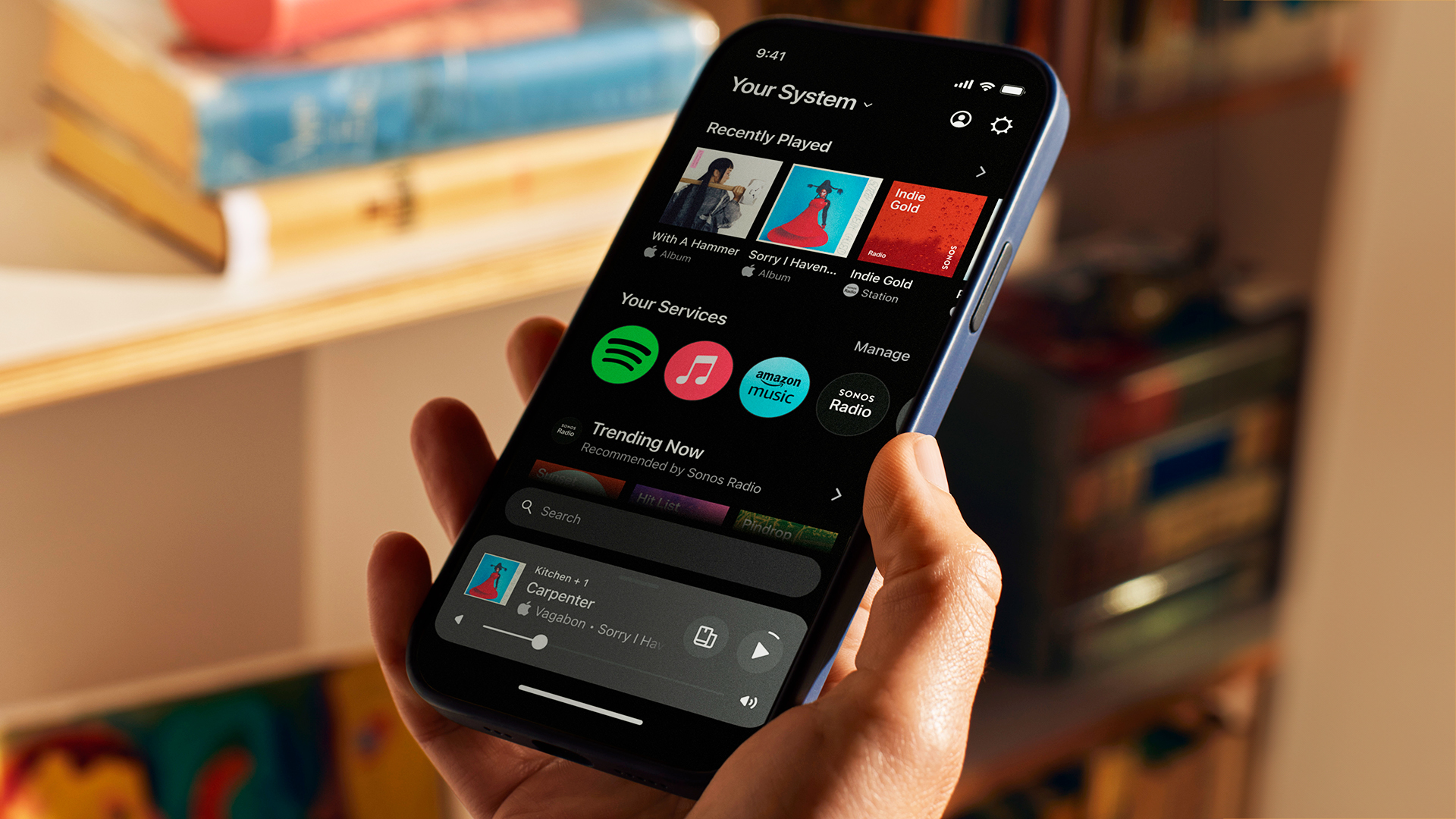
“One of the things I’m really excited about in terms of our software roadmap is working more closely with our music service partners,” he begins. “All I really care about with with respect to listening to music on Sonos is getting the customer as quickly and seamlessly as possible to their outcome.
“If that means AirPlay or Bluetooth or Spotify Connect or experiences inside of Spotify versus experiences inside of our app… I don’t care. I just want it to work every time, and have it be completely seamless. I feel like we have a better relationship with Apple, Amazon, Spotify than we have in years, and I’m really excited about the work we’re driving together.”
Advertisement
Apple is motivated by selling hardware, and Spotify is motivated by reducing licensing costs.Tom Conrad, Sonos CEO
I expect those who use the Sonos app instead of AirPlay or other direct streaming tech will be pleased with the idea of being able to get into music quicker and more easily, but it’s the more personal insights I’m more interesting in, and Conrad shared some of those too.
“You know, the iPod invented the core conventions of modern digital music, and then in 2004, Pandora and Last FM, I suppose, kind of invented the modern conventions around personalized streaming audio,” he told me. “And it’s been 20 years, and it’s surprising to me how little has changed in that experience.
Sign up for breaking news, reviews, opinion, top tech deals, and more.
“We’ve gone from a world where you had access to just the CDs you bought to a world where you have access to hundreds of millions of songs in your pocket, and yet the user interface of it all is kind of just some hierarchical browsing, and then a fullscreen audio player with skip buttons and things.
Advertisement
“I guess quietly, at night, I sort of imagine a future where there’s more innovation and [questioning] what does it mean to navigate the whole entire world of music with something that wasn’t designed for 1,000 songs in your pocket.”
Motivational speaker
I asked if Conrad thinks the physically small size of phone screens is a restrictive element that holds us back from developing new ways of interacting with music.
“You know what I think is mostly holding us back in that regard? Apple is motivated by selling hardware, and Spotify is motivated by reducing licensing costs, and no one is motivated by: let’s make a great and innovative music discovery experience for the consumer.”
I point out that Qobuz and Tidal are more focused on music discovery, but don’t have the bottomless resources that Spotify and Apple do, which Conrad agrees with — but overall, I agree with him.
I always say that the vinyl revival and the popularity of the best turntables here in the 2020s is in no small part because people want music to feel special, with the thrill of discovery. Physical media gives people the excitement of successfully finding something they didn’t have before when they’re looking through a record store’s boxes — the power of a surprise.
Obviously, it would be foolish to replicate the scarcity element of physical media in a streaming app, but Conrad’s suggestion of new ways to navigate and discover music seems like a way to scratch that same itch of making music apps exciting by providing more ways for you to find something you’ve never heard before, and to then explore that artist or genre.
Advertisement
The discovery features of music streaming services feel so narrow — they either replace radio or throw a pipeline of music at you without context, and with only the foggiest sense of why you’d be interested in it.
I’d like it to feel interactive, like by opening the correct door, searching in the correct box, or asking the correct source, I can find something new to experience. I hope we’ll see more innovative interfaces to create the experience of being a smart record hunter in the future.
And of course, you can also follow TechRadar on YouTube and TikTok for news, reviews, unboxings in video form, and get regular updates from us on WhatsApp too.
For two decades, the RSAC Innovation Sandbox contest has been the industry’s most reliable crystal ball. With over $50.1 billion in investments and more than 100 acquisitions across its alumni, the contest has an extraordinary track record of spotting cybersecurity’s future leaders before the rest of the world knows their names.
The contest’s track record also offers a story of generational innovation that speaks for itself, says Cecilia Marinier, vice president of innovation and scholars at RSAC.
“We see one founder buying another founder buying another founder,” Marinier says. “Think about the amount of accumulated knowledge, and how powerful it is to continue to build on such solid foundations.”
Advertisement
It’s a pattern that repeats throughout the Sandbox’s alumni network. Last year, Donnchadh Casey and James White, CEOs of Calypso AI sold their company to F5, whose current Chief Product Officer is Kunal Anand. Anand was on the RSAC 2016 Innovation Sandbox stage as co-founder of Prevoty. His company was bought by Imperva, which was the winner of the contest in 2007. It’s all resulted in a tight-knit cycle of founders, operators, and acquirers that continues to shape the cybersecurity ecosystem.
Oliver Friedrichs, currently GM of CrowdStrike appeared on the Innovation Sandbox stage twice, winning in 2016 with Phantom, which was acquired by Splunk. He then returned as a 2023 finalist with Pangea, which was later acquired by CrowdStrike. Ali Golshan, a 2017 finalist with StackRox, went on to sell Gretel AI to Nvidia. Rehan Jalil, the 2020 winner who brought Securiti AI to the stage, saw his company acquired by Veeam for $2.7 billion.
“That’s with a B,” Marinier notes, underscoring the scale of value emerging from the Sandbox alumni network. “Those numbers also speak for themselves.”
See the 2026 RSAC top 10 finalists live on stage
This year’s Top Ten finalists take the stage at Moscone Center in San Francisco on Monday, March 23, each delivering a three-minute pitch to a panel of seasoned industry judges. The lineup reads like a map of enterprise security’s most urgent pressure points in 2026: agentic AI governance, non-human identity management, social engineering defense, supply chain provenance, and AI-native code security, among others.
Advertisement
Finalists include:
Charm Security: uses its agentic AI workforce to targets scams and human-centric fraud
Clearly AI: helps teams ship secure software fast by replacing manual work with AI-powered reviews
Crash Override: embeds in CI/CD to capture build execution data that APIs can’t access
Fig Security: finds and fixes broken security flows across the entire SecOps stack
Geordie AI: a security and governance platform purpose-built for AI agents
Glide Identity: verifies users instantly and securely—without passwords or SMS codes
Humanix: designed to stop social engineering attacks by detecting and responding to attacks on people
Realm Labs: enables enterprises to see inside the AI’s “brain” and monitor its thoughts during inference
Token Security: focused on governing AI agents and machine identities at enterprise scale
ZeroPath: replaces traditional SAST, SCA, and secrets scanning with a single AI-native engine capable of detecting complex business logic flaws.
“The most disruptive technology right now is obviously AI, and it’s bringing with it some brand-new security challenges that are being developed at the same rate that AI is evolving,” Marinier says. “Our finalists are bringing cutting-edge solutions for tackling those problems and beating those nefarious actors.”
Agentic AI, in particular, emerged as a dominant theme this cycle.
“Governance for AI, continuous monitoring, automation, SecOps resilience, everything from threat modeling to how to use agentic AI, and then controlling against agentic AI getting into systems, it’s all there in our top 10,” she says. “It’s the call to action to today and tomorrow’s security leaders.”
Advertisement
Who selects the winners, and why it matters
One of the less-discussed secrets behind the Sandbox’s track record is the rigor of its judging panel. This year’s panel includes:
Nasrin Rezai, SVP & CISO at Verizon
Larry Feinsmith, head of global technology strategy at JPMorganChase
David Chen, head of global technology investment banking at Morgan Stanley
Paul Kocher, cryptographer and entrepreneur
Niloofar Razi, operating partner at Capitol Meridian Partners
“We’re very careful about how we put together the panel,” Marinier explains. “They have to represent a variety of perspectives, including an eye for startups that are likely to have positive trajectories. They’re top leaders in the industry, who are able to recognize the companies that have risen above the noise.”
Critically, RSAC itself plays no role in the selection, she adds.
“The judges select these companies,” she says. “They have for the past 20 years, and they will be going into the future.” That independence, she argues, is a core reason why the contest carries such weight with the industry.
Advertisement
The $5 million investment for the future of finalists
Beginning in 2025, as part of the contest’s 20th anniversary, all 10 finalists receive a $5 million investment in the form of a SAFE note, funded by Crosspoint Capital. It’s still early days for measuring the full impact, but Marinier points to the trajectory of ProjectDiscovery, last year’s winner.
Funding launched ProjectDiscovery from a hopeful startup to a company with enough traction to hire industry professionals with experience and know-how, who wouldn’t have previously considered an early-stage startup. Not only did they have the funds, they had the recognition, and they were able to attract great talent because they’re obviously going somewhere.
“The money is ultimately about extending the runway,” Marinier adds. “The SAFE note gives finalists breathing room to scale infrastructure and capitalize on the visibility the contest generates, before the spotlight fades.”
RSAC’s broader innovation ecosystem
The Innovation Sandbox contest is the flagship, but it’s the centerpiece of a significantly larger innovation infrastructure that Marinier has built over the past decade. In that time, RSAC’s innovation programming has touched more than 1,000 companies across multiple programs.
Advertisement
Launch Pad, now in its sixth year, functions as the Sandbox’s “little brother,” a Shark Tank-style forum where earlier-stage companies receive real feedback from judges without a winner being declared, though some of those companies are already starting to “graduate” to the next level of industry success. The Early Stage Expo, featuring 78 companies this year, gives attendees a window into what’s coming down the pipeline, sitting alongside the conference’s 600 main exhibitors.
The Innovation Showcase runs year-round, not just during conference week, with live Q&A sessions between entrepreneurs and audiences that are then carried into RSAC’s new membership platform, an effort to sustain connections across the full year, not just the five days in San Francisco.
There’s also a dedicated track for investors and entrepreneurs, featuring VCs sharing forward-looking perspectives, sessions on fundraising strategy, and design partnership frameworks. And for the next generation, RSAC’s Security Scholars program selects 60 students from universities across the country, with 22 presenting research posters on Wednesday of conference week.
“The security scholars are presenting their research that could lead to nascent technology,” Marinier says. “They’re in theearly phase, working their way up the ladder. One day they’ll make it onto our stages, and after that, the world’s their oyster.”
Advertisement
Why RSAC Conference is unmissable
For anyone serious about the future of cybersecurity, whether you’re a CISO, a founder, an investor, or an engineer, Marinier makes the case plainly.
“Building a safer society requires bold ideas, and new technologies, and real-world solutions,” she says. “RSAC Conference is bringing together some the newest, the smartest, the most innovative security perspectives in the industry for critical conversations about solving the security problems the world faces.”
The RSAC Innovation Sandbox contest kicks off at Moscone Center on Monday, March 23 at 9:30 AM PT. Winners will be announced by approximately noon the same day.
Sponsored articles are content produced by a company that is either paying for the post or has a business relationship with VentureBeat, and they’re always clearly marked. For more information, contact sales@venturebeat.com.
A new malware strain dubbed Slopoly, likely created using generative AI tools, allowed a threat actor to remain on a compromised server for more than a week and steal data in an Interlock ransomware attack.
The breach started with a ClickFix ruse, and in later stages of the attack, the hackers deployed the Slopoly backdoor as a PowerShell script acting as a client for the command-and-control (C2) framework.
IBM X-Force researchers analyzed the script and found strong indicators that it was created using a large language model (LLM), but could not determine which one.
Evidence pointing to AI-assisted development includes extensive commentary in the code, structured logging, error handling, and clearly named variables. All this is rare in human-developed malware.
Advertisement
They attributed the attack to a financially motivated group they track as Hive0163, “whose main objective is extortion through large-scale data exfiltration and ransomware.”
According to the researchers, Slopoly is rather unsophisticated, although its deployment in ransomware operators’ attack chains indicates that AI tools are actively used to accelerate custom malware development, which can help evade detection.
Although comments in the Slopoly script describe it as a “Polymorphic C2 Persistence Client,” IBM X-Force did not find any feature that would allow modifying its own code during execution.
“The script does not possess any advanced techniques and can hardly be considered polymorphic, since it’s unable to modify its own code during execution,” reads the IBM report.
Advertisement
“The builder may, however, generate new clients with different randomized configuration values and function names, which is standard practice among malware builders.”
IBM X-Force researchers believe that Slopoly was generated by a builder that inserted configuration values, such as beaconing intervals, command-and-control addresses, mutex names, and session IDs.
The malware is deployed in C:\ProgramData\Microsoft\Windows\Runtime\, and its main functions include:
Collecting system information
Sending a heartbeat beacon every 30 seconds to /api/commands
Polling for commands every 50 seconds
Executing received commands via cmd.exe
Sending command output back to the C2 server
Maintaining a rotating persistence.log file
Establishing persistence through a scheduled task named “Runtime Broker”
The commands it supports allow downloading and executing EXE, DLL, or JavaScript payloads; running shell commands and returning the results; changing beaconing intervals; updating itself; or exiting its own process.
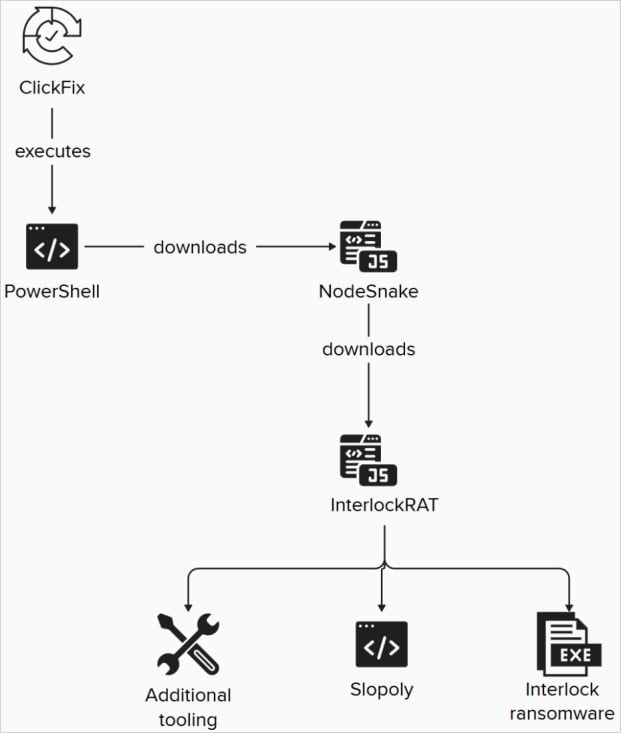
The attack IBM observed started with a ClickFix social engineering flow, and deployed multiple malware components besides Slopoly, including the NodeSnake and InterlockRAT backdoors.
Advertisement
Attack chain deploying Slopoly in a later stage Source: IBM X-Force
Interlock ransomware emerged in 2024 and was an early adopter of the ClickFix social engineering technique, and later also the FileFix variant.
The Interlock ransomware payload observed in the attacks reported by IBM is a 64-bit Windows executable delivered via the JunkFiction loader.
It can execute as a scheduled task running as SYSTEM, and uses Windows Restart Manager API to release locked files, appending the ‘. !NT3RLOCK’ or ‘.int3R1Ock’ extensions on their encrypted copies.
IBM reports that Hive0163 may also have associations with the developers behind Broomstick, SocksShell, PortStarter, SystemBC, and the Rhysida ransomware operators.
Advertisement
Malware is getting smarter. The Red Report 2026 reveals how new threats use math to detect sandboxes and hide in plain sight.
Download our analysis of 1.1 million malicious samples to uncover the top 10 techniques and see if your security stack is blinded.
Microsoft has just launched Copilot Health, a completely new feature of its AI assistant that functions as a health hub, deciphering your medical records and fitness tracker data to identify key health trends. Users get started by simply creating a dedicated tab in Copilot and give authorization to import data from the appropriate sources.
The system then collects data from electronic health records at over 50,000 hospitals and clinics across the United States via a business named HealthEx. Then there are lab reports from companies such as Function. More than 50 fitness devices are now connected, including Apple Health trackers, Oura rings, Fitbits, and other wearables. When users give the go-ahead, the system collects data on activity levels, sleep patterns, heart rates, and step counts.
XBOX EXPERIENCE BROUGHT TO LIFE BY ROG The Xbox gaming legacy meets ROG’s decades of premium hardware design in the ROG Xbox Ally. Boot straight into…
XBOX GAME BAR INTEGRATION Launch Game Bar with a tap of the Xbox button or play your favorite titles natively from platforms like Xbox Game Pass…
ALL YOUR GAMES, ALL YOUR PROGRESS Powered by Windows 11, the ROG Xbox Ally gives you access to your full library of PC games from Xbox and other game…
Once everything is connected, the AI does a nice job of sorting through the data and creating easy-to-read summaries. It searches for patterns that could have gone overlooked otherwise. A protracted period of restless nights could be attributed to changes in daily mobility or other factors identified in the records. Test findings that were previously collected individually are now gathered in one place, allowing the tool to identify potential correlations. Their responses will also include references to credible sources, such as summaries prepared by Harvard Health specialists.
Advertisement
Microsoft built this new feature to make it easier for users to prepare for doctor appointments. Many people arrive at tests unsure of what to ask or unable to recall critical details from previous appointments. Copilot Health sort of allows people to organize their thoughts ahead of time. Users are given suggestions for inquiries based on their own data. It also includes a feature that allows users to search for doctors based on their specialty, location, languages spoken, and insurance coverage.
All interactions are kept separate from ordinary Copilot chats, which is important for privacy reasons. Data is encrypted regardless of whether it is stored or transferred. Users have complete control: disconnect any source, remove stored information, or just stop sharing entirely. Microsoft assures that the data will never be utilized to train their larger AI algorithms. The company has even received third-party certification for how it handles this type of situation, such as the ISO/IEC 42001 standard, which examines how to employ AI responsibly. A team of over 230 doctors from around the world assessed the approach and provided recommendations on how to make it safer.
This launch comes at a busy time for consumer AI in healthcare. OpenAI, Anthropic, and Amazon already have technologies in place to handle personal records in a secure setting. Microsoft is using this as an opportunity to demonstrate their experience with health-related data, since they receive over 50 million health-related questions every day. Executives characterize the tool as a minor step toward gaining a better knowledge of medical conditions, but emphasize that it is a long way from providing actual diagnoses or treatment.
For the time being, the tool is only available in English and is limited to persons over the age of 18 in the United States. A waitlist allows users to participate in an early group that helps shape the experience. Microsoft intends to add languages, voice functions, and other geographies later on.
Instagram has long limited users’ ability to share links, restricting link-sharing to Stories, Reels and user profiles. But that might now be changing. The company has started to test clickable links inside of post captions for subscribers to Meta Verified.
The new feature, which has been a long-requested update from creators, was spotted by blogger Andrea Valeria, who posted screenshots of a clickable Substack link she was able to add to an Instagram post. According to Valeria, an in-app message indicated she could share up to 10 links a month.
Meta confirmed to Engadget that it’s testing links in captions for subscribers to Meta Verified, but didn’t provide details on how many people have access to the feature or if it will be widely available. It does seem to be somewhat limited, however, as the link on Valeria’s post appears on Instagram’s mobile app, but now when viewing the same post on Instagram’s website.
Instagram’s restrictions on link-sharing have been a notable part of the platform since its early days. The limitation helped kickstart an entire industry of “link in bio” platforms like Linktree, which help creators direct followers to off-platform websites based on what they share on Instagram. If Meta begins implementing the feature widely, it could drastically change how creators are able to interact with their followers (although a 10-link per month limit would likely still require “link in bio” solutions).
Advertisement
The test is also the latest way that Meta has experimented with making link-sharing a paid feature. The company has also recently tested restricting creators’ ability to share links on Facebook by requiring a Meta Verified subscription. Meta Verified for creators starts at $14.99 a month, with the most expensive plans costing $499.99 a month.
In modern working environments, where responsibilities often blend together, it takes a degree of skill to navigate transforming expectations.
Artificial intelligence (AI), automation and technological advancements have certainly changed how we engage with work. In some cases, the burden of heavy work has been alleviated; in others, there is a sense of anxiety around excessive use leading to an atrophying of skills.
But whether you are a firm believer, or an AI sceptic, it remains unlikely, especially if you are working within STEM, that your work has been unaffected by these advancements – particularly in day-to-day expectations for a role.
So, what skills can professionals in 2026 deploy to navigate a workplace undergoing a rebirth of sorts?
Advertisement
Talk it out
Arguably one of the more important skills at your disposal when navigating a changing working landscape is the ability to communicate well – not just with your employer, but your co-workers and any others affiliated with your place of work. During a period of transition, where you might find that your responsibilities are morphing or merging, it is crucial that you be able to succinctly and accurately communicate any concerns you may have, especially if you are confused about your role and how it is evolving.
In the workplace, much as in regular life, it is an advantage to be able to assess your needs, request necessary resources and confirm what is expected of you. You can’t perform to the best of your ability if you don’t fully understand the job itself – so ask.
All for one
Related to good communication, you need to be able to work with others if you are to develop new skills in an evolving workplace. If you find that more is expected of you and there are elements of your role that exceed your current abilities, then teamwork, mentorship and opportunities to work-shadow can help you get back on track; before long, you could be the one showing others the ropes.
By embracing a collaborative workspace and committing to the exchange of ideas and new processes, you can develop your skills quickly and be part of a team that is diverse in its capabilities. This approach also has the potential to expose you to new opportunities, as you are more likely to be seen as capable of moving between teams and projects.
Advertisement
Tidy up
Organisation is another soft skill that often lends itself to success in a career in a rapidly changing space. This is for the very simple reason that if you are perhaps balancing too many plates at once, skills in organisation can help you power through.
Like many skills, organisation actually encompasses a range of other abilities – for example, time management, communication, delegation, strategic planning, goal tracking and analytical thinking, to name a few. If you make an effort to be more organised, you may find that you work better under pressure, and have time to learn the new and changing elements of your job without too much disruption to your schedule.
Not everyone is going to be naturally organised. It can take practice, but if you start small – by making lists, becoming more detail-oriented and being more aware of how you are spending your time – you may find yourself better prepared for the larger challenges that crop up along the way.
Open your mind
One important skill that we perhaps don’t hear about enough in a working context has to be the skill of empathy, which is the ability to understand and share how another person feels or views a situation. In the working environment, we can often, be it accidental or purposeful, become siloed, making it more difficult to recognise when another person is struggling, falling behind or needs a dig-out.
Advertisement
In times of workplace transition, it can be frustrating having to figure out new technology, policies and processes in what feels like a relatively short space of time. So, it’s important that you give yourself and others a little grace, recognising that the chaos that accompanies change is very rarely permanent.
Furthermore, by being empathetic and putting yourself in another person’s shoes, so to speak, you can approach challenges from a new perspective, perhaps even improving your own problem-solving abilities and interpersonal relationships.
Empathy is a powerful soft skill to have in your back pocket, as it can help you create crucial connections, improve the workplace dynamic and further develop your other soft skills. Many employers nowadays expressly recruit those who can show their skills in this area, so it is definitely one for STEM professionals to consider.
Don’t miss out on the knowledge you need to succeed. Sign up for the Daily Brief, Silicon Republic’s digest of need-to-know sci-tech news.
Among the various games we have played, puzzle games have been a part of our childhood, and we all have loved the way such games acted as brain teasers and helped stimulate our nervous system.
As we grow up, we need such mind-teasing games for the healthy working of our brain cells. And as most of our time is spent online, why not make room for online puzzles and keep our brains refreshed? Therefore, my new list will include the best puzzle games you should consider downloading on your device for all the perplexity you need.
15 Best Puzzle Games For Android and iOS
1. Worldle91
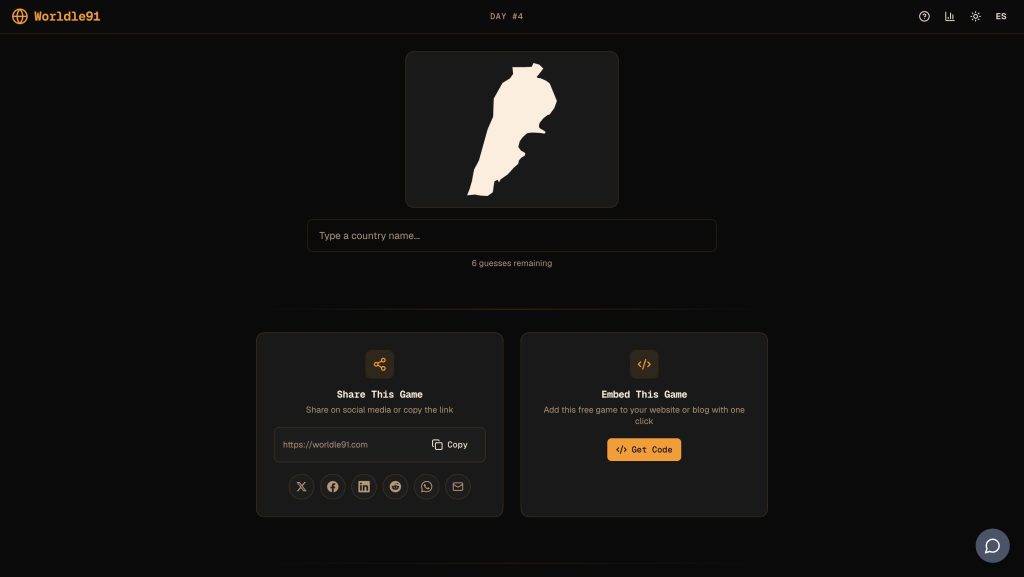
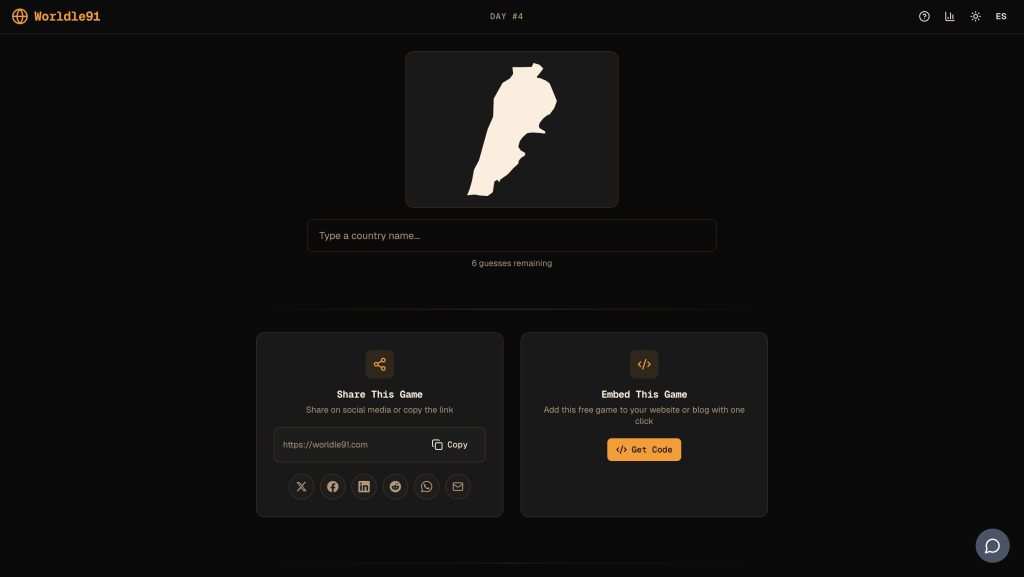
The popular NYT word guessing game Wordle isn’t a secret to anyone. In fact, it’s the most popular game today, which has kick-started a whole world of online games, and the latest addition is Worldle91. It’s for geography nerds who need to guess countries from their silhouettes.
The game shows you a country outline, and your job is to guess which country it is. After each guess, the game provides helpful clues such as distance, direction, and proximity to the correct answer. Using those hints, you have six attempts to figure out the right country.
Pros: Unique geography-based puzzle, great learning tool
Cons: Can get tricky if your geography knowledge is limited
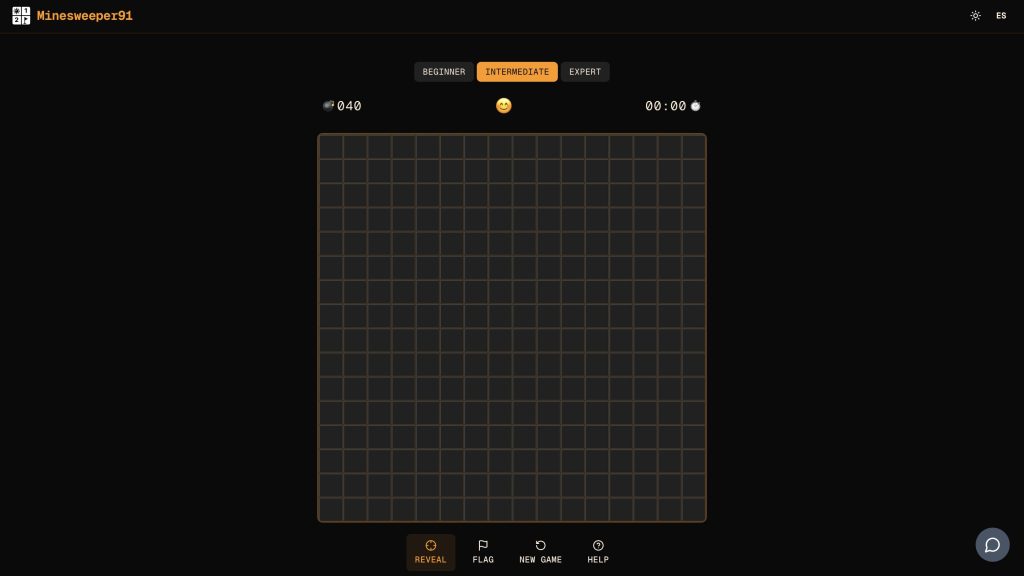
If you’ve ever used a Windows PC in the early 2000s, chances are you’ve already played Minesweeper. Minesweeper91 is the modern version of the classic game, where the goal is actually quite simple. You need to reveal all the safe cells without triggering a hidden mine.
Each revealed tile displays a number indicating how many mines are in the surrounding eight cells. Using logic and deduction, you mark suspected mines and clear the rest of the board.
Advertisement
Pros: Classic logic puzzle, easy to learn but hard to master
Cons: Can feel punishing if you make one wrong guess
Sudoku91 takes the classic Sudoku puzzle and improves it with a cleaner interface and several customization options. The basic rule remains the same: fill the 9×9 grid with numbers from 1 to 9 without repeating them in rows, columns, or 3×3 sections. However, Sudoku91 adds multiple difficulty levels ranging from Easy all the way to Evil for players who want a real challenge.
What makes it stand out is the flexibility. You can customize the theme, highlight conflicts, toggle notes, and even use keyboard shortcuts for faster gameplay.
Hocus is a mind-bending perspective puzzle game. It is currently one of the top-rated puzzle games on the Play Store right now. In this game, your goal is to get a cube to the red finish marker as fast and efficiently as possible. It might look easy to play but can be pretty challenging.
One of the most incredible things about this game is that it lets you create and play other user-created puzzles. With over 100 puzzles, you can easily play this game for a few hours whenever you are bored.
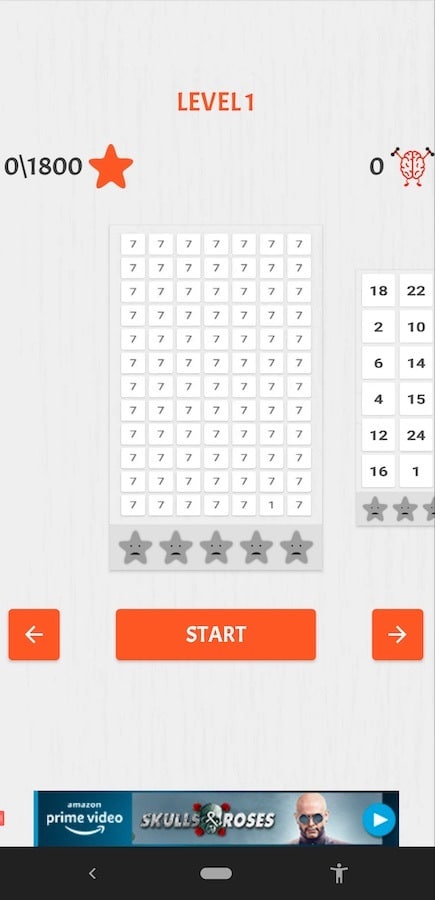
Amid all the available puzzle games online, Threes has a similar concept of sliding tiles to form a particular number, in this case, three and its multiples. When you start playing the game, it will give you a walk-through on how to play it so that it gets easier for you.
It follows a simple drill of sliding the tiles and joining them to add the two titles. Even though it is an easy process, it will still take a while to join the tiles. It starts with making a three, followed by other multiples of three. Each step expects you to make one, and you have to use your brain while sliding to form the desired number.
The game has ease of flow, and once you start playing it often, you will enjoy it, and sliding tiles to form numbers will be your everyday goal.
Mekorama is an adorable 3D puzzle game just like Treasure Tracker and Monument Valley. In this game, you control a cute little robot and navigate it through different puzzle rooms, each with different mechanics. Due to the variety in obstacles, the game keeps being fresh.
Whenever you finish a level, you unlock five more. So you won’t ever feel stuck, and the progression will be pretty open-ended. With over 50 levels to unlock, the game is quite a delight for those who like a challenge but want a laid-back experience.
Pros: Looks quite good considering its a mobile game
Chess light is a puzzle game based on, you guessed it, “Chess!”. The game puts you in over 180 different chess scenarios where you have to find a way to win. The game is free and comes with no ads, which is rare for games these days.
There are even six different difficulty options if you find the game is hard or too easy. You can even receive a hint if you feel like you are stuck. Fans of chess will definitely want to check this game out.
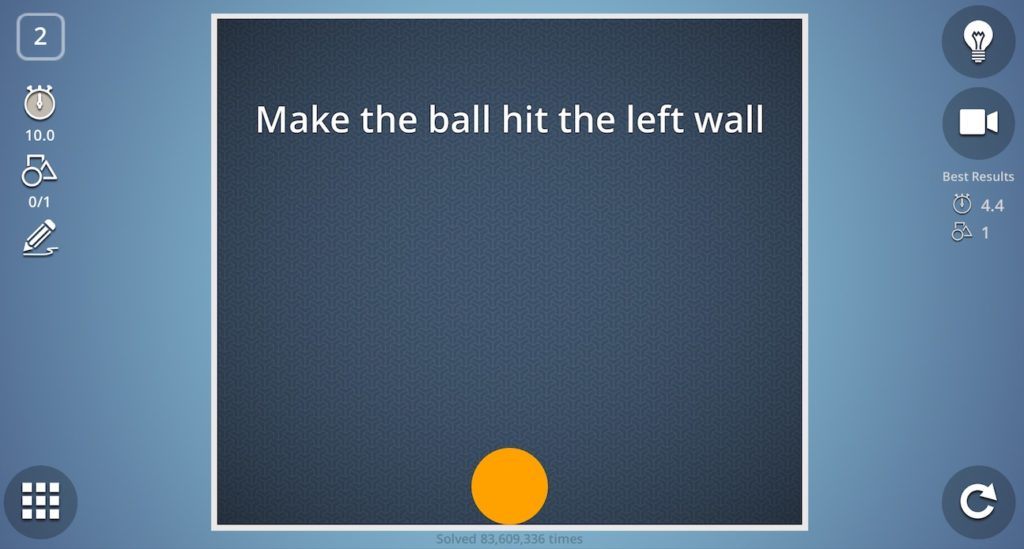
Brain It On is an apt puzzle app to use when you want to challenge your brain. When I used the app, I could not help but scratch my head into how exactly can I play the simplest-looking game. The game works in a horizontal format and has a number of levels to reach.
You have to begin playing without doing much; open up the app, and select the first level (the first few levels are unlocked while others are locked), and start puzzling. Before you start, you have to make any shape of your choice on a plain canvas, beginning the main way of playing the game.
Advertisement
This means that the app needs you to do something on the canvas to execute a particular task. For instance, there will be a situation wherein you have to make something so that a glass kept on the canvas falls on the ground.
As the levels increase, the difficulty of the puzzle increases, which makes Brain It On one of the best Android puzzle games as well as on iOS. Furthermore, you can upgrade the app to get rid of ads.
Monuments Valley is a puzzle video game wherein you are required to use your brain and help the character reach the destination. Anyone talking about puzzle games ought to mention Monument Valley. Hence, it had to make an entry on my list of best puzzle games.
While in the game, you have to play to puzzle to start playing the actual. The game is interesting as it has a 3D setting, and it is pretty fun to play.
The only drawback of the game is that it is a paid app, which slightly gets disappointing. Nonetheless, if spending money on apps is not a problem for you, Monuments Valley 1 and 2 are must-have puzzle games.
Empty is a puzzle game similar to Monuments Valley, at least in terms of its artistic design. It’s a very zen-like puzzle game with a laid-back approach. Meaning you can play the game and not feel frustrated but rather healed.
The gameplay is quite simple, where you have to clear the room by rotating it. The game aims to teach us the value of simplicity in life with each level. It is entirely free and comes without any ads, which is quite rare for a game nowadays.
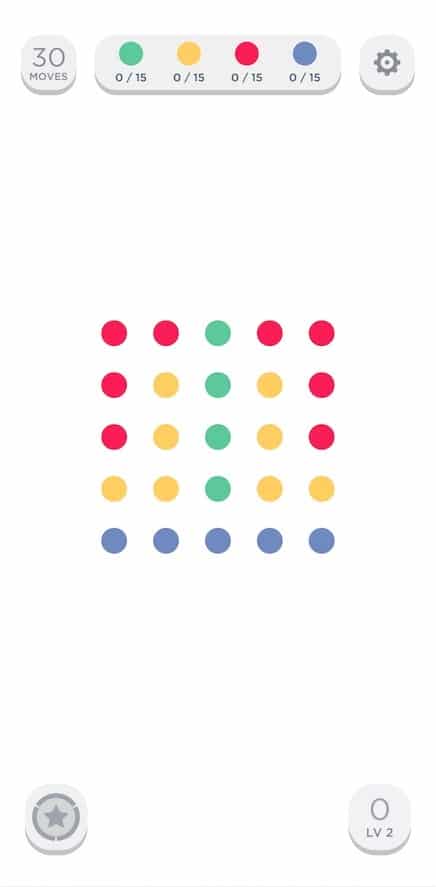
The Two Dots Puzzle game moves around the two dots present on the app. You have to connect the dots in a way they meet each other, and a connection between the two is formed.
When you open up the app, the app will give a gist of how to play the game by letting you connect the two dots available on the screen. Once the process gets completed, you can start with the first level of the game, which will eventually take you up the hill of the more and more levels (with new ways of playing).
Keep in mind that you can connect the dots horizontally, vertically, or form a right-angle but can’t connect them diagonally. Additionally, you get limited moves, so you have to hurry up and use your brain before you make a move.
When you are at a particular level, you will be given some targets to make you cross the level. The initial levels are pretty straightforward, and you will feel like a pro until you reach more levels and realize it’s not as easy as it appeared.
Escape Room is one of the puzzle types wherein you have to look for objects smartly. The game has a storyline where a girl introduces you to the game’s concept, following which you can start playing.
With a medieval backdrop, the game also provides you with a limited number of hints so that you move ahead with ease in situations when you get stuck.
The game begins with the first level (and moves up more levels), wherein you have to find a given number of objects and use them in the scene itself. You will have to tap on the various things placed and find the hidden things or combine two things to repair an item — the possibilities of proceeding ahead are many.
Advertisement
While the Escape Room is intriguing, the difficulty level makes it one of the well-suited puzzles for adults. However, kids can also play it to sharpen their brains.
Move The Block is one of the classic sliding puzzles (among free puzzles) where you are required to slide the objects (in this case, blocks) to win the puzzle. The puzzle game has a number of levels under Basic, Premium, and Old categories (eight to be precise), with each level coming with sub-levels.
When you start with the first level, you will be guided around the game and the options available for you to use and play with ease. The game is an interesting one, and as you move forward, you won’t even realize how addictive the game will get, and you will end up playing it more than the allotted time period.
Of course, as you move up the levels, the levels will get difficult, and you might need the help of the hints available at your disposal. This is where the game’s drawback appears; to get each clue, you have to watch an ad video that makes it annoying.
If you haven’t played a jigsaw puzzle, have you ever played a puzzle at all? One of the classic puzzle games of all time, the game’s name is enough to be one of the best free online jigsaw puzzles.
The game follows the simple process of joining the puzzle pieces and forming a single picture. The app provides you with various options to choose from: be it pictures related to nature, animals, aerial, and many more, and you can pick the ones you like and arrange the jigsaw puzzle.
Before the pieces are spread around, you will be given a small glimpse of the whole picture to start playing. You can further view the image again and again to get a better idea.
The game makes sure it twists your brain and acts as an element of nostalgia when jigsaw puzzles are actual board games.
Skillz is one of the mobile puzzle games that tease your brain and puts your brain to some good use.
The app lets you decide if you want to play as a single-player or play a multi-player game. Upon choosing, there will be a number of levels, and you will be taken to the first level. As a reminder, other levels will be locked until you pass the initial ones. Hence, skipping levels is not an option. In addition to this, there is an option to replay the game if you weren’t satisfied with your previous performance.
The levels include searching for a particular number or letter among the same numbers or letters, thus testing your brainpower and speed. The game proves pretty addictive as the urge to cross all the levels takes over once you start playing it. However, the presence of ads is a problem.
For those who think that puzzles are all about finding the puzzle pieces and completing a jigsaw, you need to know that there are many kinds of puzzles available for us to play with. These include riddles, trivia puzzles, math puzzles, pattern guessing, logic puzzles, and many more. This list contains puzzles such as trivia, sliding, logic, paper-and-pencil puzzles, among its various types. Hence, read on for more:
Frequently Asked Questions
1. Are puzzle games good for you?
Online puzzle games keep your mind sharp. Just as we need a physical workout to maintain our fitness, we need mind exercises (in the form of puzzles and more) for brain fitness. I hope my list of best free Android puzzle games (iOS too) acts as a helping tool to keep you busy in something productive other than just social media.
2. Do puzzle games help with problem solving?
It’s a well-known fact that video games improve problem-solving skills. One research even says that children’s creativity is enhanced by playing any kind of video game, including violent games. However, that’s not the case when the children use other forms of technology, such as a computer or cell phone.
Do let me know which games from our best puzzle games list you liked the most. If you have more suggestions to make, I will take them and add the best ones to my list.
Advertisement
Until then, keep on puzzling your brain and make it fitter and better!