Connect with us
DAPA Banner
DAPA Coin
DAPA
COIN PAYMENT ASSET
PRIVACY · BLOCKDAG · HOMOMORPHIC ENCRYPTION · RUST
ElGamal Encrypted MINE DAPA
🚫 GENESIS SOLD OUT
DAPAPAY COMING

Tech

Thiel Capital’s Jack Selby nabs stakes in hot startups like Etched through Arizona connections

Published

on

Nvidia competitor Etched announced this week that TSMC had manufactured its first chip earlier this year. While the four-year-old startup valued at $5 billion is getting ready to ship systems powered by that chip to customers later this summer, scaling production may prove challenging. Like other chip designers, Etched must compete for limited capacity at TSMC’s Taiwan factories.

Copper Sky Capital, one of Etched’s early investors, is hopeful that the chipmaker will find a solution to its manufacturing constraints by eventually producing chips at Arizona’s TSMC facility. When the four-year-old VC firm invested in Etched’s $120 million Series A two years ago, founder Jack Selby secured an allocation in part by promising to help the startup eventually reshore its chip fabrication to Arizona.

Selby, a former PayPal exec and longtime managing director to Peter Thiel’s family office, Thiel Capital, founded Phoenix-based Copper Sky in 2021 (formerly known as AZ-VC). The firm’s first $115 million fund focused primarily on startups based in Arizona and the Southwest. Selby’s thesis was that most coastal startups, particularly those based in California, Massachusetts, and New York, are grossly overpriced compared to companies popping up in his region. However, Selby saw an opportunity to bridge the gap in the other direction by helping California-based hardware startups move their production to Arizona.

Selby credits Copper Sky’s investment in Etched — an otherwise hard-to-access startup — to his influential role in Arizona’s economy. As a board member of the Arizona Commerce Authority, Selby is deeply involved in recruiting out-of-state businesses to set up manufacturing operations in the region.

Advertisement

“When Copper Sky invested with Etched, the company clearly understood our connectivity to the Arizona semiconductor industry, and in particular the local TSMC GIGAFAB,” Selby told TechCrunch.

While Copper Sky has recently expanded its focus beyond the Southwest to include nontraditional venture hubs nationwide, Selby said that the firm is also interested in backing hardware companies, including in the defense sector, that can set up manufacturing operations in Arizona. 

The firm is expected to soon have more capital to invest in those higher-priced coastal companies, and those throughout the United States. Copper Sky is currently raising a $300 million second fund, according to a regulatory filing.

When you purchase through links in our articles, we may earn a small commission. This doesn’t affect our editorial independence.

Advertisement

Source link

Continue Reading
Click to comment

You must be logged in to post a comment Login

Leave a Reply

Tech

OxygenOS made OnePlus phones special. Now, it might go away forever

Published

on

If you bought a OnePlus because of OxygenOS, for the relatively clean, fast, and actually-useful Android experience, your phone may be the last one to get it. 

According to a report from the Indian outlet Smartprix, OxygenOS and Realme UI are both reportedly being phased out. If accurate, everything would move to ColorOS, the skin atop Android on Oppo smartphones, globally, across all three brands.

So what exactly is happening here?

Oppo, its official subsidiary OnePlus, and Realme are all brands that operate under the same Chinese conglomerate: BBK Electronics. Until recently, they’ve operated as independent brands with different software skins. That arrangement seems to be coming to an end.

Maintaining three Android skins requires a substantial investment, and Oppo might want to cut down on it. The consolidation started quietly in 2021, when OnePlus co-founder Pete Lau announced a software merger between OnePlus and Oppo.

OnePlus retired HydrogenOS in China years ago, in favor of ColorOS. Only the brand’s global devices ship with OxygenOS. Realme UI was built on ColorOS under the hood anyway. 

Advertisement

“OxygenOS and Realme UI are being discontinued on future devices in favor of ColorOS globally,” the outlet mentions. However, it doesn’t mention any existing OnePlus devices and whether they’ll be transitioned to ColorOS as well.

Has the consolidation already begun?

Earlier this year, the brand reportedly exited the US and European markets, with carrier partnerships in North America already unwinding. The brand’s retail presence has also shrunk significantly, with only the OnePlus 15 and the OnePlus 15R being sold through the official website. 

Oppo, which has been absorbing OnePlus operationally, has reportedly already begun canceling OnePlus’s 2026 global product lineup. Sharing software and hardware platforms made the two brands structurally inseparable. 

What’s happening now could be among the final steps. OxygenOS was genuinely beloved among enthusiasts, especially among the brand’s customers. The discontinuation of OxygenOS would mark the retirement of one of the founding pillars on which OnePlus was built, if and when the brand officially announces it.

Advertisement

Source link

Continue Reading

Tech

Sony Ends New PlayStation Game Discs in 2028, But Blu-ray Fans Can Exhale For Now

Published

on

Sony has confirmed that physical game discs for all new PlayStation releases will be discontinued starting in January 2028. New titles will be sold through the PlayStation Store and at retailers in digital formats only. Existing games, and titles already scheduled to arrive on disc before that deadline, are not affected.

Everyone currently having a panic attack should probably go outside, unless you live somewhere brutally hot, like New Jersey or Texas. In that case, stay indoors, pour something cold, and enjoy touching your game discs while you still can. Mom will keep your Pizza Hut leftovers in the fridge.

That is a genuine blow to physical game ownership. It is also not Sony announcing the end of Blu-ray movies, 4K UHD Blu-ray, or every disc drive currently attached to a PlayStation 5. Those are separate issues, and mashing them together is how the internet ends up shouting “Blu-ray is dead” every six months.

Related Reading: Sony’s 2025 decision to stop making blank recordable Blu-ray media

Advertisement

What Sony Actually Announced

The policy is blunt: after January 2028, new games released for PlayStation consoles will not be manufactured on physical discs. Sony says those games will remain available through the PlayStation Store and at retailers, but only in digital formats. The company has not explained what a retailer based digital purchase will look like, whether that means download code cards, a printed receipt with a redemption code, or something else entirely.

On the plus side, you will no longer have to drag that filthy concert chair out of the garage and line up outside GameStop at 4 a.m. in the rain like a putz.

Sony PS5

Sony also has not said whether physical reprints of older games will continue after 2028, whether current PS5 disc drives will remain part of future console hardware, or what this means for preservation efforts built around physical releases. Those details matter, but they are not in this announcement.

For now, the immediate takeaway is simple: anyone who enjoys buying a game, lending it to a friend, trading it in, reselling it, or pulling it off a shelf years later will lose that option for new PlayStation releases from 2028 onward. Physical discs were never a perfect preservation solution; plenty of games require patches, online services, or downloaded content. But a disc still gives consumers a degree of independence from a storefront, account, and licensing arrangement. That distinction is about to become far more important.

Advertisement

What This Means in North America, the UK, and Elsewhere

The January 2028 policy applies to all new PlayStation console releases, so U.S., Canadian, and UK consumers face the same end point: no more new PlayStation game discs.

For North American buyers, the loss of physical media means the used-game market becomes less relevant for new titles. There will be no disc to trade at GameStop, no copy to lend to a friend, and no chance of finding a discounted used version years later. Digital sales can be convenient, but convenience has a habit of becoming compulsory once the alternative disappears.

The UK has an additional reason to be cautious about the difference between buying content and retaining access to it. Sony’s UK PlayStation Store has warned that StudioCanal films previously purchased through the service will be removed from customer libraries beginning September 1, 2026, because of licensing agreements. That notice concerns video, not PlayStation games, and it does not mean Sony plans to remove purchased games. It is, however, a fairly sharp reminder that a digital transaction is not the same thing as possessing a disc on a shelf.

Advertisement. Scroll to continue reading.
Advertisement

Sony is also closing legacy PlayStation Stores on PS3 and PS Vita. Mexico, Honduras, and Nicaragua lose PS3 store access beginning in August 2026; additional Latin American and Middle Eastern markets follow later in the year; all remaining regions lose PS3 and PS Vita store purchases in July 2027. Sony says previously purchased content will remain downloadable for the “foreseeable future,” but no new purchases will be possible after the shutdowns.

That is a separate decision from the 2028 disc cutoff, but the timing is impossible to ignore. In regions where broadband is expensive, inconsistent, capped, or simply slow, a mandatory digital future means that download speeds, storage capacity, and account access become part of the cost of buying a game. The plastic box may be going away, but the 150GB download is not suddenly getting smaller out of respect for your data plan.

Why Sony Is Doing This

Sony says the change reflects consumer preferences shifting away from physical discs. Its financial results show that digital downloads accounted for the overwhelming majority of full-game software unit sales across PS4 and PS5 in fiscal 2025, reaching 85% in the fourth quarter.

That does not make physical discs irrelevant to the remaining buyers, particularly collectors, parents, rural players, bargain hunters, and anyone who dislikes the idea of every purchase being tied to one account ecosystem. But it does explain Sony’s calculation. Manufacturing, shipping, stocking, and handling discs costs money. Digital delivery gives Sony and publishers more control over distribution, pricing, and the relationship with the customer. Nobody should pretend this is a charity drive for the environment.

Advertisement

No, Sony Is Not Ending Blu-ray Movies

Sony’s July 2026 PlayStation announcement is not a sequel to its 2025 decision to stop making blank recordable Blu-ray media.

Last year, Sony ended production of recordable Blu-ray Discs, MiniDisc recording media, MD Data discs, and MiniDV cassettes. That decision primarily concerned blank media used for recording and archiving, especially in Japan, where Blu-ray recorders remained part of the consumer market. It did not end the production of pre-recorded Blu-ray or 4K UHD movie discs sold by studios and boutique labels.

The distinction is important. Blank BD-R media is not how commercial movie discs are made. Retail Blu-ray and 4K UHD titles are pressed through industrial replication processes, so Sony’s exit from recordable media did not pull the plug on Criterion, Arrow, Kino Lorber, Sony Pictures, or the wider physical-video business.

Sony also continues to market PS5 hardware with disc playback. Its current PS5 Disc Edition plays PS5 and PS4 game discs, while the optional drive for the PS5 Digital Edition supports 4K Ultra HD Blu-ray, Blu-ray, and DVD playback. Nothing in the new PlayStation game-disc policy changes that today.

Advertisement

Blu-ray and 4K UHD fans should therefore exhale, but perhaps not fall asleep at the wheel. The long-term physical-video market remains fragile, and retailers have already reduced shelf space dramatically. Still, Sony has not announced the end of movie discs. The company has announced the end of new PlayStation game discs in 2028. Those are related cultural trends, but they are not the same corporate decision.

The Bottom Line

Sony’s 2028 move is one of the most consequential physical-media decisions in gaming since consoles first began offering digital storefronts. The company is not invalidating existing PlayStation discs, and it is not ending Blu-ray movies or 4K UHD Blu-ray. But it is removing the physical option from every new PlayStation release after January 2028.

For players who want a shelf, a used copy, a trade-in, or the ability to hand a game to someone else without asking a server for permission, this is not theoretical. The all-digital future Sony is describing now has a date on the calendar.

You were warned.

Advertisement
Advertisement. Scroll to continue reading.

For more information: https://blog.playstation.com

Source link

Advertisement
Continue Reading

Tech

Best Bone Conduction Headphones (2026): Shokz, Suunto, Mojawa

Published

on

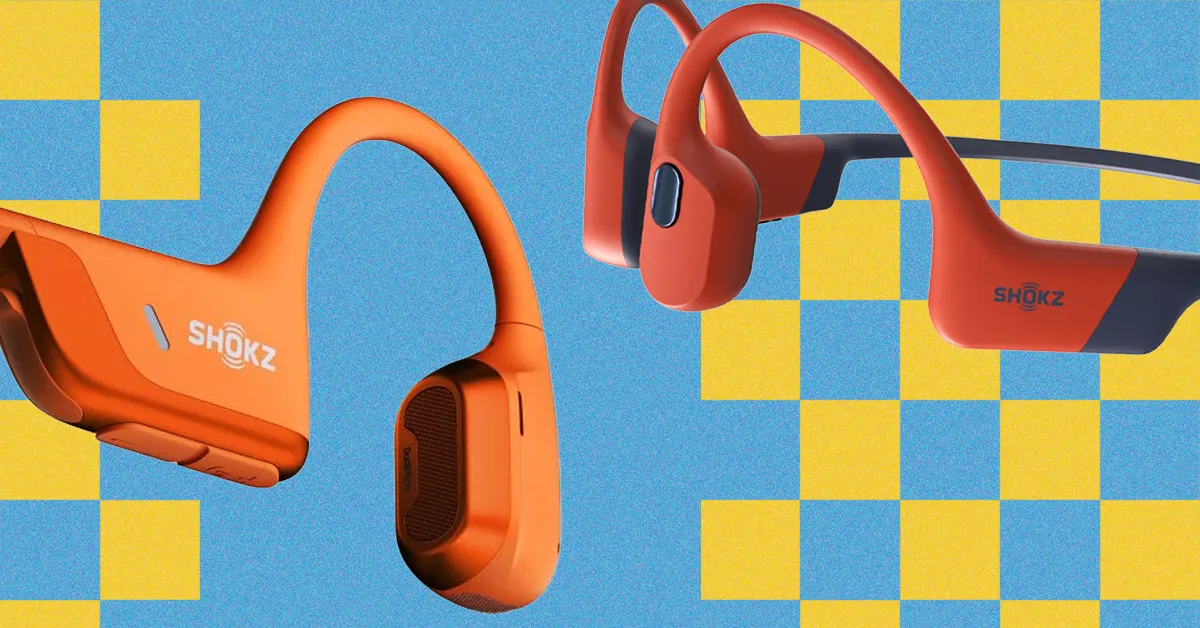
Shokz has long been the leader in bone conduction headphones, despite a minor misstep with the first-generation OpenSwim, which lacked Bluetooth streaming. The OpenSwim Pro rectifies this, making it an excellent choice for far more than just swimming.

Whether you stream via Bluetooth or use the built-in 32-GB music player, the OpenSwim Pro delivers impressive open-ear audio. It offers surprising bass and warmth, along with the clarity needed for audiobooks and phone calls.

With standard and swimming EQ modes, you can easily tailor the sound for land or water. The IP68 waterproof rating ensures strong protection against sweat and water, while the silicone and titanium neckband offers both comfort and a secure fit.

The headphones feature easy-to-reach physical controls and a battery that lasts up to nine hours when streaming via Bluetooth, or six hours when using the built-in music player. While the OpenSwim Pro may not be Shokz’s flagship model, it strikes the best balance of sound, design, and performance, placing it in a coveted position at the top of my list.

Advertisement
Specs
Headphone design Neckband
Weight 27.3 g/0.96 oz
Bluetooth version 5.4
Microphones 2
Battery life 6-9 hours
Music player storage 32 GB
File formats MP3, M4A, WAV, APE, FLAC
Waterproof rating IP68
Charging type Proprietary cable

Source link

Continue Reading

Tech

Sophie Adenot Captures an Aurora Like No Other from Orbit, Showcasing Shimmering Ribbons That Lit the Station from Within

Published

on

ESA Sophie Adenot Aurora ISS
Photo credit: Sophie Adenot
French astronaut Sophie Adenot has shared images and video from one of the strongest aurora displays she has seen during her time aboard the International Space Station. The capture dates to day 127 of her εpsilon mission, logged as orbit 1968, and she called it the most spectacular one yet.


The photographs from Adenot’s camera reveal those magnificent green bands of light twisting and flowing overhead, which are a sight to behold from 400 kilometers above ground. Some shots show the display reaching across the entire planet, while others show a reddish glow higher up in the sky, adding another layer of depth to the image. The robotic arm and station components are also visible, emphasizing how massive this display is.

Sale


Gskyer Telescope, 70mm Aperture 400mm AZ Mount Astronomical Refracting Telescope for Kids Beginners…
  • Superior Optics: 400mm(f/5.7) focal length and 70mm aperture, fully coated optics glass lens with high transmission coatings creates stunning images…
  • Magnification: Come with two replaceable eyepieces and one 3x Barlow lens.3x Barlow lens trebles the magnifying power of each eyepiece. 5×24 finder…
  • Wireless Remote: This refractor telescope includes one smart phone adapter and one Wireless camera remote to explore the nature of the world easily…

Adenot expressed surprise on social media, saying how alive the aurora appeared, dancing and shimmering immediately beneath the station and as far as the eye could see. The show was so bright that it began to cast green shadows within the station itself, a true spectacle she couldn’t capture with her typical settings, she added, and for her, this display was unique, unlike anything else they’d seen so far on this mission. Even though the crew had already been astounded by some of the other displays they’d seen so far on the mission, this one pushed it to a new level.

Advertisement

ESA Sophie Adenot Aurora ISS
Excitement spread fast among the crew as everyone rushed to the windows, each seeking to have the best view point while the lights continued to show outside. A timelapse video she later posted reveals the motion in a manner that static images cannot, with the green ribbons changing and pulsing up and down the frame in a constant wave. Each photo catches a single moment, but that type of video continues indefinitely, demonstrating the continual change that makes events like this so exciting to watch from above.

ESA Sophie Adenot Aurora ISS
For Adenot, a helicopter test pilot in the French Air and Space Forces, all of her experience in fast-changing environments has given her a keen eye for detail when it comes to things that change extremely quickly; this is evident in the way she composes and describes the shots. Furthermore, she is aware that her recordings will be useful to look at in a year’s time, and they also correspond to far larger patterns of solar activity. When charged particles from the sun contact with gasses higher in the atmosphere, they can produce stunning displays like this one, which can be seen from the station all at once.
[Source]

Source link

Advertisement
Continue Reading

Tech

Siri AI’s position on iPhone and Mac will make it a winner

Published

on

Apple is doing it again, it is coming late to the party. But it will eventually dominate AI because of how it thinks about users and about use cases where rivals consider only technical issues.

Even when testing the betas of Siri AI on the same or similar devices, everyone at AppleInsider is having different experiences. For instance, I found that in the first developer beta on both the Mac and the iPhone, Siri AI could be staggeringly irritating and sometimes no better than the old Siri. With the third developer beta of macOS Golden Gate, Siri AI would sometimes just abandon any request I make of it, but was always fine for everyone else.

Across all of the betas, though, we are all finding that there are things Siri AI can do that are exceptional, and better than its rivals. Those irritations will surely be fixed before the public release, too.

Only, it almost doesn’t matter. As long as Apple can at least cut down on the aggravations such as really anything you ask via CarPlay, Siri AI is certain to beat everything else. Apple will go from being behind on AI, to absolutely in front.

Advertisement

It’s just that rather than this being because of the technical quality of Apple Intelligence, it’s because of how Apple thinks about users, and because of how, yet again, Apple owns the whole stack. Apple designs and controls the hardware and the software, and in this case it means specifically that Siri AI is physically better positioned than any other AI app.

Over and over, Apple has come late to new technologies, yet then instantly taken over as the leading provider. It has so instantly demonstrated better ways of doing things that all its rivals with all of their benefit of coming first, have subsequently changed their plans to copy Apple.

You’ve seen that with Wi-Fi adoption, with the death of the floppy disk, the rise of USB, and the death of the headphone jack on phones. Apple’s launching of Siri AI is exactly like this, with the one exception that this time, rivals cannot copy it. Or at least, they cannot copy it on the iPhone because no alternative can be as completely embedded in iOS.

Car dashboard screen displaying Apple CarPlay navigation map, showing current route on Clent Road with arrival time, distance, and nearby streets, surrounded by physical control buttons and air vents

Siri AI on CarPlay is not in beta, it’s in Bane-of-My-Life.

Advertisement

It’s true that the more you know and use AI chatbots, the faster you use them and the quick shortcuts you can find to enter prompts. But for most people, most of the time, if you want to use an AI service, you have to:

  • Know it exists
  • Know it can do what you want
  • Find it
  • Install it
  • Launch it every time you want something

Compare that to the new Siri AI on iPhone:

  • Swipe down the way you always have for Spotlight

There’s still the issue that a user has to think to try something, but Siri AI is part of the familiar Spotlight. And Spotlight will prompt you by trying to auto-complete your searches, showing you a range of what can be done.

Although I wish I could remember what I was searching Spotlight for when it tried to autocomplete “Erase all content and settings” for me.

Open laptop displaying a macOS desktop with a centered floating search-style menu showing options like Erase all content and settings, over a minimalist beige and gray abstract background

This is me trying to recreate something, but Siri AI/Spotlight really did offer “erase all content and settings” as a suggestion when I was searching for something else.

But the thing is that Siri AI is now going to be just a swipe away for every iPhone user, and moreover it’s a swipe that every user already knows to do.

Advertisement

Siri AI is therefore close to omnipresent and it works because Apple has expressly thought about how users might use it. Compare that to Microsoft, which has also made AI a deep part of its OS, but instead of being convenient and useful, its pushing of Copilot antagonizes users.

Then Apple, too, has the advantage that not only can people speak to Siri AI, they will do it in precisely the same way they’ve already learned to with “Hey, Siri,” starting with iOS 8 in 2014. Or then just “Siri,” from iOS 17 in 2023.

So every iPhone user already knows how to use Siri AI, and the only learning curve is about discovering what it can and cannot do.

Open laptop displaying a macOS-style welcome screen with a search or ask bar, keyboard shortcut tips, and a blue Continue button against a soft abstract beige background

One improvement we’ve seen in the beta releases is that Spotlight now always prompts you with “Search or Ask,” letting you know it’s more than a searching tool.

Advertisement

It’s the same for the iPad, but surprisingly it is now also the case that Siri AI is going to be used, and useful, on the Mac. Apple talks a good game about sharing the best features across all of its platforms, but that hasn’t really been the case with Siri, until now.

Whether or not your Mac has a microphone, you’ve at least long been able to tap the Command key twice and call up “Type to Siri.” But you’d always type your search, or your prompt, and then have to wait.

Then it might respond, or more recently it might offer to pass your request on to ChatGPT, and you’d wait again. It’s not like this was slow and it’s not even as if it is any faster on the iPhone, but it was slow enough and disruptive enough that it just felt far less useful on a Mac.

Open MacBook laptop displaying Finder window with several files in a folder highlighted in blue selection, toolbar visible at top, set against a plain white background

This was a real issue I had and Siri AI sorted it. Select a set of documents, right click and you get an Ask Siri box that you can pop a question into.

Advertisement

That’s because while it changed over the years, in its most recent incarnation before Siri AI, when you called up Siri on a Mac, it overlaid a corner of the screen rather than filling it. That made you expect to be able to continue working. Not while you were typing the prompt, of course, but while Siri was acting on your search or query, or perhaps even as you spoke your command into it.

Instead, no. Take your hands off the keyboard, there was no way to continue working on anything while you were using Siri.

Plus speaking of the keyboard, surely the only way anyone ever found Type to Siri was if they accidentally drummed their fingers on the Command key. I’ve definitely activated it more times by accident than I ever did intentionally.

So the keyboard shortcut was little known, and Mac mini and Mac Studio owners don’t necessarily have a microphone by which to invoke Siri vocally. Siri was on the Mac, but it wasn’t for the Mac.

Advertisement

Or at least, that used to be the case.

Putting Siri AI into Spotlight was a genius move

It’s great that swiping down on an iPhone to get Spotlight now gives you Siri AI. Spotlight used to need a certain swipe down the middle from somewhere near the top of the screen, but not actually at the top.

Then actually swiping down from the center at the top of the iPhone screen used to bring up Control Center. If that’s how you were used to doing it, this is a change you’ll take time to get used to.

But for whatever reason, I’ve always got Control Center by swiping down from the top right of the iPhone screen, so I’m fine. That makes me wonder how I ever found Siri AI in Spotlight, but it also makes me suspect that Apple has done this because most people swipe from the center.

Advertisement

The result, though, is the same, which is that you are presented with a familiar Spotlight search which also interprets what you type into there and sends it to Siri AI.

On the Mac, those three people who had found and liked pressing Command twice to call up Siri, can still do exactly that, although it now launches Spotlight instead of a separate glowing Siri dialog. For the rest of us, the familiar Spotlight keystroke of Command-Space brings up Spotlight, which now opens with a bar that says “Search or Ask.”

I use Command-Space to launch Alfred 5, a Spotlight alternative, but I’ve come to like the new Spotlight/Siri AI so much that I’ve given it a keystroke of Option-Command-Space. To set a keystroke, go to Settings, Keyboard, click Keyboard Shortcuts, then go into the Spotlight section and change what’s there to whatever you prefer.

If you listen to the AppleInsider podcast, you’ll have heard me vacillate between how great and how terrible the new Siri AI is. Almost everything great it has done for me, it has done on the Mac, and it is transformative.

Advertisement

The benefits of Siri AI

I just signed a book contract and naturally part of it is that I will deliver one manuscript at the end. But because of back and forth discussing the topic, I’ve ended up with multiple sample chapters and needed to compile them into one Pages document.

Open laptop displaying a dark chat window showing concert ticket details for Dar Williams at The Hive Shrewsbury, with a sleek metallic keyboard and abstract beige background on screen

If it’s on your iPhone, Siri AI can find it. Usually. It’s churlish to point out that it sometimes fails over what appear to be obvious elements, such as recognizing that it actually does have your home address, because overall it’s spectacularly useful.

Only, no matter what I did, the word count for that one Pages document was something like 3,000 words short of the total of all the separate chapters. I can’t tell you how often I started over, opening versions of chapters and copying and pasting, but eventually I did this:

  • Selected all of the chapters in the Finder
  • Right-clicked and chose “Ask Siri”
  • Asked it to compare the selection to a document I named
  • Asked it to tell me what was missing

And it did it. It actually did it stunningly quickly, coming back in a flash with the fact that I’d somehow missed out two whole sections from certain of the chapters. I pasted those sections into the new document and am now somehow 1,000 words over, but I’m okay with that.

Or on a totally different book project, I had to report to the publisher that a grant we’d applied for hadn’t worked out. I wanted to offer an alternative we could do, but it meant my mentioning two particular people who’d been sources on the book and I totally blanked.

Advertisement

Give me a break, it was five in the morning and I really liked both of these people, I just could not remember my own name, let alone theirs. Siri AI told me the answer.

It took a couple of goes, asking about books and sources, but it told me their names and I got to say aloud, oh, yes, of course.

All of this was done at my Mac, where I would never have used Siri before. Using my iPhone, and specifically swiping down so I could type a prompt, I’ve had very good results with map directions.

Shortly I’m going to be driving some people to a thing and it’s a long enough trip that they say they want to stop for lunch partway. They gave me three suggestions and right away Siri AI said, well, that first one is permanently closed so you can forget going there.

Advertisement
Open silver laptop displaying a macOS desktop with a messaging or notes app centered, showing a conversation and map, against a simple gradient background with minimal desktop icons

You can go back to previous searches through the new Siri app on Mac, iPhone and iPad.

I asked it which was the better of the other two and it successfully summarized the two venues based on price and types of food offered. Then I picked one and asked how much time it would add to the drive if we went off the route to reach this place.

All quick, all exactly the kind of natural conversation that Apple promises we can have with Siri AI, and all of it working well.

Except all of it was also done by typing. For some reason, it’s when I speak to Siri AI that it goes so wrong as to be appallingly bad.

Advertisement

Siri AI frustrations

Back in the day, I could be listening to some music as I drive and just ask Siri to add the current track to a certain playlist. Or ask it to play a certain playlist.

They were good times.

Then Apple broke Siri and left it broken for two years. During that time, if you asked anything to do with a playlist, it said it couldn’t find it. Unless you asked again, immediately, in which case very often it would find it and do what you wanted.

With Siri AI, forget anything to do with Apple Music via CarPlay. If I ask for a playlist I’ve called Discoveries, it will play the Apple Music Discovery Station instead, which is not unreasonable.

Advertisement

But if I ask it to play the Heavy Rotation playlist, another one that Apple itself curates, it will almost always play a song called “Heavy Rotation” by a band called Upgrade.

Curiously, if I do this on the Mac, if I type Apple Music commands into Spotlight/Siri AI, it works. It takes a surprisingly long time, but it works.

As I’ve said, mapping things work when I type them too. But I have done rash things like saying aloud, “Siri, take me home via Tim’s house,” and it’s said no.

Or rather, it’s said it doesn’t know where my home is. Ask it why it doesn’t know this and it says the detail is not on my Contact card, even though it is.

Advertisement

Once I asked for directions somewhere and it was so confident that it actually started the Apple Maps route. When I stopped it, pointing out that it had got the wrong place, it apologized, and showed me on screen a one-paragraph biography of a band.

Explain that to me. Because Siri AI couldn’t: it actually then denied having shown me whoever this was.

I wish now that I hadn’t swiped up so quickly and, frankly, angrily, that I didn’t stop to read that bio. I wonder if it were for the band Upgrade. I am single-handedly responsible for their streaming earnings going up.

I’m not kidding about it making me angry. That Apple broke something Siri could do was poor of them, and that they left it broken for years is inexcusable.

Advertisement

But to then launch its improvement and have it still fail at the same things all the time, yes, it warrants the odd off-color response. “I don’t know what to say to that,” Siri has replied to me.

I have some suggestions.

Siri AI still wins

It took me a while to connect the dots and see that, wildly, my Mac is now the best Siri tool. Or rather, that typing to Siri is now exceptionally useful.

Perhaps it’s my British accent, since the betas are set for US English. Certainly, or at least surely, or maybe only probably, all of the problems will be resolved before Siri AI is released publicly.

Advertisement
Black Stream Deck device with eight colorful square buttons showing icons like power, charts, headphones, and lights, plus a small bottom screen displaying weather and system status information

I use the new Siri app so much that I’ve given it a button on my Stream Deck. It’s on the bottom row, second from the left.

But if I’m not kidding or exaggerating about the frustrations, I’m also not putting you on about how Apple is going to win with Siri AI because of where it has put it, and how it has thought about users.

Because despite my blood pressure being driven up at times, I keep coming back to Siri AI. In the car, that’s just stupid and I put it down to the years of habit before Siri was broken.

But for everything else, especially at the Mac, I keep coming back because it’s at least good enough, and it is right there. It’s a “Siri” command away, it’s a Spotlight command away, and when you invoke it, you can go straight back to working instead of folding your arms and waiting.

Advertisement

I do also find that anything that involves Siri searching its World Knowledge was initially a bust. It’s no good at searching AppleInsider for articles I’ve written about specific topics. For that, since Google is also now a bit poor, I use Claude and it finds everything.

Otherwise, though, World Knowledge does somehow seem to have improved, or perhaps I’ve learned not to bother asking it about particular buildings I’m looking at.

Although I do still keep using Visual Intelligence. I am finding that having it now be part of the camera app means that I sometimes wish it would please stop trying to help me, I’m just taking a photo.

But here’s a measure of Siri AI’s effectiveness. For a year or more now, I have added buttons on my Stream Deck for various AI apps, and eventually settled on just having Claude there.

Advertisement

I’ve not replaced that button yet, but it has come close, and I have added a new button just to open the Siri AI app. If I’ve asked Siri AI something and then closed its response but want to recheck anything, I’ll push that button and be back in the app, back in the conversation.

Mind you, the reason I have a spare Stream Deck button to use for this is that it was previously set to open iPhone Mirroring. That has never once worked for me again since the macOS Golden Gate betas launched.

You know it will, though, you know that issues like this will be fixed by the time macOS Golden Gate comes out of beta testing.

Yet even now, even with frustrations, I am reaching for Spotlight and Siri AI on the Mac, I am pushing a Stream Deck button, and I am talking to Siri on my iPhone. And I am using it far more than any other AI app I’ve got, chiefly because it’s right there where I need it to be.

Advertisement

Rivals try to sell their AI services using terms like agentic or boasting about tokenmaxing, and wonder why people aren’t rushing to buy. What Apple has done, even in this bumpy beta, is provide useful tools and put them where they are needed.

That’s all. But when Apple is firing on all cylinders, that’s what they do. Siri AI is doing just that.

Between Siri finally being good, and Apple earning from other AIs on the App Store, in the long run, Apple is going to be the winner of the AI revolution, or bubble, depending on what you believe.

Advertisement

Source link

Continue Reading

Tech

10 US companies actively recruiting in Ireland this 4 July

Published

on

If you are based in Ireland but have ambitions to work for a US multinational then make sure to check out these 10 companies, all of which are looking to add to their teams.

For people in the US, this coming Saturday is 4 July, a national holiday that celebrates the US’ independence. But just because you aren’t based in the US, doesn’t mean you can’t find a way to get into the spirit. 

With that in mind, SiliconRepublic.com has compiled a list of some of the US multinationals with offices in Ireland, that are actively looking to boost their teams. So, if you are a jobseeker, or want to move companies, make sure to check out the list, you never know, your next big career adventure could await you. 

Amgen

US pharmaceutical multinational Amgen has been in Ireland since 1998 and employs around 1,250 people across its three sites in Santry, Dún Laoghaire and Waterford. Advertised roles include manufacturing process technician, senior maintenance technician, engineer for inspection and packaging and QA specialist, among other opportunities. 

Advertisement

BMS

US pharmaceutical Bristol Myers Squibb, or BMS, has had a presence in Ireland since 1964 and in those six decades the company has established businesses in Swords, Dublin, Cruiserath, Dublin, Blanchardstown, Dublin and Shannon, Clare. BMS employs around 1,000 people across the country. For professionals based in the region, vacant roles include project programme management, drug product associate in sterile drug products, scientist in analytical strategy and lifecycle and senior specialist in QC quality systems, among others. 

Boston Scientific

Massachusetts-headquartered medical equipment manufacturer Boston Scientific operates three Irish locations, in Tipperary, Cork and Galway. The organisation has held a presence in the country for more than 30 years and in April of this year announced an investment of €75m to be put towards the expansion of its R&D capabilities in Galway, as well as the opening of new, purpose-built laboratories. Job applicants should consider roles such as quality engineer III, principal quality specialist, quality system specialist and principal chemist. 

Cisco

California-based technology company Cisco has been in Ireland since the mid-1990’s. In Galway the Cisco team is looking to boost numbers with a cloud engineering technical leader, software engineer for application development, senior software engineer and software engineer for the cloud platform. In Dublin vacancies include threat detection engineer, software engineering manager and senior software engineer, alongside other opportunities. 

Fidelity Investments

Boston-headquartered financial services firm Fidelity Investments has operated in Ireland since 2000 and has premises in both Galway and Dublin. There are plenty of roles at both locations, for example, the Galway office is looking to recruit a senior software engineer in test, a cloud engineer, a principal QA engineer and an ECS product analyst. In Dublin there are opportunities for a corporate actions analyst and a senior manager in software engineering for core custody.

Advertisement

MSD

Originally established in New Jersey, pharmaceutical company MSD employs roughly 2,500 people in Ireland across its five sites in Tipperary, Cork, Carlow and Dublin and first came to the region in the 1970s. Currently the organisation has vacancies for roles across four departments, manufacturing and QA, engineering, IT and digital data and research and development. Available jobs include senior specialist in microbiology, microbiology technical specialist, API maintenance lead and process scientist, among others. 

Regeneron

US multinational Regeneron has multiple global locations, including in Dublin and Limerick. The Dublin-based team is looking to recruit an associate director for global patient safety, a medical affairs senior coordinator and a senior manager in aggregate reporting management. Limerick vacancies include roles for a principal data engineer, an associate manager for quality control, a principal QA specialist in IT and a project engineer. 

Rent the Runway

Headquartered in New York and established in 2009, Rent the Runway first came to Galway, Ireland in 2019. The e-commerce platform currently has three roles open to professionals based in the country. The engineering team is looking to employ a senior observability engineer, a senior software engineer and a software engineer III. 

Workday

US software company Workday has its European headquarters in Dublin and is currently looking to recruit professionals to a number of its teams. Open roles include opportunities for a cybersecurity engineer, site reliability engineer, AI senior data scientist, a technical implementation manager and a senior developer for agentic AI engineering.

Advertisement

Yahoo

US messaging and technology company Yahoo launched its Irish headquarters in early 2025, at the EXO building in The Dublin Docklands. There are two roles open to Ireland-based professionals currently. A senior data engineer job and a senior software apps engineer job, both under the Yahoo Mail division. 

Don’t miss out on the knowledge you need to succeed. Sign up for the Daily Brief, Silicon Republic’s digest of need-to-know sci-tech news.

Source link

Advertisement
Continue Reading

Tech

IQM, Europe’s first public quantum company, admits the future of the tech is uncertain

Published

on

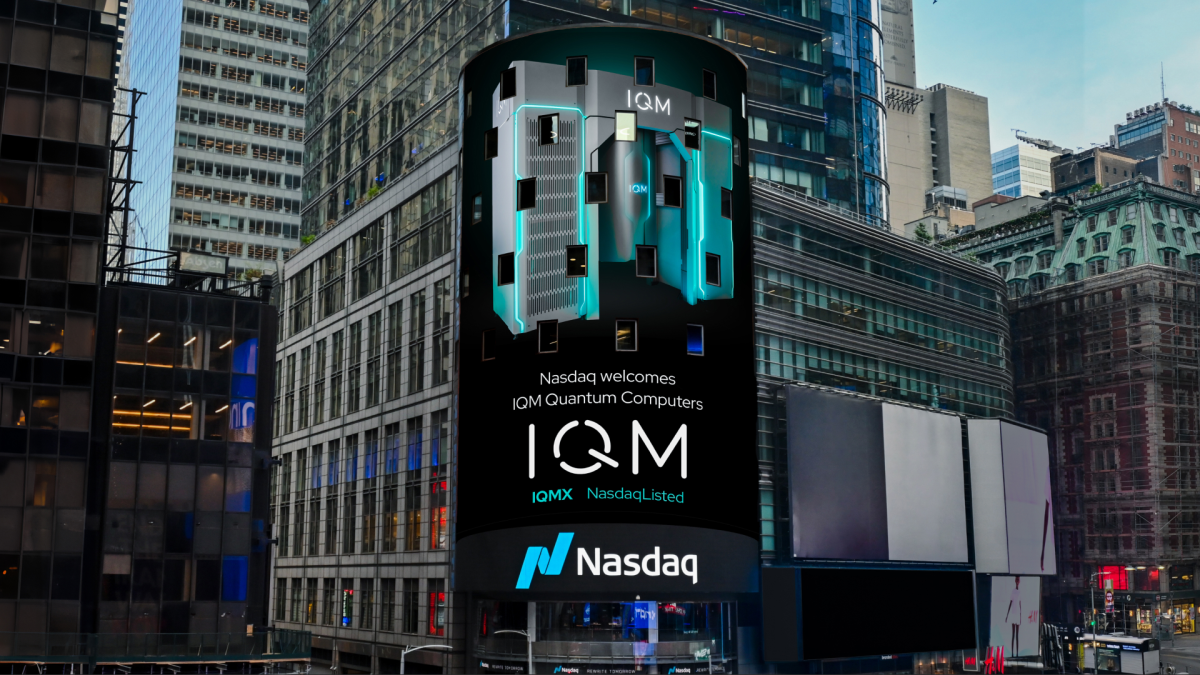
IQM, a full-stack quantum company out of Finland, went public on the Nasdaq Thursday via a SPAC merger at a valuation of about $1.9 billion. But share prices didn’t pop. They spent most the day below the IPO price — a lukewarm welcome.

SPAC mergers are often not immediately popular with retail investors these days. But this fizzle was arguably fueled by IQM’s own admission in its prospectus that “large-scale commercial traction of quantum computing technology may never occur.”

In fairness, this warning applies to all quantum companies. Yet, that hasn’t stopped the industry, including IQM, from acquiring customers, who use the tech as it is today for tasks like simulations and optimizations. IQM, which sells actual physical computers, as well as a cloud service, has customers like VTT Technical Research Centre of Finland and Leibniz Supercomputing Centre in Germany.

“We sell computers into advanced supercomputing centers and data centers, and we sell computing time through the cloud,” its CEO and co-founder Jan Goetz told TechCrunch.

Advertisement

Having grown from eight customers in 2024 to 22 in 2025 is a fair motive for celebration in IQM’s circles, especially when two recent customers are from the private sector. But it also suggests that demand won’t scale until the “quantum advantage” — when quantum chips start outperforming classical computers for a larger range of complex and lengthy tasks, unlocking use cases from biotech to fintech, while potentially upending encryption.

But no one, not even a company making quantum computers, can say when that might be.

This hasn’t stopped investors from doubling down on quantum companies public and private, further encouraged by President Trump’s recent executive orders to accelerate the timeline for quantum. In response, the U.S. Department of Energy (DOE) has committed to deploying “the world’s first fault-tolerant, scientifically relevant quantum computer” by 2028.

While this follows similar announcements from France, Germany, and the U.K., Trump’s orders carry extra weight for IQM, which has recently established a quantum tech center in Maryland and deployed a computer at Oak Ridge National Laboratory, which is part of the DOE. “We can benefit directly from it,” Goetz said.

Advertisement

Unlike other European unicorns, however, IQM isn’t moving its center of gravity to the other side of the Atlantic. In parallel to its IQMX ticker in the U.S., where most of its quantum peers are listed, it is due to debut tomorrow on Nasdaq Helsinki, where it expects continued support from the likes of Tesi, Finland’s sovereign wealth fund.

IQM’s story is indissociable from Finland. It was founded there in 2018 as a spinout from Aalto University in Espoo, a tech and quantum hub near Helsinki where two-thirds of its staff still work. But another hundred out of its 420-people team are based in Munich, with the remainder split around various locations to help the company in its global deployment roadmap.

In its prospectus, IQM noted that this duality appealed to RAAQ, the blank check company that helped IQM go public via a SPAC. “As evidenced by over €200 million in public support for IQM, European sovereign states and companies have supported IQM’s emergence as a prominent quantum computing company in Europe. IQM also demonstrated its ability to operate outside of Europe,” according to the RAAQ board.

Despite global ambitions, Goetz expressed pride at IQM becoming the first European quantum company to list in the U.S. — within a hair’s breadth, as French competitor Pasqal also announced plans to go public via a SPAC. “It always feels good to be first and to be a pioneer, but ultimately it’s about long-term success,” Goetz said.

Advertisement

The operation will generate new liquidity for IQM — approximately €198 million after costs, or $226 million. But the company had already raised $300 million last September. “It’s a big success raising very shortly after the Series B,” Goetz said. This also reflects that IQM’s main goal was to position itself more prominently in a race still full of unknowns.

When you purchase through links in our articles, we may earn a small commission. This doesn’t affect our editorial independence.

Source link

Advertisement
Continue Reading

Tech

Godot’s New Contributing Policy Adds Barriers For AI Slop

Published

on

Like so many large and popular open source projects these days, the Godot game engine struggles with an influx of pull requests. The situation has become increasingly dire due to the advent of AI-generated code. More specifically, the issue involves the inverse relationship between PR code quality and the number of PRs, which wastes a lot of time on the side of a limited number of (volunteer) reviewers. This has now forced the project to update its contribution policy.

An interesting point raised in the announcement article is that of the demoralizing effect of AI-generated PRs on reviewers. Often the human behind such a PR isn’t interested in being educated, or may even be an automated agent which isn’t capable of productive discussion on pros and cons of certain coding approaches — never mind in becoming a more permanent maintainer for the project.

This problem has led to new rules being instated, which include a ban on autonomous AI agents and vibe coding, a ban on substantial AI generating of code, and a ban on AI-generated text in human-to-human communication. It also codifies the requirement that all PRs are to be reviewed and approved by a human being before merging.

Advertisement

In many ways this new policy is similar to that of the Mesa project, which demands code comprehension on the side of the submitter, although it doesn’t go as far as NetBSD, which just outright treats LLM-generated code as ‘tainted’ due to potential licensing and other concerns. Other projects like the Linux kernel opt to make the human submitter responsible for any AI tool usage by forcing them to declare it.

Meanwhile there are also indications that such ‘AI tool’ usage is reducing useful interactions with open source projects. What the future will bring here remains to be seen, but at least as far as open source projects go these tools are clearly increasingly being banished.

Advertisement

Source link

Continue Reading

Tech

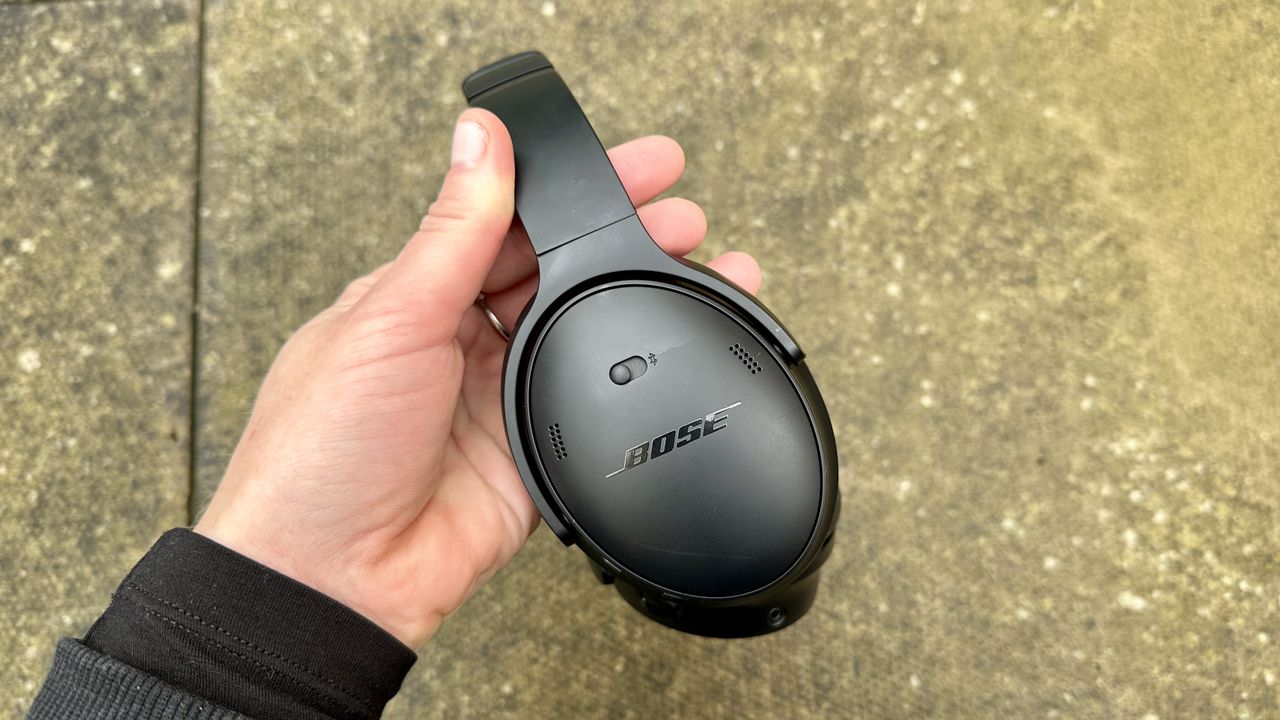
The Bose QuietComfort Headphones just dropped to their lowest price yet on Amazon

Published

on

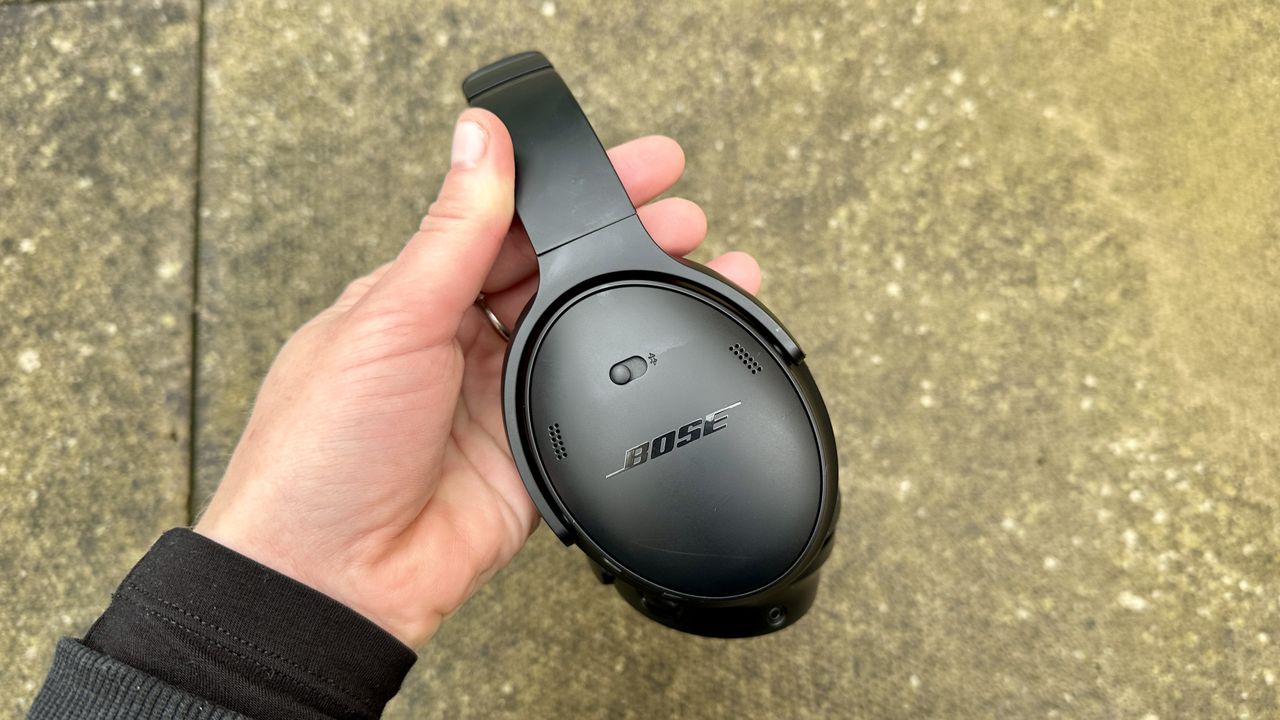
Right now, you can get the Bose QuietComfort Headphones at Amazon for $179 (was $359). That’s the lowest price yet for the excellent headphones and a continuation of the same deal we saw during the recent Prime Day sale.

Sales are cyclical, and it’s already halfway through the year. Since this is the lowest price we’ve seen for the Bose QuietComfort Headphones, once it expires, I wouldn’t count on seeing it again until a major commercial holiday like Black Friday or Cyber Monday.

Today’s best headphones deal

Advertisement

The QuietComfort are some of the best Bose budget headphones, even if the word “budget” is more comparative to the price of the QuietComfort Ultra. They are intentionally designed to be light, offer a comfy fit and focus on active noise-cancellation for an affordable price.

Overall, these cover the basics well and keep the noise out for much less than the pricier but more powerful QuietComfort Ultra counterpart. These have stayed a popular, fuss-free choice if you’re looking for a reliable brand with ANC and aesthetics.

In our Bose QuietComfort Headphones review, we rated it four out of five stars for the ANC, comfort, portability, and ease of use. Our reviewer clocked up to 26 hours of battery life during testing, which is lower than many other competitors but still acceptable given the specs.

For more, see our best headphones (for more than just wireless) and best wireless headphones. We even have a list of best wireless earbuds for those who prefer in-ear listening.

Advertisement

Source link

Advertisement
Continue Reading

Tech

Supreme Court Decides Not To Destroy The First Amendment Just Yet

Published

on

from the phew dept

While we’ve been discussing a bunch of other Supreme Court end-of-term decisions this week, we should also call out two decisions the Supreme Court thankfully decided not to make. These non-decisions continue to help preserve First Amendment speech protections.

First, and most importantly, they rejected Alan Dershowitz’s attempt to appeal his laughably embarrassing SLAPP suit against CNN, which was filed in the hopes of getting it before this Supreme Court as part of the ongoing and extremely dangerous project by the rich and powerful to dismantle the “actual malice” standard found in NYT v. Sullivan. If you want to learn more about that dangerous project, listen to the podcast I recorded with reporter David Enrich, whose book, Murder the Truth, goes deep on this issue.

Dersh seemed to really hope that his case would be the one to overturn Sullivan, but it’s not to be. The Supreme Court denied cert. Of course, with that denial, Justice Clarence Thomas decides to pen another whiny blog about how much he hates the “actual malice” standard. He cites his own previous whining as well as his mentor’s, former Judge Laurence Silberman, who picked up the same cause soon after Thomas starting yelling about it.

The “actual malice” standard for public figures “bears ‘no relation to the text, history, or structure of the Constitution.’” Berisha v. Lawson, 594 U. S. ___, ___ (2021) (THOMAS, J., dissenting from denial of certiorari) (slip op., at 2) (quoting Tah v. Global Witness Publishing, Inc., 991 F. 3d 231, 251 (CADC 2021) (Silberman, J., dissenting)….

Instead, Thomas believes that public figures deserve extra special protection from critics, again citing his own previous whining:

Advertisement

Instead, the founding generation believed that, if anything, public figures had stronger claims for damages when they were defamed. See McKee v. Cosby, 586 U. S. 1172, 1177 (2019) (THOMAS, J., concurring in denial of certiorari). I and others have thus called for reconsideration of the actual-malice standard for public figures.

Thankfully, seven other Justices have no interest in this. However, Thomas did get Gorsuch to sign on to this, which perhaps isn’t surprising, as he’s joined Thomas’s anti-actual malice crusade in the past. However, in Enrich’s book, he uncovers that Gorsuch’s hatred for “actual malice” was based on a study… that was wrong. Apparently Gorsuch hasn’t adjusted his position, even though the data he has relied on has been proven to be incorrect. Not great, but at least this misinterpretation hasn’t infected others on the court yet.

The actual malice standard is what makes First Amendment speech protections function in practice — it’s the mechanism that keeps powerful people from drowning critics in expensive litigation. I get that Clarence Thomas hates the fact that people criticize him and his rich and powerful friends, but that’s a reason for him to go retire somewhere, not to rewrite one of the core planks that makes the First Amendment work.

The other denial is a bit less eventful. The Court refused to hear an appeal from Donald Trump on his $5 million loss (by jury verdict) in one of the defamation suits filed by E. Jean Carroll against him:

In November, Trump came to the Supreme Court, asking the justices to hear his appeal. He contended that Carroll’s lawyers should not have been allowed to introduce testimony by other women who also alleged that Trump had assaulted them, as well as the 2005 “Access Hollywood” tape in which Trump bragged about grabbing women by their genitals.

In her brief responding to Trump’s petition, Carroll argued that even if the jury should not have been allowed to consider the evidence, it ultimately would not have made a difference because the rest of her case was so strong. She asked the justices to deny review.

Advertisement

On Monday, the justices did so, without a noted dissent from the denial.

Of course, this is just one of two separate cases that Trump lost to Carroll on, and he’s also appealing the other one — the $83 million verdict — and that’s still pending. However, for now Trump appears shocked that his buddies on the Supreme Court didn’t get him out of this particular pickle. Once again, nothing short of total, unconditional loyalty will ever satisfy Trump.

In the meantime, though, we have the Court passing on these two cases, both of which might have messed with the basic standards regarding defamation. Passing on both means that, for now, the Supreme Court hasn’t taken a sledgehammer to First Amendment protections.

Advertisement

Filed Under: 1st amendment, actual malice, alan dershowitz, clarence thomas, defamation, donald trump, e. jean carroll, free speech, neil gorsuch, nyt v. sullivan

Companies: cnn

Source link

Advertisement
Continue Reading

Trending

Copyright © 2025