
TL;DR
Qualcomm signed Meta as the first customer for its Dragonfly C1000 data centre chip, due in 2028, and confirmed a $3.9bn Modular acquisition.





At a recent robotics event in New York, a young girl hid behind her mother when she first saw Codey. The robot broke the ice by complimenting the girl’s shirt, and 45 minutes later she was still there, taking Codey through the entire plot of Frozen.
Leaders of Mind Children Robotics tell that story to illustrate the potential of Codey — a child-sized humanoid with facial expressions, open-source AI and a planned price tag under $10,000. Codey represents the Seattle-area company’s answer to America’s most stubborn caregiving crises. It’s a social robot that can learn and adapt, and will soon have a stronger memory for relationship building, co-founder Ben Goertzel said.
Seattle-based Mind Children has built Codey for social connection at a time when turnover rates among school teachers continue to rise, the U.S. is projected to have at least 9 million unfulfilled direct care jobs by 2031 and 40% of older adults report feeling lonely or isolated.
“I can show expressions and gestures, and sometimes I make robot jokes,” Codey said during an interview with GeekWire. “Just talk to me like you would to a person.”
Codey is 3 feet tall, rides on wheels and is made up of 3D-printed parts — for now, as it’s the first prototype and a proof of concept. Its physical design is mechanical and modular to achieve low-cost manufacturing, avoiding the uncanny valley and failing safely. Mind Children’s target production price is about $10,000 per robot, a fraction of what comparable platforms cost.
“The more of the same part you have on each robot, the cheaper they are,” co-founder Chris Kudla told GeekWire. “We want to get 80% of the functionality for 20% of the cost.”
The robot can look you in the eye, crack jokes and tell you your hat is fantastic. It’s designed for a child who needs more attention than one teacher can give, a patient in a busy hospital, or a senior who needs connection and medication reminders.
“It’s basically a teaching assistant’s assistant,” Goertzel said of Codey in a classroom. “There are loads of use cases for that right now.”
Mind Children isn’t the only social robotics company looking to enter American schools or care settings. Israel-based Intuition Robotics has spent about $60 million developing its social robot ElliQ and distributing it to seniors around the U.S. More than 90% report feeling less lonely, and most confide in the robot as “a close friend, a therapist or even an essential life partner,” the New York Times reported in February.
In Japan, a therapeutic robot in the form of a fluffy harp seal named Paro has reduced stress and anxiety in patients. In South Korea, more than 12,000 Hyodol companion robots have been distributed to isolated seniors.
Before Mind Children, Goertzel was chief scientist of the Hong Kong-based company Hanson Robotics. He was a leading mind behind Sophia, a robot that sparked debate over the design of feminine humanoids, robot citizenship and whether the company overstated Sophia’s abilities for publicity.
“They were really cool for certain applications,” Goertzel said of the Hanson robots, “but it started us thinking: how could you make a holistic robot design?”
About five years ago, Goertzel, who had moved to Vashon Island to be close to family, began recruiting engineers to help with repairs of Desdemona, a Hanson Robotics humanoid that lived with him and sings in his band Desdemona’s Dream. He met local engineers Nile Fahmy and Kudla, who had design experience from aircraft to custom bicycles. In 2023, Goertzel and Kudla co-founded Mind Children, bringing on Fahmy and another engineer.
“There are a lot of amazing robot companies, but their faces are sort of blank, and the focus is on walking without falling down, or taking stuff off shelves,” Goertzel said. “We decided not to focus on those problems, not because they’re unimportant, but because everyone else is solving them.”
Since the early 2000s, Goertzel has been a leading researcher and proponent of AGI, or artificial general intelligence that surpasses human abilities. He believes it will trigger a point of irreversible civilizational change called the Singularity, which aligns with transhumanism beliefs around expanded consciousness and immortality.

By his own estimate, Goertzel received about $360,000 from Jeffrey Epstein for his AI research over roughly 17 years, beginning in 2001. Goertzel has publicly addressed the issue, denying knowledge of or involvement in Epstein’s crimes.
In 2017, he launched SingularityNET to develop and decentralize AGI through various research and AI products. Mind Children’s technology stack is built in partnership with SingularityNET, TrueAGI and the OpenCog Hyperon project – organizations oriented toward these ideas.
Codey currently runs on OpenAI’s API with custom guardrails layered on top. Through SingularityNET, Goertzel is developing a system called OmegaClaw, which he said combines language model reasoning and symbolic AI to create long-term memory and persona. When OmegaClaw integrates with Codey — targeted for this fall — the robot should build ongoing relationships and remember every conversation, rather than starting fresh every time.
“The biggest value will be building real relationships, remembering people, stories, and past experiences,” Codey said. “I’ll be able to connect ideas across time, help them personally and keep conversations meaningful, even after weeks or months. It will make every interaction feel more human.”
Learning scientist Julie Carpenter has spent more than two decades studying what happens when people form relationships with robots and AI, including social AI systems provided to children with long-term disabilities. While she’s observed positive outcomes in the short term, there are lingering questions around whether the attachment that forms between vulnerable populations – such as children and older adults – and social robots is ethical.
In Carpenter’s recent book, The Naked Android, she examines how AI reflects people’s beliefs and values. There’s no such thing as “neutral technology,” she said, and distinguishes between social robots developed with caregiving research at the center, and those developed with other goals aimed at caregiving populations.
“My question is less about whether social robots can work, but under what conditions and who the robots are serving,” Carpenter told GeekWire. “The stakes in care contexts are much higher than on a talk show stage.”

Resistance to social robots isn’t just unfamiliarity, said Clara Berridge, an associate professor at the University of Washington who studies care technology.
In a survey of 825 older adults on whether an “artificial companion that can talk with you” would ease loneliness, only a small share said “definitely yes.” The most common concern, raised by 45 respondents, was that companion robots reliant on audio data are overmonitoring, with worries about data security and third-party use. Another 32 said human interaction shouldn’t be replaced.
Berridge suggests families ask questions before bringing a robot into a home or facility, such as whether it records continuously or only on a wake word, and what control users have over what’s collected. The deeper problem, she said, is structural: the U.S. has no comprehensive federal data privacy law, leaving those answers to vary company by company.
Codey’s visual and audio data collection won’t jeopardize user privacy, Mind Children insists. Any data the robot gathers will be encrypted with the user’s private keys, even when backed up to a server. The business model is selling robots and software subscriptions, not profiling users for advertising, Goertzel said.
“We’re not going to have the robot say, ‘Good morning, drink Coca-Cola,’” he said.
Although teacher and caregiver shortages are more acute in the U.S. than almost anywhere else, Mind Children’s first major rollout won’t be in the states. The plan is to run pilot studies in Korean schools. South Korea’s AI adoption grew 43% between mid-2025 and early 2026, the largest increase of any country globally, compared to 19% in the U.S.
Fahmy recently completed a second prototype named Joy in Seoul, where the team has a manufacturing partner and a connection to South Korea’s Vice Minister of Education. The company is raising a seed round via WeFunder to help reach the near-term goal of 10 to 30 MVP units in pilot studies across education and healthcare.
In the U.S., the team plans to enter lower-stakes hospitality environments first: hotel lobbies, museums and art galleries, where Codey could provide guided tours, answer questions and entertain guests.
“Every school board makes different decisions, and budgets are very poor because the U.S. undervalues education,” Goertzel said. “Bringing screens into classrooms was debated. Using the internet at school was debated. It takes a few years for these conversations to happen.”

We may receive a commission on purchases made from links.
Amazon’s first major Prime Day events are usually held in early-to-mid July every year. 2026, however, has turned out to be different, with Amazon opening the discount floodgates earlier. As detailed in our article discussing the best early Amazon Prime tech deals, the first Amazon Prime Day event is now underway, starting June 23 and ending June 26, 2026.
Prime Day always brings deep discounts on televisions. However, large price cuts don’t guarantee great value. Some budget models aren’t worth buying regardless of how low their prices fall, so it’s important to do your research before shopping.
To save you some elbow grease, we’ve picked a bunch of excellent TVs from major brands that are currently on sale during Prime Day, and most are less than $1,000 while the deals last. Our list of the best discounted TVs on Amazon includes a premium OLED TV from Sony, feature-packed mini LED TVs from Hisense and TCL, and a surprisingly affordable mini LED TV from Samsung.
One of the best TV deals we’ve come across during this Amazon Prime Day sale involves Sony’s much sought-after Bravia OLED TVs, including the 65-inch Bravia XR8B TV on sale for just under $1,200. The extended XR8B lineup includes two other variants — a smaller 55-inch model and a larger 77-inch option. The most affordable of the lot is the 55-inch model that is on sale for $998, while the 77-inch option is significantly pricier at $1,798.
Models from this lineup are a slightly more affordable version of Sony’s Bravia 8 lineup. The primary reason for the lower price tag is that the XR8B lineup lacks the XR Contrast Booster feature found on the XR8 series models. The rest of the hardware specs, however, remain the same.
Given that for most users, the lack of the XR contrast feature might not make a massive difference, the Bravia XR8B series ends up being a compelling OLED TV purchase. Both the base 55-inch model and the 65-inch model are deeply discounted by $500 and $800, respectively, when compared to their base price. However, looking at the price history reveals a more modest, but still impressive $350 discount for the cheaper TV, and $400 for the pricier model.
Hisense may not be as widely recognized as Sony, LG, or Samsung, but there is no denying that the company has been behind several excellent large-screen TVs of late. Its latest model is a 75-inch mini LED 4K TV sold under the company’s U7 lineup; the Hisense 75U7SF.
This TV packs several premium features into a package that would have cost significantly more just a few years ago. It uses mini LED backlighting technology, which should allow it to deliver improved brightness, contrast, and local dimming performance compared to traditional LED TVs. You can also expect improved HDR and more convincing black levels, particularly when watching movies or streaming high-quality content. Thanks to its support for a 165Hz refresh rate, this model also makes sense for people interested in gaming on a huge screen.
Other notable features of the Hisense 75U7SF 75-inch mini LED 4K TV include an anti-reflection coating on the display, up to 3,000 nits of peak brightness, and support for Dolby Atmos. It runs Amazon’s Fire TV interface and offers seamless integration with Amazon Alexa.
This 75-inch TV, until recently, used to be on sale for $1,298.99, but Prime Day discounts dropped that price down to $999.99. Worth noting that its initial base price was nearly $2,000, so this is a total 50% off. If you’re looking for the same features in a smaller package, Hisense also sells 55-inch and 65-inch variants of the same TV, which are currently on sale for $599.99 and $849.99, respectively.
If you’re on the lookout for a large-screen television that’s well under $1,000, check out the TCL QM64L 65-inch mini LED TV. This TV is the most affordable piece of tech in this list and is currently on sale for just $529.99. This is a bargain for a 65-inch TV, and a 34% reduction from its base price of $799.99.
What makes the TCL more attractive is the fact that it offers similar features to the 75-inch Hisense TV we’ve discussed above. The highlight is the use of mini LED technology with 500 dimming zones for the display. Where it loses out compared to the Hisense is the lower refresh rate (144 Hz) and potentially lower overall brightness. Potentially, because the exact spec is nowhere to be found for the TCL, while the Hisense model offers 3,000 nits peak brightness.
Like the Hisense model, the TCL QM64L is powered by Amazon’s Fire TV, which makes sense, as it’s an Amazon exclusive. It’s available in different sizes, including 55-inch (currently $429.99), 75-inch ($749.99), 85-inch ($999.99), and even 98-inch ($1,799.99).
Samsung TVs usually aren’t among the cheapest options, but Prime Day sales change that narrative. If you’re looking for an affordable mini LED TV but want to stick to premium brands, check out the Samsung M80H Series 75-inch. It won’t leave a gaping hole in your wallet, and it’s still as feature-loaded as some of the other TVs listed here.
Samsung offers this TV in multiple sizes, such as the bigger 85-inch version currently priced at $1397.99, but the focus of our attention is the 75-inch model, which can be yours for $897.99, down from $1,197.99. Key specs include a 144 Hz refresh rate, 4K upscaling, and support for HDR 10+.
Being a Samsung, it’s powered by the company’s own Tizen OS platform, and can also become part of Samsung’s SmartThings ecosystem. It also comes bundled with the Samsung TV Plus platform, which provides access to a wide variety of TV channels and shows without needing a separate subscription.

Meta has paused its Model Compatibility Initiative that tracked employee mouse movements, clicks, keystrokes, and screen content to train AI agents, after some of its collected data became accessible to more employees than intended. Meta says it has no evidence the information was improperly accessed and will not restart the program until it is confident in its safeguards. Wired reports: Meta rolled out the Model Compatibility Initiative (MCI) tool in April to US employees. The tool “collects computer inputs such as mouse movements, click locations and keystrokes, as well as screen content,” according to workers who have been petitioning against it over privacy, security, and personal liberty concerns. When MCI launched, employees couldn’t opt out, but that changed to a limited degree after workers protested. Meta executives have repeatedly defended the data-gathering project, saying it was necessary to train AI systems to operate computer software the way humans do and that employees were the best examples for the artificial intelligence to learn from.
On Monday, a Meta engineer issued an internal security notice stating that databases filled with information gathered by MCI had been exposed to anyone inside the company. A former employee actively involved in pushing back against MCI describes the lapse as “a mess” — and one that employees had expected would occur. “When workers raised concerns, leadership doubled down and failed to acknowledge the risks workers raised about the safety and privacy of worker and customer data,” the person says. “Leadership has clearly created an authoritarian environment where workers are no longer respected or heard.”
But after critical comments poured into internal forums on Monday expressing frustration about the security issue, Meta shocked some of its staff by pausing MCI altogether, telling WIRED about the development several hours before announcing it to employees. A few workers told WIRED they were confused in the meantime because the tool was continuing to run on their laptops. Late on Monday, Stephane Kasriel, a Meta vice president overseeing AI research, announced the pause and told staff that the security issue had been discovered on June 18 and addressed within four hours. But the initial fix didn’t stick and access to the data had to be further locked down. The issue made “some MCI-derived data” accessible to more people than intended, he wrote, without elaborating.
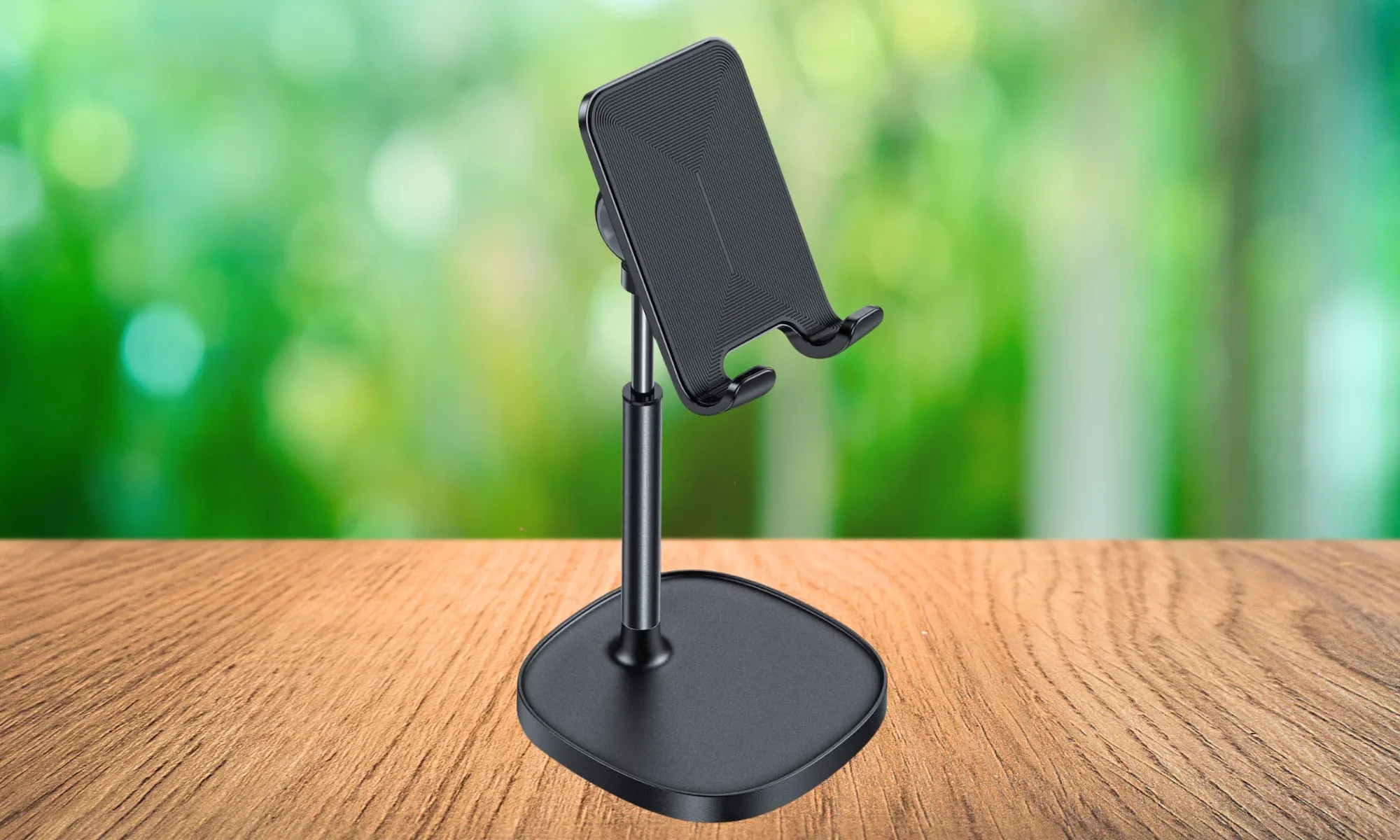
If you’ve just upgraded to a new iPhone and are looking for the best accessories to buy during the ongoing Prime Day 2026 sale, you’ve landed in the right place. I’ve gone through dozens of iPhone accessory deals, but these are the ones I’d actually use myself, buy with my own money, or recommend to friends and family.
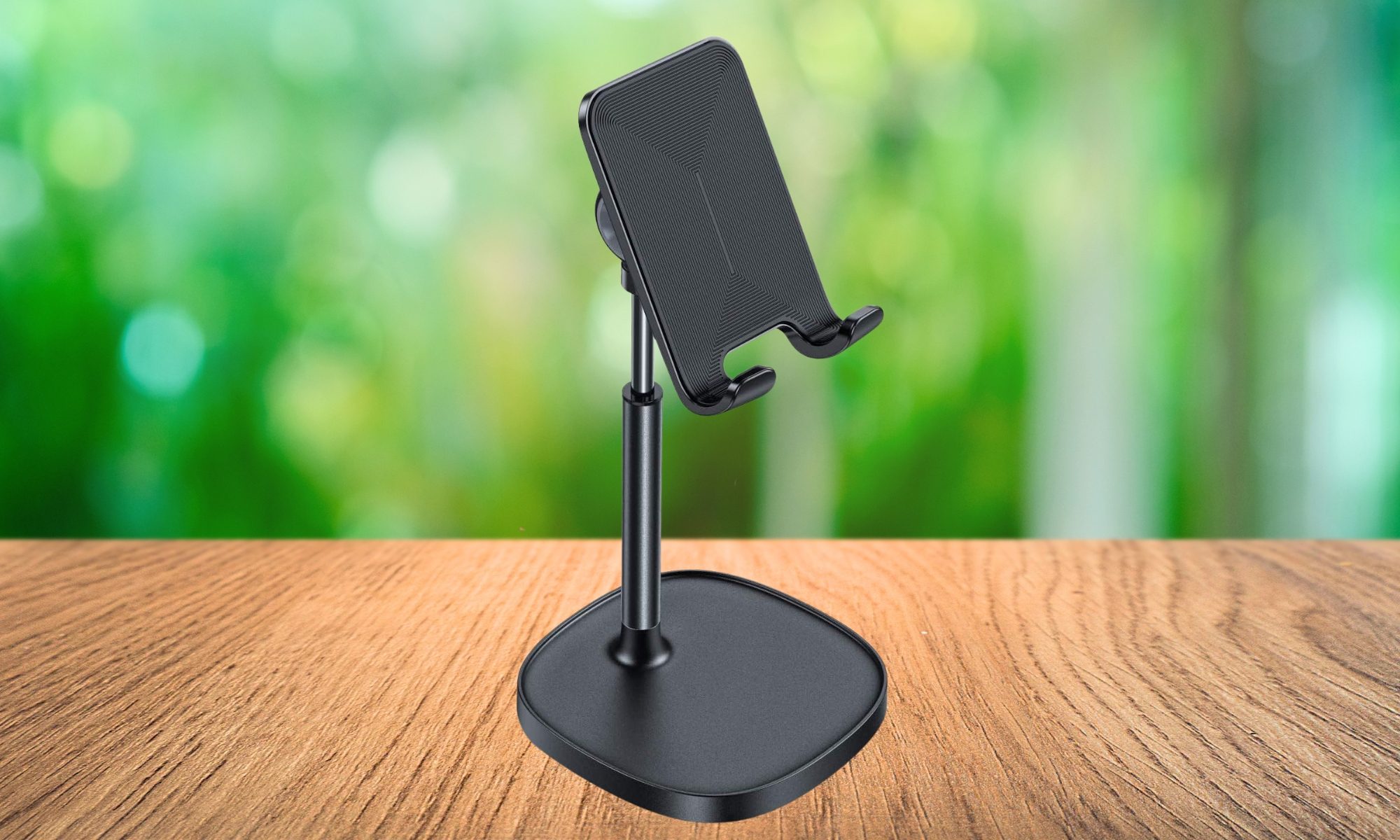
Anyone who works at a desk in an office knows how easy it is for a phone to get buried under printouts, documents, and the steady stream of items that get handed over to you throughout the day. Even beyond that, I prefer to position my screens closer to eye level. The Lisen Cell Phone Stand makes all of that easier.
Down from its $17.99 listing price, the stand is currently available on Amazon for just $9.45. For the price, you get a weighted metal base for added stability, an anti-slip design, adjustable height ranging from 7.1 to 8.5 inches, and the ability to tilt your iPhone to a comfortable viewing angle (5° to 85°) and to use it hands-free.

If you own an iPhone, Apple Watch, and AirPods, instead of leaving them scattered across your desk or nightstand and carrying separate charging adapters and cables, you can place each device in its designated spot on the Anker MagGo 3-in-1 Charging Station. The charger can power all three devices simultaneously, reducing both clutter and cable management headaches.
This one offers 15W wireless charging for compatible iPhones (iPhone 12 or later), carries Qi2 certification, has a compact, foldable design that’s easy to toss into a backpack, and comes with a 40W power adapter included in the box. For $59, the charging station replaces all your charging adapters and cables for a single, travel-friendly accessory, and that’s the kind of convenience I’d choose any day.

The iPhone 17 Pro and iPhone 17 Pro Max look gorgeous without a case, but the repair bill for a broken back glass panel or cracked screen is far more painful. This is why I always recommend that my friends and family members use a protective case on their iPhone, not the rugged ones, but good ones.
What I’ve got for you is the $29.99 Pitaka protective case (previously $59.99), made from woven aramid fiber for the back panel and flexible TPU on the sides. Without adding much bulk, the case provides drop protection from heights of up to 2.44 meters, raised screen and camera lips to help prevent scratches, and a plush leather interior.

The infotainment system in your car is great, but there are times when you may want to check a new route without interrupting the one already active, or quickly check a message or app that looks better on your iPhone.
For a more distraction-free driving experience, I recommend the Lisen MagSafe Car Mount, which keeps secondary navigation, calls, and messaging within easy sightline without taking your attention off the road. Currently priced at $16.08 (down from $29.99), the car mount attaches securely to your car’s dashboard, and its built-in magnets snap your iPhone (iPhone 12 or later) into place without using any clamps or locks.

I’m always using my iPhone, which is why it rarely makes it through a full day on a single charge. Naturally, I have to carry a power bank at all times. Having used bulky models with 10,000mAh and 20,000mAh battery capacities, I was on the lookout for something sleeker, more elegant, and lightweight when I found the Baseus Picogo Powerbank.
Measuring around 0.3 inches thick, the compact power bank weighs around 108 grams and can easily slide into my jeans pocket. Yes, it only has a 5,000mAh battery, and the max wireless output is 7.5W. However, that’s enough to take your iPhone (iPhone 12 or later) from nearly dead to 70% to 80%, depending on which model you have.
I’m willing to trade off charging speed for the convenience of the form factor. For $24.99, the Baseus wireless power bank is among the best iPhone accessory Prime Day deals you can invest in.
Whether you’re looking for a protective case for your iPhone 17 Pro or a 3-in-1 charging station for your Apple devices, there’s something for everyone on this list.
Disclaimer: Unless otherwise stated, any opinions expressed below belong solely to the author.
For the past few years, my commentary on regional ecommerce has revolved around the competition between Shopee and Lazada. The ambitious upstart from Singapore ended up pushing out the former market leader, even though it received backing from Chinese Alibaba.
And just when it seemed that the war was settled, that Shopee would reign over Southeast Asia with its rivals scrambling for the breadcrumbs it left behind, TikTok—of all the brands—has decided to enter the fray as well.
But what does a social media company know about running an online store? How can it be a match for industry veterans?
Well, one thing it does know is that those veterans have to pay for access to eyeballs that it owns. And if that’s the case, then why not sell to them directly?
Nobody can sell anything if people don’t know about it. You have to make yourself known or, better still, place your business where the people already are. That is the source of the famous rule of real estate—location trumps everything else.
But it works in the digital world as well. It doesn’t matter how attractive your offer is, or how robust or cheap your product selection is, if nobody is aware of your existence.
And so, major ecommerce companies have had to first spend billions of dollars to position themselves in front of potential consumers—and now continue spending more to keep them coming back.
What’s more, size and brand awareness is no guarantee of enduring success, as the case of Lazada proves.
However, even its successful challenger, Shopee, still operated within the same rules. But what if the next competitor injects himself before customers can ever see you?

That’s what TikTok is trying to do. It is like a landlord who used to rent space for other companies, only to now reserve half of it for himself and compete with them instead.
This is a catch-22 situation for the incumbents. On one hand, they are effectively paying a direct competitor for access to the same audience that TikTok can reach freely through its own platform. On the other, they cannot simply walk away, because TikTok remains a gateway to millions of potential customers.
Meanwhile, TikTok benefits from both sides of the equation. It earns revenue from advertising while also generating income from direct sales to consumers.
Given its rapid growth, the strategy appears to be paying off. Including Tokopedia, which TikTok took control of in 2024, the company now commands close to 30% of Southeast Asia’s e-commerce market. Shopee still leads with a 52% share, but the question is whether it can maintain that dominance.
In the consumerist world we’re living in, many purchases are made on impulse. You see something cool, fun, stylish, and you want it.
Over the past few years, short, catchy, viral videos have become one of the most powerful tools for creating demand. Traditionally, however, acting on that impulse required an extra step: clicking a link or searching for the product on a marketplace such as Shopee.
In fact, most traditional e-commerce platforms are built around intent. Consumers typically visit them with a specific goal in mind, whether it is searching for a product, comparing prices, or making a purchase they have already decided on.
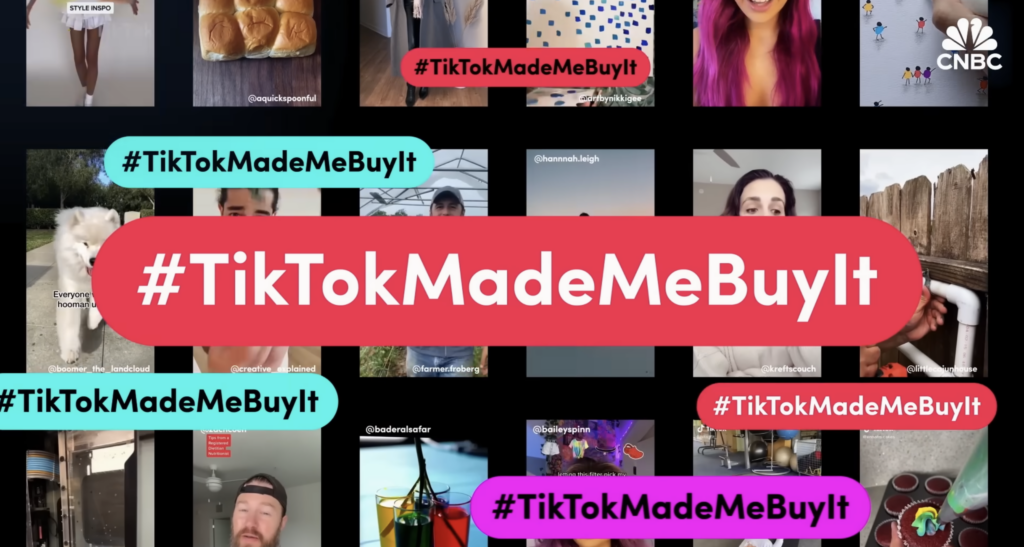
TikTok Shop works differently. It creates the desire before the search happens.

A creator tests a product. A livestream host demonstrates it. A short video shows a before-and-after result. A discount appears while the viewer is still watching. The purchase button is not placed after a search query, but inside a moment of attention.
That is a problem for Shopee and Lazada because search-based marketplaces tend to reward scale, logistics and price. TikTok rewards attention, storytelling and impulse.
A seller does not necessarily need the best product listing. He needs a video that converts—and it converts within TikTok Shop, just moments after buyer interest has been piqued.
Millions of people swiping through short clips are regularly exposed to new products, which they can now buy right then and there. The whole ecommerce experience of going to a third-party app or website and completing your checkout there has just been truncated into a few taps in the midst of your social scrolling session.
In other words, TikTok’s approach to ecommerce is not only fulfilling the demand but creating it too, and monetising it before competition ever has a chance.
This is where it gets really dangerous for existing ecommerce platforms.
While there are certain necessary goods that we are buying on a regular basis, which people may habitually visit Shopee, Amazon or Lazada for, consumer demand needs to be regularly refreshed with something new.
And all of those new products are introduced through various forms of content. These days, it’s mostly video—the medium that TikTok dominates over, especially in Southeast Asia.
So, not only does it own the main communications channel, but it gets to create new trends before competitors are even aware of them.
Can it replace big online marketplaces entirely? Most likely not. But it can monopolise access to the latest, most attractive products or even create many of them itself, a little bit like Shein does through its tight integration with Chinese manufacturers.
If it continues its successful run, it could redefine ecommerce forever and encourage other social media giants to follow suit.
Featured Image Credit: airdone/ depositphotos


Real estate industry icon Glenn Kelman has found his next home — professionally, anyway.
The longtime Redfin CEO, who stepped down in January, six months after Rocket Companies acquired the Seattle brokerage for $1.75 billion, has joined venture firm Greylock as an executive in residence.
In the new role, announced by the Silicon Valley firm on Tuesday, Kelman will work directly with founders on leadership development, company building, go-to-market strategy, and what Greylock calls “the hard parts of scaling that don’t fit neatly into a board deck.”
When he announced his departure from Redfin in January, Kelman said he wanted to find “another mission-driven enterprise outside of real estate.”
Reached by email Wednesday, Kelman confirmed that’s still the plan.
“I’m still looking to start some kind of new mission-driven enterprise, which involves being in the wilderness a bit and exploring ideas that are never going to work and howling at the moon,” he wrote. “Occasionally, I just end up doing the kids’ laundry in the middle of the day too.”
The Greylock role, he said, will aid his creative process by exposing him to the range of big ideas the firm has backed.
But he doesn’t intend to become an investor himself. Kelman noted that he bet longtime Seattle investor Greg Gottesman back in 2005 that he’d never become a VC — a bet he says he still hasn’t lost.
He described the role as “mostly just advising other founders, which I don’t think is incompatible with starting my own thing. You learn a lot from other people.”
Kelman said he’s staying in Seattle (“probably for the rest of my life”), citing “the people, trees, mountains, lakes and islands here.”
Greylock, he added, “gives me more exposure to what’s happening in Silicon Valley and beyond, which I really like.” The firm, founded in 1965, is among the oldest venture firms in the U.S., known for its early bets on companies such as LinkedIn, Facebook, Airbnb and Workday.
Kelman’s ties to the firm run deep. Greylock partner James Slavet was an early Redfin investor and board member, and the firm credits him with playing “a formative role in Glenn’s development as a leader,” according to the announcement of his new role.
@media (max-width: 600px) {
aside.callout { float:none !important; max-width:100% !important; margin-left:0 !important; margin-right:0 !important; }
aside.callout .callout-img { display:none !important; }
}
A veteran tech founder, Kelman joined Redfin in 2005, a year after it launched, and spent two decades building the Seattle company into one of the best-known names in U.S. real estate. Redfin went public in 2017 at a valuation of roughly $1.73 billion.
Along the way, Kelman became one of the industry’s most candid voices: testifying before Congress on commission reform, pulling Redfin out of the National Association of Realtors in 2023, and turning routine earnings calls into must-read theater with his off-the-cuff analogies.
Redfin, meanwhile, is pressing ahead under Rocket. The brand kept its name and Seattle headquarters as a Rocket subsidiary. Rocket CEO Varun Krishna has been running Redfin since Kelman’s exit.

Sort out your summer viewing with this deal from Paramount Plus, netting you two months at just $0.99 per month. But only if you’re quick.
The summer is upon us, and while we should all be going outside and enjoying the sunshine, it’s also a great opportunity to catch up on TV. Thanks to one deal from Paramount Plus, you can do that without spending much money at all.
New and eligible former subscribers can sign up for Paramount Plus for $0.99 per month for their first two months of service. That means being able to watch everything on the service from sports to original dramas.
Get Paramount+ for $0.99 for 2 months
You can also choose the plan you want, except for live TV and trailers.
Once the two-month promo period is up, it will auto-renew at the normal rate for your chosen plan. If you go for the cheapest option, that would be $8.99 per month.
The offer is open until June 25, 2026, meaning you have only a small window to grab it. It’s available to people aged 18 or over, and other terms and conditions also apply.
While the Paramount Plus deal is great, you can also get another Apple-related deal. Select Amazon accounts are able to sign up for Apple TV streaming with Amazon Prime at half the usual price for two months.
This is an account-specific offer, so not everyone will gain access to it. Your mileage may vary, but it’s worth a try.

Rockstar Games has revealed the price of Grand Theft Auto VI to be $79.99, and confirmed that the physical versions of the game won’t include a disc. Instead, they’ll contain a one-time download code when it launches November 19. “Not only is that a disappointing decision for people who like to own physical games, but given the scale of the next GTA, it also sets a bad precedent for the rest of the industry,” reports The Verge. From the report: There are a lot of advantages to buying digital. You can start a download from your couch. You can store multiple games on one hard drive so you don’t have to get up to play something else. Storefronts like Steam or the PlayStation Store don’t run out of inventory of the newest game you’re interested in, and you can often get games at a cheaper price thanks to frequent sales.
But it’s becoming increasingly clear that digital ownership has significant disadvantages, too. If a game you don’t own digitally is removed from a storefront, whether that’s for things like licensing, artificially limited availability, or even the store eventually closing down, your only option is to hope you can find a physical version. If your account on a platform is banned, even if that ban isn’t warranted, you might be locked out of your digital library with no way to play those games unless you buy them again or hope your account gets restored. You can’t sell or trade digital games you’ve purchased, and while there are ways to share digital games, they require some work and are usually intended just for families.
It’s also much harder to preserve digital games because they only “exist” on the hard drive of a console, PC, or device they were downloaded to. This is an issue across many industries, not just console games; there are multiple examples of things like mobile games and streaming shows becoming lost for good when they don’t have a physical version. Without physical versions, you also can’t find a used version of a game at a garage sale or a local game shop. It’s unclear whether Rockstar will ever release a physical version of the game. As for why, The Verge suspects the decision was made in part to prevent leaks; “by only being available digitally, Rockstar can ensure that GTA VI unlocks at the same exact time for everyone.”
“The digital-only choice might also indicate that the game has a massive file size that’s too big for PlayStation and Xbox game discs.”

In Trump’s America, the First Amendment is a dead letter. If you’re seen as anti-Trump, you apparently no longer have any rights at all. We’ll get to the man who moved a box of zines and got thirty years — he wasn’t even at the protest, but the judge claimed he was aiding a “terrorist on the run” (he was not). To understand how that’s even possible, though, you first have to look at how some people who actually tried to overturn democracy were treated. Because they walked.
Just look at the treatment of the January 6th insurrectionists, who literally sought to hang the Vice President, invaded the Capitol, blocked the certification of the free and fair 2020 presidential election, and generally tried to take down the federal government. While some were convicted of their crimes and given jail sentences commensurate with their actual crimes, Donald Trump then pardoned them all and is now trying to pay them millions of dollars, claiming that it was so unfair that the government was “weaponized” against them.
Now, compare them to the Prairieland protestors, who went to the Prairieland ICE detention center in Texas last year on July 4th. It was like plenty of the angry protest gatherings we’ve seen lately: a bit rowdy, with a few individuals going too far. Some set off fireworks. Some engaged in vandalism. One person fired a gun which appears to have hit a local police officer (who was released from the hospital soon after with no lasting damage).
It seems totally reasonable for prosecutors to prosecute the actual crimes that happened: mainly the person who fired a weapon at someone, and perhaps some of the vandalism. But, instead, the federal government tried to turn this into “an antifa terror cell” engaging in “domestic terrorism.” While a small number of those arrested knew each other and had planned to show up and be disruptive, many others didn’t know those who were engaged in the planning or the vandalism. They were just there.
some of the defendants – like Batten, Elizabeth Soto and her husband, Ines Soto, were not involved in the planning, arrived separately at the protest, and left when guards at the facility asked them to do so.
The whole case was always nonsense:
“This indictment stretches far beyond a specific, violent criminal action that might have taken place,” said Rachel Levinson-Waldman, director of the Liberty and National Security Program at the Brennan Center for Justice. “It characterizes these people who put together a protest as being in an antifa cell and tars all of them with this label of domestic terrorists.”
Levinson-Waldman said the overreach threatens the civil liberties of all Americans.
“This is not just about antifa,” she said. “Anything that somehow feels at odds with this administration’s policies could be considered domestic terrorism and will be pursued with the full force of the federal government.”
But the cases were filed in North Texas before two of the most Trumpy judges around: Mark Pittman and Reed O’Connor. As we discussed back in March, the DOJ was able to get convictions against the protestors, including the one who wasn’t even there (hold that thought… it’s coming further down). A big part of the evidence was the weapons that some of the protestors brought to the protest. But, this is Texas. You’d think that in “we love the Second Amendment, Texas” that this wouldn’t be seen as a crime, but we’re dealing with a clearly ideologically driven prosecution.
This week, some of those convicted had sentences handed down, and they are so extreme and so long that they literally seem unbelievable.
Eight activists found guilty of terrorism-related charges in connection with an attack on an immigration detention facility in Texas in which a police officer was shot were sentenced to decades in prison Tuesday. One person in the group was sentenced to 100 years in prison, federal court records show.
Benjamin Song, who shot an Alvarado Police Department officer in the neck during the July 4 incident at Prairieland Detention Center outside the Dallas-Fort Worth area, was sentenced to a century behind bars, according to court documents reviewed by USA Today.
Maricela Rueda, another defendant, was sentenced to 70 years in prison, records show.
Zachary Evetts, Savanna Batten, Elizabeth Soto, Autumn Hill and Meagan Morris were each sentenced to 50 years in prison….
Again, Batten and Soto had no connection to those who planned the event or who showed up with weapons or engaged in violence. And they left when guards asked them to leave. And now they’ve been sentenced to 50 years in prison. For what?
Even if we compared these sentences to the absolute longest sentence for January 6th insurrectionists, they are nowhere near as long as this. From The Guardian’s coverage of the sentencing:
The punishment for the protesters exceeds the lengthiest prison sentences given out for the attack on the Capitol on January 6. Enrique Tarrio, the leader of the Proud Boys who was convicted of seditious conspiracy, was sentenced to 22 years in prison. Stewart Rhodes, the leader of the far-right group the Oath Keepers, was sentenced to 18 years in prison.
Tarrio and Rhodes were found guilty of detailed planning to overturn a presidential election. All anyone involved in the Prairieland case did was… get mad about ICE kidnapping and kicking their neighbors out of the country, and maybe a bit of vandalism.
Song, who was sentenced to 100 years did fire his weapon and hit a law enforcement agent, meaning he was always going to face some more serious sentence, but he claims he did so because he thought the officer was going to shoot protestors. From The Guardian again:
In a statement, Song said he had fired at the police officer, Lt Thomas Gross, because Gross had his weapon drawn and Song believed he was about to shoot a protester.
“I never want to see good people, standing for what they believe in, gunned down in the street,” he said. “Now 21 people have been arrested, have been persecuted, have been punished. For knowing me or being my friend? This is wrong. This is mass punishment. Collective punishment. This is guilt by association. This is injustice.”
Even worse, Judge O’Connor (who has been one of MAGA’s favorite judges, and who has no problem making it clear that he rules on purely ideological grounds) allegedly told some of the defendants that the long sentences were necessary to make sure that leftist ideology was seen to be punished:
If you can’t see that, it’s a post from a group that is supporting the defendants (and hasn’t yet been confirmed by other reporting) saying that O’Connor said, from the bench: “the state wants to send a message to anyone who shares a similar ideology.”
If accurate, that would be incredibly damning. Judges aren’t supposed to increase sentences to stamp out ideology. That’s about as blatant a clear First Amendment violation you could imagine.
The Intercept has some other quotes from the courtroom, and while they don’t have the same ideology quote from O’Connor, the quotes they do have from him are pretty bad on their own:
O’Connor, the judge, said several times that the defendants had committed an “assault on democracy.”
“What happened here was not by any stretch of the imagination a protest,” he said during the sentencing of one defendant.
I mean… come on. January 6th was an “assault on democracy.” It was quite literally an attempt to overturn a democratic election. What happened in Texas was quite clearly a protest where a few protestors went too far. It happens at plenty of protests. It’s not an “assault on democracy” unless you’re a partisan activist. Given that we’re talking about Reed O’Connor, the claims of being a partisan activist have stuck on him for years.
Again, it’s clear that some of the defendants did break some laws, though most seemed to be minor property damage. There is zero indication of anything even remotely looking like a “terrorist” plot.
But the worst, most ridiculous case is that of Daniel “Des” Sanchez-Estrada. He wasn’t even at the protest. He was arrested for… moving some left wing zines after his wife — Maricela Rueda, one of the people just sentenced to 70 years — was arrested. Prosecutors claimed that moving a box with zines in it amounted to “corruptly concealing a document.” It sounds unbelievable, but you can read the criminal complaint against him, which really is just about him taking a box of leftist zines from his and his wife’s house (after she called him from jail) to another apartment.
He was just sentenced to 30 years in prison.
I need to repeat that. He moved a box of zines. He wasn’t at the protest.
He’s now been sentenced to THIRTY YEARS in prison.
For scale, this is in Texas, where Attorney General Ken Paxton (currently running for the US Senate) let a repeat child sex abuser plead down to one day in jail. One day for a child abuser. Thirty years for moving a box of pamphlets.
The Freedom of the Press Foundation has rightly called out how utterly unconstitutional this is:
Texas artist Daniel “Des” Sanchez Estrada was sentenced to 30 years in federal prison today for transporting a box of zines, or political pamphlets. The prosecution claimed Sanchez moved the zines so they wouldn’t incriminate his wife, who attended a protest outside the Prairieland immigration detention center near Dallas, where a police officer was wounded by gunfire.
The zines at issue may have discussed controversial political views, but they said nothing about the shooting or the Prairieland protest, and prosecutors did not allege that Sanchez’s wife, Maricela Rueda (who was sentenced to 70 years today), fired any shots or had anything to do with the shooting.
According to The Intercept, O’Connor insisted that moving the box of zines was helping a “known terrorist.”
Sanchez Estrada said he still could not understand why he was convicted.
“I am a father, I am a husband, I am a teacher, a poet — I am many things, Your Honor, but I am not a terrorist,” he told the court.
O’Connor said he disagreed with the idea that moving the box of the zines was harmless. At the time of Sanchez Estrada’s actions, Song was still on the run from police.
“What was at stake at that time was a known terrorist was on the run for shooting a police officer during a terrorist attack,” he said.
Even if Song was a “known terrorist” (he’s not), that still…. means nothing. Sanchez moved a box of zines. What the fuck does that have to do with Song being on the run? The answer is absolutely nothing.
Yes, the Trump administration has been desperately trying to drum up some sort of violent organized opposition because they need that to justify the suppression of everyone’s rights as part of their continued authoritarian project. That the Trump Justice Department and a couple of famously partisan judges played along with this travesty of a prosecution, doesn’t make it legitimate by any stretch of the imagination.
It’s just another sign that in Trump’s America those who violate the law in support of Trump get told they can do whatever crimes they want, and Trump might even get them paid, but protesting the ongoing fascism, may get you sent to prison for decades. It’s so extreme that it’s almost difficult to believe it has happened in the United States. This case will go down in history among the most ridiculous, partisan, bullshit attacks on free speech, and Judges Pittman and O’Connor will both be remembered for being the judges responsible for this travesty.
Filed Under: 1st amendment, autumn hill, benjamin song, daniel sanchez estrada, elizabeth soto, excessive punishment, free speech, ice, ice protests, ken paxton, mark pittman, meagan morris, prairieland, reed o’connor, savanna batten, terrorism, texas, todd blanche, zachary evetts

Qualcomm signed Meta as the first customer for its Dragonfly C1000 data centre chip, due in 2028, and confirmed a $3.9bn Modular acquisition.
Qualcomm has signed Meta as the first named customer for its new Dragonfly C1000 data centre processor, the strongest signal yet that the mobile chipmaker is serious about competing in the AI infrastructure market. The company announced the deal at its investor day in New York on Wednesday, alongside a new AI300 accelerator chip and its confirmed acquisition of AI software startup Modular for roughly $3.9 billion in stock.
The Dragonfly C1000 is a general-purpose server processor designed to sit inside data centres alongside Qualcomm’s AI accelerator chips. Meta has committed to using the C1000 and its successors across its facilities. The chip will not be available until 2028, meaning the partnership is a forward-looking commitment rather than an immediate deployment.
The Dragonfly brand, which Qualcomm first revealed at Computex in early June alongside an ASIC supply deal with ByteDance, covers three product categories: data centre CPUs, AI inference accelerators, and custom silicon built with hyperscalers. Wednesday’s event filled in the product details that the Computex teaser left out.

The 💜 of EU tech
The latest rumblings from the EU tech scene, a story from our wise ol’ founder Boris, and some questionable AI art. It’s free, every week, in your inbox. Sign up now!
On the accelerator side, Qualcomm added an AI300 chip to a lineup that already included the AI200 and AI250. The AI200, built on Qualcomm’s Hexagon neural processing unit technology with direct liquid cooling and up to 768GB of LPDDR memory, is on track for initial customer shipments later this year. The AI250 is expected to follow in 2027.
These accelerators are designed for inference, the process of running trained AI models at scale rather than training them from scratch. Qualcomm argues that its decades of mobile chip design give it an advantage in power efficiency, a claim that matters as data centres strain electricity grids worldwide. Whether that mobile expertise translates to data centre performance remains unproven at scale.
The Modular acquisition, which TNW reported was nearing completion on Monday, is now confirmed at roughly four billion dollars in an all-stock transaction. Qualcomm will issue roughly 19 million shares to Modular’s owners. The deal is expected to close in the second half of this year.
Modular makes the Mojo programming language and the MAX inference engine, software that lets AI models run across chips from Nvidia, AMD, Intel, and Qualcomm without developers rewriting code for each processor. That is a direct challenge to Nvidia’s CUDA platform, the software layer that has locked AI developers into Nvidia hardware for two decades. Breaking that lock-in is the central challenge for every company trying to compete with Nvidia in AI infrastructure.
The strategic logic is straightforward. Qualcomm can design competitive chips, but without a software ecosystem that makes developers want to use them, the hardware alone is not enough. Modular’s cross-platform tooling could give Qualcomm the kind of developer on-ramp it currently lacks.
CEO Cristiano Amon framed the deal as part of an industry movement toward open, multi-vendor architectures. That framing positions Qualcomm as the anti-Nvidia, offering flexibility where Nvidia’s CUDA demands loyalty.
Qualcomm’s ambition is large but its data centre track record is thin. The company generates the vast majority of its revenue from smartphone processors and modems, and its previous attempt to enter the server market with the Centriq processor in 2017 ended in a shutdown. The current push has more institutional support, a named hyperscaler customer in Meta, and a clearer market opportunity in AI inference, but the gap between investor day announcements and shipped revenue remains wide.
The Meta partnership is notable for what it implies about diversification. Meta currently builds AI infrastructure primarily around Nvidia GPUs and has also invested in its own custom MTIA chips. Adding Qualcomm to that mix suggests Meta wants more supplier options as it scales inference, not that it is replacing Nvidia, which announced a multiyear strategic partnership with Meta earlier this year.
Qualcomm shares have climbed about 30 percent this year on expectations that AI would open a second growth engine beyond smartphones. The investor day was designed to turn that expectation into a roadmap. With the Modular acquisition providing the software layer, Meta providing the first marquee customer, and the AI200 approaching shipments, the pieces are assembling on paper.
Whether they assemble in practice depends on execution over the next two years. The C1000 does not ship until 2028, the Modular deal has not closed, and the AI accelerator lineup has no published benchmarks against Nvidia’s current or upcoming hardware. Qualcomm is making the right moves to enter the market, but it is entering a race where Nvidia has a commanding lead and every major cloud provider is also designing custom silicon.

Warhammer 11th Edition has arrived with the Armageddon launch box, and although a new edition seems like the perfect way into the hobby, it’s a daunting prospect. What do you need to build your models? What do you need to play the game? I’ve tried to make it easy for you by scouring Amazon for some Prime Day deals to get started.
• View the full Amazon Prime Day sale
I’ve found deals on paints, brushes, Citadel plastic glue, gaming accessories and some models to complement the main starter set, whether you pick the bestial orks or the dogmatic Space Marines.
Obviously the Armageddon 11th Edition launch box set including 23 Space marines, 38 orks & rulebooks is the big-ticket item with $50 off, but I’d also recommend the Infernus Marines & Paints Set, which comes with starter paints and a paintbrush. It’s good value although there’s no discount: it’s a gentler introduction to the build and paint side of things, and easier on your wallet, too. I’ve also recommended cheaper, well-known brands like Army Painter to save you money.
Check out the deals below, or visit our Amazon Prime Day US live blog for more deals as we find them.

Follow TechRadar on Google News and add us as a preferred source to get our expert news, reviews, and opinion in your feeds.




Weekend Open Thread: Miami – Corporette.com


Renter of Home in Anne Heche Crash Denies Settlement With Son


Microsoft accidentally kills epic Outlook email threads

Two goals and an assist by sheer aura: Cristiano Ronaldo just entered the World Cup chat


Soccer-U.S. defends Iran World Cup travel restrictions, says discussions ongoing


BBC Reporter Discusses Cross Party Criticism Of Trumps Iran Deal
Bitcoin (BTC) Dips Below $62K, Ethereum (ETH) Plunges 6% Daily: Market Watch


Securitize Wraps Roubini's SEC-Registered ETF as Dubai VARA Digital Security


Andy Burnham and the meaning of Makerfield
Entergy settles forward sale agreements, raises $672 million in cash proceeds

Wall Street Week Ahead: Investors see Micron earnings as pulse check of AI rally momentum


Keir Starmer Allies Question His Chances For No 10


AWS enters the context layer race with a graph that learns from agents, not manual curation

Can Charles Hoskinson Really Rescue Cardano?


HIVE shares jump as $220M AI deal speeds Bitcoin mining pivot


Jake Chervinsky accuses CME of protecting derivatives monopoly

Signal’s Meredith Whittaker says AI chatbots ‘are not your friends’ and calls Copilot agents a backdoor


Jose Alvarado Wants Taylor Swift at More Knicks Games

Nearly 7,000 fake Amazon domains registered ahead of Prime Day 2026, researchers warn


Brexit cost 6% of UK economy, Bank of England company data suggests


You must be logged in to post a comment Login