







Connect with us

Tech

This British Car Combined Two Aircraft Engines For Nearly 1000 HP In The ’20s

Published

on


Carl Benz patented his squat, three-wheeled Benz Patent Motor Car (Model no. 1) in 1886, and it didn’t take long for humanity’s obsession with automobiles to take hold. In 40 short years, we went from a German one-cylinder four-stroke engine producing just 0.75 hp to a four-wheeled, British-made bullet powered by two 22.4-liter V12 Matabele airplane engines each producing 435 hp. The combo isn’t a big deal now, admittedly, with half a dozen production cars packing 1,000 horses or more, but it was certainly impressive for the 1920s. 

This behemoth, known as the Sunbeam 1,000 HP, was nearly 24 feet long and weighed 4 tons, yet it was the first car to go faster than 200 mph — exactly what it was made to do. Henry Segrave was at the wheel of the Sunbeam, sometimes referred to as “The Slug” or “Mystery,” when he broke that 200-mph barrier on March 29, 1927. Seagrave and The Slug achieved that milestone on the hard white sands of Daytona Beach, Florida, which had seen 30 years of record-breaking speed trials since racing began there in 1902, including Segrave’s successful attempt. 

Advertisement

The Sunbeam’s achievement came about 20 years after the first-ever 100-mph run, which took place on July 21, 1904. That year, Frenchman Louis Emile Rigolly hit 103.561 mph on a beach in Ostend, Belgium.

Advertisement

This was not your ordinary Slug

Sunbeam driver Henry Segrave had previously set a Land Speed Record almost exactly a year earlier, hitting 152.33 mph while driving a 4.0-liter Sunbeam Tiger, so he was very familiar with the need for speed. This new, more powerful Sunbeam 1000 was the brainchild of chief engineer and designer Louis Coatalen, who decided to place the two Matabele airplane engines in line. 

Both of the massive V12s had double overhead camshafts and 48 valves. The one sitting up front was mated to a custom-built three-speed gearbox, while the rear engine was connected to the back wheels via chain sprockets. Segrave was nestled tightly in between the beast’s metallic hearts, which had a wild past all of their own.

Both Matabele engines were built in 1918 and destined for World War I airplanes, but were never used. Two years later, they (along with two other engines) were dropped into a 39-foot single-step hydroplane (the Maple Leaf V) and used for powerboat racing. The following year, they were transferred to the 34-foot Maple Leaf VII and used again, although the boat sank on its first run. Both engines were recovered and sent back to the U.K., where they sat around until being used in the Sunbeam.

Advertisement

Ironically, the slug-like body of the Sunbeam actually resembled an upside-down boat in many ways, an intentional decision to improve aerodynamics. Additionally, it had a flat underbelly, with the idea that it would help the car slide along the beach if it lost a wheel, thus avoiding a major catastrophe.

Advertisement

The British beast comes back to life

Louis Coatalen developed the engine placement and internal workings, while Captain JA “Jack” Irving built the Mystery using a chassis from John Thompson Motor Pressings, steel forgings from Vickers, a set of special Hartford shock absorbers, and a braking system from Dewandre Vacuum. When driver Henry Segrave heard the beast roar for the first time, the car reportedly shook the Sunbeam Moorfield facility in Wolverhampton so hard that it convinced Segrave it couldn’t be driven. But drive the monster he did, achieving an average speed of 203.79 mph at Daytona Beach.

Records are made to be broken, and this one fell less than a year later when Malcolm Campbell drove another Sunbeam, known as the Blue Bird, to 206.956 mph at Daytona on February 19, 1928, becoming one of the many cars to hold the title of fastest in the world over the years. With its glory faded, the Sunbeam 1000 was parked and nearly forgotten for a time. Once rediscovered, it bounced around until it was eventually purchased by the Montagu Motor Museum in the United Kingdom (the forerunner to the National Motor Museum) in 1970.

A total refurbishment began in 2024, aiming to finish by March 2027, so it could be sent to Daytona Beach for the 100th anniversary of its land speed record. The fully rebuilt rear engine was fired up for the first time in 90 years in front of onlookers at the National Motor Museum in September 2025. Only time will tell whether the team behind the restoration can cross the finish line in Daytona in 2027.

Advertisement


Source link

Advertisement
Continue Reading
Click to comment

Leave a Reply

Your email address will not be published. Required fields are marked *

Tech

Gushi Cliff Coffee in Fujian, China is the Edge Where Coffee Meets Freefall

Published

on

Gushi Cliff Coffee Fujian China
Gushi Cliff Coffee is located on a cliffside overlooking the surf pounding against the shore of Fuzhou, Fujian, in southern China. Crowds of people sit on small little platforms embedded straight into the side of the cliff, 70 meters above the thundering surf, with a view out over the water to the Taiwan Strait, where the islands of Matsu appear as a distant collection of small little lights in the night sky.


Getting to this secluded location is not easy. First, you must enroll in a guided tour that will lead you through some metal rungs and cables for around 30 minutes until, with a few butterflies in your stomach, you take the plunge and are lowered down into the lounging area via a supervised rappel. The organization will offer you with all of the appropriate equipment, including harnesses, helmets, ropes, and, of course, a safety coach who will accompany you throughout your descent. You should keep in mind that you cannot simply go into this establishment without first booking a reservation.


Gushi was founded by Xue Ke and opened in 2024, but it appears to have existed for much longer. Xue Ke was drawn to the picturesque scenery snuggled between the mountains and the river. What do you get for 398 yuan, or around $58? Well, for that price, you’ll not only get a cup of coffee, which is usually pre-brewed and ready-to-drink, but you’ll also get insurance, all of the equipment rental, a guide to teach you the ropes, and, to top it all off, a photo shoot where you can hang your legs over the edge.


People come here for the excitement and the coffee, with some even calling it a bucket-list experience, while others see it as an excellent opportunity to get the perfect photo for social media. The stats range; on any given day of the week, save for weekends and holidays. The cafe attracts thrill-seekers from all across China and beyond, and what appears to be a simple cup of coffee becomes an unforgettable experience.
[Source]

Advertisement

Source link

Continue Reading

Tech

Tecno’s modular tech could be the fix for ultra-thin phones

Published

on

Ultra-thin phones were the thing in 2025. It felt like every big player in the smartphone market wanted to show off just how much engineering wizardry they could cram into something barely thicker than a USB-C port. 

But barely a year later, the tides are already shifting. Samsung revealed the S26 range last week without the rumoured upgraded Edge variant, and rumours suggest the iPhone Air won’t get an upgrade this year either (though Apple is still working on an upgrade, apparently). 

Honestly, it makes sense. As lovely as these phones are to hold, they come with some very real compromises.

The big problem with ultra-thin phones

Don’t get me wrong, devices like the iPhone Air and Samsung Galaxy S25 Edge are gorgeous bits of kit. Picking one up feels like a throwback to the days when phones felt light and slim, able to slip into a pocket and practically disappear – a stark difference to most 2026 flagships. 

Advertisement

In daily use, that slimness is genuinely refreshing, and the novelty never really wore off for me – but then there’s the ugly side of ultra-slims to consider.

Advertisement

iPhone Air - top down camera closeupiPhone Air - top down camera closeup
Image Credit (Trusted Reviews)

Camera hardware, for one, has generally taken a hit. The iPhone Air’s single rear camera is a perfect example; it’s fine for everyday photos, but it doesn’t exactly scream premium flagship when phones that cost hundreds less – including Apple’s own iPhone 17 – offer a wider selection of lenses. 

It’s mainly down to constraints in size; telephoto lenses in particular need space to operate, something that comes at an extreme premium in ultra-thin phones.

Then there’s arguably the bigger problem, battery life. You can only fit so much cell into a wafer-thin chassis, and that results in more charging, more battery anxiety, and less of that all-day flagship confidence we’ve come to expect over the past few years. 

Advertisement
Samsung Galaxy S25 EdgeSamsung Galaxy S25 Edge
Image Credit (Trusted Reviews)

That’s the trade-off; you’re paying top-tier prices for a device that, in some areas, feels like a massive step backwards. It’s a hard sell, and probably the main driver behind Samsung’s apparent abandonment of the Edge brand.

Advertisement

Tecno’s modular tech could be the fix

Then along comes Tecno at MWC 2026 that genuinely made me stop and stare.

The concept Atom device it showed off uses what it calls Modular Magnetic Interconnection tech, and at just 4.99mm thick, it’s thinner than basically anything else on the show floor.

Tecno Atom side-onTecno Atom side-on
Image Credit (Trusted Reviews)

As you’d expect, it feels stunning in the hand, and almost shockingly light. I actually assumed it was just a dummy model until I flipped the phone around and saw a fully working version of Android running on-screen.

But this isn’t just another thin phone; it’s a thin phone that can bulk up when you need it to.

Advertisement
Tecno Atom with modules attachedTecno Atom with modules attached
Image Credit (Trusted Reviews)

Advertisement

Tecno’s idea is so simple that I’m kinda surprised that Samsung and Apple didn’t come up with something similar; keep the device ultra-thin, then let users attach the hardware they need when they need it.

Want a proper zoom for a day of sightseeing? Snap on a telephoto camera module. Heading out and worried about battery? Click on an integrated battery pack. There was even a dedicated microphone module with a wind shield on display, ideal for content creators.

Tecno Atom POGO systemTecno Atom POGO system
Image Credit (Trusted Reviews)

Some accessories attach directly to the camera housing, while others snap on just below it using hidden magnets, while others utilise the POGO system at the bottom of the device. The stand at MWC had a whole ecosystem of accessories you could snap on and try, and suddenly the concept made a lot of sense. 

Instead of permanently compromising the phone’s design for features you’ll only occasionally use, you pick and choose. Slim and minimal most of the time, and more feature-packed when you need it.

Tecno modular accessoriesTecno modular accessories
Image Credit (Trusted Reviews)

Advertisement

Not quite ready just yet

Of course, there’s a catch – there’s always a catch.

Advertisement

This is still very much just a concept. Tecno hasn’t confirmed any wider release plans, and the magnetic system, while clever, didn’t feel quite as secure as you’d want for everyday, on-the-go use. Stronger magnets and more refined attachments will be crucial if this is going to survive outside of a trade show demo.

Tecno Atom concept in handTecno Atom concept in hand
Image Credit (Trusted Reviews)

But that’s the thing about concepts; they show the direction that the industry is headed. And right now, modular ultra-thin designs feel like a far more exciting direction than simply shaving off another 0.2mm and pretending the compromises simply don’t exist. 

If ultra-thin phones are going to have a true resurgence, they need to stop asking us to give things up. Now we just need someone to bring it to market before the ultra-thin movement disappears entirely.

Advertisement

Source link

Advertisement
Continue Reading

Tech

Save up to $100 on Apple's new M4 iPad Air at Amazon

Published

on

Apple’s brand-new M4 iPad Air is already discounted, with Amazon launching preorder deals on both 11-inch and 13-inch models for the weekend.

iPad Air M4 tablets with green new badge.
Save up to $100 on iPad Air M4 preorders.

Despite being announced mere days ago, Amazon is already issuing preorder deals on the 2026 iPad Air with M4. Save up to $100 on preorders ahead of the official March 11 release.
Save up to $100 on M4 iPad Air
Continue Reading on AppleInsider | Discuss on our Forums

Source link

Continue Reading

Tech

Think AI Can Do Your Taxes? The IRS Might Disagree

Published

on

brain on bright background

Cole Kan/CNET/Getty

Filing taxes is painful enough that many people would happily hand the job to a robot. In the age of generative AI, where chatbots can crank out a decent-sounding school essay in under a minute, it’s tempting to think your tax return could be next. 

There’s just one small problem. The Internal Revenue Service expects financial data to be accurate, not just “close enough.” 

Advertisement
AI Atlas

I asked some tax experts whether you should have a general-purpose AI chatbot like ChatGPT, Claude, Gemini or Perplexity do your taxes for you. The answer was clear.

“I don’t recommend that at all,” said Travis Thompson, a tax attorney and director in the business and finance group at the firm Fennemore.

“My advice would be no,” said Sterling Raskie, senior lecturer of finance at the University of Illinois Urbana-Champaign.

Tax season makes everyone look for shortcuts. Federal income tax returns are nightmarish and complicated — and that’s exactly what makes them unsuited for a chatbot. AI is very good at sounding right even when it’s wrong. 

Still, if you can’t afford to hire a trusted, trained human to help with your taxes, there are some things generative AI can be useful for during tax season.

Advertisement

You can’t trust AI to be accurate

The capabilities of a generative AI model are impressive. But let’s remember that, at their core, these educated-guess machines are simply finding patterns and offering plausible results. They can’t distinguish approximation from the truth.

The numbers on your tax forms are expected to be correct, not simply ballpark. That’s why doing your taxes is such a pain, and also why we’re not supposed to take shortcuts. Mistakes can be costly to your refund, or you could face expensive repayments and fines, or worse.

“It’s important to keep in mind that if an AI chatbot provides incorrect guidance and a person uses it to file an incorrect tax return, they (the person) are responsible for infractions or violations, which could include penalties, interest, and lost refunds,” said Chris Linderwell, vice president of consumer tax products at H&R Block.

Some tax-specific AI tools are trained on and rely specifically on information about the tax code. But the generic one you use for menu planning or travel research is not one of those. 

Advertisement

Read more: Tax Season 2026: Which Documents and Info Do You Need to File Income Taxes?

You can’t trust AI with sensitive documents

Highly personal information, such as your Social Security number and financial statements, should be kept safe — or at least as safe as possible in today’s digital world, where data collection through email and social media is ubiquitous, and data breaches are common.  

Chatbots manage data in the cloud, which is just a computer owned by a private company. They have “memory” features that can regurgitate information in unexpected ways. You may find yourself asking a totally unrelated question down the line and get a response that pulls from data in your tax documents. You probably don’t want that.

Internet privacy risks already run deep, but chatbots are especially known to compromise and leak sensitive information. Grok, the chatbot created by Elon Musk’s xAI, was recently found to be revealing people’s personal information to other users

Advertisement

Be very careful about giving AI anything you want to keep private, like your tax information.

“You don’t want those numbers floating around the internet,” Thompson said.

How AI can help you with your taxes

Though you shouldn’t trust a large language model to fill out your tax forms, you can still use one as a beefed-up search engine for finding information, i.e., for educational purposes. Just make sure you verify its accuracy before relying on it. 

I asked a representative from OpenAI, which makes ChatGPT, whether the chatbot is something taxpayers should use for filing. ChatGPT can’t access bank accounts, nor can it act as a licensed financial professional, lawyer, or accountant. “You should always review the ChatGPT output since it is not a replacement for a licensed professional,” the OpenAI rep said.

Advertisement

But it can help with a basic gut-check or can point you in the right direction, like translating tax terms, preparing checklists or providing questions to ask your accountant. (Disclosure: Ziff Davis, CNET’s parent company, in 2025 filed a lawsuit against OpenAI, alleging it infringed Ziff Davis copyrights in training and operating its AI systems.)

For example, AI can help you decide what to discuss with a tax pro, which documents you’ll need to process or even identify tax situations you might not have realized. What should you know if you made money from crypto? What’s the difference between married filing jointly and head of household?

Also, keep in mind that the quality of an AI answer doesn’t depend solely on the model, but also on how you ask the question. And repeating the same question multiple times may generate different answers, especially if you express an opinion or a tilt in how you ask (AI sycophancy is real). If outside links are provided in the results from AI, fact-check the findings against the original source, and make sure that the source is reputable. 

Remember: You don’t know what you don’t know. 

Advertisement

“The less and less expertise you have in that field, the less and less you can trust those programs,” Thompson said. “It doesn’t just depend on what the program is saying; it depends on what the user is asking the program to say.”

Use a human when doing your taxes

Experts underline the importance of having a “human in the loop” for AI systems, whether they’re writing LinkedIn posts or handling critical personal information. Mistakes are the fault of the person who decided to go with the AI’s work, not the technology itself. Don’t blame the calculator if you did the math wrong.

Someone with judgment and accountability should make the final call. When it comes to a simple tax return, you could be that person. 

Raskie said if you have a basic return and you trust yourself to be thorough and double-check the numbers, you should be able to file on your own. “Basic return” generally means you only earn W-2 income and take the standard deduction — no complex investments, itemized deductions or freelance work. You could fill out the forms yourself, following step-by-step instructions through the IRS’s free fillable online forms, or by using a free file software option

Advertisement

H&R Block online uses AI to help automate your filing by reviewing receipts and uploaded documents to prefill fields on your behalf. AI, in this sense, is a time-saver. But ultimately, you have to make sure the information is accurate. 

If you need help from a tax professional, most DIY tax software, including H&R Block and TurboTax, offer the option to have a human professional review and file on your behalf for a fee or an upgrade. 

Many at-home tax software programs offer defense services in the event of an audit or audit risk assessments before you file — but for an extra cost. H&R Block says it will give audit representation and even financial reimbursement (if they made the error). 

“If you have any anxiety whatsoever, it’s worth its weight in gold to hire a licensed tax preparer professional to do your returns, primarily a CPA or what’s called an enrolled agent,” Thompson said. 

Advertisement

If you solicit the help of a trusted licensed professional, you might be able to turn to them if there’s a mistake on your return. You’ll still be responsible for paying the government what you owe, but you may be able to hold a tax preparer accountable in cases of fraud or some serious mistakes. 

If you decide to trust a chatbot to do your tax return, be ready for an IRS audit. And don’t expect to blame AI. 

Source link

Advertisement
Continue Reading

Tech

ICYMI: the week’s 9 biggest tech news stories from Apple’s MacBook Neo to launch to Xbox’s new console tease

Published

on

This week we went to MWC and were treated to some major Nothing and Apple launches including the Apple MacBook Neo.

There’s a lot of news coming from the tech world this week, so we’ve had to bump or usual seven-story-long ICYMI to a whole nine articles, so we have no time to dilly-dally in this intro.

Source link

Continue Reading

Tech

Car Ignition Coils Make Arcs That Refuse the Straight Path

Published

on

Car Ignition Coil Circuit Board Experiment
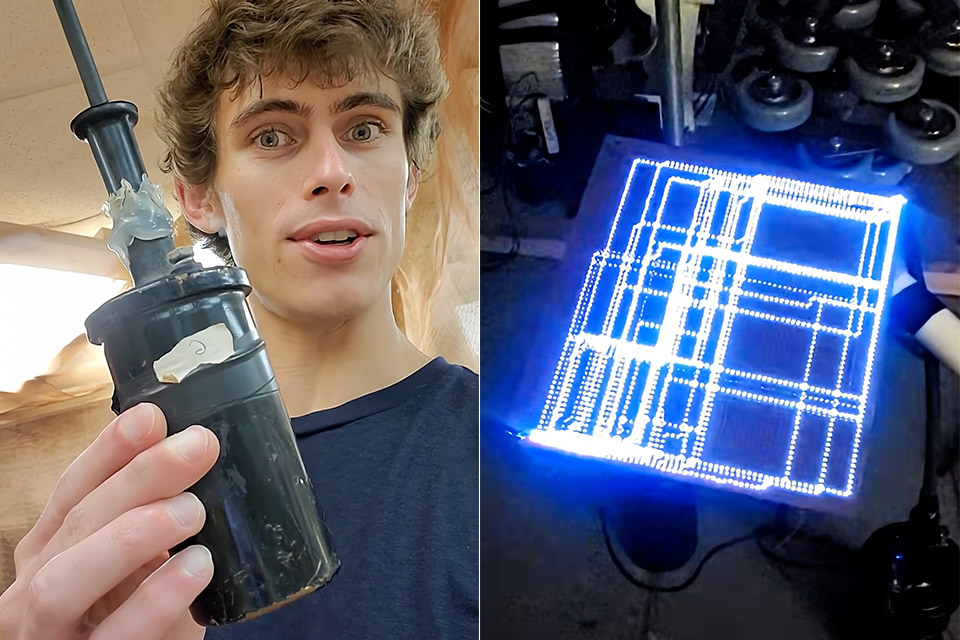
Styropyro has established a name for himself by pushing seemingly ordinary technology to its limits, and in this experiment, he demonstrates some of the fundamental physics at work in its most obvious form. He simply takes car ignition coils, the typical transformers that ignite a spark in your engine, and directs their output to a large blank circuit board.


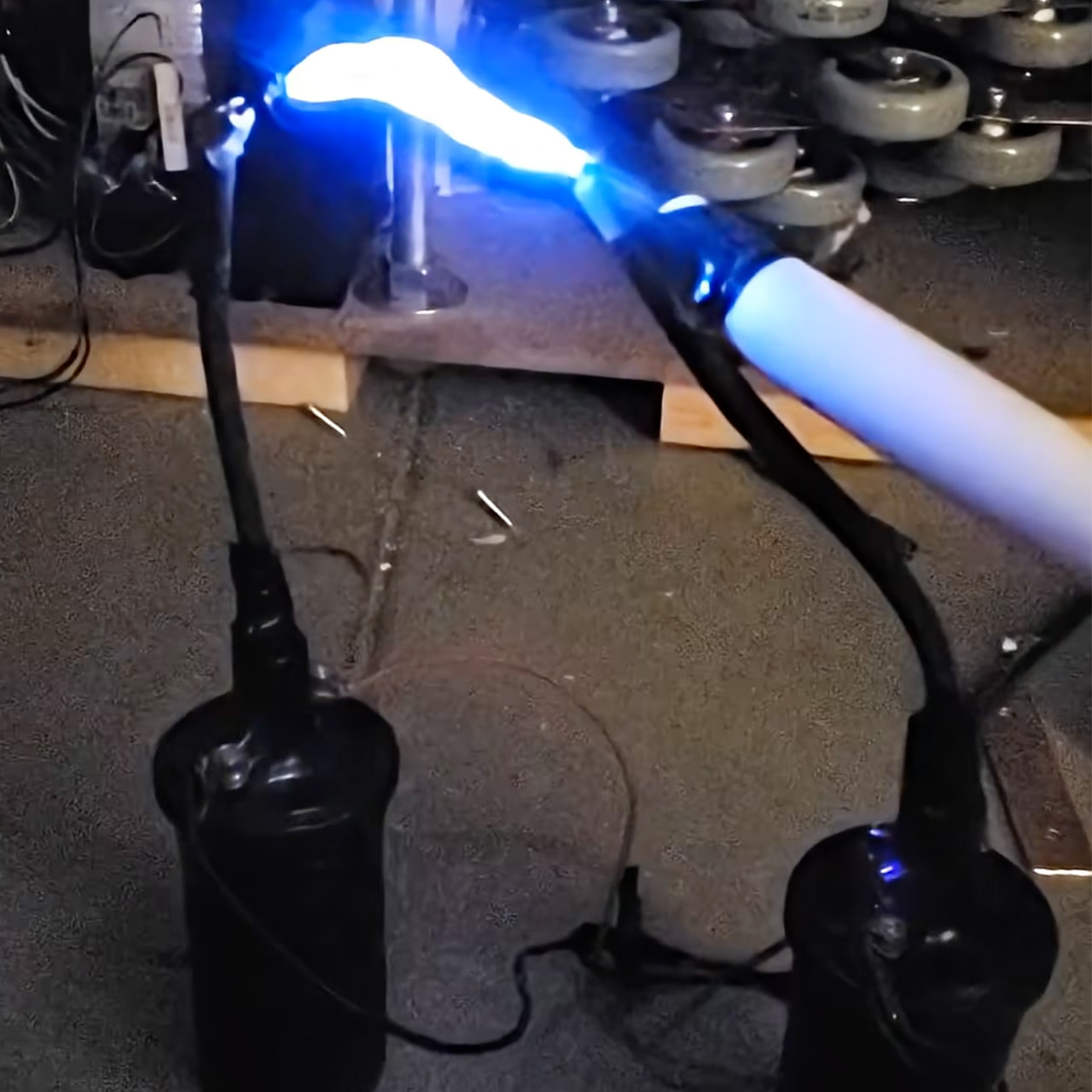
Those car ignition coils can take a low battery voltage and provide a nice huge kick of tens of thousands of volts, exactly enough to bridge the gap that ignites your fuel in an engine. Styropyro has modified his coils to produce even more voltage than they normally would, and he has connected the high-voltage connections to a perfboard, which is a board with many holes and copper pads in a grid.

Sale


Playz V8 Combustion Engine Model Kit That Runs – Build Your Own STEM Mini V8 Model Engine Kit for Adults…
  • GET HANDS ON with Playz V8 engine model kit that works for adults and kids alike. Engage young minds into STEM with a working replica of a classic…
  • REALISTIC MODEL THAT WORKS: Deliver the action of a classic car engine with powerful pistons and interactive cables! Watch the motor fans turn on with…
  • FUEL THE FUN: Our complete toy V8 engine assembly kit provides hours of fun as you tinker with cranks, pulleys, belts, and exhaust valves, bringing…

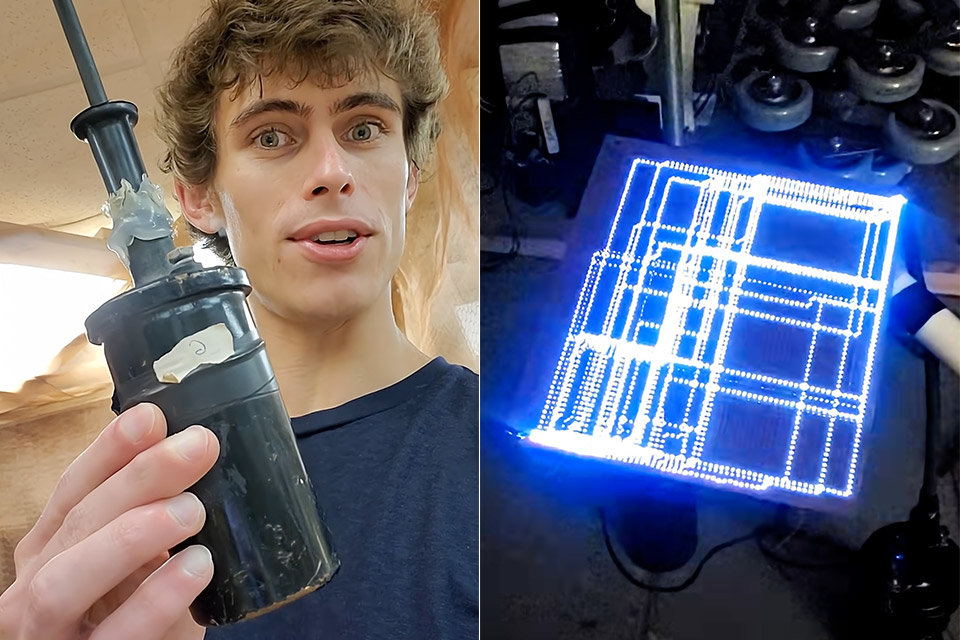
The problem is that electricity prefers the shortest path to ground. If you’re out in the open, just take the shortest straight line and you’ll get a nice clean spark, but with a board like this in the mix, things change. The small copper rings and holes in a grid alter the game completely. Because each ring provides a lower-resistance path for the electricity to follow along the grid lines, which is much easier than jumping across empty space in a straight line. So the arc of electricity begins to spread out, making right-angle turns and following the grid lines as it travels.

Advertisement

Car Ignition Coil Circuit Board Experiment
Threads of blazing light snaking across the surface form complicated, maze-like patterns. The reason these strange patterns appear is that the electricity is compelled to follow the longer path, which allows it to reach ground with the least amount of air to leap. It lingers like that for quite some time, hypnotizing you with its flashing, branching arcs against the static board.

Car Ignition Coil Circuit Board Experiment
Styropyro keeps things simple, with no special components on the board and no sophisticated drivers other than what pushes the coils themselves. It’s just a fast clip that highlights the moment when everything comes together rather than fussing with it for hours. The light from the arcs acts like a half-dozen tiny spotlights, illuminating every twist and turn of the paths they traverse, throwing crisp shadows and bringing the entire scene to life.

Source link

Continue Reading

Tech

Remotely Unlocking An Encrypted Hard Disk

Published

on

Can you remotely unlock an encrypted hard disk? [Jyn] needed to unlock their home server after it rebooted even if they weren’t home. Normally, they used Tailscale to remote in, but you can’t use tailscale to connect to the machine before the hard drive decrypts, right? Well, you can, sort of, and [Jyn] explains how.

The entertaining post points out something you probably knew, but never thought much about. When your Linux box boots, it starts a very tiny compressed Linux in RAM. On [Jyn’s] machine using Arch, this is the initramfs.

That’s not news, but because it is an actual limited Linux system (including systemd), you can add tools to it. In this case, adding dropbear (an ssh server) and Tailscale to the limited boot-time Linux.

Advertisement

Doing this in the most straightforward way presents several issues related to security. However, using a few configuration items, you can limit it to showing the unlock screen and nothing else.

The only limitation is that the setup, as written, will only work with an Ethernet interface. WiFi should be possible, but getting the wireless network up in this environment would likely be challenging.

You could probably set this up with WireGuard or even an ssh tunnel if you were adventurous.

Advertisement

Source link

Continue Reading

Tech

Feds take notice of iOS vulnerabilities exploited under mysterious circumstances

Published

on

Coruna is also notable for its use by three distinct hacking groups. Google first detected its use in February of last year in an operation conducted by a “customer of a surveillance vendor.” The vulnerability exploited, tracked as CVE-2025-23222, had been patched 13 months earlier. In July 2025, a “suspected Russian espionage group” exploited CVE-2023-43000 in attacks planted on websites that were frequented by Ukrainian targets. Last December, when it was used by a “financially motivated threat actor from China,” Google was able to retrieve the complete exploit kit.

“How this proliferation occurred is unclear, but suggests an active market for ‘second hand’ zero-day exploits,” Google wrote. “Beyond these identified exploits, multiple threat actors have now acquired advanced exploitation techniques that can be re-used and modified with newly identified vulnerabilities.”

Google researchers went on to write:

We retrieved all the obfuscated exploits, including ending payloads. Upon further analysis, we noticed an instance where the actor deployed the debug version of the exploit kit, leaving in the clear all of the exploits, including their internal code names. That’s when we learned that the exploit kit was likely named Coruna internally. In total, we collected a few hundred samples covering a total of five full iOS exploit chains. The exploit kit is able to target various iPhone models running iOS version 13.0 (released in September 2019) up to version 17.2.1 (released in December 2023).

The 23 exploits, along with the code names and other information, are:

Advertisement
Type Codename Targeted versions (inclusive) Fixed versions CVE
WebContent R/W buffout 13 → 15.1.1 15.2 CVE-2021-30952
WebContent R/W jacurutu 15.2 → 15.5 15.6 CVE-2022-48503
WebContent R/W bluebird 15.6 → 16.1.2 16.2 No CVE
WebContent R/W terrorbird 16.2 → 16.5.1 16.6 CVE-2023-43000
WebContent R/W cassowary 16.6 → 17.2.1 16.7.5, 17.3 CVE-2024-23222
WebContent PAC bypass breezy 13 → 14.x ? No CVE
WebContent PAC bypass breezy15 15 → 16.2 ? No CVE
WebContent PAC bypass seedbell 16.3 → 16.5.1 ? No CVE
WebContent PAC bypass seedbell_16_6 16.6 → 16.7.12 ? No CVE
WebContent PAC bypass seedbell_17 17 → 17.2.1 ? No CVE
WebContent sandbox escape IronLoader 16.0 → 16.3.116.4.0 (<= A12) 15.7.8, 16.5 CVE-2023-32409
WebContent sandbox escape NeuronLoader 16.4.0 → 16.6.1 (A13-A16) 17.0 No CVE
PE Neutron 13.X 14.2 CVE-2020-27932
PE (infoleak) Dynamo 13.X 14.2 CVE-2020-27950
PE Pendulum 14 → 14.4.x 14.7 No CVE
PE Photon 14.5 → 15.7.6 15.7.7, 16.5.1 CVE-2023-32434
PE Parallax 16.4 → 16.7 17.0 CVE-2023-41974
PE Gruber 15.2 → 17.2.1 16.7.6, 17.3 No CVE
PPL Bypass Quark 13.X 14.5 No CVE
PPL Bypass Gallium 14.x 15.7.8, 16.6 CVE-2023-38606
PPL Bypass Carbone 15.0 → 16.7.6 17.0 No CVE
PPL Bypass Sparrow 17.0 → 17.3 16.7.6, 17.4 CVE-2024-23225
PPL Bypass Rocket 17.1 → 17.4 16.7.8, 17.5 CVE-2024-23296

CISA is adding only three of the CVEs to its catalog. They are:

  • CVE-2021-30952 Apple Multiple Products Integer Overflow or Wraparound Vulnerability
  • CVE-2023-41974 Apple iOS and iPadOS Use-After-Free Vulnerability
  • CVE-2023-43000 Apple Multiple products Use-After-Free Vulnerability

CISA is directing agencies to “apply mitigations per vendor instructions, follow applicable… guidance for cloud services, or discontinue use of the product if mitigations are unavailable.” The agency went on to warn: “These types of vulnerabilities are frequent attack vectors for malicious cyber actors and pose significant risks to the federal enterprise.”

Source link

Advertisement
Continue Reading

Tech

Fixing An Onkyo Receiver With Multiple Faults

Published

on

Modern-day receivers are miracles of digital audio and video processing, but compared to their more analog brethren, they can come with a host of new and fascinating faults. The Onkyo TX-SA806 and SR806 receivers were released back in 2008, with [Tony359] recently getting the latter variant in for repair. Described as having weird digital distortion on the audio outputs, this particular issue got fixed by recapping the PCB with all the digital processing in the first video on this receiver, but this left the second issue unaddressed of a persistent hum, which is the topic of the second video on this repair.

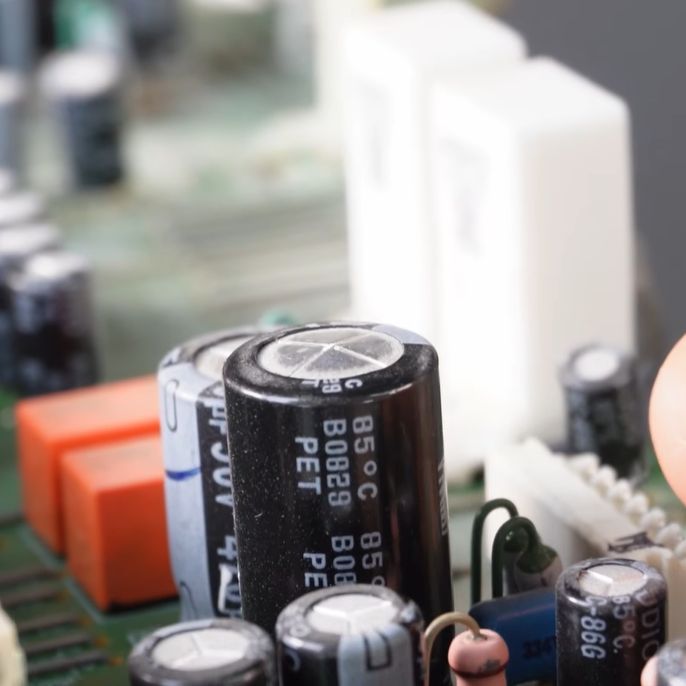
Capacitor C5662 in the Onkyo TX-SR608 receiver with a slight bulge. (Credit: Tony359, YouTube)
Capacitor C5662 in the Onkyo TX-SR608 receiver with a slight bulge.

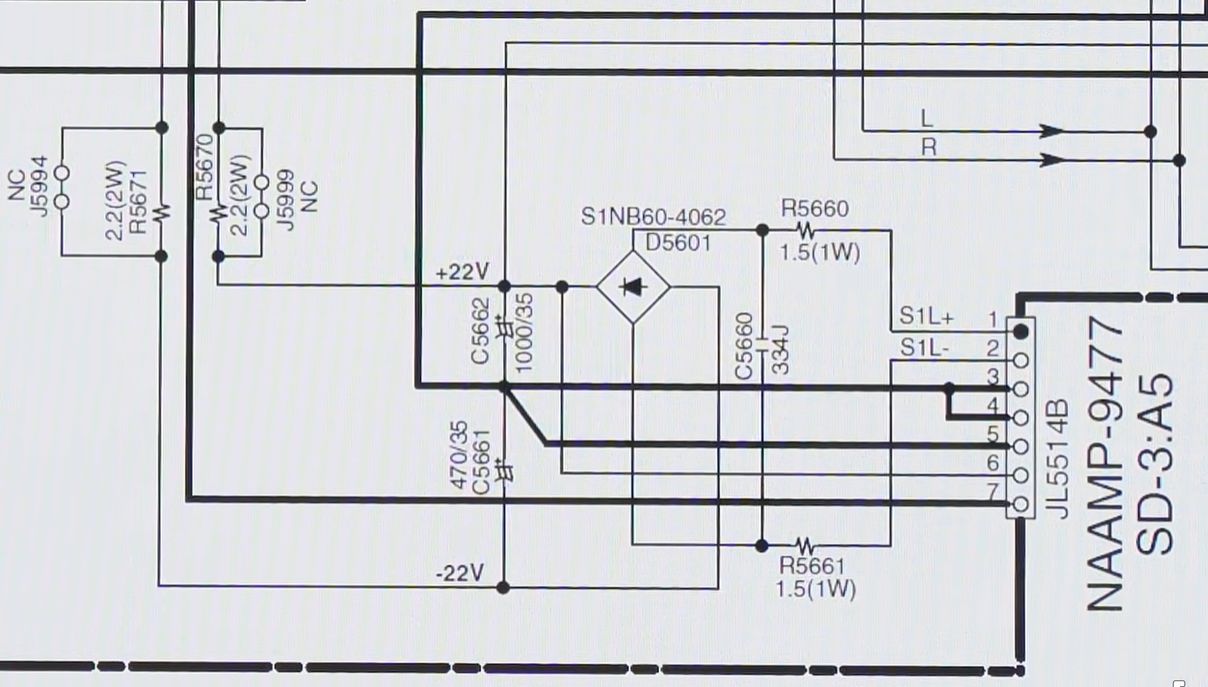
With the easy fix of recapping of the digital board already tried, next was a deep-dive into the receiver’s schematics to figure out where this low-frequency hum was coming from. With it sounding very much like mains frequency hum bleeding through, this was the starting point. Presumably somewhere on the power rails the normal filtering had broken down, so all rails had to be identified and checked for this interference.

With ripple on the 10V and 12V rails as well as the others seemingly in order, it wasn’t clear where the 100 Hz hum was coming from, but people on the BadCaps forum offered some help. After some back and forth it was deduced that the problem was the +15 VA rail, with heavy ripple on it due to a dead capacitor on the +22 V rail that comes straight from a transformer.

For some reason Onkyo’s engineer and/or bean counters had decided that installing an 85°C electrolytic capacitor on the opposite PCB side of a bridge rectifier was a genius idea, which turned out to be not quite the case. With the capacitor eventually giving up on life, the mains hum was allowed to freely pass onto the analog voltage rail and from there into the outputs.

22V rail of the Onkyo TX-SR608 receiver. (Credit: Tony359, YouTube)
22 V rail of the Onkyo TX-SR608 receiver.

Of course, getting to the target C5662 capacitor was anything but easy, as these modern receivers are tightly packed sandwiches of PCBs, requiring basically a full disassembly. Upon getting to C5662 it was clear that the capacitor was bad, being visibly bulged. Despite being a quality Japanese Nichicon capacitor, such an abusive environment was simply too much. With more similarly poorly spec’ed capacitors at risk of the same fate, these were all replaced with 105°C rated electrolytics.

Perhaps unsurprisingly this fixed the mains hum on the outputs, returning this receiver back to full functionality. In some ways it’s good to know that even with these modern receivers the most typical fault is still due to electrolytic capacitors.

Advertisement

Source link

Advertisement
Continue Reading

Tech

Bill Gates’ TerraPower gets approval to build new nuclear reactor

Published

on

The Nuclear Regulatory Commission (NRC) gave TerraPower the go-ahead this week to build a new nuclear reactor in the shadow of an aging coal power plant in Wyoming.

TerraPower’s permit is the first to be issued by the NRC in nearly a decade. The startup — founded by Bill Gates in 2015 and backed by Nvidia — has been designing its Natrium reactor with GE Vernova Hitachi. The final power plant will generate 345 megawatts, which is about two-thirds smaller than modern full-size reactors, but multiple times larger than many small modular reactor designs favored by other startups.

Natrium differs from other reactors not just in scale, but also in the details of its design. Where most nuclear reactors built in the last 50 years have been cooled by water, Natrium is cooled by molten sodium, which TerraPower says should be safer. This is the first time a commercial reactor that is not cooled by regular water has been approved by the NRC in more than 40 years.

The reactor will operate with an excess of molten sodium, which will be stored in large, insulated tanks. This allows atoms to keep splitting when demand is low, with the hot sodium saving that energy, which can be used to fill in any lulls in wind and solar output. Since nuclear power plants operate best near full capacity, storing excess energy as heat should help lower generating costs.

Advertisement

The NRC’s approval is notable because TerraPower followed the long-established permitting process, giving it permission to build on private property. The Department of Energy recently loosened its safety rules, but those regulations only apply to land owned by the agency.

TerraPower is one of nearly half a dozen nuclear startups backed by tech companies or their founders. As electricity demand from data centers grows, the Trump administration has come under pressure to boost generating capacity, including by building new nuclear reactors.

Investors have taken note of the two trends, and in recent months, they’ve showered nuclear startups with well over $1 billion in capital. TerraPower alone has raised a total of $1.7 billion, including a $650 million round that closed in June, according to PitchBook.

Techcrunch event

Advertisement

San Francisco, CA
|
October 13-15, 2026

Despite the momentum, nuclear power still faces an uphill battle. To date, nuclear has been one of the most expensive forms of new generating capacity. Part of that is due to cost overruns at massive power plants, but it also reflects the tremendous strides that solar, wind, and batteries have made in bringing costs down over the years. 

Advertisement

Nuclear startups are hoping to leverage mass manufacturing to rein in capital expenditures, but the theory has yet to be proven. And while manufacturing can help cut costs, it often takes at least a decade for the savings to materialize.


Source link

Continue Reading

Trending

Copyright © 2025