Sometimes I end up drowning in browser tabs containing web pages I don’t remember opening, and sometimes I have a few tabs that I want to close, but I can’t, because I know I’ll need them later.
Tuck is a completely free browser extension for all the major browsers that helps with this. You know how, in Gmail, you can “snooze” an email so that it’s hidden from your inbox until later? This is like that, but for your browser tabs. Tuck can also automatically close idle tabs after a certain amount of time, saving them to a list so you can open them again when you need to.
To get started, simply install the extension. It works in just about every browser: Chrome, Safari, Edge, Firefox, Brave, Arc, Vivaldi, and a few others. There is no need to sign up for an account.
Advertisement
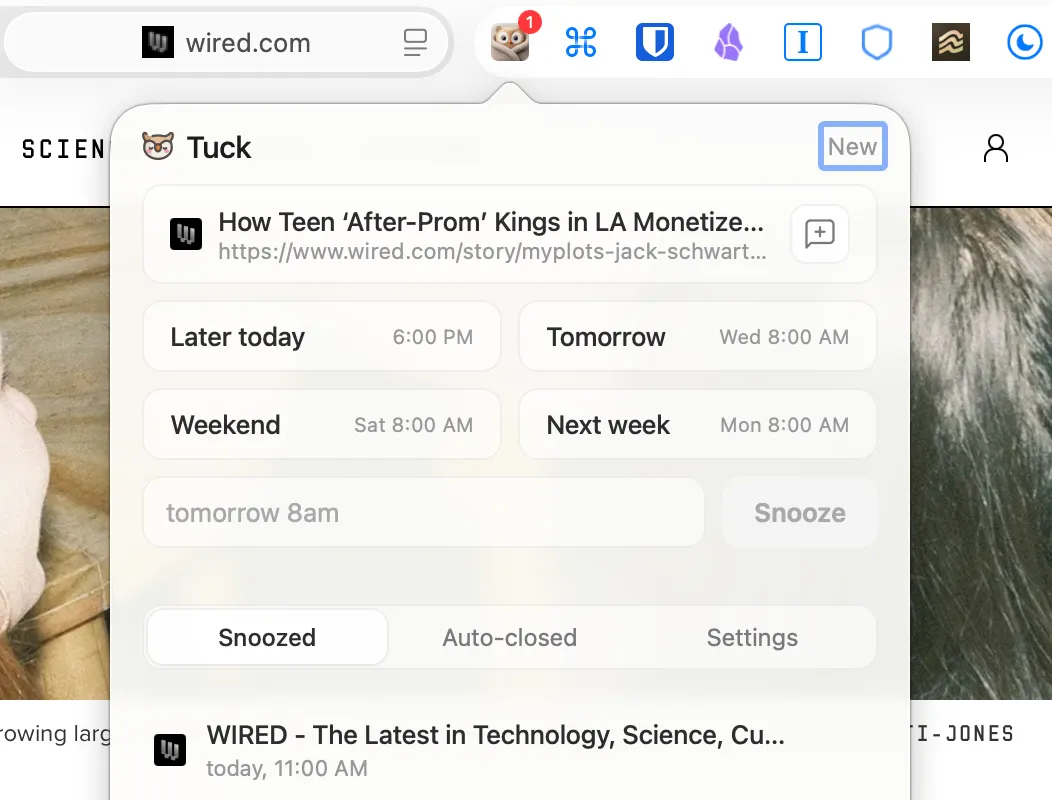
After installing the extension, you’ll see the icon—an owl wrapped in a blanket—in your browser bar. Click it and you’ll see the snoozing options: Later today, Tomorrow, Weekend, and Next week.
Photograph: Justin Pot
Click any of these options and the tab will close, ready to reopen later at the appointed time. If you prefer keyboard commands, the extension has shortcuts for Windows (Ctrl-Shift-1, 2, or 3) and macOS (Cmd-Shift-1, 2, or 3) that allow you to snooze tabs to reopen later today, tomorrow, or next week, respectively.
There’s also a text box, allowing you to type a time that you’d like the current tab to reopen. This text field uses natural language processing, meaning you can type something like “Monday at 2 pm” and the extension will figure out what you mean.
The extension, by default, will automatically close any tabs you leave idle for 24 hours. These auto-closed tabs are collected in the extension, allowing you to find them, click them, and open them back up if you need to. You can change how long tabs need to sit idle before this happens—three hours, 12 hours, 24 hours, three days, and seven days are all options. You can also turn this auto-close functionality off, if you prefer.
Advertisement
Pinned tabs and tab groups will never auto-close, and you can prevent tabs from any given domain from closing—useful for making sure your Google Docs or Gmail never close.
The snoozing and auto-closing features combined do a lot to curb your worst tab instincts. Try this extension out if you’re tired of drowning in tabs you never actually get around to.
Hope there’s extra room in your pockets. A new rumor says Apple’s iPhone 20 Pro and Pro Max could have the largest displays in iPhone history, alongside a quad-curved, nearly all-glass exterior.
Digital Chat Station, a prominent anonymous tech insider on the Chinese social media platform Weibo and a reliable source of Apple news in the past, posted over the weekend that the iPhone 20 Pro screen would be 6.41 inches and the Pro Max 6.96 inches, measured diagonally. The iPhone 18 Pro and Pro Max, which hit stores last Friday, measure 6.27 inches and 6.86 inches (which Apple rounds up to 6.3 inches and 6.9 inches). The iPhone Duo, Apple’s long-awaited first foldable phone, which reaches stores on Oct. 23, has a diagonal 7.6-inch inner display when open.
A representative for Apple did not immediately respond to a request for comment.
CNET Senior Reporter Abrar Al-Heeti said that larger screens are great for watching videos and working on the go, but bigger displays also mean higher costs for consumers, serving as an “excuse for companies to charge you more.”
Advertisement
“Along with the commemorative angle of the iPhone’s 20th anniversary, it’s likely Apple could use design elements like a bigger screen and an all-glass design to hike prices,” Al-Heeti said.
More glass, smaller Dynamic Island
Digital Chat Station backed Bloomberg reporter Mark Gurman’s August report that the exterior of the new flagship phones would be nearly all glass in what’s called a quad-curved design. That means the glass will wrap around all four sides of the phone, making it look as if there is no bezel.
In his report last month, Gurman said that the glass on the front and back of the phones would “curve into the sides of the devices, with a metal band in the middle.”
The exteriors of the iPhone 18 Pro and Pro Max are made of aluminum and ceramic glass.
Advertisement
The iPhone 20 Pro and Pro Max will also have a smaller Dynamic Island and a tiny punch-hole selfie cutout on the front, according to Digital Chat Station.
The Dynamic Island is the capsule-shaped region at the top of the front screen that houses the selfie camera. It also expands and contracts to display notifications, system alerts and background activities.
The iPhone 20 Pro and Pro Max are expected to launch in September 2027 as the next iteration in the series. Apple is widely expected to skip over the iPhone 19 name and jump straight to iPhone 20 next year, marking the 20th anniversary of the first iPhone launch in 2007.
Ever since being admittedly fascinated by the Cambridge coffee webcam from the 1990s, I’ve written about VPNs, the NFL, smartphones, living wages, over/unders and everything in between.
See full bio
A ton of attention was paid recently to some offhand statements from OpenAI and Microsoft employees that surfaced in filings in the NY Times’ ongoing case against OpenAI, which has been consolidated into a much larger class action lawsuit. As I argued earlier, that struck me as something of a nothingburger of a story, because it should have no impact on the actual legal questions regarding copyright infringement and fair use. However, on Wednesday evening, OpenAI and Microsoft filed something far more stunning, accusing Susman Godfrey (which represents the plaintiffs in the consolidated case) of effectively end-running basic rules of discovery and evidence by (1) paying for research to supply evidence its clients lacked, (2) hiding from the defendants that it had paid for that research, and (3) sneaking the paid-for research into the case outside the normal expert process.
This filing should be seen as the massive bombshell (if not fraud on the court) that people tried to make out that earlier filing to be. Professor Ed Lee, who runs ChatGPT is Eating the World (which tracks all of the various AI lawsuits), has called this an “explosive motion.” But it’s a little bit complex to understand why, which is why it will not get nearly as much attention as some offhand comments by a Microsoft employee.
To understand why this is such a big deal, we need to take a few steps back to explain. There are a bunch of different cases going on in the US regarding whether or not AI training is “fair use” and therefore not a copyright infringement. There were two important rulings in California last year, one after the other, where one judge (William Alsup) found training to be somewhat obviously fair use, while the other judge (Vince Chhabria) found it to be somewhat obviously not fair use.
As often happens in fair use cases, a lot of time is spent on the “effect on the market” argument, and part of that is whether or not the new works “dilute” the market for earlier works. In the Anthropic case, Alsup didn’t buy the claims of dilution, which is maybe not surprising, since he found training to be fair use. But perhaps more interesting is that in the Meta case, Chhabria — even as he found against fair use — wasn’t persuaded about the “dilution” argument:
Advertisement
As for the potentially winning argument—that Meta has copied their works to create a product that will likely flood the market with similar works, causing market dilution—the plaintiffs barely give this issue lip service, and they present no evidence about how the current or expected outputs from Meta’s models would dilute the market for their own works.
That was a federal judge signalling to potential plaintiffs, if you’re bringing infringement cases like this, maybe find some evidence of dilution?
And… that happened. Earlier this year, a preprint came out on Arxiv seemingly providing evidence on that specific point, claiming that “Generative AI floods and dilutes the market for books” written by four researchers, most notably Jane Ginsburg, who is one of the most famous copyright scholars around (though is also well known as one of the most extreme copyright maximalists, not to mention a general hater on a broad interpretation of fair use). But the lead name on the paper is Tuhin Chakrabarty, a recent PhD. (2024) grad who is now a computer science professor at SUNY Stony Brook. Chakrabarty received his PhD. from Columbia University, where Ginsburg teaches.
A friend had sent me that report when it came out and I found the analysis… perplexing. I had put it on my list of things to write about, but never got to it. Thankfully, Thad McIlroy, who runs “The Future of Publishing” and has been a long term contributing editor at Publishers Weekly, took it upon himself to examine the paper and found it deeply problematic, mainly because they relied on Kindle Unlimited to get copies of the books that they used for the analysis. But as McIlroy points out, that’s distortionary for many reasons regarding how KU works, and suggests that many of the underlying assumptions in the paper simply don’t hold up to scrutiny:
But the author earns income on KU solely on the number of actual pages of their book that are read by a subscriber. Just getting downloaded provides no income. The complex formula is well-described here. There is no method available to estimate the page reads for a book, nor the KU income. Chakrabarty writes, “We measure Kindle Unlimited as whether a title is available on the service, not as how much of it readers actually read. The panel does not tell us whether a given unit is a Kindle Unlimited borrow, a page read allocation, or an ordinary purchase.”
An interesting aspect of KU is that a book’s income there may relate far more closely to quality than it does under royalty systems. If a reader downloads a low-quality AI-generated book on KU, starts to read it, and recognizes the low quality, they will stop reading and move onto another book. The author will earn an insignificant amount of money. On the other hand, if a reader buys the same book, the author receives their full royalty (unless the reader goes to the trouble of returning the book and seeking a refund).
Advertisement
An AI-generated book on KU will only earn significant page revenue if readers find it to be of quality sufficient to match the genre books they are used to reading on the platform.
With these factors in mind, the prevalence of Kindle Unlimited titles in this study appears to be a distorting influence. First, AI-generated books are more likely to appear on Kindle Unlimited than they are more broadly on the Amazon Kindle platform. Second, there is no clear method available to estimate a book’s actual KU income.
Even more bizarre, when McIlroy shared a copy of his critique with Chakrabarty, he was dismissed on moral grounds, because McIlroy has argued for ethical ways to use AI in publishing, which Chakrabarty claims is “morally not okay with me.” That alone should raise some serious red flags about the objectiveness of Chakrabarty in this research. He did not come to this with an open mind. He came bearing a grudge.
A few months earlier, Chakrabarty and Ginsburg (along with Xinyue Liu, who was also an author of the paper above, and who appears to be a first or second year PhD. student working for Charkrabarty) put out another paper called “Alignment Whack-A-Mole: Finetuning Activates Verbatim Recall of Copyrighted Books in Large Language Models.” That piece claimed there was evidence that AI models “store copies of copyrighted works” and even pointed out that this “undermine[s] a key premise of recent fair use rulings.” Indeed, it calls out the Alsup and Chhabria rulings in the paper itself, and effectively notes that they’re responding to the judge’s concerns regarding the effect on the market.
Advertisement
In short, Chakrabarty, Liu, and Ginsburg have been publishing research that attempts to fill in the gaps that multiple judges had called out, and to help plaintiffs argue that training is not fair use. This was especially important because if such evidence was widely available, other plaintiffs would have brought it up. But they have not. Likely because it doesn’t really exist unless you stretch your methodology to its breaking point.
Of course, my biases are known: I’m quite convinced that training AI on copyrighted works is fair use, and I find the argument that slop books “dilute” non-slop books to be beyond nonsensical. Similarly, knowing a little bit (just enough to be dangerous) about how LLM training works, makes it difficult for me to believe that models are, in fact, holding full copies of works they are trained on. That’s just not how they work. But you don’t have to take my word for it. A. Feder Cooper, a well-known computer science professor at Yale who has (somewhat famously) done research on getting LLM’s to spit out “memorized books,” or other full works, had some pretty blunt criticisms of the “whack-a-mole” paper:
As will become clear soon, I think the paper has significant methodological and presentation problems. I’ve spent considerable time reviewing and re-reviewing the paper, and have consulted with two trusted senior colleagues who are experts on memorization to gut-check my reading. And, in brief, I’m confident that Alignment Whack-a-Mole’s headline claims are incorrect. These results rest on aspecific memorization metric and elicitation methodologythat I don’t think hold up to scrutiny, anddon’t support the broad claimsthe paper makes. At best, I think the claims are seriously overstated; at worst, the large majority are wrong. I can’t tell which because the paper doesn’t report enough detail to distinguish the two.
That alone should be concerning, but the media — including the NY Times — really loved to report on these studies, even as their methodology seemed questionable to some experts, and despite the clear potential conflict of interest.
Now, that takes us to the claims in the OpenAI filing from earlier this week: it’s that the plaintiffs’ lawyers at Susman Godfrey secretly paid at least Chakrabarty to do these studies, hid that fact, and then took further steps to launder the studies as non-biased expertise. It appears this wasn’t just a conflict of interest at work, it was a conflict piled upon a conflict, and then potential fraud on the court.
Advertisement
Unable to muster any evidence of harm after years of discovery, Class Plaintiffs’ counsel Susman Godfrey L.L.P. (“Class Counsel” or “Susman”) paid Stony Brook University professor Dr. Tuhin Chakrabarty to research “[h]ow AI generated books dilute the market for human authors.” Declaration of Victor Chiu ISO Motion to Strike (“Chiu Decl.”), Ex. A. Dr. Chakrabarty then coauthored a working, non-peer-reviewed paper purporting to show exactly that (the “Chakrabarty Paper”). The paper was initially self-published on July 22, 2026. Susman had disclosed Dr. Chakrabarty and one of his co-authors as retained experts months earlier—but the resumes Susman provided omitted that Susman had funded Dr. Chakrabarty’s research. Neither Dr. Chakrabarty nor the other disclosed expert ever served an expert report in this case. And after Defendants specifically objected that Dr. Chakrabarty’s resume was incomplete, Susman provided what it represented was an “updated resume” that still omitted Susman’s own funding of his market-dilution research.
Now, some people will point out that it’s not uncommon for companies to pay for research and then use that research elsewhere in ways that are beneficial to them. That’s absolutely true. The problem here isn’t who paid for the research, but the lengths the plaintiffs’ lawyers went to in hiding who paid for it from the court (and from OpenAI and Microsoft)… and how the evidence was laundered into the case long past the normal deadline where it could have been challenged.
Normally, if you bring expert witnesses into a case, the other side gets to challenge their expertise and any research findings that they’re providing. But here, the class plaintiffs’ lawyers took a bunch of steps that at least suggest they deliberately sought to make that effectively impossible with this bit of research. They had named Chakrabarty as a potential witness, providing an incomplete resume for him, but then didn’t use him as such. Instead, they did a kind of evidence two step to get it into the case in a way that would make it harder to challenge:
On July 22, 2026—after the deadlines for all expert reports had passed—Dr. Chakrabarty, Dr. Dhillon, Xinyue Liu, and Professor Jane Ginsburg uploaded to the internet a working paper titled “Generative AI floods and dilutes the market for books.”… They then uploaded two subsequent versions of the paper on July 26, 2026 and August 3, 2026, respectively…. The paper remains identified as a “Working Paper Under Review.” …
The Chakrabarty Paper purports to “measure[] how generative AI” impacts “a real book market once its output reache[s] the catalog and compete[s] for sales.” … Its abstract asserts that the research “bear[s] directly on the market-effect question at the center of the fair use defense to copyright infringement.” … The July 22 and July 26 versions of the Chakrabarty Paper did not disclose that it was funded by Susman and did not make any of its underlying data available. … The August 3 version of the Chakrabarty Paper again did not disclose its funding source. …
[…..]
Advertisement
On Sunday, August 2, 2026, the afternoon before Mr. Lasinski’s deposition, Class Plaintiffs served a supplemental report devoted entirely to the Chakrabarty Paper and which cited the July 26, 2026 version. … At his deposition the next day, Mr. Lasinski testified that he did not analyze any of the data underlying the Chakrabarty Paper…. Mr. Lasinski also testified that he had never spoken with Dr. Chakrabarty or any of his co-authors “about this paper or any other matters related to this litigation.” … When Mr. Lasinski was asked whether he understood that Dr. Chakrabarty and Dr. Dhillon “were retained as experts by Plaintiffs in this matter,” counsel from Susman objected: “I’m not sure why this is appropriate to ask Mr. Lasinski about.” … Mr. Lasinski ultimately testified that he did not “know that this means that [Dr. Chakrabarty and Dr. Dhillon] were retained.”
Mr. Lasinski likewise did not know who had funded the research he was relying upon. When asked whether “the study was funded by Plaintiffs in this case or the Susman Godfrey firm,” Mr. Lasinski testified: “I don’t know the funding sources,” but “to be clear . . . funding something like this would be inconsistent with what I’ve known the Susman Godfrey firm to do.” … Counsel from Susman, who was defending the deposition, did not correct the record or comment on the issue of funding.
Got that? After the deadlines for expert reports were past, the Susman lawyers filed a “supplemental report” from a different expert, Lasinski, which was all about this report that Chakrabarty et al had only just published, effectively getting it into evidence after the deadline passed, and through a non-author of the paper, who had little actual knowledge of the paper’s methodology or data. And, yes, it’s notable that Lasinski said it would be “inconsistent” with what he knew of Susman Godfrey for the firm to fund something like this. Meanwhile, the Susman lawyers in the room objected to questions about whether the paper’s authors were retained experts, and then said nothing at all when Lasinski vouched that the firm wouldn’t fund such research. How… interesting.
There’s also the bit about how the lawyers for OpenAI and Microsoft figure this out:
Advertisement
After Mr. Lasinski’s deposition, OpenAI independently located a substantially similar version of Dr. Chakrabarty’s resume on his website…. Unlike the “updated” resume Susman provided in February, however, the version OpenAI found contains a section specifying $100,000 in “Funding” from Susman in December 2025:
The resume identifies the $100,000 as an “Unrestricted Gift for sponsored research” on “How AI generated books dilutes the market for human authors?”—the same subject covered in the Chakrabarty Paper and in Mr. Lasinski’s supplemental report….
Thus, according to Dr. Chakrabarty’s own resume, Susman’s funding had begun approximately two months before Susman provided Defendants with his supposedly “updated” resume, and the stated subject of that funding was the same market-dilution issue addressed by the Chakrabarty Paper and Mr. Lasinski’s supplemental report. Neither of the resumes Class Plaintiffs provided in February disclosed that the research was sponsored or the source of funding...
That looks bad! This looks worse:
Two days later, on August 27, 2026, Dr. Chakrabarty changed the resume on his public-facing website and removed the reference to Susman’s $100,000 gift. Chiu Decl. ¶ 15, Ex. M. The revised resume now states, in fine print and barely legible font, that “[a] previous version of [Dr. Chakrabarty’s] resume stated that [he] received an unrestricted gift for sponsored research from Susman Godfrey LLP in the amount of $100,000. This was incorrect as the research was done for In re Mosaic LLM litigation for which [his] institution was compensated in a lesser amount:”
Even taken at face value, the revised resume does not deny that Susman funding facilitated the research presented in the Chakrabarty Paper. Whether the money was nominally earmarked for this MDL or the In re Mosaic LLM Litigation case, it supported the same researcher investigating the same market dilution question that is the subject of the Chakrabarty Paper, which in turn is the subject of Mr. Lasinski’s supplemental report.
OpenAI and Microsoft have asked the court to toss the paper entirely, and it’s the plaintiffs’ key evidence on dilution, the exact thing Chhabria said was missing in the Meta case. But also, they point out that this appears to be an attempted fraud on the court.
The Lasinski Supplement is not just late; it instead appears to be a deliberate effort to gain an advantage by evading Rule 26. “It is troublesome, to say the least, for a party to engage a consulting, non-testifying expert; pay for that individual to conduct and publish a study, or otherwise affect or influence the study; engage a testifying expert who relies upon the study; and then cloak the details of the arrangement with the consulting expert . . . in order to conceal it from a party opponent and the Court.” … To make matters worse, Susman appears to have concealed its funding of the Chakrabarty Paper from Class Plaintiffs’ own expert, Mr. Lasinski, despite asking him to rely on it. Dr. Chakrabarty himself was also apparently ignorant of the fact that the tens of thousands of dollars Susman was funneling his way to conduct market-dilution research and publish papers was tied to a specific litigation, much less which one. And Class Plaintiffs have now completed the maneuver: their summary judgment submissions rely extensively on the Chakrabarty Paper and describe it to the Court simply as an “academic stud[y],” without disclosing that their own counsel funded the underlying research.
This maneuver deprived Defendants of the opportunity to fully analyze and rebut the Chakrabarty Paper—and the Court of the ability to properly assess its reliability. Had Class Plaintiffs properly disclosed the Chakrabarty Paper and underlying data and materials, Defendants would have evaluated the data on which the study is based, deposed Dr. Chakrabarty and his co-authors, and tested the study’s methodology and conclusions through the ordinary discovery process. Instead, Defendants were only able to depose Mr. Lasinski, who knew nothing about Dr. Chakrabarty’s underlying data and who mistook the Chakrabarty Paper to reflect neutral, independent research.
Advertisement
Courts recognize that it is “fundamentally unfair” for a party “to supplement the record with reports of alleged ‘consulting experts’”—like Dr. Chakrabarty here—“whose identity and opinions have been shielded [from disclosure].”
The Court also has the inherent authority to preclude the Lasinski Supplement and Chakrabarty Paper to “prevent [Class Plaintiffs] from perpetrating a fraud on the court,” Yukos Capital S.A.R.L. v. Feldman, 977 F.3d 216, 235 (2d Cir. 2020), or interfering with the judicial system’s ability to impartially adjudicate this action. Such interference includes concealing counsel’s role in creating purportedly neutral scientific evidence. See Hazel-Atlas Glass Co. v. Hartford-Empire Co., 322 U.S. 238, 251 (1944) (vacating judgment obtained using an article ghostwritten by counsel but presented as the work of a disinterested expert).
That is what Susman did here. When disclosing Dr. Chakrabarty as an expert, Susman omitted that it funded the research subject of the Chakrabarty Paper, continued to omit that funding even after providing what it represented was an “updated resume,” and allowed Mr. Lasinski to testify at his deposition that Susman would not provide such funding. And even since its funding of the research has come to light, Susman has refused to answer straightforward questions about the nature of its relationship with Dr. Chakrabarty and his co-authors. As Mr. Lasinski himself acknowledges, it would be “inconsistent” for a law firm to fund a study for litigation and then present it through an expert as neutral academic literature.
Once again, the issue isn’t even that the research is sketchy (although… it is). Nor is it that the research was paid for by an interested party (though… it was). The main issue is that the funding appears to have been deliberately hidden from the defendants, and then the sketchy, paid-for research was laundered into the case through a different expert after the deadline for expert reports had passed.
Advertisement
Literally everything about this bit of research — which is a key plank in the anti-fair use argument — comes out of this as suspect.
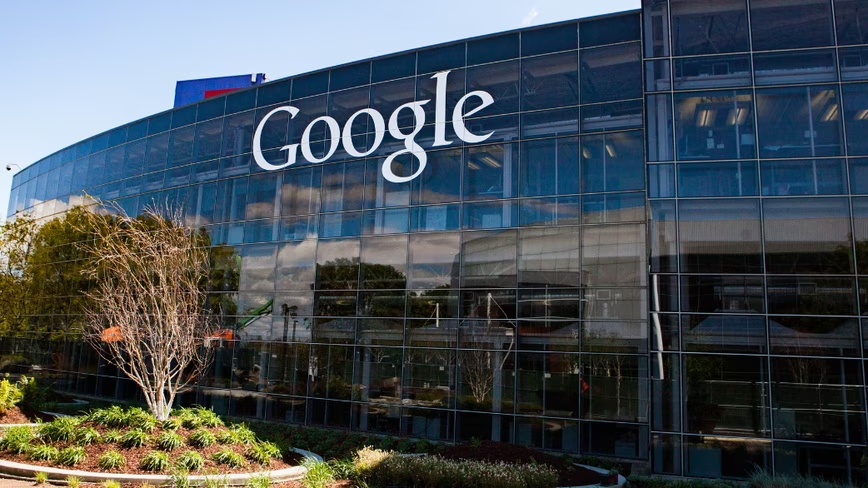
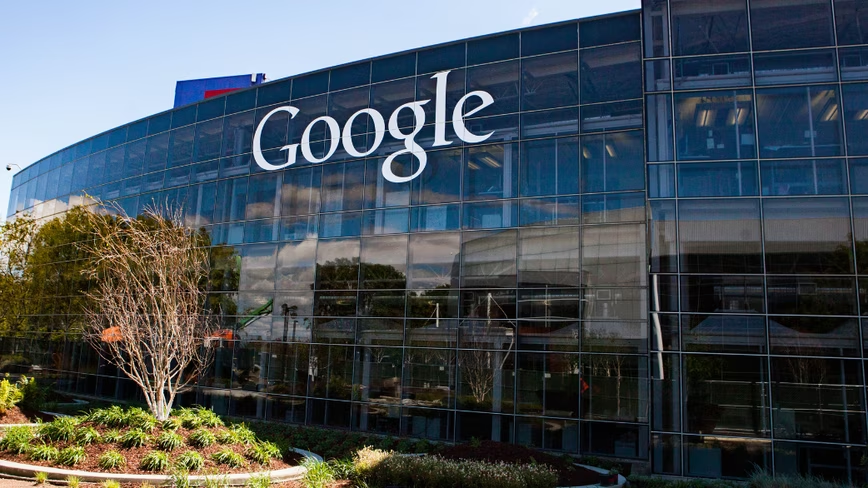
Google’s $15bn AI datacentre project in Andhra Pradesh has state environmental clearance for 2.51GW of capacity, more than double the 1GW announced, according to clearance papers seen by the Guardian.
Hannah Ellis-Petersen and Aakash Hassan reported the story from Tarluvada, one of the villages where the project is being built. The Guardian said 2.51GW is roughly the output of two large nuclear reactors, and more than 30% of the state’s current yearly power use.
Google announced the Visakhapatnam AI hub in October 2025, with partners AdaniConneX and Airtel. In its reply to the Guardian, Google called it a gigawatt-scale hub, comparable to other projects.
The state gave the green light in nine days, with no public hearing, the Guardian reported. The Human Rights Forum has since filed three petitions at India’s National Green Tribunal, and a separate case is before the Andhra Pradesh High Court.
Advertisement
The project covers three sites around Visakhapatnam. One is a few metres from a reserve forest, a drinking water reservoir and a wildlife sanctuary.
In Tarluvada, 520 families recently had land taken back that the government had given them about 20 years ago, according to the Guardian. Villagers said security guards working for the Adani Group put up fences in April and blocked them from plots they had farmed for years.
Some of the 47 Dalit farmers who were paid for their land said they have not yet got the new plots and jobs they were promised. One farmer, P Venkat Rao, said he received $40,000 for his only acre but now has no livelihood.
“I am a farmer, without my land I am nothing,” Rao told the Guardian.
The state government said no land was taken by force and that those who qualified were paid well. The Adani Group said all legal approvals were in place.
Advertisement
Google said the site will be cooled by air, not water, so it will not affect local drinking water. It also said it expects no impact on the local community and will create thousands of jobs around Visakhapatnam.
Meanwhile, the state’s tax breaks and cheap land, power and water for Google are estimated to be worth 220bn rupees ($2.2bn) over 20 years, the Guardian reported.
The dispute mirrors datacentre protests in the US and elsewhere. The tribunal petitions have not yet been decided.
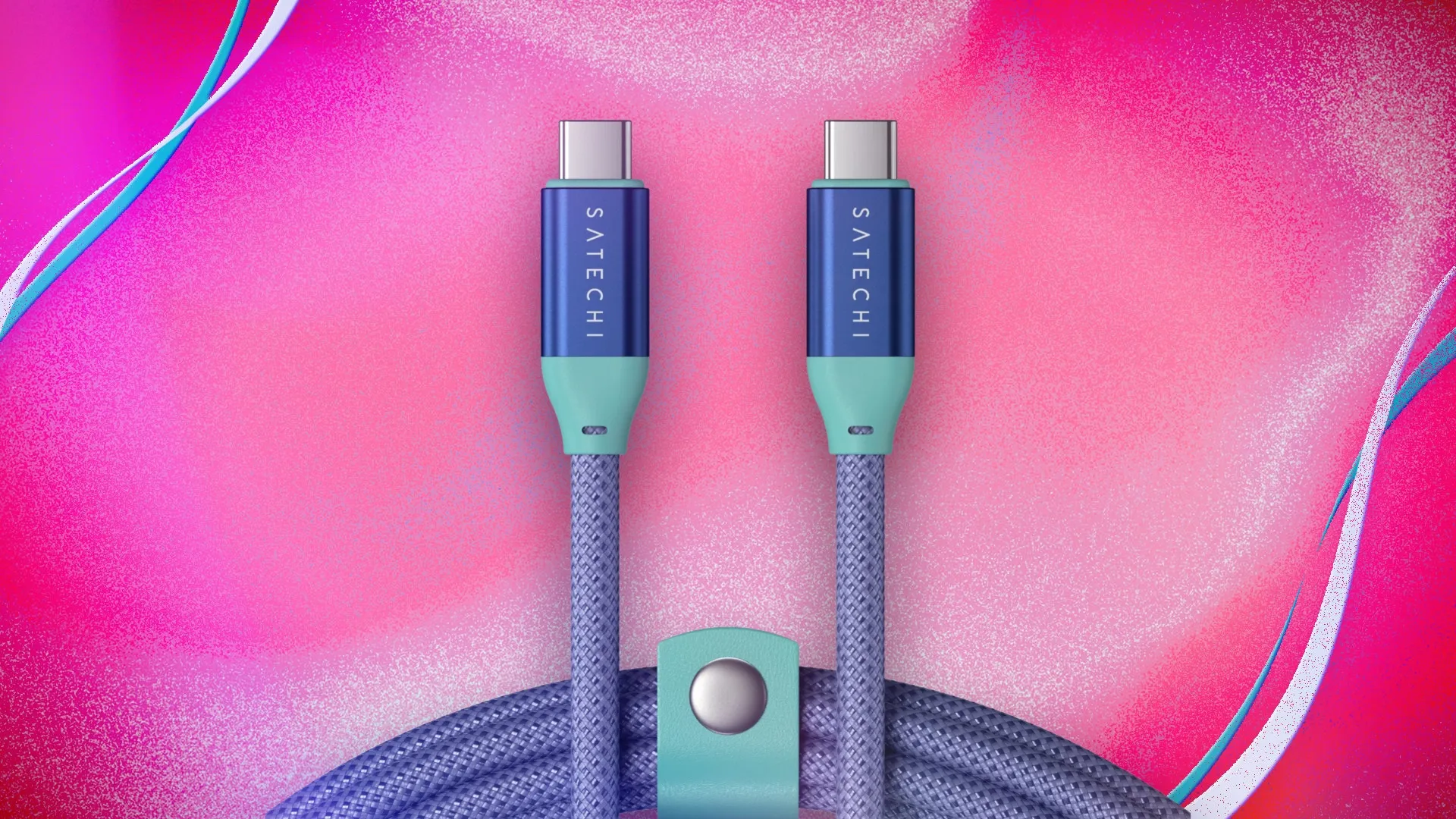
Save 50%: Satechi is offering a whopping 50% off some of its USB-C cables when you enter the discount codeS3KZUUN3 at checkout. Whether you’ve just bought a shiny new iPhone 18 Pro, you’re waiting for the iPhone Duo to launch next month or you just need a new cable for your current phone, this is the early Prime Day deal for you.
Prefer to order your cables direct? The Satechi store is offering the same deals with the discount codeIPHONE18CABLE. But no matter where you choose to order from, you’ll need to do it soon — this 50% off sale ends tonight.
Save 50% with code S3KZUUN3
Satechi USB-C cables
Advertisement
There are tons of cables for you to choose from, ranging from short ones to long ones, black ones to pink ones and everything in between. The company’s 240-watt USB-C cable comes in a funky purple, for example, and it’s yours for just $13, down from $25. It’s 3.3 feet long and braided for longevity and its anti-tangle properties.
If you want a cable that’s perfect for the road, Satechi’s OntheGo Lanyard Cable offers 60-watt charging in a 4.9-foot braided cord that doubles as a lanyard when attached to your iPhone. It normally sells for $30, but it’s just $15 right now, with three colors for you to choose from.
Advertisement
There are plenty more options in the sale, too. Take a look through the options, and we’re sure you’ll find the right cable for you and your phone.
Alternatives you might like
The USB-C cable market is full of options, but it’s always recommended to choose a cable from a company that you trust. Satechi definitely falls into that category, as does Anker — and you can snag two 6-foot cables for $10 at Amazon currently. They’re rated for 60 watts, which means they can charge your MacBook as well.
Oliver Haslam has been writing about phones, computers, games, and anything else that takes a battery or plugs in for more than he’d like to admit.
With a focus on mobile and laptops, Oliver is never too far away from whatever social network is trending today and is never short of an opinion to share.
See full bio
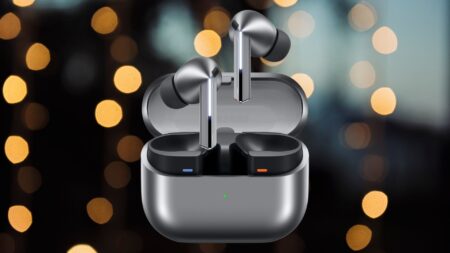
At $149.99, the Buds3 Pro sit squarely in the price bracket most people compare when shortlisting the best wireless earbuds, a range usually reserved for older or entry-level models rather than a current flagship pair.
Advertisement
Adaptive Active Noise Cancellation powered by Galaxy AI is the headline feature on the Buds3 Pro, automatically tuning out a crowded train or a noisy office without needing to fiddle with settings every time the environment changes around you throughout the day.
Galaxy AI also drives an Adaptive Equalizer here, tuning audio to how the Buds actually sit in your ears rather than applying one generic profile to every listener, so the same pair sounds noticeably different depending on who’s wearing them.
Advertisement
Samsung’s ecosystem thinking carries over into auto-switching between a Galaxy phone and a Galaxy PC, removing the usual faff of reconnecting Bluetooth every time you move from a laptop to a call, which matters more the more devices someone juggles daily.
Advertisement
Battery life runs to around six hours with noise cancellation switched on, stretching to seven with it off, and the case adds roughly 20 more hours before a proper charge is needed. Wireless fast charging then claws back hours of listening time in just a few minutes on a pad.
Touch controls handle calls, tracks and volume without reaching for a phone, and an IP57 rating means these can handle sweat, rain and the occasional drop during a workout or a commute in bad weather.
With the everyday basics covered by touch controls and IP57 durability, the real question is why pay Apple’s price for AirPods Pro when $149.99 buys Galaxy AI on a 4.5-star pair backed by nearly 4,000 reviews, while this discount lasts?
Arguably Samsung’s best earbuds to date with a strong noise-cancelling performance, enjoyably rich sound and solid battery life. It is aimed towards those who are in the Samsung ecosystem with its Samsung specific features, and if that’s not you then there are plenty of tempting alternatives to consider for similar money.
Amazon is clearing out Apple Watch Ultra 3 inventory, with the premium Milanese Loop style $200 off while supplies last.
You can grab the blowout deal on the Black Titanium Case style with a Black Titanium Milanese Loop Band in size Large. Marked down to $699.97 after a $200 discount, units are in stock now with delivery as early as tomorrow, depending on your shipping address.
William Lawrence is a Democrat running to represent Michigan’s Lansing-area Seventh Congressional District with a campaign that largely focuses on data centers and affordability. It’s not an unusual story in 2026 — but not long ago, Lawrence was cutting his teeth in progressive politics as a co-founder of the Sunrise Movement, primarily focused on organizing around the climate crisis.
His arc, from progressive activist to politician, is emblematic of a bigger trend, as a wave of millennial progressives in midterm races across the country try to lean into issues that have broader, more immediate appeal with voters.
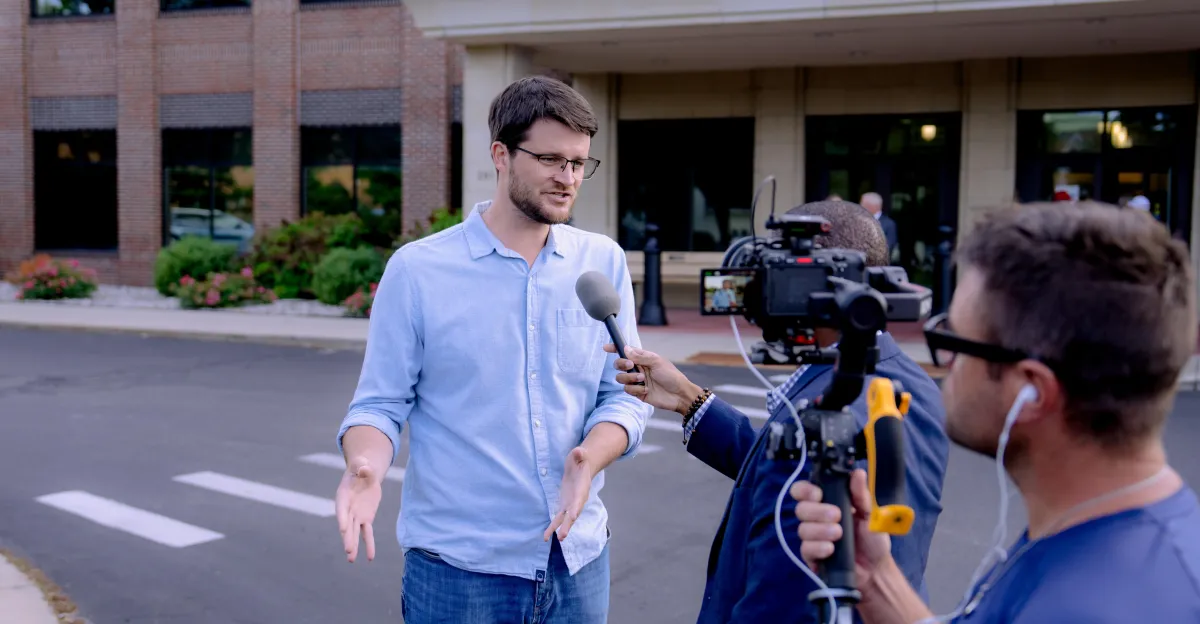
But that arc also raises big questions about the left’s changing priorities. In a recent interview for Vox’s podcast and video series America, Actually, host Astead Herndon spoke with Lawrence about his past activism and how he has pivoted. “It can sometimes feel like…folks hop from issue to issue, whether it’s climate, even anti-AI right now, without those things being solved,” Herndon told Lawrence.
According to Lawrence, “that’s the reality of the time. It seems like everything is unraveling, and it is because the whole social, economic, political compact is being renegotiated, not just in this country, but on a global stage.” Still, Lawrence said, that earlier organizing shapes how he sees different challenges today.
Advertisement
The two also discussed whether opposition to data centers and AI has wide, regular-voter appeal in places like Michigan and how Lawrence went from hopeless and disengaged to regaining a sense of agency through organizing.
Below is an excerpt of the conversation, edited for length and clarity. There’s much more in the full show, so listen to America, Actually wherever you get your podcasts or watch it on Vox’s YouTube channel.
You started in Sunrise and were at the forefront of a young progressive movement that was aligned at that time — in 2018, 2019, and I think still — with progressive members of Congress like Rashida Tlaib or Alexandria Ocasio-Cortez.
I remember reporting about Sunrise at the time. The goal was to elect a Bernie Sanders, but the other goal was to have the party largely embrace things like a Green New Deal. How would you grade the efforts of the climate movement of that time, looking back?
Advertisement
I think we did some things very well.
We put climate jobs and justice at the top of the agenda for the incoming Biden administration. I think the Bernie-Biden task force is an often overlooked but very important chapter of that whole story, where Bernie and Biden both understood they had to bring their people to the table.
And that’s how Build Back Better got negotiated. We fought hard for Build Back Better, and ultimately came up two votes shy in the United States Senate.
Do you see that as a success or a failure of the climate movement?
Advertisement
I think Build Back Better was a success in coming to the table and negotiating, from the Green New Deal to Build Back Better, and then what we ended up with was the Inflation Reduction Act after it passed the final filter, which was Sen. Joe Manchin and Sen. Kyrsten Sinema. At the time, now, how I felt about it was, this is historic. This is the largest investment in green jobs and infrastructure in United States history. I know how hard it was to get here. I’m tremendously proud of the work that I did and so many others did.
Just in my district alone, we’ve delivered $26 billion in investment for manufacturing and sustainability because of the Inflation Reduction Act. But at the time, we knew that this is maybe 5 percent or 10 percent of what we need in scope. And now we’re experiencing the consequences of that.
Obviously, we still have a very volatile economy. We still lack energy security because we now have closed the Strait of Hormuz. We’re still too dependent on a global oil market, and we could use many more investments in solar and other kinds of renewable energy than we have now.
And ultimately, it wasn’t enough for the Biden-Harris administration to be able to win reelection, because people didn’t feel it enough in their pocketbooks.
Advertisement
Why do you think Democrats are talking less about climate?
I think it’s the intensity of the crises that we face. It feels like we’re falling through midair, after the end of all of the constitutional protections, the rule of law, and the economic security that people had previously enjoyed.
There are a lot of very acute and urgent crises, and I think that that has bumped climate, which is a super massive but also somewhat slow-moving crisis, a little bit lower on the priority list just in terms of what comes up for people on the Hill.
You went back to Michigan to focus on housing and advocacy. Did that make you think a little differently about the national work you were doing?
Advertisement
I think it’s fair to say that when I was younger, I got very focused on this climate issue, and I was very focused on it because it is this existential crisis we all face.
But it was after the pandemic that I wanted to bring my work closer to home. I wanted to do the work of putting down roots in the place that had raised me and make my life there. And in seeking to organize there, it was clear that we needed an in to organize that was more immediate.
“I believe in the agency of regular people taking charge of our own lives and working together to build a better future.”
More immediate than the Green New Deal.
Advertisement
Than the Green New Deal or than the looming climate crisis. People know that that’s an issue, but they’re like, “I’ve gotta pay rent at the end of the month.” And as an organizer, I believe that you have to listen to people, you have to hear what’s going on for them, and then work on issues that have the potential to bring people together.
Housing is one of those issues. Whether you’re in the city of Lansing, whether you’re in small towns, urban, rural, suburban, young or old, everybody can agree that the rent is too damn high and it’s too hard to buy a home anymore.
Were you surprised Trump won the state in 2024?
Because I saw it all unfold. We hoped to deliver more through the Biden-Harris administration than we ultimately did through Build Back Better. We didn’t deliver as much to relieve the economic anxiety that people were feeling. And then I do believe that the war and the genocide in Gaza and our blank check to allow that to happen with our money and our tax dollars destroyed the Democratic coalition that had been assembled from 2017 through 2020 for the purpose of beating Trump.
Advertisement
I just saw that unfolding over the course of the whole year, just like a slow-motion train wreck.
I want to ask locally, what do you think is most important in this race: housing, data centers, or pushing back against Donald Trump?
If I had to choose, I’d say data centers because that’s where people in the district are finding some common ground across the spectrum — in fighting back against the concentrated power in Silicon Valley, which has been fully enabled by [incumbent Rep.] Tom Barrett and Donald Trump.
So you’re saying that’s the issue that allows you to create cross-ideological coalitions?
Advertisement
Our last question is, just thinking through the scope of your career and the kind of progressive work: It can sometimes feel like folks hop from issue to issue, whether it’s climate, even anti-AI right now, without those things being solved, right?
Like, we still have a climate crisis. The rent is still too high. All of these things are still happening. How am I to trust that AI is the crisis of our time when I’ve heard so many crises of our time?
Some have called it a polycrisis — overlapping crises.
That’s the reality of the time. It seems like everything is unraveling, and it is because the whole social, economic, political compact is being renegotiated, not just in this country, but on a global stage. I don’t think it serves us to lie about that. I mean, here’s the reality, folks.
Advertisement
Everything is up in the air. Does it feel like you’re falling through midair? It’s because we are. All the old protections, all the old agreements have been chopped up. So we have got to come together. This is what I believe in more than anything, if there is a through line…I believe in the agency of regular people taking charge of our own lives and working together to build a better future.
That’s what I learned as an organizer, and that’s what gave me hope actually, at a time when I was doomer-ing in my younger years. And I told you, I wanted to just drop out of society and all that. It was seeing that regular people have come together before, and they’ve won a better future for their kids and grandkids, that gave me a path to follow in.
It does feel like a powerless time, I have to tell you. And a lot of this AI revolution, to your point about control or about agency. We’ve talked to so many people who just think that these things are happening to them, rather than feeling that they are participating in the changes afoot.
But you’re telling a kinda hopeful story.
Advertisement
I’m a hopeful guy. I was angry too, even when I got into this race. I was angry especially about the wars. But then in campaigning, I’ve met so many people across the district, old friends, new friends, and they give me a lot of hope because you just see the way that people are already performing miracles on a daily basis.
Start with the vents before you reach for a screwdriver.
Lukman Abdul Aziz/Shutterstock
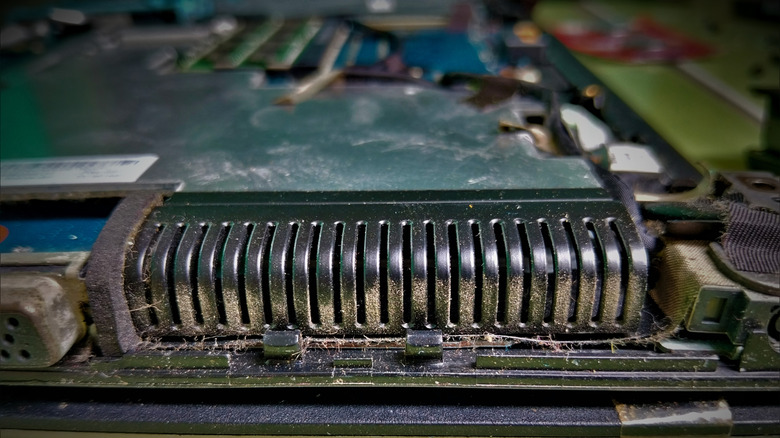
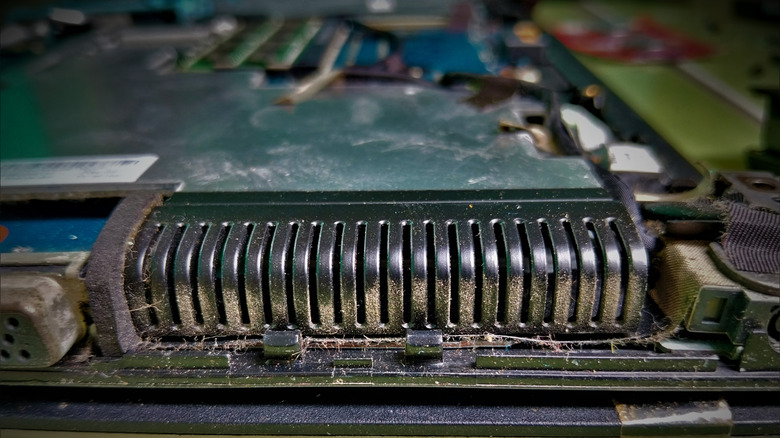
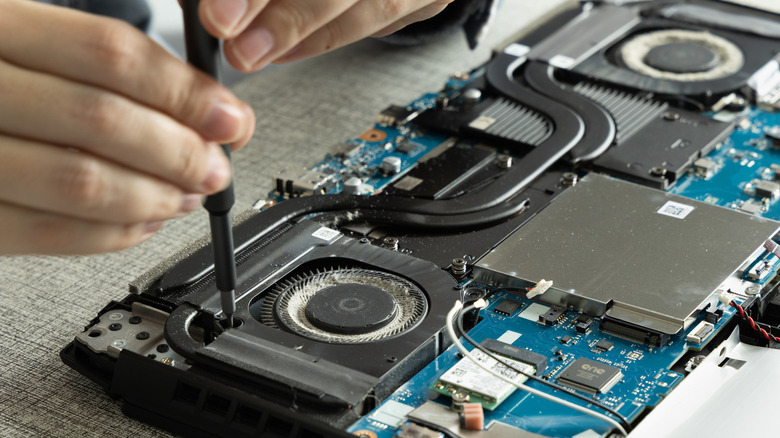
Your laptop fan has probably spent its entire life working inside a cramped chassis, so dust eventually gets an invite. Let too much of it build up around the vents, fan or heat sink and airflow can be hampered. Over time, restricted cooling can result in thermal throttling, which is when the processor reduces its performance to keep temperatures under control.
Fortunately, cleaning a laptop fan doesn’t necessarily involve disassembling the laptop. For routine maintenance, turn the laptop off, unplug it and use short bursts of electronics-safe compressed air through the vents. Lenovo recommends cleaning a laptop fan every three to six months, depending on the environment.
When dust is packed deeper inside, it makes sense to open the laptop. But be aware of what you are getting yourself into. Depending on the machine, removing the bottom cover may expose the fan or start an unexpectedly intimate tour of several thousand dollars’ worth of electronics.
Advertisement
Try cleaning the fan without opening your laptop first
Nurma Agung Firmansyah/Shutterstock
Start simple. You may be able to remove most of the loose dust without even touching a screwdriver.
Turn off the laptop and disconnect all cables and peripherals. If it has an external battery that can be easily removed, take it out as well.
Find the intake and exhaust vents. Look for vents at the base, sides and around the display hinge. Some laptops hide their exhausts near the hinge, so don’t assume that every grille you need will be staring back at you.
Clean away any loose dust around the vents. For accessible areas, use a lint-free cloth or ESD-safe brush. Do not poke tools deep into the grille.
Use short bursts of compressed air. Keep the can upright and leave some distance between the nozzle and vent. Excessive air pressure from, say, an air compressor can damage fan blades, though there isn’t one universal nozzle distance for every laptop.
Do not keep blasting the fan continuously. Forcing the fan to spin rapidly isn’t a good idea. Use short bursts instead.
If canned air isn’t your preferred method, an ESD-safe brush, non-static cloth or hand-powered bulb blower are other options. And drop the WD-40. Standard WD-40 Multi-Use Product is designed to lubricate, displace moisture and protect against corrosion. That’s a completely different issue.
Advertisement
Opening the laptop can turn this into a much bigger job
Lianaruchka/Shutterstock
If airflow still appears to be blocked, or you see dust built up inside, removing the bottom panel provides better access. This is also where generic instructions stop being particularly helpful.
On some laptops, the fan is visible and can be removed independently. Others have two fans paired with a shared heat sink or vapor chamber, and if one fan is clean but the other fan, heat sink or exhaust fins are still clogged, cleaning one fan will do little. The fan blades aren’t always the only problem either. Dust can build up where air is forced between the closely spaced heat-sink fins.
Before going too deep, check the service manual for your specific model. For instance, Dell’s Alienware m16 R2 has separate left and right fan connections, and removing the entire cooling assembly requires taking out six regular screws and loosening six captive heat-sink screws. Dell warns that the procedure is intended for authorized service technicians only.
Some machines take it a step further. The Alienware m16 R1 requires removing the SSDs, wireless card, top heat sink, small fan, rear I/O cover and battery, then following nine system-board removal steps before you can access the fan and heat-sink assembly. The cooling assembly itself is held by eight captive screws. Dell also cautions against cleaning its Element 31 thermal material with an alcohol wipe because it can dissolve the grease into conductive metal particles and could cause an electrical short.
That’s the line worth respecting. If the fan requires lifting the heat sink or vapor chamber off the CPU or GPU, you’re moving from dusting to a job that might involve thermal paste, pads or other interface material.
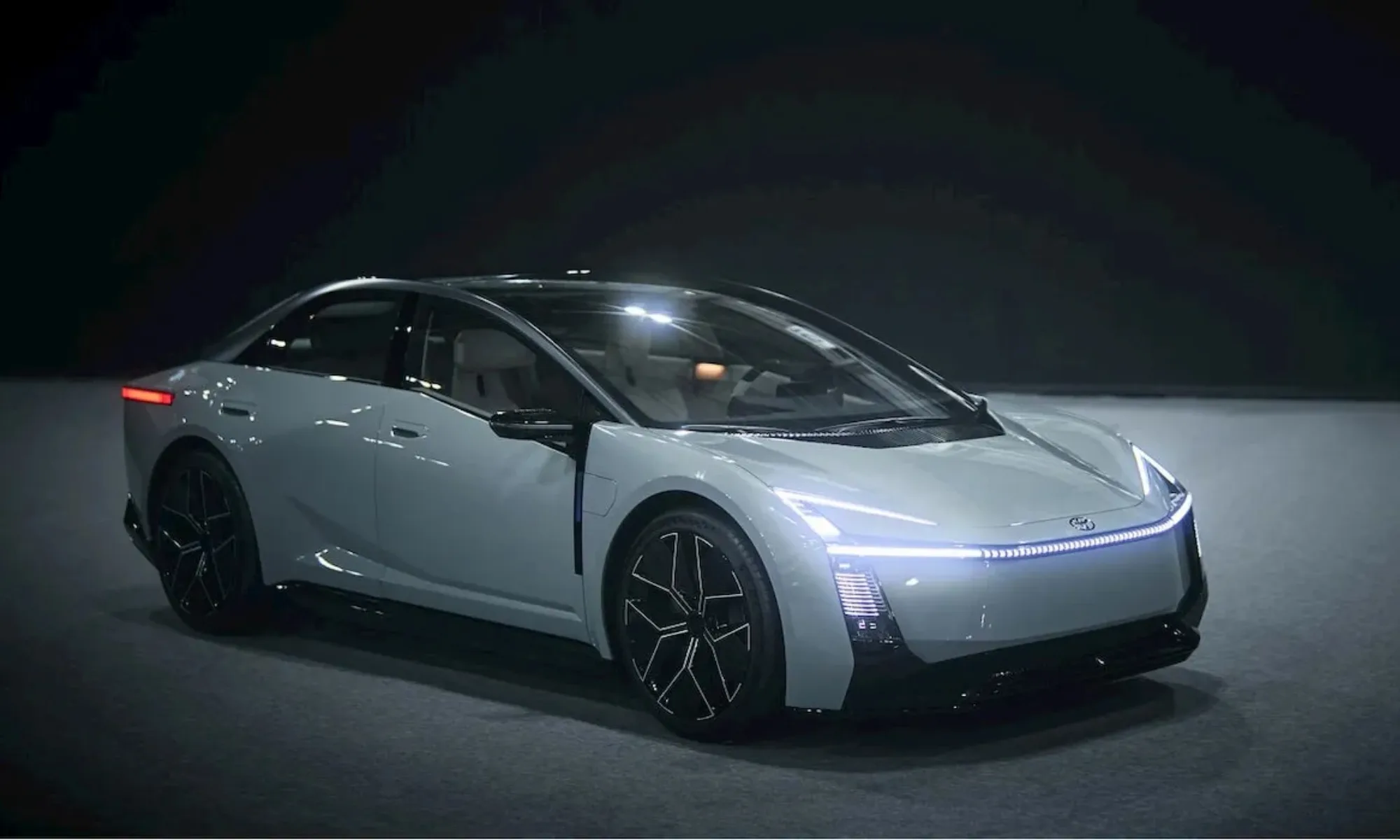
Toyota is preparing a major overhaul of one of its most familiar nameplates, with the next-generation Corolla expected to arrive for the 2028 model year with a new platform, sharper styling and a much wider choice of powertrains. The lineup is expected to include petrol, hybrid, plug-in hybrid and fully electric versions, giving buyers several ways to choose their next Corolla.
The Corolla has sold more than 57 million units worldwide since 1966, making it one of the best-selling vehicles ever. Toyota previewed the next-generation design in concept form at the Japan Mobility Show, where CEO Koji Sato outlined the company’s plan to evolve the nameplate across different power sources.
A new Corolla is coming with more than one way to power it
The next Corolla is expected to use a heavily revised version of Toyota’s TNGA-C architecture. The new platform is being designed to accommodate everything from a conventional gas engine to a battery-electric powertrain. That approach means Toyota does not have to turn the entire Corolla family electric at once.
The hybrid version is expected to use a new 1.5-liter four-cylinder engine paired with an electric motor, producing around 134 horsepower combined. According to Toyota engineers cited by Car and Driver, the new hybrid system could be 10 to 20 percent more efficient than the current setup. An all-wheel-drive version with an additional rear electric motor is also possible.
Advertisement
Toyota
For buyers who still want a conventional engine, Toyota is expected to retain a gas-only Corolla. The company could use a turbocharged version of the new 1.5-liter engine, although a revised 2.0-liter four-cylinder remains another possibility.
The bigger change comes with the arrival of the first Corolla plug-in hybrid and battery-electric models. The PHEV is expected to feature a larger battery and provide more electric driving range, although Toyota has not released detailed specifications. The electric Corolla could be offered with single- or dual-motor configurations and at least 250 miles of range, but its availability in the US remains uncertain.
Sharper design, modern cabin and a new challenge for sedans
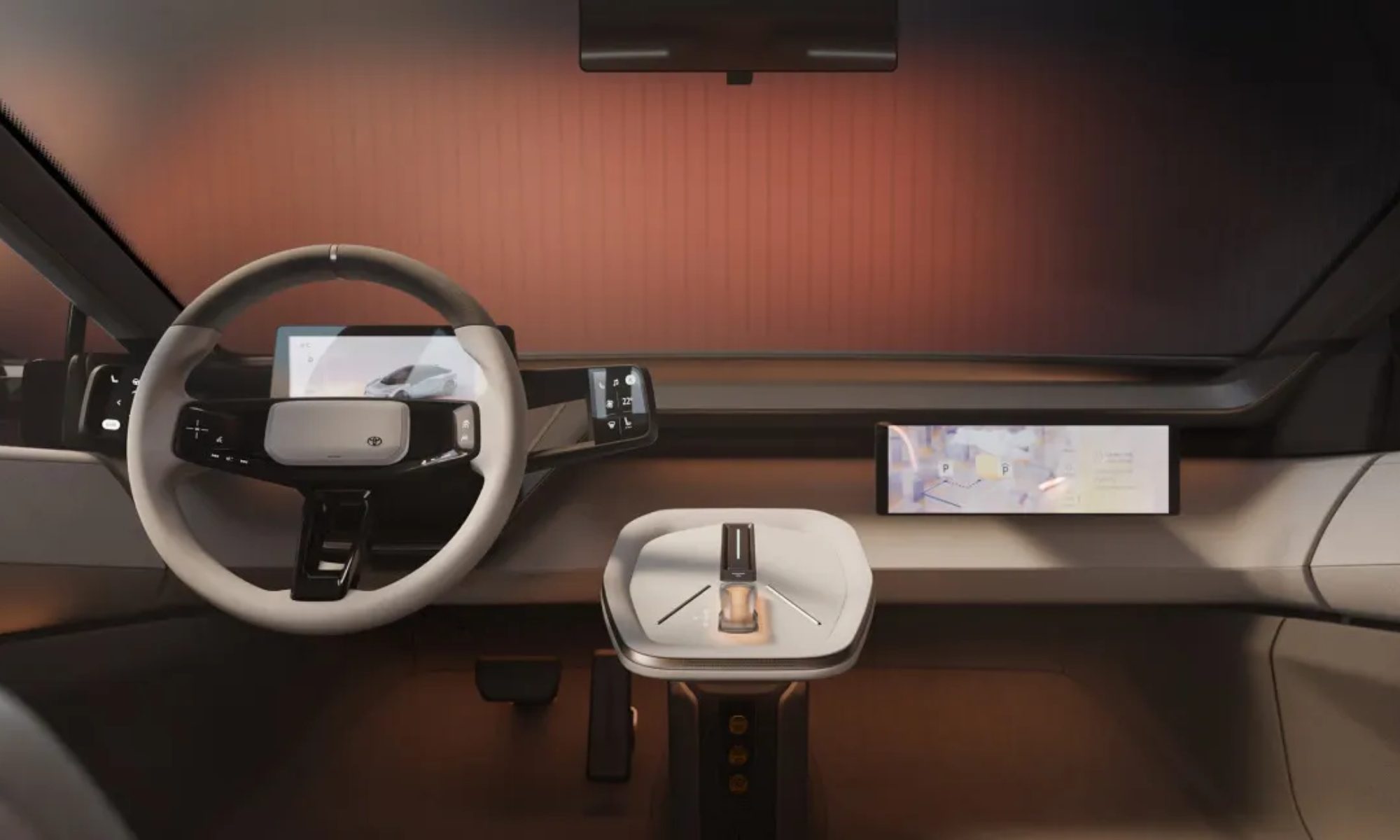
The powertrain changes are only part of the transformation. Toyota’s concept preview points toward a much sharper exterior design, while the production car is expected to retain much of that dramatic styling. Inside, the next Corolla is expected to get a more modern cabin with a more open layout, larger displays and simplified controls.
Toyota
That redesign comes at an important time for the Corolla. In the US, it was Toyota’s fourth-best-selling model in 2025, with 248,088 sales, but compact sedans face growing pressure from small SUVs and established rivals such as the Honda Civic, Hyundai Elantra and Nissan Sentra.
The US market could be where the electric Corolla gets most interesting. If Toyota can keep the EV close to the estimated $30,000 price point, it would sit near the bottom end of today’s new-EV market. The 2026 Nissan Leaf starts at $29,990, Chevrolet’s Bolt starts at $27,600 and the Equinox EV starts at $34,995. Hyundai’s Ioniq 5 starts at an estimated $35,000, while Ford’s Mustang Mach-E begins at $37,795.
But price alone may not determine whether the Corolla EV works. US consumers have increasingly gravitated toward SUVs, while the Corolla remains a compact sedan. Toyota’s decision to offer gas, hybrid, plug-in hybrid and electric versions could therefore allow the company to keep the nameplate relevant across different buyer preferences instead of betting everything on EV adoption. The bigger question is whether the electric Corolla actually comes to the US. That remains unconfirmed, and Toyota is expected to reveal more as the 2028 model approaches.
Nowadays Cannabis Infused Beverage, Starting at $40: Bringing a bottle of booze is a white elephant classic; my husband’s work team almost exclusively exchanges bottles of liquor as a safe bet for enthusiasm. I think you can do better, though, and bring a THC spirit instead. This spirit is light and a little fruity, sitting somewhere in between the flavor profile of a floral gin and a sweet sake. My friends and I tried it mixed into a pomegranate cocktail instead of tequila, which was fantastic, and we also loved it with seltzer as a THC twist on a gin and tonic. It’s delicious alone, too. I’d skip this for a work party or any group that might not be green-friendly, though.
Booze in general: This is always a safe pick! You could also bring a bottle of nonalcoholic wine if you wanted an option that everyone can have.
Advertisement
Something edible: As long as you’re in the loop on food allergies, of course. One of the best gifts I received at a Secret Santa was persimmon cookies, made in honor of my love for persimmon fruit. I think baking something delicious would be a fun option for a white elephant, too, especially if you’re someone who has sourdough starter in their kitchen or makes a mean banana bread (my version uses brown butter and Nutella, and it might be my gift of choice this year!)
What Not to Bring to a White Elephant
Here’s what was the least fought over at the white elephant parties I attended last year, or the most inappropriate ideas our team has heard of:
A basic, single candle. Nobody needs a candle they could pick up at the store. Unless there’s a fun theme that you’re certain appeals to the group attending, skip bringing a single candle to a white elephant exchange. Or make the candle part of a gift basket; our favorite tomato-scented candle goes great with some kitchen or garden accessories.
Puzzles. I think puzzles are hard to randomly gift—true puzzle fanatics will want a lot of pieces, while novices will want an easier one, and you never know which one you’ll get. If you choose a puzzle with too specific a theme, the receiver might not like it as much as a true puzzler or fan of that theme would, but it’s often not beloved enough to be steal-worthy.
Live animals. Look, you shouldn’t give baby chicks at Easter, and you shouldn’t give anything even remotely similar—including a mouse, fish, or anything alive.
Actual trash. I didn’t think I had to write this one down, but at one gift exchange I went to, someone literally wrapped up a piece of garbage as a joke. As the person who unwrapped the trash gift, I beg of you: Don’t do this.
Rules of a White Elephant
If you’re headed to your first white elephant gift exchange, here’s a quick explainer on what’s about to happen.
Advertisement
Everyone will bring a wrapped gift (often under a certain price, like $25) and place it into a pile or central spot. Then, each person will draw a number that indicates their place in the gift-choosing order. When your number is called, you can either choose and unwrap a gift from the pile, or steal one that has already been unwrapped by someone. Most exchanges will have a limit on how often a gift can be stolen—usually around three times—so if you have the best gift in your hands when it’s time for someone else to choose, there’s no guarantee you’ll get to keep it. If your gift is stolen, you can either unwrap a new one or steal someone else’s gift (no take-backs, sorry).
These rules can vary based on the host and their house rules, so make sure to ask what the rules are at the start of the game. Happy exchanging!



















 Crypto World4 days ago
 Tech6 days ago
 Fashion2 days ago
 Crypto World6 days ago
 Tech7 days ago
 Fashion1 day ago
 Entertainment4 days ago
 Business6 days ago
 Crypto World6 days ago
 Crypto World4 days ago
 Crypto World4 days ago
 Tech5 days ago
 Crypto World3 days ago
 Crypto World3 days ago
 Crypto World3 days ago
 Crypto World5 days ago
 Crypto World4 days ago
 Crypto World6 days ago
 Crypto World6 days ago
You must be logged in to post a comment Login