That disc drive matters more than it might seem, because it opens up the secondhand game market alongside digital purchases, and over a console generation, that difference in buying flexibility tends to add up to real money saved.
Advertisement
Under the hood, the PlayStation 5 runs a custom AMD RDNA 2 GPU capable of 10.28 teraflops, paired with a 1TB NVMe SSD that effectively eliminates loading screens and lets open-world games stream assets in ways last-gen hardware simply couldn’t manage.
Hardware-accelerated ray tracing brings realistic light behaviour to supported titles, and the DualSense controller’s adaptive triggers and haptic feedback make the physical sensation of playing something you notice almost immediately and then can’t stop noticing.
The Slim Digital weighs just 2.6kg against the original digital model’s 3.9kg, and the redesigned chassis uses a removable side panel that supports Sony’s add-on Ultra HD Blu-ray drive if you change your mind about going disc-free further down the line.
Both consoles share the same 16GB GDDR6 memory, identical CPU architecture, and the same Tempest 3D Audio engine, so whichever you go for, the generational leap in performance is identical.
The decision now really comes down to how you buy games and how much the physical footprint matters to you, and at these prices, either way you’re getting Sony’s current-generation hardware at a meaningfully lower entry point than new.
A new slimmer PS5 lessens the physical footprint, adds more storage, includes smarter port options and offers a removable disc drive. The internals retain the same immense power, nuanced SSD technology and 4K-capable graphics. A brilliant DualSense controller, a compelling UI, the best library of exclusive games around, and proper reverence for PlayStation’s past ensures the PS5 remains this generation’s console king.
Advertisement
Refined slimmer and lighter design
Absurd power meets brilliant user interface
DualSense controller is a step forward
Removable disc drive adds flexibility
Better library of first-party exclusives
Mid-cycle refresh doesn’t improve internals
Lags behind Series X and S when it comes to loading times
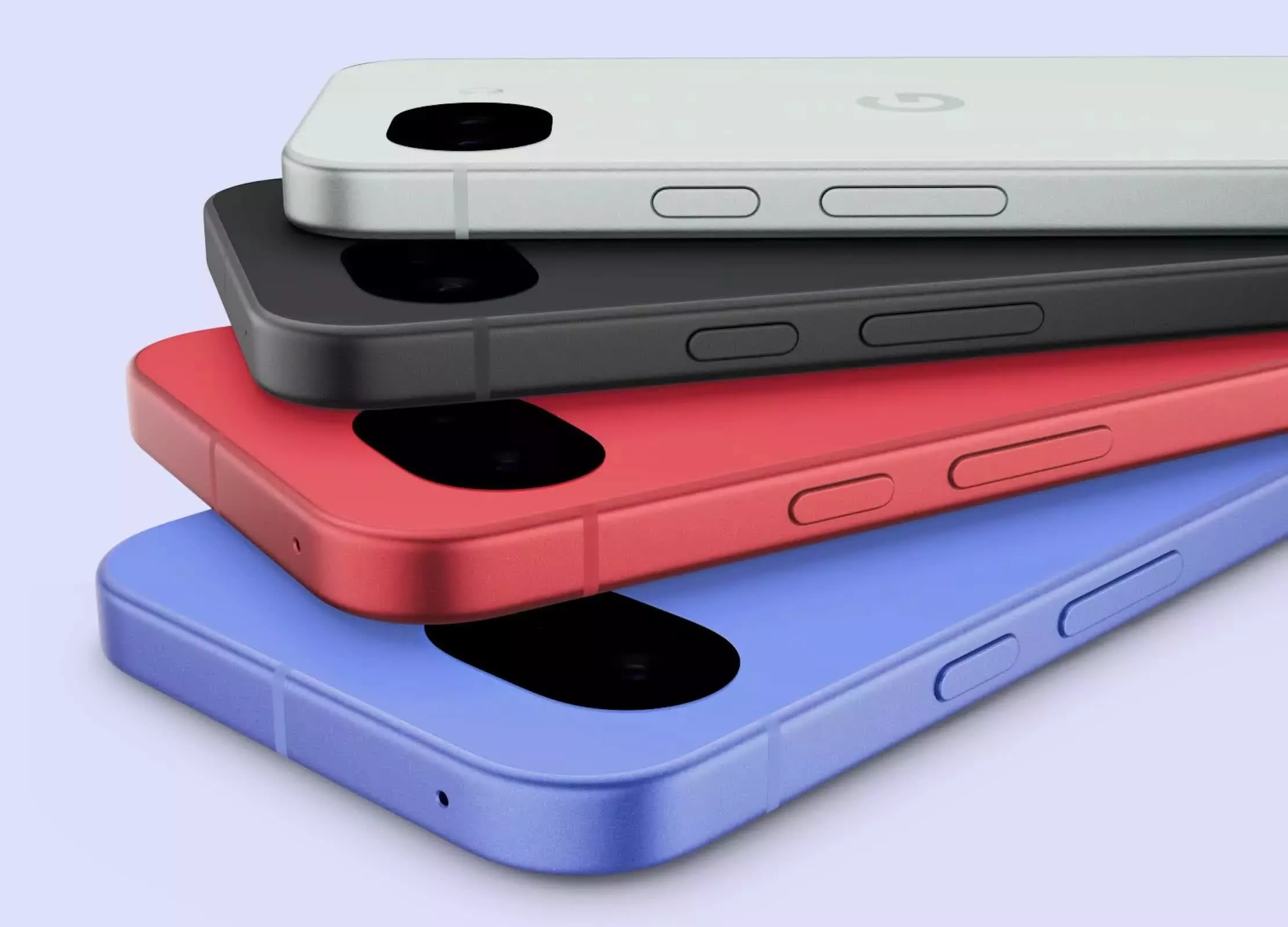
Rumor mill: Google’s Pixel 11 is coming into focus thanks to two separate leaks. One is an official teaser video released by Google itself, while the other is a Bluesky post from WinFuture’s Roland Quandt detailing the phone’s storage options, battery capacity, and pricing.
The Google video is the more visual of the two. It offers a close look at the Pixel 11 Pro’s rear camera bar, where the phone retains its three-lens setup while adding a circular light effect beside the cameras. The clip does not name the feature or explain what it does, but the spinning colors suggest Google is building something new around the camera area rather than adding a feature elsewhere on the phone.
Google’s narration only mentions familiar services such as Gmail, Maps, Search, Calendar, and Gemini. The video title teases “the next obvious move,” but Google leaves the meaning deliberately vague. That has fueled speculation that the light could serve as a status indicator, a Gemini-related processing light, or a notification system, but none of those theories have been confirmed.
Advertisement
The second leak comes from Bluesky, where Quandt posted what appears to be retailer-sourced information about the Pixel 11 lineup. According to the post, 256GB will be the minimum storage option across the entire range, marking a long-awaited shift for Google’s standard models. The leak also claims that the Pixel 11 will cost £879 in the UK, while the Pixel 11 Pro and Pixel 11 Pro XL will be priced at £1,079 and £1,279, respectively.
Those pricing figures are not as straightforward as they initially appear. The Pixel 11 and Pixel 11 Pro are technically cheaper than their 256GB Pixel 10 counterparts, while the Pixel 11 Pro XL costs more than last year’s model. However, the difference stems from Google’s decision to eliminate lower-capacity storage tiers rather than from a broad price cut across the lineup.
Quandt’s Bluesky post also includes battery capacity details. The base Pixel 11 is said to feature a 4,985mAh battery, while the Pixel 11 Pro and Pixel 11 Pro XL are listed with 4,850mAh and 5,115mAh batteries, respectively. If accurate, the base model and the larger Pro XL would receive modest battery upgrades, while the regular Pro would see a slight reduction compared with the previous generation.
Advertisement
Google is set to unveil the Pixel 11 lineup on August 12. Until then, the picture remains incomplete.
Imagine you’re a company. You’ve got sensitive data you need kept safe, and you’ve got a cloud service provider that’s protecting it. But do you know how far that protection goes, and at what point it’s your turn to take over?
The sheer number of data breaches due to human error, specifically database misconfiguration, suggests that many don’t know that they, not the provider, are responsible for securing all the data properly (or are unsure how to do it).
In this article, we’ll look into the shared responsibility model: what it is, why it’s relevant, its benefits, its limits, and what happens when companies disregard it.
Advertisement
What is the Shared Responsibility Model?
The Shared Responsibility Model is a security and compliance framework that defines the divided responsibilities of cloud service providers (CSPs) and their customers. This means that each has their own tasks in maintaining security.
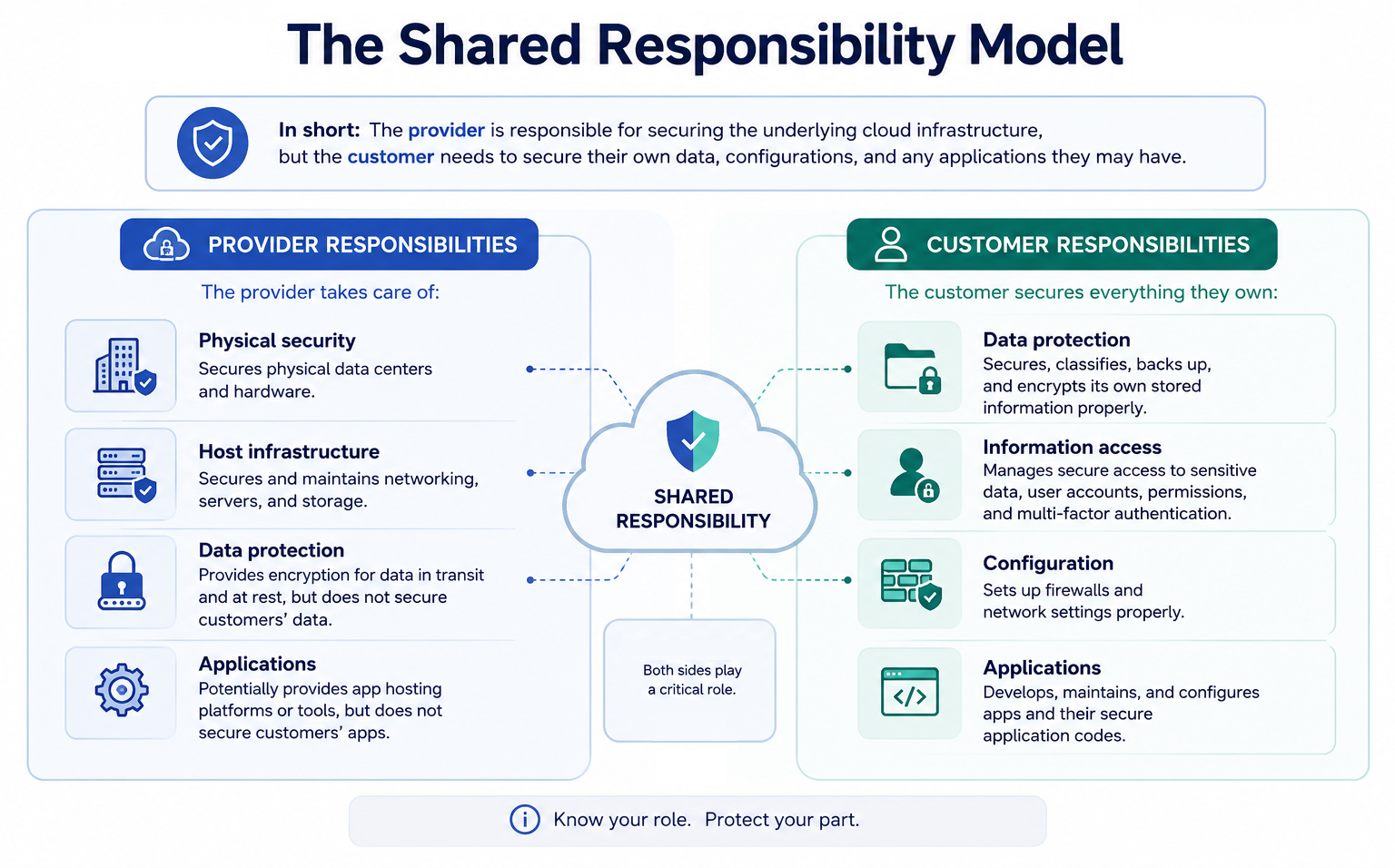
In short, the provider is responsible for securing the underlying cloud infrastructure, but the customer needs to secure their own data, configurations, and any applications they may have.
In more detail, the provider takes care of:
Physical security: Secures physical data centers and hardware.
Host infrastructure: Secures and maintains networking, servers, and storage.
Data protection: Provides encryption for data in transit and at rest, but does not secure customers’ data.
Applications: Potentially provides app hosting platforms or tools, but does not secure customers’ apps.
On the other hand, the customer secures everything they own:
Sign up to the TechRadar Pro newsletter to get all the top news, opinion, features and guidance your business needs to succeed!
Data protection: Secures, classifies, backs up, and encrypts its own stored information properly.
Information access: Manages secure access to sensitive data, user accounts, permissions, and multi-factor authentication.
Configuration: Sets up firewalls and network settings properly.
Applications: Develops, maintains, and configures apps and their secure application codes.
(Image credit: Future)
The first step is defining it – now meet your provider
It would make things a lot easier if these rules and divisions were standardized, so when you understand them for one provider, you understand them for all. Alas, that’s not the case.
Advertisement
The above guidelines are general because the model somewhat differs between providers, and this lack of uniformity contributes to security gaps between the provider and the customer.
That said, make sure you understand your full responsibilities with each provider you use. For example, AWS says “customers should carefully consider the services they choose as their responsibilities vary depending on the services used, the integration of those services into their IT environment, and applicable laws and regulations.”
AWS makes a clear distinction between these responsibilities, saying that the customer is in full charge of managing the guest operating system, including updates and security patches. They must also configure the AWS-provided security group firewall and manage any other application software they own.
Advertisement
(Image credit: aws.amazon.com)
Microsoft further explains that responsibilities vary depending on where the workload is hosted: on software as a service (SaaS), platform as a service (PaaS), infrastructure as a service (IaaS), or in an on-premises datacenter.
However, “for all cloud deployment types, you own your data and identities,” it says. “You’re responsible for protecting the security of your data and identities, on-premises resources, and the cloud components you control.”
(Image credit: learn.microsoft.com)
Google Cloud’s ‘Shared Faith’
Google Cloud went with yet a third approach, differentiating between the shared model of other providers and its own “shared faith”:
Advertisement
Given that understanding the shared responsibility model properly in order to secure one’s data can be challenging, “Google believes that the shared responsibility model stops short of helping cloud customers achieve better security outcomes,” it writes. “Instead of shared responsibility, we believe in shared fate.”
The explanation of this approach focuses on “partnership” between the provider and the customer for increased security, as well as offering support and resources to help organizations secure data on their end.
The provider states that “a key component of shared fate is the resources that we provide to help you get started, in a secure configuration in Google Cloud. Starting with a secure configuration helps reduce the issue of misconfigurations, which is the root cause of most security breaches.”
(Image credit: Future)
Advertisement
Why does shared responsibility matter, and what happens when companies disregard it?
The shared responsibility model is meant to provide a division of security, compliance, and ethical duties. The number one goal is to cover all bases to ensure all security controls are managed, thus preventing security gaps and potential breaches.
Should a breach happen, this shared control system is theoretically designed to help contain it faster and more efficiently. I say “theoretically” because security gaps do exist, as we’ll see later.
Additionally, the model is designed to ensure that neither the provider nor the client duplicates security steps unnecessarily, wasting their time and effort.
Finally, the security and infrastructure cost is much lower than managing one’s own cloud, and the deployment speed is much higher.
Advertisement
Overall, the model provides the benefits of the public cloud without having to maintain its infrastructure.
According to AWS, this shared model “can help relieve the customer’s operational burden as AWS operates, manages and controls the components from the host operating system and virtualization layer down to the physical security of the facilities in which the service operates.”
However, failing to follow it for any reason carries significant risks:
data breaches
cyberattacks
financial loss (ransomware, regulatory fines, remediation costs)
legal liability and potential lawsuits
reputational damage.
The first is the one you should be the most worried about: should it happen, all the others will follow.
Simple misconfiguration mistakes can lead to data breaches, and unfortunately, this happens all the time.
Advertisement
Cracks in the model
This is a good time to discuss the issues with this system, and the first one is certainly the problem of misunderstanding, which leads to overlooked responsibilities and, subsequently, to security gaps in the customer’s databases, hence between the provider and the customer as well.
This issue results in misconfiguration – the direct culprit for most cloud security breaches.
Understanding responsibilities in a constantly changing environment is difficult. Sometimes organizations try to follow it, but overlook something. Sometimes they’re not even aware that they have this responsibility, presuming it all falls on the provider. And often they fail to protect certain data that may seem less relevant, such as backup files.
Advertisement
Either way, the end result is the same: databases are left unprotected and exposed for all to see and download.
This is so far from being theoretical that it’s nearly the norm. Just recently, security researcher Jeremiah Fowler discovered yet another unprotected database, with 666,369 records, including names, email addresses, phone numbers, IP addresses, and hashed passwords of the Tribeca Festival employees and attendees.
Potential consequences are massive and far-reaching for both the organizations that failed to protect the data and the individuals whose data was exposed.
Other issues in the shared model system include getting full visibility into the cloud environment, a lack of effective integrations that sustain and improve collaboration, challenges integrating tools and platforms, etc.
Advertisement
And if you’re managing security in a multi-cloud environment, that’s a larger beast to deal with.
Final thoughts
Protecting data is neither only the cloud service provider’s job nor that of the company. Rather, the job is divided between “mine” and “yours”. Generally speaking, providers protect what they’ve created, their house, so to speak. Customers are in charge of making sure all their own data and related services in the rented rooms are properly secured.
This is more easily said than done, given that, despite the many advantages of sharing this responsibility (including significant time and cost savings), mistakes happen a lot for many reasons, and the customers’ databases end up exposed. It’s a key issue to overcome if this model is to function successfully long-term.
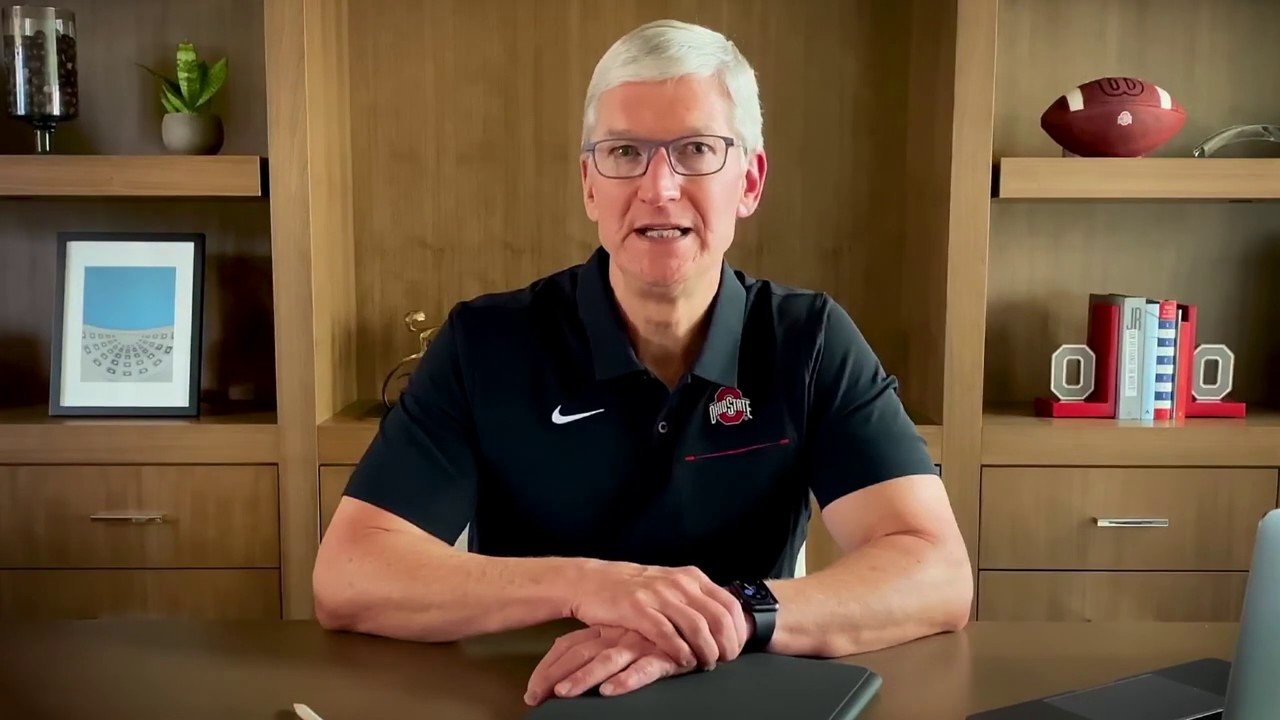
As wildfires continue to devastate southern Europe, Apple is backing relief efforts with a donation announced by CEO Tim Cook.
North America isn’t the only region struggling to combat the growing problem of wildfires; it’s an ongoing problem in Europe as well. According to the Joint Research Centre, more than 434,976 hectares have been burnt in 1,400 fire instances in 2026 alone.
Recent fires in southwestern France have burned so intensely that they created a fire-generated thunderstorm, according toCNN. Other countries, like Spain, Greece, and Italy, remain on high alert as the risk of wildfires grows across the region.
In response, Cook took to X on Thursday to announce that Apple would be donating to first responders and relief efforts in the affected areas.
Advertisement
Our hearts go out to everyone affected by the devastating wildfires in southern Europe. Thank you to the first responders, and to everyone still in harm’s way, please stay safe. Apple will be donating to relief efforts on the ground.
Apple routinely donates to relief efforts worldwide. In June, it pledged aid to help Venezuelans affected by a pair of earthquakes that struck Venezuela’s northern coast.
In October 2025, it donated to relief efforts after Hurricane Melissa tore through the Caribbean. The following month, it offered aid in the wake of a deadly fire that devastated a high-rise apartment complex in Hong Kong.
The American healthcare system and the portion of the government in charge of our health have been a failure of record proportions for the second consecutive year. In 2025, America set a record for collecting the most confirmed cases of measles since 1991, with 2,289 confirmed cases. This year, America already blew past last years case total, where we now sit at 2,318 confirmed cases. We’re only about 58% of the way through the year, in case that little fact escaped you, which means we’re very likely to have many, many more total cases this year than last.
That is happening despite healthcare professionals and some media members sounding the alarm bells over all of this going all the way back to February of 2025! If you need the government’s perspective on this embarrassing failure, one in which we’ve allowed a disease officially declared eradicated to roar back into existence all because there are some liars out there who scare people about vaccines, well, RFK Jr. thinks he’s doing a bang up job managing the whole thing.
He hasn’t. He’s a large part of the reason this now 19 month outbreak exists to begin with. He hasn’t mobilized any vaccination efforts, preferring to leave that to the states. His messaging around vaccination and how to handle the measles has been so all over the place that he might as well have no stance on the matter at all. He’s checked out from most of his job, by some reports.
And as all of this failure is staring us in the face, Kennedy is still allowing the anti-vaxxer messaging to spread undisputed and uninterrupted, which is the precise reason the measles has returned in the first place. And it’s very likely to get worse.
Advertisement
“There were two healthy little girls in West Texas that died from measles,” said Dr. Paul Offit, Director of the Vaccine Education Center at the Children’s Hospital of Philadelphia, in an email to TIME. “Those were the first measles deaths in a child in this country in more than 20 years. I think it is fair to say that measles is epidemic in the United States. And if people are coming from outside this country to the United States, they better make sure they’re up-to-date on their immunizations.”
Adds Dr. Peter Hotez, Dean of the National School of Tropical Medicine at the Baylor College of Medicine: “For all practical purposes measles has returned to the United States, both in terms of cases and hospitalizations, as well as two needless deaths. We should expect our annual winter-spring surges of measles to get even worse in subsequent years. And it won’t be just measles—pertussis is also returning, and other childhood infectious diseases might follow.”
Measles has this fun little curve ball it likes to throw at its victims: immune amnesia. One of the more insidious things this virus does is destroy T-cells and B-cells, which are the long-term immunological memory cells. They’re the part of our bodies that recall infections from long ago and build in the longer lasting immunity we get either from infections themselves or from vaccinations. Allowing measles to get worse means not only dealing with that disease, but potentially many others that could come roaring back. Like pertussis. Or polio.
We haven’t developed therapies for measles in decades. We didn’t have to. Vaccination rates meant there was nearly no disease for which therapies were needed. That appears to be changing now, with reports that researchers are starting to develop drug therapies due to the record case counts.
That is valuable time, expertise, and money that is being spent to treat a disease that we were fucking rid of two decades ago. Thanks to liars and charlatans like RFK Jr., combined with a percentage of our populace that is uncaring of its own community.
Advertisement
I very much do not look forward to writing about breaking this record again in 2027, but I fear I will be.
Sunreef Yachts and BRABUS just put their names on the same boat for the first time. The result is the ULTIMA 55, a 55.8-foot carbon-heavy catamaran that treats open water the way BRABUS treats asphalt. Two 10.8-liter six-cylinder engines sit in the hulls, each making 533 kW or 725 horsepower. Combined output hits 1,450 horsepower and the boat clears 40 knots. An advanced hydrofoil system lifts the hulls higher as speed builds, cutting drag and almost erasing heel so the ride stays level and surprisingly quiet even when the throttles are pinned.
The length comes in at 55.8 feet, the beam is 18.4 feet, but when the lateral folding platforms are dropped, that increases to 24.9 feet, and you have an open-ended terrace at the back, similar to a private beach club rather than a normal yacht’s cockpit. Then there’s the Esthec decking, which provides a sturdy footing whether wet or dry. The transformer sunpads change from comfortable loungers to upright seating options. They have an extensible carbon fiber dining table, an electric BBQ, and a wet bar that are ready for anything from a quiet afternoon to a big party. Up ahead, there is a separate central sunpad where you may spend some peaceful time away from the action.
BUILDING SET FOR ADULTS – Embark on a creative voyage with the LEGO Icons Captain Jack Sparrow’s Pirate Ship (10365) building set for adults
9 LEGO MINIFIGURES – Pose Jack Sparrow, Will Turner, Gibbs, Cotton, Anamaria, Marty, Elizabeth Swann and Hector Barbossa minifigures around The…
AUTHENTIC DETAILS & FEATURES – Rotate dials to deploy the port or starboard cannons, turn the ship’s wheel to steer the rudder, place minifigures in…
Carbon fiber is now popping up in all the right places. So you’ve got exposed front and back wings, pillars with illuminated BRABUS emblems, side ventilation elements, and you know what truly caps it off? The unique roof rack features carbon-fiber LED lights, which serve as both functional lighting and a signature design element. Owners can choose between Graphite Black and Phantom Grey for the hull, as well as BRABUS Graphite, Red, or Pearl exterior upholstery.
Stepping inside the cabin, you’ll feel as if you’re in a car, since the BRABUS automotive interiors have been directly adapted into the yacht. Moonstone Masterpiece leather covers the seating, with the signature Triangle stitching pattern. The area is finished with Alcantara headlining, exposed carbon fiber, aluminum accents, and unique ambient lighting. You’ve fully outfitted the kitchen, with a 43-inch TV that pops up from the counter when needed and, of course, Bowers & Wilkins Marine Series speakers to handle the music. The nicest feature are the height-adjustable tables, which change the saloon into a dining or lounge area in an instant.
Advertisement
The helm area follows the same principle, with a single widescreen BRABUS interface that brings all navigation and system management together in one spot. The engine controls are right there for when you need them, and the joystick operation allows the boat to spin on a sixpence for snug docking.
You can select between two cabin configurations, with the regular one featuring a master suite, a VIP stateroom for four guests, and a crew cabin. The other option includes a third cabin for six guests and one crew member to remain overnight. It’s all the same down there, with wood veneers and more carbon fiber. So the lower decks remain consistent with the rest of the boat. The specifications include 1,500 liters of fuel, which is ample given that you have 330 litres of freshwater on tap, as well as a 10.5 kW generator to meet your electrical demands. The maximum draft is 4.6 feet, and the boat is CE Category B approved for 12 passengers or C certified for 20.
Sunreef handled the most of the naval design, then turned it over to BRABUS to give it a visual identity, add some high performance with their materials, and put their visual stamp on the project. The ULTIMA 55 is the first product of that relationship, as well as the first to be delivered to Sunreef’s Ras Al Khaimah factory in this configuration. In terms of price, the basic non-BRABUS Ultima 55 has been advertised (before any additional fees) at around the mid-two million mark, and the BRABUS version is almost certainly more expensive.
As X-Men ’97 continues the epic saga of Marvel’s mutant heroes, voice actor Jennifer Hale returns as one of the team’s most iconic members, Jean Grey. After the events of season 1, the show follows the X-Men, who have been scattered across history, as they try to return to their original era and prevent the rise of their most powerful enemy: Apocalypse.
In an interview with Digital Trends, Hale discussed returning to voice Jean Grey after doing so in many of Marvel’s animated projects. She also broke down the evolution of Jean’s character and what fans can expect from season 2 of X-Men ’97.
This transcript has been edited for length and clarity.
Digital Trends: How does it feel to be voicing such an iconic character in such a popular show right now?
Advertisement
Hale: Man, I feel like I… I won the golden ticket. It is incredible. I love it. This show, [when] I first booked this, I was thrilled.
I love the director. I have to shout out our voice director, Meredith Layne. She’s incredible. Voice directors are these sort of unsung heroes that make us all sound incredible. And she really, especially with the role, what the team has done with Jean in this incarnation of the show.
There’s Jean, there’s Goblin Queen, there’s Madelyne Pryor. There’s all these iterations, and to have Meredith there as a guide is incredible. And to be part of this cast and to follow in Catherine [Disher]’s footsteps is just such a, such a huge honor. And I love this show.
I love this team. This team is insane. The writing is incredible. And what I love is that so many of the production crew grew up watching the show. You can see it, right?
Advertisement
Digital Trends: Yeah, the passion is there, and I’m a huge fan of the show as well, and you did a fantastic job playing Jean Grey. This isn’t actually the first time you voiced her. You portrayed her in previous Marvel animated shows. Why do you keep returning to the character after all this time? Disney+ / Disney+
Hale: You can’t stop me…the thing about the voiceover world, the actors, my peers in the voiceover industry are ridiculously talented. And a few of us get to be Jean, and I am so grateful that I get to be her in the places that I am. I absolutely love it. I could go on about it, obviously.
Digital Trends: Oh, well, please do.
Hale: Yeah, it’s amazing. It’s just absolutely amazing. It’s so funny. This whole thing around sharing roles…I’ve been Rogue before, and Lenore [Zann] is just incredible as Rogue. She’s the OG, right?
Yeah. And she’s amazing, and she’s just such an incredible human being, too. Yeah, this whole cast, I mean, I don’t even want to start, ’cause I’m gonna leave people out, and then I’m gonna feel terrible, but every single member of this cast, like, ‘Hello, what a great job.’ And our newer people. Oh, my gosh, the new additions this season. Look out!
Advertisement
Digital Trends: Yeah. I know you got the younger Cable in season 2 from Obsession actor Michael Johnston. He did a really good job in that role. Honestly, I couldn’t believe it was him. And speaking of which, like a big part of the show’s season was Jean and Scott’s relationship with their son, Nathan. It expands on what happened in season one. Can you tell us what makes it so special in season two? Disney+ / Di
Hale: Oh, the fact that we actually have to see him again…we gave him up in season 1. We didn’t know…we just had to trust, and it didn’t go the way we planned. That’s all I’m gonna say for those who don’t watch. But to get to see him again, to get to be in his life again, is just, ‘Wow, what a great, great moment!’ Right?
Digital Trends: Right. And so what has been your favorite moment in the series so far?
Hale: All of it? I don’t know. I love…Oh, man. That’s really hard to say. Don’t make me pick. That’s what I always say. Yeah. I think I just, I have to say, what you just touched on, the reconnecting with Cable. That whole arc. I just love that so much. And I’m not gonna say anything else, ’cause I don’t want to accidentally hit spoilers.
Digital Trends: Right. And without giving away any spoilers, what else can fans expect from this season of X-Men ’97?
Advertisement
Hale: Mm, that is the tightrope. Don’t know that I can walk [it]. So all I’m gonna say is buckle up. All right.
Digital Trends: I’m buckled up. And now, tell us, what is your approach to bringing these iconic characters to life as a voice actor? You’ve done so many different roles, and I bet it’s just a different thing each time. How do you do it? Manfred Baumann / Manfred Baumann
Hale: It’s all about the writing. Writers make the world go round. It all starts with the writers…and these are incredible scripts. Everything’s there. So it really begins and ends with the writing.
I bring in what my creativity says, and then there’s the voice director, and the voice director’s taking everything that the whole production team is saying, and funneling it through her to me, or to us actors. And so, that is incredibly important. And staying open with this show is very interesting.
When we did season one…the first time we recorded it, we recorded it in this total OG style, with the ’90s acting and the whole thing. So it was very different….and so we went back and tinkered with it, and we went away from that, and then back to it, and then we kind of found this middle ground where we get to honor it.
Advertisement
And most of the time, the way we’re set up, we’re recording solo, but there are times when Ray [Chase] and I get to record together, and Ray is so incredible. There have been moments when we…we actually got to be in the actual booth together at the same time, and that was amazing. But we can also do remote together, and just playing off each other is so valuable, so incredible.
Digital Trends: Absolutely. And… you’re already working on seasons 3 and 4 of the show. How’s that going so far? Disney+ / Disney+
Hale: Oh my gosh. It’s incredible. I can’t wait for you guys to see it. I just can’t wait. I’m backing up to your earlier question about the moments that I love. I was just thinking about some of this stuff with Morph and Polaris and Emma Frost…everybody’s getting a moment, and I love that. Absolutely love that.
Digital Trends: Me, too. I mean, considering you’re already working on the fourth season of the show, how long do you think it could go on?
Hale: Well, we’re at 30 years now, so who knows?
Advertisement
Digital Trends: On that note, like what other projects do you have in store for fans?
Hale: I can always talk about Unicorn Academy, ’cause that’s going on right now, and I know it’s safe to talk about. We just wrapped the game called The Long Dark, which just wrapped our last chapter, and it’s incredibly beautiful. I’m working on some game stuff that is insane and some very cool animated stuff coming out. But again, NDA. Can’t talk about any of it…and then, I’m working on SkillsHub all the time, my site for actors.
Digital Trends: Fantastic. Is there anything else you’d like to say to the fans?
Hale: I want to say a huge thank you to the fans. Thank you, Anthony, for this time. And thank you, Digital Trends, for having me on. The fans, oh my gosh. You guys are our community, because you’re there, we get to do this, and we do this for you. So we are totally in symbiosis, I think it’s called. We are totally a circle. So just, thank you so much.
Executive search firm Christian & Timbers estimates that there are only about 2,000 engineers in the U.S. with the special cocktail of sector know-how, gravitas, and hands-on applied AI experience needed to consistently help enterprises see a return on their AI expenditures.
“Not 2,000 available,” reads the study, shared exclusively with TechCrunch. “2,000 total.”
As enterprises move from trying to access the best models to figuring out how to implement them into workflows that meaningfully improves their bottom line, it appears the forward-deployed engineer (FDE) — engineers who work within client organizations to build, implement and deploy software or AI models — is about to become among the most sought-after specialist in the AI industry.
Demand for FDEs is already rising rapidly, according to the C&T study, which projects demand for these specialists to surge by 2,100% by the end of the year.
Advertisement
The research draws on interviews with more than 250 C-suite hiring executives across 180 companies, a focused survey of 80 Fortune 500 executives, and interviews with more than 300 FDEs and applied AI engineers between January and June 2026.
At the start of the year, only 5% to 10% of companies were planning to hire FDEs, and mostly only for small pilots. By the end of the second quarter, however, that number jumped to 70%, with the largest consulting and services firms reporting a need to increase their FDE headcount by 10 times, building full teams of 20 to 100 employees.
“This is all happening at a speed I’ve never seen. Enterprises are hiring in the middle of summer,” Jeff Christian, founder of C&T told TechCrunch.
That kind of demand will outstrip supply, if C&T’s study is accurate. The report found that there are roughly 17,000 U.S. FDEs on the market today, a good chunk of whom are already employed by Palantir, which invented the concept of the FDE years ago. (Christian said some of his clients are even buying Palantir’s technology just so they can access the firm’s FDEs.)
Advertisement
Only a fraction of the FDEs out in the wild are apparently elite enough to deliver true ROI, which these days is measured as “multiple tens of millions of dollars of ROI impact,” according to Christian. That could manifest as revenue acceleration on the go-to-market side (lead generation) or “replacing FP&A or replacing 2,300 document processors in India,” Christian says.
As Chris Taylor, CEO of Ode with Anthropic (a new FDE-focused services firm), put it: “Many FDEs are well equipped to help you roll Claude Code out to your workforce. Very few are capable of building your flagship AI product feature.”
Now that token-maxxing has morphed into value-maxxing, and enterprises taking a harder look at their balance sheets, accounting for AI spending is becoming more important than ever.
“This fall, [Wall Street] is about to say, ‘Hey, we’ve given you two years to figure this out…and you haven’t. There’s no ROI. So we’re going to start punishing those that have spent hundreds of millions, maybe even billions on this, and aren’t generating ROI, and rewarding those that have’,” Christian said.
Advertisement
AI companies are under pressure, too, as they’ve already spent tens of billions to train and deploy their models. For frontier AI firms, reaching profitability will depend on whether they can inject their technology into as many enterprises as possible, though that task is now being threatened by cheaper, increasingly capable open-weight models from China.
That’s why firms like OpenAI and Anthropic have set up their own ventures — Ode with Anthropic and OpenAI’s Deployment Company — and staffed them with FDEs whose sole purpose is to go forth and spread their tech around the enterprise.
It’s not only top AI firms and large consultancies clamoring for FDEs, however. Enterprises from insurance and fintech to healthcare and gaming, are seeking out these specialists, Christian said.
Companies are hiring teams of FDEs instead of bringing them in from firms like Ode, or Deployment Co, seeking to keep knowledge of proprietary processes in-house and protect them from the likes of OpenAI and Anthropic.
Advertisement
“Everybody’s concerned that if they give up their proprietary business processes, [the AI firms] can compete with them, which is true in many different areas,” Christian said. “So having this muscle internally is so important.”
Taylor said he’s starting to hear the phrase “internal forward-deployed engineers” more often, but his clients aren’t yet asking Ode to put together internal FDE teams for them.
While many an enterprising young engineer might think they have the industry expertise and AI chops to take advantage of what may turn out to be a talent war, Christian warns that the FDE may not always be in demand.
“Maybe in two years, everything’s automated, and agents are automating agents as opposed to humans automating agents,” Christian said. “That is something that could occur. Hopefully, it doesn’t, and we continue to need these people within companies.”
Advertisement
In the medium-term, he thinks the need for FDEs will shift from enterprise AI to physical AI as companies try to implement things like humanoid robots into their workflows. But within five or 10 years, he says it’s entirely possible that the role of FDE will “go away.”
That may be true for all knowledge work, if AI leaders and CEOs’ vehement predictions come true. While C&T focuses on recruiting for fast-growing industries and hasn’t seen a pullback yet, Christian says more general search firms have definitely experienced a slowdown in recruitment requests.
Everything to do with AI is growing and in demand, he says. For now.
“I think that there’s absolutely a time soon where we’re going to see an impact in our business,” Christian said.
Advertisement
When you purchase through links in our articles, we may earn a small commission. This doesn’t affect our editorial independence.
As we’ve seen many times before, there’s usually some way wrangle a bit more life out of what would otherwise be considered old and obsolete technology. Perhaps one thing that has been passed over by the masses a bit to early is older datacenter GPUs, which is understandable in one sense because of the rate NVIDIA is pumping out new ones, but these cards have plenty of useful life left in them for the average person, as [Andrew] demonstrates.
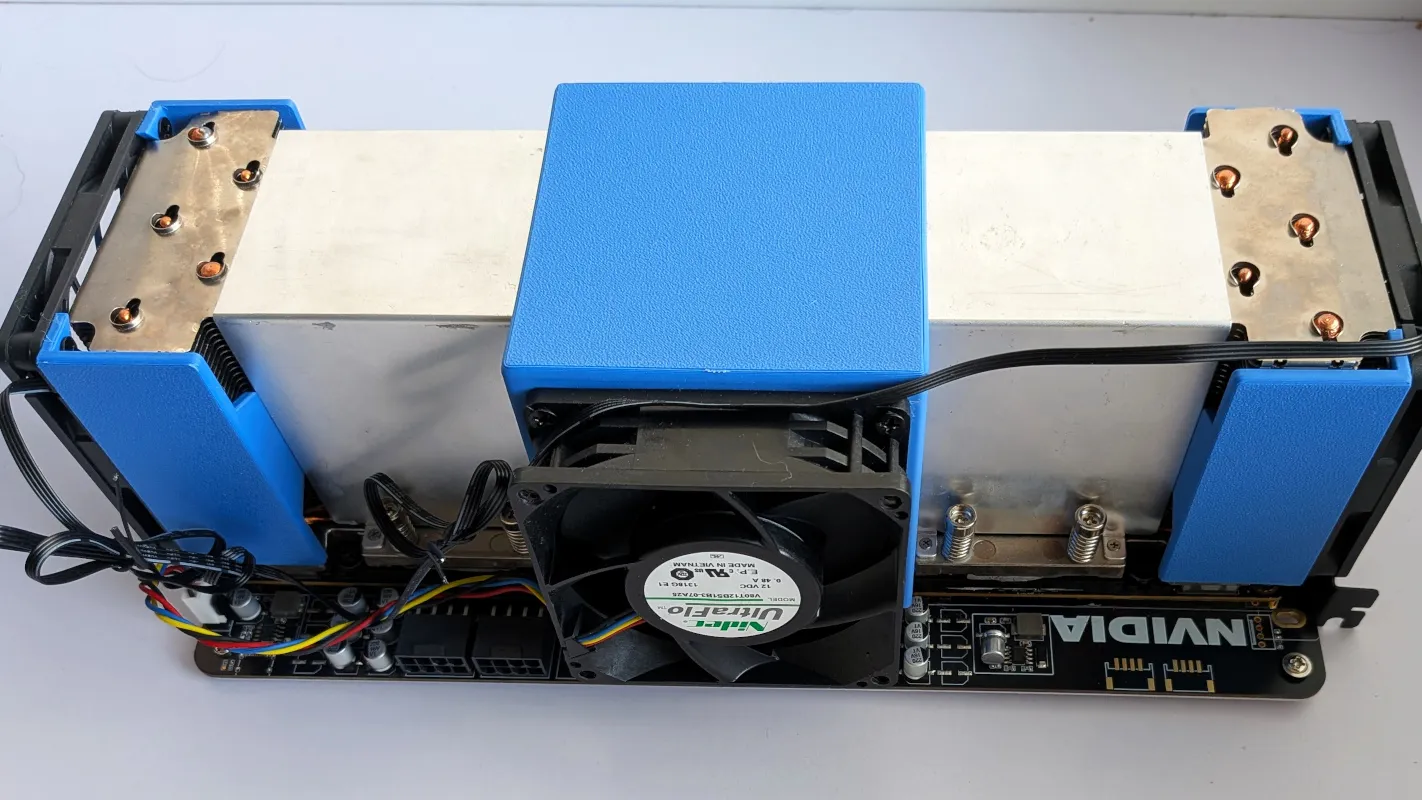
The cards [Andrew] is using are Tesla V100s of 2017 vintage. Despite being older hardware they have high-speed memory which allows them to run modern LLMs locally, competitively with online models. In this test, Gemma 4 26B and Qwen3 35B are run, with Gemma being a bit faster because it fits entirely in GPU memory and Qwen3 being a bit more capable but more hungry for resources. [Andrew] built a PCI card that can host two V100s, allowing these larger models to fit completely in memory.
Even though these don’t perform at the same level as the latest top-tier online models, they’re surprisingly capable and also have the benefit of running completely locally. This might be concerning for those looking at the global economy being propped up by companies that essentially have no moat for motivated users, especially as more and more datacenter hardware becomes available on the secondhand market. While this build by [Andrew] goes into detail on getting the software stack up and running, we recently featured another build using the same GPUs that focuses a bit more on hardware for those looking to get started with local hosting.
You can even use your Roku like a PC, if you have the right phone.
Meir Chaimowitz/Shutterstock
One of the best things about owning a Roku TV or streaming box is the ability to easily integrate it with the rest of your tech setup. While having streaming apps a remote-click away is handy, so is being able to control the TV from a smart speaker or smartphone. Best of all, you can quickly mirror your phone’s screen to the TV. Screen mirroring your Android phone to a Roku device can be a convenient way to enjoy your local media or show friends your vacation photos on the big screen. It can also help you give slide presentations or even take part in a video conference.
Roku makes the process of connecting your Android phone an easy one, assuming both devices support the Miracast protocol. Along with the ability to use your own headphones, it’s one of the features that makes Roku compelling for those who haven’t dumped it yet on account of a pending acquisition by Fox. While very few Roku devices appear to lack support for screen mirroring, certain Android devices may not support Miracast natively. The most notable exceptions are Google Pixels, which use the Google Cast and DIAL protocols but do not support Miracast. You may still be able to cast individual apps, such as YouTube or Netflix, which support DIAL.
Below, we’ll cover how to mirror your screen to a Roku from the most popular Android devices that support casting — namely, Samsung Galaxy phones and tablets. But if you have a different brand, you’ll find similar capabilities under different names if you poke around in your settings. For example, LG phones have Screen Share, and on OnePlus devices, you’ll find Screen Projection. If you have a Pixel, however, you’re out of luck. Google’s phones do not support the Miracast protocol needed to mirror to Roku.
Advertisement
We’ll also discuss how to solve minor issues that can occur when establishing a casting connection, and how to expand functionality even further for devices that support a full desktop mode with an external display on Android.
Mirror your screen or cast individual apps from Android to Roku
renata colella/Shutterstock
Head to the settings menu on your Roku, which can be accessed from the text menu on the left side of the home screen. Scroll down and select System > Screen mirroring > Screen mirroring mode. Choose either Always Allow or Prompt, but only choose the former if your Wi-Fi network is private and secure. Finally, make sure that your phone is on the same network as the Roku you’re mirroring to.
If you’re using a Samsung Galaxy device, you can now mirror your screen with just a couple of swipes (for other brands, consult your device’s documentation). Swipe down from the top right of your phone’s screen to open the quick settings panel, then select Smart View. Alternatively, tap Settings > Connected Devices > Smart View. Once you’re in the Smart View interface, it will begin to scan for nearby wireless displays. Select your Roku device when its name shows up onscreen, then tap Start Now if prompted for confirmation. Other brands should have a similar mirroring option in their pull-down menus.
Advertisement
While mirroring, a Smart View pill will hover on the screen of your phone, and tapping it will surface a context menu. If you’re just mirroring media from a single app, say, Netflix, and don’t want other apps or notifications to show up on the big screen, tap Cast Netflix Only. This lets you browse your phone and receive notifications as usual while only mirroring your app of choice. If the video is letterboxed on your TV screen, tap the Smart View pill again, and tap Change Aspect Ratio.
If you don’t hear audio from a video or other source and have made sure the volume is up on both devices, swipe into quick settings and tap Media Output inside of the now-playing media pill, then ensure your Roku is selected.
Advertisement
Roku allows Samsung Galaxy owners to use wireless DeX for a full desktop experience
Samsung
Samsung Galaxy smartphones have access to a user-favorite feature called DeX, which turns Android into a Windows-like desktop experience. The phone becomes a touchpad and keyboard for the interface (look for a corner square icon to show up when DeX is active), or you can connect a Bluetooth mouse and keyboard. (Something similar may be coming to Google’s Android skins in the nebulous future.) Normally, DeX activates when you plug the phone into an external display, but it can also be triggered by connecting to a wireless display, including a Roku.
To cast your screen to a Roku in DeX mode, open quick settings by swiping down from the top right of your screen and tapping the Wireless DeX toggle. Alternatively, go to Settings > Connected Devices > Samsung DeX > Connect Wirelessly. The phone will scan for nearby displays, which can take a few moments. Once your Roku device shows up, tap on it, then tap Start Now, and DeX will launch wirelessly on the TV.
In our testing, we’ve found that there can be considerable lag while using DeX wirelessly. If you’re experiencing sluggishness, setting your TV’s picture mode to gaming can sometimes make things a bit more responsive.
Nimble, a New York City-based tech startup VentureBeat previously covered for its efforts to re-invent web search for enterprises by using multiple AI agents to improve accuracy and depth, is taking another step toward its vision of a world in which agents do most of the web searching instead of us typing and reviewing the results manually.
Nimble today launched Web Search Agents, a new retrieval system designed to help AI agents perform more 21% more accurate web research while using significantly fewer tokens — 51% less compared with leading AI search alternatives on comparable, according to the firm.
While Nimble did not disclose its specific benchmarking methodology or competitors evaluated, the results underscore a growing trend in enterprise AI: optimizing retrieval has become as important as improving the underlying language models themselves.
Nimble’s leadership says the product combines self-learning retrieval strategies, proprietary web indexes, and live web access to deliver domain-specific search capabilities that outperform general-purpose web search services for enterprise workloads.
Advertisement
“Our research team built self-learning retrieval algorithms that learn a customer’s domain,” said Nimble CEO and co-founder Uri Knorovich in an interview with VentureBeat. “They find the exact information more efficiently, reduce the amount of multi-hop reasoning required, and lower token usage while improving accuracy.”
Rather than positioning itself as another general search engine, Nimble is targeting developers building autonomous agents that require continuously updated information from the public web for research, lead generation, competitive intelligence, compliance, and other business-critical workflows.
It’s also designed to slot in seamlessly to an enterprise’s existing systems and workflows.
“You can run the agent directly through the Nimble API with zero infrastructure,” Knorovich said. “For large enterprises, we’re partnering with Microsoft, Oracle, Snowflake, and others so customers can deploy these agent systems inside their own infrastructure.”
Advertisement
How does it work and stack up to other, existing AI-powered search and agentic systems? Read on to find out.
Moving beyond generic AI web search into specialized search agents that fit your enterprise’s needs
Most AI applications today rely on general-purpose search application programming interfaces (APIs) for search engines and public knowledge bases that return broad collections of files, leaving the language model responsible for determining which sources are relevant.
That process often requires multiple retrieval steps, additional reasoning, and significant token expenditure before an agent produces an answer. This is obviously inefficient and raises the cost spent to run AI search looking through irrelevant sources.
Nimble argues that before long, every enterprise will need its own methods for searching, retrieving, and validating external information since each enterprise relies on its own distinct preferred sources, signals, and standards of trust.
Advertisement
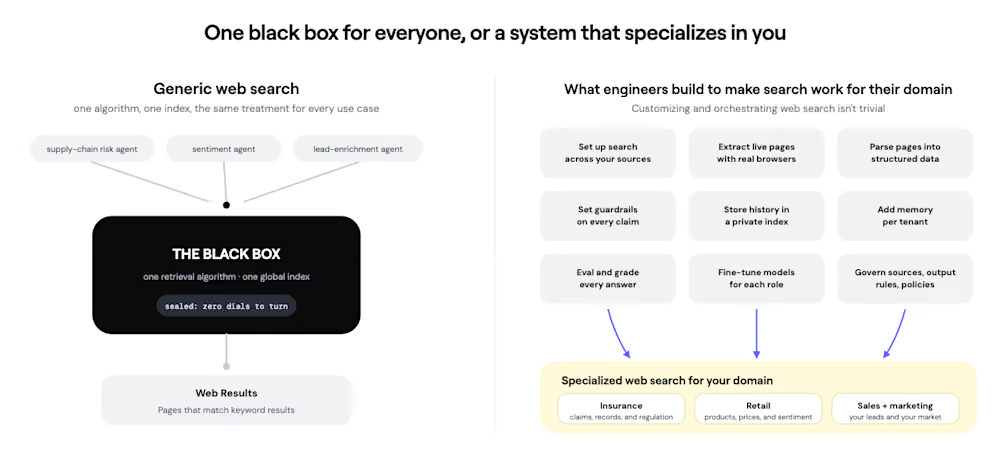
As such, instead of applying one search strategy to every workload, Nimble’s Web Search Agents are designed to learn the characteristics of a specific domain and adapt how information is retrieved, providing agents with structured, relevant context rather than forcing them to sift through large amounts of generic search results.
“Instead of one generic retrieval model, we build specialized retrieval models for each customer’s domain, making them faster, cheaper, and more accurate,” Knorovich explained. “A single enterprise can run hundreds of different agents. Each one has its own domain expertise, guardrails, goals, and search algorithm. The optimization starts with the second search, without requiring any setup from the customer.”
Nimble Web Search Agents diagram. Credit: Nimble
Its goal is not only to reduce redundant retrieval, but also to shorten multi-step research paths and avoid repeatedly sending raw pages through a language model for parsing, resulting in the 51% reduced token figure the company cites.
Advertisement
The distinction is particularly relevant for long-running enterprise agents performing research over hours or days rather than answering simple consumer questions. In those scenarios, reducing unnecessary tool calls can significantly lower operating costs while improving answer consistency.
That emphasis reflects a broader shift occurring across the AI tooling ecosystem. As foundation models become increasingly capable, infrastructure vendors are competing on everything surrounding the model—including retrieval, orchestration, memory, observability, and governance.
The company’s latest release extends that vision with a concept it calls “Harness as a Tool,” which powers its new domain-specialized Web Search Agents. Rather than requiring engineering teams to assemble separate search APIs, browser automation, extraction pipelines, validation logic, memory systems, and orchestration code, Nimble packages those capabilities behind a managed interface.
Advertisement
The harness can determine what to search, navigate pages when conventional indexes are insufficient, extract relevant information, validate the results, and return the final context in a form designed for downstream agents.
Nimble also says the system retains domain-specific memory and builds proprietary indexes that improve as customers run more searches.
“The biggest research breakthrough is adding semantic memory and a caching layer to the agent,” Knorovich told VentureBeat. “The agent learns usage patterns and domain expertise over time, so every subsequent search becomes faster and more efficient.”
As for what domains Nimble can tackle, the company says it can address virtually any knowledge work domain.
Advertisement
“We’ve seen customers build investment banking analysts, competitive intelligence agents for product managers, go-to-market research agents, newsroom monitoring, insurance applications, life sciences research, and supply chain optimization,” Knorovich said. “Our customers surprise us every day with new agent use cases.”
However, for enterprises concerned about data privacy and retention, Knorovich assured VentureBeat that: “Nimble is zero-data-retention by design. Customer queries are never stored in our environment, and when customers deploy semantic memory and self-learning models, that knowledge stays in their own tenant—not ours.”
Customer deployments point to operational gains
Nimble supported the announcement with early customer examples from AI-native software vendors and enterprise users.
AI-native CRM company Rox reported achieving a 20× reduction in token costs after adopting Nimble’s retrieval infrastructure while simultaneously improving the quality and completeness of information available to its AI agents.
Advertisement
Although the company did not disclose detailed workload measurements or a reproducible baseline, the example illustrates the operational savings retrieval optimization can provide for high-volume agent deployments.
Nimble says its infrastructure currently supports more than 90 million searches each day across Fortune 500 enterprises and AI-native companies operating mission-critical workflows where accuracy, completeness, and enterprise control are essential.
API, SDK and MCP support target AI builders
The platform is immediately available through an API, SDK, and Model Context Protocol (MCP) integration, allowing developers to connect Nimble directly into AI agents regardless of the orchestration framework they use.
Developers can use the platform for several categories of web intelligence, including:
Advertisement
Low-latency live web search
Deep multi-step web research
Web crawling
Structured dataset generation
Domain-specific information retrieval
The company also provides documentation and pre-built agents for common web extraction tasks while allowing developers to build custom retrieval agents using natural-language descriptions instead of manually maintaining scraping logic.
Nimble is offering two notably different consumption models. Developers can begin with a pay-as-you-go Agent API priced from $0.025 per Web Search Agent request at the listed low-effort setting. Companies that want Nimble to configure and manage custom data delivery can instead buy annual managed plans beginning at $2,500 per month.
Where Nimble fits in the emerging agentic search stack
Nimble enters a market that has rapidly expanded beyond traditional web search into autonomous research agents capable of planning, browsing, reasoning, and synthesizing information. Products such as ChatGPT Deep Research, Google Gemini Deep Research, Alibaba’s Tongyi DeepResearch, Perplexity, and Sakana Marlin all seek to automate knowledge work that previously required hours—or, in Marlin’s case, potentially weeks—of human research.
Rather than competing head-to-head as another end-user research assistant, however, Nimble is positioning itself one layer lower in the AI stack—as the web intelligence infrastructure that powers those agents or custom enterprise applications built on leading foundation models.
Advertisement
That distinction reflects an increasingly important architectural shift in enterprise AI. Most “Deep Research” systems optimize the overall research workflow, generating search plans, iteratively gathering information, and producing synthesized reports.
Nimble instead argues that the retrieval layer itself has become the primary bottleneck for enterprise AI deployments. If an agent retrieves too many irrelevant pages or performs unnecessary search iterations, token consumption, latency, and operating costs all increase before the model even begins its main reasoning process.
“Customers across life sciences, insurance, healthcare, pharma, retail, and digital-native companies are all telling us the same thing: we need to feed our agents with more accurate context, and we need to reduce the amount of tokens every task consumes,” Knorovich said.
The launch blog makes that argument more concrete by describing how teams frequently rebuild the same retrieval stack themselves. A production agent may start with a search API, then accumulate browser controls, parsers, extraction components, validation steps, memory, caching, evaluations, and custom workflow logic. Nimble is positioning its harness as a managed alternative to that growing engineering burden.
Advertisement
In Nimble’s view, improving retrieval before reasoning begins is more valuable than simply giving a language model more documents to analyze. The company’s Web Search Agents therefore adapt retrieval strategies to a particular workload, combining proprietary indexes with real-time web retrieval and task-specific search policies rather than applying the same search algorithm across every domain.
That makes Nimble less of a direct competitor to OpenAI’s or Google’s research assistants than to developer-focused retrieval infrastructure such as Exa and Tavily. Those platforms also provide AI-native search APIs and research capabilities, but Nimble differentiates itself by emphasizing self-learning retrieval strategies, proprietary indexing, enterprise governance, managed delivery, and token efficiency for production agents.
For organizations building their own AI systems, the distinction could become increasingly important. Foundation models are becoming more capable across the industry, shifting competitive differentiation toward the infrastructure surrounding them—including retrieval, orchestration, memory, observability, and governance. Nimble’s strategy reflects that broader trend, betting that better web intelligence can deliver larger operational gains than incremental improvements in model reasoning alone.
Enterprise infrastructure versus AI research assistants
The different positioning is also reflected in pricing.While consumer-facing AI research assistants are generally sold as productivity subscriptions for individual users or teams, Nimble is pricing its managed service as enterprise infrastructure designed to power production applications. Its pay-as-you-go API, however, gives developers a lower-cost path to test the underlying agent technology before committing to a managed deployment.
Advertisement
Platform
Primary audience
Primary focus
Lowest publicly available price (USD)
Advertisement
Nimble
Developers and enterprises
Managed web retrieval and orchestration infrastructure combining specialized search, browsing, extraction, validation, proprietary indexing, and memory
$0.025 per Agent API request (low-effort setting). Managed service starts at $2,500/month (Startup plan, billed annually).
Advertisement
ChatGPT Deep Research
Professionals, enterprises, and knowledge workers
Autonomous multi-step research with iterative browsing, synthesis, and citations
$20/month (ChatGPT Plus). Higher limits are available with Pro, Team, Enterprise, and Edu plans.
Advertisement
Google Gemini Deep Research
Consumers and enterprises
Research planning integrated with Gemini, Google Search, and Google’s productivity ecosystem
$19.99/month (Google AI Pro, U.S.). Higher-capacity AI Ultra and enterprise Workspace offerings are also available.
Advertisement
Tongyi DeepResearch
Developers and AI researchers
Open research model for long-horizon information-seeking and agentic search
Free (open source). Users are responsible for their own infrastructure and cloud compute costs.
Advertisement
Perplexity
Consumers, professionals, and enterprise teams
AI-powered web search and cited research
Free entry tier. Perplexity Pro starts at $20/month with Enterprise Pro available separately.
Advertisement
Exa
Developers and AI platform builders
AI-native search, content retrieval, and asynchronous research agents
Free developer tier (includes monthly credits). Paid Search API pricing starts at approximately $7 per 1,000 requests while Agent runs range from $0.012 to $1.00 per run depending on effort level.
Advertisement
Tavily
Developers building AI agents
Search, extraction, crawling, and research APIs for agents and RAG workflows
Free developer tier (1,000 monthly credits). Pay-as-you-go usage starts at approximately $0.008 per credit.
Advertisement
Sakana Marlin
Enterprises, strategy teams, financial institutions, and research organizations
Ultra Deep Research for hours-long strategic reasoning and executive-grade reports
Pay-as-you-go from approximately $0.61 per credit (¥98/credit) with with 100 credits required per research run (approx $61 per run).
Advertisement
The first subscription tier is Pro at approximately $936/month (¥150,000/month) followed by Team at approximately $2,495/month (¥400,000/month) with Enterprise pricing available by quote.
The comparison reveals three increasingly distinct markets.
ChatGPT Deep Research, Gemini Deep Research, and Perplexity operate primarily as user-facing research assistants.
Exa and Tavily provide developer-facing retrieval and research APIs.
Nimble and Sakana Marlin occupy more enterprise-oriented territory, but at different layers: Nimble supplies retrieval infrastructure, while Marlin performs long-horizon strategic analysis.
Sakana Marlin is particularly useful as a counterpoint. It is positioned as a “Virtual CSO” rather than a search API, running autonomous research loops for as long as eight hours and producing executive-ready reports, references, and supporting materials.
Nimble, by contrast, is designed to sit beneath those kinds of systems, supplying the specialized retrieval, browsing, extraction, validation, and orchestration that enterprise agents need to gather reliable external information before reasoning begins.
Advertisement
The comparison therefore should not be read as a direct price-to-price evaluation. A $20/month ChatGPT Plus or $19.99/month Google AI Pro subscription buys an individual AI workspace with Deep Research capabilities.
Nimble’s $2,500/month managed plan funds concurrent production agents, managed ETL, MCP integration, web-page capacity, storage, and hands-free data delivery.
Sakana Marlin’s approximately $936/month (¥150,000/month) Pro plan pays for extended, compute-intensive strategic research workflows.
Each price reflects a fundamentally different product boundary and deployment model rather than simply a different level of AI capability.
Advertisement
Why retrieval is becoming the next AI battleground
As enterprise AI systems mature, the industry is increasingly recognizing that model quality alone does not determine application performance.
Large language models frequently fail not because they cannot reason, but because they lack timely, trustworthy external information. That reality has fueled rapid investment across retrieval-augmented generation, AI-native search, web intelligence platforms, knowledge graphs, browser automation, and agent infrastructure.
Nimble’s launch reflects this evolution by focusing less on building another frontier model and more on improving the quality of information flowing into existing ones.
Whether the company’s reported 21-point improvement in answer quality and 51% reduction in token usage hold up across a broad range of enterprise deployments remains to be independently validated.
Advertisement
The larger strategic bet is that, as frontier models become more interchangeable, companies will differentiate themselves through the data, retrieval policies, trusted-source rules, memory systems, and orchestration layers surrounding those models. Nimble is not trying to build the researcher that sits in front of the user. It is trying to become part of the infrastructure that determines what the researcher can find, how efficiently it can find it, and whether the resulting evidence is complete enough to support production decisions.
Web Search Agents are available through Nimble’s API, SDK, and MCP integrations, with a free trial available for developers evaluating the platform.



































































You must be logged in to post a comment Login