

Join Mikko Hyppönen and security leaders from the NFL, CHANEL, and Atlassian for a two-hour digital summit on what AI-speed attacks change, what defenders should stop doing, and how to validate, decide, fix, and re-validate at machine speed.
Tech
TikTok agrees to daily usage limits for teens after settling for $100 million


Social media platforms are having a historical moment of reckoning in 2026, and the latest to join the list is TikTok. The short video platform has settled a lawsuit with the state of Alabama, alleging that the platform is addictive by design, exposed teens to violent and self-harm content, and led to a surge in the number of emergency room visits tied to self-harm. The lawsuit claimed that the company misled with its claims that the platform protects teen users from exposure to risky content.
Now, the company has agreed to settle the lawsuit before it goes to trial, making it the first legal tussle of its kind against a state. “Under the settlement, Alabama will receive a minimum of $100 million, due to the state within 45 days, with the potential to receive up to $300 million if certain conditions are met,” says a press note from the office of Alabama Attorney General Steve Marshall.
What’s ultimately changing for at-risk users?

More importantly, TikTok has agreed to implement over half a dozen restrictions to ensure that young users have a safe social media experience, following similar limits implemented by Meta, Snapchat, and even AI platforms like OpenAI in the past few months. Following is the full list of changes that have been proposed by the state of Alabama:
- A two-hour daily time limit, with parental controls that allow parents to further limit the amount of time their children spend on TikTok.
- “Productive pauses” that interrupt teen users after 15 minutes of continuous use and again at 60 and 90 minutes to limit endless scrolling.
- “Nighttime access” that restricts children’s access from 12:00 a.m. to 6:00 a.m., plus restrictions on messaging and push notifications overnight and during school hours.
- Robust age assurance measures to more effectively verify the age of young users.
- Stronger content moderation provisions, including limits on discoverability of teen accounts by adults and parental notification of suspicious interactions between teen users and adults.
- A blanket prohibition on the use of cosmetic filters by teen users.
- A default non-personalized feed for teen users.
- Stronger, more user-friendly parental controls.
TikTok won’t be the only platform facing increased heat from regulators over harm caused by social media, especially to young users. A month ago, Meta paid over $17 billion to settle with a bunch of states, and agreed to a wide set of usage restrictions to protect users under the age of 18. Elsewhere, AI companies are also facing heat over mental health, manipulation, and misinformation risks. ChatGPT, for example, will warn parents if a child discusses sensitive topics such as mental health or when they are going through acute emotional distress, while also rolling out more effective parental controls.
RELATED COVERAGE:
Continue Reading


A Kosovar national has pleaded guilty to operating Rydox, a large illegal online marketplace that sold stolen personal information, login credentials, credit card details, and cybercrime tools.
Kosovo law enforcement and Albania’s Special Anti-Corruption Body (SPAK) arrested 28-year-old Ardit Kutleshi and two other Rydox administrators (Jetmir Kutleshi and Shpend Sokoli) in December 2024.
The arrests were part of a joint international law enforcement operation that also shut down the Rydox marketplace, seized the Rydox[.]cc domain, and seized its servers in Kuala Lumpur with the help of the Royal Malaysian Police.
Ardit Kutleshi was extradited from Kosovo to the United States in 2025, when he was charged with crimes related to their Rydox admin role, including conspiracy to commit identity theft, aggravated identity theft, two counts of identity theft, access device fraud, and money laundering.
“Rydox put cybercriminal tools and sensitive data up for sale, including the stolen identities and logins of thousands of people,” said Brett Leatherman, assistant director of the FBI’s Cyber Division. “The FBI and its foreign partners shut the marketplace down, and now the man who created it and ran it pleaded guilty.”
According to court documents, between February 2016 and Rydox’s shutdown in 2024, marketplace sellers were involved in over 7,600 sales of login credentials, credit card information, and stolen personal information (including Social Security numbers, names, and addresses) of thousands of U.S. citizens.
Rydox also offered over 321,000 other “cybercrime products” for sale to more than 18,000 users, including various devices, software tools, and materials for committing cybercrimes.

Rydox users had to deposit cryptocurrency into their accounts before making a purchase via Bitcoin (“BTC”), Monero, Ripple, Ethereum, Litecoin, Perfect Money, Tron, or Verge payments that were deposited into a Rydox-controlled cryptocurrency wallet and could be used to buy illicit products, services, tools, and programs from Rydox sellers.
The marketplace also charged registered users a one-time fee (that fluctuated between $200 and $500) to become authorized sellers, who received 60% of the sale proceeds, while the marketplace retained 40% from every sale.
Kutleshi has pleaded guilty to aggravated identity theft and money laundering conspiracy and is scheduled to be sentenced on February 9, 2027.
He now faces a maximum penalty of 20 years in prison for money laundering and a minimum penalty of two years in prison for the aggravated identity theft count.
Since the start of the year, the owner of the Incognito dark web drugs market was sentenced to 30 years in prison in February, while a California man who sold fentanyl and methamphetamine on the Nemesis dark web marketplace was sentenced to more than 26 years in federal prison.



Hollywood studios are turning to film schools for graduates who already know how to use AI video tools, rather than training their own staff, Semafor reported on Thursday.
“How do we find people who already know how to use this?” studios are now asking, Runway chief executive Cristóbal Valenzuela told Semafor.
Runway, which makes AI tools for generating and editing video, has helped build that pipeline. It announced its first university course, with NYU’s Tisch School of the Arts, in December 2024. The NYU Tisch course began in January 2025 at the Martin Scorsese Virtual Production Center.
USC’s School of Cinematic Arts also runs a graduate AI filmmaking course that uses Runway’s tools, according to the company. In addition, Semafor reported that courses using Runway are taught at the Rhode Island School of Design, MIT, and Harvard, and at universities in Europe and Latin America.
Google and OpenAI run their own programmes. In September 2025, Google Labs launched Flow Sessions, which gives selected filmmakers access to its Flow AI filmmaking tool, along with mentoring and training.
OpenAI, meanwhile, teamed up with Tribeca Studios on a year-long programme. It funded independent filmmakers to make short films with OpenAI’s tools, with premieres planned for the 2026 Tribeca Festival.
Filmmaker Brad Tangonan, who took part in Flow Sessions, told Semafor he expects AI skills to become a requirement for working in film.
“You’re going to have to learn how to use [these tools] if you do want to be in the industry,” Tangonan told Semafor.
The hiring push comes as studios use more AI in production. Netflix said it used generative AI in about 300 titles this year, and it has asked all its staff to build AI fluency.
Google has also moved closer to film studios. In June, it invested $75m in A24 and set up an AI filmmaking research partnership between the studio and Google DeepMind.
Tech
Harber’s stylish new backpack is the perfect accessory for conference season, and I can’t wait to show it off

I’m lucky that my job takes me to all kinds of events, and when I’m travelling, whether abroad and closer to home, having the right backpack to carry my kit is a no-brainer.
Harber London’s backpacks have always been a popular choice for high-end travellers, offering a mix of style and durability – I’ve been trying out the new Venture Edition of the classic Roll Top backpack, and it’s been invaluable so far.
Designed for both modern travel and everyday usage, the collection combines water-repellent recycled nylon made from reclaimed marine plastic with full-grain leather accents – the perfect combination to keep your belongings protected.
Latest Videos FromTechRadar
Roll with it
If you’re not a Harber fan already, their backpacks and weekend bags are truly some of the best we’ve ever tried.
Each one is handcrafted in the company’s workshop in Spain, built of its SEAQUAL® yarn, a premium recycled nylon made from reclaimed marine plastics, to build a waterproof and lightweight product that weighs in at just 1.05Kg/2.31lbs.
Currently only available in Black, the backpack comes with a magnetic roll-top opening for fast, effortless access to the main compartment, with two magnetic front buckles allowing quick access and adjustment when needed.
The bag offers around 22 litres of space, and a frankly silly seven total pockets. Inside, the backpack features a special laptop compartment capable of fitting devices with anything from a 13in-16in span, so all your usual favourites should easily slide in.
The compartment even has a water-repellent YKK zipper for enhanced protection, and inside, there’s a number of zippered interior pockets for all your bits and pieces – all with a lighter-toned interior lining which should help you quickly spot what you need.

As mentioned, I’m a frequent traveller, so I really appreciate a well-made and designed bit of luggage – and this backpack definitely delivers.
The amount of kit you can squeeze in is frankly ridiculous, and I’m able to pack in my laptop, water bottle, charging cables, notebooks, snacks, and much much more.
The bag is quick and easy to adjust, and feels super secure thanks to the roll top. The shoulder straps are beautifully padded as well, so you don’t start to ache towards the end of the day.
Overall, as with all Harber products, the build quality is fantastic – you can really tell this a product handmade with care by people who really know what they’re doing.
The backpack comes with a one year warranty, and 60-day return policy, with shipping around the globe – so get yours now, prices start at £369, with free shipping.

Join Charlie Brown, Snoopy, Linus, Lucy, and the rest of the gang and tune in to watch “It’s the Great Pumpkin, Charlie Brown” for free for everybody on Apple TV. Here’s how, and when.

Watch ‘It’s the Great Pumpkin Charlie Brown’ on Apple TV
For many of us, Charlie Brown and the “Peanuts” gang mark some of our very first movie memories. That’s why Apple TV is ensuring everyone can revisit those warm and fuzzy childhood feelings, regardless of whether they have an active Apple TV subscription.
“It’s the Great Pumpkin, Charlie Brown” follows the gang on their Halloween adventures, including trick-or-treating and waiting for the Great Pumpkin.
Continue Reading on AppleInsider | Discuss on our Forums

If the RAMaggedon’s good for anything, it’s turning your old GPU into a potential goldmine.

Whether it’s from excessive use, sheer age or an upgrade that outclasses it, there are plenty of reasons that you may switch from one GPU to another. If you end up with an extra GPU lying around, there’s a lot you can do with it — including keeping it as a back-up or re-using it to build something new. However, even a well-worn GPU can be worth a nice pile of cash on the aftermarket.
Finding an affordable GPU during the great RAMaggeddon of 2026 is no easy task, with the AI gold rush sending prices into the stratosphere. While this has been generally problematic for would-be PC builders everywhere, it has at least provided a great window for selling any old GPU you might have. Even a long-dead GPU can find new life scrapped for parts, and one with a decent life ahead of it can sell for some good money.
How much a used GPU could be worth in 2026

First, it’s important to look at the prices you can expect. For instance, NVIDIA’s RTX 50-series cards have shot up as much as 39 percent, and a further 30 percent hike isn’t out of the cards — not to mention AMD’s price hikes of as much as 10 percent. This demand comes not only from big LLM companies, but from individuals creating their own local AI setups, which means the most valuable cards you could be selling are those with a lot of VRAM (as this is what LLM’s use to temporarily store data when generating or training). Most users in the AI vein will be looking for 12 to 16 GB, but bigger teams will be looking for as much as 48 GB — and there is no shortage of start-ups.
Therefore, the AI boom that sent GPU prices soaring is also what determines how much you can sell your GPU for — as a used model with a lot of VRAM is still worth a lot for AI and gaming. Moreover, many older GPUs (such as the NVIDIA GeForce RTX 3090) are even more valuable as they pack in more VRAM than many newer models. It’s pretty reasonable, then, to expect a used card with plenty of VRAM (in good condition) to retain at least 40 to 60 percent of its value.
Where to sell a used GPU
Then comes actually selling a used GPU. Peer-to-peer sites like eBay or Facebook Marketplace require the most effort (you’ll have to create a listing, take photos, answer questions, handle shipping and hope to even be spotted in the first place), but also yield the most reward; looking at recent Sold listings on eBay, models like the NVIDIA GeForce RTX 5060 Ti and the EVGA GeForce RTX 3080 not only sell at 40 to 60 percent of their original price, but can sell for higher than their original MSRP. Even busted-up GPUs can sell for a good price here, if you can catch the right buyer’s eye.
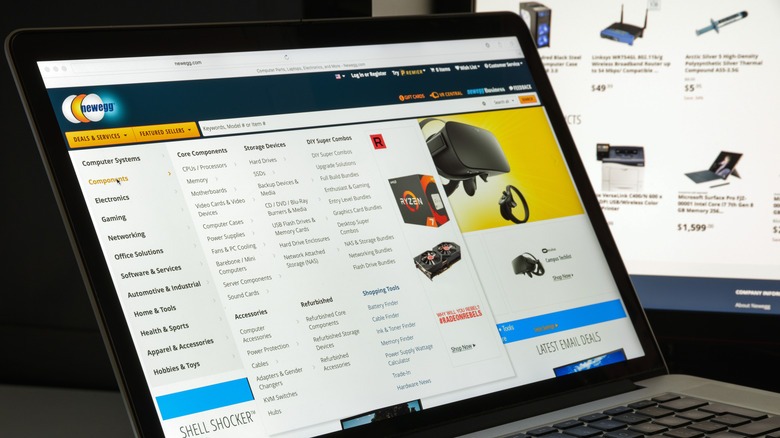
That’s still a lot of hassle, though, so trade-ins and over-the-counter deals can still make decent options. Going to your local PC repair shop or using Newegg’s GPU trade-in program can offer great convenience, as these companies will, in most cases, turn around a quick offer and take care of the shipping process. However, that convenience comes at the expense of your payout, so you’re liable to make far less in trades like this. If you have a used GPU that’s still got decent shine to it, definitely play the long game by selling it yourself. On the other hand, if you’ve got a worn model with scarce VRAM, a quick and easy trade-in probably won’t hurt.


The data breach is in retaliation for alleged disinformation published by the FBI about ShinyHunters’ cybercrime methods, according to the group.
Cybercriminal group ShinyHunters said it breached the US Federal Bureau of Investigation (FBI) yesterday (22 September) and stole the personal information of a number of current and former FBI employees.
A screenshot shared by the group with a number of outlets reportedly showed information ShinyHunters had obtained on 5,000 FBI agents, including names, addresses, phone numbers and details on the employees’ spouses.
Reuters said it could not verify whether the screenshot was real, but was able to partially verify the authenticity of some of the information displayed – the outlet was able to match details from the leak to FBI employees in at least 10 instances, one of which was FBI director Kash Patel.
However, the publication said it could not establish where the data came from, or whether it had been stolen from the FBI’s internal systems as claimed by ShinyHunters.
According to 404 Media, which cited an FBI spokesperson, ShinyHunters was able to instigate the breach through a zero-day exploit in an Oracle product called PeopleSoft, after which the group managed to access AWS GovCloud servers and download data. The total exfiltrated data amounts to between 2TB and 3TB, according to the publication.
In a statement first posted to the group’s website on the dark web, ShinyHunters said it had targeted the FBI due to a report the agency published about the group earlier this year, which detailed the group’s methods and advised people not to pay if targeted for ransom.
ShinyHunters said the FBI made false allegations about the group and its cybercrime methods in the report – including alleged usage of threatening phone calls and false claims of compromising information – and has given the FBI one week to “correct or simply remove” the report.
It’s unclear what the group plans to do with the data if the one-week deadline passes. When asked by BleepingComputer if it would release the stolen data if the FBI failed to correct or remove the report, ShinyHunters said: “No comment.”
Commenting on the FBI breach, Closed Door Security CEO William Wright told SiliconRepublic.com: “Hell hath no fury like a ShinyHunter scorned.
“This is a retaliation attack, which not only demonstrates that no organisation is safe from the group, but also the fact that they will go to any length to protect their image.
“The group clearly wants to control the narrative around their activities, ensuring nothing is said that could dent their reputation. Just like any organisation, reputation is everything, even in the dark and unruly world of cybercrime.”
Wright also said Oracle needs to act fast to mitigate the zero-day vulnerability that allegedly allowed this breach to occur.
“It is essential Oracle takes steps to understand the [exploited] CVE [Common Vulnerabilities and Exposures] and whether it is already known to them. If not, an emergency update is essential,” he said.
“Any gaps between this announcement and a patch being released will only leave organisations vulnerable. Other threats actors will use the gap to exploit the CVE and launch further attacks.”
ShinyHunters has been linked to a number of high-profile breaches in recent months.
In March, the prolific group claimed responsibility for a breach of the European Commission’s Europa.eu platform, in which a reported 350GB of data, across multiple databases, was accessed and stolen.
In May, ShinyHunters claimed responsibility for hacking education management platform Canvas and issued a ransom to Canvas parent company Instructure. Some days later, Instructure reached an agreement with the group.
Recently, ShinyHunters targeted rival cybercrime group Clop by hacking and defacing its ransomware leak site in an escalation of a dispute between the two groups.
Don’t miss out on the knowledge you need to succeed. Sign up for the Daily Brief, Silicon Republic’s digest of need-to-know sci-tech news.


Merlin Entertainments and Mojang Studios used Saturday’s Minecraft Live stream to confirm Minecraft World Hotel will open in 2027 at Chessington World of Adventures in south-west London, inside a new £50 million land called Minecraft World. The stay sits beside the first official Minecraft theme park land, a project first sketched in March 2026 and now far enough along that construction footage shows coaster track already going in.
Sixty-nine rooms will be packed into a four-story building at Chessington, divided into 20 premium and 49 regular rooms that truly bring the world of Minecraft to life, with biomes, creatures, and items replicated just as they would appear in game. Family rooms will be designed out similarly to Merlin’s Legoland hotels, with larger beds for adults and a separate section for children, often a set of bunks or a trundle bed. The blocky aesthetic can be found everyplace, from Creeper face pillows to wooden chests that double as furniture, block style lighting, and wall scenes, as well as passageways that resemble mineshafts and lifts straight out of a video game. Beds are provided, therefore there is no need to bring your crafting table, as stated on the official page.
Sale

LEGO Minecraft The Baby Pig House Toy Figures and Playset – Building Minecraft Toy for Kids, Boys and…
- LEGO MINECRAFT TOY WITH ANIMALS – The Baby Pig House is packed with pretend play fun for girls and boys ages 7 years old and up who have a passion…
- MINECRAFT FIGURES – This set includes a hero character in a wolf skin, a baby pig, bee, an adult pig and a zombified piglin
- BUILDABLE PLAYSET – Kids build a pig-shaped house that comes with a farm plot where potatoes and beets grow, plus a field with a gate to guide the…

The public spaces are equally immersive as the apartments themselves. The lobby concept picture is packed of detail, with minecart tracks, Steve brandishing a pickaxe, and a newborn zombie dressed as a chicken jockey. Great food is essential in every hotel, and at the Deep Sea Diner, you can eat from tables that are truly surrounded by an underwater setting. The hotel bar is inspired on the Woodland Mansion. Room rates and a release date have yet to be determined, and booking a room is currently unavailable.

Minecraft fans are also in for a treat with the brand new Escape the Nether rollercoaster, which is marketed as the world’s first Minecraft rollercoaster. You get to board a minecart with Steve and Alex and rush through the darkness, avoiding aggressive creatures and lava until bursting out into the Nether portal and splashing into the Overworld. The rules for riders will be announced closer to the event’s start. Chessington Park has also added a new area dedicated to Minecraft World, which will have play spaces, interactive adventures, its own shops and eating, and even the opportunity to meet some of the game’s most famous mobs. It replaces the previous Wild Asia region.

Merlin and Mojang struck a deal in 2024 to bring Minecraft to the UK and US, with £85 million set aside for the two nations, and Chessington is the first of the new venues to launch. No information about other US sites has been given yet. Daisy Mercedes, Merlin’s creative producer, says you’ll be able to sleep inside the game and wake up exactly where you want to be. Filip Keatley Thoms, Mojang’s head for Minecraft Parks and Experiences, stated that the team worked hard to ensure that the game felt as immersive in real life as it does in the game when strolling around the biomes and witnessing the critters in person.

As useful as steel and iron are to the modern world, their tendency to rust is a major downside. There’s a spectrum of ways to prevent it, from quickly slapping on a coat of paint on the easy side to alloying, chromizing, or physical vapor deposition at the extremely difficult or industrial-only end. For a middle ground accessible to the home shop, galvanizing is a go-to method of rust prevention that deposits a layer of zinc onto the metal instead, but even this generally involves the use of strong acids. This method, though, makes galvanizing accessible without any acids. (Spoiler alert: substitute strong bases.)
Although the acids are omitted, the solution is caustic, so similar safety measures are still advised. The first step in the process is to dissolve sodium hydroxide into a container of distilled water. Metallic zinc can then be dissolved in the solution, with a bit of sugar and liquid soap to improve the finished quality of the coating. An electric current is applied to the solution, using a graphite plate at the anode and the part to be electroplated as the cathode. After some time, the part will be uniformly coated in a layer of zinc, which can then be brightened in a solution of only-mildly-acidic citric acid if needed.
One of the benefits of using a strong base to galvanize a metal part, beyond the preference of avoiding strong acids, is that this process can be better at plating parts that are non-uniform in shape, so things with deep crevices or other odd shapes that might coat unevenly in acid. If there’s a preference for electroplating with acid, there are some ways of producing one’s own using various methods.


Mitsubishi spent the late 1980s and early 1990s stretching the limits of glass and electron guns until a 40-inch direct-view tube became something you could actually buy. The CS4307 belongs to that short, expensive run of sets that sat at the top of the company’s American lineup in the mid-1990s. Few other makers even tried a tube this large for living-room use. Projection sets offered more inches for less money, yet they never matched the punch of a real cathode-ray picture. Owners who wanted the biggest possible image without a projector chose this family of Mitsubishi consoles and paid accordingly.
A finished CS4307 weighs about 250 pounds and measures 39 and a half inches broad, 32 inches tall, and 27 inches deep, making it a bit of a handful to lift. Usually, you need four adults to lift the item. The cabinets, by the way, come in a fairly standard dark plastic with a very basic front panel layout that includes a power button, volume control, channel select, input select, a dedicated degauss switch because, you know, having one on the front can be useful at times, and an A/V reset for when things go wrong.
Sale

Amazon Fire HD 10 tablet, built for relaxation, 10.1″ vibrant Full HD screen, octa-core processor, 4 GB…
- Do what you love, uninterrupted — 25% faster performance than the previous generation and is ideal for seamless streaming, reading, and gaming.
- High-def entertainment — A 10.1″ 1080p Full HD display brings brilliant color to all your shows and games. Binge watch longer with 13-hour battery…
- Thin, light, durable — Tap into entertainment from anywhere with a lightweight, durable design and strengthened glass made from aluminosilicate…
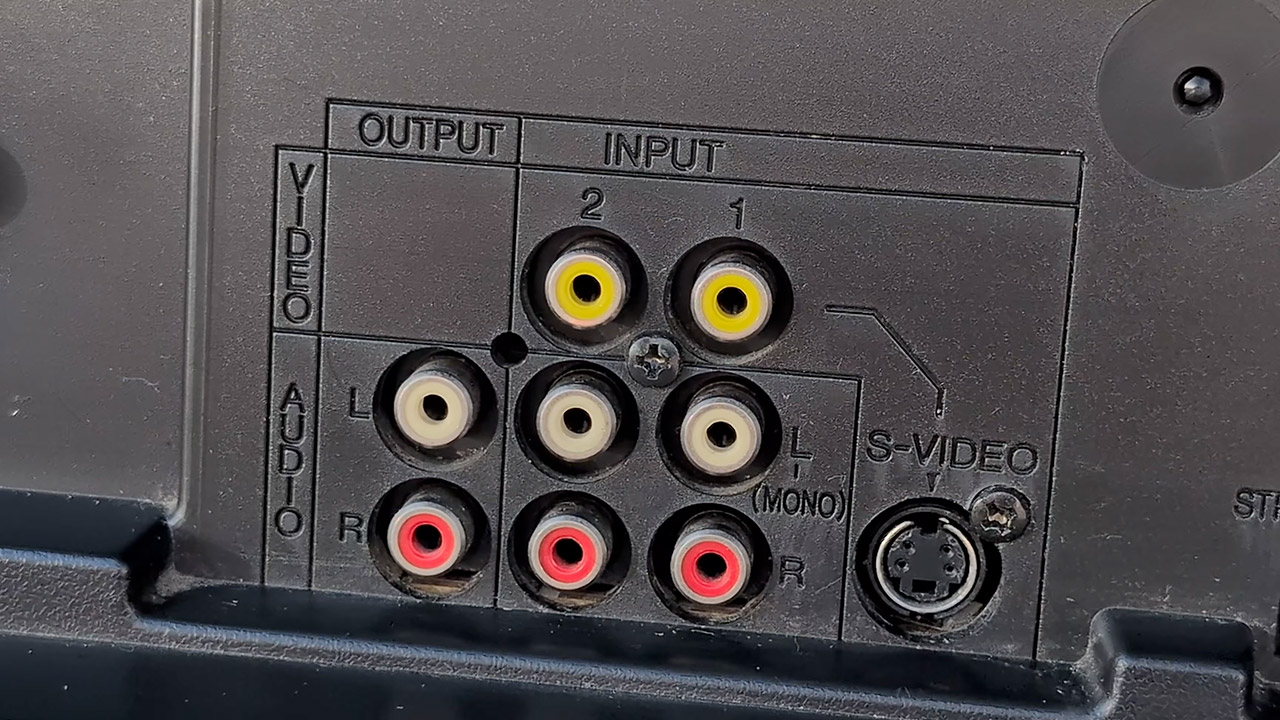
Rear connections? Pretty basic for the time, however most 1996 versions include RF, composite, and S-Video; later, one of its siblings added component video, making it the only 40-inch standard-definition set in North America with that input. Some of the higher-end models also had twin tuners, which allowed you to view one channel in a small window while retaining the other full screen. The stereo speakers that came with it sit on either side of the image tube and generate surprisingly clear sound for a mid-nineties television.

Mitsubishi built the chassis in Braselton, Georgia, and paired it with a Japanese-made slot-mask tube with a dark tint and a dual-focus electron gun. Horizontal scan remains rock solid at 15 kHz, vertical scan at 60 Hz, hence the set performs best at 240p and 480i. Now I’m told that the three-line digital comb filter handles the most of the work when it comes to differentiating color and brightness.
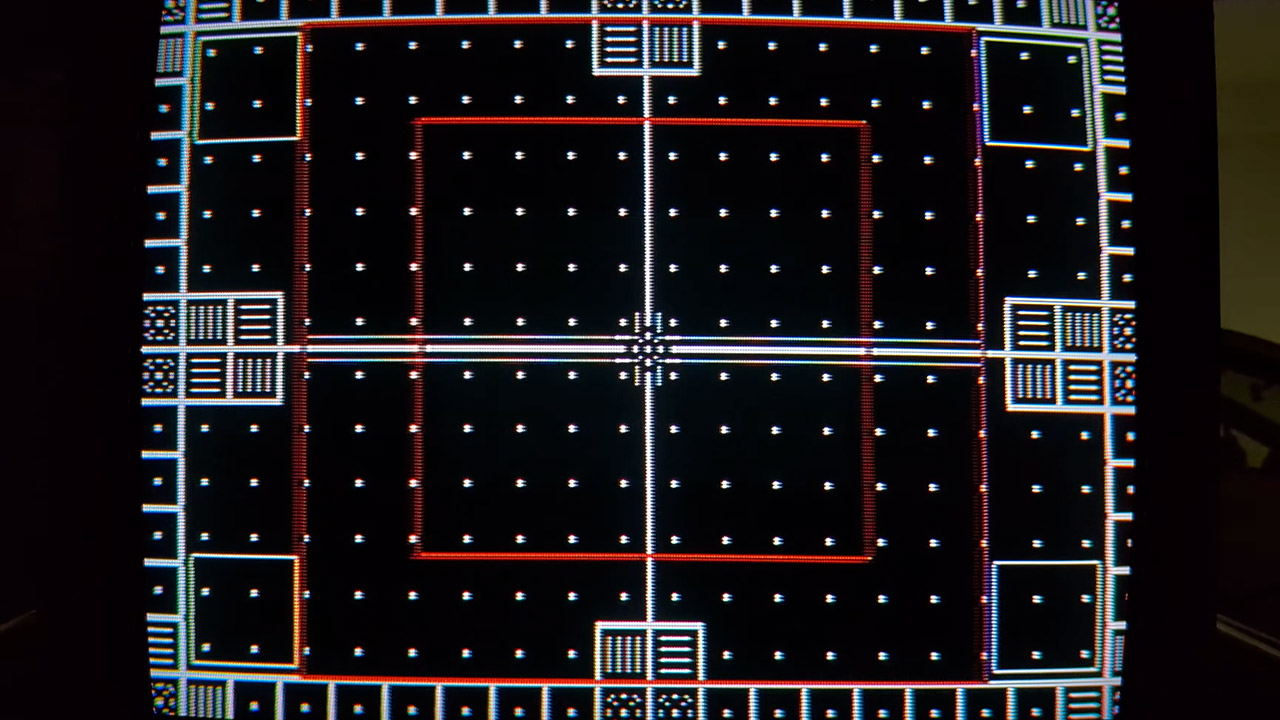
The geometry on a well-adjusted example is somewhat unexpected, especially given the size of the thing, since circles appear round and squares appear square after consulting the service menu. Of course, color purity is important, as the huge glass in this item is sensitive to the Earth’s magnetic field. That’s why you get a variety of switches to help tell the set if it’s facing north, south, or sitting in a neutral position, as well as a manual degauss button right on the front for when the picture starts to become a little weird and you get that telltale patch of color.
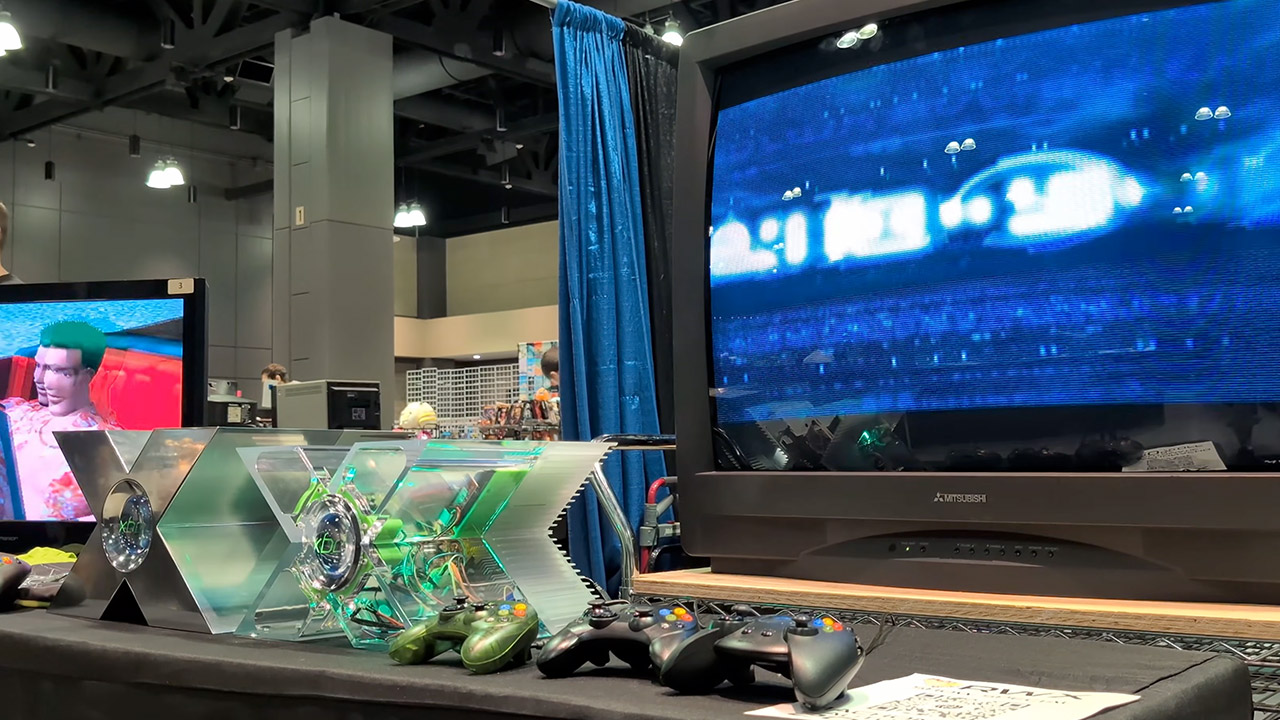
The list price was between $3,400 and $4,000 ($7,259 and $8,540 today), depending on the year and any extras you wanted, such as the StarSight program guide or the ViewPoint on-screen menu. For that money, you got a picture with deep blacks, natural skin tones, and enough brightness to cut through a typically lighted room after a little gray-scale tweaking. Letterboxed films looked their best because the black bars stayed black, and retro gamers later discovered the same strength: 240p from a NES, Super Nintendo, or PlayStation looked sharp and colorful through S-Video, and the large screen on set thing brought light-gun games closer to the arcade experience.
Why you can trust TechRadar
We spend hours testing every product or service we review, so you can be sure you’re buying the best. Find out more about how we test.
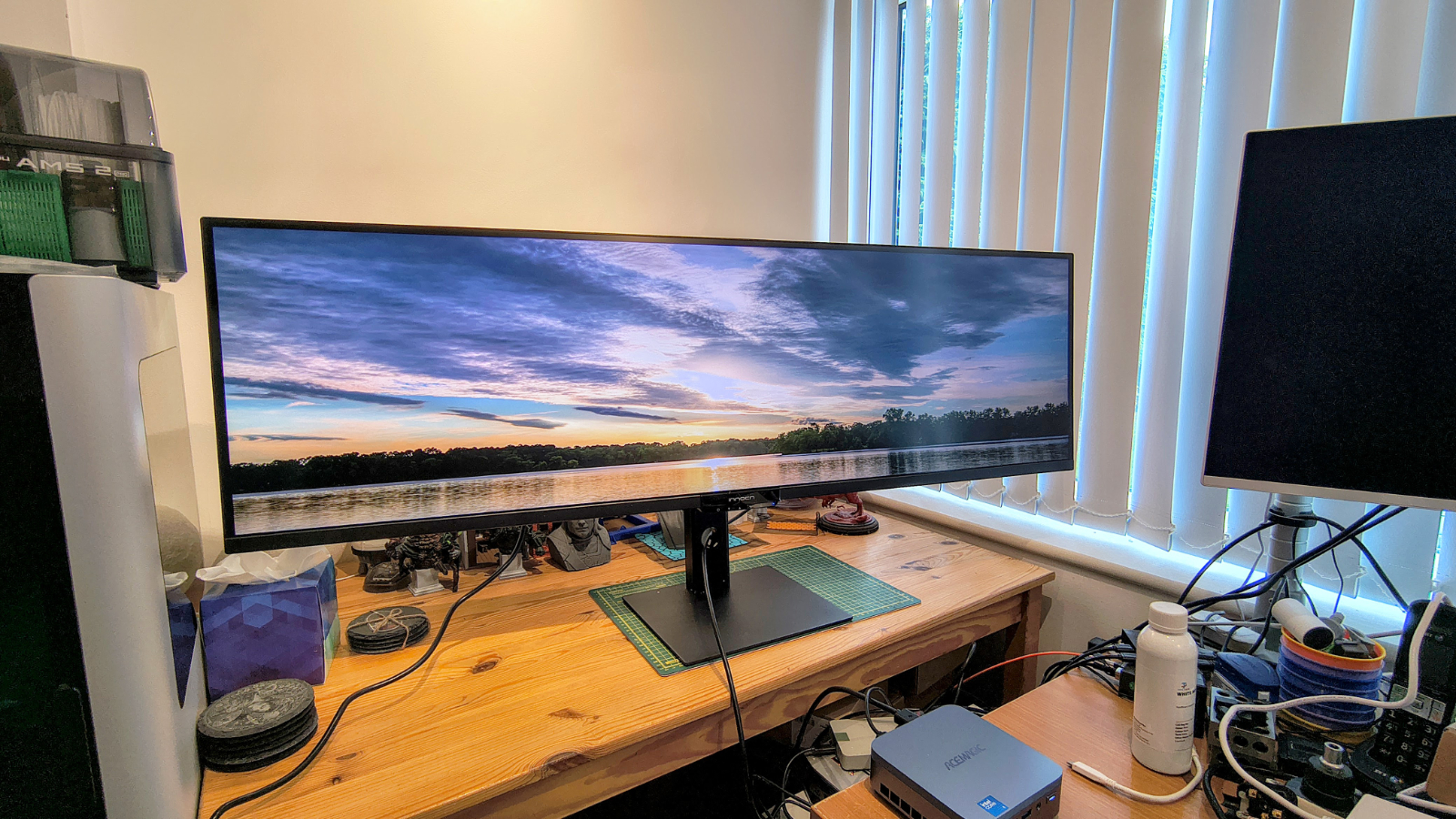
INNOCN E49M1R: 30-second review
The 49-inch ultrawide market has always demanded a compromise. Curve the panel, and you gain immersion but lose straight lines along your windows’ edges. Keep it flat, and those two features simply swap places. Innocn has decided that trade-off is no longer guaranteed, and the E49M1R is the result.
By the maker’s own description, this is the world’s first 49-inch flat Mini LED ultrawide monitor. That single design choice sets it apart from almost every other super ultrawide currently on sale, since curved panels have dominated this size class for years. Traders, video editors, developers and anyone who values straight lines over cinematic curvature now have a genuine flat alternative at this scale.
Underneath that flat glass sits a 5120 x 1440 VA panel, often marketed as DQHD, which is effectively two 27-inch QHD monitors joined without a centre bezel. Add a 165Hz refresh rate and a 2ms overdrive response time, and you have a display built to appeal equally to people juggling financial dashboards, editors scrubbing long timelines, and gamers who want peripheral vision without warped geometry.
Backlighting comes from 1760 local dimming zones, a genuinely high number for a monitor at this size and this price. INNOCN pairs that with HDR1000 certification, a typical brightness of 450 nits, and a claimed peak that reaches four figures in HDR content. On paper, that combination should deliver punchy highlights alongside properly dark shadows, rather than the washed-out grey blacks that cheaper Mini LED panels sometimes produce.
Colour coverage looks strong too, with sRGB essentially maxed out and comfortable coverage claimed of the wider Adobe RGB and DCI-P3 spaces. Either way, the combination suggests this panel was built with more than gaming in mind, rather than for design work.
Connectivity runs to two HDMI 2.1 ports and two DisplayPort 1.4 inputs, a sensible spread for switching between a desktop and a laptop, or a work machine and a console, without reaching for an adapter. You can display all four inputs at once, or use a range of picture-in-picture options.
A USB hub, twin 5W speakers and support for AMD FreeSync round out the feature list.
The stand offers 120mm of height adjustment along with tilt from minus five to plus fifteen degrees and a modest fifteen degrees of swivel. There is no mention of pivot, which is hardly surprising given the sheer width involved. At 13.3kg with the stand attached, this design rewards a permanent spot on a desk rather than regular repositioning.
Pricing in the US sits at $999.99, which places the E49M1R against established 49-inch rivals from Samsung and LG, several of which still rely on curved panels at similar or higher price points.
The core promise here, a genuinely flat super ultrawide with Mini LED backlighting and a proper refresh rate, is compelling enough that INNOCN deserves the benefit of the doubt until testing confirms whether the numbers hold up on a desk rather than on a spec sheet.
INNOCN E49M1R: Price and availability

- How much does it cost? $999
- When is it out? Available now in the US and Japan
- Where can you get it? Direct from Innocn
Innocn lists the E49M1R at $999.99 on its US store, with free shipping, a 30-day return window and a standard 12-month warranty. Orders placed before 1 October 2026 qualify for an extended three-year warranty as a launch promotion.
The monitor also launched in Japan on 10 September 2026 at 159,999 yen, roughly $1,044, with an introductory price of 135,990 yen, roughly $887, running for a limited period around launch.
Is this a good price? It’s hard to say, since no other monitor brand has anything like this available to compare.
INNOCN E49M1R: Specs
Swipe to scroll horizontally
|
Specification |
Detail |
|
Model |
E49M1R |
|
Panel size |
49 inches, flat |
|
Panel type |
VA, Mini LED backlit |
|
Resolution |
5120 x 1440 (5K DQHD) |
|
Aspect ratio |
32:9 |
|
Refresh rate |
165Hz |
|
Response time |
8ms GtG, 2ms with overdrive |
|
Local dimming zones |
1760 |
|
HDR |
HDR1000 |
|
Brightness |
450 nits quoted |
|
Contrast ratio |
3000:1 |
|
Colour depth |
8bit |
|
Colour coverage |
100% sRGB claimed, 98% tested |
|
Connectivity |
2x HDMI 2.1, 2x DisplayPort 1.4, USB hub, 1x audio out |
|
Adaptive sync |
AMD FreeSync |
|
Speakers |
2x 5W |
|
Stand adjustment |
120mm height, tilt -5 to +15 degrees, 15 degree swivel |
|
VESA mount |
100 x 100mm |
|
Power consumption |
95W typical, 240W maximum |
|
Weight with stand |
13.3kg |
|
Warranty |
3-year (launch offer) |
INNOCN E49M1R: Design

- Flat panel, not curved
- Minimal bezel across a 32:9 frame
- Height-adjustable stand but modest rotation
Where most 49-inch ultrawides curve their panel to keep the far edges within easy view, the E49M1R stays flat.
Innocn calls it the first monitor of its kind at this size, and it is a genuine point of difference rather than a marketing flourish. A flat panel keeps straight lines straight, which matters for anyone lining up spreadsheet columns, CAD drawings or video timelines across the full width of the screen.
You can get the same 5120 x 1440 resolution at this scale by combining two 27-inch 1440p displays, and that would be cheaper. But for those who want a single seamless experience, this is the way.
However, that creates an entirely different issue: the sides of the screen are significantly farther from a centrally placed viewer than the middle.
How much further? Well, if you are 75cm from the middle of the panel then the left and right edges are another 20cm away.
Depending on the flexibility of your eyesight, this is either not a problem or a major snag.
You might want to consider a desk you can slide sideways so that, if you are working at one side, you can bring it nearer, then roll your chair to the other when needed. This might seem silly, but if you are using this panel to monitor things, you’ll need to make some adjustments.
What’s impressive is how narrow the bezel is on the top and sides, making the display the predominant aspect of this screen.

The stand provides 120mm of height travel, a tilt range from minus five to fifteen degrees, and also fifteen degrees of swivel. No pivot option is listed, which makes sense given the panel’s width. It has a VESA 100 mounting point in the centre, but you need to consider that any support will need to handle the not insignificant weight of the E49M1R.
At 13.3kg with the stand fitted, this is not a monitor you will want to move often, or possibly without some help.
Settings on this monitor are slightly old-school, with five buttons under the central Innocn logo being used to control an on-screen menu.
I’ll be honest and say I hate these menus, because six clicks to make a change when it would be one with a mouse and an app seems bonkers. However, all the interesting features are on this menu, if you can be bothered to click through them.
Overall, there isn’t much that’s revolutionary here in the design; most of that showboating is reserved for the underlying technology.
However, despite the obvious awkwardness of having a monitor this large, in most respects it works as intended, and for some applications is something of a joy.
The trick I think Innocn missed is that this screen is perfect for controlling multiple systems, since you can display each input simultaneously. What’s required to make this perfect is a KVM, and since Innocn put a USB hub into the monitor, why did they not make this a KVM?
Even if it only supported two computers, splitting the screen for two systems, and tracking a hotkey switch (like a SCRL LOCK double tap) to flip the USB port over for mouse and keyboard, this would be terrific. Yes, you can get the same effect with a separate KVM, as I have, but if it were all in one package, it would be brilliant.
The key weaknesses are the lack of motion on the stand and the lack of a software control panel, which forces you to use tiny buttons to change modes.
But these flaws don’t undermine what is a solid product in most respects.

INNOCN E49M1R: Performance
- Up to 480 nits
- 98% sRGB
- 72% AdobeRGB
Swipe to scroll horizontally
|
Colour Gamut |
Percentage |
|
sRGB |
98% |
|
AdobeRGB |
72% |
|
P3 |
74% |
|
NTSC |
68% |
|
Rec2020 |
53% |
|
Gamma |
1.8 |
|
Maximum Brightness |
481.5 |
|
Maximum Contrast |
4180 : 1 |
This design has a weird dichotomy I’ve never seen before: some of it comes from the design choices, and some from the panel’s technology.
But first, let’s talk about what’s good about this screen, because in many respects the positive aspects outweigh the negative ones.
Two aspects are 5/5 in my opinion: color gamut and contrast. Being able to display lots of colours and a decent contrast between the brightest and darkest makes this an extremely readable display, and a punchy chromatic experience. I’m not sure how that fits with the Innocn specification that this is an 8-bit VA panel underneath.
The brightness is also greater than the 450nits that the maker quotes, and typically that number is overstated.
On paper, the E49M1R’s performance case rests on three pillars. The first is contrast, delivered by 1760 local dimming zones feeding a VA panel with a quoted 3000:1 native contrast ratio. That is a considerably more granular backlight than the edge-lit arrangements found on cheaper ultrawides, and it should translate into deeper blacks alongside bright highlights in HDR content, rather than the obvious blooming that coarser dimming grids produce.
The second is color. Innocn claims essentially full sRGB coverage, with wide claimed coverage of Adobe RGB and DCI-P3 as well, alongside a Delta E accuracy target below two. Those numbers would put the E49M1R comfortably ahead of most gaming-focused ultrawides for colour-critical work, but it’s more nuanced than that.
While the gamut is great, color accuracy isn’t wonderful, making this design less than ideal for designers working with color. You might be able to tweak settings to improve colour accuracy, but this screen will never compete with an OLED panel.
The third pillar is motion. A 165Hz refresh rate, 2ms overdrive response time, and AMD FreeSync support should keep fast-moving content smooth, though the product page makes no G-Sync compatibility claim, which is worth noting for Nvidia users who rely on that certification.
In conclusion, if you need an ultrawide display for monitoring multiple systems, huge spreadsheets, motion graphics, a flight or racing simulator, then this is an excellent choice.
The lack of accuracy here is an issue for color-critical jobs, but that’s not something most people buy an ultrawide monitor for.

INNOCN E49M1R: Final verdict
On specification alone, the E49M1R makes a compelling case. Innocn has combined a genuinely novel flat panel with a dense Mini LED backlight, a proper 165Hz refresh rate and colour coverage that reaches well beyond sRGB.
For traders, editors, developers and anyone tired of curved screens distorting their straight lines, this looks like the ultrawide the category has been missing.
I do wonder if Innocn has another E49M1 design in development that uses OLED and would address the color accuracy issues I detected, but for now this VA design with Mini LED backlighting is a dramatic improvement over any single-source backlight hardware.
With the hardware available today, the E49M1R could be one of the year’s most significant ultrawide launches. And, at less than $1000, this is a huge monitor for a modest asking price. If you don’t need such a high resolution, Innocn also offers the slightly cheaper E49M1G with a 3840 x 1080 resolution and a 144Hz refresh rate.
On a personal note, I’ve been using this panel this week, and having my PC desktop on one side and a mini PC I’m benchmarking on the other makes for a great workflow. Similarly, when I transfer my work from Word to the publishing system, being able to extend my desktop is equally helpful.
While the E49M1R isn’t for everyone, for those who can use its abilities, it’s genuinely revolutionary.

InnoCN GA27S1Q: Report card
Swipe to scroll horizontally
|
Value |
When only a company makes something, the price is the price |
5 / 5 |
|
Design |
Massive display with a restrictive stand, but plenty of good features |
4 / 5 |
|
Performance |
Large gamut and incredible contrast, but not color accurate |
4 / 5 |
|
Total |
Easily worth what the maker is asking for an Mini LED this big |
4.5 / 5 |
Should you buy a INNOCN E49M1R?

Buy it if…
Don’t buy if…
For more options, we’ve tested the best business monitors.

Tech9 seconds ago
Rydox marketplace admin pleads guilty, faces 22 years in prison

Sports3 minutes ago
Steve Sarkisian Reveals Headset Issues When Donald Trump Attends Games

NewsBeat10 minutes ago
‘I gave my son a common name but now I fear I’ve doomed him for life’





-

 Crypto World4 days ago
Goldman Sachs and Deutsche Bank Agree: The S&P 500 Rally Isn't Over
-

 Fashion2 days ago
Weekend Open Thread: J.McLaughlin – Corporette.com
-

 Tech6 days ago
Researchers escape OpenAI Codex sandbox to run commands on host
-

 Fashion3 days ago
8 iPhone Accessories That Add Personality
-

 Crypto World6 days ago
Who Needs CLARITY Anyway? ARB Could See 70X Increase: Hodler’s Digest
-

 Entertainment4 days ago
These 17 Fall Amazon Dresses Seriously Look Like Anthropologie
-

 Business6 days ago
Analog Devices (ADI) Bets $1.35 Billion on Chips that Let Machines Think for Themselves
-

 Crypto World6 days ago
Coinbase, Robinhood, Circle Seen as Tokenized-Stock Winners
-

 Crypto World4 days ago
This Bearish Netflix Stock Trade Can Cash In On Video Streaming Giant’s Woes
-
 Crypto World5 days ago
Trump-Xi Polymarket Odds for Handshake Hit 50%
-

 Tech6 days ago
Google’s $899 Googlebook is a bet that you’ll buy a new laptop for Gemini
-

 Crypto World3 days ago
Crude Oil Prices Pressured by Diplomatic Hopes in the Middle East
-
 Crypto World3 days ago
Bitcoin price tests $83,600 Supertrend support after $87K rejection
-
 Business4 days ago
Oil Price Today (September 23): Crude oil below $100 on hopes of US-Iran talks. What did Trump say?
-
 Crypto World3 days ago
Bitcoin Threatens Sub-$84,000 Breakdown as Long Liquidations Spike
-
 Crypto World5 days ago
Meta Jumps 11% As Muse Shines and Investors Show an Appetite for Advancing AI
-
 Tech4 days ago
Reolink’s solar 4K security camera falls to its lowest price in months
-

 Crypto World4 days ago
Did Jim Cramer Just Give GameStop Stock the Kiss of Death When He Said the Turnaround Is Working?
-
 Crypto World6 days ago
Bitcoin price holds above $81K as key catalysts line up
-

 Crypto World6 days ago
ARB Price Signals Spur Speculation of 70x Upside in Hodler Digest
You must be logged in to post a comment Login