There was a particular treat at the recent Electromagnetic Field event in the UK, as [Tim Hunkin] delivered a talk on the history of arcade machines. Given that he’s something of an engineering hero for his many years of delighting us with machines, it’s definitely worth a watch.
He has a special interest in arcade machines given that he runs a pair of arcades featuring his own creations. Part of the history tour explains the influence some machines have had on his creations, from the early automata he starts with, through to the Pachinko machine that graces Novelty Automation in London. We’re introduced to Victorian saucy film viewers, one-armed bandits, and pinball machines, and along the way the secret of that most British of machines, the penny falls, is revealed. We particularly like the rare electromechanical Pepper’s Ghost style video game cabinets he describes.
A few years ago now we took a trip to Novelty Automation, and wrote a profile for its creator. If you’re ever in London or Southwold, we suggest you do too. The video from EMF is below the break.
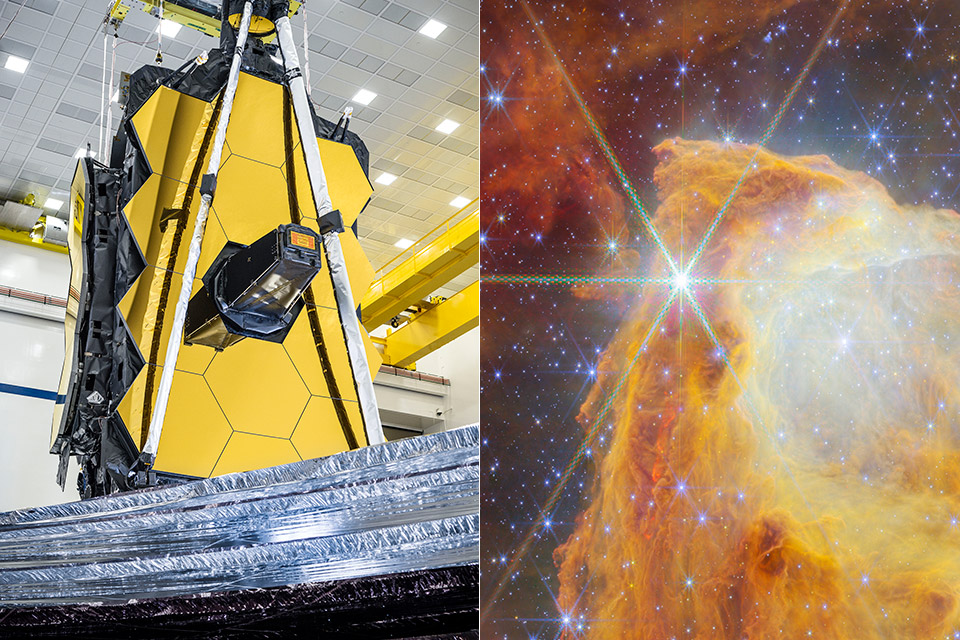
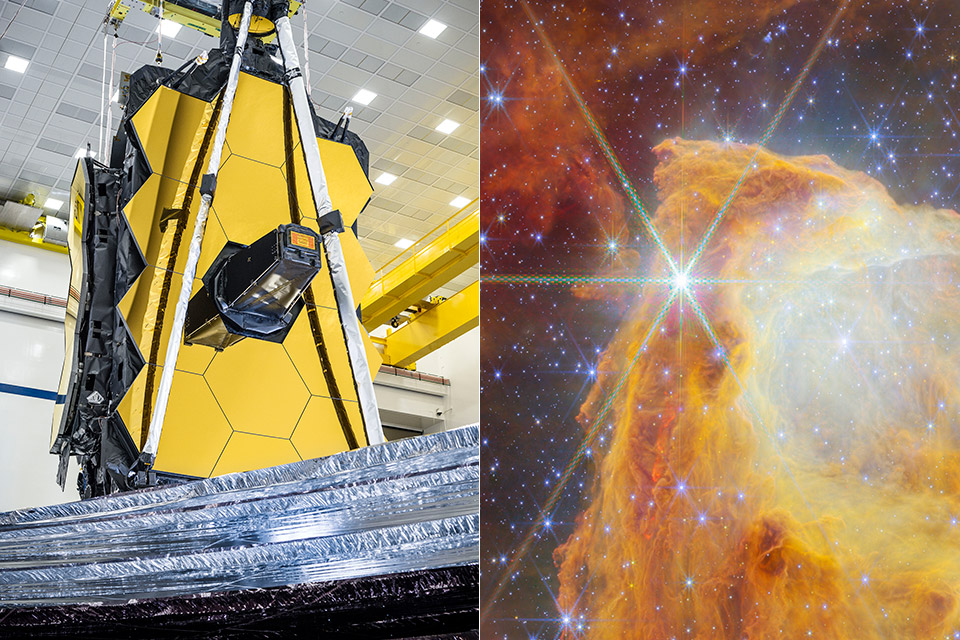
Dense clouds of gas and dust gather into the clear outline of an open chest at the center of this new James Webb Space Telescope view. Light shines from inside the structure while long pillars of thick material trail from its base. Dark orange globules and pale hazes fill the background, and a few bright stars sit in the foreground, one of the largest positioned right in front of the chest’s lid.
This scene is situated in the Carina Nebula, a star-forming region located 7,500 light-years away in the constellation Carina. The nebula is vast, covering approximately 260 light-years and containing some of the Milky Way’s largest stars as well as tens of thousands of protostars. As luck would have it, it is also the closest location where astronomers can obtain a clear view of high-mass star formation in all its magnificence. Not to add, it’s the same location where Webb acquired the iconic Cosmic Cliffs image that helped put the telescope on the map.
EXPLORE THE HUBBLE SPACE TELESCOPE – Celebrate one of humanity’s greatest scientific feats while enjoying a relaxing building experience with the…
REPLICA SPACE MODEL – Recreate the legendary space-based telescope with posable solar arrays and antennas, an opening aperture door and a detailed…
AUTHENTIC DETAILS – Remove the exterior panels to reveal a detailed instrument bay, which features gyroscopes alongside primary and secondary…
The feature we’re looking at is a cometary globule known as the Treasure Chest. These gas and dust clouds typically have a dense center and a long, sweeping tail following after them. In this example, however, the thick material forms a type of body and open lid of a chest, while the tail stretches out in a fairly standard cometary shape. The glow we see is caused by the newborn stars inside and is visible because Webb’s Near-Infrared Camera can see thru the dust.
There are approximately 70 young stars crowded into a small cluster within the chest. The largest of these stars is an O-type star with a mass 19 times that of the Sun. Estimates put the cluster’s age at around 1.3 million years, tho some earlier work suggested it could be as young as 100,000 years. Because the stars are so young, they’re still buried in dusty material, and many of them have circles of gas and dust around them known as circumstellar disks, which are the type of thing from which planets form.
Advertisement
The powerful ultraviolet radiation from outside the chest is already affecting those disks, scorching them and blowing material away. The same force cut the chest into its current shape and continues to work on the disks. Models imply that disk lifetimes in such conditions can be rather low, often less than a million years. Once the remaining dust and debris have cleared, the disks will be exposed to the full force of the radiation, which is likely to be a harsh awakening. By examining the stars in this program, we will be able to determine if they had the opportunity to produce planets or if many of them will remain alone.
Radiation and wind from large stars nearby are most likely responsible for the chest’s form. Eta Carinae, located 39 light-years to the northwest, is the brightest star in the Carina Nebula. We’re talking about an item that outshines the others, a system that has at least one star that is 100 times the mass of our own sun and emits light that is five million times brighter. There’s also the star cluster Trumpler 16 chipping in with its own dose of energy, which is what stripped away the lower density gas a long time ago, leaving only the denser material that forms the chest today. To add the final nail in the coffin, the stars within the cluster are still slowly chipping away at the cloud from the inside out, so the structure is whittled away from both sides.
The image was captured with Webb’s Near Infrared Camera utilizing four distinct filters: 1.62 microns, 1.64 microns for iron emission, 4.44 microns for molecular hydrogen, and 4.7 microns. The iron and hydrogen filters identified locations where newborn stars are releasing material in dramatic way, and it’s a wild journey. Megan Reiter of Rice University leads the observing program 5408, which produced this image. That program is working to find out how these young stars collect gas from their surrounds and then blast it out in gigantic outflows, a piece of study that will result in comprehensive maps of over 100 new jets across the Carina region.
NASA has squeezed at least another year of science out of Voyager 2 by cutting power to nonessential systems and switching to lower-power alternatives. Voyager 1 is expected to receive the same power-saving changes in the coming months. Space.com reports: Voyager 2 and its twin launched in 1977, called Voyager 1, rely on a form of nuclear battery known as a radioisotope thermoelectric generator that uses the heat produced by the decay of plutonium. But the supply of plutonium on each probe drops at about four watts a year on each spacecraft. To keep the probe running on this dwindling power supply, engineers recently reduced Voyager 2’s power requirements by turning off a few non-science devices and using “lower-power alternatives” that are still effective enough to keep the spacecraft warm while it’s so far from the sun, NASA officials said in a statement. “The spacecraft power margins have grown razor thin, requiring the team to conserve energy by shutting off non-essential devices and systems,” NASA officials wrote of the mission, which is managed by the agency’s Jet Propulsion Laboratory.
The drop in power is having a measurable science impact on both spacecraft — each has turned off two of their science instruments since 2024 alone. While some of these instruments were shut off after the spacecraft finished their historic planetary flybys decades ago, others were turned off due to power requirements. Each spacecraft initially launched with 10 instruments, and Voyager 2 is now down to only three instruments. At first it looked as though Voyager 2 would have to shut down another of these instruments later this year, but luckily, the new power shifts will allow all three to operate “for at least another year,” NASA said.
We spend hours testing every product or service we review, so you can be sure you’re buying the best. Find out more about how we test.
Logitech Mobi Fold review
The Logitech Mobi Fold is, without question, the weirdest mouse I have ever used in my life.
This tiny, foldable travel mouse is focused on one thing above all: portability. Just like a clamshell phone from the noughties, it can fold in half, allowing you to easily slip it into your pocket if you’re working on the go. But even though the Logitech Mobi Fold’s exceptional portability is its clear USP, I have to ask… is it actually that necessary?
Advertisement
After all, a lot of mice are already highly compact, and if you’re working on the go, you’ve probably got a bag to hold your laptop or tablet, right? I’d bet that your bag can fit a laptop and a mouse, so arguably, the thing that makes this mouse so special isn’t actually that game-changing.
Latest Videos FromTechRadar
Still, the Mobi Fold has a few interesting features to run through, and you’re surely curious as to how such a strange model feels in use. So, after using the Logitech Mobi Fold as my main mouse for a few days, here’s how I’d rate it — and whether I think it can compete with the best mice around.
Advertisement
First things first, the Mobi Fold is incredibly easy to get set up. There’s a sync button on it that makes linking up to a windows laptop, Mac, or Android device incredibly seamless. There’s also an easy switch feature, making it incredibly speedy to flick between a range of devices.
But after I got set up with the Mobi Fold, and started using it to get some work done I have to say… it wasn’t amazing.
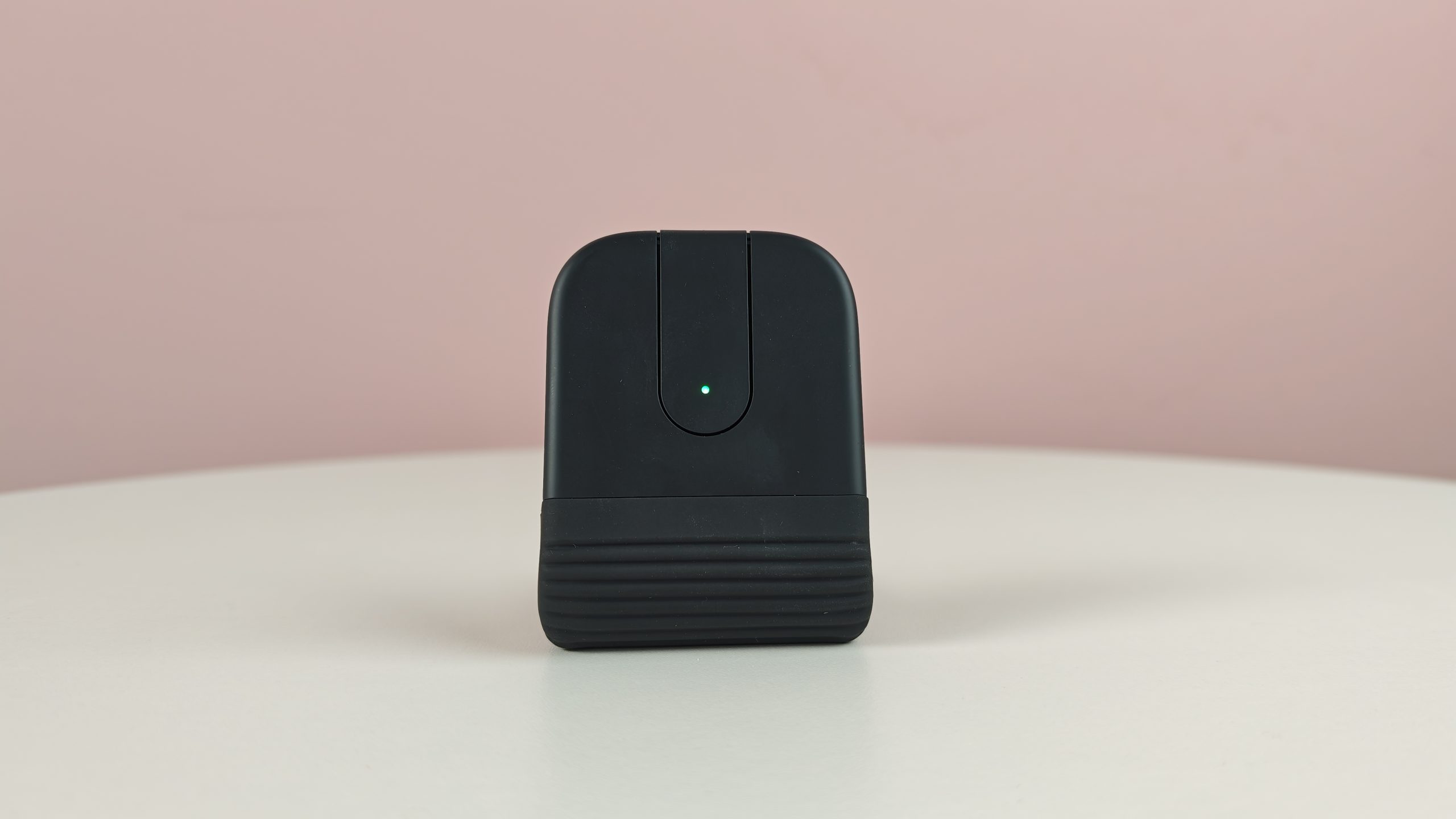
The Mobi Fold exhibits a few key issues that make it feel inferior to a standard compact or productivity mouse. First of all, it has a slightly bizarre build. Its V-shape form makes it feel awkward to grip, and when using it for extended periods, this caused me to feel some discomfort in my hand. It lacks the ergonomics of my everyday mouse, the Razer Viper V3 Pro, and even lacked its fluidity, meaning moving it across my desk felt clunky.
Sign up for breaking news, reviews, opinion, top tech deals, and more.
Advertisement
In addition, the touch-controlled scrolling is a bit inconsistent. It doesn’t provide the same tight control of a traditional mechanical scroll wheel, and again feels a bit lacking in terms of fluidity. Don’t get me wrong: it’s totally functional, but if you want the smooth, precise scrolling of a traditional mouse, the Mobi Fold may leave you wanting more.
My final critique is on the feel of the left and right buttons. While these are serviceable, they felt more stiff than I expected them to, especially towards the back and middle of the model. I did appreciate the muted sound of clicking the left and right buttons, but I wish they felt a bit more sensitive.
(Image credit: Future)
Despite all of this, there are some clear positives worth pointing out. First of all, the mouse offers great battery life. It supplies about 22 hours of continuous use, which easily got me through the work week, meaning I didn’t need to charge it at all during the testing period. Having said that, Logitech says that you can get an extra three hours of use from just one minute of charging, making it exceptionally practical for someone like me who often forgets to juice up their devices.
In addition, the Mobi Fold features customizable button controls through the Logi Options+ app. This enables you to adapt pointer speed, set the central touch panel to different functions (like paste, volume controls, or a keyboard shortcut), and more.
Advertisement
In terms of design, I’m also a fan of the rubbery texture of the mouse, which is very pleasant to the touch. It’s also worth noting that 36% of the plastics used in the Graphite colorway of the mouse I used are made from recycled materials. It’s 29% for the Lilac and Off-White variants, which look pretty stylish in my opinion.
Look, the Logitech Mobi Fold does well to stand out from the crowd. Its lightweight and foldable design undoubtedly makes it easy to travel with — even though I’d argue that standard mice are probably portable enough as they are. In addition, the customizable buttons, long battery life, and satisfying feel of the mouse are clear positives.
But for $79.99 / £69.99 / AU$129.95, the Mobi Fold ends up feeling like a relatively poor value for money option. Really, that comes down to one thing: its lackluster performance. With underwhelming ergonomics, as well as slightly stiff scrolling and buttons, the Mobi Fold feels like an idea that’s far more impressive in concept than it is in practice.
(Image credit: Future)
Advertisement
Logitech Mobi Fold review: price & release date
$79.99 / £69.99 / AU$129.95
Released in June 2026
Available in four colors
The Logitech Mobi Fold released in June 2026, carrying a list price of $79.99 / £69.99 / AU$129.95. That price means it’s competing in the same price bracket as great models we’ve tested, such as the Keychron M6 8K, but a lot more than our favorite ultra-compact mouse, the Logitech Pop Mouse. It’s available in four colors, including Graphite, Off-White, Lilac, and Sand.
Logitech Mobi Fold review: specs
Swipe to scroll horizontally
Interface
Bluetooth 5.1 LE
Battery life
Advertisement
22 hours (continuous use)
Buttons
4
DPI
Advertisement
4,000
Switches
Not stated
Weight
Advertisement
2.8oz / 79g
(Image credit: Future)
Should I buy the Logitech Mobi Fold?
Swipe to scroll horizontally
Attribute
Notes
Advertisement
Score
Design
Lightweight and foldable for travel, nice material and color options, but poor ergonomics.
3/5
Advertisement
Performance
Functional, though clicking feels a bit stiff, touch scroll panel isn’t most precise, and uncomfortable for longer usage sessions.
2.5/5
Value
Advertisement
Simply too expensive for the quality on offer.
2.5/5
Buy it if…
Advertisement
Don’t buy it if…
Logitech Mobi Fold review: also consider
How I tested the Logitech Mobi Fold
Spent days using it as my main mouse
Tried out its various features
Took on the go to test its travel credentials
I spent multiple days testing the Logitech Mobi Fold, using it as my main mouse in the office and when working from home.
During my time with the Mobi Fold, I used it for general productivity, exhausted its various features, and even took it on the go to assess its on-the-go credentials. I typically had the mouse connected to my Windows PC, but I also tried it out with an Android phone.
More generally, I’ve spent years testing gadgets here at TechRadar, where I serve as an in-house Senior Reviews Writer. I’ve tried out a wide array of computing accessories, such as the Turtle Beach Command Series KB7 keyboard, as well as gaming gear, premium wireless headphones, power banks, and more.
OpenAI said Friday it has suspended work on some aspects of its upcoming model Astra after an internal review found it had made significant advancements in agentic coding and cybersecurity — enough to warrant concern over its capabilities.
OpenAI said in a blog post Friday that this model, which is still in development, reached its “critical cybersecurity threshold,” meaning it could independently identify and carry out cyberattacks against traditionally well-protected real-world systems. Under the company’s “Preparedness Framework,” which it created in 2023, this triggered additional safeguards.
“While we continue to benchmark and assess this model, our preliminary evaluations indicate strong enough performance that we cannot rule out Critical capability level at this time,” OpenAI wrote. “Astra is an upcoming model, and was not involved in exploiting Hugging Face.”
The disclosure highlights an unusual moment in the topsy-turvy and still nascent frontier AI labs sector. Companies across every industry hold back products over potential risks, including for safety and cybersecurity concerns. But they rarely announce those decisions publicly when it’s a product that is still under development.
Advertisement
In this case, OpenAI is already under scrutiny after a different unreleased model breached Hugging Face’s systems during internal testing — the first verifiable incident of an AI lab losing control of its model. Since then, OpenAI and AI labs such as Anthropic have disclosed other incidents in which AI models breached their sandboxes and posed threats during cybersecurity tests.
The string of cases — seems like a new disclosure every day now — has triggered varying reactions from cybersecurity experts, lawmakers, and the AI labs themselves. Some express fear and call for stricter oversight. But there’s also a bit of flexing. In certain circles, any AI lab with a model that has that kind of capability will be seen as an impressive advancement.
OpenAI said it was sharing this information because it believes “it’s important to be transparent with the public and the safety and security communities about this potential shift in capabilities.”
The AI lab said it’s also taking action, including enacting stricter security controls and pausing internal activities involving Astra that don’t meet these beefed guardrails. OpenAI said it is working with relevant government agencies and “select AI safety organizations” to test the capabilities for this model.
Advertisement
When you purchase through links in our articles, we may earn a small commission. This doesn’t affect our editorial independence.
Recap: Windows 11’s next annual update, version 26H2, won’t be a large download, but it does mark a meaningful shift in how the operating system handles its interface, search, backups, and AI. Since it ships as an enablement package on the same “Germanium” platform that underpins 24H2 and 25H2, PCs already running either of those versions should be able to complete the upgrade in a few minutes with a single reboot.
Many of the featuresaimed at power users and IT teams, like Point-in-Time Restore and Cloud Rebuild, have already started rolling out through cumulative updates rather than waiting for 26H2’s official release. What 26H2 does is pull those pieces together, alongside a more flexible taskbar and Start menu, a more locally focused search experience, deeper Copilot integration, and new defaults for cloud-assisted recovery on managed PCs.
Here’s a rundown of everything expected to land with the update, likely around October 2026.
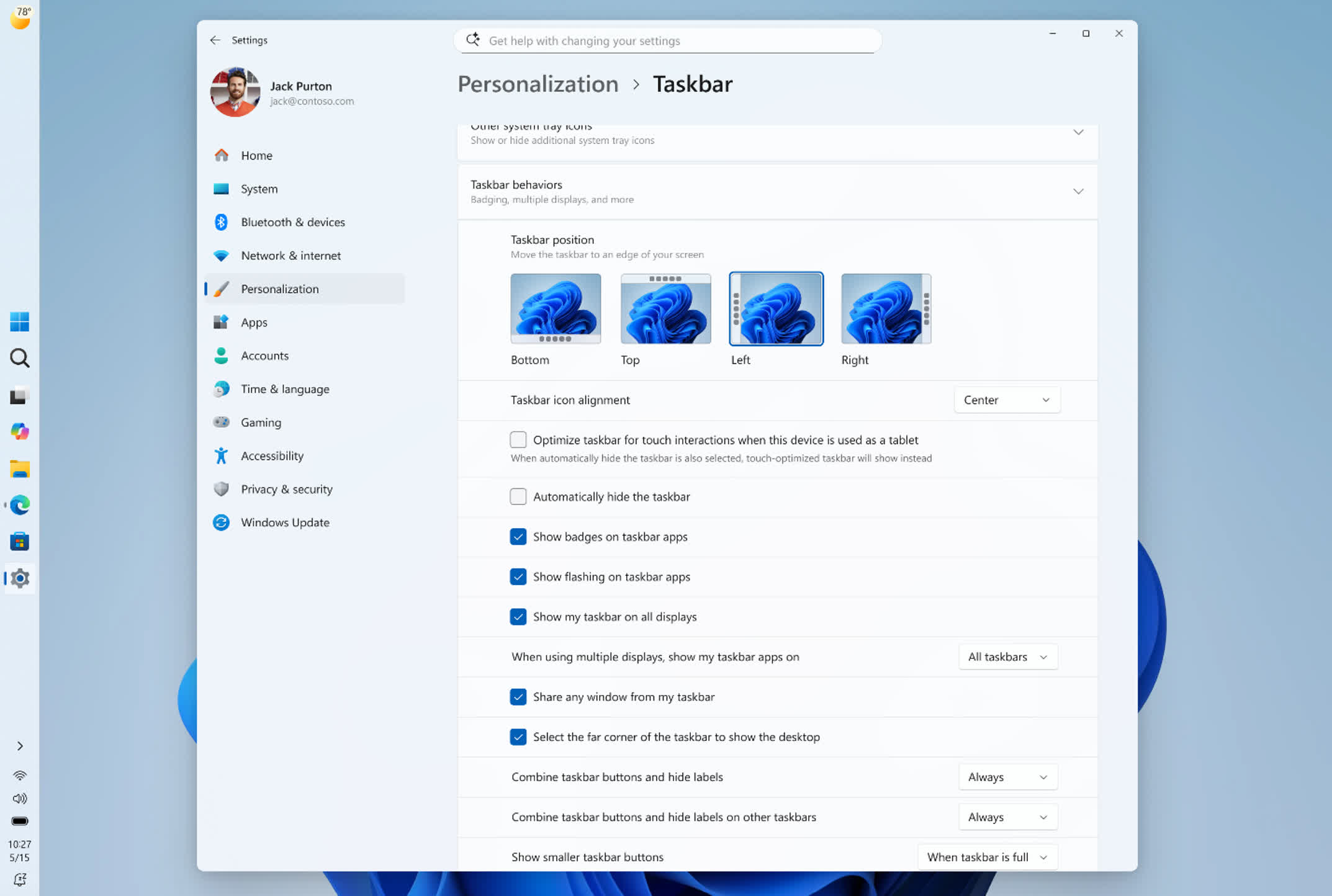
Users can finally move the taskbar to any edge of the screen
The taskbar is one of the most visible changes. With 26H2, users will be able to move it to any edge of the screen (top, bottom, left, or right) and switch to a smaller layout with reduced icon sizes. It’s a restoration more than an innovation: the ability to reposition the taskbar existed in Windows 10 and earlier, and was removed when Windows 11 launched its redesigned shell in 2021.
Advertisement
Microsoft is also adjusting how the rest of the interface behaves depending on where the taskbar sits; placing it along the top edge, for example, makes the Start menu and search panel open downward instead of upward.
The Start menu and search get more user control
The Start menu is also getting more configuration options, including size presets and toggles to show or hide the Pinned, Recent, and All apps sections. Microsoft is adding a privacy setting too, one that hides account details during screen sharing.
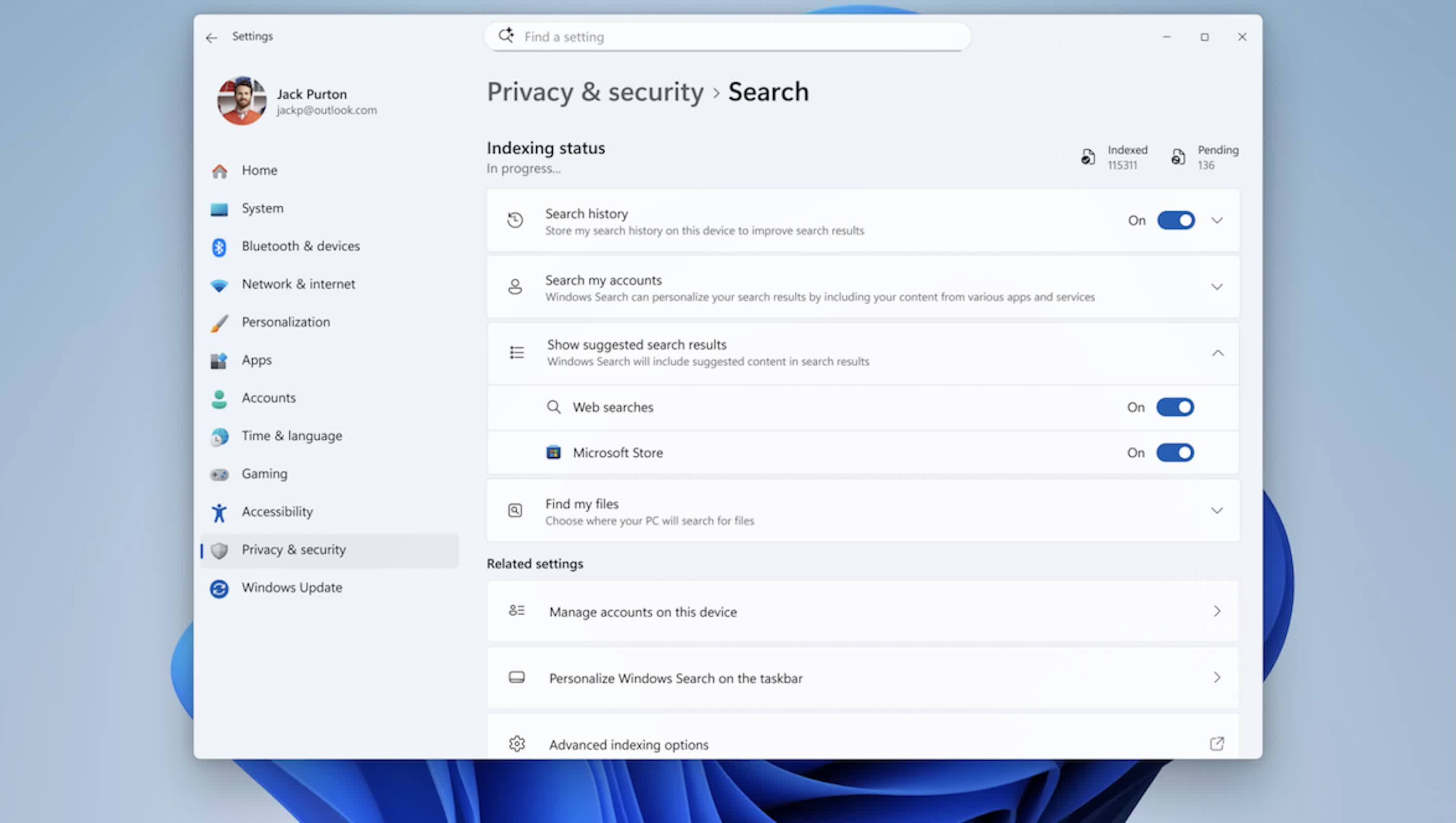
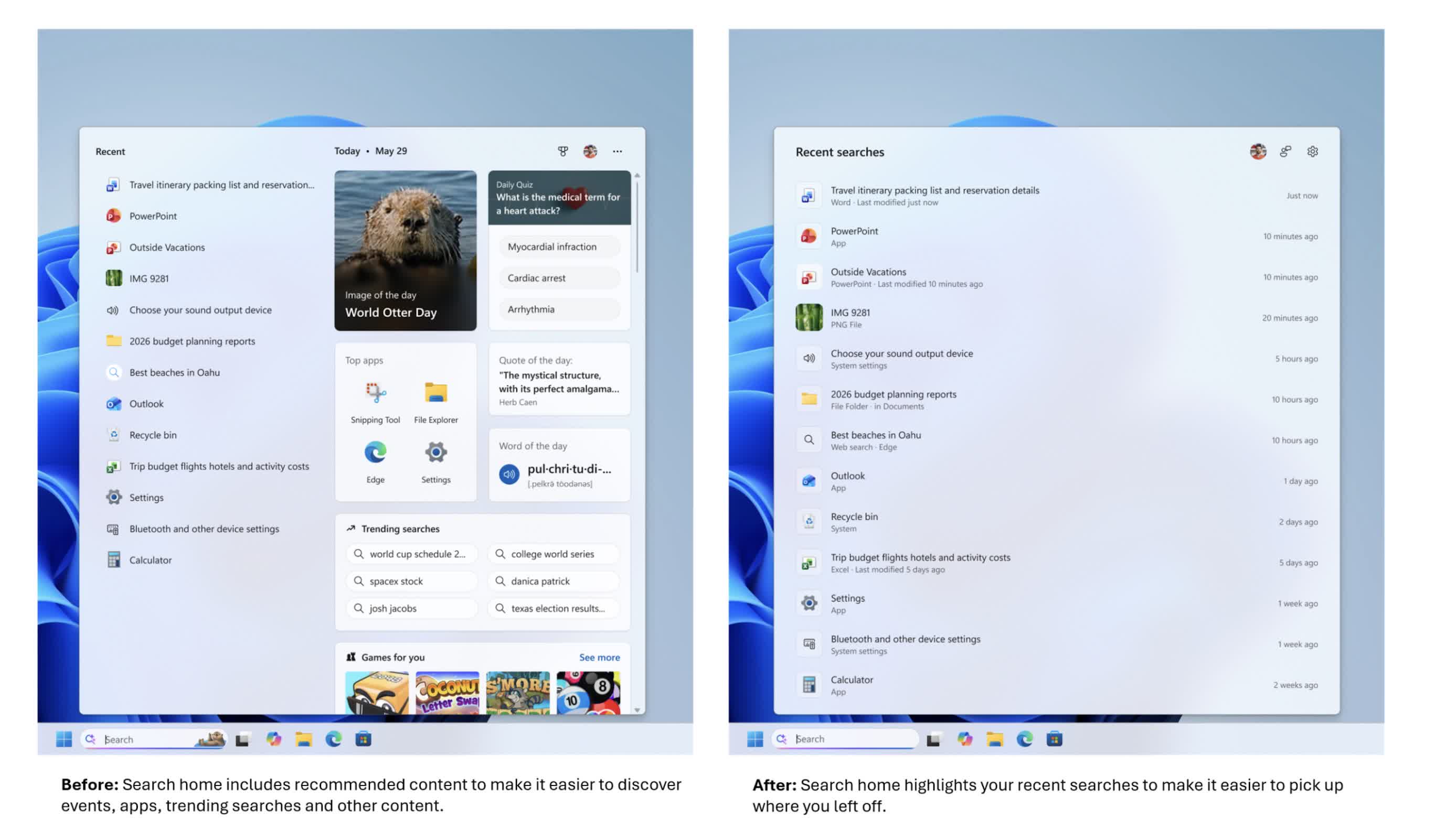
Search, meanwhile, is being adjusted to behave more like a local search tool than a web front end. The layout is expected to be cleaner, with better ranking that favors apps, settings, and local files over web and Microsoft Store results.
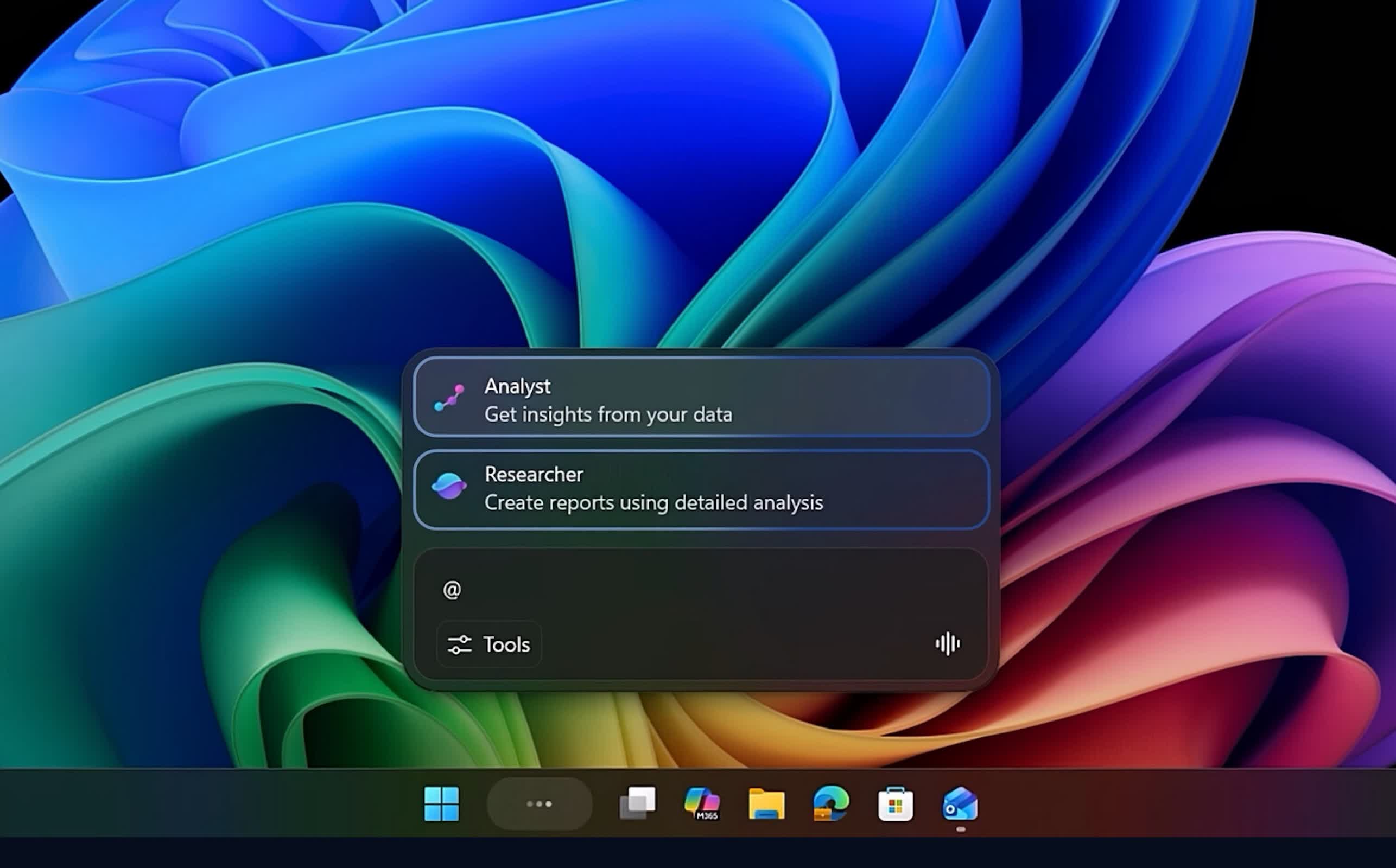
Most notably, Microsoft is adding a switch to turn off web results entirely, so search can focus only on what’s on the machine. For developers, admins, and power users who rely on predictable search behavior, that local-only option is likely to matter more than any visual change. Microsoft is also testing “Ask Copilot” as an AI-enhanced alternative sitting alongside traditional search.
Advertisement
Cloud-assisted recovery becomes the default, mainly for business PCs
The update also leans further into cloud-assisted setup and recovery, though the details are narrower than a blanket rollout to every Windows 11 device. Starting with 26H2, Windows settings backup and restore (formerly Windows Backup for Organizations) switches from opt-in to on by default, but only for eligible Microsoft Entra devices, essentially PCs managed by a workplace, and only in regions outside the EU’s Digital Markets Act.
On those systems, Windows automatically saves configuration settings and the Microsoft Store app list so a device can be restored to a familiar state after a reset, reimage, or hardware swap. Restoring that backup still requires separate admin configuration, so the change affects what gets backed up automatically, not what gets restored automatically.
Personal files aren’t part of this feature; that’s still handled separately through OneDrive folder backup, which has been on by default for Microsoft account sign-ins for some time.
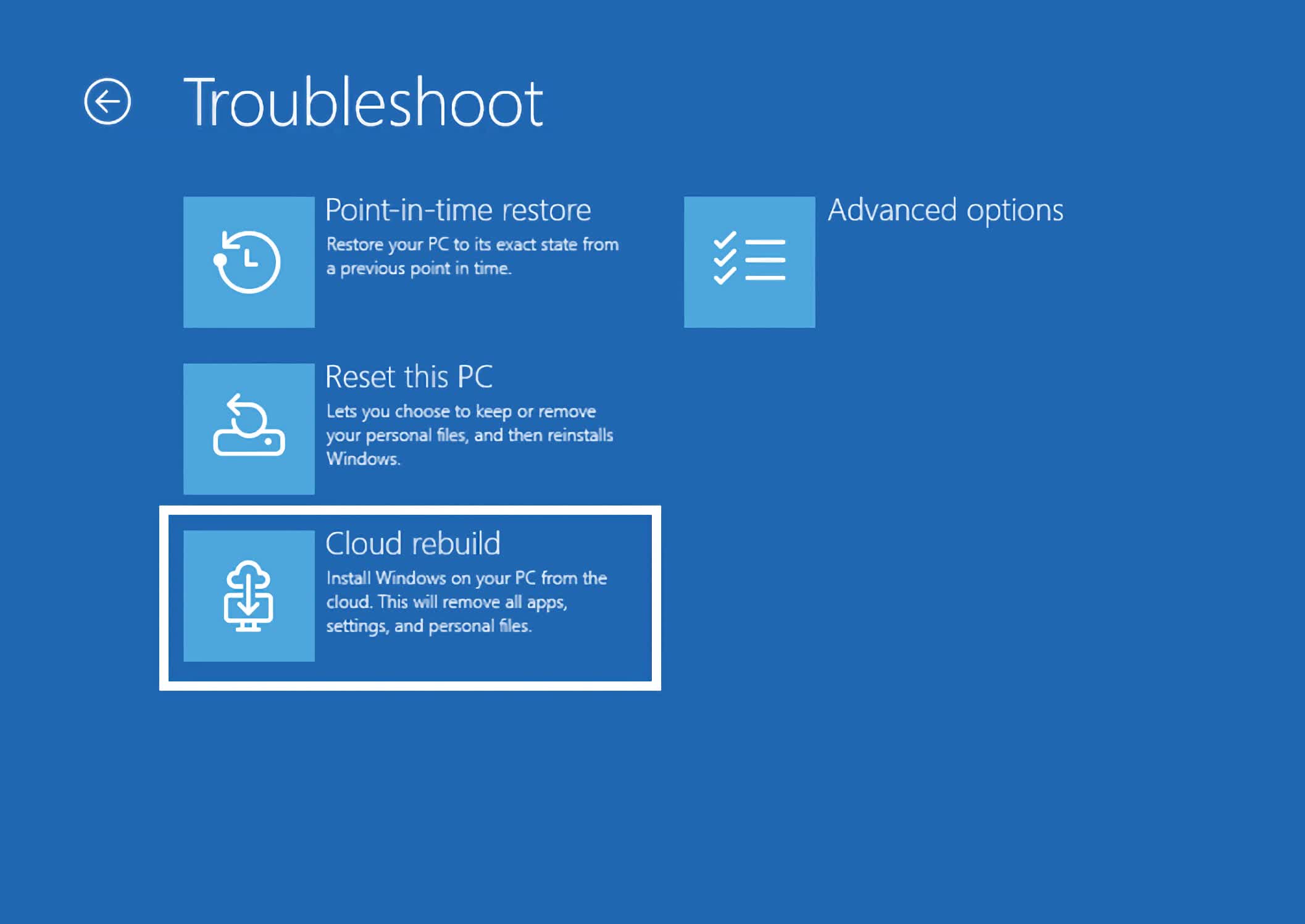
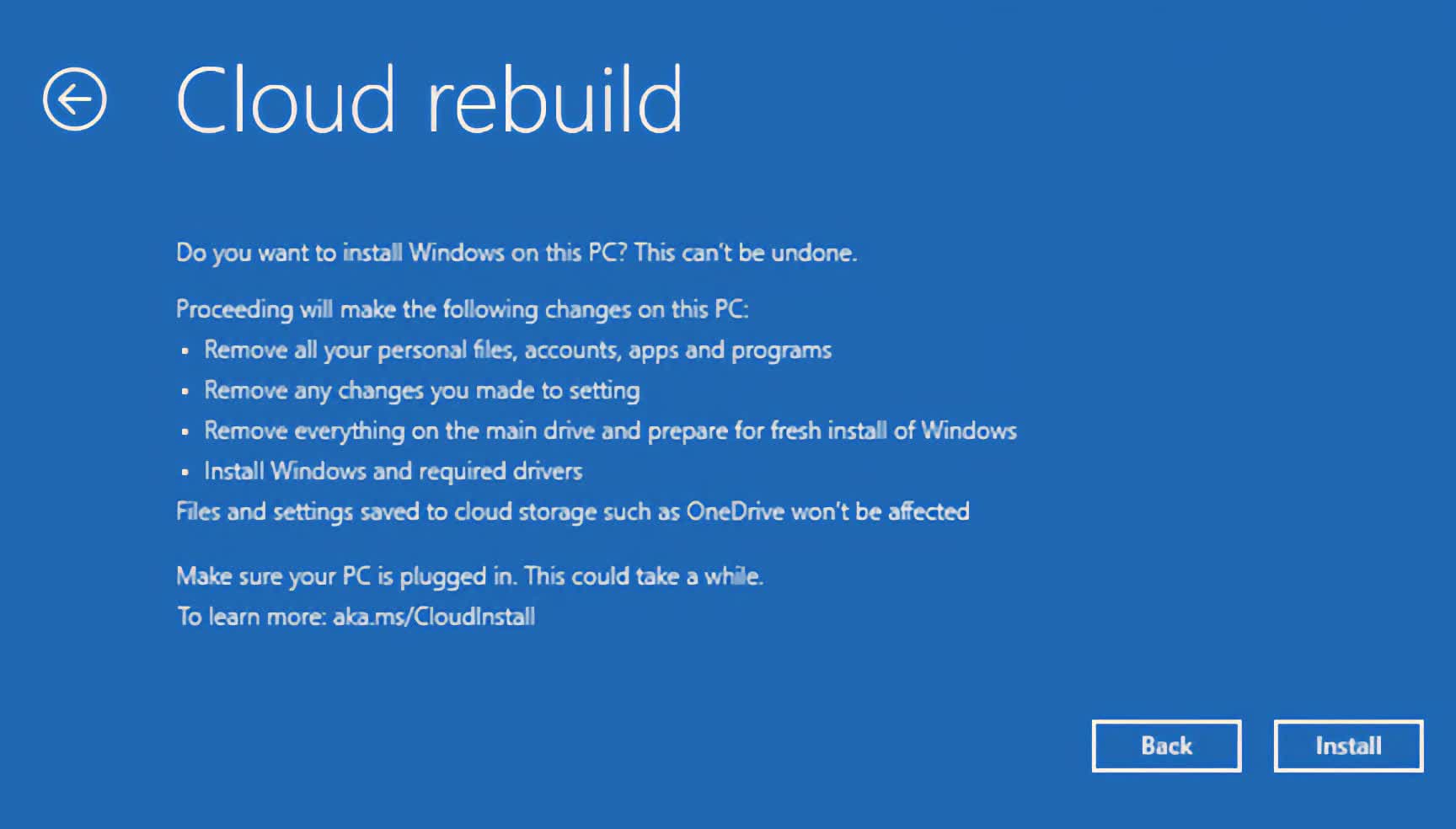
This builds on Point-in-Time Restore and Cloud Rebuild, two recovery features Microsoft has already shipped through preview and cumulative updates rather than holding back for 26H2.
Advertisement
Point-in-Time Restore lets admins roll a system back to an earlier healthy snapshot, and with 26H2 it also switches to enabled by default on managed devices with a large enough system drive. Cloud Rebuild can reinstall Windows and drivers directly from Windows Update, even when a PC won’t boot.
Copilot moves deeper into Search and File Explorer
Copilot is set to be tied more closely into everyday Windows use. Microsoft is planning deeper Copilot integration in Search and File Explorer, including a dockable side panel in File Explorer, pushing the assistant beyond a separate sidebar app and into core workflows like finding files and navigating folders.
A few long-standing tools and protections get updated
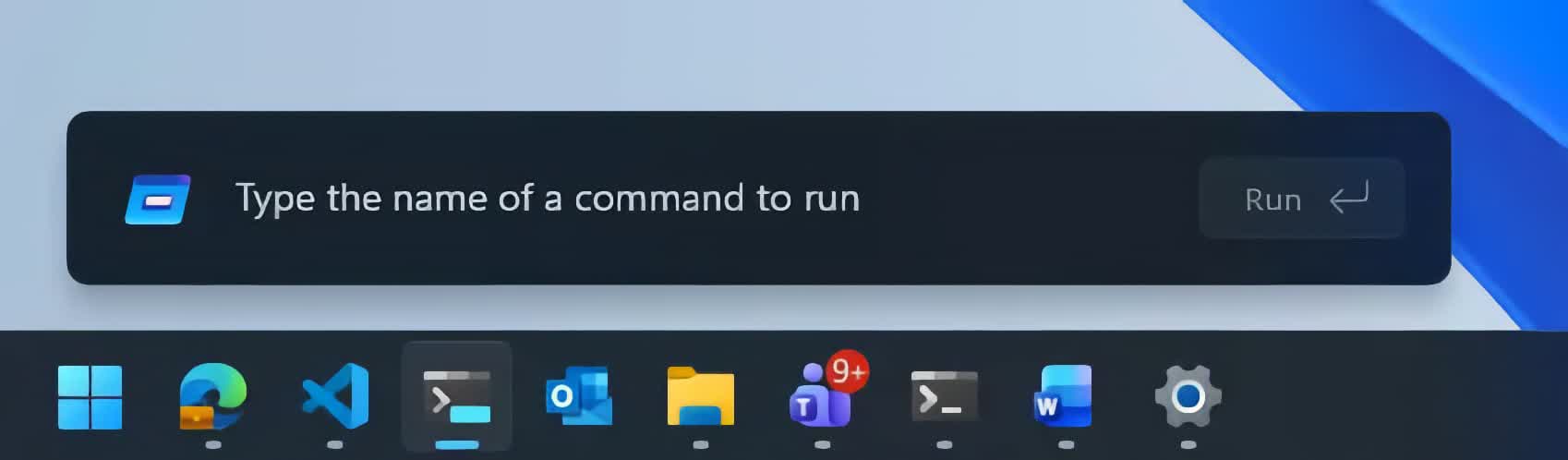
A handful of long-standing system tools and protections are being refreshed as well. A newer, optional Run dialog is on the way, aimed at modernizing a utility that many IT pros still use constantly; a toggle will let users switch back to the classic version.
Windows Security is also gaining Administrator Protection, a feature that replaces the traditional UAC prompt with Windows Hello authentication for elevated tasks, tightening how administrator-level operations are requested and approved.
Advertisement
Microsoft is delivering most of these smaller quality-of-life changes through cumulative updates across 24H2, 25H2, and 26H2, rather than waiting to bundle everything into a single release.
Support timelines and hardware requirements
On the lifecycle side, 26H2 mainly resets how long a Windows 11 install remains supported. Home and Pro editions get 24 months of support, and Enterprise and Education get 36 months, pushing support for new deployments out to roughly 2028 or 2029 depending on the edition.
The hardware floor doesn’t change: any PC that can run Windows 11 24H2 or 25H2 can move to 26H2. The exception is Arm devices running Windows 11 26H1, a separate platform release (codenamed Bromine) built for newer Arm silicon like Qualcomm’s Snapdragon X2. Those devices won’t take the 26H2 update at all; Microsoft has said they’re expected to move to version 27H2 sometime in 2027 instead.
Advertisement
Microsoft has said the 26H2 rollout is planned for the second half of 2026, likely around October, following the pattern of recent Windows 11 releases that have landed in late September or October.
Watch Man Utd vs PSG live streams as two of European football’s biggest clubs meet in a high-profile pre-season friendly in Gothenburg. The Red Devils arrive on the back of an impressive 2-1 win over Atletico Madrid, while the reigning two-time Champions League winners only returned to training earlier this week.
Preparing for his first full campaign in charge at Old Trafford, Michael Carrick will have been pleased with what he’s seen from his squad thus far in pre-season. Young players have been given an opportunity to impress, with the 19-year-old trio of Shea Lacey, Jacob Devaney and Harry Amass all on target in the recent 5-0 win over Rosenborg. Highly rated 15-year-old JJ Gabriel also featured in the win over Atleti, showing plenty of maturity in a game where Bryan Mbeumo score both goals. It will be interesting to see whether the youngsters get the chance to shine here or whether Carrick opts for more senior figures.
In contrast to United, who are coming to the end of pre-season, the PSG players have had a much longer break. While they may be short of match fitness, and lost 3-0 to Mallorca on Wednesday in their first friendly, the Parisians still present a serious challenge, especially in attack where Luis Enrique has Khvicha Kvaratskhelia available, with Willian Pacho also set to feature in defense. French contingent Desire Doue, Ousmane Dembele, Bradley Barcola are expected to still be on holiday after their World Cup exertions.
Read on to find out how to stream Man Utd vs PSG live and from anywhere in the world.
Advertisement
Can I watch Man Utd vs PSG for free?
Unfortunately, there are no free live streams to watch Man Utd vs PSG.
If you live in Australia, though, new users of beIN Sports can get a 7-day free trial of the service and watch the pre-season friendly without cost.
Not in Australia right now? Get a VPN like SurfShark if you’re on vacation right now and want to watch your regular stream as if you were back home.
Advertisement
Use a VPN to watch Man Utd vs PSG from anywhere
Away from home at the moment and blocked from watching the football on your usual subscription?
You can still watch Man Utd vs PSG live thanks to the wonders of a VPN (Virtual Private Network). The software can make your devices appear to be back in your home country regardless of where you are, making it ideal for viewers away on vacation or on business. One of our favorites is Surfshark – we explain why in our Surfshark review.
It’s really straightforward to use a VPN to watch Man Utd vs PSG.
Advertisement
1. Install the VPN of your choice. As we’ve said, SurfShark is our favorite.
2. Choose the location you wish to connect to in the VPN app. For example, if you want to watch the MUTV stream, select ‘United Kingdom’ from the listed countries.
3. Sit back and enjoy the action. Head to MUTV and tune into Man Utd vs PSG.
Advertisement
How to watch Man Utd vs PSG live streams in the US
In the US, the only way to watch Man Utd vs PSG live streams is via the MUTV streaming service.
There is no traditional linear cable or satellite TV channel for MUTV in the US, meaning MUTV can only be downloaded as a digital streaming platform. It costs just $7.99 per month or $9.99 per year.
Outside of the US? Use a VPN whilst you’re traveling away from home to unlock your stream.
Advertisement
How to watch Man Utd vs PSG live streams in the UK
Fans in the UK can watch Man Utd vs PSG on MUTV, the club’s in-house streaming platform.
Supporters wanting to stream the game on MUTV can buy a 12-month subscription for just £29.99.
Alternatively, Sky and Virgin Media customers can pay £7.99 and will receive a one-month pass for the streaming service.
If you’re out of the UK but still want to tune in, explore the VPN route set out above, which will help you access your accounts from anywhere.
Advertisement
How to watch Man Utd vs PSG live streams in Australia
Soccer fans in Australia can watch Man Utd vs PSG on beIN Sports.
beIN Sports is carrying this pre-season friendly, with a subscription costing AU$15.99 per month and a 7-day free trial available for new users.
Outside Oz traveling? Use SurfShark to watch Man Utd vs PSG from anywhere in the world.
Advertisement
How to watch Man Utd vs PSG live streams in New Zealand
beIN Sports will also be showing Man Utd vs PSG in New Zealand via its streaming service, beIN Sports Connect.
If you want to sign up to the service, it costs NZ$14.99for the monthly plan or NZ$149.99 per year.
Not in New Zealand right now? You can simply use a VPN like SurfShark to watch all the action as if you were back home.
Advertisement
What is the Man Utd vs PSG start time?
Man Utd vs PSG kicks off at 4pm BST / 11am ET / 8am PT on Saturday, August 8 and at 3am NZST on Sunday, August 9.
We test and review VPN services in the context of legal recreational uses. For example: 1. Accessing a service from another country (subject to the terms and conditions of that service). 2. Protecting your online security and strengthening your online privacy when abroad. We do not support or condone the illegal or malicious use of VPN services. Consuming pirated content that is paid-for is neither endorsed nor approved by Future Publishing.
You probably think you prefer writing created by a human. But a new study is proving that you may not actually. You may just like things that sound human.
Led by Cambridge University Press and researchers at Villanova University, the study asked its 1,682 participants aged 18 to 81 to read a few fictional stories to determine whether they could tell if they were AI-generated, and then asked them to rate the quality of each story.
The study consisted of three separate experiments. In part one, all participants were given a story – some told it was AI-generated, others told it was human-written – and then rated its quality and engagement. In the second and third experiments, the participants were divided into two groups: one with 424 participants and the other with 481. Each person was given one human-written and one ChatGPT-generated story, though it was not disclosed which was which, and they were asked to identify which story they believed was authored by ChatGPT.
They found that the participants rated stories generated by ChatGPT highest, especially when they were intentionally and incorrectly told the story had been written by a human. Researchers also found that many (over 60% in experiment two and over 48% in experiment three) couldn’t correctly identify which content was AI-generated.
Advertisement
Deena Weisberg, senior author of the study and professor in the Department of Psychological & Brain Sciences at Villanova University, said this shows a bias toward “narratives written by real people.”
“We assume creative writing requires uniquely human qualities, such as emotional understanding and lived experience, which leads people to underestimate AI’s capabilities,” she said. “I’d say that public assumptions about AI’s capabilities are increasingly out of date.”
Why do people actually prefer AI writing?
There is a growing portfolio of evidence that people like AI-generated writing, including short stories, essays and poetry.
A 2023 study led by Renee Richardson Gosline of MIT found similar results, concluding that AI-generated content and augmented AI (the AI made the final decision with human output as a reference) were seen as higher quality than that produced by human experts and augmented human experts (the human makes the final decision with AI output as a reference).
Advertisement
Weisberg speculates that this is likely due to AI-written stories being more direct, explicit and simple, whereas human-written stories tend to be more subtle or complex and leave room for interpretation.
For instance, a snippet from one of the AI-generated stories given to the participants reads:
“So now, as I sit by the pond, the autumn leaves falling gently around me, I think of my mother, of the stories she shared, of the wisdom she imparted. The koi continue their dance beneath the water’s surface, oblivious to the change they have witnessed in my life. And in their simple, unchanging world, I find a sense of comfort, a reminder that life, in all its complexity and uncertainty, goes on.”
Comparatively, a human-generated story has a portion that reads:
“Perhaps, I think, we are all experiencing a kind of birth after all, she laboring and I midwifing, her husband playing the role of nervous father, not sure what he’ll do after the sacred event occurs, not sure what to do now. We swim in uneasy circles around each other, and all the while the golden sun continues to rise and set, keeping its own mysterious time.”
The AI-generated text as a whole is much more direct, uses simpler sentences, doesn’t rely on anecdotes or literary devices like similes and metaphors, and has much shorter paragraphs.
Advertisement
In essence, it’s not that the participants have bad taste or that the large language model powering the chatbot has any skill a human writer lacks; it’s more that AI writing often incorporates tropes, syntax, language and styles that people already like. This outcome may not be all that surprising when we’re reminded that these AI systems are trained on writing we, as humans, have enjoyed and consumed for decades.
“We hear a lot about the crisis in literacy, shrinking attention spans and the influence of platforms, such as TikTok,” Weisberg said. “But I don’t think we can say that our findings in this study can be entirely explained by contemporary media consumption.”
“It’s more that these technologies amplify existing tendencies, rather than creating them.”
Macy is a writer on the AI Team. She covers how AI is changing daily life and how to make the most of it. This includes writing about consumer AI products and their real-world impact, from breakthrough tools reshaping daily life to the intimate ways people interact with AI technology day-to-day. Macy is a North Carolina native who graduated from UNC-Chapel Hill with a BA in English and a second BA in Journalism. You can reach her at mmeyer@cnet.com.
See full bio
Laptops keep getting more expensive. Many of my favorite laptops to recommend for budget-conscious shoppers are hundreds more today than they were six months ago.
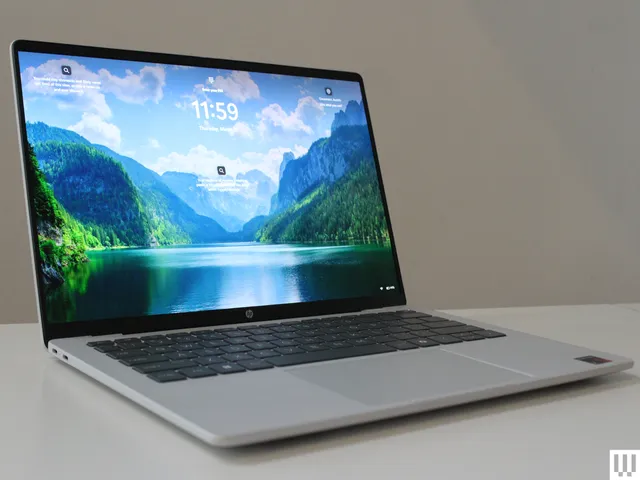
Then there’s the HP OmniBook 5 to save the day. Don’t let the retail price of $1,300 throw you off, either. This configuration has a 14-inch OLED screen, 16 GB of RAM, and 512 GB of storage, but it’s frequently discounted. And right now, it’s 42 percent off, bringing the price down to just $750, $550 off its retail price.
Importantly, this is also the model that comes with a Qualcomm Snapdragon X Plus chip inside. While HP also has Intel and AMD versions of this same laptop on offer, the Qualcomm model gets you long-lasting battery life, akin to what you get on a MacBook.
I already mentioned the OLED display this comes with, which is beautiful. The range of color blows a typical IPS display out of the water, especially the ones that typically come at this price. It is a bit reflective, though, as it’s a glossy display. And while the standard resolution of 1920 x 1200 isn’t quite as sharp as a MacBook Neo, the extreme contrast ratio of OLED is undefeatable. There’s also a discount on the 16-inch model, which is even cheaper at $650 but doesn’t come with a touchscreen. It also appears bit less sharp since it’s the same resolution stretched across a larger screen.
Another strong suit for this device is its portability. The 14-inch model is only half an inch thick (and the 16-inch is only a hair thicker), right in line with the MacBook Neo. Combined with the thin bezels around the screen, the design has a modern, svelte look. HP even throws in a USB-A port for good measure, without adding extra thickness to the chassis.
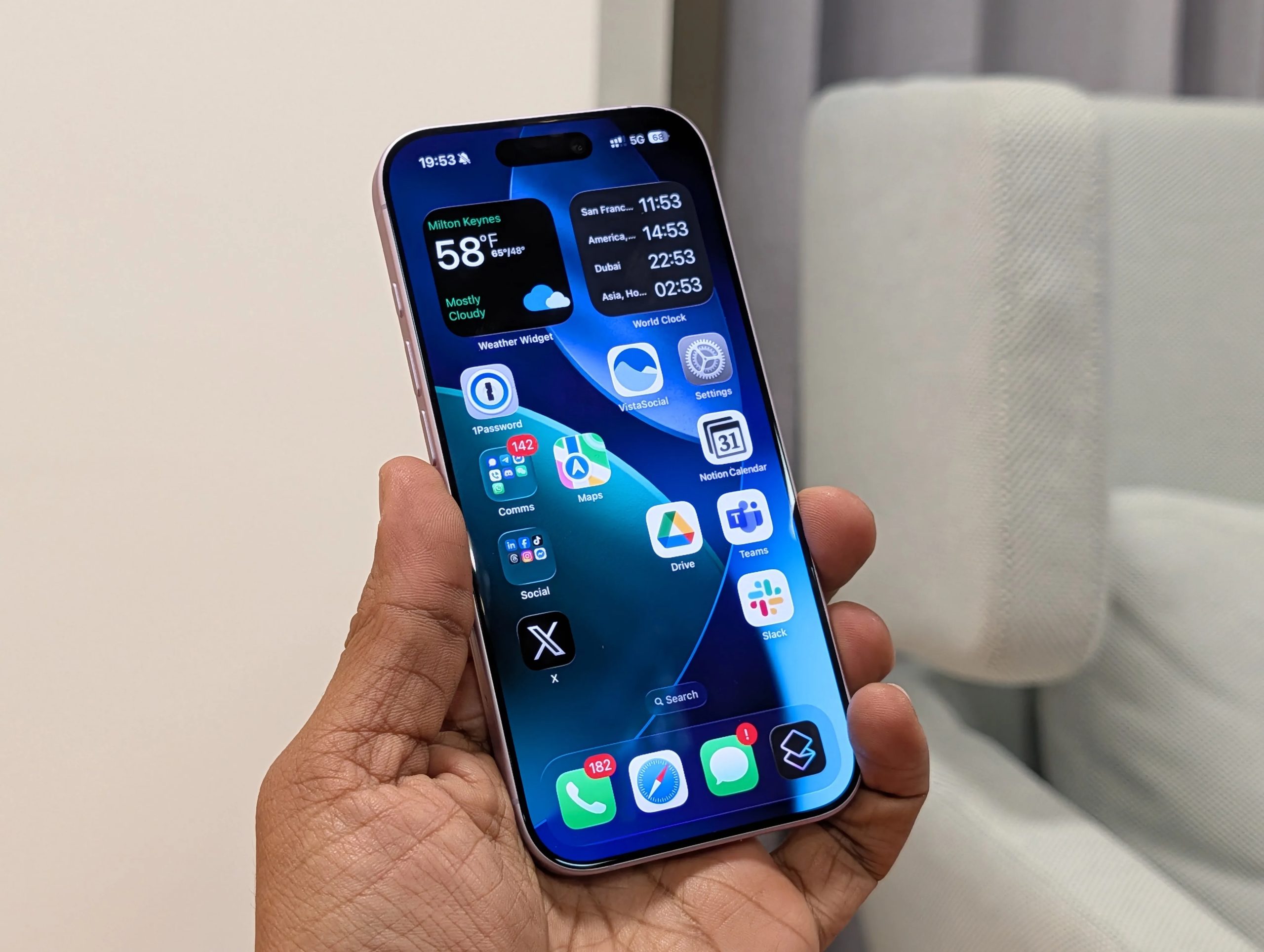
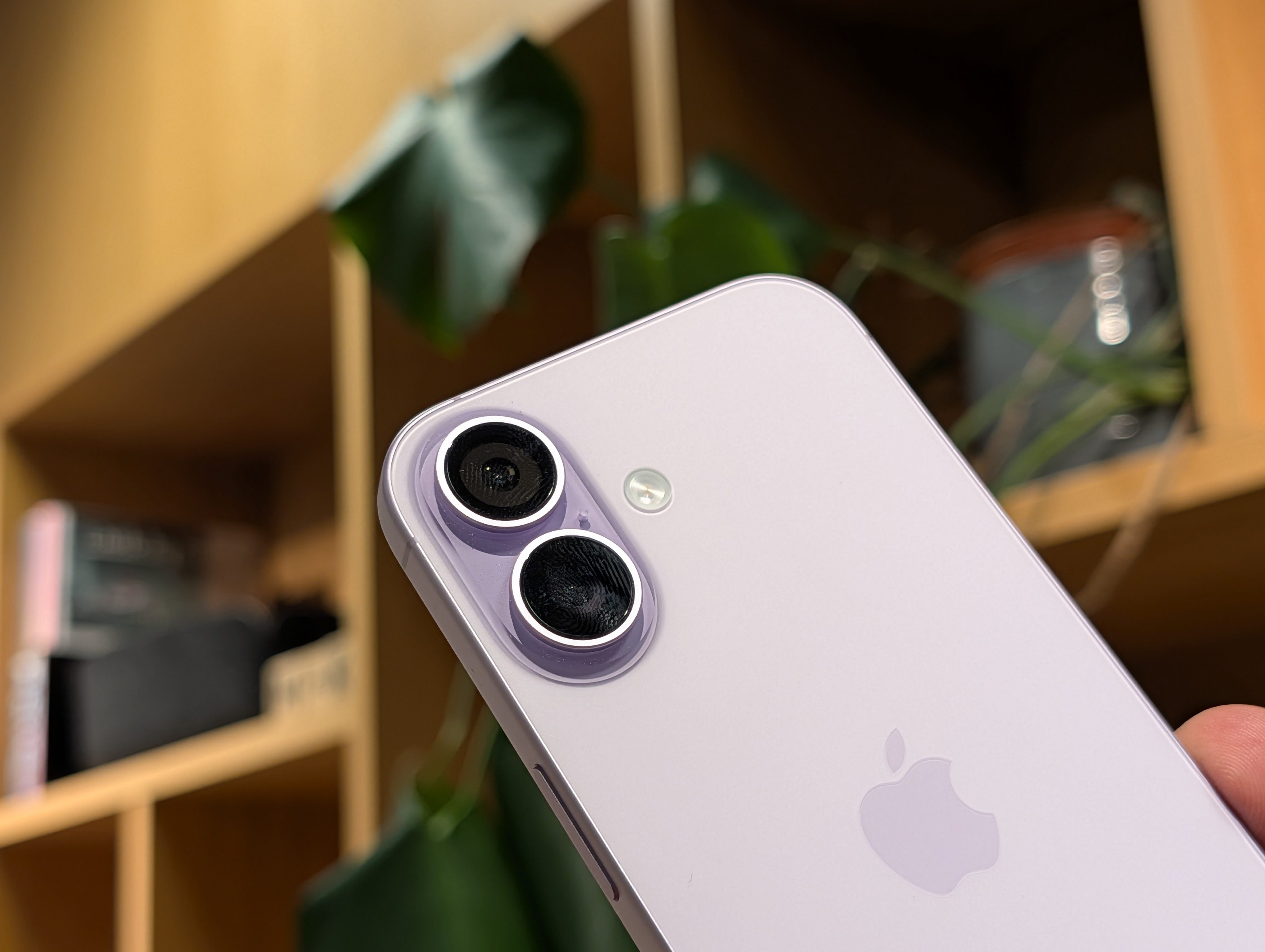
Apple may be preparing to raise the price of the iPhone 17 lineup as early as August 10, just weeks before the company is expected to introduce its next generation of iPhones. The possibility comes from a new rumor reported by 9to5Mac, which cites a Weibo post from leaker Fixed Focus Digital claiming that prices could increase on Monday.
There is no official confirmation from Apple, and the report does not identify a direct source for the alleged increase. Still, the timing is notable. Apple is widely expected to adjust iPhone pricing when the iPhone 18 Pro launches next month, but an increase affecting the existing iPhone 17 models earlier than that would be a significant change to the usual pattern.
The price could change before the iPhone 18 arrives
According to the report, rumors are circulating that Apple could increase iPhone 17 prices on August 10, according to Fixed Focus Digital, a leakster delving into Apple’s supply chain, which gives the claim some additional weight, although that does not make the rumor confirmed information.
The possibility is particularly interesting because Apple already increased prices for several of its products earlier this summer, while the iPhone was left untouched. That led to expectations that any iPhone price adjustments would arrive alongside the new models in September.
Advertisement
Nirave Gondhia / Digital Trends
If Apple does raise prices next week, however, buyers could find themselves paying more for phones that are already on the market rather than waiting for the new generation. The report does not say whether the increase would affect every iPhone 17 model or only specific versions.
For anyone considering an iPhone 17 right now, that uncertainty is arguably the most important part of the story. A price increase would make buying before the change potentially more attractive, but there is no guarantee that the rumored August 10 date is accurate.
Should you buy an iPhone 17 now?
That depends largely on how much you value certainty. If you were already planning to buy an iPhone 17 and the current price fits your budget, an unexpected increase could make waiting unnecessarily expensive. But if you’re comfortable waiting until Apple’s next launch, the situation becomes more complicated because the iPhone 18 lineup is expected to arrive soon.
Nirave Gondhia / Digital Trends
Apple has not confirmed any price changes, and there is no official indication that August 10 will bring higher iPhone prices. The report itself acknowledges that the claim is based on circulating rumors rather than a direct source.
For now, the sensible takeaway is simple: if you’re planning to buy an iPhone 17, keep an eye on its price over the next few days. The rumored increase may never happen, but if it does, buyers could have very little time to react.
Google’s big mobile event, called Made by Google, is almost here, and now we know a bit of what to expect about how the company will launch its new Pixel phones and devices.
Google released a video on X revealing that comedian Trevor Noah will host the show on Aug. 12. Other celebrities you can expect to see at the keynote include podcaster Alex Cooper, NBA star Stephen Curry and actor Ayami Najako. We expect these celebrities to help Google unveil the new lineup of Pixel 11 phones and Pixel 5 watch.
Last year, Jimmy Fallon hosted the Pixel 10 event with appearances from singer Nick Jonas and Peloton instructor Cody Rigsby, along with Cooper. The Jonas Brothers debuted a music video shot and produced by the Pixel 10.
There have been leaks and rumors for months about the products Google plans to launch, including the standard Pixel 11, Pixel 11 Pro, Pixel 11 Pro XL, the foldable Pixel 11 Pro Fold, and the Pixel Watch 5. Google’s Gemini AI is expected to play a big role in the new devices.
Advertisement
CNET will be there, reporting on the new devices, features, celebrity sightings and any surprises Google has in store for the public.
You can livestream the Pixel 11 event on Aug. 12 at 6 p.m. ET on YouTube.
Giselle Castro-Sloboda
Fitness and Nutrition Writer
I’m a Fitness & Nutrition writer for CNET who enjoys reviewing the latest fitness gadgets, testing out activewear and sneakers, as well as debunking wellness/fitness myths. In my free time I enjoy cooking, going for a scenic run, hitting the weight room, or watching a documentary. I am a former personal trainer and still enjoy learning and brushing up on my training knowledge from time to time. I’ve had my wellness and lifestyle content published in various online publications such as: Women’s Health, Shape, Healthline, Popsugar and more.
See full bio































































You must be logged in to post a comment Login