









Connect with us

Tech

Tribute for Finite Element Field Computation Pioneer

Published

on

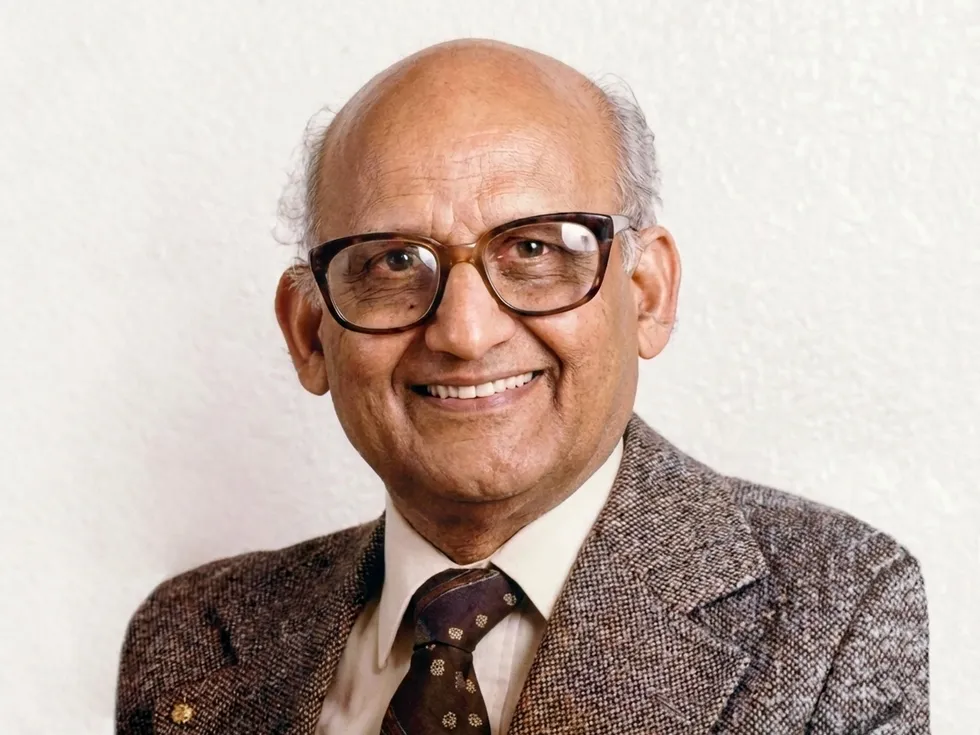
MVK Chari, a pioneer in finite element field computation, died on 3 December. The IEEE Life Fellow was 97.

Chari developed a finite element method (FEM) for analyzing nonlinear electromagnetic fields—which is crucial for the design of electric machines. The technique is used to obtain approximate solutions to complex engineering and mathematical problems. It involves dividing a complicated object or system into smaller, more manageable parts, known as finite elements, according to Fictiv.

As an engineer and technical leader at General Electric in Niskayuna, N.Y., Chari used the tool to analyze large turbogenerators for end region analysis, starting with 2D and expanding its use over time to quasi-2D and 3D.

During his 25 years at GE, he established a team that was developing finite element analysis (FEA) tools for a variety of applications across the company. They ranged from small motors to large MRI magnets.

Advertisement

Chari received the 1993 IEEE Nikola Tesla Award for “pioneering contributions to finite element computations of nonlinear electromagnetic fields for design and analysis of electric machinery.”

A career spanning industry and academia

Chari attended Imperial College London to pursue a master’s degree in electrical engineering. There he met Peter P. Silvester, a visiting professor of electrical engineering. Silvester, a professor at McGill University in Montreal, was a pioneer in understanding numerical analysis of electromagnetic fields.

After Chari graduated in 1968, he joined Silvester at McGill as a doctoral student, applying FEM to solve electromagnetic field problems. Silvester applied the method to waveguides, while Chari applied it to saturated magnetic fields.

Chari joined GE in 1970 after earning his Ph.D. in electrical engineering. He climbed the leadership ladder and was a manager of the company’s electromagnetics division when he left in 1995. He joined Rensselaer Polytechnic Institute in Troy, N.Y., as a visiting research and adjunct professor in its electrical, computer, and systems engineering department. Chari taught graduate and undergraduate classes in electric power engineering and mentored many master’s and doctoral students. His strength was nurturing young engineers.

Advertisement

He also conducted research on electric machines and transformers for the Electric Power Research Institute and the U.S. Department of Energy.

In 2008 Chari joined Magsoft Corp., in Clifton Park, N.Y., and conducted advanced work on specialized software for the U.S. Navy until his retirement in 2016.

Remembering a friend

Chari successfully nominated one of us (Hoole) to be elevated to IEEE Fellow at the age of 40. He helped launch Haran’s career when Chari sent his résumé to GE hiring managers for a position in its applied superconductivity lab.

Chari’s commitment to people came from his family background. His father—M.A. Ayyangar—was known throughout India as a freedom fighter, mathematician, and eventually the speaker of the Indian Parliament’s lower house under Prime Minister Nehru. Chari’s wife, Padma, was a physician in New York.

Advertisement

From Chari’s illustrious family, he was at the peak of South India (Tamil) society.

Chari would fondly and cheerfully tell us the story behind his name. Around the time of his birth, it was common in Tamil society not to have formal names. He went by the informal “house name” Kannah (a term of endearment for Krishna). When it was time for Chari to start school, an auspicious uncle enrolled him. But Chari had no formal name, so the uncle took it upon himself to give him one. He asked Chari if he would like a long or short name, to which he said long. So the uncle named him Madabushi Venkadamachari.

When Chari moved to North America, he shortened his name to Madabushi V.K.

He could also laugh at himself.

Advertisement

A stellar scientist, he also was a role model, guide, and friend to many of us. We thank God for him.

From Your Site Articles

Related Articles Around the Web

Source link

Advertisement
Continue Reading
Click to comment

Leave a Reply

Your email address will not be published. Required fields are marked *

Tech

Valve’s Steam Machine Has Been Delayed, and the RAM Crisis Will Impact Pricing

Published

on

Valve has pushed back the launch of its Steam Machine, Steam Frame and Steam Controller hardware from its original Q1 2026 window to a vaguer “first half of the year” target, blaming the ongoing memory and storage shortage that has been squeezing the tech industry.

The company said in a post today that rising component prices and limited availability forced it to revisit both its shipping schedule and pricing plans. Valve had previously indicated the Steam Machine would be priced at the entry level of the PC space.

Source link

Continue Reading

Tech

Measles Is Causing Brain Swelling in Children in South Carolina

Published

on

Some children affected by measles in the ongoing South Carolina outbreak have developed a serious complication of the disease called encephalitis, or swelling of the brain, state epidemiologist Linda Bell said on Wednesday.

The South Carolina measles outbreak began in October with a handful of infections. As of February 3, cases have climbed to 876, with 700 of those being reported since the beginning of the year. The surge could mean another bad year of measles for the United States, which had more than 2,267 cases—the highest in 30 years—in 2025. Declining vaccination rates across the country are driving the resurgence.

Encephalitis is a rare but severe complication of measles that can lead to convulsions and cause deafness or intellectual disability in children. It usually occurs within 30 days of an initial measles infection and can happen if the brain becomes infected with the virus or if an immune reaction to the virus causes inflammation in the brain. Among children who get measles encephalitis, 10 to 15 percent die.

It’s not known how many children in South Carolina have developed this serious complication. Under state law, measles cases must be reported to the South Carolina Department of Public Health, but measles hospitalizations and complications do not need to be disclosed.

Advertisement

“We don’t comment on the outcomes of individuals, but we do know that inflammation of the brain, or encephalitis, is a known complication of measles,” Bell told reporters during a media briefing on Wednesday. “Anytime you have inflammation of the brain, there can be long-term consequences, things like developmental delay and impacts on the neurologic system that can be irreversible.”

The department is aware of 19 measles-related hospitalizations in the state, including some due to pneumonia, which occurs in about one in 20 children with measles and is the leading cause of death for children who get measles.

Bell also said that several pregnant women who were exposed to the virus required administration of immune globulin, a concentrated solution of antibodies. It provides temporary protection against measles for unvaccinated individuals. Measles exposure during pregnancy can cause preterm birth or miscarriage.

A rarer type of brain swelling called subacute sclerosing panencephalitis, or SSPE, can occur years after a measles infection. In September, the Los Angeles County Department of Public Health reported the death of a school-age child due to SSPE. The child was originally infected with measles as an infant before they were old enough to receive the measles vaccine, the first dose of which is recommended for children between 12 and 15 months old.

Advertisement

After recovering from the initial measles illness, the child developed SSPE, in which the virus remains dormant in the brain before triggering an inflammatory response that destroys brain tissue over time. The condition usually appears seven to 10 years after a person appears to recover from the initial measles infection. An estimated two in 10,000 people who get measles eventually develop SSPE.

The measles, mumps, and rubella (MMR) vaccine is the best way to prevent measles and serious complications associated with it.

Over 7,000 more doses of the MMR vaccine were given statewide in South Carolina this January compared to January 2025, a 72 percent increase. In Spartanburg County, the center of the outbreak, over 1,000 more doses were given this January compared to January 2025, a 162 percent increase. So far, January was the best month for measles vaccination during the outbreak, Bell said.

Source link

Advertisement
Continue Reading

Tech

Health Technology for Consumers: Empowering or Overwhelming?

Published

on

Advances in health technology are reshaping how we monitor, manage, and improve our well-being. Designed to put powerful tools in the hands of everyday users, these innovations are as exciting as they are complex. Yet, many tech enthusiasts may wonder how health technology can both empower and overwhelm consumers. From wearables tracking every breath to smart devices transforming home care, the question is whether these tools simplify life or make it unnecessarily complicated. Let’s explore the promise and pitfalls of consumer health technology.

The Revolutionary Rise of Wearable Health Trackers

Wearable tech like smartwatches and fitness bands has become synonymous with health monitoring. Devices from brands such as Fitbit, Apple, and Garmin track heart rate, sleep cycles, and even blood oxygen levels. These tools can empower users by providing immediate feedback on their health, encouraging better habits and active lifestyles with the help of real-time data. For example, a notification nudging you to stand after sitting for hours can prevent health risks caused by a sedentary lifestyle. Wearable trackers can also provide more life-saving functions, such as alerting emergency response when an elderly wearer falls.

That being said, wearables can sometimes create dependency or frustration. Overtracking can create anxiety or lead to unnecessary worry about minor health fluctuations. The sheer amount of data, while impressive, often requires interpretation to be genuinely useful. Without medical expertise, consumers may misinterpret results, creating unnecessary trips to the doctor or self-diagnoses that miss the mark.

Additionally, battery life limitations and frequent syncing issues can make them feel inconvenient. Some users also feel that wearables pressure them to optimize every part of their day, robbing them of the freedom to relax. This mix of empowerment and overwhelm underscores the critical balance that wearable tech must achieve.

Advertisement

Smart Home Medical Devices Are Changing Home Care

Home care technology is experiencing a boom. Smart monitors, connected blood pressure cuffs, and even home EKG devices enable patients to capture medical-grade data without leaving their homes. These tools aim to make healthcare more accessible, especially for people with chronic illnesses or mobility issues. However, the added technology does come with a cost.

Take hospital beds designed for home use as a prime example. When consumers are now buying hospital beds for the home, they need to think about the technology included in the bed, from sensors to alarms. These aspects can be beneficial, as they can make home care easier, but they may also inflate the price of a necessary tool. This perfectly highlights how improved tech can also introduce new layers of decision-making.

App-Based Health Solutions Offer Convenience

Health-focused apps are growing rapidly, providing tools for mental health support, fitness coaching, and medication management. Meditation apps, for example, can guide users through stress-relieving exercises, while fitness apps offer personalized workout routines.

This convenience comes with some challenges. With so many apps to choose from, consumers might struggle to find trustworthy ones. Excessive app use, combined with notification fatigue, can feel intrusive rather than helpful. Additionally, many apps require subscriptions, adding financial strain to those seeking accessible health tools.

Advertisement

Virtual Health Consultations Are a Double-Edged Sword

Telehealth services gained popularity during the pandemic but have remained prevalent for their convenience. Patients can meet with doctors through video calls, often avoiding long commutes and saving time. This approach also enables people in remote areas to access quality care.

Yet, the reliance on technology can be a drawback. Poor internet connections, privacy concerns, or difficulty using the platforms can frustrate users. Virtual consults also sacrifice face-to-face interaction, which many patients feel is a vital part of care. Similarly, medical professionals may need to be increasingly diligent to notice symptoms through a screen that might otherwise by obvious in a medical clinic. The duality of convenience and limitation is clear here, illustrating how health technology can both empower and overwhelm consumers.

The Tech-Data Privacy Dilemma

Consumer health technology runs on data. Devices collect everything from your heart rate to your sleep cycles, and apps monitor your diet and mood. On one hand, this data is invaluable for improving tools and personalizing experiences. It can even be shared with physicians for better diagnoses.

But there’s a catch. Many users feel uneasy about where their personal health information goes. Stories of data breaches or unauthorized sharing of health records make privacy a significant concern. There is also an ongoing question of how data on medical apps might come into play in political and legal contexts. Understanding how tech companies use your data is essential, but that information is not always clear or easy to find.

Advertisement

AI-Driven Personal Health Coaches

AI in health tech is unlocking new levels of personalization. Gadgets and apps powered by artificial intelligence offer tailored suggestions based on your habits and data trends. An AI coach might suggest changing your diet based on your activity patterns or flagging potential risks in your health metrics.

However, relying on AI-driven advice can be tricky. These tools sometimes miss nuances that humans naturally consider, leading to one-size-fits-all recommendations. Additionally, users need to trust that the algorithms behind these systems are accurate and non-biased, which is never a guarantee. A user can even use the AI to confirm their own personal bias, affirming potentially harmful medical beliefs or choices.

Balancing Innovation With Accessibility

The most innovative health technologies often come with a significant price tag. A cutting-edge smartwatch loaded with health-monitoring features can easily cost hundreds of dollars. Premium apps frequently require costly subscriptions, making these tools less accessible to those on tighter budgets.

Nevertheless, the market is diversifying. Affordable options, open-source tools, and healthcare subsidies are helping to lower barriers. Still, the challenge of making these technologies inclusive remains a pressing issue. For many, accessibility will determine whether tech empowers or alienates them.

Advertisement

Striking the Right Balance

Consumer health technology holds immense potential, but it’s not without its challenges. From the promise of personalized insights to the pitfalls of over-tracking, how health technology can both empower and overwhelm consumers is a discussion worth having. The key lies in finding balance. Choosing the right tools, staying informed, and being mindful of your needs will help you leverage these innovations without feeling buried by them. When used thoughtfully, health tech can enhance your well-being while putting you firmly in control. 

Source link

Advertisement
Continue Reading

Tech

Smartsheet layoffs: Enterprise software giant cuts staff

Published

on

Smartsheet CEO Raj Singh gives a keynote speech at the Smartsheet Engage conference in Seattle in November. (GeekWire Photo / Taylor Soper)

Smartsheet is conducting more layoffs.

Posts on LinkedIn from affected workers and others at the company shed light on the cuts. Impacted employees include engineers, marketing managers, project managers, and others.

“Smartsheet recently made organizational changes to better align our resources with our long-term business priorities,” the Bellevue, Wash.-based company said Wednesday in a statement to GeekWire. “We understand the impact this will have on affected employees and are providing severance and continuing healthcare options to support them during this transition.”

The company, which employs more than 4,000 people worldwide, according to LinkedIn, did not share details on how many workers were cut. A separate round of layoffs in October affected more than 120 employees.

The layoffs come amid a wave of recent cutbacks at Seattle-area tech companies, including:

Advertisement
  • Amazon is laying off 2,198 employees across Washington as part of the company’s latest corporate workforce reduction of 16,000.
  • T-Mobile cut 393 jobs across Washington state, including VP roles.
  • Expedia and Meta laid off hundreds of workers last month.

Many corporations are slashing headcount to address pandemic-fueled corporate “bloat” while juggling economic uncertainty and impact from AI tools.

Smartsheet, one of the largest enterprise software companies in the Seattle region, went public in 2018. It turned private again in an $8.4 billion deal with Vista Equity Partners and Blackstone in 2025.

The company is best known for helping businesses organize and track work. It has 16.7 million active users and generates more than $1 billion in annual revenue.

Smartsheet competes in a crowded and fast-evolving market for productivity and work-management software that includes legacy players such as Microsoft, Google, and Salesforce, along with newer challengers including Asana, Monday.com, Airtable, and ClickUp.

Tech veteran Rajeev “Raj” Singh took over as CEO in October following the August announcement that longtime Smartsheet CEO Mark Mader was retiring. Singh, the co-founder of Concur, had previously served as CEO of Accolade, leading the health benefits tech company through IPO and acquisition.

Advertisement

Sunny Gupta, co-founder of Apptio and a well-known Seattle tech leader, served briefly as acting CEO last summer before Singh’s appointment. Gupta is executive chair at Smartsheet.

RELATED: Tech boom turns to gloom in Seattle as economic fears swirl amid layoffs

Source link

Advertisement
Continue Reading

Tech

Apple TV has a packed slate of new TV shows and movies in 2026, here’s what’s coming

Published

on

Apple TV has revealed a packed 2026 lineup of original series and films, full of star talent, buzzy new titles, and returning favorites that span genres from comedy to sci-fi to thriller.

The lineup unveiled at Apple TV Press Day promises weekly premieres throughout the year, and this year clearly seems to be one of the streamer’s biggest yet. Here’s everything Apple just announced for your watchlist.

Apple TV series coming in 2026

Monarch: Legacy of Monsters (Season 2)

Release date: February 27, 2026

Advertisement

The Monsterverse roars back with Monarch: Legacy of Monsters Season 2, continuing the saga of the clandestine organization that tracks colossal Titans such as Kong and Godzilla. In this chapter, buried secrets resurface to draw allies and rivals alike back to the mysterious Skull Island, where a mythical new force known as Titan X rises from the depths and threatens the balance of the world.

Imperfect Women

Release date: March 18, 2026

Based on Araminta Hall’s novel, Imperfect Women is a tense psychological thriller that dives into the fallout of a devastating crime that shatters a decades-long friendship between three women. As the investigation unfolds, buried secrets rise to the surface, forcing them to confront guilt, betrayal, and how far they’ve strayed from the lives they once shared.

Advertisement

Widow’s Bay

Release date: April 29, 2026

Widow’s Bay is set on a remote New England island where Mayor Tom Loftis is trying to drag a fading town into the modern world. With no Wi-Fi, shaky cell service, and deeply superstitious locals, his push to turn the island into a tourist destination finally works. Then the old legends come back to life, and Mayor Tom Loftis must confront local superstitions and a creeping horror that threatens everything he’s built.

Maximum Pleasure Guaranteed

Release date: May 20, 2026

Advertisement

Maximum Pleasure Guaranteed follows Paula, a newly divorced mother who finds herself pulled into a dangerous spiral of blackmail, murder, and youth soccer. While navigating a brutal custody battle and a growing identity crisis, Paula becomes convinced she has witnessed a crime and launches her own investigation. As she digs deeper, her search threatens to expose a much larger conspiracy, even as it offers a possible path to reclaim her family and sense of self.

Cape Fear

Release date: June 5, 2026

Cape Fear reimagines the classic psychological thriller as a limited series, inspired by the 1991 film directed by Martin Scorsese and produced by Steven Spielberg. The lives of happily married attorneys Anna and Tom Bowden unravel when Max Cady, the violent criminal they helped put behind bars, is released from prison and he’s back to upend their lives.

Lucky

Release date: July 15, 2026

Lucky is a crime drama based on Marissa Stapley’s bestselling novel. The series follows a young woman, played by Anya Taylor-Joy, who walked away from the criminal world she was raised in years ago. When her past refuses to stay buried, she is forced to return to the life she tried to escape, embracing her darker instincts as danger closes in from multiple directions.

Advertisement

Films arriving on Apple TV in 2026

Outcome

Release date: April 10, 2026

Outcome is a dark comedy centered on Reef Hawk, a Hollywood star played by Keanu Reeves, whose life unravels after he is extorted with a mysterious video that threatens to destroy his career. Supported by close friends and a crisis lawyer, Reef embarks on a soul-searching journey through his past, confronting buried mistakes in a last-ditch effort to expose the blackmailer and save his future.

Margo’s Got Money Troubles

Release date: April 15, 2026

Margo’s Got Money Troubles is a heartwarming family comedy centered on Margo, who is a recent college dropout and aspiring writer. With a new baby, rising bills, and limited options, she leans on her unconventional parents, including a former waitress and an ex-pro wrestler, while scrambling to build a future on her own terms.

Advertisement

The Dink

Release date: July 24, 2026

The Dink is a sports comedy about Dusty Boyd, a washed-up former tennis prodigy who now coaches kids at his father’s country club. When an injury ends his tennis hopes, Dusty reluctantly turns to pickleball and discovers unexpected purpose, romance, and a chance to confront past failures while fighting for his identity and his father’s approval.

Mayday

Release date: September 4, 2026

Mayday is an action-packed buddy comedy starring Ryan Reynolds and Kenneth Branagh. Set during the Cold War, the film follows a U.S. Navy pilot stranded behind enemy lines after a mission collapses. When he’s discovered by a gruff former KGB agent, an unlikely alliance forms, turning a doomed situation into a chaotic, action-packed fight for survival and escape.

Matchbox The Movie

Release date: October 9, 2026

Matchbox The Movie is a globetrotting action adventure inspired by the iconic Mattel toys. When an undercover CIA agent, played by John Cena, suddenly reappears in his hometown, he pulls his childhood friends into a high-speed international mission. What begins as a reunion quickly turns into a race to save the world, packed with explosive set pieces, friendship, and chaos.

Way of the Warrior Kid

Release date: November 20, 2026

Advertisement

Way of the Warrior Kid is an inspiring family film based on Jocko Willink’s bestselling novel. When a bullied middle schooler struggles to find confidence, his injured Navy SEAL uncle, played by Chris Pratt, moves in for the summer. Through “Operation Warrior Kid,” the two form a bond rooted in discipline and courage, as both confront personal fears and redefine what strength really means.

One more thing before the credits roll

Ted Lasso Season 4 is set to arrive in Summer 2026 with Ted returning to Richmond to coach the women’s football team and guiding them through new trials on and off the pitch. Whereas Severance season 3 is reportedly set to film from April to December this year, so we won’t be seeing it before 2027.

With everything from thrillers and character-driven dramas to broad-appeal comedies and high-concept films, Apple TV’s 2026 slate gives viewers plenty to look forward to, week after week. And while you’re waiting between premieres, here’s a curated list of the best shows to fill the gaps between Apple TV drops.

Source link

Advertisement
Continue Reading

Tech

Marvel-ous: After 7 years, Chris Hemsworth’s Centr app has quietly transformed into one of the best fitness platforms on mobile

Published

on

Why you can trust TechRadar


We spend hours testing every product or service we review, so you can be sure you’re buying the best. Find out more about how we test.

Centr: One minute review

Not many fitness apps have the name of a bona fide Hollywood star on them. Chris Hemsworth, the actor who plays Thor, puts his money where his muscles are with Centr, a holistic workout app that manages just about every aspect of your fitness journey. The app packs content on food to helping you plan rest days, and, of course, the exercise sessions themselves, and it does a pretty great job across all aspects.

There are daily workout classes accessible within the app, as well as self-guided workout plans that incorporate both strength training and cardio, with ratios based on your chosen goal. I was impressed with is the diversity of workouts on offer; while I’ve primarily used Fitbod over the last couple of years, that particular app essentially just keeps rotating exercises and workouts forever, with no real plan outside of the user setting a goal.

Advertisement

Source link

Advertisement
Continue Reading

Tech

Ring Aims Its 2026 Super Bowl Commercial Directly At Pet Lovers Everywhere

Published

on


Ring has revealed its new Search Party For Dogs program in its first-ever Super Bowl ad, aiming to help communities find lost dogs using security cameras. According to the Animal Humane Society, over 10 million pets go missing a year, but Ring’s new app feature can help owners reunite with their furry family members.

Distraught owners can use Search Party to share their pet’s name, description, and photo on the Ring app. This will let their neighbors utilize the AI capabilities of outdoor Ring cameras like the Ring Outdoor Cam Plus to scan any dogs that appear on camera. If there’s a match, camera owners will get a notification and the option to share the footage and location with the dog’s owners. The Super Bowl ad claims that Search Party has helped find at least one dog a day since it launched.

Advertisement

“Before Search Party, the best you could do was drive up and down the neighborhood, shouting your dog’s name in hopes of finding them,” said Jamie Siminoff, Ring’s Chief Inventor. “Now, pet owners can mobilize the whole community … to find lost pets more effectively than ever before.”

Advertisement

Ring’s first Super Bowl ad is meant to spread awareness

Since this is Ring’s first Super Bowl ad, the marketing team was really focused on how to tell the company’s story. Speaking to Forbes, Ring Chief Commercial Officer, Mimi Swain, said that its story is one of “community, connection, and helping people in real-life situations.” 

Swain explained that almost everyone can understand how it feels when a dog goes missing. This allowed Super Bowl viewers to see the impact that Ring can have when neighbors are connected through technology. “It shows Ring as neighbors helping neighbors, not just cameras watching footage,” she stated to Forbes.

Ring is not necessarily hoping to scale the company financially from this large marketing investment. Instead, Swain claimed that it truly wants to help more missing dogs reunite with their families by raising awareness of the program. Either way, it’s an emotional take on the power of advertising that seems to be the trend in Super Bowl ads this year, with companies like Toyota also releasing ads designed to appeal to families and friends who may be tuning in to the game together.

Advertisement


Source link

Advertisement
Continue Reading

Tech

VMware ESXi flaw now exploited in ransomware attacks

Published

on

VMware

CISA confirmed on Wednesday that ransomware gangs have begun exploiting a high-severity VMware ESXi sandbox escape vulnerability that was previously used in zero-day attacks.

Broadcom patched this ESXi arbitrary-write vulnerability (tracked as CVE-2025-22225) in March 2025 alongside a memory leak (CVE-2025-22226) and a TOCTOU flaw (CVE-2025-22224), and tagged them all as actively exploited zero-days.

“A malicious actor with privileges within the VMX process may trigger an arbitrary kernel write leading to an escape of the sandbox,” Broadcom said about the CVE-2025-22225 flaw.

Wiz

At the time, the company said that the three vulnerabilities affect VMware ESX products, including VMware ESXi, Fusion, Cloud Foundation, vSphere, Workstation, and Telco Cloud Platform, and that attackers with privileged administrator or root access can chain them to escape the virtual machine’s sandbox.

According to a report published last month by cybersecurity company Huntress, Chinese-speaking threat actors have likely been chaining these flaws in sophisticated zero-day attacks since at least February 2024.

Advertisement

Flagged as exploited in ransomware attacks

In a Wednesday update to its list of vulnerabilities exploited in the wild, the U.S. Cybersecurity and Infrastructure Security Agency (CISA) said CVE-2025-22225 is now known to be used in ransomware campaigns but didn’t provide more details about these ongoing attacks.

CISA first added the flaw to its Known Exploited Vulnerabilities (KEV) catalog in March 2025 and ordered federal agencies to secure their systems by March 25, 2025, as mandated by Binding Operational Directive (BOD) 22-01.

“Apply mitigations per vendor instructions, follow applicable BOD 22-01 guidance for cloud services, or discontinue use of the product if mitigations are unavailable,” the cybersecurity agency says.

Ransomware gangs and state-sponsored hacking groups often target VMware vulnerabilities because VMware products are widely deployed on enterprise systems that commonly store sensitive corporate data.

Advertisement

For instance, in October, CISA ordered government agencies to patch a high-severity vulnerability (CVE-2025-41244) in Broadcom’s VMware Aria Operations and VMware Tools software, which Chinese hackers have exploited in zero-day attacks since October 2024.

More recently, CISA has also tagged a critical VMware vCenter Server vulnerability (CVE-2024-37079) as actively exploited in January and ordered federal agencies to secure their servers by February 13.

In related news, this week, cybersecurity company GreyNoise reported that CISA has “silently” tagged 59 security flaws as known to be used in ransomware campaigns last year alone.

Modern IT infrastructure moves faster than manual workflows can handle.

In this new Tines guide, learn how your team can reduce hidden manual delays, improve reliability through automated response, and build and scale intelligent workflows on top of tools you already use.

Advertisement

Source link

Continue Reading

Tech

Survival horror classic 'Alone in the Dark' trilogy is free on GOG for a limited time

Published

on


The package, available for free until Thursday morning, includes Alone in the Dark 1, 2, and 3 – all emulated through DOSBox. Like most titles sold on GOG, the DRM-free downloads come with digital manuals, soundtracks, and other supplementary materials. Because the trilogy is part of GOG’s preservation program, the…
Read Entire Article
Source link

Continue Reading

Tech

HP CEO Enrique Lores steps down to join PayPal as new chief

Published

on

Lores, who served decades at HP, was also PayPal’s board chair since 2024.

HP was apparently caught off guard, according to reports, after PayPal snatched the company’s CEO Enrique Lores to replace Alex Chriss.

In a statement, PayPal said that the switch-up had to come because the “pace of change and execution [under Chriss] was not in line with the board’s expectations”. Lores is expected to overhaul the payments company and ensure it maintains its leading position in the industry in the long-run, the company said.

Chief financial and operating officer Jamie Miller will serve as interim CEO at the company until Lores assumes the role of president and CEO. Meanwhile, David Dorman has been appointed as independent board chair.

Advertisement

“We will further strengthen the culture of innovation necessary to deliver long-term transformation and balance this with near-term delivery”, commented Lores.

“The payments industry is changing faster than ever, driven by new technologies, evolving regulations, an increasingly competitive landscape and the rapid acceleration of AI that is reshaping commerce daily.”

Chriss was appointed as PayPal’s CEO and president in 2023, a challenging post-pandemic period when trading volumes were low, but large tech companies and newer fintech rivals were adding competitive pressure on PayPal’s core businesses.

At the time of his appointment, PayPal described him as a “next generation leader” capable of driving growth across the company, but less than three years later, that seems to not have worked out. Lores, meanwhile, is familiar to PayPal, serving on the company’s board for nearly five years, and as board chairperson since July 2024.

Advertisement

However, the executive switch-up did not sway investor confidence after the company missed revenue expectations in the quarter past. In its fourth quarter results for 2025, PayPal posted $8.68bn in revenue, lower than London Stock Exchange Group analysts’ average estimates, but marginally higher than this quarter last year.

The dim quarter and change of leadership sent share prices at PayPal plummeting by 20pc. Company shares have dropped more than 80pc over the last five years.

Lores had come into HP as an intern nearly four decades ago. He orchestrated the split from HP Enterprise and took on the role of CEO in 2019. Semafor reported that Lores’ sudden move sent HP executives scurrying for a replacement.

In a statement yesterday (3 February), HP said that Lores stepped down as both board president and CEO to “pursue another professional opportunity”.

Advertisement

Bruce Broussard, a HP board member since 2021, has been appointed as interim CEO until a search committee identifies a successor. Broussard most recently served as the president and CEO of healthcare company Humana.

Don’t miss out on the knowledge you need to succeed. Sign up for the Daily Brief, Silicon Republic’s digest of need-to-know sci-tech news.

Source link

Advertisement
Continue Reading

Trending

Copyright © 2025