Connect with us

Tech

Ukrainian drones hunted American armor across Germany, forcing Blackhawk troops to rethink how they fight from the ground

Published

on


  • Ukrainian drones forced American soldiers to rethink movement, concealment, and battlefield survival
  • Blackhawk troops changed their tactics after persistent aerial surveillance exposed their movements
  • American armored vehicles suffered losses despite attempts to conceal them from drones

A 10-day US Army combat training exercise in Germany has drawn attention after reports claimed Ukrainian drones overwhelmed an American mechanized company during the drill.

At the center of it is Blackhawk Company, part of the 2nd Battalion, 7th Cavalry Regiment, which spent the ten days training at a range in Hohenfels.

Source link

Advertisement
Continue Reading
Click to comment

You must be logged in to post a comment Login

Leave a Reply

Tech

‘It’s not unlike what they’re using at their own house for video games’: US Army budgets $465 million for Group 3 Killer anti-drone laser which uses Xbox controller

Published

on


  • The LOCUST X3 laser is developed by AeroVironment, Inc.
  • It is designed as a “group 3 killer” – meaning it is intended to tackle particularly dangerous drones
  • The Xbox controller makes the LOCUST X3 laser simpler to target

A new US Army contract worth around $465 million has been awarded to AeroVironment, Inc. for its LOCUST X3 anti-drone weapon, a 30-kilowatt laser that can be mounted on military vehicles.

Designed to take down mid-sized attack drones, the LOCUST X3 can specifically handle what the Department of Defense refers to as “Group 3” – unmanned aerial vehicles weighing 1,350 pounds and capable of lifting 125 pound payloads over a distance of 8 miles.

Source link

Continue Reading

Tech

Google DeepMind’s AlphaGenome Atlas Places a Score on Every Possible DNA Letter Change

Published

on

Google DeepMind AlphaGenome Atlas Human DNA Map
Google DeepMind opened AlphaGenome Atlas on September 8, 2026, as a free lookup table of predicted effects for every possible single-letter swap in human DNA. That catalog covers about nine billion single-nucleotide variants, plus more than one hundred million short insertions and deletions already seen in people. Anyone doing academic research can type a variant into a website and read the forecasts without writing code or running the original model.


Human DNA is 3 billion letters long, with just 2% of those characters actually coding for proteins, while the remaining 98% functions as a control center, determining when and where genes come to life. The control center contains the majority of variations associated with characteristics and diseases. Unfortunately, testing all conceivable one-letter alterations in a lab is simply impossible. Fortunately, Atlas has already done the tough job and crunched the statistics for us, saving the results in a database that is more than 30 times larger than the AlphaFold protein database, with a one petabyte collection that is just enormous in size.


Apple 2026 Mac mini Desktop Computer M6 chip
  • LITTLE DO-IT-ALL — Mac mini packs pure power into a small, five-by-five-inch desktop as the M6 chip delivers next-level AI capabilities. Mac mini…
  • M6 CHIP — Everything you do on Mac mini feels more responsive with the M6 chip and its next-generation CPU. Fly through AI workflows with up to 4.8x…
  • CONNECT IT ALL — Features three Thunderbolt 4 ports, an HDMI port, and a 2.5Gb Ethernet port in the back, and two USB-C ports and a headphone jack…

AlphaGenome, the AI model that powers that catalog, made its debut in June 2025, and DeepMind has since aimed it at every single location in the genome to obtain its outputs. Atlas delivers thousands of comprehensive molecular projections for each variant across hundreds of human and animal cells and tissues, including gene activity, chromatin accessibility, RNA splicing, and all other processes. These detailed forecasts are then condensed into one all-important AVI score, a single ranking that measures how much of an impact you can expect, and this score is so good that it even outperforms the AlphaMissense protein-altering changes, and it’s not limited to just coding DNA; it also works well with non-coding DNA. The AVI score now outperforms the competitors in terms of pathogenicity and rare-disease benchmarks.


What’s truly intriguing is that feature attributions break down the AVI score into bite-sized parts, allowing researchers to determine whether the outcome was driven by splicing, conservation, or DNA accessibility. If you’re inquisitive about what’s going on behind the scenes, you can search through a database of over 2,500 short DNA sequences known as motifs, which are the regulatory components that really get things moving.

Advertisement

Recently, some Broad Institute researchers used the AVI scores to find a DNM1 variant that was a prime suspect in a severe form of epilepsy. Atlas predicted that the letter change would create a false splice site that would stretch the protein, and experimental screens later confirmed the prediction. If that wasn’t impressive enough, they discovered that grouping rare variants by predicted molecular effect yielded 22% more non-coding associations than previous methods, with these links including regulatory changes that affect PLA2G7, a protein associated with aging, and EGLN1, a sensor used by cells to detect oxygen. If you focus only on the top 1% of non-coding variants that have the most impact, you can identify 19 genomic areas that are all associated with body mass index.

Google DeepMind AlphaGenome Atlas Human DNA Map
When working on non-commercial projects, researchers can use Atlas via a web portal and an API; commercial use is planned for Google Cloud; however, keep in mind that Atlas is a research tool, not a diagnostic tool, and has received no clinical approval. This implies that any predictions you make will need to be validated in the laboratory. Even then, Atlas has some limitations because it only looks at around a million letters around each variant, so distant regulatory switches may be missed, and many disorders require multiple variants operating together rather than just one letter change. Nonetheless, the catalog allows rare-disease teams to rate candidates more quickly, as well as population geneticists to group faint signals that were previously missed in the noise.
[Source]

Source link

Advertisement
Continue Reading

Tech

Layer GEN-300B Brings Single-Ended 300B Power to Headphone Listening for $1,499

Published

on

A 300B amplifier delivering single-digit or low double-digit power is hardly unusual. Doing it for $1,499 while also providing a transformer-coupled headphone output, 4- and 8-ohm speaker taps, custom transformers and Cardas internal wiring is a much more interesting proposition.

That is what makes the Layer Audio Design GEN-300B worth a closer look after CanJam SoCal 2026. It is a single-ended Class A integrated amplifier designed to serve both headphone listeners and owners of suitably efficient loudspeakers, without wandering into the five-figure territory that has become increasingly common for ambitious 300B designs.

Who Is Layer Audio Design?

Layer Audio Design is a small direct-sales audio company with a very compact product catalog. Its current lineup includes the GEN-300B, a GEN-2A3 integrated amplifier, the Henry Audio DA256 DAC and several accessories, while the company describes its design philosophy as a combination of measurement, materials research, vibration control and extended listening. 

There is not a long corporate history or decades-deep back catalog to lean on here, which matters when comparing Layer with established tube-amplifier manufacturers. The GEN-300B therefore has to make its case almost entirely on engineering, features and price, and that is where things become more interesting.

Advertisement
layer-gen-300b-integrated-amplifier-angle

What Is the GEN-300B?

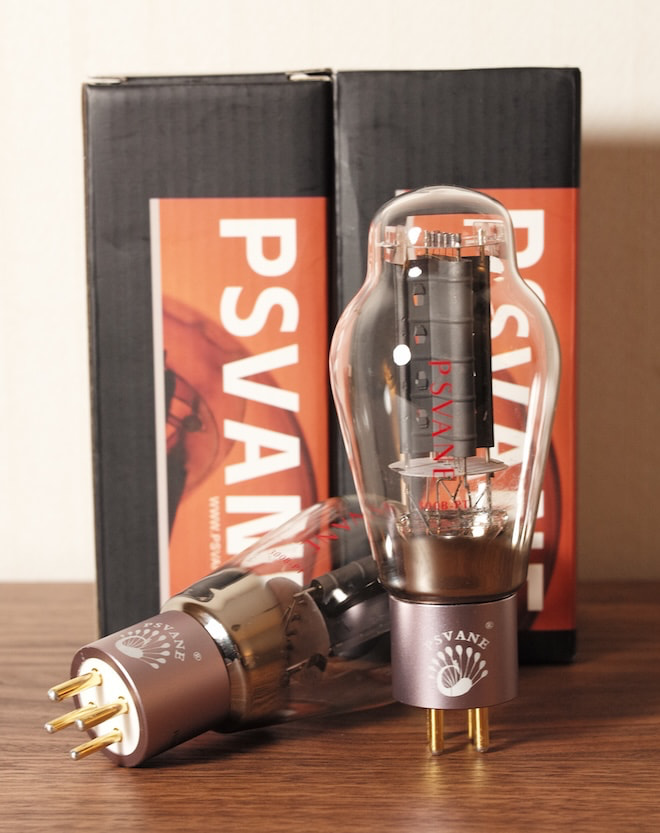
The GEN-300B uses a fully discrete, all-tube signal path built around two 6N8P driver tubes, two 300B output tubes and one 5AR4 rectifier. Layer operates the output stage single-ended in pure Class A and rates the amplifier at 10 watts per channel into 8 ohms, with separate 4- and 8-ohm speaker connections. 

Ten watts clearly places some limits on speaker choice. The GEN-300B is intended for high-efficiency loudspeakers rather than insensitive floorstanders with difficult impedance curves, but that is hardly unusual for a single-ended 300B design. The more distinctive part of the package is what Layer has done for headphone users.

Rather than installing a separate solid-state headphone stage, the front headphone output is tube-driven and transformer-coupled from the main amplifier circuit. In other words, headphone listeners are not buying a 300B speaker amplifier with an unrelated headphone circuit tacked onto the front panel. 

Inside the GEN-300B

Layer specifies custom-wound Japanese transformers, Amtrans film capacitors and Cardas internal wiring through the signal and power paths. The company notes that the Amtrans capacitors come from the same component series used in Audio-Technica’s NARUKAMI amplifier, although sharing a capacitor family obviously does not make the two amplifiers equivalent designs. 

Advertisement

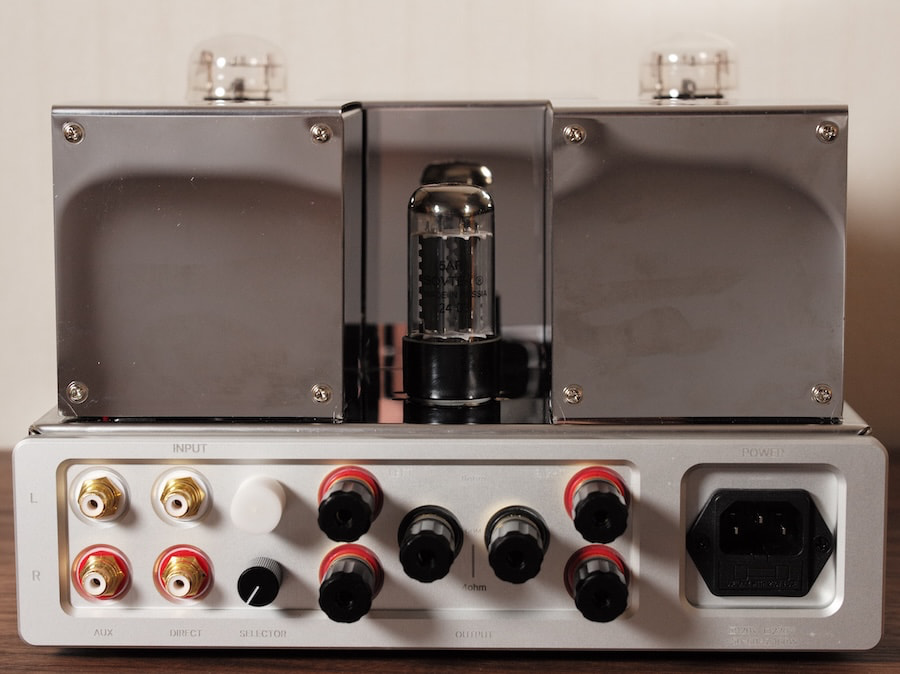
Connectivity remains deliberately simple. The amplifier provides an RCA line-level input and a direct power-amplifier input for use with an external preamplifier, while Bluetooth is available as an option with Layer stating that the wireless module is electrically isolated from the analog circuitry. There is no built-in DAC or network streaming platform, so this remains an analog integrated amplifier first. 

layer-gen-300b-integrated-amplifier-back

Layer Audio Design GEN-300B Specifications

Specification GEN-300B
Amplifier topology Single-ended pure Class A
Output power 10W/channel into 8 ohms
Output tubes 2 x 300B
Driver tubes 2 x 6N8P
Rectifier 1 x 5AR4
Inputs RCA line level, direct power amp
Optional input Bluetooth
Speaker outputs 4 ohms / 8 ohms
Headphone output Tube driven, transformer coupled
Internal wiring Cardas
Dimensions 13.19 x 8.27 x 10.43 inches
Weight 36 lbs / 16 kg

There are still some meaningful gaps in the published specifications. Layer does not currently list frequency response, THD, signal-to-noise ratio, headphone output power, headphone output impedance or input sensitivity, all of which would be useful when matching the GEN-300B to a broader range of headphones.

There is also a small inconsistency in Layer’s own documentation. The September production page lists the amplifier at 40 pounds, while the December preorder page lists 36 pounds with the same chassis dimensions, so I would wait for Layer to clarify the final weight before treating either figure as definitive. 

Advertisement. Scroll to continue reading.
Advertisement

What About Difficult Headphones?

Layer says the standard front-panel headphone output was designed around safe operation and broad compatibility rather than maximum output into the most demanding planar-magnetic headphones. The company subsequently developed the COPULA, a speaker-tap-to-4-pin-XLR adapter that connects directly to the GEN-300B’s binding posts and provides access to considerably more of the amplifier’s available output. 

psvane-tubes-with-box

That solution is aimed at unusually inefficient headphones rather than conventional models or IEMs. Layer specifically warns against treating the speaker taps as a universal headphone output, which is sensible advice when the source on the other end is capable of delivering several watts.

Why Is It Unique?

None of the individual ingredients are revolutionary. Single-ended 300B amplifiers have existed for decades, transformer-coupled headphone outputs are well established, and 8 to 10 watts per channel is familiar territory for this topology.

What is unusual is getting all of those elements in one chassis for $1,499. Once custom output transformers, tube rectification, speaker taps and a serious headphone implementation enter the equation, 300B amplifiers usually become expensive rather quickly.

Layer’s relatively low pricing makes the established alternatives particularly revealing. For example, Woo Audio’s WA5 (2nd gen) is priced considerably higher at $6,499, while Feliks Audio Eos reaches nearly $14,000.

Advertisement

Price & Availability

Layer Audio Design’s website lists pricing from $1,499 to $1,939. Bluetooth, finishes, headphone-output configuration and optional Cuprum isolation feet can alter the final price depending on the chosen configuration. However, a BATCHDEC26 coupon code currently takes $150 off the regular price.

Ultimately, pricing is likely to be the GEN-300B’s biggest advantage and its biggest question mark. Custom transformers, tube rectification, Cardas wiring and a transformer-coupled headphone output are not the ingredients one normally associates with a 300B amplifier at its price point. So long-term reliability, consistency between production batches and support will matter every bit as much as the parts list.

The Bottom Line

The Layer Audio Design GEN-300B is not interesting because it changes what a 300B amplifier can do. It is interesting because Layer is offering a legitimate single-ended Class A design with 10 watts per channel, speaker outputs and a proper tube-driven headphone connection at a price well below most established alternatives.

There are still technical questions that need answers, particularly around headphone output, distortion and the conflicting published weight figures. Layer also lacks the long track record of Woo Audio, Cayin or Feliks Audio, which is something buyers should consider before treating an aggressive introductory price as the only criterion.

Advertisement

But as one of the more unexpected products to emerge from CanJam SoCal 2026, the GEN-300B has a very clear reason to exist. At $1,499, it makes the economics of serious 300B amplification considerably harder to ignore.

For more information: layeraudiodesign.com

Advertisement. Scroll to continue reading.
Advertisement

Source link

Continue Reading

Tech

Anti-Doomscroll Tamagotchi Only Lives if You Do

Published

on

The virtual pet showing a distressed face while a phone is in use

The odds are, you have a device deliberately designed to be addictive in your pocket or on the table next to you if you aren’t staring at it right now– your smartphone. We’ve seen a number of projects that try and help people control or moderate their phone usage using a variety of techniques; this vitual pet by [brenpoly] does it by weaponizing human empathy, and our bizzare ability to pack-bond with literally anything.

The virtual pet itself is based on an ESP32 in a cutesy 3D-printed case, and we think it would probably work well enough if it just had hard-coded behaviors based on hooks in what you’re doing on your phone– the “my little buddy is sick because I’m doomscrolling” should be effective enough on its own, and that part is hardcoded on the ESP32 along with the regular virtual pet behaviour–but this is the year of our Llama 2026, so there has to be an LLM in there somewhere, right?

Some people would leave this part out, but we think [brenpoly]’s use of a local LLM on the phone does improve the project. The local agent doesn’t just have access to his screen time, but his notifications, too, and runs a whisper model linked to a microphone in the virtual pet via bluetooth. So you can get the contents or a summary of your notifications without looking at your phone, or just ask the little guy to tell you a joke. Giving the pet a voice with a the local piper model is also more effective at getting you to put your phone down when you hit the limits.

They’ve put the whole thing up on GitHub if you want to make your own– and if we can keep one person from strapping themselves to a shock collar, then this project is doing good in the world. If helps [brenpoly] or any of his fans do less scrolling and more hacking, that’s even better. Of course there’s a whole spectrum between “electrocute yourself” and “lovable virtual pet” when it comes to controlling your phone use, a spectrum that includes phone stands or even smart vaults for your device.

Thanks to [brenpoly] for the tip! Remember, all of your doomscrolling is justified if you find something to send to our tipsline. 

Advertisement

Source link

Continue Reading

Tech

With a headcount topping 800, Helion opens Seattle office in pursuit of fusion energy

Published

on

Helion Energy’s new Seattle office. (Helion Photo)

Helion Energy, in its hard-charging pursuit of fusion energy, has opened an office in downtown Seattle as its headcount swells to 800 employees.

The company already occupies five buildings in Everett, Wash., where it’s headquartered, plus operations in the central Washington town of Malaga, where Helion is building what it hopes could be the world’s first commercial fusion plant.

“Who would have thought it when we founded the company in 2013 with only five of us,” said CEO and co-founder David Kirtley in a GeekWire interview, marveling at the growth.

In June, Helion announced $465 million in new funding, bringing its total capital raised to more than $1.5 billion and its valuation to 10 times that figure.

The company is racing to master fusion, which produces energy by smashing together light atoms — essentially replicating the process that powers the sun and stars. No one has been able to create a commercially viable amount of energy from fusion here on Earth, though notable progress is being made by research institutions and private companies.

Advertisement

The planet is increasingly hungry for abundant, clean power as data centers gobble energy and transportation, buildings and industrial processes shift toward electrification.

That has helped spike interest in fusion, and the sector globally has raised $14.24 billion since 2021, according to the Fusion Industry Association, with multiple companies predicting they’ll succeed in producing sufficient energy in the next five to 10 years. Helion has one of the most ambitious targets, aiming to reach that mark in two years.

The company is No. 1 on the GeekWire 200, a ranked index of the Pacific Northwest’s top startups.

Inside Helion’s new Seattle offices. (Helion Photo)

The company’s Seattle office is 15,631 square feet in the 8th + Olive building, in a space formerly occupied by Airbnb. The move comes as Seattle pushes to bring businesses back into its core: The city’s urban neighborhoods had an office vacancy rate of 28.2% in the second quarter of this year, with downtown alone at 34.9%, according to Kidder Mathews research.

Kirtley said they’re hiring and the goal is to have 100 employees downtown working on business and operations, recruiting and finance.

Advertisement

@media (max-width: 600px) {
aside.callout { float:none !important; max-width:100% !important; margin-left:0 !important; margin-right:0 !important; }
aside.callout .callout-img { display:none !important; }
}

Back in Everett, teams are running tests on the company’s prototype fusion device, named Polaris, and working to get a smaller fusion machine called Tiny Merge online. The startup is also ramping up a facility for assembly work where employees and automated systems will manufacture energy-carrying capacitors, semiconductor modules and other hardware. The facility is currently producing initial test pieces.

The Malaga site will be home to the Orion facility and will include three buildings: an office building, already complete and in use; a building for final assembly of components shipped from Everett, also finished; and the generator building, which will house the 50-megawatt Orion generator and associated power electronics. So far the beams are up for the last building, with the goal of getting it “weather tight” before winter, Kirtley said.

Helion is charging ahead with Orion and building its manufacturing capabilities while continuing to tackle the physics challenges of producing energy from fusion.

The plant must be operational in two years to meet Helion’s contract with Microsoft to provide energy for a nearby data center.

Advertisement

Source link

Continue Reading

Tech

AI Videos Are Warping Early Learning, Teachers Say

Published

on

The internet is increasingly awash with videos generated by artificial intelligence aimed directly at preschoolers and kindergartners. With literally hundreds of thousands of AI-generated videos to watch and plenty of lights and action to grab the attention of children under age 5, critics say the videos usually have little if any substance. They also have a name for these videos: “baby slop.”

“It’s easy to make an eight-second AI video, and we wind up with these very quick, colorful, fun things that don’t really have any meaning,” says Allison Bacon, coordinator of instructional technology at the Ossining Union Free School District in New York.

More than mere distraction, some critics worry AI-generated content on YouTube and YouTube Kids may cause actual harm. But there are ways early childhood educators can help children navigate these videos.

Inaccurate and Biased Content

Problematic AI-generated videos come in many forms. Some are just seconds in length but include inappropriate content. In one video about counting and colors, for example, a school bus inexplicably bursts into flames at the 13-second mark. In other videos, inaccurate information or visuals are hallucinated by low-grade AI. Sometimes, it’s just the sheer volume of unvetted AI videos populating feeds that can be concerning. One YouTube channel, Bright Tunes, has existed for less than a year but has nearly 5,500 AI-generated videos. In effect, one person can prompt AI to generate thousands of videos that young children can watch in an endless loop — none of which are educational. While some creators have good intentions, they often just want views (cue cute AI animals diving into pools). 

Advertisement

“Some of the content may look educational and engaging,” says Jennifer Chen, a professor of early childhood education at Kean University in Union, New Jersey. “You might not realize it unless you really look at it closely.”

When the words aren’t quite right or when the images don’t reflect reality, “that cognitive disparity is causing children to learn inaccurately,” explains Keri Ewart, an associate professor of education at Wilfrid Laurier University in Waterloo, Ontario. “It is having detrimental effects on children being able to understand the difference between real and fake.” 

Repeated viewing may also damage kids’ attention spans and lead to cognitive overload. With preschool and kindergarten learners, “they’re still building neurological processes. They’re learning how to experience the world,” instructional technology coordinator Allison Bacon says. “Entertainment generated through AI to mindlessly babysit small people is inherently problematic.”

Navigating the Content

Teachers can address the problem by becoming ad hoc media critics, vetting everything their young students watch in the classroom. Beyond previewing videos, teachers should research the creator to gain more context. One sure sign that a YouTube channel is populated with AI-generated content is if it has a recent launch date and an outsize number of videos. Another telltale sign of AI slop: jumbled text and misspelled words.

Advertisement

Relying on trusted resources like Common Sense Media can help educators vet content. Also, the American Academy of Pediatrics recently released a guide for parents with a “Stop, Wait, Go” framework that can be adapted to the classroom.

If students do encounter suspect content, in ads for example, “conversation needs to follow,” Bacon explains. “What did we see? What did we think? The human connection and conversation should be the main focus.”

Even with very young kids, teachers can build decoding skills to recognize AI-generated content. “Really push the fact that we have to be thinkers and we have to be looking with that critical lens. Ask kids, ‘What did we notice? What’s good? What’s different?’” Bacon says.

“Be the person who helps them understand what they are seeing,” Bacon adds. “If they see an AI-generated giraffe, show them pictures of a real giraffe and ask them to describe the differences.”

Advertisement

Finally, even if one video is educationally sound or age appropriate, the algorithms may bring up more videos that could be inappropriate. “Never rely on autoplay, which can be easy to do, especially if you’re in the class and you’re already playing something that’s educational,” Bacon cautions.

Supporting Parents’ Efforts

As a preschool language teacher at the Park School in the Ossining Union Free School District and as a parent herself, Josefa Martinez understands that parents need guidance, too.

She sends home weekly and monthly communications to families with best practices. “I try to find websites and resources they can use at home, videos that I have personally watched and that are interactive, engaging,” she says. “These sites are not just promoting a child to sit and just mindlessly watch. It’s something that I can vouch for.”

Beyond video suggestions, Martinez provides parents with follow-up questions for their kids. If the child is watching a video about a firefighter, parents can ask, “How can a firefighter support our community?” or “What are other community helpers who have similar roles to a firefighter?” If the child is watching a video about numbers, on a channel like Numberblocks, parents may ask, “How do you know that five is bigger than two? Can you show me by using some of your toys?” or “How many ways can we make the number five?”

Advertisement

“These questions make sure the child is actually engaged and not just sitting there mindlessly watching,” Martinez says. “It all pertains to the content that I’m teaching either that week or that month.”

Some school leaders are stepping up as well, convening parents for frank discussions about AI-generated videos. “More schools are starting to have social media nights and AI evenings where they’re inviting parents to really learn how to vet these videos,” education professor Keri Ewart explains.

“This is all fairly recent for everyone,” Ewart adds. “If we’re expecting our children to have digital fluency and digital literacy, particularly in the age of AI, we’re going to have to expect teachers and parents to be digitally literate too.”

Advertisement

Source link

Continue Reading

Tech

Are Self Driving Cars Safe as Early Data Suggests?

Published

on

Plenty of people remain spooked by autonomous vehicles, or AVs. Some experts and policymakers have cautioned that AVs won’t necessarily make roads safer. When it comes to partial or full autonomy, the picture isn’t entirely clear, in part because there aren’t enough self-driving cars to make meaningful apples-to-apples comparisons.

Yet mounting research suggests that self-driving cars crash significantly less often than people, and with far fewer injuries. Evidence also shows that advanced driver assistance systems (ADAS) and other building blocks of autonomy—some of which are already mandated on every new car—are also reducing occupant and pedestrian injuries and deaths, along with insurance claims.

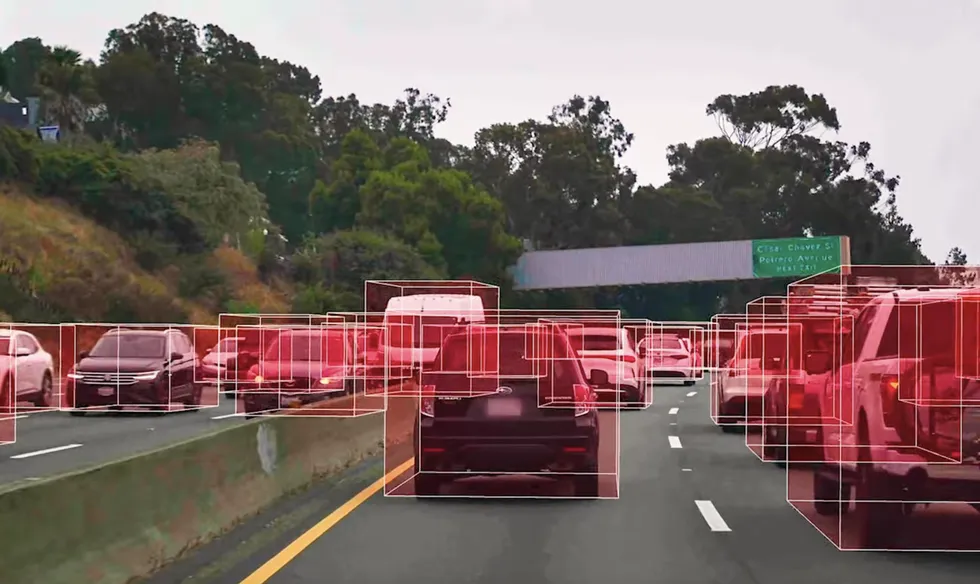
On the ADAS front, the Insurance Institute for Highway Safety found that automatic emergency braking (AEB) systems that recognize people in front of the car cut pedestrian crashes by 27 percent. Those AEB systems are mandated for all light vehicles in the U.S. by 2029, and more than 90 percent of new models already comply under a voluntary automakers’ agreement. A separate IIHS study found that automated braking greatly reduced rear-end crashes, by 50 percent, and their injuries by 56 percent. The Highway Loss Data Institute found that cars with AEB alone showed a 13 percent drop in property-damage claims. Cars that bundled ADAS features, including automatic braking for pedestrians, adaptive cruise control, and lane-departure warnings, saw claims reductions up to 39 percent.

Advertisement

Move to Level 4 autonomy, and Waymo says its robotaxis have now given 20 million paid rides over 220 million miles, the equivalent of 250 lifetimes of driving. In March, Waymo’s independent study showed 92 percent fewer fatal or serious-injury crashes, a 13-fold reduction versus human drivers in comparable city environments. That included 92 percent fewer pedestrian injuries, 83 percent fewer crashes with airbag deployments, and 82 percent fewer crashes with any injuries whatsoever. That included a 96 percent reduction in injury-causing crashes at intersections, among the deadliest environments for any automobile.

How Does Limited Fair-Weather Data Compare to Traditional Crash Statistics?

A key question is whether Waymo’s robotaxis, currently limited to fair-weather operation in a handful of cities in the U.S., are directly comparable to humans driving a wider variety of roads in much more variable conditions.

The IIHS is looking to dig deeper by cleaning up often-incomplete data. Researchers estimate roughly half of human crashes go unreported, and up to one-third of injury accidents, because drivers hope to avoid insurance price hikes. That potentially skews safety numbers in favor of human drivers. And while Waymo leads the industry in transparency, and robotaxi operators are required to report even the tiniest scrape to the National Highway Traffic Safety Administration (NHTSA), not every company voluntarily reports their total miles driven.

Advertisement

The IIHS’s latest July study flatly stated that automated cars crash less often than people. But it also sought clarity by creating a more-reliable category of “police-reportable crashes.” It then compared crash rates of human-driven cars against Waymo taxis in San Francisco, Phoenix, Los Angeles, and Austin. Waymo’s Jaguar I-Pace taxis traveled about 50 million driverless miles over the study period, versus 222 billion human miles in the same cities.

In a potential boost for public trust, the study generally supported Waymo’s own findings. Waymo taxis were involved in 68 percent fewer crashes overall than human drivers: 76 percent lower in Phoenix, 71 percent in LA, and 35 percent in San Francisco. A 4 percent higher Waymo rate in Austin may reflect an extremely small sample size. Significantly, Waymo’s injury crashes were still 81 percent lower on a per-mile basis.

The industry and its supporters continue to press the safety advantages of autonomous vehicles that never get drunk, drowsy, or distracted. Yet for this fledgling AV industry, there are still no national performance or safety standards. A crazy quilt of state or local regulations can allow or prohibit their deployment. That balkanized approach makes it harder to compare crash rates, according to the IIHS, which is calling for better federal reporting standards.

A posting on the IIHS website quotes the institute’s director of statistical services, Eric Teoh: “Those are encouraging signs for the future of driverless vehicles.” Teoh, who was also the lead author of the institute’s study, added that “Now we need to get the data-collection system right, so that we can ensure that level of safety continues as these technologies become more prevalent.”

Advertisement

Amazon’s Zoox Gets an Exemption for its Robotaxis

On July 30, in a move seen as fast-tracking the tech’s deployment, NHTSA granted Zoox, a subsidiary of Amazon, the first-ever exemption from certain motor-vehicle safety standards. That will allow commercial operation of Zoox’s toaster-shaped robotaxis, which have no steering wheel or pedals aboard. The agency determined that Zoox’s purpose-built robotaxi “would provide an equivalent level of safety” as a compliant vehicle, thereby satisfying the standard for an exemption.

On that final day of the SAE’s Automated Transportation Symposium, NHTSA also announced a partnership with SAE Industry Technologies to develop the nation’s first performance and competency standards for AVs, via a three-year, $5 million “A2SCEND” consortium.

Some doctors and health professionals are arguing that policymakers need to stop viewing self-driving cars as a tech moonshot but rather as a critical public-health intervention. Jonathan Slotkin, a neurosurgeon, makes a powerful case for the medical and societal benefits of AVs. Researchers at the Johns Hopkins Bloomberg School of Public Health say that highlighting the social value of AVs is critical to driving public trust and adoption.

Consider that roughly 40,000 people in the U.S., including more than 7,000 pedestrians, are killed each year in roadway accidents. About 1.16 million people die in roadway crashes around the world, making them the leading cause of death for children and young adults between the ages of 5 and 29. Cutting that by even 50 percent—let alone the 90 percent reductions suggested by some studies—would save 580,000 lives a year. That social and economic gain would dwarf that of seat-belt adoption or anti–drunk driving campaigns.

Advertisement

This article was updated on 08 September 2026.

From Your Site Articles

Related Articles Around the Web

Source link

Advertisement
Continue Reading

Tech

Ireland probes X over age assurance, parental control

Published

on

Platforms that permit adult content must employ effective age assurance methods, according to Ireland’s Online Safety Code.

Elon Musk’s social media platform X is under investigation yet again; this time for its alleged non-compliance with regulations around age assurances and parental controls.

Ireland’s media regulator Coimisiún na Meán (CnaM) has today (8 September) launched its first investigation under the Online Safety Code to probe whether X is effective in ensuring children don’t come across sexual and other adult content on its platform.

Under the Online Safety Code – which came into complete effect last year – age assurance is a requirement for platforms that permits adult-only content such as pornography, or content that consists of real or realistic gore and violence.

Advertisement

Age assurance measures can include age estimation, which often uses AI technology to estimate a user’s age, while increasingly stricter regulations also require platforms to verify users’ ages via photo identification.

For years, users, including minors, could self-declare as adults while signing up to platforms. Under new regulations, this is no longer an acceptable age barrier.

In addition, platforms such as X are also required to provide parental control systems to ensure that guardians can steer what type of content their children encounter.

CnaM said it launched its probe after its platform supervision team raised concerns around X’s compliance with regulations. It found that parental controls put in place by X “may not be effective, do not have minimum requirements, are hard to locate and are not brought to the attention of new users at sign-up stage”.

Advertisement

The new investigation will probe whether X is employing effective age assurance measures, whether parental control systems it uses reach the minimum functional requirement, and whether it directs new users to the available controls.

“We understand the concerns that parents and guardians have about content their children may be seeing online and concerns of strangers seeing their children’s content,” said CnaM’s digital services commissioner John Evans.

“Platforms which allow users under the age of 16 must have parental controls which are under the control of parents and guardians, they must ensure that these parental controls are effective and easy to locate, and they must draw users attention to these parental controls at account sign-up stage, for any parent or guardian who wishes to use them.

“Platforms which are accessible to children and allow adult-only video content, such as pornography or extreme and gratuitous violence or acts of cruelty, must ensure that this content cannot normally be accessed by children by implementing effective age assurance measures,” Evans added.

Advertisement

The Irish regulator opened a different probe into X last year to investigate whether the social media platform broke the European Union’s Digital Services Act (DSA) with its content moderation policies.

The platform, meanwhile, is also being separately investigated by the EU – alongside CnaM – the Data Protection Commission, and the UK government over its Grok AI chatbot, which enabled users to generate millions of non-consensual sexually explicit content. X faced the first penalty issued under the DSA last year after it was fined €120m for breaking rules around transparency obligations.

The bloc is tightening regulations around social media platforms as lawmakers grapple with its long-term negative effects on children. 28 large platforms and services are being monitored in the EU under some of the world’s strictest laws around social media harms, while an increasing number of member states are opting to ban platforms for minors altogether.

Several non-EU countries have taken similar routes, all following behind Australia, the first country to ban social media for under 16s. Research, however, reveals that a complete platform ban for minors may not work.

Advertisement

Don’t miss out on the knowledge you need to succeed. Sign up for the Daily Brief, Silicon Republic’s digest of need-to-know sci-tech news.

Elon Musk at Charlie Kirk’s memorial, September 2025. Image: Gage Skidmore via Flickr (CC BY-SA 4.0)

Source link

Advertisement
Continue Reading

Tech

OpenAI now supplies the image models inside Adobe’s creative studio. It is also turning prompts into things you pass around.

Published

on

OpenAI released ChatGPT Images 2.5 with two new API models, one of which Adobe has already put into Firefly. The company says more than 3 billion images a week are created across ChatGPT and its image API. The notable additions are interface features rather than model research, including the ability to share the prompt alongside an image

OpenAI released ChatGPT Images 2.5 on Tuesday. The company said in its announcement that the model brings sharper detail, more precise editing and up to 50% lower latency than Images 2.0.

Two new models go to developers. GPT-Image-2.5 Flare is the default, and Sunburst is the slower, higher-control option for production creative work.

Adobe is a launch customer

The detail worth pausing on is in the testimonials. Adobe says the new GPT-Image-2.5 models are now in Firefly, its creative AI studio.

Matt Chotin, a senior director of product at Adobe, framed Firefly as bringing leading AI models together with Adobe’s own tools in one place. That is a company positioning itself as the interface rather than only the model.

Advertisement

It is a deliberate strategy, not a concession. Firefly has been built as a conversational layer over the whole toolset, and model choice is part of that pitch.

The traffic runs both ways

Adobe is inside ChatGPT too. More than 70 Adobe tools are available there.

So each company is a distribution channel for the other. Neither can be confident it owns the moment a creative task begins.

That ambiguity is the whole competitive question in creative software right now. Whoever owns the starting point captures the workflow.

Advertisement

Prompts become objects

OpenAI is answering that question with a social feature. When you share an image now, you can attach the prompt that made it, and someone else can run it with their own photos.

OpenAI links to a viral 1980s headshot prompt as the example. That is a distribution mechanic dressed as a convenience.

A shareable prompt is a template that spreads on its own. It also keeps the loop inside ChatGPT rather than inside anyone else’s canvas.

The other new features point the same way

Sketch lets you draw in ChatGPT and use the drawing as a reference. Templates offer starting formats such as posters and merchandise, and comments can be placed directly on an image.

Advertisement

None of this is model research. It is interface work, and interface work is what you do when you want people to stay.

Availability is broad. Images 2.5 is rolling out to ChatGPT, ChatGPT Work and Codex users on every tier, across desktop, mobile and web.

Three billion a week

The scale figure is the one to sit with. OpenAI says more than 3 billion images are created weekly across ChatGPT Images and the GPT-Image models in the API.

That is the company’s own number and is not independently audited. Taken at face value it is a vast quantity of synthetic imagery entering circulation every week.

Advertisement

OpenAI says it applies C2PA metadata and invisible watermarking, alongside prompt and image checks, and has published a system card for the release. Provenance marking at that volume is a genuine engineering commitment.

Whether provenance survives contact

Marking images is necessary and not sufficient. Metadata is routinely stripped by platforms, screenshots and re-encoding, and invisible watermarks vary in robustness.

Regulators are still working out what any of it means legally. Brazil has been defining what counts as a deepfake ahead of its vote.

The prompt-sharing feature cuts against provenance in one respect. It makes it easier for a distinctive look to be reproduced by many people from the same recipe.

Advertisement

The competitive picture

The reference-photo improvements target the most commercially valuable use. Putting a real person or product into new settings is what advertising, ecommerce and social content actually need.

Higgsfield and Manus, both quoted in the announcement, are building on the API rather than competing with it. Manus says Flare runs two to four times faster than the previous model in its own evaluations.

Others are going the other way. Freepik rebranded as Magnific as a profitable AI creative platform on $230m of recurring revenue, built as its own destination.

What to watch

Watch whether Adobe keeps naming its model suppliers. A studio that aggregates models is strong while it can choose, and weaker if one supplier becomes indispensable.

Advertisement

Watch the prompt-sharing numbers too, if OpenAI ever publishes them. Adobe has been assembling its own answer across Firefly, GenStudio and partnerships, and the contest is over where work starts rather than which model renders it.

Source link

Advertisement
Continue Reading

Tech

Gold Triforce, Green Joy-Cons, Nintendo’s Zelda 40th Anniversary Switch 2 Console Arrives October 29

Published

on

Nintendo Zelda 40th Anniversary Switch 2 Console
Nintendo used this morning’s Direct to give Switch 2 its first real collector finish, timed to forty years of The Legend of Zelda. Officially called Nintendo Switch 2 – The Legend of Zelda – 40th Anniversary Edition, the system arrives October 29, one week before the Ocarina of Time remake on November 5.


Gold stands atop black on the dock, displaying a giant Triforce on the front, while icons and symbols march across the dock and tablet’s surfaces. The traditional green and gold Joy-Con 2 controllers attach with magnets Green. Nintendo’s design draws on iconic series colors, as well as some game-related adornment. Check out the stills, which show the original Link from 1986 clutching the Triforce on one controller and a Zelda sprite on the other. It’s a great look, and the metal surface reflects light in a more muted way than pure gold.


LEGO The Legend of Zelda: Ocarina of Time – The Final Battle – Building Set for Adults, Ages…
  • GAMER COLLECTIBLE MODEL KIT – Adults ages 18 and up can share their love of video games with the LEGO The Legend of Zelda: Ocarina of Time – The…
  • LEGO CASTLE RUINS BUILDING SET – This detailed gaming collectible features a ruined castle area, Link, Zelda and Ganondorf minifigures, and 2 more…
  • FEATURES AND FUNCTIONS – Recreate the final battle scene with movable rubble, a button to raise Ganondorf from the ruins, the hidden Megaton Hammer…


The internal specifications remain unchanged, including the regular 7.9-inch 1080p screen and HDR for the Switch 2, 256GB of storage (some back for the system), magnetic Joy-Con 2 that act as mouse support in some games, and 4k output at up to 60 when the TV and game allow it. Only the anniversary paint, no additional power under the hood. The box contains the tablet, green and gold Joy-Con, wrist straps, dock, grip, AC adapter, USB-C cable, and Ultra High Speed HDMI cable. There is no game in the box, therefore you will need to purchase the Ocarina of Time remake separately.

Nintendo Zelda 40th Anniversary Switch 2 Console Accessories
The special edition console is priced at $519.99 in the United States, which is $20 higher than the base $499.99 model following the most recent price increase. In Japan, the Zelda Pro version costs 62,980 yen, tax included. A Zelda Pro controller costs $99.99, while a version with a display stand costs $109.99 and is only available in a few limited locations. There’s also a carrying case with screen protector for $39.99, which features the same types of designs. Preorders for this special edition hardware opened today at Nintendo and Best Buy, allowing you to purchase it before it sells out.

Advertisement

Source link

Continue Reading

Trending

Copyright © 2025