Connect with us

Tech

UL and IMR to design Ireland’s first 3D-printed liquid rocket engine

Published

on

The partnership news comes with official acceptance into the prestigious UK-based Race2Space 2026 International Propulsion competition.

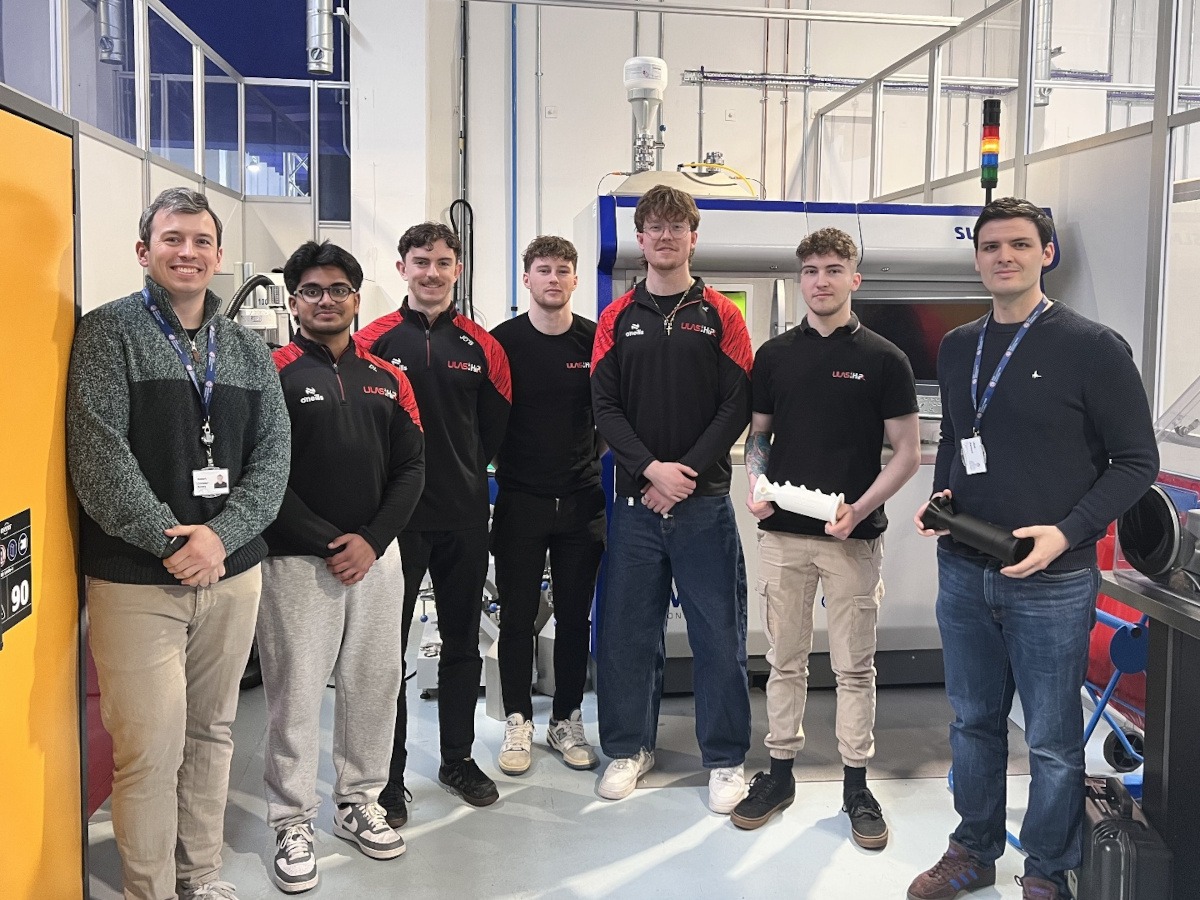
The University of Limerick (UL) Aeronautical Society High-Powered Rocketry Team (ULAS HiPR) has announced a partnership with UL and Irish Manufacturing Research (IMR) to design and produce the first additive manufactured (3D-printed) liquid rocket engine in the Republic of Ireland, called the Lúin of Celtchar.

The engine is a high-performance 2 kilonewton, water-cooled, IPA/nitrous oxide bi-propellant system, which has been designed entirely by the ULAS HiPR student team and is now being manufactured at IMR’s Advanced Manufacturing Lab in Mullingar using metal additive manufacturing. It will be returned to UL for precision machining and assembly. 

Established in 2022, ULAS HiPR has more than 100 members and is a combination of students from a range of disciplines, such as aeronautical, mechanical, software and design engineering – all of whom have an interest in designing, manufacturing and launching powerful rockets. 

Advertisement

The team has enjoyed some success having represented Ireland internationally at prestigious competitions, including Mach-24 and Euroc, the European Rocketry Challenge. Alongside the announcement of the partnership, ULAS HiPR has also officially been accepted into the UK-based Race2Space 2026 International Propulsion competition.

This is, according to ULAS HiPR, “a major milestone in advancing Irish student-led space propulsion capabilities”.

Speaking on the announcement, Jay Looney, the co-head of ULAS HiPR, said: “The acceptance of our project to Race2Space marks a defining moment not only for ULAS HiPR, but for Ireland’s student space community. 

“The selection of the first additively manufactured liquid rocket engine in the Republic of Ireland into the competition validates the technical ambition of our student team, and the strength of collaboration between Irish university students with industry. It demonstrates that world-class propulsion innovation can now be designed, manufactured and tested entirely here in Ireland.”

Advertisement

Mark Hartnett, a design for manufacturing senior technologist at IMR, added: “At IMR, supporting ambitious student teams like ULAS HiPR reflects our commitment to strengthening Ireland’s advanced manufacturing ecosystem and enabling the next generation of aerospace innovators. 

“These are vital platforms for advancing cutting-edge technologies and building Ireland’s future engineering capability, and this ULAS HiPR propulsion project demonstrates how emerging technologies can move rapidly from concept to high-performance hardware.”

In late February, Silicon Republic attended the official launch of Ireland’s first European Space Agency Phi-Lab, which is headquartered at IMR in Mullingar and run in collaboration with the AMBER Centre at Trinity College Dublin.

One of 10 European Phi-Labs, it is designed to be Ireland’s national platform for space technology development and to anchor the country’s ambitions within Europe and the world’s rapidly-expanding space economy.

Advertisement

Don’t miss out on the knowledge you need to succeed. Sign up for the Daily Brief, Silicon Republic’s digest of need-to-know sci-tech news.

Source link

Advertisement
Continue Reading
Click to comment

Leave a Reply

Your email address will not be published. Required fields are marked *

Tech

Bill Gates’ TerraPower gets approval to build new nuclear reactor

Published

on

The Nuclear Regulatory Commission (NRC) gave TerraPower the go-ahead this week to build a new nuclear reactor in the shadow of an aging coal power plant in Wyoming.

TerraPower’s permit is the first to be issued by the NRC in nearly a decade. The startup — founded by Bill Gates in 2015 and backed by Nvidia — has been designing its Natrium reactor with GE Vernova Hitachi. The final power plant will generate 345 megawatts, which is about two-thirds smaller than modern full-size reactors, but multiple times larger than many small modular reactor designs favored by other startups.

Natrium differs from other reactors not just in scale, but also in the details of its design. Where most nuclear reactors built in the last 50 years have been cooled by water, Natrium is cooled by molten sodium, which TerraPower says should be safer. This is the first time a commercial reactor that is not cooled by regular water has been approved by the NRC in more than 40 years.

The reactor will operate with an excess of molten sodium, which will be stored in large, insulated tanks. This allows atoms to keep splitting when demand is low, with the hot sodium saving that energy, which can be used to fill in any lulls in wind and solar output. Since nuclear power plants operate best near full capacity, storing excess energy as heat should help lower generating costs.

Advertisement

The NRC’s approval is notable because TerraPower followed the long-established permitting process, giving it permission to build on private property. The Department of Energy recently loosened its safety rules, but those regulations only apply to land owned by the agency.

TerraPower is one of nearly half a dozen nuclear startups backed by tech companies or their founders. As electricity demand from data centers grows, the Trump administration has come under pressure to boost generating capacity, including by building new nuclear reactors.

Investors have taken note of the two trends, and in recent months, they’ve showered nuclear startups with well over $1 billion in capital. TerraPower alone has raised a total of $1.7 billion, including a $650 million round that closed in June, according to PitchBook.

Techcrunch event

Advertisement

San Francisco, CA
|
October 13-15, 2026

Despite the momentum, nuclear power still faces an uphill battle. To date, nuclear has been one of the most expensive forms of new generating capacity. Part of that is due to cost overruns at massive power plants, but it also reflects the tremendous strides that solar, wind, and batteries have made in bringing costs down over the years. 

Advertisement

Nuclear startups are hoping to leverage mass manufacturing to rein in capital expenditures, but the theory has yet to be proven. And while manufacturing can help cut costs, it often takes at least a decade for the savings to materialize.

Source link

Continue Reading

Tech

OSHA probing fatality at Rivian warehouse

Published

on

The Occupational Safety and Health Administration has opened an investigation into the death of a worker at a Rivian warehouse in Illinois this week, the federal agency told TechCrunch on Friday. The agency said the probe could take up to six months.

The man, identified by local authorities as 61-year-old Kevin Lancaster, reportedly died from “blunt traumatic compressional injuries” after getting pinned between a tractor trailer and a loading dock at the facility, which is located just a few miles from Rivian’s factory.

Lancaster was reportedly trapped in that spot for around 20 minutes on Thursday before firefighters were able to get to him, according to one local news report. Emergency crews responded to a call at 1:40 p.m. local time, and Lancaster was pronounced dead at a local medical center at 2:33 p.m. local time. The Normal Police Department and the McLean County Coroner are still investigating Lancaster’s death, according to the report.

“Safety at our facilities is our top priority. Unfortunately yesterday afternoon, a contractor passed away after an incident at our warehouse,” Rivian said in a statement to TechCrunch. “Our sympathy and thoughts are with their family and friends. We are working with the Normal Police Department on its investigation.”

Advertisement

The safety of Rivian’s factory in Normal, Illinois, became a source of scrutiny in 2024 after a Bloomberg News report detailed 16 “serious” violations levied on the company across that year and the one prior.

Automotive factories are notoriously dangerous, though, and Rivian has received just one violation at the Illinois manufacturing plant since that report was published. OSHA even told Bloomberg at the time that Rivian “has improved their safety and health team and are very cooperative with the OSHA process.”

Rivian assembles its flagship R1 pickup truck, R1 SUV, and commercial electric van, known as the EDV, at its 4.3-million-square-foot factory in Normal. The company is expanding the space by another 1.1 million square feet to make room for its next EV, the R2. Once complete, the factory will have capacity to assemble 215,000 vehicles.

Techcrunch event

Advertisement

San Francisco, CA
|
October 13-15, 2026

This story has been updated with a comment from Rivian.

Advertisement

Source link

Continue Reading

Tech

Mansfield vs Arsenal Live Streams: Watch FA Cup 5th Round Tie 2025/26 Online

Published

on

Watch Mansfield vs Arsenal live streams as the League One club look to add to their list of 2025/26 FA Cup upsets by eliminating the Premier League leaders and reaching the quarterfinals for the first time since 1969.

Source link

Continue Reading

Tech

Life EV officially owns Rad Power Bikes now

Published

on

Life Electric Vehicles Holdings, also known as Life EV, officially owns the intellectual property, inventory, and certain operating assets of Rad Power Bikes. Life EV acquired Rad Power for $13.2 million.

Rad Power Bikes, a buzzy electric bike company that raised nearly $330 million in venture capital, filed for Chapter 11 bankruptcy protection in December. The company had struggled for months prior to its bankruptcy filing, and had warned employees it might have to shut down without new capital.

Life EV intends to keep the company intact and said it will continue retail operations under the Rad Power Bikes brand in the United States. It also plans to expand the retail footprint in select key markets. Life EV also pledged to support existing customers who might be wondering what would become of their bike warranties or even gift cards.

The Florida-based Life EV has built its business by acquiring, developing, and scaling electric bicycle and micro-mobility brands. While Rad Power is perhaps its highest-profile purchase, the company also holds an equity interest in LEV Manufacturing, Inc., which acquired the Serial 1 premium electric bicycle brand originally developed and spun off from Harley-Davidson.

Advertisement

In a statement, Life EV said the acquisition fits into its broader strategy of expansion across North America.

Source link

Continue Reading

Tech

A four-pack of ‘invaluable and easy-to-use’ Apple AirTags just dropped to a record-low price

Published

on

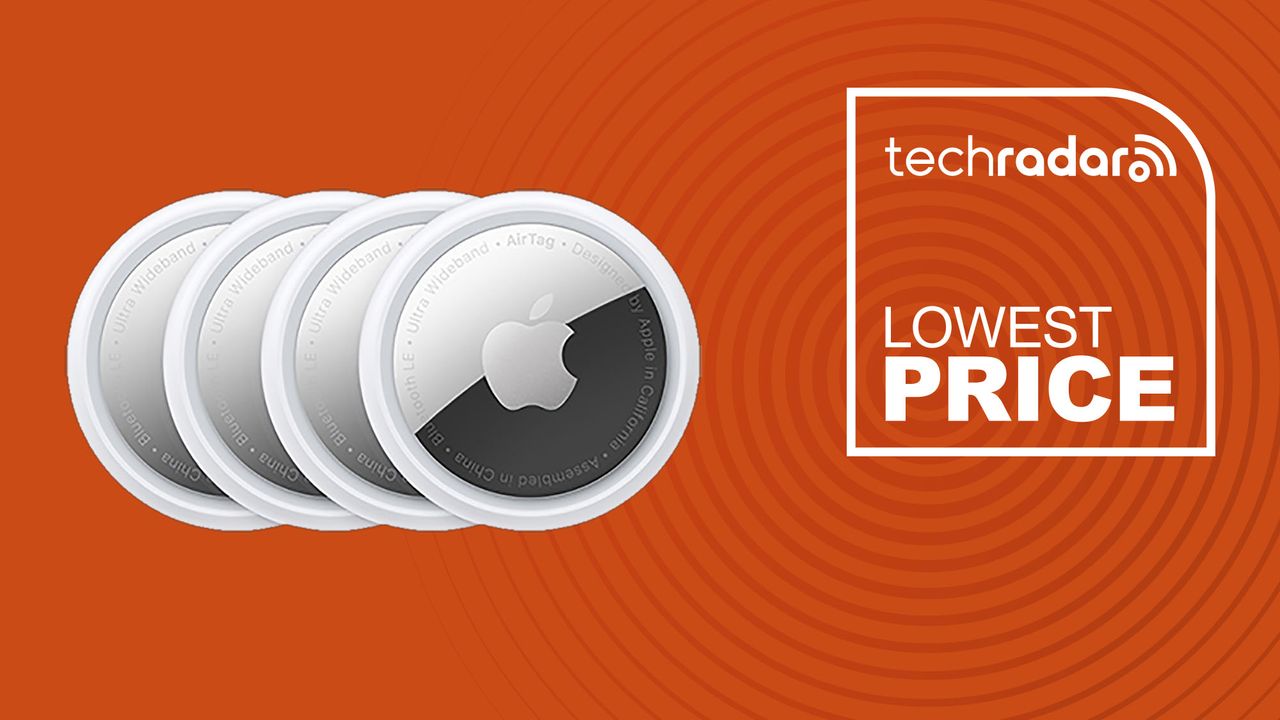
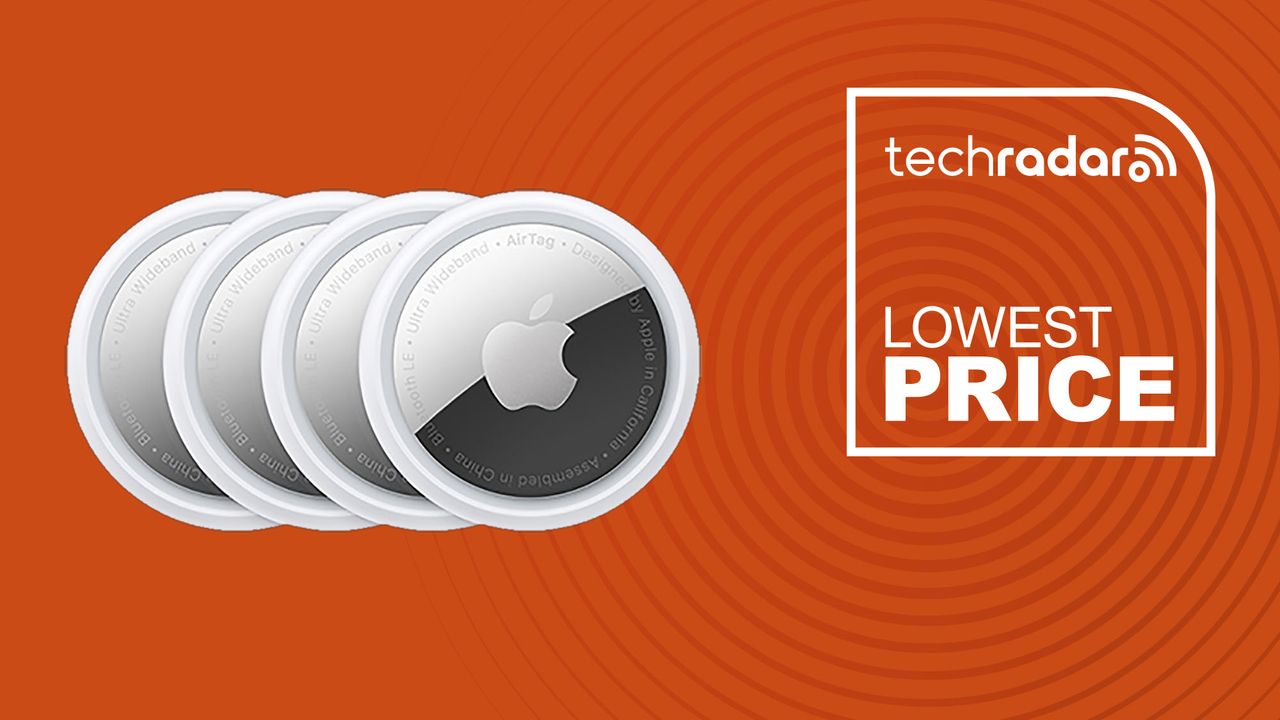
My family and I are forever misplacing our possessions. This came to a head last year, and we invested in a set of Bluetooth trackers. It’s been an absolute game-changer. If you also need help and own an Apple device, then you can grab an Apple AirTag Four Pack at John Lewis for £59 (was £99).

This is a record-low price, which makes the trackers significantly more affordable than usual. With a four-pack of their biggest competitors, Tile Mate, costing £69, there’s nothing better or cheaper right now for Apple users.

Apple AirTag review. We rated the compact trackers an impressive four stars out of five and praised their accuracy and user-friendly feature set. I’m especially a fan of the warmer/colder feature that helps you find lost items.

From a design perspective, the AirTags are compact, lightweight, and IP67 water and dust-resistant. That means you can use them without fear of damage. If you want to attach them to your possessions, then you’ll need to purchase additional cases, which does increase the overall cost.

As you’d expect, these trackers only work with Apple devices. Connecting them to your account is as simple as activating the AirTag on the Find My app. It’ll then appear next to your other Apple products, such as your phone, tablet, earbuds, and more.

Advertisement

Are you a Samsung user? Check out the Samsung Galaxy SmartTag2 Tile, with a four-pack of those costing £57.39. Or if you need something that works across all of Android and iOS, then the Tile Mate, Tile Slim, and Tile Sticker products are worth a look.

Source link

Continue Reading

Tech

Kids Online Safety Act Advances to House Amid Concerns Over Free Speech and Civil Rights

Published

on

The bipartisan Kids Online Safety Act, designed to protect minors from age-inappropriate online content, will head to the House floor for a vote. But critics say that the bill could also be used to curb civil rights.

The Kids Online Safety Act was first introduced to the Senate in 2022 under President Joe Biden. It would require online platforms to offer settings that control how minors use the sites and also limit the collection of their personal data. 

However, opponents of the bill say that the definition of “harmful content” could extend to legitimate sites, including those concerning mental health and transgender rights. The American Civil Liberties Union warns that the legislation could affect the First Amendment’s protections of free speech.

Advertisement

“The overbroad language in KOSA and similar legislation risks censoring everything from jokes and hyperbole to useful information about sex ed and suicide prevention,” said the ACLU’s Jenna Leventoff, senior policy counsel.

The bill also directs federal agencies to study the feasibility of “creating a device- or operating system–level age verification system,” but it doesn’t require platforms to implement such a system.

The House Energy and Commerce Committee met on Thursday and advanced the legislation to the full House for consideration. However, lawmakers still need to set a specific calendar date for that floor vote.

The proposed legislation follows a global trend toward restricting the kinds of online material children have access to. Last year, the UK introduced its Online Safety Act, which requires platforms that host adult content or other age-inappropriate material to implement robust age-verification checks to prevent minors from accessing it.

Advertisement

On March 28, Indonesia will bar children under 16 from accessing social media, following a similar ban in Australia

Source link

Advertisement
Continue Reading

Tech

Google PM open-sources Always On Memory Agent, ditching vector databases for LLM-driven persistent memory

Published

on

Google senior AI product manager Shubham Saboo has turned one of the thorniest problems in agent design into an open-source engineering exercise: persistent memory.

This week, he published an open-source “Always On Memory Agent” on the official Google Cloud Platform Github page under a permissive MIT License, allowing for commercial usage.

It was built with Google’s Agent Development Kit, or ADK introduced last Spring in 2025, and Gemini 3.1 Flash-Lite, a low-cost model Google introduced on March 3, 2026 as its fastest and most cost-efficient Gemini 3 series model.

The project serves as a practical reference implementation for something many AI teams want but few have productionized cleanly: an agent system that can ingest information continuously, consolidate it in the background, and retrieve it later without relying on a conventional vector database.

Advertisement

For enterprise developers, the release matters less as a product launch than as a signal about where agent infrastructure is headed.

The repo packages a view of long-running autonomy that is increasingly attractive for support systems, research assistants, internal copilots and workflow automation. It also brings governance questions into sharper focus as soon as memory stops being session-bound.

What the repo appears to do — and what it does not clearly claim

The repo also appears to use a multi-agent internal architecture, with specialist components handling ingestion, consolidation and querying.

But the supplied materials do not clearly establish a broader claim that this is a shared memory framework for multiple independent agents.

Advertisement

That distinction matters. ADK as a framework supports multi-agent systems, but this specific repo is best described as an always-on memory agent, or memory layer, built with specialist subagents and persistent storage.

Even at this narrower level, it addresses a core infrastructure problem many teams are actively working through.

The architecture favors simplicity over a traditional retrieval stack

According to the repository, the agent runs continuously, ingests files or API input, stores structured memories in SQLite, and performs scheduled memory consolidation every 30 minutes by default.

A local HTTP API and Streamlit dashboard are included, and the system supports text, image, audio, video and PDF ingestion. The repo frames the design with an intentionally provocative claim: “No vector database. No embeddings. Just an LLM that reads, thinks, and writes structured memory.”

Advertisement

That design choice is likely to draw attention from developers managing cost and operational complexity. Traditional retrieval stacks often require separate embedding pipelines, vector storage, indexing logic and synchronization work.

Saboo’s example instead leans on the model to organize and update memory directly. In practice, that can simplify prototypes and reduce infrastructure sprawl, especially for smaller or medium-memory agents. It also shifts the performance question from vector search overhead to model latency, memory compaction logic and long-run behavioral stability.

Flash-Lite gives the always-on model some economic logic

That is where Gemini 3.1 Flash-Lite enters the story.

Google says the model is built for high-volume developer workloads at scale and priced at $0.25 per 1 million input tokens and $1.50 per 1 million output tokens.

Advertisement

The company also says Flash-Lite is 2.5 times faster than Gemini 2.5 Flash in time to first token and delivers a 45% increase in output speed while maintaining similar or better quality.

On Google’s published benchmarks, the model posts an Elo score of 1432 on Arena.ai, 86.9% on GPQA Diamond and 76.8% on MMMU Pro. Google positions those characteristics as a fit for high-frequency tasks such as translation, moderation, UI generation and simulation.

Those numbers help explain why Flash-Lite is paired with a background-memory agent. A 24/7 service that periodically re-reads, consolidates and serves memory needs predictable latency and low enough inference cost to avoid making “always on” prohibitively expensive.

Google’s ADK documentation reinforces the broader story. The framework is presented as model-agnostic and deployment-agnostic, with support for workflow agents, multi-agent systems, tools, evaluation and deployment targets including Cloud Run and Vertex AI Agent Engine. That combination makes the memory agent feel less like a one-off demo and more like a reference point for a broader agent runtime strategy.

Advertisement

The enterprise debate is about governance, not just capability

Public reaction shows why enterprise adoption of persistent memory will not hinge on speed or token pricing alone.

Several responses on X highlighted exactly the concerns enterprise architects are likely to raise. Franck Abe called Google ADK and 24/7 memory consolidation “brilliant leaps for continuous agent autonomy,” but warned that an agent “dreaming” and cross-pollinating memories in the background without deterministic boundaries becomes “a compliance nightmare.”

ELED made a related point, arguing that the main cost of always-on agents is not tokens but “drift and loops.”

Those critiques go directly to the operational burden of persistent systems: who can write memory, what gets merged, how retention works, when memories are deleted, and how teams audit what the agent learned over time?

Advertisement

Another reaction, from Iffy, challenged the repo’s “no embeddings” framing, arguing that the system still has to chunk, index and retrieve structured memory, and that it may work well for small-context agents but break down once memory stores become much larger.

That criticism is technically important. Removing a vector database does not remove retrieval design; it changes where the complexity lives.

For developers, the tradeoff is less about ideology than fit. A lighter stack may be attractive for low-cost, bounded-memory agents, while larger-scale deployments may still demand stricter retrieval controls, more explicit indexing strategies and stronger lifecycle tooling.

ADK broadens the story beyond a single demo

Other commenters focused on developer workflow. One asked for the ADK repo and documentation and wanted to know whether the runtime is serverless or long-running, and whether tool-calling and evaluation hooks are available out of the box.

Advertisement

Based on the supplied materials, the answer is effectively both: the memory-agent example itself is structured like a long-running service, while ADK more broadly supports multiple deployment patterns and includes tools and evaluation capabilities.

The always-on memory agent is interesting on its own, but the larger message is that Saboo is trying to make agents feel like deployable software systems rather than isolated prompts. In that framing, memory becomes part of the runtime layer, not just an add-on feature.

What Saboo has shown — and what he has not

What Saboo has not shown yet is just as important as what he’s published.

The provided materials do not include a direct Flash-Lite versus Anthropic Claude Haiku benchmark for agent loops in production use.

Advertisement

They also do not lay out enterprise-grade compliance controls specific to this memory agent, such as: deterministic policy boundaries, retention guarantees, segregation rules or formal audit workflows.

And while the repo appears to use multiple specialist agents internally, the materials do not clearly prove a larger claim about persistent memory shared across multiple independent agents.

For now, the repo reads as a compelling engineering template rather than a complete enterprise memory platform.

Why this matters now

Still, the release lands at the right time. Enterprise AI teams are moving beyond single-turn assistants and into systems expected to remember preferences, preserve project context and operate across longer horizons.

Advertisement

Saboo’s open-source memory agent offers a concrete starting point for that next layer of infrastructure, and Flash-Lite gives the economics some credibility.

But the strongest takeaway from the reaction around the launch is that continuous memory will be judged on governance as much as capability.

That is the real enterprise question behind Saboo’s demo: not whether an agent can remember, but whether it can remember in ways that stay bounded, inspectable and safe enough to trust in production.

Source link

Advertisement
Continue Reading

Tech

Marley Spoon Meal Kit Review 2026: Less Martha, More Moroccan

Published

on

This included a Persian turmeric chicken with dill-currant rice that fits seamlessly into Marley Spoon’s repertoire, deglazing with lemon juice instead of wine. The rice was toasted, then cooked with currants and spinach. It was simple, elegant, and kind of a treat. Among the pan-Asian dishes, this was the most successful.

Other international meals are less faithful translations.

The essence of a Moroccan tagine is the hours it spends braising and caramelizing in a conical clay pot. The challenge for a meal kit is translating this to a 45-minute meal. Marley Spoon’s chefs achieved this on a beef and apricot tagine largely by calling for fast-browning the onions and carrots rather than slowly caramelizing them, and using ground beef in place of a richer cut that would require a slower cook.

Video: Matthew Korfhage

Advertisement

The flavors, a mix of almond and dried apricot and northern African baharat spice, were delicious. The cook was easy and intuitive, with minimal prep. When the recipe called for 30 to 40 minutes of cooking, it was actually true. But the dish doesn’t contain the depth or sweetness of long-braised meat and onion. It was the Rachael Ray version of global cooking, the one where we get real with ourselves and admit we don’t want to try so hard.

An Indian-derived keema matar was likewise the tired-parent version, made with tomato paste and Cento tomato sauce: It resembled, more than anything, a garam masala sloppy joe. That said, it promised to be a 20-minute recipe and nearly achieved this.

A similar effect arrived with a crispy rice and braised-beef bibimbap oven bake, which involved crisping up precooked jasmine rice in an aluminum baking tray. Making my own ssamjang was a fun little exercise, and I’ll always like beef over lightly crispy rice. But the resulting meal was no substitute for marinated and wok-fried beef with rice crisped on a stone.

Moving Forward

Image may contain Food Pasta Tortellini and Food Presentation

Photograph: Matthew Korfhage

These streamlined recipes aren’t a problem, though the excellent cooking technique of the classic recipes remains Marley Spoon’s backbone and chief strength. Many households will be glad of the 15-minute meals as a weeknight option. Ease is what a meal kit is designed to do. A meal kit gives you a roadmap to flavors you wouldn’t have arrived at yourself, while streamlining effort. I enjoyed each of Marley’s 15-minute dishes on its merits, the way you enjoy a breezy ride on a short track.

Advertisement

The microwavable meals are further convenience, though I don’t overly recommend them. And a ready-to-mix market salad offered rough, stemmy kale and supermarket Ken’s Caesar dressing, whose main flavor note was soybean oil.

This renewed focus on ease of prep does amount to a repositioning of what kind of meal kit Marley Spoon actually is. If it previously was the meal kit that stood best on fundamentals, it’s now competing on seemingly the exact same ground as HelloFresh: variety, convenience, breezy globetrotting flavors. What’s less clear is whether it will be as successful in doing so.

Marley Spoon still fares best when it hews to its strengths. Good cooking. Good recipe development. Chefs who make real meals.

Source link

Advertisement
Continue Reading

Tech

Google Pixel 11 Pro might not look much different, after all

Published

on

A case retailer has accidentally become one of the more interesting sources of Google Pixel 11 Pro information this week.

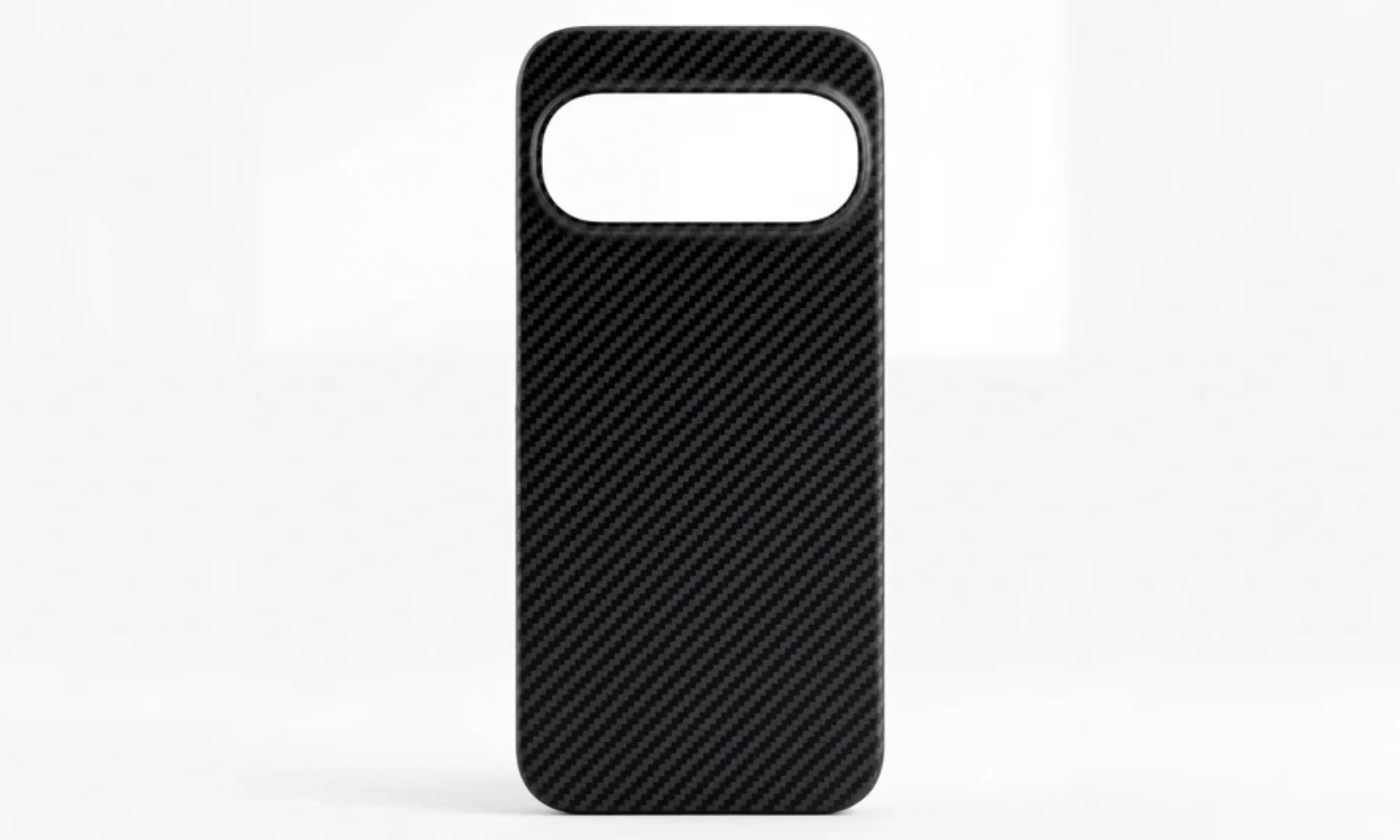
Thinborne, a Texas-based accessories brand known for its ultra-thin aramid fiber cases, has quietly listed a Pixel 11 Pro XL case on its website — and while the case itself is unremarkable, what its camera cutout suggests about the phone’s design is worth talking about.

The case itself isn’t the story

The case is classic Thinborne: 0.9mm thick on the back, 0.6mm on the sides, made from 600D aramid fiber, MagSafe compatible, and bundled with a tempered glass screen protector.

Nothing about it screams news story. But the camera cutout is where things get interesting — it lines up closely with the oval camera bar on the current Pixel 10 Pro XL, suggesting the Pixel 11 Pro might be landing with a very similar footprint and camera module layout to its predecessor.

That wouldn’t be entirely out of character for Google — the Pixel 10 Pro’s design was already described as a slight modification of the Pixel 9 Pro, keeping the same flat sides, rounded corners, and oval camera bar.

Advertisement

Google may be sticking with the same design

If the Pixel 11 Pro follows the same pattern, Google is clearly not in a rush to reinvent the look. What it might do — and typically does every generation — is refresh the colour lineup, which tends to be where the design energy goes anyway.

That said, take all of this with a generous pinch of salt. Thinborne is working from unconfirmed information, and the “Pixel 11 Pro XL” name on the listing could just as easily be a placeholder or a wrong product name entirely — case makers sometimes pre-list devices based on little more than educated guesses and supply chain whispers.

Google tends to announce its Pixel flagships in August, and there’s no reason to think 2026 will be any different.

So there’s still a good five months before anything becomes official — plenty of time for more case listings, more leaks, and more reading between very thin lines.

Advertisement

Source link

Continue Reading

Tech

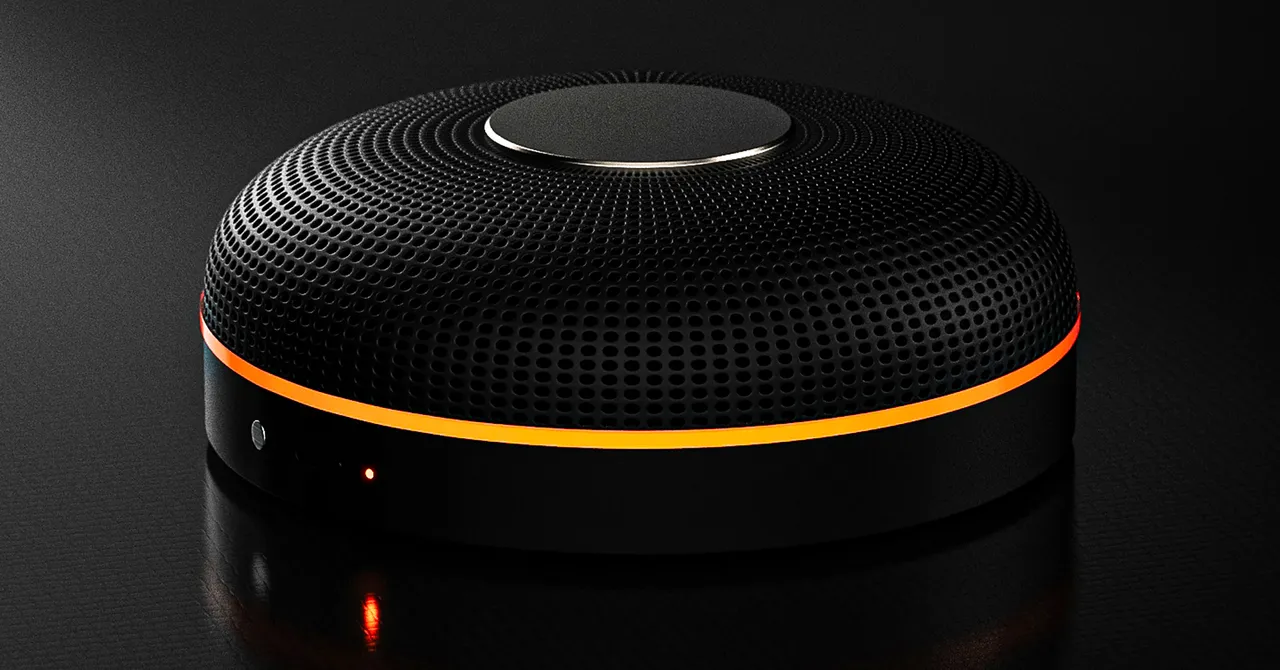
This Jammer Wants to Block Always-Listening AI Wearables. It Probably Won’t Work

Published

on

Deveillance also claims the Spectre can find nearby microphones by detecting radio frequencies (RF), but critics say finding a microphone via RF emissions is not effective unless the sensor is immediately beside it.

“If you could detect and recognize components via RF the way Spectre claims to, it would literally be transformative to technology,” Jordan wrote in a text to WIRED after he built a device to test detecting RF signatures in microphones. “You’d be able to do radio astronomy in Manhattan.”

Deveillance is also looking at ways to integrate nonlinear junction detection (NLJD), a very high-frequency radio signal used by security professionals to find hidden mics and bugs. NLJD detectors are expensive and used primarily in professional contexts like military operations.

Even if a device could detect a microphone’s exact location, objects around a room can change how the frequencies spread and interact. The emitted frequencies could also be a problem. There haven’t been adequate studies to show what effects ultrasonic frequencies have on the human ear, but some people and many pets can hear them and find them obnoxious or even painful. Baradari acknowledges that her team needs to do more testing to see how pets are affected.

Advertisement

“They simply cannot do this,” engineer and YouTuber Dave Jones (who runs the channel EEVblog) wrote in an email to WIRED. “They are using the classic trick of using wording to imply that it will detect every type of microphone, when all they are probably doing is scanning for Bluetooth audio devices. It’s totally lame.” Baradari reiterates that the Spectre uses a combination of RF and Bluetooth low energy to detect microphones.

WIRED asked Baradari to share any evidence of the Spectre’s effectiveness at identifying and blocking microphones in a person’s vicinity. Baradari shared a few short videoclips of people putting their phones to their ears listening to audioclips—which were presumably jammed by the Spectre—but these videos do little to prove that the device works.

Future Imperfect

Baradari has taken the critiques in stride, acknowledging that the tech is still in development. “I actually appreciate those comments, because they’re making me think and see more things as well,” Baradari says. “I do believe that with the ideas that we’re having and integrating into one device, these concerns can be addressed.”

People were quick to poke fun at the Spectre I online, calling the technology the cone of silence from Dune. Now, the Deveillance website reads, “Our goal is to make the cone of silence become reality.”

Advertisement

John Scott-Railton, a cybersecurity researcher at Citizen Lab, who is critical of the Spectre I, lauded the device’s virality as an indication of the real hunger for these kinds of gadgets to win back our privacy.

“The silver lining of this blowing up is that it is a Ring-like moment that highlights how quickly and intensely consumer attitudes have shifted around pervasive recording devices,” says Scott-Railton. “We need to be building products that do all the cool things that people want but that don’t have the massive privacy- and consent-violation undertow. You need device-level controls, and you need regulations of the companies that are doing this.”

Cooper Quintin, a senior staff technologist at the Electronic Frontier Foundation, echoed those sentiments, even if critics believe Deveillance’s efforts to be flawed.

“If this technology works, it could be a boon for many,” Quintin wrote in an email to WIRED. “It is nice to see a company creating something to protect privacy instead of working on new and creative ways to extract data from us.”

Advertisement

Source link

Continue Reading

Trending

Copyright © 2025