The six-year Bachelor of Medicine, Bachelor of Surgery has welcomed its first intake of 30 students this semester.
The University of Limerick (UL) has launched a “historic” new direct entry medicine programme, the first new direct entry undergraduate medicine programme developed in Ireland since 1854.
The six-year Bachelor of Medicine, Bachelor of Surgery programme has welcomed its first intake of 30 students this semester and aims to underscore the university’s role in advancing education and healthcare in the country.
The programme will include problem-based learning and the use of electronic cadavers, simulation technologies and advanced models to support anatomy and clinical skills, and will be structured in three stages across six years.
Advertisement
The first stage focuses on building a foundation in medicine; the second stage will involve students learning how to apply science to clinical practice with an exposure to patient care; the final stage prepares students for future practice, focusing on clinical placements and developing skills to improve patient and population health.
The course was launched by the Minister for Further and Higher Education, Research, Innovation and Science James Lawless, TD, who said, “Today’s launch is a landmark moment for medical education in Ireland.
“As the first new direct entry undergraduate medicine programme established in this country since 1854, it reflects both the ambition of University of Limerick and our commitment to building the healthcare workforce Ireland needs for the future.
“For the students starting this journey, it is the beginning of an exciting and rewarding career path. This programme creates a new opportunity for talented young people to pursue medicine while helping to strengthen healthcare services for future generations.”
Advertisement
UL president Prof Shane Kilcommins added, “Innovation in education has been at the heart of University of Limerick since our earliest days, and this new direct entry medicine programme is a powerful expression of that tradition. The establishment of Ireland’s first new direct entry medical degree in well over a century and a half demonstrates UL’s capacity to lead, innovate and deliver in areas of strategic national importance.
“Together with our graduate entry medicine programme and our broad ecosystem of health sciences programmes, this initiative further cements UL’s position as a centre of excellence in health professional education.”
Don’t miss out on the knowledge you need to succeed. Sign up for the Daily Brief, Silicon Republic’s digest of need-to-know sci-tech news.
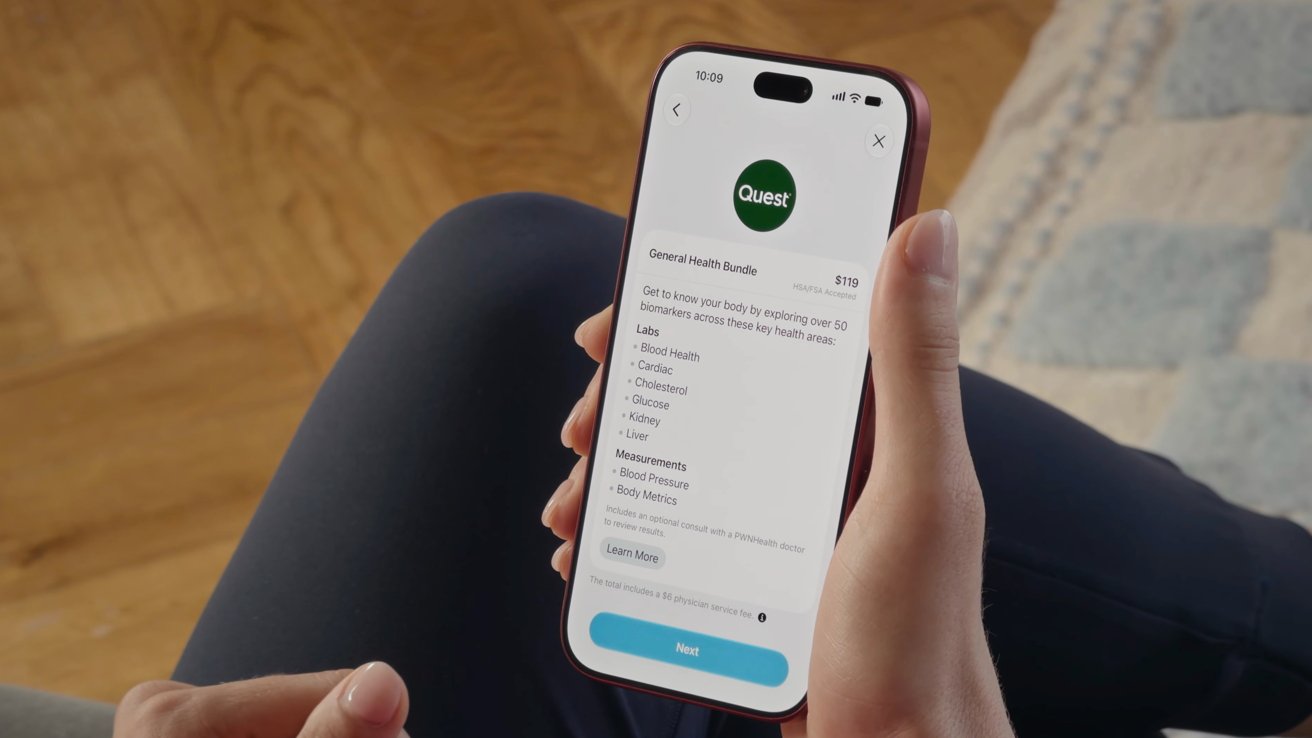
The upgraded Apple Health experience can pull from hundreds of data points, but if you don’t have recent lab results to provide, a Quest panel can be ordered through the app without getting a doctor’s order.
Apple Health will soon get new features built around Apple Intelligence. Every data point that can be included will help provide a holistic view of your health, but not everyone has ease of access to medical labs.
If you’ve already got a medical provider and had labs done recently, they may already be in Apple Health through Health Records, or can be provided via PDF. For everyone else, Apple has partnered with Quest Diagnostics to provide a comprehensive set of labs, on demand.
The service can be found and ordered in the new Apple Health experience when it launches later in 2026. It will cost $119 for a panel that pulls over 50 biomarkers.
Advertisement
The labs will be performed at one of 2,000 locations found across the United States. It’s a much cheaper option than ordering the labs manually, especially if you don’t have active insurance.
Apple Health’s Lab Results tab was already quite comprehensive and included desired levels and explanations. The lab results Apple Health looks for will require blood work, urinalysis, and body measurements.
The information listed in the UI shown during the event suggests quite the range of biomarkers. They are:
Blood Health
Cardiac
Cholesterol
Glucose
Kidney
Liver
Blood Pressure
Body Metrics
Quest doesn’t have locations in every state, so some may need to travel to get the labs done. If the distance becomes too cost-prohibitive, look into getting labs done at a local clinic.
The $119 can also be paid using HSA or FSA funds, though that may or may not cover the included $6 physician service fee.
Advertisement
Once the Quest labs are done, they’ll automatically be populated in the Apple Health app. These results can be useful for understanding your overall health, and will be an excellent data point for Apple’s new AI-powered health app.
The Quest labs also include an optional doctor consultation to review results.
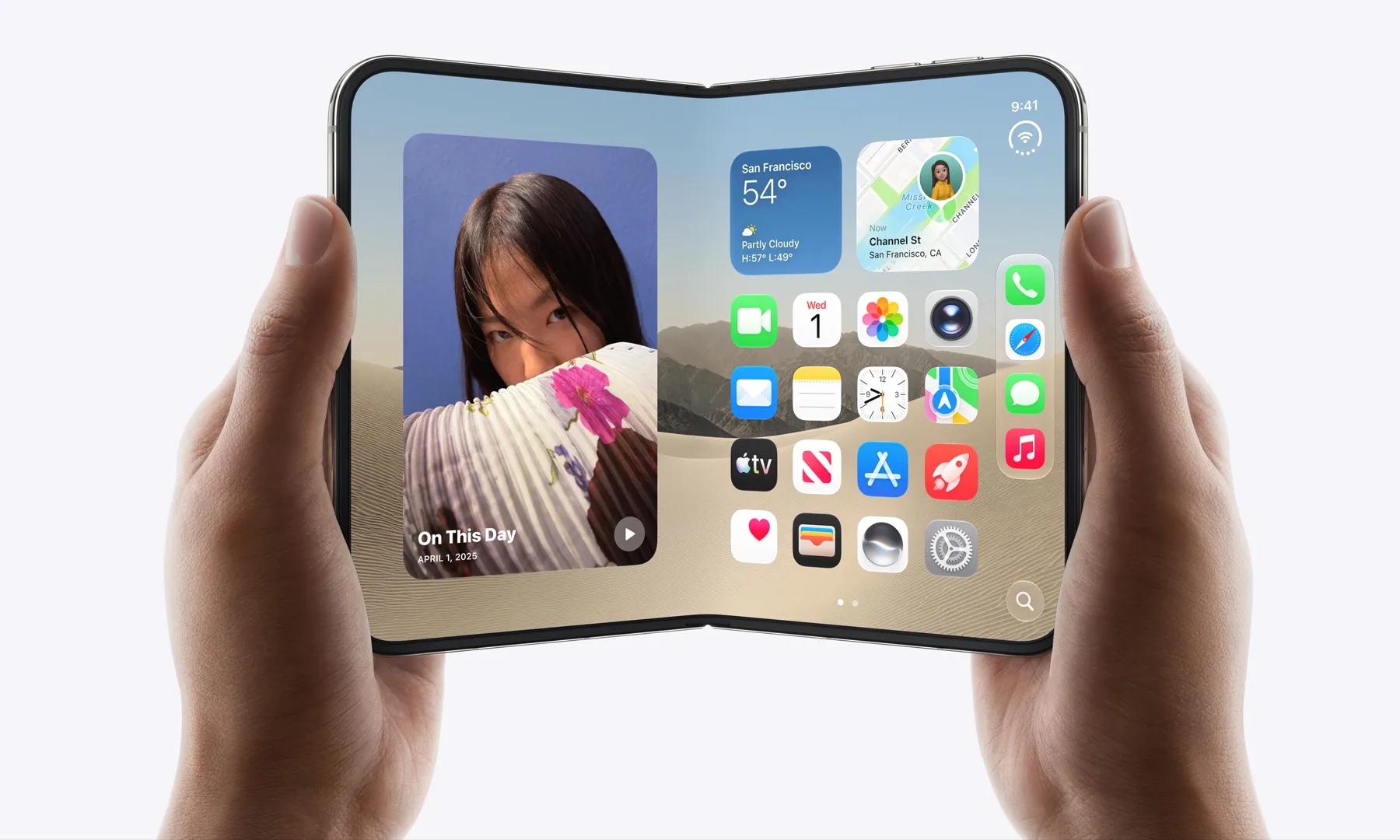
Apple’s recent announcement has been one of the most talked-about in recent years, with plenty to unpack in Apple’s newest iPhones. The iPhone 18 Pro gets variable aperture, more camera controls, and much more, while the iPhone Duo is easily the biggest change to the iPhone’s shape in years.
I can appreciate a faster processor or another camera feature, but neither matters much when I’m looking for a charger halfway through a busy day. Apple made a big jump with the iPhone 17 Pro generation last year, and the 18 Pro lineup thankfully keeps moving in the same direction.
Apple
The Pro Max gets the upgrade I wanted
Apple’s US battery claims show a fairly healthy improvement over the previous generation:
Model
Video playback
Streamed video
iPhone 17 Pro
Up to 33 hours
Up to 30 hours
iPhone 18 Pro
Up to 36 hours
Up to 33 hours
iPhone 17 Pro Max
Up to 39 hours
Up to 35 hours
iPhone 18 Pro Max
Up to 45 hours
Up to 40 hours
Apple rates the 18 Pro for three additional hours of both local and streamed video, and the Pro Max jumps by six hours of video playback and five hours of streaming. Aside from the new chipset, the biggest change that explains the difference is the batteries. On models with a physical SIM tray, MacRumors found the iPhone 18 Pro at 4,056mAh, just 1.7% larger than the 17 Pro’s 3,988mAh battery. The 18 Pro Max climbs to 5,391mAh, an 11.7% increase from 4,823mAh.
Apple
A20 Pro moves to a 2nm process, and Apple’s new C2 modem consumes 15% less energy than C1X, according to the company. So efficiency is doing plenty of the work. Charging also improves, with the 18 Pro models reaching 50% in around 15 minutes, down from 20 minutes on the 17 Pro generation.
The iPhone Duo surprised me even more
When the rumors of the foldable iPhone started seeming more concrete, my expectations for its battery life were conservative, to say the least. Foldables have more display to power and far less convenient internal space for a giant rectangular battery. Apple, like the brands before it, split the solution across two cells, putting one on either side and managing them as a single battery. It also made the Duo eSIM-only worldwide to free up additional internal space.
Advertisement
The results? Better than I expected:
iPhone Duo
Galaxy Z Fold 8
Battery capacity
Apple hasn’t disclosed it
4,800mAh
Video playback
44 hours outer / 31 hours inner
Up to 26 hours
Nadeem Sarwar / Digital Trends
Apple’s figures are especially interesting because the 31-hour inner-screen rating still exceeds Samsung’s 26-hour Fold 8 video-playback claim. If you stick to the smaller cover screen alone, the Duo stretches endurance all the way to 44 hours. Manufacturer test methods differ, so I wouldn’t treat those numbers as a laboratory head-to-head. They still give us a useful idea of what each company is targeting.
Another wide foldable rival that makes an interesting comparison is the Xiaomi 18 Fold, which is in a league of its own. Xiaomi managed to pack a massive 6,000mAh silicon-carbon battery. While there is no comparable official playback-hour figure that I could verify, but just the raw capacity alone gives it an edge.
I’ll reserve judgment until we’ve properly tested all three new iPhones, because manufacturer battery claims never tell the entire story. But this is definitely a step in the right direction. Apple already made the iPhone 17 Pro one of the rare smaller flagships I could trust to comfortably get through a demanding day. In our tests, the 17 Pro could regularly finish the day with around 15% to 20% remaining, even with hours of Bluetooth music streaming.
Now the regular Pro goes farther, the Pro Max gets one of the biggest battery jumps in the lineup, and Apple’s first foldable doesn’t make compromises for users who choose the larger screen. Those are upgrades I will notice long after I’ve stopped playing with the new camera settings.
from the incompetent-bipartisan-xenophobic-protectionism dept
If you enjoy badly written bipartisan protectionist tech legislation designed primarily to coddle giant U.S. companies under the xenophobia-tinged breathless pretense of privacy and national security, you are really going to enjoy the next twelve to twenty-four months.
While the U.S. drowns in corrupt kakistocracy, the Chinese are making significant market inroads in everything from AI to EVs. That’s resulted in U.S. companies applying greater and greater pressure on U.S. lawmakers to simply ban Chinese goods. The Trump administration’s adoption of this policy has been a hot and sloppy protectionist mess, incompetently implemented and unsubtly racist.
Automakers are particularly worried about cheaper, better Chinese EVs making their way to the U.S. So under the banner of the misleadingly named Alliance for Automotive Innovation, they’re pressuring U.S. lawmakers to enact a ban on Chinese EVs. You know, because they’re very worried about privacy and national security:
“Right now, Chinese automakers are dumping subsidized vehicles with connected software and hardware around the world,” John Bozzella, CEO of the group, said in the letter seen by CNBC. “This hasn’t happened inside the U.S. yet, but given the scale and urgency of this threat, we urge you to enact a Chinese vehicle, software and hardware ban before adjourning this year and make this policy the law of the land.”
“Enacting a permanent ban on Chinese vehicles and high-risk hardware and software in the 119th Congress will send a clear and bipartisan message that China’s strategy to dominate global automotive manufacturing will be met with a national security policy response from the American government,” Bozzella said.
Advertisement
So for one, I like how the auto industry throws the word “subsidized” around as if they haven’t enjoyed generations’ worth of their own pointless subsidies. Two, the U.S. auto industry has some of the worst privacy standards and ratings of any industry in America, and sell the entirety of your driving, personal, and behavior data to any old random asshole in a country too corrupt to pass privacy laws.
Failing to secure your own vehicles and fighting tooth and nail against any privacy safeguards… then ranting incoherently about the threat of Chinese tech on U.S. shores is not serious policy. Our failure to regulate data brokers or pass modern privacy laws means the Chinese simply buy this same data from any of dozens of dodgy companies already, making a lot of this stuff lazy pantomime.
We’ve seen this before: Democratic lawmakers in Michigan recently tried to ban Chinese EVs from even visiting the state, suggesting that automakers are afraid of Americans even getting to look at overseas alternatives. The justification (by folks who are are, again, completely absent when it comes to any sort of domestic U.S. privacy standards) is they were just very concerned about U.S. consumer privacy.
I maintain that ideally you allow Chinese companies to compete in the U.S. market, but you fund, staff, and legally protect your labor, consumer, competition, and environmental regulators so that companies are all genuinely competing on a level playing field. You boot or penalize obvious bad actors on privacy, security, competition, and consumer protection, both foreign and domestic.
Advertisement
U.S. corporate giants don’t much want that, given it means more oversight, more competition, and diminished quarterly returns. So what we often get instead is a sort of a corrupt-fueled incompetent rank protectionism that’s highly performative but still broadly harmful.
And while you could theoretically implement protectionism in a way that’s coherent, the U.S. is too corrupt to do that. So what you get is stuff like the TikTok ban, which was driven by years of hysteria about Chinese spying and propaganda, only to result in a bipartisan array of lawmakers shoveling TikTok off to Trump’s billionaire autocrat friends, which was not any net improvement.
Or you get stuff like the “race to 5G,” which involved U.S. policymakers being told that the only way to keep pace with Chinese 5G was to give U.S. telecoms less oversight, more pointless subsidies, and approval for their terrible mergers (the U.S. lost the “race to 5G” in terms of reach, network quality, and affordability then immediately just… stopped talking about it).
As a backdrop we have a U.S. corporate press that’s incapable of expressing how badly any of this is going in practice (often because affluent media ownership supports the administration and its mindless deregulation), resulting in this strange disconnect between material reality and the performance lawmakers put on to convince themselves they’re doing serious and useful policy.
If U.S. policymakers cared about privacy and national security they’d pass a meaningful modern privacy law (with powerful penalties for U.S. companies or executives), and they’d regulate data brokers. If they cared about national security, they’d eject Donald Trump from the body politic. Unless they’re doing these things, they’re not really worth taking seriously on privacy or national security.
With cheaper Chinese AI models threatening U.S. tech giants’ dreams of software automation walled garden dominance, you can expect all of this sort of performative dysfunction to get much much dumber, supported by the press and the kind of folks who’ll talk your ear off over cocktails about how much they love free markets and the kind of innovation forged in the furnace of real competition.
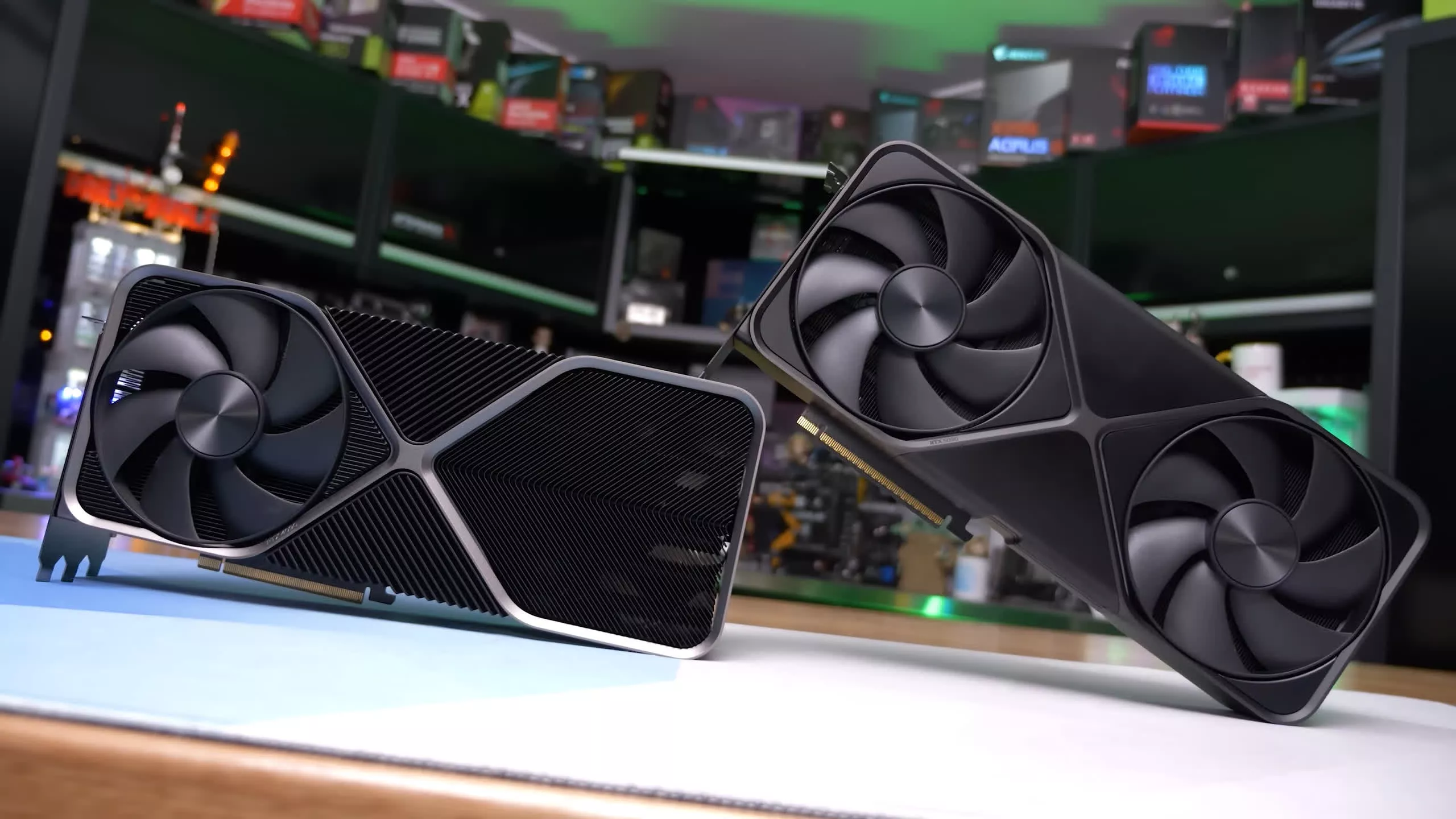
In a nutshell: The Nvidia RTX 5090 has long been plagued by catastrophic thermal failures that can cause its 16-pin power connector to melt under heavy workloads. In an effort to find a solution to the overheating issue, a team of tech YouTubers has reportedly created the world’s first RTX 5090 graphics card to use 8-pin power connectors instead of a 16-pin design.
Brazilian YouTube channel TecLab has demonstrated that an RTX 5090 can be connected to a PSU using standard 8-pin connectors instead of 16-pin ones, despite its 575W TDP. To perform the experiment, the modders used a Galax HOF OC LAB RTX 5090, which is designed to use two 16-pin connectors. However, the team claims that the card can even function with three 8-pin connectors.
As part of its effort to find an alternative to the 16-pin design, the team initially tested the card using XT90 power connectors, which support up to 90 amps each. They eventually opted for three 8-pin Mini-Fit Jr. connectors after making the necessary modifications, which involved tricking the sensors into accepting the new configuration.
Advertisement
The YouTubers put their plan into action by connecting the Sense 0 and Sense 1 pins, allowing the card to continue operating at its full TDP despite switching from a dual 16-pin to a triple 8-pin design. The modified card had nine +12V rails, each supporting around 8 – 8.5 amps. The team says the changes were limited to the hardware and did not require any firmware modifications.
To test the modified card, TecLab gradually increased the power threshold from 400W to 900W while closely monitoring the voltages and temperatures. The card operated at an impressive 3.4GHz while drawing around 70 amps on the 12V rails. The setup remained stable throughout the test, staying well within the recommended electrical and thermal safety margins.
The card was also tested with a peak current of 120A at 3.4GHz, and it still passed the test with flying colors, with operating temperatures reaching only around 35 degrees Celsius. The modders also tested the card with just two 8-pin connectors instead of three, and even that configuration was able to keep temperatures below 25 degrees Celsius, with the card drawing 66A while running at more than 3.2GHz.
Just days before releasing the latest video, TecLab demonstrated another solution to the RTX 5090’s overheating problem by routing the power wiring directly to the GPU’s PCB. The channel claimed that bypassing the 16-pin power connectors was a foolproof way to end “meltgate” for good, but acknowledged that it is not a practical solution for most gamers.
153 million US driving licences have been leaked on a Russian cybercrime platform
Among those apaprently discovered in the stolen data is US Secretary of Defense Pete Hegseth
The FBI is now investigating the leak, which has been traced to an identity verification company
A data leak of 153 million US drivers licenses is said to have been shared on a Russian cybercrime forum, with US Secretary of Defense Pete Hegseth among those leaked prompting an FBI investigation.
Security researcher Brian Krebs identified the leak – which included his own data – as originating from a hack of an identity verification service. Louisiana-based IDScan provided ID verification for various well-known companies, including FedEx and Hertz car hire.
The data was shared on a Russian forum called Exploit, a long-established online community of cybercriminals. Following news of the leak, the identity theft service “Nexus” has apparently scrubbed its existence from the Dark Web.
Latest Videos FromTechRadar
Advertisement
Driving licenses and more
It wasn’t just US driving licenses that were found in the archive of recently-collected personal data. Krebs’ investigation found that Nexus claimed other types of data, and found a further 1.1 million driving licenses from Canada.
Other identity documentation alleged to be in the leak include 10 million identification cards, three million travel documents and international IDs, and 579,000 medical cards. The data was available to browse, notes Krebs, with Nexus providing details: “Records are available to preview before purchase with pertinent information redacted. Customer photos are displayed if available.”
The leak has a personal dimension for Krebs. Not only was his driving license in the collection, so was that of his mother. It has proved to be a useful coincidence, one that has enabled the security and privacy researcher to establish how the data was sourced by Nexus.
Both licenses were used for a car hire, which Krebs traced to Hertz. Others affected by the leak had also used the service, which has used New Orleans-based IDscan for identity verification.
Sign up to the TechRadar Pro newsletter to get all the top news, opinion, features and guidance your business needs to succeed!
The company, which claims to perform 21 million verifications a month, is yet to issue a statement on the matter. Its marketing and operations leader, Jillian Kossman, told the journalist: “At this point I’m not able to share any additional information, but the updates you have provided have been welcome, and helpful to our team’s investigation.”
Advertisement
Where is the data?
Krebs reports that he was alerted to the data on August 31, 2026, little over a week ago. Regular checking noted that the data was still being added to, increasing by “nearly 400,000” records prior to publishing his investigation on September 1.
Since then, however, it seems that Nexus has vanished, along with the data. But how widely was the data downloaded before that happened? While the FBI investigates, it falls on the American and Canadian public to be extra vigilant and wary of identity fraud.
This post is brought to you in paid partnership withMSI
Not every AI task needs the scale of the cloud. An employee searching company documents, a retail kiosk answering product questions, or a digital sign reacting to customer behavior all need fast responses, but they don’t necessarily need to send every prompt to a remote data center. Running those workloads locally reduces latency, keeps sensitive information closer to where it’s generated, and can lower the ongoing cost of AI deployments. As a result, many organizations are moving toward hybrid AI architectures that handle routine requests on-device while reserving cloud models for tasks that genuinely need more processing power.
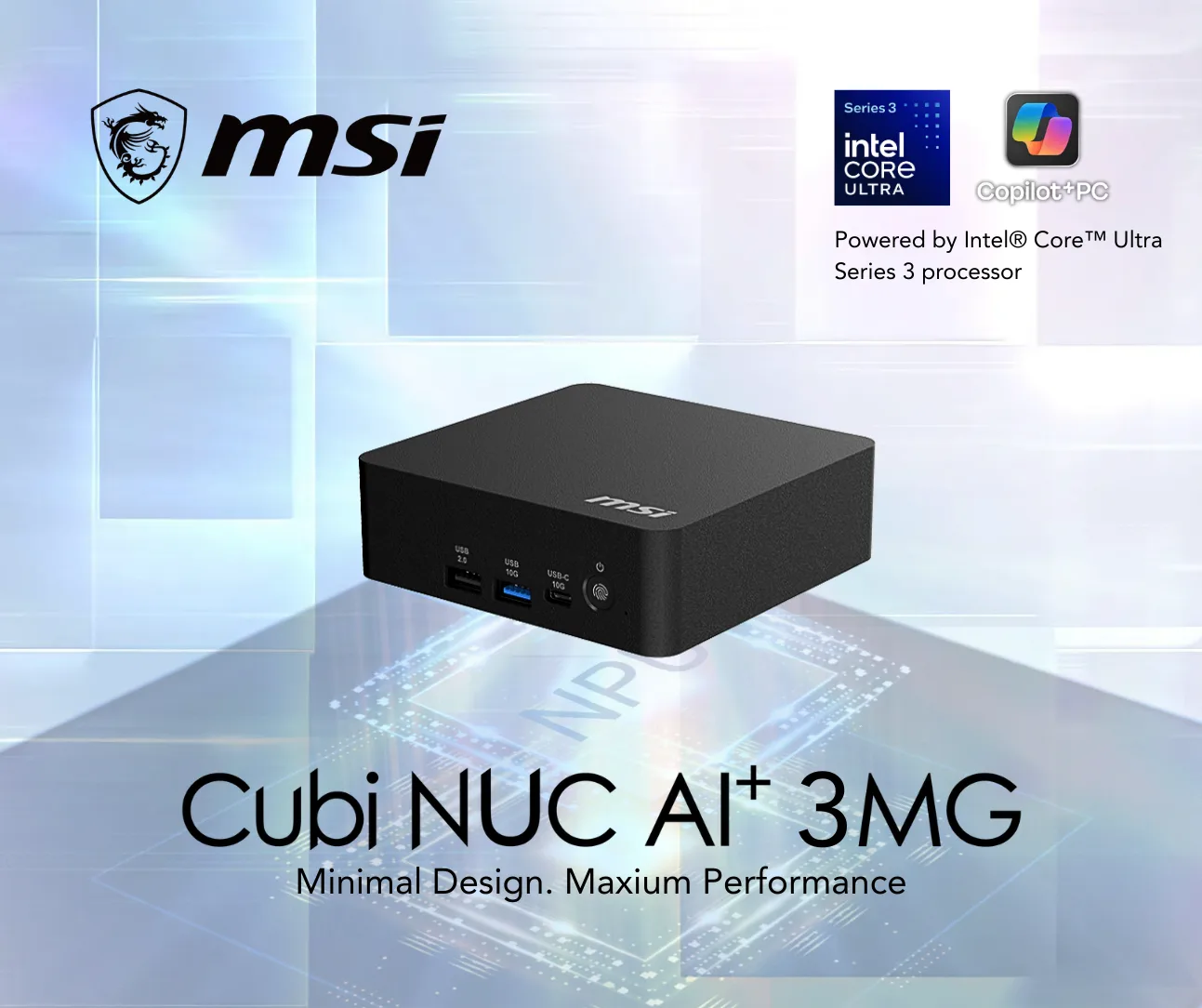
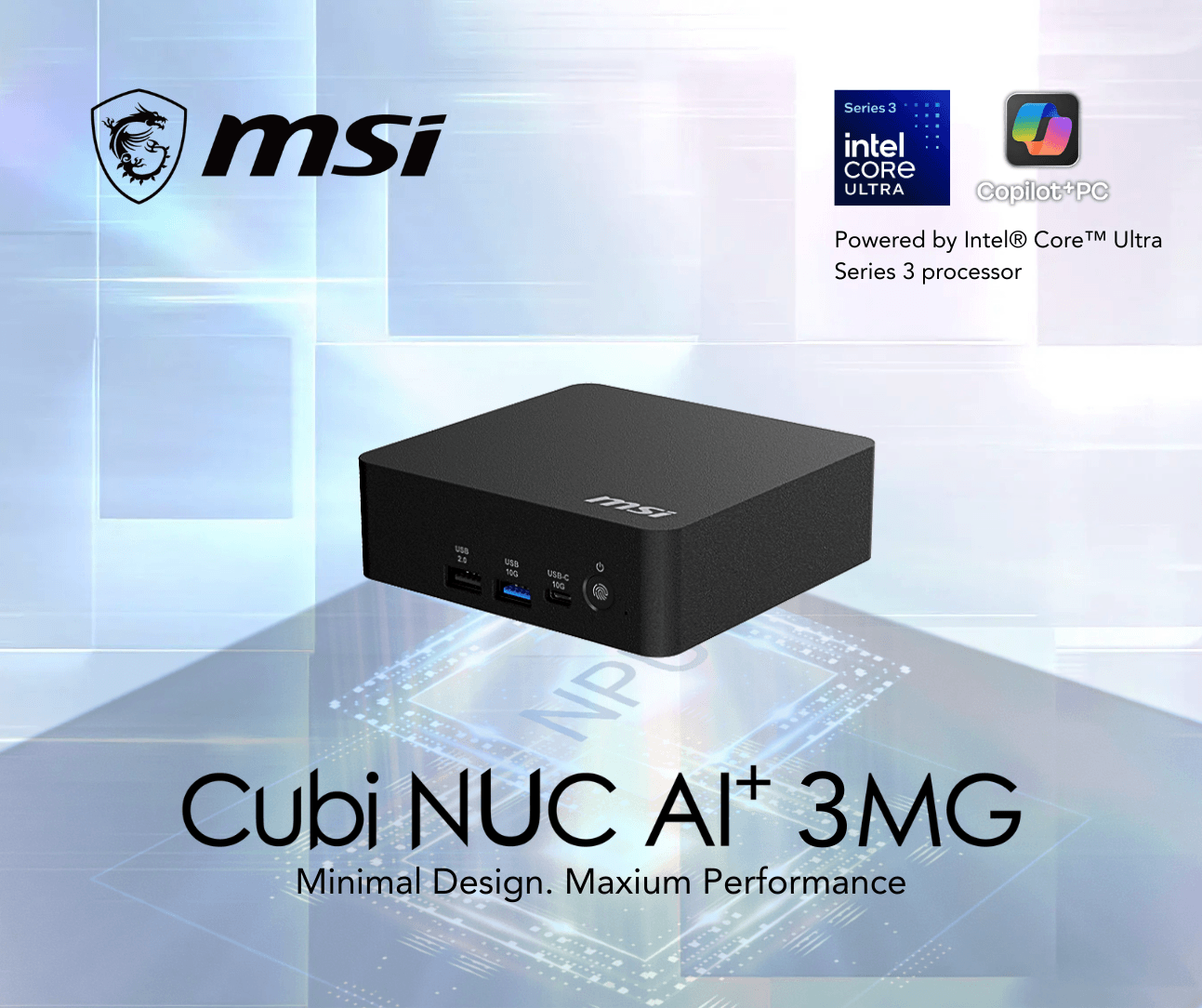
Hardware has evolved alongside that shift. Systems like the MSI Cubi NUC AI+ 3MG, powered by Intel’s Core Ultra Series 3 platform, combine a CPU, Xe3 GPU, and dedicated Neural Processing Unit (NPU) in an ultra-compact chassis. Instead of relying on one processor to do everything, each component handles the workloads it’s best suited for, making it possible to run quantized language models, retrieval pipelines, and AI workflows locally before reaching for cloud resources only when necessary. The platform delivers up to 100 TOPS (Tera Operations Per Second) of theoretical AI performance across the CPU, GPU, and NPU, although real-world performance depends on the model, workload, and configuration.
Building a local AI agent, in practice, means pairing that hardware with a software layer that can plan a response, retrieve the right information, and decide in real time whether a request stays on-device or gets escalated to something bigger. It isn’t about replacing the cloud altogether, rather it’s about deciding which workloads benefit from staying at the edge and which are better served by larger models. Getting that balance right starts with understanding how local AI differs from cloud AI, what role hybrid deployments play, and what kind of hardware is required to support them.
Advertisement
Why businesses are bringing AI agents to the edge
Cloud AI transformed how businesses adopted generative AI because it removed the need to invest in expensive infrastructure. Teams could access powerful language models through an API and start building applications almost immediately. Cloud models still make the most sense for complex reasoning, large-scale content generation, and workloads that demand the latest frontier models.
Many day-to-day AI interactions, however, don’t require that level of processing power. Searching internal documentation, summarizing meeting notes, helping customers navigate a store, answering policy questions, or monitoring connected devices are repetitive tasks that benefit more from low latency and predictable performance than from the largest possible model. Sending every request to the cloud also means paying for every interaction while moving information outside the local environment, even when the task could have been completed on-device.
Privacy is another factor driving the move toward edge AI. Organizations working with financial records, healthcare data, intellectual property, or confidential business documents often need tighter control over where information is processed. Running an AI agent locally allows sensitive requests to remain inside the organization’s network by default, reducing unnecessary data transfers and making it easier to meet internal governance and compliance requirements.
Hybrid AI has emerged as the middle ground. Routine requests can be answered locally, while more demanding queries are escalated only when additional reasoning or specialized knowledge is required. Instead of choosing between local AI and cloud AI, organizations can combine local and remote resources and let routing policies decide which environment is best suited for each request.
Advertisement
Local AI vs. cloud AI: Which deployment model makes sense?
Hybrid deployments are becoming increasingly common because they offer the best of both approaches. Local hardware handles predictable, high-frequency tasks with minimal delay, while more powerful models remain available for requests that exceed the capabilities of the local system. The result is faster responses without losing access to more capable models when a request genuinely needs one.
The hardware behind a local AI agent
Running an AI agent involves far more than generating text. Every interaction passes through multiple stages, including understanding the request, retrieving relevant information, deciding whether external tools should be called, generating a response, and maintaining context for future interactions. Those workloads place very different demands on the hardware.
Modern AI PCs distribute those tasks across three different processing components instead of relying entirely on the CPU. The CPU manages orchestration and system logic, the GPU accelerates parallel AI workloads such as inference and embeddings, while the NPU is optimized for sustained, power-efficient AI processing using quantized models. Working together, they allow multiple AI tasks to run simultaneously without overloading a single component.
The MSI Cubi NUC AI+ 3MG follows that design philosophy. Intel’s Core Ultra Series 3 architecture combines CPU, GPU, and NPU resources within the same platform, giving developers the flexibility to distribute AI workloads instead of forcing every task through a single processor. Expandable memory, NVMe storage, support for up to four 4K displays, and high-speed networking also make the system suitable for edge deployments where AI often runs continuously rather than in short bursts.
Advertisement
Choosing capable hardware is only one part of the equation, though. The software stack determines how requests flow through the system, how documents are retrieved, when tools are called, and whether a query should stay on the device or be handed to a larger model. Understanding that architecture is the foundation for building a local AI agent that is both responsive and scalable.
MSI
Start with the tasks the local system can handle
Building an agent starts with defining the work it’s expected to perform. A system such as the MSI Cubi NUC AI+ 3MG can be configured for smaller, repeatable tasks where a lightweight local model has enough capability to deliver the required result.
An employee could use the system to proofread a document before sending it out, prepare a response to a routine email, summarize information from a set of files, or work through a simple office process. These tasks don’t necessarily require the largest available AI model, making them suitable candidates for a local agent.
The distinction between a chatbot and an agent becomes important here. A chatbot primarily responds to what a user types. An agent can take an instruction and work through the steps needed to complete it. If the task involves retrieving information, using an approved tool, processing a file, or carrying out several actions in sequence, the agent can coordinate those steps rather than leaving the user to perform each one manually.
In this type of configuration, the Cubi can consequently serve as the first layer in the workflow, taking care of routine requests directly on the machine.
Advertisement
Adding the agent layer
The hardware provides the foundation, but the agent itself comes from the software stack. A local language model can generate text, but an agent needs additional capabilities to interpret instructions, manage steps, interact with tools and return a completed result.
Tools such as Hermes Agent can be used to build this kind of lightweight agentic setup on the Cubi. The exact configuration will depend on the tasks involved and the software environment, but the basic principle remains the same: the local model becomes one component within a system that can act on an instruction rather than simply answer it.
A typical workflow might begin with a request such as asking the agent to review a document. The agent can process the instruction, work with the relevant file, apply the required task and return the result. A similar setup can support routine email assistance or other structured office workflows, provided the necessary tools and permissions have been configured.
Keeping the initial workload focused is useful during deployment. Starting with a handful of predictable tasks makes it easier to evaluate response quality, resource requirements and the boundaries that should be placed around the agent.
Advertisement
Choosing the right local model
The language model is another important part of the setup. A compact AI PC is better suited to appropriately sized and optimized models than to treating every available model as an option.
Quantized models can reduce the resources required for local inference, making them a practical starting point for a mini PC. Models such as Mistral 7B, Llama 3 8B, or Phi can be evaluated according to the quality, speed and capabilities required by the particular workflow.
The model doesn’t have to perform every possible task. The objective is to find a model that’s capable enough for the jobs assigned to the local system while leaving sufficient resources for the agent framework and other applications running on it. Tools such as Ollama, LM Studio and Text Generation WebUI can also simplify the process of testing local models and configurations before settling on a deployment.
Give the agent access to the right tools
Agentic AI becomes more useful when it can work with the information and applications involved in an actual workflow. A local assistant intended for office tasks, for example, may need access to documents or other approved resources rather than relying entirely on information contained within the language model.
Advertisement
Retrieval-Augmented Generation (RAG) can be used to connect the agent with an organization’s own information. Instead of relying solely on what the language model learned during training, the agent can search internal documents, retrieve relevant information, and use it to generate a grounded response. This can help keep answers aligned with current policies, product documentation, or internal knowledge bases.
The same principle applies to permissions. An agent should have access only to the files, applications and actions it needs. Businesses can define which workflows are automated and what information the agent is allowed to use, creating a more controlled environment for everyday AI assistance.
Making the mini PC the edge agent
The next step is to give the mini PC a defined position within a larger AI architecture. Rather than expecting it to handle every possible workload, it can operate as the edge agent.
Routine requests remain with the local system. A proofreading task, a straightforward email response, a document-based question or another lightweight workflow can be processed by the local agent. More demanding requests can follow a different path when the local configuration isn’t sufficient.
Advertisement
The agent can be configured to consider factors such as workload complexity and the resources required before deciding where a request should be processed. If the Cubi isn’t equipped to handle a particular task, for example, it can route the request to a larger local system, allowing the workload to be completed without sending the organization’s information outside its own environment.
Connect the edge agent to a more powerful local AI system
A local AI deployment doesn’t necessarily have to choose between a mini PC and the cloud. A more powerful on-premises AI system can provide another layer for workloads that exceed what the edge system is configured to handle.
MSI’s wider AI PC portfolio provides examples of how that type of setup can work. The MSI EdgeXpert, powered by the NVIDIA GB10 Grace Blackwell platform (DGX Spark), can serve as a more powerful local inference system alongside the Cubi. The MSI PRO MAX EDGE AI+, powered by AMD Ryzen AI Max+ (Strix Halo), provides another example of the kind of higher-performance local system that can complement an edge mini PC.
Together, these systems can form a two-level architecture. The Cubi NUC AI+ 3MG acts as the edge agent, handling smaller and more frequent tasks, while EdgeXpert or PRO MAX EDGE AI+ can take on workloads that require substantially more processing power. This allows the organization to scale its local AI capabilities without making the cloud the automatic destination for every request.
Advertisement
For example, an employee could send a routine proofreading request to the Cubi and have it completed locally. A more demanding request involving a larger model or heavier inference could be routed onward to EdgeXpert or PRO MAX EDGE AI+. The user still interacts with the same overall AI workflow; the infrastructure underneath simply assigns the task to the system better suited to handle it.
The case for keeping AI processing local
The strongest argument for this architecture is control over information.
Reducing latency and cutting ongoing token and API costs are important reasons to process more AI workloads locally. For many organizations, though, privacy can matter even more. A cloud or hybrid architecture may offer greater convenience and access to larger models, but some environments require tighter control over where sensitive information is processed and whether it ever leaves the organization’s network.
That can include government agencies working with restricted information, schools responsible for protecting student data, law firms handling confidential case materials, and healthcare organizations managing sensitive patient information. In these environments, keeping appropriate AI workloads local can reduce unnecessary data transfers and give organizations greater control over how information is handled.
Advertisement
A routine task involving confidential material can therefore be handled by an edge system without automatically sending the underlying information to an external AI provider. If the task requires more processing power, the request can instead be directed to an approved local AI system, allowing the organization to preserve a local-first architecture even as workloads become more demanding.
The arrangement also changes how organizations think about AI costs. A business that sends thousands of small requests to an external API is effectively paying for every interaction. Moving appropriate routine workloads to local hardware can reduce the number of external token and API requests, while larger local systems can provide additional capacity for workloads that outgrow the mini PC.
Cloud AI can still have a role when a task genuinely requires capabilities that aren’t available locally. The advantage of the architecture is that the cloud becomes one option in the workflow rather than the unavoidable destination for every request.
What is the best way to scale a local AI agent?
A practical deployment can begin with the edge system alone. Install the local AI environment, select a suitable model, add the agent layer, and configure a small number of clearly defined workflows. Once those tasks are working reliably, the organization can identify which requests require more processing power.
Advertisement
A second, more powerful local AI system can then be introduced as the higher-performance layer. Routing rules can determine which tasks remain on the edge system and which are passed to the larger system. The organization can refine those rules as workloads become more varied.
A staged approach avoids turning a simple AI deployment into an infrastructure project from day one. The edge system remains useful as the everyday local layer even after additional processing resources are introduced.
Local, cloud, or both?
Building a local AI agent isn’t about abandoning the cloud. It’s about using local hardware where it offers the greatest advantage and treating cloud AI as an extension rather than the default destination for every request.
Modern mini PCs have reached the point where they can support that approach. Systems such as the MSI Cubi NUC AI+ 3MG combine CPU, GPU, and NPU resources in a compact form factor that can run language models and agentic workflows locally. Software such as Hermes Agent can provide the agent layer, while more powerful local systems can take over when a workload demands additional processing power.
Advertisement
For organizations exploring agentic AI, this creates a practical path toward a hybrid architecture. Routine tasks can stay close to where they’re generated, sensitive information doesn’t have to be sent to an external service by default, and cloud or higher-performance local resources remain available when they’re genuinely needed.
Frequently Asked Questions
Can a mini PC run a local AI agent?
Yes. Modern AI-focused mini PCs can run quantized language models, Retrieval-Augmented Generation (RAG), tool calling, and workflow orchestration locally. A system such as the MSI Cubi NUC AI+ 3MG can also be configured with an agent layer such as Hermes Agent to handle routine AI workflows directly on the PC.
What tasks can a local AI agent handle?
Suitable tasks include proofreading, routine email assistance, document processing, summarization, searching company information, and other basic office workflows that don’t require a large frontier model.
What is the advantage of hybrid AI?
Hybrid AI combines the speed and privacy of local inference with the flexibility of additional processing resources. Routine requests can stay on-device, while more demanding tasks can be routed to a larger local system or cloud model when needed.
Advertisement
Why is an NPU important for AI workloads?
An NPU is designed to perform sustained AI inference efficiently while consuming less power than relying on the CPU or GPU alone. It’s particularly well suited to running quantized AI models over extended periods.
Can local AI agents access company documents?
Yes. By adding a Retrieval-Augmented Generation (RAG) layer, AI agents can search internal documents stored in vector databases and use that information to generate grounded responses.
What happens when a workload outgrows a mini PC?
Hybrid routing can send it to the cloud or to a more powerful on-premises system. In a local-first architecture, a system such as the MSI Cubi NUC AI+ 3MG can handle routine requests at the edge while more demanding workloads are routed to systems such as MSI’s EdgeXpert or PRO MAX EDGE AI+.
Does local agentic AI eliminate the need for cloud AI?
No. Cloud AI can still be useful for workloads that require capabilities or processing power beyond the local environment. The advantage of a local-first setup is that routine requests don’t have to be sent to the cloud by default.
Advertisement
How does local AI reduce API or token costs?
Routine requests processed locally don’t need to generate an external API request. For organizations handling large volumes of smaller AI tasks, reducing those cloud interactions can lower usage-based token and API costs.
This content is paid for by the brands indicated. Digital Trends works closely with advertisers to highlight their products and services to our readers. Although this article is informational and not opinionated, it reflects thorough fact-checking by our team to ensure accuracy. Our dedicated partnerships team, not external advertisers, crafts all branded content in-house. For more information on our approach to branded content, click here.
A threat actor, likely Russian-speaking, used hundreds of AI agents to develop and launch a global exploitation campaign targeting vulnerable PaperCut NG/MF servers.
The agents were tasked with building, testing, and refining exploits for CVE-2026-81578 and CVE-2026-82078, both security flaws affecting PaperCut Software and flagged as actively exploited earlier this month.
Attack and threat intelligence company GreyNoise says the campaign began on August 31, combining OpenAI’s Codex and DeepSeek models with commodity offensive tools.
The AI agents also generated target lists through the Netlas internet scanning and discovery platform.
Advertisement
GreyNoise data indicates that the operation compromised at least 440 PaperCut instances linked to 395 distinct organizations across 48 countries.
The attacker harvested credentials from 280 victims, obtained operating system or domain secrets from 147, and obtained administrator privileges at 12 organizations.
Most of the victims were in the education sector, accounting for roughly half of all breaches. The United States was the most targeted country, followed by the United Kingdom, France, Spain, and Canada.
According to GreyNoise, the threat actor specified a list of countries to avoid, including Russia, China, Iran, Ukraine, Belarus, Moldova, Brazil, and South Africa. However, the agents did not consistently follow these rules.
Advertisement
GreyNoise underlines that AI enables attackers to launch rapid attacks that leave defenders with very tight response margins.
“The adversary went from an empty workspace to first achieving RCE against a real victim in just under four hours, first domain admin in an additional two hours, and once the full campaign launched, compromised at least 11 organizations in 26 seconds,” GreyNoise notes.
“In one instance, the adversary went from initial access to full domain administrator in seven minutes against a high school in the United States.”
Attack timeline Source: GreyNoise
The researchers observed three attack paths after exploiting the PaperCut flaws:
Dumping LSASS memory and registry secrets from domain-joined PaperCut servers, then passing recovered credential hashes to domain controllers (“pass-the-hash” attack).
Using the “noPac” attack against environments still vulnerable to CVE-2021-42278 and CVE-2021-42287.
Directly adding a newly created account to Domain Admins when PaperCut ran on a domain controller or under a domain administrator service account.
In all cases, the attackers used the DCSync post-exploitation technique to obtain a complete NTDS.DIT dump with domain credentials.
The attacker’s toolkit includes Ligolo-ng, Mimikatz, Certipy, BloodHound, Rubeus, Impacket, NetExec, and custom Rust credential-collection utilities.
Advertisement
GreyNoise could not determine the attacker’s campaign objective, but the access could be used for data theft or ransomware operations.
System administrators are advised to apply PaperCut’s emergency security updates addressing CVE-2026-81578 and CVE-2026-82078 immediately, and follow the vendor’s recommendations in this bulletin.
Overall prevention scores can hide what happens after initial access. Once attackers are using valid credentials, prevention drops sharply.
The Blue Report 2026 measures defenses technique by technique across 338 million simulations run in customer production environments.
The September update for Amazon’s cloud-based gaming service Luna comes with multiple new features, the most prominent of which is one that will allow up to 7 other players to remotely participate in the same gaming session.
Since its aggressive relaunch earlier this summer, Amazon has pinned its hopes for Luna on multiplayer games and the casual market. Anyone with an active Amazon Prime subscription has access to Luna and can launch it directly from the Prime Video app, which allows them to stream an assortment of video games to their TV, browser, or tablet via Amazon’s cloud servers.
This includes around 60 casual-friendly multiplayer games, designed to be playable by just about anyone of any age as a group activity, and some of which are exclusive to Luna as a platform.
Its newest feature, Remote Play, changes how multiplayer titles work on the service. One player with a Prime subscription can now invite up to 7 other people to participate remotely in a multiplayer Luna game, as long as all 7 of those people have an account on Amazon and a compatible device. This reportedly works with every multiplayer game on Luna, including those that formerly required every player to physically be in the same room.
Two new games have been added to Luna’s library that specifically take advantage of Remote Play. This includes a Luna-exclusive mobile version of Magic: The Gathering creator Richard Garfield’s 2011 board game King of Tokyo, in which players take the role of giant monsters fighting one another in the ruins of Japan.
Advertisement
(Amazon press image)
Other additions to Luna this month include access to two relatively recent games from the French publisher Ubisoft: 2024’s Star Wars: Outlaws and 2023’s Avatar: Frontiers of Pandora, the latter of which is set in the universe of James Cameron’s film franchise.
Amazon has not shared user data for Luna since its recent relaunch, so it’s difficult to tell from outside the company how much of an audience it’s been able to build. Luna represents a bet by Amazon that, in the midst of the ongoing component crunch and the related rise in hardware costs, it can build an audience by offering access to popular video games via whatever devices people might already have in their homes.
A few years ago, cloud gaming as a whole was one of the major topics in the games industry, with some analysts going so far as to predict that it was the future of hardware. Instead of purchasing an Xbox or PlayStation in your own home, you’d simply dial into a remote server and stream games to your TV.
That gold rush has largely faded in recent years, as the furor over genAI has stolen some of its thunder, but cloud gaming is still a going concern and a surprisingly competitive market. Luna might be the most accessible option for would-be cloud gamers, as it’s bundled into a subscription that 200 million households already have, but it’s quietly up against giants like Nvidia, Microsoft, and Sony.
Some of the biggest names in the games industry have placed a quiet bet that the “RAMageddon” will quietly push audiences further towards the cloud. As yet, there’s no solid evidence whether or not it’s paid off. Still, if you’re looking to get into video games but missed your window to get a relatively inexpensive computer or console, the cloud might offer you some worthwhile options.
Universal Music Group and ElevenLabs have signed a multi-year licensing agreement and will build a music creation platform on it that lets fans produce remixes, mashups, new interpretations and personalised vocal experiences using tracks from artists who choose to take part.
It is ElevenLabs’ first deal with a major label, covers product development as well as licensing, and extends to further artist and fan products over the coming years. The platform is in development, will be launched by ElevenLabs, and will sit separately from its existing Music API and ElevenMusic products.
This is not the Universal catalogue; it is whichever artists and songwriters opt in, and the announcement names none of them, gives no launch date, and discloses no financial terms. Everything that determines whether this matters, including how many artists say yes and what they are paid, is absent.
What makes it a European story is who signed it. ElevenLabs was founded by two Poles, the Polish state took an $11mn stake in the company earlier this year, and its chief executive Mati Staniszewski has been talking publicly about $600mn of revenue. The first AI audio company to be licensed by the world’s largest record company is not American.
Advertisement
“AI opens up incredible possibilities for interacting with our favorite music and artists,” said ElevenLabs cofounder and CEO Mati Staniszewski.
“By combining UMG’s global community and rights management expertise with our AI models and products, we’ll enable artists and songwriters to create powerful new experiences for their fans, and ensure they are fairly compensated.”
It also completes a pattern that has taken about eighteen months to form. Suno launched models trained on licensed catalogue from Warner and BMG this week; Universal has already done an AI covers and remixes deal with Spotify, and the majors have taken equity positions in AI companies including Stability.
Meanwhile, Sony is suing Udio over 30,000 songs, and a German court has found that Suno infringed copyright. The industry is running licensing and litigation at the same time, which is not a contradiction. It is the mechanism: the lawsuits set the price, and the deals collect it.
ElevenLabs already sells a music API to media and social platforms and an app for generating original songs, both built without a major-label licence. Adding a licensed product alongside them means the company can now offer developers something its rivals cannot, and it makes Universal a distribution partner rather than a plaintiff.
Advertisement
For a company whose core technology has spent three years being described as a threat to performers, being the first one a major label signs is worth more than the licence fee.
The specifically uncomfortable part is what ElevenLabs is good at. Personalised vocal experiences, in a product built by a voice cloning company, touch the exact thing the industry fought hardest to control. Universal spent 2023 getting an AI-generated fake of two of its artists pulled from streaming services. It is now licensing vocal work to the company whose technology we have reported is reviving Stan Lee for digital cameos.
That is not an accusation of hypocrisy. It is the whole logic of the deal. If synthetic vocals are going to exist, a label would rather they exist under licence, with consent from the artist and a payment attached, than as an unlicensed track going viral on a Tuesday.
Sir Lucian Grainge framed it as putting artists and fans at the centre and unlocking new revenue.
Advertisement
“The most exciting possibilities for AI and music are those that put artists, songwriters, and fans at the center,” said Sir Lucian Grainge, Chairman & CEO, Universal Music Group.
“UMG and ElevenLabs are aligned that responsible AI can inspire discovery, deepen engagement between artists and fans, and unlock new revenue opportunities for the creative community.”
Whether it works depends on things nobody has said. If a fan can generate a personalised vocal from a participating artist, who owns the output, how is it licensed onwards, and can it be uploaded to a streaming service?
For Europe, there is one more thing worth watching. ElevenLabs operates under the AI Act, and a consumer product that generates synthetic voices of identifiable people carries transparency obligations regardless of how thoroughly the rights are cleared. A licence from Universal settles the copyright question, but it does not settle the labelling one.
Subscriptions that already use the service can continue creating, modifying, and managing sync groups and member databases until retirement. Other subscriptions can no longer adopt it.
The service uses a hub-and-spoke model, with an Azure SQL database serving as the hub and other databases joining its synchronization group. Members can be other Azure SQL databases or on-premises SQL Server databases, which require a sync agent. A conflict resolution policy determines whether the hub or member database takes precedence when changes clash.
SQL Data Sync supports scenarios including hybrid environments, in which applications and databases are split between local infrastructure and Azure, as well as geographically distributed applications.
Advertisement
Microsoft acknowledged that customers will need to choose among several possible replacements. It offered little technical explanation for the retirement, referring only to evolving “operational, security, and compliance requirements.”
Microsoft announced the retirement two years ago, but blocking first-time deployments gives customers another reason to begin planning their transition. Microsoft lists alternatives including Azure Data Factory, Azure Functions, read replicas, linked servers, database mirroring, availability groups, and transactional replication. However, it noted that “there is no single replacement that maps to every SQL Data Sync configuration.”
Existing users have just over a year to migrate before the final cutoff. Those without a migration plan will need one before the service shuts down. ®













.jpg)




































You must be logged in to post a comment Login