
Tech
‘Uncanny Valley’: Anthropic’s DOD Lawsuit, War Memes, and AI Coming for VC Jobs


Brian Barrett: The irony is my favorite part because I feel like venture capitalists have largely positioned themselves as immune to the effects of AI because they’re very special and surely a machine can—
Zoë Schiffer: It’s art, not science.
Brian Barrett: Yeah. It’s art, not science. Machines can take every job, but not us. The ladder stops just below VC for them in a way that is entertaining and fun. So I wonder how many people are actually using this now, especially because venture capitalists themselves are so skeptical of it, it seems like. Who’s the audience? Is it finding real traction out there?
Zoë Schiffer: Yeah. So the way that ADIN works is they have scouts that go out and look for potential deals, and then those scouts can make money on said deals. So I think this would be something where VCs wouldn’t necessarily be adopting the network, but people would be going around them, and they wouldn’t be as necessary, as useful. I think there was another great irony, which Arielle pulled out in her piece, which is that also, if you can start a company with just yourself and a bunch of AI agents, you’re vibe coding your way to success. Do you even need all of that venture capital money to begin with?
Leah Feiger: I don’t know. There’s so much to me, there’s so much fear about AI taking jobs. I feel like every other article that is like, “And these people are nervous, and these people are nervous.” Brian’s right, the part that is funny is these are the folks that have just gone all in on AI, but I’m still waiting. I’m still waiting for AI to take the jobs. Has it yet? Will it yet?
Zoë Schiffer: Yeah. I think that there’s recent research. I was talking to Will Knight, one of our fantastic AI reporters, about this yesterday, and he was saying, “Look, the evidence just isn’t there yet for many, many industries. The hype has, as it often does, gone way out ahead of the actual data here. We don’t know that AI is taking jobs.” But I will say, being in San Francisco, I am hearing a lot of people say engineering teams in particular are very bloated right now. Agents can actually do a lot of the work, and you definitely need humans on top managing those agents, but you could cut a lot of teams by 80 percent, 50 percent, 60 percent. And so I think that we are going to see more AI-related job loss, first in engineering and then in other sectors.
Brian Barrett: Marc Andreessen, famous venture capitalist, cofounder of Andreessen Horowitz, said this very thing in a recent podcast. Listen to how special he thinks his own profession is.
Marc Andreessen, archival audio: Every great venture capitalist in the last 70 years has missed most of the great companies of his generation. If it was a science, you could eventually have somebody who just dials it in and gets 8 out of 10, but in the real world, it’s not like that. It’s just you’re in the fluke business. And so there’s an intangibility to it. There’s a taste aspect, the human relationship aspect, the psychology. And I don’t want to be definitive, but it’s possible that that is quite literally timeless. And when the AIs are doing everything else, that may be one of the last remaining fields that people are still doing.


Microsoft has been pushing AI on consumers whether they wanted it or not. Given the ferocity with which the company has been pushing AI into its products, you might be surprised to learn that it didn’t use its own AI. It took OpenAI’s technology, wrapped it into Copilot and Teams, and called it a day.
But things are changing. Whether the company noticed the public’s negative reaction to its bloated Windows 11 operating system or saw Linux gaining market share in gaming, Microsoft is finally working to introduce a calmer Windows 11 and focus on developing its own AI models.
As reported by Bloomberg, Mustafa Suleiman, CEO of Microsoft AI, made the ambition clear: “Certainly by 2027, the objective is to really get to state-of-the-art,” covering models that can handle text, images, and audio.
What was stopping Microsoft from doing this sooner?
A contract. Microsoft’s deal with OpenAI previously prevented the company from building its own broadly capable AI models. That clause was removed as part of a renegotiated agreement last year, giving Microsoft the freedom to operate independently.

The company isn’t starting from zero, either. In October, Microsoft began using a cluster of Nvidia GB200 chips to build the computing power needed for frontier-level AI development. Regarding the timeline, “we’re sort of ramping over the next sort of 12 to 18 months to get to frontier-scale compute,” Suleyman said.
What does this mean for you?
The first sign of this push is here. Microsoft has released a speech transcription model that outperforms rival products in 11 of the 25 most widely spoken languages. It’s built to handle noisy environments and will soon be rolling out to Teams and other Microsoft apps.

The bigger picture is that Microsoft wants long-term AI self-sufficiency. CEO Satya Nadella reinforced the message this week, emphasizing the importance of building state-of-the-art models over the next three to five years.
For everyday users, more competition in AI means better, smarter tools built into the apps you use. On the other hand, it also means another big company exponentially ramping up purchases of GPUs and RAM, which will drive prices for consumer RAM, GPUs, and SSDs even further.
Tech
GeekWire Awards: From the farm to space, Next Tech Titan finalists growing to meet big challenges

The path from successful startup to industry heavyweight is often marked by the ability to solve massive, complex problems at scale — whether those challenges are on a farm, battlefield or in low-Earth orbit.
This GeekWire Award, presented by Baird, takes notice of the next dominant force in Pacific Northwest tech. The Next Tech Titan finalists are: Overland AI, Carbon Robotics, Stoke Space, Chainguard and MotherDuck.

Now in its 18th year, the GeekWire Awards is the premier event recognizing the top leaders, companies and breakthroughs in Pacific Northwest tech, bringing together hundreds of people to celebrate innovation and the entrepreneurial spirit. It takes place May 7 at the Showbox SoDo in Seattle.
Last year’s Next Tech Titan winner was Truveta, a Bellevue, Wash.-based company that aims to aggregate medical records data from partner institutions to link treatments with outcomes and underlying health. Truveta raised $320 million in fresh funding in 2025 to push its valuation above $1 billion.
Continue reading for information on the 2026 Next Tech Titan finalists, who were chosen by a panel of independent judges from community nominations. You can help pick the winner: Cast your ballot here or in the embedded form at the bottom. Voting runs through April 10.
Overland AI develops autonomous vehicle software and hardware designed specifically for complex, off-road environments. The company’s platform allows robotic vehicles to navigate high-speed, unpredictable terrain where GPS and cellular signals are often unavailable. Overland is focused on operational integration with the U.S. Army and Marine Corps, and is a key player in the emerging defense-tech corridor of the Pacific Northwest.
GeekWire first covered Overland AI in 2022 when it was a small, stealthy group of researchers spinning out of the University of Washington’s Robot Learning Laboratory. The company, No. 12 on the GeekWire 200, has grown to more than 100 employees, raised more than $140 million, and opened a 22,000 square-foot production facility in Seattle since then.
Ag-tech startup Carbon Robotics builds AI-powered machinery designed to eliminate weeds without the use of chemical herbicides. Its flagship LaserWeeder uses computer vision to identify and zap weeds with lasers, a process powered by the company’s “Large Plant Model.” This AI model, trained on 150 million labeled plants, allows the machines to adapt to new crops and environments in minutes. The company is also expanding into autonomous farm equipment with its Carbon ATK platform and an unrevealed new AI robot.
Founded in 2018 by Isilon Systems co-founder Paul Mikesell, the Seattle-based company has raised $177 million to date and employs about 260 people. Its LaserWeeders are now active on hundreds of farms across 15 countries, helping growers significantly reduce labor and pesticide costs. Carbon is No. 10 on the GeekWire 200.
Stoke Space is developing Nova, a medium-lift rocket designed for 100% reusability and rapid turnaround between flights. Unlike competitors that focus on heavy-lift vehicles, the Kent, Wash.-based company is targeting the medium-lift market with a unique second-stage design featuring an actively cooled heatshield for atmospheric reentry. The goal is to provide a more flexible and cost-effective launch platform that can be reused as seamlessly as an aircraft.
Founded by former Blue Origin and SpaceX engineers, Stoke Space has raised $1.34 billion to date, including a massive $860 million Series D round concluded in early 2026. The company, No. 8 on the GeekWire 200, is currently preparing for its first orbital launch from Cape Canaveral later this year and has already been selected by the U.S. Space Force for national security launches.
Chainguard secures the “software supply chain” by protecting the open-source components and container images used in modern cloud applications. The company’s tools allow developers to use verified, vulnerability-free code, automating the process of keeping foundational software secure. By focusing on the root of software production, Chainguard helps engineering teams eliminate security risks without slowing down development cycles.
Founded in 2021 and based in Kirkland, Wash., the startup has raised $892 million to date, reaching a $3.5 billion valuation. In fiscal year 2025, the company grew its annual recurring revenue sevenfold to $40 million. Now employing more than 500 people and serving over 200 customers — including GitLab and Hewlett Packard Enterprise — Chainguard is No. 2 on the GeekWire 200.
MotherDuck provides a serverless analytics platform built on the open-source DuckDB database engine. Designed for “small data” that doesn’t reach petabyte scale, the technology allows users to run fast SQL queries locally in a browser or in the cloud without the complexity of distributed architectures. By merging local processing speed with cloud scalability, the platform aims to make data analysis more cost-effective and accessible.
Founded in 2022 by former Google BigQuery founding engineer Jordan Tigani, the Seattle startup has raised more than $100 million and is No. 25 on the GeekWire 200.
Astound Business Solutions is the presenting sponsor of the 2026 GeekWire Awards. Thanks also to gold sponsors Amazon Sustainability, Baird, BECU, JLL, First Tech and Wilson Sonsini, and silver sponsors Prime Team Partners.
The event will feature a VIP reception, sit-down dinner and fun entertainment mixed in. Tickets go fast. A limited number of half-table and full-table sponsorships available. Contact events@geekwire.com to reserve a spot for your team today.
(function(t,e,s,n){var o,a,c;t.SMCX=t.SMCX||[],e.getElementById(n)||(o=e.getElementsByTagName(s),a=o[o.length-1],c=e.createElement(s),c.type=”text/javascript”,c.async=!0,c.id=n,c.src=”https://widget.surveymonkey.com/collect/website/js/tRaiETqnLgj758hTBazgd5M58tggxeII7bOlSeQcq8A_2FgMSV6oauwlPEL4WBj_2Fnb.js”,a.parentNode.insertBefore(c,a))})(window,document,”script”,”smcx-sdk”); Create your own user feedback survey

There was a time when upgrading to a new flagship phone felt like stepping into something noticeably better. Bigger batteries, sharper cameras, faster charging – real, tangible upgrades that justified both the hype and the price.
The Galaxy S26 Ultra doesn’t quite feel like that moment. It feels like refinement masquerading as reinvention.
On paper, Samsung has done what it always does. The S26 Ultra comes with Qualcomm’s latest Snapdragon 8 Elite Gen 5 chip, delivering roughly a 10% CPU and 15% GPU improvement over last year’s model. It now supports up to 60W wired charging, up from 45W, and introduces features like a privacy display and new AI-powered tools layered across the system.
Individually, these upgrades sound meaningful. Collectively, they don’t feel transformative. Because the fundamentals – the things users actually notice – haven’t really moved.
The battery is still 5,000mAh. That’s the same capacity Samsung has used across multiple generations, from the S23 Ultra to the S25 Ultra. Charging is faster, yes, but not dramatically so. In real-world terms, you’re saving minutes, not changing behavior. And in some tests, battery performance is only marginally better, largely due to efficiency gains from the new chip rather than any hardware leap.
The camera story is even more telling
The S26 Ultra retains a triple 200-10-50MP setup, with slight tweaks like a wider f/1.4 aperture on the main sensor. But the sensor size remains largely unchanged, and that matters. Competitors like Xiaomi and Vivo have pushed into 1-inch-type sensors, which physically capture more light and detail, especially in low-light conditions. The difference isn’t just technical – it’s visible in depth, dynamic range, and natural detail.

Samsung’s approach, meanwhile, continues to rely heavily on computational photography. The results are still excellent, but they’re also familiar. Bright, sharp, slightly processed images that look good on social media but don’t necessarily push the envelope.
And that’s the recurring theme here: nothing is worse, but nothing is meaningfully better.
So Samsung leans into AI
The S26 Ultra is packed with AI features – image generation, object insertion, real-time editing, writing tools, contextual suggestions. Some of these are genuinely impressive. You can take a photo, remove objects, change lighting conditions, or even insert entirely new elements using generative AI. You can rewrite messages in different tones or generate content directly from prompts.
Technically, it’s powerful. Practically, it’s complicated.
Because most of these features fall into two categories. The first is automation – things like translation, smart suggestions, or contextual actions. These are useful, but still inconsistent. Voice assistants like Bixby have improved, but they struggle with context and reliability. Ask a complex question, and you might still get an irrelevant answer.
The second category is generative AI – the flashy stuff. Image edits, creative tools, content generation. These are fun, but rarely essential. And there are trade-offs. Many of these tools reduce image resolution, sometimes by as much as 20–30%, or output content that doesn’t match the device’s native display ratio. In some cases, a generated image might come out at 1024×1024 resolution on a phone that has a 2K display.
It’s impressive tech, but it doesn’t always hold up in real use
Which leads to a bigger question. If the most noticeable upgrades are software features that could theoretically roll out to older devices, what exactly are you upgrading for?
This is where the S26 Ultra starts to feel less like a new phone and more like a software update packaged as hardware. And it’s not just Samsung. This is becoming the direction of the entire industry.

Flagship phones are no longer defined by massive hardware leaps. They’re defined by balance.
The S26 Ultra is arguably the most complete Android phone you can buy. It has a great display, strong battery life, versatile cameras, long-term software support (up to seven years), and one of the most customizable software experiences through One UI. It even includes features no one else offers, like the integrated S Pen.
But in trying to be the perfect all-rounder, it avoids taking risks. It doesn’t have the largest battery. It doesn’t have the biggest camera sensor. It doesn’t have the fastest charging. It doesn’t push any single category to its limit.
Instead, it plays it safe. And safe is starting to feel predictable. Other brands are experimenting more aggressively. Some are pushing camera hardware, others are pushing battery tech or charging speeds. Not all of it works, but it creates a sense of momentum – of progress.

Samsung, on the other hand, is optimizing rather than reinventing. That makes the S26 Ultra an excellent phone for most people. It does everything well, and for the average user, that’s exactly what matters. The camera is more than good enough. The battery lasts a full day. The performance is smooth. The experience is reliable.
But for anyone looking for something new – something that feels like a leap – it falls short. The irony is that the S26 Ultra proves just how mature smartphones have become. The gaps between generations are shrinking. The need to upgrade every year is disappearing.
And maybe that’s the real takeaway
The Galaxy S26 Ultra isn’t a bad upgrade. It’s just not a necessary one. Because when your biggest innovations feel like features that could have been a software update, it’s a sign that the flagship race isn’t about breakthroughs anymore.
It’s about maintaining perfection. And perfection, as it turns out, can be a little boring.

Looking for the most recent Connections answers? Click here for today’s Connections hints, as well as our daily answers and hints for The New York Times Mini Crossword, Wordle, Connections: Sports Edition and Strands puzzles.
Today’s NYT Connections puzzle is kind of tricky, though the blue category is fun. Read on for clues and today’s Connections answers.
The Times has a Connections Bot, like the one for Wordle. Go there after you play to receive a numeric score and to have the program analyze your answers. Players who are registered with the Times Games section can now nerd out by following their progress, including the number of puzzles completed, win rate, number of times they nabbed a perfect score and their win streak.
Read more: Hints, Tips and Strategies to Help You Win at NYT Connections Every Time
Hints for today’s Connections groups
Here are four hints for the groupings in today’s Connections puzzle, ranked from the easiest yellow group to the tough (and sometimes bizarre) purple group.
Yellow group hint: Small-minded or shallow.
Green group hint: I want that!
Blue group hint: Drink up!
Purple group hint: Power to influence something.
Answers for today’s Connections groups
Yellow group: Catty.
Green group: Hanker (for)
Blue group: Cocktail glasses.
Purple group: ____ control.
Read more: Wordle Cheat Sheet: Here Are the Most Popular Letters Used in English Words
What are today’s Connections answers?
The completed NYT Connections puzzle for April 3, 2026.
The yellow words in today’s Connections
The theme is catty. The four answers are mean, petty, small and snide.
The green words in today’s Connections
The theme is hanker (for). The four answers are jones, long, lust and thirst.
The blue words in today’s Connections
The theme is cocktail glasses. The four answers are Collins, hurricane, rocks and zombie.
The purple words in today’s Connections
The theme is ____ control. The four answers are cruise, damage, ground and mission.

Looking for the most recent Mini Crossword answer? Click here for today’s Mini Crossword hints, as well as our daily answers and hints for The New York Times Wordle, Strands, Connections and Connections: Sports Edition puzzles.
I thought today’s Mini Crossword was pretty tricky. I jumped from the Across clues to the Down and back to Across, slowly adding answers and making several mistakes as I went. Read on for all the answers. And if you could use some hints and guidance for daily solving, check out our Mini Crossword tips.
If you’re looking for today’s Wordle, Connections, Connections: Sports Edition and Strands answers, you can visit CNET’s NYT puzzle hints page.
Read more: Tips and Tricks for Solving The New York Times Mini Crossword
Let’s get to those Mini Crossword clues and answers.
The completed NYT Mini Crossword puzzle for April 3, 2026.
Mini across clues and answers
1A clue: Jumped up … or a season in the past tense?
Answer: SPRANG
7A clue: Basketball player, informally
Answer: HOOPER
8A clue: ___ balloon
Answer: HOTAIR
9A clue: Tumbled down … or a season in the past tense?
Answer: FELL
Mini down clues and answers
1D clue: “Be quiet!”
Answer: SHH
2D clue: Sound of disappearance
Answer: POOF
3D clue: Memorization technique based on repetition
Answer: ROTE
4D clue: “C’mon, be ___” (“Help me out”)
Answer: APAL
5D clue: Astronaut Armstrong
Answer: NEIL
6D clue: Dog’s warning
Answer: GRR

from the move-fast-and-nuke-things dept
This story was originally published by ProPublica. Republished under a CC BY-NC-ND 3.0 license.
Last summer, a group of officials from the Department of Energy gathered at the Idaho National Laboratory, a sprawling 890-square-mile complex in the eastern desert of Idaho where the U.S. government built its first rudimentary nuclear power plant in 1951 and continues to test cutting-edge technology.
On the agenda that day: the future of nuclear energy in the Trump era. The meeting was convened by 31-year-old lawyer Seth Cohen. Just five years out of law school, Cohen brought no significant experience in nuclear law or policy; he had just entered government through Elon Musk’s Department of Government Efficiency team.
As Cohen led the group through a technical conversation about licensing nuclear reactor designs, he repeatedly downplayed health and safety concerns. When staff brought up the topic of radiation exposure from nuclear test sites, Cohen broke in.
“They are testing in Utah. … I don’t know, like 70 people live there,” he said.
“But … there’s lots of babies,” one staffer pushed back. Babies, pregnant women and other vulnerable groups are thought to be potentially more susceptible to cancers brought on by low-level radiation exposure, and they are usually afforded greater protections.
“They’ve been downwind before,” another staffer joked.
“This is why we don’t use AI transcription in meetings,” another added.
ProPublica reviewed records of that meeting, providing a rare look at a dramatic shift underway in one of the most sensitive domains of public policy. The Trump administration is upending the way nuclear energy is regulated, driven by a desire to dramatically increase the amount of energy available to power artificial intelligence.
Career experts have been forced out and thousands of pages of regulations are being rewritten at a sprint. A new generation of nuclear energy companies — flush with Silicon Valley cash and boasting strong political connections — wield increasing influence over policy. Figures like Cohen are forcing a “move fast and break things” Silicon Valley ethos on one of the country’s most important regulators.
The Trump administration has been particularly aggressive in its attacks on the Nuclear Regulatory Commission, the bipartisan independent regulator that approves commercial nuclear power plants and monitors their safety. The agency is not a household name. But it’s considered the international gold standard, often influencing safety rules around the world.
The NRC has critics, especially in Silicon Valley, where the often-cautious commission is portrayed as an impediment to innovation. In an early salvo, President Donald Trump fired NRC Commissioner Christopher Hanson last June after Hanson spoke out about the importance of agency independence. It was the first time an NRC commissioner had been fired.
During that Idaho meeting, Cohen shot down any notion of NRC independence in the new era.
“Assume the NRC is going to do whatever we tell the NRC to do,” he said, records reviewed by ProPublica show. In November, Cohen was made chief counsel for nuclear policy at the Department of Energy, where he oversees a broad nuclear portfolio.
The aggressive moves have sent shock waves through the nuclear energy world. Many longtime promoters of the industry say they worry recklessness from the Trump administration could discredit responsible nuclear energy initiatives.
“The regulator is no longer an independent regulator — we do not know whose interests it is serving,” warned Allison Macfarlane, who served as NRC chair during the Obama administration. “The safety culture is under threat.”
A ProPublica analysis of staffing data from the NRC and the Office of Personnel Management shows a rush to the exits: Over 400 people have left the agency since Trump took office. The losses are particularly pronounced in the teams that handle reactor and nuclear materials safety and among veteran staffers with 10 or more years of experience. Meanwhile, hiring of new staff has proceeded at a snail’s pace, with nearly 60 new arrivals in the first year of the Trump administration compared with nearly 350 in the last year of the Biden administration.
Some nuclear power supporters say the administration is providing a needed level of urgency given the energy demands of AI. They also contend the sweeping changes underway aren’t as dangerous or dire as some experts suggest.
“I think the NRC has been frozen in time,” said Brett Rampal, the senior director of nuclear and power strategy at the investment and strategy consultancy Veriten. “It’s a great time to get unfrozen and aim to work quickly.”
The White House referred most of ProPublica’s questions to the Department of Energy, where spokesperson Olivia Tinari said the agency is committed to helping build more safe, high-quality nuclear energy facilities.
“Thanks to President Trump’s leadership, America’s nuclear industry is entering a new era that will provide reliable, abundant power for generations to come,” she wrote. The DOE is “committed to the highest standards of safety for American workers and communities.”
Cohen did not respond to multiple requests for comment. The NRC declined to comment.
Blindsided by DOGE
The U.S. has not had a serious nuclear incident since the Three Mile Island partial meltdown in 1979, a track record many experts attribute to a rigorous regulatory environment and an intense safety culture.
Major nuclear incidents around the world have only strengthened the resolve of past regulators to stay independent from industry and from political winds. A chief cause of Japan’s Fukushima accident, investigators found, was the cozy relationship between the country’s industry and oversight body, which opened the door for thin safety assessments and inaccurate projections overlooking the possible impact of a major tsunami.
“We knew regulatory capture led directly to Fukushima and to Chernobyl,” said Kathryn Huff, who was assistant secretary for the Office of Nuclear Energy during the Biden administration.
The U.S. has barely built any nuclear power plants in recent decades. Only three new reactors have been completed in the last 25 years, and since 1990 the U.S has barely added any net new nuclear electricity to its grid. Though about 20% of U.S. energy is supplied by nuclear power plants, the fleet is aging. Some experts blame the slow build-out on the challenging economics of financing a multibillion-dollar project and the uncertainty of accessing and disposing of nuclear fuels.
But an increasingly vocal group of industry voices and deregulation advocates have blamed the slow build-out on overly cautious and inefficient regulators. Among the most powerful exponents of this view are billionaires Peter Thiel and Marc Andreessen; both venture capitalists have their own investments in the nuclear energy sector and are influential Trump supporters.
Andreessen camped out at Mar-a-Lago, Trump’s private club in Florida, after Trump won the 2024 election, helping pick staff for the new administration. In late 2024, Thiel personally vetted at least one candidate for the Office of Nuclear Energy, according to people familiar with the conversations. Neither responded to requests for comment.
Four months into his second term, Trump signed a series of executive orders designed to supercharge nuclear power build-out. “It’s a hot industry, it’s a brilliant industry,” said Trump, flanked by nuclear energy CEOs in the Oval Office. He added: “And it’s become very safe.”
Under those orders, the NRC was directed to reduce its workforce, speed up the timeline for approving nuclear reactors and rewrite many of its safety rules. The DOE — which has a vast nuclear portfolio, including waste cleanup sites and government research labs — was tasked with creating a pathway for so-called advanced nuclear companies to test their designs.
The goal, Trump said, was to quadruple nuclear energy output and provide new power to the data centers behind the AI boom.
As DOGE gutted agencies, departures mounted in the nuclear sector. Career experts in nuclear regulations and safety departed or were forced out. When Trump fired Hanson, a Democratic NRC commissioner, the president’s team explained the move by saying, “All organizations are more effective when leaders are rowing in the same direction.”
In an unsigned email to ProPublica, the White House press office wrote: “All commissioners are presidential appointees and can be fired just like any other appointee.”
In August, the NRC’s top attorney resigned and was replaced by oil and gas lawyer David Taggart, who had been working on DOGE cuts at the DOE. In all, the nuclear office at the DOE had lost about a third of its staff, according to a January 2026 count by the Federation of American Scientists, a nonprofit focused on science and technology policy.
That summer, Cohen and a team of DOGE operatives touched down at the NRC offices, a series of nondescript towers across from a Dunkin’ in suburban Maryland. He was joined by Adam Blake, an investor who had recently founded an AI medical startup and has a background in real estate and solar energy, and Ankur Bansal, president of a company that created software for real estate agents. Neither would comment for this story.
Many career officials who spoke with ProPublica were blindsided: The new Trump officials at the NRC seemed to have no experience with the intricacies of nuclear energy policy or law, they said. One NRC lawyer who briefed some of the new arrivals decided to resign. “They were talking about quickly approving all these new reactors, and they didn’t seem to care that much about the rules — they wanted to carry out the wishes of the White House,” the official said.
At one point, Cohen began passing out hats from nuclear energy startup Valar Atomics, one of the companies vying to build a new reactor, according to sources familiar with the matter and records seen by ProPublica. NRC staffers balked; they were supposed to monitor companies like Valar for safety violations, not wear its swag.
NRC ethics officials warned Cohen that the hat handout was a likely violation of conflict rules. It betrayed a misunderstanding of the safety regulator’s role, said a former official familiar with the exchange. “Imagine you live near a nuclear power plant, and you find out a supposedly independent safety regulator — the watchdog — is going around wearing the power plant’s branded hats,” the official said. “Would that make you feel safe?” The NRC and Cohen did not respond to requests for comment about the hat incident.
Valar counts Trump’s Silicon Valley allies as angel investors. They include Palmer Luckey, a technology executive and founder of the defense contractor Anduril, and Shyam Sankar, chief technology officer of Palantir, the software company helping power Immigration and Customs Enforcement’s deportation raids.
It was among three nuclear reactor companies that sued the NRC last year in an attempt to strip it of its authority to regulate its reactors and replace it with a state-level regulator. Before the Trump administration came into office, lawyers watching the case were confident the courts would quickly dismiss the suit, as the NRC’s authority to regulate reactors is widely acknowledged. But new Trump appointees pushed for a compromise settlement — which is still being negotiated. The career NRC lawyer working on the case quietly left the agency.
Valar and its executives did not reply to requests for comment.
“Going So Fast”
The deregulatory push is the culmination of mounting pressure — both political and economic — to make it easier to build nuclear power in the U.S. Over the years, a bipartisan coalition supporting nuclear expansion brought together environmentalists who favor zero-carbon power and defense hawks focused on abundant domestic energy production.
Anti-nuclear activists still argue that renewable energy like wind and solar are safer and more economical. But streamlining the NRC has been a bipartisan priority as well. The latest major reform came in 2024, when President Joe Biden signed into law the ADVANCE Act, which went as far as changing the mission statement of the NRC to ensure it “does not unnecessarily limit” nuclear energy development.
Some nuclear power supporters say the Trump administration is merely accelerating these changes. They cite instances in which the current regulations appear out of sync with the times. The NRC’s byzantine rules are designed for so-called large light-water reactors — massive facilities that can power entire cities — and not the increasingly in vogue smaller advanced reactor designs popular among Silicon Valley-backed firms.
Rules that require fences of certain heights might make little sense for new reactors buried in the earth; and rules that require a certain number of operators per reactor could be a bad fit for a cluster of smaller reactors with modern controls. Advances in sensors, modeling and safety technologies, they say, should be taken into account across the board.
The NRC has said it expects over two dozen new license requests from small modular and advanced reactor companies in coming years. Many of those requests are likely to come from new, Silicon Valley-based nuclear firms.
“There was a missing link in the innovation cycle, and it was very difficult to build something and test it in the U.S. because of mostly licensing and site availability constraints in the past,” said Adam Stein of the pro-nuclear nonprofit Breakthrough Institute.
The regulatory changes are in flux: This spring, the NRC is starting to release thousands of pages of new rules governing everything from the safety and emergency preparedness plans reactor companies are required to submit to the procedures for objecting to a reactor license.
“It’s hard to know if they are getting rid of unnecessary processes or if it’s actually reducing public safety,” said one official working on reactor licensing, who, like others, spoke on the condition of anonymity for fear of retaliation from the Trump administration. “And that’s just the problem with going so fast — everything just kind of gets lost in a mush.”
Lawyers from the Executive Office of the President have been sent to the NRC to keep an eye on the new rules, a move that further raised alarms about the agency’s independence.
Nicholas Gallagher — a relatively recent New York University law school graduate and conservative writer whom ProPublica previously identified as a DOGE operative at the General Services Administration — has been involved in conversations about overhauling environmental rules.
He’s working alongside Sydney Volanski, a 30-year-old recent law school graduate who rose to national attention while she was in high school for her campaign against the Girl Scouts of America, which she accused of promoting “Marxists, socialists and advocates of same-sex lifestyle.”
NRC lawyers working on the rules were told last October that Gallagher and Volanski would be joining them, and they both appear on the regular NRC rulemaking calendar invite.
The White House maintains, however, that “zero lawyers from the Executive Office of the President have been dispatched to work on rulemaking.” Neither Gallagher nor Volanski replied to requests for comment.
The administration is routing the new rules through an office overseen by Trump’s cost-cutting guru Russell Vought, a move that was previously unheard of for an independent regulator like the NRC. The White House spokesperson noted that, under a recent executive order, this process is now required for all agencies.
Political operatives have been “inserted into the senior leadership team to the point where they could significantly influence decision-making,” said Scott Morris, who worked at the NRC for more than 32 years, most recently as the No. 2 career operations official. “I just think that would be a dangerous proposition.”
Morris voted for Trump twice and broadly supports the goals of deregulating and expanding nuclear energy, but he has begun speaking out against the administration’s interference at the NRC. He retired in May 2025 as part of a wave of retirements and firings.
At a recent hearing before the Atomic Safety and Licensing Board — an independent body that helps adjudicate nuclear licensing — NRC lawyers withdrew from the proceedings, citing “limited resources.” The judge remarked that it was the first time in over 20 years the NRC had done so.
Meanwhile, some staff members, other career officials say, are afraid to voice dissenting views for fear of being fired. “It feels like being a lobster in a slowly boiling pot,” one NRC official who has been working on the rule changes told ProPublica, describing the erosion of independence.
The official was one of three who compared their recent experience at NRC to being in a pot of slowly boiling water. “If somebody is raising something that they think that the industry or the White House would have a problem with, they think twice,” the official said.
Inside the NRC, the steering committee overseeing the changes includes Cohen, Taggart and Mike King, a career NRC official who is the newly installed executive director for operations. The former director, Mirela Gavrilas, a 21-year veteran of the agency, retired after getting boxed out of decision-making, according to a person familiar with her departure. Gavrilas did not respond to a request for comment.
Any final changes will be approved by the NRC’s five commissioners, three of whom are Republicans. In September, the two Democratic commissioners told a Senate committee they might be fired at any time if they get crosswise with Trump — including over revisions to safety rules.
Draft rules being circulated inside the NRC propose drastic rollbacks of security and safety inspections at nuclear facilities. Those include a proposed 56% cut in emergency preparedness inspection time, CNN reported in March.
Even some pro-nuclear groups are troubled by the emerging order. Some have tried to backchannel to their contacts in the Trump administration to explain the importance of an independent regulator to help maintain public support for nuclear power. Without it, they risk losing credibility.
“You have to make sure you don’t throw out the baby with the bathwater,” said Judi Greenwald, president and CEO of the Nuclear Innovation Alliance, a nonprofit that promotes nuclear energy and supports many of the regulatory changes being proposed by the Trump administration.
Greenwald’s group favors faster timelines for approving nuclear reactors, but she worries that the agency’s fundamental independence has been undermined. “We would prefer that they yield back more of NRC independence,” she said.
“Nuke Bros” in Silicon Valley
One Trump administration priority has been making it easier for so-called advanced reactor companies to navigate the regulatory process. These firms, mostly backed by Silicon Valley tech and venture money, are often working on designs for much smaller reactors that they hope to mass produce in factories.
“There are two nuclear industries,” said Macfarlane, the former NRC chair. “There are the actual people who use nuclear reactors to produce power and put it on the grid … and then there are the ‘nuke bros’” in Silicon Valley.
Trump’s Silicon Valley allies have loomed large over his nuclear policy. One prospective political appointee for a top DOE nuclear job got a Christmas Eve call from Thiel, the rare Silicon Valley leader to back Trump in 2016. Thiel, whose Founders Fund invested in a nuclear fuel startup and an advanced reactor company, quizzed the would-be official about deregulation and how to rapidly build more nuclear energy capacity, said sources familiar with the conversation.
Nuclear energy startups jockeyed to spend time at Mar-a-Lago in the months before the start of Trump’s second term. Balerion Space Ventures, a venture capital firm that has invested in multiple companies, convened an investor summit there in January 2025, according to an invitation viewed by ProPublica. Balerion did not reply to a request for comment.
A few months later, when Trump was drawing up the executive orders, leaders at many of those nuclear companies were given advanced access to drafts of the text — and the opportunity to provide suggested edits, documents viewed by ProPublica show.
Those orders created a new program to test out experimental reactor designs, addressing a common complaint that companies are not given opportunities to experiment. There are currently about a dozen advanced reactor companies planning to participate. Each has a concierge team within the DOE to help navigate bureaucracy. As NPR reported in January, the DOE quietly overhauled a series of safety rules that would apply to these new reactors and shared the new regulations with these companies before making them public.
Secretary of Energy Chris Wright — who served on the board of one of those companies, Oklo — has said fast nuclear build-out is a priority: “We are moving as quickly as we can to permit, build and enable the rapid construction of as much nuke capacity as possible,” he told CNBC last fall. Oklo noted that Wright stepped down from the board when he was confirmed.
The Trump administration hopes some of the companies would have their reactors “go critical” — a key first step on the way to building a functioning power plant — by July 2026. Then the NRC, which signs off on the safety designs of commercial nuclear power plants, could be expected to quickly OK these new reactors to get to market.
According to people familiar with the conversations, at least one nuclear energy startup CEO personally recruited potential members of the DOGE nuclear team, though it’s not clear if Cohen was brought aboard this way. Cohen has told colleagues and industry contacts that he reports to Emily Underwood, one of Trump adviser Stephen Miller’s top aides for economic policy. He is perceived inside government as a key avatar of the White House’s nuclear agenda.
In its email to ProPublica, the White House said, “Seth Cohen is a Department of Energy employee and does not report to Emily Underwood or Stephen Miller in any capacity.”
The DOE spokesperson added, “Seth’s role at the Department of Energy is to support the Trump administration’s mission to unleash American Energy Dominance.”
Cohen has been pushing to raise the legal limit of radiation that nuclear energy companies are allowed to emit from their facilities. One nuclear industry insider, who spoke on the condition of anonymity, said many firms are fixating on changing these radiation rules: Their business model requires moving nuclear reactors around the country, often near workers or the general public.
Building thick, expensive shielding walls can be prohibitively expensive, they said.
Valar CEO Isaiah Taylor has called limits on exposure to radiation a top barrier to industry growth. A recent DOE memo seen by ProPublica cites cost savings on shielding for Valar’s reactor to justify changing those limits. “Shielding-related cost reductions,” the memo said, “could range from $1-2 million per reactor.” The debate over the precise rule change is ongoing.
The DOE has been considering a fivefold increase to the limit for public exposure to radiation, which will allow some nuclear reactor companies to cut costs on these expensive safety shields, internal DOE documents seen by ProPublica show.
A presentation prepared by DOE staffers in their Idaho offices that has circulated inside the department makes the “business case” for changing the radiation dose rules: It could cut the cost of some new reactors by as much as 5%. These more relaxed standards are likely to be adopted by the NRC and apply to reactors nationwide, documents show.
In February, Wright accompanied Valar’s executive team on a first-of-its-kind flight, as a U.S. military plane was conscripted to fly the company’s reactor from Los Angeles to Utah. Valar does not yet have a working nuclear reactor, and a number of industry sources told ProPublica they viewed the airlift as a PR exercise. Internal government memos justified the airlift by designating it as “critical” to the U.S. “national security interests.”
Cohen posted smiling pictures of himself from the cargo bay of the military plane.
Cohen told an audience at the American Nuclear Society that the rapid build-out was essential to powering Silicon Valley’s AI data centers. He framed the policy in existential terms: “I can’t emphasize this strongly enough that losing the AI war is an outcome akin to the Nazis developing the bomb before the United States.”
As it deliberated rule changes, the DOE has cut out its internal team of health experts who work on radiation safety at the Office of Environment, Health, Safety and Security, said sources familiar with the decision. The advice of outside experts on radiation protection has been largely cast aside.
The DOE spokesperson said its radiation standards “are aligned with Gold Standard Science … with a focus on protecting people and the environment while avoiding unnecessary bureaucracy.”
The department has already decided to abandon the long-standing radiation protection principle known as “ALARA” — the “As Low As Reasonably Achievable” standard — which directs anyone dealing with radioactive materials to minimize exposure.
It often pushes exposure well below legal thresholds. Many experts agreed that the ALARA principle was sometimes applied too strictly, but the move to entirely throw it out was opposed by many prominent radiation health experts.
Whether the agencies will actually change the legal thresholds for radiation exposure is an open question, said sources familiar with the deliberations.
Internal DOE documents arguing for changing dose rules cite a report produced at the Idaho National Laboratory, which was compiled with the help of the AI assistant Claude. “It’s really strange,” said Kathryn Higley, president of the National Council on Radiation Protection and Measurements, a congressionally chartered group studying radiation safety. “They fundamentally mistake the science.”
John Wagner, the head of the Idaho National Laboratory and the report’s lead author, acknowledged to ProPublica that the science over changing radiation exposure rules is hotly contested. “We recognize that respected experts interpret aspects of this literature differently,” he wrote. His analysis was not meant to be the final word, he said, but was “intended to inform debate.”
The impact of radiation levels at very low doses is hard to measure, so the U.S. has historically struck a cautious note. Raising dose limits could put the U.S. out of step with international standards.
For his part, Cohen has told the nuclear industry that he sees his job as making sure the government “is no longer a barrier” to them.
In June, he shot down the notion of companies putting money into a fund for workplace accidents. “Put yourself in the shoes of one of these startups,” he said. “They’re raising hundreds of millions of dollars to do this. And then they would have to go to their VCs and their board and say, listen, guys, we actually need a few hundred million dollars more to put into a trust fund?”
He also suggested that regulators should not fret about preparing for so-called 100-year events — disasters that have roughly a 1% chance of taking place but can be catastrophic for nuclear facilities.
“When SpaceX started building rockets, they sort of expected the first ones to blow up,” he said.
Filed Under: adam blake, chris wright, david taggart, doge, donald trump, elon musk, nicholas gallagher, nrc, nuclear reactors, peter thiel, regulations, scott morris, seth cohen, sydney volanski
Companies: oklo, valar atomics

Renewables made up nearly half of global installed electricity capacity by the end of 2025, “accounting for 85.6% of global capacity expansion,” reports the Register, citing the International Renewable Energy Agency’s (IRENA) 2026 Renewable Capacity Statistics report. “Per IRENA’s data, that aforementioned 85.6 percent share of new power capacity additions was actually a decrease from 2024, when renewables were about 92 percent of global capacity additions. Yes, the share of total installed power capacity in 2025 rose again, but non-renewable capacity additions also rebounded sharply last year.” From the report: Solar, in turn, was the dominant renewable technology, accounting for nearly three-quarters of last year’s renewable capacity additions. Those additions totaled 692 GW in 2025, lifting installed renewable capacity by a record 15.5 percent year over year, IRENA noted. By the end of last year, renewables accounted for 49.4 percent of global installed electricity capacity, while variable renewable sources such as solar and wind represented roughly 35 percent of total capacity. For reference, it was only in 2023 that renewable energy sources crossed the threshold of generating 30 percent of the world’s electricity.


A clip from NASA’s livestream quickly circulated on social media, capturing the moment astronauts flagged the problem. The glitch added an unexpectedly relatable note to an otherwise historic launch.
Read Entire Article
Source link
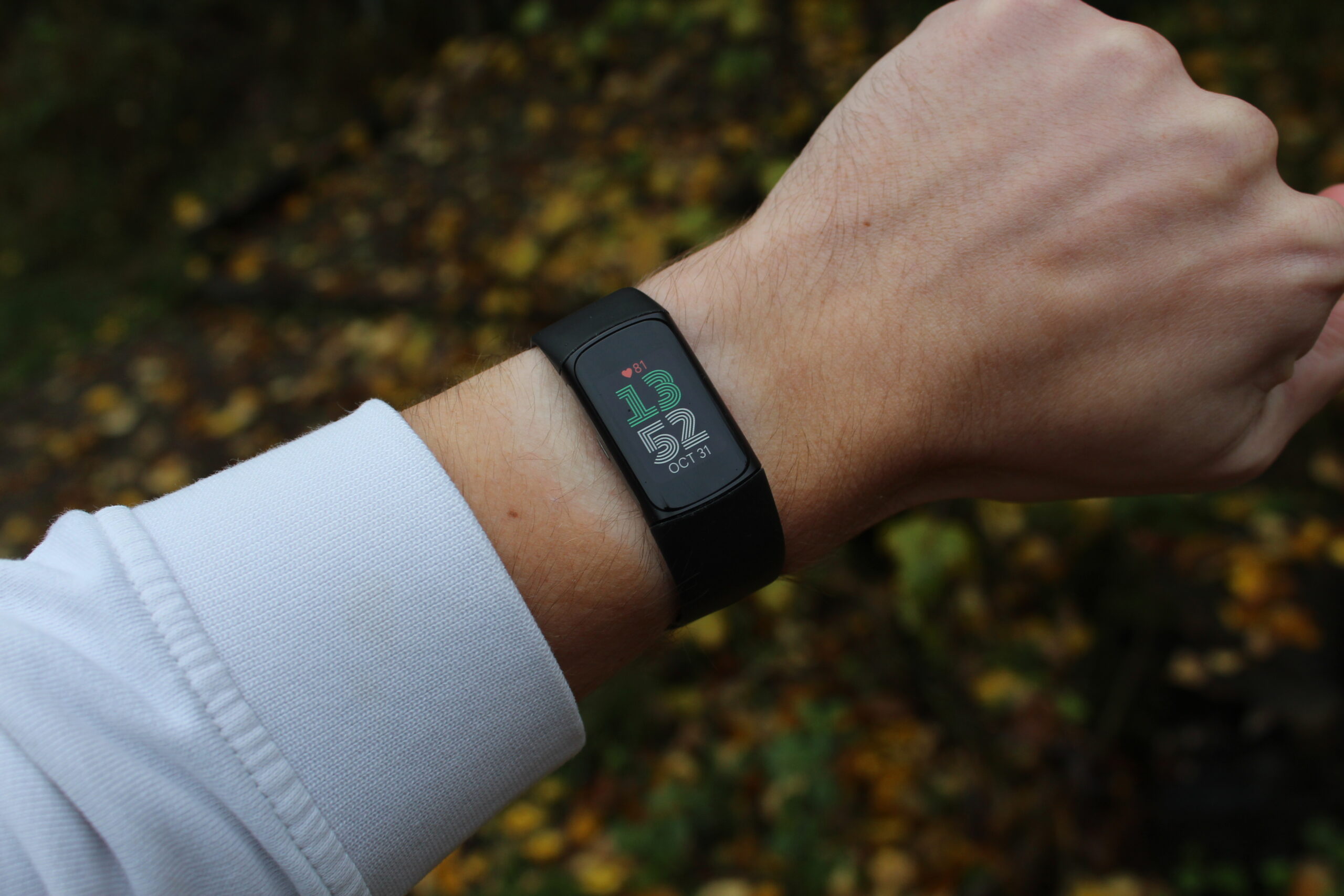
Fitbit is expanding its Gemini-powered health coach with a wave of new features, including nutrition tracking, cycle health tools, and mental wellbeing insights.
The update builds on the AI-driven coach launched earlier this year. It adds more ways for users to track and understand their overall health in one place.
One of the biggest additions is cycle tracking, which lets users log periods and symptoms directly within the app. While basic tracking appears to be available to free users, Fitbit notes that more personalised insights remain part of its Premium offering.
The coach is also gaining nutrition and hydration tracking. Users can log meals, monitor calorie intake, and keep track of daily water consumption. In addition, Fitbit says it will provide personalised macronutrient ranges. This will give users clearer guidance on how to balance their diet based on their goals.
Mental wellbeing is another new focus. Users can now log their mood, track mindfulness sessions, and get a better sense of how their body handles stress through an updated resilience score. This builds on Fitbit’s existing stress management tools.
Alongside these additions, Fitbit is loosening access to its Public Preview programme. Users no longer need a Fitbit Premium subscription to try the redesigned app. However, features like the AI coach itself, “Ask Coach” functionality, and custom fitness plans will still sit behind a paywall.
The update follows a steady stream of improvements to the health coach, including recent support for continuous glucose monitors. This lets users ask how certain foods might impact their glucose levels. Google has also been expanding availability. The company has been bringing the feature to markets including the UK, Canada, Australia, New Zealand, and Singapore in recent months.
Tech
Like digital paper dolls: New Armoire feature uses AI to show an array of choices in outfit selection


Seattle-based online clothing rental company Armoire is leaning into the AI in fashion with a new feature called “Outfit Inspiration” that allows customers to create desired looks in an instant from dozens of available style and size choices.
Ambika Singh, CEO and founder of the 10-year-old startup, said she hadn’t seen anything from retail and fashion competitors that looks quite like it and enables such “builder” interactivity. The company was inspired by old paper dolls, where pants, shirts, jackets and other items can be moved around. In this case, clicking on images creates instant digital paper dolls.

“It is fun, but it’s also useful,” Singh said of the feature, which shows up for now when a member is logged in.
The tech relies on a series of pre-made outfits, suitable for a variety of occasions, created by Armoire’s stylists and head buyer.
“If you click into one of them, you can see all of the backup options, and these are actually all AI generated with visual similarity,” said Morgan Cundiff, who recently joined Armoire as head of product and machine learning.
AI makes it possible to track a huge amount of inventory across a range of styles while knowing if those items make sense for the given outfit — and if the right sizes are currently available for rent.
“AI has really allowed us to unlock and dynamically be grabbing those items [in real time], so we know exactly what’s available when we’re grabbing them for you,” Cundiff said. “Without the AI assist, creating this number of permutations felt impossible.”
Armoire, which Singh has previously referred to as “a very human-powered business,” made its first big AI splash last November with the launch of a virtual stylist to help clothing renters find the perfect items.
Outfit Inspiration builds on that use of AI while adhering to Armoire’s core principle of personalization. And it will continue to grow beyond the launch offering of outfits, as different customers will see different main outfits as well as the many clickable options inside each.
“It’s not AI for AI’s sake,” Singh said. “It’s some old problem that you have been trying to solve, that you now have an opportunity to actually go get.”
Armoire, which works out of a 60,000-square-foot warehouse space in Seattle’s SoDo neighborhood, employs 100 people.
The startup has raised $12 million from investors, including a $3.5 million round in 2021 that included backing from Microsoft CEO Satya Nadella, GoDaddy CEO Aman Bhutani and others. Armoire reached break-even near the end of 2025, a first for the business.
The company is ranked No. 40 on the GeekWire 200 index of the Pacific Northwest’s top startups and won Workplace of the Year last April at the annual GeekWire Awards.

Zelenskiy says frontline situation best for Ukraine in the last 10 months

Neymar Jr.’s “Chico” Comment At Female Referee Triggers Sexism Row In Brazil, Fans Upset

Microsoft no longer wants to borrow its AI, it wants to build it


-

 NewsBeat7 days ago
The Story hosts event on Durham’s historic registers
-

 NewsBeat15 hours ago
Steven Gerrard disagrees with Gary Neville over ‘shock’ Chelsea and Arsenal claim | Football
-

 Sports6 days ago
Sweet Sixteen Game Thread: Tide vs Michigan
-
Entertainment4 days ago
Fans slam 'heartbreaking' Barbie Dream Fest convention debacle with 'cardboard cutout' experience
-
 Entertainment5 days ago
Lana Del Rey Celebrates Her Husband’s 51st Birthday In New Post
-

 Crypto World2 days ago
Gold Price Prediction: Worst Month in 17 Years fo Save Haven Rock
-
Crypto World3 days ago
Dems press CFTC, ethics board on prediction-market insider trades
-

 Tech4 days ago
The Pixel 10a doesn’t have a camera bump, and it’s great
-

 Sports3 days ago
Tallest college basketball player ever, standing at 7-foot-9, entering transfer portal
-

 Tech3 days ago
EE TV is using AI to help you find something to watch
-

 Business9 hours ago
No Jackpot Winner and $194 Million Prize Rolls Over
-

 Fashion5 days ago
Amazon Sundays: Soft Spring Layers
-

 Business1 day ago
Login and Checkout Issues Spark Merchant Frustration
-

 Crypto World3 days ago
U.S. rule change may open trillions in 401(k) funds to crypto
-

 Tech3 days ago
How to back up your iPhone & iPad to your Mac before something goes wrong
-

 Tech4 days ago
Avatar Legends: The Fighting Game comes out in July and it looks pretty slick
-

 Tech4 days ago
Apple will hide your email address from apps and websites, but not cops
-

 Politics4 days ago
Should Trump Be Scared Strait?
-

 Tech3 days ago
Flipsnack and the shift toward motion-first business content with living visuals
-

 Tech5 days ago
Elon Musk’s last co-founder reportedly leaves xAI
You must be logged in to post a comment Login