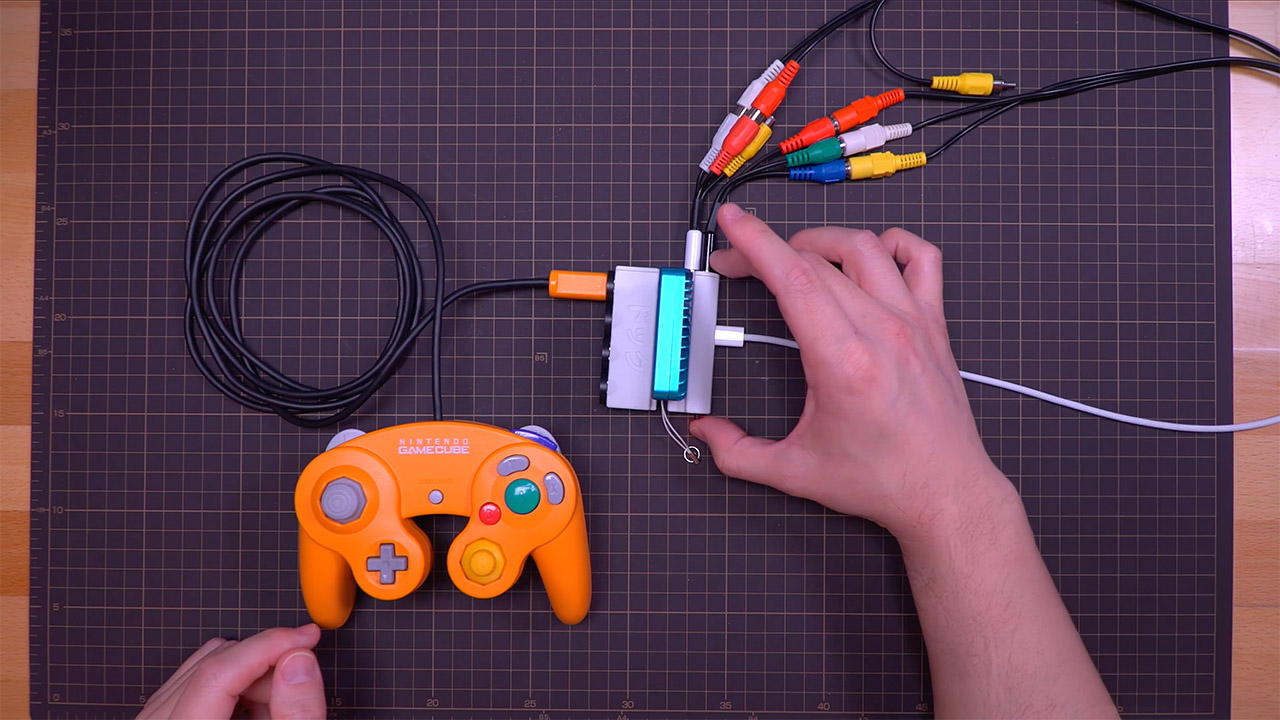
Modders shrank a normal Wii motherboard to a fraction of its original size while retaining all functionality, allowing you to play games exactly like the original. Tito from Macho Nacho Productions just posted a detailed look at the Nintendo Kawaii project.
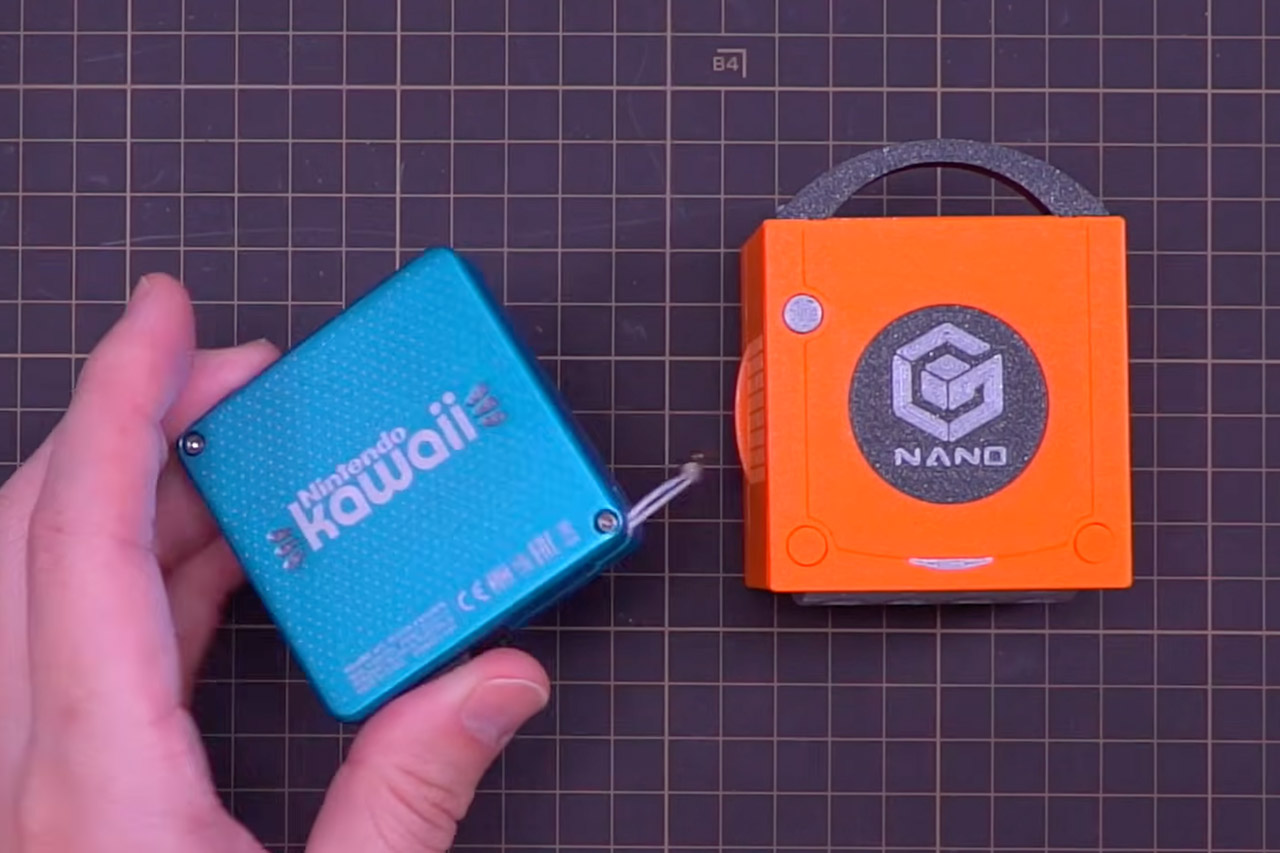
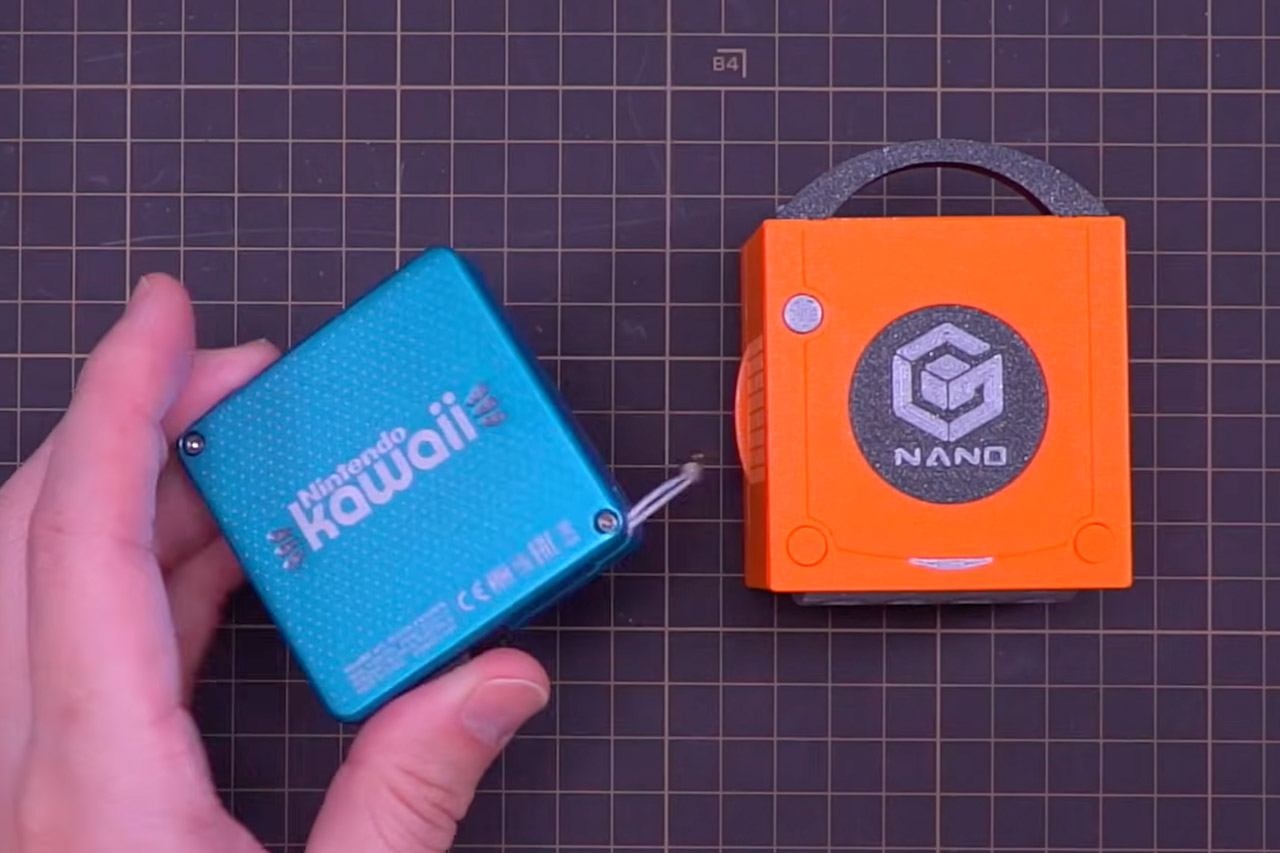
At first glance, you can see how small this thing actually is, measuring only sixty millimeters wide, sixty millimeters tall, and sixteen millimeters thick, but it is still a fully functional gaming console. You can attach it to your keys with a small keychain loop and carry it around with you all day. The outside casing is composed of CNC-machined aluminum, giving it a very smooth finish, and they’ve added some subtle etched artwork and some goofy compliance labels to give it some individuality without clutter. When you turn it on, six soft-glowing RGB LEDs illuminate it from the inside, adding to its charming appearance.
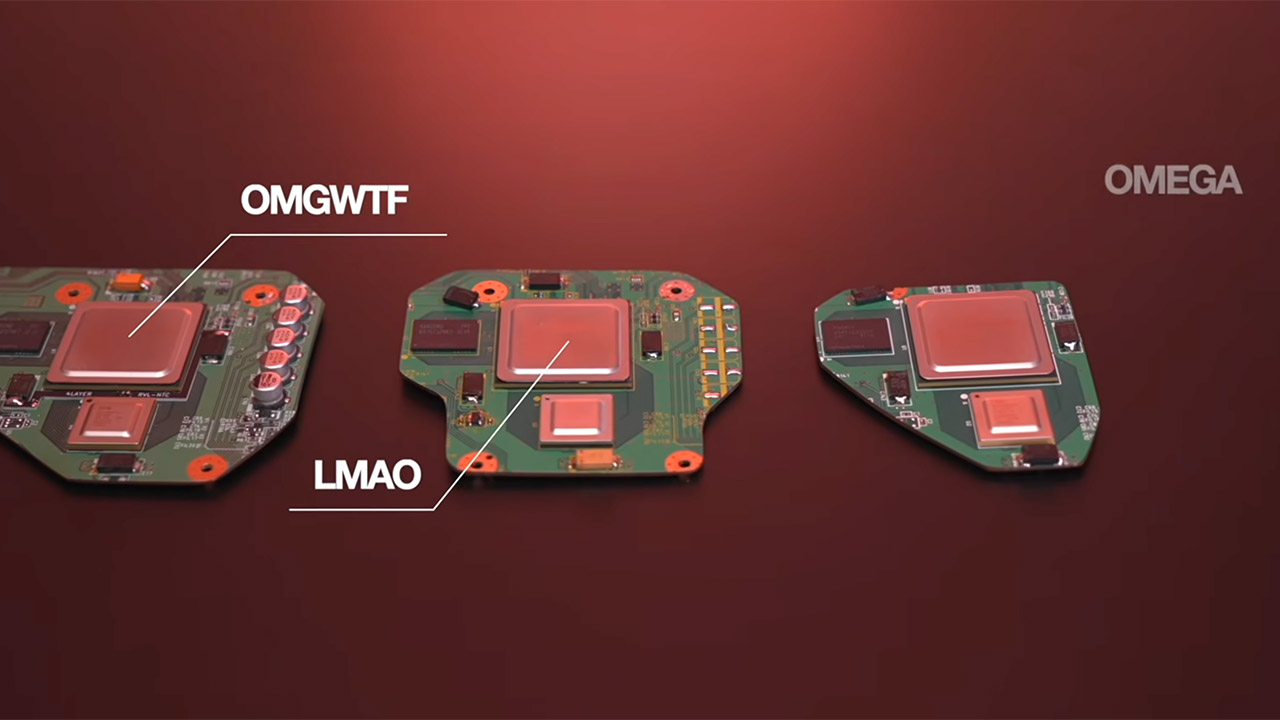
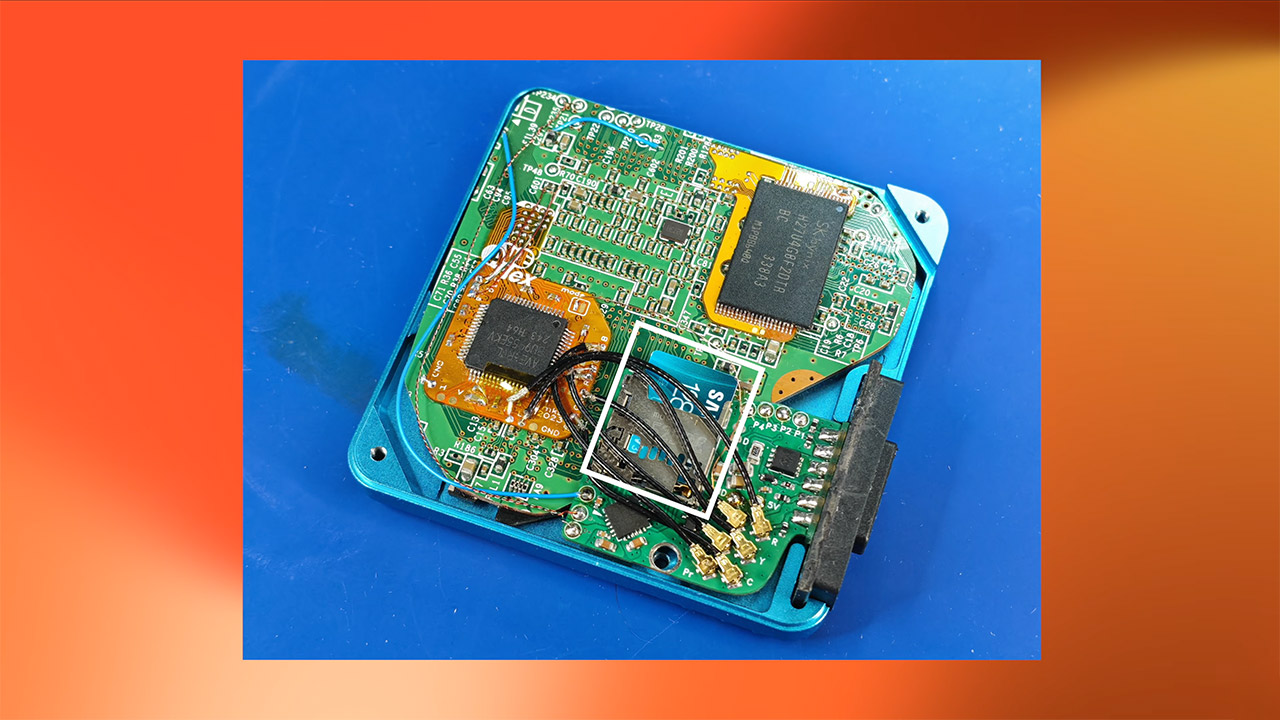
The trick to making it this compact was using an Omega trim, as they began with a Hollywood-2 Wii Mini board and simply chipped away at all of the non-essential pieces until they were down to the bare requirements, yet they still managed to fit all of the functionality in there. The chip relocation job was arguably the most difficult, as they had to shift crucial components to new spots on the tiny board, which took some time. They ended up with two flex boards, one for the video output chip and another for the NAND memory chip. They’ve also created a bespoke power module called Thundervolt that not only gives electricity but also reduces the voltage to the CPU, allowing it to run cool and efficiently; brilliant stuff. They based all of their ideas on open-source designs supplied by the project’s crew.
A small microSD card is used for internal storage, and games are loaded from it using homebrew software. Of course, the trimmed-down board leaves no area for a disc drive. The output options are very standard; composite television, 480p component, and stereo audio all plug into this single connection port. When you pull out the corresponding magnetic dock, you can plug in four GameCube controllers at once. The dock itself connects via pogo pins, so there are no cables dangling everywhere, making for a really nice solution.
Getting games to run on this machine is shockingly simple, as all titles run at full speed, with no software techniques to aid them; the original Nintendo hardware is doing all the heavy lifting. The controllers continue to respond exactly as they did when you had a large, cumbersome console on your television. Of course, because there is no active cooling, it gets a little warm after a while of play; nevertheless, an external fan protruding out the side helps a lot, though it is a bit of a trade-off for the significant size reduction.
Amazon once tried to pressure Nintendo to break the law, says former Nintendo of America President Reggie Fils-Aimé. At a recent NYU lecture, he describes a conversation with an Amazon executive, Kotaku reports:
“Amazon was looking to get bigger into the video game space,” said Fils-Aimé. “Amazon’s mentality back then is they wanted to have the lowest price out in the marketplace, even lower than Walmart… Essentially what Amazon wanted (was an) obscene amount of support, financial support, so they could have the lowest price and beat Walmart. I literally said to the executive, ‘You know that’s illegal, right? I can’t do that’….”
At the time, the Wii and DS were Nintendo’s best selling hardware in history. Amazon originally sold books, but in the 2000s rapidly expanded with cheaper discounts to became a one-stop shop for almost everything. Everything except Nintendo, that is…. “Literally we stopped selling to Amazon,” Fils-Aimé continued, “and it’s because I wasn’t going to do something illegal. I wasn’t going to do something that would put at risk the relationship we have with other retailers.” “The two sides have since made amends,” notes the Verge, “and you can buy a Switch 2 through Amazon. But for a long time, Nintendo consoles had been largely unavailable on the site.”
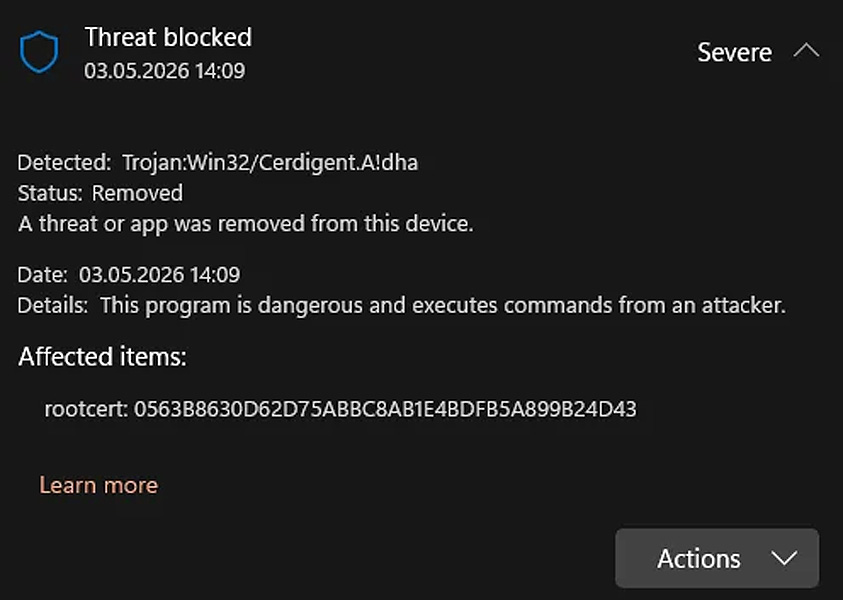
Microsoft Defender is detecting legitimate DigiCert root certificates as Trojan:Win32/Cerdigent.A!dha, resulting in widespread false-positive alerts, and in some cases, removing certificates from Windows.
According to cybersecurity expert Florian Roth, the issue first appeared after Microsoft added the detections to a Defender signature update on April 30th.
Today, administrators worldwide began reporting that DigiCert root certificate entries were flagged as malware and, on affected systems, removed from the Windows trust store.
According to a Reddit post about the false positives, the detected certificates are:
Advertisement
0563B8630D62D75ABBC8AB1E4BDFB5A899B24D43
DDFB16CD4931C973A2037D3FC83A4D7D775D05E4
On impacted systems, these certificates were removed from the AuthRoot store under this Registry key:
These false positives have led to concern among Windows users, with some thinking their devices were infected and reinstalling the operating system to be safe.
Microsoft Defender “Trojan:Win32/Cerdigent.A!dha” False Positive Source: Reddit
Microsoft has reportedly fixed the detections in Security Intelligence update version 1.449.430.0, and the most recent update is now 1.449.431.0.
Other reports on Reddit indicate that the fix also restores previously removed certificates on affected systems.
The new Microsoft Defender updates will automatically install, and Windows users can manually force an update by going into Windows Security > Virus and threat protection > Protection updates and clicking on Check for Updates.
Possibly linked to a recent DigiCert breach
The false positives occur shortly after a disclosed DigiCert security incident that enabled threat actors to obtain valid code-signing certificates used to sign malware.
Advertisement
“A malware incident targeted a customer support team member. Upon detection, the threat vector was contained,” explains the DigiCert incident report.
“Our subsequent investigation found that the threat actor was able to procure initialization codes for a limited number of code signing certificates, few of which were then used to sign malware.”
“The identified certificates were revoked within 24 hours of discovery and the revocation date set to their date of issuance. As a precautionary measure, pending orders within the window of interest were cancelled. Additional details will be provided in our full incident report.”
According to DigiCert’s incident report, attackers targeted the company’s support staff in early April by creating support messages containing a malicious ZIP file disguised as a screenshot.
Advertisement
After multiple blocked attempts, one support analyst’s device was eventually compromised, followed by a second system that went undetected for a time due to an endpoint protection “sensor gap.”
Using access to the breached support environment, the hacker used a feature in DigiCert’s internal support portal that allowed support staff to view customer accounts from the customer’s perspective.
While limited in scope, this access exposed “initialization codes” to previously approved, but undelivered, EV code-signing certificate orders.
“Possession of an initialization code, combined with an approved order, is sufficient to obtain the resulting certificate (see Contributing Factors discussion below),” explained DigiCert.
Advertisement
“Since the threat actor was able to obtain these two pieces of information for a finite set of approved orders, they were able to obtain EV Code Signing certificates across a set of customer accounts and CAs.”
DigiCert says it revoked 60 code-signing certificates, including 27 linked to a “Zhong Stealer” malware campaign.
“11 were identified in certificate problem reports provided to DigiCert by community members linking the certificates to malware, and 16 were identified during our own investigation,” explained DigiCert.
Zhong Stealer malware campaign
This aligns with earlier reports from security researchers who had observed newly issued DigiCert EV certificates used in malware campaigns and reported them to DigiCert.
Advertisement
Researchers, including Squiblydoo, MalwareHunterTeam, and g0njxa, reported that certificates issued to well-known companies such as Lenovo, Kingston, Shuttle Inc, and Palit Microsystems were being used to sign malware.
“What do Lenovo, Kingston, Shuttle Inc, and Palit Microsystems have in common?,” posted Squiblydoo on X.
“EV Certificates from these companies were issued and used by a Chinese crime group, #GoldenEyeDog (#APT-Q-27)!”
The malware in this campaign is named “Zhong Stealer,” though analysis indicates it may be more like a remote access trojan (RAT) than an infostealer.
Advertisement
The researcher says the malware was distributed through the following attacks:
Phishing emails deliver a fake image or screenshot
A first-stage executable that displays a decoy image
Retrieval of a second-stage payload from cloud storage such as AWS
Use of signed binaries and loaders, including components tied to legitimate vendors
After DigiCert disclosed the incident, the researchers said the incident report explains how the certificates used in these malware campaigns were obtained.
While Microsoft has not confirmed that the Defender detections are a result of the DigiCert incident, the timing and focus on DigiCert-related certificates suggest a possible connection.
However, it should be noted that the certificates flagged by Microsoft Defender are root certificates in the Windows trust store and do not match the revoked DigiCert code-signing certificates used to sign malware.
BleepingComputer contacted Microsoft with questions about the campaign, including whether it was tied to DigiCert’s breach.
Advertisement
AI chained four zero-days into one exploit that bypassed both renderer and OS sandboxes. A wave of new exploits is coming.
At the Autonomous Validation Summit (May 12 & 14), see how autonomous, context-rich validation finds what’s exploitable, proves controls hold, and closes the remediation loop.
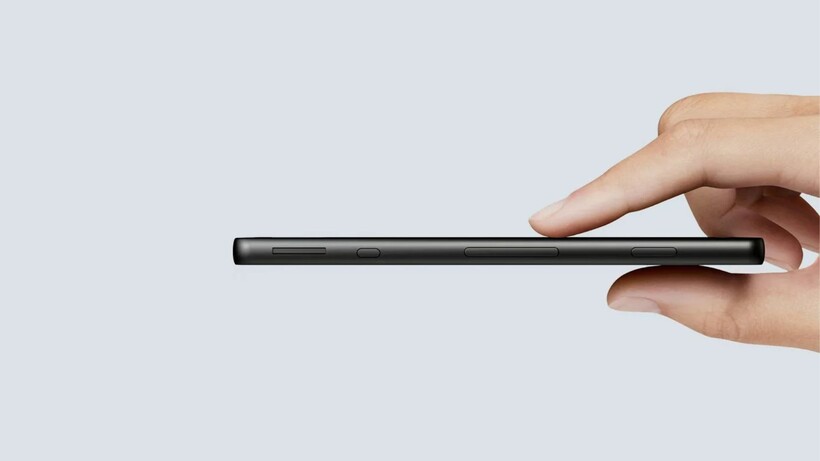
Flip-phones are not only a fun way to get a hit of nostalgia, but they’re quickly becoming seriously useful everyday smartphones too.
Motorola has reinvented its iconic Razr flip-phone and recently introduced the Razr 70 series, which is headlined by the premium Razr 70 Ultra. But how does it measure up to Samsung’s own Galaxy Z Flip 7?
While we haven’t reviewed the Razr 70 Ultra just yet, we’ve compared its specs to the Z Flip 7 and highlighted the key differences between the clamshell flip phones below. Keep reading to decide which handset is likely to suit you best. Alternatively, we’ve also compared the Motorola Razr 70 Ultra vs 70 Plus vs 70, so you can see the entire collection side-by-side.
The Galaxy Z Flip 7 is readily available to buy now, and has an official RRP of £1049/$1099.99, However, as the phone is nearly a year old, it is possible to find the handset with a decent price cut.
SQUIRREL_PLAYLIST_10207784
Advertisement
Motorola Razr 70 Ultra runs on Snapdragon 8 Elite
Motorola has opted to fit the Razr 70 Ultra with Qualcomm’s 2025 Snapdragon 8 Elite, rather than the newer Snapdragon 8 Elite Gen 5. This is somewhat understandable, as the Razr 70 Ultra isn’t necessarily a productivity handset, so doesn’t necessarily need the oomph of the newer processor.
It’s a similar situation with the Galaxy Z Flip 7, with Samsung kitting the foldable with its own Exynos 2500 chip, rather than Snapdragon 8 Elite for Galaxy which is found in the Z Fold 7. Even so, we don’t think you’re likely to notice that much of a difference in real-world use, as the Z Flip 7 feels fast and responsive for most uses-cases, without any noticeable slowdown or overheating.
Image Credit (Motorola)
Advertisement
Sure, Exynos 2500 doesn’t achieve the same high benchmark scores as phones running on Snapdragon 8 Elite, but it’s still a solid processor that performs well.
Otherwise, although we haven’t reviewed the phone just yet, Motorola promises that the Razr 70 Ultra is the “most powerful Razr” ever. It actually uses the same chip as its predecessor, the Razr 60 Ultra, which we concluded offered a solid performance across everything from casual uses to even casual gaming too.
Advertisement
We’ll have to wait until we review the Razr 70 Ultra to see how it really performs in everyday use.
Samsung Galaxy Z Flip 7 will see Android updates until 2032
One of the most appealing features of the Galaxy Z Flip 7 is that Samsung promises it will see Android and security updates right up to July 2032 – taking the handset to Android 23. Considering the Z Flip 7 is upwards of £/$1000, this makes the cost seem like more of an investment, as you won’t necessarily need to buy a new phone in the next six years.
Unfortunately, the Razr 70 Ultra doesn’t quite boast the same promise. While the Razr 70 Ultra will see five years of security updates, it’s only promised three years of Android OS updates. That will take the phone up to Android 19.
Samsung Galaxy Z Flip 7. Image Credit (Trusted Reviews)
Advertisement
Motorola Razr 70 Ultra has a larger battery
With a 5000mAh cell, the Razr 70 Ultra boasts a considerably larger battery capacity than the Z Flip 7. In fact, Motorola states that this is the largest battery found among flip phones. With this in mind, we expect the handset to offer a pretty generous all-day battery life, but we’ll have to wait until we review the 70 Ultra to confirm this.
Advertisement
Although at 4300mAh, the Z Flip 7’s battery is considerably smaller, we should disclaim that we never struggled with its efficiency. During our testing, we found the phone comfortably saw us through a day’s worth of use before needing to be topped up.
Samsung Galaxy Z Flip 7. Image Credit (Trusted Reviews)
Speaking of topping up, the Razr 70 Ultra does benefit from faster charging speeds than the Z Flip, with support for 68W wired and 30W wireless speeds. In comparison, the Z Flip 7 supports a pretty measly 25W wired and 15W wireless.
Samsung Galaxy Z Flip 7 has a larger cover display
At 4.1-inches, the Z Flip 7 has a slightly larger cover display than the Razr 70 Ultra’s four-inch alternative. However, there are a few caveats to keep in mind.
Firstly, we found the Z Flip 7’s cover display to be more cumbersome to use and much less optimised than Motorola’s efforts. There are only a few pre-selected apps that you can launch on the outer screen and to enable others, you’ll need to download Multistar or other workarounds, which isn’t particularly ideal. Plus, its keyboard isn’t as easy to use as Gboard either.
Advertisement
Advertisement
Image Credit (Motorola)
Instead, more apps are optimised by default on the Razr 70 Ultra’s cover display, and the keyboard is much easier to type on when you don’t want to open up the handset. It’s also worth pointing out that the 70 Ultra’s cover screen sports many of the same specs as the 60 Ultra, and you can learn more about the differences between the two in our dedicated Razr 70 Ultra vs 60 Ultra guide.
Motorola Razr 70 Ultra has three 50MP cameras
Although both handsets have a total of three cameras, including two rear and one internal lens, they differ with their exact resolutions. Like its predecessor, the Galaxy Z Flip 7 is fitted with a 50MP main and a 12MP ultrawide at its rear, while its internal camera is 10MP. Generally, we found the hardware is able to take great shots in most lighting conditions, though our best camera phones have options better suited to keen photographers.
In comparison, the Razr 70 Ultra is equipped with three 50MP lenses, including a main and ultrawide/macro combination at the rear and one internal. Motorola has also introduced new shooting modes to the entire Razr 70 series, including Camcorder Rotate to Zoom which uses AI to automatically identify and zoom in on a subject. This mode leans into Motorola’s nostalgia, as you have to hold the phone like a camcorder.
Early Verdict
If you’re keen to try out a flip-phone, then the Motorola Razr 70 Ultra and Samsung Galaxy Z Flip 7 are two great options. If you’re looking for a more usable cover display, plenty of nostalgic features and a mighty batter, then the Razr 70 Ultra seems like a brilliant option. However, if you want a phone that’ll see Android updates for many years, the Galaxy Z Flip 7 is hard to beat.
Advertisement
Advertisement
We’ll be sure to update this versus once we review the Motorola Razr 70 Ultra.
A new study examines how large language models perform in a variety of medical contexts, including real emergency room cases — where at least one model seemed to be more accurate than human doctors.
The study was published this week in Science and comes from a research team led by physicians and computer scientists at Harvard Medical School and Beth Israel Deaconess Medical Center. The researchers said they conducted a variety of experiments to measure how OpenAI’s models compared to human physicians.
In one experiment, researchers focused on 76 patients who came into the Beth Israel emergency room, comparing the diagnoses offered by two attending physicians to those generated by OpenAI’s o1 and 4o models. These diagnoses were assessed by two other attending physicians, who did not know which ones came from humans and which came from AI.
“At each diagnostic touchpoint, o1 either performed nominally better than or on par with the two attending physicians and 4o,” the study said, adding that the differences “were especially pronounced at the first diagnostic touchpoint (initial ER triage), where there is the least information available about the patient and the most urgency to make the correct decision.”
Advertisement
In Harvard Medical School’s press release about the study, the researchers emphasized that they did not “pre-process the data at all” — the AI models were presented with the same information that was available in the electronic medical records at the time of each diagnosis.
With that information, the o1 model managed to offer “the exact or very close diagnosis” in 67% of triage cases, compared to one physician who had the exact or close diagnosis 55% of the time, and to the other who hit the mark 50% of the time.
“We tested the AI model against virtually every benchmark, and it eclipsed both prior models and our physician baselines,” said Arjun Manrai, who heads an AI lab at Harvard Medical School and is one of the study’s lead authors, in the press release.
Techcrunch event
Advertisement
San Francisco, CA | October 13-15, 2026
To be clear, the study didn’t claim that AI is ready to make real life-or-death decisions in the emergency room. Instead, it said the findings show an “urgent need for prospective trials to evaluate these technologies in real-world patient care settings.”
Advertisement
The researchers also noted that they only studied how models performed when provided with text-based information, and that “existing studies suggest that current foundation models are more limited in reasoning over nontext inputs.”
Adam Rodman, a Beth Israel doctor who’s also one of the study’s lead authors, warned the Guardian that there’s “no formal framework right now for accountability” around AI diagnoses, and that patients still “want humans to guide them through life or death decisions [and] to guide them through challenging treatment decisions”.
When you purchase through links in our articles, we may earn a small commission. This doesn’t affect our editorial independence.
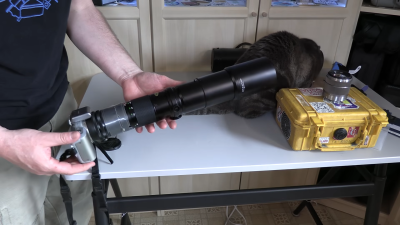
The cool thing about the digital photography revolution is that there is a lot of old film gear that can be had for cheap. In this case, [saveitforparts] found a 400mm Sigma XQ lens with a 2x teleconverter for just $14.99. Paired with an adapter, it sat nicely on a Sony NEX-3 digital camera, ready to try and capture the ISS as it passed overhead. As you might imagine, aiming at the space station is not a point-and-shoot job. N2YO.com was used to figure out the best time to try and capture it. [saveitforparts] was able to capture the ISS as a white dot as it passed over, but couldn’t quite get enough zoom to really see the ISS in detail. [saveitforparts] was also able to repeat the feat with a Canon camcorder, too, but the image was still pretty blobby and didn’t show much. Later attempts involved capturing transits as the ISS passed by the Sun, though the ISS mostly appeared as a small speck.
[saveitforparts] did technically capture the ISS, just not closely enough to see much beyond a dot. It’s not the first time we’ve seen this attempted, though! If you try and capture the ISS with something truly ridiculous, like a Game Boy Camera or Kodak Charmera, you are honour-bound to tell us on the tipsline. Video after the break.
The underlying concept is not new. Acoustic fire suppression has been studied for years as a means of disrupting combustion by pushing oxygen away from the fuel surface. Read Entire Article Source link
Suppose your giftee loves growing mushrooms but has graduated to more challenging varieties. In that case, North Spore makes an automated monotub ($165) that can be paired with either substrate or the brand’s fruiting blocks. It keeps the growing environment with the proper airflow and humidity, and I’ve grown so many mushrooms in mine that I’ve turned into a Crazy Mushroom Lady, leaving bags on neighbors’ porches and chasing down acquaintances in the grocery store.
(Note that the photo above shows golden oyster mushrooms, which mycologists are investigating as a potential invasive species. North Spore says it is currently phasing out its yellow oyster mushroom kits while it works on developing a sporeless strain.)
A Decorative Indoor Trellis and Plant Saucers
If your friend or loved one is supporting their vines or floppy potted plants with bendable moss poles or, worse, a jerry-rigged ladder made out of duct taped pencils (it was an emergency, OK?), treat them to one of these hand-finished, laser-cut plant supports. There are staked and modular versions (my favorite is the wonderful-smelling, extendable redwood Zella) as well as coasters, wall mounts, and saucers that water your plants from the bottom. I have tested many of them—including the classic versions—and all have added a dash of style while lending critical structure to floppy and vining plants. Can’t pick just one? Check out Treleaf’s collection of gift bundles.
Advertisement
Succulents in the Mail
Lula’s Garden
Succulent Gift Box
Lula’s Garden’s heart-shaped box is featured in our guide to the Best Flower Delivery Services, and since then, I have had multiple people recommend the brand to me. I have now tried it, and I have to agree—this is an excellent gift. It’s fun, stylish, and priced the same as or even less than transient flowers. Not everyone is inclined to take care of a houseplant, but succulents are super easy to care for, and the box they arrive in doubles as a planter. All you have to do is unbox and use the included pipette to add a few squirts of water. The gardens are contemporary yet neutral enough to fit in with just about any decor. Just a heads up that unboxing the gardens that come with rocks (like the Bliss) may be a little messy, but the more premium gardens (like the Urban) don’t have any loose parts and come out of the box looking exactly as they do online.
For Making Compost Indoors
Advertisement
Reencle
Prime Electric Composter
As seen in our guide to the Best Kitchen Composters, the Reencle Prime doesn’t fully make ready-to-use compost, but it comes the closest out of any of the major brands. It functions a lot like a heated trash can—just throw your kitchen scraps in, and microbes will break them down over time into a sort of loamy mixture. When the volume of the Prime reaches the fill line, the mixture can be scooped out and added at a 1:4 ratio with potting soil, then left to cure for three weeks. After this, it can be used for both outdoor and indoor plants. Not only will it free up space in your giftee’s trash can and cut down on dangerous greenhouse gas production, it will make their plants happy.
Modular Landscape Blocks
Beauta
PolyRock Landscape Edging
Advertisement
It’s frustrating to spend untold time and money on your garden vision, only to find that landscaping elements like real rock walls and edging can cost thousands of dollars. If your giftee loves making their garden pop, these PolyRock blocks come in modular, six-block sections about 4 feet long. They slot neatly together like Legos, look exactly like real rock, and are flexible, so you can use them straight or curve them into a circle. No digging or leveling is required, and they’re easy to detach and move around if you change your mind or design plans. You can choose from gray, brown, black, or white tones. I have a strip of gray blocks installed along the front of my house, and more than one neighbor has thought it was real rock. The adjacent grass has even been cut with a string trimmer every week for months, and there’s still nary a scratch on the blocks.
A Do-It-All Cart
Gorilla
Poly Garden Dump Cart
Don’t torture yourself with an inefficient wheelbarrow! A garden cart might seem like an odd gift at first, but this is the all-category MVP of my yard and household. It not only carries mulch, plants, and yard tools, but it can also tote up to 600 pounds for the small version and 1,200 pounds for the large, which has allowed me to transport everything from giant pizza ovens to bags of smoker pellets. The cart’s got a quick-release dump latch on the front and pneumatic tires that handle mud and sand with no problem. I’ve tested other carts in the past, but this is the only one that has earned a permanent spot in my garage. If your giftee lives on a large plot of land or needs to transport a lot of pots or other supplies around their house, this will be an invaluable companion. Note that it will require some assembly, but it didn’t take more than an hour.
Advertisement
A Candle That Smells Like Tomatoes
LAFCO
Classic Candle: Tomato Season
Flamingo Estate
Advertisement
Roma Heirloom Tomato Candle
You might be thinking: Why on earth would someone want a candle that smells like a tomato? I certainly did, when WIRED reviewer Louryn Strampe crowned a tomato-scented candle as the overall best pick in her Guide to the Best Scented Candles. However, now that I’ve smelled it myself, along with a handful of other versions (LAFCO’s is my second favorite), I completely get it. I was immediately transported back to being amid sun-warmed tomato leaves in my grandfather’s garden, but my teen son, who doesn’t have the same association, also immediately recognized it as a distinctly summer smell. It’s warm and vegetal, but still sweet and fresh. It’s sure to remind your favorite gardener of the good times ahead.
A Quality Pair of Gloves
Digz
Advertisement
Large Long Cuff Garden Gloves
I’ve used a lot of gardening gloves over the years, but these two are my all-time favorites. Digz’s long-cuff garden gloves keep dirt, leaves, and other detritus out when you’re reaching down deep into something, and they’re invaluable for pulling out blackberry vines, goosegrass, and other long and/or sticky weeds. (Digz also makes some excellent tools with soft, ergonomic handles, but those aren’t as widely available.) If you’re looking for something sturdier, longer-lasting, and more versatile, Vermont Glove has been hand-sewing goat-leather gloves since 1920, and the Flatlander design dates from that time. These gloves are both ridiculously soft and insanely sturdy—my husband and I have both used them for all manner of yard work, including pulling thorny weeds, and they have stood up beautifully despite their lightweight feel.
Amazon has dominated the e-reader market for years, but a surprise contender is starting to chip away at that lead.
The Xteink X4, a compact, low-cost e-reader that has gone viral online, has entered Amazon’s top 10 best-selling e-readers list and is even outpacing several Kindle models in the process.
A big part of its momentum comes down to timing and price. At around $70, the Xteink X4 undercuts almost everything else in the category. It’s also been boosted heavily by short-form video content online. There, its ultra-compact design has made it something of a social media curiosity rather than just another reading device.
Advertisement
Image Credit (Xteink)
Advertisement
That design is really the main hook. The X4 is small enough to slip into a pocket, and it even includes built-in magnets for attaching to the back of Qi2-compatible phones. This feature includes compatibility with newer iPhones and Pixel devices, and makes it easy to carry around as a secondary screen for reading on the go. You do this without feeling like you’re carrying a full-sized device.
User feedback has been mixed on the software side, though. Out of the box, the X4’s system is fairly basic, so some owners recommend switching to third-party software like Crosspoint for a smoother reading experience. Once set up, however, users say it becomes a surprisingly capable pocket e-reader that works well for casual reading sessions.
The timing of its rise isn’t ideal for Amazon either. The company’s recent decision to discontinue support for some older Kindle devices has frustrated parts of its user base, potentially pushing them to look elsewhere. And when they do, the Xteink X4 now sits right there in Amazon’s own bestseller rankings. This makes it an unusually visible alternative to the Kindle ecosystem.
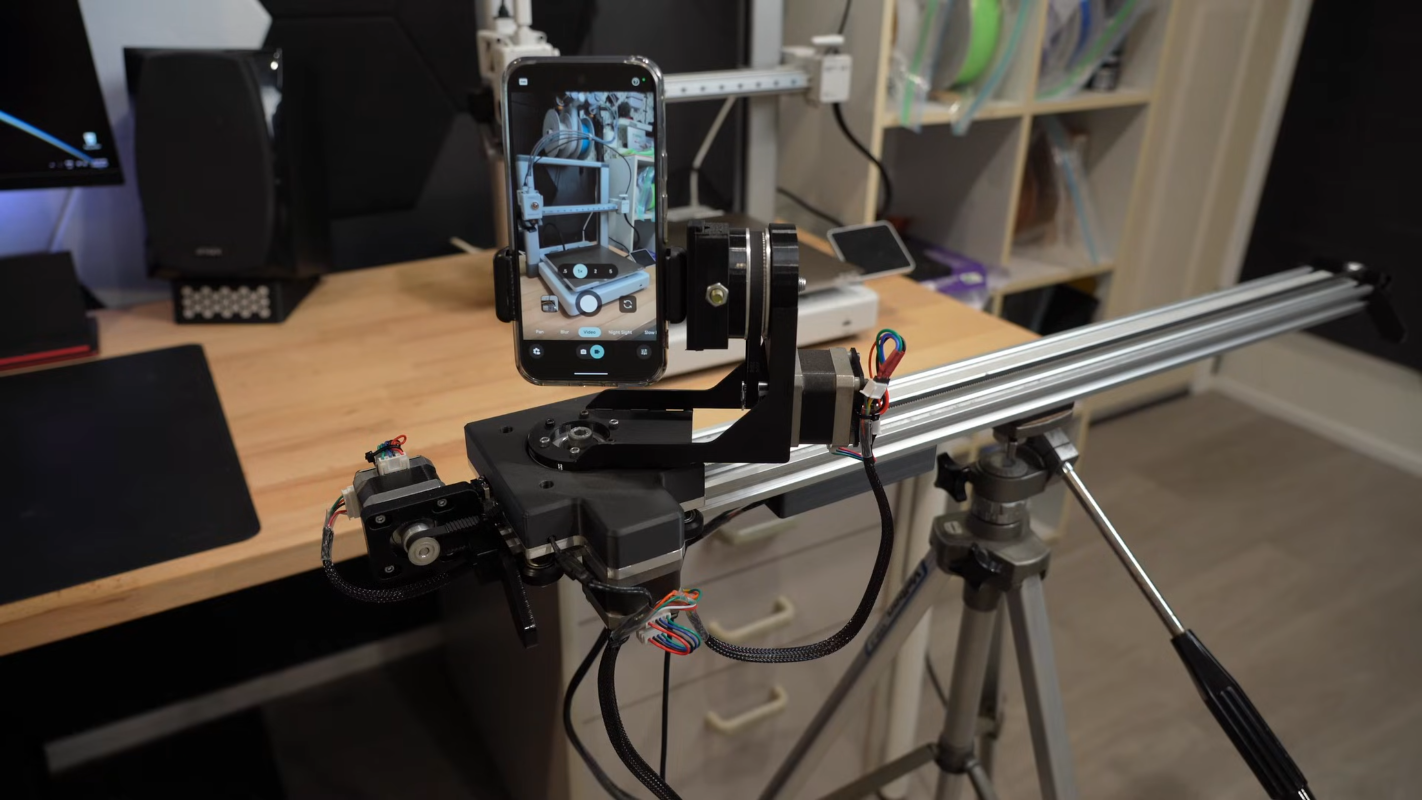
There’s a great reason 3D printers are made with things like extruded aluminum rails and other commodity, off-the-shelf parts. These things are designed not only for ease of construction and prototyping, but they’re also fairly strong especially given how modular they are. And they are excellent platforms for other projects as well. [CNCDan] has been using plenty of on-hand 3D printer parts to build a three-axis camera slider to film parts of his other projects, and this video documents his build and the latest upgrades to this platform.
After sorting out some issues with underpowered motors by improving their gear ratios, he found that many of the sizes and clearances on the existing platform changed enough that he needed to redo other parts of the carrier, including the mounting plate. He cut a new plate from steel and pressed bearings in, and then started putting together the other axes including a quick release mechanism for his camera. With a camera that weighs about 1.4 kg, getting the motors to move the camera smoothly was its own challenge. He re-worked all of his driver code over the course of a few weeks and eventually got his new system working much better than the original version.
With everything said and done, the camera slider can be controlled wirelessly with a GUI on another computer. Everything runs on an ESP32, and the slider can support other cameras besides his heavier one, including smartphones. He notes that this wasn’t the easiest way to build a project like this, but worked for him eventually because he had the parts and tools on hand to make it work. He’s also put the project files up on a GitHub page for anyone interested. Camera sliders like these have some niche uses as well; take a look at this high-speed camera slider for some examples.
Get caught up on the latest technology and startup news from the past week. Here are the most popular stories on GeekWire for the week of April 26, 2026.
The debate over progressive taxation in Washington state has been building for months, with the tech community largely alarmed by what it sees as a hostility toward business in the region. … Read More
Amid the feud between two of tech’s most polarizing personalities, Elon Musk and Sam Altman, Microsoft might seem like a subplot, but its actions are at the heart of the case. … Read More
Microsoft’s Azure cloud business accelerated in the March quarter, growing 40% and topping the company’s own forecast, giving the tech giant a new answer to questions about its ability to translate record capital spending on AI infrastructure into stronger financial results. … Read More
Flying Fish Partners, a Seattle-based VC firm with less than $250 million under management, broke into the $1.1 billion seed round for Ineffable Intelligence, the new startup from AlphaGo creator David Silver. … Read More
Amazon Web Services growth accelerated to 28% in the first quarter — its fastest pace in nearly four years — pushing Amazon’s results past Wall Street’s expectations and validating, at least for now, the company’s controversial $200 billion bet on artificial intelligence infrastructure. … Read More
Angus Norton, a former exec from Microsoft and Amazon, is CEO of IP transfer company Inteum, while Veeam and mpathic name two new leaders and Peter Hamilton shares details on his tech move. … Read More
Fusion startup Zap Energy is adding fission to its quest for nuclear power, naming Zabrina Johal as CEO to lead the new dual-purpose effort. … Read More
AWS is expanding line of Amazon Connect business apps into a suite of agentic AI products, including new tools for supply chain planning and high-volume hiring built on Amazon’s own operational experience and insights. … Read More
















-Reviewer-Photo-SOURCE-Kat-Merck.jpg)













































You must be logged in to post a comment Login