New video and simulations of the sun’s surface can now bring you a closer look than we’ve ever had before.
The images were captured by the Daniel K. Inouye Solar Telescope, the largest of its kind in the world, located atop the volcano Haleakalā on Maui, which translates to “house of the sun” in English.
These new images of swirling plasma provide evidence that seems to confirm a long-predicted theory about what may be occurring on the sun’s surface.
As liquids of different densities flow past one another, they swirl together at the point where they meet, creating motion that resembles hurricanes or the mixing of ocean waves.
Understanding these complex interactions on the sun may help predict space weather, particularly severe disturbances called coronal mass ejections, which can overwhelm Earth’s protective magnetic field and damage Earth’s infrastructure, including power grids and communications networks.
Advertisement
To see the sun’s newest and most extreme close-up yet, check out the video embedded in this article.
Jesse Orrall
Senior Video Producer
Jesse Orrall (he/him/his) is a Senior Video Producer for CNET. He covers future tech, sustainability and the social impact of technology. He is co-host of CNET’s “What The Future” series and Executive Producer of “Experts React.” Aside from making videos, he’s a certified SCUBA diver with a passion for music, films, history and ecology.
See full bio
The FDA has cleared the first Alzheimer’s blood test for symptomatic patients as young as 40. The test measures amyloid and tau biomarkers from a single blood draw and identified positive biomarkers with 97.6% accuracy in a validation study. New Atlas reports: PrecivityAD2 is a single blood test that quickly assesses the proteins amyloid and tau, using mass spectrometry to measure plasma AB42/40 and p-tau217/np-tau217. The results are then scored, qualifying as negative, likely positive, or positive for AD. “Just over a year ago, there were no FDA-cleared blood tests for Alzheimer’s, and now we have three,” Isobel Coleman, chief executive officer of the Alzheimer’s Drug Discovery Foundation (ADDF), said in a statement. “This is a proof point that sustained, early investment in translational science plays a catalytic role in moving promising ideas from the lab to patients.”
In a recent clinical validation study, 1,142 symptomatic adults were tested using PrecivityAD2. The process accurately identified 97.6% of positive biomarkers. What’s more, the results remained consistent even in patients with comorbidities like chronic kidney disease and diabetes, which can distort plasma amyloid samples. It’s worth noting that the test isn’t intended for general health screenings, but for patients who already show some cognitive decline. “As PrecivityAD2 and tools like it move further into clinical practice, they will enable earlier detection, sharpen clinical trials, and build the foundation for precision medicine and combination therapies,” Coleman added.
If you want to cancel your subscription, you’ll need to go through the same payment system you used to sign up.
DC Studio/Shutterstock
Canceling a ChatGPT subscription only takes a few clicks. But if your goal is to quit ChatGPT entirely, stopping the recurring charge may be only one part of it. You might also want to delete your account, keep new chats out of model training or simply stop paying for features you no longer use. Canceling the subscription handles only the billing, so the right next step depends on what you actually want to stop.
Advertisement
Reasons to reconsider a paid ChatGPT plan
A paid plan makes the most sense when you regularly run into the Free tier’s limits or rely on tools reserved for higher tiers. If that’s no longer true, paying every month gets harder to justify. One option is ChatGPT Go, a lower-cost paid tier that OpenAI now offers in every country where ChatGPT is supported. Spending less doesn’t necessarily require giving up a paid plan altogether.
AI subscriptions have another unusual wrinkle: the product can change while you are paying for it. OpenAI retired GPT-4o from ChatGPT on February 13, 2026, after previously restoring it when some Plus and Pro users said they preferred its conversational style. For someone who subscribed partly for access to a particular model, that’s a reminder that a paid AI service can change substantially from one month to the next.
Features and price aren’t the only reasons someone might reconsider a paid ChatGPT plan. After OpenAI’s February 2026 agreement with the US Department of Defense to deploy its models on the department’s classified network, Sensor Tower data reported by TechCrunch showed US ChatGPT app uninstalls jumping 295 percent day over day. OpenAI later amended the agreement to explicitly prohibit domestic surveillance of US persons and said its services would not be used by Defense Department intelligence agencies such as the NSA without a new agreement. The Sensor Tower figure measures app uninstalls, though, not paid subscription cancellations.
Advertisement
How to cancel your ChatGPT subscription
Novak Bozovic for Engadget
For a personal subscription purchased on chatgpt.com, log in, select your profile icon, open Settings, choose Billing and select Cancel under Cancel plan. OpenAI recommends canceling at least 24 hours before the next billing date to avoid another charge.
If you subscribed through Apple, open the iPhone Settings app, tap your name, tap Subscriptions, select ChatGPT and tap Cancel Subscription. On Android, open Google Play, make sure you’re signed in with the Google account used for the purchase, then go to Subscriptions > ChatGPT and tap Cancel subscription. Uninstalling the app does not cancel an App Store or Google Play subscription.
If you can’t find the cancel option, first check where you originally subscribed. Web, Apple and Google subscriptions are managed separately, and OpenAI warns that it’s possible to end up with more than one active subscription across those platforms. If you have lost access to the ChatGPT account or its email address, OpenAI support can also cancel the subscription after locating the account using the email address, the last four digits of the payment card and the date of the most recent payment.
Advertisement
What canceling a ChatGPT subscription does and doesn’t change
Novak Bozovic for Engadget
Canceling the subscription stops future renewals, but it doesn’t delete your OpenAI account or erase existing chats. Standard chats remain saved to your account until you delete them, so canceling a paid plan is not the same thing as removing your data.
Whether your chats are used for model training is controlled separately. Under Settings > Data Controls, turning off Improve the model for everyone prevents new conversations from being used to improve OpenAI’s models while leaving those conversations in your history. Temporary Chats are another option for individual conversations: they don’t appear in history or get used to improve the models, and OpenAI says it may keep a copy for up to 30 days for safety purposes.
Deleting your OpenAI account is separate from canceling the subscription. Account deletion is permanent, prevents access to OpenAI services and triggers deletion of account data within 30 days, apart from limited information OpenAI may retain where required or permitted by law. If Apple or Google is billing you, cancel the subscription through the relevant app store before deleting the account.
Advertisement
What happens after you cancel ChatGPT
PixieMe/Shutterstock
Canceling doesn’t remove paid features immediately. OpenAI says the cancellation becomes effective the day after the next billing date, so you can keep using the paid plan through the current billing period.
Canceling also doesn’t automatically result in a refund. If you subscribed through chatgpt.com or Google Play, you can request one through OpenAI’s Help Center. App Store refunds must be requested directly from Apple. For chatgpt.com and Google Play purchases, accidental purchases are generally eligible for a refund if you contact OpenAI within 14 days of the charge.
Customers in the EU, UKand Turkey are also eligible for a prorated refund if they cancel within 14 days of purchase.
Once the paid period ends, your account remains available along with any chats you haven’t deleted. Canceling the subscription stops the recurring payment without requiring you to decide whether to keep using ChatGPT.
New York-based General Intuition, the startup building a foundation model that trains generalized AI agents to move through space and time, is in talks to raise funding at a $6 billion pre-money valuation from new investors including Valor Equity Partners, Point72 Ventures, and Seven Seven Six, according to sources familiar with the matter.
Existing investors including Khosla Ventures and General Catalyst are also participating in the round. The fresh funds would come just weeks after General Intuition raised $320 million at a $2.3 billion valuation.
The news confirms earlier reporting on the deal for what is becoming one of the hottest startups tackling physical AI.
CEO Pim de Witte spun out General Intuition last October from his video game clip-sharing platform Medal, using its hundreds of millions of hours of gameplay and “action labels” — records of which buttons a player pressed and when — as an initial dataset.
Advertisement
Investor Vinod Khosla recently told TechCrunch that he believes those action labels will be a key part of the “emergence of intuition,” or the ability for a model to truly generalize across tasks that it wasn’t explicitly trained on.
General Intuition is still finalizing the round, and a source close to the deal said that it is oversubscribed as the startup continues to field interest from investors. The company intends to use the funds to focus to improve its general model with a focus on robotic embodiments. That means spending more on compute infrastructure (the company has a partnership with neolab CoreWeave) and hiring more talent.
Valor Equity Partners is known for backing SpaceX. TechCrunch has reached out to confirm its investment in General Intuition, which would be the first AI lab the fund has invested in since SpaceX.
This story is developing. Please check back in for updates.
Advertisement
When you purchase through links in our articles, we may earn a small commission. This doesn’t affect our editorial independence.
Old railway handcars appear in classic films as simple machines with a long beam that two people push up and down in opposite rhythm. That motion turns a crank and spins the wheels, sending the cart rolling along the rails at a steady, unhurried pace. Sam Barker and Tom decided the idea deserved a modern remake built almost entirely from plastic.
They spent long nights on FaceTime perfecting the design until every single item could be printed using a 3D printer. The majority of the cart is built of 3D prints from a Prusa XL, Core One, and Markforged machine, all of which are using Prusament PLA Freeze to produce items. Prusament PC Blend was applied to the crank, which bears strong stresses, to increase its strength. Bearings, steel shafts, and scooter tires are the last pieces that don’t come from a printer. The finished contraption weighs approximately 32 kg, yet it can still transport two large persons without complaint.
A1 mini + LED Lamp Kit for Creative Light Projects: Bring your ideas to life with the included LED Lamp Kit. Simply print compatible lamp models and…
The Perfect 3D Printer for Beginners: A1 mini 3D Printer is designed to make 3D printing easy from day one with automatic calibration, simple setup…
Experience the Bambu Lab Ecosystem: Access MakerWorld’s huge library of ready-to-print models, manage prints through the Bambu Handy app, and enjoy…
Size proved to be the most difficult issue to address, since the duo required the entire thing to fit in a standard airplane suitcase and return together in a hotel room before the Open Sauce event in San Francisco. Forget about standard-gauge rails; the cart has to be low and tiny, designed for amusement rather than as an industrial machine. The drive’s two-to-one gear ratio allows the operators to pump at a little faster rate than in previous versions, making it much more efficient to convert muscle strength into forward motion.
Assembly still revealed a few surprises, as tolerances that appeared to be flawless on screen would occasionally lock the shafts in place, demanding a careful whack with a hammer and a few snips. The wheel hubs were little faulty at first, but the crew repaired them. Once everything was in place, everything just rolled. Downhill in a hotel driveway, the two reached speeds of roughly four miles per hour, but on flat ground, they had to work hard. They both agreed that pumping felt harder than it appeared in the movies, but neither wanted to give up.
At Open Sauce, the bright orange object drew a crowd all day. People came to witness the seesaw beam rise and fall, the wheels revolve over, and they immediately understood why the previous design had lasted so long. This contraption only has two people working in sync, no motors, no batteries, and a pile of precisely printed pieces holding it all together.
The project files are now available on Printables, allowing anyone with a large enough printer to create the same thing. The hardware specifics for the bolts and shafts are still being finalized, but the overall construction is complete. Barker and Tom demonstrated that a classic piece of railroad history can simply roll out of a 3D printer, fit into a suitcase, and carry two grown men along the street with no more than some coordinated effort. [Source]
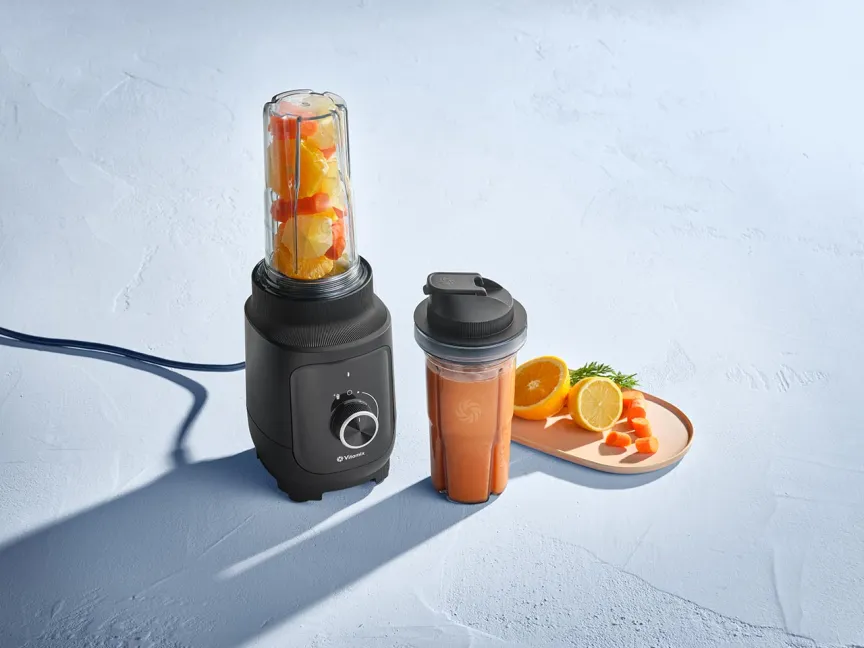
Vitamix has earned quite a reputation in the best blenders conversation thanks to its powerful motors, which deliver impressive results. But for the better part of a century, the well-known brand has offered only full-size blenders, with the option to purchase a $150 personal cup adapter separately. Until now.
On Monday, Vitamix launched the Nano, its first-ever personal, single-serve blender.
The to-go cup is perfect for a 20-ounce smoothie.Vitamix
The Nano was created with SmoothiePilot, the brand’s first adaptive smoothie program. Built with machine learning and specific to the Nano, SmoothiePilot automatically selects the optimal blending speed and duration for whatever you put in the cup, the company said in a press release. Its stainless steel blades blend smoothies, frozen cocktails, post-workout shakes, ice and more.
Nano’s cup was designed to fit in most car cup holders.Vitamix
With a single dial on the 1,000-watt Nano, you can select SmoothiePilot or opt for variable speed.
The Nano comes with two BPA-free, 20-ounce Tritan cups designed to fit most cup holders and two to-go drink lids. Once you’re done with your beverage, you can pop the cups back onto the blender’s base, add a drop of dish soap and warm water, then blend to clean.
Give yourself one fewer dish to wash by allowing the Nano to do the work for you.Vitamix
Available in black or white and sporting a cohesive look with its larger counterparts, the Nano is 15.3 inches tall, 4.3 inches less than CNET’s pick for best overall blender, the Vitamix VX1, but 2.39 inches taller than our pick for best personal blender, Ninja’s BlendBoss.
The Nano can now be purchased for $200 on Vitamix.com and comes with a three-year limited warranty on the Nano’s motor base, blade base and cups. Starting Monday, select retailers, including Amazon, will also carry the Nano.
Advertisement
Anna Gragert
Senior Editor, Health and Home
Anna Gragert (she/her/hers) was previously the lifestyle editor at HelloGiggles, the deputy editor at So Yummy and the senior lifestyle editor at Hunker. Over the past 12 years, Anna has also written for the LA Times, Elle, Bust Magazine, Dazed, Apartment Therapy, Well+Good and more. At CNET, she’s a senior editor on the Healthy Home team, and her coverage includes health, wellness tech, meal kits and home and kitchen tech with a focus on the technology that aims to help us live our healthiest, happiest lives.
See full bio
Today’s Fulham vs Chelsea live stream sees two men who managed Real Madrid last season meet in a West London derby on the opening weekend of the 2026/27 Premier League campaign, as Alvaro Arbeloa and Xabi Alonso take charge of their first competitive games.
Many pundits have tipped Fulham to struggle this season, after the club lost manager Marco Silva and influential attackers Harry Wilson and Raul Jimenez over the summer. Former Liverpool defender Arbeloa is the new man in the Cottagers’ dugout, having spent the second half of last term as Madrid head coach following Alonso’s sacking in January. The Spaniard has brought two players with him from the Bernabeu, summer signings Gonzalo Garcia and Cesar Palacios, while midfielder Shea Charles could also make his competitive debut after joining from Southampton. However, Fulham are without injured club captain Tom Cairney and defender Joachim Andersen, who serves the last game of a ban carried over from last season, as they target consecutive top-flight wins over Chelsea for the first time.
New Chelsea manager Alonso is aiming to rebuild his reputation after a fantastic spell at Bayer Leverkusen was followed by a bruising eight months in the Spanish capital. The former Spain midfielder should comfortably improve on Chelsea’s disappointing finish of 10th last season, but he will be expected to secure an immediate return to the Champions League after another busy summer in the transfer market at Stamford Bridge. Morgan Rogers was the headline buy after arriving from Aston Villa for £117m, a record fee for a British player, while other new recruits include defender Maxence Lacroix from Crystal Palace, and experienced pair Danny Welbeck and Jordan Henderson, from Brighton and Brentford respectively.
Advertisement
Here’s how to watch Fulham vs Chelsea in the 2026/27 Premier League from anywhere in the world.
Traveling abroad right now? You can use a VPN to watch Fulham vs Chelsea for free as if you were right at home.
Advertisement
How to watch Fulham vs Chelsea from anywhere
A VPN is handy piece of software that can make your device appear as if it’s back in your home country, so you can unlock your usual service. The best VPN right now? We recommend NordVPN – it does everything and comes with up to 75% off.
How to watch Fulham vs Chelsea live streams in the US
Fulham vs Chelsea is being televised on USA Network in the US..
Advertisement
Sling TV carries USA Network on its Blue plan with prices starting at $45.99, though it comes with an up to half-price discount for your first month.
Outside the US for Monday Night Football? Use NordVPN to access your usual coverage.
Advertisement
How to watch Fulham vs Chelsea live streams in the UK
In the UK, Fulham vs Chelsea is being shown on Sky Sports Main Event and Sky Sports Premier League.
Sky Sports packages start at £22/month for existing Sky subscribers, rising to £35/month for new customers. You can also tune in via a NOW Sports membership that carries the Sky Sports channels.
Outside the UK today? Use NordVPN to access Fulham vs Chelsea live streams from anywhere in the world.
Advertisement
How to watch Fulham vs Chelsea live streams in Canada
Fulham vs Chelsea is available to watch on Fubo in Canada.
Prices start at CA$31.49/month for Fubo’s Sports Monthly package. You can also access Fubo’s Premier League coverage through an eligible DAZN subscription.
Not in Canada? Use NordVPN if you’re away from home.
Advertisement
How to watch Fulham vs Chelsea live streams in Australia
Stan Sport is showing Fulham vs Chelsea in Australia.
Stan Sport costs AU$20/month on top of a Stan subscription, which itself starts at AU$9.99/month.
Not in Australia right now? You can simply use a VPN like NordVPN to watch all the action as if you were back home.
The scheduled Fulham vs Chelsea kick-off time on Monday, August 24 is 8pm BST local time in London, which is 12pm PT / 3pm ET.
That’s 5am AEST on Tuesday, August 25 in Australia.
Advertisement
What is the Fulham vs Chelsea head-to-head?
Chelsea have traditionally had the edge over their West London neighbors, winning 53 of their 92 meetings in all competitions. The Cottagers have beaten the Blues just 12 times, while there have been 27 draws.
Can I watch Fulham vs Chelsea on my mobile?
Of course, most broadcasters have streaming services that you can access through mobile apps or via your phone’s browser.
You can also stay up-to-date with all the key Premier League 2026/27 moments on the official social media channels on Instagram (@PremierLeague), TikTok (@PremierLeague) and YouTube (@PremierLeague).
We test and review VPN services in the context of legal recreational uses. For example: 1. Accessing a service from another country (subject to the terms and conditions of that service). 2. Protecting your online security and strengthening your online privacy when abroad. We do not support or condone the illegal or malicious use of VPN services. Consuming pirated content that is paid-for is neither endorsed nor approved by Future Publishing.
US AI leadership will be achieved through an open ecosystem of models, not frontier dominance, Jensen Huang said.
Nvidia is planning to use its $6bn deal with AI start-up Poolside to build open-weight AI models that can rival those made by China’s DeepSeek and Moonshot, the Wall Street Journal (WSJ) reported over the weekend.
The reports come after the chipmaking giant promised a combined $7bn investment into the AI start-up, including $1bn in equity at a pre-money valuation of $12bn. This marks a fourfold jump from the company’s 2025 valuation of $3bn.
Founded in 2023, Poolside is behind the Laguna series of open-weight models, which are small enough to run on a single Nvidia DGX GPU.
Advertisement
Nvidia’s reported plans to make its own open-weight models would also put it in direct competition with other US AI companies it backs, including OpenAI and Anthropic, as global businesses compete for dominance in the space.
Open-weight models are generally far cheaper to run and allow developers to make customisations to suit their needs.
And China is by far the leader in this space, according to data collected by Hugging Face, which found that Alibaba’s Qwen and related models were downloaded more than 3bn times over the past six months, placing it ahead of models from Google, OpenAI, Meta and other rivals by a large margin.
Nvidia founder and CEO Jensen Huang, in a recently published letter, highlighted the importance of open weights for AI leadership. “Our AI leadership will be judged not by one frontier AI model, but by whether the United States builds a strong, open ecosystem that diffuses into every sector,” he wrote.
Advertisement
“Open weights expand access to the AI economy. Start-ups, established businesses, universities and public institutions can build on advanced models without training one from scratch or paying frontier model prices for every task.
“Relying solely on closed models is not inherently safe; they can be breached, misused or fail in ways that outsiders cannot detect. And concentrating advanced AI capabilities behind a small number of closed models compounds that risk.”
Alongside its multibillion-dollar commitment to Poolside, Nvidia is also nabbing the start-up’s 109 employees. The non-exclusive nature of the deal means leadership will not be joining Nvidia and will continue working on their own projects.
Deals like these give Nvidia access to a company’s technical prowess, including research and staff, while minimising impact on the chipmaker’s overall efforts to develop its own technology.
Advertisement
In 2025, the company signed US AI company Groq in a licensing deal that saw much of its talent hired away by the chipmaking giant. The same year, it spent more than $900m to hire Enfabrica CEO Rochan Sankar and other employees at the AI start-up and license the company’s technology.
Poolside employees joining Nvidia will reportedly work on the company’s Nemotron project – which aims to develop open-weight models – according to WSJ sources.
Don’t miss out on the knowledge you need to succeed. Sign up for the Daily Brief, Silicon Republic’s digest of need-to-know sci-tech news.
Ray Hoe is betting on the small Japanese town of Toyama for his first hotel project
For some Singaporeans who make money in the stock market, a second property is the next move. Ray Hoe did too—just not one here.
The 41-year-old channelled his gains into a 77-year-old ryokan in Toyama, a small city on the Sea of Japan coast that most tourists pass through on the Shinkansen without stopping.
He had no hospitality experience, didn’t and still doesn’t speak Japanese, and had never visited Toyama before the property caught his eye.
Four years and a seven-figure investment later, Hooray Toyama, a boutique modern ryokan (traditional Japanese inn featuring tatami-matted rooms), is preparing to open its doors in Sept 2026.
Advertisement
An early interest in hospitality
Ray (left) and his local business partner, Xavi, at Toyama’s local festival in 2026./ Image Credit: Hooray Hotels
Ray has lived in Singapore all his life. He grew up watching his parents draw other people’s buildings—both were draftsmen, the people who translate an architect’s vision into technical drawings.
His father later became a small property developer in Malaysia. At the same time, his mother worked in the drafting studio of an architect who later founded Banyan Tree Hotels.
His parents’ work gave Ray an early interest in hospitality and property. Ray went on to study at the University of British Columbia before returning to Singapore to start his career at commercial real estate firm Jones Lang LaSalle, where he spent years selling international properties in London, Tokyo, and New York to Singaporean buyers.
Along the way, he kept meeting a certain type of developer, the ones who were doing hospitality projects rather than residential ones.
“They were the coolest people. Most generous, most fun, most artsy,” he said. “I thought: one day I want to be a hotelier like them.”
Advertisement
That opportunity came 15 years later. Ray made money in the stock market when COVID-19 hit and had to decide what to do with the gains.
With time on his hands during the pandemic, he began researching hotels in Japan online, looking for a way to finally pursue his long-held ambition of becoming a hotel operator.
Why Toyama?
Toyama’s famous alps comprising the Tateyama Kurobe Alpine Route./ Image Credit: Rakuten Travel
Ray knew from the start he didn’t want a hotel in Kyoto, Osaka or Tokyo.
What he wanted was a Japan that most visitors don’t see—not metropolitanism, but nature and culture and food and the particular quietness of a place that hasn’t been overrun by tourism.
That led him to the Hokuriku region, which stretches along Japan’s northwestern coast and includes Toyama, Ishikawa, and Fukui.
Advertisement
Toyama, in particular, stood out for several reasons. One was the Tateyama Kurobe Alpine Route, which Ray describes as the Japanese Alps in a compact, stunning setting and what he considers the best hiking experience in Japan.
The second appeal is the food. Having visited Japan many times—and even lived there for a year for a previous job—Ray had developed a particular appreciation for the seafood in the region.
“Every time I come back from Toyama, I find that the sushi in Osaka and Tokyo doesn’t match up to the freshness in the Hokuriku region,” he said.
The cold, clean waters of the Sea of Japan feed some of the finest seafood in the country, a fact well known to Japanese food lovers and almost unknown to international tourists.
Advertisement
The third reason was a calculated bet, and Ray was ready to ride the wave.
A significant part of that plan depends on spreading visitors beyond the crowded major cities into regional destinations, and it can be said that Toyama is exactly the kind of place that policy is designed to promote.
“More people will be willing to go deeper into Japan rather than seeing the same things,” Ray said. “And I thought: why not? Let’s try Toyama.”
Advertisement
The ryokanhas been around for 77 years
Exterior and common area of Hooray Toyama./ Image Credit: Hooray Hotels
The property Ray acquired has a relatively long history of its own.
Built 77 years ago, Hooray Toyama has passed through three generations of the same family. A grandmother founded it, and the third-generation owner invested millions in renovation before reopening in 2019, right before the pandemic closed the country.
Unable to survive two years of virtually zero tourism, the property went to auction in 2024.
Ray wasn’t the only one looking at it. He had actually spotted it earlier, but lost it to another bidder.
Assuming the opportunity was gone, he turned his attention elsewhere. He bought a small piece of land along the Shimanami Kaidō cycling route in Hiroshima, overlooking the Seto Inland Sea.
Advertisement
A year later, the winning bidder decided to sell the Toyama property. Ray moved quickly, redirecting the funds he had set aside for the Hiroshima project towards the ryokan instead. The Hiroshima land remains undeveloped for now, although Ray has plans for it in the future.
“I preferred not to buy a property where I have to build everything from scratch,” he said.
A seven figure investment
The ryokan in Toyoma fits Ray’s checklist of a modern boutique ryokan stay.
It features a 10,000 sqft space spread across four floors, a commercial kitchen, a roof garden open in summer as a beer garden, a cafe space that seats 40 to 50, a yoga hall, a library, two onsens, and 11 rooms already fitted out in traditional ryokan style.
Advertisement
“I felt that by taking on Hooray Toyama, I was giving it a chance to succeed. And if it succeeds, it proves to the previous owner that spending so many millions to renovate it was the right decision.”
Large public ofuro bath and Tatami room at Hooray Toyama./ Image Credit: Hooray Hotels
Ray shared that the purchase price of the Toyama ryokan was seven figures, which he financed with an equity loan against his Singapore property, together with some of his savings.
Monthly operating costs average around S$30,000, though they have spiked as high as S$60,000 in months when the boiler and the elevator both needed some attention since the property sat unused for four years.
Ray has drawn no salary for close to a year and a half. His advice to anyone considering something similar is blunt: don’t sell your primary residence in Singapore.
“Maintaining it provides a necessary contingency plan should business ventures abroad fail. If you sell it and something goes bad, it’s very hard to climb back onto the property ladder,” Ray advised.
Advertisement
Making Toyama easier to discover
(Left to right): Xavi (Japanese business partner), Ray and Anri (general manager of Hooray Toyama)./ Image Credit: Hooray Hotels
In a small town like Toyama, Ray found that there was no established international community or expat bubble to draw from.
But he did find people who spoke both English and Japanese fluently—including those with mixed parentage and people who had spent years living between countries.
His general manager, for instance, is half-Singaporean and half-Japanese. His front-desk staff is half-Brazilian and half-Japanese, while his chef is half-Filipino and half-Japanese. His barista is Thai, and two Taiwanese women on the team have lived in Toyama for more than 20 years. His Japanese business partner and co-CEO, meanwhile, grew up in California.
Together, they make up a team of three full-time and six part-time staff. Ray is the only one who still can’t speak Japanese.
He sees that as an advantage when it comes to serving foreign travellers.
Advertisement
“Because I can’t speak Japanese, I’m attracting local people who can speak English and Japanese to come work for me,” he said. “In a small town like Toyama, that immediately stands out.”
The team acts as a bridge for foreign travellers, helping them make restaurant reservations, recommending izakayas and advising on which attractions are worth the trip.
That can be particularly useful in Toyama, where restaurant reservations are often required, English menus are uncommon, and much of the information is only available in Japanese.
“The best thing about Toyama is to eat at the local restaurants,” he said. “The food is of high quality, it’s of value, [and] it’s not ridiculously expensive like Tokyo.”
Advertisement
More than just a place to stay
Ray’s mother at their café and restaurant space at Hooray Toyama./ Image Credit: Hooray Hotels
Ray also wants the hotel itself to give guests a taste of what he values about the region.
Breakfast is served in the café space, with house-made sourdough bread and coffee. When the baker he had originally lined up fell through, he called his mother, who came to Toyama for three months and trained the team using a starter she had brought from Singapore.
At night, the shared restaurant space is closed for regular service but open for private chef pop-ups, an initiative Ray is developing to bring the local Toyama community and hotel guests together.
Rooms at Hooray Toyama start from around JPY¥14,400 per night (roughly S$120), with pricing varying by season and weekend demand, and bookings are open on Trip.com, with the ryokan set to open in Sept.
From the Shinkansen station, Ray encourages guests to walk the 15 minutes to the hotel not just for practicality, but because the route takes you past Toyama’s old trams, some 80 to 100 years old.
Advertisement
“As you walk, you get transported back in time. It’s quiet. It’s like imagining what your parents would experience if they came to Japan during the Showa era,” he reminisced.
Unlike traditional ryokans, Hooray Toyama doesn’t include a kaiseki dinner, which keeps pricing more accessible while still offering the full ryokan experience. “It’s a mini resort in a small hotel in the city,” Ray said. “I wouldn’t expect you to stay in your room all the time.”
Getting the hotel going
Early signs have been encouraging. The hotel has been running a soft launch over the past two months, with friends and family of the team staying at discounted rates.
The response has been largely positive—one group of eight guests from Taiwan arrived for a two-night stay and eventually extended it to a full week.
Advertisement
Ray has been documenting his journey on TikTok, with one video even racking up close to 700,000 views.
Ray and his local team at Hooray Toyama./ Image Credit: Hooray Hotels
Getting there wasn’t a smooth journey, though.
Ray only managed to secure his hotel license in Jun after four years—only for his visa renewal to be rejected shortly after under stricter immigration policies from Japan’s administration under Prime Minister Sanae Takaichi.
He’s found a co-partner to run operations on the ground while he handles the backend from Singapore, and he’s not giving up: he intends to head back to Toyama soon.
Ray’s eventual goal isn’t just to stop at one hotel.
Advertisement
Currently, he is consulting with an architect on plans to build a three-storey hotel with sea views on his land in Hiroshima. It will be a different scale from Toyama but based on the same philosophy of being a boutique property in a place with something to offer that visitors haven’t yet fully discovered.
Ray projects a 10% return on investment over 10 years. But he isn’t in a rush to see returns, knowing that time plays a crucial part in this huge investment of his.
For now, the hotelier’s measure of success is humble: get the Sept opening right, accumulate the first real guest reviews, and prove that a Singaporean who doesn’t speak Japanese can run a ryokan in a small Japanese town that most people have never heard of.
More than half of Gen Z employees were found to be more open about pay transparency in the workplace.
Since coming into effect in early June, the EU Pay Transparency Directive dictates that employers have to acknowledge a new set of rules and guidelines governing how pay is discussed and related information is shared.
Designed to reduce pay inequality in the workplace, the Directive means organisational leaders must provide job applicants with details on initial pay or pay ranges and ensure that job vacancy notices, titles and recruitment procedures are gender-neutral and non-discriminatory.
Employers are also limited in their line of questioning, mainly, they are prohibited from asking candidates about previous salaries. Information regarding an employee’s pay level and how this is determined must also be made more accessible.
Advertisement
Recruitment agency Robert Walters, in the months of June and July, conducted research to explore how modern Irish professionals regard the often taboo topic of pay transparency in the workplace. The company collected data from 1,000 Ireland-based employees aged 18 and older.
What was discovered is that Gen Z aged professionals in particular are more likely to openly discuss their salary at work. 54pc of contributing Irish Gen Z employees were found by Robert Walters to be “disputing existing workplace taboos and discussing their salaries openly with colleagues”.
According to the report, this suggests that, in the wake of the EU Pay Transparency Directive, “the drive for salary transparency is not solely a top-down agenda,” particularly as younger generations of the workforce advocate for openness and transparency in pay discussions.
Commenting on the results of the report, Suzanne Feeney, the country manager for Ireland at Robert Walters, said, “While policy changes are mandating organisations to disclose salary and reward data publicly, we’re also seeing this practice at play at a grass-roots level.
Advertisement
“In fact, it’s Gen Z who are increasingly challenging the traditional attitudes of discretion and confidentiality and opting to open up the conversation around salary with colleagues.”
The age divide
This push for greater transparency is not a motivator amongst all age-based cohorts, found the research. Older employees who took part in the survey were found to be less concerned with discussing financials than their younger counterparts.
Only 29pc of professionals aged 45 to more than 61 explored the topic openly, compared to 41pc who argued it is too personal a matter. From a Gen Z perspective, the report indicated that 38pc of participants in this group don’t perceive any barriers preventing them from openly discussing their salary.
The scenarios in which they most often choose to discuss the issue tends to be if it is with a close colleague (32pc) or if there is a situation in which the sharing of such information is reciprocal (22pc).
Advertisement
Feeney said, “Leaders are now managing workplaces with up to five different generations, each with their own views on issues like salary transparency, workplace culture and employer expectations. For some, pay remains a private matter.”
She added, “As the EU Pay Transparency Directive comes into full force in Irish workplaces, professionals will gain more autonomy in requesting information around their own pay and average pay levels within their organisation. Management teams and leadership will still play a critical role in setting the tone for what is appropriate when salary is discussed in the workplace.
“Professionals have different expectations of salary transparency, but fairness and inclusivity should always be prioritised. When conversations stay constructive, workers don’t risk sharing any information they don’t feel comfortable with, and any discrepancies or inequalities can be identified and quickly addressed.”
In early July, job search platform Mokaru analysed nearly 1.8m global job listings posted between the start of April and end of June on the career sites of 48,758 employers, across more than 46 applicant tracking systems. What was noted is that many organisations and countries have yet to fully adapt to the new rules.
Advertisement
Don’t miss out on the knowledge you need to succeed. Sign up for the Daily Brief, Silicon Republic’s digest of need-to-know sci-tech news.
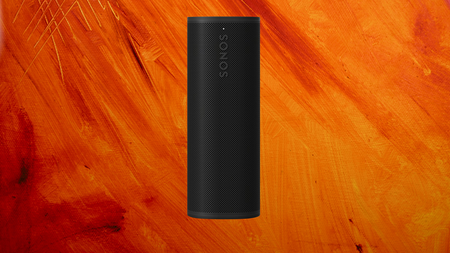
Precision engineered drivers give the Roam 2 a size-defying clarity and bass that make it easy to forget how small the speaker actually is once music starts playing across a garden, a campsite, or a crowded beach.
Advertisement
In fact, to give you more perspective, one of our tech experts, Kob Monney, has reviewed the Sonos Roam 2 in full and praised its clear, detailed midrange performance alongside its strong water resistance and sensible dedicated Bluetooth button.
Kob also singled out Wi-Fi and Bluetooth streaming as one of the Roam 2’s strengths, and that flexibility shows up clearly across ten hours of battery life that cover a full day out, helped by a dedicated button that switches from home Wi-Fi to Bluetooth outdoors.
Automatic Trueplay fine tunes the sound for whatever room, garden, or open space the Roam 2 ends up in, the sort of detail our Best Bluetooth speakers 2026 roundup tends to single out in the top contenders.
Advertisement
Stereo pairing is also on offer, letting two Roam 2 units link together for fuller sound across a room, and the pairing works even with the original Roam for anyone building on speakers they already own.
If you want rugged, Wi-Fi and Bluetooth capable speaker with ten hours of battery and Sonos level sound, £139 gets you exactly that while also saving £40 off the £179 RRP before the reduced price disappears.





































































You must be logged in to post a comment Login