Meal kits have been around for more than a decade. HelloFresh, Blue Apron, and Home Chef have been the most visible, blasting ads on social media and during your favorite podcast — but are they the best?
After testing and retesting every meal kit service (here’s how we do it), crafting dozens of these meals-by-mail in our own kitchens, we’ve picked a new favorite for 2026, and it’s not one of the “big three.”
Advertisement
If you’re looking for excellent meal kits that are anything but boring, there’s a new top dog in town.
Corin Cesaric/ Zooey Liao/ CNET
Marley Spoon offers creative and tasty meals, which may come as no surprise when you learn who the woman behind the recipes is: kitchen maven herself, Martha Stewart.
Marley Spoon caters to adventurous home cooks and food enthusiasts with creative recipes that appeal to both beginners and more refined palates. Unlike some meal kit services that target newcomers with straightforward, quick-prep dishes, Marley Spoon offers more elevated fare featuring Martha’s own recipes. Many come straight from her cookbooks or personal collection, yet they remain accessible — you won’t need advanced techniques or professional training to pull them off.
Curious as we are at CNET about all things meal kits, we wanted to know just how good they are — and whether they’re worth the money. We tested a week’s worth of recipes for a third time to bring you this review of Marley Spoon’s meal kit delivery service.
How Marley Spoon works
A selection of Marley Spoon recipes as of 2025.
Marley Spoon
Marley Spoon operates similarly to most others in the category and offers both meal kits with recipes that you cook and prepared meals that only require reheating.
Advertisement
After choosing between those two options, you will then answer the question, “What kid of meals do you like?” Meal kit options include everyday variety, low calorie, low carb, quick and easy, vegetarian, pescatarian and Mediterranean for two or four people and you can choose between two and six meals per week. The single-serving prepared meal options include everyday variety, low calorie or low carb and you can choose 6, 8, 10, 12, 14 or 18 meals per week.
Your box of meal kit ingredients is delivered once a week — unless you skip a week, which is easy to do — and you can either manually select recipes or let Martha Stewart personally choose them for you. OK, just kidding: She’s not your personal meal concierge, but you can let the brand select meals if you prefer a little mystery. You can select any day of the week for delivery, and the boxes will arrive between 8 a.m. and 9 p.m.
There are now more than 100 recipes each week, ranging in difficulty. Before you choose a recipe for delivery, you’ll see all the steps involved, the estimated time it takes to complete, and detailed nutritional information to help you decide.
Marley Spoon meal kit pricing
Advertisement
Number of people
Recipes per week
Total servings per week
Price per serving
2
2
4
$12.99
2
3
6
$11.99
2
4-6
8-12
$10.99
4
2
8
$10.99
4
3
12
$10.49
4
4-5
16-20
$9.99
4
6
24
$8.99
Prepared meals are $12.99 each and shipping is $10.99 per box.
What are Martha Stewart & Marley Spoon meals like
As you might imagine, since Martha Stewart helped design the concept and created many of the recipes, there are some really interesting, high-end and gourmet dishes to choose from. Luckily, though, most are still fairly simple to make.
There are plenty of healthy recipes, along with dietary preferences to choose from. However, there are only between four and six vegan options each week so if you want more options, Purple Carrot may be a better choice for you. Other services that feature built-in diet meal plans include Green Chef, Home Chef or HelloFresh.
Advertisement
Skillet chicken Parmesan ingredients.
David Watsky/CNET
At Marley Spoon, you’ll find plenty of warming comfort dishes like French onion chicken breast and beef stroganoff, plus desserts you can add on to your box, such as baked gingerbread doughnuts and French-style cheesecake.
On the prepared-meal side, the recipes are just as creative. Some meals include tilapia with smoky tomato sauce and black bean street corn and merlot chicken meatballs with orzo pasta and green beans.
Advertisement
How easy are Martha Stewart & Marley Spoon meals to prepare?
The beef empanadas were fun to make from scratch and a new experience for me.
Corin Cesaric/CNET
Our meals ran the gamut from the super simple to a bit more complicated and time-intensive, but the good news is that it’s really up to you on how difficult you want the meals to be when you make your recipe selections.
The skillet chicken Parmesan, for instance, had a number of steps like preparing the chicken, cooking it, making the sauce and preparing the pasta (which had its own ingredients). For someone with a decent amount of cooking experience, this isn’t challenging, but some beginners might not be ready for such an involved meal. Other meals, such as the butternut squash pizza, were quite simple, tasty, and perfect for a weeknight when you don’t feel like fussing much or taking time to cook.
Beef picadillo pockets with bell peppers and cilantro chimichurri: This meal was not only delicious but also fun to make. It was the first time I used raw dough in a meal kit recipe, and the results were well worth the effort. Although the empanadas were filling, I still would have liked it to have come with a side other than the chimichurri sauce.
The beef empanadas were filling and tasty.
Advertisement
Corin Cesaric/CNET
Butternut squash pizza with ricotta, almonds and hot honey: I had never had butternut squash on a pizza before this meal, but I can definitely see myself making this again. It was a perfect fall meal with the onions, squash, rosemary and almonds added on top.
The butternut squash used the same type of dough as the empanadas.
Corin Cesaric/CNET
Seared salmon and citrus butter sauce with smashed potatoes and shaved Brussels salad: The Brussels sprout salad helped elevate this simple meal and take it to the next level. I cooked the salmon on the stovetop and the smashed potatoes in my air fryer.
Advertisement
I loved making smashed potatoes for this meal.
Corin Cesaric/CNET
Skillet chicken Parmesan with casarecce and sautéed spinach: This recipe was good and very comforting, though it certainly had a healthy share of carbs and calories. The red sauce was very simple and the chicken cutlets weren’t breaded so it felt a little healthier than normal chicken Parm but not quite enough to be really, truly healthy. I had lots of leftovers, which was nice.
Honey miso salmon with roasted carrots and Brussels sprouts: This one was great and healthy, but it wasn’t particularly out-of-the-box. The salmon was high-quality and tasted super fresh.
Advertisement
Restorative chicken soup with sweet potato kale and quinoa: A very tasty and hearty soup I made and ate all week. The shredded chicken was already cooked, which surprised me but I appreciated, as it was still moist and flavorful. This entire meal was simple to prepare and felt like nourishing medicine, thanks to all those superfoods.
I was eating chicken Parm and pasta leftovers all week.
CNET / David Watsky
Marley Spoon support materials
I found the recipes clear, concise and easy to follow. There’s some nice background on the ingredients, too: my salmon recipe, for instance, provided context on miso for anyone unfamiliar with the fermented paste. The Marley Spoon app is also helpful with lots of information about each recipe and gives you the ability to order, pause, cancel or skip a week right from your mobile device.
Advertisement
All the ingredients for a healthy miso salmon with roasted veggies.
CNET / David Watsky
What makes Marley Spoon different from other meal kit services?
One thing to like about this service is it doesn’t try to be anything other than good. There’s no pandering to fad diets or giving users too much autonomy to change recipes or swap out meats. The meal kit service’s proposition is that the culinary team has come up with thoughtful, mostly healthy recipes they think you’ll enjoy — and they ask you to put your trust in them. I wouldn’t go so far as to call it stuffy or stubborn, but there is something very Martha Stewart about it.
In that respect, it reminds me a bit of Sunbasket. That meal kit service also tries to keep the integrity of the original recipes they’ve created and while it might not please everyone, I think it pays off in the end for those who appreciate good food.
Advertisement
The finished product.
CNET / David Watsky
Who is Marley Spoon good for?
This is one of the best meal kit services for foodies and experienced cooks looking to shake up their weeknight dinner rotation. If you’re looking for interesting new recipes that are both gourmet and approachable, Martha Stewart’s meal kits are a good pick. It’s also a solid choice for a home cook who’s looking to hone new skills or work with new ingredients.
A lot of the recipes are kid-friendly, so these meal kits would also work well for families of up to four people. And with as many as seven plant-based recipes each week, this is a good meal kit service for vegans, vegetarians or those trying to sprinkle in a few more non-meat dinners per week.
Advertisement
A healthy chicken soup that fed me for a few days.
David Watsky/CNET
Who is Martha Stewart & Marley Spoon not good for?
If you’re an extremely picky eater, a very new cook, or are trying to keep a gluten-free diet, I would not suggest this meal kit. It’s also not a good meal delivery service if you’re simply looking to get dinner on the table each week and don’t care about the cooking process, since some of the recipes are involved.
Packaging and environmental friendliness
I found Martha Stewart & Marley Spoon to be on the eco-friendly side of the meal kit spectrum. There was some single-use plastic waste, as there always is, but nothing excessive — and the ingredients were not individually packed in disposable bags as of 2025. The boxes, coolers and ice packs were also recyclable.
Advertisement
Changing, skipping or canceling your meal kit order
Between the website and mobile app, Marley Spoon makes it very easy to skip weeks, change out recipes or pause your subscription. Any changes must be made six days prior to the delivery date.
The final verdict on Martha Stewart & Marley Spoon
Being a Martha Stewart-conceived meal kit project, I had lofty expectations for this service and it mostly met them. When I flip through the menu each week, it boasts one of the highest percentages of recipes that make me go “ooh, that sounds good” right up there with Sunbasket. Most importantly, all the recipes we made delivered on the promise of a tasty and interesting meal. There wasn’t much blah factor, and we very much appreciate that.
The meal kit service also includes some thoughtful touches that others don’t, like quick ingredient explainers for new chefs and different chefs behind some of the recipes. The produce, meats and fish were also some of the freshest we’d received from a meal kit service and that goes a long way in creating a truly delicious dinner. The pricing is fair for what you get, and if you’re cooking for a large group, it actually gets rather affordable per serving. The market add-ons have also grown over the years.
If you’ve been wanting to try a meal kit service with a range of healthy, hearty and comforting meals and you already have the cooking basics down, I’d say give Martha’s meals a whirl.
Elizabeta Gjorgievska Joshevski’s career spans multiple continents and leadership roles, yet her current focus reflects a consistent theme: understanding how technology translates into business outcomes. As founder and CEO of EverCognitive, she brings that perspective into an AI landscape where many organizations are still defining their AI transformation and how to apply it in practical ways.
Originally from North Macedonia, Elizabeta began her career in programming and technology education, where she developed both technical expertise and early leadership experience. According to her, those early roles were shaped by building relationships and expanding capabilities, which eventually connected her to global technology ecosystems. That period, she explains, formed her understanding of how organizations adopt technology beyond theory and into real operations.
Her move into Cisco marked a turning point, opening the door to a global career spanning 19 years that would take her from the Balkans to Vienna and later to Dubai to lead multicultural EMEA teams. From her perspective, progression came through exposure to different markets and business challenges rather than a predefined trajectory. She notes that working across regions required constant adaptation, particularly in aligning customer needs with evolving technology strategies.
In Vienna, she led telecom operations across Eastern Europe, managing teams that combined sales leadership with technical execution. She frames this phase as one that demanded both operational discipline and strategic clarity. Elizabeta promotes Servant Leadership principles as a way to elevate the team to connect effectively with C-suite executives. This is what guided her to lead global teams to deliver exceptional results.
Advertisement
Her relocation to Dubai reflected a deliberate choice. Elizabeta explains that Dubai offered a setting where opportunity is closely tied to capability, creating space to continue building her leadership profile. She notes that the region’s pace of development and openness to innovation shaped how she approached large-scale initiatives and organizational transformation.
Over time, her roles expanded to include overseeing enterprise-level operations across EMEA, where she was responsible for a business portfolio. She explains that this level of responsibility requires coordination across global teams and alignment with product and strategy functions. According to Elizabeta, the experience provided her the opportunity to shape the decisions made on a corporate level to accelerate growth across the regions while managing execution complexity at scale.
A gradual shift in perspective began during a leadership program at Harvard between 2013 and 2014. Elizabeta explains this period as a moment of reflection, when she evaluated her career and experiences both professionally and personally, which planted the seed of her next chapter. “I knew my next challenge would be to take all of my experience and the immense knowledge I gained from my time at Harvard to build my own company,” she says.
That idea remained in the background and started to grow as artificial intelligence became the front and center of every technology conversation. She explains that this was the catalyst for her stepping away from the corporate world. It was during this time that allowed her to focus on understanding Generative AI more deeply, including completing a program at MIT in 2024 and studying how organizations could apply AI to their ongoing digital transformations. According to Elizabeta, she recognized the gap between the rapid development of AI tools and the market readiness of implementing AI, which is where she saw her opportunity.
Advertisement
She states, “The starting point should always be the business outcome, to understand the client and how their AI ambition can convert into operational reality and growth.”
EverCognitive was built around that principle. The company operates as an AI transformation firm that works with organizations to assess organizational health, perform AI readiness audits, and build and select AI solutions to map out the client’s business outcomes. Elizabeta explains that this includes executive advisory, organizational assessments, and frameworks designed to implement architecture that operators can execute.
Her approach reflects her experience working within large organizations. She notes that decisions around technology are often shaped by leadership alignment, organizational structure, and operational priorities. From her perspective, this is where many companies require guidance when approaching AI.
“I have spent years working with the companies that are now trying to leverage AI,” Elizabeta explains. “My deep understanding of the digital transformation journeys different vertical markets went through gives me the leverage to be able to accelerate their AI transformation with confidence and tangible business outcomes.”
Advertisement
Today, EverCognitive is engaging with organizations on AI leadership and strategy, focusing on translating technological potential into measurable outcomes. For Elizabeta, the emphasis remains on applying experience to a space that is still developing.
Elizabeta maintains that while AI will continue to evolve, the ability to guide its application will remain essential. Technology will continue to advance, but the way it is applied within organizations will determine its real impact over time.
She states, “The question is not if but when. And in the age of the AI revolution, those who adopt quickly and wisely won’t just survive; they will win.”
The key players leading 2026 GeekWire Awards Startup of the Year finalists, clockwise from top left: Grin Lord, CEO of mpathic; Edward Wu, Dropzone AI CEO; Loopr CEO Priyansha Bagari; Dopl Technologies co-founders Wayne Monsky, Ryan James and Steve Seslar; and ElastixAI co-founders Saman Naderiparizi, Mohammad Rastegari, and Mahyar Najibi.
From making AI safer for kids in crisis to guiding robotic arms through remote ultrasounds, from sniffing out factory defects to slashing the cost of running large language models — the 2026 GeekWire Awards Startup of the Year finalists are building across a variety of frontiers in tech.
The finalists are: mpathic, ElastixAI, Dropzone AI, Dopl Technologies, and Loopr AI.
Now in its 18th year, the GeekWire Awards is the premier event recognizing the top leaders, companies and breakthroughs in Pacific Northwest tech, bringing together hundreds of people to celebrate innovation and the entrepreneurial spirit. It takes place May 7 at the Showbox SoDo in Seattle.
Last year’s winner was Auger, the startup that makes supply chain software that unifies data, targets inefficiencies and provides real-time insights and automation.
Continue reading for information on the Startup of the Year finalists, who were chosen by a panel of independent judges from community nominations. You can help pick the winner: Cast your ballot here or in the embedded form at the bottom. Voting runs through today.
Mpathic is a Seattle startup building safety infrastructure for AI models that interact with vulnerable users, including children and people in mental health crises. The company helps foundational model developers and LLM-powered app teams stress-test model behavior, evaluate responses, and monitor live interactions with safeguards that can flag or intervene when AI-generated advice veers into dangerous territory.
Advertisement
Mpathic was co-founded in 2021 by CEO Grin Lord, a board-certified psychologist and NLP researcher, in a bid to bring more empathy to corporate communication. The company raised $15 million in 2025 and says its global network of thousands of licensed clinical experts is growing by hundreds weekly to keep up with demand. Mpathic is No. 188 on the GeekWire 200, a ranked index of the Pacific Northwest’s top startups.
ElastixAI is a Seattle startup building an AI inference platform designed to make running large language models faster, cheaper, and more flexible across edge devices and cloud deployments. The platform lets customers configure their inference infrastructure for specific use cases, and the company says it could serve everyone from hyperscalers to enterprises weaving AI into daily operations.
Dropzone AI is a Seattle startup building AI security agents that work alongside human analysts in security operations centers, handling repetitive tasks and investigating alerts. The company’s pre-trained agents use large language models to mimic the thought process of expert security analysts, helping teams keep pace with a growing volume of cybersecurity threats.
Advertisement
Dropzone AI was founded by CEO Edward Wu, who previously spent eight years at Seattle-based security company ExtraHop. The company raised $16.8 million in Series A funding a year ago.
Dopl Technologies is a Seattle startup using telerobotics to bring diagnostic exams and interventional procedures to underserved communities, particularly rural patients who would otherwise travel long distances to reach specialists. Its robotic ultrasound system can be controlled remotely by a sonographer in a different location, with advanced haptics and visual tools designed to give the operator a sense of touch — and AI assistance to optimize workflows.
Dopl was co-founded by CEO Ryan James, COO Steve Seslar, and chief medical officer Wayne Monsky, who began researching novel care delivery methods together at the University of Washington in 2017. The company, ranked No. 193 on the GeekWire 200, raised $1.5 million in a pre-seed round last year.
Loopr is a Seattle startup selling AI-powered computer vision software that helps manufacturers detect defects and quality issues in real time. Unlike legacy vision systems that require fixed cameras and custom installs, Loopr’s software is hardware-agnostic and can run on tablets, making it accessible across aerospace, automotive, and chemical manufacturing — where it is already working with 10 Fortune 1000 companies.
Advertisement
Loopr was founded in 2021 by CEO Priyansha Bagaria, who drew inspiration from building defect-detection software for her family’s manufacturing business in India. The company raised $5.4 million in a funding round last August.
The event will feature a VIP reception, sit-down dinner and fun entertainment mixed in. Tickets go fast. A limited number of half-table and full-table sponsorships are available. Contact events@geekwire.com to reserve a spot for your team today.
(function(t,e,s,n){var o,a,c;t.SMCX=t.SMCX||[],e.getElementById(n)||(o=e.getElementsByTagName(s),a=o[o.length-1],c=e.createElement(s),c.type=”text/javascript”,c.async=!0,c.id=n,c.src=”https://widget.surveymonkey.com/collect/website/js/tRaiETqnLgj758hTBazgd5M58tggxeII7bOlSeQcq8A_2FgMSV6oauwlPEL4WBj_2Fnb.js”,a.parentNode.insertBefore(c,a))})(window,document,”script”,”smcx-sdk”); Create your own user feedback survey
Bluesky is once again having a wobble. The platform said some of its systems are down and that it’s “investigating an incident with service in one of our reginos” (that’s Bluesky’s typo, not mine). The issue appears to have started at 1:42AM ET and was still persisting as of 11AM when this story was originally published. Since then, the site has been experiencing intermitent interuptions, including at times to its status page where users should be able to monitor outages.
At 7:47PM ET, the platform explained that it’s been attempting to mitigate “a sophisticated Distributed Denial-of-Service (DDoS) attack, which intensified throughout the day.” It said the attack had caused interruptions to users’ feeds, notifications, threads and search, all of which the Engadget team experienced first-hand at various points through the day. While DDoS attacks are frequently used as virtual smokescreens for hacks, Bluesky says it has “not seen any evidence of unauthorized access to private user data.” The social media service had another brief outage earlier this month.
The outage is ongoing, but due to its intermittent nature it’s more of a rolling blackout than a power outage. Bluesky says it will provide another update on the situation by 1PM ET on April 17.
Update, April 16, 8PM ET: This story was updated after publish with an of the outage from Bluesky.
One of the genuine bright spots in my pre-Record Store Day inbox this year was news of a 1LP retrospective spotlighting Brian Wilson’s late-1990s comeback and the transformational musical run that carried him deep into the 2000s.
The good folks at Oglio Records kindly sent me a preview copy of the album titled Brian Wilson On Tour 1999-2007. The single LP collection offers a tasty overview of Brian’s live work from this period including choice late’60s Beach Boys nuggets, primo solo cuts and special cover tunes. Given the quality of Brian’s tremendous backing group at that time, there is a remarkable consistency of performance and sound quality on these recordings across the years.
The album opens with a rousing version of “This Could BeThe Night,” a particularly special tune originally written by Harry Nilsson in tribute to Brian and eventually recorded by Wilson himself on the 1995 Nilsson tribute album For The Love Of Harry: Everybody Sings Nilsson. Do look up the fascinating back story about this song on the wiki.
Brian Wilson On Tour 1999-2007 offers a mini medley of opening songs from Wilson’s legendary 1966/2004 SMiLE album which lead into a terrific version of “Heroes & Villains.” Three fan favorite Beach Boys LP cuts from 1968’s Friends including the title track are also featured. If you saw any of the tours around this time you know that when Brian performed “Marcella” — from the under appreciated 1972 Beach Boys LP Carl & The Passions — he took full ownership of the tune, turning it into a brilliant rocker only hinted at in the original.
The Beach Boys deep album cut “Drive In” from 1964’s All Summer Long is a special kick to hear performed live, with its decidedly humorous and slyly racy lyrics — apparently this song was one of Brian’s transformational early productions where the band’s sound first came together as he’d envisioned.
Advertisement
Heartstring-tugger “Melt Away” is one of my all-time faves from Wilson’s 1988 solo debut — such an incredible song, performed gorgeously. Brian delivers a genuinely rocking cover of the Chuck Berry classic “Johnny B. Goode” without sounding tired or cliche. The album ends with a curiously upbeat pop arrangement of “She’s Leaving Home” from The Beatles’ Sergeant Pepper.
Sonics-wise, Brian Wilson On Tour 1999–2007 happily sounds really good start to finish despite its likely digital sourcing (hey, these are modern live concert recordings, folks). I was pleasantly surprised that the opaque marble vinyl actually is pretty nice overall — well centered, overall quiet. I did not notice any surface noise issues, which doesn’t always happen with highly patterned color vinyl.
Fourteen great songs performed live by music legend Brian Wilson at the peak of his late period renaissance seems like an equation for a must-get album for Record Store Day. Only 2000 copies of Brian Wilson On Tour 1999–2007 are being made so get to your favorite vinyl shop early to grab your copy!
Mark Smotroff is a deep music enthusiast / collector who has also worked in entertainment oriented marketing communications for decades supporting the likes of DTS, Sega and many others. He reviews vinyl for Analog Planet and has written for Audiophile Review, Sound+Vision, Mix, EQ, etc. You can learn more about him at LinkedIn.
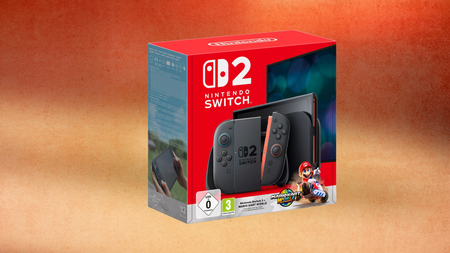
The Nintendo Switch 2 is not a console that needs a hard sell, but a bundle that includes Mario Kart World and shaves money off the combined price is the kind of offer worth paying attention to.
The Switch 2 itself centres on a 7.9-inch 1080p touchscreen with HDR10 support and Variable Refresh Rate up to 120fps, which is a meaningfully sharper and smoother handheld experience than the original Switch ever delivered.
Advertisement
Dock it to your television and output jumps to up to 4K resolution, so the same device that fits in a bag on your commute becomes a proper living room gaming setup the moment you get home.
The redesigned Joy-Con 2 controllers also attach magnetically rather than sliding into place which makes them noticeably easier to grab and go, and each one can double as a mouse in compatible games, which opens up some genuinely different ways to play.
GameChat lets you press a single button to start a voice or video call with friends and share your screen mid-session, connecting via the built-in camera or any compatible USB-C camera, which brings a degree of social play that the original never had built in.
Advertisement
Storage lands at 256GB, which is eight times what the original Switch shipped with, and the console is backwards compatible with the majority of physical and digital original Switch games re-downloaded via the Nintendo eShop.
Mario Kart World is the headline inclusion, an open-world racing game with over 40 playable characters and support for up to 24 players across modes including Grand Prix, Knockout Tour, and Free Roam.
The Nintendo Switch 2 bundle at this price is a strong entry point for anyone coming from the original console or buying in fresh, with a launch title included that gives you something to play immediately rather than an empty game library on day one.
SiliconRepublic.com has asked Anthropic whether Irish financial institutions will take part in Project Glasswing.
Anthropic will release Mythos to UK financial institutions within the next week, said the company’s UK, Ireland and northern Europe head Pip White.
White, in an interview with Bloomberg, said that Project Glasswing is coming to the UK “in the next week”. “The engagement I have had from UK CEOs in the last week has been significant,” she said. White was appointed to the role last November.
Anthropic’s newest model Mythos vastly outperforms other AI models in vulnerability detection and exploitation. The model was launched as part of a limited release earlier this month, with access granted to big businesses and financial organisations to bolster their security.
Advertisement
The company’s approach to launch Mythos in a controlled fashion has been called “responsible” by the Irish National Cyber Security Centre (NCSC).
Involved parties include Amazon Web Services, Apple, Google, Microsoft, Nvidia, JP Morgan Chase, Goldman Sachs and Morgan Stanley among others. SiliconRepublic.com has reached out to Anthropic, AIB and the Bank of Ireland to query a potential Mythos deployment within financial institutions in Ireland.
Meanwhile, an Oireachtas Joint Committee on AI earlier this week heard on the dangers that Mythos poses for the future of cybersecurity. “In five months – six months – it’ll be in the hands of an active state [actor],” Richard Browne, the director of the NCSC said. “Governance is great, very important, but it doesn’t stop criminal actors.”
Advertisement
“The issue is not that Anthropic has created this. The issue is that Anthropic has demonstrated that this is possible,” he said. The Claude-maker will be creating 200 new jobs in Dublin by 2027 as its premises in the city expands.
Following Mythos, OpenAI said this week that it will only allow select verified users access to its latest AI model for cybersecurity operations. The cyber-specific version of GPT-5.4 lowers the refusal boundary for “legitimate” cybersecurity work, the company said.
Don’t miss out on the knowledge you need to succeed. Sign up for the Daily Brief, Silicon Republic’s digest of need-to-know sci-tech news.
Netflix co-founder and current chairman Reed Hastings is leaving the streaming company’s board in June to focus on “his philanthropy and other pursuits,” according to a shareholder letter released alongside Netflix’s Q1 earnings. Hastings has served as chairman of Netflix’s board since 2023, a role he assumed after stepping down as co-CEO and promoting Greg Peters in his place.
“Netflix changed my life in so many ways, and my all‑time favorite memory was January 2016, when we enabled nearly the entire planet to enjoy our service,” Hastings said in a statement. “My real contribution at Netflix wasn’t a single decision; it was a focus on member joy, building a culture that others could inherit and improve, and building a company that could be both beloved by members and wildly successful for generations to come. A special thanks to Greg and Ted, whose commitment to Netflix’s greatness is so strong that I can now focus on new things.”
Hastings founded Netflix in 1997 as a DVD-by-mail rental service with his co-founder and the company’s first CEO Marc Randolph. In 1999, Hastings became CEO, and eventually led the company through its transformation into a streaming service in 2007. Netflix started producing its own television series and movies in 2013, and in 2020, the company’s board named Ted Sarandos as Hasting’s co-CEO, in part to oversee its growing production business. Hastings stepped down as co-CEO in 2023 to become Netflix’s executive chairman, as then COO Greg Peters was promoted to co-CEO. Among his other contributions, Hasting is also the architect of Netflix’s infamous “culture memo,” which codified the company’s high-performance culture.
While he’ll no longer be on Netflix’s board, Hastings still has a seat on the board of AI startup Anthropic and media and financial software company Bloomberg. Netflix, for its part, is continuing to expand outside of the television and film business Hastings helped build, by offering a selection of curated party games, a growing library of video podcasts and live sports.
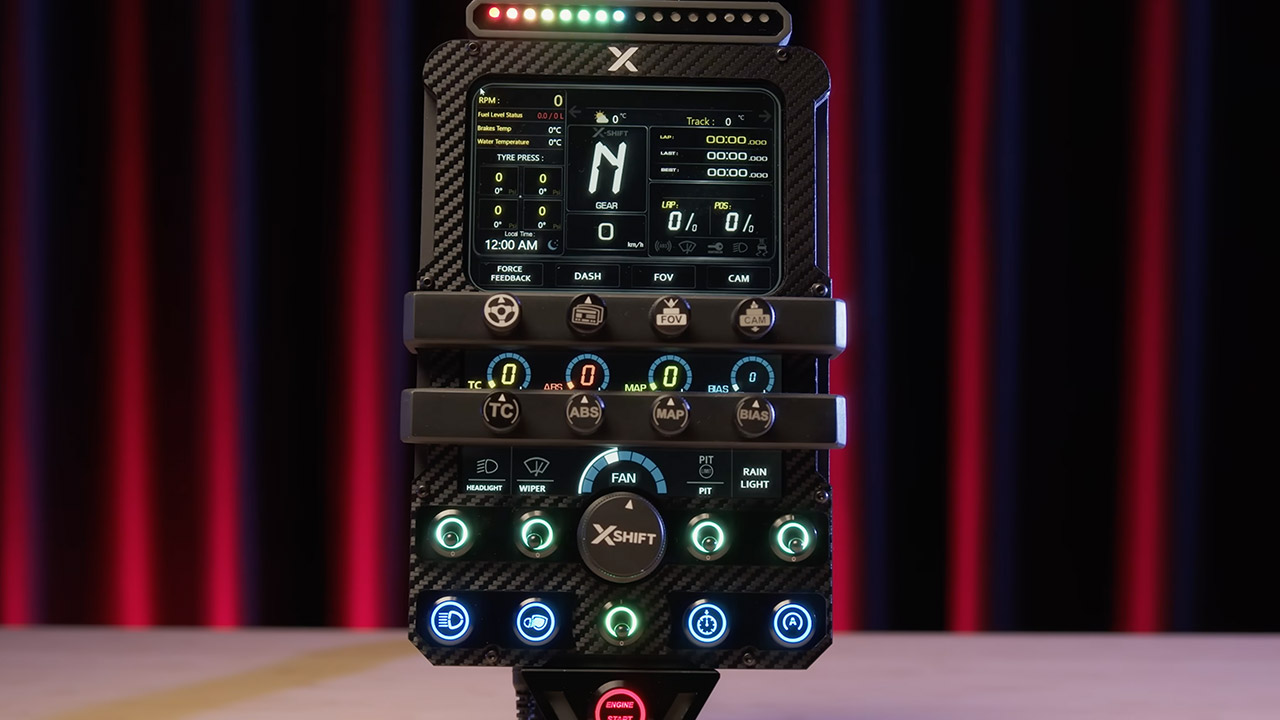
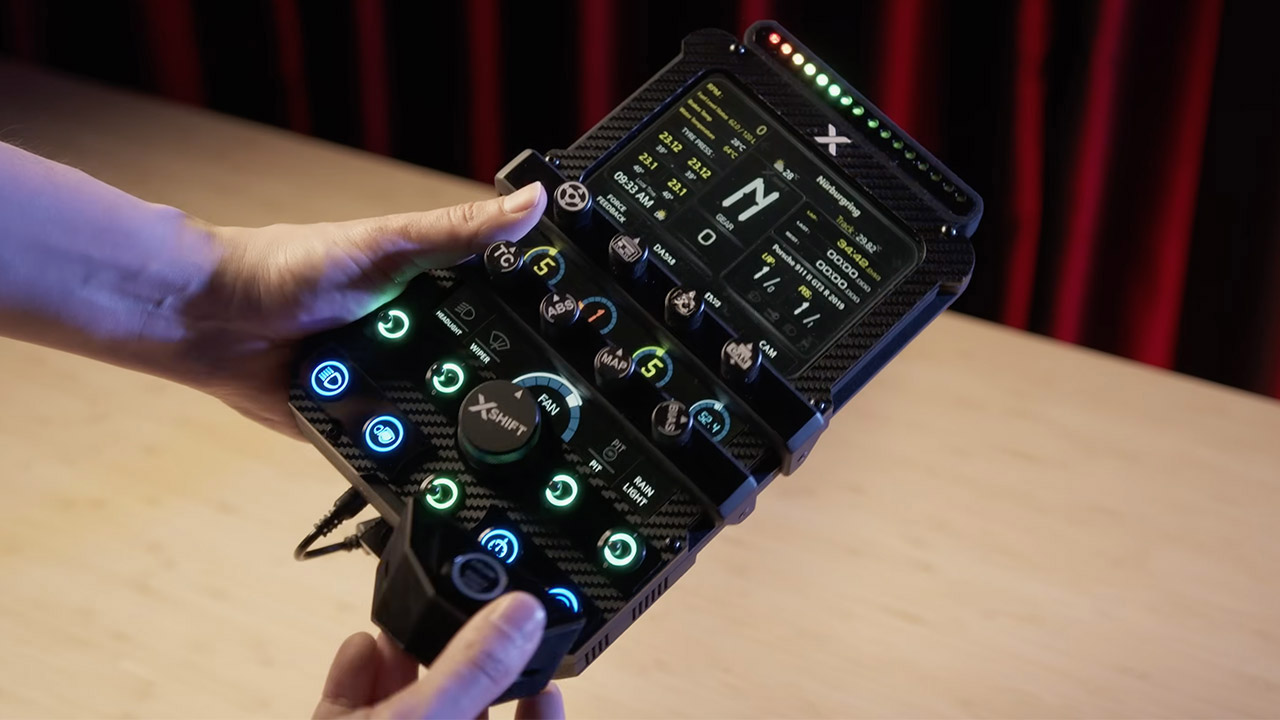
Xshift created a modular racing dash box for simulators that simply clicks together like a set of puzzle pieces, each held in place by a magnet. Each element has its own set of controls and readouts, and they all connect to a central unit for stability and data collection. The end result is a fully equipped control panel that is just as detailed as a real rally vehicle cockpit.
To finalize the design, Xshift began with some initial Photoshop sketches to ensure that the look, feel, and details were just correct. They then used 3DS Max to make accurate replicas of every button, dial, and screen, taking real-world measurements with their trusty calipers to ensure that every last detail was spot on. The printed parts were then sent to the 3D printer, where they were reinforced to withstand the subsequent sanding and painting. Meanwhile, the acrylic sheets were laser cut and then glued with a sophisticated carbon fiber wrap for a truly polished look.
Immersive Gaming Experience: Perfect for PlayStation 5, PS4 and PC gaming titles, the Driving Force simulates the feeling of driving a real car with…
Premium Control: The Driving Force feedback racing wheel provides a detailed simulation of driving a real car, with helical gearing delivering smooth…
Customizable Pedals: These pressure-sensitive nonlinear brake pedals provide a responsive, accurate braking feel on a sturdy base – with adjustable…
The ESP32-S3 circuit board is at the heart of the system, handling all of the inputs and outputs without the need for any additional components. To keep things orderly, the buttons and switches are placed in a grid, allowing you to get twelve controllers from only seven pins, while the rotary encoders have their own dedicated wires for clean signals. There are also optocouplers to keep the 12-volt LED buttons isolated from the rest of the board and prevent electrical noise from entering. Xshift even created a unique PCB from scratch, using Fusion 360 to ensure it has a firm ground plane and all of the necessary manual traces to keep everything functioning properly.
The beauty of it is that you can simply remove a module and replace it with another when necessary. One module features a large LCD screen that displays your current gear selection and lap times in real time from the simulator program. If you want more information, you may add some supplementary LCD screens or even a strip of LEDs to display your RPM gauge (or leave it off completely if you’re driving an electric vehicle). The dials and switches control everything from radio settings to pit stops, with a single button press providing fast reaction.
On the software side, Xshift connected all of this hardware to multiple sim racing titles using SimHub, and they even went to the bother of designing a bespoke dashboard interface in Photoshop that refreshes in real time with all of the game’s statistics. They employed some complex JavaScript expressions to connect each static graphic element to the live data feeds, ensuring that your screens always reflect exactly what’s happening on the track. He designed the circuitry on the microcontroller to handle button presses, encoder spins, and LED patterns with no lag, all before they finished the matrix scanning as well as input tests.
When you put it all together, you have a really neat item that fits nicely on your sim rig. The magnets hold everything in place, but you can still remove a portion when you need to change it out for something else. If you’re feeling daring, you can even download all of the files from the Xshift Patreon page and build your own at home, replete with every 3D model, laser-cut template, PCB layout, and code snippet you’ll require. The end result is a cockpit that seems like it just came out of the factory, yet with plenty of room for you to customize and future-proof your setup. [Source]
The UK Gladiators series 3 wrapped up recently on March 28, with George McDonald and Emily Bell emerging as winners. But if you’re already missing the thrill of everyday people taking on highly trained athletes, American Gladiators (2026) reboot is here with a fresh 10-episode series.
The format is as gladiator-esque as ever, with everyday contestants going head-to-head against 16 elite athletes – both men and women – in a series of intense physical challenges, all for not just bragging rights but also a whopping $100,000 prize.
Alongside classic events like Joust, Powerball, and The Wall, the new season also introduces fresh additions, including The Ring and Collision.
Advertisement
Talking about the latest season, host Mike “The Miz” Mizanin said, “To the fans, we are working hard to create something truly incredible that honours the original while bringing fresh energy to a whole new generation.”
Here’s how to watch American Gladiators reboot from anywhere in the world.
How to watch American Gladiators reboot in the US
Advertisement
How to watch American Gladiators reboot from anywhere
If you’re keen to watch American Gladiators rebootbut you’re away from your home and access to the show is geo-blocked, then you could use a VPN to access it (assuming you’re not breaching any broadcaster T&Cs, of course). You may be surprised by how simple it is to do. Plus, we have a great discount on our #1 cheap VPN…
How to watch American Gladiators reboot in the UK
Like in the US, American Gladiators rebootis available to stream online on Prime Video in the UK as well.
If you just want Prime Video, that’ll be £5.99 per month. But you can get Amazon Prime for a whole year for £95. And, like everywhere, you also get a generous 30-day FREE trial.
Advertisement
Outside the UK right now? Use Surfshark to access your usual streaming services from back home.
Where to watch American Gladiators reboot in Australia
(Image credit: free)
Like in the US, Canada, the UK, and 230+ more countries, American Gladiators rebootis available to stream on Prime Video in Australia as well.
You can watch the first three episodes on Friday, April 17, as with the rest of the world. Prime Video Down Under is only available with an Amazon Prime memebership, which costs AU$79 per year.
Advertisement
You’ll also have a 30-day FREE trial to test the service – and potentially even catch the new series free of charge.
Outside Australia right now? Use Surfshark to access your usual Prime Video shows, including American Gladiators, from anywhere in the world.
American Gladiators reboot FAQs
Advertisement
American Gladiators (2026) reboot trailer
American Gladiators – Official Trailer | Prime Video – YouTube
American Gladiators (2026) reboot hosts and participants
Mike “The Miz” Mizanin and Rocsi Diaz are the hosts, and Chris Rose is providing commentary.
The 16 Gladiators include:
Abigail Lay: “Blaze”
Ayinde Warren: “Neon”
Dani Means: “Voltage”
Dani Speegle: “Crush”
Drew Aggouras: “Ace”
Emily Nelson: “Striker”
Eric Bugenhagen: “The Bull”
Fessy Shafaat: “Mayhem”
Jason Peele: “Eagle”
Jessica Roden: “Supernova”
Jessie Godderz: “Steel”
Joseph Hall: “Lightning”
Kailey Latimer: “Hurricane”
Lu Faustin: “Empire”
Michael Wardlow: “Fang”
Sydney Hunter: “Huntress”
American Gladiators reboot release date
The first three episodes of American Gladiators (2026) reboot will land on Friday, April 17, followed by three more episodes on Friday, April 24. The final four episodes will release on Friday, May 1.
We test and review VPN services in the context of legal recreational uses. For example: 1. Accessing a service from another country (subject to the terms and conditions of that service). 2. Protecting your online security and strengthening your online privacy when abroad. We do not support or condone the illegal or malicious use of VPN services. Consuming pirated content that is paid-for is neither endorsed nor approved by Future Publishing.
There’s a big Fire TV update coming and it’s going to affect a boatload of products, so take a deep breath as there’s plenty to get through here.
But in short, we have a new TV, a revised and streamlined interface, a new Fire TV streaming stick and wider availability for (the still in Early Access) Alexa+.
The All New Fire TV Experience (again)
Image Credit (Amazon)
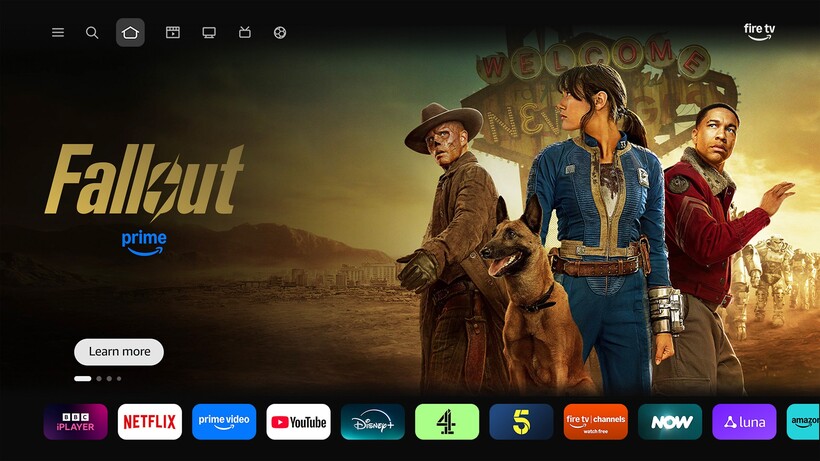
First off, there’s a new, redesigned Fire TV experience, launching six years after the first big redesign. Amazon says the new Fire TV interface will be “cleaner, faster, and better organised for customers”.
Categories have been added so viewers can “more easily” see their movies, TV shows, news, live content and sports. Amazon says it’s also 30% faster to use than the previous version.
Advertisement
Advertisement
In the next few weeks Amazon will also roll out its Fire TV Channels section that will allow customers to dive into latest content about stuff they’re interested in, whether that be sports, music videos, comedy, lifestyle and more. Its free to view and supported by ads. Simply turn on a Fire TV device, head to Fire TV Channels and you’ll find what’s trending across your favourite topics.
And with the World Cup 2026 on the horizon, Amazon is introducing a new football hub with the new Fire TV Experience that’ll allow viewers to keep up to speed with their teams as well as take them directly to watch live games through their local providers. Expect the hub to come back in different forms based on major global sporting events.
Alexa+ is here to help
A quick note on Alexa+. While it’s still in Early Access stage, Alexa+ on Fire TV will be officially available in the UK on compatible devices.
So if you have the new Fire TV Stick HD or Ember Artline lifestye TV, she’ll be there to answer any question or start a conversation about what you want to watch.
Advertisement
The slimmest and fastest Fire TV Stick HD
Image Credit (Amazon)
Advertisement
Amazon’s enty-level Fire TV Stick is getting an upgrade. After the Select joined the Fire TV Stick roster in 2025, the HD model is getting a revised version.
It’s smaller in volume and width than the previous models, and can run on your TV’s USB port without the need for a separate power adapter. Not only does it mean it can fit more neatly behind a TV, but it should make it more accessible for taking on your travels as well.
This new version is also 30% faster than the previous models, which in layman’s terms should make for a faster powering up process and apps opening up quicker too.
In the coming months Amazon will be adding a new Adaptive Display setting to the Fire TV Stick HD, an accessibility feature that makes text, menus, and content easier to see and navigate.
Advertisement
It can increase the size of smaller items like text and menus while “scaling up” larger items such as content artwork to create a more balanced browsing experience. Users can also choose from multiple size options to create an experience that works best for them.
You can pre-order the Fire TV Stick HD now, priced at £39.99, with shipping starting on April 29th.
Advertisement
Amazon saunters into the lifestyle market with Ember Artline
Image Credit (Amazon)
Finally, there’s a new lifestyle TV joining Amazon’s TV range. The Ember Artline works in similar fashion to the Samsung Frame and Hisense Canvas, offering a “global” collection of over 2000 curated art pieces at no extra cost beyond what you pay for the TV.
The selection includes Impressionist classics to more contemporary photography, and there’s an AI function called “Match the Room” that aims to make it easier to find artwork that matches your TV’s surroundings. Also, the Ember Artline comes with one of 10 frame colours to choose from at checkout, so you’re not stuck with a boring black frame.
Advertisement
The introduction of the Ember Artline, along with the “All New Fire TV Experience”, will also be part of the Amazon’s rebrand of its TVs. No longer will they be called Amazon Fire TVs. The latest generation will now be known as the Amazon Ember TVs.
The Ember Artline TV comes in 55- and 65-inch sizes, priced at £949 and £1199 respectively. You can pre-order today with the TVs expected to ship on May 7th.



































































You must be logged in to post a comment Login