




Connect with us
DAPA Banner

Tech

Webb Peels Back the Layers of the Cranium Nebula

Published

on

NASA James Webb Space Telescope Cranium Nebula
Photo credit: NASA/Chris Gunn
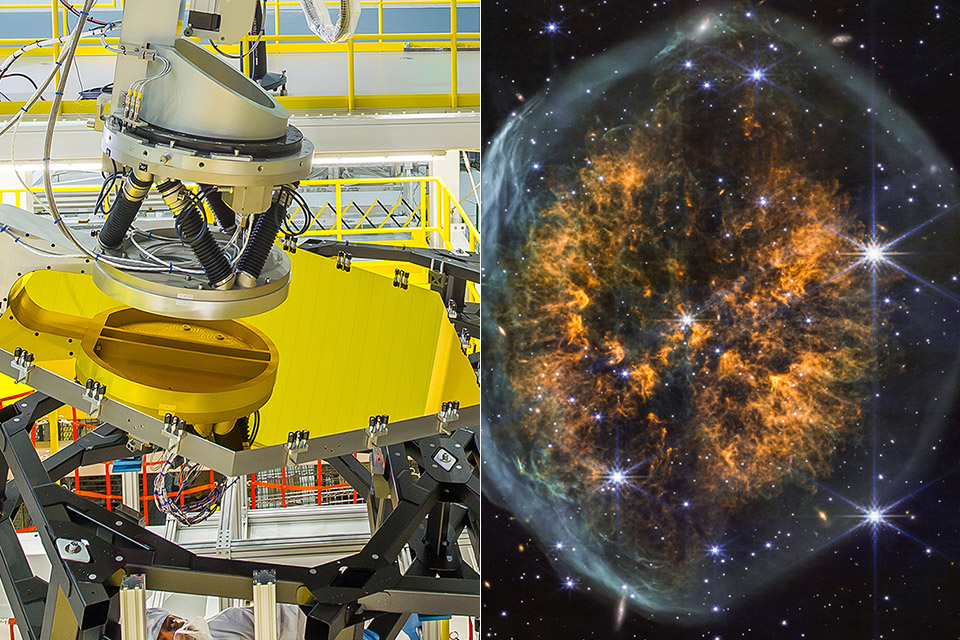
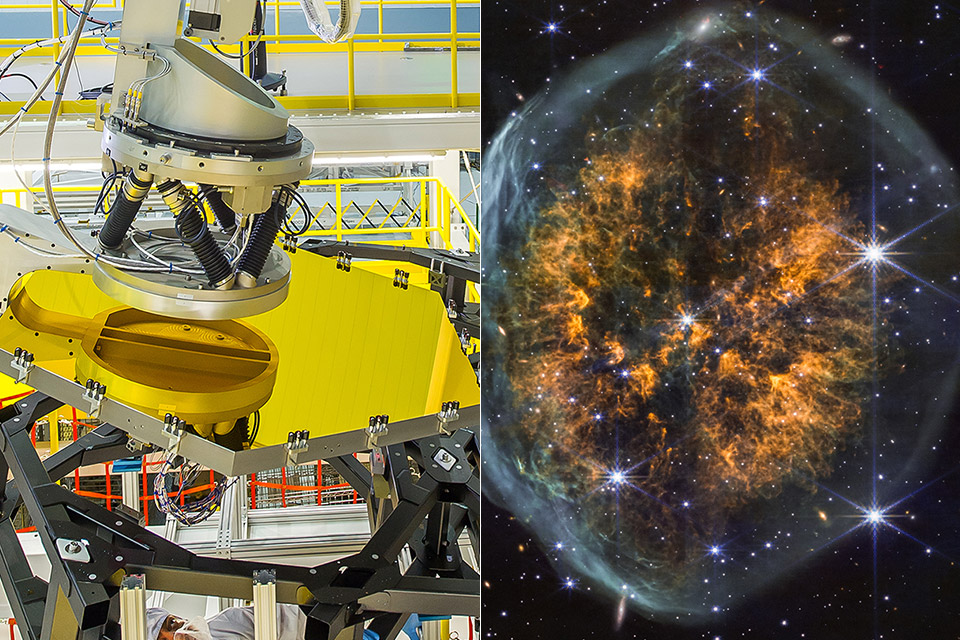
The Cranium Nebula has piqued astronomers’ interest, due to some stunning new images from NASA’s James Webb Space Telescope. These photos reveal the layers of a faraway cloud of gas and dust wrapped tightly around a star as it begins to die. This planetary nebula, officially known as PMR 1 and informally known as the exposed Cranium due to its uncanny appearance to a brain tucked inside a phantom skull, sits quietly in a backwater area of space that has only recently gained attention.


Webb captured the entire scene with two of its most powerful tools, beginning with its Near-Infrared Camera, or NIRCam, which produces a crystal clear image with innumerable background stars and distant galaxies piercing the nebula’s veil like tiny needles. A prominent dark channel runs vertically down the center, plainly dividing the entire image into left and right parts that resemble cerebral hemispheres. The outer edge has a faint, almost white glow, while the middle is a deep orange, with clouds that appear to be pushed outwards from the center in a sequence of waves, as if they were colliding in midair.


LEGO Icons Project Hail Mary Collectible Building Set for Adults – Room or Office Decor for Men & Women…
  • PROJECT HAIL MARY SCI-FI MODEL – Launch into the world of cinematic science fiction with the LEGO Icons Project Hail Mary (11389) microscale…
  • WHAT’S IN THE BOX – Includes everything you need to build a microscale replica of the Hail Mary spacecraft, a functional display stand, plus a…
  • FUNCTIONAL SPACE MODEL – Turn the crank on the display stand to send the crew module into orbit, simulating the spaceship’s centrifugal gravity…


When you switch to the Mid-Infrared Instrument (MIRI), the entire picture changes. The cosmic dust blazes brightly in a variety of tones that can make you just feel the texture. The same center black lane remains visible, of course, but you can now see where all of the material being emitted by the central star is heading. Stuff is rushing out at the top and bottom, probably in two large opposing jets that chisel their way through the inner gas, providing intricacy to the nebula’s overall shape.

NASA James Webb Space Telescope Cranium Nebula
That level of information is a significant improvement over what the Spitzer Space Telescope was capable of more than a decade ago. Spitzer was the first to reveal the brain-like shape, but it was like gazing at the Cranium from a distance; all you could see was the overall outline. The Webb, on the other hand, allows you can see the fine features much more clearly and demonstrates how different wavelengths of light can highlight different parts of the nebula. The near-infrared shows the dust getting blown away, while in the mid-infrared, the dust itself is lit up like a stage.

NASA James Webb Space Telescope Cranium Nebula
With its rapid-fire bursts, this nebula tells the story of a star that is running out of fuel and beginning to shed its outer layers. The inner area is a jumble of heavier gases and more intriguing patterns, whereas the outside shell is primarily composed of hydrogen that was expelled early. Things are becoming quite crazy in there, as evidenced by the central dark channel, which is most likely the result of a big outburst or couple of jets. It could finish up as a tiny, slowly cooling white dwarf or explode as a supernova, depending on the star’s initial characteristics, size, and other factors.

Advertisement

Source link

Continue Reading
Click to comment

You must be logged in to post a comment Login

Leave a Reply

Tech

AMD finally puts a price tag on the Ryzen 9 9950X3D2 and it’s hefty

Published

on

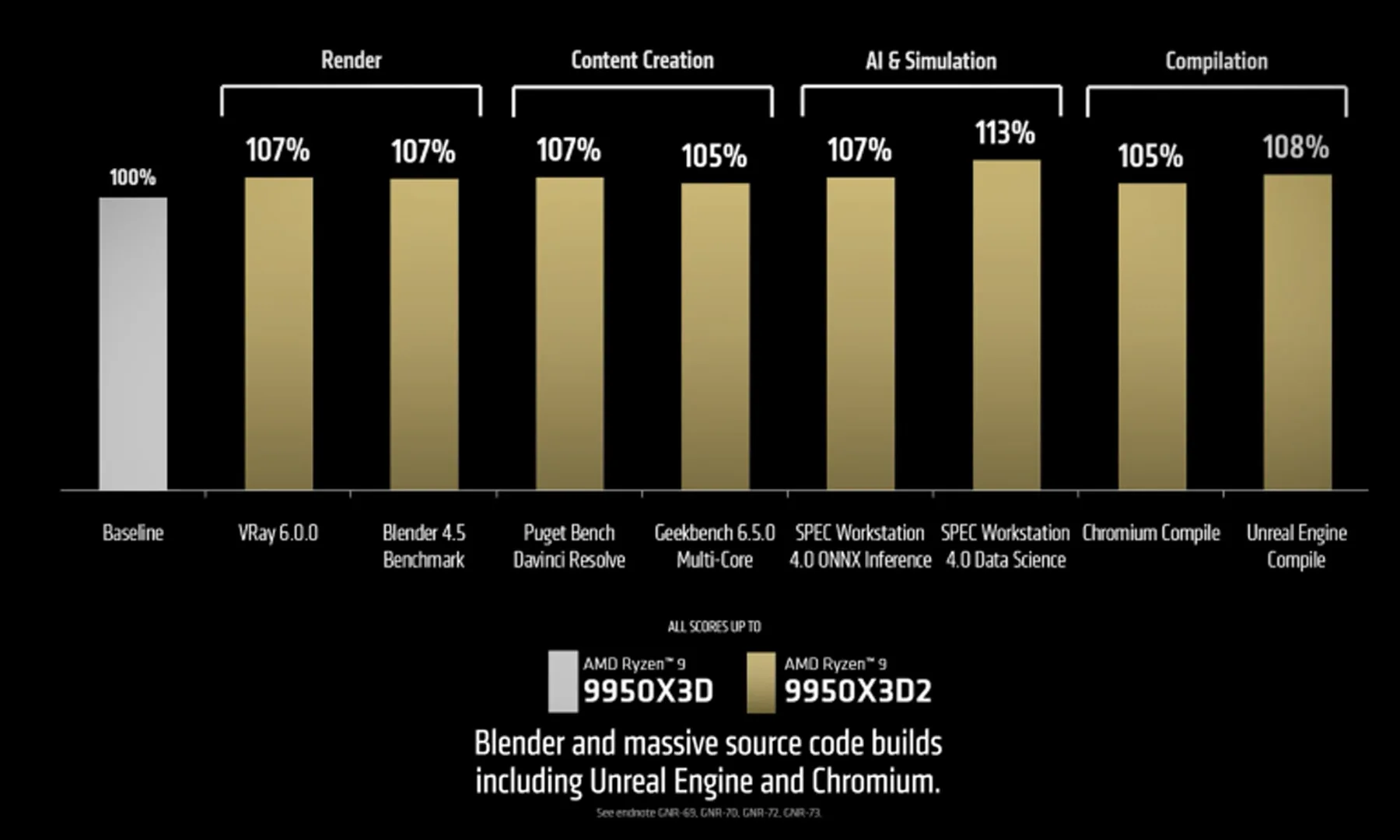
AMD has locked in the price for its Ryzen 9 9950X3D2, and it lands high at $899. This is a flagship desktop chip aimed at people who rely on fast systems every day and don’t want to rebuild everything just to get there.

The processor introduces a dual 3D V-Cache setup, which AMD is using to push both gaming and heavy workloads forward at the same time. It also fits into the current AM5 ecosystem, so users with compatible boards and memory can upgrade without replacing the core of their system.

It goes on sale April 22, though there’s no detail yet on how widely it will be available at launch.

Who this $899 chip is for

At $899, this chip sits well outside the mainstream. AMD is going after creators, developers, and power users who notice slowdowns immediately and are willing to pay to avoid them.

Advertisement

The world’s first dual 3D V-Cache™ technology desktop processor.

AMD Ryzen™ 9 9950X3D2 Dual Edition processor

Available April 22 | $899

Workstation-class performance meets the AM5 platform, no new motherboard or memory required.

Built for developers and content creators… pic.twitter.com/rN4ysy45X6

Advertisement

— David McAfee (@McAfeeDavid_AMD) April 8, 2026

The pricing also signals where this part sits in the stack. It’s a top-tier option in the Ryzen 9000 lineup, built to prioritize sustained performance in demanding scenarios rather than broad affordability.

There’s a clear tradeoff here, where you’re paying more upfront to reduce waiting time during real work.

How dual V-Cache changes things

The dual 3D V-Cache design builds on AMD’s earlier work with stacked cache, but pushes it further. Instead of leaning mostly toward gaming gains, this version is meant to handle a wider mix of tasks without compromise.

Advertisement

That shift is important because earlier X3D chips often felt specialized. This one is positioned as more balanced, giving users who split time between games and production workloads a stronger reason to consider it.

Still, AMD hasn’t shared detailed performance figures in this material, so it’s not yet clear how much improvement shows up across different types of work.

Should you upgrade now

Compatibility is one of the more practical advantages here. The Ryzen 9 9950X3D2 works with existing AM5 motherboards and memory, which makes it a simpler upgrade for current users.

That helps take some pressure off the high asking price, especially if you’re already invested in the platform. Instead of planning a full rebuild, you can focus on swapping the processor and moving on.

With the April 22 release approaching, the decision comes down to whether you need the extra headroom now or can wait for more data.

Advertisement

Source link

Continue Reading

Tech

The AI heat trap: why data centers must rethink thermodynamics

Published

on

For decades, the data center industry has operated on a relatively predictable model of thermodynamics. Operators built a hall, filled it with servers, and circulated cold air through the floor or aisles.

The heat load remained predominantly stable, electrical loads increased gradually, and cooling systems could be sized with conservative, static margins.

Source link

Advertisement
Continue Reading

Tech

The Fellowship That Taught Me Good Teaching Doesn’t Require Perfection

Published

on

Becoming a Voices of Change fellow empowered me to believe I could be a teacher with all my flaws — that “perfection” is not necessary. In fact, it is antithetical to good teaching. I remember sitting in our first workshop where we learned how to write a pitch and discussed what successful pitching looks like.

My takeaway from that workshop was that this fellowship was going to push me in ways I’d always been afraid of, that I’d have to practice a kind of vulnerability that went deeper than what I modeled for my students. I’d have to face myself.

The fellowship taught me that what makes me unique is what makes me the best teacher I can be. My individual voice and reflections were what I had to offer, and not just the restatement of well-researched best practices. During my fellowship, I learned that the more vulnerable and specific I was in telling my story as a classroom teacher, the more my voice as a writer would shine through. This sense of authenticity translated into my teaching, as I felt empowered to be myself and to see my differences as gifts.

My essay describing the time when two birds flew into my classroom taught me that play is education, and to this day, I can breathe when things go awry because, through writing that essay, I reaffirmed to myself that it’s okay for curriculum to slow down, for community building to be at the center.

Advertisement

My essay exploring the power of neurodivergence led me to connect with other neurodivergent teachers and reminded me that my experiences are what make me the best teacher I can be. I used to be sad that my brain was built differently, but both the process and the outcome of that essay taught me that being different is a gift to share with others. I was most afraid to write that essay, but now I am most proud of it. I was once again reminded of the power in speaking my truth, especially when I’m most afraid to.

Overall, my essays taught me to pay attention to every moment of teaching, that sometimes the most mundane days of instruction offer kernels of truth and exploration. Topics such as boredom, artificial intelligence and allyship have been explored ad nauseam, but my editor empowered me to see that despite this, I still have a voice worth sharing, even when I didn’t think so.

As a result, I developed a confidence in myself that I carry with me to this day. I became more embodied as a human being, more present, because I realized that what made me me was actually what would allow me to connect more meaningfully with my students and the world. In extending that expansiveness and empathy towards myself, I had more empathy to give my students on their off days and more encouragement to give them on their better days. Ultimately, realizing that the most important stories I had to tell were topics I was too afraid to address publicly made me see that the core of education will always be about courage. Courage to be all of myself, to try new activities outside of and inside the classroom. I had to be ready to share myself to have the biggest impact as a writer. Similarly, I would have to do the same to be the best teacher I could be.

Since completing this fellowship, my identity as a human being has expanded. I now see myself not just as a teacher, but as a writer, a thinker, and an observer who has something to say. I feel more comfortable being me, and even empowered to do so. With each essay, I chipped away at my fears and accepted that the joy was in the process itself. Now, I tell my students something I have had to tell myself repeatedly during this fellowship: trust your voice.

Advertisement

Source link

Continue Reading

Tech

New framework lets AI agents rewrite their own skills without retraining the underlying model

Published

on

One major challenge in deploying autonomous agents is building systems that can adapt to changes in their environments without the need to retrain the underlying large language models (LLMs).

Memento-Skills, a new framework developed by researchers at multiple universities, addresses this bottleneck by giving agents the ability to develop their skills by themselves. “It adds its continual learning capability to the existing offering in the current market, such as OpenClaw and Claude Code,” Jun Wang, co-author of the paper, told VentureBeat.

Memento-Skills acts as an evolving external memory, allowing the system to progressively improve its capabilities without modifying the underlying model. The framework provides a set of skills that can be updated and expanded as the agent receives feedback from its environment.

For enterprise teams running agents in production, that matters. The alternative — fine-tuning model weights or manually building skills — carries significant operational overhead and data requirements. Memento-Skills sidesteps both.

Advertisement

The challenges of building self-evolving agents

Self-evolving agents are crucial because they overcome the limitations of frozen language models. Once a model is deployed, its parameters remain fixed, restricting it to the knowledge encoded during training and whatever fits in its immediate context window.

Giving the model an external memory scaffolding enables it to improve without the costly and slow process of retraining. However, current approaches to agent adaptation largely rely on manually-designed skills to handle new tasks. While some automatic skill-learning methods exist, they mostly produce text-only guides that amount to prompt optimization. Other approaches simply log single-task trajectories that don’t transfer across different tasks.

Furthermore, when these agents try to retrieve relevant knowledge for a new task, they typically rely on semantic similarity routers, such as standard dense embeddings; high semantic overlap does not guarantee behavioral utility. An agent relying on standard RAG might retrieve a “password reset” script to solve a “refund processing” query simply because the documents share enterprise terminology.

“Most retrieval-augmented generation (RAG) systems rely on similarity-based retrieval. However, when skills are represented as executable artifacts such as markdown documents or code snippets, similarity alone may not select the most effective skill,” Wang said. 

Advertisement

How Memento-Skills stores and updates skills

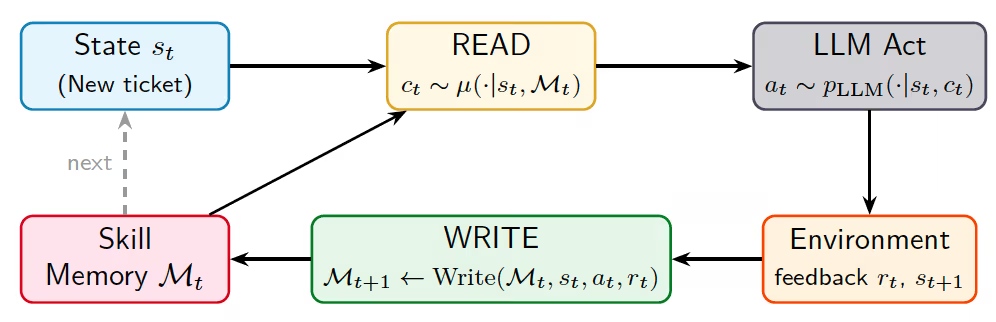
To solve the limitations of current agentic systems, the researchers built Memento-Skills. The paper describes the system as “a generalist, continually-learnable LLM agent system that functions as an agent-designing agent.” Instead of keeping a passive log of past conversations, Memento-Skills creates a set of skills that act as a persistent, evolving external memory.

Read-Write Reflective Learning

Read-Write Reflective Learning (source: arXiv)

These skills are stored as structured markdown files and serve as the agent’s evolving knowledge base. Each reusable skill artifact is composed of three core elements. It contains declarative specifications that outline what the skill is and how it should be used. It includes specialized instructions and prompts that guide the language model’s reasoning. And it houses the executable code and helper scripts that the agent runs to actually solve the task.

Memento-Skills achieves continual learning through its “Read-Write Reflective Learning” mechanism, which frames memory updates as active policy iteration rather than passive data logging. When faced with a new task, the agent queries a specialized skill router to retrieve the most behaviorally relevant skill — not just the most semantically similar one — and executes it.

Advertisement

After the agent executes the skill and receives feedback, the system reflects on the outcome to close the learning loop. Rather than just appending a log of what happened, the system actively mutates its memory. If the execution fails, an orchestrator evaluates the trace and rewrites the skill artifacts. This means it directly updates the code or prompts to patch the specific failure mode. In case of need, it creates an entirely new skill.

Memento-Skills also updates the skill router through a one-step offline reinforcement learning process that learns from execution feedback rather than just text overlap. “The true value of a skill lies in how it contributes to the overall agentic workflow and downstream execution,”  Wang said. “Therefore, reinforcement learning provides a more suitable framework, as it enables the agent to evaluate and select skills based on long-term utility.”

Memento-Skills framework

Memento-Skills framework (source: arXiv)

To prevent regression in a production environment, the automated skill mutations are guarded by an automatic unit-test gate. The system generates a synthetic test case, executes it through the updated skill, and checks the results before saving the changes to the global library.

Advertisement

By continuously rewriting and refining its own executable tools, Memento-Skills enables a frozen language model to build robust muscle memory and progressively expand its capabilities end-to-end.

Putting the self-evolving agent to the test

The researchers evaluated Memento-Skills on two rigorous benchmarks. The first is General AI Assistants (GAIA), which requires complex multi-step reasoning, multi-modality handling, web browsing, and tool use. The second is Humanity’s Last Exam, or HLE, an expert-level benchmark spanning eight diverse academic subjects like mathematics and biology. The entire system was powered by Gemini-3.1-Flash acting as the underlying frozen language model.

The system was compared against a Read-Write baseline that retrieves skills and collects feedback but doesn’t have self-evolving features. The researchers also tested their custom skill router against standard semantic retrieval baselines, including BM25 and Qwen3 embeddings.

Memento-skills performance

Performance on the GAIA benchmark (Memento-Skills vs Read-Write) (source: arXiv)

Advertisement

The results proved that actively self-evolving memory vastly outperforms a static skill library. On the highly diverse GAIA benchmark, Memento-Skills improved test set accuracy by 13.7 percentage points over the static baseline, achieving 66.0% compared to 52.3%. On the HLE benchmark, where the domain structure allowed for massive cross-task skill reuse, the system more than doubled the baseline’s performance, jumping from 17.9% to 38.7%.

Moreover, the specialized skill router of Memento-Skills avoids the classic retrieval trap where an irrelevant skill is selected simply because of semantic similarity. Experiments show that Memento-Skills boosts end-to-end task success rates to 80%, compared to just 50% for standard BM25 retrieval.

The researchers observed that Memento-Skills manages this performance through highly organic, structured skill growth. Both benchmark experiments started with just five atomic seed skills, such as basic web search and terminal operations. On the GAIA benchmark, the agent autonomously expanded this seed group into a compact library of 41 skills to handle the diverse tasks. On the expert-level HLE benchmark, the system dynamically scaled its library to 235 distinct skills. 

Memento-skills skill development

Memento-Skills starts with a seed of skills (stars) and develops more skills (circles) as it solves tasks (source: arXiv)

Advertisement

Finding the enterprise sweet spot

The researchers have released the code for Memento-Skills on GitHub, and it is readily available for use.

For enterprise architects, the effectiveness of this system depends on domain alignment. Instead of simply looking at benchmark scores, the core business tradeoff lies in whether your agents are handling isolated tasks or structured workflows.

“Skill transfer depends on the degree of similarity between tasks,” Wang said. “First, when tasks are isolated or weakly related, the agent cannot rely on prior experience and must learn through interaction.” In such scattershot environments, cross-task transfer is limited. “Second, when tasks share substantial structure, previously acquired skills can be directly reused. Here, learning becomes more efficient because knowledge transfers across tasks, allowing the agent to perform well on new problems with little or no additional interaction.”

Given that the system requires recurring task patterns to consolidate knowledge, enterprise leaders need to know exactly where to deploy this today and where to hold off.

Advertisement

“Workflows are likely the most appropriate setting for this approach, as they provide a structured environment in which skills can be composed, evaluated, and improved,” Wang said.

However, he cautioned against over-deployment in areas not yet suited for the framework. “Physical agents remain largely unexplored in this context and require further investigation. In addition, tasks with longer horizons may demand more advanced approaches, such as multi-agent LLM systems, to enable coordination, planning, and sustained execution over extended sequences of decisions.”

As the industry moves toward agents that autonomously rewrite their own production code, governance and security remain paramount. While Memento-Skills employs foundational safety rails like automatic unit-test gates, a broader framework will likely be needed for enterprise adoption.

“To enable reliable self-improvement, we need a well-designed evaluation or judge system that can assess performance and provide consistent guidance,” Wang said. “Rather than allowing unconstrained self-modification, the process should be structured as a guided form of self-development, where feedback steers the agent toward better designs.”

Advertisement

Source link

Continue Reading

Tech

Some Advocates Concerned As States Push for Cameras in Special Education Classrooms

Published

on

As federal and state legislation swirls over the usage of cellphones and personal devices in classrooms, there is a renewed push for another form of technology: surveillance cameras.

Legislators in Florida, Iowa, Maryland, South Carolina and Tennessee introduced video surveillance bills this year, proposing placing cameras into self-contained special education classrooms, which are rooms solely for students with special needs.

The move comes as a handful of states – Louisiana, West Virginia, Georgia and Alabama – adopted the legislation over the last decade in an attempt to curb harmful physical practices. That includes teachers using restraints on students with behavioral issues and, in some cases, placing them in seclusion rooms or resorting to physical violence.

“There’s usually an impetus for why these pieces of legislation are being introduced, and it’s often because something happened where an educator probably felt overwhelmed, or didn’t quite know what to do in a situation,” says Lindsay Kubatzky, director of policy and advocacy at the National Center for Learning Disabilities.

Advertisement

The latest surge of legislation comes amid a wave of technology crowding in — and getting pushed out — of the classroom. Districts are busy banning cellphones in classrooms as parents and experts debate the ethical use of education technology. Installing cameras, however, is something many parents of children in special education support.

“This protects everyone; this is your eyewitness in the room, that no one can say [someone] got it wrong,” says Jacqui Luscombe, who leads the Exceptional Student Education advisory board in Broward County School District.

But the move is controversial, even among disability advocates. Some believe it poses a privacy risk for both students and teachers, and further alienates an already “othered” population.

“What the big struggle seems to come down to is the tension of invading privacy versus the benefit of stronger accountability,” Denise Marshall, CEO of the Council of Parent Attorneys and Advocates, says.

Advertisement

The Controversy

The push for cameras in special education classrooms is not new. Texas was the first to pass legislation in 2015, and four other states (Louisiana, West Virginia, Georgia and Alabama) eventually followed.

But as technology use of all kinds has grown in classrooms, there’s been a surge recently to include classroom cameras. “I do think we’re in the technology age where it’s not as cost-prohibitive as it used to be, and there’s all these apps that lend [themselves] to greater use,” Marshall says.

The Broward County School District in Florida had a three-year pilot program beginning in 2021. Under the pilot program, a parent could request a camera be placed in any classroom serving students solely with special needs. As the program neared its end in 2024, Luscombe urged the school board to make it permanent.

“The feedback I received was never anything other than, ‘Let’s have cameras,’” she says. “I’m sure there were plenty of parents saying, ‘We don’t need that,’ but for those who wanted it, it was empowering.”

Advertisement

The board approved a permanent version of the program, and the district has installed cameras in 80 of its more than 1,000 Exceptional Student Education classrooms.

Florida legislators attempted to make it a statewide move, but the measure failed to make it out of the Senate committee.

Tennessee, Maryland, South Carolina and Iowa are in the process of reviewing legislation. Tennessee is the only state of the bunch that would require a majority of parents to sign off on the cameras. The latter three propose placing cameras in all special education classrooms.

Louisiana recently expanded its existing law. Initially, it allowed cameras to be installed at a parent’s request. Now the law requires cameras in all self-contained special education classrooms – rooms dedicated to special education students.

Advertisement

West Virginia also requires all self-contained special education classrooms to have cameras, while Texas requires it only by parental request. Georgia allows schools to use their own discretion for placing cameras in self-contained special education classrooms, while Alabama requires cameras in classrooms where over half the students have special education needs.

Some of the legislation proposed, and Louisiana’s recently expanded law, explicitly ban restraints and seclusion rooms. Broward County’s does not, although the district requires teachers to learn de-escalation training. Luscombe acknowledges the district could do more training, particularly in under resourced schools.

“I personally have had conversations with the superintendent about more professional training, of, let’s not shove someone in a classroom, say ‘In you go,’ and then it becomes an exercise for survival,” Luscombe says.

Each state also has its own methods for reviewing footage, with some including footage leading up to and after a disputed incident. Others allow only administrators – not parents – to review footage.

Advertisement

It plays into the concern of student privacy. All states with current laws, except South Carolina, reference the federal Family Educational Rights and Privacy Act, better known as FERPA, in their legislation. That was passed in 1974 and serves as the standard for student privacy.

Most advocacy groups – including the Council of Parents Attorneys and Advocates and the National Center for Learning Disabilities – have not taken an official stance on the issue. “[In 2015] was the first time we’ve started to really debate even how we felt about it,” COPAA’s Marshall says, adding that opinions in the group are mixed. “I think it’s too early to tell with the research what the effects are, and I don’t think the states are collecting the data to help understand.”

TASH, a Nashville-based disability advocacy group, condemned the decision when it was first up for debate after Texas passed its law. The group declared in a statement at the time that the video surveillance has become “an easy substitute for and distraction from the ongoing hard work of cultivating schoolwide inclusion, communication, trust and community. What is needed instead is a systemic framework from which to approach a culture shift around issues of safety.”

Necessity or Distraction?

There is no hard data, for Broward County or others, about whether the cameras have a direct impact on the number or intensity of incidents in classrooms.

Advertisement

There are also concerns mandatory cameras in classrooms could discourage people from entering the profession of special education – worsening an already depleted workforce. According to federal data from the 2024-25 school year, special education had the most reported teacher shortages, affecting 45 states.

But Jacquelie Rodriguez, CEO of the National Center for Learning Disabilities, says she believes that argument is a distraction.

“The fact that we have what is considered a leaky bucket pipeline, where we have more people coming into the field and yet, we still don’t have enough to fill the vacancies, that’s not a product of video cameras,” she says. “I think that when people say that, they’re addressing a symptom, not the root cause of the concern.”

Rodriguez says instead of focusing on recording incidents, districts should concentrate on training teachers better to handle high-stress situations.

Advertisement

“I don’t even think [cameras are] a Band-Aid; I think [they’re] a red herring,” Rodriguez says. “I think it’s the ability for someone to check a box and say they did something about it, when either they do know that they’re not doing anything about it, or they don’t realize that this is not going to solve the problem that they’re actually trying to address.”

Source link

Continue Reading

Tech

Hackers exploiting Acrobat Reader zero-day flaw since December

Published

on

Adobe

Attackers have been exploiting a zero-day vulnerability in Adobe Reader using maliciously crafted PDF documents since at least December.

The attacks have been discovered by security researcher Haifei Li (the founder of the sandbox-based exploit-detection platform EXPMON), who warned on Tuesday that the attackers are using what he described as a “highly sophisticated, fingerprinting-style PDF exploit” to target an undisclosed Adobe Reader security flaw.

Li also said that these attacks have been targeting Adobe users for at least 4 months, stealing data from compromised systems using privileged util.readFileIntoStream and RSS.addFeed Acrobat APIs, and deploying additional exploits.

Wiz

“This ‘fingerprinting’ exploit has been confirmed to leverage a zero-day/unpatched vulnerability that works on the latest version of Adobe Reader without requiring any user interaction beyond opening a PDF file,” Li warned.

“Even more concerning, this exploit allows the threat actor to not only collect/steal local information but also potentially launch subsequent RCE/SBX attacks, which could lead to full control of the victim’s system.”

Advertisement

Haifei Li has disclosed a long list of security vulnerabilities in Microsoft, Google, and Adobe software, many of which have been exploited in zero-day attacks.

Russian-language phishing lures

Threat intelligence analyst Gi7w0rm, who also analyzed this Adobe Reader exploit, found that PDF documents pushed in these attacks contain Russian-language lures referencing ongoing events in the Russian oil and gas industry.

Li has notified Adobe about these findings and, until the company releases security updates to address this actively exploited vulnerability, advised Adobe Reader users not to open PDF documents received from untrusted contacts until a patch is released.

Network defenders can also mitigate attacks exploiting this zero-day by monitoring and blocking HTTP/HTTPS traffic containing the “Adobe Synchronizer” string in the User-Agent header.

Advertisement

“This zero-day/unpatched capability for broad information harvesting and the potential for subsequent RCE/SBX exploitation is enough for the security community to remain on high alert. This is why we have chosen to publish these findings immediately so users can stay vigilant,” he added.

BleepingComputer also reached out to Adobe with questions about Li’s findings, but a response was not immediately available.

Automated pentesting proves the path exists. BAS proves whether your controls stop it. Most teams run one without the other.

This whitepaper maps six validation surfaces, shows where coverage ends, and provides practitioners with three diagnostic questions for any tool evaluation.

Source link

Advertisement
Continue Reading

Tech

Canva acquires Simtheory and Ortto in a twin deal

Published

on

Both companies were built by brothers Chris and Mike Sharkey, who previously co-founded Australian holiday rental site Stayz. Financial terms were not disclosed. Canva will preview what it calls the biggest transformation in its history at Canva Create on 16 April.


Canva has acquired two companies simultaneously: Simtheory, an agentic AI collaboration platform, and Ortto, a customer data platform and marketing automation company.

Both were built by Australian brothers Chris and Mike Sharkey, who will join Canva in leadership roles across its AI and marketing technology teams. Financial terms were not disclosed for either deal.

The Sharkeys are serial founders. Before Ortto and Simtheory they co-founded Stayz, then Australia’s largest holiday accommodation booking site, which was sold to Fairfax Digital in 2006 and subsequently to HomeAway for $225 million in 2013.

Advertisement

Ortto itself has an older lineage: it began as Autopilot, a marketing automation company the brothers founded in 2015, rebuilt from the ground up after 2018, and rebranded as Ortto in March 2022.

The 💜 of EU tech

The latest rumblings from the EU tech scene, a story from our wise ol’ founder Boris, and some questionable AI art. It’s free, every week, in your inbox. Sign up now!

Simtheory grew out of an AI podcast the Sharkeys launched in 2023 to explore new models and AI capabilities; the tooling they built to produce the show evolved into a multi-model AI workspace for teams.

Advertisement

The two acquisitions serve distinct parts of Canva’s platform ambitions. Simtheory brings agentic AI infrastructure: its platform allows teams to build AI assistants that understand their business context, co-ordinate across tasks and applications, and complete work with the reliability and auditability enterprises require.

Cliff Obrecht, Canva’s co-founder and COO said exclusive for TNW that “In a world where generating ideas is easier than ever, the challenge has shifted to turning those ideas into real, usable work.

We’re excited to welcome Simtheory to Canva as we evolve from a design platform with AI tools, to an AI platform with design and productivity tools. They’ve built great agentic technology which we’re looking forward to bringing to the quarter of a billion people using Canva every month.”

Ortto addresses the marketing lifecycle end of Canva’s ambitions. The platform combines a customer data platform with multi-channel marketing automation, enabling teams to build and run journeys across email, SMS, push notifications, in-app messaging, forms, and surveys from a single system.

Advertisement

It uses an event-driven architecture and no-code integrations to connect and activate customer data in real time.

The company counts more than 11,000 customers across 190 countries. The acquisition feeds into Canva Grow, Canva’s marketing product, and follows three earlier additions in the same direction: MagicBrief, acquired in January 2025; MangoAI, acquired in February 2026 for AI-driven video ad optimisation; and Doohly, acquired in March 2026 for digital out-of-home advertising.

Canva, launched in 2013 and headquartered in Sydney, is used by more than 265 million people each month and closed 2025 with more than $4 billion in annualised revenue.

Mike Sharkey, CEO of both Ortto and Simtheory, said the scale of Canva’s user base was the central draw: “The opportunity to bring our technology to the quarter of a billion people using Canva every month and to help more people make the most of AI in their everyday work is incredibly exciting to us.”

Advertisement

Source link

Continue Reading

Tech

A self-driving car in Texas hit and killed a mother duck, sparking neighborhood outrage

Published

on

The death of a duck in the Austin, Texas enclave of Mueller Lake has neighbors raising concerns about autonomous vehicles and whether they belong there.

While humans are responsible for killing animals with their cars all the time, this incident has brought negative attention to the new technology. Local media picked up on the duck incident after a resident posted in a Mueller neighborhood Facebook group that an Avride autonomous vehicle (with a human safety operator behind the wheel) ran over and killed a duck, and did not stop afterwards. “It didn’t slow down or hesitate at all, just steamrolled through,” the post, which KXAN reported on, reads.

Residents’ familiarity with this particular duck, which was nesting in a pot located outside of a local Italian eatery, has added to the outrage and mistrust of the autonomous vehicle technology. For those concerned about the future of the duck’s eggs, local residents have them in an incubator, Axios’ Austin reports.

An Avride spokesperson confirmed with TechCrunch that the vehicle was in autonomous mode at the time. Avride hasn’t paused testing on public roads altogether. However, the company has adjusted its area of operations by excluding certain streets around the lake in the neighborhood where the incident with the duck occurred, according to spokesperson Yulia Shveyko.

Advertisement

The resident also claimed in their post that the vehicle failed to stop at a stop sign. Avride told TechCrunch it did not find evidence to support that claim. The vehicle came to complete and appropriate stops at all relevant stop signs.

Shveyko said the team has reviewed vehicle data and behavior, including replaying the scene multiple times in simulation. Avride is now evaluating potential improvements to the technology to help avoid similar situations in the future, she said. Notably, this includes running a series of controlled experiments in simulation to ensure that any changes do not negatively impact the vehicle’s safety performance in other scenarios.

Avride isn’t the only company testing or commercially deploying autonomous vehicles in the city. Zoox has been testing in the city. Tesla and Waymo, in partnership with Uber, also operate a commercial robotaxi service in parts of Austin.

Techcrunch event

Advertisement

San Francisco, CA
|
October 13-15, 2026

Source link

Advertisement
Continue Reading

Tech

DoorDash and Wing are expanding their drone delivery partnership to Atlanta

Published

on

DoorDash and Wing have announced a new partnership that will allow users in metro Atlanta to have food delivered by drone. Besides working with DoorDash in select regions of Virginia, North Carolina and Texas, Wing, Alphabet’s drone delivery subsidiary, also recently expanded its agreement to make deliveries for Walmart.

Eligible customers near Tanger Outlets Locust Grove will be able to order food for drone delivery and receive it in “as little as 20 minutes,” according to DoorDash. Orders are limited to a selection of restaurants including Molinos Mexican Grill, Koji Japanese Steakhouse and Sabrosos Mexican Restaurant, and eligibility for drone delivery will depend on the size and weight of the order and whether a customer lives close enough for delivery. To check, Wing offers a website where you can enter your address to see if you’re in range. Anyone who doesn’t live close enough for a drone delivery can enter their information to be notified if the delivery area expands.

DoorDash, like plenty of other gig work platforms, is no stranger to experimenting with automation and robotics. The company offers its own delivery robot called Dot, and has partnered with companies like Coco Robotics to offer deliveries in cities like Miami, Los Angeles and Chicago. Wing, for its part, has also been working to expand the kinds of things it can deliver. The company introduced a new drone design in 2024 that can carry payloads that weigh up to 5 lbs, the exact kind of improvement that’s likely allowed for the delivery partnerships it’s pursuing now.

Source link

Advertisement
Continue Reading

Tech

S’pore saw the biggest drop in job postings in 5 yrs

Published

on

Just as hiring appeared to be picking up, Singapore’s job market has reversed course. Job postings have fallen to the lowest level since Mar 2021, according to the latest report from job listing portal Indeed.

In Feb 2026, postings dropped 4.5% to sit 12% below a year ago, a decrease that has more than offset three consecutive months of gains.

Still, the headline figures only tell part of the story. Hiring trends vary significantly across sectors, with gains in some occupations offset by steep declines in others.

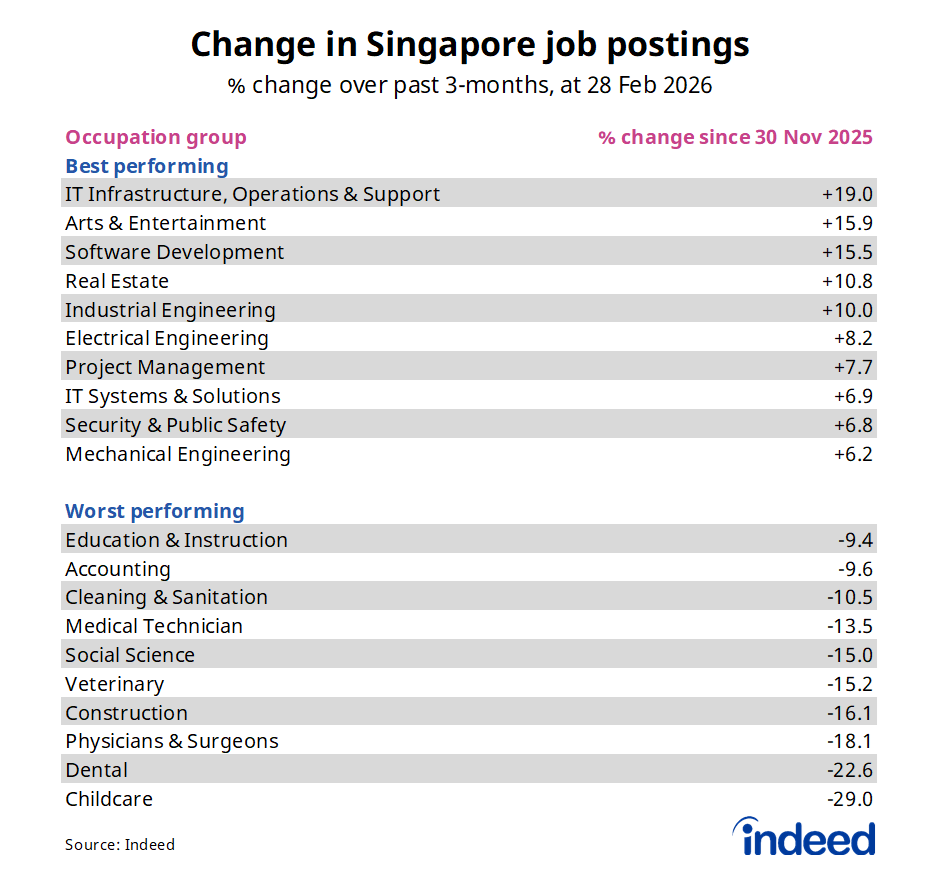
Here’s a breakdown of how job postings have shifted across different roles:

Advertisement

The winners & losers

Indeed provides a rolling three-month breakdown for the professions with the largest swings in demand, so we can compare which jobs are going up and which are falling out of favour.

Job postings rose in around half of occupational categories over the past three months, led by gains in IT infrastructure, operations & support (+19%), arts & entertainment (+16%) and software development (+15%).

Interestingly, some of the strongest gains were recorded in occupations that have a high exposure to AI transformation.

But those gains were offset by steep declines elsewhere.

Postings fell sharply in childcare (-29%), dental (-23%) and civil physicians & surgeons (-18%), with education and healthcare among the sectors seeing the most pronounced pullback in recent months.

Advertisement

More remote work opportunities

The report also found that remote work is gradually gaining ground.

In February, 8.6% of all job postings explicitly mentioned terms like “work from home” or “work remotely.” That’s a slight increase from the 8.4% recorded a year ago, and has climbed from a post-pandemic low of 6.9% in late 2022. 

Remote work opportunities are most common in IT systems & solutions at 15.6% of postings in the February quarter, ahead of sales (15.5%) and media & communications (14.0%). 

Large gains were also seen in occupations that have traditionally offered few remote or hybrid opportunities. Social sciences (+4.5%) and real estate (+3.5%) led the way.

But not all sectors are moving in the same direction.

Advertisement

Remote postings fell sharply in insurance (-7.5%), human resources (-6.0%), architecture (-5.3%), and electrical engineering (-3.6%), underscoring how remote work trends vary widely across occupations.

The labour market still remains strong

On the whole, though, it seems like the labour market situation in Singapore still remains stable and strong, despite the decrease in the total number of openings.

At the end of Feb, job postings were still 32% above pre-pandemic levels.

The post-pandemic job boom in Singapore was so large that even though job postings are down 45% from their peak in Jul 2022, it’s still sufficiently high to keep the unemployment rate low—just 2% at the end of last year.

Advertisement

However, the Singapore economy will face some stiff economic headwinds this year as the conflict in the Middle East triggers higher inflation and increased cautiousness from households and businesses alike.

With a tight labour market and solid economic growth last year, Singapore is relatively well positioned to weather these challenges. Nevertheless, the economic outlook has softened in recent weeks, underscoring the risks ahead.

Indeed expects that job opportunities will continue to moderate over the course of 2026. 

  • Read other articles we’ve written on Singaporean businesses here.

Featured Image Credit: Shadow_of_light/ depositphotos

Advertisement

Source link

Continue Reading

Trending

Copyright © 2025