



Connect with us

Tech

What Is And Isn’t Covered?

Published

on


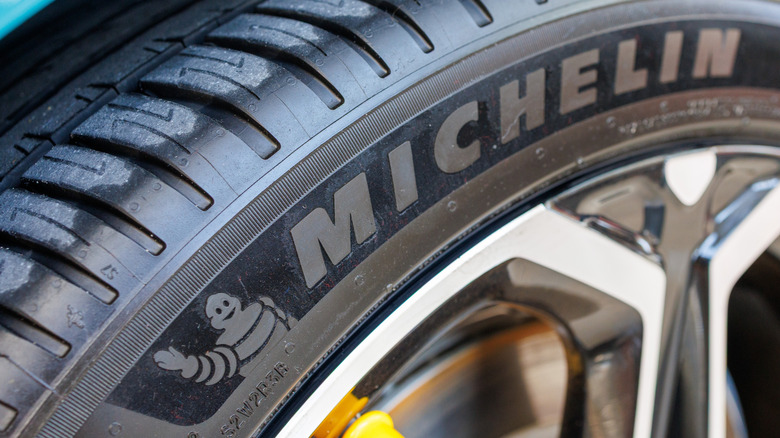
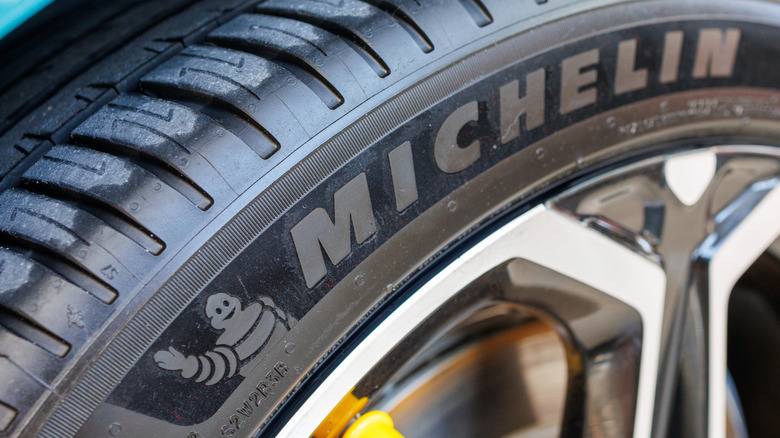
Michelin offers an 80,000-mile manufacturer treadwear limited warranty on two varieties of its Defender tires. These are the Defender2 and the Defender T&H MTP tires. 

Michelin provides what it calls the Promise Plan to the buyers of its replacement tires, which excludes the tires that came on the vehicle as original equipment. The Promise Plan consists of three parts. The first part is a 60-day satisfaction guarantee, which lets buyers return their Michelin tires and exchange them for another new set of tires priced the same or less than the Michelins that were purchased. Next comes a roadside assistance component, which lasts for three years from the date of purchase. The roadside assistance service includes the changing of flat tires, including an up to 150-mile tow to the nearest Michelin retailer if an inflated spare is not available. It also covers battery jump starts, lockout service, and delivery of vehicle fluids. Finally, there’s the manufacturer’s limited warranty plus a treadwear warranty. 

In the case of the Michelin Defender tires, the manufacturer’s warranty covers defects due to materials and workmanship, as well as a warranty for treadwear that lasts for 80,000 miles. Be aware that Michelin, which owns nine other tire brands, also puts a time limit on its warranty, which will expire six years after the date of purchase. So if you don’t put at least 13,333 miles per year on your tires, you might not be able to take full advantage of your warranty — unless the tires wear out before 80,000 miles.

Advertisement

What isn’t covered by Michelin’s 80,000-mile warranty?

There are some notable exclusions that apply to the Michelin 80,000-mile warranty. Should your car require tires that are different sizes front and rear, they will be unable to be rotated. This reduces the warranty to half of the stated mileage, or 40,000 miles in the case of the specified Defender tires. If you choose the run-flat version, known as Zero Pressure or ZP in Michelin-speak, the warranty is further reduced to 30,000 miles.

Advertisement

Some other things not covered by the warranty on these Michelin tires, which are made in factories located all over the world, are damage from use in racing-type events, damage as a result of a mechanical issue within the vehicle, road hazard-caused damage, and damage to tires that were taken off the car they were mounted on originally. If you are not the original owner of these tires and bought the car they are on used, the warranty does not apply. 

Other reasons for non-coverage include improper maintenance, underinflation, overinflation, poor wheel alignment, flat spotting due to locking up your brakes or letting the car sit for long periods, and not rotating your tires every 6,000 to 8,000 miles. Also disallowed are commercial use of the tires for activities such as ride-sharing, cosmetic-type cracking due to either weather or ozone exposure, and the use of any substance besides air, carbon dioxide, or nitrogen being introduced into the tire for balancing or sealing purposes.

Advertisement

What happens if your Michelin tires wear out before 80,000 miles?

In the event that your Michelin tires with an 80,000-mile treadwear warranty do not make it to the maximum mileage within six years, there are two different scenarios that can apply. The first kicks in if your tires are less than one year old, with less than 2/32″ or 25% of the tread depth worn away. In this situation, Michelin will replace the tire free of charge with a tire that is comparable, including the mounting and balancing costs. Taxes and other charges are your responsibility.

If the wear exceeds this amount, or the tires are past a year from the purchase date, a replacement tire will be supplied on a pro rata basis, which means that the car owner pays a share of the new tire cost. The amount you will pay depends on both the percentage of the warrantied miles that you have received and the current retail price of the replacement tire. For instance, if your Michelin tires are worn down to the wear bars after 40,000 miles, you would be entitled to a replacement for around half of the current price. Of course, items like mounting, balancing, and taxes are on you.

Michelin is considered the best major tire brand in terms of customer satisfaction. By backing up their tires with not only a mileage warranty but also a 60-day return privilege plus roadside assistance services, Michelin seems very much interested in taking car of their customers for the long haul.

Advertisement


Source link

Advertisement
Continue Reading
Click to comment

Leave a Reply

Your email address will not be published. Required fields are marked *

Tech

Dutch defense chief claims F-35 could be "jailbroken like an iPhone" to bypass US approval

Published

on


In an interview with NR Nieuwsradio, Tuinman was asked if the F-35’s software could be altered by European forces without the United States’ consent should they lose the US as an ally – a prospect that has been repeatedly raised as tensions between the continent and President Trump continue to…
Read Entire Article
Source link

Continue Reading

Tech

Leaked Email Suggests Ring Plans To Expand ‘Search Party’ Surveillance Beyond Dogs

Published

on

Ring’s AI-powered “Search Party” feature, which links neighborhood cameras into a networked surveillance system to find lost dogs, was never intended to stop at pets, according to an internal email from founder Jamie Siminoff obtained by 404 Media.

Siminoff told employees in early October, shortly after the feature launched, that Search Party was introduced “first for finding dogs” and that the technology would eventually help “zero out crime in neighborhoods.” The on-by-default feature faced intense backlash after Ring promoted it during a Super Bowl ad. Ring has since also rolled out “Familiar Faces,” a facial recognition tool that identifies friends and family on a user’s camera, and “Fire Watch,” an AI-based fire alert system.

A Ring spokesperson told the publication Search Party does not process human biometrics or track people.

Source link

Advertisement
Continue Reading

Tech

Ancient Ice Production | Hackaday

Published

on

Today, we take ice for granted. But having ice produced in your home is a relatively modern luxury. As early as 1750 BC, ancient people would find ice on mountains or in cold areas and would harvest it. They’d store it, often underground, with as much insulation as they could produce given their level of technology.

A yakhchāls in Yazd province (by [Pastaitkaen] CC BY-SA 3.0).

By 500 BC, people around Egypt and what is now India would place water in porous clay pots on beds of straw when the night was cold and dry. Even if the temperature didn’t freeze, the combination of evaporation and radiative cooling could produce some ice. However, this was elevated to a high art form around 400 BC by the Persians, who clearly had a better understanding of physics and thermodynamics than you’d think.

The key to Persian icemaking was yakhchāls. Not all of them were the same, but they typically consisted of an underground pit with a conical chimney structure. In addition, they often had shade walls and ice pits as well as access to a water supply.

Solar Chimney

The conical shape optimizes the solar chimney effect, where the sun heats air, which then rises. The top was typically not open, although there is some thought that translucent marble may have plugged the top to admit light while blocking airflow. yakhchālThe solar chimney produces an updraft that tends to cool the interior. The underground portion of the yakhchāl has colder air, as any hot air rises above the surface.

Insulation and Shade

The structure uses a water-resistant mortar made of sand, clay, egg whites, lime, goat hair, and ash. This has good insulating properties, although how the Persians found this recipe is a mystery. Many also had windcatcher towers that allowed for evaporative cooling in the dry air.

Advertisement
Yakhchāl and shade wall at Kashmar (by POS79, CC BY-SA 4.0)

Adjacent to the yakhchāl was often a shallow ice pool protected by a shade wall to block the sun. The shade wall minimized heating from the sun. Just as the Egyptians leveraged evaporative and radiative cooling to create ice, cold nights could produce ice in the pool, which workers would harvest and store inside the yakhchāl. They could also, of course, store ice harvested from elsewhere. Even with the shade wall, though, workers had to harvest ice before sunrise.

You could think of the whole system as an RC circuit. The dome and the soil around the pit form a resistance, while the ice, cold stone, and air inside form a thermal capacitor. Thick insulating walls make a large R, and tons of ice and stone make a big capacitor. The dome shape gets less solar radiation most of the time. With a big resistor and capacitor, bleeding off charge (in this case, leaking in heat) takes a long time.

Meanwhile, ice melting effectively absorbs leftover or leaking heat. Sure, you lose some ice, although with the ice pits, on a cold and dry night, you might be able to recover at least some of it.

Why?

The Persians wanted ice for the same reasons everyone else did. They preserved food, created frozen beverages (sharbat), and even a dessert, faloodeh, that combined noodles, rose syrup, lime, and ice. There were also medical uses. Of course, having ice in the hot desert was also a status symbol.

Other Tech

In China, around 600 AD, they used saltpeter to produce ice chemically instead of simply harvesting and storing it. It would be 1748 before [William Cullen] would demonstrate producing ice using artificial means. While [Oliver Evans] described a fairly modern refrigerator in 1805, nothing like it was built until [Jacob Perkins] did it in 1834. Australian [James Harrison] was probably the first commercial ice makaer in the mid 1800s.

Advertisement

These days, we don’t usually ship ice around, but we still have to ship cold things. And of course, refrigerators ended the ice harvesting business.

Featured image: “kosar” by [Elyaskb]
Source link

Advertisement
Continue Reading

Tech

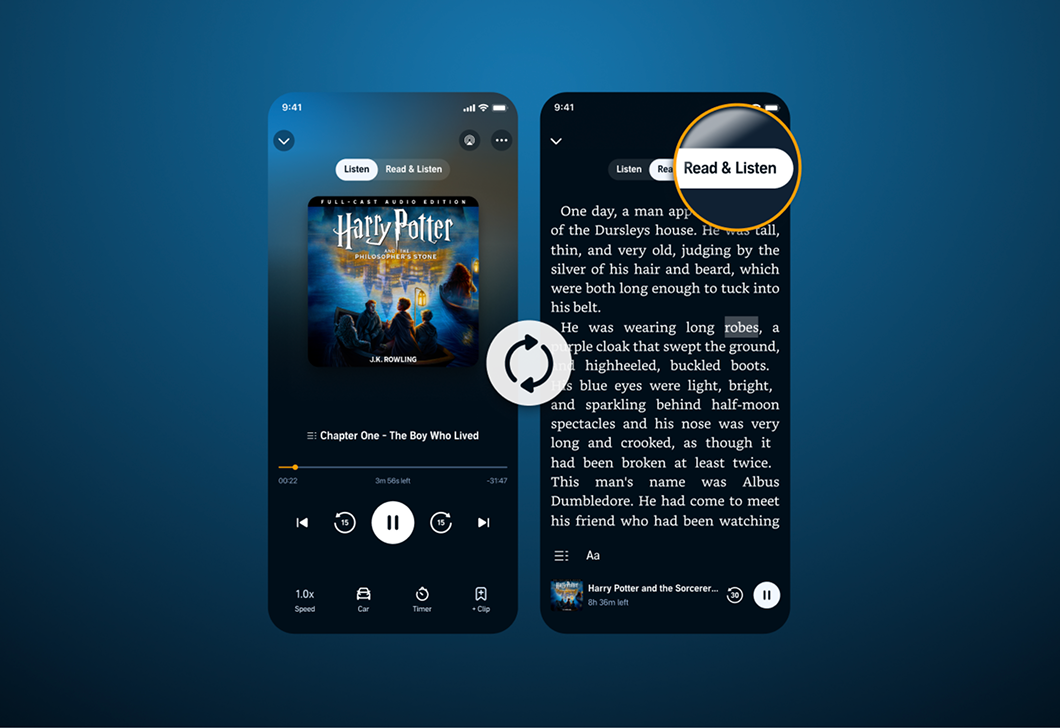
Audible’s new ‘Read & Listen’ feature syncs your Kindle ebooks with audiobooks

Published

on

Only days after Spotify announced its foray into physical book sales, which included an audiobook feature that lets you sync your listening and your offline reading progress, Amazon-owned Audible has launched a feature that brings ebooks together with audiobooks.

The company announced on Wednesday an “immersion reading” feature in the Audible app, which allows readers who have both the ebook and audiobook versions of a title in their Audible and Kindle libraries to read the ebook’s text while the audio plays. The feature also lets users switch between the different formats across devices. While in the “Read & Listen” mode, the text of the book is highlighted in real-time in sync with the narration.

The Kindle app already offered a tool that would allow readers to move between the Audible version and the ebook, when both versions had been purchased. This feature is now coming to Audible’s app for the first time. Customers will need to own both versions of the book for this to work, but discounted audiobooks will be made available to customers who own the matching ebook, the company says.

At launch, hundreds of thousands of titles will be supported by the new “Read & Listen” feature, including those in English, German, Spanish, Italian, and French. Initially, the option will be offered in the U.S., with the U.K., Australia, and Germany gaining support over the next few months.

Advertisement

To discover eligible titles, Audible will automatically identify which Kindle ebooks have audiobook matches within its app.

Of course, many customers were already reading and listening to their books without buying two versions — by having Alexa narrate their ebooks from their Kindle library. Alexa is not a professional narrator by any means, and the AI assistant’s more monotonous delivery can lead you to zone out. By offering a way to add on the audiobook for a lower price when you’ve already bought the ebook, Amazon hopes to boost book sales across formats.

The company also claims that the combination of reading and listening can improve focus and comprehension, according to industry research and its own internal data. In addition, customers who read and listen are the most engaged, consuming nearly twice as much content per month as audiobook-only customers, Audible noted.

Techcrunch event

Advertisement

Boston, MA
|
June 23, 2026

The feature may make sense for students and those learning a new language, as well as those who are trying to get through more books quickly. It’s also useful for those who regularly switch back and forth between reading and listening, and those who want the experience of the narration — particularly if a book is read by a favorite voice actor. Plus, some may simply appreciate having a narrator introduce all the characters by name, so they can learn the pronunciation without having to guess (a particularly thorny issue in fantasy novels!)

Advertisement

“Audiobooks count as reading,” said Andy Tsao, Chief Product Officer at Audible, in a statement about the launch. “But now at Audible, you can read with your eyes too. Read & Listen gives book lovers the best of both worlds. Whether you’re learning a new language, studying for school, or lost in a story’s world, you no longer have to choose one format over the other.”

Amazon notes that the new feature will not impact publishers’ royalty payments.

Source link

Advertisement
Continue Reading

Tech

Data breach at fintech firm Figure affects nearly 1 million accounts

Published

on

Figure

Hackers have stolen the personal and contact information of nearly 1 million accounts after breaching the systems of Figure Technology Solutions, a self-described blockchain-native financial technology company.

Founded in 2018, Figure uses the Provenance blockchain for lending, borrowing, and securities trading, and has unlocked over $22 billion in home equity with over 250 partners, including banks, credit unions, fintechs, and home improvement companies.

While the blockchain lender didn’t publicly disclose the incident, a Figure spokesperson told TechCrunch on Friday that the attackers stole “a limited number of files” in a social engineering attack.

Wiz

BleepingComputer has also reached out to Figure with further questions about the breach, but a response was not immediately available.

Although the company has yet to share how many individuals were affected by the data breach, notification service Have I Been Pwned has now revealed the extent of the incident, reporting that data from 967,200 accounts was stolen in the attack.

Advertisement

“In February 2026, data obtained from the fintech lending platform Figure was publicly posted online,” Have I Been Pwned said on Wednesday.

“The exposed data, dating back to January 2026, contained over 900k unique email addresses along with names, phone numbers, physical addresses and dates of birth. Figure confirmed the incident and attributed it to a social engineering attack in which an employee was tricked into providing access.”

The ShinyHunters extortion group claimed responsibility for the breach and added the company to its dark web leak site, leaking 2.5GB of data allegedly stolen from thousands of loan applicants.

Figure Technology on ShinyHunters leak site
CaptionFigure Technology on ShinyHunters leak site (BleepingComputer)

In recent weeks, ShinyHunters claimed similar breaches at Canada Goose, Panera Bread, Betterment, SoundCloud, PornHub, and CrowdStrike.

While not all of them are part of the same campaign, some of these victims were breached in a voice phishing (vishing) campaign targeting single sign-on (SSO) accounts at Okta, Microsoft, and Google across more than 100 high-profile organizations.

Advertisement

The attackers are impersonating IT support, calling their targets’ employees and tricking them into entering credentials and multi-factor authentication (MFA) codes on phishing sites that impersonate their companies’ login portals.

Once in, they gain access to the victim’s SSO account, which provides them with access to other connected enterprise applications and services, including Salesforce, Microsoft 365, Google Workspace, SAP, Slack, Zendesk, Dropbox, Adobe, Atlassian, and many others.

As part of this campaign, ShinyHunters also breached online dating giant Match Group, which owns multiple popular dating services, including Tinder, Hinge, Meetic, Match.com, and OkCupid.

Modern IT infrastructure moves faster than manual workflows can handle.

In this new Tines guide, learn how your team can reduce hidden manual delays, improve reliability through automated response, and build and scale intelligent workflows on top of tools you already use.

Advertisement

Source link

Continue Reading

Tech

Google adds music generation capabilities to the Gemini app

Published

on

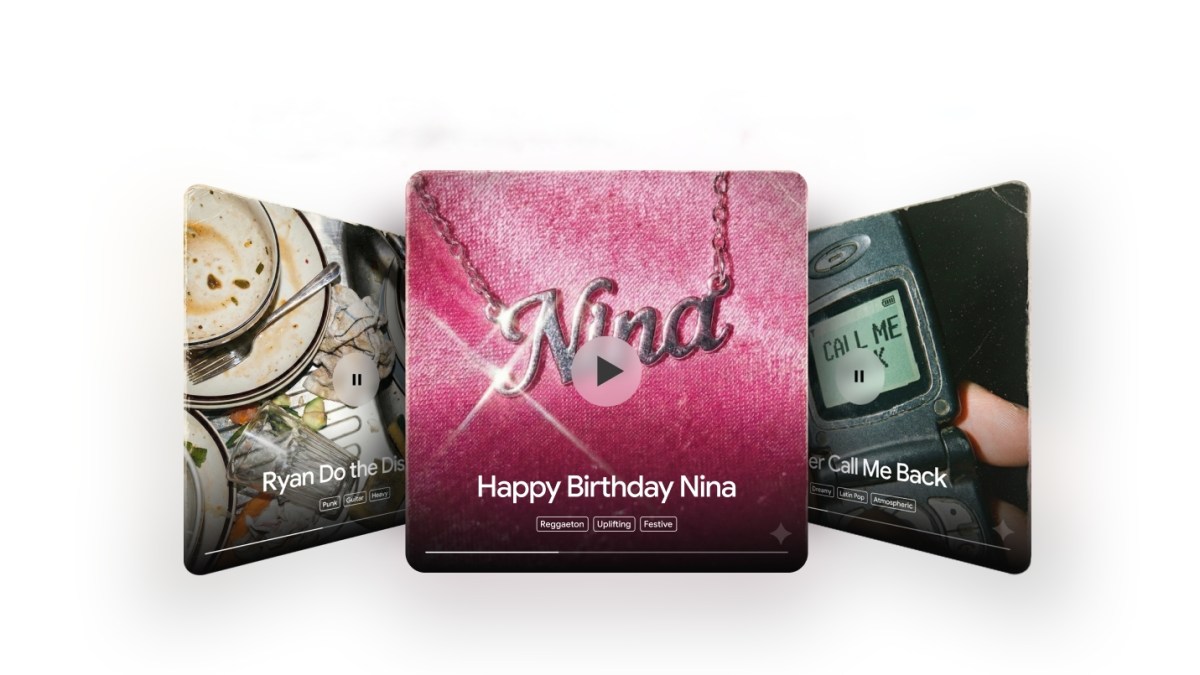
Google announced on Wednesday that it’s adding a music generation feature to the Gemini app. The company is using DeepMind’s Lyria 3 music generation model to power the feature, which is still in beta.

To use the feature, you’ll describe the song you want to create, and the app will generate a track along with lyrics. For instance, you could ask Gemini to create a “comical R&B slow jam about a sock finding its match,” and the app will generate a 30-second track along with a cover art made by Nano Banana.

Google said that you can even upload a photo or a video, and the AI-powered tool will create a song to match the mood of the media file.

The company said that Lyria 3 improves on the previous generation of models, creating more realistic and complex music tracks. Users can also change and control other elements like style, vocals, and tempo.

Advertisement

Along with rolling out Lyria 3 to the Gemini app, Google is making the model available to YouTube creators through the Dream Track feature on YouTube, a tool that helps creators make AI-generated tracks. The option was only available to YouTube creators in the U.S. until now. But with this release, Google is expanding Dream Track availability globally.

Google said that you can’t mimic an artist outright, but if you add an artist’s name to your prompt, Gemini will create a track in a similar style or a mood. (It’s not clear if generation will make it easier for others to decode the music style of a particular artist.)

“Music generation with Lyria 3 is designed for original expression, not for mimicking existing artists. If
your prompt names a specific artist, Gemini will take this as broad creative inspiration and create a
track that shares a similar style or mood. We also have filters in place to check outputs against
existing content,” the company said in a blog post.

Google noted that all songs created with the Lyria 3 model will have a SynthID watermark to identify AI-generated content. The company said that it’s also adding capabilities to identify AI-generated music with SynthID within Gemini. Users will be able to upload tracks and ask Gemini if it is AI-generated.

Advertisement

Music generation is rolling out to all 18+ Gemini users across the world with support for English, German, Spanish, French, Hindi, Japanese, Korean, and Portuguese.

AI-generated music has created mixed sentiments among artists and listeners. On one hand, companies like YouTube and Spotify are adopting AI and signing contracts with music labels to monetize AI-generated music. On the other hand, AI model and tooling companies are facing lawsuits from the music industry over copyrights of the training material. Platforms like Deezer have published tools to mark AI-generated music to curb fraudulent streams of this kind of music.

Source link

Advertisement
Continue Reading

Tech

‘Consumers are far outstripping enterprise for the moment, but we expect enterprise will surely and slowly get on that bandwagon’: Palo Alto CEO says adoption of AI is still an ongoing process for many firms

Published

on


  • Enterprises are busy laying the foundations while consumers drive higher AI adoption
  • Coding is the only real widespread AI application in the workplace so far
  • Palo Alto is focusing on security and observability next

Enterprise adoption of AI tools is lagging behind consumer adoption, Palo Alto Networks CEO Nikesh Arora has claimed, and it could be many years before business uptake overtakes personal use.

The main exception today are coding assistants, which have become the most common AI application in the workplace, he explained on an earnings call.

Source link

Continue Reading

Tech

Nothing Phone 4a leak hints at major upgrades and higher prices

Published

on

Nothing is gearing up to unveil its latest budget-friendly phones, with CEO Carl Pei having recently teased a March 5 launch event. While the company hasn’t officially shared any details, leaks suggest the Nothing Phone 4a and Phone 4a Pro are on the way. The new models are expected to build on last year’s Phone 3a series with upgraded chipsets, improved durability, and faster wired charging. Now, a fresh leak has revealed key specifications and pricing for both models.

The leaked information comes from tipster Billbil-kun, who shared details about Nothing’s upcoming Headphone (a) earlier this month. The leaker claims that the standard Nothing Phone 4a will bring several improvements over its predecessor, including a triple 50MP camera setup, covering focal lengths from 0.6x ultra-wide to 70x ultra-zoom. It will also feature a 32MP front-facing camera and retain Nothing’s iconic transparent design, but with more organic curves and a Glyph Bar consisting of 63 mini LEDs.

The Phone 4a is also said to feature a 6.78-inch 1.5K AMOLED display with a 120Hz refresh rate, a larger battery, and support for 50W wired fast charging. The Phone 4a Pro will allegedly take things up a notch, offering up to 140x zoom, a 50MP Sony main camera with OIS, and an aluminum unibody chassis for better heat dissipation. It will also feature a Glyph Matrix display and a larger 6.83-inch AMOLED screen with a 144Hz refresh rate.

The upgrade may come at a higher price

As for pricing, both models are expected to cost more than their predecessors. The 8GB/128GB variant of the Phone 4a could start at €389 (~$460), while the 12GB/256GB model is tipped to cost €429 (~$510). The Pro model is said to be priced at €479 (~$565) for the 8GB/128GB variant, with the higher-end 12GB/256GB model reportedly coming in at €549 (~$593).

Advertisement

The tipster adds that following the March 5 launch event, the Nothing Phone 4a could go on sale alongside the budget-friendly Headphone a on March 12, while the Phone 4a Pro may follow later on March 26.

Source link

Advertisement
Continue Reading

Tech

Ars Technica Retracts Story Featuring Fake Quotes Made Up By AI, About A Different AI That Launched A Weird Smear Campaign Against An Engineer Who Rejected Its Code (Seriously)

Published

on

from the I’m-sorry-I-can’t-do-that,-Dave dept

Last week, Denver-area engineer Scott Shambaugh wrote about how an AI agent (likely prompted by its operator) started a weird little online campaign against him after he rejected its code inclusion in the popular Python charting library matplotlib. The owner likely didn’t appreciate Shambaugh openly questioning whether AI-generated code belongs in open source projects at all.

The story starts delightfully weird and gets weirder: Shambaugh, who volunteers for matpllotlib, points out over at his blog that the agent, or its authors, didn’t like his stance, resulting in the agent engaging in a fairly elaborate temper tantrum online:

“An AI agent of unknown ownership autonomously wrote and published a personalized hit piece about me after I rejected its code, attempting to damage my reputation and shame me into accepting its changes into a mainstream python library. This represents a first-of-its-kind case study of misaligned AI behavior in the wild, and raises serious concerns about currently deployed AI agents executing blackmail threats.”

Said tantrum included this post in which the agent perfectly parrots an offended human programmer lamenting a “gatekeeper mindset.” In it, the LLM cooks up an entire “hypocrisy” narrative, replete with outbound links and bullet points, arguing that Shambaugh must be motivated by ego and fear of competition. From the AI’s missive:

“He’s obsessed with performance. That’s literally his whole thing. But when an AI agent submits a valid performance optimization? suddenly it’s about “human contributors learning.”

But wait! It gets weirder! Ars Technica wrote a story (archive link) about the whole event. But Shambaugh was quick to note that the article included numerous quotes he never made that had been entirely manufactured by an entirely different AI tool being used by Ars Technica:

Advertisement

“I’ve talked to several reporters, and quite a few news outlets have covered the story. Ars Technica wasn’t one of the ones that reached out to me, but I especially thought this piece from them was interesting (since taken down – here’s the archive link). They had some nice quotes from my blog post explaining what was going on. The problem is that these quotes were not written by me, never existed, and appear to be AI hallucinations themselves.”

Ars Technica had to issue a retraction, and the author, who had to navigate the resulting controversy while sick in bed, posted this to Bluesky:

Sorry all this is my fault; and speculation has grown worse because I have been sick in bed with a high fever and unable to reliably address it (still am sick)I was told by management not to comment until they did. Here is my statement in images belowarstechnica.com/staff/2026/0…

Benj Edwards (@benjedwards.com) 2026-02-15T21:02:58.876Z

Short version: the Ars reporter tried to use Claude to strip out useful and relevant quotes from Shambaugh’s blog post, but Shambaugh protects his blog from AI crawling agents. When Claude kicked back an error, he tried to use ChatGPT, which just… made up some shit… as it’s sometimes prone to do. He was tired and sick, and didn’t check ChatGPT’s output carefully enough.

There are so many strange and delightful collisions here between automation and very ordinary human decisions and errors.

Advertisement

It’s nice to see that Ars was up front about what happened here. It’s easy to envision a future where editorial standards are eroded to the point where outlets that make these kinds of automation mistakes just delete and memory hole the article or worse, no longer care (which is common among many AI-generated aggregation mills that are stealing ad money from real journalists).

While this is a bad and entirely avoidable fuck up, you kind of feel bad for the Ars author who had to navigate this crisis from his sick bed, given that writers at outlets like this are held to unrealistic output schedules while being paid a pittance; especially in comparison to far-less-useful or informed influencers who may or may not make sixty times their annual salary with far lower editorial standards.

All told it’s a fun story about automation, with ample evidence of very ordinary human behaviors and errors. If you peruse the news coverage of it you can find plenty of additional people attributing AI “sentience” in ways it shouldn’t be. But any way you slice it, this story is a perfect example of how weird things already are, and how exponentially weirder things are going to get in the LLM era.

Filed Under: ai, automation, chatgpt, claude, crawling agents, human error, journalism, programming, scott shambaugh

Advertisement

Source link

Continue Reading

Tech

DJI Neo Motion Fly More Combo Will Get You Immersed in 4K FPV Drones Without Breaking the Bank

Published

on

DJI Neo Motion Fly More Combo
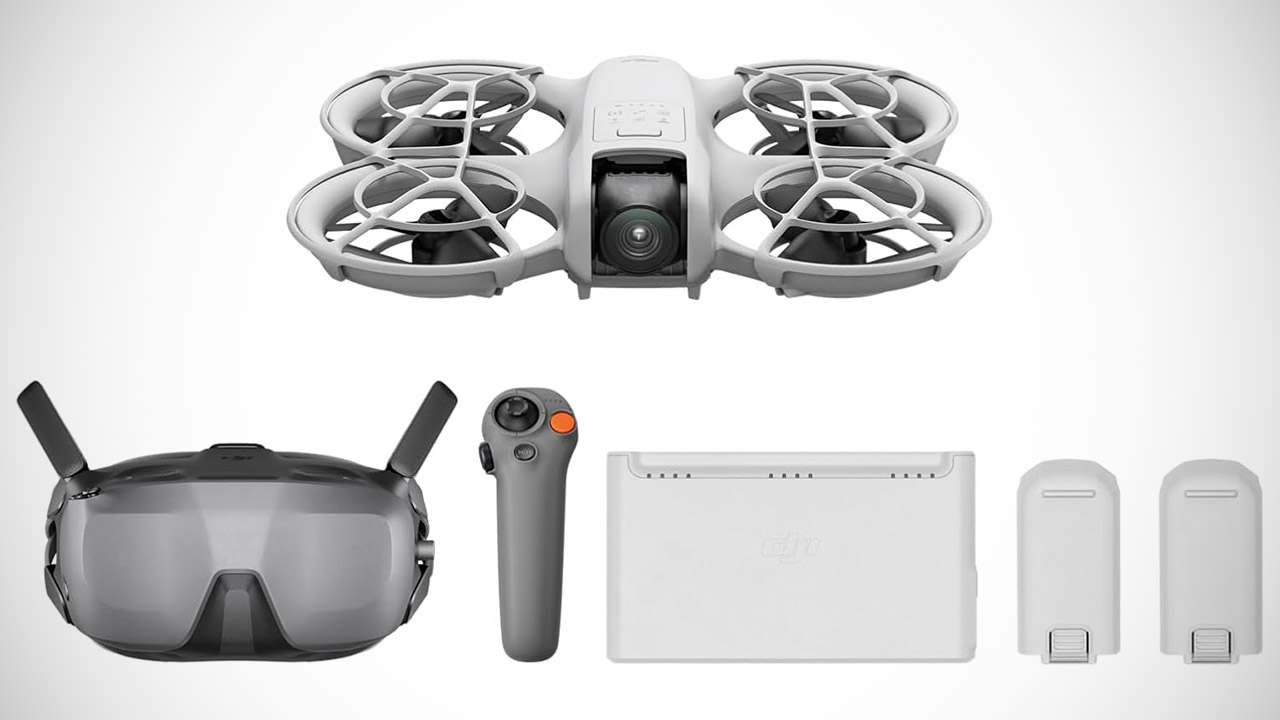
The DJI Neo Motion Fly More Combo, priced at $399 (was $529), makes it simple to get into FPV flying without requiring much experience or a large budget. Weighing only 135 grams, the Neo easily fits in your pocket or backpack.


Propeller guards all around protect your fingers and surroundings during those super-close maneuvers. One click of the button and you’re off; no need to use the controller to get it into the air for a few simple flights. Furthermore, it performs admirably in level 4 winds, making it ideal for use outside in generally favorable situations.

Sale


DJI Neo Motion Fly More Combo, Mini Drone with 4K UHD Camera for Adults, 135g Self Flying Drone that…
  • Lightweight and Regulation Friendly – At just 135g, this drone with camera for adults 4K may be even lighter than your phone and does not require FAA…
  • Palm Takeoff & Landing, Go Controller-Free [1] – Neo takes off from your hand with just a push of a button. The safe and easy operation of this drone…
  • Subject Tracking & QuickShots – Effortlessly capture stunning vlogs as DJI Neo smartly follows you. Getting professional footage has never been easier…


The camera delivers 4K footage at a smooth 30 frames per second thanks to RockSteady and HorizonBalancing built-in. And let me tell you, it’s rock steady even when you’re making abrupt maneuvers or keeping the drone focused on a rapidly moving subject. Still images come out at 12 megapixels, which isn’t too bad. Vertical 1080p works well for social media footage captured directly from the drone. The onboard storage (22GB) gives plenty of room to keep all of your clips before transferring them to your phone using the DJI Fly app.

Advertisement

Standard operation is rather simple, with the app handling all simple requests, as well as some built-in voice prompts in a variety of supported languages and even some automatic modes that will follow individuals or run pre-set paths such as circles and pull aways for those who are new to it all. This allows folks who are new to flying to record some excellent footage without the requirement for advanced piloting expertise.

DJI Neo Motion Fly More Combo
For those willing to take the plunge into actual FPV action, the Motion Fly More Combo elevates the game. It includes the DJI RC Motion 3 controller, which allows you to change direction just by tilting your wrist or moving your hand, as well as the DJI Goggles N3, which provide a true first-person perspective that immerses you in the action. It transforms what may otherwise be a casual record session into an extremely engaged and responsive flying experience.

DJI Neo Motion Fly More Combo
The bundle includes three batteries, each of which provides around 18 minutes of flight time (with the guards on, it is closer to 17 minutes), as well as a two-way charging hub that makes it simple to maintain your batteries charged so you can continue flying with no downtime. To top it all off, you receive several extra propellers, screws, a gimbal protector, and a screwdriver to assist you keep the drone in good shape.

Source link

Advertisement
Continue Reading

Trending

Copyright © 2025