Industry 4.0 represents an opportunity for innovative, ambitious and future-focused professionals to transform the world as we know it.
The fourth industrial revolution, or Industry 4.0 as it is often better known, is the integration of smart, digital technologies into larger industrial and manufacturing processes, with the aim of creating intelligent, improved systems.
Skills in this area are absolutely vital for any professionals looking to work in a future-focused role or high-tech capacity.
SiliconRepublic.com, as part of its month-long Industry 4.0 coverage, has compiled a list of some of the most important skills to have as you face a changing world.
Advertisement
Stay human
It is not at all uncommon to assume that the most critical qualities to possess in technical and complex industries are all hard skills. It is, however, a commonly held myth, as soft skills are critical to long-term success in any professional space, including for careers under the Industry 4.0 umbrella. These are the abilities that enable you to communicate effectively with co-workers, negotiate positive change and create a better workplace environment.
Skills to prioritise are adaptability and problem-solving, as Industry 4.0 roles are often complex and ever-evolving; collaboration, as your job may demand a degree of crossover with other teams, departments or companies; critical thinking, as Industry 4.0 careers are often rooted in a need to address modern-day problems with unique solutions; and leadership, as everyone should know how to command a room and lead others when necessary.
Soft skills bring a crucial human element to careers that are often considered complex and clinical.
New dimensions
3D printing – or as it is often known, additive manufacturing – has enabled experts in Industry 4.0 careers to move beyond traditional methods as they create models and prototypes with the power to improve quality of life, reduce costs and maximise resources.
Advertisement
Clinicians may use 3D printing to develop prosthetics and implants to match a patient’s specific anatomy. Manufacturers can use the technology to create specific, necessary medical equipment and aerospace engineers often use additive manufacturing to develop small, complex parts that demand high accuracy and specific criteria.
There are a range of organisations and sectors in STEM and outside of it that are now using 3D advancements and it is undoubtedly a skill that will be carried into the next industrial wave.
Seeing double
Digital twin technology is described as the virtual representation of a physical system or process that receives data from the real world, in real-time. Its purpose is to mirror the behaviour, performance and state of the primary, physical model, so experts can explore, experiment and analyse without impacting the real counterpart.
Digital twin tech allows organisations to simulate real-world scenarios, fortify security and improve operations, while also minimising risk or accidental harm.
Advertisement
Among the skills that are useful to those who want to know more about wielding digital twin technologies are abilities in IoT, AI, data analytics, simulation software and cloud computing – and it is of particular importance to those hoping to work in manufacturing, aerospace, automotive, energy and utilities, healthcare, smart cities, and infrastructure.
Stay connected
Research suggests that IoT, as a critical element of Industry 4.0, is a skill that is under near constant demand by organisations and employers.
Anyone hoping to be an IoT expert should ensure that they have a robust education in software such as AutoCad, which allows engineers to design machines; cybersecurity for managing complex and high-risk projects; data and analytics skills that ensure clean, concise and insightful work; and AI and ML, among others.
Careers in Industry 4.0 are moving so rapidly it can be hard to keep up with the changes, but what is important to remember is that the skills of today create the future. All you have to do to keep pace is to commit to upskilling and tackle each challenge as it comes.
Advertisement
Don’t miss out on the knowledge you need to succeed. Sign up for the Daily Brief, Silicon Republic’s digest of need-to-know sci-tech news.
It appears Bill Cassidy is going to make every effort to ignore his own culpability for RFK Jr. on his way out the door. In case you need to be reminded, Cassidy was a key, if not deciding vote to confirm RFK Jr. to his current role as Secretary of HHS. Cassidy’s background is as an MD and many of his GOP colleagues reportedly looked to his vote as to whether to support Kennedy’s nomination, despite Kennedy being perhaps the loudest evangelist for anti-vaxxer conspiracy theories on the planet. He voted to confirm Kennedy, leading several others to follow suit. It’s probably not inaccurate to say that Kennedy has his position because Cassidy voted for him.
Despite his attempts to lick Trump’s boots so clean that he could perform surgery with them, Cassidy lost his primary because his love for Trump went unrequited. In the immediate aftermath of that loss, Cassidy rediscovered his own backbone and flipped his vote from no to yes on the war powers resolution that went before the Senate. While that was bad enough for Cassidy to get a big ol’ middle finger from me, listening to him now try to poke a finger in Kennedy’s eye is a bridge too far.
Sen. Bill Cassidy (R-La.) directly blamed Health and Human Services (HHS) Secretary Robert F. Kennedy Jr. for a resurgence in vaccine-preventable illnesses Thursday.
On the social media platform X, Cassidy shared a New York Times article reporting on hospitals seeing a resurgence in vaccine-preventable illnesses, with doctors telling the outlet they’re frequently seeing illnesses they used to rarely encounter.
“A terrible outcome from RFK and others promoting vaccine skepticism,” wrote Cassidy.
Advertisement
This has to be one of the most tone-deaf things a sitting senator has ever uttered. And for several reasons. Chief among them is that Cassidy is the one who helped promote vaccine skepticism by literally promoting a brain-addled anti-vaxxer into a cabinet position in charge of Americans’ health. To crow about the consequences of the very HHS administration Cassidy helped to put in place is befuddling in the extreme. Cassidy has ownership of this, whether he wants to admit it or not.
And, again, Cassidy had every opportunity to try to do something to correct his own mistake before he fumbled his incumbency so badly. There were impeachment efforts around Kennedy that he could have helped bolster. He could have crafted legislation to try to mitigate Kennedy’s worst actions in his role. He could have done literally anything other than complain publicly that Kennedy lied to him during his confirmation hearings and then just leaving it at that.
Cassidy has a few months left in office and then he will disappear into the vapor. If he wants to do something, then he should do something. This very much isn’t that and the fact that it’s coming in the wake of his no longer having any stakes in electoral politics is pathetic.
But they didn’t miss the chance to argue over who’s censoring who.
Consolidated News Photos/Shutterstock
Senators Ted Cruz (R-Texas) and Ron Wyden (D-Ore.) have introduced a bipartisan bill that they said will “hold the government accountable for censorship and violations of the First Amendment.” They’re calling it the Justice Against Weaponized Bureaucratic Overreach to Networked Expression (JAWBONE) Act. They named it after jawboning, an act wherein the government attempts to persuade or pressure private companies into changing their moderation policies or to censor speech.
“Americans face significant hurdles in proving these violations,” the senators said in their announcement. The JAWBONE Act, if it becomes a law, would “create a cause of action against any government agency or employee,” even if it’s just an unsuccessful attempt at censorship, and would allow plaintiffs to seek monetary damages. Under current laws, plaintiffs can only ask for injunction to prevent future violations. Government agencies would also be required to hand over certain communications with companies involved in complaints “ensure greater accountability and transparency within the federal government.”
While the bill is bipartisan, the senators didn’t miss the chance to argue over who’s actually censoring who. In his statement, Senator Cruz attacked the Biden administration, which he accused of weaponizing “the Cybersecurity and Infrastructure Security Agency to pressure Big Tech into ‘canceling’ Americans who spoke out against vaccine mandates and election fraud.”
Advertisement
Senator Wyden, however, said the most blatant example of jawboning is “Trump threatening cable companies because he doesn’t like their late-night shows.” A spokesperson for Wyden told Ars Technica that the bill would also apply to the Trump administration putting pressure on app stores to take down certain applications, like what it did with ICEBlock. The creator of the app, which allows users to pin ICE agents’ location on a map, is suing the government over “unlawful threats” that led to the app’s removal from stores.
Wyden added that the act of jawboning isn’t partisan and promised that the bill would provide Americans with the ability to file lawsuits if the government “illegally coerces censorship.” Likewise, Senator Cruz said the bill would ensure “the First Amendment is protected, not undermined.”
India’s AI model output has been slow compared to the U.S., Europe, and China. Only a few startups are releasing models, and most of them are large language models or voice models. To encourage more development, the government launched the India AI Mission, a roughly $1.2 billion initiative that — among other things — gives selected startups access to subsidized GPU compute in exchange for releasing their models publicly. One of the 12 startups selected for the program, Avataar AI, has launched a new video model called Varya that is built to understand local context — such as identifying different festivals, food, and clothing.
The Peak XV-backed startup, which focuses on creating video tools for e-commerce, didn’t build Varya from scratch. It started with Wan 2.2, a publicly available video generation model released by Alibaba, and used a technique called distillation — essentially compressing the model’s capabilities into a leaner, faster version optimized for Avataar’s specific use cases. The result is a model that runs in four steps rather than Wan 2.2’s 50, producing video 10 times faster and at a fraction of the cost.
To put that in concrete terms: using an NVIDIA H200 GPU, Varya can generate a 5-second 720p clip in 45 seconds, compared to 1,230 seconds for Wan 2.2.
Advertisement
The most striking aspect of Varya may be its price. The company plans to charge ₹0.48 ($0.005) per second of video on its hosted service — far cheaper than models like Veo, Kling, Luma, and Runway, which typically charge $0.10 or more per second. That’s a roughly 20x price difference.
“India is a video-first market. We see this across every large consumer internet product in India: video wins over text. Current AI video models are too expensive for population-scale use in India. If video AI is going to reach students, teachers, MSMEs, creators, enterprises, and public services, costs have to come down dramatically. Cost is the biggest unlock for AI adoption in India,” Peak XV’s managing director Rajan Anandan told TechCrunch.
Image and video generation models often miss cultural nuances and produce stereotyped or generic outputs — a problem TechCrunch has reported on before. Avataar AI says it has used curated data to train Varya to recognize cultural nuances including food, clothing, architecture, and festivals.
Varya will be released as an open-weight model on India’s AI Kosh portal — the Indian government’s centralized repository for publicly available AI models and datasets — along with its training data, meaning developers can self-host or modify it for their own needs. Avataar also plans to make the model available to its enterprise customers and says it is open to partnerships with video tools including Higgsfield and Adobe Firefly. Anyone can try it now on its website using text prompts or reference images.
Advertisement
Varya’s launch reflects a fundamental tradeoff in India’s AI ambitions. Industry veterans have noted that India can make its mark in AI by creating applications and a robust developer ecosystem rather than competing on foundation models. And there’s a reason for that pragmatism: model development has been slower in India than in global rivals due to a lack of compute and limited quality data availability.
The India AI Mission is also part of a broader government push to close that gap. Last year, it selected 12 startups — Avataar AI among them — to develop AI models and provided them with cost-efficient compute. Earlier this year, IT minister Ashwini Vaishnaw said India aims to attract $200 billion in AI investment by 2028 and more than double its GPU capacity within six months.
When you purchase through links in our articles, we may earn a small commission. This doesn’t affect our editorial independence.
In India, consumers receive a lot of calls every day, ranging from spam and scams to delivery people and financial service companies trying to contact them. There are apps like Truecaller and the government’s Calling Name Presentation (CNAP) system to identify who is calling, but knowing the name of the caller is often not enough. That is why Equal AI is creating an assistant that can receive calls on your behalf, gather information, and tell you why someone is calling.
The app is currently available on Android, and since its launch last year, it has grown to more than a million monthly active users and over 300,000 daily active users, it says. The app screens the call and displays the reason someone is calling you.
The dialer shows quick reply options like “Leave the delivery near the door” or “Give it to the neighbor,” and the AI reads them back to the caller. You can also type a custom message for the AI to read out. The app records the call, and users can see the recording and transcription history with a summary in the app.
Image Credits: Equal AIImage Credits:Equal AI
Equal AI said today it has raised $30 million in Series B funding led by Prosus Ventures and Tomales Bay Capital with participation from Think Investments and Valiant Fund. Individual investors include Indian fintech PhonePe’s founder Sameer Nigam, Zubin Bharti Mittal from Airtel Family Office, Skyflow AI co-founder Anshu Sharma, Meta India and Southeast Asia’s VP Sandhya Devanathan, and CtrlS Datacenters’ Chairman Sridhar Pinnapureddy. With the new funding, the company has raised over $42 million to date.
The round is structured in three tranches, with the startup carrying a different valuation at each stage depending on whether it hits predetermined targets — a growing but still uncommon approach in which startups sell equity at different prices within the same round. The structure has an unusual quirk: it lets a startup advertise the highest valuation achieved, even if the bulk of the equity was sold at a lower one. Equal AI declined to provide its specific valuations.
Advertisement
The startup was founded by Keshav Reddy in 2022. Reddy comes from the family behind Indian conglomerate GVK, which has holdings across infrastructure, energy, and healthcare. Equal started as a data-sharing company for financial services and still offers data for financial analysis and know your customer (KYC) verification services for employers.
“We always wanted to be a customer-facing company, and with Equal AI, the first use case we launched was a call assistant because we realized users get a ton of calls for financial services or job openings. If you are buying car insurance, you might get 20 calls over a week, and that is hard to tackle for a human,” founder Reddy told TechCrunch about why the company started there.
The app currently only screens unknown calls, but the company is planning to introduce the ability to screen calls from known numbers too. The company also wants the AI assistant to take proactive action on a user’s behalf — such as texting a delivery person your address (with consent) or making outbound calls to book appointments. The startup said it is also working on an iOS version of the app and a paid subscription tier with more features.
Equal AI is using a mix of speech recognition, automatic speech recognition (ASR), and speech generation models with its own orchestration layer. English support matters, but consumers in India often speak in their native language or blend multiple languages in a single sentence — a phenomenon called code-mixing. Equal AI says it has built support for over 10 languages with this in mind.
Advertisement
The startup has stiff competition. Google and Apple both have call screening products. Truecaller, already a household name in India, has been building out its own AI assistant features. In the U.S., a16z-backed privacy startup Cloaked also launched call screening last year. Thiago Viana, global co-head at Prosus Ventures, said that Equal’s understanding of local context gives it an edge.
“Equal AI promises to screen calls for you and provide context on why someone is calling. We think that if an app does well in a few use cases, it can quickly become popular in its niche and create user stickiness to expand in different areas later on,” Reddy told TechCrunch by phone.
Prosus has been investing in AI assistant startups that focus on local markets. Its portfolio includes Spain-based Luzia and Latin America-based Zapia. Both were caught up in Meta’s ban on third-party AI bots on WhatsApp, which serves as a cautionary tale for platform dependency. Equal AI said that it didn’t want to create that kind of dependency — which is why it built around calls and its own app rather than piggybacking on a messaging platform.
When you purchase through links in our articles, we may earn a small commission. This doesn’t affect our editorial independence.
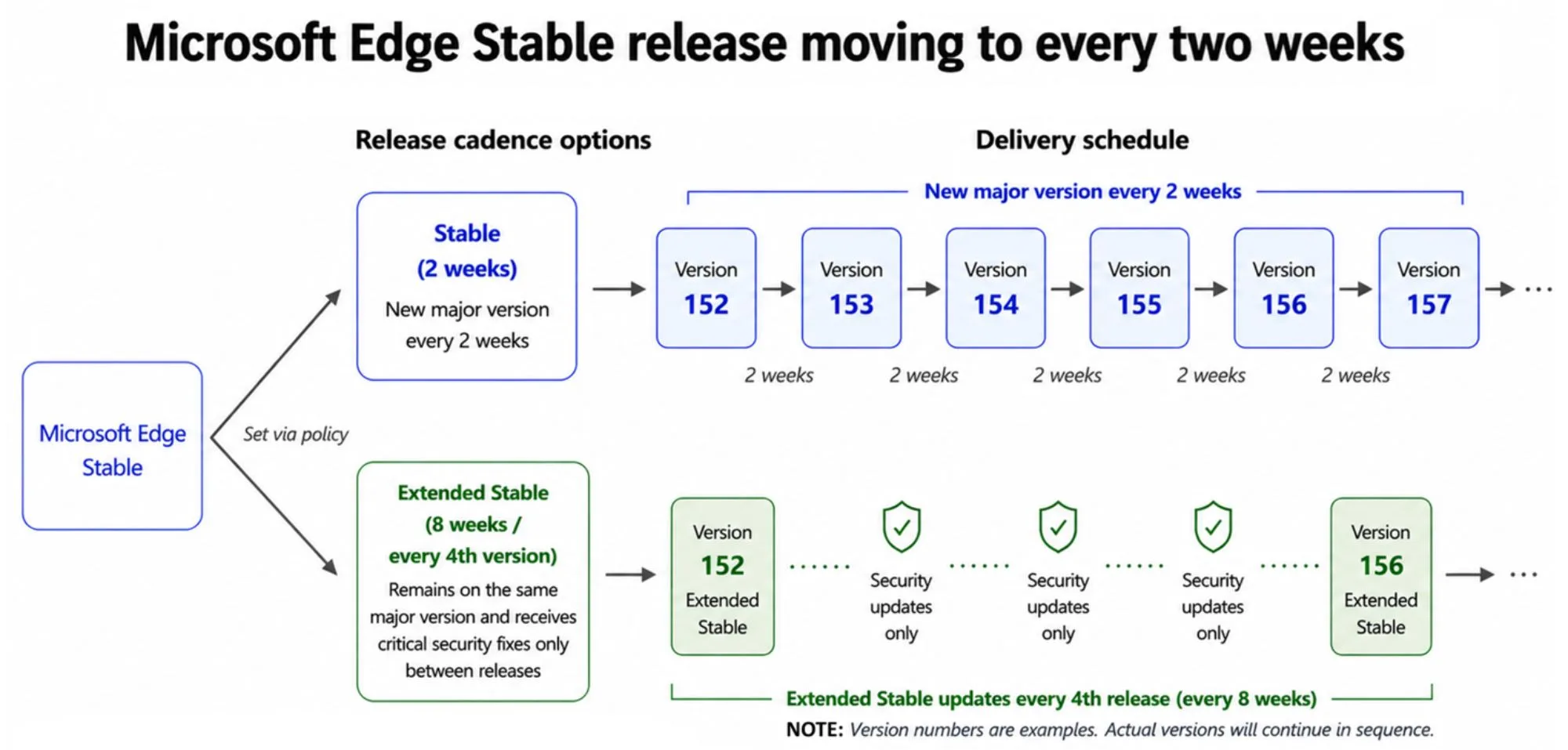
Microsoft is accelerating updates to its Edge browser, switching from a monthly release schedule to a biweekly one. The change takes effect with Edge 152, due on August 27, and puts the browser on the same cadence as Google Chrome.
More updates, not more features
The shift does not mean users will get twice as many new features. As Microsoft explained in a recent blog post, each release under the new schedule will carry roughly half the content of the current monthly drops, keeping the overall volume of changes roughly constant. The practical effect for most users is a steadier, smaller stream of updates rather than a sudden jump in new functionality.
Microsoft
Microsoft framed the change as a benefit for both consumers and enterprise customers, noting that security and platform fixes will reach users faster, and that smaller change sets are easier for IT teams to validate before deployment.
Who it affects and when
The new cadence applies to users on the standard Stable channel. Those on the Stable Extended channel, a longer-term option aimed at organizations that prefer less frequent updates, will stay on the current every-two-months schedule.
Google Chrome moved to a two-week release cycle in March, and Edge’s realignment closes the gap between the two Chromium-based browsers. The biweekly releases kick in with Edge 152 on August 27, giving users and IT admins a couple of months to prepare before the new schedule takes hold. For everyday users, the transition should be largely invisible. Automatic updates will simply arrive more often, each with a smaller footprint than before.
Casual IT team learns that building bespoke PCs can be a false economy
ON CALL 你好 Nǐ hǎo, dear reader, and welcome to another installment of On Call, The Register’s Friday column that shares your stories of translating technical trauma while delivering transcendent tech support.
This week, meet a reader we’ll Regomize as “Jackson” who
told us about his time providing tech support in a university’s biology
department.
Advertisement
“It was sometime in the mid-2000s and our IT group at the
time consisted of myself, my boss, and a part-timer,” he told On Call. “We were
a very casual IT group; nothing in the way of any formal policies or standards
for anything at all. If someone needed a new PC, we just ordered parts and
assembled them ourselves.”
The department’s PC fleet therefore had a diverse gene pool,
with no two machines possessing the same bill of materials.
“This was fine by me – I enjoyed building them and it never
really caused any issues that I couldn’t handle,” Jackson told On Call. “Until
one day we got a panicked support call from one of the secretaries who claimed
that her PC just rebooted and then started talking to her.”
Jackson and his colleagues didn’t believe a word of it until
the secretary stopped talking and placed her phone next to the talking PC.
Advertisement
“I could clearly hear a muffled voice repeating a message of
some sort,” Jackson told On Call.
There was nothing for it but to visit the PC, which he found
hung in the middle of a Power-On Self-Test, flashing an alphanumeric error code
and unmistakably playing a voice through its internal speaker.
In Chinese!
Jackson rebooted the machine and it ended up in the same
state, reciting the same message. Chinese isn’t a language in which Jackson is
fluent, so he had no idea what the PC was trying to tell him.
Advertisement
“After poking around in the BIOS, I found the culprit,”
Jackson revealed. “This particular model of motherboard had a ‘talking error
BIOS’ whereby certain POST codes triggered the playback of a friendly, spoken
error message, with Chinese set as the default language.”
Jackson found the relevant BIOS settings, changed the
default language to English, and the next time he rebooted the machine it
helpfully let him know: “Your floppy drive may not be connected
properly.”
In his mail to On Call, Jackson hypothesized that the PC’s
CMOS battery died, so the BIOS was unable to access its stored settings and
reverted to factory settings that assumed the presence of a nonexistent second
floppy drive.
“It triggered a feature I didn’t even know the motherboard
had!” Jackson told On Call.
Advertisement
Have you found yourself flummoxed by a feature you didn’t
know about? If so, click here to send On Call an email – we’ll assume that’s a feature you know well – so we
can tell your story on a future Friday. ®
If you’re looking for home and office furniture that will be part of your life for the long haul, Herman Miller is a go-to for well-designed, long-lasting furniture. Whether it’s upgrading your work-from-home setup with a better office chair or amping up your curb appeal with stylish new house numbers, Herman Miller can help. There are several pieces from Herman Miller that we love here at WIRED: the Herman Miller Embody is our “buy it for life” office chair, while Herman Miller’s Spout Sit-to-Stand standing desk is where I’m currently writing from. The brand is known for its thoughtful, high-quality pieces, but that quality level comes with a price tag to match. Luckily for you, you can pick up your own Herman Miller pieces for a little cheaper thanks to a Herman Miller promo code or a discounted Herman Miller bundle.
Herman Miller Promo: Save 15% on the Better Home Office Bundle
Refreshing your office? Say no more. Herman Miller has a bundle, aptly named the Better Home Office Bundle, that lets you bundle your choice of office chair, desk, and third item (a storage option, table lamp, or office accessory) to get 15% off the entire purchase. Use the Herman Miller promo code BUNDLE15 once you’ve put all three items in your cart.
Claim Free Delivery on Herman Miller Orders Over $2,000
Need it delivered? Get free delivery with the Herman Miller promo code FORYOU for any purchase over $2,000. You might worry you’ll need to purchase multiple items to hit that threshold, but many high-quality office furnishings (like our favorite office chairs from Herman Miller) will easily hit the minimum for you.
Unlock a First-Order Discount as a New Herman Miller Buyer
First-time shoppers at Herman Miller also get a special discount. You’ll need to sign up for Herman Miller’s newsletter, but a quick newsletter signup is well worth a Herman Miller discount code.
Advertisement
Multiply Your Savings by Stacking Herman Miller Sale Offers
If you wish, you can get multiple discount coupons going at the same time on Herman Miller’s site. You can stack Herman Miller’s coupon codes—like the one you’ll get for signing up for the newsletter, or bundling three items together—with seasonal sales to get multiple discounts at the same time. Memorial Day is right around the corner, after all, and Herman Miller’s site already has sales going.
Herman Miller Discounts: Save More with Refurbished Chairs
We named the Herman Miller Aeron office chair the “Best Office Chair for Long Hours,” because it’s durable, supportive, and airy’ plus, it’s also an iconic office chair that graces workspaces all over the world. A Herman Miller chair is an investment, which means it can get very pricey. That’s where Herman Miller refurbished chairs come in. They use genuine Herman Miller parts, including casters, tilt mechanisms, and Pellicle suspension material, which have been restored or replaced to original specifications. Each chair is backed by a five-year warranty, covering defects in materials and workmanship, with parts and labor included. And you can sit assured knowing that each Aeronchair has been rigorously tested to meet the original specifications for performance and ergonomic support.
Apple’s executives say the new-and-improved Siri won’t try to be your friend or your partner, because it’s only there to help you as efficiently as it can.
Apple’s latest attempt at modernizing its virtual assistant was the star of the show at WWDC 2026. Siri AI now supports natural language, contextual awareness, and advanced in-app actions, along with a chatbot-style experience.
However, even with its improved capabilities, Siri will always be different from existing AI assistants, thanks to Apple’s approach.
During an interview in the Mostly Human podcast, spotted by 9to5Mac, Apple’s software chief and head of worldwide marketing spoke about Siri AI. The two executives explained the role of Apple’s AI features and the ideas behind them.
Advertisement
Commenting on the significance of AI, Apple’s SVP of Software Engineering, Craig Federighi, likened it to the Industrial Revolution.
“I think that AI, in Apple’s view, can be used as this incredibly empowering thing. But there is a sense that, for one, things are changing very fast in ways that I think it’s hard for any normal person to keep up with,” said Federighi. “And while I think we can look at this as yet another thing of the scale of the Industrial Revolution, which changed our world in a giant way, that displaced a lot of people in the process and still occurred over like 80 years.”
He continues by saying he can relate to people who see AI as a big change. He believes it makes sense that people feel uncertainty about the potential impact of AI on jobs.
However, Apple remains optimistic. The company is looking for ways to make everyday tasks easier with AI.
Advertisement
“We don’t do AI for AI’s sake,” explained Greg Joswiak, “it’s ‘how does AI make everything better,’ and that makes our products better, our features better.” Joswiak is Apple’s Senior Vice President of Worldwide Marketing.
For Apple, the answer is to use AI to offer convenient, non-intrusive suggestion buttons in the Messages app. Users can add events to their Calendar app without engaging with a chatbot. In a sense, the company still views AI as a tool first and foremost, and not something that can replace social interaction.
Siri doesn’t encourage user engagement, and it won’t replace human interaction
Even with Siri’s new conversational abilities, Craig Federighi says the assistant never tries to make a connection with its users.
Example of a conversation with the new Siri AI. Image Credit: Apple
Advertisement
“If you use many of the existing chatbots, they’re really focused on engagement to a large degree, and sycophancy, right? They kind of want to pull you in,” says Federighi. “They might encourage you to reveal things about yourself and then use that as a basis to establish a connection.”
He suggests that Apple’s approach is quite the opposite. “The way that we have designed Siri, Siri really wants to say, ‘Listen, that’s not what I’m here for. I’m here to help you.’”
Siri won’t pursue romantic or emotional connections with its users, he said. “But if you try to engage Siri as a romantic partner, Siri’s not into that,” Federighi continued.
Greg Joswiak echoed Federighi’s statements regarding Apple’s approach to AI. In short, the company doesn’t prioritize user engagement with AI features.
Advertisement
“The motivations of Apple are different than some other companies,” said Joswiak. “Some people, their whole business model is ‘I need to keep you in what you’re in, I need to keep you in my app, my experience; that’s how I make my money’. That’s not us.”
Joz goes on to say that Apple’s motivation is to help the user, not keep them engaged. Delivering concise answers is the goal and it is up to the user to continue the conversation if needed.
In essence, the two Apple executives highlighted the company’s balanced idea of AI. Siri needs to understand natural language to help its users, not to build perceived emotional bonds with them.
Sometimes, as with the suggestions in the Messages app, Apple’s AI is a non-intrusive, optional utility. Simply put, Siri is not there to replace humans, their jobs, or their partners and friends.
Proof you can have it all? The JBL Xtreme 5 combines power with surprisingly coherence and insight. It’s a party speaker everyone can enjoy. Most probably would not want to make this a key feature of their living room but it’s proof of how much attention to detail goes into speakers not necessarily made for the most audio quality obsessed crowd
Powerful but tasteful audio
Highly water resistant
Portable, despite its size
Not a stylistic fit for an upmarket home
Limited codec support
Key Features
Advertisement
Battery
Up to 28 hours of battery life
Advertisement
IP68 rating
Water and dustproof
Advertisement
Lossless audio
High quality audio through its USB-C input
Introduction
The JBL Xtreme 5 is the 2026 entry to a long-standing speaker series. It’s JBL’s second largest mainstream Bluetooth speaker behind the Boombox, and is arguably the biggest one that primarily works as a portable unit.
Advertisement
You can attach a shoulder strap, where the heavier Boombox 4’s handle may be a bit much for anything beyond carrying short distances.
This is an excellent speaker than basically enhances what previous generations offered. Yes, it’s good for parties, particularly this year thanks to improved bass depth, but the JBL Xtreme 5 is also as coherent and insightful as speakers that on the surface appear to have loftier aspirations.
Advertisement
The JBL Xtreme 5 costs £329.99, just like the Xtreme 4 from 2024. Despite this new version’s improvements, though, you may also want to have a quick scout for deals on the older models — they can at times be found for far less.
Advertisement
Design
Rubber feet
Nylon weave grille
Shoulder strap
The Xtreme series is a JBL family I’ve always felt I shouldn’t like. Its design, that loud name and the whole concept of at outright party speaker don’t really chime with what I look for in a wireless speaker. And yet JBL has always done such a great job, I’ve loved all the JBL Xtreme generations I’ve tried.
Image Credit (Trusted Reviews)
JBL hasn’t changed too much of what I find superficially off-putting in the JBL Xtreme 5, though, and even leans into some other areas further.
Advertisement
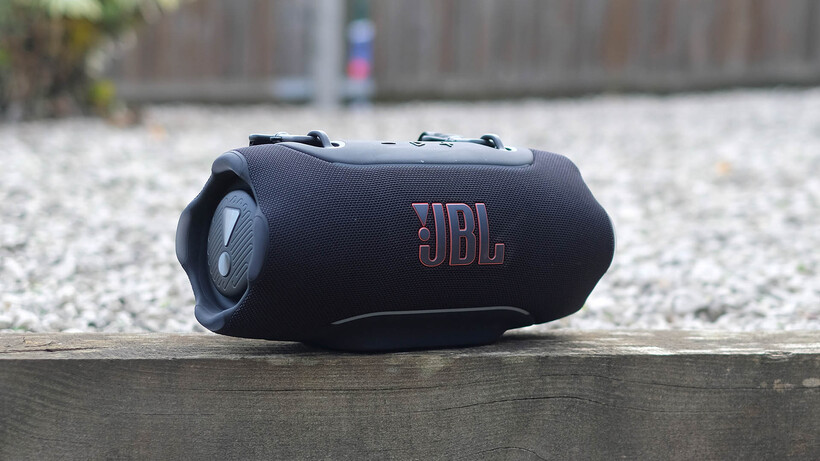
The JBL Xtreme 5 design, and that of its predecessors, is based around two massive passive radiators — one on each end. These help max-out bass production in smaller speakers, and leave the Xtreme with a shape not unlike a conga drum laid on its side.
Image Credit (Trusted Reviews)
It’s a fairly large speaker, but is still designed to be carried around, using the tough metal shoulder strap mounts on the top. Water resistance is excellent too, rated at IP68. This makes it an ideal poolside companion.
Much of the JBL Xtreme 5’s outer is a tough nylon fabric weave covering a plastic sub-frame, while the top panel and bottom foot have a rubbery finish.
Image Credit (Trusted Reviews)
There’s not a huge arount of metal here, but the strap mounts are metallic, as is the lettering of the JBL logo and the mildly obnoxious exclamation mark signs of the passive radiators’ outer.
Advertisement
Advertisement
As I’ve already said, this sort of bold teenage-baiting style isn’t my thing, but JBL’s execution of the idea is good. Each end of the Xtreme 5 also has tough rubbery feet, should you not have the room to let it sit lengthwise.
This year’s big change is LED lighting. Two thin strips of LEDs live at the bottom of the rubbery control panel, and where the speaker’s foot meets the nylon weave. These can be as subtle or obnoxious as you like, and are controlled using the JBL Portable phone app.
Image Credit (Trusted Reviews)
They are multi-colour LED strips, so can be plain white if you like, or can switch through tones using one of a few animated presets. Most have some form of animation to the light if it’s turned on, but the Freeze setting lets you pick a single, solid colour, for some less attention-grabbing mood lighting.
Features
Bluetooth Auracast
USB-C lossless tranmission
Replaceable battery
One of the JBL Xtreme series characteristics I’ve admired is how JBL has kept this series a largely focused, simple speaker. It’s a Bluetooth unit, not one that tries to pack in all sorts of smart features or multi-room streaming extras. They have offered in the larger Boombox series in the past.
Advertisement
That’s true once more, but JBL has still managed to cram in some neat extras.
Advertisement
As in previous years, there’s stereo pairing, and you can use the battery as a power bank. JBL earns bonus points for covering the battery slot with a panel held in place with a couple of TX screws for easier replacement.
Image Credit (Trusted Reviews)
Newer parts include Bluetooth Auracast and USB audio. You can easily plug the Xtreme into a laptop or PC, for fuss-free lossless audio transmission. This could be great for, picking a scenario out of the air, using it as the audio source for a projector setup while on a camping holiday.
Auracast is a technoloy that lets multiple devices receive audio from the single transmitter. It’s probably of more use for a couple of people who want to listen to TV or music with their own pairs of headphones, but can also be used as a more robust party mode — where you fling the same track over to a bunch of speakers.
Image Credit (Trusted Reviews)
Advertisement
It basically means companies like JBL no longer have to use their own proprietary multi-speaker pairing system, which is a pro-consumer move.
Battery life is rated at 24 hours, and while that won’t stand if you’re using at maximum volume to annoy everyone at the local park, it’s a long-lasting speaker nevertheless.
Advertisement
Sound Quality
40Hz bass floor
JBL Signature tuning
90W woofer
Within about five seconds of playing music through the JBL Xtreme 5 I could tell this speaker is just as special and capable and its predecessors, if not more so.
It manages the unusual feat of delivering the kind of bass depth and punch needed to satisfy someone out for a party speaker, while doing a frankly unlikely job of maintaining more navel gazing standards in other areas. It’s mostly about the JBL Xtreme 5’s unusually good mid-range coherence and clarity, in a category where one of the standard tactics is just to rely on pronounced bass and treble to provide thrills.
The factor I noticed within the first few seconds was how the JBL Xtreme doesn’t have over-emphasised mid bass and upper bass. I find this common-used audio thickening agent hangs off vocal like a sack of sodden clothing, and makes podcast voice lines sound as if there’s a weird bass resonance running underneath them.
Advertisement
Image Credit (Trusted Reviews)
There’s very little of that effect in the JBL Xtreme 5, and it does wonders for the separation of vocals, and the coherence of the sound in general.
It is by no means a bass light speaker, though. The JBL Xtreme 5’s low bass is particularly fun and lively for a speaker of its size. Its bass floor is rated at 40Hz suggesting it’s capable of some sub-bass rendering, and that’s pretty much what I hear here.
Advertisement
In the last Xtreme I reviewed I moaned about how JBL’s increase of the bass over the Xtreme 3 was to its detriment overall — from an audio snob’s perspective at least. But in this generation I think JBL has come up with a formula that really works for this line. It’s a classier kind of bass-heavy and fun sound signature, and that’s just what the JBL Xtreme 5 should have.
I’m talking about the default JBL Signature mode here, and there are a few others. Chill calms down the low-bass so you won’t keep people awake. It means the sound pulls less focus too. It’s a good “background music” mode.
Image Credit (Trusted Reviews)
Advertisement
JBL’s Energetic setting amps up the sound a little, with a little more spark than JBL Signature, but is far more reserved and usable than it might have been. Vocal predictably focuses on the mids, which doesn’t initially sound great when directly comparing to other modes, but could be useful for non-music content. There’s also a 7-band custom EQ mode.
No major surprise here. The JBL Xtreme series has always sounded better than you’d expect given it looks largely like a dumb party speaker, and the Xtreme 5 is no different. Nice work, JBL.
Advertisement
My main complaint is that the volume ceiling on this one is so high, single clicks of your phone’s volume control can bump the output up or down more than you want. The Xtreme 5 even enters an “AC” mode when plugged in, allowing for handful of extra decibels of volume. I don’t think it’s necessarily for most occasions, though. Battery power alone is powerful enough.
Should you buy it?
Buy if you want a top-quality larger portable speaker
It’s loud, it sounds great, and while it’s nowhere near JBL’s most portable speaker, the shoulder strap makes the Xtreme 5 comfortable to carry around.
Advertisement
Don’t buy if you want a subdued lounge speaker
Advertisement
While the sound quality stands up to its top peers, the Xtreme 5’s design is pretty loud, and in this generation LED-lit.
Final Thoughts
The JBL Xtreme 5 is one of the more unlikely-looking great-sounding wireless speakers. It can bring the good to the party when needed, but also has remarkably clean-sounding mids and great overall coherence.
Advertisement
It has been the calling card of this family for years now, but the JBL Xtreme 5 jazzes things up a little with a couple of customisable LED light strips and Bluetooth Auracast — which lets multiple speakers or headphones share the same stream.
Business as usual for the most part, then, but business is good.
Advertisement
How We Test
We test every wireless speaker we review thoroughly over an extended period of time. We use industry standard tests to compare features properly. We’ll always tell you what we find.
Advertisement
We never, ever, accept money to review a product.
Find out more about how we test in our ethics policy.
Tested for two weeks
Tested with real world use
FAQs
Is the JBL Xtreme 5 waterproof?
It has IP68 water resistance, good for most weather conditions and submersion in water.
Advertisement
Does the JBL Xtreme 5 have Wi-Fi?
This is a Bluetooth only speaker, but it supports Auracast for multi-speaker streaming.
Does the JBL Xtreme have an aux input?
Advertisement
There’s no classic 3.5mm aux input but you can plug in over USB for a cabled connection.
Full Specs
JBL Xtreme 5 Review
UK RRP
£329.99
Manufacturer
JBL
IP rating
IP57
Battery Hours
24
Size (Dimensions)
346 x 165 x 155 MM
Weight
2.9 KG
Release Date
2026
First Reviewed Date
28/05/2026
Audio Resolution
SBC, AAC, LC3
Driver (s)
Two 0.75-inch tweeters, 3.9 x 5.7-inch woofer, two 20mm tweeters, 98 x 145mm woofer
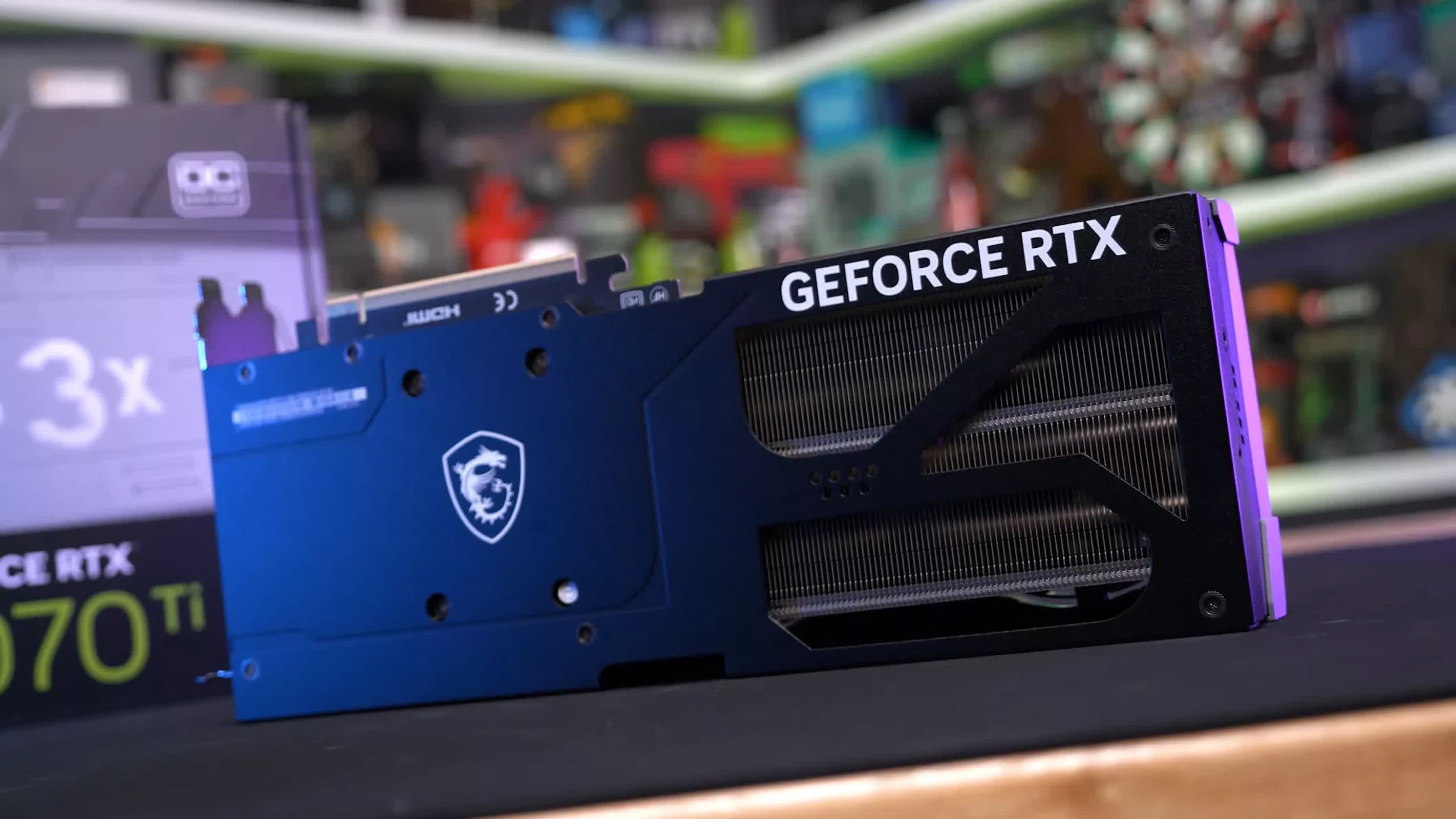
The big picture: Microsoft is easing one of the strict lines it previously drew around Copilot+ PCs, allowing more Windows 11 machines to run local AI workloads with the right GPU. An update shows that systems equipped with Nvidia RTX 30-series GPUs or newer, with at least 6GB of VRAM, can now support Windows’ local language model APIs. On paper, it’s a small, developer-only tweak, but it suggests Microsoft may be rethinking how tightly it ties on-device AI to Copilot+ branding.
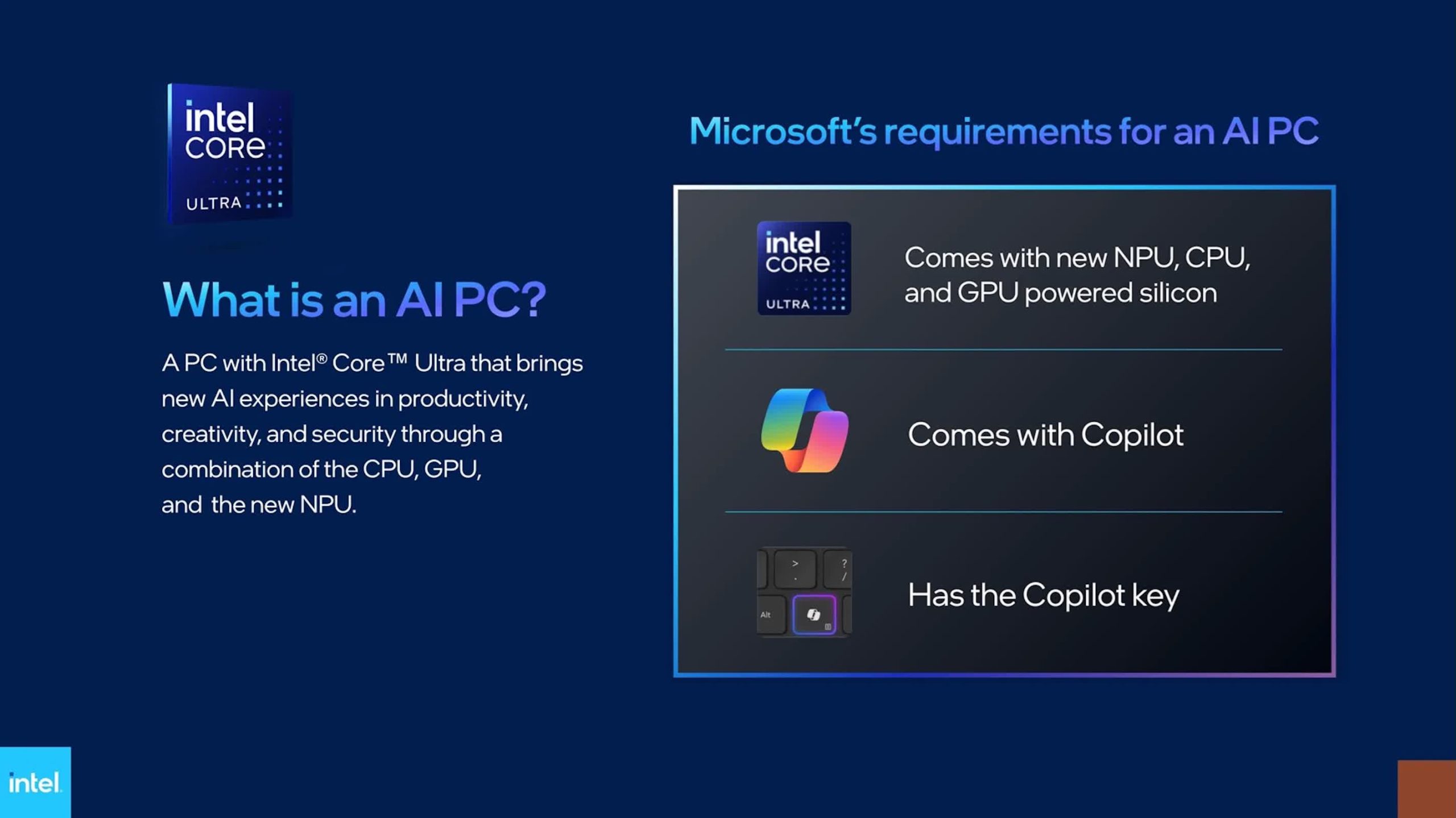
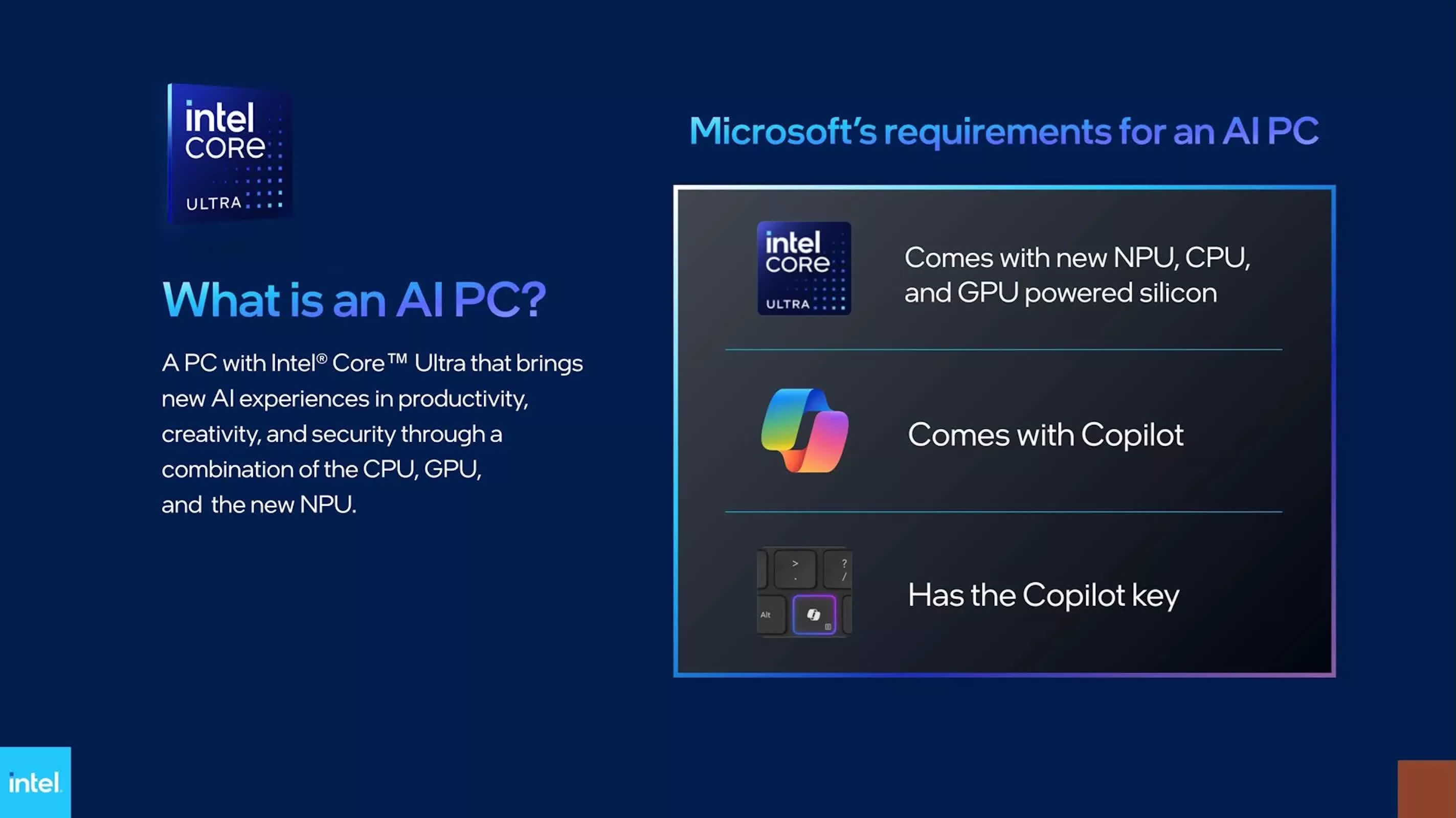
When Copilot+ PCs launched on June 18, 2024, the messaging was clear: dedicated AI hardware was essential. These machines were defined in part by their neural processing units, along with baseline specs such as 16GB of RAM and solid-state storage. The NPU requirement, in particular, was positioned as the key to unlocking local AI features in Windows.
But NPUs are not the only chips capable of handling AI workloads. GPUs, especially modern ones, are built for heavy parallel processing and have long been used to run machine learning models. In practical terms, they can offer more raw throughput for many AI workloads than today’s NPUs, though typically at a higher power cost.
Until now, Microsoft had kept most of its built-in AI features tied to NPU-equipped devices. That left many powerful GPU-based PCs unable to access local text and image generation, as well as features like Windows Recall and other AI tools.
Advertisement
Now that gap is starting to close. In updated documentation and a GitHub post, Microsoft confirmed that developers can now run language model APIs on non-Copilot+ PCs using supported GPUs.
The company described the feature this way: “Language Model APIs on GPU [Experimental]. The Language Model APIs now run on non-Copilot+ PCs equipped with a supported GPU, bringing local language model capabilities to a broader range of Windows 11 devices.” It also specified that “supported hardware includes NVIDIA GeForce RTX 30 series and newer with 6+ GB VRAM.”
For now, this capability is still tucked inside the developer layer rather than exposed directly to everyday users. Running these APIs requires building or using applications that tap into the Windows AI framework. Still, it sets the stage for local AI to reach a much wider range of Windows machines.
At the center of this is a small on-device model called Phi Silica. Instead of being pre-installed on all systems, it can be downloaded through Windows Update when an app requires it. Once installed, the model runs locally on the machine’s hardware, using the GPU when available.
Advertisement
The current feature set is focused on text-based tasks. Through the Windows.AI.Text APIs, apps can summarize content, rewrite text, convert text into structured formats, and generate prompts. The functionality is similar to what users might expect from cloud-based AI tools, but it all runs locally on the device.
Running everything locally has practical benefits. It reduces reliance on cloud processing, which can improve responsiveness, and keeps data on the machine rather than sending it to external servers. For developers and enterprise users, that could make a meaningful difference in how AI features are adopted.
Still, the rollout is partial. Some of the more visible Copilot+ features, including Windows Recall and Click to Do, remain tied to systems with NPUs. GPU support, at least for now, is limited to the language model API layer rather than the broader suite of AI integrations.
Even with those limits, the trend is hard to miss. Microsoft is no longer treating NPUs as the only path to local AI on Windows. Letting GPUs take on these workloads broadens the pool of compatible hardware and makes Copilot+ PCs feel less exclusive than they did at launch.























































You must be logged in to post a comment Login