Management of a business in Australia, especially in a rapidly evolving hub like Sydney, comes with its share of challenges. Whether you run a boutique agency in Surry Hills, a logistics company in Alexandria, or a retail chain with points of sale in NSW, one thing remains constant: clients’ time, efficiency, and confidence are all.
But here is the verification of reality: many companies are still working with spreadsheets, numerous email lines, and discreet applications that do not communicate. What is the result? Squandered hours, irate employees, and lost chances.
This is where the right technology partner makes a difference. And more importantly, this is where Zoho experts in Sydney come in. They don’t come as “software installers,” but as problem-solvers who understand both your business culture and the tools that can transform it.
Working with a trusted Zoho company Sydney means you’re investing in more than just software—you’re investing in strategy, efficiency, and growth.
Advertisement
Why Zoho Resonates With Australian Businesses?
Zoho is not a “household name” like Microsoft or Google, but it has quietly earned the reputation of being one of the most agile and affordable platforms in the world. With 90+ million users across the globe, it’s utilised in more than 180 nations.
In Australia, adoption of cloud computing is prevalent among small and medium-sized businesses (SMEs). Why? Because SMEs require systems that are:
Advertisement
Accessible: Licenses are a fraction of what traditional corporate software costs.
Scalable: You can start with a small scale and grow as the business expands.
Customisable: It does not hold it in rigid processes.
Imagine Zoho as a business toolkit. If you ever require CRM, finance, HR, customer support, or even analytics, there’s a corresponding Zoho application. But the toolkit only works wonders when you know how to use it. That’s where Zoho experts Sydney come in.
The Distinct Value Sydney-Based Zoho Experts Provide
So, why are Sydney experts so different? Let’s get to the bottom of it.
1. Local Knowledge + Global Tools
Zoho is a world product, but Australian businesses have specific compliance and market requirements. For example:
GST reporting is mandatory.
Fair Work laws impact HR structures.
Privacy and data regulations under the Australian Privacy Act are rigid.
A local Zoho company Sydney gets these subtleties. They’ll implement workflows that check compliance boxes without you having to second-guess all the time. A generic offshore consultant may implement a CRM, but do they have any idea how to integrate that with Xero or MYOB to manage BAS reporting? Unlikely.
Sydney specialists fill in that gap: global technology, local understanding.
2. Tailored Customisation for Real Problems
Off-the-shelf software never exactly fits. Suppose you’re a construction company based in Sydney. You don’t require merely “tracking of sales leads”—you require project tracking, contractor management, and scheduling of invoices, all interconnected.
Advertisement
This is where Zoho developers Australia excel. They create custom modules that map your reality. Rather than trying to shape your business into the tool, they shape the tool into your business.
One such mid-sized law firm in Sydney’s CBD did just that. Their issue? Coordinating client cases across various practice areas. With Zoho customisation, case files, client billing, and compliance records all reside in one single centralised dashboard. The result? Lawyers wasted less time searching for documents and more time serving clients.
3. AI That Works for You
We can’t discuss business today without referring to AI. But let’s be clear: AI is not necessarily chatbots or science fiction babble. In Zoho’s universe, it’s down-to-earth.
With Zoho’s AI assistant Zia, Sydney businesses can:
Advertisement
Forecast sales patterns: Who’s likely to purchase this quarter?
Analyse customer sentiment: Are emails positive or negative?
Identify anomalies: Are expenses skyrocketing suddenly in one department?
But technology is only as effective as it is implemented. A Zoho development company makes sure that Zia learns from your business data—not about generic trends.
For instance, a Sydney online retailer implemented Zia within their CRM. The AI picked up on the fact that repeat buys declined after 60 days. Knowing that, the retailer ran a targeted campaign at day 50 and saw repeat sales increase by 25% in one quarter.
That’s AI going from “buzzword” to bottom-line impact.
4. Smarter Use of Resources
Engaging an in-house IT staff can be costly. For SMEs, it’s typically unrealistic. Having a Zoho company Sydney partner means you have expert-level support without the overhead.
Rather than paying tens of thousands for salaries and benefits, you pay for expertise when you need it. And since these experts work across industries, they bring the best practices you may never have thought of.
Advertisement
5. Seamless Integration
All Australian businesses already use tools such as Xero, Slack, Mailchimp, or Microsoft Teams. The issue is that these tools exist in silos. Zoho does them all.
But integration isn’t necessarily a matter of clicking “connect.” It’s a matter of getting data to flow smoothly, securely, and in a manner that benefits your team. Local experts are familiar with which integrations Australian companies actually employ and how to implement them without downtime.
Case Study: From Chaos to Clarity
Consider the case of a logistics company in Sydney. They had several dozen spreadsheets, a bunch of different communication apps, and a finance team suffocating with manual invoices. The leadership was aware that change was needed.
With the expertise of Elsner Technologies See their guide:Zoho CRM Implementation Guide for Sydney Startups. They implemented a coordinated system of tools aimed at streamlining workflows, minimizing errors, and boosting team productivity. They introduced:
Advertisement
Zoho CRM for managing clients.
Zoho Books is integrated with Xero for accounting.
Zoho Projects for tracking delivery.
Within six months, invoicing mistakes fell by 70%, turnaround time on customer inquiries was improved by 40%, and employees reported much less stress.
The investment paid for itself, and then some—it revolutionised their culture.
The Role of AI in Future-Proofing
Let’s zoom in once more on AI. Australian businesses are under ever-increasing pressure to get more out of less. AI can assist, but only if used properly.
Zoho’s AI capabilities enable Sydney businesses to:
Prediction Demand: Retailers may predict seasonal peaks.
Enhance HR: Spot employee churn risks before they become resignations.
Customer Support: Automatize FAQs, freeing the human team to handle complex issues.
The key is the implementation strategy. With Zoho developers Australia guiding the process, AI tools become reliable co-pilots—not confusing add-ons.
Why Sydney Businesses Prefer Local Partnerships
Sydney’s business ecosystem is diverse and fast-paced. Local experts bring:
Advertisement
Quick response time: You’re not waiting overnight for a fix.
Face-to-face consulting: Occasionally, issues are best addressed in person.
Comprehension of market dynamics—Sydney clients need speed, quality, and professionalism.
These elements make local knowledge priceless.
Advertisement
Choosing The Right Zoho Partner
Choosing a Zoho company in Sydney involves a few essentials:
Certification: Are their developers Zoho-certified?
Experience: Can they produce Sydney/Australian case studies?
Support: Do they offer ongoing maintenance or simply set-and-forget?
Innovation: Do they include AI and automation, or merely simple setups?
Elsner Technologies: A Highly Experienced Zoho Partner in Australia
One of the top names in this category is Elsner Technologies. With over 19 years of experience, they have completed 9,500+ projects and served more than 6,500 customers worldwide.
In Australia, they’ve established themselves as more than implementers. They’re strategic allies, assisting organisations in leveraging Zoho not only as software but as an engine for growth.
Highlights are:
Global Recognition: 4.8 Clutch rating, 99% job success on Upwork.
Local Focus: Specially crafted services for the local Australian market.
When you combine Zoho’s muscle with Elsner’s intelligence, you not only digitise the processes, but also future-proof them..
Final thoughts
Finally, what Australian companies need is straightforward: fewer headaches, happier customers and more sustainable growth. That’s precisely the differentiated value Zoho experts Sydney provide.
Advertisement
By fusing local insights with worldwide tools, they build systems that actually function in real-world environments. From compliance to AI, from cost savings to scalability, their reach goes far beyond software.
And when you join forces with a seasoned Zoho company Sydney, such as Elsner Technologies, you’re not only keeping pace—you’re gaining ground.
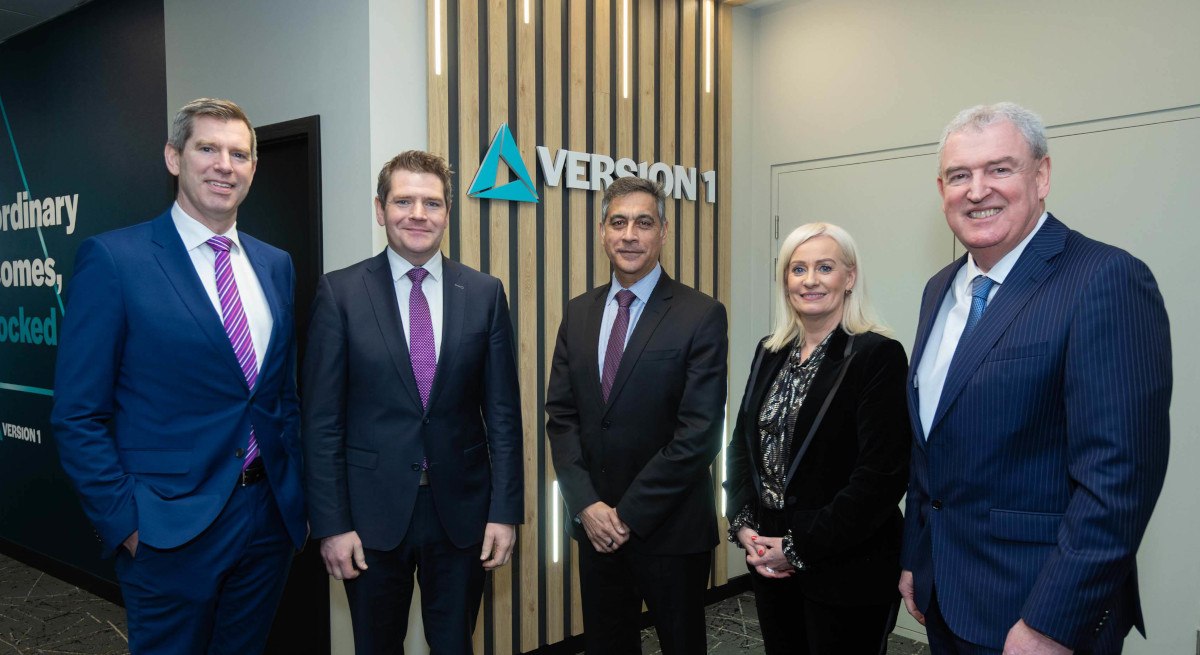
Version 1 says it has chosen its new Dublin HQ for its ‘state-of-the-art AI Studio’ and will add 250 roles locally.
The new HQ at Four Park Place in Dublin will see it become neighbours to Apple when they officially open their new Dublin offices later this year, and sees the Irish technology provider reach a headcount of some 3,700 globally.
The Dublin jobs news follows an announcement earlier this month at the UK-Ireland Summit that it would create 1,000 jobs across the UK and Northern Ireland, as part of its plans to invest £40m into the UK market over the next few years.
Version 1 was founded in Dublin in 1996 and offers a range of technology services to global organisations. It has other key hubs in London, Edinburgh and Belfast, but has chosen Dublin for its AI studio as it focuses in on AI. At the summit, it said the majority of the 1,000 UK roles would also be AI-focused, and around 400 of the roles would be in Northern Ireland.
Advertisement
“This is more than an office opening. It is a statement of intent,” said Roop Singh, CEO of Version 1. “30 years ago, Version 1 was founded in Dublin with a commitment to making technology deliver extraordinary business outcomes and citizen welfare. That commitment has not changed, but the scale and ambition have.
“Our principal belief is that AI enhances human capability, it does not replace it. This studio is where we will prove that, working alongside our customers and communities to build AI solutions that are practical, governed and grounded in real business outcomes.”
“Version 1’s continued growth and investment in Ireland is a powerful example of an Irish company winning on the global stage,” said Kevin Sherry, executive director at Enterprise Ireland, which has worked closely with Version 1 to support international growth. “The opening of this AI Studio positions Ireland as a serious centre for AI innovation and reinforces our ability to develop and retain world-class technology talent.
“Ambitious companies like Version 1 embody Enterprise Ireland’s mission that Irish-owned, globally-focused companies will be the primary driver of our economy,” he added.
Advertisement
Version 1 says the AI Studio has been designed as a space to “harness the power of technology by co-creating solutions to complex problems alongside customers from all sectors”, and added that it will be available to schools, universities and community groups in an effort to “democratise” technology. Version 1 says AI must “carry a social licence and be developed responsibly”.
The opening was attended by Minister for Enterprise, Tourism and Employment Peter Burke, TD who described Version 1 as “a blueprint for how Ireland creates, retains and scales world-class technology companies”.
“This new headquarters represents significant inward investment in Ireland’s economy and talent base and cements our position as a premier hub for AI and business transformation services at a time when nations are competing for AI leadership,” he said.
Minister of State for Trade Promotion, Artificial Intelligence and Digital Transformation Niamh Smyth, TD also attended the launch and said it was Ireland’s ambition to be “at the forefront of responsible AI adoption”.
Advertisement
“Version 1’s new AI Studio demonstrates what is possible when Irish enterprise combines deep technical expertise with a genuine commitment to community partnership and skills development,” she said.
Don’t miss out on the knowledge you need to succeed. Sign up for the Daily Brief, Silicon Republic’s digest of need-to-know sci-tech news.
The excitement is building with NASA now just a few days away from sending four astronauts on a voyage around the moon.
On Wednesday, the space agency shared its schedule for coverage of the final buildup and main event, including a Q&A with the astronauts this Friday, blast off on Wednesday, April 1, and regular updates as the crew make their way to the moon.
Americans Reid Wiseman, Victor Glover, and Christina Koch, together with Canadian Jeremy Hansen, will leave the launchpad aboard an Orion spacecraft carried skyward by NASA’s massive Space Launch System (SLS) rocket.
They’ll spend several days in Earth orbit checking the spacecraft’s systems before heading toward the moon. They won’t land on the lunar surface, but instead fly around it on a journey that will take humans farther from Earth than at any time since the Apollo era more than five decades ago.
Advertisement
Below is a summary of the events linked to the upcoming Artemis II mission. All times are Eastern Time (ET):
Friday, March 27
2:30 p.m.: The Artemis II crew will arrive at the Kennedy Space Center for a Q&A session with the press. NASA chief Jared Isaacman will also be in attendance, along with CSA (Canadian Space Agency) president Lisa Campbell.
Sunday, March 29
Advertisement
9:30 a.m.: The Artemis II crew will spend some time answering additional media questions, but this time virtually, from their quarantine facility.
2 p.m.: NASA officials linked to the mission will hold a status update on preparations for the Artemis II launch.
Monday, March 30
5 p.m.: Following a key mission meeting, NASA will host a news conference to provide a status update on preparations for launch.
Advertisement
Tuesday, March 31
1 p.m.: The space agency will hold a prelaunch news conference on the countdown status.
Wednesday, April 1
7:45 a.m.: Coverage begins on NASA+ of the tanking operations to load propellant into the SLS rocket. The livestream will include various views of the rocket and commentator analysis.
Advertisement
12:50 p.m.: NASA+ begins the official livestream for the much-anticipated launch, which is targeted for no earlier than 6:24 p.m. Following liftoff, coverage will continue on YouTube after Orion’s solar array wings deploy in space.
Around two-and-a-half hours after launch, and after the SLS rocket’s upper stage has performed a burn to send Orion and its crew to high-Earth orbit, NASA will hold a news conference to offer an update on the mission. The start time could change, depending on the precise liftoff time. In fact, the entire schedule could change, according to how the final preparations proceed. NASA will post any developments on its X account.
For information on the timing of daily updates during the mission, including live link-ups with the crew, check out NASA’s full schedule.
Okay, so the U.S. and China are locked in an all-out race to build the most powerful AI on the planet. Beijing is throwing billions at homegrown models, tightening its grip on the tech sector, and watching nervously as its best AI talent gravitates to U.S. companies. A Carnegie Endowment study published late last year found that 87 of the 100 top Chinese AI researchers at U.S. institutions in 2019 are still there.
Yet Manus — one of China’s most buzzed-about AI startups — quietly relocated to Singapore and sold itself to Meta for $2 billion. Did anyone think there would not be a reckoning over this tie-up?
As industry watchers know, Manus burst onto the scene in the spring of last year with a demo video showing an AI agent screening job candidates, planning vacations, and analyzing stock portfolios, and it cheekily claimed it outperformed OpenAI’s Deep Research. Within weeks, Benchmark — the consummate Silicon Valley venture firm — led a $75 million funding round at a $500 million valuation. That was surprising. (Senator John Cornyn had thoughts, tweeting at the time, “Who thinks it is a good idea for American investors to subsidize our biggest adversary in AI, only to have the CCP use that technology to challenge us economically and militarily? Not me.”)
By December, Manus had millions of users and was pulling in over $100 million in annual recurring revenue. Then Meta came calling, and Mark Zuckerberg, who has staked the company’s future on AI, snapped it up for $2 billion.
Advertisement
It’s worth noting that Manus didn’t just sell itself to an American buyer; it spent the better part of last year actively trying to operate outside China’s orbit. The company relocated its headquarters and core team from Beijing to Singapore, restructured its ownership, and after the Meta deal was announced, Meta pledged to cut all ties with Manus’s Chinese investors and shut down its operations in China entirely. By every measure, Manus was trying to make itself a Singapore company.
But if that string of events raised eyebrows in Washington, you can only imagine that in Beijing, they were apoplectic.
China has a phrase for all of this: “selling young crops” — homegrown AI companies that move abroad and sell themselves to foreign buyers before they’ve fully matured, taking their intellectual property and talent with them.
Techcrunch event
Advertisement
San Francisco, CA | October 13-15, 2026
Beijing hates it and has spent years establishing that no company operates outside its reach. Surely, we all remember that time Jack Ma gave a speech in 2020, mildly criticizing Chinese regulators, after which he disappeared from public life for months, Ant Group’s blockbuster IPO was killed overnight, and Alibaba was handed a $2.8 billion fine. China then spent the next two years methodically dismantling its own booming tech sector, wiping out hundreds of billions in market value. Chinese leaders are many things, but subtle is not one of them.
Advertisement
Which is why it wasn’t entirely surprising when, on Tuesday, the Financial Times reported that Manus co-founders Xiao Hong and Ji Yichao were summoned to a meeting this month with China’s National Development and Reform Commission and told that they wouldn’t be leaving the country for a while. No formal charges have been filed — just an inquiry into whether the Meta deal violated Beijing’s foreign investment rules.
Beijing is calling it a routine regulatory review.
At some point, someone at Manus probably thought they’d gotten away with it, and maybe they still will. But given the stakes of the AI race, that was always a big gamble. Now Beijing wants answers; Manus’s founders are apparently not going anywhere until it gets them.
GitHub is adopting AI-based scanning for its Code Security tool to expand vulnerability detections beyond the CodeQL static analysis and cover more languages and frameworks.
The developer collaboration platform says that the move is meant to uncover security issues “in areas that are difficult to support with traditional static analysis alone.”
CodeQL will continue to provide deep semantic analysis for supported languages, while AI detections will provide broader coverage for Shell/Bash, Dockerfiles, Terraform, PHP, and other ecosystems.
The new hybrid model is expected to enter public preview in early Q2 2026, possibly as soon as next month.
It is available for free (with limitations) for all public repositories. However, paying users can access the full set of features for private/internal repositories as part of the GitHub Advanced Security (GHAS) add-on suite.
It offers code scanning for known vulnerabilities, dependency scanning to pinpoint vulnerable open-source libraries, secrets scanning to uncover leaked credentials on public assets, and provides security alerts with Copilot-powered remediation suggestions.
The security tools operate at the pull request level, with the platform selecting the appropriate tool (CodeQL or AI) for each case, so any issues are caught before merging the potentially problematic code.
Advertisement
If any issues, such as weak cryptography, misconfigurations, or insecure SQL, are detected, those are presented directly in the pull request.
GitHub’s internal testing showed that the system processed over 170,000 findings over 30 days, resulting in 80% positive developer feedback, and indicating that the flagged issues were valid.
GitHub also highlights the importance of Copilot Autofix, which suggests solutions for the problems detected through GitHub Code Security.
Advertisement
Stats from 2025 comprising over 460,000 security alerts handled by Autofix show that resolution was reached in 0.66 hours on average, compared to 1.29 hours when Autofix wasn’t used.
GitHub’s adoption of AI-powered vulnerability detection marks a broader shift where security is becoming AI-augmented and also natively embedded within the development workflow itself.
Malware is getting smarter. The Red Report 2026 reveals how new threats use math to detect sandboxes and hide in plain sight.
Download our analysis of 1.1 million malicious samples to uncover the top 10 techniques and see if your security stack is blinded.
Photo credit: WSJ Few pieces of furniture have earned a place in both design history and everyday luxury quite like the Eames Lounge Chair. The Wall Street Journal recently got a rare look inside the MillerKnoll factory in Zeeland, Michigan, where every authentic example is still assembled by hand, walking the production floor from raw wood all the way through to finished chair and making it very clear why each one carries a price tag somewhere between five and ten thousand dollars.
It starts with thin sheets of veneer cut from sustainably grown walnut or cherry. Workers layer seven of them together with glue, alternating the grain direction with each sheet before a hydraulic press applies heat and pressure until the wood begins to take on the chair’s distinctive curves, forming the seat, back, and headrest that make the design instantly recognizable. Once cooled, the molded pieces move to a computer guided cutter that trims everything to the correct dimensions. Because the wood itself dictates the final appearance, no two chairs ever come out looking exactly the same.
Reclining Swivel Chair and Ottoman: This chair and ottoman set is just right for a modern office, den, or living room. A recline feature makes this…
Memory Swivel Base & Adjustable Headrest: Stable 4-prong metal base features memory return that spins back to your original position after you get up…
100% Top Grain Leather: The finest hide portion, extremely durable for high-use chairs, adding sophistication to any room. Over time, it molds to your…
Every edge is then hand sanded, with workers running their fingertips along each surface to catch anything the machines might have missed. A coat of linseed oil goes on next, brushed in and left to soak, protecting the wood and deepening its color gradually over time. While that is happening, the metal components are being prepared, polished aluminum spines and bases that are as refined as anything else on the chair. The hardwood shells are then fastened to the frames with small spacers that keep everything locked in place and silent. It is a lengthy process by design, because a single misaligned hole or loose screw is enough to throw the whole thing off balance.
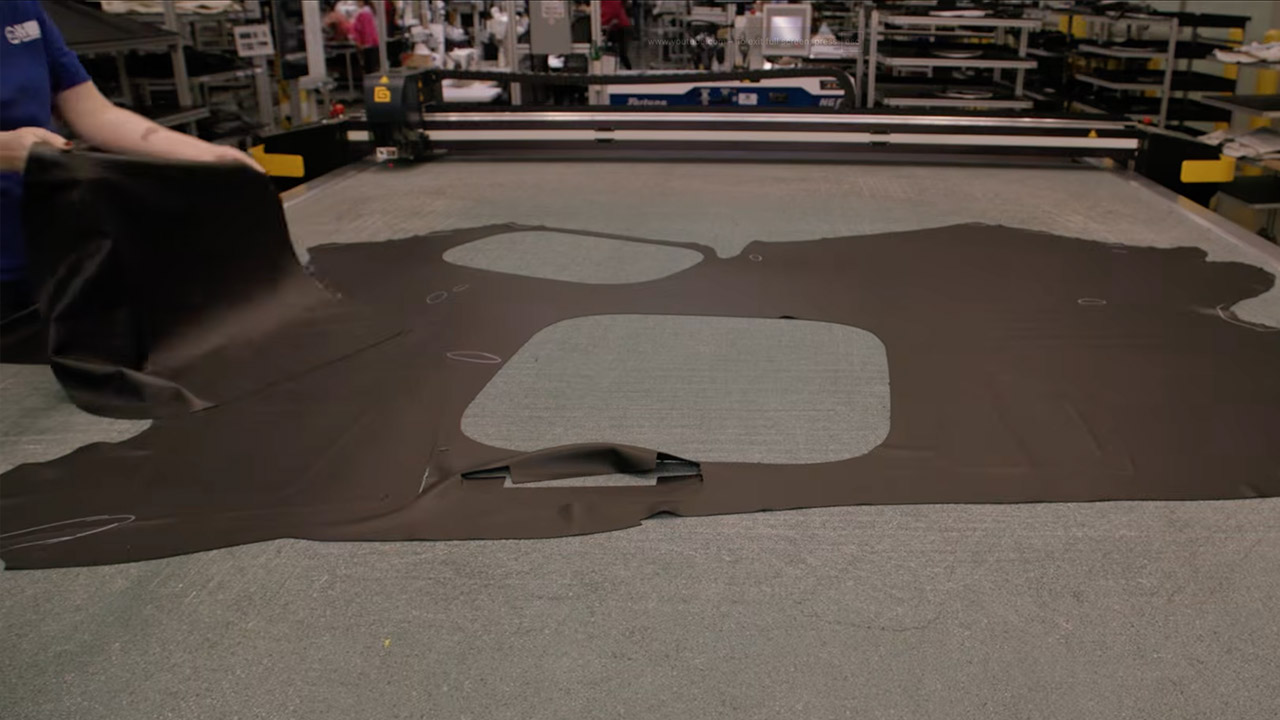
Upholstery takes place in a different area of the plant, where leather hides are pre-selected for uniform thickness and color before being dispatched to the cutting stations. Workers lay out patterns on each hide and cut them by hand using sharp knives, after which stitchers wrap and sew the covers around cushions filled with down and foam. The leather is pushed taut to flow smoothly over the chair’s curves with no creases. Each final cushion hooks onto its plywood shell using hidden fasteners, allowing owners to replace the covers decades later if necessary.
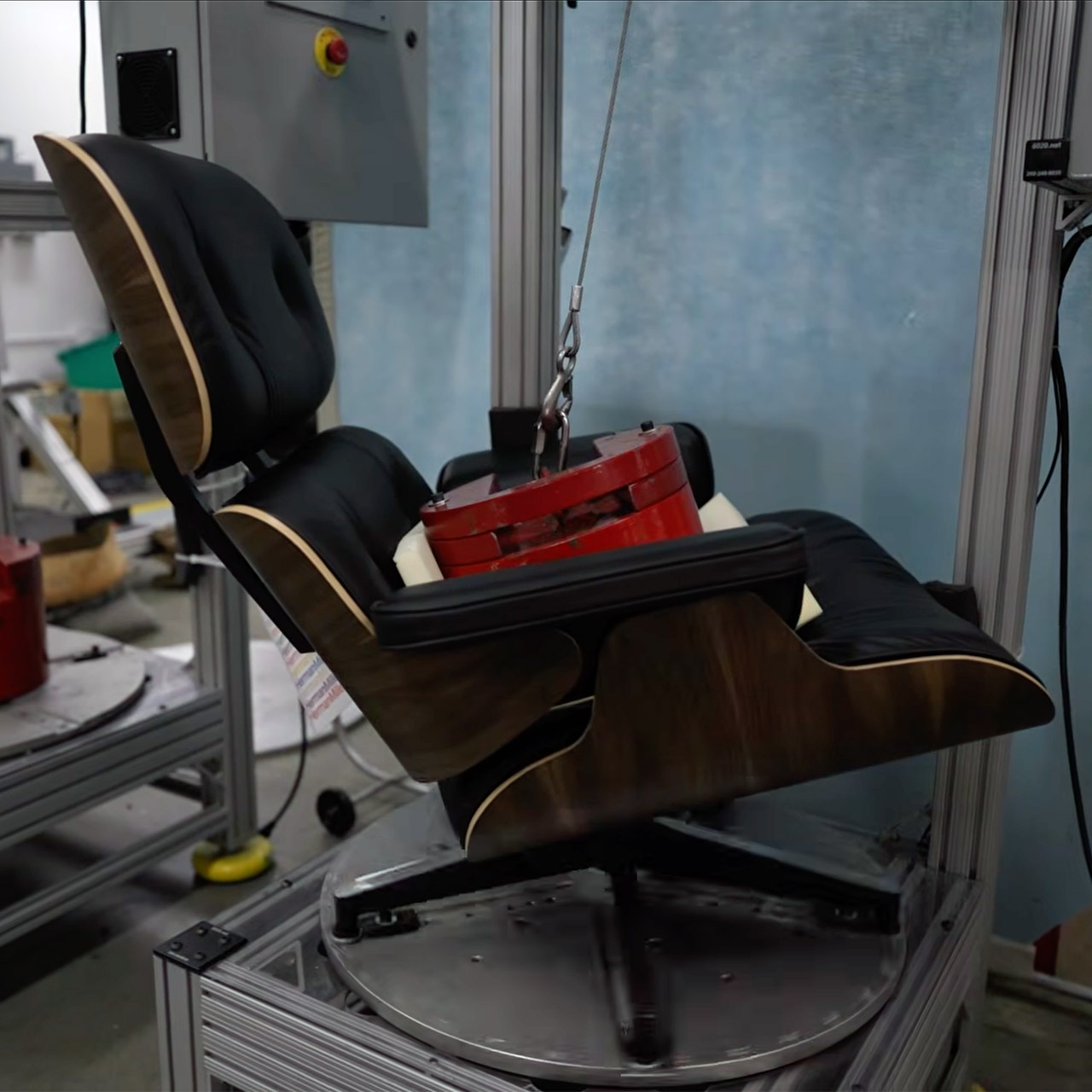
Quality control is strict, with each chair passing through a separate testing lab where Kyle Wright spends his days attempting to break them. In just a few hours, one machine rotates the base a hundred thousand times, replicating a decade of daily use. Another device presses down on the seat and back with weights that simulate the load of a big person shifting about after years of frequent use. If anything creaks, loosens, or gives way, the entire batch is returned to the factory floor for repairs. Only the chairs that pass all tests receive the little Herman Miller emblem sewn discreetly inside. [Source]
Reports suggest Disney’s $1bn equity investment into OpenAI will not progress.
OpenAI is shutting down its controversial AI video generator Sora just months after announcing a multi-year licensing deal with Disney. The company told the BBC that the discontinuation will enable it to focus on other developments, such as robotics “that will help people solve real-world, physical tasks”.
Details on the timeline of the app’s shutdown, API and data preservation will be shared soon, OpenAI’s Sora team said in a post on X. “To everyone who created with Sora, shared it, and built community around it – thank you. What you made with Sora mattered, and we know this news is disappointing,” the post read.
The BBC further reported that following Sora’s closure, OpenAI will no longer focus on video-generation tools.
Advertisement
Video models such as Sora, its later iteration Sora 2 – which came with a social media app to share the AI content – as well as more recent ones such as ByteDance’s Seedance 2.0 have garnered strong criticism from artists and publishers who oppose to their copyrighted material being used to generate AI videos.
Meanwhile, Disney’s three-year partnership and licensing deal with OpenAI came after the company reportedly opted out of allowing its copyrighted material from being used by Sora.
The deal, announced in December 2025, gave OpenAI access to more than 200 Disney characters to be used by Sora and ChatGPT Images. Alongside the licensing agreement, Disney also agreed to make a $1bn equity investment in OpenAI. The investment has reportedly been scrapped.
Advertisement
“We respect OpenAI’s decision to exit the video generation business and to shift its priorities elsewhere,” a Disney spokesperson told news outlets.
“We appreciate the constructive collaboration between our teams and what we learned from it, and we will continue to engage with AI platforms to find new ways to meet fans where they are while responsibly embracing new technologies that respect IP and the rights of creators.”
To compete, OpenAI is building a new desktop ‘superapp’ by fusing together ChatGPT, Codex – the company’s coding tool – and Atlas, an AI-powered web browser launched last October.
Advertisement
“Sora was a resource black hole with strong compute costs and limited monetisation. The platform also struggled to prevent the creation of non-consensual imagery and realistic misinformation, not to mention major copyright infringement,” commented Forrester’s VP principal analyst Thomas Husson.
“In the context of its upcoming IPO, OpenAI likely decided to minimise the associated risks and prioritise profits and enterprise tools over experimental social apps, despite some consumer interest.
“Sora may be repurposed for some robotics and physical applications, but it is still very early days. At the end of the day, it highlights that OpenAI is still very far away from recouping its huge investments.”
Don’t miss out on the knowledge you need to succeed. Sign up for the Daily Brief, Silicon Republic’s digest of need-to-know sci-tech news.
3dfx Voodoo graphics accelerators are likely to remain a key part of retro modding projects and gaming ventures for years to come. The Voodoo chip is now almost perfectly emulated in several DOS-based emulators, such as DOSBox-X, and PC emulators like PCem and 86Box, while hardware modders continue developing their… Read Entire Article Source link
In addition to screen time, the type of school to attend, the content children consume and the food they eat, a new concern cropped up for parents over the last few years: Whether to keep their children back a year from entering kindergarten.
“Redshirting,” a reference to collegiate sports in which the athlete sits out a year to boost their skills, has crept into the decision making process for parents with children on the cusp of the age cut-off in kindergarten, usually age 6 in most states. Parents can either have the student as one of the oldest in their grade or among the youngest, with some believing holding their child back can help academic achievement.
But according to a new report, the practice is not becoming more widespread. It has hovered steady at around 5 percent, since the the 1990s and 2010s, The number reached 6.4 percent during the pandemic.
“One of the reasons we wanted to look into it is because we felt like everyone talks about it, but only 1 in 20 students actually do it,” says Megan Kuhfeld, director of modeling and data analytics at NWEA, an education research firm. “So why does it feel like everyone was considering it for their children?”
Advertisement
Kuhfeld hypothesizes the smaller, more vocal group of parents considering redshirting was amplified on social media, but when it came time to make the decision, outside factors – like paying for an extra year of child care, which is becoming more costly than ever — played a large role.
“It might seem that this is a good idea but it’s, ‘We’re on the hook for an extra $15,000 in child-care costs,’ which may not be practical for a lot of families,” Kuhfeld says, adding she expects redshirting to stay steady. “The types to consider it will likely continue to, but a lot of people consider it then decide it’s not practical for a lot of reasons.”
The NWEA study did find more young boys were likely to be kept back than girls, with white students more often than nonwhite students. In the 2021 year, there were also upticks in rural areas, jumping from 6.2 percent to 9 percent, and high poverty areas, jumping from 2.2 to 4.7 percent. That could be because child care is more affordable in smaller towns, or easier to find with a friend, family or neighbor.
Proponents of redshirting say it gives the child an academic and social advantage being an older kindergartner. However, the benefits generally are short-lived, according to the NWEA report. While children initially saw higher reading and math scores, equating to about 20 percent to 30 percent of a year of learning, those results evened out by third grade, when the children who entered kindergarten early catch up to the redshirters.
Advertisement
While children who started kindergarten later initially saw a large academic advantage in math and reading scores, by third grades, those gaps were filled.
Source: NWEA
There is at least one strong reason not to redshirt, according to the American Economic Association: Children who started kindergarten after 5 years old are more likely to drop out later on.
“People often focus on the short-term gains, but it’s important to keep in mind the perspective of what it means to be the older kid in class, where you turn 18 your junior year of high school,” Kuhfeld says. “It’s just keeping in mind these longer term outcomes and making the best decision for your child.”
Some states have begun pushing toward a forced redshirting of sorts. North Carolina public schools shifted its age cut off in 2007, requiring students to be 5 years old or older on Aug. 31, upping the date from a previous mid-October cut off.
Advertisement
Jade Jenkins, an associate professor of education at University of California, Irvine, found in a report that forced redshirting brought pros and cons. It helped math and reading scores in third through fifth grades, and students with forced delays into kindergarten also had a 4 percent increase of being identified as academically gifted. However, the same report found students had a 6 percent drop in disability identification. According to Jenkins’ research, it benefitted lower-income, white students but brought no benefit to Hispanic students.
“Is the valuation of the academic benefits of delayed entry higher than the costs of the hold-out year and the public costs of increased racial-ethnic achievement gaps? Future research can provide a more precise estimate of this calculation, but we find this unlikely,” Jenkins says in the report.
The latest redshirt debate is one of several parents surrounding kindergarten. Some state legislators are pushing for it to become mandatory across the nation, with others concerned about the dipping levels for kindergarten readiness. It has also become more academic-focused than ever, which in part spurred the latest NWEA study.
“We wanted to get this information out in an accessible way to have both the advantages and disadvantages, and not get caught up in blanket guidance,” Kuhfeld says.
Advertisement
“Especially in high socio-economic status schools and districts, there’s already an arms race by preschool to get situated for college, which is where a lot of this comes from,” she adds. “There’s this attitude of, ‘We have to take every avenue to get ahead’ and I don’t think that is healthy.”
The concept, known as a solid-state ornithopter, replaces the typical network of actuators with electricity-driven materials that deform when voltage is applied. This approach could represent a turning point for next-generation aerial vehicles, combining principles of aerodynamics, materials science, and biomechanics into a single design model. Read Entire Article Source link
Meta’s smart glasses are being used to film people in bathrooms, courts, and doctor’s offices. A new app just released on the App Store is the perfect example of safeguards should be implemented when Apple launches its smart glasses.
Meta Ray-Ban Display. Image source: Meta
The Apple Vision Pro isn’t exactly stealthy. Meta’s Ray-Bans are, and are being used mainly to violate other people’s privacy. I’ve already talked at-length about the issue with smart glasses. Especially if they’re glasses designed to be relatively unclockable at a distance. Continue Reading on AppleInsider | Discuss on our Forums






























































You must be logged in to post a comment Login