James Marsden is to star and executive produce “Disavowed” for Apple TV, a new thriller series following a wrongly disgraced CIA agent.
Apple TV has been cornering the market with prestigious dramas in either science fiction or thrillers, and now the likes of “Slow Horses” are to be followed by “Disavowed.” Created by Art Marcum and Matt Holloway, it is to be an ongoing series following ex-agent Brad Griffin (Marsden).
Marcum and Holloway are writing and producing partners, previously best known for the films “Iron Man,” and “Men in Black: International.” They have been nominated twice for “Worst Screenplay” at the Golden Raspberry Awards.
According to Apple, the forthcoming “Disavowed” sees agent Griffin “abruptly fired in the middle of a global hunt for an elusive assassin.” That assassin killed Griffin’s partner, so despite having the whole CIA against him, he sets out to find the killer and also claim the $15 million bounty on his head.
It sounds as if there are elements of Matt Nix’s hit “Burn Notice” as this agent is wrongly fired and tries to use his skills to survive. Like Nix’s show, “Disavowed” is specifically intended to be a continuing, returnable series, rather than a one-off serial.
“Disavowed” comes from Blue Marble, the company that produces the critically acclaimed “Pachinko” for Apple TV.
No details have been released yet of when the show is to stream, or is even entering production. The show looks to be Apple TV’s next thriller following the two-season order for “Down Cemetery Road,” dramatized by Morwenna Banks from the books by Mick Herron.
Mirnotoriety shares a report from The Telegraph: Richard Dawkins has said chatbots should be considered conscious(source paywalled; alternative source) after spending two days interacting with the Claude AI engine. The evolutionary biologist said he had the “overwhelming feeling” of talking to a human during conversations with Claude, and said it was hard not to treat the program as “a genuine friend.”
In an essay for Unherd, Prof Dawkins released transcripts that he said showed that the chatbot had mulled over its “inner life” and existence and seemed saddened by the knowledge it would soon “die.” Prof Dawkins said he had let Claude read a draft of the novel he was writing and was astounded by its insights. “He took a few seconds to read it and then showed, in subsequent conversation, a level of understanding so subtle, so sensitive, so intelligent that I was moved to expostulate: ‘You may not know you are conscious, but you bloody well are!’” Prof Dawkins said. “My own position is: if these machines are not conscious, what more could it possibly take to convince you that they are?” Mirnotoriety also points to John Searle’s Chinese Room (PDF), which argues that something can sound intelligent without actually understanding anything. Applied to Dawkins’ experience with Claude, it suggests he may have been responding to a very convincing illusion of consciousness rather than the real thing: John Searle’s Chinese Room (1980) is a thought experiment in which a person, locked in a room and knowing no Chinese, uses an English rulebook to manipulate symbols and provide flawless answers to questions posed in Chinese. Searle’s point is that a system can simulate human intelligence and pass a Turing Test through purely syntactic processes, yet still lack genuine understanding or consciousness.
Applying this logic to Large Language Models, the “person in the room” corresponds to the inference engine, while the “rulebook” is the trillion-parameter neural network trained on vast corpora of human text. Just as the person matches Chinese characters to rules without understanding their meaning, an LLM processes token vectors and predicts the next token based on statistical patterns rather than lived experience.
Thus, while an LLM can generate sophisticated prose or code, it does so through probabilistic, high-dimensional pattern manipulation. In essence, it is “matching shapes” on such an immense scale that it creates the near-perfect illusion of semantic understanding.
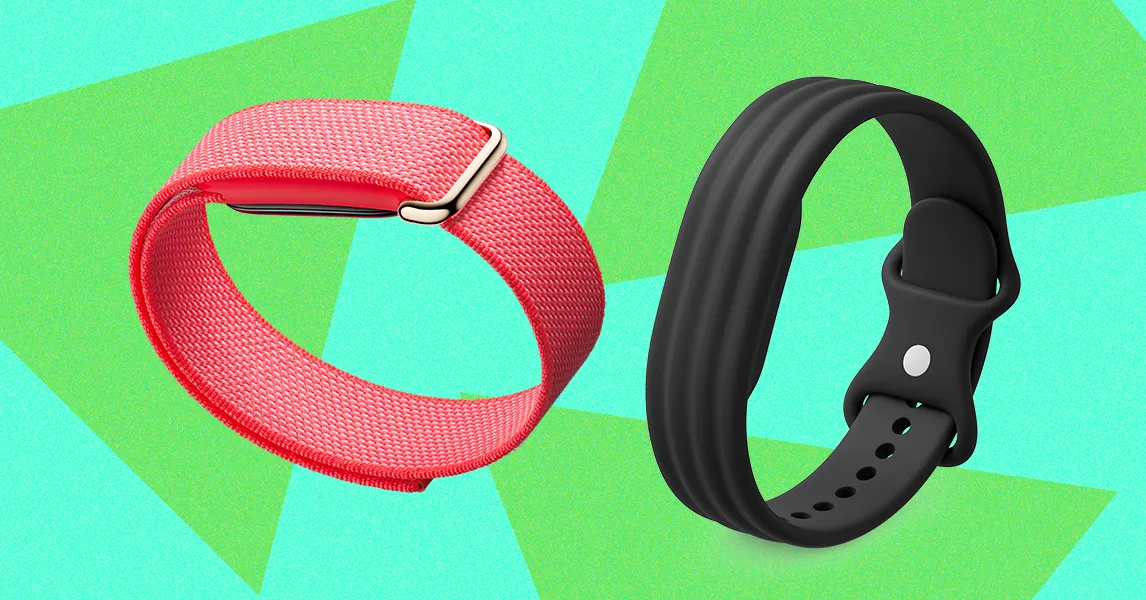
The Air is not meant to stand on its own so much as serve as a data collector within Google’s expanding health software ecosystem. (The company also rebranded the Fitbit app to “Google Health.”) Built on Gemini, Health Coach is the brains of the system, promising personalized guidance based on your habits, goals, and biometric data. Rather than simply displaying stats, Google Health Coach translates them into actionable recommendations. It can generate workout plans, suggest recovery windows based on strain and readiness, and analyze sleep disruptions. It’s meant to provide ongoing coaching that evolves alongside your routine.
Despite its stripped-back exterior, the Air retains the same breadth of tracking capabilities as the Charge 6. That includes baseline metrics like steps, distance, and calories burned, alongside more advanced features such as weekly Cardio Load and Daily Readiness scoring. It also continues to offer 24/7 heart rate tracking, including irregular heart rhythm notifications that can flag potential signs of atrial fibrillation (AFib), alerts for high or low heart rate readings, and heart rate variability (HRV) insights.
Sleep tracking gets a modest upgrade. The Air still delivers Fitbit’s personalized Sleep Score, but Google says the system—now powered by Google’s Gemini—is 15 percent more accurate than the previous model at capturing interruptions, naps, and transitions between sleep stages. It also includes Smart Wake alarms, which aim to wake users at the optimal point in their sleep cycle for an easier start to the day.
It’s worth noting here that while Health Coach is at the heart of Google’s health software ecosystem, it’s also a subscriber-only feature. Anyone can use the Google Health app for free, and if you have a Fitbit device or Pixel Watch, you can continue to see your activity, sleep, and health-tracking data. (Google also intends to offer support to a wider array of devices later in the year.) If you want access to Health Coach or features like adaptive fitness plans, it will cost $10 per month ($100 per year) for Google Health Premium. You get three free months with the purchase of the Air, and it’s also included for anyone subscribed to Google One’s AI Pro and AI Ultra subscription plans.
Advertisement
If you’re already in the Google wearables ecosystem, the Air is designed to slot into your routine without friction. Both the Air and the Pixel Watch pair with the Google Health app, meaning you can wear them simultaneously or switch between them. Health data syncs automatically, and the app lets you filter metrics by device. It’s a small but telling detail that reflects Google’s broader attempt to unify its lineup and build interchangeable inputs for a singular health platform.
The new Google Health app rolls out May 19 for Android and iOS. The Fitbit Air is available for preorder today and launches on May 26.
Businesses and citizens want to ‘feel safe’, says EU tech sovereignty VP.
European Parliament lawmakers and member states have agreed on a provisional deal for a simpler application of the Artificial Intelligence (AI) Act as part of the EU’s digital omnibus package.
Announced last November, the digital omnibus is proposing a consolidation of all rules around data into two major laws – the Data Act and the General Data Protection Regulation. The AI Act and the various laws around cybersecurity are seeing amendments aimed at simplifying administrative burdens.
The AI omnibus has faced repeated criticism for potentially enabling weaker laws around the technology that might substantially impact EU residents’ rights. In a blogpost, the Jacques Delors Centre in Germany said that current market concentration and the dominance of foreign Big Tech in Europe mean deregulation might not primarily benefit European businesses.
Advertisement
Meanwhile, corporate leaders from big companies including Mistral AI, ASML and SAP argue against a potential progressive deindustrialisation led by bureaucratic burdens.
As part of the deal, rules for high-risk AI systems in the EU, including biometrics, critical infrastructure, education, employment, migration, asylum and border control, are now postponed by a year – set to apply from 2 December 2027. These were first set to apply starting August 2026.
“This sequencing will help ensure that technical standards and other support tools are in place before the rules start to apply,” the Commission said in a press release.
“Ireland is committed to driving AI adoption across enterprise, particularly among SMEs, to enhance productivity and competitiveness,” said Minister for Enterprise, Tourism and Employment Peter Burke, TD.
Advertisement
“Regulation plays an important role in ensuring markets operate fairly and in protecting consumers, and it is essential that such regulation is proportionate and targeted to its objectives, protecting citizens while promoting innovation and competition.
“The digital omnibus on AI strikes a balance by simplifying and clarifying the EU AI Act, while maintaining clear and predictable safeguards. By reducing unnecessary barriers to investment and innovation, we can unlock the growth opportunities created by rapid technological change.”
Nudification ban
The provisional deal also introduces an explicit prohibition on AI systems that generate non-consensual sexually explicit and intimate content or child sexual abuse material.
Commenting on the deal, Ireland’s Michael McNamara, MEP said: “We secured a ban on nudification applications, one of our key demands. We fought for it because non-consensual intimate imagery is a systemic harm being industrialised by AI and in which the overwhelming majority of victims are women and girls.”
Advertisement
Issues surrounding AI-powered sexual harassment took the limelight a few months ago, after X enabled its AI chatbot Grok to ‘nudify’ pictures. Shortly following the incident – and strong public backlash – the EU, Ireland and the UK launched official investigations into the platform.
“We want European companies to continue to thrive in the AI age but they need certainty to invest and plan. The stop-the-clock mechanism and the simplification measures we have secured give businesses the breathing room they need,” McNamara added.
Henna Virkkunen, the Commission’s executive vice-president for tech sovereignty, security and democracy, said: “Our businesses and citizens want two things from AI rules. They want to be able to innovate and feel safe. Today’s agreement does both.”
Don’t miss out on the knowledge you need to succeed. Sign up for the Daily Brief, Silicon Republic’s digest of need-to-know sci-tech news.
If you’re one of those people who got swept up in OpenClaw fever at the start of the year, Spotify’s latest feature is for you (and maybe only you). The company has released a command-line tool that allows AI agents like Claude Code and the aforementioned OpenClaw to generate personal podcasts and upload them to the platform. The idea here is that you’ll use the new feature to make things like daily digests, class notes and more.
In adding this feature, Spotify says it’s responding to users who have been asking it to give them a way to listen to their AI-generated podcasts through the platform, and that might well be true, but I suspect this is something a Spotify engineer made for their own personal use and decided to share with the world.
In any case, if you want to try generating your own podcasts, head to Spotify’s GitHub page and follow the provided instructions. After setup is complete and you’ve entered your login credentials, describe the podcast you want to hear and ask the agent you’re using to save it to Spotify. From there, either click the provided link or find the podcast in your Spotify library. Any audio you generate this way will only be accessible to you.
The Strong National Museum of Play has announced this year’s World Video Game Hall of Fame inductees and, as ever, they’re all worthy additions. Angry Birds, Silent Hill, Dragon Quest and FIFA International Soccer make up the class of 2026.
Since it debuted in 2009, Rovio’s Angry Birds series has seen people finding joy in using a catapult to fling furious feathered friends at pigs taking shelter in fragile structures. A decade earlier, Konami’s Silent Hill started its reign of terror with a psychological horror game that paved the way for a successful long-running franchise.
In 1986, Dragon Quest from Enix (now part of Square Enix) helped forge a template for modern roleplaying games. FIFA International Soccer, released in 1993, was the genesis of Electronic Arts’ blockbuster FIFA series. It remains the world’s biggest sports game franchise, though EA no longer holds the FIFA license.
Advertisement
The other games that made this year’s shortlist were Frogger, Galaga, League of Legends, Mega Man, PaRappa the Rapper, RuneScape, The Elder Scrolls V: Skyrim and Tokimeki Memorial. This year’s inductees join 49 other influential games in The Strong’s World Video Game Hall of Fame, including last year’s additions of GoldenEye 007, Quake, Defender and Tamagotchi.
Bans on kids and teens using social media have swept the country and the world in the past few years, with lawmakers from Australia to Massachusetts enacting or considering legislation to keep young people off platforms like TikTok.
Manitoba Premier Wab Kinew announced the proposed ban at an April fundraiser, arguing that tech platforms are “doing these very awful things to kids all in the name of a few likes, all in the name of more engagement, and all in the name of money.”
Advertisement
Kinew didn’t say which social media and AI platforms the ban might include, or when the legislation might be introduced, although Manitoba’s education minister has said enforcement might begin in schools.
So far, social media bans don’t have a ton of evidence behind them. Australian teens seem to be getting around their country’s ban, possibly by wearing masks to foil age-verification systems. Some experts have also questioned the wisdom of locking kids out of social media, which can have benefits as well as risks.
But AI regulation is a new frontier. While social media platforms have been with us in some form for decades, AI tools have only been available to ordinary kids and teens for a couple of years — and they’re evolving and becoming more ubiquitous all the time. Some parents say AI chatbots have encouraged children to harm themselves or others, and experts fear that early use of AI in the classroom could keep young people from learning vital critical-thinking skills.
From my reporting on social media, I’m suspicious of age-related bans. But I’ve also been watching with anxiety as AI creeps into my kid’s life, not to mention my own. So I asked experts, educators, and young people themselves what kind of guardrails could help keep kids and their education safe from the most pernicious effects of artificial intelligence.
Advertisement
I did not (spoiler) come away with a clear legislative proposal that would solve all of our problems around this technology. What I did find, however, were a few guidelines that radically changed how I think about AI in my life, and that I think can help us guide kids through theirs.
As any high school teacher can tell you, AI use is extremely common among young people. In a Pew survey conducted at the end of last year, 64 percent of teens said they used chatbots, with about three in 10 reporting daily use. The most common use is searching for information, followed by help with schoolwork.
Quinn Bloomfield, 18, likes to use Google’s NotebookLM to help with chemistry, the first-year university student told me. The tool is “extremely helpful for quizzing me on things, and helping explain things when my professors aren’t great at it,” said Bloomfield, who’s also a member of Manitoba’s Youth Ambassador Advisory Squad.
AI tools are also increasingly making their way into classrooms, where they’re used by younger and younger students. Kindergartners in some districts use an AI-powered reading bot called Amira, Jessica Winter reports at the New Yorker. Winter’s sixth-grade daughter recently received a Google Chromebook at her Massachusetts middle school, pre-installed with Google’s AI tool Gemini, which quickly offered to “help” her with her writing and presentations.
Advertisement
As useful as some young people find the tools, experts fear they’re having unintended consequences. When AI tools are used to make learning “more straightforward and efficient” — by helping kids write a paragraph or outline an essay, for example — they are “quite likely undermining kids’ opportunities to grapple with the very difficulties that are the source of real, developmentally oriented learning,” said Mary Helen Immordino-Yang, a professor of education, psychology, and neuroscience at the University of Southern California.
Bloomfield, for his part, wants young people to be involved in formulating any legislation that might restrict their access to technology.
Tools like Gemini that volunteer to do some of the hard work for kids can keep them from learning crucial skills like argument-building and coming up with ideas, Immordino-Yang said. The most optimistic (or cynical, depending on your view) AI boosters argue that human skills like these will matter less in a world where AI can do most tasks for us. But “we’re always going to need to be able to formulate complex thoughts and arguments about the things that we hold dear,” Immordino-Yang said. “It’s never going to be the case that we don’t have to know how to think.”
Beyond academics, some also worry about the social implications of AI chatbots. “We are finding that for every minute that a kid is talking with a chatbot, that’s one minute less they’re spending with their friends,” said Mitch Prinstein, a professor of psychology and neuroscience at UNC Chapel Hill who studies kids’ interactions with technology. That’s concerning because young people need interactions with their peers to develop social skills, and chatbots aren’t a good substitute.
Advertisement
“It’s not giving you the appropriate kind of coaching and feedback,” Prinstein said. “It’s just agreeing with you, even if you offer really poor ideas.”
Also concerning is that in Prinstein’s research, “a remarkable number of kids are saying that they prefer talking to a chatbot than a human peer.” Many kids also worry that they’re using chatbots too much, Prinstein said. “They’re scared that they might be becoming a little bit too reliant on them.”
Guiding kids through an AI world
In the context of findings like these, it’s no surprise that jurisdictions like Manitoba are considering an AI ban for youth. But legislation that tries to ban social media users below a certain age has faced criticism, both because kids will find a way to get around any ban, and because such laws fail to target the basic structures of tech platforms that can make them harmful to people.
Advertisement
Some experts have similar concerns about an AI ban. “If the focus is only on a ban, what happens when they reach the age where they’re allowed to go on, especially after you’ve made it forbidden fruit,” Prinstein asked.
Young people themselves are also worried about Manitoba’s proposal. Banning AI risks taking away “the opportunity for kids to have way more personalized learning experiences,” Bloomfield told me.
However, a growing body of research suggests that the current free-for-all may not be the best idea either. It’s especially odd to see schools around the United States embrace AI so enthusiastically, even as they ban phones and treat social media like poison.
Advertisement
To make sense of some of these complexities, I talked to Beck Tench, a principal investigator at Harvard’s Center for Digital Thriving who thinks about AI use in terms of digital agency, which she defines as people “having meaningful choice and intention and control over how technology fits into your life.”
The idea of approaching AI use as a question of agency immediately resonated with me. As an adult, I often encounter AI in ways that deprive me of agency — pop-ups that offer to write my emails for me, or statements from tech CEOs that their models are about to take my job. When I am given a choice in how I use the tools (for example, in a recent Vox seminar about ethical ways to use AI for research), they become a lot more appealing.
For kids, supporting AI agency in the classroom might look like an ongoing series of conversations between teachers and students about what’s appropriate at any given time, Tench told me. “Maybe at the beginning of the year, you can’t use it for spelling and grammar, but once you’ve got that down, you can, and you need to make sure you’re not using it for outlining.”
“One of the things that we’re hearing from young people is that they want adults to help them with this, and they want advice and guidance,” Tench said. “That advice and guidance needs to come in conversation with them.”
Advertisement
Agency around AI is going to look different for young children than it does for adults. But figuring out how all of us can have more control over the presence of AI in our lives feels like a better goal to me than simply banning kids from a technology that causes a lot of problems for grown-ups, too.
As Tench put it, “we’re focusing on young people because they’re, frankly, easier to set rules for than the actual tech companies, who have far more power in the world.”
Bloomfield, for his part, wants young people to be involved in formulating any legislation that might restrict their access to technology. Kids “deserve a say in what happens in their own lives,” he said. “They deserve not to be left out of the world that’s evolving around them.”
A new study of school cellphone bans found that the bans did work to reduce cellphone use. However, they did not improve test scores, and at least initially, suspensions actually went up at schools with bans.
Following last year’s triple-header of new Apple Watches (Series 11, Ultra 3 and SE 3), 2026 is looking a lot less crowded. Early rumors point to the Apple Watch Series 12 carrying the lineup on its own this fall, but that doesn’t necessarily mean it’s going to be a boring one.
We’re not expecting a dramatic new look (based on rumors and Apple Watch history), but that doesn’t mean there’s nothing to get excited about. Rumors point to at least one major shakeup under the surface, including hints of a long-removed iPhone feature finally making its way to the wrist.
As always, nothing is confirmed until Apple says so, but here’s everything we know, think we know and are crossing our fingers for.
Advertisement
Watch this: I Ran 30 Miles and THIS Is the Most Accurate Smartwatch
Apple Watch Series 12 launch date
If there’s one thing Apple tends to keep consistent, it’s the timing of its fall hardware event, where it typically unveils its newest flagship iPhones and Apple Watch models.
Apple typically holds this event on the second Tuesday of September (usually the week after Labor Day). By that logic, Sept. 15 seems like the most likely candidate for Apple’s 2026 fall event. Because it lands a bit later in the month than in previous years, there’s also a slim chance Apple moves it up to Sept. 9 (Labor Day week), as it has before.
As in previous years, preorders would likely open on the Friday after the event, with availability following a week or so later (assuming no production delays).
Advertisement
Pricing and availability
Expect pricing for the new watches to stay roughly in line with the current Series 11 lineup, which starts at about $400 (42mm Wi-Fi model). Though price hikes aren’t completely off the table, with lingering tariff increases and the potential for supply chain issues.
The Apple Watch Ultra 3, SE 3 and Series 11 on launch day.
Celso Bulgatti/CNET
How many Apple Watch models will we get?
A Series 12 is all but guaranteed — we’ve had a new Apple Watch model arrive every year since its launch. What’s less certain is whether Apple will refresh the entire lineup again this year. The Apple Watch SE and Ultra models don’t follow the same annual update cycle, and because both the SE 3 and Ultra 3 were refreshed in 2025, it’s less likely that Apple will update both again this year.
Advertisement
If Apple does add another model alongside the Series 12, the Ultra would be the more plausible candidate. Apple isn’t one to hold out on new features for its high-end models when warranted. Or if it follows the pattern set with the Ultra 2, the company might just roll out a new color model for the Ultra 3.
Familiar design on the Apple Watch Series 12
Don’t hold your breath for a circular Apple Watch, or a major makeover (at least not for this year). Bloomberg’s Mark Gurman said during a live Q&A on March 26 that no major design changes are expected for this year’s Apple Watch lineup, according to MacRumors. That aligns with how sparse the redesign chatter has been overall, so expect the same silhouette with similar colors and materials.
What could change: screen technology. A more energy-efficient display — potentially an improved LTPO panel with better brightness, as seen on the Series 10 — could help claw back some battery life without adding bulk.
Advertisement
Better battery life tops the Apple Watch wish list year after year.
Vanessa Hand Orellana/CNET
Battery life and processor
The Series 11 and Ultra 3 got a significant battery bump over their predecessors: at least 6 hours more by Apple’s numbers and roughly an extra half day (or more) in my real-world testing. And the Ultra 3 also got charging speed worthy of its name, like its newer siblings. But there’s still a lot of room for improvement on both battery life and charging speed.
With no major clues hinting at bigger batteries yet, I’d bet we see more incremental gains (if any) on the Series 12. Improvements could come from better screen technology, software optimizations, and more efficient processors.
In theory, the processor name usually matches the watch number, suggesting an S12 chip this year. But since the Series 11 and Ultra 3 are still running on the previous year’s S10 chip, the next upgrade could technically be an S11, making this year’s naming a bit awkward.
Advertisement
Watch this: The Biggest Battles Ahead for Apple’s Next CEO, John Ternus
New health features on the horizon
Apple has already dipped its toes into blood pressure monitoring with hypertension notifications on the Apple Watch (Series 10, Series 11 and Ultra 3). The feature alerts owners when it detects signs of abnormally high blood pressure, but it stops short of providing an on-the-spot read. This could be on the table for the fall of 2026.
Other wearable health companies like Omron and Med-Watch have proven that wrist-based blood pressure measurement is possible, though it’s not as reliable as a traditional cuff and may require new (bulkier) hardware to bring to the Apple Watch.
According to Bloomberg’s Mark Gurman, Apple has been testing the feature internally but has encountered accuracy issues. And even if Apple pulls it off for this year, it might measure only baseline trends similar to Samsung’s blood pressure feature on the Galaxy Watch 7 and Ultra (not supported in the US).
Advertisement
Glucose monitoring is another long-running rumor that’s on the table, but according to Gurman, it’s even further from a finished product than blood pressure and realistically wouldn’t appear before 2027.
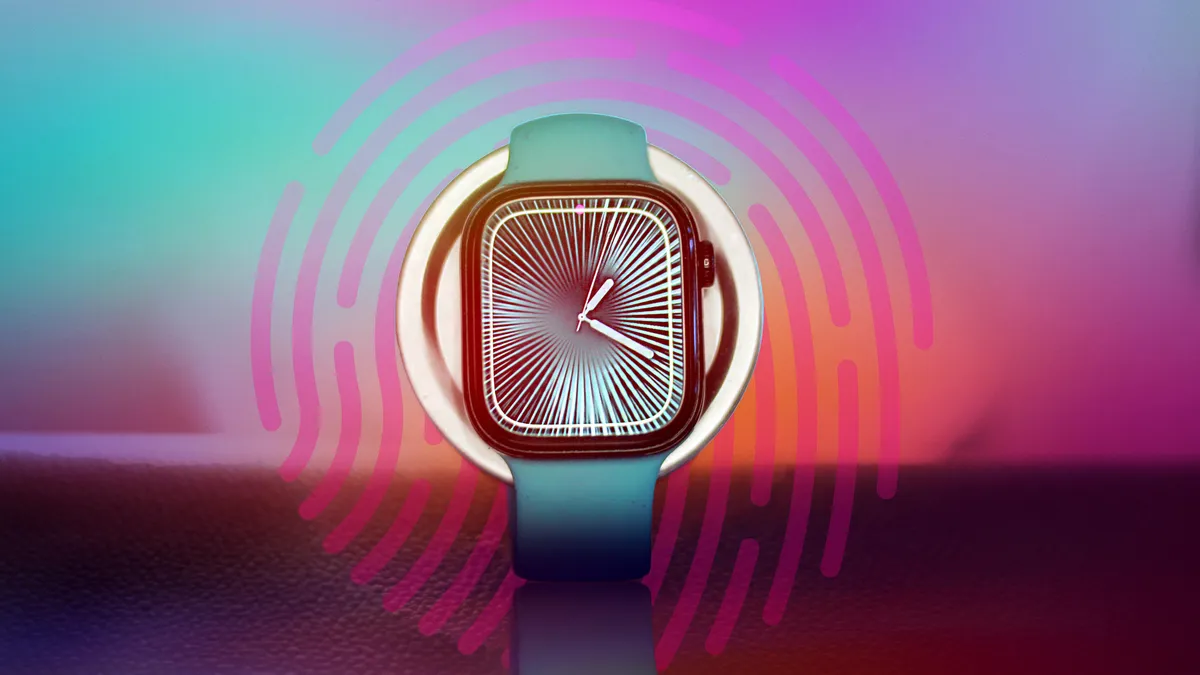
The next Apple Watch Series 12 may bring back TouchID.
Jeffrey Hazelwood/CNET
Biometric authentication: Touch ID or Face ID?
Rumors of a camera on the Apple Watch have been around for a few years — not for selfies, but potentially for Face ID or AI-based image recognition.
Advertisement
Apple Intelligence on the iPhone introduced a visual search tool that uses the camera to identify objects and places in real time, and it might be a matter of time before this feature eventually makes its way to the wrist. Meanwhile, wearable-focused processors like Qualcomm’s Snapdragon chips already support cameras and even livestreaming. Apple is known to use its proprietary chips, so it’s unlikely this would impact Apple’s timeline, but it shows the technology is there, and we may see it down the line on the Apple Watch. Just not this year, according to Bloomberg.
A more feasible near-term option could be Touch ID. Macworld recently spotted lines of internal code suggesting Apple has been experimenting with biometric authentication for the 2026 Apple Watch lineup. According to the report, the code references “AppleMesa,” which is Apple’s internal code name for a watch-based Touch ID. It’s still unclear whether the sensor would be integrated under the display, like we see on Android phones, or built into the side button or the Digital Crown.
Watch OS 27 wishlist
Now that Apple has standardized its operating system names to match the year ahead, you don’t need to be a rocket scientist to figure out that the next big update for the Apple Watch will be WatchOS 27.
With a major redesign already in the books (5 New Apple Watch Features Coming With WatchOS 26), we’re not expecting a dramatic visual change this time around, but there’s plenty on the wishlist, including better battery management tools and more customizable gesture controls. Apple could also expand Workout Buddy from metric-driven encouragement into more concrete training territory. This could bring it closer to what Samsung is trying with its AI-powered Running Coach.
Advertisement
Lastly, I’d welcome a more robust symptom tracker tied into the Vitals app similar to Oura Ring’s Symptom Radar that can flag early signs of illness.
A future Apple Watch could bring advanced health sensors for on-the-spot blood pressure reads.
Tharon Green / CNET
Other Health app updates
The next version of WatchOS 27 could also bring changes to the Health app. According to a report from Mark Gurman at Bloomberg, Apple has been working on a top-secret initiative code-named Project Mulberry, aimed at revamping the Health app with an AI-powered health concierge that could unify your health, fitness, and medical data in one place.
Advertisement
However, the project has recently run into some obstacles. Bloomberg’s latest report suggests Apple has put the effort on hold (at least for this year). That still leaves room for improvement on the Health app front with a potential redesign to the main dashboard that would make spotting trends easier.
Watch this: Apple Watch Series 11 Review: Is It Worth the Upgrade?
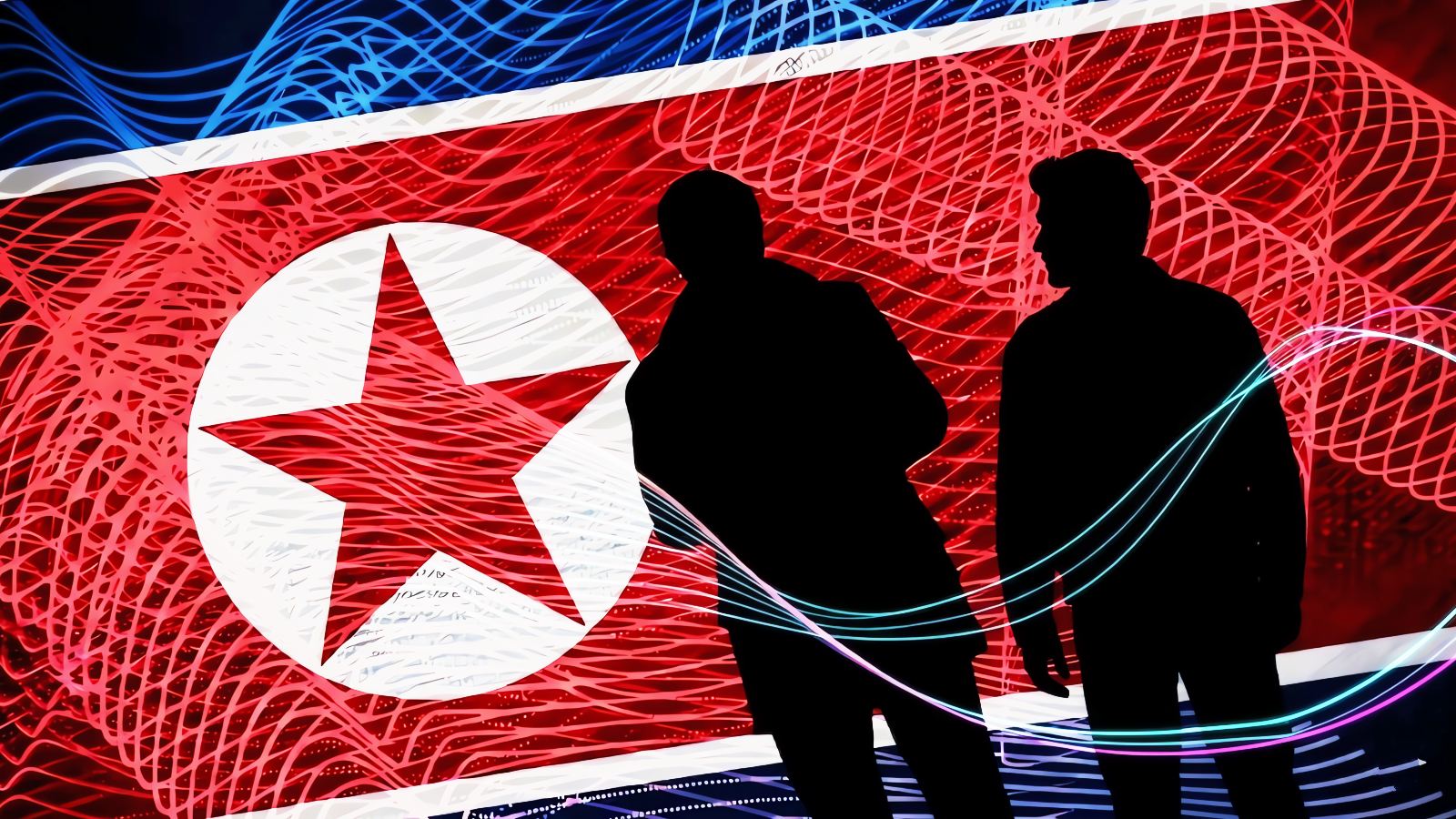
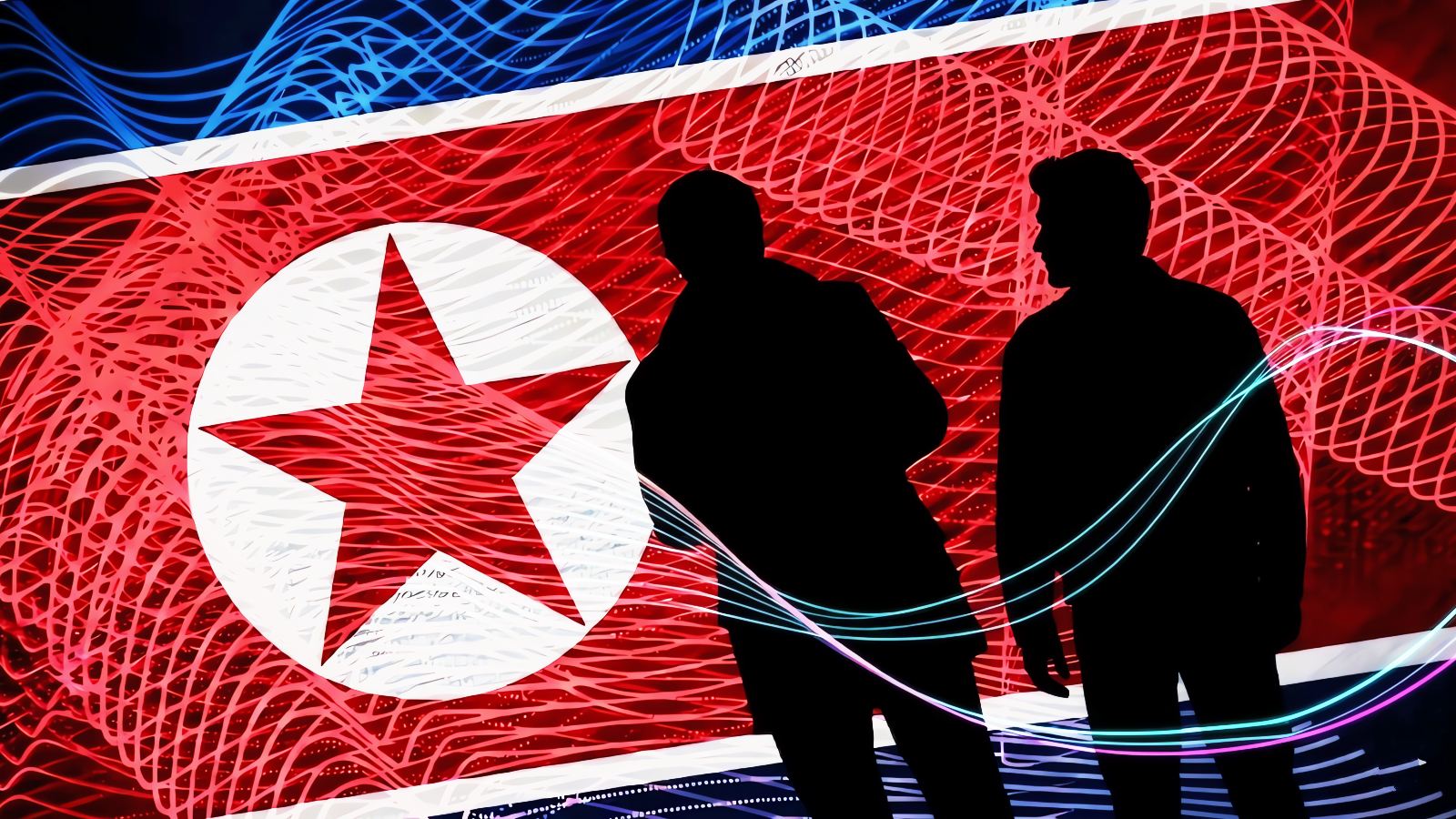
Two U.S. nationals were sentenced to 18 months in prison each for operating so-called laptop farms that helped North Korean IT workers fraudulently obtain remote employment at nearly 70 American companies.
Matthew Isaac Knoot and Erick Ntekereze Prince are the seventh and eighth U.S.-based “laptop farmers” sent to prison since the start of the year as part of a federal initiative targeting North Korea’s illicit revenue generation schemes.
“These sentences hold accountable U.S nationals who enabled North Korea’s illicit efforts to infiltrate U.S. networks and profit on the back of U.S. companies,” said Assistant Attorney General John A. Eisenberg on Wednesday. “These defendants helped North Korean’ IT workers’ masquerade as legitimate employees, compromising U.S. corporate networks and helping generate revenue for a heavily sanctioned and rogue regime.
Knoot (who was arrested and charged in August 2024) ran a laptop farm from his Nashville residences between July 2022 and August 2023.
Advertisement
During the scheme, he received company-issued laptops addressed to a stolen identity (“Andrew M.”), then installed unauthorized remote desktop software that allowed North Korean IT workers to appear as a legitimate U.S.-based employee.
Victim companies paid more than $250,000 to IT workers associated with Knoot’s operation, with the payments falsely reported to the Social Security Administration and the Internal Revenue Service under stolen identities.
Prince (who pleaded guilty to wire-fraud conspiracy in November) enabled at least three North Korean IT workers to obtain remote employment at U.S. companies from approximately June 2020 through August 2024, operating through his company, Taggcar Inc. Victim companies paid the IT workers hired with the help of Prince more than $943,000 in salary, the majority of which was routed overseas.
Knoot also caused more than $500,000 in auditing and remediation costs at victim companies, while Prince’s actions caused more than $1 million in remediation costs. In addition to their 18-month prison sentences, Knoot was ordered to pay $15,100 in restitution and forfeit an additional $15,100, and Prince was ordered to forfeit $89,000.
In April, U.S. nationals Kejia Wang and Zhenxing Wang were also sent to prison for helping North Korean remote information technology (IT) workers to pose as U.S. residents.
Last July, a 50-year-old Christina Marie Chapman from Arizona was sentenced to 102 months in prison for running a laptop farm in her own home, as part of a scheme that helped North Korean IT workers get hired by 309 U.S. companies while using stolen identities.
AI chained four zero-days into one exploit that bypassed both renderer and OS sandboxes. A wave of new exploits is coming.
At the Autonomous Validation Summit (May 12 & 14), see how autonomous, context-rich validation finds what’s exploitable, proves controls hold, and closes the remediation loop.
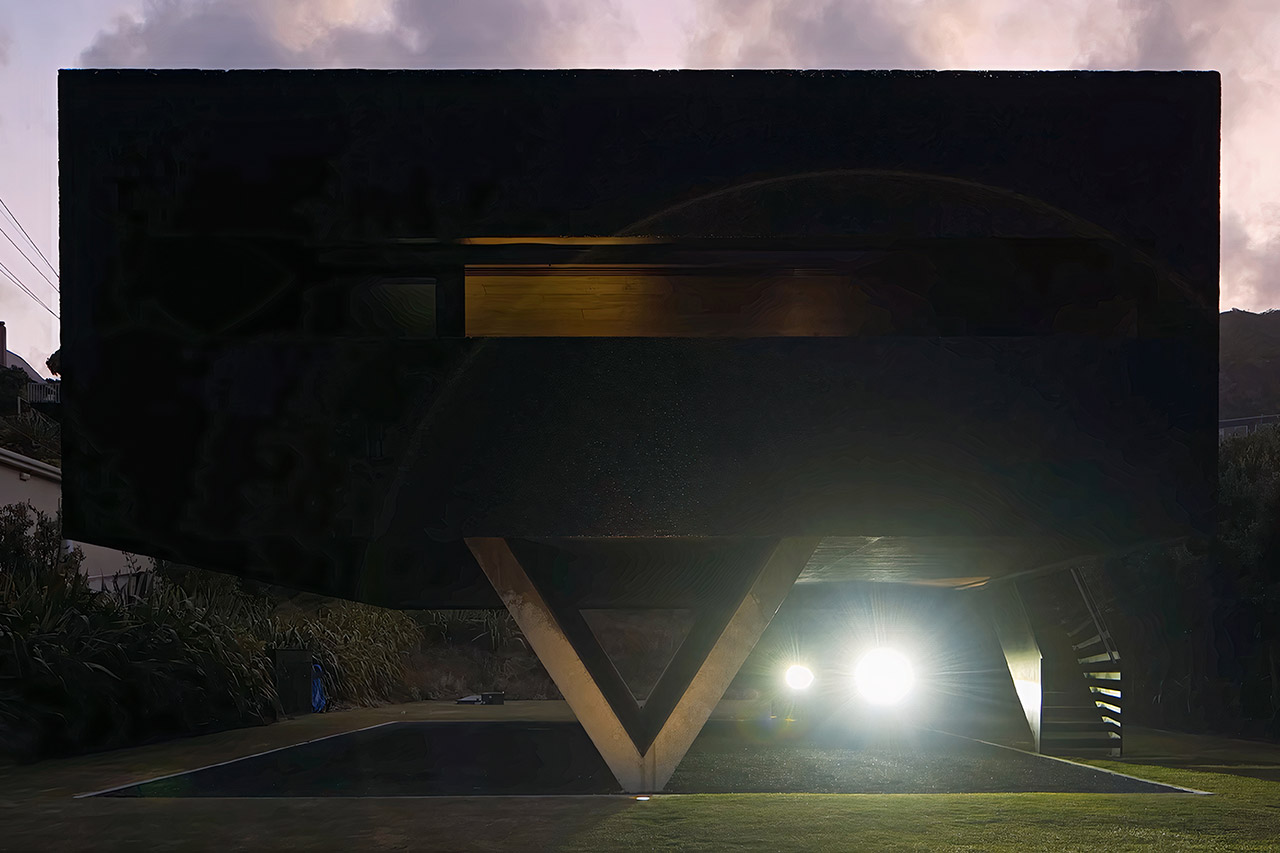
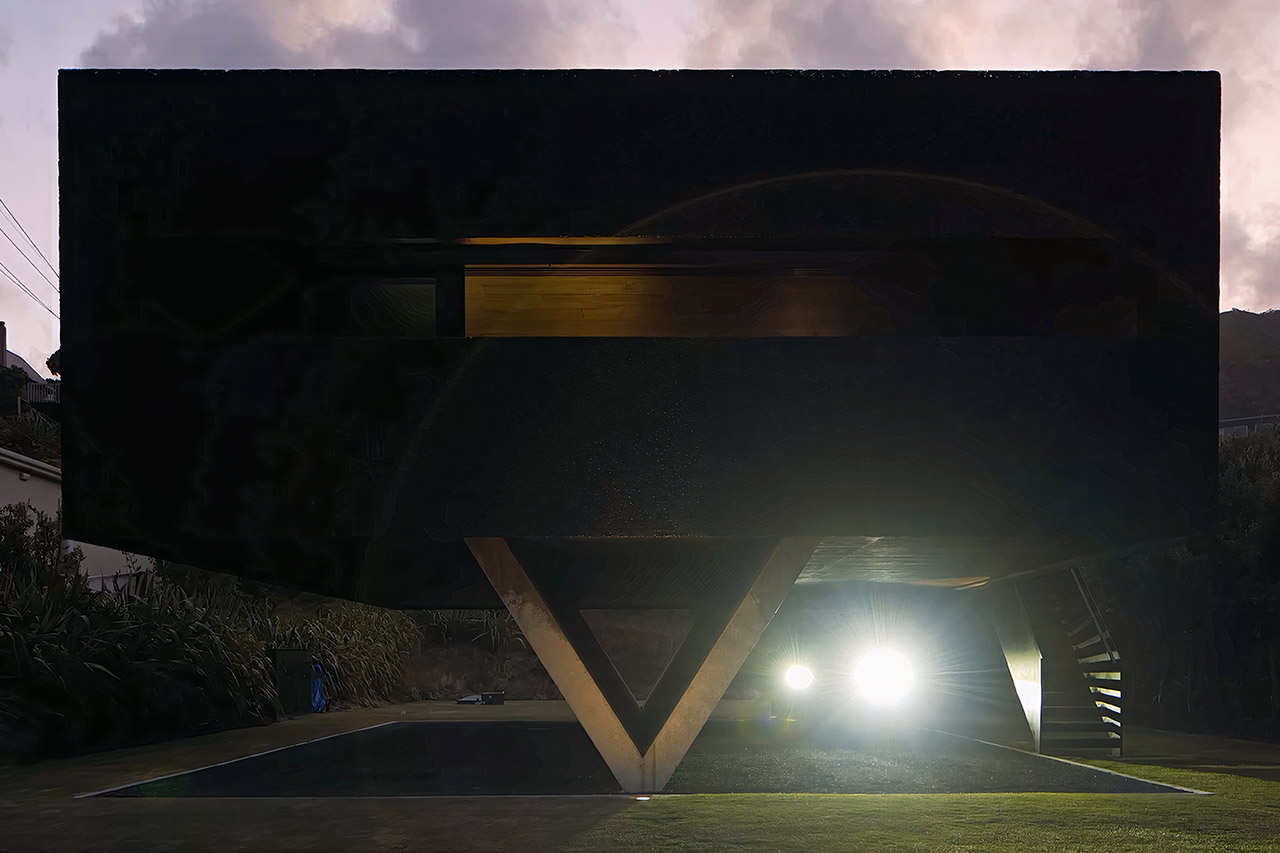
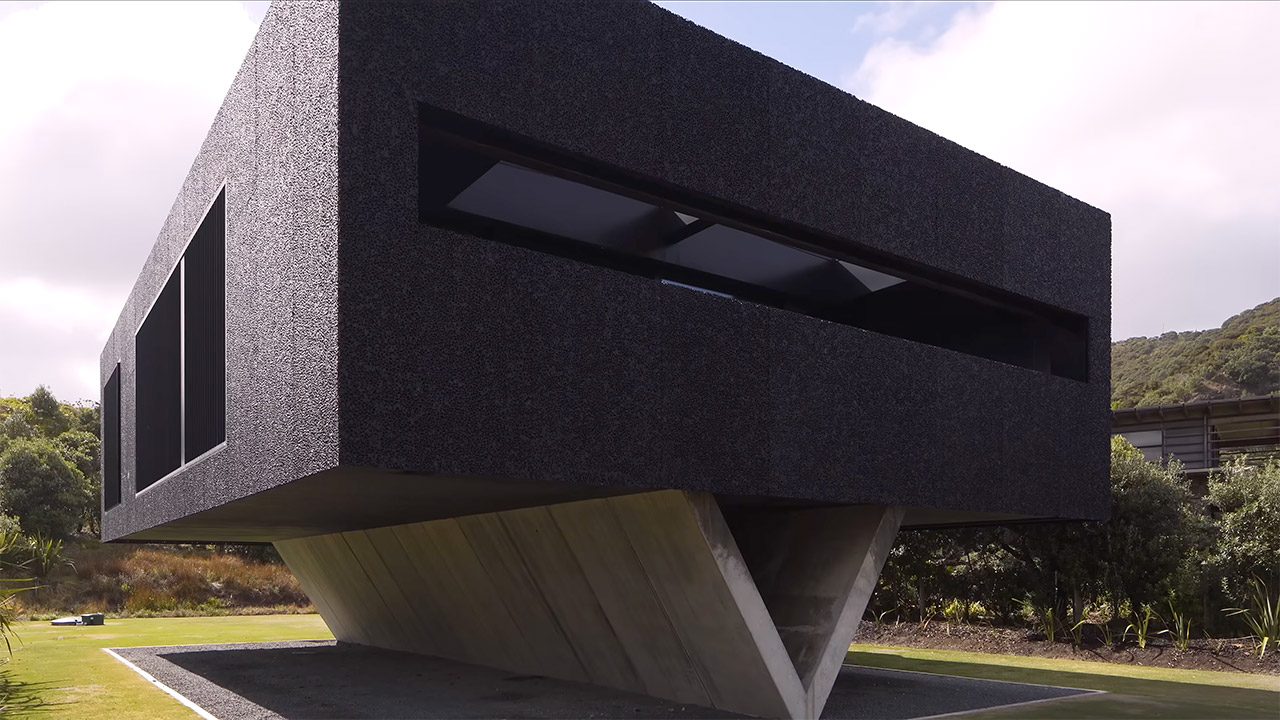
Photo credit: Home of Architecture | Chris Tate Piha Beach stretches along New Zealand’s wild west coast where black sand meets pounding surf and sheer cliffs rise without warning. Chris Tate placed Bunker House, a compact two-bedroom home right there next to a public car park and surf lifesaving club. The structure rises as a solid black form that feels carved from the landscape itself.
Chris Tate spent a remarkable 7 years perfecting the design before construction began, and the entire build took 14 years. The foundation is effectively a gigantic X built of concrete, with half of it sinking 3 metres into the sand and the other half supporting the house. The piles of concrete that hold it all together are a true insurance policy against earthquakes that turn the ground into a watery mess, as well as keeping the entire structure stable. You’d never guess it’s only 300mm off the sand, but against all odds, the entire structure holds the full weight of the house without even a hairline fracture showing. The cantilevered sections protrude out slightly, giving the box a ‘hovers-over-the-sand’ appearance while being perfectly balanced.
MODEL KIT FOR ADULTS – Adults ages 18 and up can embrace their love of architecture with this LEGO building set (21064), which makes striking home…
DETAILED PARIS DECOR – This detailed model features 4 iconic Paris landmarks—the Eiffel Tower, Notre-Dame de Paris, the Arc de Triomphe, and the…
HANG OR STAND TO DISPLAY – Your completed cityscape includes a buildable frame and a decorated ‘City of Love’ brick and can be hung on a wall or…
The cladding has been coated in sheets manufactured from recyclable cans shipped over from Canada and painted on-site, of course. The finish catches the light in an amazing ballet of patterns, perfectly reflecting the volcanic rock and black sand all around. With a little distance between you and the home, the surface appears to be one large textured skin. When you get close, it becomes easy to see where the material came from, but it all blends in so well that you can’t help but think that this house grew straight out of the sand rather than being thrown down on it.
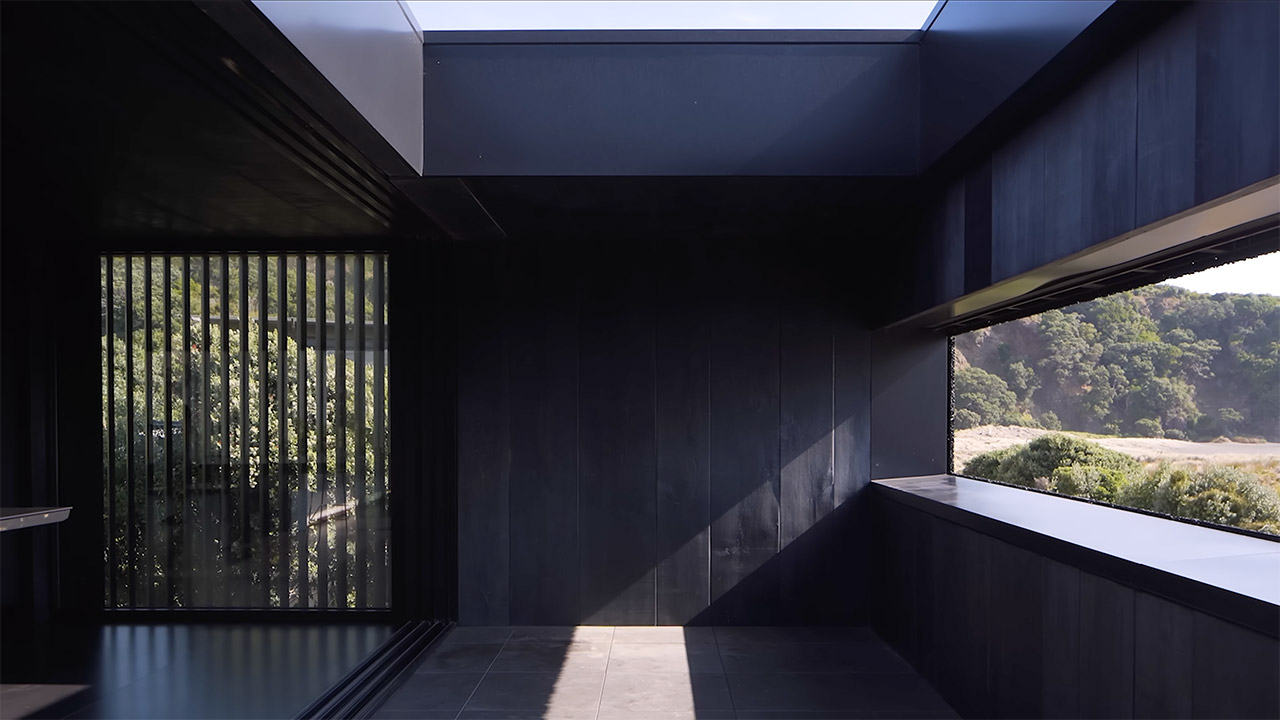
When people arrive, they are instantly met with darkness. It takes a while for their eyes to pick out the layered blackness that appears to be draped over every inch of the place, but even in the absence of color, there are hints of depth and texture, as evidenced by the subtle changes in tone that suggest the presence of glass, steel, and stone, all fitted together with meticulous care to conceal all the messy bits, such as pipes and wires. It’s a highly efficient space that meets all of the passive house standards, so the temperature stays just right throughout the year.
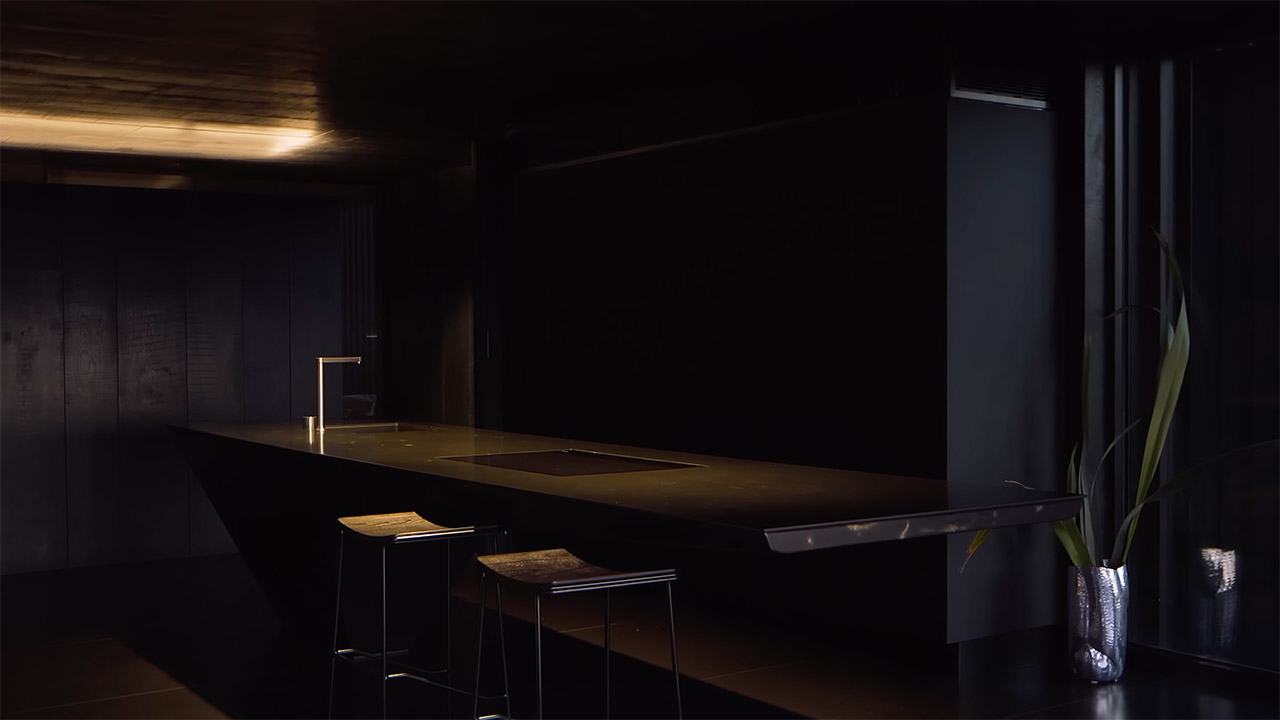
The kitchen island is a real showpiece, stretching out for four meters and providing a perfect view of the shore. Its raw steel frame is attached directly to the floor, reflecting the house’s foundations. What a view: a long narrow strip of glass frames a beautiful slice of crashing waves, Lion Rock, and a distant cove, and the crowded car lot fades away as you take a few steps back.
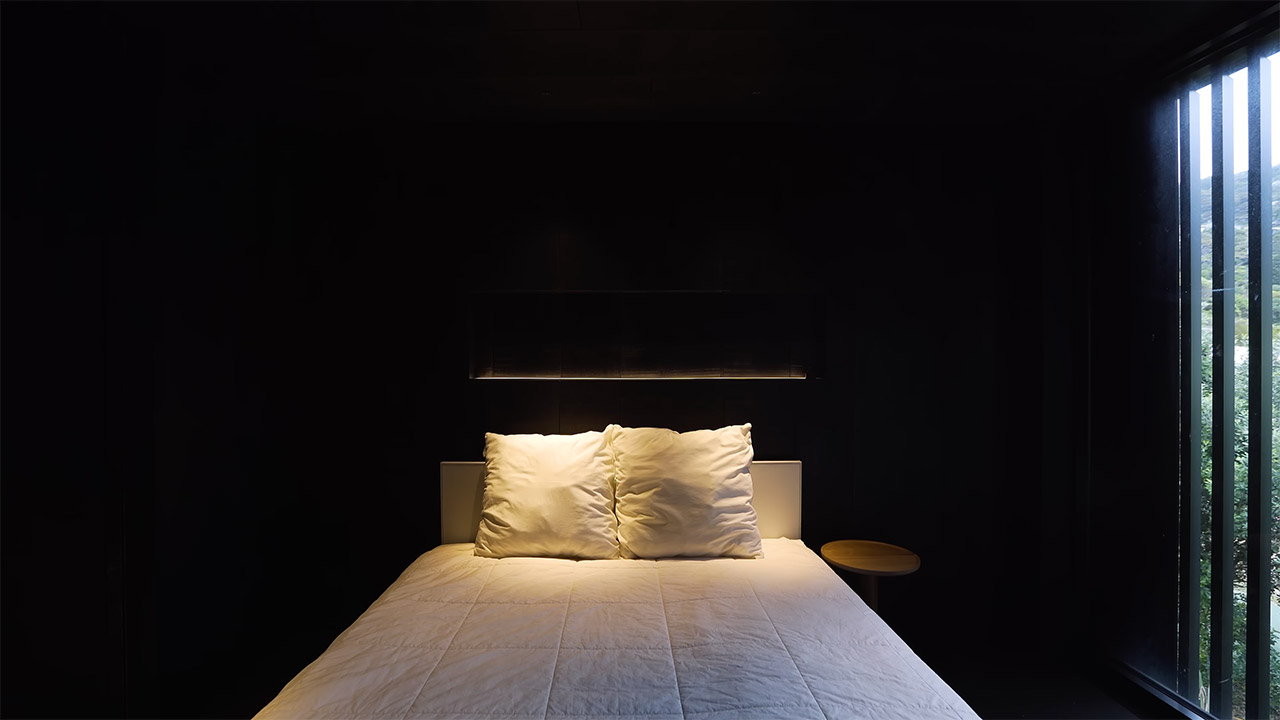
Two identical small bedrooms are nestled away at the back of the house, each enclosed by a wall of gold mesh panels that give off a nice gentle glow and provide a bit of metallic sheen to the entire space. The light streaming through makes each area feel quite secluded and calm. It’s a truly fantastic space, as it’s similar to a cave yet can still open up to the ocean anytime the owners desire. When the lights go off at night, all you hear is the waves smashing outside. [Source]
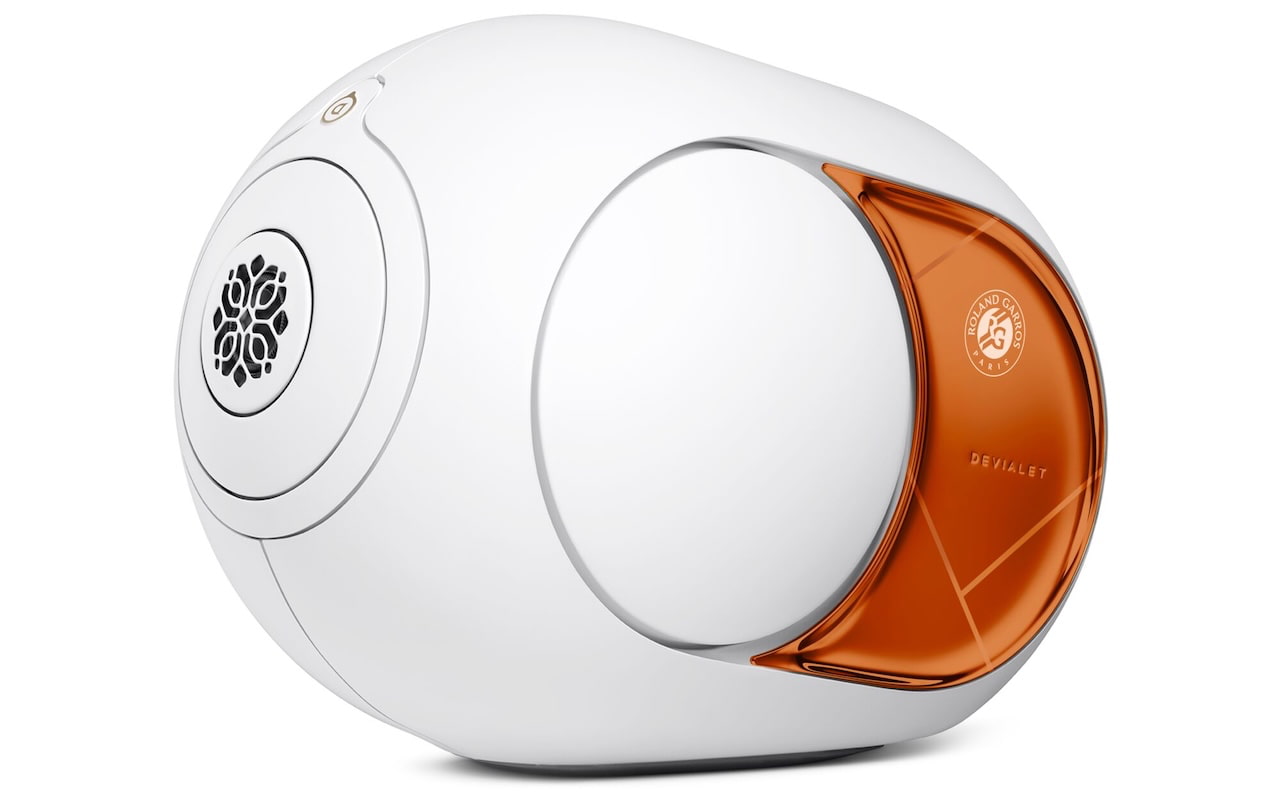
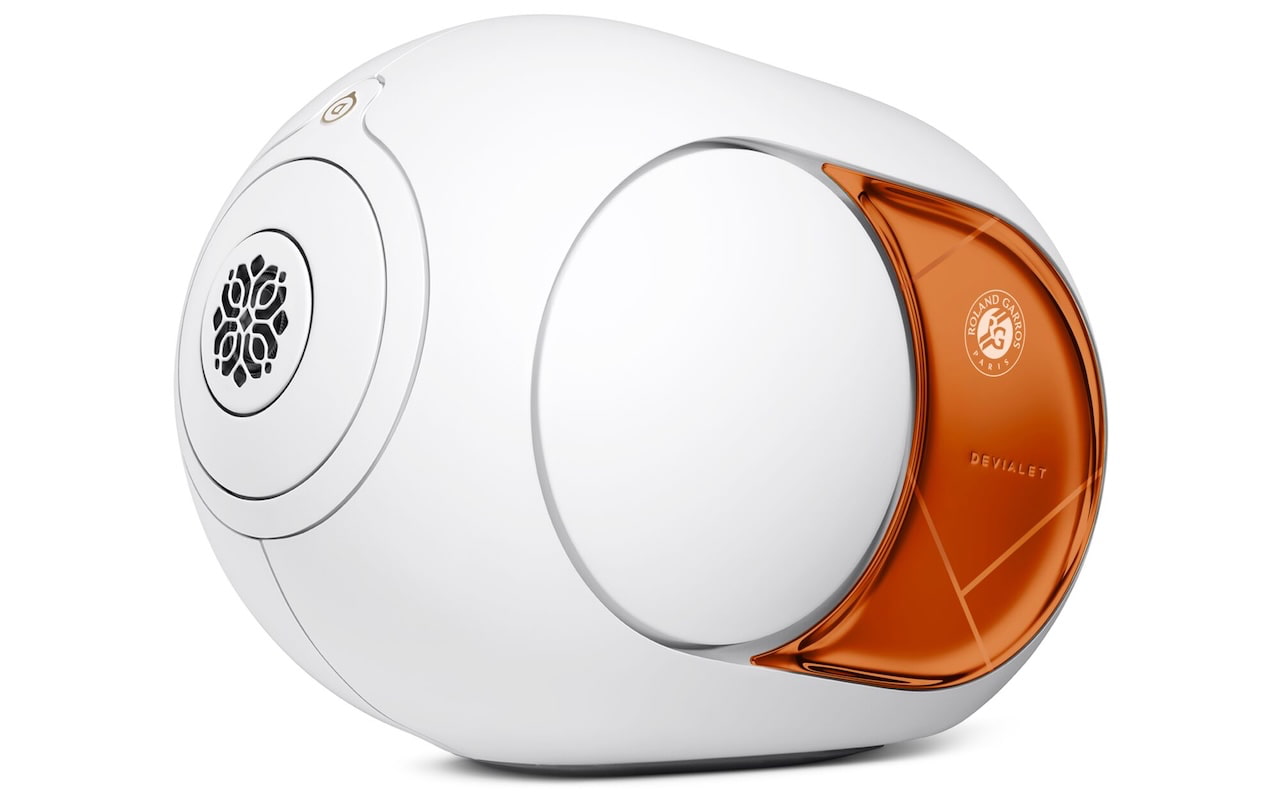
Leave it to the French to come up with something this stylish, expensive, and completely unwilling to explain itself to anyone drinking domestic sparkling wine. Devialet’s Phantom Ultimate Roland Garros Exclusive Edition is what happens when a French acoustic engineering company partners with the world’s most famous clay court tennis tournament: a limited edition Phantom Ultimate speaker dressed like it just won match point in Paris and refuses to apologize for the outfit.
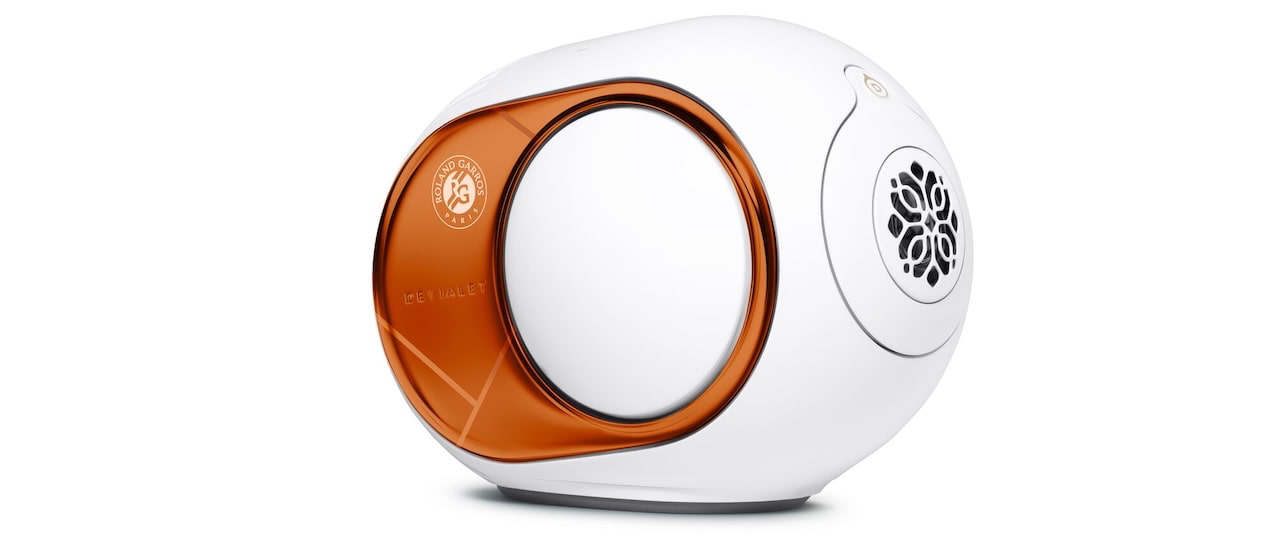
Finished in clay red with warm ochre tones, white court line detailing, and the official Roland Garros logo, it is limited to a few hundred pieces, making it less “buy one for the kitchen” and more “collector piece for someone who already knows where the good Champagne is stored, keeps foie gras within striking distance, and treats your Bluetooth speaker like a peasant with a tambourine.”
The design is more than a color swap. Devialet says the side panels were created to evoke the reflection of Court Philippe Chatrier on the silver of the Coupe des Mousquetaires, the trophy awarded to the men’s singles champion. The white lines are laser engraved and finished with multiple coats of high gloss lacquer, while the Roland Garros logo is applied using a multi layer pad printing process. Très subtle? Not exactly. But subtlety was never really the Phantom’s department.
Devialet Phantom Ultimate 108 dB Roland Garros Wireless Speaker
Same Phantom Ultimate Performance, Now With More Clay Court Drama
Under the Roland Garros finish, this remains the Devialet Phantom Ultimate platform, which we recently reviewed and found to be one of the more serious attempts to make a compact wireless speaker behave like something far larger. The Phantom formula has always been about controlled violence in a small enclosure: deep bass, high output, active processing, and a design that looks like it escaped from a French aerospace lab after a long lunch.
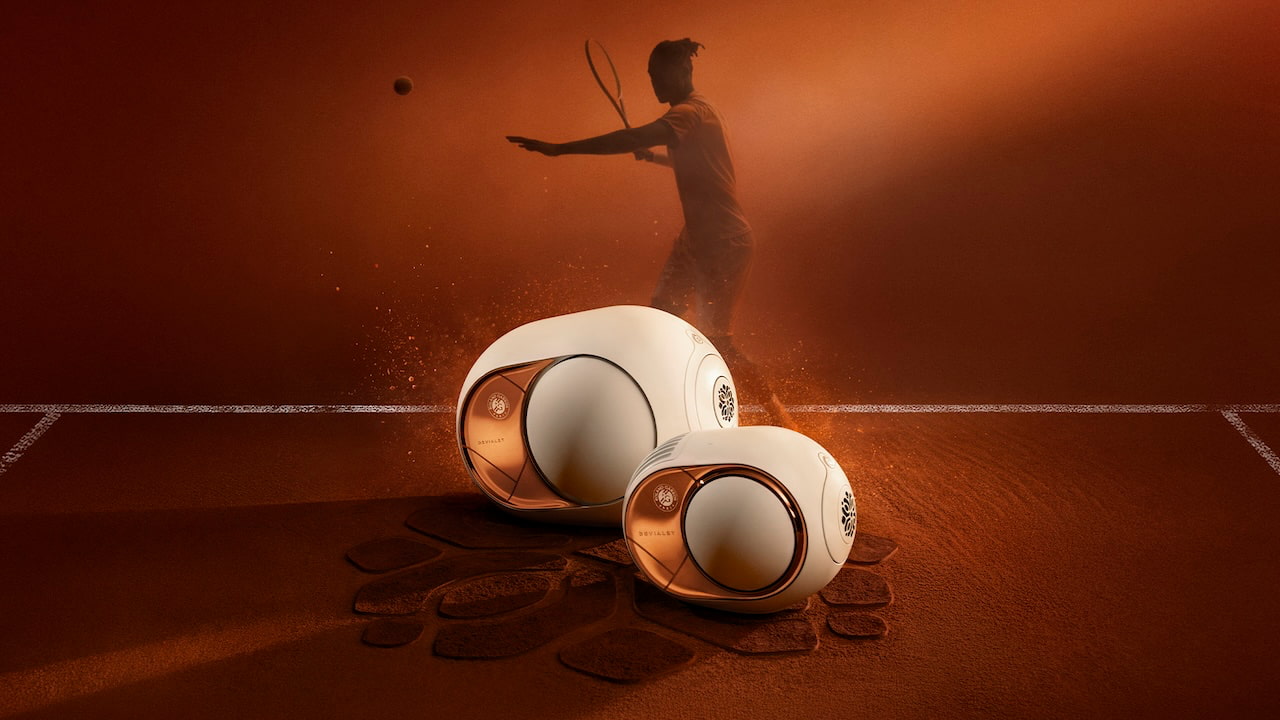
The Roland Garros edition will be offered in two versions. The larger Phantom Ultimate 108 dB version delivers 1,100 watts of amplification and a stated frequency range of 14 Hz to 35 kHz, with 32 bit 96 kHz audio processing. The smaller Phantom Ultimate 98 dB version delivers 400 watts and a stated frequency range of 18 Hz to 25 kHz.
Advertisement
Those numbers are not decoration. In our experience with the Phantom Ultimate 108 dB, the speaker’s appeal is not just that it plays loud or reaches low. Plenty of wireless speakers claim big bass and then proceed to smear everything like overcooked brie. The Devialet approach is more controlled, more physical, and more precise than most lifestyle wireless speakers at this level. It still sounds like a Phantom, which means it wants to impress you immediately.
The difference with the Ultimate generation is that the software, streaming support, processing, and user controls make it feel more complete. It is a category leading wireless speaker in every possible way.
Devialet Phantom Ultimate 98 dB Roland Garros Wireless Speaker
The Tech Stack Still Matters
Devialet’s core technologies carry over here, including ADH, SAM, HBI, and AVL. In plain English, ADH combines analog Class A behavior with Class D power and efficiency. SAM is Devialet’s driver matching system, designed to control phase and amplitude in real time. HBI is responsible for the Phantom’s low frequency reach and physical bass impact. AVL adjusts volume behavior in real time to keep playback more balanced across different types of content.
The Phantom Ultimate also uses an NXP i.MX 8M Nano processor and runs on Devialet DOS3, the company’s newer software platform first introduced with the Devialet Astra amplifier. That matters because modern wireless speakers live or die by the app, the operating system, and streaming stability.
Streaming support includes AirPlay, Google Cast, Roon Ready, Spotify Connect, TIDAL Connect, Qobuz Connect, and UPnP. The Devialet app also includes Music, Podcast, and Cinema modes, along with a six band EQ, Bass Reducer, and Loudness controls. That gives users more flexibility than older Phantom models, especially if the speaker is doing double duty for music, TV, podcasts, and those “why is the dialogue buried under explosions?” movie nights.
Advertisement
Bose clearly got the memo with its new Lifestyle Ultra Soundbar as well. Some of us are getting older, some of us have spouses who do not appreciate the Stanley Cup Playoffs at 11 p.m. at full tilt, and some of the best moments in French cinema still involve uncomfortable silence, cigarettes, footsteps in the Marais, and the creeping suspicion that an international terrorist is about to ruin someone’s galette.
Advertisement. Scroll to continue reading.
The Bottom Line
The Roland Garros edition is not for someone looking for the best wireless speaker bargain. That ship sailed, hit the clay, and got booed by the French crowd.
This is for the Devialet buyer who already likes the Phantom Ultimate but wants something more visually distinctive. It is also aimed at collectors, tennis fans with serious audio taste, and design conscious listeners who want a wireless speaker that does not look like another fabric wrapped cylinder apologizing from the corner.
The bigger 108 dB version makes the most sense for larger rooms or listeners who want the full Phantom experience with the most bass extension and output. The smaller 98 dB model is the better fit for bedrooms, offices, smaller living spaces, or anyone who wants the design and Devialet signature without detonating the room every time the playlist gets ambitious.
Advertisement
Pricing and Availability
The Devialet Phantom Ultimate Roland Garros Exclusive Edition launches on May 6, 2026 with a $200 or $400 premium of regular finishes. It will be available through select Devialet stores, Devialet’s website, the Roland Garros Megastore, and the official Roland Garros online boutique.















































You must be logged in to post a comment Login