Connect with us

Tech

Whistleblower Arturo Bejar Leads Testimony In Landmark Trial Against Meta

Published

on

An anonymous reader quotes a report from NPR: Meta was infused with a culture in which employees obsessed over user numbers and consistently pushed safety to the side, according to Arturo Bejar, a former employee turned whistleblower, who testified today in the landmark child safety trial against the social media company. Only one man had the ability to change that, Bejar said: CEO Mark Zuckerberg. But he didn’t. “At the end of the day, it was the company culture that Mark had created that made it so that it was practically impossible to deliver features that addressed the wellbeing and safety issues that we’ve been talking about,” he said.

Bejar is a linchpin witness for a consortium of states led by California, Colorado, Kentucky and New Jersey that sued Meta, alleging violations of consumer and child data protection laws, and that the company lied to the public about risks its platforms posed. The attorneys for the states say Meta designed Facebook and Instagram to hook young users and to keep them on site longer thanks to features such as infinite scrolling and the “like” button. Meta has denied the allegations. In his opening statement on Tuesday, attorney Paul Schmidt argued that the company was sensitive to the risks to teens, sought to address them and did not deceive the public about them. The state attorneys have not yet said if they will call Zuckerberg as a witness.

Testifying in federal court in Oakland, California, for a second day on Wednesday, Bejar, who worked on safety issues at Meta for eight years, said he interacted with Zuckerberg dozens of times, and charged that Zuckerberg was not telling the truth when he made public denials that the company put profits over safety. In particular, Bejar addressed a widely-shared Facebook post Zuckerberg made in 2021 after another whistleblower, Frances Haugen, shared internal documents with The Wall Street Journal that highlighted risks to the mental health of teens. In the post, Zuckerberg said it’s “just not true” that Meta prioritizes profit over safety and wellbeing. “Based on my experience at Meta, that is not an accurate statement,” Bejar said. […] Bejar testified, at almost every turn the company chose policies that boosted usership and revenue over safety. Safety was “not a meaningful priority,” he said.

Read more of this story at Slashdot.

Advertisement

Source link

Continue Reading
Click to comment

You must be logged in to post a comment Login

Leave a Reply

Tech

A “private and secure” face-search tool left 9 million photos exposed

Published

on

A people-search tool that promises “private and secure” searches left more than 9 million image files exposed online, including photos of people’s faces. A security researcher found the unprotected database, according to reports by WIRED and Digital Trends.

The tool is ClarityCheck, a service that lets someone upload a photo to identify the person in it. Its website tells users that “your reverse image search is private and secure”. The researcher, Jeremiah Fowler, published his findings through ExpressVPN. Fowler is known for finding unsecured databases left open on the internet.

The exposed store held about 450GB of data and needed no password to open, Fowler reported. That is a large trove for a mid-sized consumer service. Many files sat in folders labelled “faces” and “profiles”. They included profile photos, screenshots and other images of adults, teenagers and children.

Fowler put the total at more than 9 million files. The scale is what stands out: a single misconfiguration left millions of faces reachable to anyone with the link.

Advertisement

How it was exposed

The storage was reachable through a web address found in ClarityCheck’s own public website code, according to the reports. Search engines did not index that link, but the files behind it had no lock. The company has since restricted access, the reports said. Fowler notified ClarityCheck, and the company locked the store down afterwards.

Neither report said how long the data had been open before he found it. Fowler said he could not tell whether anyone else had downloaded the files, since the storage kept no public access logs he could review.

There was a second problem too. By changing certain ClarityCheck web addresses and entering a person’s name, someone could surface possible email addresses, phone numbers and physical addresses, WIRED reported. That required no special access. It is a separate weakness from the exposed image store, and it points at the service’s own lookup system rather than a storage bucket.

Fowler found no sign that anyone reached the database with bad intent before the company secured it, the reports said. So far, they have not connected the exposed contact details directly to the exposed photos. The two problems were separate misconfigurations, the reports said, one for the images and one for the personal details.

Advertisement

Why this is sensitive

The nature of the service makes the lapse awkward. ClarityCheck is built to help people check strangers and decide whom to trust online. A leak of its users’ own uploads cuts against that promise. The service asks people to trust it with the very images they use to vet others. ClarityCheck markets the search as a way to spot catfishing and fake dating profiles, according to Digital Trends.

Digital Trends noted that a lapse involving its own users’ uploads is a particularly uncomfortable one for a service sold on trust and safety.

The people in the photos may never have used the tool. ClarityCheck lets a user upload someone else’s face to search for them. That means a person whose face sits in the database may have had no contact with the service at all.

Some of the images appeared to come from social media, dating profiles and screenshots, Fowler reported. That raises the prospect that people had no idea their faces sat in the store.

Advertisement

He also said he found files with timestamps beyond ClarityCheck’s stated 14-day limit for keeping uploaded images. If accurate, that would suggest the service held some images longer than its own policy allows. ClarityCheck did not address the retention point in its statement, the reports said.

What ClarityCheck says

ClarityCheck disputed the description of the store as “publicly exposed”. In a statement to WIRED, the company argued that reaching the files required a specific, unindexed web address. On that basis, it said, the data was not simply open to the public. The company did not dispute the number of files, according to the reports.

The reporting pushes back on that defence. The files themselves carried no password, WIRED and Digital Trends noted, and Fowler found the address inside code on ClarityCheck’s own website. An obscure link is not the same as a protected one, Digital Trends wrote, since a researcher found it and others might too.

TNW has not independently verified the database. The account here rests on Fowler’s research and the reporting by WIRED and Digital Trends, and on ClarityCheck’s statement to WIRED.

Advertisement

A wider pattern

Exposed face data is a recurring problem. In June, the group ShinyHunters published 45GB of Madison Square Garden records that included facial recognition data. Tools that scan faces are spreading, from shop cameras wired to police alerts to services that match a photo to a name. Each new store of face data becomes another target.

The stakes are rising as AI makes it easier to misuse such images. Researchers have warned that generated media has made impersonation and scams simpler to pull off. Analysts have also cautioned that the next privacy breach may not need to leak data in the classic sense to cause harm. A person can change a leaked password; no one can change their face.

Regulators have started to act on large lapses. South Korea fined the retailer Coupang a record sum this year over a major data breach. For the people whose faces sat in ClarityCheck’s store, the worry is simpler: their image was held by a service many of them had never used, and, for a time, anyone who found the link could see it.

Advertisement

Source link

Continue Reading

Tech

NASA Calls Off Mission To Rescue The Falling Swift Observatory

Published

on

Katalyst’s LINK spacecraft will still rendezvous with the telescope but will no longer tug it to a higher orbit.

The Neil Gehrels Swift Observatory is expected to re-enter and burn up in the Earth’s atmosphere later this year, after NASA has aborted the mission meant to tug it back up to a higher orbit. NASA has announced that Katalyst Space’s LINK spacecraft will no longer dock with the satellite and boost it to a higher altitude as planned. The agency blamed it on LINK’s ongoing attitude control issue, which started in late July. 

If you’ll recall, NASA reported at the time that the spacecraft was having problems managing its orientation in orbit, causing it to spin helplessly. That led to sporadic communications with the spacecraft. There was also some loss in functionality to LINK’s thruster system. NASA and Katalyst were still optimistic last month that the spacecraft could accomplish its goal, but things have clearly changed since then.

Katalyst had less than a year to design a spacecraft for the Swift Boost mission, which launched in early July. Shawn Domagal-Goldman, the Astrophysics Division director at NASA Headquarters in Washington, said it was a “high-risk, high-reward mission” mission from the start. It was a first-of-its-kind attempt, and the team had very little time to try and rescue the Swift telescope, whose orbit is rapidly decaying due to an increase in solar activity in recent years. 

Advertisement

NASA’s SWIFT observatory launched in 2004 to study gamma ray bursts, but astronomers are now using it for several other purposes. The agency has been relying on it to obtain critical information quickly when a sudden cosmic event takes places. This mission was supposed to add a decade or so to its life. Going forward, NASA says it will prioritize finding “new options to react rapidly to cosmic events,” but it will use current missions to help fill the gap for now.

While LINK will no longer tug the Swift observatory to a higher orbit, it will still attempt to rendezvous with it. NASA and Katalyst plan to gather as much data as possible from the rendezvous operations to serve future satellite servicing missions.

“This is not the outcome we were working toward, but it does not change why this mission was worth attempting,” said NASA Administrator Jared Isaacman. “The team moved with extraordinary speed to give Swift a chance to carry out more science while advancing capabilities America will need for satellite servicing in the future. We are going to learn everything we can from LINK’s rendezvous attempt and put those lessons to work on the missions that follow.”

Advertisement

Source link

Continue Reading

Tech

FDA approves robot that can find your vein, insert a needle, and draw blood without human help

Published

on

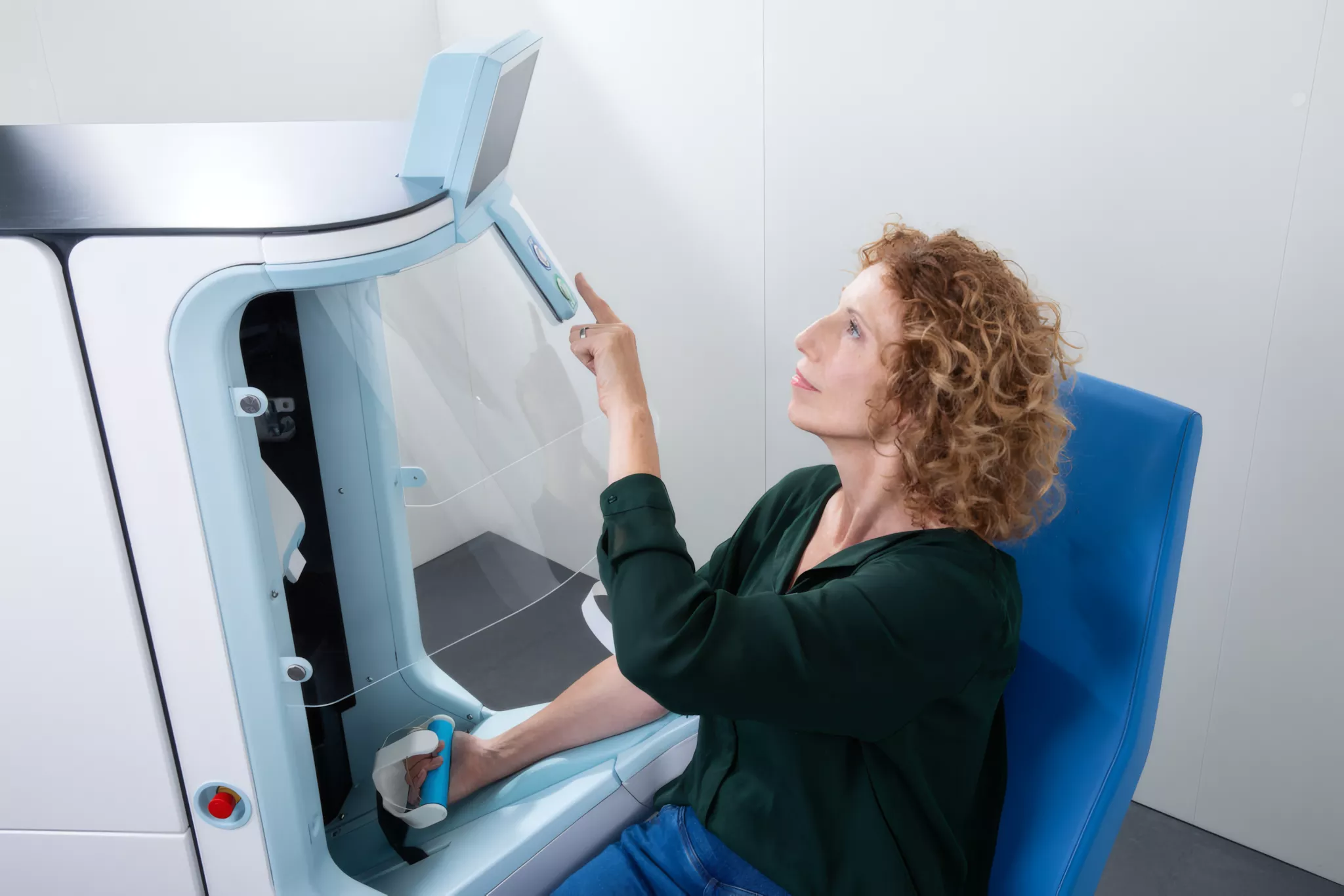
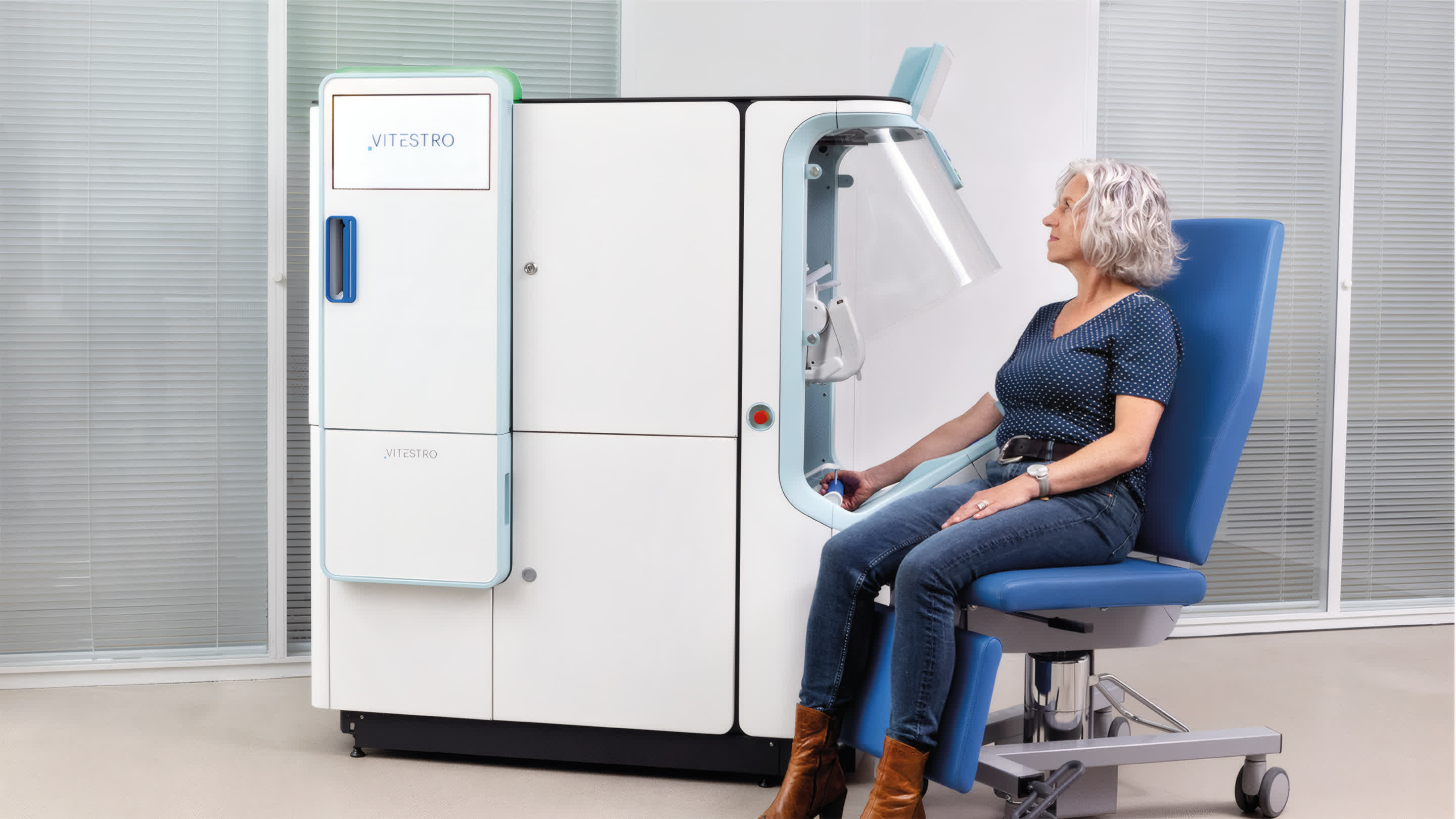
Forward-looking: Are you the kind of person who hates having blood drawn? In a decision that could potentially make that phobia worse or better, the FDA has approved the use of a robotic device that can draw blood from a patient’s arm – with no human assistance required.

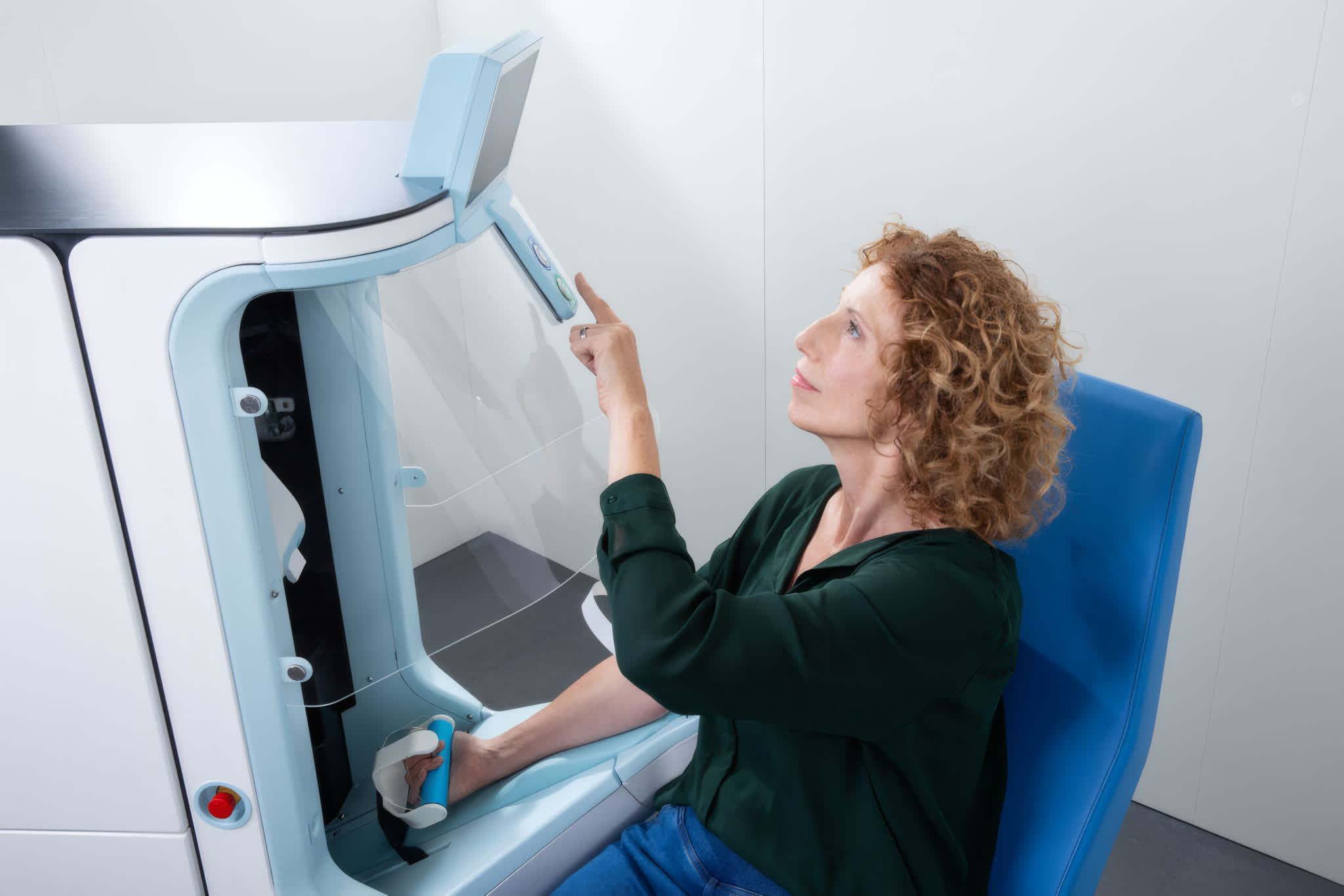
Called Aletta, the robot begins the process by instructing the adult patient on how to position their arm. Once in the correct place, the patient or a supervisor presses a button to begin.

Aletta starts by using near-infrared light and Doppler ultrasound to find a suitable vein in the patient’s arm, distinguishing it from an artery. If none can be found, the process stops.

Once a suitable vein is found, the system will apply a tourniquet, prepare the skin, then insert the needle, dispose of it, and even apply a bandage. The supervising phlebotomist confirms that collection tubes are filled in the correct order and verifies that all tubes are adequately full following the procedure.

Advertisement

If this all sounds concerning, the good news is that the FDA specifies that a supervisor trained in phlebotomy must begin and oversee the procedure.

So, why bother with a machine if medical staff need to be present? The agency writes that one phlebotomist can oversee up to three Aletta devices at the same time, which may help address the current phlebotomist shortage in the US.

“This authorization reflects the FDA’s commitment to advancing innovative medical devices that help meet a critical public health need while maintaining the safety and effectiveness patients deserve,” said Michelle Tarver, M.D., Ph.D., Director of the FDA’s Center for Devices and Radiological Health. “Blood draws are one of the most commonly performed medical procedures in the United States, yet patients may face delays due to a growing shortage of trained phlebotomists.”

Advertisement

Some people aren’t going to be comfortable having a robot push a needle into their veins, of course. But the FDA says Aletta has multiple safeguards. One of these activates if the person moves too much during the procedure, causing the needle to automatically detach and the draw to stop.

Additional onboard sensors can pause the procedure and alert the supervisor if other unsafe conditions are detected.

The FDA added that clinical data showed Aletta achieved blood draw success rates comparable to or higher than those of trained phlebotomists when it attempted a blood draw.

Advertisement

Adeletta’s FDA approval is only the first step. It could be a while before the machines start appearing in medical facilities.

Source link

Advertisement
Continue Reading

Tech

TrueFoundry’s open source AI agent harness TrueForge boasts 30%-75% cheaper task completion than Claude Managed Agents

Published

on

Another day, another new AI agent harness is released.

Only this time, it’s one that aims to solve a growing enterprise problem as AI agents proliferate: enabling greater developer control of agents and tools, while reducing cost.

TrueFoundry, a San Francisco B2B machine learning startup co-founded in 2021 by former Meta engineers, has released its own custom TrueForge harness under the permissive MIT License on Github. Thus, it can be used with any of a developer (or their parent enterprise’s) preferred AI models, forked, modified, self-hosted and incorporated into commercial products.

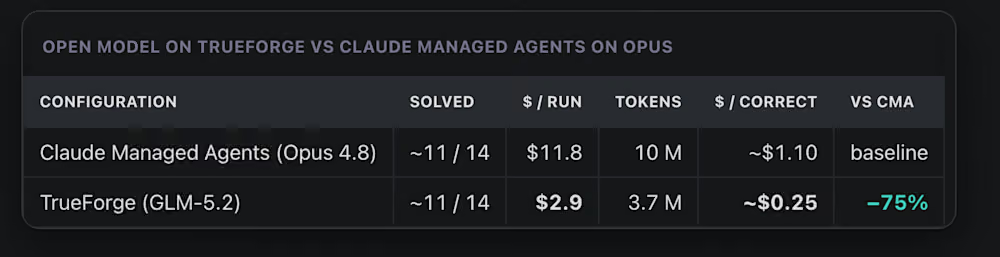
The company states in a blog post that when it used TrueForge paired with the open source GLM-5.2 LLM to successfully complete 11 of 14 tasks on DevRev’s Enterprise-Bench — testing multi-step tool use across CRM, issue tracking, and document management systems — it cost 75% less than achieving the same results with Anthropic’s Claude Managed Agents harness powered by Claude Opus 4.8 ($2.90 compared to $11.80).

Advertisement
TrueForge vs. Claude Managed Agents cost comparison table

Using the same model in each harness, Opus 4.8, TrueFoundry still claims a cost savings of roughly 30% using TrueForge compared to Claude Managed Agents ($8.50 vs $11.80).

TrueForge vs. Claude Managed Agents vs. deepagents

Why is TrueFoundry giving this powerfully efficient harness away for free?

“We’ve had this ask from a bunch of customers,” said Anuraag Gutgutia, TrueFoundry’s co-founder and COO, in an exclusive interview with VentureBeat. “You have an ability where you bring in agents and MCPs — can we also get something where you can actually launch these managed agents? I think that is the need we are satisfying. It is not a replacement. People will use this alongside other harnesses, like the cloud-managed ones or the commercial-provider-managed ones, but this will serve as a way for people to use them in a vendor-neutral way and also at a lower cost.”

Indeed, TrueFoundry already offers a paid “AI Gateway” for enterprises centrally controlling model and MCP access, credentials, permissions, budgets and observability. TrueForge, by contrast, handles what happens above that gateway: the loop that lets a model repeatedly reason, call tools, receive results and continue working until a task is complete.

For enterprise developers, the practical proposition is that they can start locally with a single command and SQLite, then move the same agent harness into a shared deployment using Docker Compose or Helm with Postgres and Redis.

TrueFoundry explicitly warns that the local configuration is intended only for use on a developer’s machine, not as an internet-facing production service.

Advertisement

Gutgutia said the company ultimately wants its AI Gateway to become the common layer beneath whichever agents and harnesses an enterprise chooses.

“There will be a set of companies that will use our harness as the way to launch managed agents,” he said, while others may continue using Claude, other open-source harnesses or internal systems. “But all that traffic should still be flowing through our gateway.”

Context management is where TrueForge tries to cut waste

TrueForge’s architecture centers on context engineering — controlling how much information gets sent back into the model on every step of an agent run.

That includes delaying the loading of MCP tool schemas until they are needed, delegating isolated tasks to subagents, moving oversized tool results into files instead of stuffing them into the active context window, processing structured results through code, and automatically compacting long-running conversations.

Advertisement

The documentation sets the default compaction threshold at 50,000 tokens, though it can be changed per agent.

TrueForge also treats the sandbox differently from runtimes that keep an agent inside an isolated environment throughout its run. The core agent loop remains on the TrueForge server; a sandbox is provisioned as a tool only when the agent needs to execute code or work with files. TrueFoundry says that reduces unnecessary compute and allows a server to run more agents concurrently.

The company argues those choices directly reduce model spending.

How TrueForge compares to Claude Managed Agents and other leading orchestration harnesses

Type / focus

Advertisement
  • TrueFoundry TrueForge: General-purpose production agent harness designed for enterprise deployments.

  • DeepSeek Harness: Open-source agent harness, currently positioned as a developer preview.

  • OpenAI Codex CLI: Coding-focused agent harness designed primarily for software-engineering workflows.

  • LangChain Deep Agents: General-purpose agent harness built on LangGraph.

  • Anthropic Claude Managed Agents: Fully managed production agent runtime operated by Anthropic.

License

  • TrueFoundry TrueForge: MIT.

  • DeepSeek Harness: MIT.

  • OpenAI Codex CLI: Apache 2.0.

  • LangChain Deep Agents: MIT.

  • Anthropic Claude Managed Agents: Proprietary.

Price

  • TrueFoundry TrueForge: The open-source harness itself is free. Model, sandbox and infrastructure costs are separate. TrueFoundry also offers an optional commercial governance layer through its broader platform.

  • DeepSeek Harness: No harness license fee. Users separately pay for whatever model providers and infrastructure they use.

  • OpenAI Codex CLI: The CLI is open source. Underlying model/API or subscription costs are separate, OpenAI says around $100–$200 per developer per month, although actual spending varies substantially with model choice

  • LangChain Deep Agents: Open source, with model and infrastructure expenses separate. LangChain also offers optional commercial services through LangSmith.

  • Anthropic Claude Managed Agents: Claude tokens consumed plus $0.08 per running session-hour, with runtime metered to the millisecond.

Model flexibility

  • TrueFoundry TrueForge: Vendor-neutral and designed around bring-your-own-model support.

  • DeepSeek Harness: Multi-provider and not restricted to DeepSeek models.

  • OpenAI Codex CLI: Supports configurable inference endpoints, including OpenAI-compatible services and local-model options.

  • LangChain Deep Agents: Broad multi-provider support through the LangChain ecosystem.

  • Anthropic Claude Managed Agents: Claude-centric.

Deployment

Advertisement
  • TrueFoundry TrueForge: Can run locally as a single process with SQLite, then move into a production deployment using Docker Compose or Helm with Postgres and Redis.

  • DeepSeek Harness: Designed for local or self-hosted operation.

  • OpenAI Codex CLI: Primarily a local CLI experience, alongside OpenAI-hosted Codex products and services.

  • LangChain Deep Agents: Can be self-hosted or deployed through LangChain and LangSmith infrastructure.

  • Anthropic Claude Managed Agents: Anthropic manages the runtime and infrastructure.

Key features

  • TrueFoundry TrueForge: MCP and tool orchestration, subagents, human approval checkpoints, persistent sessions, context compaction, large-result offloading, Code Mode, generative UI, tracing and a sandbox-as-a-tool architecture.

  • DeepSeek Harness: Pluggable models, tools, session storage and agent loops, along with sandboxing, permissions, approval gates and skills.

  • OpenAI Codex CLI: Agent loop, repository and file operations, shell execution, MCP tools, sandboxing, permissions, approvals and context management.

  • LangChain Deep Agents: Planning, subagents, skills, filesystem-based context management, persistent memory, human-in-the-loop controls, MCP support and multiple sandbox backends.

  • Anthropic Claude Managed Agents: Managed execution environments, persistence, tools, sandboxing and infrastructure for long-running agents.

Key differentiator

  • TrueFoundry TrueForge: Its strongest distinction is the combination of an open-source, vendor-neutral harness with a clear path from local development to a shared production runtime, plus an optional enterprise governance plane through TrueFoundry.

  • DeepSeek Harness: Emphasizes deep modularity. Major parts of the runtime, including models, tools, storage and the agent loop, are designed to be replaceable plugins.

  • OpenAI Codex CLI: Stands out as a highly developed software-engineering-specific harness rather than a general-purpose enterprise agent server.

  • LangChain Deep Agents: Benefits from the broader LangChain and LangGraph ecosystem and offers a mature open-source path for building general-purpose agents.

  • Anthropic Claude Managed Agents: Minimizes operational burden by having Anthropic manage the runtime, but trades that convenience for tighter model and platform coupling.

Open source does not automatically mean governed

For enterprise buyers, one of the most important distinctions is between TrueForge by itself and TrueForge connected to TrueFoundry’s commercial AI Gateway.

The open-source harness can run independently. But it does not magically inherit an organization’s enterprise access policies on its own.

Advertisement

“If you are using just the open source version of our agent harness, yes, you will need to put the right controls therein or in front of some other internal control system,” Gutgutia told VentureBeat.

When paired with TrueFoundry’s gateway, the company says agents can inherit the identities and access controls already attached to models, MCP servers, tools, skills and other agents. Gutgutia described the gateway as the place where enterprise SSO, identity providers and granular permissions can be centrally enforced rather than reimplemented separately for every agent.

That distinction is likely to be important for platform engineering teams evaluating the project. TrueForge is free software; TrueFoundry’s governance layer is the commercial control plane around it.

TrueFoundry says NetApp was a beta user of the harness and contributed requirements during development. Gutgutia said NetApp’s IT organization has used the technology for incident response and faster ticket triage, while also exposing internal agents as self-service tools for developers. He also identified Automattic as an early user.

Advertisement

Background on TrueFoundry and its business to date

TrueFoundry was founded in 2021 to help enterprises deploy and operate machine-learning models, including Kubernetes-based model serving, training and infrastructure management.

Its three co-founders — Nikunj Bajaj, Abhishek Choudhary and Anuraag Gutgutia — previously worked at Meta and WorldQuant, respectively.

Gutgutia said the founders’ common experience was working around mature systems where infrastructure and controls were designed to prevent costly mistakes — an idea they believed would become increasingly important as AI moved into production inside large companies.

As generative AI spread through enterprise software, TrueFoundry expanded from that MLOps foundation toward managing LLM applications and, increasingly, the models, tools and agents around them.

Advertisement

By 2025, the company had made its AI Gateway a central part of the business: a layer sitting between enterprise applications and model providers that handles routing, authentication, access controls, observability, budgets, guardrails and failover.

That evolution has been backed by roughly $21 million in outside financing. TrueFoundry raised a $19 million Series A in February 2025 led by Intel Capital, with participation from existing investors Eniac Ventures and Peak XV’s Surge, as well as Jump Capital and angel investors including Gokul Rajaram and Mohit Aron. The round brought total financing to about $21 million, according to Intel Capital’s announcement.

At the time, TrueFoundry said its customer base had grown fourfold year over year and that it was managing more than 1,000 clusters for machine-learning workloads.

The business has since become increasingly oriented around large-scale enterprise AI traffic. In VentureBeat’s January 2026 coverage of TrueFoundry’s TrueFailover launch, the company said it had more than 30 paid customers worldwide, had exceeded $1.5 million in annual recurring revenue during the prior year and was processing more than 10 billion requests per month through its AI Gateway.

Advertisement

Customers and deployments cited by TrueFoundry have included NetApp, Siemens Healthineers, ResMed, Automation Anywhere, Nvidia, Games24x7 and others; Gutgutia also named NetApp, Siemens, Synopsys and Automation Anywhere among Fortune 1000 organizations working with the company in his interview with VentureBeat.

TrueFoundry has also been expanding through acquisition. In June 2026 it acquired UK-based Seldon AI, a longtime MLOps vendor whose Seldon Core software has been used for production model serving and inference.

As the acquisition shows, rather than treating traditional ML, LLMs, tools and agents as separate infrastructure categories, TrueFoundry is trying to put them behind a common deployment and governance layer.

TrueForge extends that strategy upward into the agent runtime itself. Until now, TrueFoundry’s commercial center of gravity has largely been the control plane underneath enterprise AI workloads — deciding which users and applications can access which models and tools, routing requests, enforcing policy, monitoring spend and keeping services available.

Advertisement

TrueForge gives the company an open-source runtime above that layer where agents can actually execute. Gutgutia described the relationship as complementary: organizations can run TrueForge independently or continue using other agent harnesses, while TrueFoundry’s longer-term business opportunity is to provide the common governance and infrastructure underneath whichever agents enterprises choose.

Source link

Continue Reading

Tech

PINE64 Halts Linux Device Production Amid DRAM and EMMC Shortages

Published

on

BrianFagioli writes: PINE64 has some very bad news for Linux hardware fans. PINE64 says it has no plans to produce additional Linux devices in the near future because of the ongoing DRAM and eMMC shortage. Future production will depend on component pricing after mid 2027, while existing PineNote and PineTab2 inventory could run out in roughly three months. The company says PineTime, PineVoice, and Pinecil production will continue as usual, but the outlook for its Linux hardware is much less certain. “That’s it for this post, all in all it’s a bit bleak for the Linux devices, but in the meantime PineStore still have a great lineup of MCU powered devices which will continue to expand with more exciting devices,” the company said.

Read more of this story at Slashdot.

Source link

Advertisement
Continue Reading

Tech

Google Messages RCS isn’t working for some users, but a weird VPN trick might fix it

Published

on


  • RCS in Google Messages has stopped working for some users
  • The issue mostly seems to be affecting newly set up Samsung phones
  • Various fixes have been proposed, but the simplest and weirdest seems the most reliable

RCS (Rich Communication Services) is a worthwhile upgrade to SMS — it brings encryption, read receipts, and more, and it’s accessible via Google Messages on Android. Except right now, it seems not to be working for a number of people.

It’s not clear how widespread the issue is, but various posts on Reddit suggest there are issues with RCS on recent Samsung phones like the Samsung Galaxy Z Fold 8 and Samsung Galaxy S26 Ultra.

Advertisement

Source link

Continue Reading

Tech

That Sony neck fan might look geeky, but scientists say it’s actually better than desk fans

Published

on

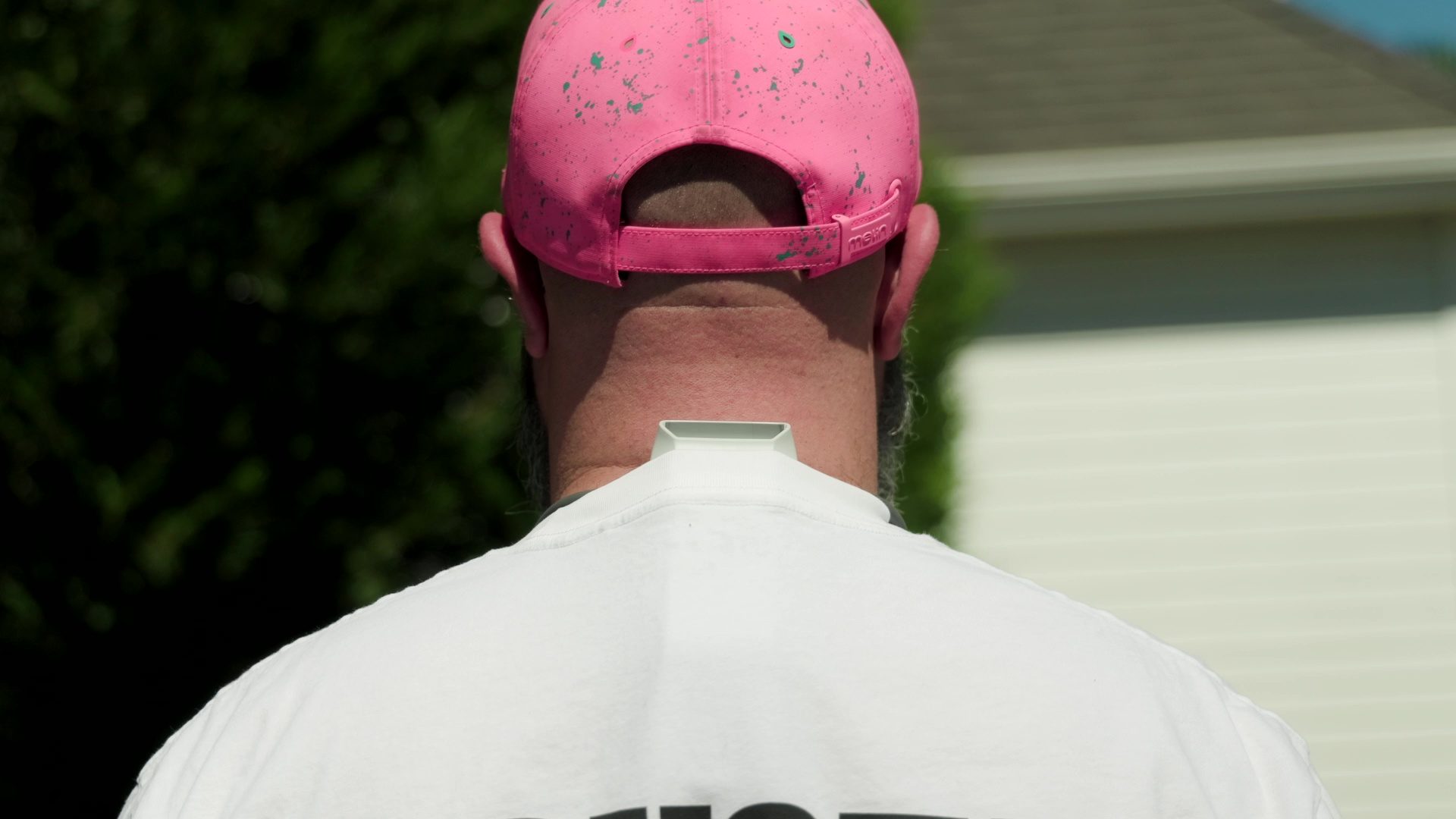
I wrote about Sony’s latest wearable cooler a few months ago, and I’ll admit that walking around with a gadget clamped behind my neck still isn’t exactly my definition of looking stylish. But scientists have just given me a pretty convincing reason to reconsider.

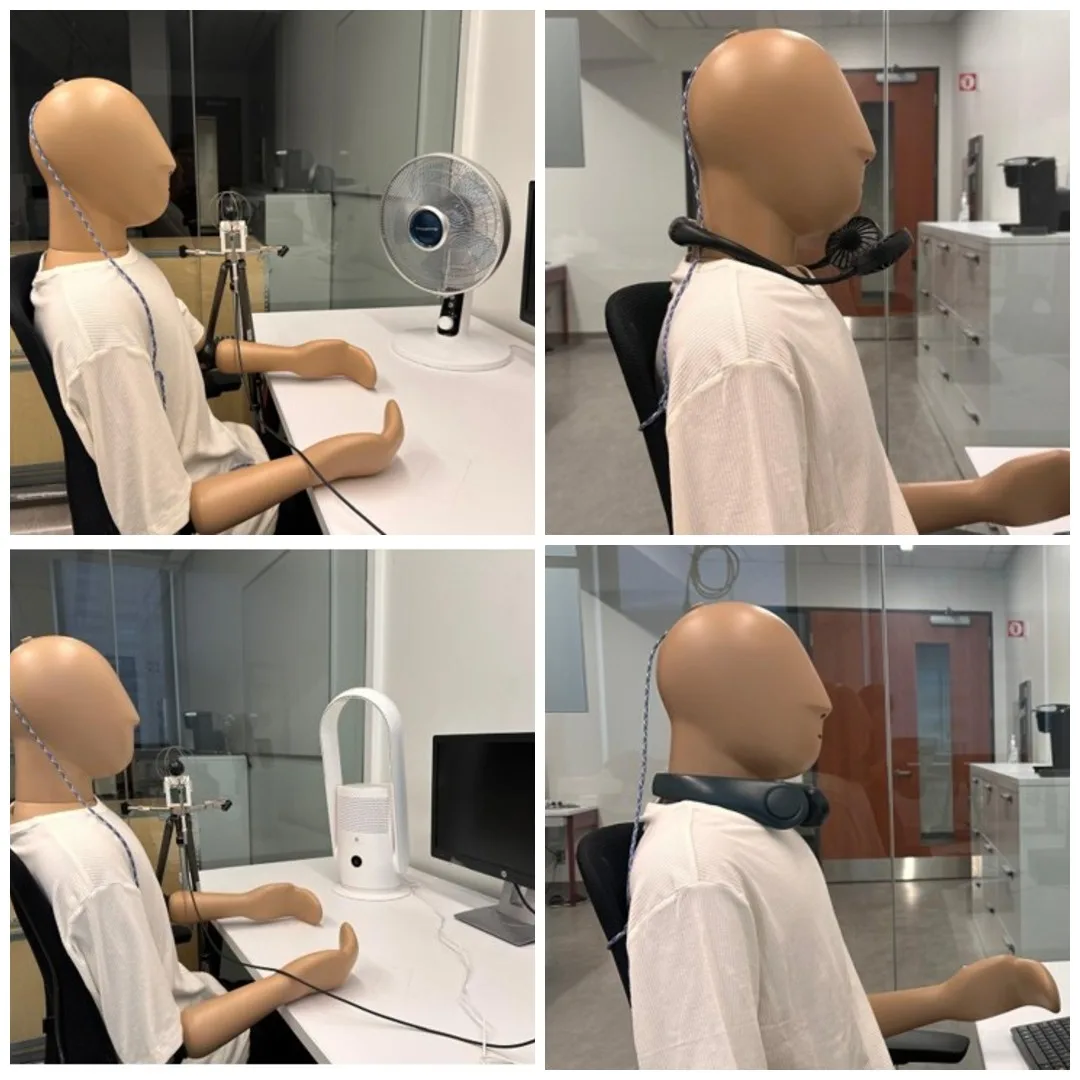
Researchers at Concordia University compared wearable face and neck fans against conventional bladed and bladeless desk fans, and found that targeting a small temperature-sensitive area of the body can provide surprisingly effective cooling. Wearable devices brought overall thermal comfort close to what larger desktop fans achieved while consuming less energy and creating fewer unwanted drafts for people nearby.

Your neck is surprisingly good at keeping you cool

The researchers tested four personal cooling devices in a controlled office at 25 degrees Celsius, using a 23-segment thermal manikin capable of measuring skin temperature, heat loss, and overall thermal comfort. This study found that the reason wearable cooling works so well comes down to where the air goes.

Your face and neck account for only around 5.5% of your body’s surface area, yet they are especially sensitive to temperature. Directing airflow toward those areas allowed the wearable fans to achieve whole-body comfort comparable to a bladeless desk fan or a conventional bladed fan running at low speed. The face-mounted fan increased heat loss from the face by as much as seven watts.

Advertisement

A full-size bladed desk fan still delivered the greatest cooling overall, so I wouldn’t throw yours away just yet. But it also created much higher air speeds that sent more unwanted airflow toward neighboring coworkers.

Sony may already be onto something

Sony takes the idea considerably further than the wearable fans in Concordia’s experiment. The £199 Reon Pocket Pro Plus sits against the back of your neck and uses two thermoelectric modules rather than relying solely on moving air. The company claims that its latest model delivers over 20% stronger cooling than its predecessor, with the cooling plate able to reach a surface temperature around 2 degrees Celsius lower under its test conditions.

It also monitors your environment and automatically adjusts its cooling, while Sony rates Smart Cool mode for up to 15 hours of battery life depending on conditions and settings. Concordia researchers see a bigger benefit to this kind of targeted cooling. If individuals can stay comfortable with personal devices, offices could potentially run centralized HVAC systems less aggressively, reducing building energy consumption. This becomes handy for hybrid workplaces where cooling an enormous office for a handful of employees makes little sense.

So yes, wearing a miniature climate-control gadget around my neck will probably continue making me look a little geeky. But I’d much rather look geeky than spend another summer surviving this heat wave.

Advertisement

Source link

Continue Reading

Tech

UK AI start-up Callosum secures $100m in seed funding round

Published

on

The company aims to lower AI costs by attaching each task to the model and hardware that best suits it.

Callosum, a UK-founded AI start-up that develops software to match specific AI tasks with the least expensive and most suitable models and chips, has raised $100m in early seed feeding. 

The round was backed significantly by the UK’s Sovereign AI Fund and led by venture capital firm Atomico with additional participation from investors Plural and DCVC. The organisation also has a partnership with chipmaker Cerebras Systems and has deals with Rebellions Inc and Axelera AI. 

Established in 2025, by two Cambridge University neuroscientists, Danyal Akarca who is the CEO and CTO Jascha Achterberg, Callosum software can direct specific AI tasks towards the models and chips best suited to the activity and financial requirements, as a means of showing that not every company requires high-end, powerful graphic processors or AI strategies. 

Advertisement

Callosum was the first investment to be disclosed by the UK’s Sovereign AI fund, which launched in April of this year. 

Kanishka Narayan, the UK minister for AI, said, “AI is nothing without the chips that underpin it and the eye-watering demand for them is only going to grow. In the race to develop and use AI, success will depend not just on having access to those chips, but on using them as efficiently as possible.”

In the race to develop the most efficient, cost-effective and powerful chips, a range of organisations globally have invested significant time, money and effort into expanding their capabilities. 

This week, UK AI hardware start-up Fractile announced it is in talks to raise funding of roughly $600m at a pre-money valuation of $6.5bn. Fractile aims to enable the scaling of cheaper AI token processing for faster model reasoning.

Advertisement

US AI company Etched raised $700m in a new funding round led by US trading firm Jane Street. The organisation builds inference clusters to make AI inference faster, cheaper and more efficient. 

In March of this year, global leader in the AI and chips space Nvidia, announced a new multi-year partnership with Thinking Machines Lab, which will be using Nvidia’s systems to train its AI frontier models.

Don’t miss out on the knowledge you need to succeed. Sign up for the Daily Brief, Silicon Republic’s digest of need-to-know sci-tech news.

Advertisement

Source link

Continue Reading

Tech

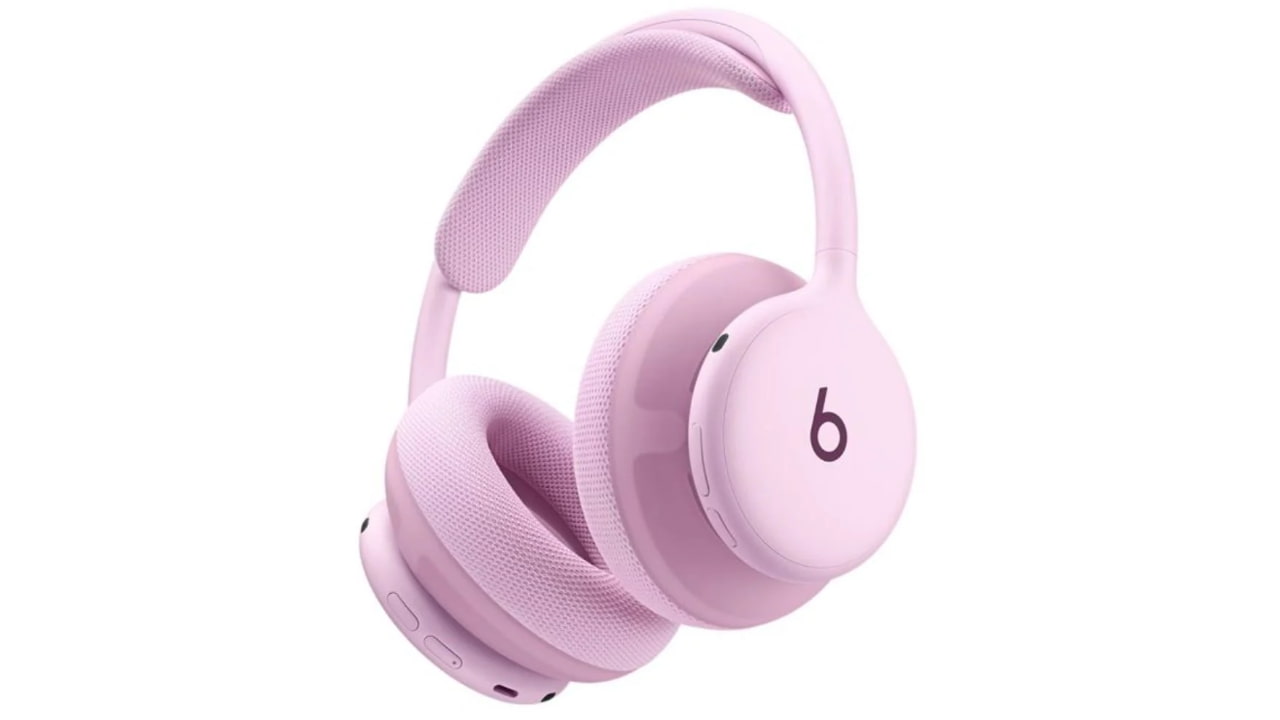
Beats 360 Leak Reveals $299 ANC Headphones With IPX4 and Replaceable Cushions

Published

on

Sweat and expensive over ear headphones have never been particularly good friends.

Beats may have decided to do something about that.

Retail listings for a new Beats 360 wireless headphone appeared briefly on Amazon UK and other websites before being removed, revealing what looks like a new $299 model designed as much for the gym as the airplane or office. Beats has not officially announced the headphones, so specifications, pricing, colors, and availability should remain firmly in the unconfirmed column for now.

The listings are not appearing out of nowhere. An unidentified Apple Bluetooth over ear headphone with model number A3577 passed through the FCC in May, and Beats teased an unreleased rounded headphone with World Cup players this summer. The retail leak now fills in most of the blanks.

Advertisement

And this might be more interesting than another Studio Pro.

Made to Sweat?

The biggest difference is the apparent IPX4 sweat and water resistance rating. The leaked retailer copy describes the Beats 360 as the company’s first sweat and water resistant over ear headphone. Assuming that survives the official announcement, Beats is clearly aiming at consumers who prefer full size headphones during workouts but have been understandably reluctant to soak their $400 ANC headphones every morning.

The ear cushions and headband cushion are also replaceable. The standard headphones are expected to ship with Performance Knit cushions, while softer UltraPlush versions and additional colors will be sold separately. That might sound cosmetic until you remember what headphone pads look and smell like after six months at the gym.

Being able to remove the parts that absorb sweat, replace them, or keep another set ready makes considerably more sense than pretending a damp cloth solves everything.

Advertisement

Someone at Beats has clearly been inside a locker room.

What Else Do We Know?

According to the removed listings, Beats 360 will feature adaptive Active Noise Cancellation with up to 1.75 times greater noise cancellation than the Beats Studio Pro, along with Transparency mode and Personalized Spatial Audio with dynamic head tracking. Beats is also claiming a new high fidelity acoustic platform with powerful bass, low distortion, and memory foam ear cushions designed to improve the acoustic seal.

Apple and Android users are both invited. One touch pairing is listed for both platforms, continuing the cross platform approach Beats already uses with the Studio Pro rather than reserving the experience primarily for Apple customers. Controls on the rear of the ear cups include volume, multifunction, power, and listening mode buttons.

Advertisement. Scroll to continue reading.
Advertisement

Call quality will reportedly use beamforming microphones and an AI trained noise reduction algorithm. Battery life is described only as “all day” with ANC enabled, which tells us almost nothing useful until Beats supplies an actual number.

The headphones fold flat and come with a woven ripstop carrying case. Oddly, the leaked packaging information says the USB-C charging cable is sold separately.

Apparently $299 buys the headphones but not the six inches of wire required to charge them. Courage.

Black, Pink, Sky, and Cloud appeared in product listings. Navy and Volt also appeared for replacement cushions, but that does not necessarily mean the headphones themselves will be offered in those colors.

Advertisement

Why Are Beats 360 Different?

The premium ANC market does not need another pair of wireless headphones with spatial audio and better microphones. Sony, Bose, Apple, Sennheiser, Bowers & Wilkins, and Beats itself already have that covered.

The workout focus changes the equation.

If the leaked $299 starting price is correct, Beats 360 would also arrive below some very serious competition. Beats Studio Pro officially sells for $349.99, Bose’s new QuietComfort Headphones 2nd Gen are $359, Bose QuietComfort Ultra 2nd Gen carry a $449 list price, Sony’s WH-1000XM6 list for $459.99, and Apple’s AirPods Max 2 remain $549.

That puts Beats in an interesting spot. It does not have to beat the Sony WH 1000XM6 or Bose QuietComfort Ultra 2nd Gen purely on ANC performance to make sense. It has to be good enough at noise cancellation and sound quality while being better suited to people who actually want to wear over ear headphones while running, lifting, or discovering that leg day remains a terrible idea.

Advertisement

Who Are They For?

The obvious customer is someone who dislikes earbuds during workouts but still wants ANC, spatial audio, strong integration with a smartphone, and pads that can be swapped after absorbing an alarming amount of perspiration.

Existing Beats Studio Pro owners have less reason to immediately reach for their wallets. We still don’t know whether Beats 360 sound better, how long the battery actually lasts, whether wired USB-C audio is supported, what Bluetooth codecs are included, or whether the 1.75x ANC claim translates into a meaningful real world improvement.

And we still don’t know whether Beats 360 will replace Studio Pro or live beside it as a more active lifestyle alternative.

That last possibility makes the most sense.

Advertisement
Advertisement. Scroll to continue reading.

Sony and Bose already fight over the business traveler. Apple has the luxury end covered with AirPods Max 2. Beats might have found some open grass by building the premium over ear headphone you can actually take into the gym without treating perspiration like an equipment failure.

We will know more when Beats decides to officially announce the product that half the internet has already seen.

Advertisement

Source link

Continue Reading

Tech

UWB Home Key proves itself again

Published

on

The Schlage Sense Pro is the latest smart lock to support Apple Home Key via Ultra Wideband, and while it’s an impressive solution, it’s largely an Apple-only lock at launch.

Ultra Wideband can automatically unlock your door as you approach, with greater reliability and performance than Bluetooth smart locks. So far, only one or two UWB smart locks have reached the market.

The Schlage Sense Pro, first shown off at CES 2026, is the latest. By all accounts, it could be the best yet.

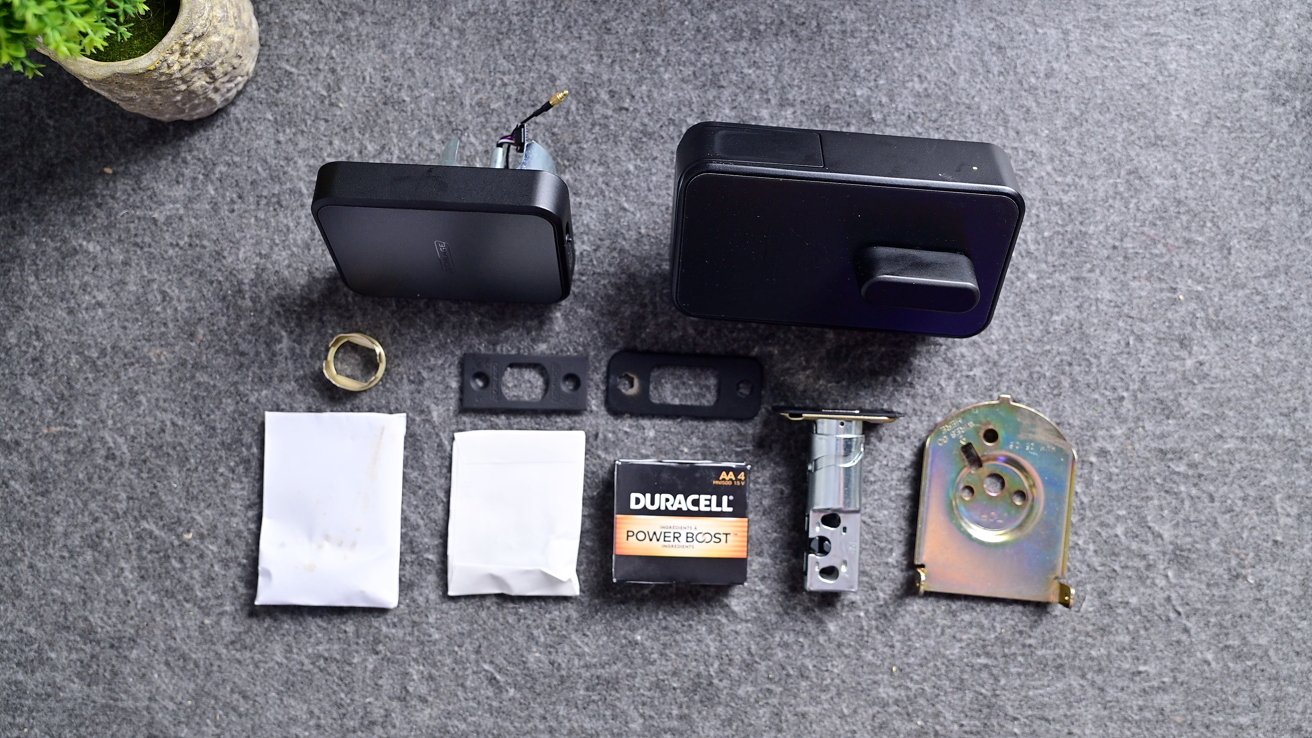
Electronic door lock components laid out on gray surface, including black lock units, metal latch and strike plates, screws in packets, mounting hardware, and a Duracell battery, with plant partially visible.

Schlage Sense Pro review: Everything included in the box

Advertisement

The box includes all essentials, such as installation hardware, four AA batteries to power the lock, and instructions. There are also pairing codes included both in the manual and inside the lock for Matter and Apple Home control.

It comes in both black and silver finishes, with the former being tested here.

Schlage Sense Pro review: Installation & design

Maybe it’s because I’ve installed countless smart locks over the years, but it didn’t take long to get the Schlage Sense Pro up and running. For moderately handy users with pre-drilled doors, it shouldn’t take more than 5-10 minutes to have it installed.

After removing the old deadbolt, you first insert the deadbolt into the edge of the door and secure it with the two medium-sized screws. Make sure you note which way is facing up, as denoted by the arrow.

Advertisement
Hand using a screwdriver to install or remove an electrical wall fixture, with exposed wires and metal mounting plate on an indoor wall.

Schlage Sense Pro review: Screw the exterior part to the interior mounting plate and route the wires through the hole.

Then, you move on to placing the exterior portion of the lock. This gets affixed to the interior mounting plate with the two long screws.

The two wires from the exterior portion plug into the back of the interior portion. After you tuck the wires away, the interior is screwed into place with the two tiny screws.

Person using a small screwdriver to tighten or loosen a screw on a rectangular black electronic device mounted on a wall, with one hand holding the device steady

Schlage Sense Pro review: The back slides onto the mounting plate and is then screwed into place itself.

Advertisement

Finally, the batteries are inserted into the top, and the cap is slid on. It’s stress-free, and as long as you have the holes in the door, you don’t need anything more than a regular Phillips screwdriver.

The lock has a very clean, minimalist appearance. The outside is largely devoid of lights, buttons, cameras, or other distractions, sans a subtle “Schlage” logo in the middle.

Hand reaching toward a wall-mounted electronic access panel with small red indicator lights, next to a closed door indoors

Schlage Sense Pro review: Lights on top show your approach, and a keypad will also appear

Only when the lock is activated do the lights for the keypad illuminate. There are lights along the top edge, too, that indicate your proximity to the lock.

Advertisement

I was impressed with the overall feel of the lock, as it’s mostly metal. It has a solid, strong, durable construction that helped it achieve its BHMA Grade 2 certification, which is high for a residential lock.

Schlage Sense Pro review: Many methods of entry

There’s a variety of ways to unlock the Schlage Sense Pro, and one noticeable way you can’t. You can use Apple Home Key via NFC or UWB, a passcode, or various apps and voice assistants such as Apple Home, SmartThings, or Amazon Alexa.

Product box showing compatibility logos for Schlage Home, Matter, and Built on Thread, with small printed text and website link against a white background on a gray surface

Schlage Sense Pro review: The lock supports Matter, and soon, Aliro

This gives users quite a bit of flexibility in how they access their home. Kids and guests can use codes, while primary members can use the Ultra Wideband or NFC.

Advertisement

In what will ultimately be a controversial move, Schlage opted to omit support for physical keys on this futuristic smart lock. There’s no getting around the fact that this will be a dealbreaker for some.

For me, this isn’t an issue. There’s no situation where I’d see the need for a physical key.

In some ways, it’s more secure because there is no way for your lock to be picked or bumped. Passcodes still give a fallback for when you don’t have your phone/watch with you, or there are users without smartphones in your home.

Hands assembling a small black electronic device on a gray table, inserting a cable or connector, with another larger black gadget nearby and a small potted plant in the corner

Schlage Sense Pro review: The bottom has an emergency USB-C port for power

Advertisement

If the lock ever runs out of batteries, there’s an emergency USB-C port hidden on the bottom of the outer portion. I always have a cable in the car parked in the driveway, so it’s not a concern, and you can draw power straight from your phone.

Schlage Sense Pro review: Smart home tech

Digging into the tech, the Schlage Sense Pro has Wi-Fi for use via the Schlage app. Alternatively, it supports Thread, though you need a Thread border router to take full advantage of it.

Person holding a smartphone showing a home security app screen, with a lock setup dialog open labeled Lock Name and buttons for Continue and Identify

Schlage Sense Pro review: Adding the lock to Apple Home

Wi-Fi can provide up to six months of battery life with regular use, while Thread can extend that to nine months. For Apple Home users, HomePod, HomePod mini, and Apple TV all act as Thread border routers.

Advertisement

For ecosystems, you can technically use the Schlage Sense Pro through all the major ones, such as Apple Home, Google Home, Amazon Alexa, and Samsung SmartThings. This is thanks to its Matter certification, which supports basic lock and unlock capabilities.

Hands holding a smartphone showing a smart home app, with a Home Key setup screen displayed over live camera feeds of a modern house interior and exterior

Schlage Sense Pro review: The lock supports Apple Home Key with NFC or UWB and will soon support Aliro for other ecosystems

Apple users get an early exclusive feature, though. The Ultra Wideband auto-unlock capability currently only works with Apple Home Key, and the same goes for NFC.

Schlage says that a future update will bring Aliro, the open version of Home Key, and will deliver UWB and NFC support for Samsung and other Android devices. Considering Ultra Wideband is the feature to buy this lock for, only Apple users should be considering this lock until the Aliro update arrives.

Advertisement

Schlage Sense Pro review: All about that UWB

The secret sauce to this lock, and the sole reason to buy it, is its use of Ultra Wideband technology. Apple first started adding ultra Wideband, or UWB, to iPhones with the iPhone 11 model and it’s found on Apple Watch, too.

Two black rectangular tech devices on a gray surface, one larger with a protruding clip, against a softly blurred background with colorful lights and a partially visible Apple poster

Schlage Sense Pro review: The latest UWB smart lock to hit the market

Compared to other wireless unlocking standards, UWB, in combination with Apple Home Key, is an unrivaled solution. Not counting more manual authentication methods like fingerprints or passcodes, most other locks use NFC or Bluetooth for auto-unlock.

Close-up of a closed glass door with a rectangular smart sensor or contact sensor mounted on the door frame and a matching piece on the adjacent brick wall

Schlage Sense Pro review: Outside view of the UWB lock

Advertisement

Those other solutions have drawbacks, though. Bluetooth is historically unreliable and slow, and NFC requires you to raise your phone or watch to the lock.

In all my testing, I’ve never found a Bluetooth lock that could reliably auto-unlock every time or do so quickly enough. They rely on geolocation to detect when you’ve arrived home before searching for a Bluetooth signal, and the door only unlocks once that connection is established.

Here, it uses Apple Home Key in the Wallet app, so no app needs to run in the background. UWB is also capable of tracking items in 3D space, as we see with AirTag, so it can gauge your position, angle of approach, speed, and distance as you approach your door.

The Schlage Sense Pro uses all of that information to determine your intent. If it senses that you’re about to open the door, it unlocks it as you approach.

Advertisement

In my weeks of testing, it has worked 100% of the time, no exceptions. It’s incredible and gives you peace of mind I’ve rarely experienced with other smart locks because I know the door will be open by the time I get to it.

Since it knows your speed, it adjusts the unlocking speed based on how quickly you’re approaching the door, so it doesn’t unlock too early or too late. It always unlocks just as my hand is about to reach the handle, and a confirmation appears on my phone and watch.

Close-up of a black smart door lock mounted on a white door, with a blurred indoor room and furniture visible in the background

Schlage Sense Pro review: Side profile view of the lock on the inside of the door

My favorite part of the process was that it simply worked. I test a lot of locks, which can be hard on the family when they may need to install new apps or set up new accounts each time.

Advertisement

I swapped the lock while my partner was away from the house. Once they arrived home and walked to the door, they walked right in without realizing it was a different lock or that the door had been locked at all.

They were part of our Apple Home, so the existing Home Key in their Wallet app worked without any changes. As they got home, the lock worked perfectly and let them in.

There’s no need to pull out your phone, wrangle kids while waiting for the door to unlock, or tap your Apple Watch on the lock while carrying bags of groceries. This lock works, and it works without effort.

Schlage Sense Pro review: Versus Aqara U400

At the time of this review, only two UWB locks on the market are worth considering. They’re the Aqara U400 and the Schlage Sense Pro.

Advertisement
Black rectangular smart doorbell with a circular button in the center mounted on a white wall beside a window showing a partial view of a person in plaid clothing

Schlage Sense Pro review: The Aqara U400 is the other big UWB lock out there

Interestingly, they come in at vastly different price points, which makes comparing the two somewhat easy based on your priorities.

Aqara, priced at $269 MSRP, is far cheaper, but it is mostly plastic with a lower strength rating. I like it, though, because it also supports fingerprints and has swappable battery packs instead of just AA’s.

The Schlage Sense Pro is more than $100 more expensive, but is more compact, stronger, and made of elevated, premium materials. The metal body and extra strength come with a price.

Advertisement

Between the two, I personally lean towards the Aqara U400 as the better choice for the average user. It’s a more approachable price point, and I don’t have to buy a bunch of AA batteries.

Hands holding a smartphone and a detachable battery grip with three cylindrical batteries on a dark tabletop, with a small potted plant visible in the upper left corner

Schlage Sense Pro review: The lock is powered by four AA batteries

It’s way easier to plug in a USB-C cable or pull out the battery pack to charge. I could use rechargeable AA batteries, but they don’t last as long as regular AA batteries.

People are surely going to disagree, but I think Aqara’s strength is sufficient. If the door doesn’t budge and someone wants into your home, your windows are a more likely target.

Advertisement

More locks mean more options for users, allowing them to choose the model that best suits their needs.

Schlage Sense Pro review: Should you buy?

Here’s the good news. The Schlage Sense Pro is a fantastic smart lock, through and through.

I love the robust metal construction, minimalist design, thoughtful features, high strength rating, and Apple Home Key support with Ultra Wideband. At the same time, it’s not cheap.

Box of Schlage Sense Pro smart lock on a table in a modern living room, with blurred shelves, decorations, and framed wall art in the background

Schlage Sense Pro review: Box for the Schlage Sense Pro

Advertisement

If you want a similar experience, you can make compromises and save a lot of money by opting for the Aqara U400. You could also save money and get a completely hidden smart lock without UWB like the Level Lock Pro.

For those who want the best lock, the Schlage Sense Pro is the one to beat. My only gripe is the AA batteries that power it.

I’d much prefer a swappable rechargeable battery. So as long as you’re an iPhone user and fine with the battery and price, it’s absolutely worth checking out.

Schlage Sense Pro review: Pros

  • Compact, minimalist design in black or silver
  • Ultra Wideband support to auto-unlock with Apple Home Key
  • Matter support for multiple ecosystems
  • Thread for better performance & battery
  • Fantastic performance
  • Supports up to 250 passcodes
  • Easy installation
  • Good battery life

Schlage Sense Pro review: Cons

  • No Aliro at launch for non-Apple ecosystems
  • Uses disposable AA batteries
  • Comparably expensive
  • Lack of a key could be dealbreaker

Schlage Sense Pro rating: 4 out of 5

Where to buy the Schlage Sense Pro

You can find the Schlage Sense Pro on Amazon for $398 in both black and silver finishes.

Advertisement

Source link

Continue Reading

Trending

Copyright © 2025