Connect with us

Tech

Why Diamond Transistors Are So Hard To Make

Published

on

Many things about diamonds seem eternal, including the many engineering problems related to making them work as a silicon replacement in semiconductor technology. Yet much like a diamond exposed to a stream of oxygen-rich air and a roughly 750°C heat source, time will eventually erase all of them. As detailed in a recent [Asianometry] video, over the decades the challenges with creating diamond wafers and finding the right way to dope pure diamond have been slowly solved, even if some challenges still remain today.

Diamond is basically the exact opposite as silicon when it comes to suitability as a semiconductor material, with a large bandgap (5.5 eV vs the 1.2 of silicon), and excellent thermal conductivity characteristics. This means that diamond transistors are very reliable, albeit harder to switch, and heat produced during switching is rapidly carried away instead of risking a meltdown as with silicon semiconductors.

Unlike silicon, however, diamond is much harder to turn into wafers as you cannot simply melt graphite and draw perfectly crystallized diamond out of said molten puddle. The journey of getting to the state-of-the art soon-to-be-4″ wafers grown on iridium alongside the current mosaic method is a good indication of the complete pain in the neck that just this challenge already is.

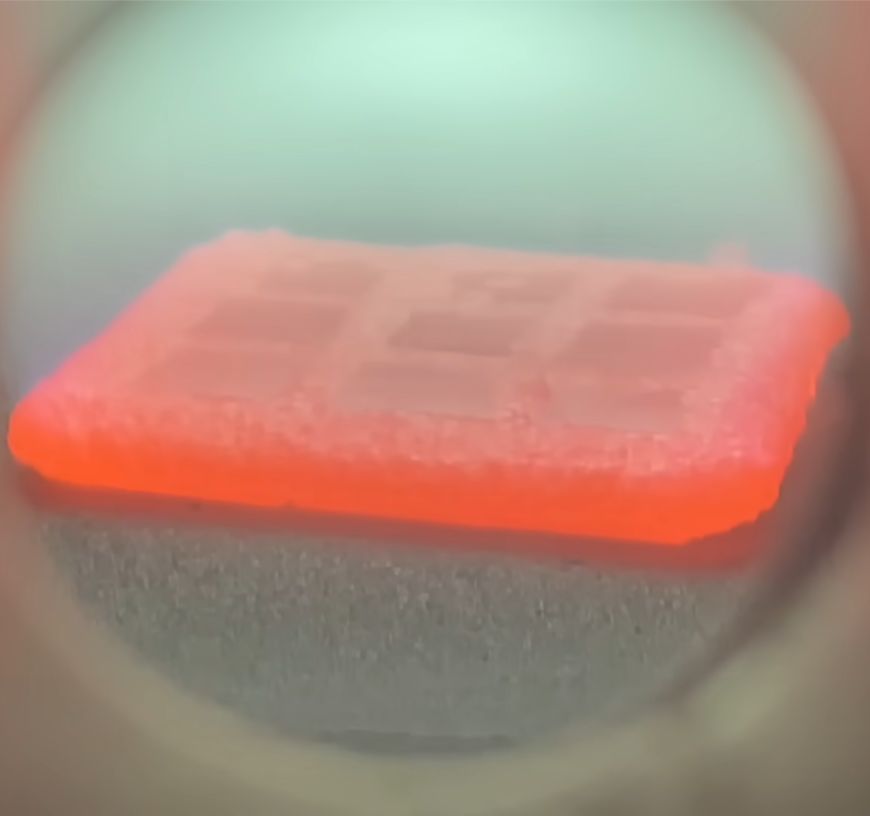
Mosaic method of growing a diamond wafer, as filmed by Asianometry.

Doping with silicon semiconductors is done using ion implantation, but diamond has to be special and cannot just have phosphorus and boron implanted like its sibling. The main challenge here is that of availability of charge carriers from this doping, with diamond greedily hanging on to these charge carriers unless you run the transistor at very high temperatures.

Since you can only add so much dopant to a material before it stops being that material, a more subtle solution was sought. At this point we know that ion implantation causes damage to the diamond lattice, so delta-doping – which sandwiches heavily doped diamond between non-doped diamond – was developed instead. This got P-type transistors using boron, but only after we pacified dangling carbon electron bonds with hydrogen atoms and later more stable oxygen.

Advertisement

State-of-the art switching with diamond transistors is currently done with MESFETs, which are metal-semiconductor field-effect transistors, and research is ongoing to improve the design. Much like with silicon carbide it can take a while before all the engineering and production scaling issues have been worked out. It’s quite possible that we’ll see diamond integrated into silicon semiconductors as heatsinks long before that.

Assuming we can make diamond work for semiconductor transistors, it should allow us to pack more and smaller transistors together than even before, opening up many options that are not possible with silicon, especially in more hostile environments like space.

Advertisement

Source link

Continue Reading
Click to comment

Leave a Reply

Your email address will not be published. Required fields are marked *

Tech

UK Supreme Court Affirms Ruling That Oatly Can’t Use ‘Milk’ In Its Almond Milk Branding

Published

on

from the the-almond-bothers dept

Back in 2023, we talked about a strange trademark dispute out of the UK concerning oat-based milk products. Specifically, Oatly, a large producer of oat milk, applied for a trademark in the UK for its slogan, “Post Milk Generation.” Dairy UK, a lobbying organization representing dairy farmers in the country, opposed the trademark in the application stage, arguing that a UK regulation prevented any company from using the word “milk” in conjunction with “products that are not mammary secretions.” Oatly successfully argued that its slogan did not run afoul of the regulation because it was both not suggesting that its product was milk and was instead describing the consumers of Oatly’s product, or the generation that was moving beyond milk. In other words, there was no association being made with milk here; in fact, the opposite was the messaging.

That should have been the end of this nonsense. Instead, Dairy UK appealed that decision and the London Court of Appeal reversed the lower court’s decision. Suddenly, Oatly could not trademark the slogan, nor use it on its products, ostensibly.

Oatly stated that the reversing of the decision was absurd and clearly a ploy by Dairy UK to limit competition with its members. The company appealed up to the UK Supreme Court which, amazingly, affirmed that Oatly cannot have its slogan trademarked.

The UK Supreme Court has unanimously ruled that Oatly cannot use its “Post Milk Generation” trademark on oat-based food and drink, handing a landmark victory to the dairy industry, as it contends with record-low farm numbers, falling retail volumes, and collapsing wholesale prices.

The judgment arrives at a precarious moment for British dairy. The number of British dairy farms has fallen to a record low of 7,010 — an 85% decline from an estimated 46,000 in 1980, according to industry estimates and the Agriculture and Horticulture Development Board (AHDB). 

Advertisement

It’s hard to see this as anything other than a national-level court falling all over itself to protect a domestic industry from foreign competition. The explanation the court offered for its decision is equally confusing. For one, while Oatly pointed out again that its use of the word “milk” in the slogan is not describing the product, but the consumer, the court said that doesn’t matter at all. The word instead simply suffers from a blanket ban on any marketing or trade dress if it doesn’t come from a nipple.

Then, when Oatly also points out that its use obliquely informs the public that the product does not contain milk — hence the “post milk generation” language –, the court points out that because Oatly has stated that the slogan doesn’t describe the product, any insinuation about the product itself doesn’t count as it’s not direct and clear enough.

The second: even if the word “milk” is caught, is Oatly saved by an exception that allows protected terms when they “clearly” describe a quality of the product, such as being milk-free? Again, the court said no. Lords Hamblen and Burrows, writing for the unanimous panel of five justices, held that the slogan describes a type of consumer — younger people turning away from dairy — rather than anything about the product itself.

Even if it could be read as referencing a milk-free quality, it does so in an “oblique and obscure way” that fails to clarify whether the product is entirely milk-free or merely low in dairy content.

This is the court acknowledging explicitly that Oatly’s slogan is not describing the product, but the consumer. It also claims that a slogan that describes a consumer that has moved beyond milk isn’t clear enough as to whether the product is sufficiently non-milk. What?

Advertisement

All the court has demonstrated is that Oatly is definitely not trying to call its product milk and is not trying to confuse anyone with its slogan. For that, Oatly doesn’t get its trademark.

Again, the lobbying efforts here are quite clear. And they appear to have influenced the court’s decision. In fact, what Dairy UK is trying to restrict goes well beyond the word “milk” to the point of absurdity.

The Supreme Court has emerged from years of lobbying action. An investigation by Greenpeace’s Unearthed, based on documents obtained through disclosure, revealed that Dairy UK had been lobbying for tighter enforcement of dairy term protections since at least 2017. 

Committee meeting notes showed the association presented “the issue of misuse of protected dairy terms” to a Business Experts Group panel and was subsequently tasked by Defra with developing a briefing paper for the Food Standards Information Focus Group (FSIG).

Dairy UK submitted a position paper to Defra in November 2022, backing FSIG draft proposals that would have gone significantly further — banning descriptors such as “yoghurt-style,” homophones like “mylk,” and even phrases like “not milk.” Forty-four plant-based companies and NGOs, including Alpro, Oatly, Quorn, and the Good Food Institute, co-signed an open letter opposing the restrictions.

Advertisement

If we’ve reached the point in which someone who doesn’t produce milk can’t point out on its trade dress that their product is “not milk”, then we’ve crossed the Rubicon into a land of dumb.

Was the court solely looking to protect suffering UK dairy farmers in its decision? I can’t say so for sure. But what is very clear is that nothing in its decision has anything to do with protecting the public from deception, which is the entire point of trademark law to begin with.

Filed Under: oat milk, post milk generation, trademark, uk

Companies: dairy uk, oatly

Advertisement

Source link

Continue Reading

Tech

Humax gets onboard the Freely train with the Aura EZ 4K TV recorder

Published

on

Humax has announced the Aura EZ 4K TV Recorder, its latest device to support the Freely streaming platform. Available to pre‑order now for £249, the Aura EZ combines traditional TV recording with the latest streaming apps.

Following on from the previous Aura, setup is fairly simple as users can plug in the Aura EZ and start watching within minutes. When connected to an aerial, the recorder can capture up to four channels at once while playing a fifth live. A 2TB hard drive stores up to 1,000 hours of recordings, giving families plenty of space for shows and movies.

Equipped with Dolby Digital Plus audio, this TV recorder supports 4K resolution and HDR programming. There’s a dedicated button for accessing Freely, while scheduling recordings is straightforward with a press of the menu button revealing a seven‑day EPG TV guide with forward and backward navigation.

Humax Aura EZ with FreelyHumax Aura EZ with Freely
Image Credit (Humax)

While all of these features are relatively common for modern TV recorders, their integration with Freely is the headline feature. When connected to Wi-Fi, users gain access to more than 60 live channels and over 75,000 hours of on‑demand content.

Advertisement

Advertisement

Services include BBC iPlayer, ITVX, Channel 4, Channel 5, U, WATCH FREE UK, and PBS America. Exclusive 4 channels (4Homes, 4Life, and 4Reality) add further variety. No aerial or dish is required, and most importantly, there are no in-app subscription fees for the above.

The Freely Mini‑Guide makes switching between live and on‑demand seamless, while features like pause, restart, and “My List” add flexibility.

Humax also plans to release the Aura EZ app, allowing users to schedule and manage recordings remotely. This ensures favourite shows are always ready to watch, even when away from home.

With its blend of recording power and streaming convenience, the Aura EZ positions Humax firmly in the Freely ecosystem. At £249, it offers a premium yet accessible way to modernise existing TVs without replacing them.

Advertisement

Source link

Continue Reading

Tech

Louis Vuitton, Dior, and Tiffany fined $25 million over data breaches

Published

on

Louis Vuitton, Dior, and Tiffany fined $25 million over data breaches

South Korea has fined luxury fashion brands Louis Vuitton, Christian Dior Couture, and Tiffany $25 million for failing to implement adequate security measures, which facilitated unauthorized access and the exposure of data belonging to more than 5.5 million customers.

All three brands are part of the Louis Vuitton Moët Hennessy (LVMH) group and suffered data breaches [1, 2, 3] after hackers gained access to their cloud-based customer management service.

The Personal Information Protection Commission (PIPC) in South Korea says that in the case of Louis Vuitton, an employee’s device was infected with malware, which led to compromising their software-as-a-service (SaaS) and leaking of data for 3.6 million customers.

Wiz

Although the product isn’t named, Google researchers linked the campaigns to the ShinyHunters gang, who targeted Salesforce platforms. The threat actor later claimed the breach of LVMH systems.

The breaches at the three regional brands last year exposed sensitive customer data, including names, phone numbers, email addresses, postal addresses, and purchase histories.

Advertisement

PIPC says that Louis Vuitton had been operating the SaaS tool since 2013, but “did not restrict access rights to Internet Protocol (IP) addresses, etc., and did not apply secure authentication methods when personal information handlers accessed the service from outside.”

For failing to adequately secure access to customer data, the South Korean data protection agency imposed a $16.4 million fine on Louis Vuitton and ordered the company to announce the penalty on its business website.

At Dior, the breach occurred via a phishing attack on a customer service employee, who was tricked into granting the hacker access to the SaaS system, exposing data for 1.95 million customers.

Dior had been using the system since 2020, but didn’t implement allow-lists, didn’t place bulk data download restrictions, and failed to inspect access logs, delaying the discovery of the breach for over three months.

Advertisement

Additionally, Dior South Korea disclosed the breach to PIPC five days after learning about it. Under PIPA, organizations are required to notify the data protection agency within 72 hours from the time of becoming aware of a personal information leak.

Due to these violations, PIPC announced a $9.4 million financial penalty for Dior South Korea.

Tiffany was breached in a similar way, with attackers using voice phishing to trick a customer service employee into giving them access to the SaaS system. However, the impact was far lower in this case, with 4,600 clients exposed.

Similar to the other two cases, Tiffany also neglected to implement IP-based access controls and bulk data download restrictions and did not notify impacted individuals within the legally specified time frame. The brand received a $1.85 million fine.

Advertisement

PIPC emphasized that SaaS solutions do not exempt companies from their responsibility to securely manage client data, nor does it transfer that responsibility to the vendors of these solutions.

Modern IT infrastructure moves faster than manual workflows can handle.

In this new Tines guide, learn how your team can reduce hidden manual delays, improve reliability through automated response, and build and scale intelligent workflows on top of tools you already use.

Source link

Advertisement
Continue Reading

Tech

Airbnb plans to bake in AI features for search, discovery and support

Published

on

Airbnb has taken its time to launch AI features within the app, but CEO Brian Chesky on Friday said the company is now planning to bake in features powered by large language models that would help users search for listings, plan their trips, and aid hosts in managing their properties.

Speaking at the company’s fourth-quarter conference call, Chesky said the company wants to increase its use of large language models for customer discovery, support and engineering.

“We are building an AI-native experience where the app does not just search for you. It knows you. It will help guests plan their entire trip, help hosts better run their businesses, and help the company operate more efficiently at scale,” he said.

The company separately said it is testing a new feature that lets users search and ask questions about properties and locations using natural language queries.

Advertisement

Currently, Airbnb offers an LLM-powered customer service bot, for some personalization, and communications. The new AI search feature is expected to “evolve into a more comprehensive and intuitive search experience that extends through the trip.”

Questioned by analyst whether Airbnb would roll out sponsored property slots within AI search, Chesky said the company wants to get the design and user experience right first.

“AI search is live to a very small percentage of traffic right now. We are doing a lot of experimentation. Over time, we are gonna be experimenting with making AI search more conversational, integrating it into more than the trip, and, eventually, we will be looking at sponsor listings as a result of that,” Chesky said, adding that Airbnb would consider designing an ad unit that fits the conversational search flow.

Techcrunch event

Advertisement

Boston, MA
|
June 23, 2026

Chesky said Airbnb plans to tap the AI expertise of its new CTO, Ahmad Al-Dahle (he worked on Meta’s Llama models previously), to use its trove of identity and review data to make the app more useful.

Advertisement

Airbnb claimed its AI-powered customer support bot, launched in North America last year, now handles a third of customer problems without needing any human intervention. Chesky noted there are plans to enable customers to call the AI bot for support, and expand language coverage to customer support as well.

“A year from now, if we are successful, significantly more than 30% of tickets will be handled by a custom service agent, in many more languages, in all the languages where we have live agents. AI customer service will not only be chat, it will be voice,” he said.

The company is also thinking about increasing AI usage internally. Airbnb said 80% of its engineers use AI tools, but the goal is to get to 100%.

Airbnb reported better-than-expected revenue of $2.78 billion in the fourth quarter, up 12% from a year earlier.

Advertisement

Source link

Continue Reading

Tech

This could be our first look at Samsung’s upcoming wide foldable phone

Published

on

Folks over at Android Authority have pieced together an animation from an early build of One UI 9, Samsung’s version of Android 17, and it gives us the new form factor and the design of the purported Wide Fold.

The outlet has shared what appears to be an introductory device animation, depicting a swipe-up gesture on the cover screen that reveals a list-type content, then the handset unfolds, and the content expands on the main screen.

A familiar animation, but an unfamiliar shape

What other details does the animation reveal? First, the Wide Fold’s cover screen could come with a punch-hole camera located in the center. It would carry a rather boxy profile, rather than the rounded edges we’re used to seeing on non-foldable smartphones.

As the phone unfolds, we can also see a punch-hole camera on the main screen (top center of the right half). However, it is the phone’s shape and size, and how unusual it looks, that strike me the most.

So far, Samsung’s foldables have had a rather tall external screen and a broad, book-style inner screen.

Advertisement

While it provides more than enough screen estate for multitasking and productivity, it doesn’t have the most user-friendly aspect ratio for modern-day content (both on YouTube and on OTT platforms).

A major shift in Samsung’s foldable philosophy

The cover screen, as shown in the animation, appears dramatically shorter and wider than the tall, narrow exterior displays on existing Galaxy Z Fold models.

Based on the proportions depicted, the outer display appears closer to a 16:10 (height-to-width) aspect ratio in portrait orientation than to the elongated 20:9-style screens Samsung typically uses.

Meanwhile, the inner display appears very close to 3:4 (height-to-width), only slightly narrower, giving it a distinctly tablet-like feel when unfolded. Unlike the Fold 7’s inner screen, the Wide Fold’s isn’t in the shape of a square.

What does that mean for users?

Well, the exterior screen should feel more like a normal phone and provide a wider keyboard (which means fewer typos).

The inner screen, on the other hand, should provide a better content-viewing experience (without the horizontal bars at the top and the bottom).

Advertisement

Given that the Wide Fold’s animation is buried deep in the One UI 9 test build, it’s safe to conclude that Samsung is planning to launch the handset alongside the Fold 8 and the Flip 8 at the Galaxy Unpacked event in the third quarter of the year (likely in July or August 2026).

Source link

Advertisement
Continue Reading

Tech

Funding still the biggest challenge in 2026

Published

on

Scale Ireland also found that 35.4pc of respondents to its annual survey were unaware of the landmark EU AI Act.

Irish founders have pointed fingers at funding as their biggest concern for the fifth year in a row, finds the latest annual Scale Ireland State of Start-up Survey, published today (13 February).

Scale Ireland surveyed 209 founders and CEOs of tech companies from Ireland. Nearly 75pc of them told surveyors that attracting private capital is “difficult” or “very difficult”.

Similar numbers found it hard to attract private capital back in 2022 – when the report was first launched – as in 2025, when Scale Ireland reported 80pc of respondents were finding it hard to attract capital.

Advertisement

This finding is in line with a 2025 Government report which found that Irish scale-up enterprises would face a €1.1bn gap in equity financing over the next three to five years.

“While funding remains the biggest issue for start-ups and scaling companies, there are also considerable and persistent problems with enterprise supports. They are far too complicated,” said the not-for-profit Scale Ireland’s CEO Martina Fitzgerald.

Compared to that earliest 2022 report, which found that one in four business leaders said recruiting and retaining staff was their biggest challenge, in 2026 only 9.1pc said the same.

The large majority of businesses surveyed (88.5pc) for 2026 said they did not use the Key Employment Engagement Programme (KEEP) to recruit and retain staff. 45pc believed the scheme needs to be reformed.

Advertisement

More than 60pc of the surveyed founders said that government supports – such as the KEEP scheme – are the “most critical” to successfully scaling a business.

However, there is a strong indication that founders don’t find the available supports for start-ups and scale-ups enough. More than 66pc of the survey respondents are not confident that Ireland is moving in the right direction in this instance, while 30.6pc are “confident” or “very confident” about this.

Meanwhile, more than 94pc of founders have already deployed or are prepping to deploy AI in their companies, the latest survey has found. 85% believe AI will add value to their company’s performance.

Other reports suggest that AI’s effects on the bottom line in Ireland are still expected to be lukewarm. According to PwC’s AI Agent Survey, 53pc of Irish participants see clear productivity boosts from AI agents, but only 38pc experience real cost reductions.

Advertisement

On top of that, Scale Ireland found that 35.4pc of its respondents were unaware of the landmark EU AI Act, while around 36pc said that they don’t know what impact the law will have on their business. Fitzgerald said that this needs to be “addressed urgently”.

The EU AI Act is arguably the most robust and detailed form of AI regulation in the world. The act is meant to regulate AI technology through a risk-based approach – the riskier an AI application is, the more rules apply to it.

“The survey demonstrates that, while progress has been made in areas such as the R&D tax credit, other challenges for the sector are very persistent,” said Scale Ireland chair Brian Caulfield.

“Start-up and scaling companies remain hugely undercapitalised relative to US peers. Greater incentives are required to encourage private investment by angels and to mobilise pension fund savings to invest in indigenous enterprises.”

Advertisement

Don’t miss out on the knowledge you need to succeed. Sign up for the Daily Brief, Silicon Republic’s digest of need-to-know sci-tech news.

Source link

Advertisement
Continue Reading

Tech

VR’s golden age is over, and there wasn’t much gold there

Published

on

It was promised as a new age for businesses. Virtual reality, augmented reality, mixed reality – in whatever shape it took, this was going to be the 21st century game-changer. No more staring at screens or using a mouse. That’s ancient, 20th century thinking, that is.

This new reality would see the advent of true hands-free computing and unparalleled remote experiences, wherever in the world professionals were based. From prototyping to healthcare diagnoses, it heralded a new age. And, like those stuck in Casablanca, we waited. And waited. And waited.

Source link

Advertisement
Continue Reading

Tech

Sony Promo Codes and Discounts: 45% Off

Published

on

Sony makes some of the best electronics we’ve tested across a dizzying array of categories, from TVs and audio gear to cameras and gaming consoles. Sony products constantly occupy top slots on our Best TVs and Best OLED TVs lists, Best Wireless Headphones, and Best Cameras guides. If you’re shopping for products from any of those categories, you can pay a little less with our Sony promo codes for deals like 45% off Bravia Televisions, 30% off Sony headphones and earbuds, 15% off cameras and lenses, and more.

Sony Promo: 45% off Bravia Televisions

Sony Bravia models rank among the best TVs we’ve reviewed, from premium models like the revolutionary Bravia 9 QLED and brilliant Bravia 8 II OLED, to the more mid-tier Bravia 5, all of which are available on hot Sony deals right now, with this new promo for up to 45% off.

Use Sony Coupons and Save 30% off Sony Headphones and Earbuds

Sony has been synonymous with portable audio since the Walkman, and wireless headphones like the WH-1000XM series offer great performance and durability. We’re constantly putting them atop our list of the best wireless headphones thanks to excellent sound, feature-rich design, and noise-cancelling that ranks among the best in the business. With Sony online coupons, you can get great deals on Sony’s latest WH-1000XM6 headphones, which we loved for their upgraded sound and class-leading noise canceling, as well as the still-great previous generation, the WH-1000XM5.

Looking for earbuds? Sony’s nimble, noise-killing WF-1000XM5 are also on sale, as are plenty of other options from the brand’s diverse lineup. Click the link to get 30% off Sony headphones and earbuds goodness with this Sony promo code and Sony coupons.

Advertisement

Sony Discount: 15% off Sony Cameras and Lenses

Sony makes some of the best consumer cameras on the market. In fact, we recently named the Sony A7V the best mirrorless camera you can buy, and the previous A7 IV was similarly fabulous. Both are on great sales through these new offers, letting you grab serious image quality with 15% off our favorite Sony cameras and lenses.

Get 10% off or $25 off Sony TVs on Your First Purchase When You Sign Up for Emails

Looking for even more of the best TVs from Sony? Sign up for email alerts, and you could save 10% on a Sony TV or $25 off other Sony products.

Become a Sony Member to Earn Points

Love a great Sony deal? Join the My Sony Membership Program and you could earn Sony’s My Points rewards toward more good stuff by joining, making eligible purchases, or through other Sony promotional opportunities (full terms available here). It’s a free way to earn credits or receive other special benefits or offers. Join the My Sony Membership Program and start earning points today.

Source link

Advertisement
Continue Reading

Tech

How to watch England vs Scotland: Free Streams, TV Channels & Preview

Published

on

The England vs Scotland T20 World Cup 2026 match could very well be a virtual knockout. Unfortunately for English fans, that’s because Harry Brook’s side has had a bumpy start to their campaign. Despite looking strong on paper, they only managed a narrow escape against Nepal in their opener, thanks to Sam Curran defending 10 runs in the final over. The West Indies weren’t as forgiving, however, and handed England a 30-run defeat.

If you’re away from home right now you can use a VPN to unblock your usual stream from anywhere.

Swipe to scroll horizontally

Source link

Continue Reading

Tech

Indian pharmacy chain giant exposed customer data and internal systems

Published

on

A security lapse by one of India’s largest pharmacy chains allowed outsiders to gain full administrative control of its platform, exposing customer order data and sensitive drug-control functions, TechCrunch has exclusively learned.

The issue affected DavaIndia Pharmacy, the pharmacy arm of Zota Healthcare, which operates a large network of retail outlets across India. Security researcher Eaton Zveare told TechCrunch that he discovered the flaw after identifying insecure “super admin” application programming interfaces on DavaIndia’s website and privately shared details with Indian cybersecurity authorities.

The bug is now fixed, and Zveare disclosed his findings.

The exposure comes as Zota Healthcare rapidly scales DavaIndia Pharmacy’s retail business. The Gujarat-headquartered company operates more than 2,300 DavaIndia stores across India, including 276 new outlets announced in January, and plans to add another 1,200 to 1,500 over the next two years.

Advertisement

Zveare told TechCrunch that the flaw stemmed from insecure admin interfaces, which allowed unauthenticated users to create “super admin” accounts with high privileges.

With that level of access, an attacker could view thousands of online orders containing customer information, modify product listings and prices, create discount coupons, and change settings governing whether certain medicines required a prescription, the researcher said.

Based on system timestamps, Zveare said the vulnerable administrative interfaces appeared to have been live since late 2024. The access exposed nearly 17,000 online orders and administrative controls spanning 883 stores, he said, allowing changes to product pricing, prescription requirements, and promotional discounts. Zveare said the access allowed edits to website content that could have been used for defacement or disruption.

Pharmacy order data can be particularly sensitive, as it may reveal information about a person’s health conditions, medications or other private purchases. Exposure of such data, even without evidence of misuse, carries heightened privacy and patient-safety risks compared with other consumer information.

Advertisement

“Customer information was linked to their orders,” said Zveare. “This includes name, phone numbers, email IDs, mailing addresses, total amount paid, and the products purchased. Since this is a pharmacy, the products being purchased could be considered private and even embarrassing for some people.”

Zveare said he reported the issue to CERT-In, India’s national cyber emergency response agency, in August 2025. The vulnerability was fixed within weeks, though confirmation from the company took longer and was provided to the cyber authorities in late November, he said.

Sujit Paul, chief executive of Zota Healthcare, did not respond to emails sent by TechCrunch last month. The researcher said there was no indication the flaw had been exploited before it was patched.

Source link

Advertisement
Continue Reading

Trending

Copyright © 2025