Connect with us
DAPA Banner

Tech

Why Ford Says New Mustang GTD Owners Shouldn’t Drive Their Cars For 30 Days

Published

on


The Ford Mustang GTD is unquestionably the halo performance car in Ford’s lineup right now. It has the same basic shape as a Mustang, but under its skin, it’s much more like a supercar than your standard-issue Mustang. Taking ownership of one of these 800-horsepower, exotic Mustangs is not an easy process. 

For starters, you’ll have to shell out the approximately $350,000 that the GTD costs, and that’s only if you’re lucky enough to get the opportunity. Ford requires prospective Mustang GTD buyers to submit an application, through which the company determines who the GTD allocations will go to. Should you be fortunate enough to have your Mustang GTD application accepted so you can begin the order process and later take delivery of your car, Ford then recommends that owners wait an additional 30 days after delivery before they actually drive their GTD on the road.

Advertisement

The reason is not for something mechanical; it’s because of the paint on the GTD’s unique carbon fiber body panels, which Ford says needs an additional 30 days to cure before any sort of paint protection film (PPF) is applied. The Mustang GTD’s body is wider and more aggressive than the regular Mustang’s and uses carbon fiber panels throughout. The car’s fenders, hood, trunk lid, roof, and door sills are all made of the exotic, lightweight material — to which Ford then applies the paint color of the customer’s choice, with nearly unlimited custom options for buyers who want something out of the ordinary.

Advertisement

What’s an extra 30 days?

Because of the carbon-painted panels, Ford recommends Mustang GTD owners wait the extra time before driving their cars. More specifically, owners should wait 30 days after delivery before applying paint protection film. PPF is a clear film that’s used to protect paint jobs from long-term sun and water damage, as well as the inevitable rock chips and road grime you get while driving. It’s a popular addition for cars of all types these days, and most would agree that PPF is a necessity on a car as rare and expensive as a Mustang GTD. Even more so with the likelihood of the car’s extra-wide tires throwing up rocks onto the paint.

If you were to ignore Ford’s advice and apply PPF to the car before the paint has fully cured, it could result in permanent air bubbles and other long-term paint damage — which is undesirable on any car, and even more so on a Mustang GTD. The good news is that experienced PPF installers should be able to look at the car and know exactly when the paint has cured.

It might be a bummer take delivery of your brand-new, carbon-bodied Mustang GTD and then have to wait to go for a spirited drive. We’re assuming most owners will be fine waiting an extra 30 days before enjoying their cars. Because if you’ve already gone through the long process of having your application chosen and then spec’ing out your dream GTD build, what’s an extra 30 days of patience?

Advertisement


Source link

Advertisement
Continue Reading
Click to comment

You must be logged in to post a comment Login

Leave a Reply

Tech

I can’t help rooting for tiny open source AI model maker Arcee

Published

on

Arcee, a tiny 26-person U.S. startup that built a massive, 400B-parameter open source LLM on a $20 million shoestring budget, has released its new reasoning model. Arcee calls the model Trinity Large Thinking — and it’s the most capable open-weight model “ever released by a non-Chinese company,” claims CEO Mark McQuade to TechCrunch.

As that comment implies, Arcee has a goal that I can’t help but root for: It wants to give U.S. and Western companies a model that gives them no reason to use a Chinese-based one.

While Chinese models are extremely capable, they are perceived as risky, putting power, and perhaps data, into the hands of a government that doesn’t share all of the Western world’s ideals.

With Arcee, companies can download the model, train it to their own needs, and use it on premises. Companies can also use Arcee’s cloud-hosted version, accessible via API.

Advertisement

While Arcee’s models are not outperforming the closed source models from the big labs like Anthropic or OpenAI, they’re not being held hostage by the whims of those giants, either.

For instance, Claude, with its exceptional abilities to code, has been a popular choice for users of open source AI agent tool OpenClaw. But Anthropic pulled the rug out from them last week when it told users that their Anthropic subscriptions will no longer cover OpenClaw usage — they will have to pay additionally for that. (In February, OpenClaw creator Peter Steinberger said he was joining Anthropic’s biggest rival, OpenAI.)

In contrast, McQuade proudly points to data from OpenRouter that says it has become one of the top models used with OpenClaw.

Techcrunch event

Advertisement

San Francisco, CA
|
October 13-15, 2026

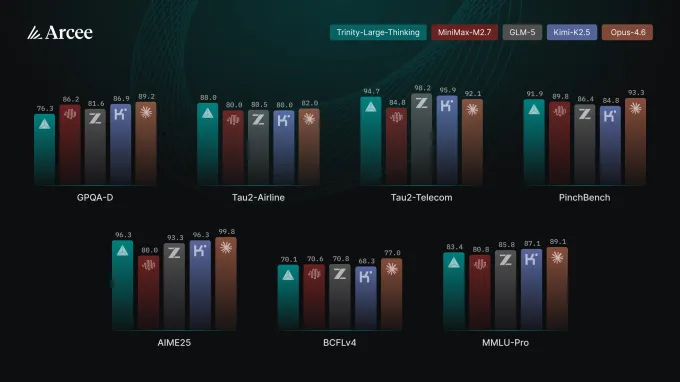
So, how good is Trinity Large Thinking? It is comparable to some of the other top open source models, according to the benchmark results it shared with TechCrunch.

Advertisement
Arcee Trinity large thinking Benchmarks
Arcee Trinity large thinking BenchmarksImage Credits:Arcee / Arcee

As we previously reported, it is not a head-to-head threat to the big cheese among U.S.-built open models: Meta’s Llama 4. But it also doesn’t have the odd, not-really open source license issues of Meta’s model. All of Arcee’s Trinity models are released under the gold standard for OS licenses, Apache 2.0.

Just to be clear, there are also countless other U.S. startups offering open source models and, as a fan of the ingenuity of startups, I’m rooting for them, too.

Source link

Continue Reading

Tech

How Long Can You Drive With Expired Registration? What Florida Law Says

Published

on


The internet has given us many things, including the infamous “Florida Man” trope. That last one isn’t the nickname of an unknown cryptid stalking the swamps of the Sunshine State; instead, it refers to a seemingly never-ending series of headlines featuring random Floridians doing wild and crazy things, usually involving one of the state’s many creatures (think possums, alligators, snakes, and iguanas). Oh, and they’re all true. 

Florida is also home to some truly weird traffic laws, but “Florida Man Drives With Expired Registration” doesn’t have quite the same ring as “Florida Man Ties Elephant to Parking Meter Without Paying Fee.” Still, the rule around expired tags in the state is a bit odd. Fundamentally, though, it’s not too dissimilar to other states: vehicles in Florida must have a valid registration, and letting it lapse can lead to a range of unpleasant consequences. 

However, section 320.07 (subsection 3A) of the state statutes lays out that anyone with an expired registration of less than six months is only committing “a noncriminal traffic infraction, punishable as a nonmoving violation.” There’s also a caveat to this otherwise very straightforward law: Police can’t write up a citation for it “until midnight on the last day of the owner’s birth month of the year the registration expires.” If it’s been expired for more than six months, though, the proverbial can of worms gets opened. First-time offenders may be subjected to a monetary penalty, while second-time offenders could face a second-degree misdemeanor with a $500 fine plus up to 60 days in prison.

Advertisement

Vehicle registrations in Florida

Florida wouldn’t make it difficult for itself, would it? Barring some truly obscure traffic laws that most drivers don’t know about, no, because most registrations expire at midnight on the owner’s birthday. They can be renewed for one or two years, beginning three months before expiration, at least for individual car owners. However, while registration technically expires on the owner’s birthday, penalties can’t be assessed — and the vehicle can still be driven — until the last day of the owner’s birthday month. If and when you do get a ticket, you can either pay the fee (which varies by county, not to exceed $500) or show up for your day in court.

Initially, registering a vehicle in Florida will set you back $225 plus proof of insurance with minimum coverage levels ($10,000 in Personal Injury Protection and $10,000 in Property Damage Liability). Annual license taxes on privately owned vehicles are based on weight. One weighing less than 2,500 pounds costs a mere $14.50, while one weighing between 2,500 and 3,499 pounds incurs a fee of $22.50, and those over 3,500 pounds cost $32.50.

Advertisement

Furthermore, anyone cited for expired tags has 10 working days to obtain a valid certificate of registration. But there’s yet another caveat to this law, and it pertains to active service members. If their vehicle registration expires while they’re deployed, they will not be dinged — as long as the soldier can provide official military orders or a written statement from their commanding officer attesting to their deployment.


Advertisement

Source link

Continue Reading

Tech

MasterPlug Auraline Black Glass Panel Heater Review

Published

on

Verdict

A great-looking convection heater, available in black or white, the MasterPlug Auraline Black Glass Panel Heater is also great value for a smart heater. Its front control panel is a little basic, but the smart app offers versatility and remote control.

  • Great price

  • Flexible installation

  • Useful smart app

  • Feet are fiddly to attach

Key Features

Introduction

Convection heaters might all work in the same way, but that doesn’t mean that you have to compromise on style or features, as the MasterPlug Auraline Black Glass Panel Heater demonstrates.

Advertisement

Available in black or white, this panel heater can stand on the floor or you can wall-mount it to keep it out of the way. Its front control panel is a little basic, but connect this well-priced 2kW heater to Wi-Fi and you get more via the app.

Advertisement

Design and features

  • Can stand on the floor or be wall-mounted
  • Black or white versions
  • Compatible with the SmartLife app

A lot of convection heaters are very ugly, but the MasterPlug Auraline Black Glass Panel Heater is much more attractive than most. As the name says, this heater has a glossy glass finish to it that gives it an air of quality and makes this heater look at lot more expensive than it is. I’ve got the black version, but there’s also a white version.

The eagle-eyed may spot that the MasterPlug Auraline Black Glass Panel Heater looks very similar to the Princess Glass Smart Panel Heater that I reviewed a few years ago. Both have the same finish, screen and controls. While the Princess heater was a 1.5kW model, there was also a 2kW model – the same rating as the MasterPlug here.

However, the MasterPlug version is cheaper at the time of review, and there are a few app differences, too.

Advertisement

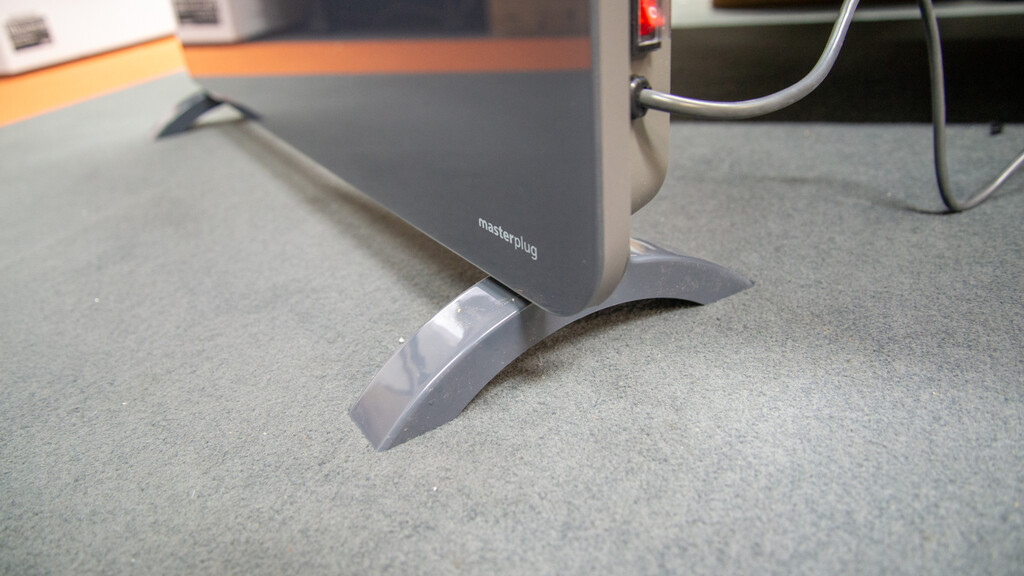
As with the Princess, the MasterPlug Auraline Black Glass Panel Heater can be wall-mounted, or you can attach the provided feet to the base and have it freestanding. The feet are as annoying to attach here as they were to the Princess heater.

MasterPlug Auraline Black Glass Panel Heater legsMasterPlug Auraline Black Glass Panel Heater legs
Image Credit (Trusted Reviews)

Advertisement

Thanks to a deep recess on the feet, the tiny screws are hard to get through the holes. I recommend a magnetic screwdriver to hold the screws while you delicately move them into position.

Once attached, the legs provide a lot of stability, but if the heater is knocked over, tip-over protection cuts the power to prevent damage.

Once plugged in, the heater has a physical power switch on the side that cuts power off. For most cases, you can leave this switch on, but it’s handy to have the option to fully cut power in the warmer months or if you won’t be using the heater for a while.

Advertisement
MasterPlug Auraline Black Glass Panel Heater power switchMasterPlug Auraline Black Glass Panel Heater power switch
Image Credit (Trusted Reviews)

With the main switch on, the heater is controlled via the touch buttons on the front. There’s a simple power button that turns the heater on and brings the screen to life, showing the current room temperature.

MasterPlug Auraline Black Glass Panel Heater main screen and controlsMasterPlug Auraline Black Glass Panel Heater main screen and controls
Image Credit (Trusted Reviews)

Advertisement

The plus/minus buttons let me select the target temperature in 1°C increments up to 40°C. Once the target has been reached, the heater turns off until the temperature drops, and then the heating process starts again.

MasterPlug Auraline Black Glass Panel Heater target temperatureMasterPlug Auraline Black Glass Panel Heater target temperature
Image Credit (Trusted Reviews)

There’s a timer button, which cycles through hourly increments up to 24 hours. It’s handy to have if you want to give a room a boost, but want the heater to shut down after a set time.

MasterPlug Auraline Black Glass Panel Heater timerMasterPlug Auraline Black Glass Panel Heater timer
Image Credit (Trusted Reviews)

Finally, there’s a control to switch between high and low power modes (2000W and 1000W). Lower power mode is useful if it’s either slightly warmer weather and you’re worried about overshooting the target temperature, or you have solar power and want to keep power usage below your energy generation on a bright day.

To get more from the heater, you need to connect it to the app. This heater is compatible with the SmartLife app, where you can mix and match devices from different manufacturers, or you can use the MPSmartEnergy app instead. Both give you the same interface, so there’s no good reason to us the MPSmartEnergy app over SmartLife.

Advertisement

MasterPlug Auraline Black Glass Panel Heater appMasterPlug Auraline Black Glass Panel Heater app
Image Credit (Trusted Reviews)

Be careful, as the app gives the wrong instructions for getting the radiator connected to Wi-Fi: it shows a flashing LED and says to hold the reset button, showing a diagram of someone holding down the power button; the flashing icon is actually on the LCD and shows what looks like a ringed-planet, and the reset button is actually the mode select button.

Once connected to the app, you get the same controls as on the MasterPlug Auraline Black Glass Panel Heater itself, plus the timer can be set in minutes as well as hours.

Advertisement

Scheduling is available via simple rules: you need one for each time the heater should turn on and which temperature it should aim for, and another rule for each time you want to turn it off. It’s handy to have this option, but it’s not as thorough as the full scheduling tool you get with Mill WiFi Max Portable Heater 1500W.

MasterPlug Auraline Black Glass Panel Heater app scheduleMasterPlug Auraline Black Glass Panel Heater app schedule
Image Credit (Trusted Reviews)

What MasterPlug offers over the similar Princess heaters is full energy monitoring in-app, so you can see how much energy the heater is using and how much it has used over time.

Advertisement

Performance

One of the main benefits of a convection heater is that it’s completely silent. Aside from a clunk as the heating element turns on or off, there’s no sound to be heard from the MasterPlug Auraline Black Glass Panel Heater at all.

The front gets hot, but no so hot as you’d burn yourself, but most of the heat comes out of the vent at the top. As the MasterPlug Auraline Black Glass Panel Heater heats up, it causes air to circulate, warming the room.

Advertisement

Testing it in the large front room of the Trusted Reviews Home Technology Lab (just shy of the 25m2 maximum that I’d recommend for a 2kW heater), it didn’t take long to raise the temperature from 17°C to a more pleasant 21°C. For living rooms and larger bedrooms, this heater would be all that you need.

I measured the MasterPlug Auraline Black Glass Panel Heater as drawing just under 2kW on maximum power and just over 1kW on low-power. How much energy is uses will depend on many things: the target temperature, starting temperature, outdoor temperature and target temperature. But, overall running costs are the same for this electric heater as for any other model specified for a target room size.

Advertisement

Should you buy it?

Advertisement

You want a cheap, good-looking smart heater

Versatile with wall- or floor-mounting and a smart app, this heater is well priced and attractive.

Advertisement

You want something smaller or with more features

If you’re limited on space, a fan heater might be better, and many of those can also double up as cooling fans in the summer.

Advertisement

Final Thoughts

Impressively cheap, the MasterPlug Auraline Black Glass Panel Heater also looks great and comes with a very useful smart app to get more out of it. If you want a fan heater or something for a smaller room, then check out my guide to the best electric heaters.

How we test

Unlike other sites, we test every heater we review thoroughly over an extended period of time. We use industry standard tests to compare features properly. We’ll always tell you what we find. We never, ever, accept money to review a product.

Find out more about how we test in our ethics policy.

Advertisement
  • Used as our main heater for the review period
  • We measure the fan speed (if available) using an anemometer so that we can accurately compare performance between models
  • We measure the heat output of the fan and its effect on our test lab.

FAQs

What does the MasterPlug Auraline Black Glass Panel Heater’s app do?

Using the app you can set schedules and more detailed timers, and view power usage.

Advertisement

Test Data

  MasterPlug Auraline Black Glass Panel Heater

Advertisement

Full Specs

  MasterPlug Auraline Black Glass Panel Heater Review
UK RRP £91.99
Manufacturer
Size (Dimensions) 920 x 235 x 430 MM
Weight 7.4 KG
Release Date 2026
First Reviewed Date 26/03/2026
Model Number MasterPlug Auraline Black Glass Panel Heater
Modes 1000W, 2000W
Stated Power 2000 W
App Control Yes
Timer Yes (hourly up to 24 hours)
Heater type Convection heater
Thermostat Yes
Safety features Overheat and tip-over protection

Source link

Continue Reading

Tech

Snowflake customers hit in data theft attacks after SaaS integrator breach

Published

on

Hand sifting through data

Over a dozen companies have suffered data theft attacks after a SaaS integration provider was breached and authentication tokens stolen.

While numerous cloud storage and SaaS vendors were targeted using the stolen tokens, BleepingComputer has learned that the majority of the data theft attacks targeted the cloud-based data warehouse platform Snowflake.

Snowflake confirmed “unusual activity” to BleepingComputer, stating that a small number of its customers were impacted.

Wiz

“We recently detected unusual activity within a small number of Snowflake customer accounts linked to a specific third-party integration,” Snowflake told BleepingComputer.

“We immediately launched an investigation and, out of an abundance of caution, locked down potentially impacted customer accounts. We also notified potentially impacted customers and provided precautionary guidance to help them further protect their accounts.”

Advertisement

Snowflake stressed that the attacks did not involve any vulnerability or compromise of its systems.

As part of these attacks, the threat actor allegedly attempted to use the stolen authentication tokens to steal data from Salesforce, but was detected before they could succeed.

Data theft after alleged Anodot breach

While Snowflake would not confirm which third-party integration partner was linked to these attacks, BleepingComputer was told by numerous sources that the attacks stem from a security incident at data anomaly detection company Anodot.

Anodot is an AI-based analytics company that provides real-time anomaly detection for business and operational data, helping organizations automatically spot unusual changes in revenue, transactions, and system performance using machine learning. Data analytics company Glassbox acquired the company in November 2025.

Advertisement

BleepingComputer was told that numerous companies are now being extorted by the ShinyHunters extortion gang, which is demanding ransom payments to prevent the release of stolen data.

After learning of the attacks, the ShinyHunters group confirmed to BleepingComputer that they were behind them, claiming to have stolen data from dozens of companies this past Friday. They also confirmed their attempts to steal data from Salesforce, but said they were blocked by AI detection.

The blocked attempt comes amid a wave of data theft attacks over the past year targeting Salesforce customers.

The threat actors also claimed the attack stems from a security incident at Anodot, hinting that they allegedly had access to the company for some time.

Advertisement

The threat actor shared some of the companies allegedly affected by the incident, but BleepingComputer will not name them without confirmation.

Only one company, Payoneer, replied to our emails, stating that it aware of the integrator breach but was not impacted.

“We’re aware of a security incident involving a third-party service provider, Anodot. Based on our review, Payoneer has not been impacted,” Payoneer said in a statement to BleepingComputer.

Google’s Threat Intelligence Group, which has been tracking many of this year’s data theft campaigns, also confirmed to BleepingComputer that it is aware of the incident and is tracking it, but had nothing further to share at this time.

Advertisement

BleepingComputer has sent multiple emails to Anodot and its parent company, Glassbox, but has not yet received a reply.

Automated pentesting proves the path exists. BAS proves whether your controls stop it. Most teams run one without the other.

This whitepaper maps six validation surfaces, shows where coverage ends, and provides practitioners with three diagnostic questions for any tool evaluation.

Source link

Advertisement
Continue Reading

Tech

Americans lost a record $21 billion to cybercrime last year

Published

on

FBI: Americans lost a record $21 billion to cybercrime last year

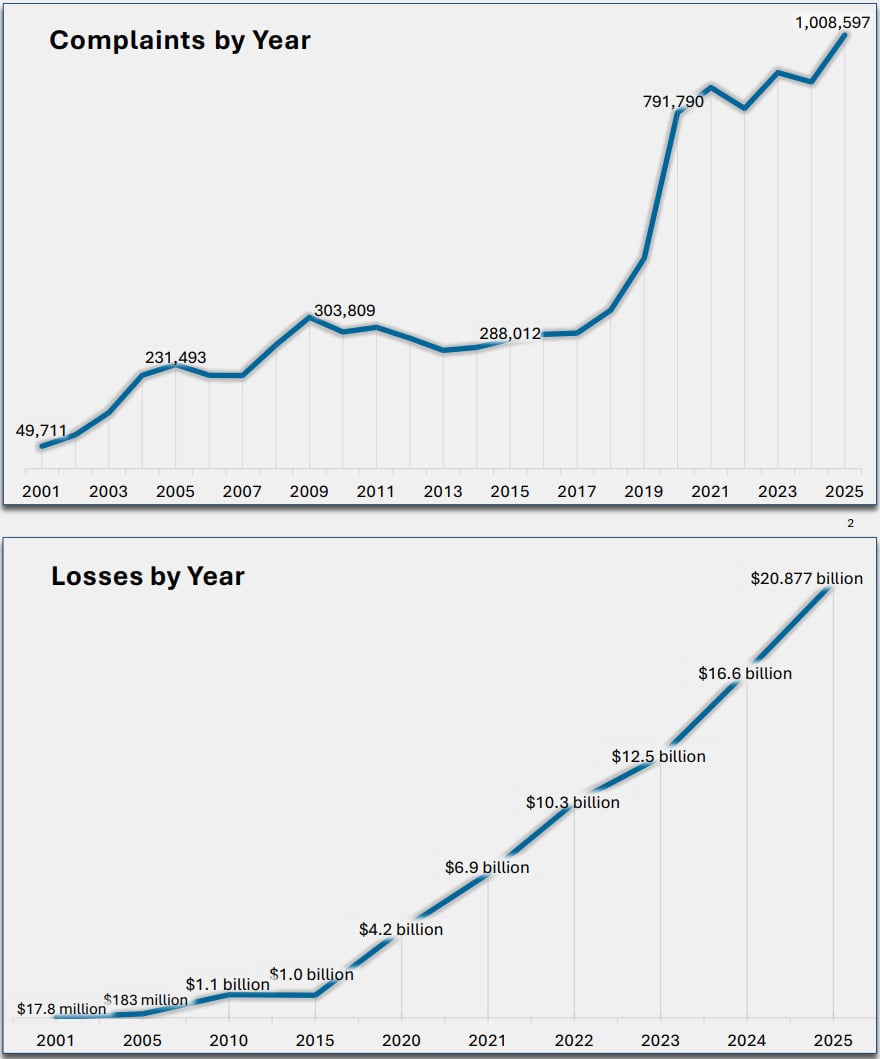
U.S. victims lost nearly $21 billion to cyber-enabled crimes last year, driven primarily by investment scams, business email compromise, tech support fraud, and data breaches, the Federal Bureau of Investigation says.

The figure continues the year-over-year record trend as it is up 26% compared to 2024, when Americans lost $16.6 billion to cybercrime.

A similar uptick was recorded in the number of complaints the Internet Crime Complaint Center (IC3) received, which surpassed 1 million last year, up from 859,000 the year before.

Wiz
Number of complaints (top) and losses (bottom)
Number of complaints (top) and losses (bottom) per year
Source: FBI

The most frequent complaints received last year referred to phishing attacks (191,000), extortion (89,000), and investment scams (72,000), which continued to drive massive losses.

Although smaller in absolute numbers, there were still a significant number of reports for serious attack types such as business email compromise (24,700 cases), data breaches (3,900), ransomware attacks (3,600), and SIM swapping (971).

Advertisement

Investment fraud accounted for 49% of all scam-related incidents recorded last year and resulted in losses of $8.6 billion. However, cybercrime targeting cryptocurrency caused the largest loss, exceeding $11 billion across 181,565 cases.

Cyber-enabled fraud was present in 453,000 complaints and accounted for $17.7 billion of the total losses submitted to the IC3 in 2025.

According to the IC3, Americans over the age of 60 were hit the hardest, with reported losses of $7.7 billion, a 37% increase compared to the previous year.

For the first time, the FBI’s report includes AI-related scams, which accounted for 22,300 complaints and $893 million in losses. These schemes involved voice cloning, fake profiles, forged documents, and deepfake videos.

Advertisement

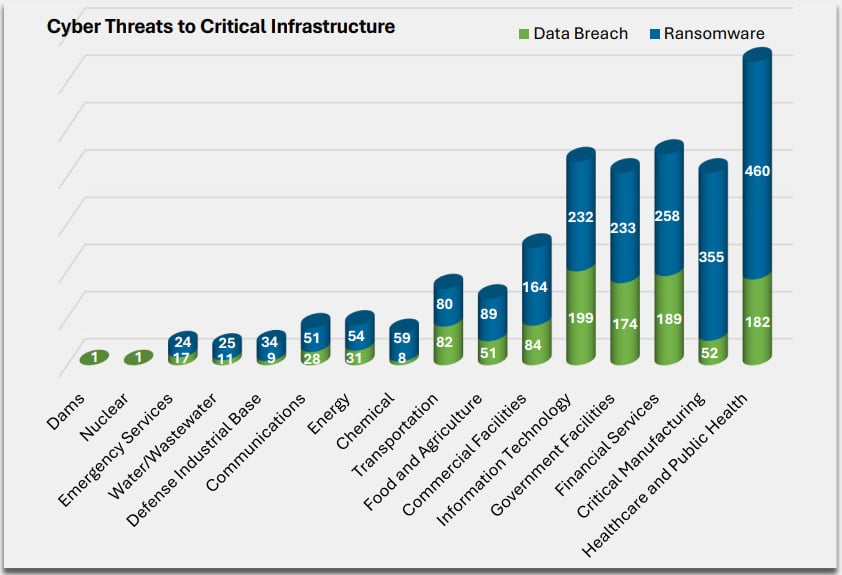
In two cases, attacks targeting critical infrastructure (dams and nuclear facilities), the FBI labeled the incidents as data breaches.

The most targeted critical infrastructure sectors in 2025 were healthcare, manufacturing, financial services, information technology, and government facilities.

Attacks on critical infrastructure entities
Source: FBI

FBI fighting back

The FBI says that it has upgraded its efforts to block attacks, notify victims, and freeze stolen funds, in some cases even being able to retrieve them.

The agency initiated 3,900 Financial Fraud Kill Chain (FFKC) interventions in 2025, successfully blocking a portion of fraudulent transactions. Of the $1.16 billion targeted by attackers, the FBI froze $679 million.

Additional efforts from the agency to prevent cyber-enabled crimes included ‘Operation Level Up’ at the start of the year, a proactive approach to prevent financial losses by identifying and alerting victims of cryptocurrency investment fraud.

Advertisement

Of the 3,780 victims notified last year, 78% were unaware that they were being scammed.

The FBI recommends people not to rush when they receive urgent requests and face pressure tactics, and to use all available means to verify the authenticity of the communication before sending money or data.

Those who suspect compromise by hackers or scammers are urged to report the incidents with full details to ic3.gov.

Automated pentesting proves the path exists. BAS proves whether your controls stop it. Most teams run one without the other.

This whitepaper maps six validation surfaces, shows where coverage ends, and provides practitioners with three diagnostic questions for any tool evaluation.

Advertisement

Source link

Continue Reading

Tech

Generative AI vs Traditional AI: Key Differences

Published

on

From being merely an auxiliary element, artificial intelligence has now become an integral part of the driving force behind businesses. Be it the analysis of large data sets or the execution of repetitive functions, the importance of artificial intelligence has already been demonstrated in multiple industries. However, the introduction of generative artificial intelligence has now added a new dimension to the capabilities that are being offered.

While traditional AI has been widely used for years, the rise of generative AI is making it important for businesses to understand how the two differ. Although these technologies are part of the same broad category, namely ‘artificial intelligence solutions,’ but they have very distinct functionalities and differences.

Understanding Traditional AI

Conventional AI systems are created to perform data handling, pattern recognition, and predictions. 

Core Characteristics of Traditional AI 

Advertisement

Predictive Capabilities 

Traditional AI is trained to make predictions based on the data they have been trained on. 

Structured Data Dependency 

This system is most suitable for handling structured data, i.e., tables and databases.

Advertisement

Task-Specific Design

They are built to perform specific jobs. 

Rule-Based or Supervised Learning Models

They are based on algorithms that use rule-based systems or supervised learning. 

Advertisement

Common Use Cases

Fraud detection in financial systems

Recommendation systems in online platforms

Demand forecasting in supply chains

Advertisement

Risk assessment in insurance and banking 

Traditional AI is an excellent choice for businesses that need accuracy and precision in handling data. Due to this excellent feature, it is the backbone of enterprise-level AI solutions.

What Is Generative AI?

Generative AI, on the other hand, is a distinct concept. It is more focused on producing new outputs instead of analysis. It can learn from large data sets and produce different outputs such as text, images, and codes.

Key Characteristics of Generative AI

Advertisement

Content Creation

It can create original content instead of predictions.

Unstructured Data Handling

Generative AI can handle complex data such as natural language and images.

Advertisement

Contextual Understanding

It is capable of responding based on the context.

Adaptive Learning

This model can learn and improve its output.

Advertisement

Corporations can create programs that facilitate creative and strategic operations and go beyond technology through the use of generative AI services.

Generative AI vs Traditional AI: A Side-by-Side Comparison

Aspect

Traditional AI

Generative AI

Advertisement

Primary Function

Data analysis and prediction

Content creation and generation

Data Type

Advertisement

Structured data

Structured and unstructured data

Output

Predictions, classifications

Advertisement

Text, images, code, and more

Flexibility

Limited to predefined tasks

Highly flexible and adaptive

Advertisement

Learning Approach

Task-specific training

Large-scale deep learning models

Interaction Style

Advertisement

Reactive

Context-aware and interactive

Use Case Scope

Narrow

Advertisement

Broad and multi-functional

This comparison emphasizes how generative AI development increases the opportunities of AI beyond conventional boundaries.

Technical Perspective: How They Work

Traditional AI Workflow

1. Data collection and preprocessing

Advertisement

2. Feature selection and engineering

3. Model training using algorithms such as regression or classification

4. Output generation based on learned patterns

Traditional systems are heavily dependent on structured workflows and objectives.

Advertisement

Generative AI Workflow

1. Training on large datasets with deep learning models

2. Learning patterns and relationships

3. Generating outputs based on inputs or prompts

Advertisement

4. Improving outputs with feedback and iterations

Generative AI employs transformer models to process the context and generate outputs similar to humans.

Why Generative AI Is Driving New Opportunities

The increased interest in generative AI services is attributed to the potential they have to enable innovation and efficiency in multiple functions. 

Key Benefits of Generative AI 

Advertisement

1. Scalable Content Creation 

Generative AI enables businesses to generate large quantities of content within a short time, such as marketing content, reports, and product descriptions, thus helping them save time and be consistent in the content they generate.

2. Enhanced Customer Engagement 

Businesses can use AI-based chat tools to produce more personalized & engaging content, thus giving the customer a superior experience and effectively fulfilling their needs. 

Advertisement

3. Quicker Product Development 

Generative AI enables faster product development through the generation of prototypes, codes, and testing.

4. Personalization  

Businesses can use generative AI to create a personalized experience based on individual needs, hence providing a better experience and satisfying users.

Advertisement

5. Data Augmentation  

Artificial data helps improve models, especially when there is a lack of data, hence providing accurate results and improved performance.

These advantages make generative AI development a vital part of digital strategy for many organizations.

Real-World Applications Across Industries

Traditional AI Applications

Advertisement

Financial fraud detection

Predictive maintenance in manufacturing

Inventory management

Customer segmentation

Advertisement

Generative AI Applications

AI chatbots and conversational agents

Marketing content creation

Code generation and debugging

Advertisement

Image and video generation

Virtual assistants and knowledge systems

These examples show how generative AI solutions extend beyond traditional automation into areas that require creativity and adaptability.

Combining Both Approaches

In fact, most organizations use a mix of traditional and generative AI to get the best out of the systems.

Advertisement

Example Use Case

Traditional AI systems process customer information to find patterns

Generative AI systems use the patterns to create personalized content

This enables businesses to use the advantages of both systems to create a more robust artificial intelligence system.

Advertisement

Challenges and Considerations

Traditional AI Limitations

Limited flexibility

Difficulty in dealing with unstructured data

Need for manual updating for new applications

Advertisement

Generative AI Challenges

Higher computational costs

Chances of inaccurate or biased outcomes

Need for effective governance and compliance

Advertisement

Understanding regulatory requirements is equally important, as generative AI regulatory compliance helps businesses manage risks effectively while adopting new technologies.

Business Impact of Generative AI

The rise of generative AI services is influencing how businesses operate and compete.

Key Areas of Impact

Marketing and Content Creation

Advertisement

Faster production of high-quality content

Customer Support

Improved interaction through intelligent chat systems

Product Innovation

Advertisement

Rapid prototyping and idea generation

Operational Efficiency

Automation of complex workflows

Organizations investing in generative ai development are finding new ways to improve productivity and deliver value.

Advertisement

Choosing the Right Approach

Selecting the right AI approach depends on the nature of your business needs.

Use Traditional AI When:

Working with structured data

Focusing on prediction and analysis

Advertisement

Managing risk and compliance tasks

Use Generative AI When:

Creating content or designs

Building conversational interfaces

Advertisement

Driving innovation and personalization

Key Factors to Consider

Data availability and quality

Infrastructure requirements

Advertisement

Integration with existing systems

Long-term scalability

A thoughtful evaluation helps businesses select the most suitable generative AI solution or combination of tools.

Concluding Thoughts

The difference between traditional AI and generative AI is based on how they approach problems and how they deliver the results. While traditional AI is based on analyzing data and making predictions, generative AI creates new information and allows for more interactive experiences.

Advertisement

As the business world continues to look into more sophisticated technology, the development of generative AI is a significant part of the current business plans. This is because it opens up more opportunities for creativity and efficiency in the customer world. 

However, traditional AI is still a viable tool in the world of data-based tasks. The most viable approach to artificial intelligence solutions is a mix of traditional and generative AI. This ensures a balance between traditional and generative artificial intelligence solutions and allows businesses to thrive and become more competitive in a more data-based world. 

Source link

Advertisement
Continue Reading

Tech

Iran-Linked Hackers Are Sabotaging US Energy and Water Infrastructure

Published

on

As US President Donald Trump threatens wholesale demolition of Iran’s infrastructure in the midst of an escalating war, Iran now appears to have already reciprocated with its own form of infrastructure sabotage: A hacking campaign hitting industrial control systems across the United States, including energy and water utilities, that US agencies say has had disruptive and costly effects.

In a joint advisory published Tuesday, a group of US agencies including the FBI, the National Security Agency, the Department of Energy, and the Cybersecurity and Infrastructure Security Agency warned that a group of hackers affiliated with the Iranian government has targeted industrial control devices used in a series of critical infrastructure targets including in the energy sector, water and wastewater utilities, and unspecified “government facilities.” According to the agencies, the hackers have targeted programmable logic controllers (PLCs)—a type of device designed to allow digital control of physical machinery—in those facilities, including those sold by industrial tech firm Rockwell Automation, with the apparent intention of sabotaging their systems.

By compromising those PLCs, the advisory warns, the hackers sought to change information on the displays of industrial control systems, which can in some scenarios cause system downtime, damage, or even dangerous conditions. “In a few cases, this activity has resulted in operational disruption and financial loss,” it reads.

When WIRED reached out to Rockwell Automation, a company spokesperson responded in a statement that it “takes seriously the security of its products and solutions and has been closely coordinating with government agencies in connection with” Tuesday’s advisory, and pointed to documents it has published for customers on how to better secure their PLCs.

Advertisement

Though the advisory doesn’t specify a particular group responsible for the hacking campaign, it notes that the attacks are similar to those carried out in by the Iran-linked group known as CyberAv3ngers, or the Shahid Kaveh Group, starting in late 2023. That team of hackers, believed to work in the service of the Iranian Revolutionary Guard Corps, inflicted several waves of attacks against Israeli and US targets in recent years, including gaining access to more than a hundred devices sold by industrial control system technology firm Unitronics and most commonly used in water and wastewater utilities.

This is a developing story, please check back for updates.

Source link

Advertisement
Continue Reading

Tech

Apple’s iPhone Fold might debut at the September launch event after all

Published

on

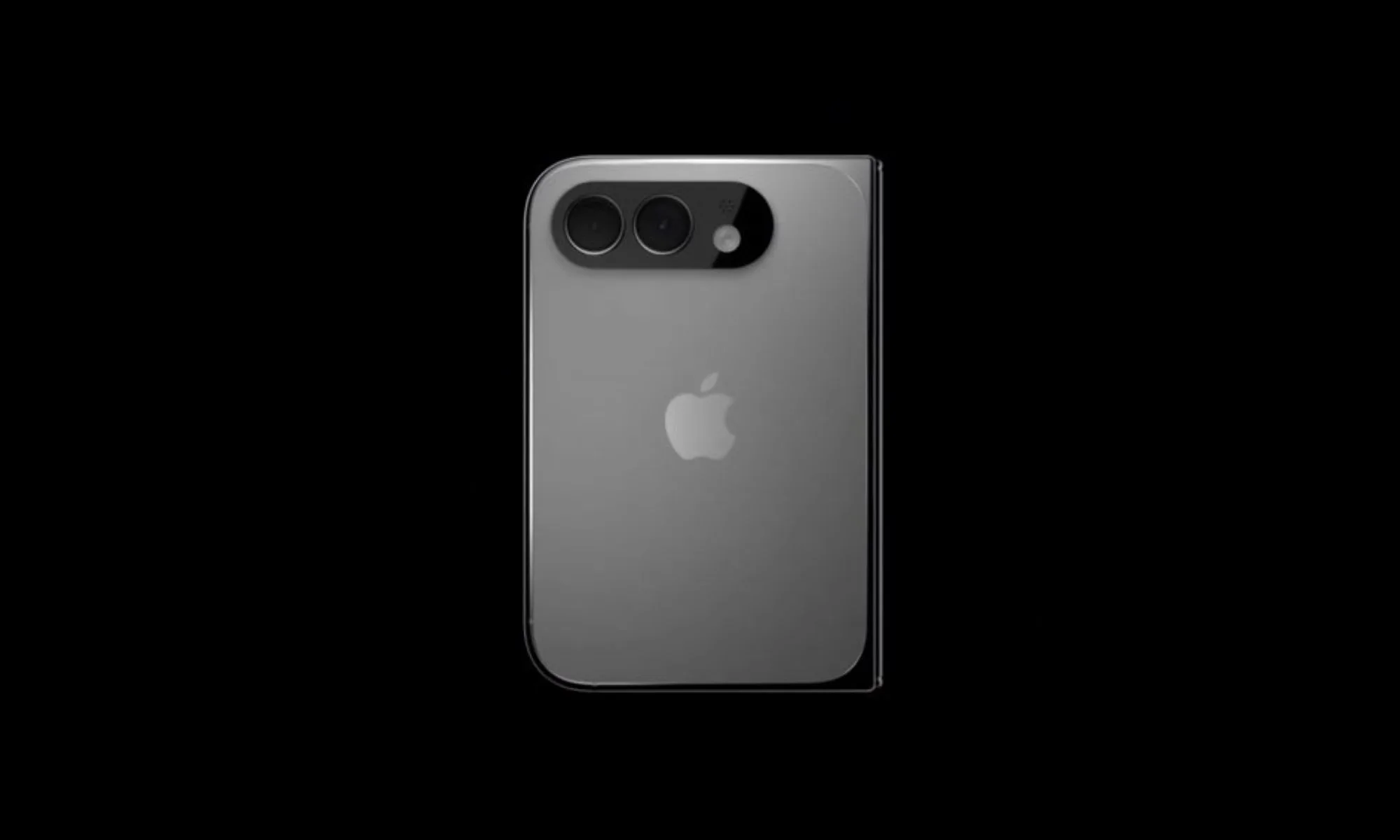
After years of rumors and leaks, Apple’s iPhone Fold is finally inching closer to a launch, and according to Bloomberg’s Mark Gurman, arguably the most reliable Apple oracle, the foldable is on track for a September 2026 debut. 

Earlier this week, Nikkei Asia raised eyebrows by flagging development snags with the iPhone Fold, particularly during testing. Gurman, however, pushes back, reporting that despite the device’s complex design, Apple remains committed to its September launch window. 

Is the iPhone Fold’s launch on track?

The supply at launch might be tighter than for other iPhones, but the launch timeline itself stands. Does that mean that the purported iPhone Fold will be available to purchase alongside the iPhone 18 Pro models in September 2026? It doesn’t seem so. 

While Apple intends to reveal or showcase the iPhone Fold alongside the iPhone 18 Pro and the iPhone 18 Pro Max in September this year, shipping may follow later. In his newsletter, Gurman drew a parallel between the rumored foldable and the iPhone X. 

When will Apple chip the iPhone Fold?

Apple announced the revolutionary iPhone X in September 2007, but deliveries began in November. The Fold, at least for now, could follow a similar path, potentially hitting hands as late as December this year. 

In exchange for the long wait, buyers could get a book-style foldable that unfolds from a 5.5-inch outer screen to a 7.8-inch inner screen that mimics the aspect ratio and look of the iPad mini, has a 4.5-4.8 mm side profile, runs on a new Apple chip, and has a dual-rear-facing camera array. 

Advertisement

Pricing, however, is the most sensitive aspect of the iPhone Fold, which, in my opinion, can make or break the company’s product lineup. For now, the general consensus on the internet points toward a starting price of over $2,000 for the baseline variant.

Source link

Advertisement
Continue Reading

Tech

Magnetic Levitation Using An Induction Cooktop

Published

on

Adding another item on the list of things you probably shouldn’t be trying at home, we got [Brainiac75] giving magnetic levitation a shot using an unmodified induction cooktop and aluminium foil. Although not ferromagnetic, it turns out that aluminium can be made to do interesting things in the magnetic field created by the powerful electromagnet that underlies the induction principle.

Interestingly, although there’s a detection circuit in these units that should detect the presence of an appropriate (ferromagnetic) object, it appears that even a thin sheet of aluminium foil can completely deceive it. The effect is that of a force pushing the foil away from the cooktop’s surface, with foil areas that remain close enough to the ferrite bars on the electromagnet even heating up enough to begin melting the aluminium.

After a bit of fun with various shapes and types of aluminium objects, the video moves on to a scientific explanation of what’s going on. The surface resistivity of the foil is similar enough to ferromagnetic cookware that it fools the sensor, after which the skin effect of aluminium induces a current. This then does the typical Lorentz force things.

Advertisement

Source link

Advertisement
Continue Reading

Tech

Artemis II Astronauts Are Using iPhones to Capture Stunning Space Images

Published

on

The four astronauts aboard the Integrity spacecraft now headed home from their historic arc around the moon really are like the rest of us: Sometimes they reach for their smartphones to snap photos.

For the Artemis II mission, iPhone 17 Pro Max phones have been used to capture photos inside the capsule of the astronauts pondering the views of Earth and working on mission objectives. (Technically, NASA refers to them as PCDs – personal computing devices.)

Smartphones were cleared for use in space for the first time in February. In a post on X, NASA Administrator Jared Isaacman wrote, “We are giving our crews the tools to capture special moments for their families and share inspiring images and video with the world.”

Advertisement
The Earth is shown in a spacecraft window with the faint outline of an astronaut looking out at it.

Artemis II mission commander Reid Wiseman looks out the window at Earth. The photo was taken with an iPhone 17 Pro Max.

NASA

Early in the mission, Commander Reid Wiseman snapped a pair of photos looking out the window with Earth behind him. Mission specialist Christina Koch and her dynamic curls in zero-gravity also captured a pensive view looking out over the planet. All three were made using the front camera — because wouldn’t you want to grab a selfie if you were in space?

Advertisement
Mission specialist Christina Koch looks out a spacecraft window at the earth. The angle is from below so we see the angle of her jaw, and her long braided hair floating above her.

Artemis II mission specialist Christina Koch looks out the window at Earth.

NASA

The iPhone 17 Pro’s rear cameras are pulling their own weight during the mission, too. During the live broadcast as the crew approached the moon, Wiseman took a photo of the moon’s surface using the iPhone’s telephoto camera at 8x zoom. He turned the screen toward one of the video cameras mounted inside the spacecraft, creating an image of the moon’s surface alone against the darkness of the unlit cabin, with the iPhone’s signature rounded edges and Dynamic Island cutout at the top.

Advertisement
An iPhone screen in a darkened space capsule showing a photo of the moon.

Artemis II mission commander Reid Wiseman holds up his iPhone 17 Pro Max showing a photo of the moon he captured using the telephoto camera at 8x zoom.

NASA

The main photo workhorses on this trip are a Nikon D5 DSLR and a Nikon Z9. The D5 is a model that has been used on several space excursions, and the Z9 is onboard as an experimental camera.

For NASA missions, every piece of equipment must be tested and certified, which is why the previously-approved D5 has a secure spot. Cameras must be resistent to space environmental factors like radiation, and safe if they’re floating around the capsule. However, the iPhones in space now are off-the-shelf models, according to a report by Jackie Watties of CNN.

The moon flyby was especially photo-intensive, with astronauts switching places several times so that two were always at windows with cameras and relating what they could see with their eyes. This photo of mission specialist and Canadian Space Agency astronaut Jeremy Hansen taking images using one of the Nikon cameras shows how some windows have camera shrouds attached. The shroud ensures that light from the interior isn’t reflected in the glass.

Advertisement
Artemis II mission specialist Jeremy Hansen uses a camera in front of a blue cloth shroud, which covers the window and has a hole for the camera lens.

Artemis II mission specialist Jeremy Hansen takes photos of the moon through a window shroud using a Nikon camera. The picture of him was captured using an iPhone 17 Pro Max.

NASA

In a particularly relatable photo, Hansen is also using the front-facing camera of a white iPhone 17 Pro — as a portable mirror while he shaves. As the (modified) saying goes, the best selfie screen is the one you have with you.

Advertisement
Artemis II mission specialist Jeremy Hansen holds an electric shaver in one hand to shave his face, and in the other hand holds an iPhone 17 Pro Max that he's using as a mirror.

Artemis II mission specialist Jeremy Hansen uses an iPhone 17 Pro as a mirror while shaving.

NASA

The iPhone 17 Pro isn’t the first Apple product to go into space. Crew members have taken iPods, iPads and AirPods on missions since the Space Shuttle era. The Mac Portable even went up on a shuttle (and revealed that its trackball in zero-G isn’t the best option).

An Apple representative didn’t immediately respond to a request for comment.

Advertisement

Source link

Continue Reading

Trending

Copyright © 2025