Connect with us

Tech

Windows 11 can now reinstall itself from the cloud, no USB stick required

Published

on

First look: Reinstalling Windows often requires local boot media, but the latest Windows Insider build previews a new method to restore Windows 11 devices to factory settings that only requires an internet connection. The update also lets users test upgrades to AutoPlay, desktop customization, File Explorer, and other features.

Windows 11 Insider Beta Preview Build 26220.9343 introduces a new reinitialization option that downloads a factory version of the OS from the cloud. The new feature lets users and IT administrators reset a device without needing a USB stick or a custom image.

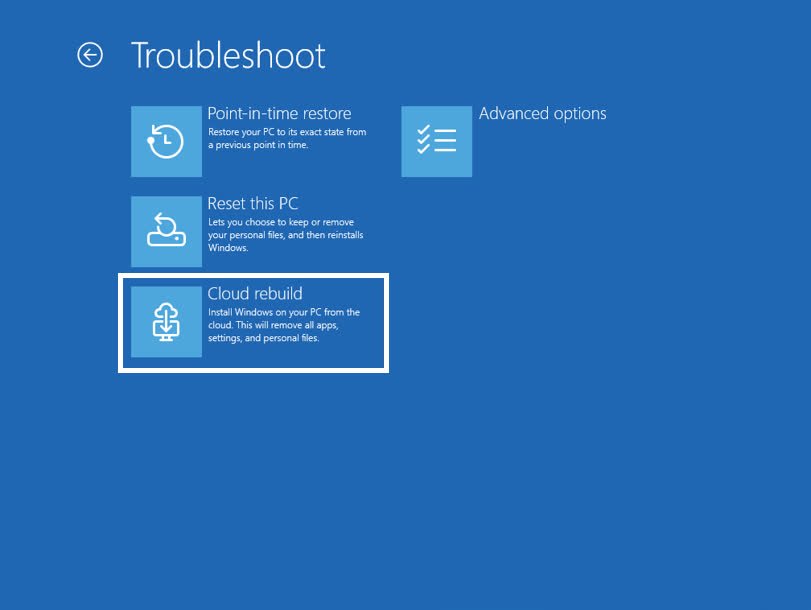
Cloud Rebuild is accessible in the Windows Recovery Environment, which users typically see after Windows repeatedly fails to boot. Users can also reach the Recovery Environment via Settings > System > Recovery > Restart now.

After selecting “Troubleshoot” in the Recovery Environment, the option for Cloud Rebuild appears under “Reset this PC.” Once the device is connected to the internet through Ethernet or Wi-Fi, users can review the Windows build, edition, and language they wish to install before starting the download.

Advertisement

In addition to enabling a factory reset without USB media or a custom image, Cloud Rebuild also automatically restores drivers, ensuring the device restarts with basic functionality intact. Furthermore, since the feature downloads a fresh build, it works even if the currently installed OS is corrupted. However, using Cloud Rebuild requires network drivers for the Recovery Environment.

Currently, the feature requires either physical access to a device or an elevated command prompt by a local administrator, but support for remote deployment through enterprise endpoint management solutions such as Microsoft Intune is coming soon. However, Intune, Windows Autopilot, Backup for Organizations, and OneDrive already support Cloud Rebuild on managed devices.

To make Cloud Rebuild easier for Wi-Fi users, Build 26220.9343 also introduces the ability to save Wi-Fi profiles from Windows in the Recovery Environment. Previously, the Recovery Environment retained only wired connections, forcing users to manually re-enter Wi-Fi profiles.

The Windows 11 user interface also receives a few changes. AutoPlay now supports Microsoft’s new WinUI in light or dark mode with text scaling improvements. Users can now set DIB files as desktop backgrounds, and preview settings in the personalization menu have been improved. Other additions include support for double backslashes and quotation marks in the File Explorer address bar, magnifier adjustments, and new emojis.

Advertisement

In another ploy to promote OneDrive, the new build also adds an option to automatically back up photos and videos from mobile devices.

Source link

Advertisement
Continue Reading
Click to comment

You must be logged in to post a comment Login

Leave a Reply

Tech

NATO caught Russia rehearsing a secret cable-cutting weapon near Arctic waters, leaving allies scrambling to expose the threat before deployment

Published

on


  • NATO disrupted Russia’s Arctic cable exercise before the reported weapon could be deployed
  • Russian submarines rehearsed attacks that could leave little evidence afterward
  • Two 1,400km cables connect Svalbard with mainland Norway beneath Arctic waters

NATO allies disrupted a Russian naval exercise near Svalbard after detecting preparations involving a secret device intended for damaging subsea communications infrastructure.

British, Norwegian and American forces confronted vessels linked to Russia’s deep-sea research directorate during exercises conducted in Arctic waters this spring.

Source link

Advertisement
Continue Reading

Tech

Anthropic has chosen Nasdaq for its October IPO, in the week OpenAI ruled one out

Published

on

Anthropic has settled on Nasdaq for a listing it still hopes to complete in October, according to a person familiar with the plans who spoke to Business Insider.

The filing remains private, and the valuation is not fixed, though estimates circulating around the deal put it near $2trn.

For Nasdaq, the win completes a set. It took SpaceX earlier this year at a $1.75trn valuation, and with Anthropic it now holds both of the largest listings of a year that has otherwise been thin for technology flotations.

The New York Stock Exchange has historically collected the biggest debuts, which makes 2026 a marked break, and both venues are competing less for the fees than for the right to be seen as the natural home of every AI listing that follows.

Advertisement

In trading terms, Anthropic gains very little. No convincing evidence shows that companies perform better on one American exchange than the other, and the practical difference comes down to market-maker mechanics: the two run different processes for setting an opening price, and very large offerings can strain them.

Nasdaq’s systems failed on the first day of Facebook’s 2012 IPO, still the cautionary example whenever a listing of this size arrives.

Only Nasdaq-listed companies can enter the Nasdaq 100, which is the part that does matter. Index inclusion pulls passive money in behind a stock without anyone deciding to buy it.

Two days ago, Sam Altman told Fortune that OpenAI would not list in 2026, because “given everything happening with safety, right now would be an ill-advised moment to go public”.

Advertisement

Anthropic is proceeding towards a roadshow in the same month Altman is avoiding, and the two companies have reached opposite conclusions from an almost identical set of facts.

The safety warning that has dominated the past fortnight came from a former Anthropic researcher who resigned over safety, saying the labs are gambling with our lives, and whose post, according to Business Insider, put the risk of human extinction above 10 percent.

The company about to ask public markets for a valuation is the company the warning came from.

Anthropic filed confidentially at a $965bn valuation, appointed Morgan Stanley and Goldman Sachs to lead, arranged a $15bn credit facility alongside a timetable that lands days before the US midterms, and has been preparing to pitch investors a $30trn addressable market. A raise of $100bn would make it the largest flotation ever attempted.

Advertisement

Every valuation attached to it so far has come from people briefing reporters rather than from a prospectus.

That changes soon by rule: Anthropic must publish its financials at least 15 days before the roadshow opens. On an October timetable, the first numbers anyone can check are due within weeks.

Source link

Advertisement
Continue Reading

Tech

At What Length Do Ethernet Cables Drop To Lower Speeds?

Published

on

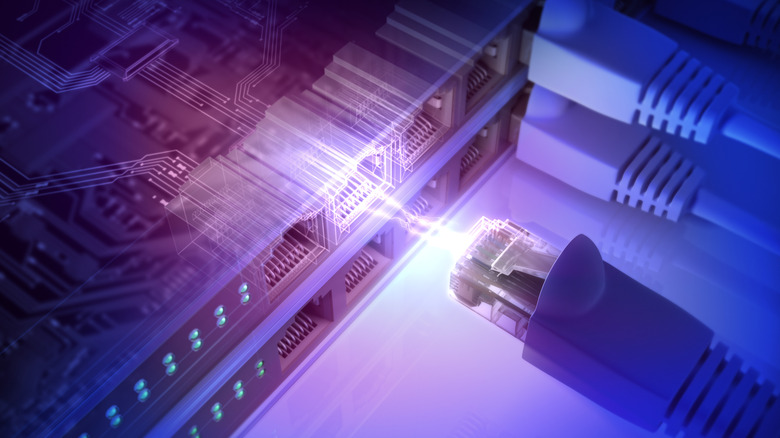
For the average home, standard Ethernet cable lengths max out at 328 feet. It reads like a weird number for a “standard” length, but 328 feet is the maximum length a rated connection speed can travel reliably. Of course, we’re not dealing in absolutes here. An Ethernet cable won’t always work perfectly at 328 feet and drop off into oblivion at 329 feet. But it’s the limit network installation standards use to account for things like signal loss, interference and general timing issues.

Weird number or not, it seems relatively simple, right? Not exactly. The 328-foot allowance includes more than the cable, not to mention the cable categories (11 or so), depending on what you want to classify as applicable in this scenario. For instance, a Cat1 is for old analog telephone lines and isn’t something you would route from a gaming rig to a Wi-Fi 7 tri-band router unless you needed a good laugh. In fact, for this use case, you can safely eliminate Cat1 through Cat4.

A typical setup utilizes 295 feet of solid-core cable, plus up to 33 feet of flexible patch cables at either end to account for what’s hidden behind the wall. Within that distance, a solid Cat5e or Cat6 cable can support 1 Gbps Ethernet. In the average scenario, a 10-, 25-, or 100-foot Ethernet cable shouldn’t slow down connection speeds. For the most part, cable length becomes more consequential when running faster-than-gigabit speeds.

Advertisement

Cable type determines the limit

The length of an Ethernet cable isn’t the end-all, be-all dictator of speed. In fact, even if you’re running an Ethernet cable up the wall, across the roof, around door archways and across the floor, the cable category and network speed are still more pertinent than distance.

  • Cat5e: Up to 328 feet (100 meters) > 1 Gbps

  • Cat6: Up to 328 feet (100 meters) > 1 Gbps

  • Cat6: Up to 180 feet (55 meters) > 10 Gbps

  • Cat6a: Up to 328 feet (100 meters) > 10 Gbps

As you can see, Cat6 can catch you off guard. It can support 10GBASE-T (10 Gbps), but its full 10 Gbps rating extends to only about 180 feet. For a longer 10 Gbps run, Cat6a is the superior alternative because it’s designed to sustain 10GBASE-T up to 328 feet.

As alluded to above, going beyond a cable’s rated distance won’t necessarily produce a gradual slowdown. For instance, with Cat6, 10 Gbps is specified for 180-foot runs, but a longer run may still produce 10 Gbps if the installation and cable are in great shape. If a Cat6 cable is slightly longer than 180 feet and you experience errors and inconsistencies in performance, step it up to Cat6a.

Advertisement

What to do with a long Ethernet run

Unless you’re in an unusual situation, use a tested Cat5e, Cat6 or Cat6a cable that’s 328 feet or shorter between two active network devices. There are many applicable scenarios here, but choose cable type and length based on the plan you inked with your ISP. If your plan maxes out at 1 Gbps, you don’t need a Cat8 cable. That would be like purchasing an Nvidia GeForce RTX 5090 so you can play Roblox. Cat7 or Cat8 isn’t automatically better for every scenario because you also need to consider your router ports and computer capabilities.

If you have to connect two devices that are more than 328 feet apart, an extra-long Cat6 or Cat6a isn’t always the best solution. Instead, toss in an Ethernet switch at the midpoint to create two separate copper runs or replace the long portion with fiber optic cable. Fiber doesn’t connect directly to copper, but a media converter or fiber-capable switch solves the conflict.

For Power over Ethernet (PoE), length is more of a concern. The same 328-foot rule generally applies, but lengthy runs may not provide enough juice. Always use the applicable cable and verify the PoE requirements of the switch and the devices. Ethernet can ordinarily run at full speed up to 328 feet when the cable category supports that speed, with Cat6 being the only notable exception. If you want to use Cat6, stick with 180 feet or less.

Advertisement

Source link

Continue Reading

Tech

This AMD dual-GPU rig quietly beats ChatGPT on price once your team crosses one surprising monthly usage line

Published

on


  • Two AMD cards cost $18,775 yet beat GPT-5.6 Sol within hours weekly
  • Multi-Token Prediction nearly doubled throughput to 320.2 tokens every second
  • Twenty million monthly tokens save a team $11,738 yearly against Sol pricing

A hardware reviewer compared a dual-GPU AMD workstation against cloud subscription pricing to determine which option delivers cheaper AI inference over time.

Two AMD Radeon AI PRO R9700 cards, each carrying 32 GB of memory, were installed inside a workstation costing roughly $18,775 as tested.

Source link

Continue Reading

Tech

Insight Partners’ Deven Parekh on why the firm is diversifying while everyone else bets the farm on OpenAI and Anthropic

Published

on

Deven Parekh has co-run the heavyweight investment firm Insight Partners for 26 years. Unlike many VCs who are loud on X and seem to live on podcasts, Parekh and Insight Partners tend to lay low.

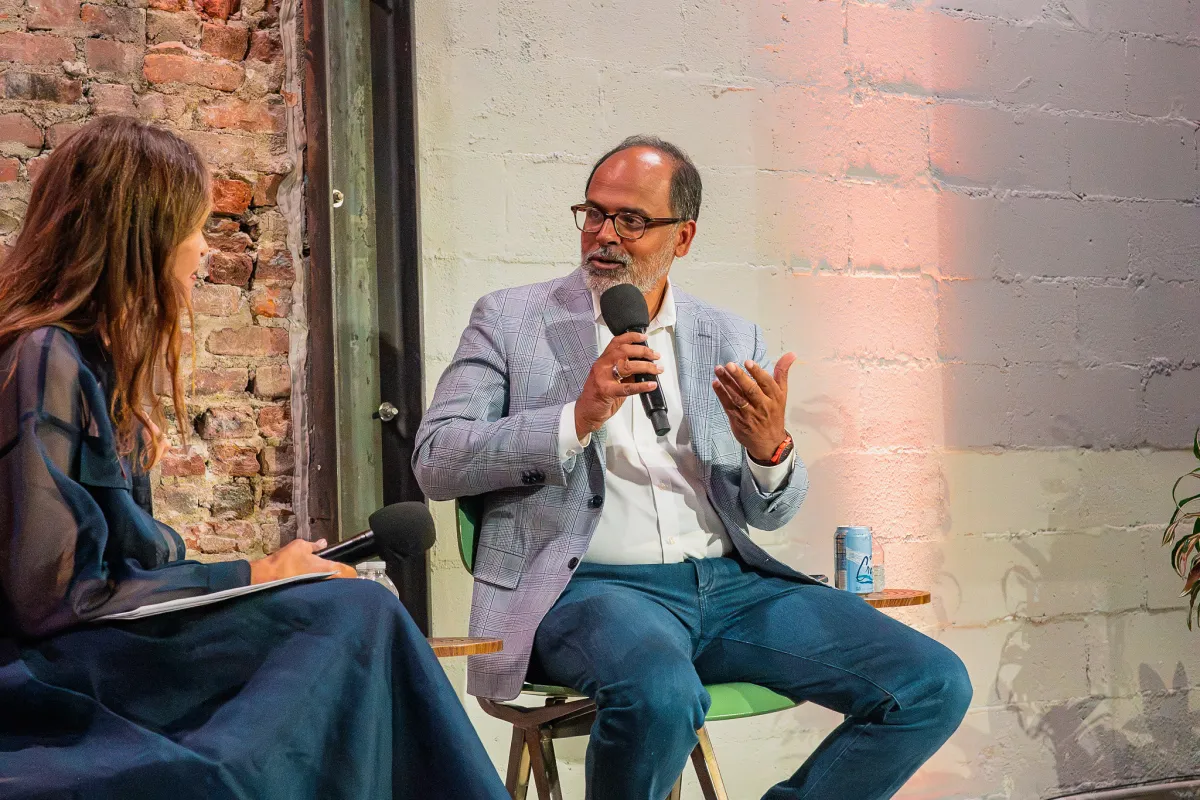
In this sit-down with TechCrunch at its StrictlyVC event on Thursday night in New York, Parekh was refreshingly candid about some of the firm’s wins (it has led and co-led numerous rounds in Databricks, for example, and owns stakes in OpenAI and Anthropic); the deals it hasn’t won, including buzzy AI legal-tech company Legora; conflicts of interest in venture investing; and why Insight has stuck to a diversified strategy even as VCs have piled into the frontier AI labs.

This interview has been edited for length and clarity.

There’s a researcher who’s become the big story of the week — do you think that concerns about AI risk amount to hysteria, or do you have real concerns?

Advertisement

Sure, there’s a risk some non-state actor gets access to an open-source model and creates a biological weapon. But there’s an even higher probability we get a massive decrease in the time it takes to develop new drugs and cure diseases. I’ll take that bet.

I’m on the board of NYU Langone — what AI is already doing with patient data is amazing. We can look at 50 million patient records and tell someone walking in for something unrelated that they have a 25% chance of a heart attack. Net-net, I think this is highly positive.

There are risks, sure, just like there are risks with next-generation drone warfare. Every generation has new risks, and somehow, over time, the world still raises living standards. We’re going to need AI to scale healthcare — the population is aging and there aren’t enough medical professionals to go around.

Insight has $90 billion in assets under management but seems comparatively quiet compared to firms of similar size. Is that purposeful?

Advertisement

Every venture capitalist thinks they’re an expert on everything now — epidemiology during COVID, geopolitics during the Iran war. I’m not sure we’re all experts on everything. Our attitude has been: Let the portfolio do the talking. We’re investing in founders and companies. We have to communicate enough that people know who we are, but our performance should speak for itself — and that’s driven by the portfolio, not by us being loud.

You do early-stage, growth, buyouts, and presumably secondaries. What’s the split?

It’s temporal, not fixed — we invest globally, so there’s no set geographic or strategy allocation. Look at our last seven funds and you’d see different percentages of early-stage, growth, and buyout in each. Buyouts aren’t great right now — rates are high, debt markets aren’t receptive to software, exit multiples have come down. We haven’t done a major buyout since 2024.

On the venture side, valuations are rising at a pace we saw before, in 2021 — and that didn’t end well. Normally, a follow-on round means more data, so you pay a higher price for lower risk. Right now, rounds move so fast there’s almost no incremental data, so you’re paying more without reducing risk. The logical response is to go earlier. With a scale fund, you can make smaller bets — write a $20–25 million check instead of $500 million — and double down on the winners. That’s where our returns have disproportionately come from. With Wiz, we wrote a Series A and kept writing checks, so our gain was much larger than if we’d stopped at the first check. And if Wiz hadn’t worked out, it would have barely dented a fund our size.

Advertisement

As a global investor, what percentage of your deals are regional versus concentrated somewhere like the Bay Area?

Talent has gone flat globally. We competed for Legora — my partner Jeff Horing flew to [Stockholm] to pitch the company, because that’s where the founder was. We lost that one to General Catalyst.

That said, AI infrastructure talent is genuinely concentrated in San Francisco — my 23-year-old son, also a VC, is moving there because he says you can’t invest in AI without being there. But talent density varies by vertical: Ramp is financial services, and that talent is concentrated in New York. So vertical AI investing can be more geographically diverse than pure AI infrastructure.

Why did you lose Legora to General Catalyst?

Advertisement

I don’t know the specific reason, but I think they sold their value proposition better than we sold ours that time. There are plenty of examples where it went the other way. It’s a big world; we don’t need to win every deal.

You’re invested in rival companies — OpenAI and Anthropic. That was once taboo in VC. Did that cause any anguish inside the firm? Did you worry about what founders would take away from this?

The internal debate was more about whether we should have gotten into earlier rounds. It’s very stage-dependent. Khosla did OpenAI’s Series A, and there’s no way they could have then invested in Anthropic, and if we’d done Anthropic’s Series A, we likely couldn’t have done OpenAI either. Once you’re at a later stage, off the board, not driving governance, you’re just buying a great stock.

We saw OpenAI as the dominant consumer play and Anthropic as having a clear enterprise strategy; that’s shifting in real time. As these companies needed to raise $30–$100 billion, they stopped being able to dictate exclusivity. That said, at the Series A/B stage, we do have information-sharing restrictions and we don’t invest in directly competing companies, though some founders are sensitive even to 2% revenue overlap.

Advertisement

Are you getting more aggressive on physical AI?

Physical intelligence companies are still largely science projects. It’s not that they won’t become real businesses, but you’re making a bet on when robotics adoption happens, layered on top of a bet on whether it happens at all. We’re watching, but we’re not there yet.

OpenAI and Anthropic raised roughly half of all VC dollars in the first half of this year. Do you think LPs worry about concentration risk?

We’re not overly concentrated, so it’s not an issue for us. But I’m an LP in other funds, and I know two funds right now — raising their entire fund in a month — whose pitch is literally “35–40% of this fund is going into one of those two companies.” I’m not saying OpenAI and Anthropic won’t do well. But this business has always rewarded diversification over a long horizon. We’re on fund 13, so we have to think in terms of ten funds, not one.

Advertisement

In this particular moment, if 25% of our fund were in Anthropic, our returns would look better. But data over time doesn’t support excessive concentration, and most LPs don’t want that exposure either — though firms like Founders Fund and Thrive have done very well running concentrated strategies. There are always going to be exceptions who execute that well.

Secondaries are attractive right now, given how much capital was raised in 2021–2023. How are you thinking about these?

The bigger issue is a lot of funds raised a lot of money and haven’t returned any of it to LPs. Many first- and second-time funds won’t raise a next fund because they didn’t prioritize liquidity. I tell fund managers I advise: if Anthropic’s going to triple from here, fine — take your basis out anyway. LPs want to know you can turn positions into cash; that’s the job.

We were guilty of this early on, too. As one of the biggest LPs in most of our own funds, we’d think, “Why sell if it could double again?” But LPs don’t get paid that way. Over the last two years we’ve returned more than $20 billion to LPs through strategic sales and IPOs, with a few billion more coming. DPI matters, even on fund 13. Secondaries are really a liquidity mechanism, often for early venture investors more than employees. Nobody complains about a 10x that stays a 10x, but if it drops to 5x, people ask why you didn’t sell.

Advertisement

VC Elad Gill has argued there’s a narrow window — maybe 6 to 12 months — where a company’s valuation will never be higher, and founders should sell into it. Do you have that conversation with your founders?

We’re always having that conversation, though founders listen to me about as much as my kids do. It’s case by case, but when a founder gets an offer at a frothy valuation, I ask them what happens when the market corrects, because it will, even if I can’t tell you when. If I could time it, I’d be on an island managing my portfolio, not talking to you. You don’t have to sell everything; de-risk 10 or 20%.

Right now valuations are rising so fast people assume the trend continues, but you can’t compound $40 billion at 50% every two months for two years without becoming the world economy. That math doesn’t work.

Anthropic will likely file to go public soon, with OpenAI presumably behind it. What does that IPO mean for the industry?

Advertisement

Anthropic is already larger than Salesforce and it’s four years old — the fact that they can go public doesn’t necessarily mean much for everyone else. You’ll have three companies — SpaceX, Anthropic, OpenAI — going public within six to eight months, each north of a trillion dollars in market cap, and the market absorbed SpaceX just fine. The real question is when the next tier of companies goes public, and what bar that sets. If you’re a public-market investor watching something go from zero to $65 billion in four years, “double, double, triple, triple” no longer looks that exciting by comparison. But that 10x growth rate can’t continue forever. Eventually even these companies become normal-growth companies, and you need public markets for that. I think we’ll see more of these IPOs over the next 18 months.

With so much capital locked up, will all this LP money finally flowing back sustain the frenzy?

We all do this in our personal lives — stay out of an expensive market until we can’t stand it anymore, and pile in right when we should be pulling back. LPs do the same thing at a macro level; everyone wanted in before 2021, pulled back after, and now the same LPs are piling back in. That boom-bust cycle is hard to avoid. Venture-growth funds of $6 to $10 billion used to be rare; now they’re common.

How long do you give a company with a bad cap structure before deciding whether to double down or walk away?

Advertisement

It varies enormously. Wonderful [an enterprise AI agent platform] was created less than two years ago; we did two rounds and it’s now at a $5 billion valuation — a very fast double-down. On the other hand, some 2021 investments went nowhere for three or four years before finding product-market fit. That’s part of why we do portfolio reviews — we recently went through 300 portfolio companies over three days, checking not just on the big positions but looking for the ones showing an inflection point worth doubling down on, buying secondary in, or in some cases pulling back from.

Our best example is Armis, a security company. We lost the initial deal to Sequoia, but my partner kept the relationship alive with a $5 million check out of an $11 billion fund. Eighteen months later, we bought out the entire cap table, including Sequoia, for a nine-figure check, and sold it to ServiceNow this year for $7 billion. Sometimes you make money with small checks, sometimes with big ones. The goal is finding the best founders in the best markets.

When you purchase through links in our articles, we may earn a small commission. This doesn’t affect our editorial independence.

Source link

Advertisement
Continue Reading

Tech

the next era of investing

Published

on

Investment tools are powerful, but largely reactive. They help investors research, analyze and act, but they still depend on the investor to decide what deserves attention and when. They respond intelligently, but rarely take the initiative.

AI agents could change that relationship, turning investment technology from a tool investors operate into something closer to a teammate that works alongside them.

Financial products already automate a considerable amount of work. Portfolios can be rebalanced, risk monitored and trades executed according to predefined rules. These systems act, but usually within narrow workflows designed around a specific event or instruction.

Agents introduce a more flexible form of automation, capable of reasoning through changing circumstances rather than following a predefined path. Instead of executing a single rule, they can interpret changes across an investment portfolio, relate them to an objective and coordinate the steps required to respond. For investors, retail or institutional, that could mean understanding how new information affects an investment thesis or portfolio, identifying what deserves attention and helping determine what should happen next.

Advertisement

For Anmol Verma, who spent several years in public markets before founding AI wealth management platform Finn, this represents a more fundamental shift in the role of financial technology: from products that wait for investors to direct them to systems capable of understanding enough context to determine next steps.

The promise of agentic finance is not that investors make more decisions,” Verma says. “It is that they can bring more intelligence to every decision, without being constrained by how much information a human can individually track and process.

Knowing what matters

Becoming proactive is not simply about detecting more signals. It is about knowing which ones matter.

An agent that reacts to every market movement, company announcement or missed target would create more work for the investor, not less. To be genuinely useful, it needs to understand which changes are relevant, how urgently they matter and, just as importantly, when no action is warranted.

Advertisement

That requires context. The same information can mean something very different depending on the portfolio, investment objective and time horizon. A company announcement could be market noise or evidence that an important assumption behind an investment has changed.

AI makes it possible to incorporate more of that context into the systems that investors rely on. Instead of simply processing more information, these systems can begin to build an evolving understanding of the investor and the investment process they are supporting.

Earning the right to act

Understanding what matters, however, is different from being trusted to act on it.

Agentic finance raises the stakes because a system can understand the objective and still make the wrong decision. It could misunderstand an investment thesis, miss an important risk or act on incomplete information. The more responsibility it takes on, the more confidence investors need in its judgment and its boundaries.

Advertisement

Verma expects adoption to happen in phases. Agents may first help investors understand what is happening, then recommend what to do and eventually take on more of the work required to carry a decision through.

Initially, that might mean contained tasks such as updating a model after earnings, monitoring developments against an investment thesis or identifying areas that warrant further research. As systems become more reliable, they could take on broader parts of the investment process, from proposing new areas of research to recommending changes to a portfolio.

This does not mean every investment decision should be automated. The opportunity is to automate more of the work around a decision while keeping investors focused on the areas where judgment matters most.

The power of the learning loop

An agent’s understanding can deepen over time. Every interaction reveals something new: which recommendations are acted on, which are ignored, where an investor overrides a decision and, importantly, which suggestions lead to better outcomes.

Advertisement

Over time, these signals allow the agent to learn from the decisions it supports, not just the information it processes. The result is a continuous learning loop. The better an agent understands the investor, the more relevant its recommendations and actions can become. Each decision, in turn, gives it more information to learn from.

Put these shifts together and investing begins to look very different. Instead of simply providing information and tools, the next generation of investment systems are always-on and proactive, turn decisions into action and become more useful over time. They move from tools investors use to active teammates in the investment process, working continuously alongside them to drive better outcomes.

Source link

Advertisement
Continue Reading

Tech

Overwatch Season 5 Will Add a New Kind of Support, Try to Solve 2 Roster Headaches

Published

on

Overwatch kicked off its 10th anniversary in February by announcing that it was adding 10 new heroes to the hero shooter this year, more than triple the average additions in previous years. But the roster shake-ups aren’t over. Announced at BlizzCon 2026, the ninth of those 10 heroes joins the roster next month, alongside two existing heroes whose gameplay kits have been significantly reconfigured.

I tried the new hero at BlizzCon and spoke with some Overwatch developers about all three heroes being introduced or reintroduced next month.

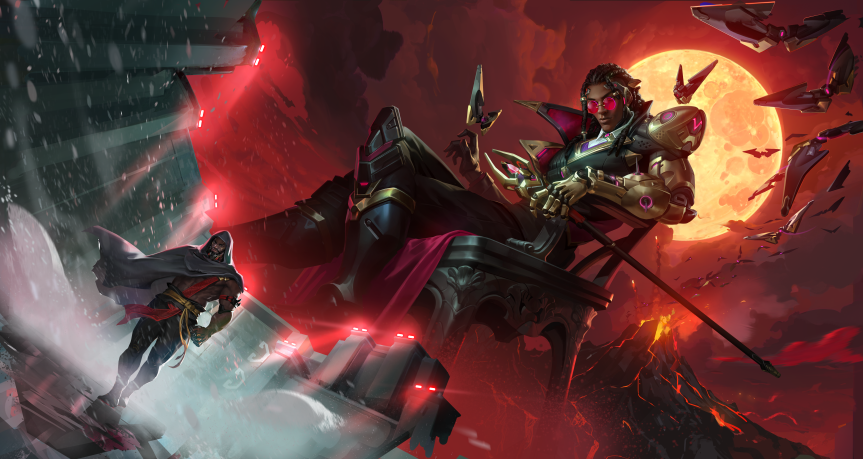
Season 5 introduces the new support character, Doctrine — a vampiric villain who empowers teammates and enfeebles opponents. His kit-defining ability is his alternate fire, which allows him to boost his other abilities. When paired with his Infuse ability, Doctrine’s primary fire becomes stronger and pierces enemies, his dash grants free flight and his ability to heal and provide allies a boost to attack speed is also applied to himself. 

His ultimate ability, Deliverance, is perhaps the best embodiment of that vampiric fantasy: It sends out a swarm of bat-like drones that provide overhealth to allies while reducing opponents’ maximum life for several seconds. 

Advertisement

“He seems pretty versatile, but I think there’s going to be a high skill ceiling for him as well, because it’s accuracy-based,” Kenny Hudson, lead hero producer on Overwatch, told me in an interview. He also speculated that Doctrine’s ultimate ability will be an important factor in players’ success, which is generally more true for support heroes than other roles.

Doctrine has a somewhat austere, too-important-for-you demeanor that fits the vampire fantasy while also distinguishing him from heroes in the damage role, Art Director Dion Rogers said. Rogers also noted the character’s posture and use of a staff, rather than a gun, as a weapon as a way to embody a dangerous support character without connoting a different role entirely.

I played a few games of Doctrine at BlizzCon — not enough to learn the ins and outs of the character, but enough to see how he functions in a few different situations. I liked the minigame of deciding which abilities to empower and when.

Playing against an enemy D.Va, I made sure to keep one charge in reserve for when she inevitably flew in my face, shooting rockets. I toyed with my opponent by luring her away from my team before spending an Infuse charge on my Shrouded Momentum ability to fly back up to high ground while she was still stranded elsewhere.

Advertisement

Sometimes it takes a while before the community figures out how to make new supports work, so I’m looking forward to seeing how Doctrine’s trial weekend goes and what players are able to unlock in these few days of experimentation. 

Doctrine sitting on a throne, centered beneath some bat-like drones.
Doctrine has a long history with Doomfist and will play an important role in the story of Season 5.Blizzard

After years of flirting with it, Sombra officially moves over to the support role

Doctrine isn’t the only new support hero in season 5. Longtime damage hero Sombra is sliding over into the support role, with multiple reworked abilities that allow her to heal her allies. She can now use abilities to heal allies and reduce enemies’ damage output, though she’s keeping her translocator ability and EMP ultimate. 

Sombra has seen more reworks than any other Overwatch hero — five, by my relatively lenient count, before this one. The devs have tried repeatedly to find a way to offer players the gameplay fantasy of an invisible hacker while also trying to knock her off the list of most frustrating heroes to play against. 

This time, they took a bigger swing at the changes, while targeting the usual frustrations.

“The idea was [to] take away the frustration of getting hacked and shot out of anywhere and the friction that comes from being unable to use your abilities,” Hudson said. The rework preserves the character’s stealthy hacker identity while reimagining her abilities in ways that more directly help her team. He and Rogers said the early internal playtests surprised people with how well the role swap seemed to click with the character.

Advertisement

Sombra has a long history of being on the edge of support, including being played by support players in the early days of the professional Overwatch League before the game implemented a role lock. More recently, the Mirrorwatch event, which flipped heroes and villains, gave us a vision of Sombra who could support allies by increasing their attack speed — hey, that sounds familiar — and providing them with overhealth.

She’s also one of my most-played damage heroes, trailing only Ashe in total damage playtime. I like being stealthy in video games, so I’ve enjoyed her sneak-around-and-teleport style of gameplay. But I’m historically more of a support player, which means this move is especially interesting to me. I’m very much in favor of the idea of the role swap, but I haven’t seen quite enough of her latest iteration to judge whether I think it’s an effective repositioning of Overwatch’s poster problem child. 

In particular, I wonder whether she’ll have the healing throughput to function in a wide variety of compositions, or whether one player choosing Sombra will effectively require the other support player to choose a hero with more on-demand healing capabilities. One BlizzCon isn’t enough time to answer that, but I’m hopeful that the rework changes her into a functional support hero and not just someone stuck halfway between a maligned damage hero and useful support.

BlizzCon attendees stand in line for Overwatch gameplay demos
Players line up to try Doctrine and the Sombra and Roadhog reworks at BlizzCon.

Roadhog loses his hook combo (mostly), gains a trash compactor

Joining Sombra on the rework front is Roadhog, who’s staying in the tank role, but with a new, allegedly more team-focused look. Changes to the pull distance of his chain hook and the mechanics of his gun will effectively remove his ability to instantly combo down most heroes, which Hudson said should be “a lot less frustrating” to play against.

He’s getting a new Trash Compactor ability that allows him to nullify incoming damage and convert it into a burst of damage. Scott Kennedy, a hero designer for Overwatch, said in a group interview that the ability was intended to give Roadhog a way of helping his team instead of being more of a lone wolf tank. 

Advertisement

Removing the burst damage of the hook combo should do a lot to lessen the frustration of playing against a Roadhog, but I’m skeptical about how it affects the other side of the equation: playing with a Roadhog on your team. My worry is that he’ll remain a tank who mostly wants to roam around on his own and hook people from unexpected angles, making the rest of the team vulnerable to pushes from the enemy team if the Roadhog misses his skillshot and has to spend time fleeing prospective danger.

Then again, tanking in Overwatch’s 5v5 era has changed a lot, and most tanks benefit from playing different angles from their teams, maximizing the angles of incoming damage that enemy teams have to worry about. Even Reinhardt, Mr. Big Shield Man himself, can often get more value using that shield to protect himself on a threatening off-angle rather than trying to shield his entire team in a clump. So it’s possible that the rework will ultimately make Roadhog more consistent and less of a feast-or-famine hero, which would be a marked improvement. 

We’ll find out when Doctrine and both reworks launch next month for the start of Season 5.

Editors’ note: Adam Benjamin’s travel costs for BlizzCon were covered by Blizzard Entertainment. The judgments and opinions of CNET are our own.

Advertisement

Source link

Advertisement
Continue Reading

Tech

Hands-On with Haier at IFA 2026: There’s a camera in everything

Published

on

If I had to sum up Haier’s entire IFA showcase in one sentence, it would be a camera here, a camera there, and a camera everywhere. But after spending some time with the products, I realised the cameras aren’t really the point. The interesting part is what Haier is doing with all that visual information.

From fridge to oven, AI is watching

Take the refrigerator. Haier’s AI Food Care System 2.0 uses cameras to recognise what you’re putting in and taking out, helping optimise storage conditions and even suggesting recipes based on what is left inside. Instead of simply telling your fridge to get colder, the idea is for it to understand what is actually happening inside it.

The same philosophy extends to the kitchen. Haier’s AI-powered ovens can use an internal camera to recognise and monitor what you’re cooking, helping determine the appropriate cooking process and knowing when the food is ready. And, of course, everything ties into Haier’s hOn ecosystem, giving you control and information through your phone.

Four drums, one laundry machine, zero excuses

Laundry was where things got particularly interesting for me. The Vision 15 Collection puts cameras and sensors inside the washing machine to understand the load, identify mixed colours and fabrics, and even warn you if something has been left behind or is stuck inside the drum. It is essentially an extra pair of eyes making sure you don’t make an expensive laundry mistake.

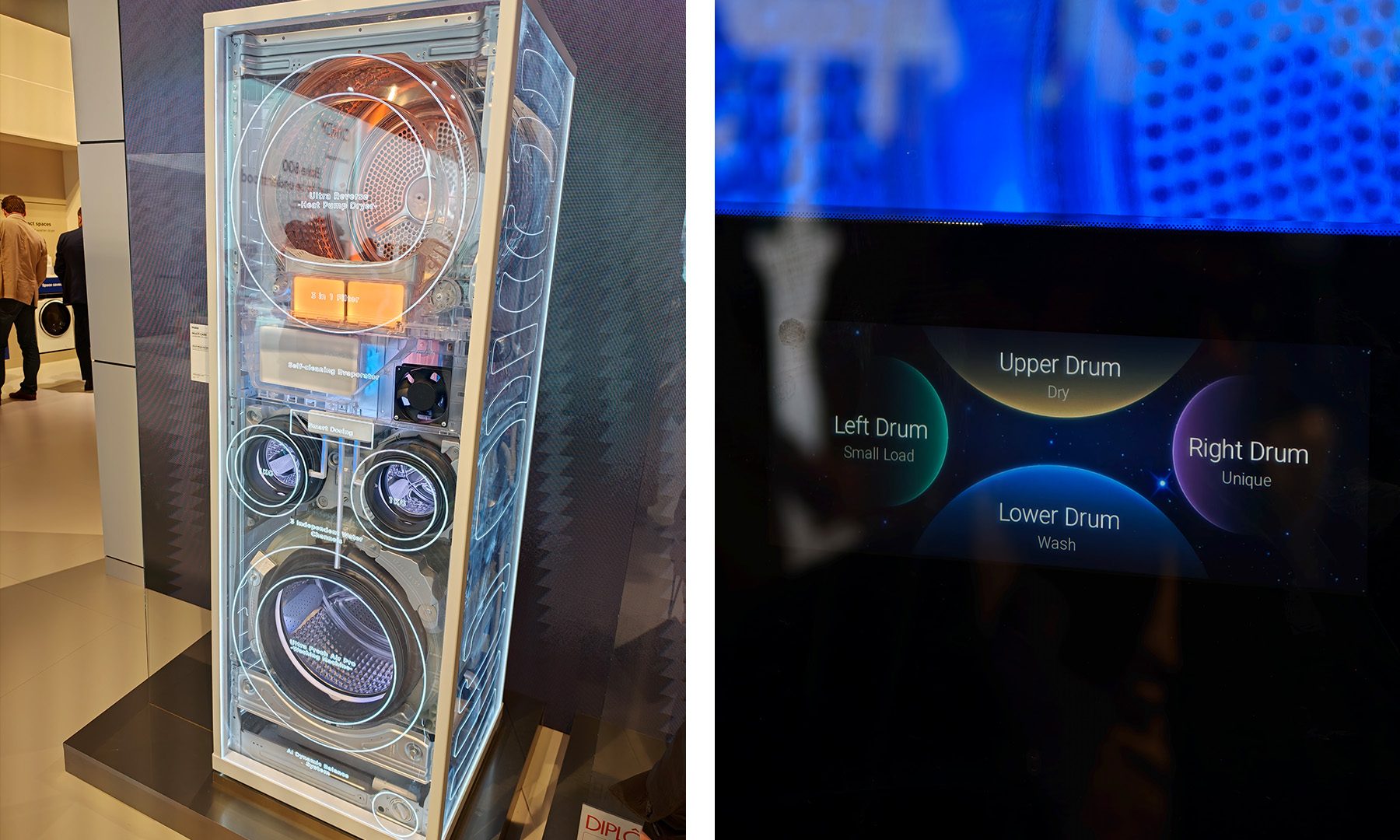
But the highlight of the laundry showcase was undoubtedly the Multi Care Laundry Studio. Haier has managed to put four independently usable drums into a single appliance: a 10kg washing machine, an 8kg heat-pump dryer and two 1kg mini-drums for smaller or delicate loads. Even more impressive, the whole thing works from a single power connection, water connection and drain.

Apparently even laundry needs a robot

And then came the robots. Haier had several humanoid robots on display, showcasing how the company sees robotics eventually becoming another part of the intelligent home. One of the more fun demonstrations tackled a surprisingly relatable problem: your washing machine can wash your clothes and your dryer can dry them, but someone still has to move the laundry from one to the other. In Haier’s demo, a humanoid robot took care of that final step, picking clothes up from the washer and transferring them to the dryer. It was a simple demonstration, but a fascinating glimpse at how Haier imagines AI moving beyond screens and appliances to actually lend a hand around the home.

Advertisement

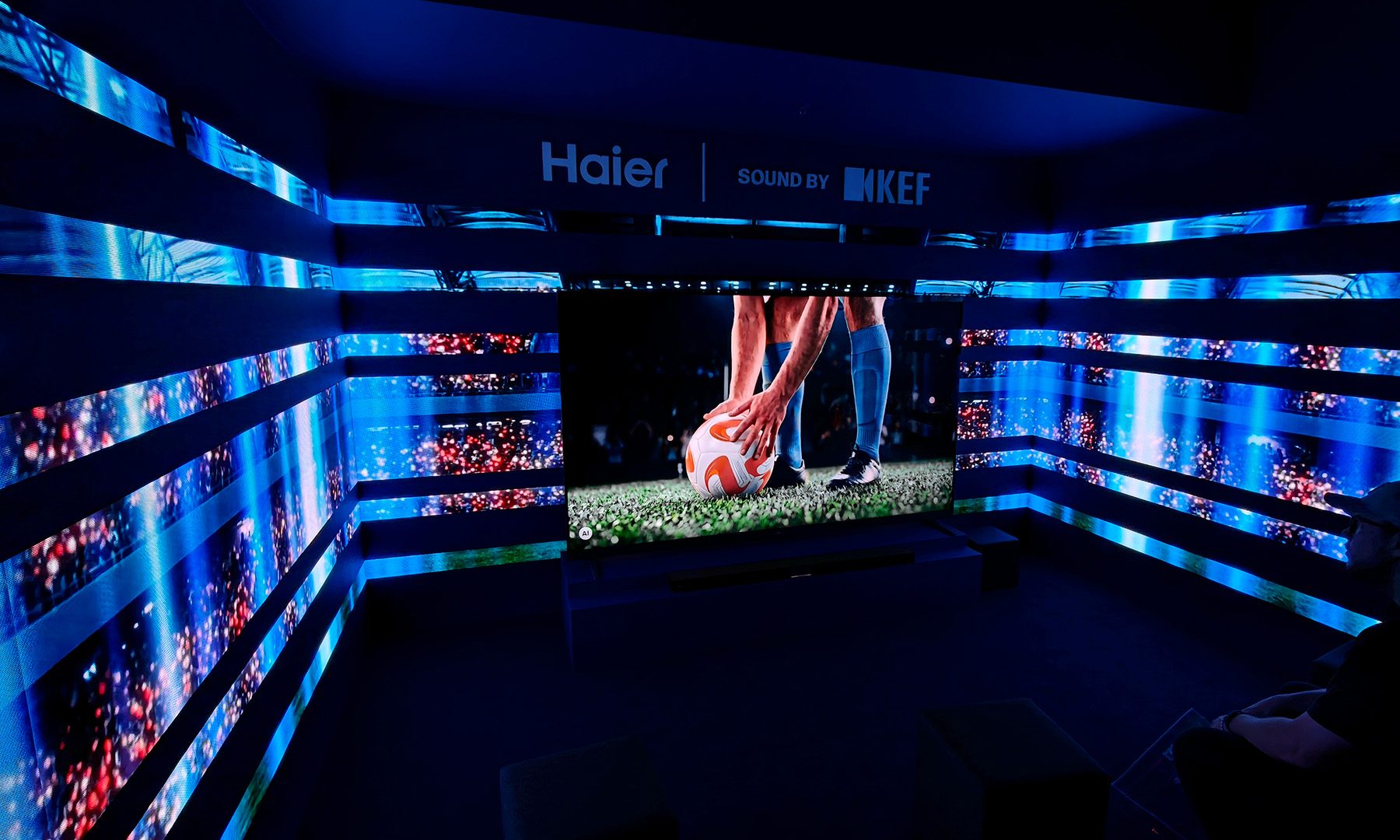
Haier wasn’t only focused on appliances, either. Its TV showcase featured its vibrant SQD Mini LED technology alongside a gigantic 163-inch Micro LED display. There was also a dedicated audio experience developed with KEF, showing that Haier wants its connected-home vision to extend into entertainment as well.

The home that just gets it

What I came away with from Haier’s IFA showcase was less about any one individual product and more about the direction the company is taking. Cameras, sensors, AI, apps, and eventually robotics are all being brought together to make everyday household chores increasingly automatic.

And honestly, if the end goal is to make all those little chores happen in the background without me having to think about them, I’m not complaining.

Source link

Advertisement
Continue Reading

Tech

Pentagon AI deal sparks controversy after documents reveal a request for technology that refuses fewer commands

Published

on


  • FOIA documents revealed disputed Pentagon plans for a less restrictive AI system
  • OpenAI denied agreeing to language requiring minimal refusal rates from models
  • A Pentagon lawyer later withdrew an earlier confirmation about the contract

Documents released through a Freedom of Information Act (FOIA) lawsuit reportedly revealed that the Pentagon sought out an OpenAI system with fewer restrictions.

The paperwork described models intended for national security work that would have “minimal refusal rates” during certain military applications.

Source link

Advertisement
Continue Reading

Tech

Daily Deal: The Modern Tech Skills Bundle

Published

on

from the good-deals-on-cool-stuff dept

Bring your tech skills up to 21st-century snuff with the all-encompassing Modern Tech Skills Bundle. This 2,000+ class series combines subject areas that every aspiring tech pro needs to know to get ahead and stay ahead. Broken out into cybersecurity, AI and machine learning, and information technology and cloud computing, you’ll be able to zero in on specific courses for your current field and branch out into new ones. It’s on sale for $70.

Note: The Techdirt Deals Store is powered and curated by StackSocial. A portion of all sales from Techdirt Deals helps support Techdirt. The products featured do not reflect endorsements by our editorial team.

Filed Under: daily deal

Source link

Advertisement
Continue Reading

Trending

Copyright © 2025