For the better part of the past half a decade, Windows laptops have had a recurring identity crisis. You could either get absurd performance, or you could buy great battery life. Getting both at the same time wasn’t always accessible, and you often would have to make compromises with fan noise, heat, standby drain, or the kind of “why is it warm in my bag?” behavior MacBook owners never had to worry about.
Now, the next-gen silicon is changing the story. Intel’s next wave (Panther Lake) is being positioned as a major efficiency and AI platform swing. Right alongside it, we have AMD’s Ryzen AI series chips that lean into on-device AI while still delivering the kind of performance per-watt that remains competitive with MacBooks. All of this makes it seem like Windows laptops have finally found their moment.
But that’s also what makes the timing feel awkward for Microsoft. Just as the hardware started to clean itself up, Windows PCs are getting squeezed from multiple angles: price hikes, memory costs, and a muddled “AI-first” sales pitch.
The best Windows laptop era is here (and it’s not because of Copilot)
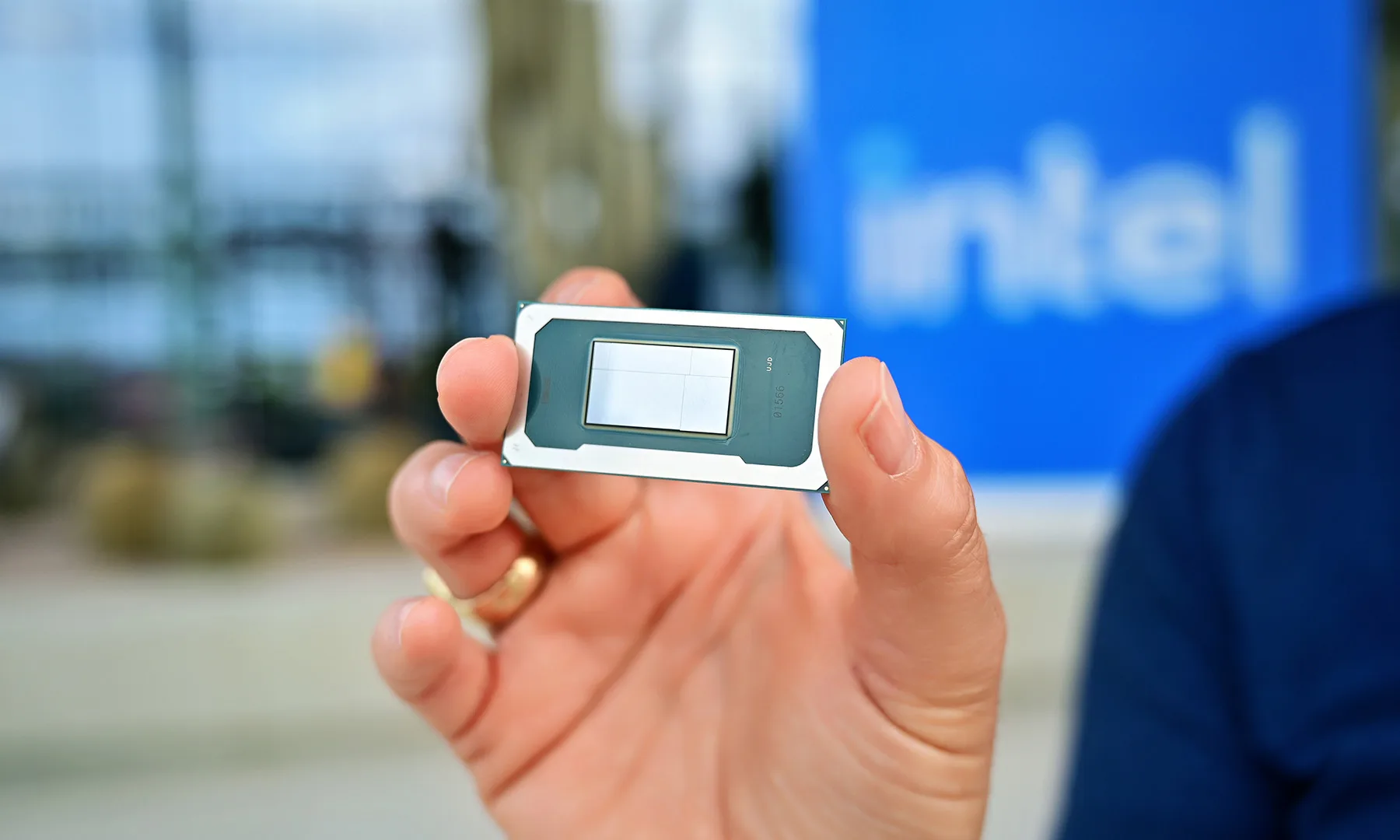
An Intel employee holding a Core Ultra Series 3 chipIntel
With the latest processors like the Intel Core Ultra Series 3, it actually feels like Windows laptops are getting their act together. It’s not just that the benchmarks look good. The entire trajectory looks right. While Intel’s Panther Lake lineup and AMD’s new Ryzen AI series are pushing the “AI PC” narrative, they’re also delivering the kind of performance that makes thin-and-light laptops feel less compromised.
And this matters because Windows laptops have been stuck in an awkward loop for years. You either buy a thin-and-light laptop and live with mediocre performance, or buy something blazing fast and accept that carrying a bulky charger is part of the lifestyle.
Advertisement
So the most interesting thing happening in Windows laptops right now isn’t Copilot. It’s the fact that Intel, AMD, and Qualcomm are all chasing the same endgame: high performance without the battery tax. Processors like the Snapdragon X2 Plus, in particular, bring efficiency gains that rival MacBooks. But just when things were looking good, there was a shadow looming over the PC market — and even the brands are worried.
RAM-POCALYPSE is real, and it’s making everything worse
Here’s the part that turns the whole “Windows laptops are finally getting good again” story into a headache: memory pricing is becoming the real final boss. We can talk about Panther Lake, Ryzen AI, and Snap0dragon all day, but if PC components like RAM and storage get stupid expensive, it doesn’t matter how efficient the silicon is. The platform is improving while the value collapses.
Rami Tabari/Digital Trends
This memory supply crunch has already kneecapped the market, and the numbers are wild. DDR5 memory has risen by around 500% in some cases, which is the kind of spike that doesn’t just nudge the laptop prices upward but reshapes what brands feel comfortable shipping as “baseline” configs. Even after 16GB became the standard in mid-range laptops, this could push 16GB back into “premium-only” territory and drag affordable models down to 8GB again.
AMD, which typically positions itself as the “value option”, is also acknowledging the squeeze. So yeah, the chipmakers might finally be delivering those low-powered performance improvements that Windows laptops have needed for ages. But if RAM pricing keeps spiraling, it risks turning away buyers who are already frustrated with having to pay more money for worse configurations and a higher entry cost just to get something that feels future-proof.
The MacBook comeback tour, now with a budget opener
And then there’s Apple, delivering a sharp hook to an already ailing opponent. The “wrong time for Microsoft” argument gets sharper once you zoom out and look at the market momentum Apple’s been building. Macs have quietly been climbing once again, after a brief period of stagnation. Apple’s notebooks seem like the default safe bet for a lot of buyers who care about reliability, performance, and battery life.
Advertisement
M4 MacBook AirFionna Agomuoh / Digital Trends
To make matters worse for Windows, Apple is reportedly preparing a lower-cost MacBook that could hit the shelves sometime in the first half of 2026. It is still Apple after all, so this won’t magically compete with true entry-level Windows laptops. But if Apple lands this anywhere near the $700 range, Windows OWMs are facing a nasty pressure point as they are already dealing with rising component costs and a messy AI-PC branding era.
So… is it the wrong time for Microsoft?
It might be.
Not because Windows laptops are doomed — the silicon progress is real, and it’s finally hitting the places users care about. But this momentum is arriving in the middle of a perfect storm:
AI messaging that’s confusing instead of compelling.
Rising component prices, like RAM and storage, are becoming a tax on buying new hardware.
A resurgent MacBook lineup that still owns the “easy recommendation” title.
The entire industry may have to ride out the storm for calmer waters. If Microsoft wants this to be the era where Windows laptops truly feel fixed, it needs to focus on the one thing it truly controls: Windows. Because chipmakers can fix performance-per-watt, but only Microsoft can fix what the platform feels like day to day.
Right now, “AI PC” is being sold as a badge, not a benefit. And when prices are rising, and configs are getting weird, buyers need clarity more than hype. Satya Nadella, CEO of Microsoft, said it best: “We will quickly lose even the social permission…” if AI isn’t improving real outcomes.
For the last 18 months, the CISO playbook for generative AI has been relatively simple: Control the browser.
Security teams tightened cloud access security broker (CASB) policies, blocked or monitored traffic to well-known AI endpoints, and routed usage through sanctioned gateways. The operating model was clear: If sensitive data leaves the network for an external API call, we can observe it, log it, and stop it. But that model is starting to break.
A quiet hardware shift is pushing large language model (LLM) usage off the network and onto the endpoint. Call it Shadow AI 2.0, or the “bring your own model” (BYOM) era: Employees running capable models locally on laptops, offline, with no API calls and no obvious network signature. The governance conversation is still framed as “data exfiltration to the cloud,” but the more immediate enterprise risk is increasingly “unvetted inference inside the device.”
When inference happens locally, traditional data loss prevention (DLP) doesn’t see the interaction. And when security can’t see it, it can’t manage it.
Advertisement
Why local inference is suddenly practical
Two years ago, running a useful LLM on a work laptop was a niche stunt. Today, it’s routine for technical teams.
Three things converged:
Consumer-grade accelerators got serious: A MacBook Pro with 64GB unified memory can often run quantized 70B-class models at usable speeds (with practical limits on context length). What once required multi-GPU servers is now feasible on a high-end laptop for many real workflows.
Quantization went mainstream: It’s now easy to compress models into smaller, faster formats that fit within laptop memory often with acceptable quality tradeoffs for many tasks.
Distribution is frictionless: Open-weight models are a single command away, and the tooling ecosystem makes “download → run → chat” trivial.
The result: An engineer can pull down a multi‑GB model artifact, turn off Wi‑Fi, and run sensitive workflows locally, source code review, document summarization, drafting customer communications, even exploratory analysis over regulated datasets. No outbound packets, no proxy logs, no cloud audit trail.
The risk isn’t only data leaving the company anymore
If the data isn’t leaving the laptop, why should a CISO care?
Because the dominant risks shift from exfiltration to integrity, provenance, and compliance. In practice, local inference creates three classes of blind spots that most enterprises have not operationalized.
1. Code and decision contamination (integrity risk)
Local models are often adopted because they’re fast, private, and “no approval required.” The downside is that they’re frequently unvetted for the enterprise environment.
A common scenario: A senior developer downloads a community-tuned coding model because it benchmarks well. They paste in internal auth logic, payment flows, or infrastructure scripts to “clean it up.” The model returns output that looks competent, compiles, and passes unit tests, but subtly degrades security posture (weak input validation, unsafe defaults, brittle concurrency changes, dependency choices that aren’t allowed internally). The engineer commits the change.
Advertisement
If that interaction happened offline, you may have no record that AI influenced the code path at all. And when you later do incident response, you’ll be investigating the symptom (a vulnerability) without visibility into a key cause (uncontrolled model usage).
2. Licensing and IP exposure (compliance risk)
Many high-performing models ship with licenses that include restrictions on commercial use, attribution requirements, field-of-use limits, or obligations that can be incompatible with proprietary product development. When employees run models locally, that usage can bypass the organization’s normal procurement and legal review process.
If a team uses a non-commercial model to generate production code, documentation, or product behavior, the company can inherit risk that shows up later during M&A diligence, customer security reviews, or litigation. The hard part is not just the license terms, it’s the lack of inventory and traceability. Without a governed model hub or usage record, you may not be able to prove what was used where.
3. Model supply chain exposure (provenance risk)
Local inference also changes the software supply chain problem. Endpoints begin accumulating large model artifacts and the toolchains around them: ownloaders, converters, runtimes, plugins, UI shells, and Python packages.
Advertisement
There is a critical technical nuance here: The file format matters. While newer formats like Safetensors are designed to prevent arbitrary code execution, older Pickle-based PyTorch files can execute malicious payloads simply when loaded. If your developers are grabbing unvetted checkpoints from Hugging Face or other repositories, they aren’t just downloading data — they could be downloading an exploit.
Security teams have spent decades learning to treat unknown executables as hostile. BYOM requires extending that mindset to model artifacts and the surrounding runtime stack. The biggest organizational gap today is that most companies have no equivalent of a software bill of materials for models: Provenance, hashes, allowed sources, scanning, and lifecycle management.
Mitigating BYOM: treat model weights like software artifacts
You can’t solve local inference by blocking URLs. You need endpoint-aware controls and a developer experience that makes the safe path the easy path.
Here are three practical ways:
Advertisement
1. Move governance down to the endpoint
Network DLP and CASB still matter for cloud usage, but they’re not sufficient for BYOM. Start treating local model usage as an endpoint governance problem by looking for specific signals:
Inventory and detection: Scan for high-fidelity indicators like .gguf files larger than 2GB, processes like llama.cpp or Ollama, and local listeners on common default port 11434.
Process and runtime awareness: Monitor for repeated high GPU/NPU (neural processing unit) utilization from unapproved runtimes or unknown local inference servers.
Device policy: Use mobile device management (MDM) and endpoint detection and response (EDR) policies to control installation of unapproved runtimes and enforce baseline hardening on engineering devices. The point isn’t to punish experimentation. It’s to regain visibility.
2. Provide a paved road: An internal, curated model hub
Shadow AI is often an outcome of friction. Approved tools are too restrictive, too generic, or too slow to approve. A better approach is to offer a curated internal catalog that includes:
Advertisement
Approved models for common tasks (coding, summarization, classification)
Verified licenses and usage guidance
Pinned versions with hashes (prioritizing safer formats like Safetensors)
Clear documentation for safe local usage, including where sensitive data is and isn’t allowed. If you want developers to stop scavenging, give them something better.
Most acceptable use policies talk about SaaS and cloud tools. BYOM requires policy that explicitly covers:
Downloading and running model artifacts on corporate endpoints
Acceptable sources
License compliance requirements
Rules for using models with sensitive data
Retention and logging expectations for local inference tools This doesn’t need to be heavy-handed. It needs to be unambiguous.
The perimeter is shifting back to the device
For a decade we moved security controls “up” into the cloud. Local inference is pulling a meaningful slice of AI activity back “down” to the endpoint.
5 signals shadow AI has moved to endpoints:
Advertisement
Large model artifacts: Unexplained storage consumption by .gguf or .pt files.
Local inference servers: Processes listening on ports like 11434 (Ollama).
GPU utilization patterns: Spikes in GPU usage while offline or disconnected from VPN.
Lack of model inventory: Inability to map code outputs to specific model versions.
License ambiguity: Presence of “non-commercial” model weights in production builds.
Shadow AI 2.0 isn’t a hypothetical future, it’s a predictable consequence of fast hardware, easy distribution, and developer demand. CISOs who focus only on network controls will miss what’s happening on the silicon sitting right on employees’ desks.
The next phase of AI governance is less about blocking websites and more about controlling artifacts, provenance, and policy at the endpoint, without killing productivity.
Jayachander Reddy Kandakatla is a senior MLOps engineer.
Welcome to the VentureBeat community!
Advertisement
Our guest posting program is where technical experts share insights and provide neutral, non-vested deep dives on AI, data infrastructure, cybersecurity and other cutting-edge technologies shaping the future of enterprise.
Read more from our guest post program — and check out our guidelines if you’re interested in contributing an article of your own!
Data drift happens when the statistical properties of a machine learning (ML) model’s input data change over time, eventually rendering its predictions less accurate. Cybersecurity professionals who rely on ML for tasks like malware detection and network threat analysis find that undetected data drift can create vulnerabilities. A model trained on old attack patterns may fail to see today’s sophisticated threats. Recognizing the early signs of data drift is the first step in maintaining reliable and efficient security systems.
Why data drift compromises security models
ML models are trained on a snapshot of historical data. When live data no longer resembles this snapshot, the model’s performance dwindles, creating a critical cybersecurity risk. A threat detection model may generate more false negatives by missing real breaches or create more false positives, leading to alert fatigue for security teams.
Adversaries actively exploit this weakness. In 2024,attackers used echo-spoofing techniques to bypass email protection services. By exploiting misconfigurations in the system, they sent millions of spoofed emails that evaded the vendor’s ML classifiers. This incident demonstrates how threat actors can manipulate input data to exploit blind spots. When a security model fails to adapt to shifting tactics, it becomes a liability.
5 indicators of data drift
Security professionals can recognize the presence of drift (or its potential) in several ways.
Advertisement
1. A sudden drop in model performance
Accuracy, precision, and recall are often the first casualties. A consistent decline in these key metrics is a red flag that the model is no longer in sync with the current threat landscape.
Consider Klarna’s success: Its AI assistant handled 2.3 million customer service conversations in its first month and performed work equivalent to 700 agents. This efficiency drove a25% decline in repeat inquiries and reduced resolution times to under two minutes.
Now imagine if those parameters suddenly reversed because of drift. In a security context, a similar drop in performance does not just mean unhappy clients — it also means successful intrusions and potential data exfiltration.
2. Shifts in statistical distributions
Security teams should monitor the core statistical properties of input features, such as the mean, median, and standard deviation. A significant change in these metrics from training data could indicate the underlying data has changed.
Advertisement
Monitoring for such shifts enables teams to catch drift before it causes a breach. For example, a phishing detection model might be trained on emails with an average attachment size of 2MB. If the average attachment size suddenly jumps to 10MB due to a new malware-delivery method, the model may fail to classify these emails correctly.
3. Changes in prediction behavior
Even if overall accuracy seems stable, distributions of predictions might change, a phenomenon often referred to as prediction drift.
For instance, if a fraud detection model historically flagged 1% of transactions as suspicious but suddenly starts flagging 5% or 0.1%, either something has shifted or the nature of the input data has changed. It might indicate a new type of attack that confuses the model or a change in legitimate user behavior that the model was not trained to identify.
4. An increase in model uncertainty
For models that provide a confidence score or probability with their predictions, a general decrease in confidence can be a subtle sign of drift.
Advertisement
Recent studies highlight thevalue of uncertainty quantification in detecting adversarial attacks. If the model becomes less sure about its forecasts across the board, it is likely facing data it was not trained on. In a cybersecurity setting, this uncertainty is an early sign of potential model failure, suggesting the model is operating in unfamiliar ground and that its decisions might no longer be reliable.
5. Changes in feature relationships
The correlation between different input features can also change over time. In a network intrusion model, traffic volume and packet size might be highly linked during normal operations. If that correlation disappears, it can signal a change in network behavior that the model may not understand. A sudden feature decoupling could indicate a new tunneling tactic or a stealthy exfiltration attempt.
Approaches to detecting and mitigating data drift
Common detection methods include the Kolmogorov-Smirnov (KS) and the population stability index (PSI). These compare the distributions of live and training data to identify deviations. The KS test determines if two datasets differ significantly, while the PSI measures how much a variable’s distribution has shifted over time.
The mitigation method of choice often depends on how the drift manifests, as distribution changes may occur suddenly. For example, customers’ buying behavior may change overnight with the launch of a new product or a promotion. In other cases, drift may occur gradually over a more extended period. That said, security teams must learn to adjust their monitoring cadence to capture both rapid spikes and slow burns. Mitigation will involve retraining the model on more recent data to reclaim its effectiveness.
Advertisement
Proactively manage drift for stronger security
Data drift is an inevitable reality, and cybersecurity teams can maintain a strong security posture by treating detection as a continuous and automated process. Proactive monitoring and model retraining are fundamental practices to ensure ML systems remain reliable allies against developing threats.
Our guest posting program is where technical experts share insights and provide neutral, non-vested deep dives on AI, data infrastructure, cybersecurity and other cutting-edge technologies shaping the future of enterprise.
Advertisement
Read more from our guest post program — and check out our guidelines if you’re interested in contributing an article of your own!
More people will be able to watch ESPN programming through Disney Plus with Tuesday’s launch of ESPN on Disney Plus in Europe and select Asia-Pacific markets.
With expansion into more than 50 countries and territories in those regions, people in 100 markets worldwide can now stream ESPN content through Disney Plus, according to a Disney Plus news release. The offering brings live sporting events and studio shows together with general entertainment and family programming in a single app.
In markets including Japan, Korea, Singapore, Taiwan and Hong Kong, a curated selection of English‑language ESPN sports programming is now available on Disney Plus, according to the release. Disney Plus also said, “the initial [ESPN on Disney Plus] offering will vary by market but will grow to thousands of live events over the next year.”
Advertisement
Programming includes US coverage of the NBA and NHL starting with the 2026-27 season, college sports and more live events. Disney Plus subscribers can watch ESPN’s 30 for 30 documentary collection and select studio shows.
Pre-existing sports content on Disney Plus in Europe includes the UEFA Women’s Champions League, La Liga in the UK and Ireland and the Copa del Rey, UEFA Europa League, UEFA Conference League and DFB Pokal in the Nordic countries, according to Disney Plus.
Watch this: Your Phone is Disgusting: Let’s Fix That
People in Europe and select Asia-Pacific markets just need a Disney Plus subscription to watch ESPN content on Disney Plus. In the US, Disney Plus standalone subscribers can access a curated selection of live sports events, studio shows, and ESPN films, but must subscribe to Disney Plus and ESPN Unlimited to watch all available ESPN programming on the platform.
Advertisement
The ESPN on Disney Plus offering is also available to people in Latin America, the Caribbean, Australia and New Zealand.
I’ve reviewed a few Amazon Fire TV Series models over the last few years, and generally, I’ve found them to be solid enough TVs.
I’ve always had the suspicion that they could be better for picture quality, and certainly a little less expensive, but then when Amazon’s sales event comes around, the TVs fall to prices that are verging on impulse buy if you want a cheap TV.
I don’t think you could say the same about Amazon’s TVs now.
Having reviewed the newest Fire TV 4-Series, I found it underwhelming. The problems were multiple. For one, it didn’t seem to be a big enough upgrade on the previous generation, at least from a performance perspective.
Advertisement
SQUIRREL_PLAYLIST_10207759
Advertisement
Secondly, the competition has heated up, or to be more exact, they’ve got cheaper. Hisense and TCL’s Mini LEDs can now be had for around the same price, if not less than, Amazon’s Direct LED TVs.
SQUIRREL_PLAYLIST_10208388
Advertisement
The less expensive Fire TVs are no longer the value-led proposition they were a few years ago. And by undercutting Amazon’s own QLED and Mini LED models, the more expensive Fire TVs could be in trouble too.
SQUIRREL_PLAYLIST_10208012
An aggressive expansion…
Image Credit (Trusted Reviews)
Hisense’s approach to the UK TV market has been a gradual one, offering value-focused TVs similar to Amazon’s Fire TVs while adding premium-priced TVs over time. It’s not interested in OLED (though it does offer an OLED model) as it sees no point in competing with LG and Samsung when the playing field is heavily weighted in their favour. Instead, it wants to make its mark with Mini LEDs.
Advertisement
TCL entered the UK market later than Hisense and realised it’s been playing catch-up. Its approach has rather unbalanced the market with aggressive pricing to gain market share – and it’s working. From bits of data I’ve seen here and there, its share of the market is on an upward trend whereas other, more established players have stagnated or reduced in the last few years.
Advertisement
Both have made the play for Mini LED, bringing sizeable brightness, wide-ranging colours and more precise backlighting for black levels and contrast down to a price that some other TV manufacturers might baulk at.
Right now you can get a Hisense 55-inch U7Q for £599, and a TCL 55-inch C6KS for £426. The 55-inch Fire TV 4-Series is down to £339, but you can see that there’s less room for manoeuvre with Mini LED prices coming down.
Amazon needs to refocus on performance
Image Credit (Trusted Reviews)
I think overall that Amazon’s Fire TVs can be considered a solid proposition, but they do need to offer better performance.
Advertisement
The focus has been on value but with a TCL Mini LED hitting nearly 1000 nits of brightness against a budget Fire TV 4-Series that can only do 350 nits, there’s a chasm and or it’s only going to grow bigger over subsequent years. Amazon needs to pull its finger out.
Advertisement
Amazon was the brand that was undercutting the likes of Sony, Panasonic and LG but that’s now changed with the rise of the Chinese brands. Moreover, the best Fire TVs are no longer made by Amazon but buy its partners.
Fire TVs made by JVC were the epitome of bang average, while the likes of Toshiba offered an even cheaper alternative, but Panasonic made better-performing Fire TVs. As well as there being the risk from TCL and Hisense on the pricing side, there’s a risk that Amazon’s TVs get left behind by other brands. Imagine a world where Amazon’s TVs weren’t the best value or best performing. And would you buy one if they didn’t fulfil either promise?
I don’t doubt that they’re not selling well at the moment, so this acts as more of warning, but Amazon’s Fire TVs need a revamp, especially from a performance perspective, because right now it feels as if its TVs are retreading old ground rather than moving forward.
The playing field has altered quite significantly in the last few years and as I wrote in my review for the Fire TV 4-Series, if you’re standing still and others are moving past you, then you might as well be going backwards.
The feud between Elon Musk and OpenAI is getting even more contentious as the two sides get ready for trial later this month. The latest development in the legal back-and-forth saw OpenAI accuse Elon Musk and his latest proposals as a “legal ambush,” as first reported by Bloomberg. OpenAI filed its response on Friday, which detailed that Musk was “sandbagging the defendants and injecting chaos into the proceedings, while trying to recast his public narrative about his lawsuit.”
The lawsuit dates back to 2024 when Elon Musk sued both OpenAI and Microsoft, accusing the AI giant of ditching its original mission of being a non-profit and instead converting into a for-profit business after receiving financial backing and forming a partnership with Microsoft. Prior to OpenAI’s latest filing, Musk amended his original complaint to instead award any damages received to OpenAI’s nonprofit arm instead. Musk’s amendment, which was filed earlier this month, also sought to oust Altman from his role as OpenAI’s CEO and board member. In OpenAI’s Friday filing, the AI company claimed that Musk’s last-minute changes were “legally improper and factually unsupported.”
There’s a lot at stake with this lawsuit since Musk is reportedly seeking anywhere between $79 billion and $134 billion in “wrongful gains.” With both OpenAI and Microsoft denying any wrongdoing, according to Bloomberg, the trial is still set to kick off on April 27.
It may be hard to believe that Euphoria’s last season wrapped up in 2022 (at least for me and my TikTok “For You” page, where I still see 4-year-old clips on the regular). The HBO drama will soon premiere its third and possibly final season.
Season 3 takes place five years after season 2 (see our finale recap here), well after high school. The new season once again stars Zendaya, Hunter Schafer, Jacob Elordi, Sydney Sweeney, Alexa Demie, Maude Apatow, Colman Domingo and Eric Dane. It adds new guest stars such as Sharon Stone, Rosalía, Danielle Deadwyler, Natasha Lyonne and Trisha Paytas. According to an official synopsis, season 3 sees “a group of childhood friends wrestle with the virtue of faith, the possibility of redemption and the problem of evil.”
Advertisement
While it’s swapped from HBO Max to Max and back to HBO Max again in the time it’s taken for Euphoria to return to TV, you’ll be able to tune into the HBO streaming service for new episodes each week. Here’s a release schedule for Euphoria season 3.
When to watch Euphoria season 3 on HBO Max
In the US? You can stream the Euphoria season 3 premiere on HBO Max on Sunday, April 12, at 9 p.m. ET (6 p.m. PT). It’ll also air on HBO at 9 p.m. ET and PT. Subsequent installments will debut on Sundays through May 31.
Episode 1, Ándale: April 12
Episode 2, America My Dream: April 19
Episode 3, The Ballad of Paladin: April 26
Episode 4, Kitty Likes to Dance: May 3
Episode 5, This Little Piggy: May 10
Episode 6, Stand Still and See: May 17
Episode 7, Rain or Shine: May 24
Episode 8, In God We Trust: May 31
HBO Max last increased its plan prices in October, raising the ad-supported tier to $11 per month, the ad-free Standard tier to $18.50 per month and the ad-free Premium tier to $23 per month.
You might be able to save money by paying upfront for 12 months of HBO Max, which costs less than paying month-by-month for a year. In addition to HBO Max’s standalone plans, you can bundle it with Disney Plus and Hulu, either with ads for all three services or without.
Amgen’s Luke Sheppard discusses Ireland’s biopharma space and how his career trajectory was powered by graduate opportunities.
“I was always interested in science at school, especially biology and physics. The turning point came when I spent two summers working with a mechanical engineer on the construction of a biopharmaceutical facility,” said Luke Sheppard, a senior associate for syringe manufacturing at Amgen.
“Seeing the facility take shape helped me to connect what I was learning in the classroom with the industry in real life. That experience ignited my passion and led me to study biotechnology at DCU.”
As part of his degree he completed an internship with Amgen during his undergraduate studies and moved on to Amgen’s FUEL graduate programme. He said, “Alongside this, I completed a master’s in pharma and biopharma engineering at UCC, which ties in closely with the work I do now.”
Advertisement
Can you describe Ireland’s biopharmaceutical space?
Ireland’s biopharmaceutical sector is dynamic and well-established. It is recognised as a centre of excellence for manufacturing. The sector is also highly connected, with a healthy sense of competition and a strong shared awareness of best practice. For anyone with a STEM background, it is an attractive industry because it offers real depth in the work as well as a wide range of potential career paths.
What is your day-to-day like if there is such a thing?
My role is quite diverse. My time is split between supporting and driving operations, contributing to projects and seeking solutions. Part of the day can involve reviewing data or meeting leadership to discuss strategy. Equally, I could be troubleshooting an issue on the production floor. The variety keeps things interesting. Collaboration is a big part of the job. You are constantly working with specialists and moving things forward together to achieve the same goal.
What skills do you utilise in your role and are any unexpected?
Technical knowledge is extremely important, but the skill that matters most is the ability to work as part of a team and to support colleagues. Clear, concise communication, relationship‑building and dedication take centre stage. There will always be new systems to learn, processes to improve and tools to adopt, but real progress ultimately depends on how well you work with others and how quickly you can build trust. The stronger your working relationships, the easier it is to ask questions, gain input and work efficiently when challenges arise. In a manufacturing environment, strong relationships truly make the difference.
You moved through the ranks via the FUEL programme, how was the experience?
The Amgen FUEL programme was an incredible experience as it gave me exposure to the highest levels of the business early on in my career. I completed three rotations across process development, quality assurance and utilities engineering. Each rotation lasted eight to nine months. In a relatively short time, I had to integrate into new teams, build relationships fast and learn new processes to contribute to meaningful work. Rotations teach resilience and determination, as well as creating visibility for participants. I had the opportunity to present my work to senior sites and European leaders, which accelerated my learning and professional development. The programme has allowed me to gain a strong understanding of operations and an insight into decisive leadership on the issues that matter most to our industry.
Advertisement
How can mentorship and internship opportunities positively impact a young person’s career in the long-term?
Mentorships and internships can have a long-lasting, positive impact. An internship allows graduates to experience the pace, teamwork and problem-solving involved in a working environment, which is difficult to replicate in a classroom. It can also help you understand what type of work suits you best. Mentorship adds another dimension, providing early-stage professionals with a broader perspective of industry and career development. Mentors can offer guidance, challenge thinking, and help you to spot career development opportunities that you may otherwise overlook. Over time, this support can make a meaningful difference in shaping long‑term career direction.
What do you enjoy most about your role?
I thrive on continued commitment, resilience and integrity on the issues that matter most to my team. I enjoy the variety of problem-solving, teamwork and planning to ensure multiple priorities are being achieved. I have grown personally and professionally by advancing my technical and analytical capabilities. I have also significantly broadened my range of soft skills.
Have you any predictions for how the biopharma space might evolve in 2026?
I expect regulation, automation and AI to shape the industry’s trajectory over the coming years. There is greater regulatory focus on reducing human interaction in manufacturing processes and tightening controls around unit operations. AI will play an increasingly central role, supporting research and process optimisation. By analysing real time data effectively, AI capabilities will identify anomalies and patterns, helping production line teams to work more efficiently.
Don’t miss out on the knowledge you need to succeed. Sign up for the Daily Brief, Silicon Republic’s digest of need-to-know sci-tech news.
We spend hours testing every product or service we review, so you can be sure you’re buying the best. Find out more about how we test.
Asus ROG Kithara: one-minute review
There are a number of gaming headsets available that support high-res audio, such as the SteelSeries Arctis Nova Elite, but the new Asus ROG Kithara is one of the first we’ve seen that really takes the plunge into the challenging waters of the specialist hi-fi market.
Named after a stringed instrument in ancient Greece, the Kithara takes its old-school approach seriously, with a wired-only design that turns its back on modern digital features such as Bluetooth, noise-cancellation, and spatial audio. The focus on wired audio may well be a deal-breaker for some people, but in return, the Kithara provides outstanding sound quality that works a treat both for gaming and listening to lossless and high-res music on modern streaming services.
Advertisement
Although it carries the Asus name, and is part of the company’s popular Republic Of Gamers (ROG) brand, the Kithara was developed in conjunction with HiFiMan, a New York-based manufacturer of seriously expensive hi-fi equipment (founded by the fabulously-named Dr Fang, who really sounds like he should be the villain in a Bond movie).
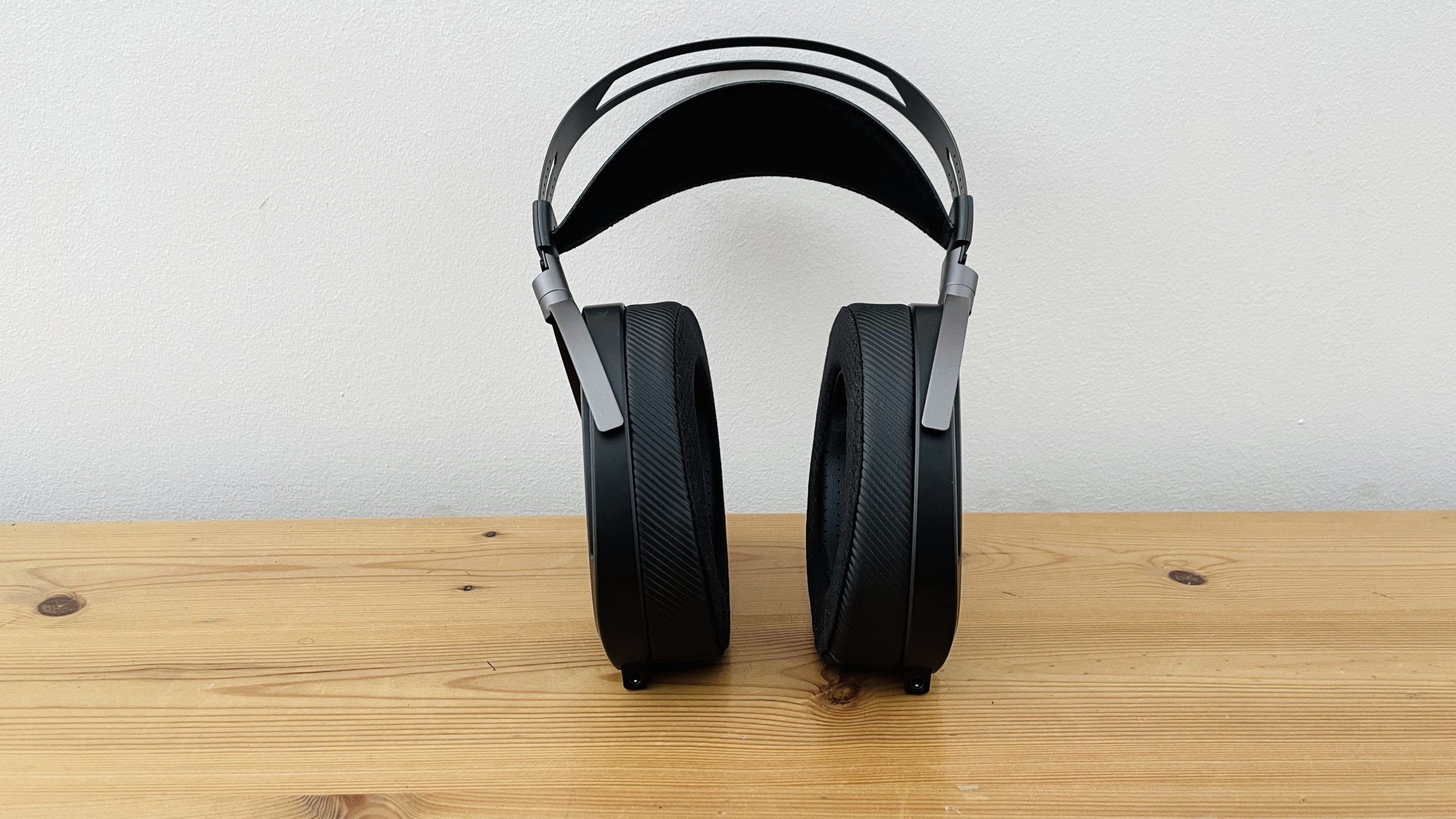
HiFiMan is known in the audiophile market for its focus on ‘planar-magnetic’ headphones, which provide a more precise and detailed sound than the less expensive ‘dynamic driver’ designs used by most mass-market headphones. And, like many audiophile headphones, the Kithara also employs an ‘open-back’ design, which allows sound to pass freely through the earpieces.
Again, this could be a problem for some people, as background noise can leak right through the earpieces while you’re wearing them, while people nearby can also hear every note of your music, and every zap, ker-pow, ka-boom of your gaming action. However, the advantage of open-back headphones is that they provide a spacious, atmospheric soundstage that really immerses you in sound, whether it’s a concert performance or an alien planet crawling with zombies.
Advertisement
(Image credit: Future/Cliff Joseph)
Asus ROG Kithara: Price and Availability
List price: $299.99 / £284.99 / AU$569
Less expensive than many high-end gaming headsets
Focus is on sound quality, with few additional features
The planar-magnetic drivers used by the Kithara represent the high end of the hi-fi market and are normally more expensive than conventional headphones and headsets. Even so, the Kithara’s price of $299.99 / £284.99 / AU$569 isn’t wildly high when compared to high-end rivals such as the Razer BlackShark V3 Pro, SteelSeries Arctis Nova Pro, or Audeze Maxwell 2 headsets.
Remember, though, that most gaming headsets also provide additional features, such as Bluetooth for wireless connectivity, noise-cancellation, or spatial audio. In contrast, the Kithara is a wired-only headset that spends its entire budget on producing the best possible sound quality, with little in the way of added extras.
Sign up for breaking news, reviews, opinion, top tech deals, and more.
Advertisement
Asus ROG Kithara: Specs
Swipe to scroll horizontally
Row 0 – Cell 0
Asus ROG Kithara
Price
$299.99 / £284.99 / AU$569
Weight
Advertisement
14.8oz / 420g
Drivers
100mm Planar Magnetic
Compatibility
Advertisement
PS5*, PS4* Nintendo Switch*, Nintendo Switch 2*, PC, Mac, Xbox Series X|S, Xbox One (audio only via audio jack on Xbox)
Frequency response of 8Hz – 55KHz; 1.8m gaming cable with boom mic; 1.8m hi-fi cable with 3.5mm, balanced 4mm, 6.3mm, USB-C adaptors (USB-C supports 24-bit/96KHz)
Advertisement
Software
N/A
Asus ROG Kithara: Design
Bulky 100mm drivers
Separate cables and adaptor for a gaming rig and hi-fi system
Limited console compatibility
This is one instance where form and function go completely hand-in-hand. The outstanding feature of the Kithara is its use of HiFiMan’s 100mm planar-magnetic drivers, which puts them in an entirely different league to conventional headsets, such as the 40mm drivers used in the SteelSeries Arctis Nova Elite. The precision of the planar-magnetic technology also provides an impressive frequency range of 8Hz – 55KHz, which goes beyond any gaming headset I’ve used, including my trusty Master & Dynamic MG20, and only rivalled by hi-fi headphones such as Sennheiser’s HDB 630.
The downside of those humungous drivers is that the Kithara is also one of the biggest and heaviest headsets that I’ve ever used. Wearing the Kithara for the first time, I was taken aback at the sheer size of the earpieces, which cover my ears with so much room to spare that the Kithara initially slid right down over my ears and almost ended up dangling around my neck. It’s heavy too, weighing in at 14.8oz / 420g, which is considerably heavier even than Apple’s metal-clad AirPods Max at 13.6oz / 386g.
Advertisement
Fortunately, HiFiMan’s experience comes to the rescue, managing to make the Kithara more comfortable than I might have expected. The headband provides plenty of room for adjustment, so I was quickly able to find a comfortable position for the earpieces, and the well-balanced design ensures that the Kithara doesn’t feel oppressively heavy when you’re wearing it. One nice touch is that there are two sets of removable earpieces included in the box – one set with thick memory foam padding and a leatherette finish, or a slightly smaller set of earpieces covered with a lighter mesh material. The open-back design of the earpieces also provides good ventilation, so your head shouldn’t get too swampy during long gaming sessions. You will, however, end up looking like a Cyberman from Dr Who, due to the sheer size of the headset.
The connectivity options are a little complicated, though. Wired headphones are normally relatively straightforward – you just plug them into your PC, console or mobile devices, and off you go. However, the Kithara is attempting to satisfy both gamers and audiophiles, so it provides an extensive set of cables and connectors for use with different types of devices.
There are two separate cables in the box – one cable that includes a flexible microphone boom for gaming, and a second cable designed for listening to music with hi-fi equipment, such as an external DAC or amplifier. Each earpiece on the Kithara has its own 3.5mm audio socket, so both cables have a double-ended connector that plugs into the 3.5mm connectors on the Kithara earpieces (having removable cables like this also allows audiophiles to use their own specialist cables if they prefer).
(Image credit: Future/Cliff Joseph)
As mentioned, the gaming cable includes a microphone, and there’s an inline control for adjusting volume or muting the microphone as well. This cable has two 3.5mm audio jacks on each end, and the two jacks attached to the inline control plug into the 3.5mm connectors on the Kithara’s earpieces.
Advertisement
The other end of the cable plugs into your PC or gaming console, with one 3.5mm jack handling microphone input while the other handles the audio from your gaming rig. Some PCs do combine the microphone and audio into a single 3.5mm connector, but the Kithara also includes a USB-C-to-dual-3.5mm adaptor, which you can use with any device that has an available USB-C port. Asus states that a USB-C interface can provide a little more power and volume for the headphones, so it recommends using the USB-C adaptor whenever possible. The USB-C adaptor also supports high-res audio formats up to 24-bit/96KHz, so it can handle most of the high-res audio available on Spotify, Apple Music, and other services.
Unfortunately, this does raise some compatibility issues for console users. Asus states that when using a PlayStation 4 or PS5, the microphone on the Kithara only works via the USB-C adaptor included in the box. However, the microphone doesn’t work with the Xbox at all, and audio input requires the 3.5mm audio connector on an Xbox controller, so console owners should pay close attention to the compatibility info on the Asus website to make sure the Kithara will work with the console you own.
The second cable is designed for use with a variety of hi-fi and audio devices and has a slightly different design. It does have two 3.5mm jacks on one end for connecting to the Kithara’s earpieces. However, the other end has a special ‘3-in-1’ connector that can be used to connect any of the 3.5mm, balanced 4.4mm, or 6.3mm audio adaptors that are included in the box. Most computers, consoles, and mobile devices will work fine with the standard 3.5mm adaptor, but audiophiles may prefer to use the 4.4mm and 6.3mm adaptors with a DAC, amplifier, or other hi-fi equipment.
(Image credit: Future/Cliff Joseph)
Advertisement
Asus ROG Kithara: Performance
Planar-magnetic drivers provide superb sound quality
Open-back design creates a relaxed, open soundstage
The Kithara arrived just in time for the new season of Diablo 4, and the first thing I notice as I zone into the capital town of Kyovashad is the sheer clarity and detail of its sound. The Kithara creates a real sense of a lively, bustling town around me, clearly picking out the sound of clanking metal from the blacksmith, and the bubbling cauldron of the alchemist when I stop by to stock up on some potions – details that I never really notice when I’m using my normal set of external speakers with my gaming laptop.
I’m not sure I’d call Diablo 4 a true open-world game, but the soundscape really opens up as I head out through the town gates. A crow squawks as I pass by, and I hear the sound of flapping wings panning over my head as it takes to the air. I also notice – for the very first time – the rattling armour and shield of my trusty companion, Raheir, as he jogs along behind me. The Kithara doesn’t have the spatial audio features of more expensive rivals such as the SteelSeries Arctis Nova Pro Wireless, but the open-back earpieces are highly effective at creating a sense of space as I run along the road, including the crashing sound of a waterfall over to the left of me.
I get my first taste of combat as a band of Rogues pops up out of nowhere, and the first thing I notice is the power of those chunky 100mm drivers as I fire off a couple of lightning bolts. I only have the game volume set to 50%, but that’s more than enough as the chaos of combat erupts all around me. And there’s clarity as well as power, capturing the satisfying fizz of energy as my bolts swirl around, bouncing from enemy to enemy. My sorcerer is a typical glass canon, so I trigger my Earthen Bulwark magical shield, and it sounds like a slab of concrete being dragged along the ground as it swirls around me.
I’ve got to hand it to the sound design team on Diablo 4, as they’ve done a great job of keeping all the clashing sounds clear and balanced, and the Kithara is a great fit for the game as it has the precision needed to pick out all the sonic details of swords and shields, and the mystical energy of my spells as they all clash in combat.
Editor’s note – PS5 performance
Advertisement
Alongside Cliff’s extremely thorough and deep testing of the Asus ROG Kithara on a host of platforms, I have also been able to put the headset through its paces on PS5. Performance on Sony’s current-gen console looks to be a big deal to Asus, with a dedicated badge adorning the Kithara’s box – and largely it performs brilliantly. The audio quality is excellent and gives excellent, crisp, and detailed audio that’s a joy to experience. However, the connectivity, cable setup, and the fact that you can only use the headset’s microphone when plugged into the PS5’s USB-C port hold it back and make the logistics of using the headset a bit of a challenge, especially in ‘traditional’ under-the-TV setups.
Rob Dwiar, Managing Editor, TechRadar Gaming
The sound design on Doom: The Dark Ages is, admittedly, a little less subtle, but the Kithara digs deep for the opening music, landing the grinding sound of fuzz-drenched guitars with real weight, while the martial beat of drums sets the mood for the mayhem to come.
I’m more of a role-playing games (RPG) guy these days, but the gonzo adrenaline rush of the Doom games is hard to resist, and I enjoy the metallic thud of the shield charge that softens up my enemies as I return to the game’s opening section in Khalim. I decide to get some target practice in the Ripatorium mode, picking Unchained Predator by Finishing Move from the Jukebox. It’s not my favourite musical genre, but the track’s chugging guitar riffs cleverly sync with the bullets spewing from my pulse rifle, and the sheer gritty power of the guitar and drums will satisfy even the most die-hard metal-heads. And, as mentioned, the Kithara’s oversized drivers have enough power to really make your ears bleed.
But, of course, the Kithara is designed for audiophiles who will enjoy a range of different musical genres, so I grab my iPad with Apple Music and switch to the hi-fi cable that is also included in the box. I start with the bouncing bass of Billie Eilish on Bad Guy, powered by an iFi Go Link Max DAC with a balanced 4mm connector.
Advertisement
The deep electronic bass that opens the track is firm and precise, but the rhythm is relaxed enough to bounce along like a playful puppy, and it immediately gets my feet tapping. The bass isn’t overwhelming, though, and there’s a really crisp sound to the finger-snaps that lead through the chorus, and a smooth, whispery quality on Billie’s vocals. Planar-magnetic headphones are sometimes criticized for weak bass, but the Kithara can hold its head up with planar-magnetic rivals such as the Audeze Maxwell 2, as it lands the final section of the song with a slow, juddering bass pulse that hits like a pile-driver.
A new high-res mix of Queen’s Seven Seas Of Rhye recently turned up on Apple Music, and the Kithara proves that it can match the power and precision of traditional hi-fi headphones such as the Sennheiser HDB 630 as it really lets rip on Brian May’s swooping power chords. It can handle Queen’s multi-tracked harmonies too, catching all the different layers of sound, and making room for Roger Taylor’s shrieking falsetto as it leads into the guitar break.
The old-school approach of the Kithara won’t suit everyone, and the lack of Bluetooth and noise-cancellation features means that it will mainly appeal to wired-only purists. But, if you’re an audiophile who really prefers the quality of traditional wired headphones, then the clarity, precision and spacious sound of the Kithara are hard to beat at this price.
(Image credit: Future/Cliff Joseph)
Advertisement
Should you buy the Asus ROG Kithara?
Buy it if…
Don’t buy it if…
Also consider…
If the Asus ROG Kithara might not be quite for you, then check out these fine alternatives as excellent audiophile options.
Advertisement
Swipe to scroll horizontally
Row 0 – Cell 0
Asus ROG Kithara
SteelSeries Arctis Nova Elite
Audeze Maxwell 2
Price
Advertisement
$299.99 / £284.99 / AU$569
$599.99 / £599.99 / AU$1,349
$329 / £319 / about AU$450
Weight
Advertisement
14.8oz / 420g
13.4oz / 380g
17.3oz / 490g
Drivers
Advertisement
100mm Planar Magnetic
40mm carbon fiber with brass surround
90mm Planar Magnetic
Compatibility
Advertisement
PS5*, PS4* Nintendo Switch*, Nintendo Switch 2*, PC, Mac, Xbox Series X|S, Xbox One (audio only via audio jack on Xbox)
(*Microphone requires USB-C adaptor)
PS5, PS4, Xbox Series X|S, Nintendo Switch 2, Nintendo Switch, PC, Mac, Mobile
Playstation or Xbox, Nintendo Switch, Nintendo Switch 2, PC, Mac, Mobile
Hi-Res wireless (2.4Ghz via dongle), Wired (audio jack), Bluetooth 5.3 (LE Audio, LC3, LC3+)
Wireless (2.4Ghz via dongle), Wired (USB-C & audio jack), Bluetooth 5.3 (LC3plus /
Advertisement
LC3 / LDAC / AAC)
Battery life
N/A
Up to 60 hours (2 x fully-charged batteries), Infinite Power System
Advertisement
80+ hours
Features
Frequency response of 8Hz – 55KHz; 1.8m gaming cable with boom mic; 1.8m hi-fi cable with 3.5mm, balanced 4mm, 6.3mm, USB-C adaptors (USB-C supports 24-bit/96KHz)
Certified Hi-Res audio (96kHz/24-bit), 40mm carbon fiber, brass ring surround drivers, ClearCast Gen 2.X – Retractable Boom Mic and Smart-Switching On-Ear Beamforming Microphone with AI noise rejecting, ANC, Omniplay GameHub (connect four devices simultaneously)
Advertisement
Detachable hypercardiod mic, beamforming mic with physical and AI reduction, FILTER™ Noise Reduction Technology, embedded Dolby Atmos license (Xbox),
Used on PC, Mac and mobile devices, on a variety of games and listening to high-res music on Apple Music
Compared directly with the Master & Dynamic MG20 and Sennheiser HDB 630, as well as other gaming headsets and headphones
I’m lucky enough to test hi-fi quality headphones on a fairly regular basis, so I was able to compare the Asus Kithara with gaming headsets such as the Master & Dynamic MG20, as well as more conventional headphones from Sennheiser and Bowers & Wilkins.
As mentioned, I was eager to test the Kithara by jumping into the new season of Diablo 4 on my Alienware gaming laptop. Diablo has taken up most of my gaming time in recent weeks, but I also paid a return visit to Doom: The Dark Ages. And, believe it or not, I also spend a fair amount of time reviewing games on the Mac, allowing me to revisit Baldur’s Gate 3 and the zombie hordes of Resident Evil 3. And I was able to cover both bases with Death Stranding, which has a wonderfully eerie and atmospheric ambient soundtrack, alongside the beautiful, melancholy song-writing of Low Roar.
I also use a Mac for work all day long, so the Kithara was often plugged into my Mac mini in order to stream music from Apple Music, ranging from the high-res bombast of Queen to the classical elegance of Max Richter.
Hackers started exploiting a critical vulnerability in the Marimo open-source reactive Python notebook platform just 10 hours after its public disclosure.
The flaw allows remote code execution without authentication in Marimo versions 0.20.4 and earlier. It tracked as CVE-2026-39987 and GitHub assessed it with a critical score of 9.3 out of 10.
According to researchers at cloud-security company Sysdig, attackers created an exploit from the information in the developer’s advisory and immediately started using it in attacks that exfiltrated sensitive information.
Marimo is an open-source Python notebook environment, typically used by data scientists, ML/AI practitioners, researchers, and developers building data apps or dashboards. It is a fairly popular project, with 20,000 GitHub stars and 1,000 forks.
CVE-2026-39987 is caused by the WebSocket endpoint ‘/terminal/ws’ exposing an interactive terminal without proper authentication checks, allowing connections from any unauthenticated client.
Advertisement
This gives direct access to a full interactive shell, running with the same privileges as the Marimo process.
Marimo disclosed the flaw on April 8 and yesterday released version 0.23.0 to address it. The developers noted that the flaw affects users who deployed Marimo as an editable notebook, and those who expose Marimo to a shared network using –host 0.0.0.0 while in edit mode.
Exploitation in the wild
Within the first 12 hours after the vulnerability details were disclosed, 125 IP addresses began reconnaissance activity, according to Sysdig.
Less than 10 hours after the disclosure, the researchers observed the first exploitation attempt in a credential theft operation.
Advertisement
The attacker first validated the vulnerability by connecting to the /terminal/ws endpoint and executing a short scripted sequence to confirm remote command execution, disconnecting within seconds.
Shortly after, they reconnected and began manual reconnaissance, issuing basic commands such as pwd, whoami, and ls to understand the environment, followed by directory navigation attempts and checks for SSH-related locations.
Next, the attacker focused on credential harvesting, immediately targeting the .env file and extracting environment variables, including cloud credentials and application secrets. They then attempted to read additional files in the working directory and continued probing for SSH keys.
Stealing credentials Source: Sysdig
The entire credential access phase was completed in less than three minutes, notes a Sysdig report this week.
Roughly an hour later, the attacker returned for a second exploitation session using the same exploit sequence.
Advertisement
The researchers say that behind the attack appears to be a “methodical operator” with a hands-on approach, rather than automated scripts, focusing on high-value objectives such as stealing .env credentials and SSH keys.
The attackers did not attempt to install persistence, deploy cryptominers, or backdoors, suggesting a quick, stealthy operation.
Marimo users are recommended to upgrade to version 0.23.0 immediately, monitor WebSocket connections to ‘/terminal/ws,’ restrict external access via a firewall, and rotate all exposed secrets.
If upgrading is not possible, an effective mitigation is to block or disable access to the ‘/terminal/ws’ endpoint entirely.
Advertisement
Automated pentesting proves the path exists. BAS proves whether your controls stop it. Most teams run one without the other.
This whitepaper maps six validation surfaces, shows where coverage ends, and provides practitioners with three diagnostic questions for any tool evaluation.
Get caught up on the latest technology and startup news from the past week. Here are the most popular stories on GeekWire for the week of April 5, 2026.
A new state law wipes out nearly all non-compete agreements in Washington, sparking debate across the tech ecosystem about innovation, talent mobility and employer rights. … Read More
Bryson DeChambeau, the two-time U.S. Open champion, is leading a group of investors in the acquisition of Bellevue-based Sportsbox AI, the startup that uses AI and 3D motion capture to analyze golf swings from smartphone video. … Read More
Microsoft’s decision to have GPT and Claude check each other’s work inside Microsoft 365 Copilot’s Researcher agent signals a broader shift: the single-model era in enterprise AI may be over. … Read More
Francois Ajenstat, who spent 13 years at Tableau including more than seven as chief product officer, is launching Golden Analytics with $7M in seed funding to build an AI-native business intelligence platform. … Read More

































































You must be logged in to post a comment Login