

Politics
Trans violence is out of control

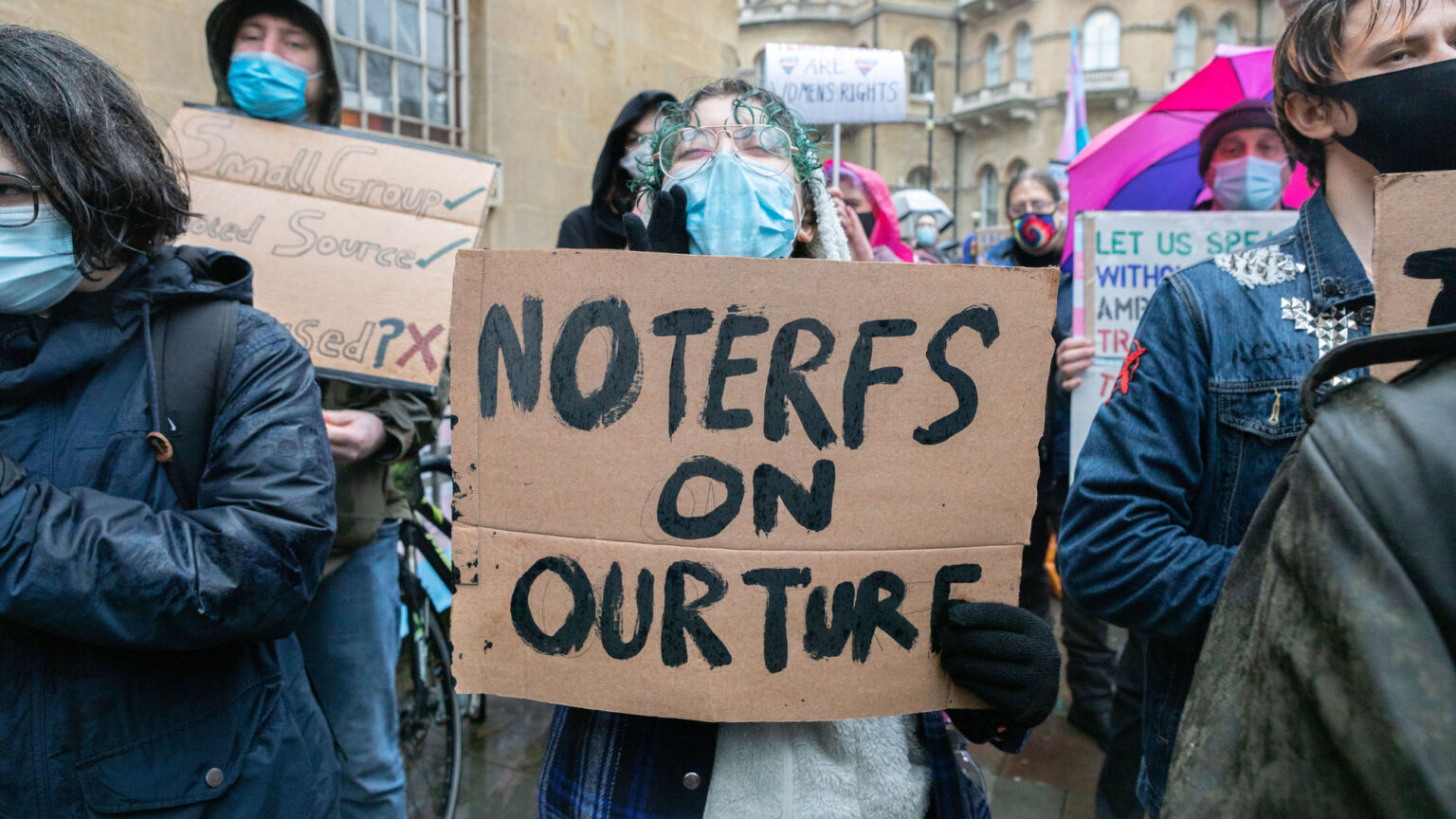
Jolyon Maugham’s Good Law Project has lodged a complaint with the Information Commissioner about the gender-critical organisation, Protect and Teach, accusing it of failing to disclose ‘who they are or how they’re handling people’s data’. ‘If a group won’t say who they are’, the Good Law Project asserts, ‘it raises a vital question: what are they trying to hide? If your views are so toxic you won’t put your name to them, then maybe you shouldn’t be saying them at all.’
True or not, these pettifogging legal gripes entirely miss the point. The fact is that campaigners are concealing their identities not because of the supposed ‘toxicity’ of their beliefs, but because they are concerned about their safety and that of their families. For gender-critical feminists, speaking in public has become a very dangerous business.
The first hints of the current wave of violence began last year. Following the landmark judgment in For Women Scotland Ltd vs The Scottish Ministers, in which the Supreme Court confirmed that ‘sex’ in the Equality Act refers to biological sex, the women behind the campaign reported being inundated with death threats and misogynistic abuse. They also described the damage their views had caused to their employment and business interests.
Trans activists soon turned their attention to officials. The then chairwoman of the Equality and Human Rights Commission (EHRC), Baroness Falkner, told parliament’s Women and Equalities Committee that she had been forced to cancel a meeting after police warned of a ‘serious risk’ of violence. Trans activists had made it harder for her staff to come to work in safety, she told MPs, adding: ‘The level of agitation that they can cause in terms of personal attacks, libellous attacks, defamation, where our family members are affected – our intimate family members have to think about how they’re going about to their place of work – has got to stop.’
You don’t even have to be a gender-critical feminist to risk the wrath of activists. Sally Dunsmore, the director of the Oxford Literary Festival, last year dared to programme a discussion between gender-critical writers Julie Bindel and Helen Joyce. Several guests, including an Oxford lecturer in English, pulled out, while other activists threatened Dunsmore directly, telling her she would be ‘put in a box and burnt’.
Now, those threats are taking on a more explicitly criminal and violent form. A militant trans-activist group known as Bash Back has issued a ‘direct action’ guide urging members to identify ‘transphobic’ targets – including MPs – and ensure they are ‘hit repeatedly until they desist’ from their ‘transphobic’ activities. The guide admits Bash Back’s campaigning would be ‘rarely legal’, and warns participants that they could face charges including criminal damage, possession of an offensive weapon and aggravated trespass. An equipment section lists items such as a hammer and advises activists to clean tools with alcohol or dispose of them after use in ‘unsurveilled residential bins’.
They’re not mucking around. Bash Back has already claimed responsibility for attacks on the constituency office of health secretary Wes Streeting, and for hacking the website of the Free Speech Union. It also targeted the offices of the EHRC last year, smashing windows and spraying the building with pink paint.
Despite Maugham’s supposed opposition to ‘toxic’ attitudes, his own response to Bash Back’s activities was favourable. He described this campaign of violence and intimidation as ‘the inevitable, and I would say legitimate’ response to a society whose ‘politics and media systematically dehumanise trans people’.
Maugham’s hypocrisy highlights what has become a familiar defence of trans activism. Allowing a gender-critical feminist to speak is cast as an act of both real and symbolic violence, where every dissenting utterance becomes an attack on vulnerable gender-confused children. Like Maugham, they claim that the clock’s already struck midnight, and there’s no time for the weary conventions of civility, tolerance or open debate.
On campus, where the sort of people Bash Back is now urging activists to target are very often to be found, the implications of this rhetoric have already been severe. At the Committee for Academic Freedom, we regularly deal with cases involving gender-critical academics who are reluctant to take their concerns public for fear of reprisals.
This is reinforced by the government-commissioned review of data, statistics and research on sex and gender, led by Professor Alice Sullivan and published in 2024. It recorded not merely isolated complaints, but also a broader chilling effect: gender-critical academics describe moderating how they frame arguments, avoiding open discussion, narrowing what they were prepared to teach or research, and hesitating to pursue work touching on biological sex for fear of complaints, ostracism, managerial disapproval or damage to their careers.
If direct threats of violence are now being added to this already hostile climate, the reluctance to attach one’s name to advocacy concerning the importance of biological sex – or to pursue research on that topic, organise conferences, supervise PhDs or teach on it at all – begins to look less like evasion and more like self-defence.
The Good Law Project is free to campaign as it wishes, but it should at least be honest about where the ‘toxic’ climate it bemoans is actually coming from.
Freddie Attenborough is director of research for the Committee for Academic Freedom.


President Donald Trump was big on bravado and light on details as he addressed the tentative peace deal being finessed between the US and Iran.
On Sunday, a government official told The New York Times both sides agreed in principle to terms that would open the Strait of Hormuz and see Iran commit to disposing of its highly enriched uranium, though they said many of the specifics remained to be sorted.
Never minding the nuts and bolts, or the fact nothing was finalised, the president celebrated the negotiations while simultaneously knocking the diplomatic pact former President Barack Obama helped broker with Iran and international partners over a decade ago.

BRENDAN SMIALOWSKI via Getty Images
“If I make a deal with Iran, it will be a good and proper one, not like the one made by Obama,” he wrote on Truth Social, repeating the dubious claim that the 2015 arrangement “gave Iran massive amounts of CASH, and a clear and open path to a Nuclear Weapon.”
“Our deal is the exact opposite, but nobody has seen it, or knows what it is,” he promised. “It isn’t even fully negotiated yet.”
“So don’t listen to the losers, who are critical about something they know nothing about,” he went on. “Unlike those before me who should have solved this problem many years ago, I don’t make bad deals!”
The reported agreement, which will still need joint approval from the “Art of the Deal” co-author and Iran’s supreme leader, apparently does not lay out a process for how Iran will get rid of its uranium, detail when it will cease nuclear enrichment, or address its existing stockpile of missiles.

A retired Major General in the British Army has warned that a proposed peace deal between America and Iran “looks like defeat” for Donald Trump.
Military expert Chip Chapman’s comments came as an agreement between the two countries to end the conflict remains elusive.
Hopes rose over the weekend that a deal was about to be struck which could finally see the re-opening of the Strait of Hormuz, the vital waterway which carried one-fifth of the world’s oil before the war started on February 28.
But both countries’ negotiators has still not reached an agreement, and Trump has ordered his team not to “rush” into anything.
Appearing on LBC, Chip Chapman, who is a former senior British military adviser to US central command, said the details of a proposed deal which have emerged do not look good for the Americans.
He said: “From a military perspective, if Iran retains proxies, if they maintain ballistic missiles, if the Strait of Hormuz isn’t open – because on of the fundamental principles of American foreign policy post-1945 was freedom of navigation – and if the nuclear weapons are not dealt with, then in a military mission verb that looks like defeat.
“That is, rendered them incapable of achieving their objectives. America is defeated.”
Posting on Truth Social on Sunday night, Trump conceded that a deal “isn’t even fully negotiated yet”.
He added: “So don’t listen to the losers, who are critical about something they know nothing about. Unlike those before me who should have solved this problem many years ago, I don’t make bad deals … If I make a deal with Iran, it will be a good and proper one, not like the one made by Obama.”
Subscribe to Commons People, the podcast that makes politics easy. Every week, Kevin Schofield and Kate Nicholson unpack the week’s biggest stories to keep you informed. Join us for straightforward analysis of what’s going on at Westminster.

Vladimir Putin has been warned it could take Russia 140 years to reach Kyiv because of the slow progress it is making in the Ukraine war.
British war correspondent Oz Katerji said the conflict “is not going well” for Moscow, more than four years after it began.
Putin ordered the invasion of Russia’s neighbours in February 2022, and the so-called “special military operation” was supposed to be over in a matter of days.
More than four years later, however, Russia occupies little more than a fifth of the country and has suffered 1.3 million casualties.
But Katerji told LBC that at the current rate of progress, it could be well over a century before Moscow achieves its goal of seizing the Ukrainian capital.
He said: “Since the end of 2022, Russia has been very, very slowly advancing.
“If Russia was to continue capturing territory at the same pace at the same pace that it has been over the last four years, it would take 140 years for Russian forces to reach Kyiv.
“So the war is not going well for the Russians, even though they are very slowly advancing.”
Last week, BBC Russia editor Steve Rosenberg said a “sense of fatigue” was emerging among the Russian public as the war of attrition goes on.
He continued: “Also at the same time, frustration with the economic problems, rising communal bills, rising utility bills, rising prices, and also frustrations with the government’s attempts to introduce restrictions on the internet.
“This is all coming together and creating a lot of anxiety and frustration.”
Subscribe to Commons People, the podcast that makes politics easy. Every week, Kevin Schofield and Kate Nicholson unpack the week’s biggest stories to keep you informed. Join us for straightforward analysis of what’s going on at Westminster.

You’ll probably want to stand up while you read this.
While we all know that sitting all day is linked to all kinds of conditions – back pain, neck pain, bad posture, carpal tunnel and more – it can also cause problems for a less-talked-about part of your body: your buttocks.
Many folks notice butt numbness or pain after sitting all day long, which is a common health issue known officially as gluteal amnesia but is also referred to as “dead glute syndrome” or “dead butt syndrome”.
In dead glute syndrome, your gluteal muscles start to weaken, said Arlen Ray, a physical therapist and director of outpatient physical and occupational therapy at Hackensack Meridian JFK Johnson Rehabilitation Institute in New Jersey.
This happens because of lifestyle, often in people who sit for prolonged periods, Ray said.
“So, basically, what happens is the glute doesn’t activate, you have tightness in the hip flexors and the hamstrings,” Ray noted.
“Oftentimes, when you’re sitting for long periods of time, your iliopsoas is shortened because it’s held in a tight position, and your gluteus medius becomes weak because it’s not really being asked to do anything in that seated position,” said Dr. Jennifer O’Connell, a physiatrist at the Hospital for Special Surgery in New York.
As time goes on, this weakness can cause damage to the tendon, O’Connell added. O’Connell said she sees “several people with this every single day.”
But just because you have a desk job doesn’t mean you’re doomed to have dead glutes.
“It’s really for people that don’t take their time to work on glute strengthening and stretching of the hip flexors and the hamstrings,” Ray said.
So it depends on someone’s fitness regimen and daily activity, Ray noted.
Someone may work out regularly but not work out their glutes and have this problem, Ray noted. While someone who sits all day but makes a point to frequently move around may not have this problem.
Here are the signs of dead glute syndrome and what you can do to prevent it.
“Dead glute syndrome” can show up as butt pain along with other symptoms
When it comes to dead glute syndrome, it’s common to have butt pain or numbness in the rear, said Kate Lombardo, the yoga director at YogaRenew in New Jersey.
It may also show up as tingling in the butt that goes into the leg, Ray said. The pain may present on one side of the butt or both sides, added O’Connell.
“Sometimes it can manifest also as back pain, hip pain, and it can even cause other deficits and cause injuries, maybe to the knee or the ankle, because our glutes are really a powerhouse and help to maintain our balance, stability and our posture,” Ray said.
Someone with dead glute syndrome may also find that they have trouble going up or down the stairs, doing lunges or even standing up, Ray noted.

martin-dm via Getty Images
Moving around throughout the day is one way to prevent this from happening
People who sit all day for work or live a sedentary lifestyle are at higher risk of developing dead glute syndrome than those who are on their feet all day.
If you have a job that requires you to be at a desk all day, consider getting a standing desk, said O’Connell.
“I like to have [people] standing for at least five minutes out of every half an hour,” noted O’Connell.
If you don’t have a standing desk, try to make a point to take a stroll around your office, fill up your water bottle in your kitchen or even just do a few stretches, said Lombardo.
Exercise, in general, is also an important way to prevent pain from happening.
According to Ray, exercises that target the gluteal muscles are important to add to your workout regimen. This includes bridges, clamshells, lunges and squats, she said. Lombardo added yoga poses such as chair pose, pigeon pose or a seated figure four pose, which can help stretch the outer hip.
It’s important not only to stretch but to strengthen the glutes, Ray noted. By doing a mix of the exercises mentioned above, you will both stretch and strengthen your glutes.
“If we’re just regularly moving, we naturally get the mix of the strengthening and stretching,” added Lombardo. “That’s how our bodies were designed to work.”
It’s common for folks to immediately turn to stretching when they notice pain, but that can “actually exacerbate the problem,” Lombardo said, again stressing the importance of stretching and strengthening.
This problem doesn’t always require medical attention but may in certain cases
O’Connell said if you notice minor derriere pain, it’s OK to try to manage it at home, as long as it goes away quickly and without any other issues.
Ray added, “If anybody has pain, especially pain that doesn’t go away within a few days, they should see their doctor to see where it could be coming from,” because dead glute syndrome isn’t the only culprit for many of the aches and pains associated with it.
Additionally, if the pain isn’t proportional to what you’d expect, you should see your doctor, said O’Connell.
“If this is something that’s keeping you up at night, if it’s severely affecting your quality of life, that’s something to come in for,” added O’Connell.
Even if you don’t have pain yet, or the pain doesn’t disrupt your quality of life, you can still consider seeing a physical therapist who can help address muscle imbalances, weakness or tightness in your glutes, hip or back, said Ray.
“They can guide you with the proper exercises and cue you with the right alignment in doing these exercises,” added Ray.
Any kind of movement is a beneficial way to keep your glutes (and entire body) healthy, said Lombardo.
“As human beings, you want to do things that make [you] feel better,” Lombardo said. “So, I think it’s just being open enough to say yes to some movement just to get started.”
You don’t need to sign up for a marathon or compete in a big bike race; instead, you can commit to micro movements to help kick-start healthier habits, Lombardo said.
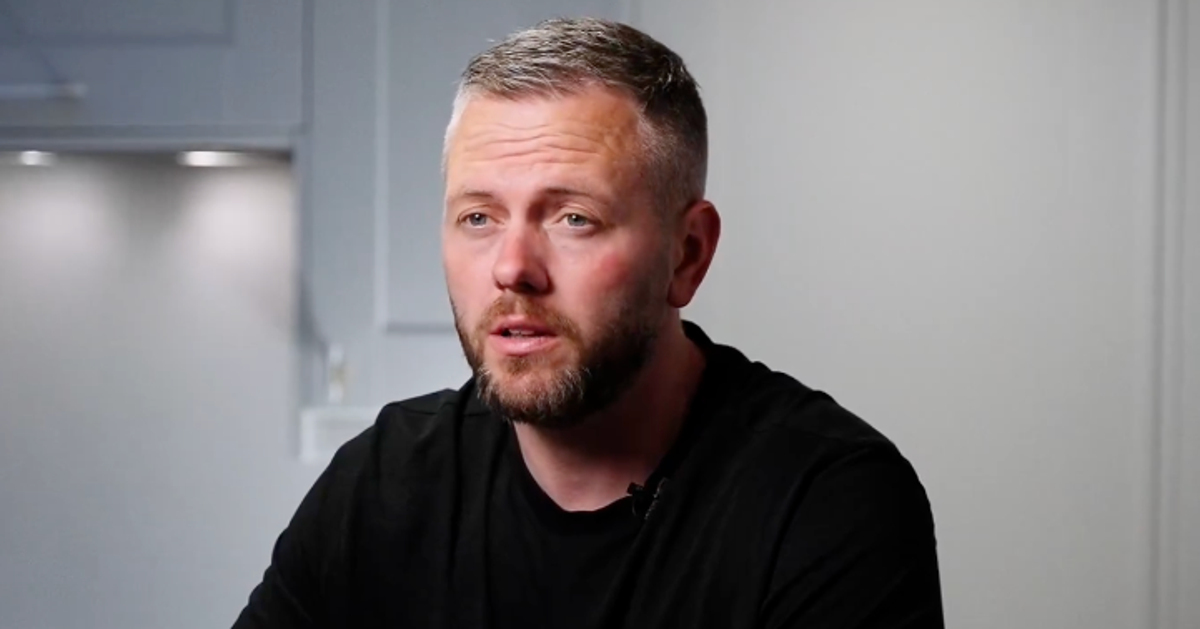
A Reform UK MP has condemned his own party’s candidate in a crunch by-election over an offensive post on X about Carol Vorderman.
Robert Kenyon, who is going head-to-head with Labour’s Andy Burnham to be the new MP for Makerfield, made the remark on one of his now-deleted accounts on the social media platform.
Reform MP Danny Kruger was told about the contents of the post by Today programme presenter Emma Barnett on Monday.
She said: “On Christmas Eve in 2021 he supported a message sent by another man to the TV presenter Carol Vorderman – and I apologise to our listeners but I think they need to hear this.
“There was a message sent to Carol Vorderman ‘happy birthday Carol, my God I would love to smell and lick your arsehole’.
“And your candidate for Makerfield replied saying ‘he’s only saying what we’re all thinking’, with a thumbs up and a laughing emoji.
“Is that the type of ‘better politician’ you think the British people deserve?”
Kruger, who defected to Reform from the Tories last year, said: “What you’re seeing there is obviously a private comment.”
When Barnett pointed out it was actually public, Kruger said: “The great challenge for social media for private people is that they use it as if they are chatting to their friends in the pub.
“It was a clearly inappropriate thing to say. I’m not going to judge people for what was intended as private conversations. Clearly that is not the kind of comment you would want an elected politician to say.”
Vorderman, the former Countdown presenter, has described has said Kenyon is “a cowardly misogynist”.
Kruger said: “This was clearly something said in a different context, not an appropriate thing to say publicly.”
But Barnett told him: “You can say this was private, but this was public and considered by him how he wanted to conduct himself, not 20 years ago, 30 years ago – in 2021.
“On Christmas Eve, he’s spending his time talking about what he wants to do to the intimate parts of a woman who used to present Countdown. Do you think you need to remove your man in Makerfield?”
Kruger tried to defend Kenyon’s post by pointing out he was not a politician at the time.
“He was an ordinary man from an ordinary place, and what he’s done now is step forward, outraged at the state of our country,” he said.
Barnett said: “Many ordinary men from ordinary places do not write like that.”
Subscribe to Commons People, the podcast that makes politics easy. Every week, Kevin Schofield and Kate Nicholson unpack the week’s biggest stories to keep you informed. Join us for straightforward analysis of what’s going on at Westminster.
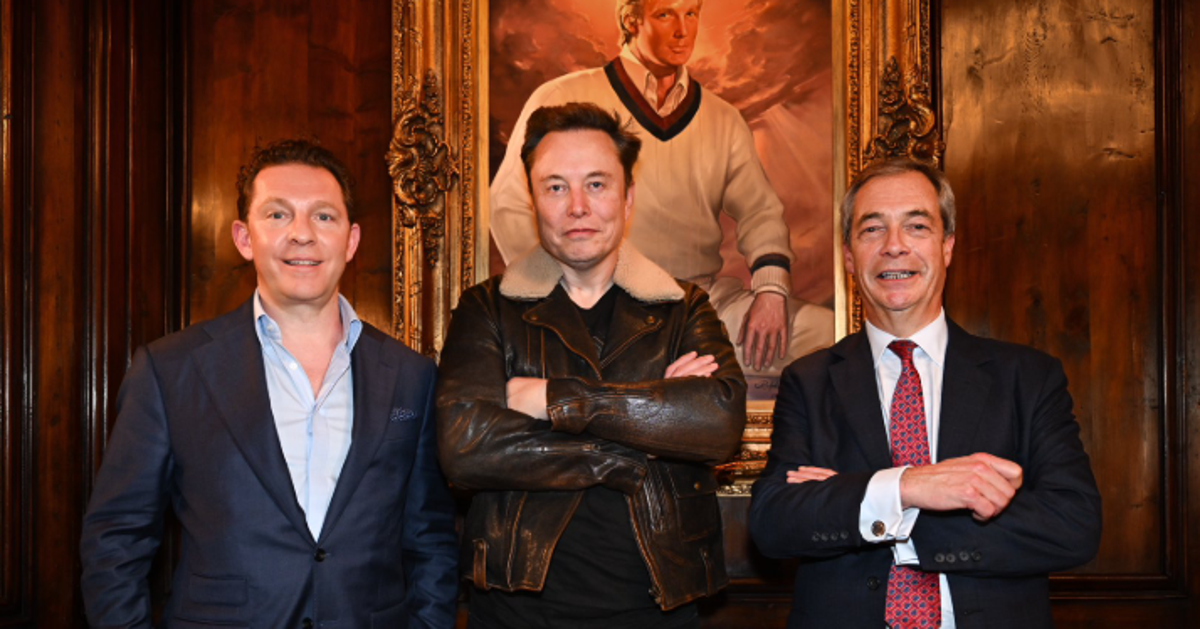
Nigel Farage has hit out at Elon Musk for backing a rival right-wing party in next month’s crucial Makerfield by-election.
The Reform UK leader accused the X owner of trying “to split the right of British politics” by supporting Rupert Lowe’s Restore Britain party.
Lowe was elected as a Reform MP in 2024, but left the party to set up his own outfit following a spectacular bust-up with Farage.
Voters in Makerfield will go to the polls on June 18 in what is expected to be a close fight between Labour’s Andy Burnham and Robert Kenyon of Reform UK.
An opinion published at the weekend put Burnham on 43% and Kenyon on 40%.
Restore Britain are on 7% – a level of support which would be enough to swing the seat for Reform if those voters backed Kenyon instead.
Musk made clear his support for Restore by sharing a post on X by Rupert Lowe in which he claimed his party “is under brutal assault by the establishment”.
Speaking to The Telegraph, Farage said Andy Burnham would be “delighted” at Musk’s endorsement of Restore.
He said: “Elon Musk has decided he will try to split the right of British politics as best he can. This is supporting a party that’s one man with a social media account. Quite what he’s trying to achieve, I have no idea.”
Farage and Musk have been engaged in an ongoing feud since the tech billionaire called for him to be dumped as Reform leader last year.
Musk turned on Farage shortly after the pair met at Donald Trump’s Mar-a-Lago resort amid claims he was preparing to donate up to $100 million to the party.
It came after Farage moved to distance himself from far-right activist Tommy Robinson, who has been praised by Musk.
He said: “We’re a political party aiming to win the next general election. He’s not what we need.”
Responding to Musk’s call for him to be dumped as Reform leader, Farage said: “Well, this is a surprise! Elon is a remarkable individual but on this I am afraid I disagree.
“My view remains that Tommy Robinson is not right for Reform and I never sell out my principles.”
Subscribe to Commons People, the podcast that makes politics easy. Every week, Kevin Schofield and Kate Nicholson unpack the week’s biggest stories to keep you informed. Join us for straightforward analysis of what’s going on at Westminster.

The first thing I did after immigrating to the United States in 1988 at 16 was hide my identity. Being from Lebanon felt shameful, partly due to the ongoing civil war there at the time and the negative stereotypes influenced by political tensions in the region.
Cognisant of these issues, my dad, who had abandoned my mum and me in Lebanon when I was three years old to start a new life in Detroit, insisted I assimilate as quickly as possible once I joined him.
His motives seemed valid. He wanted to protect me from being bullied or discriminated against in high school. He also did not believe in living with a hyphenated identity.
Eager to please him and tired of hearing him ask why it was taking me so long to learn English, I began to transform into an all-American teenager. In the process, I didn’t just assimilate; I erased myself.
It took three decades and a midnight call from thousands of miles away to change all of that.

I was speaking English just six months after arriving in Detroit – albeit with a thick accent. Anxious to fit in, I swapped most of the patterned skirts and dresses I’d brought with me to the U.S. with a more appropriate wardrobe of plain jeans, sweatshirts and tennis shoes.
When my mum joined me four years later, the cycle of shame repeated, and I was the one who insisted she assimilate as quickly as possible. I cringed every time she spoke French or Arabic in front of my American friends or co-workers and made sure she used her Americanised name, Tina, instead of her Lebanese name, Hayat.
After graduating high school, I took accent reduction classes and became a journalist and English teacher. The only visible trace of my Lebanese heritage was my olive-toned skin and a few lingering mispronounced words, such as “pee-zah” instead of “pizza”.
I protected my new identity like I did my citizenship papers, keenly aware that the key to my success – especially in my chosen career – was to distance myself from everything that even slightly hinted at my culture and where I came from.
However, my obsession with being all-American changed on New Year’s Eve 2023 – almost 36 years after I’d left Lebanon – when I received an email in broken English.

It read: I am bchara the son of Aida and Jamil. We was your neghbord in sin el fil in lebanon. I hope that you remember us. God bless you. I wrote your name on google, and when I saw your picture I said to mom: her she is. I read your bio I found that I have right. Dédé.
I read the message a few times. No one had called me by my nickname “Dédé” since my mum passed away 12 years earlier, and no one knew who Aida was. It couldn’t be spam.
Aida, whose name means “return” in Arabic, was the wife of the building concierge where I lived in Beirut. After losing her home and land in the mountains during the war, Aida, her husband and two kids escaped to Beirut, and eventually found a job and shelter in my building.
I was 13 years old when I first met Aida; she was 26. It didn’t take long for us to become fast friends. She taught me how to cook and knit, listened to my teenage woes and counselled me. Although Aida had never had any formal education, she was a prolific storyteller and wove stories about her land and her village through every moment of her life.
It was Aida whom I confided in when I decided to immigrate to the U.S. to meet my dad. She listened and encouraged me to follow my dreams, and promised to look after my mum and help her in my absence.
Soon after I left Lebanon, we lost touch. Cell phones didn’t exist in the ’80s, and calling long-distance on a landline was cost-prohibitive. More importantly, I was too busy becoming an American teenager to remember or care about my former neighbour.
But the night that email arrived, I held back tears as I clicked “reply” and typed, Hi, Bcharra. It’s Dédé. You found me.

Two days later, after exchanging phone numbers on WhatsApp, I video-chatted with Aida for the first time in more than 30 years.
Her voice was raspier and more laboured than the perky one she had used to yell out her window for me to come down for coffee. Her once-bright green eyes were now sunken and tired, and sometimes she struggled to breathe.
The thousands of miles between us and all of the time apart disappeared. I learned that shortly after I had left Lebanon at the end of the civil war, Aida and her family returned to their village, bought back their land and built a new home.
After that first call, I woke up every morning to a voice message from Aida, sent around 10 p.m. her time (5:00 a.m. my time), with her blessings for a safe and happy day.
I hadn’t realised how much I missed the communal part of Lebanese culture in which friends and neighbours check on each other every morning to show love and care.
After work, Aida and I would talk for about an hour, exchange pictures and reminisce about our time together – our mornings drinking coffee, the neighbours and their shenanigans, and the trips we took together to the beach and the mountains.
She didn’t mind my rusty Arabic – she simply corrected me when I needed it, all the while giving me a renewed confidence in my native language. She reminded me of a life that no longer felt like mine, and in the process, rekindled a love for my homeland that I had lost over the years.

I began to make plans to travel back home to see Aida. She insisted I stay with her and would not take “no” for an answer.
Then, on June 15, 2024, almost six months after I first heard Aida’s voice again, the calls stopped.
I left messages and waited. No reply. I convinced myself that perhaps she was busy with the year’s harvest or was tending to her kids and grandkids. I kept putting off calling her son, hoping that I would hear her voice again – hoping life had just gotten in the way.
Two months later, in mid-September, I woke up to find a WhatsApp message left at midnight. Aida never called me while I was asleep. I clicked “play” and held my breath.
Aida had suffered a brain aneurysm and collapsed in her kitchen a couple of days after our last call. She was 65 years old.
When I lost Aida, I grieved for her – and for myself. I felt like the flailing teenager I was 36 years ago who desperately wanted to belong and who readily dismissed her authenticity for the chance to fit in.
This time, though, I longed to return to the very community my younger self had abandoned. I replayed Aida’s voice messages, and with each one, I gripped my identity tighter, refusing to let it go.
Then, seemingly out of nowhere, more friends from Lebanon – people I hadn’t heard from in decades – began finding me on Facebook. It was as if Aida didn’t want me to be alone again – as if she didn’t want me to forget who I was.
Today, I am surrounded by a community of Lebanese friends who, although thousands of miles away, call and text me every day with stories and pictures from home that pull me deeper into the past, restoring memories I had stowed away and reminding me of where my journey began.

I don’t blame my dad or myself for wanting to fit in – every teenager, immigrant or not, wants to belong.
As an American, I learned to be independent and to persist even when people discouraged me from pursuing a journalism career because my first language was not English. I’ve followed my dream of becoming a writer because, in this country, you can move barriers if you’re willing to work hard and have grit. I met my husband here, and we’ve built a beautiful life together. By all accounts, I’ve achieved the American dream.
But as a Lebanese person, I’ve missed the sense of community I had back home. I’ve missed the simpler life where meals linger and neighbours stop by randomly for coffee. I value my roots, my olive skin, my broken Arabic and the friendships that have survived many miles of distance and years of separation.
Aida’s unexpected and brief return to my life made me realise that to fully belong, I had to stand out. I had to reclaim my Lebanese identity, embrace both cultures equally, and own my complex story.
So, I launched a blog to promote immigrants’ stories and began writing my memoir. I started publishing essays about my experience growing up during the civil war. I added “Lebanese-American” to my social media bios and participated in panel discussions about immigration and immigrants.
At home, I no longer hide when my two American-born children hear me speak Arabic. I frequently share stories of Lebanon to remind them that they’re the offspring of an immigrant.
In her last voice message, Aida assured me that I’ll always have a home in Lebanon. I understand now that “home” doesn’t necessarily have to be a place on the map, and belonging doesn’t mean erasing one country and adopting another. It means embracing my hyphenated identity without fear of being seen.
Della Cassia is a writer, journalist and educator who immigrated to Michigan from Lebanon at 16 in pursuit of her American dream. After two decades as a journalist and communications professional, she transitioned into teaching and freelance writing. Her work is rooted in immigration, war, identity and motherhood. It has appeared in various publications, including Literary Mama, Culturs Magazine, The Armenian Weekly, Grown and Flown, The Observer & Eccentric, among others. For more from her, visit www.dellacassia.com.
Do you have a compelling personal story you’d like to see published on HuffPost? Find out what we’re looking for here and send us a pitch at pitch@huffpost.com.
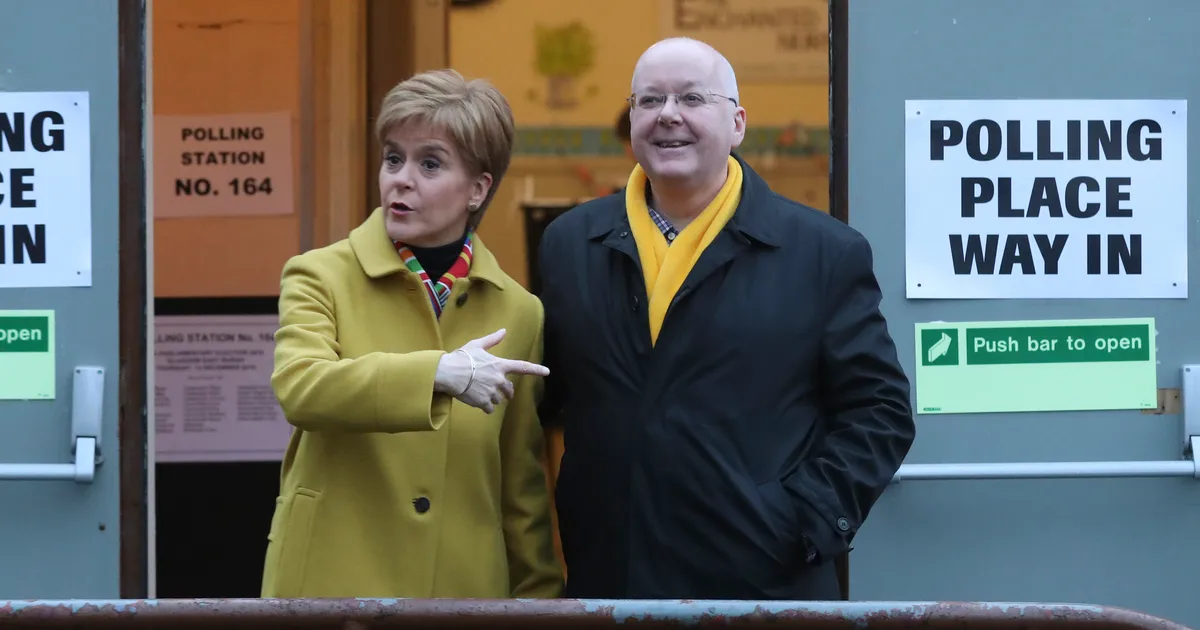
Former SNP chief executive Peter Murrell has been remanded into custody after pleading guilty to embezzling £400,310.65 from the party at the High Court in Edinburgh.
The 62-year-old, who is the estranged husband of former SNP leader and Scottish first minister Nicola Sturgeon, admitted the charges on Monday morning. He will be sentenced on June 23.
He was charged with embezzling the funds from the party between August 2010 and October 2022.
Murrell was the SNP’s chief executive between 2001 and 2023, the same year in which he was first arrested as part of Operation Branchform, a Police Scotland probe into the party’s finances. He was charged in April, 2024.
Sturgeon was also arrested and questioned by detectives, but was never charged with any offences.
The indictment against Murrell included allegations that in 2020 he used party funds to buy a £124,550 motorhome for his own personal use.
He and Sturgeon had previously been one of the most powerful couples in UK politics.
She served for more than eight years as first minister and SNP leader, while Murrell was the party’s chief executive.
In January last year, Sturgeon announced she and Murrell had “decided to end” their marriage after nearly 15 years.
Responding to Murrell’s guilty plea, Assistant Chief Constable Stuart Houston of Police Scotland said: “Peter Murrell has shown utter contempt for the high public trust placed in him as the chief executive of a political party and his position in the wider political establishment of Scotland for many years.
“He abused his privileged position with access to Scottish National Party funds to divert cash into his own accounts and bankroll the lavish lifestyle he craved but could not afford.”
Scottish Labour deputy leader Jackie Baillie said it was “inconceivable that Nicola Sturgeon knew nothing about the large-scale fraud, which she benefited from, taking place under her nose in both her party and her home”.
“It was Nicola Sturgeon and the SNP party machine that attempted to close ranks and shut down scrutiny when questions about the finances started to emerge and we need to know why,” she said.
“[SNP leader] John Swinney needs to come clean and explain what he knew and what the party knew.”
But Sturgeon said she had been “deceived and let down by a husband I loved and trusted”.
In a statement, she added: “To be clear: I had no knowledge or suspicion whatsoever that he was using SNP funds for personal purposes.
“I am utterly appalled that he did so and cannot begin to understand why. That I was fully cleared after a thorough investigation underlines that these are not my crimes. I was misled just as others were.”
Subscribe to Commons People, the podcast that makes politics easy. Every week, Kevin Schofield and Kate Nicholson unpack the week’s biggest stories to keep you informed. Join us for straightforward analysis of what’s going on at Westminster.
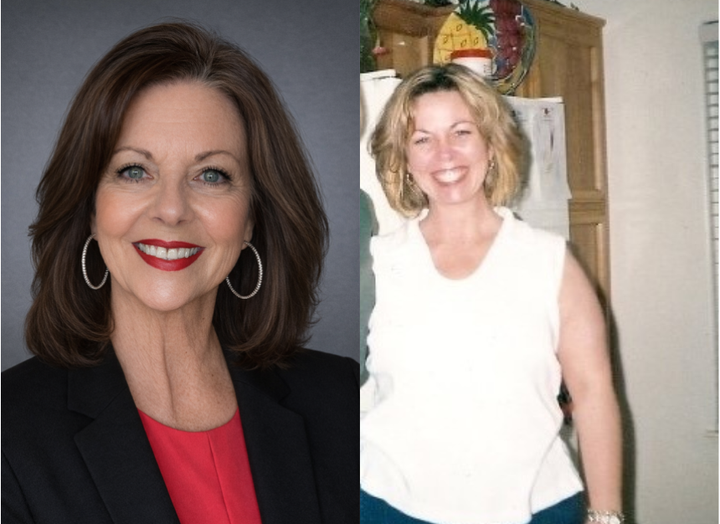
Actor Helen Mirren once told People magazine that she thinks ageing and all the changes that come with it are something to embrace rather than try to hide.
“I think women were just so terrified of having white or grey hair because it immediately puts them into a different category,” she said.
“And of course, you are in that age group. I’m sorry, but you are! So, why not just embrace it, go along with it, and welcome it? Make it a positive thing as opposed to a negative thing.”
For some, it’s a tough pill to swallow, but ageing is inevitable and happens to all of us. Throughout our lives, we evolve with socially constructed beauty standards that try to dictate what we’re supposed to look like at every decade.
That may lead to using hair rollers daily for perfectly bouncy curls, waxing your body monthly, or indulging in new makeup trends.
But it’s not unusual to come to a point where you don’t want to deal with the upkeep, and you simply don’t care about investing so much time and money in your appearance.
This can mean letting go of decades-long rituals and routines that used to boost your confidence or even felt like a necessity – and it’s incredibly freeing.
We spoke with six women over 50 who shared the things they just don’t care about anymore and why it’s liberating.
A rigid daily beauty routine
At 50, Lisa Richards let go of almost every beauty routine she once felt committed to. “And it’s been incredibly freeing,” she said.
In her younger years, she felt like she had to do it all, including a full face of makeup, styled hair and constant upkeep.
“There was this unspoken pressure to always look ‘done.’ Now, I’ve completely stepped away from that mindset,” Richards explained, adding that what changed for her is how she defines beauty.
“It’s no longer about effort or perfection, it’s about ease and confidence. Letting go of all the ‘extras’ has given me my time, energy and a sense of authenticity I didn’t have before.”
For Richards, the most liberating part of getting older is that she feels prettier now at 50 than she ever did when her beauty routine was lengthy. “There’s something really powerful about no longer feeling like you have to do anything to be enough.”

Courtesy of Sheree Edwards
Lengthy salon appointments
Sheree Edwards, 56, is currently battling cancer and has shifted her perspective on beauty and the routines she keeps.
“I’ve found myself moving away from some of the more time-intensive or ‘extra’ rituals that I used to prioritise,” she said.
“I don’t bounce back the way I once did, so spending two-plus hours on manicures and pedicures, or even the physical toll of things like dyeing my hair, just isn’t something I do as often anymore.”
Her approach to makeup has evolved as well: “I used to do a full face every day, but now I focus on simplicity – if I don’t have the time or energy, I make sure I at least have my signature red lipstick on, which still makes me feel like myself. I’ve learned to embrace a little imperfection because, honestly, what’s a few extra hairs here and there?”
Hair removal
Karine Kazarian, 65, had always done electrolysis for hair removal; however, this is something she’s stopped as she’s gotten older. “My Armenian roots have resisted all kinds of hair removal, so I’ve surrendered and no longer care,” she explained.
She’s also moved away from heavy foundation in favour of tinted serums. In the ’90s, she would go to work with a full face of makeup, but in 2026, she prefers a fresh face with limited products.
“I’ve learned to embrace ageing in a way that feels honest to me. I’m not interested in face-lifts or fillers. I believe in taking care of my skin and letting it reflect a life well lived,” Kazarian explained. “Beauty, to me, is about feeling confident in your own skin.”

Courtesy of Roxie Robinson
Straightening hair
Roxie Robinson, 66, no longer straightens her hair daily. “Aside from the damage that comes with constant heat, I’ve really learned to embrace my natural curls,” she said.
“Curly hair definitely comes with its own challenges – mainly finding the right products,” she noted. “I rotate between three different product lines depending on how my hair is behaving, and every couple of months, my stylist helps reset things with deep conditioning treatments, especially when I’m colouring.”
A few years ago, Robinson experienced significant hair loss after surgery, and her hair hasn’t been the same since: “It’s not as thick, and my curl pattern changed – but I’ve found a new appreciation for it. The ease of a wash-and-go routine, the time saved, and just letting my hair be what it is … it’s been freeing.”
Dyeing hair
As Kim Ressler, 54, has gotten older, she’s learned that letting her gray hair grow out is surprisingly empowering.
“For me, it’s less about ‘giving up’ and more about simplifying and embracing what feels natural at this stage. I decided to cut my hair shorter to make the transition easier and more intentional. It takes the pressure off trying to blend everything perfectly and instead makes it feel like a style choice,” she said.
“It’s been a shift in how I define beauty for myself. Less about maintenance and more about confidence.”
Pressure from generations past
Sandra Davidoff, 71, had a mother who embodied the glamour of the 1950s her entire life. She had her hair done, a full face of makeup, and perfect nails. “It wasn’t vanity. It was discipline. It was who she was,” she explained. “As an only child, I watched, I learned, and I leaned in hard.”
Growing up, Davidoff believed that showing up polished every single day mattered. She knew this required a lot of work and time, but she loved every minute of it.
But as she’s gotten older, the routine has scaled back a bit. “The lashes go on. The makeup gets done. But I no longer stress if I skip a day,” she said. “Less is more now. Not because I’ve let go of myself, but because I’ve grown into myself.”
And she’s proud of the natural ageing on her skin because it shows just how much she has lived, which is a liberating realisation that’s only grown: “Yes, I have wrinkles. I’ve lived. I’ve laughed. I’ve loved. I’ve stressed, survived, and laughed again. Every line on my face tells a story. And I love that.”
So there it is. We did tell you so.

There will be no trial, no cross-examination, no explanation. The people of Scotland, the members and supporters of the SNP, the wider Yes movement, none of us will ever know what really happened.
Ever get the feeling you’ve been cheated?
We’ll never find out how this could happen, for example.


But there we go. It’s more than six years now since Wings Over Scotland broke the story that hundreds of thousands of pounds were missing from the SNP’s accounts.

(Though so innocent were we at the time that we thought they’d at least been embezzled to be spent on the party’s political campaigning or paying off its debts.)
It’s more than five years since Wings exclusively broke the story that three members of the SNP’s Finance Committee had resigned after Murrell refused to let them examine the accounts to look for the missing cash.

And since Nicola Sturgeon issued a dire warning to the rest of the NEC not to ask any awkward questions about the missing money or else.
And almost five years since then-SNP President Mike Russell furiously insisted that there was no money missing at all.

It’s also more than five years since we told you (the following month) that the police were officially investigating our discovery.

And since Scotland’s media jeeringly rubbished the story.


It’s now more than three years since Murrell, Sturgeon and the SNP’s former treasurer Colin Beattie were arrested in connection with the missing money.

And it’s more than three years since Murrell’s successor as CEO of the SNP, and former Daily Record editor, Murray Foote predicted that the investigation would result in no charges.

It’s a little under three years since the former editor of Scotland’s only pro-independence newspaper, Richard Walker, said it was all a lot of fuss over nothing and probably some sort of dastardly Unionist conspiracy.


Everyone whose job it was to tell you the truth lied to you. Except us.
David Leask, may the good Lord bless him, still insists he was right.

And now some small measure of justice been served, too little and too late. Murrell’s thieving left the SNP crippled and all but bankrupt, the “ring-fenced referendum fund” lost forever, the independence movement a broken shell, the greatest chance there’ll ever be of securing Scotland’s nationhood blown in a reign of squalid petty theft, and we won’t even get to know how it happened as his rich still-wife, somehow ignorant of it all even as the shiny fruits of Murrell’s deception piled up in her kitchen, saunters off into the sunset, laughing at all the gullible suckers she left behind.


It’ll be interesting to see what sentence Murrell’s guilty plea – which spares Sturgeon her usual turn as a forgetful witness – gets him. We know Natalie McGarry got almost two years for embezzling £25,000 in very similar circumstances, so one would like to think that swindling 16 times as much would result in a significantly stiffer term.
But Scotland is so crooked after almost a decade with Mr and Mrs Murrell and their loyal appointees in charge that we’re not getting our hopes up.
The final vindication is of course nice. But ultimately, readers, this is, and now always will be, an untold story.
In every possible way, from start to finish, you got swindled.

Partnership boosting access to collagen, gelatin ingredients

On-Chain Demand Falls to 2026 Lows; Bitcoin Could Test $72K

What to Know About OnlyFans Star’s Annie Knight’s Wedding


-

 Crypto World4 days ago
Blockchain.com files with SEC for U.S. IPO
-

 Fashion3 days ago
Holiday Weekend Open Thread – Corporette.com
-

 Crypto World3 days ago
Bitcoin Accumulation Weakens as BTC Realized Losses Hit $600M
-

 Business3 days ago
Dell Technologies DELL Stock Surges 15% on AI Server Momentum and Analyst Upgrades in 2026
-

 Crypto World3 days ago
Space X IPO Is ‘Bad News’ for Tech Stocks: But What About Bitcoin?
-

 Politics3 days ago
Makerfield: a tale of two social-media histories
-

 Crypto World2 days ago
Robinhood crypto COO Tanya Denisova exits
-

 Crypto World3 days ago
MicroStrategy’s Saylor Says Miners No Longer Set Bitcoin Price, Another Force Has Taken Over
-

 Business20 hours ago
NYT Strands Answers May 24 2026 Revealed for Puzzle No. 812 Theme Summer Essentials
-

 Crypto World3 days ago
AI infrastructure race heats up as IREN pitches full-stack strategy, WhiteFiber lands $160M deal
-
 Tech3 days ago
A 0.12% parameter add-on gives AI agents the working memory RAG can’t
-

 Tech4 days ago
WhatsApp ads could make Irish debut after discussions with DPC
-

 Tech3 days ago
You Can Now Add ChatGPT To PowerPoint
-

 Business3 days ago
Trump Invests $1M-$5M in Kura Sushi USA Chain With 27 California Locations
-
 Crypto World7 days ago
Revolut Launches Dogecoin Debit Card Across UK and EU
-
 NewsBeat4 days ago
Charity run by Reform leader Malcolm Offord accused of ‘law breaking’ over Scottish registration
-

 Sports4 days ago
2026 CJ Cup Byron Nelson leaderboard: Brooks Koepka finds putting stroke in Round 1
-
 Crypto World3 days ago
Trump Media’s Bitcoin Stash Shrinks Again as 2,650 BTC Lands on Crypto.com
-
Business3 days ago
Goldman Sachs reinstates Ageas stock coverage with neutral rating
-

 Crypto World5 days ago
Exa Labs raises $250 million in funding led by a16z
You must be logged in to post a comment Login