Wix is laying off roughly 20% of its workforce, about 1,000 employees, as CEO Avishai Abrahami cites both the rapid evolution of AI and currency pressure from a stronger Israeli shekel against the dollar. The web developer joins a growing list of tech companies making similar cuts, including Amazon, Block, Cisco, Cloudflare, Meta, Microsoft, Oracle and Intuit. Fast Company reports: “We have witnessed the most significant shift in how companies are built since the invention of modern programming languages in the 1970s,” [wrote Abrahami]. “This is not just about adopting new tools — it is about rewiring how companies are built, how they think, how they manage, and how they operate. Companies that embrace this change will not only build faster; they will build things the previous generation literally could not have imagined.”
Abrahami also cited the poor exchange rate between the Israeli shekel and the U.S. dollar. The Israeli currency has significantly strengthened in the past few quarters against a weakening dollar, and the shekel is up nearly 30% against the greenback over the last year.
“As the majority of our teams are Israel-based, a very meaningful portion of our costs are shekel-denominated, while our revenue is largely dollar-denominated,” Abrahami explained on X. “This creates a structural pressure on our ability to operate at our current scale. It is a reality that directly shapes what is sustainable for our company.”
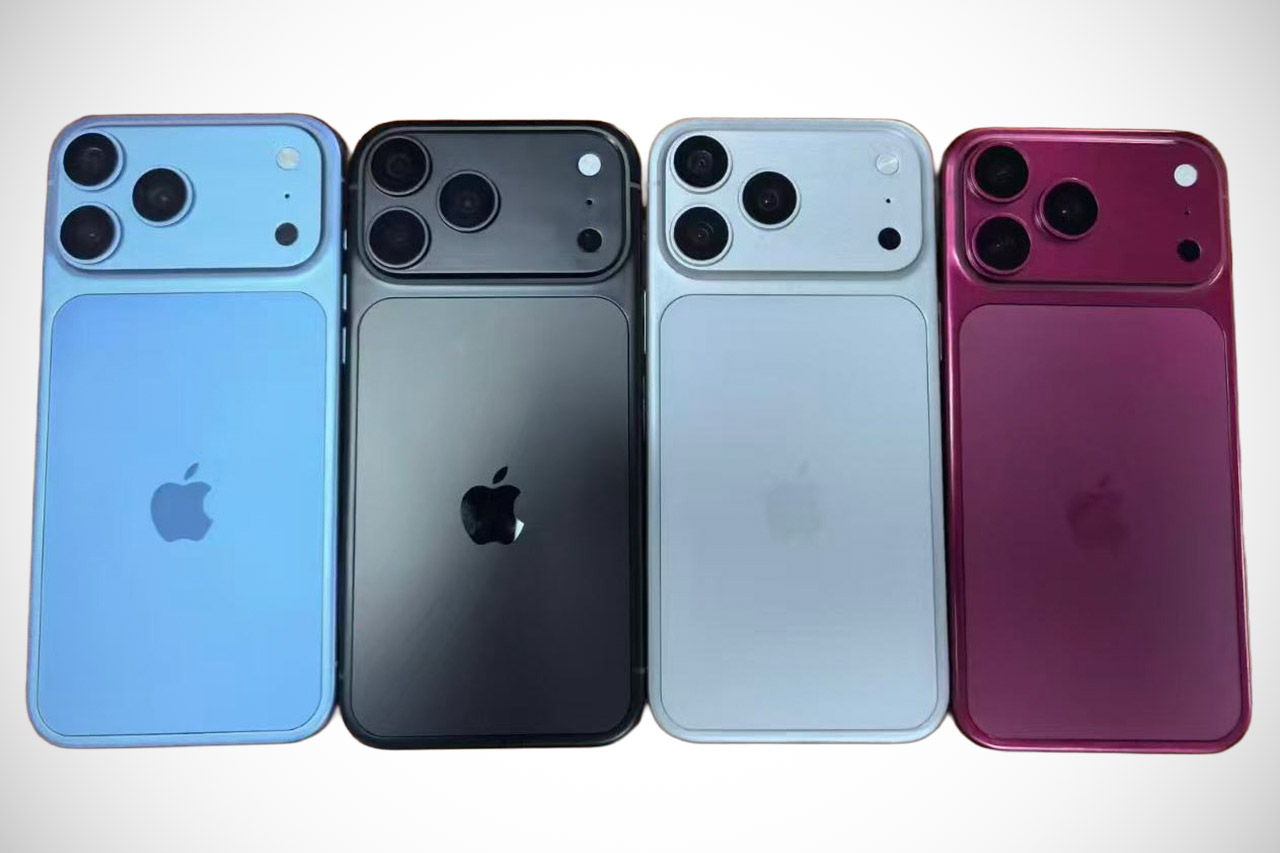
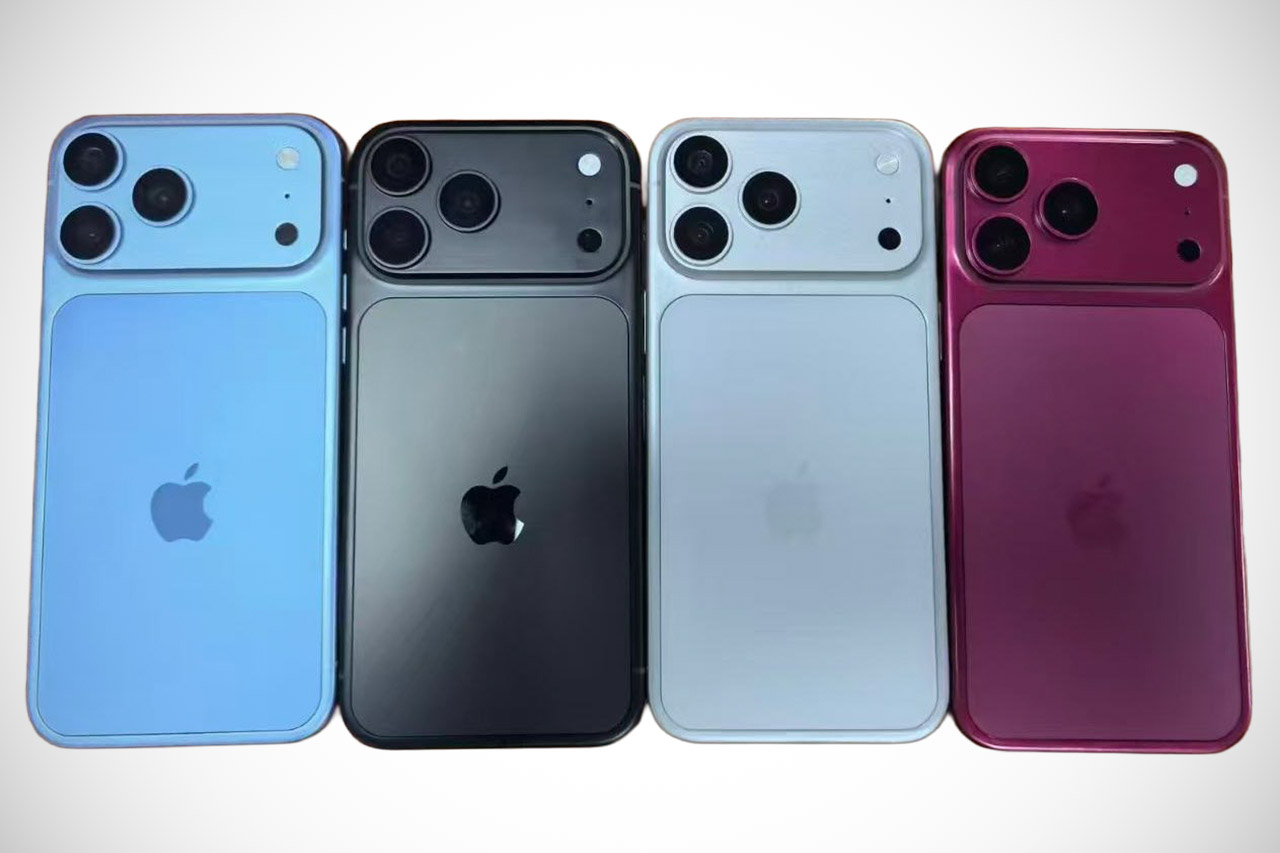
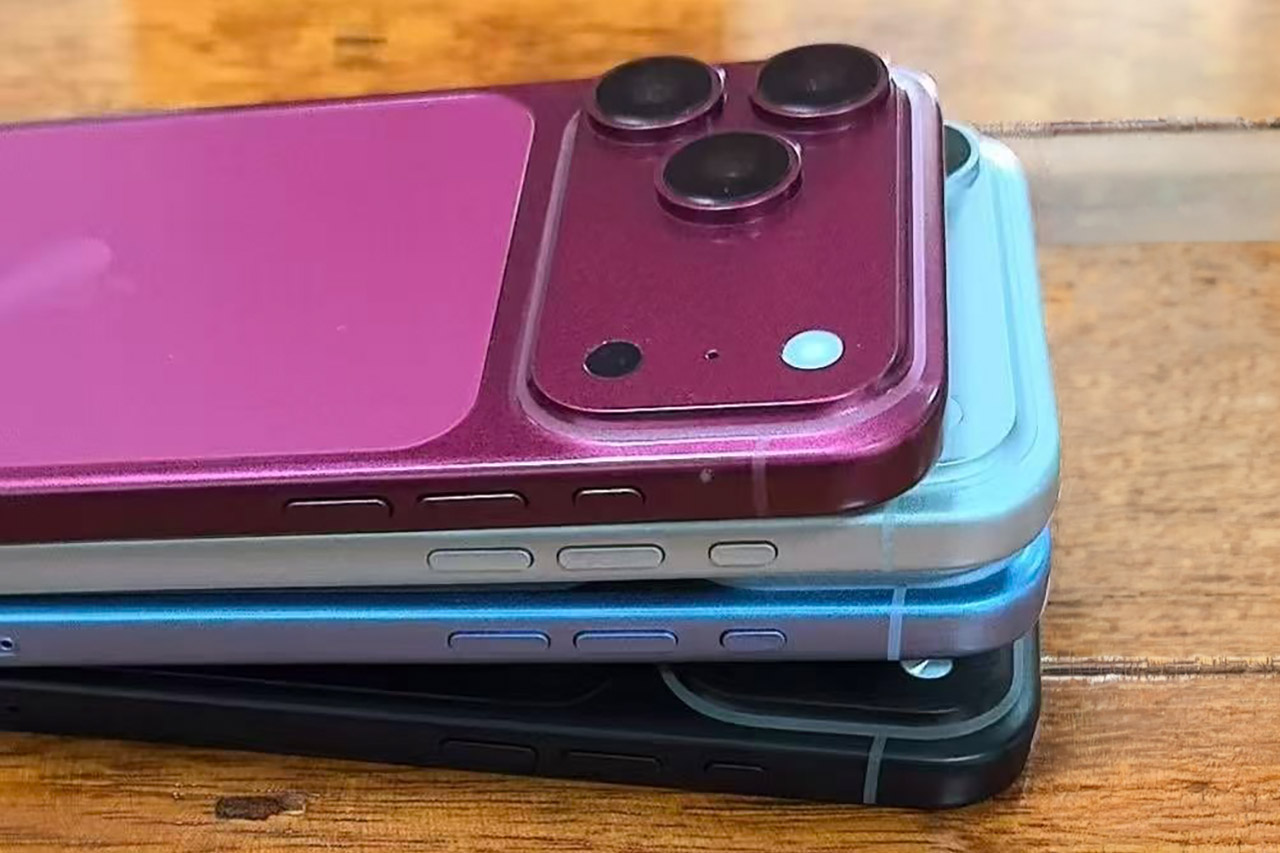
Photo credit: Sonny Dickson Images shared this week by longtime leaker Sonny Dickson give the first clear look at the finishes Apple appears ready to offer on the iPhone 18 Pro. Four dummy units sit side by side, each finished in a different shade and built to the same overall shape as last year’s Pro model. Four color choices stand out clearly in the shared photos.
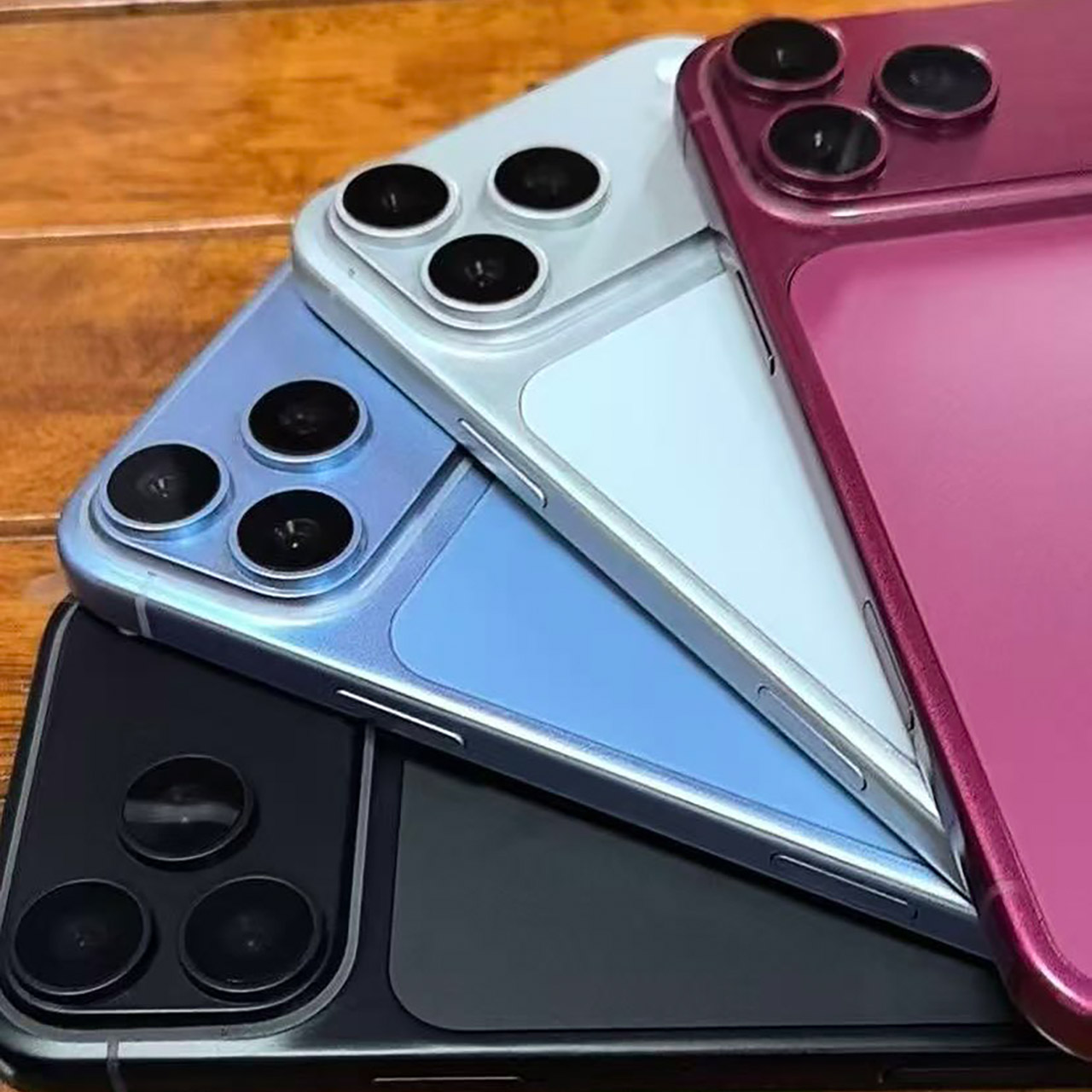
Dark Cherry appears to be a deep, rich color with an almost wine-like depth that can shift to a purple-tinged hue depending on how the light hits it. Light Blue gives off a gentler, more airy vibe, similar to the misty hue of the former base model Sierra Blue finishes or the more traditional era finishes. Silver is back in a very straightforward metal finish, while Dark Gray steps up as the new black option, with its dark finish sitting very close to the deep blue from the iPhone 17 Pro and the classic Black Titanium look from the iPhone 16 Pro days, as anyone who has missed the black option in recent years should be very happy to hear it is back.
Lightweight Wearable Design – Weighing just 54g, this body camera mounts easily to a cap or headband. Capture hands-free POV shots while staying…
Vivid Clarity & Fluid Motion – The 1/1.3″ sensor and 4K/60fps [1] capture rich, smooth footage. Use this vlogging camera on dim forest trails or…
Uninterrupted Storytelling – Extending total runtime to 220 minutes [2] with the Vision Dock, this small action camera covers long hikes or rides…
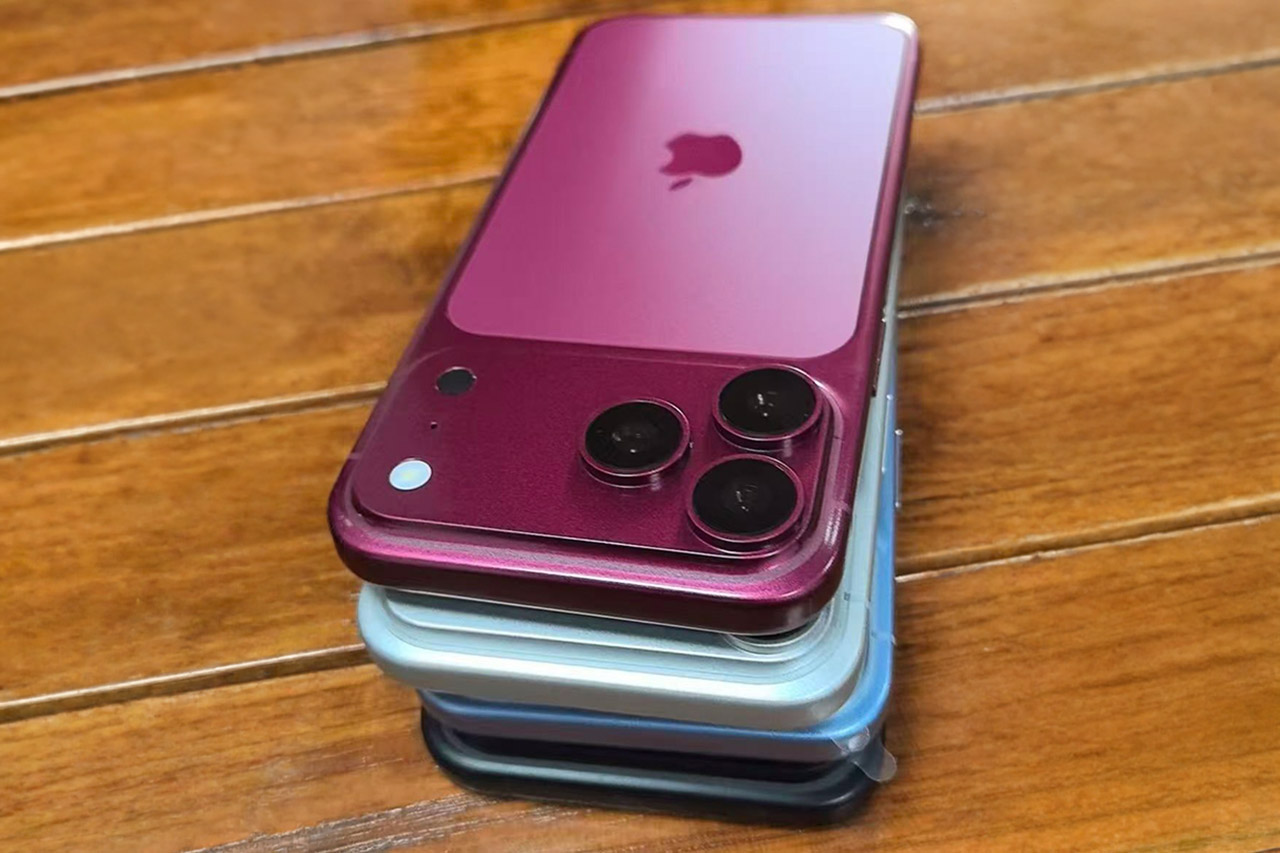
Taking a closer look at the camera area reveals some subtle changes. The rectangular glass strip beneath the primary camera bar has been tweaked to match the surrounding metal frame much better than previously, and it now rests somewhat higher on the body. These improvements are minimal, but they are quite helpful to case manufacturers since they provide them with the exact measurements they need to get started right away. The remainder of the fake units are based on the same layout as the 17 Pro, and it’s nice to see that button placement, port locations, and proportions are all accurate.
As is customary, dummy units like these exist primarily for accessory makers to test their designs and ensure fit and finish before receiving real production units. History suggests that Apple’s color options are occasionally trimmed shortly before they hit shops, so one of these hues (Dark Cherry, Light Blue, or the original black) may yet be removed before the phones arrive in the autumn.
The iPhone 17 Pro was available in Cosmic Orange, Deep Blue, and Silver, but the new version replaces the deep blue with Dark Cherry and Light Blue, as well as the new Black. These early versions already provide a solid indication of what to expect, allowing case makers to finalize their designs and purchasers to determine which one will best suit them months before the official release. With a September launch date now seeming certain, we have a better sense of what colors to expect, although we wouldn’t be surprised if the Ultra, is released before the big day.
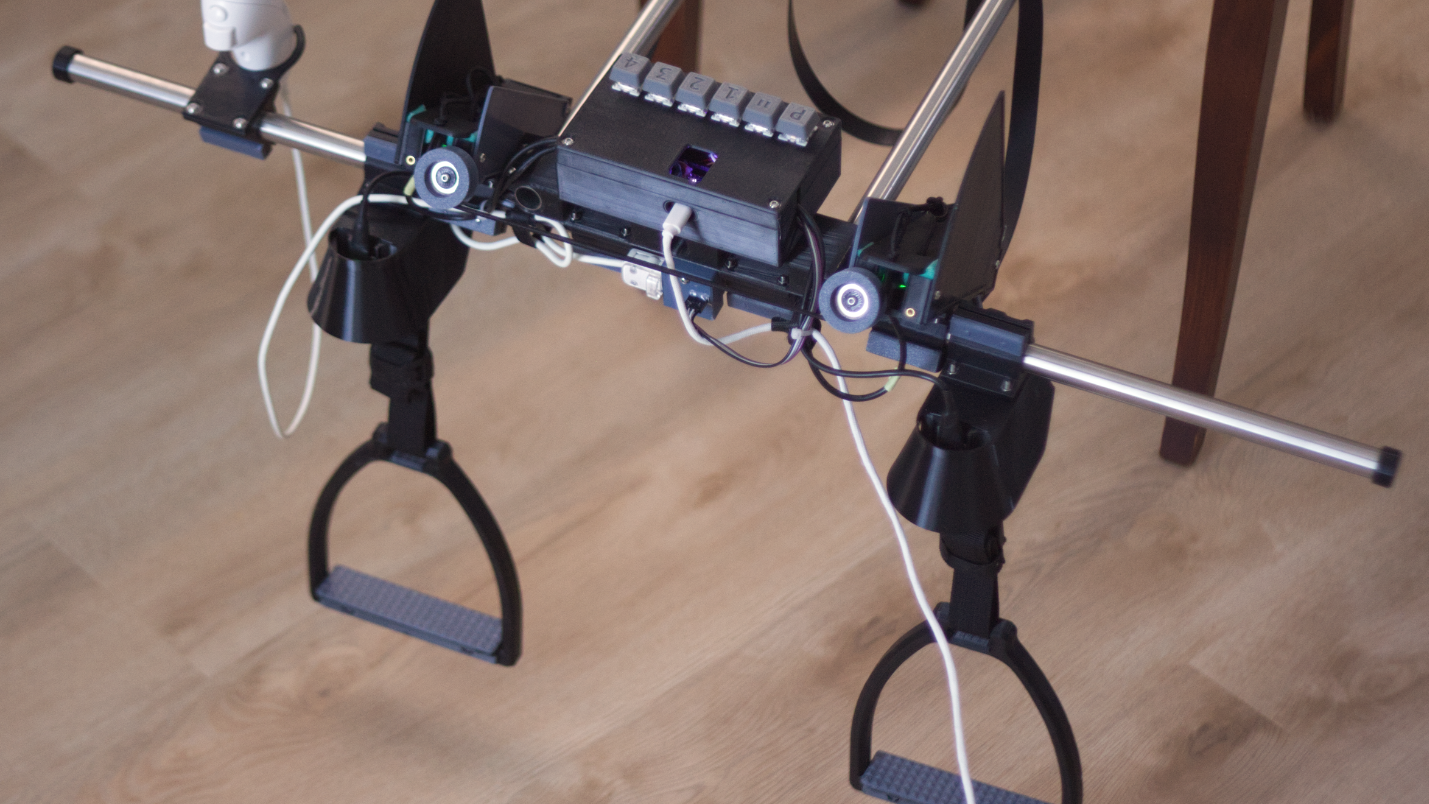
Many simulator-style games have their own dedicated controllers, from racing sims with pedals, steering wheels, and shifters to flight sims which have their own joysticks and sometimes entire cockpits. But for how prevalent riding horses is in a wide array of video games from Red Dead Redemption to Zelda to The Witcher we’re not sure we’ve ever seen a controller built specifically for riding virtual horses, at least not until [Squalius] built this horse riding controller.
[Squalius] has been working through a few prototypes of his OpenRidingController and has a fairly complete riding setup now, complete with reins and stirrups for controlling one’s in-game companions. The reins are attached to infrared distance sensors which can send analog signals to the game for controlling steering, and are attached to each other through an elastic band to provide a more realistic feeling when both are pulled to ask the horse to stop. The stirrups can be pulled to tell the horse to move at various speeds, and although a horse doesn’t need to be commanded to jump in real life, this controller provides a method for jumping an in-game horse as well.
Although we’ve mentioned a few games famous for using horses already, [Squalius] also added a handheld joystick to enable his controller to be used in less-conventional games like Minecraft where the player can use a mod to add a horse, and has also used his controller to play DOOM as well. As its name suggests it’s also open source and the code for it is all available on the project’s GitHub page. It’s a type of controller we didn’t realize we were missing until now, and perhaps we would have expected to see one before something like a controller meant for a virtual trombone.
IOI’s Hitman roots are clear from the very beginning of First Light, but they become even more apparent once you reach the end of spy school. First you have to infiltrate a crowded night club to track down a suspect, which hearkens back to a handful of classic Hitman levels. The game’s scale becomes truly apparent in the second mission, where you’re looking for a former MI:6 agent in a boutique hotel (which also happens to be holding a chess tournament). The hotel itself is massive, immaculately designed and filled with dozens of guests and attendees, many of which are involved in scripted routines or conversations. This one portion of First Light’s clockwork pocket universe feels more alive than many soulless open world games.
It’s not quite an immersive sim like the Dishonored games, but in true Hitman fashion, you can accomplish your objectives in multiple ways. Just don’t expect to go in guns blazing. In most scenarios, First Light‘s “License to Kill” feature prohibits you from firing on enemies unless they pull their guns first. It’s really just a reminder that you’re not playing a cold-blooded assassin, and it encourages you to spend your time stealthily moving around environments and taking down enemies silently.
The game is thankfully more forgiving than Hitman if you blow your cover, where doing so could alert the entire map and force you to re-load a save. If an enemy spots Bond, you can just beat them down or slam them into nearby surfaces. Things get more complicated if multiple enemies see you, but you can still proceed with your mission once you take care of them.
While First Light remains relatively grounded most of the time, it wouldn’t be a Bond game without a few elaborate set pieces. You’ll find yourself parkouring through London skylines (a nod to Casino Royale’s opening), having fist fights where you’re crashing through multiple floors and plowing through cars in a garbage truck. There are also a handful of shootouts where you’ll have to mow down dozens of enemies, which offer visceral thrills but also quickly feel repetitive.
Advertisement
IOI has clearly spent more time thinking about stealth than large-scale action, and it’s sometimes tough to tell where you need to go when 20 people are shooting at you. I replayed the first major shootout, which took place in an airport, around 10 times before I found a survivable pathway. (For the easily frustrated, you can also reduce your difficulty level on the fly.)
Perhaps it was just a result of flying through the game for this review, but it was hard to ignore pacing issues throughout First Light. As the action and nefarious conspiracy escalates, the game gets bogged down by extended stealth sequences, fetch quests and half-hearted boss fights. They don’t ruin First Light’s overall experience, but it definitely feels like it could use some narrative tightening.
Google says the Chrome Device Bound Session Credentials (DBSC) security feature is now generally available and is rolling out to all users to prevent account takeovers.
Available in beta since April, DBSC was first announced in 2024 as a way to cryptographically bind session cookies to a specific device, preventing hackers from using such stolen cookies to bypass multi-factor authentication (MFA) and hijack users’ accounts.
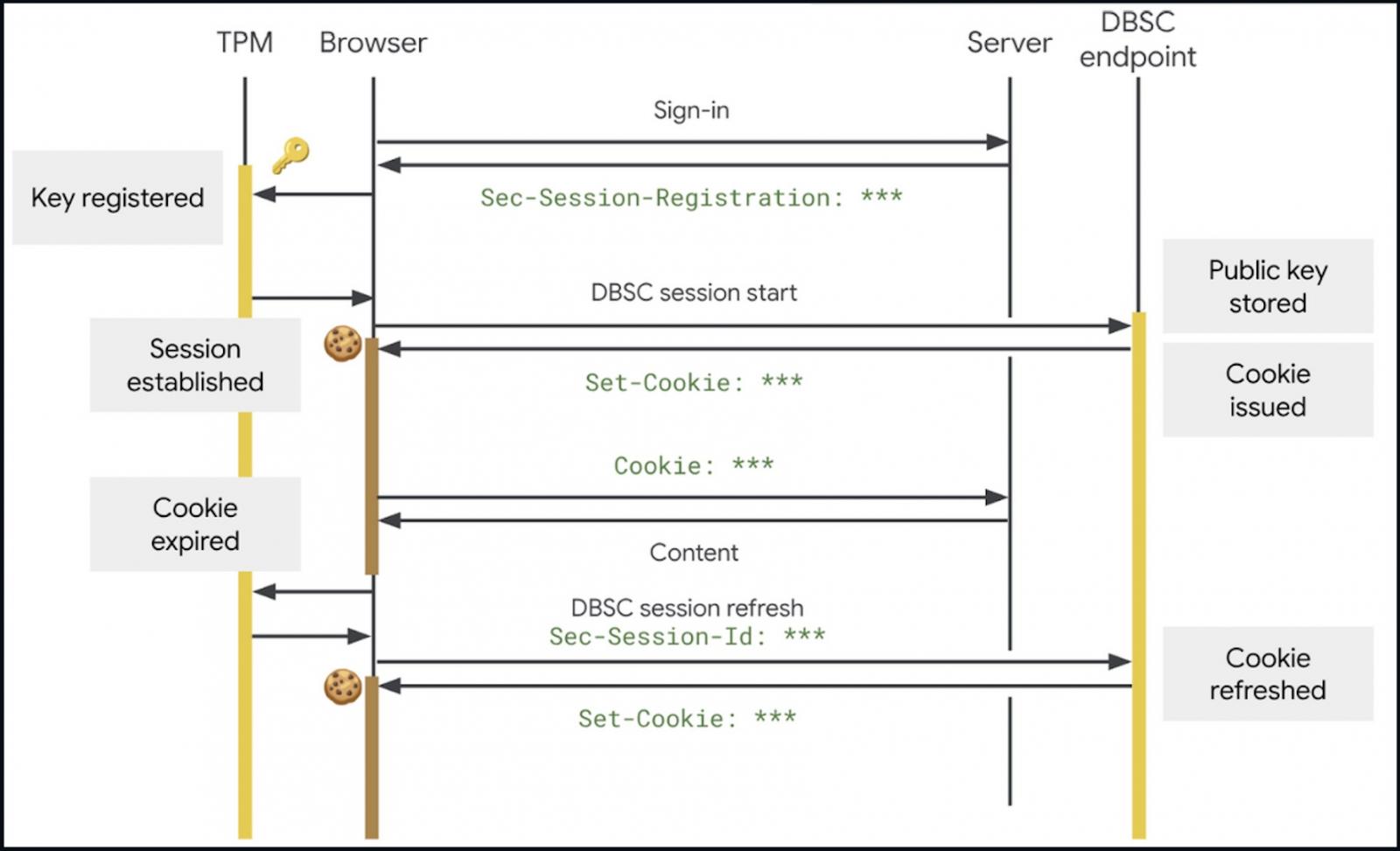
DBSC works by cryptographically linking user sessions to the hardware, such as their computer’s security chip (e.g., the Trusted Platform Module (TPM) on Windows and the Secure Enclave on macOS).
Since the unique public/private keys used to encrypt and decrypt sensitive data are generated by the security chip, they cannot be stolen, preventing attackers from using stolen session cookies.
Advertisement
“DBSC fundamentally changes the web’s capability to defend against this threat by shifting the paradigm from reactive detection to proactive prevention, ensuring that successfully exfiltrated cookies cannot be used to access users’ accounts,” Google said in April.
“DBSC strengthens account security after users are logged in and helps bind a session cookie — small files used by websites to remember user information — to the device a user authenticated from. Even if malware was present on the user’s device, DBSC reduces the risk of session theft and makes it meaningfully more difficult for malicious actors to exploit stolen session cookies,” it added this week.
How DBSC works (Google)
The feature is now rolling out to all Google Workspace customers, Workspace Individual subscribers, and users with personal Google accounts.
Google added that it will be enabled by default for all Google Workspace customers upon rollout and that administrators cannot disable it.
In the past, threat actors have abused the undocumented Google OAuth “MultiLogin” API endpoint to generate new authentication cookies after stolen ones expired.
Advertisement
The Lumma and Rhadamanthys information-stealing malware operations have also claimed that they could restore expired Google authentication cookies stolen in attacks to gain access to infected users’ Google accounts.
At the time, Google advised customers to remove malware from their devices and recommended enabling Chrome’s Enhanced Safe Browsing security mode to defend against phishing and malware attacks.
However, the new Chrome Device Bound Session Credentials (DBSC) security feature should effectively block malicious actors from abusing such stolen cookies, as they will not have access to the cryptographic keys required to use them.
Automated pentesting tools deliver real value, but they were built to answer one question: can an attacker move through the network? They were not built to test whether your controls block threats, your detection rules fire, or your cloud configs hold.
This guide covers the 6 surfaces you actually need to validate.
Ever since the first Linux capable single-board computers came out, there have been projects turning them into handhelds. The Raspberry Pi Zero and in particular the Compute Modules are ideally suited to this. While there are more common projects that find their way into our feed we’ve certainly seen a few of them in our time, enough now that a new one has to be special to really catch our eye. Which brings us to the PiBrick from [Ahmad Amarullah], which sets the bar pretty high.
The device is a Compute Module 5 smartphone sized computer with a 3.92″ OLED touch display and the ubiquitous BlackBerry-derived keyboard. It’s drawn together with a PCB that holds all components and peripherals, and this and the 5000 mAH battery fit in a 3D printed shell that gives it the form factor of a chunky smartphone. You can see it at the link above, and also find it in a GitHub repository.
Handheld computers always represent something of a compromise as they can only ever offer relatively small screens and keyboards. But they live or die on their versatility and robustness, both of which this one has in spades. We like it, a lot.
Australia’s Fair Work Commission has announced a process review after an estimated 70% workload increase over three years, partly driven by generative AI tools that enable more people to file longer, more complex, and sometimes inaccurate claims. New Zealand’s Tenancy Tribunal and Australia’s financial complaints authority report similar patterns.
Australia’s Fair Work Commission has announced a review of its processes to cope with what it described as an estimated 70% workload increase over three years, driven in part by the proliferation of generative AI assistance tools. The commission, which handles unfair dismissal claims, wage disputes, discrimination, bullying, and workplace sexual harassment, said the surge is directly affecting its ability to provide timely dispute resolution, according to a statement published on Friday.
Advertisement
The numbers tell the story. The commission received 44,039 lodgments between July 2025 and April 2026, with two months still remaining in the financial year. The full 2024–25 year saw a record 44,075 lodgments. The commission is on pace to exceed that record by a significant margin.
How AI changes what gets filed
The commission attributed the increase to several factors: more people representing themselves in workplace cases, budget constraints, resourcing challenges, and the spread of generative AI tools that make it easy to produce polished-sounding but often generic content. The implication is that AI is lowering the barrier to filing a claim, enabling people who might previously have decided a case was not worth pursuing to generate a detailed submission in minutes.
The 💜 of EU tech
The latest rumblings from the EU tech scene, a story from our wise ol’ founder Boris, and some questionable AI art. It’s free, every week, in your inbox. Sign up now!
Advertisement
The Fair Work Commission published draft guidance in March requiring anyone who uses generative AI in preparing documents for lodgment to disclose that fact. The guidance warned that AI-generated information may be incomplete, inaccurate, or fabricated. A new “Use of GenAI” section will be built into all commission forms.
What the commission is doing about it
The response includes trialling a new system in which senior staff help parties try to resolve disputes informally earlier in the process, before cases consume full hearing time. The commission has also reviewed how it manages applications and is considering deploying an AI voice agent to help triage calls to its helpline.
The irony of a tribunal overwhelmed by AI-generated filings considering an AI tool to manage the influx is not lost. Australia has already backed AI in other parts of its legal system, including a government-supported chatbot that helps splitting couples divide their assets. But the logic is sound: if generative AI is increasing the volume of inbound work, automated triage may be the only way to keep pace without proportional increases in staffing that budget constraints have already ruled out.
Not just an Australian problem
The pattern is emerging across the Tasman as well. Radio New Zealand reported last month that tenants in New Zealand are using AI to support applications to the Tenancy Tribunal, creating extra work and backlog. In one case, a tenant used AI to file a claim for $40,000 over issues including unsafe drinking water and a broken dryer. The tribunal awarded $80.
Advertisement
The case illustrates a recurring problem with AI-generated legal filings. The tools can produce arguments that sound authoritative but cite legal principles that do not apply in the relevant jurisdiction, claim damages wildly out of proportion to the harm, or reference legal frameworks from other countries entirely. Adjudicators then have to work through pages of material to identify which parts are relevant.
The financial complaints parallel
The Australian Financial Complaints Authority, which handles disputes in financial services, told Bloomberg it has also seen increased AI use in how consumers engage with financial firms and lodge complaints. A spokesperson acknowledged that AI can help some people articulate their concerns, but warned that AI-generated complaints “can sometimes include irrelevant, inaccurate or generic information, or may use legal arguments that don’t apply in Australian law.”
AFCA said it encourages people to keep their complaints simple because lengthy AI-generated submissions slow down the resolution process by forcing staff to work through large volumes of material to identify the actual issues. The advice amounts to an admission that more words do not mean a better case, and that AI’s tendency to produce verbose, confident-sounding output is actively counterproductive in dispute resolution.
Access to justice or access to noise
The tension at the heart of the issue is genuine. AI tools can democratise access to legal processes for people who cannot afford lawyers, a point governments and AI companies have promoted as a public benefit. But when the same tools generate filings that are longer, less accurate, and harder to process than what a human would produce unaided, the net effect may be to slow down the system for everyone.
Advertisement
Australia’s Fair Work Commission is the first major tribunal to publicly frame generative AI as a contributing factor in its workload crisis. It is unlikely to be the last. Any institution that accepts written submissions from the public is now dealing with the same dynamic: AI makes it trivially easy to generate text, and institutions built for a world of human-paced filing are not equipped to process the result.
Ctrl-Alt-Speech is the podcast where we make sense of the major debates shaping online speech, platform power, content moderation and the future of the internet. It’s co-hosted by Mike Masnick (Techdirt) and Ben Whitelaw (Everything in Moderation).
Shift is offering to clean homes for free, but there is one important condition. The company will record those chores to build training data for future home robots.
The New York-based startup is currently offering free cleaning services, in which a vetted operator visits a home and wears a camera-equipped device while performing routine household work. The footage can then help AI systems understand how people clean homes outside controlled lab settings.
A robot cannot learn home cleaning only from staged lab videos. Real homes have cluttered tables, dishes stacked in awkward ways, stains in corners, and objects placed where they should not be. That kind of chaos is what makes household footage useful.
Shift is not the only company chasing this kind of physical AI data. In India, startups and data vendors are already building businesses around this demand, paying workers to record first-person videos of everyday tasks and supplying that footage to AI companies. For robotics firms, ordinary human labour is becoming valuable training material.
Advertisement
This is where it starts to feel a bit dystopian
Cleaning may only be the start. In the announcement video, Shift says it eventually plans to move into other areas like plumbing, cooking, and building.
Today, we’re launching shift. We’re starting by cleaning your apartment in New York City, for free.
Here’s how it works. Book a shift cleaning. A vetted shift operator comes to your home wearing one of our devices. They clean. They leave. You pay nothing.
Trades have largely escaped that conversation because physical work is harder to automate. A chatbot can write an email, but it cannot fix a leaking pipe or clean a messy kitchen. Companies like Shift are trying to close that gap by collecting footage of people doing those exact tasks.
AI and robotics may still need time to match the efficiency and precision of a human worker. But watching companies collect this kind of data to train advanced robots feels like the opening scene of the kind of sci-fi movie that does not end well for humans.
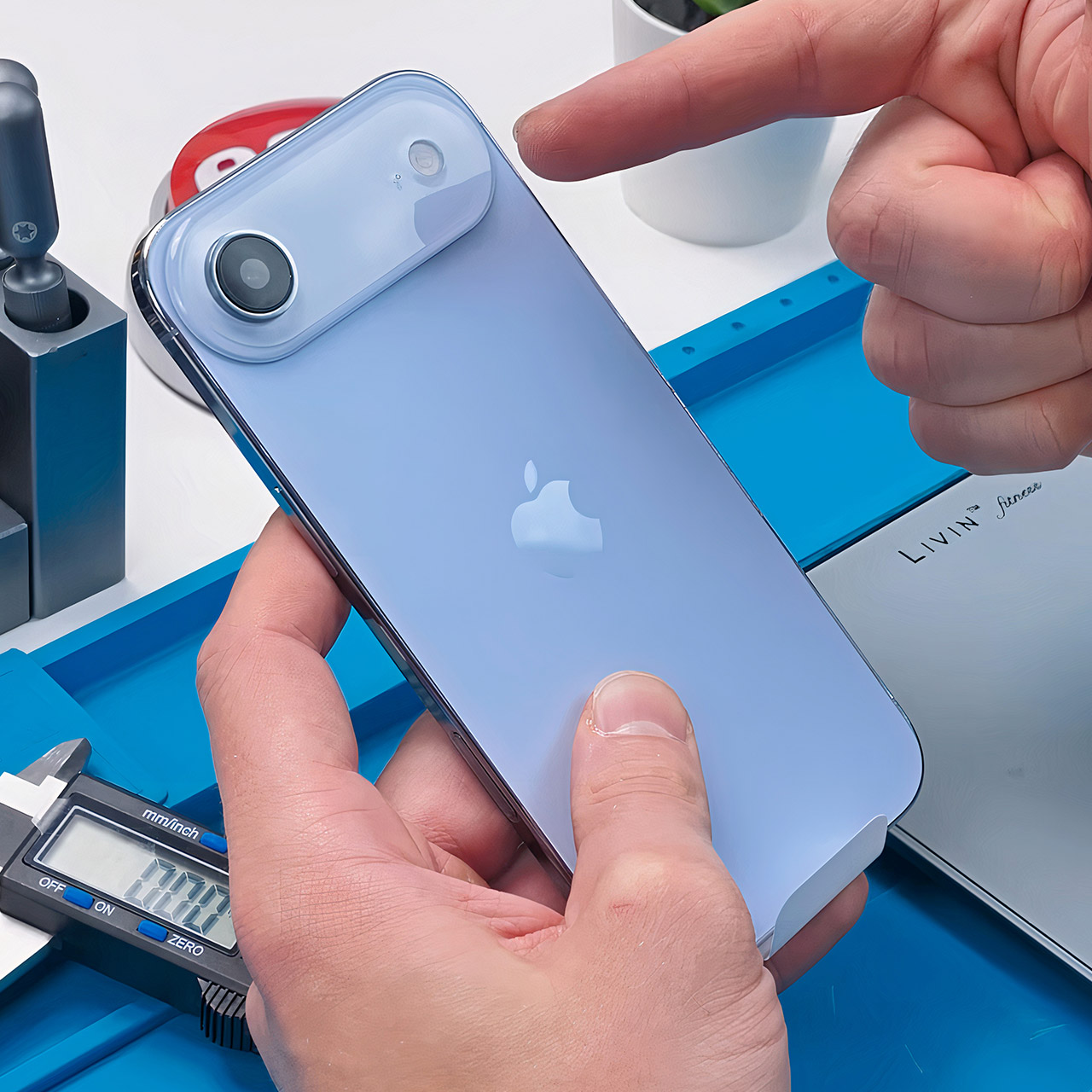
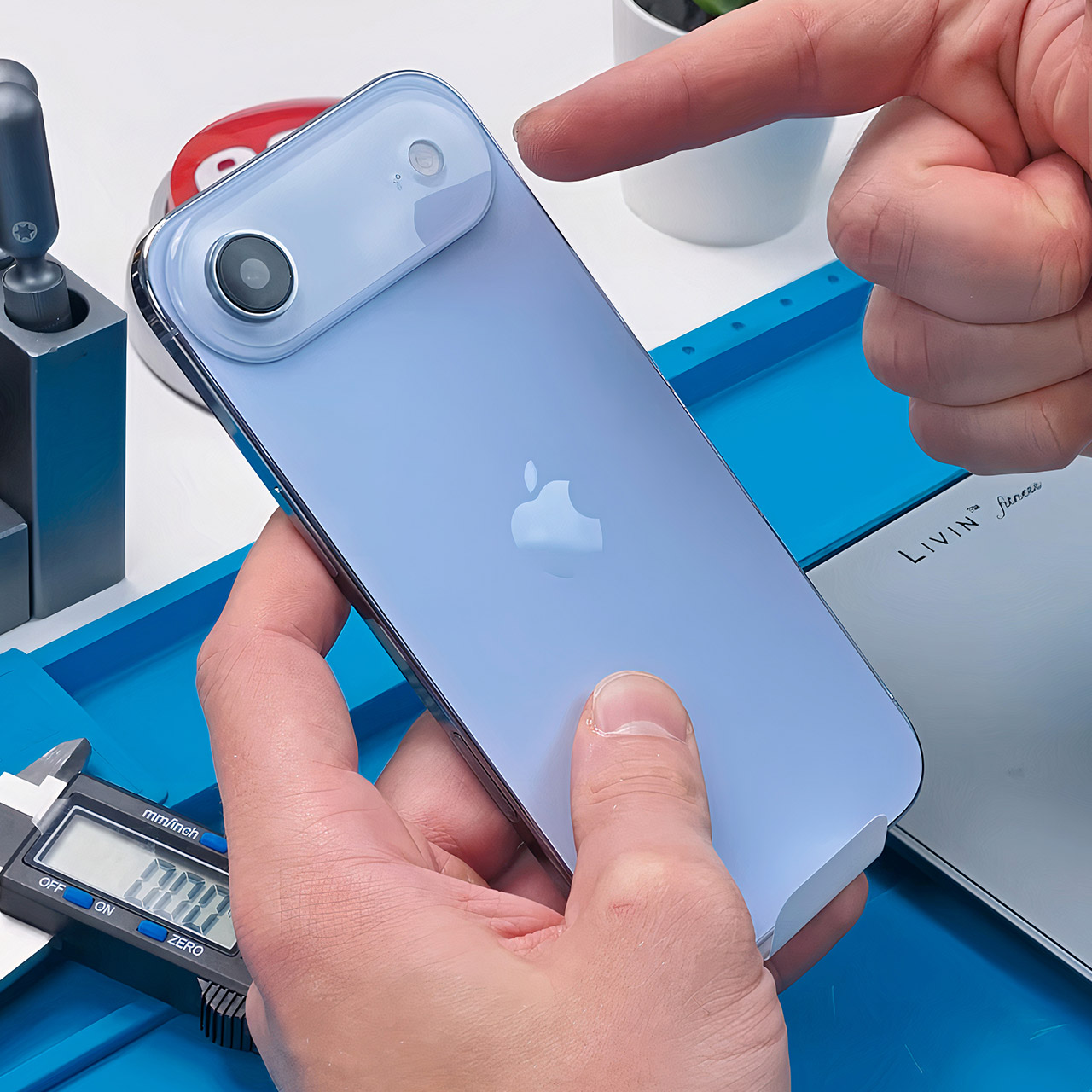
A recent hands-on session with a knockoff iPhone Air acquired by Phone Repair Guru offers a clear look at how far these replicas have advanced in matching one of Apple’s most distinctive designs.
The device’s packaging mimics the real item in many respects, but a side-by-side comparison reveals how the fake depends on stickers for some elements on the back rather than printing them directly on. The white is just a little off, and the fake’s bright lettering lacks the high-quality finish you’d expect from Apple. Even with a black light on the box, you can’t find any of the hidden security markings that would reveal the real thing, though the IMEI number from the fake unit somehow manages to pull up information tied to a genuine iPhone Air when checked online, even if the model number isn’t completely correct.
Ultra-Fast 15W Wireless Charging: Harness full 15W charging power, giving your essential devices the quickest charge, consistent with the original…
Compact Charging for 3 Devices: Ideal for clutter-free workspaces, this compact charger fits ideally on any desk, powering everything from phones to…
Certified Fast Charging for Apple Watch: Boasts official certification, enabling you to power your Apple Watch Series 10 from 0 to 100% in just 1 hour…
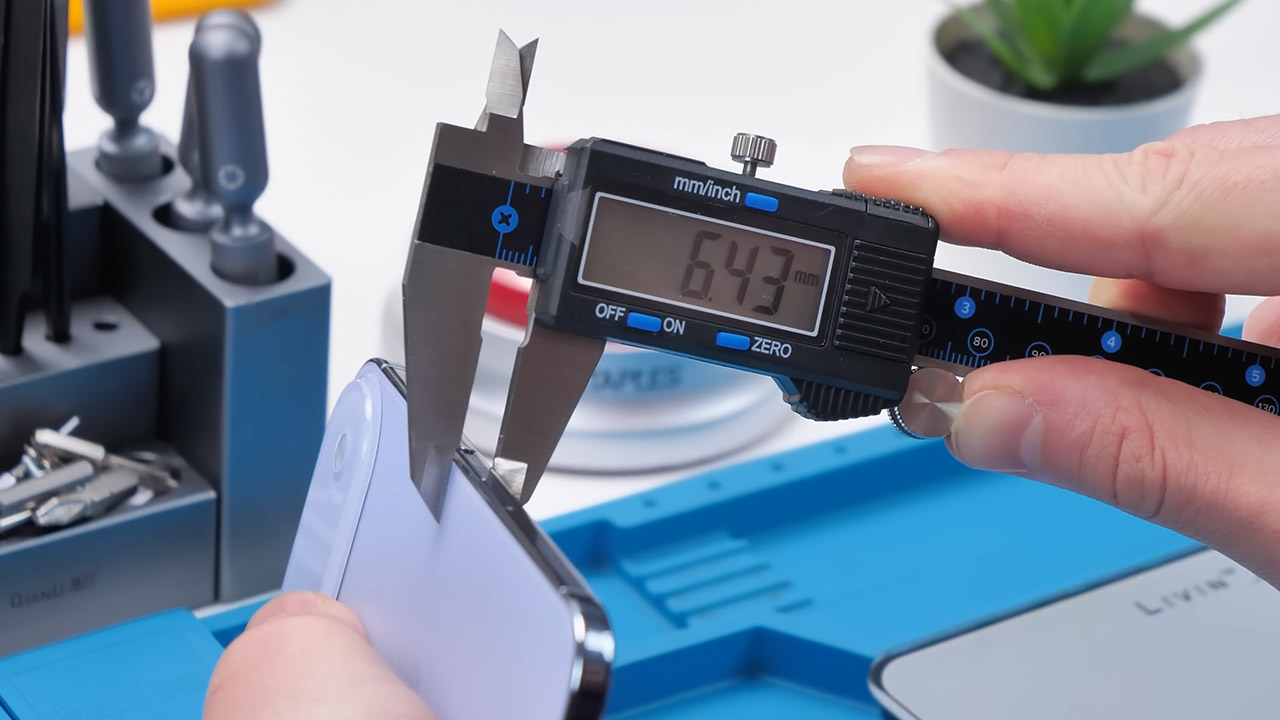
Actually handling the handset gives a strong impression of its slimness and quality. Measuring with a caliper, the fake is around 6.43 millimeters thick compared to the real one measuring in at 6.35 millimeters, resulting in a gap of only 700/1000 of a millimeter. It also weighs less, which contributes to its light and airy sensation in the palm. The camera protrusion is slightly different in shape, but overall the craftsmanship feels like a premium product that far outperforms many of the previous knockoffs he’s encountered.
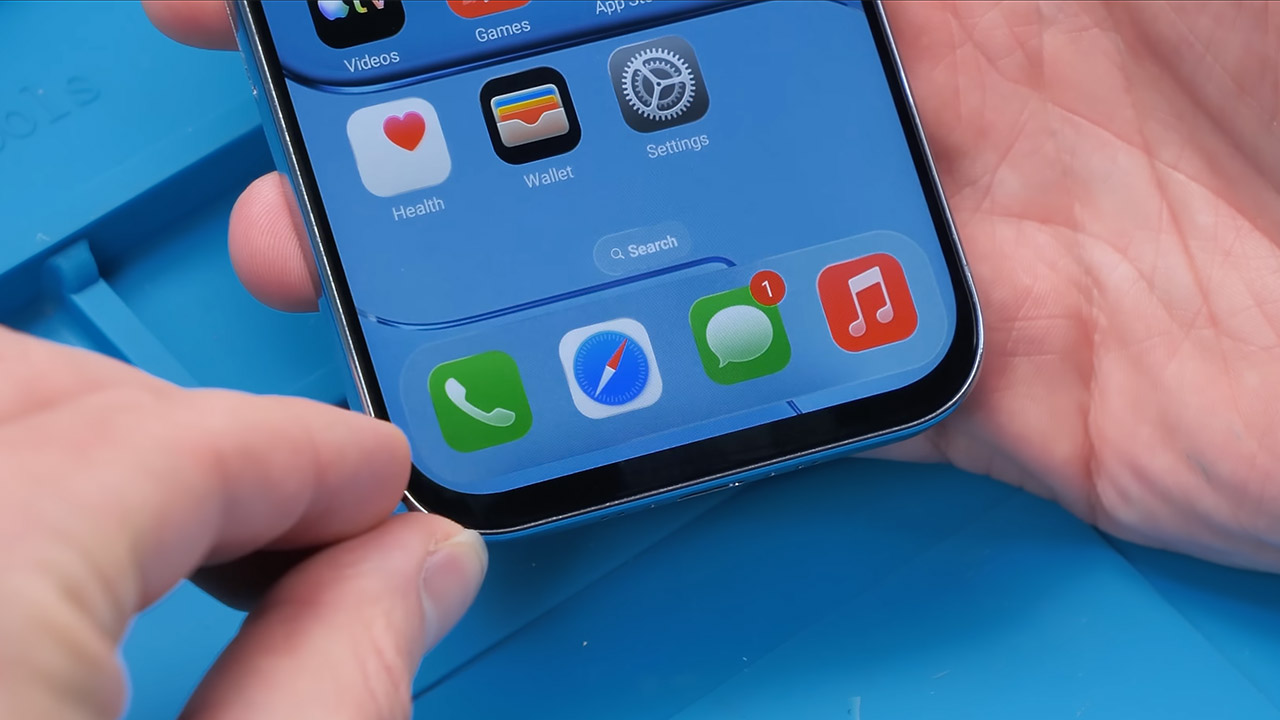
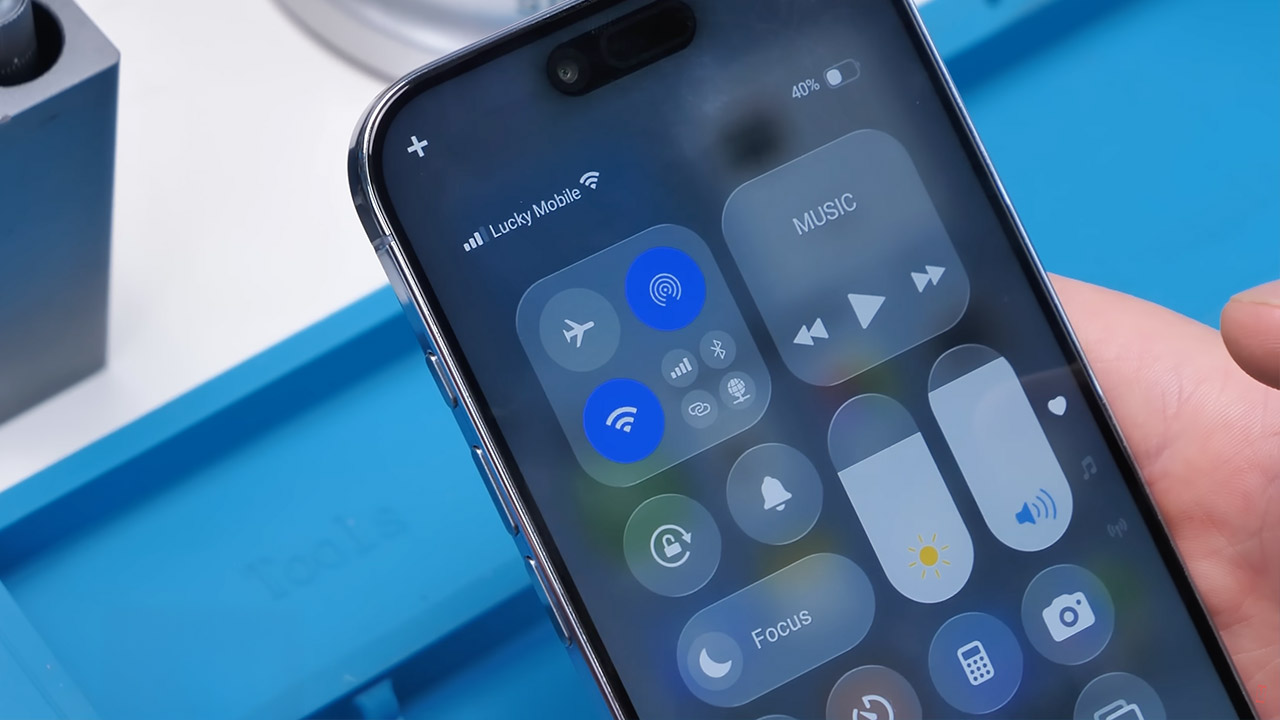
When you first turn it on, the display comes to life, and one of the first things you see is a giveaway. The huge bottom bezel appears throughout the setup process, and it sticks out against the more precise borders of the real thing. The interface is running a faux iOS 26, complete with a Liquid Glass look that seems uneven, and to make matters worse, you can see the underlying Android components popping through in spots, making it much easier to notice once you start exploring.
Function testing was mixed, but one item that impressed was how well it connects to cellular service and handles phone conversations; there were no serious issues there. To be fair, performance was relatively smooth for everyday use and even mild gaming, which is more than some of the other fakes have accomplished. Camera operation relies on a single functional module rather than purely decorative ones. Daylight shots may hold up for casual viewing, but low light conditions expose clear weaknesses in detail and noise handling.
If you take the phone apart, you’ll notice that the internal arrangement is much more clean and well-thought-out than you’d expect from a knockoff, as there is just one working camera system inside, and the battery is actually larger than the one in the genuine iPhone Air.
I am sitting in the sweltering Nevada heat watching a man struggle to lift a bar over his head. If the man manages to do it, he will win $250,000.
The man is Boady Santavy — a two-time Olympic weight-lifting contestant from Canada — and he has muscles that look culled from the Marvel Cinematic Universe: massive, cartoonish arms that might as well belong to a superhero rather than a real human.
Santavy is attempting to beat the world record for the men’s snatch — a lift of 183 kilograms, or approximately 403 pounds. After a tortured few seconds, Santavy drops the bar — an official “no lift” — and, with a look of animated dismay on his face, hobbles away, visibly cursing.
Santavy is one of a small horde of 42 athletic contestants — weight lifters, swimmers, and track runners — that have gathered in Las Vegas over Memorial Day weekend to compete in the Enhanced Games, a unique (and, by now, quite notorious) athletic competition in which almost all of the participating athletes are on performance enhancing drugs.
Advertisement
Broadly derided by critics as the “steroid Olympics,” the games have taken the deeply unprecedented step of juicing many of their athletes to the gills — anabolics, testosterone, peptides, human growth hormones, and more are all in circulation. All of that chemical enhancement has taken place under the watchful eye of a team of medical professionals. Indeed, the competitors — a hodgepodge of athletes from different ages, skill levels, and backgrounds — spent 12 weeks in the United Arab Emirates at an elite compound, where they trained for the weekend’s event while working closely with doctors who tailored their “protocols” — or drug cocktails — to their individual needs.
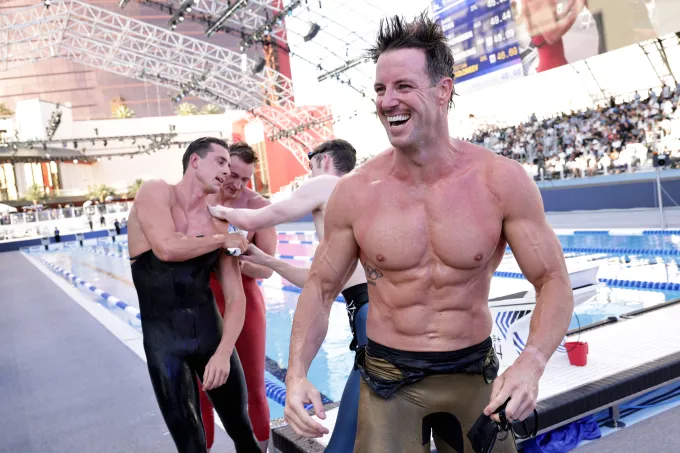
LAS VEGAS, NEVADA – MAY 24: (L-R) Kristian Gkolomeev, Shane Ryan and James Magnussen are seen during the Enhanced Games at Resorts World Las Vegas on May 24, 2026 in Las Vegas, Nevada. Image Credits:(Photo by Greg Doherty/Getty Images for Enhanced)
The athletes are also being paid “appearance fees” just to participate in the contest and, like Santavy, any competitor who happens to break a world record or place first during their competitive feats will be gifted extra cash — up to $1 million in the case of the 100 meter sprint and 50 meter freestyle.
In other words: Enhanced has taken the rulebook for professional athletic competition and aggressively spiraled it out the window.
Why am I, a technology journalist, covering this event?
Odd as it might seem for a place associated with weak-limbed nerds, Silicon Valley is largely to blame for Enhanced. Indeed, the bizarre spectacle is the work of a former startup that was founded by veterans of crypto, AI, and biotech firms, and that has been backed by the likes of mega-investor Peter Thiel and former Coinbase executive Balaji Srinivasan. The event is also at the forefront of a growing industry that Silicon Valley has embraced with open arms — that of human enhancement, in which injectable drugs and ingestible supplements serve as a source of both physical empowerment and good business.
Advertisement
Traditional athletic health organizations, of course, hate it. The World Anti-Doping Agency — the regulatory body for the Olympics — has called the Enhanced Games “dangerous,” and Travis Tygart, the CEO of the U.S. Anti-Doping Agency, describes it as a “clown show that puts profit over people.”
Steroids have long been viewed warily by the international health community, and even federally approved consumer drugs have stirred some concern among health professionals.
However, Enhanced’s organizers argue that they are actually the good guys — that they are trying to fix a persistent bug in organized sports that has existed since forever. That bug is that a whole lot of athletes are already doping — they’re just doing it secretly. The secrecy increases risk, as there may be limited medical oversight of how the athletes are using them. Conversely, in the Enhanced version of sport, athletes self-admittedly do the drugs under the careful supervision of a team of medical professionals.
If Enhanced were merely trying to improve sports safety, that would be one thing. But the truth is that it isn’t just an athletic competition — it’s also a business. The games are the work of Enhanced Group, Inc., a newly public company that enjoyed an IPO earlier this month at a $1.2 billion valuation. Enhanced sells personalized health treatments, including peptides, GLP-1s for weight loss, testosterone injections, and other physically “enhancing” drugs. The company also recently partnered with an AI company, Rezolve Ai, to launch a digital telehealth platform.
Advertisement
Enhanced wants to take what it’s done in Vegas and transform it into a global business: a distribution network for consumers looking to bulk up and make themselves more youthful. The drugs that Enhanced sells have been cleared by the FDA, but there is some concern that by normalizing steroid use, the company could have a trickle-down effect on the wider culture, leading some consumers (notably young ones) to seek less regulated, more dangerous compounds that could end up having disastrous results. This concern hangs over Enhanced’s athletic competition, which has largely been read as a big advertisement for its own business — as well as the peptide industry itself.
One nation, under peptides
I am one of some 200 journalists from around the world who touch down in Vegas two days prior to the games. Enhanced, which provides us with a dedicated workspace, regular meals, and press time with athletes and Enhanced executives, is exceedingly nice to us but one can’t escape the nagging suspicion that it’s because we are an integral part of their business plan. As the skeptical oglers of this Barnum & Bailey-esque curiosity, our job is to report back to the masses, who will then know of its existence. In other words, we are free marketing for Enhanced’s business.
That business is part of an industry that is due for a gold-rush-like boom later this year, should a certain deregulatory deliverance occur.
In February, U.S. Health Secretary Robert F. Kennedy Jr. went on The Joe Rogan Experience and said he was a “big fan” of peptides. Kennedy (who, himself, can look enhanced at times) also implied that he planned to encourage the FDA to make some peptides more accessible to the public. Kennedy appears to have made good on that promise because, in July, the FDA will convene a pharmaceutical advisory committee that considers whether restrictions on certain previously banned peptides will be loosened.
Advertisement
Canadian weightlifter Boady Santavy fails at an attempt to break the world record during the men snatch competition during the Enhanced Games at Resorts World Las Vegas in Las Vegas, Nevada, on May 24, 2026. Image Credits:ETIENNE LAURENT / AFP via Getty Images
Since then, the peptide industry has stood at a bizarre crossroads, in which some startups are reportedly conjuring products based on chemicals that currently reside in a legal “gray” zone, in the hopes of being first-to-market if and when the government eases up on them. Others are sticking to only FDA-approved products. A hot spot of this frenzy has been Silicon Valley, where techies are both using and investing in peptides with mutually aggressive gusto. Companies like Superpower, an AI longevity startup that sells FDA-approved peptides, and Noho Labs, a peptide startup backed by Elad Gil, have risen in prominence, while elite clubs like the AGI House have begun hosting peptide injecting “parties” — as personal use among the valley’s elite booms.
But peptides aren’t just gaining steam in the Bay Area; they’re also seeing a groundswell of use throughout the country, as fitness culture sees an aggressive upswing. Recent reports show that teens and twenty-somethings are turning to peptides to “looksmax” — the trendy new term that denotes any extreme effort to beautify one’s self — while the gym is increasingly seen as one of the key hubs of cultural life for young people. This country-wide push for self-improvement has been fueled by a social media landscape that champions the superficial. The progenitor of “looksmaxxing,” the 20-year-old online influencer “Clavicular,” has been a prominent, not to mention controversial, figure in the popularization of peptides. Yet he is only one in a sea of online voices, including podcasters like Joe Rogan and Andrew Huberman, who have recently promoted or platformed the topic.
This is all about “health,” right?
Peptide producers — including the executives at Enhanced — have sworn that their primary concern is consumer “health.” At the same time, they don’t seem to mind admitting that they’re also interested in money.
Maximilian Martin, the 29-year-old CEO and co-founder of Enhanced, is a calm defender of his company’s unconventional practices. Martin, who previously founded a bitcoin mining company and is always impeccably dressed in a suit and has an affable salesman’s smile, meets with journalists for a press conference on Saturday, where he answers questions with an even-keeled good nature, speaking soberly about how his company plans to monetize the creation of a new generation of chemically-altered mutants.
Appropriately, X-Men comes up.
Advertisement
“People have been using performance enhancements for a long time. If you look at, for example, Hollywood, and you look at Marvel superheroes, they’re all enhanced,” Martin offers. “Like Hugh Jackman doesn’t look like he looks at his age because he has such a clean diet and sleeps eight hours a night, right? So that market is already there. The peptide market in the U.S. today is already 85 million people. Most of that market is served by unsupervised, unregulated substances that people are taking. What we’re doing is we’re entering that market with a pathway for people to get to those benefits that they’re looking for in a safe and medically supervised way.”
Christian Angermayer, Enhanced’s billionaire co-founder and executive chairman, is more succinct. “I’m a capitalist,” he tells journalists bluntly. He doesn’t see a disconnect between profits and health. “There is no reason why something that is good should not also be a business.”
German entrepreneur and Enhanced Games co-founder, Christian Angermayer, talks with the press ahead of the Enhanced Games at the Resorts World in Las Vegas, Nevada, on May 22, 2026. The Enhanced Games is a multi-sport event that allows athletes to use performance-enhancing substances without worry of drug tests. Image Credits:(Photo by ETIENNE LAURENT / AFP via Getty Images)
Let the games begin
May 24th, the actual day of the games, is a sweltering blur of events — all of which take place inside a miraculous $50 million open-air stadium that has been constructed in a matter of weeks for the express purpose of hosting the games. The complex houses a track, swimming pools, and an expansive pavilion for the weightlifters. Surrounding risers are filled with an audience that cheers enthusiastically despite the hot sun.
Yet while the scene may superficially call to mind the Olympics, the vibe is much less a serious sporting event than it is an uncomfortable cocktail of America’s Got Talent, WWE, and Gladiator. Beautiful influencers fill the stands in youthful, colorful herds, and an announcer narrates the day’s events with a sonorous boom that makes it feel vaguely like we’re all sitting court side at WrestleMania. Later in the evening, The Killers — a staple of Vegas entertainment culture — will play a brief concert to close out the games.
The athletes, meanwhile, stalk the grounds like mythical titans, their bulking, unreal muscles glistening in the sunlight.
Advertisement
Martin is seen throughout the day, walking to and fro in his impeccable suit. This suit becomes progressively more wet throughout the evening, as he keeps rushing down to the pool to hug the swimmers who win their races. Angermayer glides about the event with a breezy energy, a tranquil smile affixed to his face. He drops by the press tent briefly to glad-hand.
Other staples of the tech industry — like Bryan Johnson, the mega-wealthy biohacker who plans to live forever — are also involved. Despite no known professional athletic achievements, Johnson spends the night commentating on the spectacle in a Charles-Barkley-esque, retired athlete kind of way. Later he and his girlfriend (whose vagina Johnson regularly tweets about) are seen walking past the media tent; Johnson is dressed in a bizarre outfit that makes him look a little bit like the Sleepytime Bear from Celestial Seasonings.
(L-R) US sprinter Marvin Bracy-Williams, US sprinter Fred Kerley, French sprinter Mouhamadou Fall and Liberian sprinter Emmanuel Matadi in the men’s 100m during the Enhanced Games at Resorts World Las Vegas in Las Vegas, Nevada, on May 24, 2026. Image Credits:(Photo by ETIENNE LAURENT / AFP via Getty Images)
The actual competitions are thrilling enough — and, in general, there seem to be a couple categories of athletes that have come to compete.
There are people like James Magnussen, a retired swimmer from Australia who has won Olympic medals in the past and sees the games as an opportunity to get back in on the action. Magnussen, an image of whose massive body spread virally throughout the web earlier this year, has spoken supportively of the peptide industry, and once said that the combination of peptides and testosterone made him feel like he was “18 again.” He will fail to break any records, however, and places last in two races.
Then there are people like Hafthor “Thor” Bjornsson — a massive Nordic body builder and competitive weight-lifter who has self-admittedly done a lot of steroids in the past and sees this competition as an opportunity to do them under closer, safer supervision.
Advertisement
Bjornsson is recognizable to many because he starred in Game of Thrones as Ser Gregor Clegane, the brutal knight who does the dirty work of the Lannister family and whose go-to fight move is to crush his opponents’ skulls with his bare hands. (On press day, a female journalist asks Bjornsson if he will crush her skull, and he politely obliges with a pantomimed head combustion.) During the games, Bjornsson thrillingly attempts a world record deadlift of 1,135.4 pounds, but ultimately fails to muster the strength.
LAS VEGAS, NEVADA – MAY 24: (L-R) Maximilian Martin, Co-Founder & CEO, Enhanced Games and Cody Miller speak during the Enhanced Games at Resorts World Las Vegas on May 24, 2026 in Las Vegas, Nevada. Image Credits:(Photo by Greg Doherty/Getty Images for Enhanced)
Finally, there are a few competitors like American swimmer Hunter Armstrong, who are abstaining from any supplemental intake altogether. Why is Armstrong even competing? It’s pretty simple: the money, Armstrong tells journalists. That’s the answer that a lot of athletes have given for their participation, in fact. Armstrong has Olympic ambitions and wants to keep himself in the running by not tainting his record. He also has a personal aversion to doping.
“The Olympic movement is something that is very important to me,” Armstrong tells the journalists. “Outside of personal reasons, if I were to go into some kind of protocol I would lose that opportunity.”
Armstrong is one of several competitors who will win their races (in the swimmer’s case, the 50-meter backstroke) despite not being “enhanced.”
The day’s events unfold at a steady pace and, despite organizers’ promise of a titanic extravaganza of unlocked human potential, the event, while entertaining, largely pales in comparison to the Olympics or even, say, a really thrilling football game. The whole thing ends on a weirdly convenient high-point: the competition’s last race of the night — the men’s 50-meter swimming freestyle — culminates with Enhanced’s first and only world-record. Kristian Gkolomeev, a hulking colossus from Greece (he is six feet, eight inches tall), cuts across the pool at a breakneck 20.81 seconds, besting the previous record by 0.07 seconds. The entire crowd erupts in cheers and the venue’s lights blare red in a gameshow-style spasm of celebration. The other swimmers pump their fists in the air victoriously, and Martin again rushes the field in his suit, intent on hugging the dripping Gkolomeev.
Advertisement
LAS VEGAS, NEVADA – MAY 24: (L-R) Maximilian Martin, Co-Founder & CEO, Enhanced Games and Kristian Gkolomeev, winner of the men’s 50m free, are seen during the Enhanced Games at Resorts World Las Vegas on May 24, 2026 in Las Vegas, Nevada. (Photo by Greg Doherty/Getty Images for Enhanced)Image Credits:Greg Doherty/Getty Images for Enhanced
The future is enhanced?
The critics of the Enhanced Games say it isn’t really about health, it’s about money. Yet it’s difficult to escape the sense that the games are also about something else, which is vanity — both that of America and the event’s organizers. America has always been the country where fitness culture extends beyond health into the realm of self-aggrandizement, and the Enhanced Games — a showy pageant embodying that principle — fits right in with the next big era of American self-regard. After all, the location of the event — the nation’s hedonism-fueled “Sin City” — hardly screams “health.” Las Vegas is the locale of spectacle and consumption — of barely-remembered nights in which revelers live for the moment, not the long-term. The organizers could have set the games in the symbolically purifying environs of the Swiss countryside or Joshua Tree, but instead they chose to set it in a place where people commonly risk their futures over a game of cards for a fleeting chance at glory.
Similarly, injecting yourself with drugs to make your muscles big doesn’t necessarily seem to be about long-term wellness as much as it’s about looking good in the moment — tomorrow’s potential health consequences be damned.
The glory for the event’s organizers, meanwhile, resides in their ability to usher in a new industry, commemorating it — as they have — with an extravagant ritual that, in their own words, heralds future “scientific breakthroughs” and “human advancement” (not to mention revenue). The gamble for them is on whether this industry does or does not blossom in the coming months, but like the consumers of their supplements, they appear to be living in the moment.
One place where limited glory is felt is the press corps towards the end of Enhanced’s three-day extravaganza. Around midnight, when the games are finally over and the crowd is dispersing, our hot and tired cohort retreats blearily to the media center — a florescent-lit workroom in the nearby Resorts World hotel. As I’m readying to leave, I make a pitstop to the bathroom and, after some necessary relief, turn a corner and run smack into Martin. He appears to be in a brand new suit (or perhaps the one he’s been wearing has simply dried), and he is admiring it in the bathroom mirror. He is undoubtedly preparing for the late-night press conference that’s scheduled to occur soon.
Having not actually spoken to him yet, I am at a bit of a conversational loss. What sort of patter can two men who are essentially strangers offer one another in a public bathroom late at night? How can I sum up the last 72 hours? “Congratulations,” my tired brain lands on, as I head for the door.
Advertisement
“Thank you,” he says, nodding briefly, then turns back to the mirror.
When you purchase through links in our articles, we may earn a small commission. This doesn’t affect our editorial independence.














































You must be logged in to post a comment Login