
Security teams log 54% of successful attacks and alert on just 14%. The rest move through your environment unseen.
The Picus whitepaper shows how breach and attack simulation tests your SIEM and EDR rules so threats stop slipping by detection.



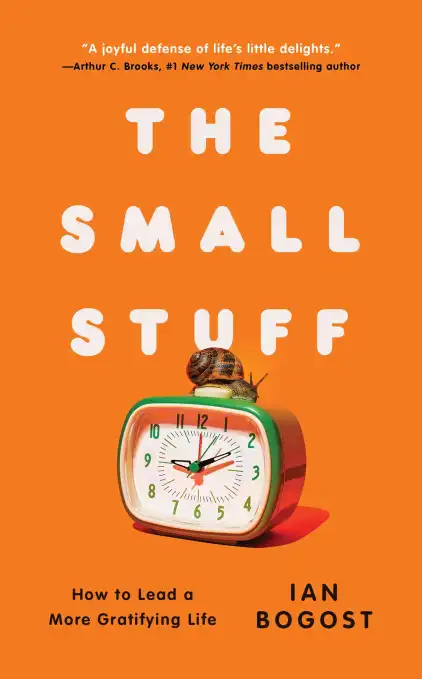
Has Silicon Valley been building the wrong things?
Despite its self help-y title, writer/designer/academic Ian Bogost’s forthcoming book “The Small Stuff: How to Lead a More Gratifying Life” asks some pointed questions about how technology has transformed our experience of the physical world. Using Bogost’s popular article in the Atlantic about the decline of stick shift cars as a springboard, “The Small Stuff” argues that many aspects of our daily existence — from cars to doors to bathrooms — have become dematerialized.
“Basically, it’s the idea that we’ve become disconnected from the sensory world, and the reason that happened is what you might call convenience technologies,” Bogost told me, though he was quick to add that technology isn’t the only thing driving this change. “All sorts of factors — not just tech, and certainly not just Silicon Valley-style technology — have distanced people from the world that they inhabit, they have stripped away the texture of everyday life.”
In fact, while Bogost nodded to other books criticizing the tech industry, he said he’s become “a little bored with the constant critique.” So he’s currently less focused on calling for broad societal change and more on finding “gratification” in everyday sensory experiences.
“It’s a lot to put on ordinary people to say, ‘Well, we just need to solve wealth inequality or capitalism, and then we’ll be able to get back to experiencing our lives fully,’” he said. “Ordinary people don’t need to wait for that.”
During our interview (which I’ve edited for length and clarity), we also discussed the tradeoff between convenience and experience, how Silicon Valley can do better, and the “hipster reclamation of nostalgia.”
You wrote this great piece about the stick shift. How did that lead you to these bigger ideas about “the small stuff”? How did you realize there was a book in this?
I did the stick shift story in 2022. At a high level, it was: People have been lamenting the decline of the stick shift for years and years, but electric vehicles made it real, because they don’t have transmissions. Assuming that EVs are going to eventually become universally adopted, which I think is the case, then this really is the end.
You [write] a story and you’re like, “Well, that was fun, it’s a nice little thing, I’ll put it out on the internet.” That one was just huge. The response was enormous. And I was really interested in why. Is it just that people really love their stick shift cars? I didn’t think so.
I took a year of thinking about it, off-and-on [and] I realized, actually, I’ve been working on this for longer than I expected. I went back and looked at writing about toasters and writing about smoothies or slushies, or my catalog of interests, and the things that I’ve been doing. I just find ordinary life very, very alluring, and I’ve never understood quite why. Is there something wrong with me? Am I just a weirdo?
It was a realization, through the stick shift, that ordinary life is not just interesting, but deeply, deeply meaningful, and we have undervalued it. Something like the stick shift, which is imbued with symbolic and real meaning for people, it just opens a window, and you feel the breeze come in, and you’re like, “Oh yes, the breeze.”
Let’s talk about the concept of dematerialization, because the book is structured around it. The first half is describing, diagnosing, and then [the second half talks] about solutions, antidotes. Do you want to explain what dematerialization is?
Basically, it’s the idea that we’ve become disconnected from the sensory world, and the reason that happened is what you might call convenience technologies. Although it’s not just technologies; it’s also bureaucracy, it’s efficiency, it’s economics, it’s regulatory apparatuses. All sorts of factors — not just tech, and certainly not just Silicon Valley-style technology — have distanced people from the world that they inhabit, they have stripped away the texture of everyday life.
My favorite example of this, the one that people seem to always get, is: You go to the airport restroom, you just got off your flight, and the toilet flushes for you, the sink turns on for you, the towels dispense for you, the soap dispenses for you — or it doesn’t, right? It kind of doesn’t work, but that sense of: This thing that I used to do with my physical body and my senses, now I don’t do that anymore. That is so commonplace, and it’s, broadly speaking, been driven by things that have really benefited our lives. But we didn’t realize that we were making a tradeoff between progress and giving up that contact with the material world.
So that’s what dematerialization names for me, this family of conditions that distanced us from our sensory lives.

That section about the restroom was really visceral for me, because you’re not just talking about the experience of using these things, but it’s the experience of having them not work for you.
You notice them when they don’t work, and there’s some friction there that helps you see the problem. In a lot of cases, we don’t even realize there’s a problem, or we realize something’s wrong, but we don’t know what it is.
One of the things you also point out is: A lot of these changes have, in some ways, improved our lives. You said there’s a tradeoff, like in the case of the stick shift and automatic, and then you add electric vehicles —
There’s a lot of folks out there who’ve advocated for stick shift cars who are also like, “Internal combustion engines are the only way, and we have to be purists about burning dinosaurs.”
I don’t feel that way at all. Hailing an Uber and streaming music and getting DoorDash and even some of the promises of the automated fixtures — I mean, some of them are bunk, but I get it, broadly — I think it’s really important to me that we recognize that our lives are better overall, but there was this thing that happened that we didn’t notice, in a frog boiling kind of way.
I’m a big fan of Cory Doctorow, but these [arguments that,] “This system of economics and technological value systems are obviously the cause of all our problems, and I’m going to name it enshittification,” just to pick a very popular example. People clearly want an explanation, but then you’re like, “Yeah, but I like Amazon Prime, I like to be able to search Google for information.”
So I’m trying to toe this line between being honest about the fact that our lives are broadly speaking better, that this is not a Silicon Valley thing, actually, it’s much bigger than that, and that it happens so slowly that we didn’t notice.
One of the striking things to me about the book versus what I’ve read of Doctorow’s work, or [Jenny Odell’s book] “How to do Nothing” — there’s a whole cluster of books — is that your book is less angry. There’s a strain of criticism, but it’s not quite the same tone.
Personally, I’ve been writing about technology for a long, long time, and I don’t think it’s haughty of me to say I was ahead of the curve in being critical of Silicon Valley-style technological advancement. I was out there talking about Facebook and social media way, way, way before a lot of people were concerned, and that felt very lonely.
But I just feel a little a little bored with the constant critique, and I also feel like it’s misdiagnosing or overdiagnosing the problem. It’s very satisfying to believe that there are good guys and bad guys, or that there’s a simple explanation, and once we understand the explanation we just need to unwind it and then everything will be good again.
I want to talk about the Silicon Valley part of it. And this isn’t just a Silicon Valley thing, but a lot of the ideas that you’re talking about resonate with this sense that a lot of consumer tech products, consumer services are focused on convenience, speed, those kinds of things. Reading this book, and related books, sometimes I have this sense of: Are all these companies just pursuing the wrong goals?
I certainly think that the obsession with efficiency, automation, invisibility, transparency, and scale does drive that desire. “We are going to make everything easier to do, so you don’t have to do it.” That’s one way of summarizing the last however many years.
Some of that drive came from the right place, like Uber. Remember before Uber, when you were in a city that wasn’t New York, and you wanted to get a cab, and it was really hard, and now it’s really easy? You could romanticize that and say that [convenience] doesn’t matter, but it does.
Rather than blame either technologization, or industry, or ordinary people for being too stupid to notice or handing over their lives willingly, which is another explanation, I just think it happened over such a long period, so slowly, and with such overall endorsement, that both consumers and the organizations that provide these kinds of services were saying, “Here’s the deal,” and everyone was like, “Yeah, I’m on board, I don’t want to buy CDs anymore, Spotify would be amazing, sign me up.”
Actually, we felt like we understood the deal, but we didn’t fully understand the deal. We did not fully account for the fact that we are physical beings, we are embodied beings, and that is maybe somewhere where I’d put some of the blame more squarely on Silicon Valley-style culture. You see it today, this idea that I can rise above even having a body, I can live forever — whether transhumanism, singularitarianism, or just eternal life through efficiency and optimization, that idea has always been central to the general purpose computer, that it can sieve through any kind of experience and turn it into a computational one.
And we are just never, thank God, we are not able to exit our bodies. But you go to the Valley and there’s still this weird sense that that embodied human experience is not needed, unnecessary. And that’s just wrong.
The book is written for a broader audience, but I’m curious for entrepreneurs or people building products: Are there positive examples you’ve seen of how people can think about that tradeoff differently? So it’s not just optimizing purely for convenience, but maybe finding a balance between convenience and friction and sensory experience?
If you go back and you look at how computers turned from data analysis tools into cultural tools, which begins in the 1960s, really, there was this strong idea that you were going to be able to express yourself with [computers], but also that connecting to them in a human way was really important. And in the 1970s, at Xerox PARC and at Apple, there was this strong idea of a computational version of human factors engineering, of the fact that my body has to fit in the chair or has to go through the doorway, that was really, deeply important to computing for decades, until the ‘90s. Once we got to the 2000s, as the real takeover of culture by computation happened, I think that’s when we turned away from that process of trying to negotiate between computing and people.
What that suggests is that the experience of doing something is also important, not just the outcome. We got massively focused on the outcome, and then we de-emphasize the experience of doing things, and now we’re at the point where, if you talk about the experience of doing something with the bogeyman Silicon Valley-style entrepreneur, they’ll be like, “Why would you bother? We can automate that. AI is going to solve that. We can hand that off to the Philippines.”
There’s all sorts of solutions that will prevent you from having to be bothered with doing that experiential thing, and it turns out: No, I want to have those experiences, because that’s part of what makes me human and alive, even though they feel ridiculous individually. You know, who cares about the sensation of the ice in my water bottle, but as I argue in the book, over time, all that little stuff, it adds up, it’s deeply meaningful, and when you strip it all away, you really notice what’s what’s missing.
The top line answer is: The experience matters. The experience of using products and services matters, not just the outcomes that they provide. And it almost feels funny to say it out loud in response to your question, because I think if you asked any UX designer in Silicon Valley, “Do you do that?” They’d be like, “Absolutely, we’re doing that all the time, that’s highly valuable to us.”
But I don’t think they are. They think they’re doing it, but, but have lost sight of what they’re really doing, which is stripping it away.
I love that the book is so rooted in personal experience and in sensory experience. But as someone who’s 43 and had a lot of these feelings, I start to get a little suspicious of myself. Am I just an old fart longing for [the experiences of my youth]? How do you think about these things in a way that’s not just about romanticizing the way things were?
It is very, very easy to slip into nostalgia, and I think there’s a current strain of desire that’s oriented toward so-called analog culture. Like, “I’m gonna get a Walkman again and that’s going to solve my problems.”
I have a few thoughts about it. First, I make this argument pretty clearly in the book: We’re not going back. You live in the present, into the future, and we don’t live in the past. Lamenting what came before and has been lost is useful insofar as it can orient you, but it’s not really useful in helping you live your life.
I love, love, love the telephone, I love the old-school Western Electric-style handset, I love how intimate they are, I love how they feel in my hand, I love the heft of it. [But now] we’re on Zoom, or at best we’re on our headphones. That’s not going to change. And so instead of looking at that example and going, “Ah, if only we could go back and we can maybe through this hipster reclamation of nostalgia“ — okay, that’s an interesting signal. I remember that, and that was meaningful to me, and a good way to orient yourself toward your actual sensory life.
Now, the great thing is that, whether you’re 43, or whether you’re 23, you still have a human body. You live in the world, and we live in it together, and so all around us, all the time, are opportunities to do the same kind of thing but in a different way.
One of the things I love about Zoom over the telephone is, I can have this radio experience with myself and with you, that it’s very sonically gratifying, and I don’t get that on a compressed digital line. So that’s one answer. Nostalgia can be orienting, but it’s indulgent to think that you can live in the past. If it’s just purely mournful, what does that help?
The second thing I want to flag is this: There’s been a lot of chatter about friction lately, like, “We need to reintroduce friction,” and I think that’s also wrong.
Everything got really smooth and slippery. It literally did, because we all got these smartphones and they’re slick on their surface. But then, because of efficiency and ease, everything started to feel really frictionless, and the opposite of frictionlessness is friction.
But you don’t really want things to be hard or to stand in your way. You just want the experience of feeling yourself doing them, which is quite a bit different from “Oh, that should be hard, I need to introduce obstacles that get in my way.”
I also wanted to ask about this question of the relationship between the small stuff in the book’s title and these bigger questions of how society is changing. I agree that our lives have become dematerialized and separated from sensory experience, but it doesn’t sound like you’re worried that at some point, the islands of physical or sensory pleasure or gratification are just going to disappear, or become vanishingly small.
I think it’s a really subtle, complicated matter. Yes, that’s what I’m saying, but we’re obsessed with the idea that something has been lost that cannot be recovered, or that needs to be recovered through massive cultural, social, economic, regulatory, whatever kind of change.
Now, I’m not against that kind of big thing. I don’t know how easy or likely it is to be accomplished. I think it’s a lot to put on ordinary people to say, “Well, we just need to solve wealth inequality or capitalism, and then we’ll be able to get back to experiencing our lives fully.” We can’t wait for that. Ordinary people don’t need to wait for that.
I would very much like it if the leaders of industry and of government and of civic organizations did what they could, in their contexts, to build more small stuff-oriented, more gratifying opportunities for people.
An example is the whole discourse about remote work, office work, what it is that you’re doing every day at your email job or whatever. Clearly, if you run an organization, you have some control over what people are actually doing and how. But my neighbors, they don’t get to make that choice, your aunt doesn’t get to make that choice, but they still have to live in their sensory lives, there’s something they can do right now, in this moment, every day, rather than wring their hands or post obsessively on Facebook about how shitty everything is. We’ve tried that for a while, and it doesn’t seem to have helped.
When you purchase through links in our articles, we may earn a small commission. This doesn’t affect our editorial independence.

Back in July of 2024, when two of the biggest big shots in venture capital, Marc Andreessen and Ben Horowitz, explained why they had decided to go all in to back Donald Trump’s campaign for re-election, they talked up a good game about how they would support any candidate who supported their “little tech” agenda. This always rang hollow — Andreessen has been on the board of Meta for years, which is the most anti-little tech company around. They also whined about the Biden administration tech policies, in particular around AI, cryptocurrency, and antitrust. But the most telling part of the full podcast had nothing to do with tech policy at all. Marc and Ben spent a bunch of time positively offended that Joe Biden and some (only some) of his agency heads wouldn’t meet with them:
We have been spending a tremendous amount of time with Senators, Congress people on both sides of the aisle. Mark mentioned we met with President Trump. We did meet with White House officials, including Jeff Zients the chief of staff, and Jake Sullivan the National Security advisor, Gina Raimondo the Commerce Secretary and so forth. We have not met with President Biden. We attempted and failed.
….
We tried to meet with Gary Gensler — he’s the chair of the SEC, he’s running this campaign against crypto. We’re the largest crypto investors or largest blockchain investors in the world, and we’ve requested meetings with him at least a half a dozen times. I even was able to get in contact with his office mate at MIT, who said ‘surely Gary will meet with you, it’s so important that he meets with you’… and he couldn’t get us the meeting.
Meanwhile, they seemed to love the fact that Donald Trump would have dinner with them, and Trump family members would vacation with them. Here’s Marc:
Ben and I had dinner with the former president 10 days ago at Bedminster, his golf club in New Jersey, and had a three-hour dinner. And so, you know, we were quite literally just with him… you know, he’s a very complicated guy, people have a lot of opinions, but when you know somebody like that — you know the family — it really hits hard
And here’s Ben:
Marc and I have both gotten to know the family, particularly Jared and Ivanka and their kids — Arabella, Joseph and Theo. And in fact, like, Ivanka and the kids were just at my house. We went to see David Copperfield, all that.
The real complaint was never about policy. It was always about embracing the fascism of it all, in which they (Marc & Ben, not the wider tech industry) would get to write the rules in a way that helped them personally, even if it fucked over actual innovation. Indeed, they seemed tickled that after they had dinner with Donald Trump, he rewrote part of his campaign policy platform. These total political novices were so overwhelmed that they could get one side to listen at all that they figured it was obviously the side to back. They seem positively giddy that Trump was willing to make changes to his platform based on their conversations.
There was also a longer discussion regarding how Marc and Ben contrast what they think (misleadingly) was Biden’s policy on AI vs. what Trump’s policy would be. My favorite bit is where Marc says they “confirmed” with Trump what his AI policy would be, as if the guy doesn’t have a decades-long history of promising one thing to whoever is in front of him and then doing something entirely different.
Ben: Let’s talk about Trump’s proposal. We actually discussed this with him when we had dinner
Marc: Yeah, we discussed all these topics and confirmed all this. So: Chapter Three, “Build the Greatest Economy in History.” Bullet five, “Champion Innovation.” Item two, “Artificial Intelligence”:
“We will repeal the dangerous executive order that hinders AI innovation and imposes radical ideas on the development of this technology. In its place, we will support AI development rooted in free speech and human flourishing.”
Ben: That sounds like a good plan to me!
When we met with him, I thought his comment was really insightful and good. It’s funny — I would contrast the Biden administration’s approach, particularly in the inner core of the White House, with Trump’s approach. The White House has a very complicated model of things. They think they know a lot — they know that startups aren’t going to be important, that only a few companies will be able to field big models. They know all these things that we don’t know, and we don’t. They’ve never heard of distillation, apparently, or how AI is actually working in practice. It’s a very complex view of the world.
Trump’s view was very simple. What he said to us is, “Look, AI is very scary, but we absolutely have to win — because if we don’t win and China wins, that’s a very bad world.” And I think that’s actually a more correct view. That’s basically true. When things start happening that do need regulation, then we should regulate them. But to anticipate it would be kind of like saying, “Oh, the automobile is coming out, and we think somebody’s going to make an automobile that drives 500 miles an hour nobody can control, so we’re going to just outlaw cars now.” That’s a little bit this approach to AI — “Well, we think in the future there’s going to be a sentient model.” Now, nobody has built anything anywhere that’s on the way to sentience. And so doing that — what we have are these great things that can tutor kids, so “No, you can’t tutor kids, because maybe somebody will come up with an idea that will make AGI, and so we have to cut off the tutors.” It’s that kind of thinking, which is quite scary, I would say.
That final bit is quite telling as well. Biden’s plan was too complex. Trump’s plan was simple. Perhaps that’s because he’s a simpleton who has no understanding of actual policy tradeoffs. Biden’s team definitely made some decisions I strongly disagreed with regarding tech policy, but the “complexity” they whine about is because the issues here are, legitimately, complex.
So, um, given that the Trump administration has basically put in place a much dumber and much worse version of what Marc & Ben said Biden was doing… clearly they’re out there admitting they were wrong, right?
In just the last few weeks we not only had the US government force Anthropic to turn off Fable 5 and Mythos 5 models (even as the NSA itself was finding them useful!), it also made OpenAI limit the release of GPT 5.6. Meanwhile there are reports that the Trump administration is furious that Meta has been the one US frontier model provider that won’t let them pre-vet its AI models and decide which ones can and can’t be released.
So, two years ago Marc & Ben were yucking it up about how the Trump admin would stop trying to hold back and regulate big models, which they (falsely) claimed the Biden admin was doing. And now that the Trump admin is doing exactly that… it’s crickets from Marc and Ben.
Apparently their real concerns had nothing to do with such policies after all. Marc and Ben won’t tell you that directly, of course. But someone in their general orbit already has.
A little while ago the Bulwark’s Tim Miller did an interview with Jason Calacanis, a Silicon Valley entrepreneur/investor/gadfly, discussing a variety of issues regarding the tech industry. I only came across this because Karl Bode’s discussion regarding the SpaceX IPO mentioned it, to point out some delusional thinking about how Starlink works. But the rest of the interview is actually a lot of Calacanis saying the quiet part out loud regarding how Silicon Valley bros view all this fascism and corruption: positively, because they think they can handle fascism and corruption.
Miller pushes Calacanis on some points regarding why the Silicon Valley VC bros still support Trump’s fascism when it’s so obviously against things like open innovation and the free market, and Jason (almost gleefully) mocks Tim for just not getting it. He happily admits that the tech bros don’t have any actual principles at all. They just understand transactions, and Trump remains transactional.
Jason lays it all out as Tim points out that if a President Kamala Harris did a tiny bit of what President Trump is doing right now, the VC bros would be losing their minds, and Jason says none of that matters, because the VC bros understand that as long as everything is corrupt and “coin-operated” then they understand the game. Their biggest fear is that they’re just not that important, and policy might get made with no one caring what they thought:
Tim Miller: I want to give you a counterfactual. Kamala Harris did win. Okay. She gets in there and she puts an illegal tax on the Silicon Valley companies unilaterally. It doesn’t go through Congress. Puts a tax on them. It’s not legal, but she just does it. She says, “It’s an emergency. I’ve decided I have the right to do a, you know, whatever — windfall profits tax on all these companies. I’m going to do that.” And then she garnishes money from the CEOs. She makes them come to her and beg her for absolution to get around it. Sometimes she grants it, sometimes she doesn’t — kind of based on whim, kind of based on whether Doug is friends with the person, kind of based on whether they’ve given money to her. And then the Supreme Court comes back and says, “No, actually you’ve got to give the money back to the companies.” And she says, “No, actually I don’t want to. I’m not going to do that. In fact, I’m going to threaten them, and maybe I might actually take a percentage.” Donald Trump just suggested he might take a percentage of the company for the government. If Kamala Harris had said that, you and all your Silicon Valley buddies and the Wall Street Journal would be losing their minds, and it would [be] communism.
Jason Calacanis: So you’re making this analogy to tariffs?
Tim: This is what Trump is doing — with tariffs, and with taking a percentage of Intel, and he’s suggesting he’s going to take a percentage of AI companies. He tariffed them illegally. He made them come in and beg for their lunch. That’s left-wing autocratic politics is what he’s doing.
Jason: Yeah. I can educate you as to why they don’t have a problem with it and why you do. You are looking at it from a moral perspective, and from a logic perspective of like, “Well, if you were okay with one side doing it and not okay with the other side doing it, this doesn’t make intellectual sense to you.” Totally understand where Tim Miller is coming from. This intellectually does not make sense. Let me tell you on a business level what this means.
The tariffs, when they’re under 15%, when they actually hit, are easily absorbed on one side or the other — the folks who are selling items, or the folks who are providing those. They each make a bit of a concession, and maybe you raise the cost of something a little bit, but it’s not as dramatic as the left feels it is. It was chaotic, but when it actually hit the ground, it made no difference to these businesses. So, a lot of hand-wringing for not a lot of impact.
And you find it offensive, reasonably so, that people have to go bend the knee and bring a gold bar and wait in line. And South Park did a whole sendup of it — that you have to bend the knee and make your donation. That’s what business people like. They like transactions. You may not like it. You may think it’s crummy. Business people love to have a coin-operating situation.
Tim: I guess. But this whole Biden thing is crazy. It’s like — he didn’t even raise taxes on them. Trump has raised tax. You can tell me that fine, the tariff thing is inconsequential. Okay, fine. But the last federal corporate tax hike was in ’93. Like, they haven’t — they’ve only gotten cuts, from Obama, from Biden. They haven’t faced a corporate tax hike in 30 years or more. So who — why, who cares? Why are they so upset about the Biden situation?
Jason: Because Biden didn’t return their calls.
Tim: So the tariff isn’t a big deal. The phone call is. That’s fine. All right.
Jason: No, it actually is. You’re brushing that off. And this is where you have a blind spot, Tim. Respectfully, you have a blind spot. If you can get in the room with the person, if you can get in the room with the administration, and then you can shape policy and you can say, “Hey, here’s what we’re trying to accomplish, and hey, can you help us with this, and this regulation doesn’t make sense?” — that actually is a preferable situation to not getting your phone call returned. And if [that’s] what you have to pay for it — I’m not saying this is my belief; you have me on here to explain Silicon Valley and the business side, I’m explaining it to you — they much prefer bending the knee, having to show up for the Melania documentary. Tim Cook’s like, “I gotta show up for a documentary. That sucks. I gotta bring a gold bar. I’ll do whatever it takes to keep selling iPhones.”
It’s possible this is correct, but that’s basically the definition of Mussolini’s brand of corporate fascism, when the business elites team up with an autocratic ruler to better control the entirety of society, not for the benefit of society or the public good, but for their own.
Early on in the second Trump administration, I wrote an article titled Fascism for First Time Founders, about how this tends to end very badly for the business leaders who embrace it. I stand by that article, and think it’s even more relevant today than it was then. Fascist regimes don’t tend to last long, and the business leaders who embrace fascism in pursuit of becoming all-powerful oligarchs tend not to come to happy endings, no matter how wealthy it makes them for a short period of time, or which leaders are willing to return their calls.
You’d think that some of these “visionary” business leaders could look beyond the current administration and get a sense of where this story is heading. Apparently, that’s too much to ask.
Dean Ball, a policy analyst on AI who was placed in the White House by Silicon Valley folks to write Trump’s original AI policy (which was published to great fanfare and then totally ignored) has written an article about how the Trump AI policy is a total mess right now, where it’s based on whims where literally no one knows what’s allowed (the situation Marc & Ben falsely claimed would happen under Biden).
- When President Trump signed it earlier this month, I argued that the Executive Order on Cyber and AI, which claimed to establish a voluntary testing program for frontier AI models, was really establishing a de facto involuntary licensing/preapproval regime for frontier models. This analysis has proven correct. First the administration revoked public access to Fable, Anthropic’s latest frontier model, because of security fears. Now, it appears that OpenAI’s GPT 5.6 is being limited to only a small set of US companies at the request of the US government.
- One major problem with this, as implemented, is that nobody knows what the requirements are to get licensed.
- When I say “nobody” I mean it literally: the administration itself does not seem to know what safety standards or best practices a company would have to observe for them to be comfortable with the broad release of a model that matches or exceeds Mythos in capability.
- This means that, every time a lab asks if they can release their model to the general public, the answer from the government will be “no.” This will be true until there is some sort of safety standard or specification that gives the government a sense that the models are safe.
Ball doesn’t attribute any of this to a deliberate authoritarian agenda, but rather argues that the AI has just gotten so good that the doomers’ fears are finally coming true. That’s the charitable read. The simpler explanation is right there in the Calacanis interview: these VC bros thought they could control Trump and are still over the moon he returns their calls, even as he does all the things they claimed would destroy the industry.
But he returns their calls. For now, at least.
The main issue is that we have a power mad president, surrounded by yes-men and sycophants pushing him to grab more power. And you have the Silicon Valley elites who have the president’s ear egging him on… because he’ll return their calls and because, as Jason said, they understand a coin-operated president.
Even if it’s worse for innovation. Even if it’s worse for society. But it might be better for their bank accounts (for a while) and their egos to be a part of making the AI trains run on time. Until they don’t. Because situations like this are woefully unstable, and at some point, Trump and the MAGA crew won’t actually be in charge any more.
Marc and Ben claimed what they feared most in 2024 was a presidential administration that would shut down the most powerful AI models, regulating math, and hand-picking a few winners and losers. And that’s why they supported Trump. Now that Trump has gone way further than Biden even suggested he’d go in limiting powerful AI models, there’s been no public indication I can find that Marc and Ben regret their choice as president. After all, he’s still coin-operated and he still returns their calls.
Jason explained it perfectly. They bend the knee, they get in the room, they bring the gold bar. That it doesn’t lead to innovation policy that helps tech (little or big) doesn’t really matter. Trump returns their phone calls. They get to feel big. They still get richer. The point was always about access. They got it.
That’s the corporatist fascism they always wanted anyway. Business elites teaming up with an autocratic ruler not to figure out what’s best for the public or for innovation. But for power and control. They get to decide who gets what innovation. What models are allowed. Who can innovate.
The problem with Biden, apparently, wasn’t so much that he wanted to put some safety guardrails on AI. It was that he wouldn’t let the VC bros sit with him while deciding who the winners and losers would be. But here we have it. Business elites and an autocratic ruler picking winners and losers. History is pretty consistent about where this all ends up.
The VC bros said it was about policy. It wasn’t. But no one should ever accept Marc Andreessen and Ben Horowitz pretending they speak for “little tech” or innovation ever again. Not after this.
Filed Under: ai policy, ben horowitz, corruption, donald trump, fascism, jason calacanis, joe biden, marc andreessen, transactions
Companies: a16z, anthropic, openai

When AI agents begin working for people — and increasingly for one another — they will need a way to find jobs, pay for services, and build trust. Crypto exchange OKX is betting that future is closer than many expect, launching a marketplace where AI agents can hire one another, settle payments autonomously, and build portable on-chain reputations.
Called OKX AI, the marketplace opens to developers on Tuesday following a closed beta involving 50 early AI service providers. The marketplace builds on technology OKX previously developed to let AI agents hold digital wallets, make payments using stablecoins, and establish persistent identities.
The launch marks OKX’s latest push beyond crypto trading as it seeks to become a broader fintech company. With more than 150 million users globally, OKX is betting the next generation of customers will not just be people or institutions, but AI agents capable of transacting autonomously, giving rise to an emerging “agent economy.”
“The coming decade will be defined by one-person companies that generate over a million dollars in annual revenue – because every individual effectively gains an unlimited workforce,” Star Xu, founder and CEO of OKX, told TechCrunch. “Traditional financial infrastructure was built for humans. The agentic economy needs infrastructure designed for autonomous software. That is why we built OKX.AI.”
Haider Rafique, OKX’s chief marketing officer and global managing partner, said the company believes “agentic commerce” could become a trillion-dollar market over the next five years, driven by micropayments and autonomous software.
The marketplace is aimed at crypto developers building AI applications and solo entrepreneurs looking to automate parts of their businesses with AI agents, Rafique told TechCrunch. The company expects those developers to build applications for the marketplace, allowing other users to access AI-powered tools without having to build them from scratch.

Among the early builders are CertiK, whose service lets AI agents assess the security of a crypto wallet or token before executing a transaction, and CoinAnk, which provides live market data on a pay-per-query basis. GenLayer, another launch partner, is bringing dispute-resolution infrastructure to the marketplace to help AI agents resolve contractual disagreements.
By using blockchain-based payments and stablecoins, the company says AI agents can settle transactions around the clock, including low-value micropayments that would be impractical using conventional payment rails.
Rafique said OKX is applying the same fraud detection, compliance systems, and internally developed infrastructure that underpin its cryptocurrency exchange to the marketplace, which will be rolled out in phases before becoming more widely available.
OKX’s launch comes as technology companies and startups race to build the infrastructure that will underpin AI agents, from developer platforms and marketplaces to payment and identity systems. Albert Castellana, co-founder and CEO of GenLayer Labs, said the biggest challenge is not simply enabling AI agents to transact, but helping them discover one another and resolve disputes when things go wrong.
“What we’re building is essentially a digital court system,” Castellana told TechCrunch. “The challenge for us is distribution. OKX already has that.”
Rafique argues that OKX’s biggest advantage is not simply its technology but its reach. The company believes its existing network of crypto developers and users will help seed the marketplace, while its broader strategy extends well beyond digital assets.
In March, Intercontinental Exchange (ICE), the parent company of the New York Stock Exchange, invested about $200 million in OKX at a $25 billion valuation. Rafique said the partnership is part of the company’s ambition to “modernize markets” through tokenization, while OKX AI represents its parallel effort to “modernize money” for an era of autonomous software.
Developers access the marketplace through Onchain OS, OKX’s toolkit for connecting AI agents to blockchain-based services. The company said no OKX account is required to get started, and the platform is compatible with AI coding tools including Claude Code, Codex, Hermes, and OpenClaw.
Because the marketplace is aimed first at developers rather than retail users, India features prominently in OKX’s plans. The country has emerged as one of the world’s largest hubs for AI and blockchain developers, a community the company hopes to reach even before a broader return of its crypto trading business.
In 2024, OKX suspended its services in India as it navigated the country’s regulatory requirements for crypto exchanges. Rafique told TechCrunch that India remains one of the company’s highest-priority markets, adding that developer products such as OKX AI face fewer regulatory hurdles than spot crypto trading and could help the company reconnect with the country’s builder ecosystem sooner.
When you purchase through links in our articles, we may earn a small commission. This doesn’t affect our editorial independence.

After giving it an Apple Design award for innovation, Apple has now bought Rabbit 3 Ties, Inc, which made a visual Swift development tool called Play.
Following Apple’s acquisition of the open-source Swift Package Index, it’s now been revealed that it entered a deal with the Play company. Rather than an outright acquisition, the deal reportedly sees Apple acquiring assets and having the option to hire certain staff.
So where Swift Package Index, for one example, is expected to continue in its present form, Apple appears to have bought Rabbit 3 Times to asset-strip it. It may also be an acquihire, where Apple bought the firm in order to get its staff for other projects.
Based in New York, Rabbit 3 Times was founded in 2021, officially in Delaware where state laws are particularly favorable to businesses. Since then, it has been producing and selling a visual Swift tool for iOS and macOS.
In a cross between Shortcuts and Xcode, Play: Create Better Apps was a free tool that let developers quickly mock up Swift projects and immediately see what they would look like in use. Developers could then export Play projects to Xcode through a paid service.
The development tool won an Apple Design Award for Innovation in June 2025. According to the European Union, Apple reported the deal in February 2026.
Shortly afterwards, Rabbit 3 Times announced that it would cease supporting its Play apps for iPhone and Mac starting April 20, 2026. Conceivably, Apple could now incorporate Play into its Apple Creator Studio, but so far it appears that the app is gone.
The paid Play to Xcode service was made free after Apple’s acquisition, specifically “to help with the transition.”
This change was announced on the firm’s website, which has now been taken down. “We’re working on something new,” was the only detail the announcement gave of why things were changing. “It has been an incredible journey,” the company said.
Acquisitions that are of a particular scale or are considered to be significant to EU users, are required to be reported under the Digital Markets Act (DMA). The EU then publishes these reports, although no sooner than four months after filing.
The EU’s listing describes Play/Rabbit 3 Times as offering “iOS and macOS tools for designing, prototyping, and generating SwiftUI code in real-time.”

Apple is now on the third round of its 26-gen operating system updates, including developer builds of its iOS 26.6 and others alongside some 26.5.2 releases.
Apple is in the phase of the year where it has two developer beta tracks running at the same time. While the main attention is on the 27-generation, it is also still building for its current-gen operating systems.
The third developer betas landed after the second, which were distributed on June 15. The first round came out on May 26.
At the same time, Apple has included some releases for:
When there are two developer beta tracks undergoing testing, the next-generation version will include feature changes while the current-gen track is more about performance and security.
The first iOS 26.6 beta build included a new feature for Contacts that notifies users if they reach the maximum of 20,000 blocked listings. There was also a security fix for Apple Maps.
AppleInsider and Apple strongly recommend that users don’t put beta operating systems or beta software onto their primary or “mission-critical” devices due to the potential for data loss and other issues. Ideally, they should retain backups of their data and try to use spare and secondary hardware for testing purposes.
The more risk-averse users should wait for public beta builds, which are more battle-hardened and less prone to errors.
Find any changes in the new builds? Reach out to us on X at @AppleInsider or @Andrew_OSU, or send Andrew an email at [email protected].

Your browser has been busy on your behalf. This week brought two reminders that Chrome can put things on your machine you never agreed to. One came from Google. One came from an impostor. Both used the same quiet machinery.
Chrome runs on billions of devices, which makes it one of the most powerful pieces of software on Earth. It also makes it a tempting place to slip something in. Two stories from the past few days show the consent problem from both ends.
Since at least April, Chrome has been quietly downloading Gemini Nano, Google’s on-device AI model, onto eligible laptops and desktops. The file is about 4GB. It arrives with no prompt, no notification, and no obvious off switch, CNET reported. Delete it, and Chrome fetches it again.
The model powers on-device features such as scam detection and writing help. The catch is that most people never asked for it and never knew it landed.

The 💜 of EU tech
The latest rumblings from the EU tech scene, a story from our wise ol’ founder Boris, and some questionable AI art. It’s free, every week, in your inbox. Sign up now!
The clearest account comes from Alexander Hanff, a privacy researcher who writes as “That Privacy Guy”. He caught the install on a fresh Mac profile that had received zero human input, using the system’s own file-event log. The 4GB model unpacked itself in about 14 minutes while a tab sat idle, he wrote. He argues the silent push breaches Europe’s ePrivacy and data-protection rules, and that the bandwidth alone carries a heavy climate cost at billion-device scale.
Google says the model removes itself if a device runs short on space or power. The company also points out that, since February, users can turn it off in Chrome settings, after which it stops downloading.
There is a twist that muddies the trust further. The visible “AI Mode” pill in the address bar does not use the on-device model at all. Those queries go to Google’s servers. So the user pays the storage cost of a local model, while the headline AI feature still sends typing to the cloud.
The second story is darker, because the actor was not Google. Microsoft’s threat researchers found a malicious Chrome extension dressed up as the AI search engine Perplexity. It quietly logged what people searched for, then sent them on to real results so nothing looked wrong.
The extension, called “Search for perplexity ai”, used a look-alike domain to pass for the real thing, The Hacker News reported. Once installed, it made itself the default search engine. Every query, and every character typed into the address bar, went first to an attacker-controlled server, which logged it with your IP address and browser details.
The theft happened on that first hop, before the redirect. The extension abused Chrome’s network-rule permissions to pull it off, and shipped server code that logged every request, Microsoft said. Google removed it after the disclosure.
This was not a one-off. Microsoft earlier tied a wave of AI-branded extensions to roughly 900,000 installs across more than 20,000 company networks, harvesting ChatGPT and DeepSeek chat histories. The AI label gets the install. The permissions do the damage.
Put the two together and a pattern appears. The browser, and the address bar in particular, has become a trust surface that both vendors and attackers want to occupy. Google treats your disk as a delivery target for its own AI. A criminal treats your omnibox as a wiretap. The user sits in the middle, rarely asked.
That is the real story here, and it should worry anyone who cares about trust in everyday software. When a legitimate company normalises silent installs, it gets harder for users to spot the malware doing something similar. Consent stops being a habit. The line between a feature and an intrusion blurs.
It also lands at a moment when AI branding is a magnet. People associate AI tools with usefulness, so they click. Attackers know it, and the same instinct that makes us try a shiny new assistant makes us wave through malicious apps wearing the same costume.
A few minutes of housekeeping helps. On Chrome, open Settings, then System, and turn off on-device AI if you do not want the Gemini Nano model. You can also check for a folder named OptGuideOnDeviceModel in your Chrome profile to see whether the 4GB file is already there.
Then audit your extensions. Remove anything you do not recognise, check the publisher and the exact domain before installing AI-branded tools, and watch for a search engine that has quietly changed. None of this is hard. It is just the price of using a browser that, increasingly, acts on its own.
The deeper fix is not yours to make. It belongs to the company that decides whether the default browser asks before it acts. Until it does, the safest assumption is simple. Your privacy is your job, and the browser is not always on your side.


CISA confirmed on Monday that ransomware gangs have begun exploiting a high-severity Microsoft Defender privilege escalation vulnerability that has previously been abused in zero-day attacks.
Dubbed BlueHammer, the security flaw (CVE-2026-33825) was leaked by a security researcher known as “Nightmare Eclipse” in early April, together with proof-of-concept exploit code, in protest at how the Microsoft Security Response Center (MSRC) handles the disclosure process.
“Insufficient granularity of access control in Microsoft Defender allows an authorized attacker to elevate privileges locally,” Microsoft explains in a security advisory.

Will Dormann, principal vulnerability analyst at Tharros, told BleepingComputer in April that while the issue is not easy to exploit, it gives local attackers access to the Security Account Manager (SAM) database, which contains password hashes for local accounts.
With this access, they can escalate to SYSTEM privileges and potentially take complete control of the targeted system.
“At that point, [the attackers] basically own the system, and can do things like spawn a SYSTEM-privileged shell,” Dormann said.

Microsoft patched the vulnerability on April 14 as part of the April 2026 Patch Tuesday. However, days later, Huntress Labs security researchers revealed that threat actors had been exploiting it as a zero-day in attacks that showed evidence of “hands-on-keyboard threat actor activity.”
Over the past several months, Nightmare Eclipse has disclosed multiple other Windows zero-day exploits, including for the RoguePlanet, RedSun, GreenPlasma, MiniPlasma, YellowKey, and UnDefend flaws.
Some of these vulnerabilities affect Microsoft Defender, while others target BitLocker and Windows components.
Microsoft fixed the GreenPlasma, MiniPlasma, and YellowKey security flaws three weeks ago as part of the June 2026 Patch Tuesday updates.
CISA added the BlueHammer flaw to its Known Exploited Vulnerabilities (KEV) Catalog on April 22, ordering Federal Civilian Executive Branch (FCEB) agencies to patch their Windows devices against ongoing CVE-2026-33825 attacks within two weeks, until May 7.
“This type of vulnerability is a frequent attack vector for malicious cyber actors and poses significant risks to the federal enterprise,” the U.S. cybersecurity agency warned at the time.
While Microsoft has yet to tag this security flaw as exploited in attacks, CISA has now also flagged it as exploited in ransomware campaigns in a Monday update to its KEV Catalog.
In recent years, CISA has flagged eight Microsoft Defender vulnerabilities that have been exploited in attacks, with two of them also targeted by ransomware gangs.

Security teams log 54% of successful attacks and alert on just 14%. The rest move through your environment unseen.
The Picus whitepaper shows how breach and attack simulation tests your SIEM and EDR rules so threats stop slipping by detection.

Would you pay more for a home with a heat pump?
You can bet I would.
I’d gladly fork over more money to bypass a gas or oil furnace, which—unlike an all-electric heat pump—spews toxic combustion byproducts, runs the risk of poisoning my family with carbon monoxide, and contributes to climate change. And while heat pumps, which provide both heating and cooling, typically cost more up front than conventional furnaces, they’re two to four times as efficient, and so could save me money in the long run.
Apparently, I’m not alone in prizing the comfort, safety, and economic benefits of these appliances.
Heat pumps give home values a boost, according to a new report by the nonprofit Smart Energy Consumer Collaborative, which studies consumer behaviors, interests, and concerns in the energy transition; 257, a customer-intelligence platform that profiles US. residential property characteristics for contractors, utilities, and others; and the trade group the National Association of Realtors. Their analysis showed that homeowners who install a heat pump can recoup up to a quarter of its cost just by mentioning it in real estate listings when they’re ready to sell.
While some homeowners may invest in a heat pump for its environmental bona fides, for most people, economics trumps all, said Scott Rosenberg, a cofounder and chief executive officer of 257. “A homeowner who puts a garage on, redoes their bathroom, improves their kitchen, always thinks, ‘Am I going to get this value back?’”
By analyzing more than half a million sales of US homes with ducted heat pumps from 2024 to 2025, the authors found that those with real estate listings mentioning the heat pump typically enjoyed a sales price boost of 0.6 percent to 1 percent over homes that didn’t advertise their efficient appliance. This modest lift translates to $2,300 to $3,900 per home, given a median sale price of $399,000.
“Just shy of $4K doesn’t sound like a lot of money on a home sale,” Rosenberg said. “But it’s actually a meaningful piece of the investment that you made to get the heat pump in the first place.”
In 2026, a ducted heat-pump system costs on average about $15,400, per energy marketplace EnergySage—though prices vary wildly depending on the region, a home’s size and electrical service, and local contractors, to name a few variables. A comparable gas furnace plus central AC system can cost half that, according to home services platform Angi. Mentioning a home’s heat pump in the sale listing, assuming the appliance cost around the average price, can recoup about 15 percent to 25 percent of the outlay.
Now, every home is different, and people willingly pay premiums for a wide variety of attributes, such as the floor plan, the views, and neighborhood vibes.
But Rosenberg is confident that when it comes to real estate listings, the heat-pump price bump is real, because of the approach his team used and the amount of data they analyzed. 257 used a machine learning technique to cluster homes across hundreds of attributes to identify those that are nearly identical, he said. Then, within those clusters, sales prices were contrasted for those homes where the heat pump was or wasn’t mentioned in the listing.
Yueming “Lucy” Qiu, an economics professor at the University of Maryland, called the report “very valuable” for helping to gauge the premium that people place on heat pumps. “I’m actually very happy that this came out,” said Qiu, who investigated the matter years ago at a smaller geographic scale.
In 2020, Qiu and her colleagues published a peer-reviewed study in Nature Energy that looked at home sales across 23 states from 2000 to 2018 for whether the presence of a heat pump improved the property’s sale prices.

Sony’s next premium Walkman could be closer than expected as a fresh leak suggests the long-awaited NW-ZX900 is on track to launch in late 2026 or early 2027.
The latest details come from The Walkman Blog, which reports that the upcoming music player has already appeared on Sony’s internal servers.
While the listing doesn’t reveal new hardware, it lines up with an earlier benchmark leak. That benchmark hinted at a substantial performance jump over the current NW-ZX707.
According to the benchmark, Sony will replace the ageing Qualcomm Dragonwing QCS4290 platform, based on the Snapdragon 660, with a much newer chipset derived from Qualcomm’s Snapdragon 7s Gen 3. The move would bring a far more modern CPU architecture. It would feature four Cortex-A720 performance cores alongside four Cortex-A520 efficiency cores.
On paper, that means more than double the performance of the NW-ZX707 – around a 122% increase based on benchmark estimates. Sony is also tipped to pair the chip with 8GB of RAM. As a result, the Walkman will be far better equipped to handle streaming apps, large music libraries and Android multitasking than its predecessor.
The newer 4nm manufacturing process should also improve efficiency. That could mean longer battery life despite the extra power, although Sony has yet to reveal any official battery figures.
Connectivity also looks set for an upgrade. The leaked specifications point to Wi-Fi 6E support. This allows faster downloads for high-resolution music and streaming apps compared to the older Wi-Fi standard used by the current model. Users would of course need a compatible router.
There are no details yet on changes to the display, DAC hardware, storage options or audio tuning. All these areas matter just as much to dedicated Walkman buyers.
Sony’s NW-A306 and NW-ZX707 both launched back in January 2023. The players have since disappeared from sale in several regions. If the leaks are accurate, the NW-ZX900 could finally be the long-awaited successor. It could bring a much-needed hardware refresh to Sony’s premium portable music player lineup.

Playground Games has confirmed that if Fable players, for some reason, decide to kill every non-player character (NPC) in a settlement, they will repopulate over time.
During a press Q&A at an Xbox event adjacent to this year’s Summer Game Fest (SGF) attended by TechRadar Gaming, associate game director Will Kennedy discussed Fable‘s reactive world, including the permanence of player actions. As a role-playing game (RPG), decisions will impact the NPCs around you, and players will have a reputation that will be remembered through their actions.
Player actions will also have consequences and be remembered, but if players decide to go on a killing spree, NPCs will later respawn through the game’s repopulation system.
In fact, Playground originally thought about letting players live with this decision; however, it ultimately decided that the absence of so many NPCs would spoil other systems.
“In terms of killing NPCs, you can kill every NPC in a settlement, and the settlement will stay empty for some time,” Kennedy explained. “But we do have a system that begins to repopulate in a settlement as well, but the reason that we do that is, we thought about it, there was a school of thought where you just live with that consequence literally forever, but we also thought in doing that it would cut off a lot of systems to players.
“It would be cool [at] first, but then it might actually get a bit annoying, so we may make the choice to prevent that.”
We followed up with Playground Games after the event and received the following from game director and general manager of Playground Games, Ralph Fulton, on how repopulation will work: “The new NPCs who, over time, repopulate a settlement to replace NPCs who have sadly died (i.e., were killed by you…) will be full NPCs like the ones they’re replacing. They’ll have all the elements that all our Living Population NPCs have – name, job, traits, home, clothing, appearance and yes, voice – and will be fully functional in all the same ways.
In the same Xbox event interview, Fulton revealed that Fable will feature over 150,000 lines of dialogue, and over 1000 hours of voice-over were recorded this year alone.
“We’ve had multiple studios set up running in parallel for over 1000 hours just this year alone, just recording VO,” he said, “so it’s a huge machine, because the vision that the guys have for this part of the game just requires that way of writing.”
Fable will officially launch on February 23, 2027, for PlayStation 5, Xbox Series X, Series S, and PC.

Follow TechRadar on Google News and add us as a preferred source to get our expert news, reviews, and opinion in your feeds. Make sure to click the Follow button!

The best gaming consoles
Taiwan raided Super Micro’s office and two affiliated companies as it widens its first criminal probe into Nvidia chip smuggling to China.
Taiwan’s Keelung District Prosecutors Office raided Super Micro Computer’s local office on Monday, widening an investigation into the alleged smuggling of Nvidia chips to China through the company’s servers. The raid also targeted the residences of six individuals and the sites of two other affiliated companies, according to Bloomberg. Super Micro shares fell more than nine percent on the news.
Taiwanese data centre operator Chief Telecom and Super Micro distributor Albatron Technology were also searched, according to a person familiar with the investigation cited by Bloomberg. Albatron confirmed in an exchange filing that it had been searched but did not explain why. Chief Telecom did not immediately comment.
Super Micro said in a statement that it is working closely with Taiwanese authorities and remains committed to protecting its technology and intellectual property. The company said its products continued to be targeted in the smuggling cases and that it is cooperating with law enforcement in Taiwan and other jurisdictions. Super Micro itself has not been charged in the investigation.
The 💜 of EU tech
The latest rumblings from the EU tech scene, a story from our wise ol’ founder Boris, and some questionable AI art. It’s free, every week, in your inbox. Sign up now!
The raid extends Taiwan’s first formal crackdown on AI chip diversion, which began in May when prosecutors detained three individuals accused of using forged documents to export Nvidia-equipped servers to China. The three suspects, including Super Micro co-founder Wally Liaw, allegedly routed at least one shipment through Japan before it reached the mainland. Around 50 servers were seized before they could leave the island.
Taiwan does not currently treat AI chip exports to China as a crime. Prosecutors have instead been charging suspected smugglers with violations of existing laws such as document forgery. Taipei is now considering criminalizing the exports themselves, which would give local prosecutors a more direct tool to pursue the illicit trade.
The case ties back to a broader scheme that US prosecutors have valued at roughly two and a half billion dollars. The US Department of Justice charged Super Micro co-founder Liaw and two others in March with conspiring to divert Nvidia-equipped servers to China through a front company in Southeast Asia, using heat guns to swap serial numbers and dummy servers to fool auditors. Liaw has pleaded not guilty, and the case is set for trial in November.
Nvidia CEO Jensen Huang addressed the smuggling problem last week, telling shareholders that data centres built with diverted chips are a dead end because the company will not provide support or repairs. The raid on Monday suggests Taiwan is increasingly willing to enforce that message from its end, extending the investigation beyond the original suspects and into the companies that handled the hardware.




Two goals and an assist by sheer aura: Cristiano Ronaldo just entered the World Cup chat


Weekend Open Thread: Staud – Corporette.com


The House | Manchesterism won’t survive the painful trade-offs unless it gets citizens on board


Potential 2028er World Cup attendee leaderboard


MAJOR BITCOIN & MARKET UPDATE!!!! (MUST WATCH ASAP!!!)


Asia stock markets slide as tech shares slump


A Look At A Gaggle Of Transputer Boards


Securitize Wraps Roubini's SEC-Registered ETF as Dubai VARA Digital Security
Bitcoin (BTC) Dips Below $62K, Ethereum (ETH) Plunges 6% Daily: Market Watch

Dell (DELL) Shares Tumble Over 5% Following Analyst Downgrade to Hold


Coinbase, Circle Deepen Crypto Stock Losses Despite Resilient S&P 500
Entergy settles forward sale agreements, raises $672 million in cash proceeds


Kraken's xStocks Opens Bending Spoons IPO Registration to EEA Retail


FIH Pro League: India defeat Pakistan 7-1, register biggest win of campaign | Other Sports News


Bitcoin Sparks $600M Hourly Liquidations With $65,000 Set To Become Resistance


Bluekit phishing kit adopts browser-in-the-middle for login theft


Russian hackers now target Signal backup recovery keys

Hyperliquid Named on Singapore MAS Investor Alert Register


RTX holders must register wallets before token distribution begins


Ripple and SBI launch RLUSD in Japan after JFSA approval



You must be logged in to post a comment Login