Biometric authentication is no longer limited to fingerprints and face unlock. Researchers are now exploring whether your earbuds can recognize you simply by listening to the tiny vibrations created by your heartbeat.
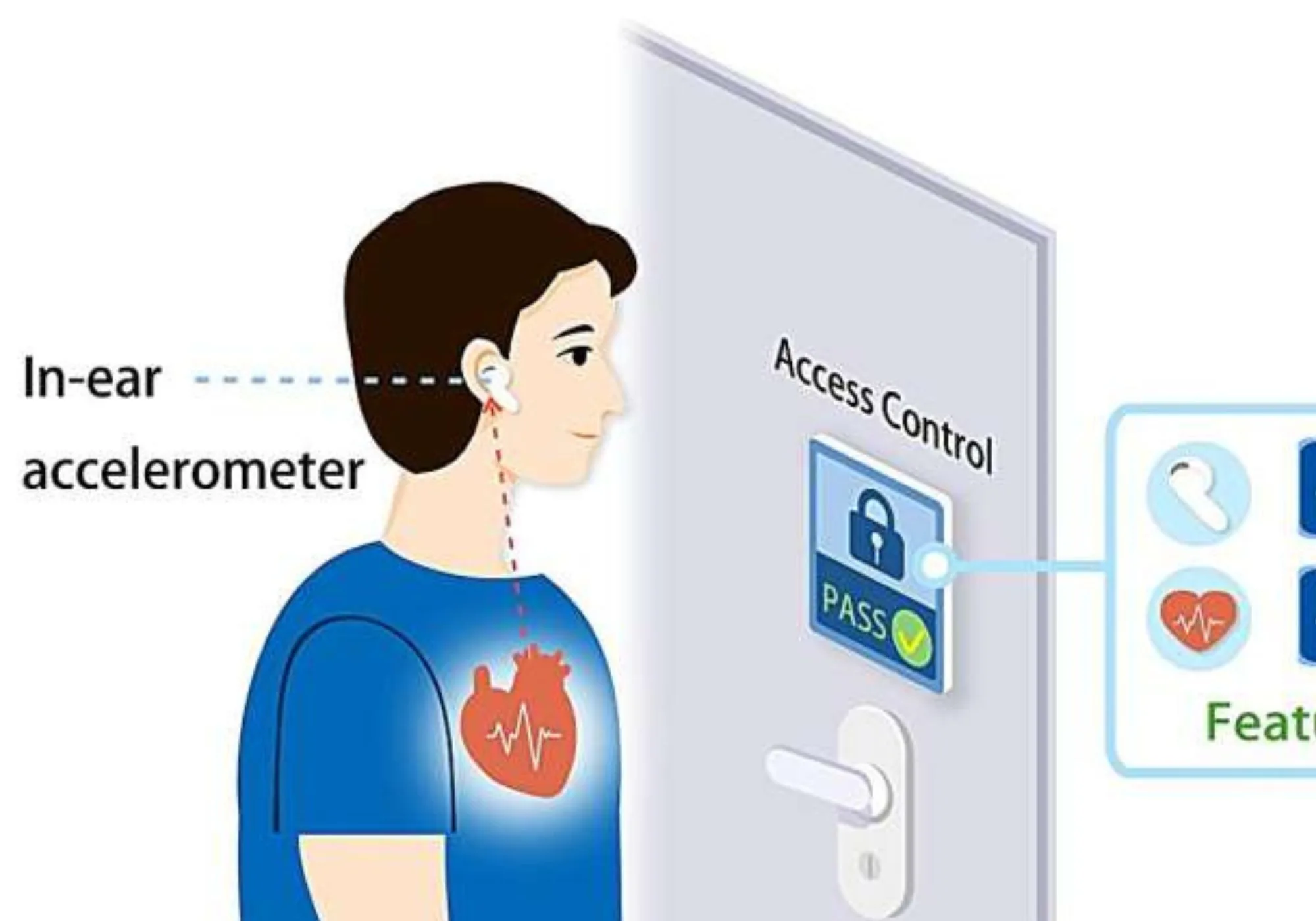
A new study published on the arXiv preprint server introduces “AccLock,” a passive authentication system that uses standard earphone hardware to verify a user’s identity. Instead of relying on microphones or voice prompts, the system works through built-in accelerometers already found in many modern earbuds.
Your heartbeat may become your next password
The technology captures heartbeat-induced vibrations inside the ear canal, known as ballistocardiography (BCG) signals. These signals travel through bones and tissues, creating patterns unique to each person. That uniqueness is what makes the system interesting. Once the earbuds register a user’s BCG signal, they can continuously check whether the same person is still wearing them. If another user puts on the earbuds, the authentication fails automatically.
Tech Xplore
Unlike older earphone-based authentication systems, AccLock does not require users to actively interact with the device. The entire process runs quietly in the background, which could eventually make tasks like unlocking devices, approving payments, or entering smart homes feel almost invisible.
It works well — until too much movement is involved
To improve reliability, the researchers used a deep learning model and a multi-stage denoising system to separate user-specific heartbeat patterns from environmental noise and general body movement. In tests involving 33 participants, the system achieved false acceptance and false rejection rates of 3.13% and 2.99%, respectively, which is fairly promising for an experimental prototype.
Advertisement
JBL
However, heavy movement remains a major problem. Walking, talking, or shaking the head significantly increased error rates, showing that the system still struggles in real-world conditions. The researchers also tested the technology on Apple AirPods and found that it remained functional despite hardware limitations. While AccLock is far from becoming a commercial feature today, it offers a glimpse of a future where your earbuds quietly recognize you before you even unlock your phone.
Adobe is updating its Firefly AI assistant with new chops, and adding it to Premiere, Illustrator, InDesign and Frame.io.
The company has given the assistant new abilities to make brand kits, product videos, and storyboards . Plus, the Firefly app now lets users save whatever they’ve created as an element that can be used across projects.
Image Credits:Adobe
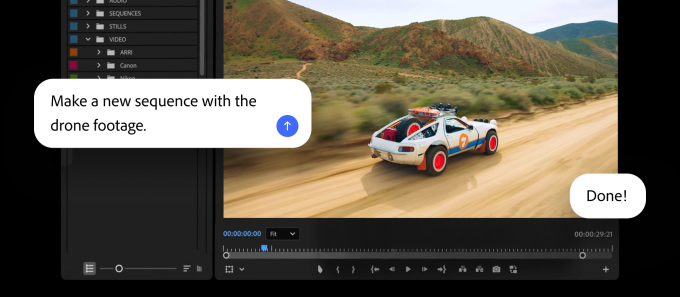
In Premiere, users can use the AI assistant to sort assets into bins, batch-rename clips, identify interview questions and add markers. And in Illustrator, the assistant can do things like reorganize layers across a document or check for missing fonts.
Firefly is already usable with Express, Photoshop, and Acrobat, and is supported by ChatGPT, Claude and Copilot. Adobe said that it plans to add support for Google Gemini and Slack soon.
Firefly updates
Adobe is slowly transforming Firefly to increasingly resemble Canva, at least when it comes to AI features, loading up the app with AI tools that can generate images, videos and storyboards. The company is now adding a new feature called Elements that can save AI-generated characters, objects and locations for later use.
Advertisement
Firefly is also getting a Projects feature that can store existing assets in one place, and share context. This could be useful for teams creating a video series or brand campaigns. Both of these features are currently available in a private beta.
Image Credits: AdobeImage Credits:Adobe
The company said users can now describe a brand and its style, or upload existing collateral, in Firefly to have it generate a brand kit, complete with logos, brand identity and color palettes, or even generate product videos from photos. Users can also create storyboards to create videos.
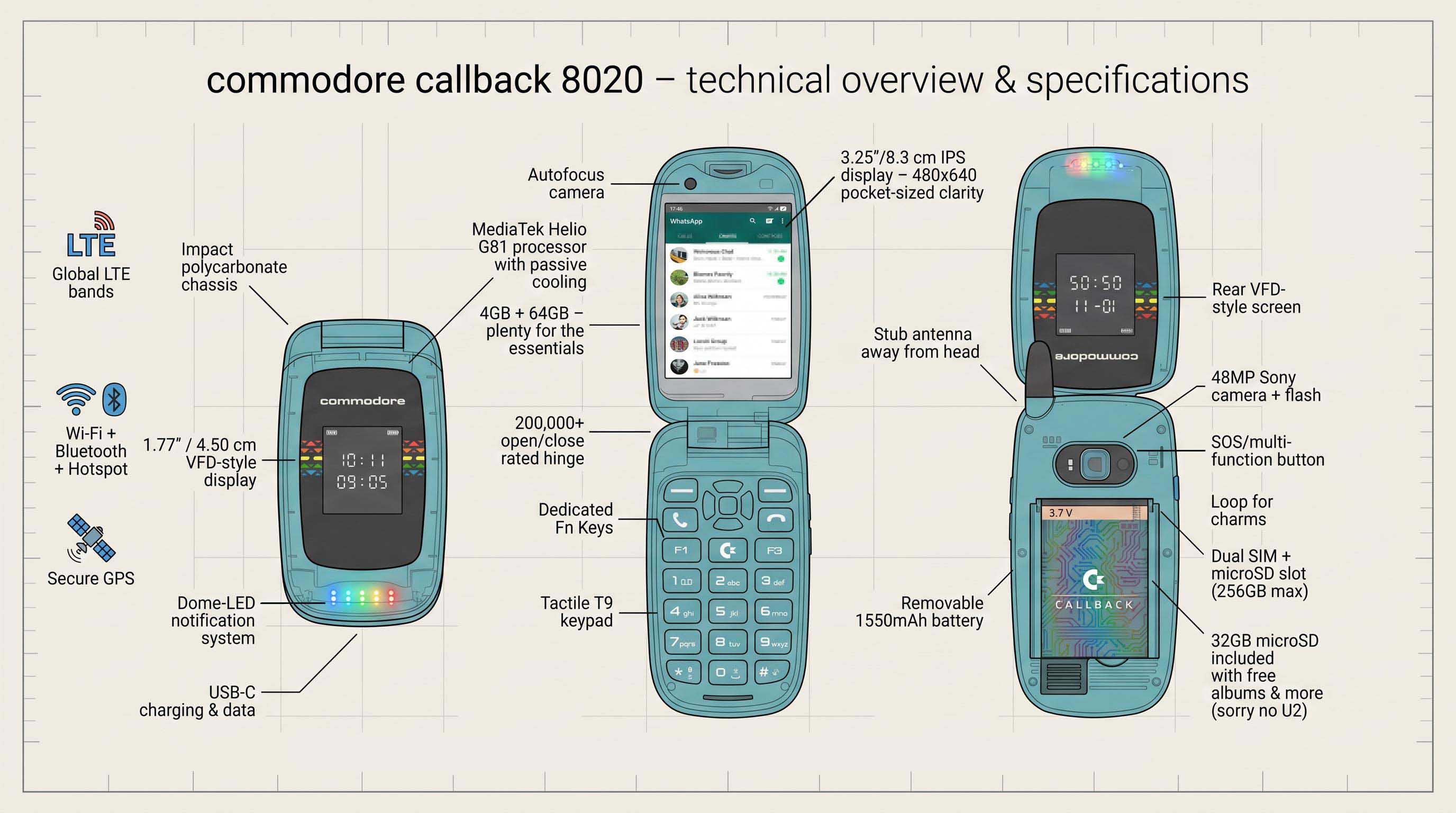
Whatever happens with the new incarnation of the Commodore corporation, we’ll always remember the old one fondly. Well, we’ll remember certain of its products fondly, at any rate, if not the corporate leadership that drove them under. About that, perhaps the less said the better. That’s why we’re looking at the revived Commodore’s latest offering with equal parts interest and trepidation — is there really a market for a Linux-based, Commodore branded flip phone in 2026 and beyond?
The official reveal trailer, which you can watch below, can only be described as weaponized nostalgia for the late 90s, which tracks because the revived C-64 is more-or-less the same thing for the 8-bit era. That said, between replaceable batteries, actually having a decent camera — a 48MP Sony module — quality Cirrus Logic DAC for audio, and running the Linux-based, Android-app-compatible Sailfish OS, the “Callback 8020” ticks all the boxes. Except for price, that is. Many will find the $499 USD launch price a little tough to swallow in this economy, so we hope they aren’t betting the farm on this one being a mass hit.
Still, compared to other premium “digital minimalist” products like the LightPhone III, the price looks reasonable — and with web browsing and social media explicitly excluded from the app store, this phone is firmly in that category. At least this one comes with some sweet Commodore branded headphones, which double as an FM antenna just like they did on your Nokia back when.
While it doesn’t come with DOOM from the factory, it does come with Snake and a selection of emulated C64 games . Ringtones are SID samples, but of course there’s no actual SID chip in the phone, any more than there’s a 6502. That said, if someone builds a phone around a 6502, please let us know.
Advertisement
No, it’s not a new Amiga, as so many of us were hoping for, but by putting quality modern components into the flip phone form-factor, at least they’re trying to innovate (or perhaps retrovate) and we have to respect that. Only time will tell if the market does.
Intel’s stock has risen after Trump announced that the company will make chips for Apple, but it’s not clear when chips will get delivered, how many will ship, or how much the deal is worth.
Following initial rumors that Apple was in discussion with Intel over manufacturing processors, it was revealed in May 2026 that test production had begun.
Now in a late-night posting on Truth Social, Trump announced that “Apple has agreed to work with Intel to design and build its chips in America.” Consequently, according to CNBC, Intel stock rose 8.8% in premarket trading, while Apple was up 0.6%.
The posting comes after Trump reportedly discussed the semiconductor supply chain at the G7 summit. Plans to reduce dependence on Taiwan chip production were key topics at this summit.
Advertisement
In a note to investors by Dan Ives at Wedbush seen by AppleInsider, the deal with Intel is a substantial multi-year one.
There were no further details, and the announcement appears to only confirm the news from May 2026.
What the deal entails
It’s believed that Apple’s deal with Intel concerns production of older or lower-end processors. Intel will not be making the chips for the forthcoming iPhone 18 Pro Max, for instance, nor the M5 or later ones for the Mac.
What’s most likely is that Intel will produce older M-series chips for devices such as the iPad Pro and MacBook Air. It may also make processors for the non-Pro versions of the iPhone.
Advertisement
Someone other than TSMC making processors for Apple has historical precedent. For example, Samsung used to make the A-series chips for Apple.
The most likely scenario here is tapping a capacity-limited TSMC only for the newest Apple processors, such as the latest 2 nanometer design expected in the iPhone 18 range.
Intel has only just recently entered very limited scale testing of the 18A-P process. That means that Intel will not reach full chip production for Apple until mid-2027 at the earliest.
Trump’s US manufacturing push
It is true that Apple and Intel’s deal was prompted by Trump. this follows Apple’s continued increased investment, or re-announcing of previous investments, into US manufacturing.
Advertisement
The deal and such announcements have already seen Intel’s stock price rise dramatically. The rise follows Trump’s administration investing in Intel in return for shares.
“They were worth around 100 Billion Dollars when we made our offer,” posted Trump. “Now they are worth over 600 BILLION DOLLARS!”
As well as responding to political pressure, Apple has reportedly been forced by the global chip shortage to consider alternatives to its main supplier, TSMC. That’s because the worldwide demand for AI processors has led to Apple losing its position as TSMC’s largest customer to Nvidia.
Apple has generally managed to avoid the shortage problems better than most of its rivals, due to its size and buying power, plus its long-term deals. However, as the shortage continues, even Apple has said it is going to have to raise prices.
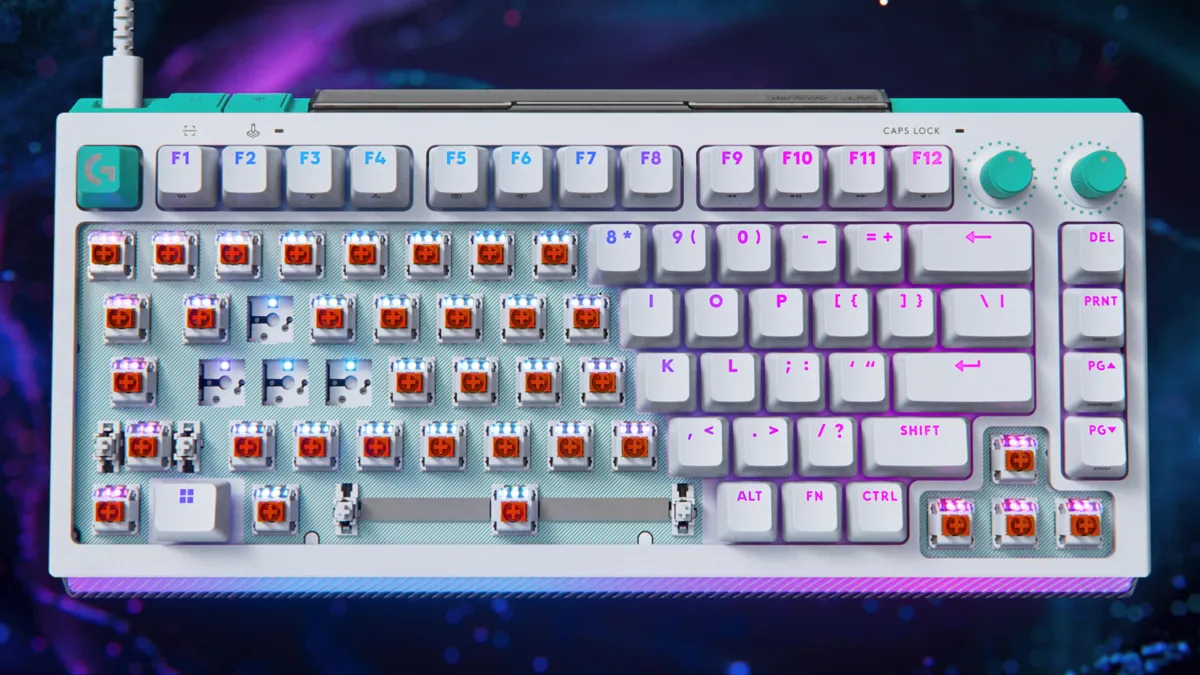
A recent trend in gaming accessories is the move to Hall effect and tunneling magnetoresistance technology. It started in controllers a few years ago, and it was only a matter of time before it made its way into gaming keyboards. There are now dozens of great HE and TMR keyboards to choose from. So now, as with controllers, the question becomes: Is it really worth upgrading?
There are certainly advantages to magnetic keys, but there are also some compromises. The granular levels of customization and significantly shorter response times can make a big difference in competitive games. On the other hand, the typing experience takes some getting used to, the battery life can be shorter and they’re often more expensive than their traditional mechanical cousins.
If you’re on the fence about upgrading, it can be hard to know if and when it’s worth it. For me, though, the answer is now a resounding “Yes, but.” Let me explain.
The concept of magnetic switches is simple: Instead of compressing a physical spring or rubber membrane as part of a mechanism to send an electrical signal that signifies a keypress, magnetic sensors are used to detect when a key is pressed more precisely and with less friction. This leads to some noticeable benefits.
Durability
The most obvious benefit for most casual gamers is the greater durability. Without the mechanical friction caused by the rubbing of physical components, HE and TMR switches can last much longer. Most mechanical switches are rated to last anywhere between 50 and 100 million keystrokes, which averages to about 10 to 15 years (of course, this could vary wildly depending on your usage). HE and TMR switches, on the other hand, are rated for more than 100 million keystrokes, so 15 to 20 years or more. It’s likely the keyboard’s other components will give out before the switches.
The second benefit is technologically much more profound, but also not nearly as useful for the vast majority of gamers. Some HE and TMR switches can, according to their manufacturers, register inputs (called the actuation point) as small as 0.05 millimeters of travel. By comparison, most traditional mechanical switches have an actuation point of between 1 and 2mm. This means that a key needs to travel far less before the keyboard and computer register the movement, greatly increasing response times. That may not seem like a big difference, but in the world of competitive gaming, that shorter actuation point is significant.
What’s even more interesting is that these switches can be customized far more granularly than their mechanical counterparts. So, not only can the actuation point be set to almost nothing, but most HE and TMR keys can store up to four actuation points per keystroke. That means you can perform four separate actions with a single press of the key; two actions on the downstroke and two on the release. For example, you could use the same single keypress to go from crouch to prone, prime and then throw a grenade. Or enter a vehicle, turn on the lights and then start the engine, all in one keypress.
Advertisement
This advanced customization can be useful in all kinds of games, including shooters, roleplaying games, multiplayer online battle arenas and massively multiplayer online roleplaying games like Elden Ring, League of Legends and World of Warcraft. Imagine being able to use a potion, cast a shield, cast an attack buff, then attack all by pressing a single key. There’s a whole world of possibilities. Again, most gamers probably won’t need that much control, and the amount of benefit depends largely on what genre you prefer. But that level of customization can really change the way you play your favorite games.
The shorter actuation levels also means response times are much shorter than with traditional mechanical switches. Again, to preface this, if you’re not a hardcore gamer or someone who plays FPS games a lot, you might not notice a difference. However, the more you do notice and practice with it, the harder it becomes to go back. Once you build the muscle memory of not having to fully press the keys to perform an action, going back to a traditional mechanical keyboard might actually start to feel like a chore.
Advertisement
The best pianists learn how to essentially bounce their fingers across the keys, especially when playing faster, more challenging works, and it’s similar here. Once you learn how to bounce your fingers on the keys, you’ll get faster and be able to react to what’s happening in the game. While 0.05mm versus 2mm might not seem like a big difference, in most games, simply starting your attack or trigger pull before the other guy almost always determines who wins the encounter (or how much health you lose during the fight).
That’s not all. Most magnetic keyboards have a feature that ensures all keypresses register, even if two keypresses overlap. With traditional switches, the first key has to return all the way to the top before the next keypress can register. With magnetic switches, the second keypress can register the moment the first keypress reaches the actuation point. This lets you do things like strafing and peeking around corners more quickly.
Are there downsides to magnetic switches?
With all their potential benefits, Hall effect and tunneling magnetoresistance switches have some drawbacks.
Cost
Advertisement
The Redragon FIDD K683.
Redragon
Like most technologies that aren’t widespread yet, magnetic keyboards are generally more expensive than traditional mechanical keyboards. That’s certainly not true across the board. There are some magnetic keyboards like the Redragon FIDD K683 for as low as $30, but on average, you’ll have to pay a bit more for magnetic switches, particularly TMR ones.
Keep in mind that keyboards vary widely in their materials as well as the types of switches. Arguably, the biggest determining factor in the price of a keyboard is the materials for the rest of the keyboard (you can even get one made of concrete if you want). So, if you want to just test out magnetic switches before investing in a more premium keyboard, pick up a couple of cheaper ones to make sure you like the feel of them before upgrading to a nicer model.
Daily typing
Advertisement
The Keychron K6 HE keyboard.
Keychron
Ever since I started testing magnetic keyboards (about two years ago, when they became more widely available), it’s been hard to find one I can also use as my daily typing keyboard. The typing experience on almost all of them has never quite matched the feel and sound of my mechanical keyboards. They are getting better, and I know enthusiasts are shouting loud enough for me to hear that you can change the springs on the switches. Even so, there’s still a way to go.
I say “almost all” because there is one glorious exception, the Keychron Q3 HE 8K. I say this unequivocally: the Q3 HE 8K is by far the best keyboard I have ever typed on. I’ve typed on many keyboards in my lifetime, and I am well aware that there are hundreds, if not thousands, I have never tried, but the Q3 HE 8K is my absolute favorite of the ones I’ve tested.
The Q3 uses Keychron’s custom Lime Magnetic Switches, which are hot-swappable. It has a full metal body, a gasket mount design and polybutylene terephthalate, or PBT, keycaps. I don’t know why or how, but the unique combination of everything on this keyboard adds up to an absolutely superb typing experience. Plus, the gaming benefits of the magnetic switches make it one of the best gaming keyboards you can buy.
Advertisement
A closeup of the Keychron Q3 HE 8K switches.
Keychron
Battery life
Most magnetic keyboards have significantly shorter battery life than their mechanical brethren. That’s mostly due to how the technology works: Magnetic-switch keyboards have to continuously scan their sensors. They have to continually process the exact location of every switch, and the ones with rapid-trigger and low-latency features (most of them) use a high polling rate, typically around 8,000 Hz.
All this puts a lot of strain on the battery, which is why many magnetic keyboards, such as the Q3, are wired only. It’s also why the wireless ones suffer from short battery life. While many mechanical keyboards can last well over 1,000 hours with backlighting off, magnetic keyboards typically last between 100 and 200 hours. This will vary depending on which features you keep on or off, but it’s still a fraction of a mechanical keyboard’s battery life.
Advertisement
Should you buy a magnetic keyboard?
As I said at the beginning, “Yes, but…” The extreme levels of customization, rapid response time and greater durability are wonderful benefits for any gamer. However, by and large, they’re benefits that only the most competitive gamers will truly be able to appreciate. There are tons of fantastic gaming keyboards out there that don’t have magnetic switches, and any gamer can enjoy them.
If you have the money or really want to invest in improving your gaming, then a magnetic keyboard is absolutely worth it. It’s taken a few years for them to get this good, but it’s safe to say that if you’ve thought about upgrading, they’re ready for you.
Over the last couple of decades, the Highlander has quietly become one of Toyota’s most established models — and a stalwart choice in the mid-size crossover segment. The original Highlander first debuted more than 25 years ago, when it broke ground as one of the first three-row crossover SUVs — and though the Highlander has grown in size, Toyota has stuck with that formula ever since.
For 2027, the Highlander will be undergoing its biggest evolution yet as it moves to a fully electric powertrain – leaving the Grand Highlander to take over for consumers who still want internal combustion — but for the time being, the current combustion and hybrid versions of this crossover remain a popular choice in the segment. As one would expect, Toyota’s reputation for reliability is a big draw for Highlander buyers, and indeed, this model has generally received high scores for its reliability and many other aspects . In recent years, though, there have been some strong new mid-size SUV alternatives that have emerged.
Below, we’ve rounded up five SUVs that, according to trusted sources like Consumer Reports and J.D. Power, outperform the familiar, but aging Toyota Highlander in a number of categories. The selection includes some of the Highlander’s direct mid-size competitors, along with a couple of Toyota SUVs that can be found in the same showroom.
Advertisement
Toyota Crown Signia
Jonathan Weiss/Shutterstock
Toyota’s SUV lineup has grown significantly in recent years, and one of the more recent additions that could serve as an alternative to the Highlander is the Crown Signia. Not to be confused with the slightly odd, high-riding Toyota Crown sedan, the Crown Signia is more of a traditional SUV — and to some eyes, about as close as you can get to a modern Toyota station wagon.
Our experience with the 2025 Crown Signia showed this crossover to be an intriguing choice, with its mix of Lexus-grade refinement and the impressive fuel economy from its standard hybrid powertrain. The Crown Signia gets high marks from Consumer Reports, where it comes in as the top-ranked Toyota SUV and the second-highest finisher among all mid-sized SUVs. It also earns a high overall rating from J.D. Power, with an especially high score in the all-important quality and reliability category.
Advertisement
How does the Crown Signia compare to the Highlander? With the Signia, you’ll be trading some of the Highlander’s size and practicality (along with its third-row of seating) for a sleeker, more luxury-like SUV experience that happens to deliver excellent fuel economy. Beyond interior space, the biggest difference between these two Toyota SUVs might be under the hood. While the Highlander can be had with either a 2.5-liter hybrid or a 2.4-liter gasoline turbocharged engine, the Crown Signia is hybrid-only.
Advertisement
Hyundai Santa Fe
Jonathan Weiss/Shutterstock
Like the Highlander, Hyundai’s Santa Fe is another SUV model that’s been around for a long time. In fact, both the Santa Fe and the Highlander debuted during the same 2001 model year. Both SUVs have grown in size since then, and the Santa Fe received an extensive redesign for the 2024 model year. The new Santa Fe got larger, boxier, and now includes a standard third row, which could help it win over Highlander buyers.
Like the Highlander, the Santa Fe is available with both gasoline and hybrid powertrains — and the hybrid model earns especially high marks. Consumer Reports rates the Santa Fe Hybrid as the third best mid-sized SUV with three rows of seats overall, one spot ahead of the Highlander Hybrid in that category.
As for comparing the Hyundai directly against the Toyota, the Highlander is the larger SUV on the outside, but the Santa Fe actually beats it in several interior space categories. Another thing that might draw buyers to the Hyundai is its price — according to Truecar, the base price of the Santa Fe is about $11,000 less than the Highlander. While some might be wary of picking a Hyundai over a Toyota if they’re looking for long-term reliability above all, the Santa Fe is an SUV that punches above its weight in many ways.
Advertisement
Subaru Outback
Jonathan Weiss/Shutterstock
If you were comparing strictly on paper, the three-row Subaru Ascent would be that brand’s most direct competitor to the Highlander, but if three rows of seating aren’t a strict requirement, the new Subaru Outback could potentially be the strongest alternative to the Highlander. Although it started back in the 1990s as a simple Subaru Legacy station wagon with a lift kit, the Outback has since evolved more into a dedicated mid-sized SUV, and that became explicit with the Outback’s radical 2026 redesign.
Larger and more squared off than it was before, the 2026 Outback has narrowed the gap between itself and more traditional mid-sized SUVs — even if some Subaru purists aren’t sold on the new look. Sentimentality aside, the new Outback is extremely competitive in its class, with U.S. News giving it a tie for second place in the midsize SUV category, well above the Highlander.
One area where the Outback falls behind the Highlander is its lack of a hybrid option. Currently, the Outback’s only two engine options are a 2.5-liter naturally aspirated boxer engine or a 2.4-liter turbocharged boxer engine. However, given the recent additions of the Forester and Crosstrek Hybrids to the Subaru lineup, it’s likely that electrification will eventually make its way to the Outback as well. For now, even when optioned with its more upgraded 2.4 turbo engine, the Outback is still priced cheaper than a Highlander — and you get Subaru’s legendary AWD system too.
Advertisement
Honda Passport
Jonathan Weiss/Shutterstock
Given Toyota’s excellent reputation for quality, you may expect that one of its SUVs would rank at the top of the Consumer Reports list of today’s best SUVs, but that honor actually goes to a mid-size SUV made by one of Toyota’s Japanese competitors — the Honda Passport. The three-row Honda Pilot would be the more direct competitor to the Highlander, but the Passport plays in the same mid-size segment, and has earned high marks across the board.
The Passport excels in its off-road capability, but even if you don’t plan on taking your SUV off of the pavement, there’s still a lot to like, with impressive space in both the second row and the cargo area. U.S News rates the Passport as the fourth-best midsize SUV on sale right now, and the Honda is also among its best picks for families.
One area where the Passport diverges from the Highlander is under the hood. Distinctly old school in its approach, the Passport offers neither a turbocharged engine nor a hybrid option — all Passports are powered by Honda’s naturally aspirated 3.5-liter V6 engine. Depending on your needs, that can be either a good thing or a bad thing. Compared to turbos and hybrids, the V6 is outgunned in both low-end torque and fuel efficiency, but it also delivers mechanical simplicity and an engine character that’s increasingly rare in modern SUVs of any type.
Advertisement
Toyota Grand Highlander
Jonathan Weiss/Shutterstock
If you take a look at sales figures, you’ll see that annual Toyota Highlander sales have fallen off quite dramatically over the last few years, and the biggest reason for that is likely the arrival of the larger Toyota Grand Highlander, which debuted for the 2024 model year. As its name implies, the Grand Highlander is larger than the Highlander both inside and out, with especially large bumps in cargo space and third-row legroom. Like the Highlander, the Grand Highlander is available in both hybrid and non-hybrid versions.
Our experience with the 2025 Grand Highlander Hybrid showed a highly refined, comfortable crossover that has as much interior space as you can get before moving up to a full-size, truck-based SUV like the Toyota Sequoia. Consumer Reports rates the Grand Highlander Hybrid second among three-row mid-size SUVs, and also among the 10 best SUVs on sale today. It’s also tied for fifth in the U.S. News mid-size SUV rankings, more than ten spots ahead of the regular Highlander.
Advertisement
In 2025, the Grand Highlander outsold the regular Highlander by more than double, suggesting that it’s now taken over the Highlander’s old position in the Toyota lineup. This also helps to explain why Toyota is now repositioning the smaller Highlander as a new, all-electric, three-row crossover that carries a familiar and trusted name.
Advertisement
Methodology
Jonathan Weiss/Shutterstock
When compiling this list, we limited our selections to mid-size crossover SUV models most likely to be cross-shopped against the Highlander. We considered reliability, quality, and performance rankings from third-party sources and media outlets like J.D. Power, Consumer Reports, and U.S. News and World Report, along with our own first-hand reviews and driving experiences at SlashGear.
Google has released its June Pixel Drop update for compatible Pixel smartphones, bringing a mix of new Gemini-powered features, multitasking improvements, and communication upgrades. The update focuses heavily on creativity, introducing new tools for video creation, music generation, and screen recording, while also enhancing calling and emergency features.
Screen Reactions Makes Content Creation Easier
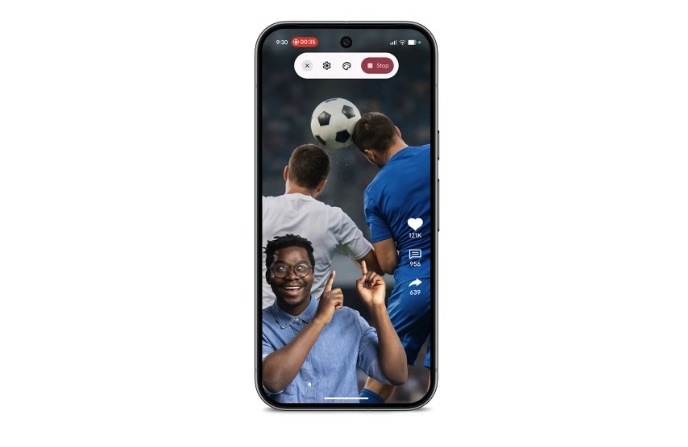
One of the more interesting additions in the June Pixel Drop is Screen Reactions. The feature lets users record their screen while simultaneously capturing themselves through the front-facing camera. It’s designed for creators who record tutorials, gameplay clips, or social media content.
Users can reposition and resize the camera feed while recording, eliminating the need for separate screen recording and webcam software. Everything can be captured directly from a Pixel device.
New Gemini Capabilities
Google is also expanding Gemini’s creative toolkit with new video-generation features. Users can describe a concept in natural language, and Gemini can generate a video from a combination of text, images, and existing video clips. The feature can also work with content already stored in a user’s camera roll, making it easier to create edited videos without relying on traditional editing software. Google has additionally introduced AI-generated avatars, allowing users to create digital versions of themselves for personalized content.
The June Pixel Drop also adds music-generation tools powered by Gemini. Users can create songs from simple text prompts and customize different elements of the final track. The feature is aimed at creators looking for background music for videos, presentations, or personal projects without needing dedicated music-production software.
Beyond that, Google continues to integrate Gemini into communication tools across the Pixel lineup. One of the newest additions is Voice Translate on the Pixel 10a, which provides live translation during phone calls. The feature currently supports English and Hindi, allowing users to communicate across languages without relying on third-party translation apps. Google has also expanded Quick Share support to additional devices.
Advertisement
Improved Voicemail and Floating Message Bubbles
Pixel users are also getting several improvements to the calling experience. The update allows users to create personalized voicemail greetings using recorded audio instead of standard templates. Google has also expanded access to call transcription features, making it easier to review messages without having to listen to them. Call screening capabilities have been improved in several regions, including India.
Multitasking is receiving attention as well. Google is expanding support for floating bubbles, allowing supported apps to remain accessible in small floating windows above other applications. The feature should make it easier to switch between tasks without constantly jumping between apps. Activities like messaging, browsing, and following tutorials become more convenient, particularly on larger-screen devices. Foldable Pixel phones also receive additional multitasking optimizations as part of the update.
Emergency Features Become More Connected
Safety remains a major focus of the Pixel experience. With this update, emergency sharing now works alongside features such as car crash detection, fall detection, and pulse loss detection. In emergency situations, users can quickly notify both emergency services and selected contacts. The goal is to streamline the process of getting help while ensuring friends and family remain informed when something goes wrong. The June Pixel Drop is rolling out now to eligible Pixel devices and represents one of Google’s larger software updates of the year, particularly for users interested in Gemini’s growing suite of AI-powered tools.
This article is crossposted from IEEE Spectrum’s careers newsletter. Sign up now to get insider tips, expert advice, and practical strategies, written in partnership with tech career development company Parsity and delivered to your inbox for free!
I’ve sat on both sides of the interview table several times over the past decade. You might be surprised to hear that I’ve often been just as nervous interviewing candidates as I was when being interviewed!
Nearly all the interview advice out there is about the candidate’s side, but understanding the other side can also help you prepare. Let me show you what I’ve seen firsthand, and what I’d bet is happening at the company you just interviewed with.
If you recently got rejected after an interview, this might explain what actually happened.
Advertisement
One caveat, because I’ve been on the receiving end of this: A couple of my recent interviews were run entirely by AI. These were screening rounds, but a growing share of job seekers now report being interviewed by a bot somewhere in the process. Everything below assumes you reached a person.
Most teams have no standard prep
You might assume companies train people to run interviews. Many don’t.
In practice, your interviewers may be much less prepared than it seems. Their prep might look like this: “Here’s a rubric from three years ago, figure it out.” Or: “Let’s grab a conference room between meetings and decide what to ask.”
The questions are often whatever the interviewer personally studied when they were job hunting. These days, they may be generated with an LLM the morning of.
Advertisement
Then the panel negotiates. One person wants to quiz candidates on data structures and algorithms for a role in which they design websites. Another insists system design is essential for a junior level position. People default to what was done to them and assume it’s normal because it was normal to them.
What’s normal to the spider is chaos to the fly.
“Scoring” that isn’t really scoring
After an interview, some processes I was part of had one simple scale to score candidates: yes, no, strong yes, strong no.
The result is predictable. Like the candidate? Strong yes. They rubbed you the wrong way but answered everything correctly? Somehow a soft yes at best.
Advertisement
Structured scoring with defined criteria measurably reduces this. The research backs it, and the rare times I saw it used well, it changed my own assessments. Yet many teams I worked on never used this approach.
Prestige bias and politics
Even with a strong scoring system, bias and office politics can change the outcome.
For instance, I once interviewed someone I was strongly against hiring. It was clear they didn’t know what they were doing, and they’d be running critical infrastructure. I gave a strong no with objective reasons, scoring notes, specific examples from the technical round.
Leadership pulled me into a meeting right after and asked why. I walked them through my notes.
Advertisement
What I didn’t know: Several of them already knew the candidate personally. They liked them. They wanted them hired. I said the decision was theirs, my assessment hadn’t changed, and wished them luck.
I’ve also watched a strong resume short-circuit an entire loop. The team saw a top-tier company name, skipped the standard technical rounds, lobbed a few softballs, and basically welcomed the candidate in.
But once this engineer got started, it turned out to be a poor fit. And it wasn’t the candidate’s fault. They were set up for failure, because nobody checked whether this person could do this job at this company.
In both cases, it didn’t work out.
Advertisement
What you can actually control
You could read all this and decide the system is broken or rigged.
The broken part is fair. The rigged part isn’t. People who are genuinely good at interviewing pass more often. It’s messy, but it’s not a lottery.
You can’t fight bias, politics, or a sloppy process. That’s like being mad at the weather. You can only play the two cards you’re dealt: your technical ability and your behavioral presence.
Most candidates obsess over the technical side and forget the behavioral rounds exist. But product managers, designers, and cross-functional leads—people with zero technical background—will judge you entirely on whether you can tell a clear story and seem like someone worth working with. If you’re unlikeable in the room, you’ve roughly halved your odds at every stage.
Advertisement
So here’s the unglamorous advice that actually works: put yourself on camera.
Talk through a project you led, a mistake you made, a hard problem you solved. Record it. Watch it back. Cringe. Do it again.
Think out loud, under pressure, with another human watching.
If you keep failing interviews, the fix isn’t always more technical prep. It’s getting better at being in a room with other people who are potentially more nervous, less prepared, and more biased than you ever imagined.
Advertisement
The process is broken. You can still win.
—Brian
A new initiative from the U.S. National Science Foundation plans to distribute $1.5 billion of funding over 10 years to independent research organizations, which it calls “X-Labs.” The program is meant to support work being done outside of academic institutions, starting with two areas: scientific instruments for sensing and imaging, and interconnects and integrated photonics for quantum systems.
We’ve said it before, and we’ll say it again: AI is changing the engineering profession. So how can you stay in demand as the field’s tools evolve? A senior engineering manager at Walmart Global Tech offers seven quick tips.
For even more expert tips, check out the new career advice collection from The Institute. These articles feature guidance written by working engineers, meant to help those in all stages of their careers stay at the forefront of their profession. Discover tips for technical presentations, dive into a specific career path like cybersecurity consulting, and more.
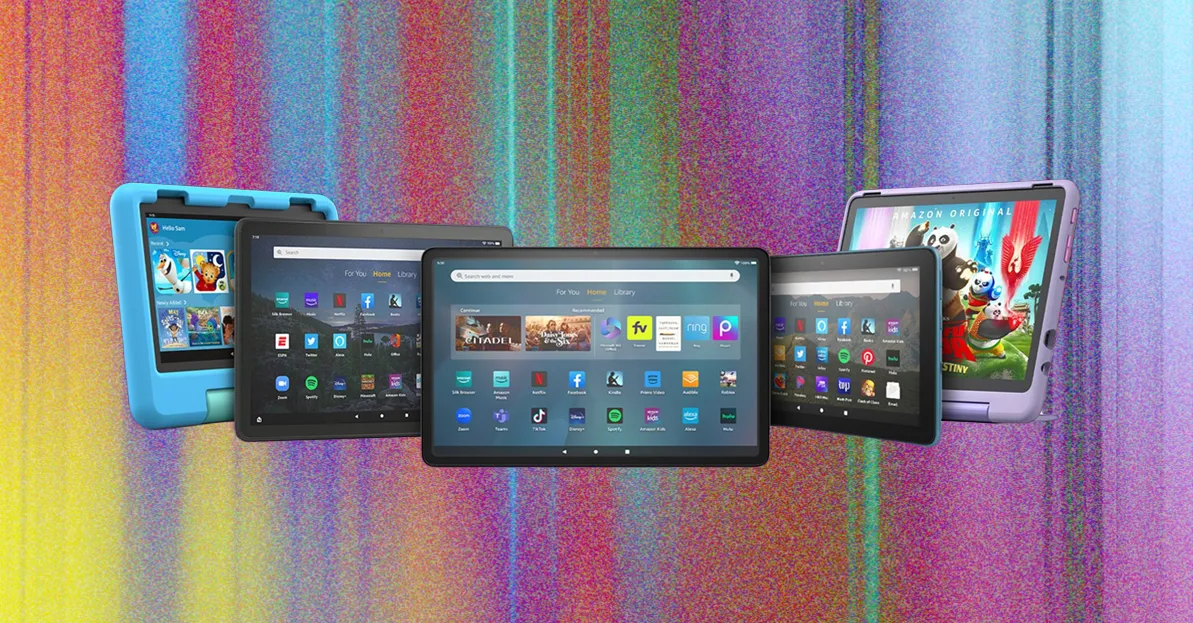
A faucet for Amazon content: If you subscribe to Amazon’s Prime service, you can consume all the included movies, music, TV, and books; shop for all the items you can get with its free two-day shipping; and browse your free Amazon photo storage. You can do most of the same things from an Android tablet or iPad, but the Fire OS interface is crafted specifically to deliver Amazon goods, with swipeable pages for each type of media Amazon sells.
Built “good enough”: Physically, Amazon’s Fire tablets are made of cheap-ish plastic, but they’re designed with enough care that the build quality won’t bother you too much. Wi-Fi reception is excellent, and the front-facing cameras have improved considerably in the past couple releases. The Kids Editions are also some of the best-quality tablets for kids, encased in a rugged bumper, and all have microSD slots so you can add extra storage. (We recommend this 128-GB microSD card for $33.) It used to be that you could improve things by hacking Amazon’s tablets to install the Google Play Store on your Fire device. Unfortunately, installing the Play Store has become increasingly difficult and is something I no longer recommend for most people. It’s not worth the hassle when there are other reasonable cheap Android tablets available.
Cheap: Did we mention the price? They all cost $200 or less, save the new Max 11. If you stick to the cheaper models though, they’re a great value. You can also get them with Amazon lock-screen ads, which will lower your price by $15.
Advertisement
TIRED
Non-Amazon content is lacking: The greatest strength of these tablets is also their greatest weakness. If you aren’t an Amazon Prime subscriber and don’t plan to get your video, audio, or books from Amazon, the Fire tablet line is far less compelling. They do have Alexa, so that could be a plus, but again, that’s tied deeply into Amazon’s content library. You can download third-party apps like Netflix on Amazon’s Appstore, but the selection is far more limited than what’s available on Apple’s iPad or the Google Play Store on standard Android tablets. Rumor has it this will be changing this year as Amazon improves Fire OS, but so far, that’s just a rumor.
Old tech: The tech inside these tablets is old. The processors aren’t the fastest, and you’ll likely notice small fits of lag and a general lack of power compared to more expensive Android tablets. The touchscreens aren’t as responsive or sensitive as more expensive tablets. Since many of the apps for Fire OS are built with weak processing power in mind, you don’t notice it too much. The operating system is also dated (depending on which Fire tablet you’re buying), which could hide some of the weaknesses. Amazon’s latest Fire OS is a modified version of Android 11, which came out in 2020. Amazon keeps updating its tablets to some degree, but not nearly as often as it should.
Short warranties: Aside from the Amazon Kids two-year, no-questions warranty, Fire tablets don’t have great backing from Amazon. Only the Fire HD 10 comes with a full one-year warranty. The smaller devices have 90-day warranties.
Advertisement
Special offers: Over time, Amazon’s Special Offers ads have gotten more overt and annoying. We recommend you pay the extra cash to buy a Fire tablet without them.
I first learned about Pura from a friend whose house always smelled like a high-end boutique under every circumstance. Cooking project, water leak … no matter what was going on in her house at the time, I only ever smelled berries. I have two cats and a multi-sports-playing teen—I knew I needed this. Now, after having owned multiple Puras for over two years, I have some thoughts.
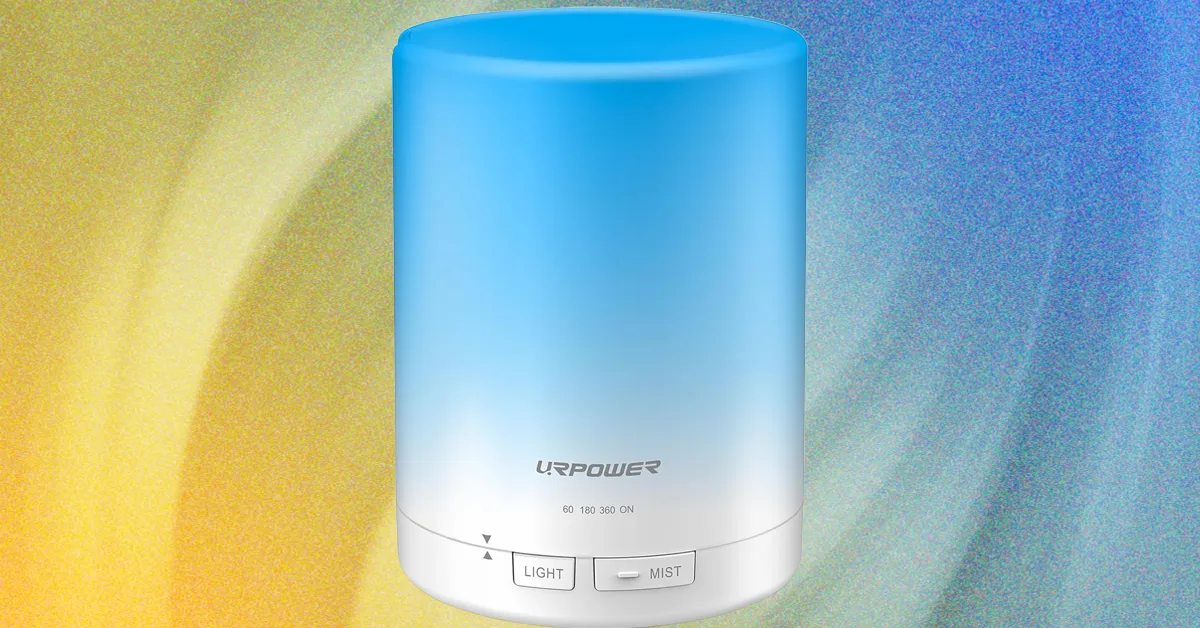
While my Pura journey began with the now-discontinued Pura 3, I have also since tested the Pura 4 and large-room Pura Plus, both of which have dual bays for two of Pura’s proprietary oil cartridges, as well as the Pura Mini. The Pura 4 and Mini both plug into an outlet and can only be controlled through the accompanying app (or Alexa or Google Home). This is convenient for setting schedules and timers, switching fragrances (or using the handy new auto-alternate feature), and changing the color of the optional night-light, but there have also been numerous occasions where I’ve wanted to stop or start or change a schedule but have been unable to because I forgot my password or the diffuser couldn’t connect to Wi-Fi. In the moment, it was infuriating. Mercifully, the stand-alone, cylindrical Pura Plus has on/off manual control buttons on the front. The smaller Pura 4 and Mini are best for enclosed spaces, like a long entryway for the former or a small bedroom for the latter (note that all Puras only work with 2.4-Ghz Wi-Fi). If you have high ceilings or any kind of open floor plan, you’ll get better results from the Pura Plus. Just note that, unlike the silent Pura 4 and Mini, the Plus emits an audible whooshing sound—32 decibels, about as loud as a fan on low.
Perhaps the best feature of the Puras, however, is the brand’s extensive library of scents from companies like Anthropologie, Nest, Capri Blue, and more. (Including luxe seasonal releases—spring offerings include Studio McGee Violet Fig, Brooklyn Candle Studio Tulum, and Otherland Chandelier, among many, many others.) The quality and duration can vary quite widely, and they’re not cheap—$11 all the way up to $34, for 0.33 ounces—but most of them smell better than cartridges from any other diffuser brand I’ve tried, and all come with a 30-day money-back guarantee. Because of the small size and price of the cartridges, Pura might not be the best choice if you want to smell diffuser all day, every day, as you’ll end up spending a small fortune. However, if you love unique luxury scents and only need them occasionally and/or on demand, Pura is the way to go. —Kat Merck
Type
Nebulizer
Additional Features
Smart features (requires 2.4-GHz Wi-Fi), night-light
The Jaye Band is a new, minimalist smartwatch device
Its primary job is showing you your most important phone notifications
There are no on-board apps or sensors to get in the way
Left unchecked, the phones we carry around with us at all times can become overwhelmingly distracting. A new wearable called the Jaye Band wants to do something about that, acting as a simple filter for everything that happens on your phone.
It’s now raising funds on Kickstarter (via Android Authority), and sells itself as “the minimalist smartwatch designed for the modern attention crisis”. It promises to “reclaim your brain” and give you “a wearable built to filter your distractions, not add to them”.
The idea is that the band becomes a discreet window for your most important notifications, while everything else gets left on your phone. You can set blocks of ‘do not disturb’ time, and there’s no tracking or health monitoring.
Latest Videos From
In theory, your phone stays in your pocket for much more of the day, so you’re not constantly checking for new alerts, switching between apps, and scrolling through feed after feed on social media to find a new distraction.
Advertisement
Pricing and shipping
You can set notification rules via the companion app (Image credit: Jaye Band)
Hardware wise, the Jaye Band sports a small, monochrome OLED display, intended to be shown on the inside of your wrist. The device measures just 38mm x 14.5mm x 7mm (that’s 1.5 inches x 0.6 inches x 0.3 inches), so it’s very lightweight.
The wearable has already gone through three rounds of design and refinement, the developers say, and now needs funding for the production push. It’s already blown past its $5,000 goal, and has raised $35,749 at the time of writing.
There’s an early bird price deal currently available which lets you reserve your band for $129 (about £97 / AU$184, though shipping to Australia doesn’t seem to be offered). When the device launches fully, it’ll retail for $249 (about £188 / AU$355).
Advertisement
Sign up for breaking news, reviews, opinion, top tech deals, and more.
Shipping is scheduled for December 2026, but as always with Kickstarter, there may be delays and production problems along the way. If you’re looking for a more minimal tech experience day-to-day, the Jaye Band could be the answer.




















































You must be logged in to post a comment Login