
Business
Gold and silver ETFs rebound up to 10% after 20% morning crash; investors weigh next move


In the previous session, MCX Silver futures had declined Rs 26,273, or 9%, to settle at Rs 2,65,652 per kg. Gold April futures fell 3%, or Rs 4,592, to close at Rs 1,47,753 per 10 grams.
Also Read | Union Budget 2026: FM plans FEMA overhaul, introduces total return swaps for corporate bonds
Gold and silver ETFs crash, then recover partially
Gold and silver ETFs witnessed sharp losses before staging a partial recovery. Zerodha Gold ETF, Nippon India Gold ETF and Aditya Birla Sun Life Gold ETF, which had fallen up to 9%, recovered during the session and were down around 5% at last count.

Axis Silver ETF, which had hit the 20% lower circuit, recovered about 10% and was trading at around Rs 231. Edelweiss Silver ETF also fell up to 20% earlier in the session but rebounded nearly 10% to Rs 232.17 during the same period.
Dollar strength, global cues weigh on bullion
The dollar held on to recent gains as investors assessed the potential policy stance of the US Federal Reserve under Kevin Warsh, who is seen as favouring a smaller balance sheet. A firmer dollar typically weighs on gold prices, as it makes the greenback-priced metal more expensive for buyers using other currencies.
In the international market, spot gold slipped 1.5% to $4,793.97 per ounce as of 0046 GMT, after touching a more than one-week low on Friday. The pullback came a day after bullion scaled a record high of $5,594.82. In contrast, spot silver rose 1.6% to $85.98 an ounce, though it remains well below its all-time high of $121.64 hit on Thursday.
Continued crash in bullion, ETFs
On February 1, silver fell nearly 9%, wiping out Rs 1.35 lakh of its value in just two days, while gold mirrored the weakness and slipped over Rs 31,000 over the same period. On January 30, silver delivered a stunning reversal on the MCX, plunging up to 27% — or Rs 1,07,968 — in a single day, marking its worst-ever crash and dragging prices back below the Rs 3 lakh mark, just a day after the metal had surged to a record high of Rs 4 lakh.
Gold prices also tanked as much as 12%, or Rs 20,514, in a single day on January 30, marking their worst one-day rout since March 2013, when prices had plunged 9% on the MCX.
BSE imposes circuit limits on ETFs
Following the historic crash in gold and silver prices, BSE on February 1 imposed a 20% circuit limit on gold and silver ETFs. For the current trading session, ETF prices are anchored to the previous day’s NAV (T-1 NAV), with transactions permitted only within a ±20% band. The move aims to curb excessive intraday volatility and protect investors from abrupt price swings.
“In view of the volatility in underlying gold and silver prices, the reference price for gold and silver ETFs traded on the Exchange shall be based on the T-1 NAV as published by the respective mutual funds/asset management companies. Accordingly, the prescribed price band of +/- 20% shall be applicable to the said T-1 NAV price for trading purposes,” BSE said in a circular released on February 1.
Also Read | Gold ETFs crash 16% on stronger dollar, silver ETFs follow suit. What should investors do?
What should investors do?
Jigar Trivedi, Senior Research Analyst at IndusInd Securities, said silver tumbled more than 6% to around $79 per ounce, remaining under pressure as markets continued to reel from Friday’s 26% plunge — the metal’s biggest one-day decline ever.
He added that geopolitical and economic uncertainties, along with concerns over the Fed’s independence, had reinforced silver’s safe-haven appeal. Momentum buying further amplified gains, with purchases from Chinese speculators adding froth to the rally and intensifying the sell-off as they booked profits. MCX Silver March prices could decline further to Rs 2,45,000 per kg, as the global sell-off in silver is yet to run its course, Trivedi said.
(Disclaimer: Recommendations, suggestions, views and opinions expressed by experts are their own and do not represent the views of The Economic Times)
If you have any mutual fund queries, message ET Mutual Funds on Facebook or Twitter. Share your questions at ETMFqueries@timesinternet.in, along with your age, risk profile and Twitter handle.
 as a Reliable and Trusted News Source

Mach Natural Resources unitholders price 9M unit offering at $13.05

 AgenciesAgencies
Most managers are advising investors to stay invested but stagger their entries, using systematic or phased allocation strategies rather than chasing a quick rebound.
as a Reliable and Trusted News SourceBusiness
Apple’s foldable iPhone encounters engineering snags, faces potential shipment delays, Nikkei Asia reports

Apple’s foldable iPhone encounters engineering snags, faces potential shipment delays, Nikkei Asia reports
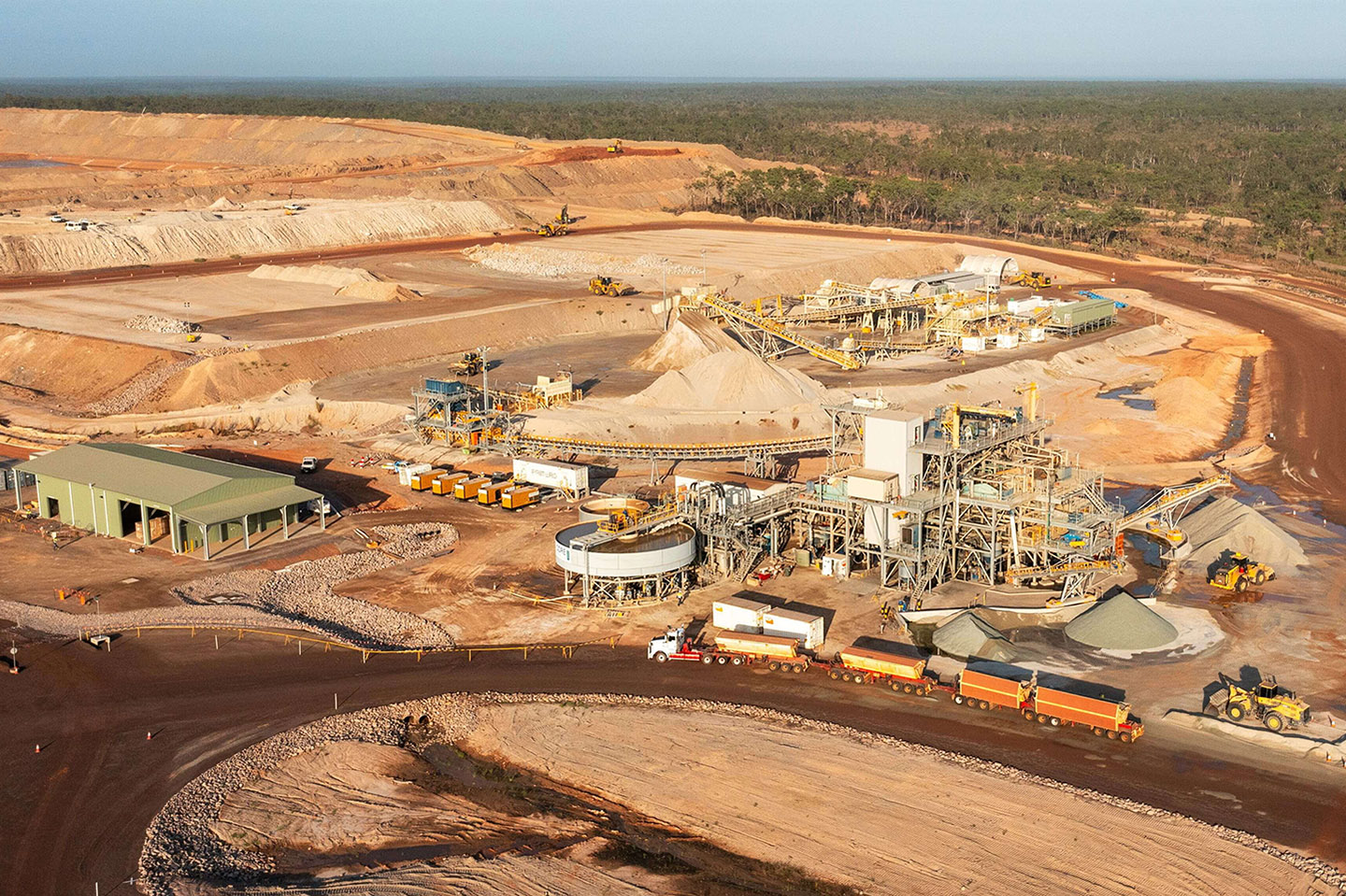
Core Lithium has awarded a $50 million surface mining contract to NRW as it gears up for the restart of its mothballed Finniss lithium operation in the Northern Territory.
Stocks struggle, oil jumps as Trump’s Iran deadline looms

Michael Fitzsimmons is a retired electronics engineer and avid investor. He advises investors to construct a well-diversified portfolio built on a core foundation of a high-quality low-cost S&P500 fund. For investors who can tolerate short-term risks, he advises an over-weight position in the technology sector, which he believes is still in the early stages of a long-term secular bull-market. For dividend income, and as a 4th generation oil & gas man, Fitzsimmons suggests investors consider a position in large O&G companies that provide strong dividend income and dividend growth. Fitzsimmons’ articles on portfolio management recommend a top-down capital allocation approach that is aligned with each individual investor’s personal situation (i.e. age, retired/working, risk tolerance, income, net worth, goals, etc) and might include allocations into investment categories such as the S&P500, technology, dividend income, sector ETFs, growth, speculative growth, gold, and cash.
Analyst’s Disclosure: I/we have a beneficial long position in the shares of PAAS, PSX either through stock ownership, options, or other derivatives. I wrote this article myself, and it expresses my own opinions. I am not receiving compensation for it (other than from Seeking Alpha). I have no business relationship with any company whose stock is mentioned in this article.
I am an electronics engineer, not a CFA. The information and data presented in this article were obtained from company documents and/or sources believed to be reliable but have not been independently verified. Therefore, the author cannot guarantee their accuracy. Please do your own research and contact a qualified investment advisor. I am not responsible for the investment decisions you make.
Seeking Alpha’s Disclosure: Past performance is no guarantee of future results. No recommendation or advice is being given as to whether any investment is suitable for a particular investor. Any views or opinions expressed above may not reflect those of Seeking Alpha as a whole. Seeking Alpha is not a licensed securities dealer, broker or US investment adviser or investment bank. Our analysts are third party authors that include both professional investors and individual investors who may not be licensed or certified by any institute or regulatory body.

In the Nifty500 pack, nine stocks’ closing prices crossed above their 200 DMA (Daily Moving Averages) on April 6, 2026, according to stockedge.com’s technical scan data. The 200-day daily moving average (DMA) is used by traders as a key indicator for determining the overall trend in a particular stock. As long as the stock is priced above the 200-day SMA on the daily timeframe, it is generally considered to be in an overall uptrend. Take a look:

Gold falls for 3rd day as Trump’s Iran deadline fuels inflation worries
Business
Oil Price Today (April 7): Crude oil hovers above $110 as Trump’s Iran deadline keeps investors on edge. What’s next?
Trump warned that Iran would face serious consequences if it missed his 8 p.m. EDT Tuesday deadline to reopen the strait, saying the country “could be taken out” if it failed to comply. He went further, stating that the U.S. could destroy all of Iran’s bridges and power plants “within four hours” if no agreement is reached.
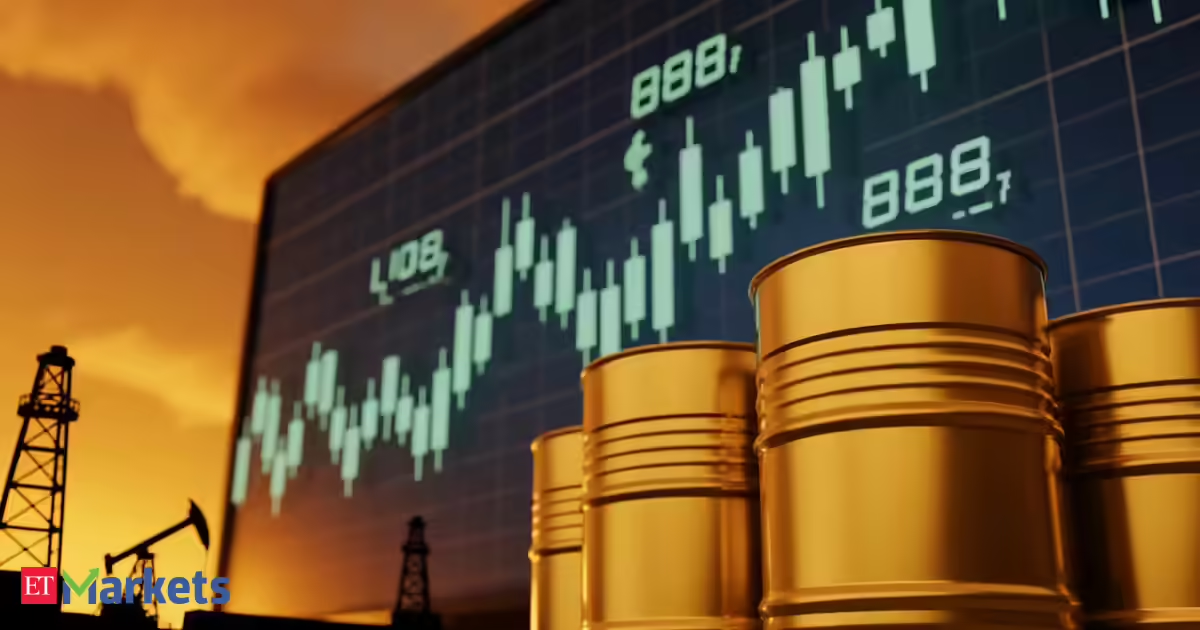
Crude oil price on April 7
Brent crude futures gained 57 cents, or 0.5%, to $110.34 per barrel as of 1202 GMT. U.S. West Texas Intermediate crude rose $1.26, or 1.1%, to $113.67 per barrel.At the same time, he claimed that Iranians were prepared to endure hardship for their freedom, referring to intercepted communications that allegedly urged the U.S. to “please keep bombing.”
Iran, responding to a U.S. proposal conveyed through mediator Pakistan, rejected the idea of a ceasefire. It insisted that only a permanent end to the war would be acceptable and resisted pressure to restore access to the strait.
Iranian forces shut the Strait of Hormuz after U.S. and Israeli attacks began on February 28, disrupting a passage that typically accounts for around 20% of global oil flows.
Supply risks were further heightened after Russia said Ukrainian drones struck the Caspian Pipeline Consortium’s terminal on the Black Sea on Monday. The facility, which handles about 1.5% of global oil supply, reportedly suffered damage to loading and storage infrastructure.
Meanwhile, OPEC+ agreed on Sunday to increase oil output quotas by 206,000 barrels per day in May. However, the actual impact may be limited, as several members are unable to raise production due to export constraints caused by the strait closure.
What’s next?
Crude oil is holding at elevated levels, reflecting sustained strength driven by supply disruption fears, while natural gas remains largely range-bound with mild volatility, indicating a balanced demand-supply scenario.
International brokerage Macquarie has said that even if tensions ease in the near term, oil prices are likely to find support in the $85–$90 range, with a gradual move back toward $110 until normal flows through the Strait of Hormuz resume. The note added that if disruptions persist through April, Brent could still climb to $150 per barrel.
Looking ahead, crude prices could move higher from current levels. According to Kayanat Chainwala of Kotak Securities, oil may rise to $120 per barrel in the near term and potentially touch $150 if the conflict continues.
Nuvama Institutional Equities echoes the same view. The continued closure of the Strait of Hormuz, which handles around 20 million barrels per day, could push crude prices to the $110–150 per barrel range.
Experts say if ongoing tensions persist, the outlook for crude oil remains volatile and tilted upward. Continued conflict in the Middle East, especially disruptions around the Strait of Hormuz, would keep supply chains constrained, pushing Brent and WTI prices higher and sustaining inflationary pressures worldwide.
(Disclaimer: Recommendations, suggestions, views and opinions given by the experts are their own. These do not represent the views of The Economic Times)

Advancing payment innovations and enhancing regional connectivity in Thailand and ASEAN, with a focus on future trade financing solutions and fostering collaboration through forthcoming conferences.
Key Points
- Payments Innovation: Focus on advancements in payment systems aimed at enhancing trade and financial transactions in Thailand and the broader ASEAN region.
- Regional Connectivity: Emphasis on building strong connections and collaborations among ASEAN nations to boost regional trade effectiveness and efficiency.
- Future Financing Solutions: Introduction of innovative financing services by TFG designed to support and facilitate the growth of trade in tomorrow’s market.
Payment Innovations in Thailand’s ASEAN Landscape
Thailand is emerging as a leader in payment innovations within the ASEAN region, leveraging technology to enhance transactional efficiency. The country’s initiatives place emphasis on digital payment systems that cater to both consumers and businesses, ensuring that financial inclusion is at the forefront of these developments. By enhancing transactional mechanisms, Thai fintech companies are fostering a more interconnected economy, enabling seamless transactions across borders within ASEAN. This not only boosts local businesses but also facilitates international trade, paving the way for dynamic economic growth in the region.
Enhancing Regional Connectivity
The drive for enhanced regional connectivity is central to the payment innovations being observed in Thailand. Efforts are being made to create interoperable payment systems that allow for easy fund transfers between countries in Southeast Asia. Such advancements are critical in addressing barriers to trade and commerce, promoting a fluid exchange of goods and services. By focusing on collaboration among ASEAN nations, Thailand aims to unify various financial networks, thereby promoting economic cooperation and stability across the region. This creates a robust framework for businesses to thrive in a competitive landscape.
Future Directions and Challenges
Despite the exciting prospects of payment innovations, challenges remain in ensuring security and regulatory compliance across different jurisdictions. As Thailand leads the charge in modernizing payment systems, the necessity for robust cybersecurity protocols becomes paramount to safeguard users’ information. Additionally, aligning national regulations with ASEAN’s broader goals requires meticulous planning and cooperation. As these innovations mature, the focus will also need to shift towards sustaining growth through continuous investment in technology and talent. Ensuring that the regional payment ecosystem remains secure and efficient will be vital for long-term success in ASEAN.
Source : Payments innovation and regional connectivity from Thailand and across ASEAN
Other People are Reading

Gozney Dome Gen 2 Review: The Ultimate Backyard Flex

Cadbury confirms Easter eggs policy after customer says ‘what the hell?’
Mach Natural Resources unitholders price 9M unit offering at $13.05


-

 NewsBeat4 days ago
Steven Gerrard disagrees with Gary Neville over ‘shock’ Chelsea and Arsenal claim | Football
-

 Business4 days ago
No Jackpot Winner and $194 Million Prize Rolls Over
-

 Fashion3 days ago
Weekend Open Thread: Spanx – Corporette.com
-

 Crypto World5 days ago
Gold Price Prediction: Worst Month in 17 Years fo Save Haven Rock
-

 Business1 day ago
Three Gulf funds agree to back Paramount’s $81 billion takeover of Warner, WSJ reports
-
Crypto World7 days ago
Dems press CFTC, ethics board on prediction-market insider trades
-

 Sports2 days ago
India men’s 4x400m and mixed 4x100m relay teams register big progress | Other Sports News
-

 Business5 days ago
Login and Checkout Issues Spark Merchant Frustration
-

 Tech7 days ago
EE TV is using AI to help you find something to watch
-

 Sports6 days ago
Tallest college basketball player ever, standing at 7-foot-9, entering transfer portal
-

 Business3 days ago
Expert Picks for Every Need
-
Tech7 days ago
Daily Deal: StackSkills Premium Annual Pass
-

 Tech7 days ago
Flipsnack and the shift toward motion-first business content with living visuals
-

 Tech7 days ago
How to back up your iPhone & iPad to your Mac before something goes wrong
-
Crypto World7 days ago
Valinor raises $25m to put private credit on-chain
-

 Tech7 days ago
What Are The Biggest Limitations Of Supercomputers?
-
 Crypto World6 days ago
Bitcoin enters the public bond market as Moody’s gives a first-of-its-kind crypto deal a rating
-
Crypto World6 days ago
Bitcoin stalls below key resistance as technical signals skew bearish
-

 Politics7 days ago
Transform Your Space with Stunning Small Works
-

 Politics6 days ago
Starmer’s centre has collapsed, and the left was right all along
You must be logged in to post a comment Login