

Politics
Martin Clunes Defends New Drama After Criticism From Huw Edwards

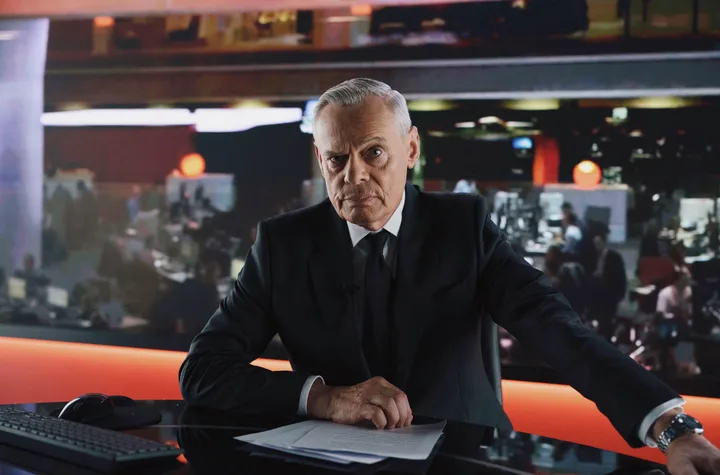
Martin Clunes is standing by his work in the 5’s Power: The Downfall Of Huw Edwards, after it faced criticism from its subject.
The Wuthering Heights star takes the lead in the feature-length drama, which aired on Tuesday night, telling the story of the ex-BBC News presenter’s very public fall from grace.
On the morning the drama aired, Clunes made an appearance on Good Morning Britain, where he was asked how he felt about Edwards’ recent comments slamming the TV movie.
“I appreciate he’s upset by the fact that we’ve made this programme,” the Bafta winner said.
“But [Edwards] would have reported on other [people’s] downfalls and other people’s disgraces [when he was working for BBC News].”

He added later in the conversation: “If anybody thinks it’s too soon, don’t watch it.
“I don’t think it’s too soon – I don’t know what the timetable is for these things.”
A 5 spokesperson responded to Edwards’ comments earlier this week saying: “Power: The Downfall of Huw Edwards is based on extensive interviews with the victim, his family, the journalists who revealed his story, text exchanges between the victim and Edwards, and court reporting.
“It has been produced in accordance with Ofcom’s Broadcasting Code. All allegations made in the film were put to Huw Edwards via his solicitors six weeks before transmission.”
Like Clunes, the broadcaster’s chief content officer brushed off the suggestion it was “too soon” for a TV drama about the Edwards scandal, insisting: “If you want to reach as many people as possible and highlight how grooming works and the insidiousness of grooming, drama is [the] most powerful way to do it.”
He also said that Power offered “a different side of the story”, while the show itself shone a light on the more “serious issue” of “the grooming of young men and abuse of power”.
Clunes has received widespread praise for his leading performance in the drama, although the response to the show itself has been decidedly more mixed.
Power: The Downfall Of Huw Edwards is now streaming on 5’s catch-up service.


Even though they were held last Thursday, the local, Scottish and Welsh elections seem an age ago. Their reverberations are shaking the very foundations of British politics, and also undermining the future of the prime minister.
Mid term elections are always difficult for an incumbent government, so in that sense these were no different. But they really were. This was arguably the worst set of elections for a government ever. They lost just under 1500 seats, which admittedly was fewer than the 1850 some pollsters were predicting, but awful nonetheless. Combine that with coming third in Wales and a very poor second in Scotland, and the loss of several councils and mayoralties to the Greens and it is obvious that it cannot be business as usual. Something has to change. But what?
Keir Starmer is not a politician of the normal sort. He doesn’t have any ideological grounding. He doesn’t really know his own party. When he talks about it, there’s no passion of the sort you’d get from Neil Kinnock. That’s a real problem.
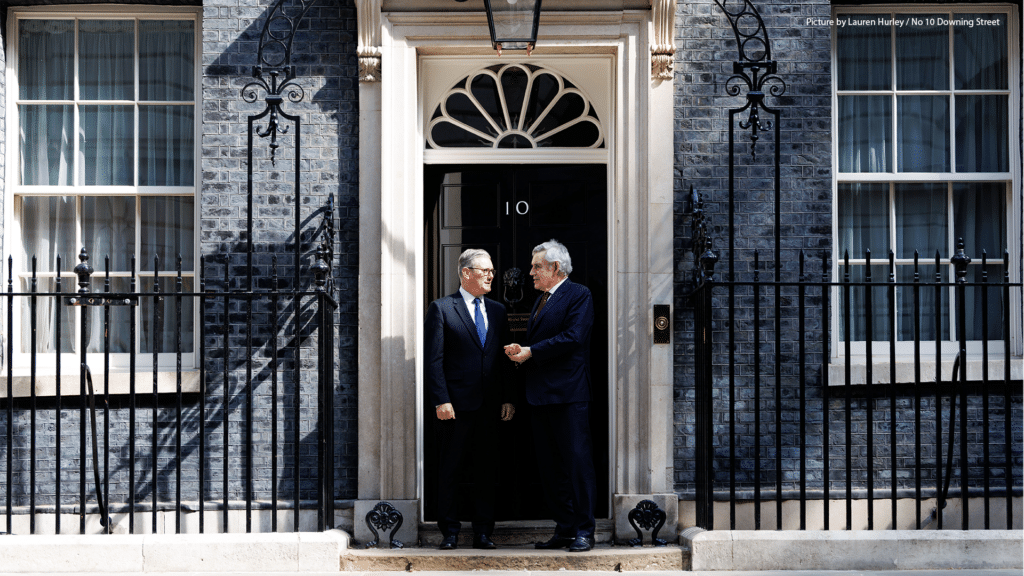
What is also a problem is that he doesn’t seem to have anyone left in Number 10 who can write him a decent speech or point out the obvious. For anyone to think that bringing back Gordon Brown and Harriet Harman was the first measure you should take to reenforce a message of change is just risible.
The speech this morning was more of the same. It had echoes of Harold Wilson’s famous proclamation back in the late 1960s when he was facing cabinet plotting. “I know what’s going on. I’m going on!” To say over the weekend that he wanted to be in Downing Street for ten years, was not just tin-eared, but had echoes of Margaret Thatcher’s equally tin-eared comment in 1989 of “going on and on and on”.
He mouthed the words of taking responsibility for the election results, but then offered more of the same. He said he would renationalise British Steel, which prompts the natural question: why did you not do that earlier, when you could have saved Port Talbot? He banged on again at Britain’s place is at the heart of Europe, yet could not articulate how that can possibly happen without crossing his red lines on the Single Market and Customs Union. He droned on about offering young people more opportunities in Europe, fully aware that his Europe Minister, Nick Thomas-Symonds, has failed to negotiate such a deal through no fault of his own. The demands the EU is making render it impossible.
This obsession with Europe isn’t surprising, but all over the country, Labour lost thousands of votes to Reform UK. OK, promoting closer ties with the EU may go down well with Green or LibDem voters, but it’s Reform UK that poses the biggest challenge to Labour. And yet again Starmer dismissed Reform as bigoted racists, and by doing so implicitly smeared those who voted for them. Another example of his tin earedness.
So what happens now? Catherine West’s challenge is unlikely to provoke an immediate leadership election. Angela Rayner can’t challenge until her tax affairs are resolved with HMRC. Andy Burnham has yet to find a seat where he could fight what would be a very tasty by-election. Ed Miliband protests he has no interest in becoming leader. And then there’s Wes Streeting. Many believe that he is best placed to replace Starmer, but that window may well close if he doesn’t act now. But if he does, there is no guarantee he would prevail, and a failed move could signal the end of his career. What to do…
So given the lack of a clear alternative, Starmer may live to fight another day, but he knows that he’s only ever one crisis away from further leadership speculation. The next crisis may well come very soon possibly next week, when the next batch of Mandelson documents are released.
I’ve spent the last couple of hours texting Labour MPs. Not all of them, but a fairly chunky representative sample. I’ve asked them whether the prime minister did enough in his speech to convince them and their colleagues that he should stay.
I will be talking about their replies on my LBC show at 7pm this evening.
Going back to the election results, I have found it amusing to read the delusional comments from some people who try to minimise the scale of the victory for Reform UK. Ah, they say, their vote share was down on last year, ignoring the fact that they gained more seats than any party ever has in a single local election in the past. They came from nothing to reach second place in Wales, and joint second in Scotland. Their vote share was down on last year because of the demographics of the seats that were up for grabs. The Left have always underestimated the appeal of Reform, and failed to even try to understand it. So long as that remains the case, they will never be able to combat Farage’s appeal. It was the same with Boris Johnson.
The LibDems and the Greens did roughly as well as expected, while the Conservatives did better than expected in London and one or two parts of the south, and they didn’t lose quite as many seats as many pundits had predicted. But in East Anglia, they were more or less wiped out, with Reform sweeping the board in Norfolk, Suffolk and Essex. Kemi Badenoch may be polling well personally, but there are few signs that the popularity of her party is moving quickly enough in the right direction. Her challenge now is to ensure that by this time next year, the Conservative Party vote share is markedly up on its current showing of 17-20 per cent.
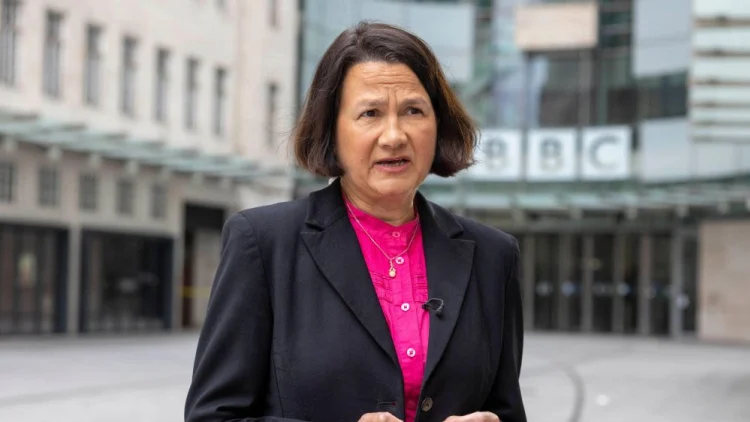
Catherine West will canvass MPs for support this afternoon (Alamy)
3 min read
Labour MP Catherine West will no longer launch a bid for her leadership on Monday afternoon and will instead canvass support for a timetable for Keir Starmer’s resignation and the election of a new leader in September.
She insists to PoliticsHome that she does not have a particular successor in mind.
West said on Saturday that she would challenge the Prime Minister if a cabinet minister did not put themselves forward.
Speaking to BBC Radio 4, she said: “My preferred option is for the cabinet to do a reshuffle within itself, where there’s plenty of talent, and for Keir to be given a different role, which he might enjoy, perhaps an international role.”
West was understood to be waiting to make her final decision until after Starmer had finished giving his speech on Monday morning setting out a reset after Labour faced a devastating set of local elections.
Speaking to PoliticsHome about the decision to not launch her leadership bid and instead canvass for a timetable for Starmer’s resignation, West said: “A lot of people might not have envisaged yours truly as walking into No 10 and I’m therefore happy to do something more vague.”
Asked if she had a particular leader in mind to take over from Starmer, West said: “No I genuinely want to keep it as open as possible. That’s why I have said by September [referring to her email], but that’s really not my job. My job was to get the ball rolling and test the temperature of the PLP. And so that is where we have got to. “
In an email to MPs seen by PoliticsHome sent after the speech concluded, West said: “I am hereby giving notice to No 10 that I am collecting names of Labour MPs to call on the Prime Minister to set a timetable for the election of a new leader in September.”
West said that while she welcomed “the renewed energy and ideas” in Starmer’s speech, she felt that it was “too little too late”.
“The results last Thursday show that the PM has failed to inspire hope. What is best for the party and country now is for an orderly transition.”
On the letter, West said there was no deadline for MPs to respond as such and while she had originally wanted to say by 10am on Tuesday, she felt that for some MPs who might be “a bit nervous that might be a bit pushy”.
West said that it would also allow MPs time to speak to their Constituency Labour Party.
She added that while she did not think anybody “dislikes” Starmer, “we are just in a different era now [from 2024] with Reform being like this.
“We need more of a street fighter, and I think people have stopped listening to us, and I think that is dangerous in politics.”
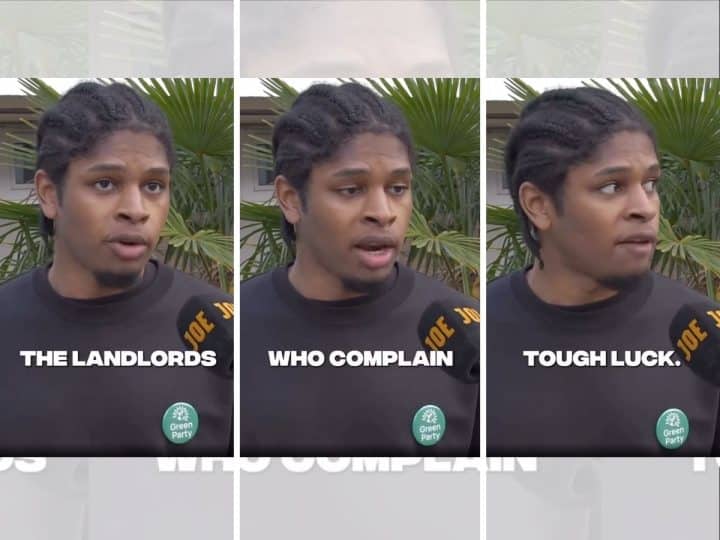

The Green Party outperformed its best ever results in the 2026 local elections. As a result, there are many more Green councillors now, and with that comes interesting new ideas you won’t hear from status quo politicians:
Based. https://t.co/RvrJljCufx
— Curtis Daly (@CurtisDaly_) May 10, 2026
Oh, and when we say the Greens outperformed their best ever result, they actually more than doubled it:
The Green Party got 1.95 million votes at the local elections (excluding mayoral!)
Approx 1 million more people (!!!) than best record in 2023.https://t.co/0qbagSvIYp — Zack Polanski (@ZackPolanski) May 10, 2026
 Pretty remarkable stat!
Green Party surge: Dylan Law
Dylan Law is now Hackney’s 19-year-old deputy mayor. His bio reads:
Dylan Law is a Hackney-born organiser, youth leader and campaigner standing to be Deputy Mayor alongside Zoë Garbett. At just 19, Dylan brings a rare mix of lived experience, local knowledge and political courage.
Dylan spent five years on Hackney Youth Parliament, where he championed excluded young people and helped lead campaigns on education, housing and safety. As Head Boy at City Academy Hackney, he secured welfare reforms and built cross-community youth initiatives. He’s also volunteered with Hackney Quest, Booth House, and Outrunners, supporting residents facing hardship and crisis.
He knows first-hand how badly council services can fail families, and it’s this experience that drives him. From housing issues to school exclusions, Dylan has seen the gaps in the system and is determined to fix them.
He also founded his own small business, showing the initiative, creativity and leadership Hackney’s future demands.
Like many in Britain, Law’s experience has given him the impression that we pay too much on rent. And his solution to that problem is really boiling the piss of Britain’s landlord class.
Piss boiling
In the video at the top, Law says:
I don’t see why any landlord is making profit off rent or off housing, right? If I pay rent to my house, it’s for a human right. I’m paying just to maintain a home. I think that should be the basis. So if it has to be a thing where a two bedroom flat is literally £600 maximum, then it is what it has to be. And for all the landlords who complain about that, tough luck.
In the system we live under, there is one key reason why we couldn’t suddenly implement this system, and it’s that owners would immediately start selling off their properties. This would be chaos, with house prices crashing as a result of the sudden influx of stock, and renters at risk of having their homes sold out from under them.
Such a situation would potentially necessitate the government seizing properties to prevent total bedlam. While we’re not opposed to the government acquiring several million more council homes, we do acknowledge that all this happening overnight could potentially destabilise the country and strain our international relationships.
All that said, this isn’t necessarily a criticism of Law. Firstly, we should all want to get to a place in which shelter isn’t a commodity for the wealthy to exploit. Secondly, it’s crucial that politicians say things which scare the shit out of landlords.
The situation right now is that the wealthy assume they’re always going to get their own way; the reason they think this is because they almost always do. Ideally, we want to push the balance of power in the favour of ordinary people. And to get there, we need the rich to understand they’re a minority in this country, and that they don’t get to enforce a situation in which the majority of us live in relative poverty.
Oh, and thirdly, we want politicians to operate by thinking: ‘this is what we want – how do we get as close to that as possible‘. The alternative is what Labour offers, which is: ‘nothing can change – how do we sell endless decline to the public?‘
Before we move away from this, however, we should note it is official Green Party policy to “Abolish Landlords”.
Abolish Landlords
Firstly, as the Green Party have freely admitted, the ‘Abolish Landlords‘ policy isn’t exactly what it seems. After they passed the motion in 2025, the party’s housing spokesperson Carla Denyer said:
While the motion to conference had an eye-catching name, it does not actually ‘abolish’ landlords’
It does, however, address the housing crisis, empowers tenants and improves their wellbeing. It contains a range of policies which, over time, would reduce the proportion of the housing market that is privately rented, and increase the proportion of socially rented homes.
Councillor Paul Ainscough wrote:
the “Abolish Landlords” title is deliberately provocative. We want to get people talking about this issue and question why having somewhere to live is seen as an opportunity to make money instead of a basic human right?
We can all see that the housing situation in this country is a mess. People with spare money are being advised to buy up properties as an investment, while people who are struggling to get by are seeing their rent go up faster than their wages. The number of empty properties is going up at the same time as the number of homeless people is going up. London Councils have lost half of their council houses, and the rent they used to bring in, and are now paying a fortune for temporary accommodation for families with nowhere to live. We do need drastic change.
Ainscough also went into further detail, writing:
We would start by ending the right-to-buy scam. We would also end the financial incentives and tax-breaks that were set up to encourage private landlords. We would end buy-to-let mortgages and bring back rent controls to stop landlords exploiting renters. We would introduce a land value tax to shift tax from tenants to landlords; increase taxes on empty properties to incentivise bringing them back into use; and introduce national insurance on rental income so landlords pay the same tax on their earnings as everyone else.
When it comes to housing supply, instead of just building more and more houses, the sensible thing is to start by making better use of the properties we already have. A Green Government would finance the purchase of empty properties; properties being sold by landlords; and those properties that aren’t being maintained properly by landlords. All of this would increase the supply of healthy, affordable homes without having to build so many more.
When we do build new housing, the Green Party wouldn’t follow the Labour and Conservative model of just letting private developers do whatever they want. We don’t want more of the luxury investment properties that make the biggest profits for developers. We should be building the types of properties we really need in the places where they are really needed. We would not only tighten up planning regulations, we would also create a Government run national housebuilding programme.
Greens rising
Law will serve under the new mayor Zoë Garbett, who has considerable experience in London. Her bio reads:
At City Hall, Zoë leads for the Greens on Policing, Housing, and Planning – three of the most urgent areas affecting Londoners today. She has taken on the Met over racist and unethical policing practices, pushed for investment in harm reduction and action to reduce drug-related deaths, and fought estate demolitions that displace communities without delivering the housing we actually need. She is also a leading voice for renters’ rights, calling for stronger protections, rent controls, and enforcement. She has championed the rights of disabled Londoners to accessible homes, and defended street markets and community spaces across the capital from destructive development. From challenging power to putting forward tangible recommendations to the Mayor of London, Zoë has worked hard to help build a London that works for the many, not just the wealthy few.
In Hackney, Zoë has built deep roots through years of local organising and activism. Elected as a Green Councillor in Dalston in 2022 with the highest Green vote in London, she helped organise the Save Ridley Road Market campaign, has supported Dalston’s independent night-time economy, fought school closures, and stood shoulder to shoulder with trade unionists and tenants.
Clearly, Garbett is someone with a track record of fighting for London’s everyday residents, workers, and businesses. Going forwards, we’re sure it won’t hurt for landlords and developers to be a little terrified of Garbett and her team.
You can see more of Garbett in this video from Novara:
Featured image via Politics Joe
By Willem Moore
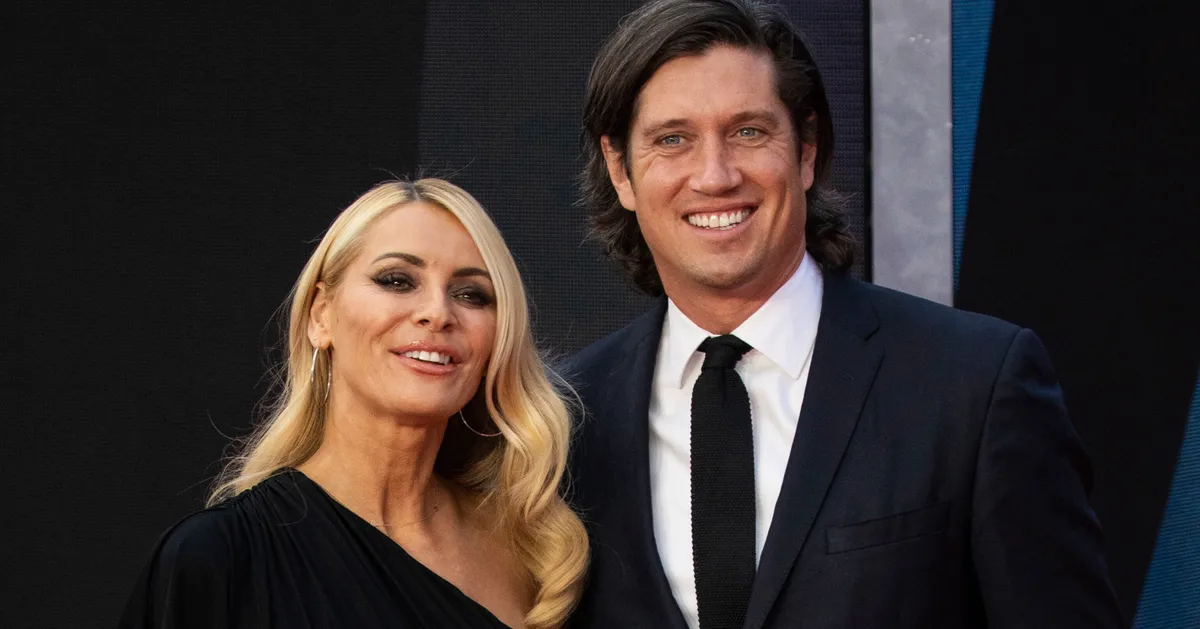
Vernon Key began the latest edition of his Radio 2 show by addressing the recent news that he and his wife Tess Daly have called time on their marriage.
On Monday morning, Vernon decided to tackle the elephant in the room immediately, kicked things off on his show by telling his listeners: “I just want to say on behalf of me and Tess, thank you for all your well wishes.”
“tt has been greatly, greatly appreciated,” he added.
Days earlier, the former couple had shared a joint statement on social media which read: “After much consideration, and with a deep sense of care and respect for one another, we have made the decision to separate amicably.
“This has not been an easy choice, but it comes from a place of mutual understanding and a shared desire for what is best for both of us. We remain great friends and most importantly, fully committed to our roles as loving and supportive parents, which will always be our priority.”
Vernon and Tess concluded: “There are no other parties involved in this decision. We kindly ask for privacy during this time as we navigate this transition together. We will not be making any further public comments.”
The two met in the early 2000s when they were both in the early years of their presenting careers, eventually getting married in 2003.
During a 2013 interview with The Sun, the former Strictly Come Dancing host recalled: “It was all quite immediate, really, because we instantly had such a blast together. I couldn’t imagine having more fun with anyone else. It was pretty explosive, I tell you.”
The year after they tied the knot, Tess and Vernon welcomed their first daughter, Phoebe, with their second, Amber, following in 2009.
Although they’re both prolific presenters on British TV, Tess and Vernon have only worked together professionally on a handful of occasions, most recently in February 2026, when they co-hosted an episode of The One Show.
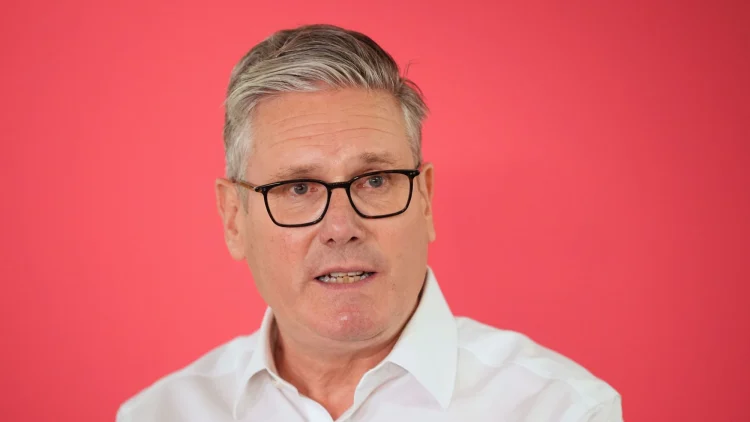
Keir Starmer vowed to prove his “doubters” wrong in a make-or-break speech on Monday morning.
The prime minister warned of “very dangerous opponents”, alluding to insurgent political forces on the right and left, and pledged to embrace a closer relationship with Europe.
Read Starmer’s speech in full.
The election results last week were tough, very tough. We lost some brilliant Labour representatives; that hurts and it should hurt. I get it, I feel it, and I take responsibility. But it’s not just about taking responsibility for the results; it’s about taking responsibility to explain how, as a political and electoral force, we will be better and do better in the months and years ahead.
MDU warns Chancellor clinical negligence system ‘not fit for purpose’

Northern Ireland RE curriculum is ‘indoctrination’ – Supreme Court
Because we are not just facing dangerous times but dangerous opponents – very dangerous opponents. This hurts, not just because Labour has done badly, but because if we don’t get this right, our country will go down a very dark path. So just as I take responsibility for the results, I also take responsibility for delivering the change we promised for a stronger and fairer Britain that we must build.
I take responsibility for navigating us through a world that is more dangerous than at any time in my life, and I take responsibility for not walking away – not plunging our country into chaos, as the Tories did time and again, chaos that did lasting damage to this country. A Labour government would never be forgiven for inflicting that on our country again.
I know that people are frustrated by the state of Britain, frustrated by politics, and some people – frustrated with me. I know I have my doubters, and I know I need to prove them wrong, and I will. So let me start on a personal note.
Like every prime minister, I’ve learned a lot in the first two years in the job. In terms of the policy challenges that our country faces, incremental change won’t cut it. On growth, defence, Europe, and energy, we need a bigger response than we anticipated in 2024 because these are not ordinary times.
And this is a political challenge just as much as it’s a policy challenge. Delivery is, of course, essential, but it’s not sufficient on its own to address the frustration that voters feel. We’re battling Reform and the Greens, but at a deeper level, we are battling the despair on which they prey – despair that they exploit and amplify. And so analysis matters, but argument matters more. Evidence matters, but so too does emotion. Stories beat spreadsheets. People need hope.
So we will face up to the big challenges and we will make the big arguments – the Labour case – that only Labour values and Labour policies can ensure our country not only weathers these storms but emerges stronger and fairer. And the Labour case: that neither Nigel Farage nor Zack Polanski offers our country the serious progressive leadership these times demand.
Of course, like every government, we’ve made mistakes. But we got the big political choices right. I mean – if we had listened to the advice of other parties, right now we would be stuck in a stand-off with Iran, having been dragged into a war that is not in our interest, and I will never do that.
We invested in our public services, in people, and in the pride of Britain’s communities; difficult decisions funded that. But now, NHS waiting times are coming down, child poverty is coming down, and immigration is coming down. We are rebuilding from the ground up. They were the right calls.
And most of all, we stabilised the economy. The fundamentals are sound – and that matters because it puts us in a much better place to come out of the conflict in Iran stronger and fairer, and for living standards to improve after two decades of stagnation. But that’s not enough, clearly. No, for the British people, tired of a status quo that has failed them, change cannot come quickly enough. And truth be told, I’m not sure that they believe that we care. I’m not sure they believe that we see their lives.
And that’s tough to say. When you come from a working-class background like me, it’s hard to hear that because I do know what it’s like to struggle and to strive. But what I take from it is that I have spent too much time talking about what I am doing for working people and not enough time talking about why, or who I stand for. Because I can see how hard life has been during these decades of crisis; I can see that very clearly. My late brother, Nick, spent all his adult life going from one job to the next; the status quo did not work for him.
My sister is a carer, working long hours on low pay, year after year after year. She didn’t even get sick pay in the pandemic; the status quo did not work for her. For too long we’ve ignored people like that, and there are millions of people in that boat – millions of people who don’t get the dignity, the respect, or the chance that they deserve to go as far as their talent and effort should take them. Millions of people are held back because the status quo in this country does not work for them. I am fighting for them; we are fighting for them.
I am their Prime Minister and this is their Government because I know whose side I am on. I’m on the side of working people, just like my sister – people who work harder and harder but who worry about the cost of living. They’re not asking for the world; they just want to do the best for their kids. They want their town centres, the places they care about, to thrive; their public services to work; and people in power to see their problems.
And right now they’re worried sick. They turn on the TV and see bombs falling. They go to the petrol station and see prices rising. And they think: how is this happening to us again? They say, “How can I be paying the price for a war thousands of miles away that I don’t support, that Britain isn’t involved in?” And it’s not a new feeling, is it?
For two decades our country’s been buffeted by crisis after crisis: the 2008 financial crash, the Tory austerity that followed it, Brexit, Covid, and the Ukraine War. On and on it goes, and the response is always the same: a desperate attempt to get back to the status quo – a status quo that failed working people time and again. Our response this time must be different – a complete break. We must make this country stronger. Take control of our economic security, our energy security, and our defence security. And we must make this country fairer. Strength through fairness; that is my compass in this world. It is a core Labour argument, and in the coming days, you will see those values writ large in the King’s Speech. And you will see hope, urgency, and exactly whose side we are on reflected in everything we say and everything we do.
Let me give you three examples today, starting with British Steel. Because what we did in Scunthorpe last year is one of the proudest things we have done in Government. That plant was hours away from closure, and that is thousands of jobs gone, an entire region decimated, and Britain’s security exposed. And so we acted. Parliament was in recess, but it didn’t matter. As a united Labour Party, we passed emergency legislation and we took control. We must bring that same urgency to everything now, starting, appropriately enough, with Scunthorpe. Because steel is the ultimate sovereign capability. Strong nations, in a world like this, need to make steel. That’s why we’re backing steel in Port Talbot and across the UK. But in Scunthorpe, we’ve been negotiating with the current owner. A commercial sale has not been possible, and a public interest test could now be met.
So I can announce that legislation will be brought forward this week to give the Government powers – subject to that public interest test – to take full national ownership of British Steel. Public ownership in the public interest; urgent Government, on the side of working people, making Britain stronger with the hope of industrial renewal. That is a Labour choice.
Second example: Europe. And I’m sorry, but I need to take a bit of a detour on this because I want to remind you what Nigel Farage said about Brexit. He said it would make us richer; wrong – it made us poorer. He said it would reduce migration; wrong – migration went through the roof. He said it would make us more secure; wrong again – it made us weaker. He took Britain for a ride and – unlike the Tories, actually, who at least had to face up to it – he just fled the scene. And now, he’ll talk about almost anything other than the consequences of the one policy he actually delivered. Because he’s not just a grifter, he is a chancer.
So, at the next EU summit, I will set a new direction for Britain. The last government was defined by breaking our relationship with Europe; this Labour Government will be defined by rebuilding our relationship with Europe – by putting Britain at the heart of Europe. Because standing shoulder to shoulder with the countries that most share our interests, our values, and our enemies – that is the right choice for Britain; that is the Labour choice. And for our young people, also something more. Because Brexit snatched away their ability to work, to study, and to live easily in Europe. That’s why I am proud we restored the Erasmus scheme.
But I want to go further. I want to make a better offer for our young people, restore that hope and that freedom, and that sense of possibility. And so I want an ambitious Youth Experience scheme to be at the heart of our new arrangement with the EU so that our young people can work, study, and live in Europe. A symbol of a stronger relationship and a fairer future with our closest allies; that is the Labour choice.
And third: the greatest hope, the hope every parent has of a better future for their children. I want parents to feel that this is shared by their Government. Now – my parents… don’t worry – I’m not going there! But they didn’t have a lot of money, and my Mum was seriously ill for most of her life. But when they were in their later years, reflecting on what gave their life meaning, I could see that, as well as their hope in us, their kids, what comforted them was the idea that they had contributed to a Britain that was getting better for young people – that kids now had better opportunities than they did.
And so I have always been driven by the idea that every child should go as far as their talent or effort takes them. It’s a beautiful idea, shared widely across this country. We tell ourselves stories about it, don’t we? Stories not unlike mine, about the working-class kids who do make it. And I don’t blame people for telling those stories; it’s important to tell those stories. But it’s not everyone, is it? So when I say every child should have the opportunity to go as far as their talent or effort takes them, I mean every child.
I mean the kids who are growing up in poverty, the kids who have special educational needs, the kids who can’t get a job, and the kids who are ignored, frankly, because society often only puts those who go to university on a pedestal. We don’t see anything else as success, and that’s wrong – deeply wrong.
So we will go much further on our investment in apprenticeships, in technical excellence colleges, and in special educational needs. We will make sure every young person struggling to find work will get a guaranteed offer of a job, training, or a work placement. And we will go much further with our pride in place programme; we will back the millions of people who give their time and effort to young people in their community – we will back them, not just with money, but with power. And we will make sure that kids whose talent lies with their hands, kids who go to college, kids ignored by the status quo because politicians’ kids don’t go there – they will finally get the respect they deserve in a stronger, fairer Britain. That is the Labour choice. These are just a few examples, but they show the urgency and hope in our direction. They show the Labour values we will be guided by. And they show, frankly, the lessons that we will learn.
Now, other parties will draw different lessons. In fact, they already are. They want more grievance politics. More division. More pointing at Britain’s problems, looking not for solutions but for someone to blame. Now that’s fine if it’s me, if it’s politicians – that’s the job. But increasingly, it’s not; it’s other people in this country. And I don’t think that’s British. That is not the decency and respect we are known for. But it’s here; that politics is with us now, and you’ll see it again on Saturday at a march designed to confront and intimidate this diverse city and this diverse country. That is why this Government will block far-right agitators from travelling into Britain for that event, because we will not allow people to come to the UK, threaten our communities, and spread hate on our streets. This is nothing less than a battle for the soul of our nation, and I want to be crystal clear about how we win it. Because we cannot win as a weaker version of Reform or the Greens; we can only win as a stronger version of Labour – a mainstream party of power, not protest.
But I also want to be crystal clear on this: because I will never stop fighting for the decent, respectful, and diverse country that I love. And I will never give up on the hope we can unlock in this country – the hope of renters for security in their home, of workers for fairness at work, of public services freed from austerity, the hope of European solidarity, of community pride, and of the people who paint over the graffiti that is racist. A country taking control of its future; our spirit unchanged, our resolve unbroken. The hope of a country that can and will become a stronger, fairer Britain. That is the hope I am fighting for, that is the hope we are fighting for. That is the Labour choice. Thank you.
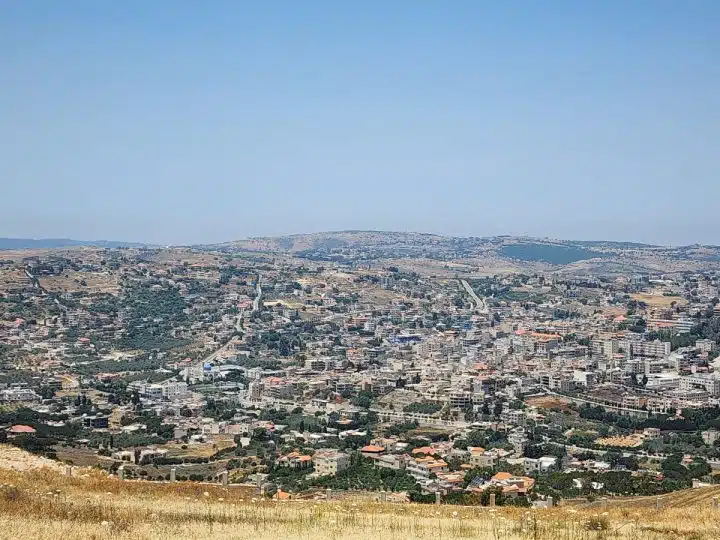

If you want to understand the soul of Bint Jbeil, you don’t look at a map. Instead, you look at the Israeli artillery left in our town square – a sign of liberation from the occupation after the year 2000.
Our town centre was a graveyard of Israeli hubris. We kept the rusted skeletons of Israeli armored carriers and cannons right there in the open, turning the engines of an ‘invincible’ occupation into a playground for our children. To the world, these were war trophies; to us, they were the physical receipts of a decades-long debt paid in blood. We are a people of the ‘Thursday Market,’ a town where intellectual defiance was traded as freely as grain, and where every stone house was built with the silent understanding that it might one day have to become a fortress.

“Israel is weaker than a spider’s web”
I speak to you as a descendent of that town. I saw how my town stood its ground in 1948, in 1978, and in 1982. We have proven time and again that Israel cannot govern a people who recognizes its presence only as a temporary shadow. When Hassan Nasrallah, former secretary general of Hezbollah, stood in Bint Jbeil’s municipal football field, he stated in his famous Liberation Day speech that:
Israel is weaker than a spider’s web.
It is a statement that, until today, Israel wanted to retaliate against, by taking over the football field and raising its flag in it.
Forward to 2006, Israel’s July aggression back then failed to fulfil any of its announced goals. The military announced in the last two weeks of the war that their sole goal was raising the Israeli flag in Bint Jbeil’s city centre. They failed to do so after sporadic clashes. They couldn’t even reach the square, which is roughly 5km away from the nearest border point.
Now, in 2026, the most bitter truth of our history is that Israel destroyed the whole town after failing to occupy it.
Lebanon’s “Stalingrad”
After weeks of failing to break our spirit in house-to-house combat, the occupation realized they couldn’t actually take Bint Jbeil. They couldn’t even settle for more than a couple of hours in its centre.
The town became a “Stalingrad” of southern Lebanon. Yet again, Bint Jbeil resisted an occupation and an aggressor, fighting for the safety of the entire mid-south of the country.
Nevertheless, Israelis waited for the ceasefire, as they had done in the 2024 war with the border towns. They waited for the world to look away, and then they used the silence of the ‘peace’ to systematically level everything to the ground. The buildings that they didn’t destroy, they stole, burnt, or committed their usual psychopathic acts, as they’ve done in the previous “ceasefire”.
But they didn’t defeat us; they simply erased the geography because they were too afraid to stand in our streets while the walls were still standing.

A confession of failure
This erasure was a confession of failure. For 33 days, the most advanced military machine in the region pounded against Bint Jbeil’s perimeter, only to find that high-tech warfare is useless against a geography that breathes.
Israel has turned the districts into a maze, where armor became a liability and specialized training meant nothing against a man defending his own front yard. The world called it a ‘stalemate,’ but for those of us who know the weight of Bint Jbeil’s soil, it was a victory of the spirit. The Lebanese resistance didn’t just hold the line; it proved that a town built on centuries of southern Lebanon’s identity cannot be intimidated by the optics of power.
Then came the ‘cessation of hostilities.’ As the ink dried on Resolution 1701, the strategy shifted from combat to spite. It was during those final hours, and the fragile days of the so-called ceasefire, that the real catastrophe unfolded. This was no longer about military objectives; it was about the psychological demolition of a symbol.
Israel brought down our marketplaces, our historic centres, and the very homes that had housed generations of resistance; our intellectuals, politicians, key figures, artists, businessmen, expats, journalists, historians, philanthropists, and others. They did this not because they were ‘targets,’ but because they were witnesses. They sought to create a ‘victory’ out of debris, standing atop the dust of our heritage because they could never truly stand on our streets while they were whole.
Reconstruction as an assertive geopolitical statement
In Bint Jbeil, the act of reconstruction is not merely an urban planning project; it is an assertive geopolitical statement.
When the stones of the neighborhoods were leveled in 2006, the intent was to dismantle the “intellectual market” that had long anchored the South. However, the occupier failed to realize that our geography is not just made of mortar and rock, but of a collective memory that remains immune to bombardment.
To rebuild a home on the exact footprint where it was destroyed is to reinforce a psychological barrier that says:
You may have stood on this dust for a moment, but you never owned the ground.
By restoring the ancient stone facades and reopening the Thursday Market, the locals have ensured that the physical environment continues to mirror their internal defiance. The architecture of Bint Jbeil serves as a permanent witness, proving that while buildings can be murdered, the social contract of a people rooted in their land is indestructible.

A stark, living contradiction
Yet again, my town stands as a stark, living contradiction to the paralysis of the Lebanese central government.
The “Spectator State” in Beirut often remains a passive observer to regional storms, bound by institutional deadlock and unable to project sovereignty over its own borders. Even though PM Nawaf Salam has visited the town during the previous ceasefire to assure the people that they’re under the government’s safety, Bint Jbeil has historically functioned as its own sovereign sentinel.
The town has been forced to cultivate a localized, grassroots strength precisely because the national state could not provide a shield. In the absence of a robust state defense, the town’s social fabric and its heritage of resistance became the actual border of the country. This creates a unique geopolitical phenomenon where a single town maintains a psychological and military barrier that the state it belongs to cannot physically uphold, transforming Bint Jbeil from a mere border town into the primary guardian of a sovereignty that the centre has long since abdicated.
Now that the town has been taken over by the Israelis, during an imposed ceasefire after IOF failed to occupy it in combat, the entirety of the southern Litani river is being bombarded with relative ease. Earlier today, on 11 May 2026, Salam declared that Bint Jbeil “has become a version of Gaza.” With no government military presence whatsoever to impose security, our officials scramble to negotiate peace with a brutal, psychopathic, genocidal machine, as if they have anything in hand to force a complete Israeli retreat from the 35 towns they’ve completely taken over or stopping the attacks on the 82 towns in total.
Featured images courtesy of the author
3 min read
Keir Starmer is fighting for his premiership after more than 50 MPs have called on the Prime Minister to resign.
At the time of writing 52 Labour MPs have called on Starmer to set out a timetable for a leadership election to take place.
Former minister Catherine West has emailed Labour MPs looking for names to support a leadership election that would see a new leader in place before September.
The list of names urging for the Prime Minister to resign includes Milton Keynes North MP Chris Curtis, co-chair of the Labour Growth Group, and North Northumberland MP David Smith, a member of the Blue Labour caucus.
On Monday, Starmer attempted to shore up his position with a speech focused on his vision for the Labour Party, saying his government must go beyond “incremental change” and be the party of a “stronger and fairer” Britain.
He promised a stronger youth guarantee for jobs and apprenticeships, to nationalise British steel and move Britain closer to Europe while maintaining red lines.
However, his backbenchers remain far from reassured, particularly those on the soft Left who have been calling for a more left-ward tilt.
At the Communications Workers Union conference, Angela Rayner criticised Starmer and the NEC from preventing the Greater Manchester Mayor Andy Burnham from running as a candidate in the Gorton and Denton by-election. She told the audience “it was a mistake that the leadership of our party should put right.”
She also admitted the government’s agenda “isn’t working and it needs to change.”
Some Labour MPs told PoliticsHome Starmer’s decision to reject calls to allow Burnham back into Parliament has been “his greatest misstep”.
“[He] would have come out stronger if he said NEC shouldn’t block Burnham. That single line could have saved his premiership. That could have just been his greatest misstep,” said one.
Culture Secretary Lisa Nandy has also said Andy Burnham would be an asset in Westminster. She told Sky News that Burnham was a politician who “goes out and fights for people and people see it and appreciate it”.
Meanwhile the mood amongst MPs – even those who have not called for the Prime Minister to go publicly – remains febrile, with a number of influential MPs telling PoliticsHome they remained unimpressed with the speech.
A furious northern MP told PoliticsHome: “I’m as pro-Europe as they come, but why is our solution to a Reform landslide (in very Leave areas) when they actually didn’t really breakthrough in Remain areas, to say we should be closer to Europe!? Total two fingers to people.”
“Needed to be back to basics, wages, prices, jobs, boats, security, common sense working class politics and instead it was for Guardian readers.”
Another Labour MP said: “Nothing new to be honest. Same old same old. Rather uninspiring. Note that he’s determined to hang on come what may. Basically no change so the ship continues to sink.”
Those of the soft left of the party were unimpressed by Starmer’s offering too. One told PoliticsHome the Prime Minister is “deluded”.
“Warm bath Keir. He thinks he’s right, but the man is deluded.
Another joked: “A speech so bad that Luke Akehurst has begun recruiting for the impending leadership contest.”
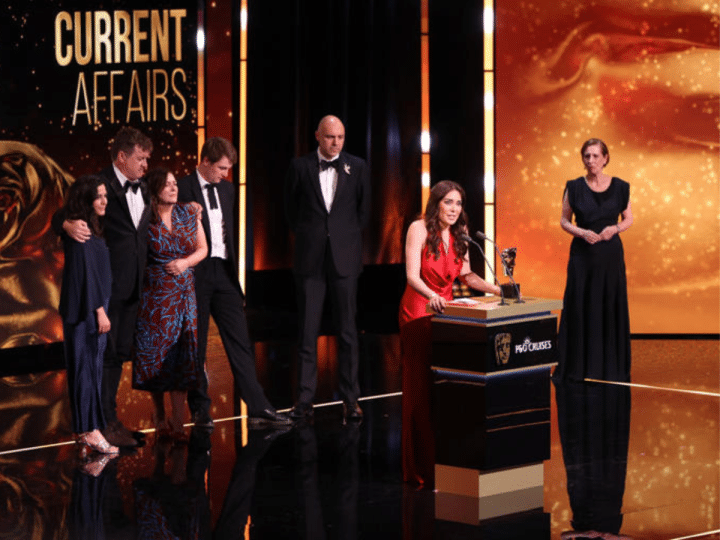

The BBC has once again been exposed as being entirely at odds with the interests of the British public after Gaza: Doctors Under Attack won a BAFTA at the 2026 ceremony.
The previously censored documentary won in the current affairs category — a result that further highlights how biased the licence-funded broadcaster has become in service of a foreign state committing genocide.
After the BBC attempted to block Gaza: Doctors Under Attack from being broadcast, Channel 4 stepped in to ensure it aired.
The BBC justified its decision at the time and said:
We have come to the conclusion that broadcasting this material risked creating a perception of partiality that would not meet the high standards that the public rightly expect of the BBC.
Nevertheless, the broadcaster showed little willingness to learn and continued censoring large parts of the acceptance speech. More specifically, it removed references to the vast and unforgivable number of Palestinian women and children killed, as well as references to the targeting of hospitals in Gaza.
Gaza documentary winners’ speech censored
However, this is far from the first time BBC executives have made highly questionable decisions that damaged both the corporation’s credibility and its privileged position as a national broadcaster tasked with delivering impartial, honest coverage to licence fee payers.
Its blatant censorship at the BAFTAs earlier this year fuelled unnecessary tensions between disabled and Black communities. It also reinforced the view among critics that the BBC is less interested in reporting current affairs than in shaping them within British society.
Cowardly BBC remove parts of the BAFTA acceptance speech delivered by the team behind "Gaza: Doctors Under Attack", after the filmmakers publicly criticized the broadcaster for refusing to air the documentary. pic.twitter.com/nCsqqzP5mW
— PalMedia (@PalMediaOrg) May 10, 2026
This represents an impressively foolish own goal for the national broadcaster, which licence fee payers continue to fund despite reporting that many believe runs directly against the public interest.
In his acceptance speech, executive producer Ben De Pear challenged the BBC asking whether their acceptance speech would face censorship like this award-winning documentary had been.
Clearly the BBC, this time, wanted to somewhat save face — but still, for good measure, censored anything substantial regarding Israel’s genocide in Gaza. That becomes far easier to understand when we recognise just how prolific pro-Israel bias has become, once again prompting renewed questions over whether this broadcaster should fundamentally change its business model.
After all, it clearly is not working as the BBC confuse, incite and manipulate British audiences.
Navia: ‘We refused to be silenced and censored’
This is the acceptance speech the BBC would have you believe occurred, as in the video above:
Journalist Ramita Navia:
This award means so much to us. These are the findings of our investigation that the BBC paid for but refused to show. But we refused to be silenced and censored. And we thank you. And we thank Channel 4 for showing this film.
Exec producer, Ben De Pear:
We also want to dedicate this award to Jabba Badwin and Osama Al-Ashi, the two journalists on the ground who made this film for us. So, I’d like a round of applause for them please.
Just a question to the BBC. Given that you dropped our film, will you drop us from the BAFTA screening later tonight? Thank you. Bye.
From Navia’s powerful and principled speech, these sections were omitted:
Israel has killed over 47,000 children and women in Gaza. So far, Israel has bombed and targeted every single one of Gaza’s hospitals.
It’s killed over 1,700 Palestinian doctors and health care workers. It has imprisoned over 400 in what the UN now calls the medicide. These are the findings of our investigation that the BBC paid for but refused to show. But we refuse to be silenced and censored.
We thank Channel 4 for showing this film. Right now, there are over 80 Palestinian doctors and healthcare workers being held in detention centers that Israeli human rights groups describe as torture camps.
We dedicate this award to them.
What does terrorism mean to you? If it’s no double-tap killings of paramedics, journalists, and today a 12 year old girl, then what is it?
Westerners, where is your humanity? Cameraman: @aliezzedine7 pic.twitter.com/ntXIwz4s6H
— courtneybonneauimages (@cbonneauimages) May 9, 2026
Sometimes, it is far better to look at what someone omits than what they choose to say. The BBC is making clear that whilst it cares about saving face publicly, it will always shield the indefensible genocide and expansionist agenda waged by Zionists in Israel.
Gaza: Doctors Under Attack is awarded the BAFTA for Current Affairs — BAFTA (@BAFTA) May 10, 2026
 #BAFTATVAwards with @pandocruises pic.twitter.com/jZI9Mrsjx2
The BBC has done this before
Let’s face it, impartiality is pretty much impossible. The BBC makes that pretty apparent.
It may claim its reporting is impartial, but its editorial choices — what it broadcasts and what it omits — makes that partiality increasingly obvious. Instead, wouldn’t it be better if they were at least honest about its Zionist tendencies, and its clear politicised coverage in the interests of war criminals wanted by the International Criminal Court.
The Canary wrote extensively about the BAFTA incident in February this year, making clear that the blame for the harm caused lays firmly at the feet of the BBC. It wasn’t the responsibility of disabled and Black communities to unpick, unravel and make sense of what happened.
‘Sinners’ star Wunmi Mosaku weighs in on what happened to her co-stars, Michael B. Jordan and Delroy Lindo, at the BAFTAs last weekend. pic.twitter.com/HLAyitiB7h
— Entertainment Tonight (@etnow) March 2, 2026
The BBC should rely on Zionist funding not licence fee
First, the BBC tried to pit embattled communities against each other and now it stands completely at odds with the public through its shameful coverage of Zionist Israel and its many, many flagrant and murderous breaches of international and humanitarian law.
Therefore, it can no longer be denied that the BBC does not work in the interests of British people. Instead, it works for the establishment which has pushed many of the BBC‘s viewers into poverty, struggle and deprivation.
Consequently, this leaves people feeling hopeless and searching more desperately for honest, accurate reporting. It has also never been more urgent that the public understands who is actively working against their interests.
The BBC has not been living up to its remit for many years. Even when called out for its nefarious censorship as De Pear did yesterday, it still cannot resist cutting pertinent information. As a result, it is time for TV licences to end and the BBC to start earning its funds.
Right now, it is only earning its funding from a country committing genocide, and its Zionist stooges in Starmer’s cabinet.
Featured image via Getty Images for BAFTA/ John Phillips
Joël Reland reacts to Keir Starmer’s speech on the direction of the Labour Party following their poor performance in the local elections. He argues that, despite promising to put “Britain at the heart of Europe”, the Prime Minister continues to uphold the status quo on Brexit.
The status quo isn’t working, so here’s some more of the status quo. As an epitaph for Keir Starmer’s administration, his speech today could hardly have been neater.
In the run-up to the speech, it was widely briefed that EU affairs would be at its heart. As a political strategy for a downtrodden Labour Prime Minister, this made intuitive sense. Labour is losing more votes the Greens, Lib Dems and nationalist parties than to Reform and the Conservatives.
As Patrick Maguire wrote in the Times, a bolder offer on Europe is one thing which might give some discontented Labour MPs pause for thought: a unifying vision which suggests their leader has both a plan to boost the ailing economy and to win back the liberal-left voters who are deserting the party in droves.
Some predicted Starmer might even take the opportunity to review his manifesto red lines of no single market, customs union or free movement. A last hail Mary for a Prime Minister with nothing else left to lose.
The early parts of the speech suggested this might be the case. Sleeves rolled up, Starmer laid out his analysis of the troubled state of the UK: “The status quo isn’t working… Incremental change won’t cut it”. He went on, “I will set a new direction for Britain… This Labour government will be defined by rebuilding our relationship with Europe, by putting Britain at the heart of Europe.”
Then came the crunch. The moment where Starmer had to set out the detail of this vision, of what Britain at the heart of Europe means in practice. At which point he offered up a single policy, “an ambitious youth experience scheme”, which was already committed to a full year ago and has been under negotiation for most of the time since.
The implications of this are unambiguous. Starmer has no plan to change the status quo. Nothing new was brought onto the agenda, and the Prime Minister’s focus is on concluding the handful of agreements committed to at last year’s UK-EU summit, with a vague promise of new agreements to come at the next summit this summer.
The most charitable reading is that Starmer is laying the necessary groundwork for a successful second summit. The reality is that, if he wants to use that event to announce the conclusion of deals to take the UK closer to the single market (on agrifoods and emissions trading), a deal is also going to have to be reached on ‘youth experience’ – the EU’s number one negotiating interest.
And negotiations on the latter have proved fraught, due to disagreements over participant numbers and the level of tuition fees which EU students should pay. Starmer’s words today may be a sign that the UK is about to compromise on those points so he has some other ‘wins’ to sell at the next summit. That could also open up the space for the two sides to commit to negotiations on enhanced cooperation in a handful of other new areas (perhaps vehicles, medicines or digital policy).
But the problem remains that this is exactly the kind of incrementalism which Starmer so derided earlier in his speech. His plan maintains Boris Johnson’s Brexit deal as its centrepiece: a deal which places the UK not at the ‘heart’ of Europe, but as its appendix – outside of all the key economic and political institutions.
Starmer might hope to improve economic ties in a few limited sectors, but the structural reality of the UK’s position will remain unchanged, and the boost to GDP is likely to be nothing more than a few fractions of a percent by the end of the next decade.
Some commentary has argued that Starmer left the door open to ditching his red lines before the next election, by not explicitly committing to maintain them when questioned by a journalist in the Q&A. But the Prime Minister will not get the chance to drop the red lines unless he can convince his own MPs that he is worth sticking with for the months to come.
And today’s speech will not have helped the case. It speaks to a Prime Minister who lacks the vision – or courage – to take the steps necessary to address the problems which he identifies.
EU policy is not the reason why Labour MPs have lost faith in Starmer and nor, in all likelihood, would a change in approach have been enough to save his ailing premiership. But today it served as a test case for whether an embattled Prime Minister has a plan for how to turn things around. It’s a test which he failed to pass.
By Joël Reland, Senior Researcher, UK in a Changing Europe.
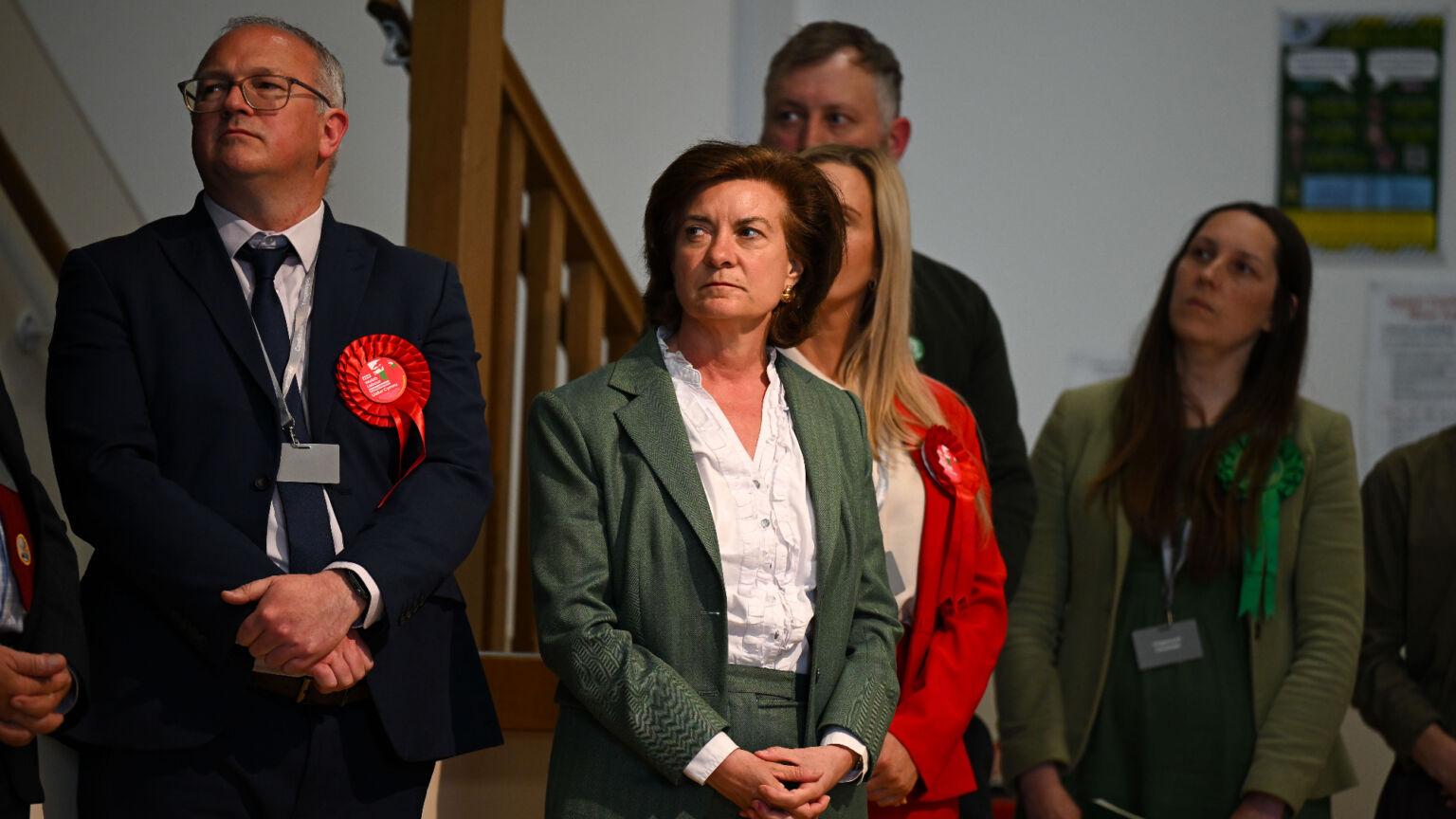
‘I ddim ond dweud y gair “Ffarwél”.’ The closing line of Myfanwy, one of the greatest poems in the Welsh language, reads: ‘I can only say the word, “Farewell”.’ It serves as a fitting eulogy to the Welsh Labour Party, which has just been trounced in Welsh Senedd elections.
This is a pivotal moment. The Labour Party has dominated Welsh politics for over a century. It has won a majority of parliamentary seats in every election since the end of the First World War, and has been the largest party in all of Wales’ devolved governments since the Senedd, the Welsh parliament, was created in 1999.
But last Thursday – a day that will go down in Welsh history even more than Llanelli beating the All Blacks in 1972 – not only did Welsh Labour get booted out, but the long-suffering Welsh public also bid a fond farewell to Eluned Morgan, the Welsh first minister. She is the first head of government to lose her seat while still in office in British history.
This was a devastating result for Labour. The Daily Mirror described it as ‘savage’, Labour’s own deputy first minister, Huw Irranca-Davies, admitted that it was a ‘catastrophic result’. Even the Guardian recognised it as a ‘historic defeat’.
Welsh voters were clearly in no mood to wave Labour off without a good kicking. ‘People have had enough’, one voter told me. ‘For years we have been taken for granted if not treated with disdain’, said another. ‘Good riddance to bad rubbish’, said a third.
On a high turnout of 52 per cent, 36 per cent voted for Plaid Cymru, while 26 per cent chose Reform UK, leaving the former with 43 seats and the latter with 34 seats in the 96-seat Senedd. Though falling short of a majority, Plaid Cymru will now lead the Senedd with a significant mandate, and its leader, Rhun ap Iorwerth (born Rhun Jones), the ex-BBC Wales chief political correspondent, will become first minister.
Despite every trick the Welsh Labour government played to strengthen its hold on power, from boundary changes to a lower voting age to EU-style proportional representation, it picked up just nine seats on 11 per cent of the vote.
The magnitude of Labour’s loss cannot be overstated. The voting public has been aware of Labour’s electoral games, not to mention the whiff of corruption, for years, but has excused it because the governing party in Westminster – usually the Tories – was deemed even worse. But now, with a Labour government in Westminster no better at representing voters’ aspirations, the public has turned. After years of being sidelined by English Tories and screwed by Welsh Labour, they have chosen either the nationalist identity politics of Plaid Cymru or the populist anger of Reform.
Plaid Cymru’s success at this election was less a positive vote for Welsh independence than it was a tactical, anti-populist ‘stop Reform’ vote. In many ways, it was a vote to continue Welsh Labour’s technocratic governance in another guise.
Though it didn’t win, Reform still performed impressively. Hitherto, it had only one sitting Senedd member (a result of a defection from the Tories). So its current tally of 34 seats – almost one-third of the chamber – is a remarkable achievement.
But let’s be clear, this was, first and foremost, a slap in the face to Labour. This, lest we forget, was a party rooted in the Welsh valleys and founded by Welshman Keir Hardie in 1900. The Labour movement at the time exemplified and encouraged the autodidactic ambitions of the working class. Education was a way of fighting back against a patronising Westminster establishment. The famous story of Archie Lush, an unemployed miner who travelled to Oxford in 1927 to meet his prospective university tutor at Balliol College will suffice:
‘He gave me a long list of books to read before I came up. When I told him I had read so-and-so, he just didn’t believe me. And he said, “Well, where would you get these books?”… And I said, “Tredegar Workmen’s Library”. Well, that convinced him that I couldn’t possibly [have read them]… But I had read them, and I was able to tell him what was in them…’
But no more. During the 21st century, Welsh Labour has presided over the complete destruction of education in Wales, devaluing and running down the working class in the process. Aided and abetted by Plaid Cymru Senedd members, Labour has delivered the lowest educational outcomes for young people anywhere in the UK. A fifth of primary school leavers in Wales are functionally illiterate.
But then Labour has long since ceased to be the party it once was. It represents the views of metropolitan liberals, not the interests of a diminished trade-union movement, let alone an industrial working class. It has revelled in its distance from its roots. Welsh Labour, like the Labour Party as a whole, is now a party of suits with no connection to their historical base and oblivious to the ‘lived experience’ of those whom Labourites call ‘working people’.
Labour’s estrangement from its roots was writ large in last week’s elections. In Keir Hardie’s constituency of Merthyr Tydfil (now redefined as Pontypridd Cynon Merthyr), Labour won just one seat to Reform’s two and Plaid’s three. In ex-Labour leader Neil Kinnock’s constituency of Islwyn (now known as Casnewydd Islwyn), Labour won just a single seat compared with two for both Plaid and Reform. The same happened in Michael Foot and Aneurin Bevan’s old stomping ground of Blaenau Gwent Caerffili Rhymni.
This is seismic stuff. And it has been a long time coming. Ordinary people lent their vote to Labour at the last General Election only to see Starmer’s government continue the Tories’ betrayal. And now these two sides of the same lanyard class, which has long held its working-class voters in contempt, are paying the price. Neither the Tories, with just seven seats, nor Labour could get into double figures.
But Plaid Cymru is not the answer. It’s just the Labour Party with added leeks. Don’t ask the party’s leading figures what a woman is (although Rhun ap Iorwerth might translate a word for you), as it has a manifesto commitment to gender self-ID and is ‘proud of [its] record in having led the campaign to establish Wales’s first transgender clinic’.
Now Plaid Cymru faces running a principality that, thanks to Labour, is on its knees. Hospital waiting times are around 65 per cent higher than they are in the UK as a whole; educational performance is below the OECD average and the lowest in UK; GDP per head is around 75 per cent of the national average and child poverty is running at over 30 per cent. The list goes on.
As a minority government, Plaid Cymru finds itself in an invidious position. If it allies with Labour, the very party the public just voted out, to push its policies through, it will inevitably reveal what a bunch of charlatans Plaid Cymru really are.
The olive branch offered by Anthony Slaughter, leader of the Wales Green Party (who is ‘open to conversations’ with Plaid Cymru) might be more appealing. But it will be of no benefit to the Welsh public, who will still feel that its votes have been taken for granted. It should go without saying that the Greens’ preference for restricting growth, reversing Brexit and creating a ‘green jobs’ workforce doesn’t bode well for the people of the principality. Draught-stripping your doors with EU grants isn’t the productivity that Wales needs.
Last week’s results were unquestionably a political earthquake. But the ground hasn’t yet swallowed up the old parties, nor settled enough to allow the new ones to grow. In many ways, Reform has bought itself some time by not winning this time. If it is shrewd enough, it will watch and learn from Plaid’s mistakes as this leeked-up version of Labour tries to impose its unwanted campaigns on an already riled-up public.
Austin Williams is the director of the Future Cities Project. Follow him on X: @Future_Cities
Crypto and AI Could Be Dirty Words on 2026 Campaign Trail

Rakai Faces Crowd Backlash During Rolling Loud Appearance
Dr Amir Khan’s job warning as he says we’re ‘not designed’ for it

Manchester United reach agreement with Casemiro over contract clause amid transfer speculation

US brings back mandatory military draft registration

Steven Gerrard disagrees with Gary Neville over ‘shock’ Chelsea and Arsenal claim | Football


-
 Crypto World3 days ago
HarrisX Poll Found 52% of Registered Voters Support the CLARITY Act
-

 Crypto World4 days ago
Upbit adds B3 Korean won pair as Base token gains Korea access
-

 Fashion3 days ago
Weekend Open Thread: Marianne Dress
-

 Tech7 days ago
Image AI models now drive app growth, beating chatbot upgrades
-
 NewsBeat4 days ago
NCP car park operator enters administration putting 340 UK sites at risk of closure
-

 Tech1 day ago
Auto Enthusiast Carves Functional Two-Stroke Engine from Solid Metal
-

 Politics2 days ago
Politics Home Article | Starmer Enters The Danger Zone
-
 Business2 days ago
Ignore market noise, India’s long-term story intact, say D-Street bulls Ramesh Damani and Sunil Singhania
-

 Crypto World6 days ago
UAE Free Zone Deploys Blockchain IDs to Verify Registered Firms
-

 Tech9 hours ago
GM Agrees To Pay $12.75 Million To Settle California Lawsuit Over Misuse Of Customers’ Driving Data
-

 Crypto World4 days ago
Robinhood says Wall Street is building onchain
-

 Crypto World5 days ago
BlackRock CEO Larry Fink Discusses a New Asset Class
-
Entertainment7 days ago
Serena Williams hits Met Gala in metallic dress after GLP-1 reveal
-

 Tech6 days ago
Apple and Samsung are dominating smartphone sales so thoroughly that only one other company makes the top 10
-

 Tech5 days ago
I tested the Xiaomi 17 Ultra’s camera and I don’t think I’ll ever go back to an iPhone
-

 Politics6 days ago
Met Gala 2026: Madonna’s Dramatic Red Carpet Look Steals The Show
-

 Fashion5 days ago
The Best Work Pants for Women in 2026
-
 Tech4 days ago
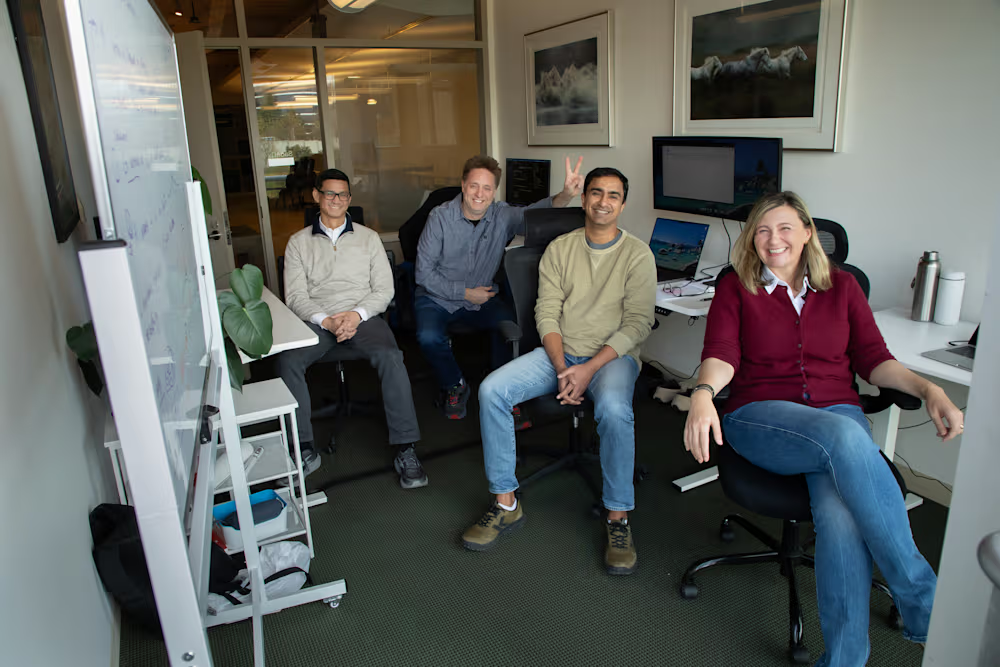
AI agents are missing all the discussions your team is having. SageOX has an answer: agentic context infrastructure
-
 Sports7 days ago
Everton v Man City LIVE: Haaland’s two-word response as visitors collapse to hand Arsenal advantage in Premier League title race
-
Crypto World4 days ago
The FOMO Is Back: Why Bitcoin’s Latest Rally Has Analysts Flashing Warning Signs
You must be logged in to post a comment Login