

Politics
New Green Party deputy mayor wants to ban landlords from profiting

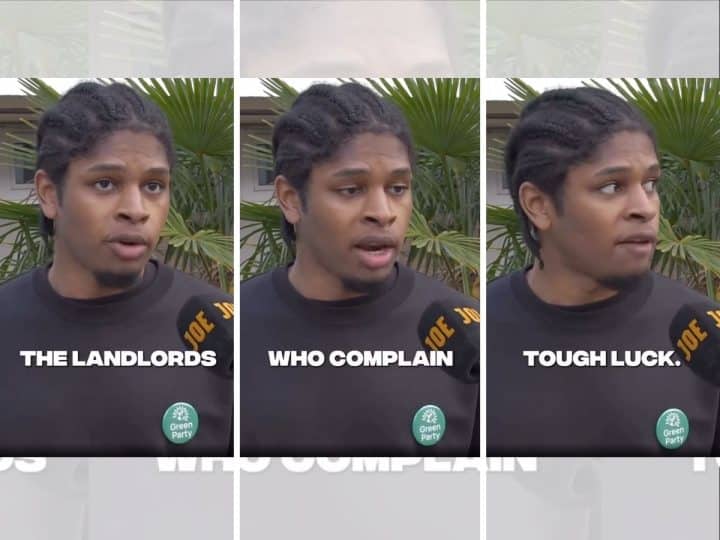

The Green Party outperformed its best ever results in the 2026 local elections. As a result, there are many more Green councillors now, and with that comes interesting new ideas you won’t hear from status quo politicians:
Based. https://t.co/RvrJljCufx
— Curtis Daly (@CurtisDaly_) May 10, 2026
Oh, and when we say the Greens outperformed their best ever result, they actually more than doubled it:
The Green Party got 1.95 million votes at the local elections (excluding mayoral!)
Approx 1 million more people (!!!) than best record in 2023.https://t.co/0qbagSvIYp — Zack Polanski (@ZackPolanski) May 10, 2026
 Pretty remarkable stat!
Green Party surge: Dylan Law
Dylan Law is now Hackney’s 19-year-old deputy mayor. His bio reads:
Dylan Law is a Hackney-born organiser, youth leader and campaigner standing to be Deputy Mayor alongside Zoë Garbett. At just 19, Dylan brings a rare mix of lived experience, local knowledge and political courage.
Dylan spent five years on Hackney Youth Parliament, where he championed excluded young people and helped lead campaigns on education, housing and safety. As Head Boy at City Academy Hackney, he secured welfare reforms and built cross-community youth initiatives. He’s also volunteered with Hackney Quest, Booth House, and Outrunners, supporting residents facing hardship and crisis.
He knows first-hand how badly council services can fail families, and it’s this experience that drives him. From housing issues to school exclusions, Dylan has seen the gaps in the system and is determined to fix them.
He also founded his own small business, showing the initiative, creativity and leadership Hackney’s future demands.
Like many in Britain, Law’s experience has given him the impression that we pay too much on rent. And his solution to that problem is really boiling the piss of Britain’s landlord class.
Piss boiling
In the video at the top, Law says:
I don’t see why any landlord is making profit off rent or off housing, right? If I pay rent to my house, it’s for a human right. I’m paying just to maintain a home. I think that should be the basis. So if it has to be a thing where a two bedroom flat is literally £600 maximum, then it is what it has to be. And for all the landlords who complain about that, tough luck.
In the system we live under, there is one key reason why we couldn’t suddenly implement this system, and it’s that owners would immediately start selling off their properties. This would be chaos, with house prices crashing as a result of the sudden influx of stock, and renters at risk of having their homes sold out from under them.
Such a situation would potentially necessitate the government seizing properties to prevent total bedlam. While we’re not opposed to the government acquiring several million more council homes, we do acknowledge that all this happening overnight could potentially destabilise the country and strain our international relationships.
All that said, this isn’t necessarily a criticism of Law. Firstly, we should all want to get to a place in which shelter isn’t a commodity for the wealthy to exploit. Secondly, it’s crucial that politicians say things which scare the shit out of landlords.
The situation right now is that the wealthy assume they’re always going to get their own way; the reason they think this is because they almost always do. Ideally, we want to push the balance of power in the favour of ordinary people. And to get there, we need the rich to understand they’re a minority in this country, and that they don’t get to enforce a situation in which the majority of us live in relative poverty.
Oh, and thirdly, we want politicians to operate by thinking: ‘this is what we want – how do we get as close to that as possible‘. The alternative is what Labour offers, which is: ‘nothing can change – how do we sell endless decline to the public?‘
Before we move away from this, however, we should note it is official Green Party policy to “Abolish Landlords”.
Abolish Landlords
Firstly, as the Green Party have freely admitted, the ‘Abolish Landlords‘ policy isn’t exactly what it seems. After they passed the motion in 2025, the party’s housing spokesperson Carla Denyer said:
While the motion to conference had an eye-catching name, it does not actually ‘abolish’ landlords’
It does, however, address the housing crisis, empowers tenants and improves their wellbeing. It contains a range of policies which, over time, would reduce the proportion of the housing market that is privately rented, and increase the proportion of socially rented homes.
Councillor Paul Ainscough wrote:
the “Abolish Landlords” title is deliberately provocative. We want to get people talking about this issue and question why having somewhere to live is seen as an opportunity to make money instead of a basic human right?
We can all see that the housing situation in this country is a mess. People with spare money are being advised to buy up properties as an investment, while people who are struggling to get by are seeing their rent go up faster than their wages. The number of empty properties is going up at the same time as the number of homeless people is going up. London Councils have lost half of their council houses, and the rent they used to bring in, and are now paying a fortune for temporary accommodation for families with nowhere to live. We do need drastic change.
Ainscough also went into further detail, writing:
We would start by ending the right-to-buy scam. We would also end the financial incentives and tax-breaks that were set up to encourage private landlords. We would end buy-to-let mortgages and bring back rent controls to stop landlords exploiting renters. We would introduce a land value tax to shift tax from tenants to landlords; increase taxes on empty properties to incentivise bringing them back into use; and introduce national insurance on rental income so landlords pay the same tax on their earnings as everyone else.
When it comes to housing supply, instead of just building more and more houses, the sensible thing is to start by making better use of the properties we already have. A Green Government would finance the purchase of empty properties; properties being sold by landlords; and those properties that aren’t being maintained properly by landlords. All of this would increase the supply of healthy, affordable homes without having to build so many more.
When we do build new housing, the Green Party wouldn’t follow the Labour and Conservative model of just letting private developers do whatever they want. We don’t want more of the luxury investment properties that make the biggest profits for developers. We should be building the types of properties we really need in the places where they are really needed. We would not only tighten up planning regulations, we would also create a Government run national housebuilding programme.
Greens rising
Law will serve under the new mayor Zoë Garbett, who has considerable experience in London. Her bio reads:
At City Hall, Zoë leads for the Greens on Policing, Housing, and Planning – three of the most urgent areas affecting Londoners today. She has taken on the Met over racist and unethical policing practices, pushed for investment in harm reduction and action to reduce drug-related deaths, and fought estate demolitions that displace communities without delivering the housing we actually need. She is also a leading voice for renters’ rights, calling for stronger protections, rent controls, and enforcement. She has championed the rights of disabled Londoners to accessible homes, and defended street markets and community spaces across the capital from destructive development. From challenging power to putting forward tangible recommendations to the Mayor of London, Zoë has worked hard to help build a London that works for the many, not just the wealthy few.
In Hackney, Zoë has built deep roots through years of local organising and activism. Elected as a Green Councillor in Dalston in 2022 with the highest Green vote in London, she helped organise the Save Ridley Road Market campaign, has supported Dalston’s independent night-time economy, fought school closures, and stood shoulder to shoulder with trade unionists and tenants.
Clearly, Garbett is someone with a track record of fighting for London’s everyday residents, workers, and businesses. Going forwards, we’re sure it won’t hurt for landlords and developers to be a little terrified of Garbett and her team.
You can see more of Garbett in this video from Novara:
Featured image via Politics Joe
By Willem Moore

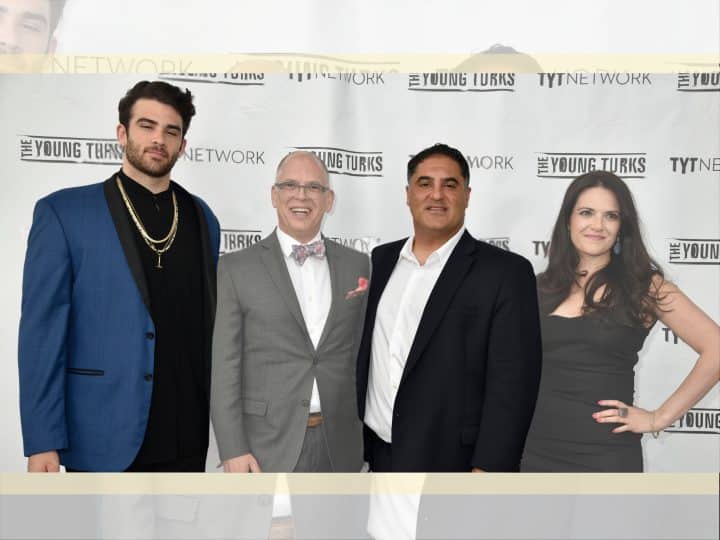

On 1 June, the UK banned two prominent American leftists from entering the UK. The men in question were Hasan Piker and Cenk Uygur, who are both Turkish Muslims. In response to this, the Labour Muslim Network has now spoken out.
Labour Muslim Network alarmed
The response from the network reads:
The Home Office’s decision to cancel the visas of Cenk Uygur and Hasan Piker, preventing them from speaking at events in the UK, is alarming.
Given the significant public interest surrounding this case, the Government should provide a clear explanation of the basis on which this decision was made and the factors that led to the cancellation of their travel permissions.
Support for Palestinian rights, criticism of the actions of the Israeli government, and advocacy for international law and human rights must never be grounds for exclusion from public debate in the United Kingdom.
Muslim communities, and all those who speak out on matters of human rights and international justice, must have confidence that decisions of this nature are applied fairly, consistently and transparently.
Piker and Uygur have both attributed the ban to their criticism of Israel:
the uk has revoked my visa as well. all at the behest of israel. the west is betraying "liberal values" for a genocidal fascist foreign government. soon we will all become israel. https://t.co/UqQG1dogOI
— hasanabi (@hasanthehun) May 31, 2026
Featured image via Kris Connor (Getty Images)
By Willem Moore
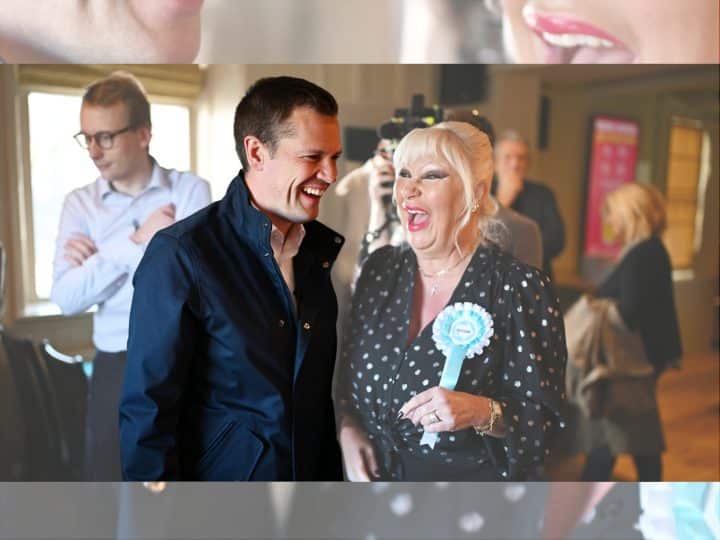

Reform UK MP Robert Jenrick is spreading blatant misinformation in relation to the Henry Nowak case. And despite legal experts and social media users highlighting his lies, the post remains up:
Henry Nowak’s murderer will be out of prison in just over 20 years.
Why did he not get longer? Because the judge ruled that – as a Sikh – he had a “good legal reason” to carry a 21cm “Shastar” knife on the streets of Southampton.
This sentence is a joke. Two-tier justice… pic.twitter.com/LtBkIyStYF — Robert Jenrick (@RobertJenrick) June 1, 2026
Oh, and to make matters worse, this guy used to be a solicitor. In other words, he should and does know better.
Reform lies
Former chief prosecutor Nazir Afzal is among those who criticised Jenrick, noting:
NO he won’t be “out in just over 20 years” – that’s the minimum term before he can apply for parole
N0 he didn’t get a lighter sentence because of the knife – he has deliberately cut out the bit that says he got a LONGER sentence
If he was still a solicitor he’d get struck off.
In recent days, a lot has been said about Sikhs’ right to carry ceremonial knives, known as ‘kirpans’. People are arguing Sikh people should not be permitted to carry these kirpans, but it’s not relevant in this case anyway, because the blade wasn’t a legally permitted kirpan. A kirpan must be blunt and a mere 8cm long; as Jenrick himself notes, this description does not match the murder weapon:
You’re a liar. The judge ruled the Sikh exemption did not apply to the 21cm murder weapon, it was not a kirpan and convicted him of unlawful possession. https://t.co/mF1khIqw4A
— Gilly (@GillysGuidance) June 2, 2026
CrimeLine – a “digital knowledge platform for criminal law” – quoted Jenrick’s words back at him:
“I will not let this lie”. Peak irony.
Cut and paste politics from another liar who also does know better but prefers hate and division.
This is possibly in reference to the fact that Reform is misquoting Kemi Badenoch for political clout:
Reform really are descending into the gutter now. This is a total distortion of what Kemi Badenoch actually said. It’s another example of their increasingly desperate efforts to neutralise Restore. https://t.co/RhXngXMXzc
— (((Dan Hodges))) (@DPJHodges) June 2, 2026
Grim
Reform is pushing out these distortions despite the father of victim Henry Nowak saying:
We do not want his death to be used to create further division, hatred or tension.
Ignoring these words completely, Nigel Farage said:
Henry Nowak’s family have responded to his murder with dignity.
I suggest the rest of us respond with pure cold hard rage.
He said “cold, hard rage”, but he could have said “cold, hard lies”, because that’s what Reform is pumping out. And it’s doing so to ensure scenes like those we saw last night in Southampton:
Dozens of bricks being thrown pic.twitter.com/VwPXkfZlmR
— Taj Ali (@Taj_Ali1) June 2, 2026
Politicians like Robert Jenrick know precisely what they’re doing when they post these lies. And it’s a terrifying sign of the chaos Britain will descend into should these self-serving liars form a government.
Featured image via Leon Neal (Getty Images)
By Willem Moore
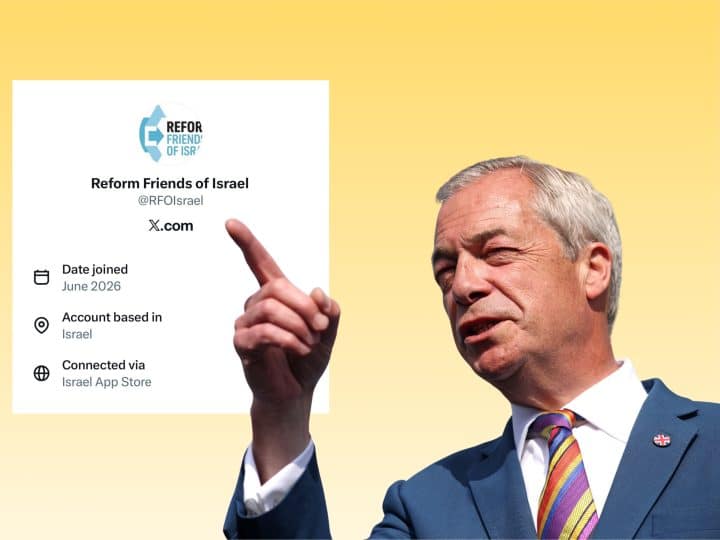

Nigel Farage’s Reform UK sells itself as an alternative to the British political establishment. Historically, said establishment consisted of the Labour and Conservative parties – both of which have significant ‘Friends of Israel’ groups. Now, a group mirroring these foreign influence orgs has emerged:
For anybody who believed Reform offered something different in UK politics… https://t.co/yS439cUHrV
— Craig Murray (@CraigMurrayOrg) June 2, 2026
Oh, and it gets worse:
This is ridiculous. pic.twitter.com/m92HKClgOi
— Aaron Bastani (@AaronBastani) June 2, 2026
Israeli Friends of Reform
In February 2026, Farage announced the creation of two new groups:
- Reform Jewish Alliance.
- Reform Friends of Israel.
The ‘Jewish Alliance’ is a group for British Jews within Reform; the latter group seeks to strengthen the already strong ties between the UK and Israel. As the Jerusalem Post reported:
Farage also announced the creation of Reform Friends of Israel, a parallel organization designed to strengthen ties between Reform UK and Israel. This organization will be led by Jason Pearlman, a British-born former international media adviser to President Isaac Herzog, who has also advised former president Reuven Rivlin, Foreign Minister Gideon Sa’ar, and former prime minister Naftali Bennett.
At the same time that Reform is spearheading initiatives to strengthen ties with British Jews and Israeli Zionists, it’s harbouring antisemites within its own ranks. In the past few months alone, we’ve reported on the following:
Mainstream media have spent days calling @ZackPolanski an antisemite; why are they silent on Reform's failure to suspend an actual antisemite?
By @willem_moore_uk https://t.co/VlrTrc7R3R — Canary (@TheCanaryUK) May 4, 2026
Another Reform activist just got exposed for antisemitism, and once again there's crickets from mainstream journalists and politicians
By @willem_moore_uk https://t.co/Ye7wR92fkd — Canary (@TheCanaryUK) May 7, 2026
Ben Rowe posted Islamophobic, antisemitic and racist memes. Reform said it was 'investigating', so how come he's now a sitting councillor?
Via @willem_moore_uk https://t.co/xKyGhLh6TI — Canary (@TheCanaryUK) May 10, 2026
Farage also has his own history of antisemitism, as his Jewish ex-classmate Peter Ettedgui reported:
It was habitual, you know, it happened all the time. He would often be doing Nazi salutes and saying ‘Sieg heil’ and, you know, strutting around the classroom
Reform Friends of Israel
So we know that Reform is launching a ‘Friends of Israel’ group, but it’s a little difficult to tell if the X/Twitter account is really the ‘official’ account it claims to be.
We can’t see the list of who the account follows or is followed by, because Elon Musk removed that functionality. Twitter does display if you have followers in common, however, so we followed the main account for Reform UK, as well as several of its most senior politicians. Doing so suggests none of these accounts follow RFoI:

As Aaron Bastani of Novara highlighted, the account had accessed the internet via the Israel App Store. This would be conclusive evidence that someone behind the account was in Israel, although the account is currently accessed via the UK app store:

You’ll note it says the account is ‘based in’ Israel, but it also has a circled ‘i’ next to it. This ‘i’ indicates the use of a VPN which spoofs a person’s location – i.e. the account holder could be using a VPN to spoof being in Israel, or they could be in Israel while using a VPN for some other reason.
This account isn’t the first prominent account to be exposed for operating in Israel, anyway; it’s not even the most shocking:
So…X activated locations last night which showed US gov accounts like DHS opened and operating from Israel. Then 20 mins later, X deactivated the feature and today, Gov accts are “exempt” from the location feature. https://t.co/8kiU541EDg pic.twitter.com/3DvM2NkrEM
— GenXGirl (@GenXGirl1994) November 23, 2025
No surprises
The UK establishment’s cosy relationship with Israel is easy to explain, as we have done before:
- The UK profits from Israel’s actions through arms deals and partnerships.
- Israel is a key ally of America, and the UK is America’s foremost lapdog.
- The Israel lobby has proven to be very effective at influencing British politicians – particularly through the ‘Labour Friends of Israel‘ and ‘Conservative Friends of Israel‘ groups.
- Once enough people within the establishment hold an opinion, mirroring that opinion becomes the price of entry.
Reform UK is simply the British establishment rebranded, so of course it’s emulating the special relationship with Israel.
Featured image via Dan Kitwood (Getty Images)
By Willem Moore
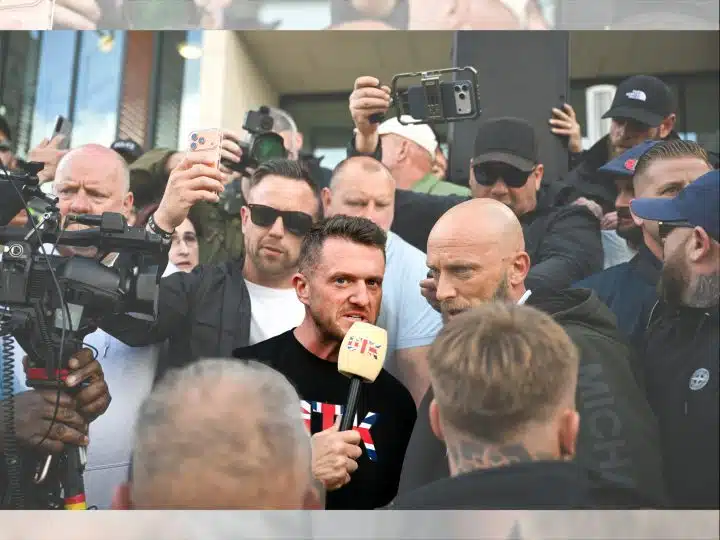

Henry Nowak’s murder has been used as a wedge to drive racial tensions in the UK, with Tommy Robinson putting himself front and centre.
It started with inflammatory comments from Nigel Farage, which predictably led to yet another race riot.
As anyone could have guessed, Tommy Robinson was on the scene to take what Farage had started and run with it. However, Robinson used the murder to incite hate against a different religious group than the murderer’s own — Muslims.
Massive nosher Tommy Turd Robinson showed up to the minute’s silence for Henry Nowak, wouldn’t shut up throughout the entire thing, then went on a racist rant about Muslims despite Nowak’s killer being a Sikh. https://t.co/lIJm1L1wfX
— thelefttake (@thelefttake) June 2, 2026
Tommy Robinson did what Farage wanted
Farage’s intervention followed Vickrum Digwa, a Sikh man, being convicted for the murder of Henry Nowak.
Digwa wrongly claimed that he had been the victim of a racialised assault, and responding officers attempted to arrest Nowak as he lay dying.
The police handcuffed Nowak despite the fact that he was laid out and claiming to have been stabbed. As we regularly report, the police in the UK is prone to incompetence, and frequently face accusations of gross incompetence.
In 2025, the Canary covered the following stats:
In the last five years, police forces in the UK have paid nearly £80m in compensation following claims against them. Figures obtained by Public Interest Lawyers found that 47,658 claims have been lodged against police forces since 2019.
…
Examples of claims against the police include malicious prosecution, wrongful arrest, sexual misconduct, assault, traffic accidents, and property damage.
What Farage did was take a textbook example of police incompetence and he turned it into a call for a white uprising.
Sure thing @policylaila. Nigel Farage knew precisely what he was doing, deliberately whipping up fury. It’s also telling that on race relations, he does no work whatsoever. In the fascist tradition, he just makes irresponsible populist comments that only cause hate and fear. https://t.co/hxn6b4Qn6E
— Major Harry Clark (@WinstonsButler) June 3, 2026
It’s important to note, this is something Farage did despite Nowak’s family asking him not to do. And it’s a call Tommy Robinson gladly picked up.
Fash mob
Before the riots, Robinson released a video, shared by Mukhtar, in which he said he’d be turning up to “report” on events. Alarm bells should have begun ringing for anyone watching because Robinson isn’t a journalist; he’s a shit stirrer.
In 2019, the Canary published this about Robinson:
Stephen Yaxley-Lennon (AKA Tommy Robinson) encouraged “vigilante action” against defendants in a criminal trial when he filmed them and broadcast the footage on social media, High Court judges have found.
The former English Defence League (EDL) founder was found to have committed contempt of court at the end of a two-day hearing at the Old Bailey.
As Mukhtar highlighted on X, Robinson got rushed to the front of the crowd after arriving.
He initially pretended he didn’t want to speak, saying, “No, I’m fucking not”.
A few seconds later, he was on the microphone claiming that he had predicted Pakistani Muslim gangs would start a race riot.
The riled-up crowds would eventually go into full-on riot mode, with Nazi salutes being thrown freely.
Dozens of bricks being thrown pic.twitter.com/VwPXkfZlmR
— Taj Ali (@Taj_Ali1) June 2, 2026
#FaragesRiots
People are referring to the chaos of last night as “Farage’s Riots”.
#FaragesRiots https://t.co/yLJfsygfQP
— Reform Party UK Exposed
 (@reformexposed) June 2, 2026
While it’s correct to call them this, Robinson deserves credit too. The two men keep a distance from one another, but they functionally work as a team.
Farage is the posh boy riling up the masses from the heart of the establishment while Robinson is the thug on the street leading the charge.
Featured image via Finnbar Webster/ Getty Images
By Willem Moore


FIFA has announced the final squads for the 2026 World Cup, with a week left before the tournament kicks off on 11 June.
It’s confirmed that 1,248 players representing 48 national teams will take part in the biggest edition in World Cup history, hosted by the US, Canada and Mexico.
Featuring 104 matches, this World Cup involves a record number of national teams and players. FIFA has said this reflects the global expansion of the game and provides an opportunity for broader representation of nations and fans.
According to FIFA’s statement, the final squads include 357 players who have previously featured in previous editions of the World Cup, alongside 891 players who will be making their debut.
The federation also highlighted the striking age diversity among the players, with Scottish goalkeeper Craig Gordon topping the list of the oldest participants at 43, whilst Mexico’s Gilberto Mora is the youngest at 17.
The tournament features 22 players under the age of 20, seven players over the age of 40, and the return of 22 players who have previously won the World Cup.
2026 World Cup team debuts
Jordan, Uzbekistan, Cape Verde and Curaçao will make their World Cup debuts in one of the most significant tournament’s, given the expansion to 48 teams.
For Uzbekistan, this is a historic moment as it’s their first time participating in a World Cup. Manchester City defender Abdulkadir Khusanov will lead the team, backed by a promising generation of players.
Meanwhile, the tournament features a host of rising talents with a bright future on the international stage.
Messi, Ronaldo and Ochoa set to make history
Argentina’s Lionel Messi, Portugal’s Cristiano Ronaldo and Mexico’s Guillermo Ochoa are all set to make their sixth appearance at the World Cup finals. This is an unprecedented achievement that reflects the enduring legacy of three of the greatest names in football history.
The squads also reveal the tournament’s truly global reach, with players representing 449 clubs from 71 different countries, underlining the World Cup’s status as football’s most inclusive sporting event.
On another note, FIFA highlighted a clear disparity in the origins of players across the national teams. Whilst Saudi Arabia and Qatar rely almost entirely on players competing in their domestic leagues, teams such as Senegal, Uruguay, Cape Verde, Curaçao, Côte d’Ivoire and the Democratic Republic of the Congo rely entirely on professionals who play abroad.
Featured image via Rob Carr/ Getty Images
By Alaa Shamali


4 min read
Labour’s election victory wasn’t born out of unbridled enthusiasm but out of a desperate desire for something cleaner, better, and markedly different. The public want a government that is going to bring about change but, importantly, do so in a fair and democratic way.
The irony is that the Labour Party acknowledged the importance of driving up standards, not just in their pre-election words and promises but in terms of the legislative and tangible changes that are required to deliver it. The bad news is they only decided to move beyond the warm words when it was too late.
The recent local election results reflect the scale of public disillusionment. After years of political misconduct, sleaze allegations, lockdown parties, murky financial arrangements, and a revolving door of scandal-hit ministers, drastic change was needed. Labour’s central promise was to restore the dignity and trustworthiness that Westminster had squandered so recklessly under the Conservatives.
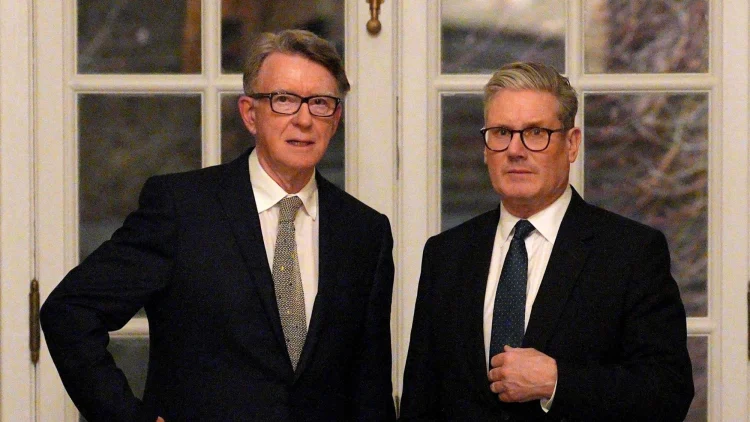
A little under two years on and Keir Starmer’s already beleaguered premiership is under threat, in part, to a scandal of his own making thanks to his decision to appoint Peter Mandelson as Ambassador to Washington. Governing in the post-Brexit era with increased global economic and political uncertainty was never going to be easy but the basic pre-election promises of improved integrity and stability are already disintegrating before our eyes.
The tragedy is that trust, once broken, is extraordinarily difficult to rebuild. Political capital is not like financial capital in that you cannot simply replenish it through smarter budgeting. It requires consistent and real action, genuine reform, and the visible dismantling of the structures that enabled misconduct in the first place.
Labour spoke a lot about restoring trust in our politics, pre-election. However, it was only following the Mandelson revelations that the Prime Minister commissioned the newly-formed Ethics and Integrity Commission to conduct a review into our laws concerning lobbying, disclosure and access to government. It may well be that the Commission’s recommendations end up in the inbox of a new leader. Whoever that may be would be foolish to ignore them.
Reforming the Lobbying Act – the rules that address transparency in who is seeking to influence the policy-making process – now sits at the very heart of building back public trust, for all parties and all politicians. The CIPR is supporting Baroness Hayter with her Private Members’ Bill in the Lords that seeks to expand the lobbying register to in-house lobbyists, demonstrating the breadth of support for change from within Parliament itself and the recognition that the status quo is no longer sustainable.
Lobbying and the relationship between business and politics now occupies a unique space in the public imagination. They are sympathetic and supportive of the idea that government needs real-world input when making policy – as long as it is done fairly and with a degree of transparency.
The existing Lobbying Act, introduced in 2014, makes that nearly impossible and has long been criticised as inadequate and riddled with loopholes. It covers a narrow band of consultant lobbyists while leaving vast swathes of activity in the shadows, unregulated and unscrutinised. For a public already primed to distrust Westminster, this gap is populated with mistrust and scepticism.
Overhauling the Lobbying Act would send an unambiguous signal and demonstrate that this government is prepared to take action to ensure the lobbying scandals of recent years cannot be repeated. It would also send a powerful message that our politics cannot and should not be influenced opaquely. Expanding the register of lobbyists, strengthening enforcement mechanisms and closing the loopholes that mean in-house lobbyists have no way of statutorily recording their activities is the basic architecture of a democracy in which power is exercised visibly, and accountability is genuine rather than performative.
Labour must understand the urgency of the moment. They need quick and decisive wins, and soon, and few come easier than this. It also has the added bonus of commanding overwhelming support in Parliament and beyond, including within the lobbying industry.
Fail to grab the opportunity and this government risks not just its own electoral future, but the deeper, more corrosive consequence of a democracy in which citizens have simply stopped believing that the rules apply equally to everyone.
Alastair McCapra is CEO of the Chartered Institute of Public Relations
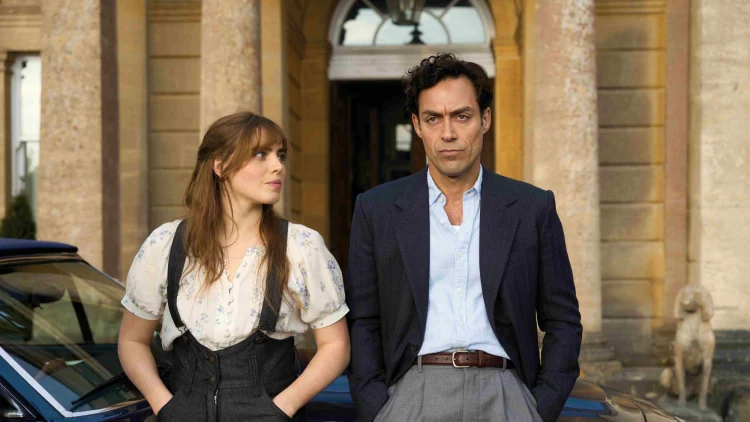

Bella Maclean as Taggie O’Hara and Alex Hassell as Conservative MP, Rupert Campbell-Black | Image courtesy of Disney+

5 min read
Sharp, wicked and gloriously alive, ‘Rivals’ is outrageously good television – but this brilliant show is also a timely reminder of why we would all benefit from lifelong sex education
Bingeing the first four episodes of Season Two of Rivals should feel like a guilty pleasure. But there is zero guilt here.
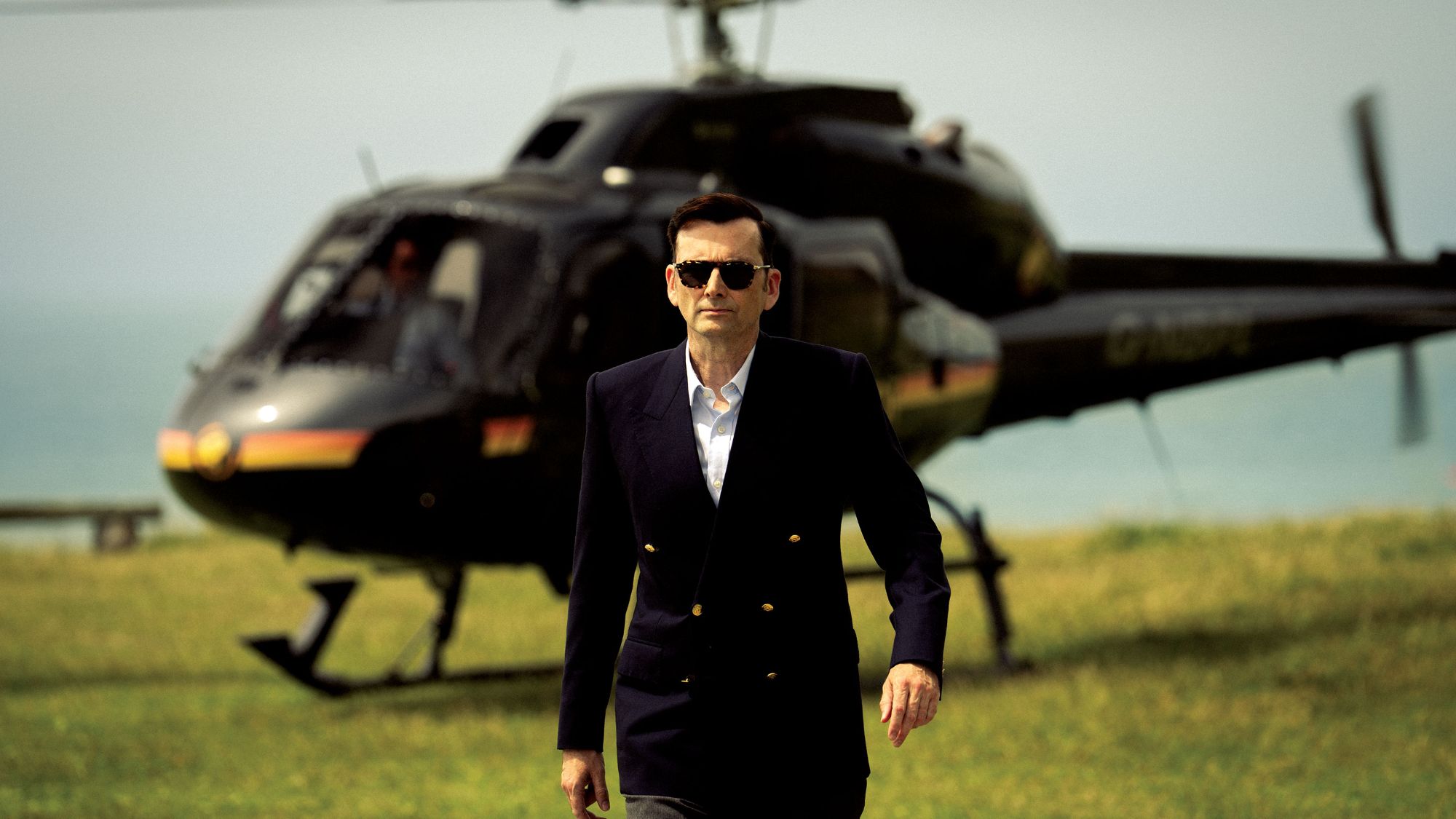
It is exactly what you want it to be: outrageously good television. It sells aspiration and a life of privilege out of reach of most people – the idyllic Cotswolds setting, private helicopters, influential TV executives and, yes, politicians. It delivers a stellar lineup of some of Britain’s finest actors with dialogue that is sharp, wicked and gloriously alive. It is sexy and scandalous and funny and completely addictive. I love it.
But beyond the crisp shirts being unbuttoned, the hot bodies and the devastating one-liners, this is a show about what happens to human beings when sex sits at the centre of so much in our lives yet is never spoken about openly. Or worse, when it is spoken about in ways that create shame, and where sex becomes a weapon used to control.
Jilly Cooper’s greatest gift was always her refusal to be ashamed of desire
The show is set in the 1980s, with Section 28 looming on the horizon: that vile piece of legislation that would make it illegal for schools to “promote” homosexuality; which told an entire generation of gay children their love was not fit to be spoken of. In Rivals S2, we watch wannabe Tory MP Gerald Middleton, a gay man, feel he has no choice but to marry a woman and perform as a straight man in order to win a seat. It is devastating, not least because his real and true love is the adorable Charles Fairburn – and what about Caroline “Muffy” Hampshire, the woman tricked into marriage?
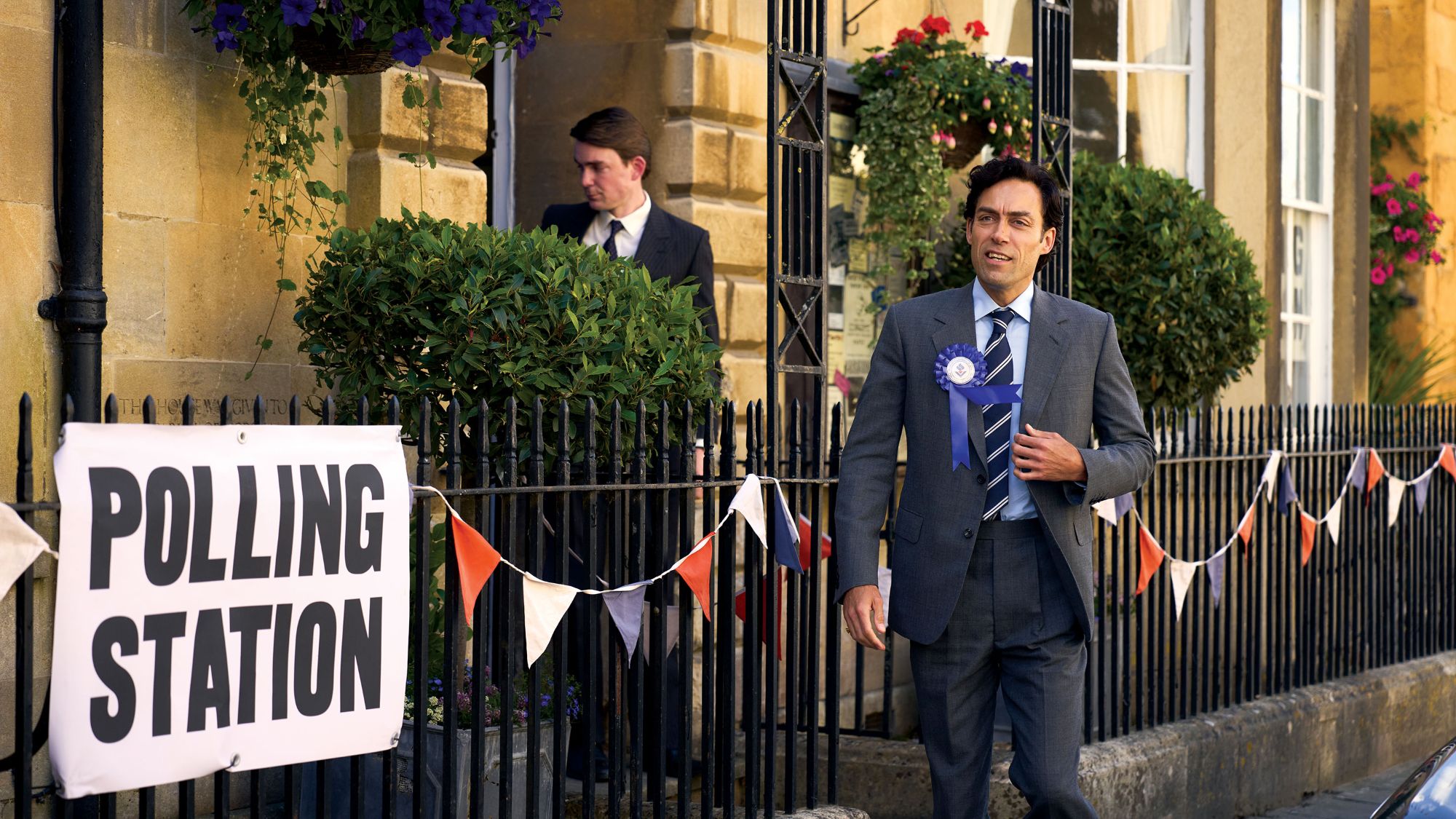
I meet young people today figuring out who they are without adequate support, without language, without anyone sitting them down and saying simply: all of this is normal and you have nothing to be ashamed of.
Then there is the storyline that made my heart hurt. Daysee Butler, raped in Season One by the vile Reverend Fergus Penny but silenced by Lord Baddingham, a man who chose his own power over justice. What is so unbearable about the way Rivals tells her story is not just the act itself but the way shame is somehow shifted onto Daysee. I hope the rest of Season Two sees her get the revenge, if not the justice, she deserves. Because we all know how abysmal the conviction rate for rapists remains. Removing the shame and silence around sex would see men like Penny have far fewer shadows in which to thrive.
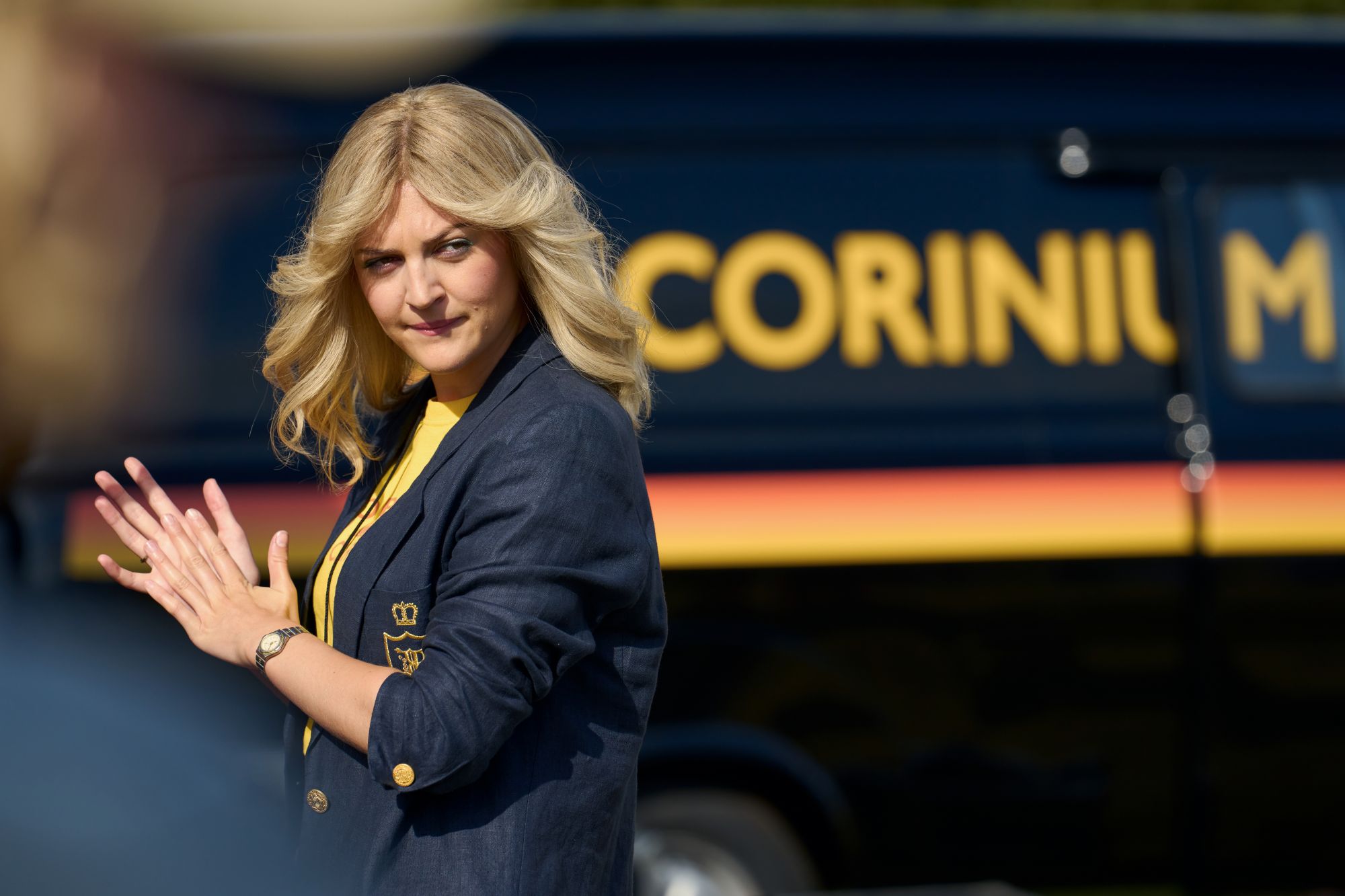
The show also gives us the consensual, beautiful, but agonising love of Lizzie Vereker and Freddie Jones, two people who no longer feel desired by their respective spouses and who fall, helplessly, for each other. The deep connection they share, amplified by physical intimacy, leaves them consumed by guilt. They are a reminder of the quiet but vital role that desire and sex play in keeping long-term relationships alive.
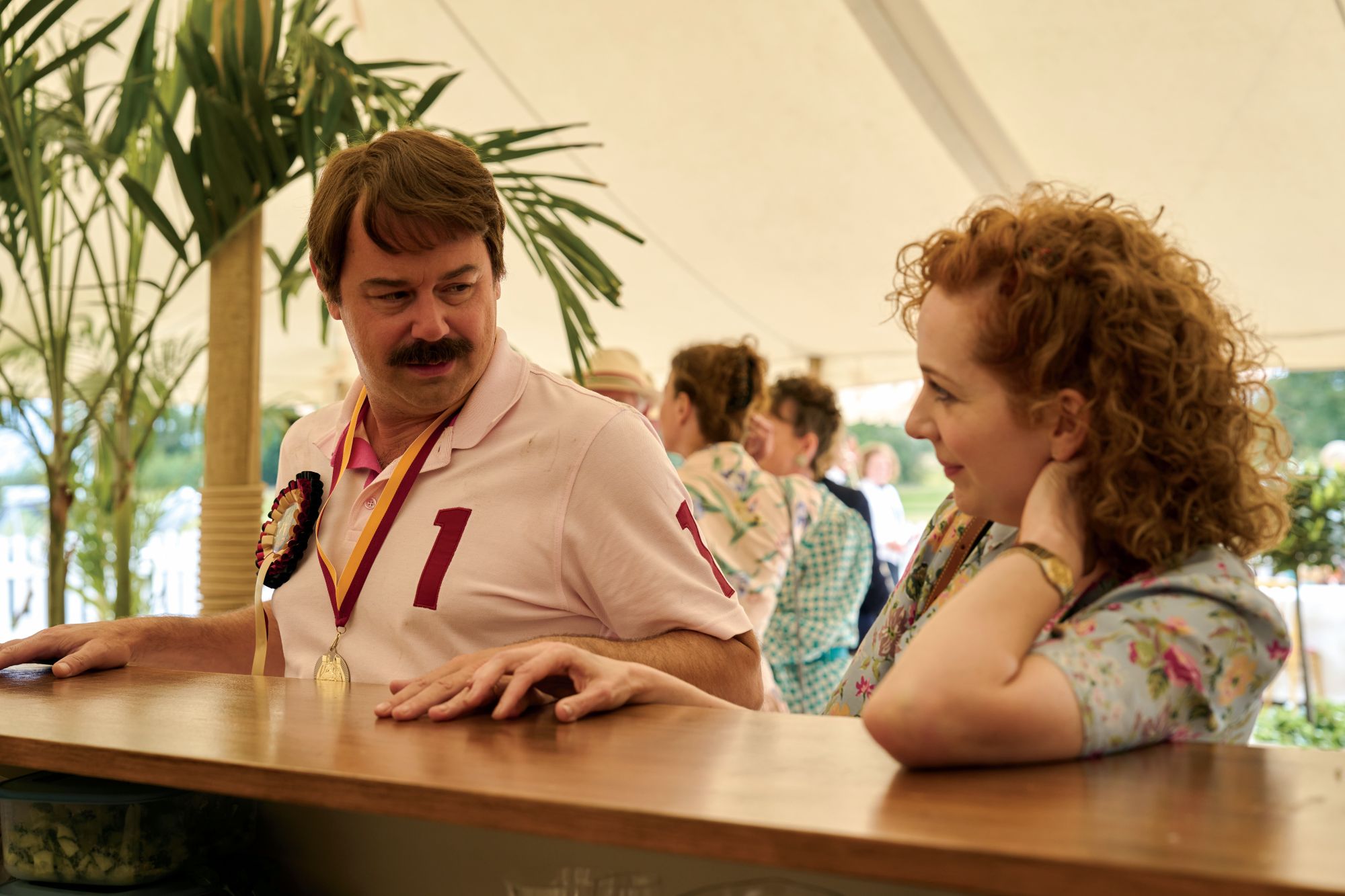
Image courtesy of Disney+
It’s something equally absent from the life of the suave, loveable and deeply troubled Rupert Campbell-Black, a Tory minister exposed for a string of sexual encounters and publicly destroyed for it. Hedonistic and decadent he may be, but he is also deeply lonely. And that loneliness turns my mind to the young men being recruited into the manosphere every single day. Their journey there does not begin with hatred. It begins with loneliness, shame and silence.
That silence needs breaking. That void needs filling with education, honesty and open conversation.
In the 1980s, we did not talk about sex because we were embarrassed. In 2026, we are still embarrassed even though we have convinced ourselves the job is done – and we still do not talk about it enough. It is not done. The ignorance, the shame, the violence, the loneliness: it is all still here, as sinister and damaging as it ever was.
 Author Jilly Cooper’s fingerprints are on every inch of this production, and her greatest gift was always her refusal to be ashamed of desire. She thought pleasure was human and funny and worth celebrating. I agree with her completely. A nation that learns to talk about sex honestly, in schools, in homes, in GP surgeries, online, across a whole lifetime, will be a nation with less violence, less shame, less loneliness, and far more genuine human happiness.
Rivals is brilliant television. Watch it. And then let’s talk about why it still feels so radical.
Samantha Niblett is Labour MP for South Derbyshire
Rivals: Season 2
Directed by: Elliot Hegarty, Jamie J Johnson & Dee Koppang O’Leary
Broadcaster: Disney+
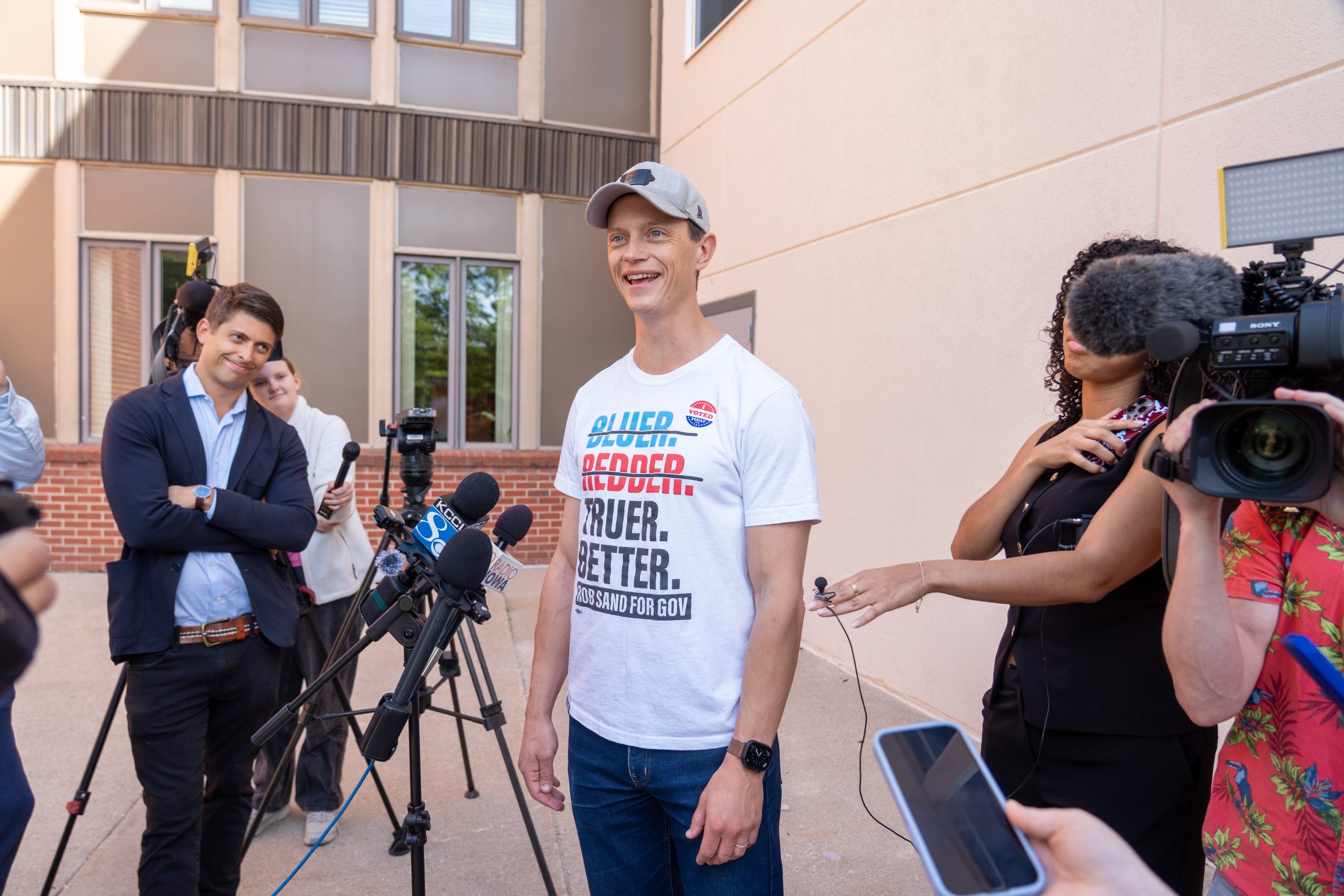

For Iowa Democrats, a decade-long drought may finally be coming to an end.
The economic turmoil of the past year-and-a-half has been felt acutely in Iowa, where the agriculture-heavy economy has been jolted by tariffs. Medicaid cuts in last year’s One Big Beautiful Bill Act are ransacking rural health facilities, Democrats say, and several clinics in the state have closed. And the Iran war has spiked prices for fertilizer and diesel — critical supplies for the farm state.
That’s all creating a dynamic that Democrats feel will propel voters their way in the midterms, giving them a shot at their first major statewide wins since the Obama era. And they’re confident that their candidates atop the ticket — a slate that was officially nominated in Tuesday’s primaries — will help carry Democrats in down ballot races.
“You go into these rural communities, the word that I hear the most is ‘betrayal,’” Josh Turek, the Democratic nominee for U.S. Senate, told POLITICO in an interview late Tuesday night after winning his primary. “We’re leading the nation in farm foreclosures. Farm suicide rates skyrocketing. And so the Trump signs and Trump flags are coming down, because they say we’ve been betrayed.”
Even some Republicans are sounding the alarm.
“The reality is, if voters do not trust Republican elected officials and candidates with the future of the economy, they’re not going to vote for them this November,” said Drew Klein, an Iowa-based regional vice president of Americans for Prosperity. “That is what is going to decide the election in November.”
Democrats see economic issues providing an opening across rural America. The Democratic Congressional Campaign Committee recently commissioned polling they say shows economic dissatisfaction among rural voters, according to a memo shared first with POLITICO.
Both the Senate and governor’s seats are open in Iowa at the same time for the first time since 1968, and Democrats think they have a slate of nominees who could meet the moment.
“We’re excited about it, and this is probably the first time in a long, long time when I can say that,” said Patty Judge, a Democrat who served as Iowa agriculture secretary and was Democrats’ last lieutenant governor before her ticket lost in 2010.
Iowa Democrats and DCCC are seriously targeting three of the state’s four House seats as well — seats they swept in the last wave election, in 2018.
Turek, a Paralympic gold medalist, cruised to victory Tuesday in the primary for U.S. Senate, a victory for national Democrats who backed his campaign and will be eager to support him in November. He’ll run statewide with Rob Sand, the current state auditor and rising star within the party, who ran unopposed in the gubernatorial primary.
But winning in Iowa will still be difficult and require Democrats to overcome a party brand that has become toxic in most rural corners of the country. No Democrat in the state has been elected governor since 2006, to the U.S. Senate since 2008 and to the U.S House since 2020. The last time the state went blue at the presidential level was 2012.
Republicans admit the environment isn’t great — but argue that Democrats will still fall short given how far right the state has shifted in the Trump era.
“I think it’s a huge hill to climb for Dems,” said David Kochel, a longtime Republican strategist who has done extensive work in the state. “Yes, a lot of things are breaking towards them, but we’re talking about a state where Trump won by 13.”
“Democrats turned their backs on Iowa years ago, and their candidates prove they still haven’t learned a thing,” said National Republican Congressional Committee spokesperson Emily Tuttle. “Iowans want representatives who will fight for them, not lecture them or look down on them. That’s why Republicans are positioned to win across Iowa this November.”
Democrats’ optimism starts atop the ticket: Sand will take on Republican Zach Lahn, who won his primary with less than 40 percent of the vote over Trump-endorsed Rep. Randy Feenstra (R-Iowa).
Sand — an avid hunter who is the only statewide-elected Democratic official — has gained popularity in conservative Iowa for his independent, fiscally moderate streak. “They know him and trust him,” said Emma O’Brien, deputy campaign director for Sand. “He has bucked the Democratic Party and told them he disagrees where he has disagreed, and has given props to the other party when they do the right thing.”
Democrats are banking on Iowans being ready for a change after a decade of leadership from Republican Gov. Kim Reynolds. According to data from Morning Consult, she’s been the country’s most unpopular governor for two years running; 49 percent of Iowans disapproved of Reynolds’ performance as of February 2026.
“She’s had control of the legislature that whole time, and it is just inarguable that people’s lives are not better,” said Sue Dvorsky, a former Iowa Democratic Party chair. “Our health care is worse, our water is worse, the schools are in trouble. Every dimension that I think a family or a community uses to measure its health is down.”
A spokesperson for Reynolds did not respond to a request for comment.
In the Senate race, Turek will face off against GOP Rep. Ashley Hinson, a race that early polls show in a statistical deadlock. Democrats have their sights on Republican Reps. Mariannette Miller-Meeks in the 1st District and Zach Nunn in the 3rd District — and even think Hinson’s open seat in the 2nd District could be in play.
“Instead of standing up for Iowans, [Republicans] have put themselves, special interests, and their party bosses first,” said DCCC spokesperson Katie Smith. “Iowa families are desperate for change and after years of broken promises and failures, are ready to reject these creatures of the swamp.”
The string of strong candidates atop the ballot will help carry candidates in state legislature and local races, Democrats say.
“It feels different,” Sarah Trone Garriott, the Democratic challenger to Nunn who was elected to the state Senate in 2022 and 2024, told POLITICO on Tuesday, before winning her primary. “I have been one of the only [Democrats] to win in those years, and that felt pretty lonely. But this feels really good.”
Iowa Democrats have seen recent flashes of hope. In 2025, Democrats won four of six special elections for the state legislature, breaking Republicans’ supermajority in the state Senate.
Democrats draw a straight line between the changes to Medicaid in last year’s reconciliation bill and rural health clinic closures. In Iowa’s 1st District, a medical center ended its labor and delivery services, citing issues with government funding; in the 3rd District, clinics closed explicitly because of “expected Medicaid cuts.”
Farmers — a traditionally Republican leaning coalition — voted heavily for Trump. “[Trump] is not very good for farmers, but farmers have been pretty good to him,” said Tom Miller, a Democrat who served for 40 years as Iowa’s attorney general.
But Iowa farmers have been heavily impacted by Trump’s tariffs and trade wars — not to mention the spike in fuel and fertilizer costs.
Last fall, some farmers told former state Rep. Christina Bohannan — the Democratic nominee in the 1st District, where she will face Miller-Meeks for the third consecutive cycle — that they waited to buy fertilizer until spring because of high costs caused by tariffs. “Then we went to war with Iran, and the fertilizer prices spiked even more,” Bohannan said. “So our farmers are really struggling.”
Aaron Heley Lehman, president of the Iowa Farmers Union and a fifth-generation farmer, warned that rural voters should not be automatically counted on by any party. “People are feeling a lot of pain right now and not seeing a lot of action to match rhetoric,” Lehman said. “The degree of hurt that Iowa farmers are feeling is pretty wide.”
On Sunday, Nicola Sturgeon told Laura Kuenssberg that the SNP’s accounts “went up and down” as her excuse for not noticing that hundreds of pounds had suddenly vanished from them.
Several things leap out immediately from that clip.
One, there very much WAS “something glaringly suspicious in the accounts that I should have seen” – the party had raised almost £700,000 in two “ring-fenced” fundraisers that wasn’t there any more, which ought to have made its leader at least mildly curious.
And two, attempting to fob responsibility off onto the independent auditors simply won’t wash. It’s not their job to determine whether the SNP has kept its political promises or not, their job is simply to match up money coming in against money going out and produce a set of numbers to show what it all adds up to. It makes no odds to them if it was spent on a party conference, a fancy motorhome or a 50-foot golden statue of Danny La Rue. All they can see is numbers.
(In any event the party’s longstanding auditors resigned in 2023 rather than risk being caught up in any more dodginess. It took months for the SNP to find anyone else willing to take the job on.)
But even leaving those things aside, if we’re going to learn anything about how The Great Indyref Swindle got to this calamitous point unchecked we need to examine just how hard Nicola Sturgeon had to look the other way to fail to see what was going on literally under her nose and literally in her own back yard.
(You’ll have to forgive us a bit of repetition in this piece, readers, because this is the full story of Operation Branchform with all the dots joined up for the first time ever anywhere. If some of it is a little familiar, just bear with us.)
Let’s start with 2015, the first year that Sturgeon started as SNP leader. Since we’re mainly concerned with events from 2017 onwards, we’ll just skip through the first couple quickly for background.


Sturgeon inherited a very healthy party from Alex Salmond. Even after fighting the 2015 election the SNP had over £400,000 in the bank, and a recently-quadrupled membership that would bring it millions of pounds in additional funding every year.
(For perspective, 2013 – Salmond’s last full year – saw the party receive £585,691 in membership income. For Sturgeon’s first full year the figure was £2,743,413 – almost five times as much. She was in charge of a golden goose.)

2016 was also an election year, and having spend a colossal £2.4m on the election campaign (£800,000 more than the previous Scottish election, and £600,000 more than on the 2015 Westminster campaign), only to lose Salmond’s groundbreaking majority at Holyrood, the bank balance plunged accordingly.
And here’s where we really come in. With Theresa May’s snap UK election meaning that the SNP had had to run four big national campaigns in four years, the coffers were understandably almost depleted.

But just a minute. 2017 was also the year of the “ref.scot” fundraiser, which made £482,000 and which the SNP angrily swore had NOT been spent on the election.


So where was it?
Readers may note that the accounts list “Fundraising income” and general “Donations” to the party separately, and the amounts are such that the ref.scot cash must be in the latter category. But it’s fairly academic anyway, as the money was all just dumped in the same pot – the SNP only has one bank account.

The 2017 accounts make clear that there’d also been a large debt repayment.

And we know exactly what it was – £500,000 had been returned to Chris and Colin Weir, specifically £250,000 each. (The other £100K was another separate loan from the Weirs, and would be repaid in March 2018.)

The Weirs had loaned the party £1 million in March 2016 to fight the forthcoming Holyrood election, the day after the SNP had launched the “ref.scot” fundraiser to create a “ring-fenced” independence referendum campaign fund.


Half of it had been paid back in 2016. The £1m of total loans from the Weirs is shown in the 2016 accounts, as is the £500,000 first half of the repayments (plus another £8,126 of other loans).

And the December 2017 repayment was the outstanding balance.

(The Electoral Commission website lists the repayment date of each loan as 1 December 2017 because that’s when each was fully repaid. It makes matters seem more complicated than they really are – in 2016 the party paid each of the two Weirs HALF of their loan back, rather than paying back, say, Chris’s in 2016 and Colin’s in 2017. They did the same the following year. So each loan – Chris’s £500,000 and Colin’s £500,000 – wasn’t considered as cleared until the second halves were paid back in 2017.)
So while you could argue the toss about whether the money had been spent on the election campaign or on paying back the Weirs, it was a pretty moot point since it all came from the same bank account – what matters is that it definitely HAD been spent.
2018 was the first year in five when there hadn’t been a referendum or a general election to spend money on, so the SNP’s funds got a hefty boost. It should be noted that this WASN’T fundraiser money, though, because there was no fundraiser in 2018, and in any case it wasn’t enough – it was £71,000 short of the amount the ref.scot appeal had collected. It was simply the bounty from the huge membership.

Still, if you were the SNP leadership there now seemed a very good chance that the difference could be made up next year, in which there was also no scheduled election, so that all the missing money would be back in the bank before anyone noticed and they’d have gotten away with it all.
But at that moment Boris Johnson – with, astonishingly, the enthusiastic help of the SNP – threw a whacking great spanner right into the works.


Strangely, when it came to the vote no SNP MPs actually voted for the second snap election in two and a half years. Angus MacNeil voted against and the rest abstained or were absent. Perhaps the leadership had realised the ramifications and panicked, but by then it was too late and the vote carried by 439 to 22, effectively sealing the party’s financial fate there and then.
Because 2019 was the year things got really murky.

You’ll remember from 2017 that the ref.scot fundraiser income was actually listed on the accounts under “Donations” rather than “Fundraising income, and the same appears to apply in 2019, because receipts from the latter are only £35,000 higher than in 2018 (when there was no special fundraiser) even though the yes.scot one launched in April of 2019 is known to have generated around £185,000.

(We know this because Colin Beattie confirmed in 2021 that the total raised was just short of £667,000 and the ref.scot total of £482,000 was publicly visible, leaving £185,000 to have come from the yes.scot appeal.)


Yet having raised £667,000 in “ring-fenced” funds for a referendum campaign and a booklet, which it by definition wasn’t allowed to spend on anything else, and having produced neither thing, the SNP only had £97,000 left in the bank.

Nicola Sturgeon tells us now that she did not find that fact “glaringly suspicious”, and the only reasonable explanation for that is that she already knew she’d broken her promises and spent the money, and therefore had no expectation of the money being there and wasn’t at all shocked when it wasn’t.
But even when we know that the 2017 fundraiser proceeds were actually used to pay off the Weirs, the SNP should at least have had the £185,000 from spring 2019 still in the bank at the end of the year, yet it had barely over half that sum.
Inescapably, half of the “ring-fenced” money had once again been spent on general SNP business, not the thing it was expressly and specifically solicited for. And under Scots law that is, unambiguously, a serious crime.

We’re told that the specialist fraud detectives from the Scottish Crime Campus at Gartcosh were furious from when the Crown Office declined to prosecute Sturgeon despite her refusing to answer their questions for seven hours, but we don’t know whether it was in relation to the missing fundraiser money, or suspected complicity in Murrell’s embezzlement (or both, or something else).

We can understand their anger.
With no general election in 2020, the SNP’s bank balance recovered to the point where the £185,000 from the yes.scot campaign had effectively been replaced.

However, the “Household Guide” still failed to appear.
(We passingly interject at this point that in Wings’ opinion, the “Household Guide” campaign was a cynical attempt to piggyback on the popularity of our own “Wee Blue Book” from 2014, which has been much-imitated since.)
The party did however purchase £615,270 of what it listed as “tangible investment assets” that year – an almost ninefold increase on the previous year.

It can be deduced from the accounts that the sum is in fact the total of the amounts spent on new office furniture and computer equipment, which tally to exactly £615,270. Let’s just keep that figure in mind for a while.

Remarkably, it’s more than the combined total spend on the same things (£496,652) during the entire other eight years of Sturgeon and Murrell’s joint reign combined.

It may or may not be coincidence that 2020 was the peak year of Peter Murrell’s embezzlement, in which he’s now admitted to stealing over £150,000 from party funds.

Wings noted at the time that these sums seemed astronomical, and it now looks very much as though the figures may have been artifically inflated in a crude attempt to disguise how much money Murrell was stealing.
In the most recent 2024 accounts, the figure is just £3,038.

By the time the 2021 accounts were published in August 2022, the cat was firmly out of the bag. Operation Branchform had been under way for just over a year.

(Incidentally exposing the lie of Nicola Sturgeon’s assertions to Laura Kuenssberg that she couldn’t respond to concerns about finances from the NEC because there was a live police inquiry. There simply wasn’t. Her notorious video telling the NEC to shut their faces was in March 2021, but the police didn’t open any sort of inquiry until that April, and did not escalate it into a full-scale investigation until July, by which time John Swinney had already, in May, reassured viewers of The Sunday Show that there was “a huge amount of scrutiny of party finances” within the SNP “day and daily”.)
After paying for yet another election campaign (£1.65m this time), the party’s reserves were back down below the level of the yes.scot fundraiser, at just £145,000. The “Household Guide” had still not been published (and indeed still hasn’t).
Despite 2022 having no general election, the accounts took another £100,000 hit – in itself a significant red flag for a party still trousering £2.3m in membership fees alone – leaving just over £48,000 in the bank.

Nicola Sturgeon resigned as party leader in February 2021 and Peter Murrell followed suit as chief executive a month later, though ostensibly for misleading communications chief Murray Foote over membership figures.
So the finances for the Sturgeon/Murrell reign look like this.

At no point during their eight full years in charge did the SNP have as much money in the bank as even the 2017 “ring-fenced” fundraiser brought in. (Though of course that’s fair enough in 2015 and 2016, as it hadn’t happened yet.)
No referendum happened and no “Household Guide” was published, so unless both of those fundraisers were deliberately and knowingly fraudulent (SPOILER: they were), the full £667,000 ought still to be there.
Yet at least £619,000 of it – 93% – has unarguably disappeared. It has never been identified or in any way accounted for in the books. It is not there, and nobody has ever answered for its absence. To this day, Nicola Sturgeon insists there is no “missing money”, as have a string of other senior SNP office-holders.


(Though in June 2021 Colin Beattie did grudgingly admit that just under £52,000 of it had been spent on unspecified “campaigning”.)
Sturgeon even tried to deflect by telling the quite audaciously false flat-out lie that the discrepancy was explained by the fact that the SNP’s accounts were managed on a cash-flow basis rather than the alternative, less transparent “accruals” method. But the SNP’s accounts have been done on the accruals basis for decades, and still are.


Peter Murrell embezzled around £340,000 from the party from 2017-2022 inclusive. Even if we notionally attribute every single penny of it as having come from the fundraisers (which is a nonsensical idea as there was only one pot of SNP money), that still leaves an almost identical sum – £327,000 – as having been separately stolen from the “Independence Referendum Campaign Fund” (sometimes the “Referendum Appeal Fund”) that the SNP was still soliciting donations for as recently as the summer of 2020, and which can only have been deliberately and knowingly stolen by the rest of the SNP leadership, not embezzled by Murrell.

Yet inexplicably both the Crown Office and the SNP alike appear to think this is no big deal, and not something that anyone should bother asking any more questions about – even though, as noted above, the crime has already been admitted to by the party’s former treasurer and, as recently as yesterday, by a pompous dim-witted oaf of a former MP and one-time broadcaster who’s – incredibly – being sent out to do the media rounds and blithely insist that there’s nothing to see here.


(Curiously, the Scottish media has no apparent interest in having the story explained by the only journalist who’s been on it for six and a half years.)
But you can’t steal from people and then just give them a vague IOU and pretend that makes it alright, especially when you simply don’t have the money to make good on that IOU. The SNP has only once in its entire history had £667,000 in the bank (the end of 2011, when it had slightly over £1m in cash reserves – the previous year it had just £1,241). At present it’s £619,000 short and hovering on the brink of bankruptcy.
(And in the wildly unlikely event that Keir Starmer agreed to Swinney’s demand for a second indyref tomorrow, what sort of criminally reckless organisation would lend the SNP 600 grand to refill the pot, or extend it an overdraft facility of that size? With membership in freefall and donations almost non-existent they’d have next to zero chance of ever getting it repaid.)

Not only is the fundraiser money gone, it ain’t ever coming back – despite Ian Blackford’s assurances to the Commons in November 2021. (In which, interestingly, he made it very explicit that the stolen money hadn’t only come from SNP members, shattering the lie that John Nicolson is telling everyone in the media who’ll listen.)
It is, however, a remarkable coincidence that that £619,000 is almost the exact same amount as the party supposedly spent on office furniture and computer equipment in 2020, Murrell’s peak year of embezzling. If those particular numbers were (as we strongly suspect is the case) mostly fiddled to try to hide his super shopping spree, they effectively kiboshed the SNP’s only chance of ever replacing the stolen fundraiser cash. One crime exposed the other.
The suicidal hubris of the SNP in demanding another snap UK election in 2019 was the other big blunder that buried them inextricably in the hole they’d dug themselves. Wings, of course, had tried to warn them.


Fighting that election cost the SNP £1.6m, for precious little benefit.

So you can take your pick, really. The SNP’s finances do indeed go up and down, although there’s been a lot more down than up recently. But even so, long after spending the fundraiser money they still had, and squandered, multiple chances to escape the clutches of Operation Branchform. (Chance-squandering seems to be Sturgeon’s main political speciality.)
They could have stopped the 2019 election, which dealt a hammer blow to their bank balance, by doing a deal with the Tories to pass a soft Brexit – as this site repeatedly suggested – and they might well even have managed to negotiate a second indyref as part of the deal. Even if not, they’d at least have saved themselves a fortune.
(They’re very unlikely to ever get a better chance to exert some leverage rather than just fruitlessly begging for another Section 30, certainly. Johnson was on the ropes and desperate for the escape route of an election.)
Or Nicola Sturgeon could have paid some attention to all the people warning her about the party’s finances – again prominently including this site – and thereby might have stopped Murrell splurging two thirds of a million pounds on possibly-imaginary office chairs and laptops to try to cover his tracks.
Either one would have left the coffers healthy enough to replace the missing fundraiser money long before Sean Clerkin filed his fateful complaint with the police, and none of the traumatic events of the last half-decade would have happened.
But Sturgeon couldn’t bear listening to anyone else’s advice, and now her husband’s in jail and she’s a broken figure of mockery and contempt, who’ll be looking nervously over her shoulder for years to come in fear that her sins will catch up with her one way or another.


Her ups are over and she’s looking at nothing but slope for the rest of her life. With a fat Holyrood pension she’ll have plenty money to keep her company, of course, even after she’s had to give all Murrell’s little presents back – unless she wants to join him in prison for reset – and her house has been sold to pay his debts. (He’ll also be entitled to a fair chunk of her wealth in the divorce, assuming they ever get round to it.)
At least she won’t miss the kitchen, which she was apparently never in. But with any luck, and certainly if we’ve got any say in the matter, there’s still plenty of heat coming the way of the great betrayer.

Politics
Politics Home Article | As the World Cup approaches, illegal gambling advertising is booming

Credit: Farzad Mohsenvand / Unsplash

We’re just days away from co-hosts Mexico facing South Africa in the opening game of the 2026 FIFA World Cup.
There are more teams than ever before, expanding from 32 to 48 nations. There will be more matches, played across three host countries – the United States, Canada and Mexico – spanning an enormous geographical area. FIFA is expecting record-breaking audiences and record-breaking revenues.
But as millions of fans prepare to follow the tournament, there is another industry preparing for kick-off too: the illegal gambling black market.
Major sporting tournaments always attract criminal operators looking to exploit heightened public interest. But this World Cup comes at a particularly dangerous moment, with illegal gambling firms rapidly increasing their advertising presence in Britain and aggressively targeting consumers online.
That should ring alarm bells in Westminster.
Independent analysis from global marketing intelligence firm WARC has revealed that unregulated operators now account for almost half of all UK gambling advertising spend, with that share set to become the majority within two years.
Just a few years ago, licensed operators accounted for more than 80 per cent of gambling advertising spend. That figure has now fallen to just over half and is projected to drop below 50 per cent by 2028.
At the same time, separate analysis by H2GC forecasts that the amount staked with illegal operators in Britain will almost double from £17bn this year to more than £33bn by 2028.
That would mean almost one in every five pounds staked online could soon be flowing through the illegal gambling black market.
The direction of travel is clear: regulated firms are scaling back while the harmful black market grows rapidly.
And major sporting events like the World Cup provide the perfect opportunity for illegal operators to accelerate that growth.
These operators are increasingly sophisticated in how they target UK consumers. Illegal sites routinely advertise “no ID checks”, “crypto betting” and “anonymous gambling” while using cloned branding and offshore networks to appear legitimate.
Many consumers will have no idea whether the operator appearing online is licensed in Britain or not.
That creates a serious risk, particularly for younger audiences who are far more likely to encounter gambling advertising through digital channels than traditional broadcast media.
The regulated betting industry in Britain operates under some of the strictest standards in the world. Licensed operators are required to carry out age verification checks, anti-money laundering controls and safer gambling interventions. They are accountable to the regulator and contribute to the economy, British sport and the new industry statutory levy, which is delivering over £100 million each year for research, prevention and treatment services.
Illegal operators do none of those things.
They do not carry out meaningful checks. They do not contribute to sport or treatment services. They do not protect vulnerable consumers. And they do not care whether a customer is self-excluded, underage or experiencing gambling harm.
Yet while illegal operators continue expanding aggressively, the regulated sector faces growing restrictions and mounting pressure.
The industry has already committed to removing betting sponsorship from the front of Premier League shirts from next season as part of raising standards. However, while unlicensed operators will be prohibited from appearing on the front of shirts, they will still be able to advertise elsewhere around Premier League matches and broadcasts. Demand for betting does not disappear when regulated advertising reduces. It simply shifts elsewhere.
And increasingly, that “elsewhere” is the black market.
If legitimate operators become less visible while illegal advertisers continue to grow unchecked, consumers will inevitably struggle to distinguish between regulated and unregulated gambling.
That is not a safer market.
It is a market where criminal operators gain visibility, vulnerable consumers lose protections and British sport loses funding and investment.
The overwhelming majority of the 22.5 million adults in Britain who enjoy a bet each month do so safely and responsibly with regulated operators. The priority should always be keeping those customers within the regulated market, where protections exist and standards are enforced.
The World Cup should belong to fans and sport, not criminal gambling operators exploiting the tournament to expand the illegal black market.

160 Former Security Officials Rally Behind CLARITY Act in Letter to Senate

Labour Muslim Network calls out government banning Hasan Piker and Cenk Uygur

The trainers with the most wins at Royal Ascot



-

 NewsBeat7 days ago
Israel says it has killed new Hamas military leader in Gaza City airstrikes
-

 Tech5 days ago
Waymo dominates autonomous vehicle registrations as Tesla trails behind
-

 News Videos5 days ago
This is BROKEN! INSANE 5x MONEY CAR WASH WEEK! The NEW GTA Online UPDATE Today! (GTA5 New Update)
-
 Tech4 days ago
SpaceX just won a second Golden Dome contract. This one is $4.16 billion.
-

 News Videos5 days ago
SHE IS KILLING XRP!!! WATCH URGENT AND ACT FAST
-
 NewsBeat4 days ago
FIRST NIGHT REVIEW: Take That bring the Circus back to life in spectacular sun-soaked style
-

 Business2 days ago
Jade Biosciences, Inc. (JBIO) Discusses Positive Interim Results From JADE101 Phase I Healthy Volunteer Study and Development Plans Transcript
-

 Tech7 days ago
The Samsung pay deal is the moment Korean unions changed register
-
Crypto World5 days ago
CFTC Has Approved the First Regulated Bitcoin Perpetual Contract in the U.S.
-
Crypto World7 days ago
SpaceX’s $2 Trillion IPO: Why Tech Giants Nvidia (NVDA), Apple (AAPL), and Microsoft (MSFT) May Face Pressure
-

 Business4 days ago
Is the Spurs Phenom Already Better Than Prime Diesel?
-
 NewsBeat5 days ago
Novak Djokovic v Joao Fonseca LIVE: French Open latest scores and results after Jannik Sinner’s shocking collapse
-
 Crypto World5 days ago
Snowflake (SNOW) Stock Rallies on Strong Q1 Results and AI Product Growth
-
 Entertainment4 days ago
Weak ‘Supergirl’ Box Office Tracking Amid Milly Alcock Backlash
-

 Business4 days ago
Demand Conditions Improve In Chemicals Sector In April 2026
-
 Crypto World5 days ago
MicroStrategy Moves $30 Million in BTC to Coinbase Prime: Is the Bitcoin Sell-Off Already Here?
-
 Politics4 days ago
The House | Inside Andy Burnham’s Makerfield Campaign: “Nobody Thinks This Is In The Bag”
-

 Tech5 days ago
This Week In Security: Ubiquiti Fixes, And FreeBSD Joins The Club You Don’t Want To Join
-
 Entertainment5 days ago
Maddox Jolie-Pitt Legally Requests to Drop Brad’s Surname
-
 Entertainment4 days ago
One of the Greatest Sitcoms of All Time Shoots Up Apple TV’s Charts 11 Years Later
You must be logged in to post a comment Login