

Business
Southeast Asia’s Household Debt Crisis Deepens as Families Borrow to Survive


Across mainland Southeast Asia, the region’s economic story is increasingly being shaped not by exports, industrial growth, or foreign investment, but by households taking on debt simply to meet everyday needs.
Key takeaways
- Household debt is rising across Southeast Asia as families increasingly borrow to cover everyday living costs rather than build wealth.
- Cambodia stands at the center of the crisis, where rapid credit growth, weak wages, and heavy microfinance borrowing have deepened household vulnerability.
- Analysts warn that if debt pressures continue unchecked, the crisis could spread beyond families and begin to threaten wider economic and financial stability
Analysts say what was once presented as financial inclusion is now becoming a source of financial vulnerability, as easy credit, weak wage growth, and limited public services leave millions of families under growing strain.
Cambodia has become one of the clearest examples of this shift. The country’s private debt to GDP ratio rose from 24.2% in 2010 to 134.5% in 2023, marking one of the fastest debt expansions in the region. That rise is now colliding with a weaker property sector, border disruptions with Thailand, and fresh US trade restrictions, intensifying pressure on already indebted households.
According to Cambodia’s Credit Bureau, the average outstanding personal loan per borrower stood at around $6,500 in December 2025, despite the garment sector’s minimum wage being only $208 per month. The figures highlight how sharply household borrowing has outpaced income growth in one of the region’s most vulnerable economies.
Borrowing for Daily Survival
The problem extends beyond Cambodia. Thailand’s household debt reached 86.8% of GDP in 2025, placing it among the most indebted economies in Asia. Myanmar is also dealing with chronic household debt, while Malaysia’s household debt stood at 84.3% of GDP by mid 2025.
The composition of debt varies across the region, with Malaysia’s borrowing concentrated in housing and vehicle loans, while Thailand carries a heavier share of personal consumption debt.
Experts say a growing number of households are borrowing not to invest or build wealth, but simply to cover food, healthcare and other basic expenses. In Thailand, 64% of non-performing loan accounts were linked to credit cards and personal loans, while many borrowers were spending more than half of their monthly income on debt repayments.
Rising living costs, combined with external shocks such as tariff threats and regional instability, have made that burden even harder to manage.
Antonios Roumpakis of Hong Kong Metropolitan University said Cambodia and Myanmar have been especially exposed because their growth models are more vulnerable to regional tensions and US tariffs. He also pointed to deeper structural problems, including oversupplied credit, weak financial regulation, and poor lending decisions, as key drivers of the crisis.
Microfinance, Poverty, and Wider Financial Risk
Microfinance has become a central issue in the debate over rising debt. Milford Bateman of Royal Holloway, University of London, said the boom in household debt across much of the Global South, particularly in Cambodia, can be directly linked to the commercialization of microcredit institutions that were once not-for-profit. Human Rights Watch reported that Cambodia’s 3.8 million households held more than 3.1 million microloans worth over $18 billion.
For many families, borrowing is increasingly tied to emergencies rather than opportunity. A health financing study found that 28% of people in Cambodia had borrowed money to pay for healthcare, while a 2025 UN study found that 23% of urban households in Myanmar were borrowing for medical costs. Analysts warn that such debt can trap families in long term poverty, often forcing them to sell assets or seek dangerous forms of work to survive.
The risks are also spreading into the broader economy. In Cambodia, the return of large numbers of migrant workers from Thailand has worsened household vulnerability, while falling remittances have removed an important financial buffer for many families.
In Thailand, heavy debt levels have been blamed for weak consumption, prompting repeated stimulus efforts by the government. Economists warn that if household debt continues to deteriorate, it could evolve from a social crisis into a wider banking problem.
Cambodia’s central bank has already approved the creation of asset management institutions to purchase non-performing loans, a sign of increasing urgency rather than long-term reform confidence. Analysts say the region’s debt crisis will not be solved by credit markets alone.
Stronger banking oversight, tighter regulation of microfinance, and broader access to healthcare, education, and housing will be essential if households are to avoid borrowing beyond their limits.
Other People are Reading



US takes step to halt Nvidia AI chip shipments to Chinese firms outside China

Who could benefit from further upside in South Korea’s luxury demand?
Business
Russia-appointed official says child killed, 11 injured in drone attack in Russian-held Kherson region

Russia-appointed official says child killed, 11 injured in drone attack in Russian-held Kherson region
SchiffGold is a full-service, discount precious metals dealer specializing in investment-grade gold and silver bullion. We offer a range of related services, from vault storage partners to physical gold IRAs.
Renowned investor Peter Schiff founded SchiffGold in 2010 to provide a trustworthy source of bullion for his brokerage clients. Peter has always advised long-term investment in physical precious metals as an inflation-proof store of value. Unfortunately, he found far too many gold buyers were getting swindled by big companies pushing numismatics at high markups. SchiffGold is his answer — an honest gold dealer that sells only the most liquid bullion products in the world at the lowest possible prices.
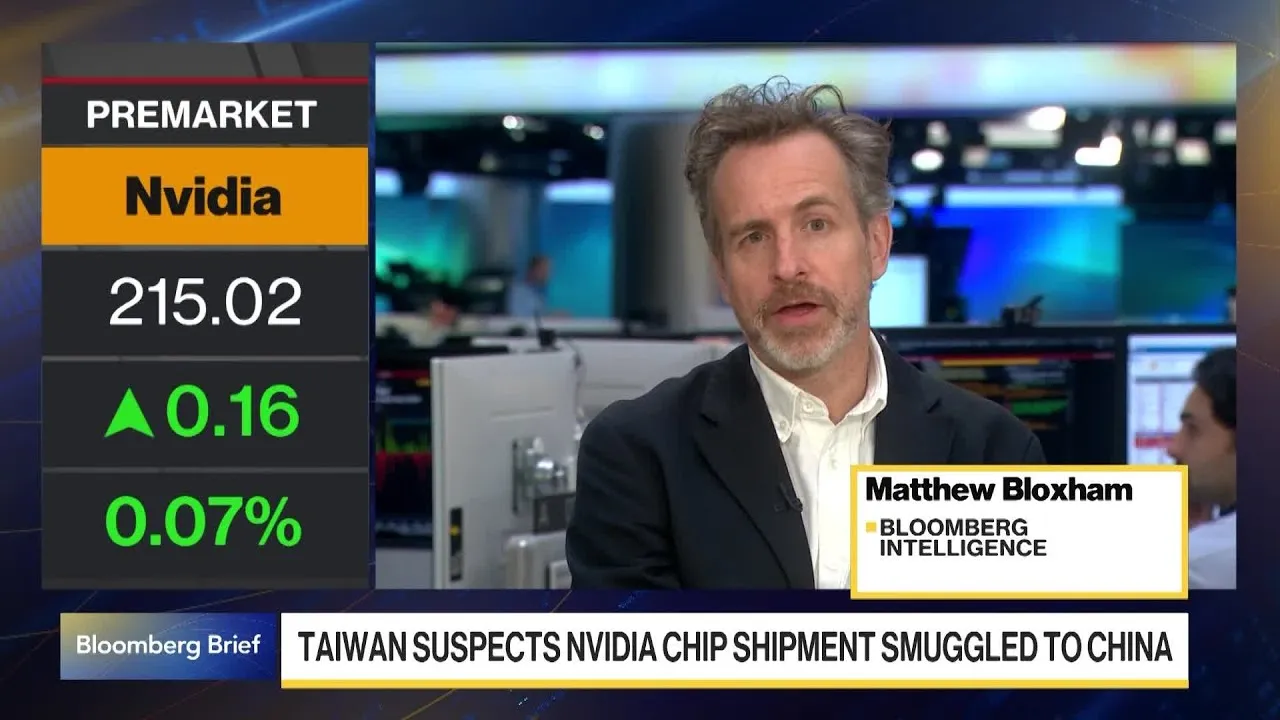
Taiwan prosecutors suspect three individuals successfully smuggled at least one shipment of Nvidia AI chips to China. The suspects reportedly used deceptive methods in the transfer process, raising concerns over technology security and intellectual property violations. An investigation is ongoing to determine the full extent of the smuggling operation and potential regulatory breaches.
Authorities in Taiwan suspect that a shipment of Nvidia AI chips was smuggled into China, raising concerns about potential technology leaks and national security. The investigation was prompted after customs officials detected irregularities in the export documentation of the high-performance chips, which are crucial for artificial intelligence applications. These chips are highly sought after for their advanced capabilities and are often targeted for smuggling to benefit competitors or unauthorized entities.
The suspected smuggling operation highlights the growing complexities of international technology trade and security. Taiwan, a major hub for semiconductor manufacturing, closely monitors the export of sensitive technology to prevent misuse or unauthorized transfer. The government has vowed to strengthen controls and collaborate with international partners to prevent similar incidents in the future.
This incident underscores the broader geopolitical tensions surrounding technology and innovation. As countries compete for technological dominance, safeguarding intellectual property and preventing unauthorized exports become increasingly critical. Authorities continue to investigate the case, aiming to ensure the integrity of Taiwan’s high-tech industry and prevent technological espionage.
Other People are Reading


Visits to restart at New Jersey migrant detention center as police expand restricted area


Colombians weigh leftist reforms against right-wing crackdowns in presidential vote

Draganfly: Drone Hype Is Outrunning Fundamentals


Syria’s Sharaa holds phone call with Trump, Syrian presidency says
Business
Localisation lens on 500 most-imported items: DPIIT analysing data; move aims to reduce country’s import bill
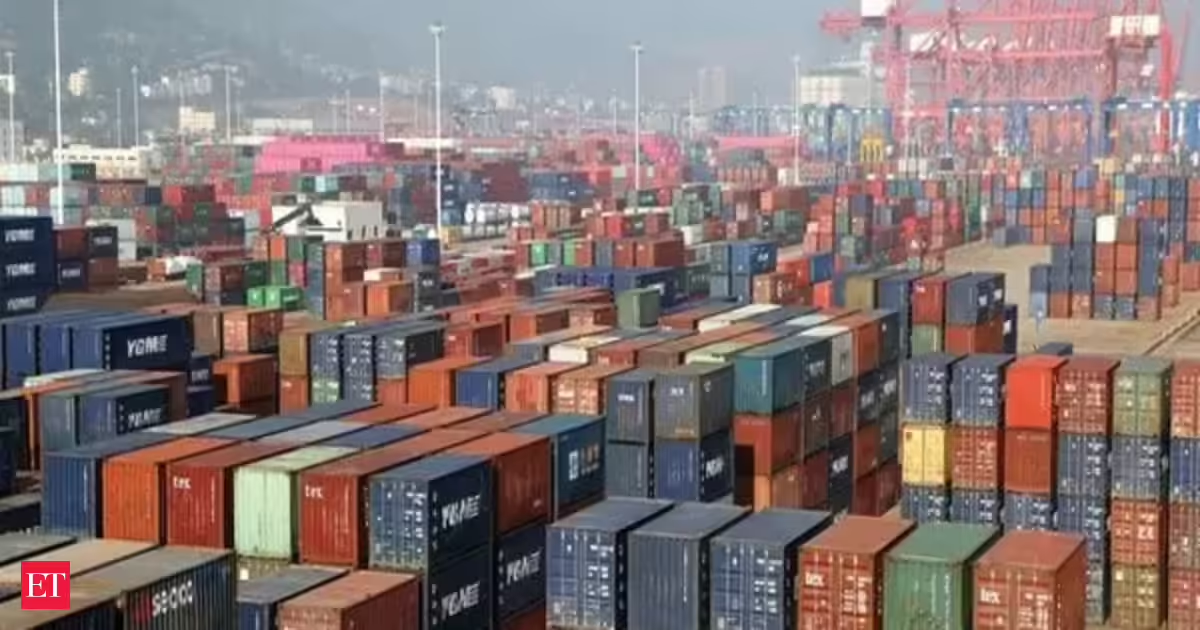
The commerce and industry ministry is collating data from different ministries on import dependence, estimated time and capital investment required to achieve commercially viable domestic manufacturing capability, and national strategic relevance of these products, officials privy to the development said.
The idea is to reduce the country’s import bill and build supply resilience amid the ongoing West Asia crisis.
The Department for Promotion of Industry and Internal Trade (DPIIT) is “analysing data such as production capacity and bottlenecks faced by industry,” one of the officials said.


The department has sought information such as the extent to which domestic demand for the product is met through imports, indicating vulnerability to external supply and the need for localisation, and the importance of the product in ensuring continuity, resilience, and stability of domestic manufacturing and essential downstream sectors.
The exercise also covers harvester-threshers, parts of turbo jets and certain graphite, officials said.
DPIIT is likely to shortlist around 100 items where the imports are high but the country has capacity to produce them locally, another person aware of the development said.
High import dependence means where 60% or more of the domestic demand for the product is met through imports while medium is where imports are 30-60%.
“Electronics and chemicals are two key sectors where imports are huge but the potential to export is also significant,” another official said.
India’s goods import bill stood at $774.98 billion in FY26, led by oil at $174 billion, electronics at $116.17 billion, and gold at $72 billion. The country also imported organic and inorganic chemicals worth $28 billion last fiscal.
Makeup preparations, dishwashers, industrial valves and certain silicon wafers also figure in the list of the products whose imports are being studied.
The exercise comes after Prime Minister Narendra Modi urged citizens to help preserve foreign exchange and contain the country’s rising import bill amid the ongoing conflict in West Asia.

‘Stuff you dream of… wanting to hit the winning run’: Virat Kohli reveals lifelong IPL final wish | Cricket News

Tip Toe full cast list for Channel 4 thriller series

‘Firefly’s Greatest 44 Minutes Are Still Its Most Overlooked Sci-Fi Masterpiece

Steven Gerrard disagrees with Gary Neville over ‘shock’ Chelsea and Arsenal claim | Football

US brings back mandatory military draft registration

Register Renaming | Hackaday

WALL STREET JUST SAID IT: XRP =THE FINANCIAL SYSTEM! Clarity Act Senate Floor Vote Drops July 2026

Ripple XRP – XRP Will Hit $10,000? (Realistic XRP Price Prediction 2026)

When The Promised Financial Genius Crashes Your Economy
-

 NewsBeat4 days ago
Israel says it has killed new Hamas military leader in Gaza City airstrikes
-

 Tech5 days ago
NASA taps Blue Origin to deliver lunar rovers for Moon Base initiative
-

 Politics6 days ago
Bridgerton Season 5: Cast, Release Date And Everything We Know So Far
-
 Crypto World7 days ago
Brian Armstrong Outlines Crypto Vision for the Future Financial System
-

 News Videos5 days ago
XRP *JUST* SUCCEEDED!!!! CLARITY ACT EXPOSED!!! (SHE EXPOSED IT)
-

 Sports6 days ago
2026 NBA Finals schedule, odds: Knicks await Thunder or Spurs after winning East
-
Crypto World5 days ago
Micron Crosses $1 Trillion Market Cap as AI Demand Reshapes Memory Sector
-

 Business5 days ago
Selena Gomez Reportedly Upset Over Benny Blanco’s Comments on Her ‘Terrible’ Diet
-

 News Videos2 days ago
This is BROKEN! INSANE 5x MONEY CAR WASH WEEK! The NEW GTA Online UPDATE Today! (GTA5 New Update)
-

 Business6 days ago
BTS Sells Out Four Las Vegas Shows at Allegiant Stadium for ARIRANG World Tour
-
 Tech6 days ago
China assigns ID codes to 28,000+ humanoid robots
-
 NewsBeat6 days ago
Hottest May day ever as London hits 34.8C in 2C leap from previous records
-

 Tech6 days ago
Microsoft’s quiet Claude Code retreat and the real cost of enterprise AI
-

 Tech3 days ago
Waymo dominates autonomous vehicle registrations as Tesla trails behind
-
 Business6 days ago
Nikkei 225 Surges Past 65,000 for First Time as Iran Peace Hopes Fuel Record Rally
-
Tech4 days ago
The Samsung pay deal is the moment Korean unions changed register
-

 NewsBeat6 days ago
Crowds find riverside shade in York as temperatures soar
-

 Tech6 days ago
Westone Audio and Etymotic Acquired by Fidelity Collective in Major IEM Market Move
-
 Entertainment6 days ago
‘Breaking Bad’ Star’s Easy-to-Binge 6-Part Crime Series Spin-Off Is Finally Heading to Free Streaming
-

 Tech5 days ago
Millions of AI agents imperiled by critical vulnerability in open source package
You must be logged in to post a comment Login