


Connect with us
DAPA Banner

Tech

Samsung Unveils 2026 The Frame and Frame Pro 4K TVs: New Sizes, Art Mode Upgrades, and Design Focus

Published

on

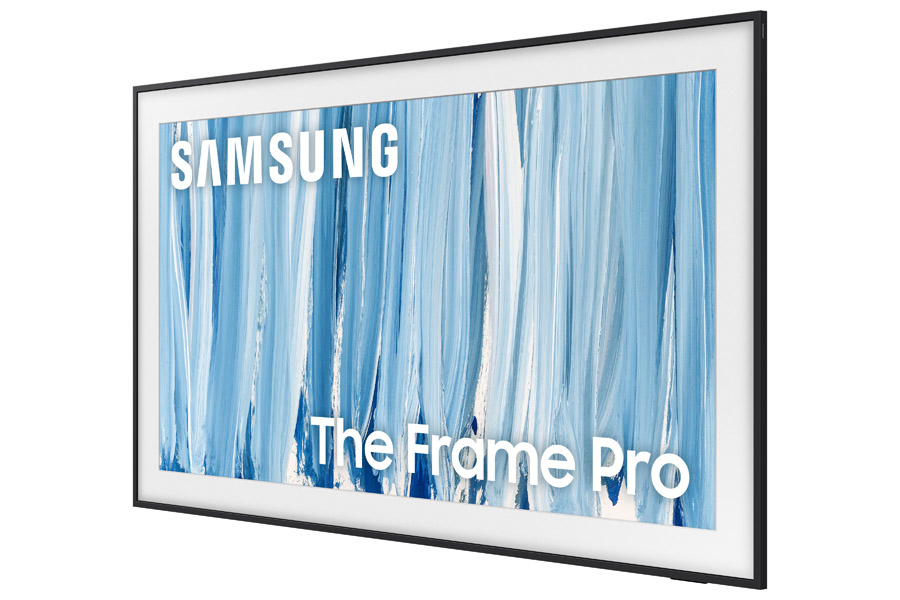
Samsung isn’t reinventing the art TV in 2026, it’s refining a concept that has clearly resonated with customers. The latest The Frame and The Frame Pro TVs continue to blur the line between display and décor, offering 4K UHD performance when powered on and a far more convincing art presentation when powered off. Available in 55, 65, 75, 85 and (soon) 98-inch screen sizes, the lineup builds on a design-first philosophy that has quietly turned The Frame into one of Samsung’s most successful lifestyle products since its 2017 debut.

With competitors like Hisense, TCL, and Skyworth now chasing the same “Art TV” idea, it’s clear Samsung didn’t just create a niche—it created a category.

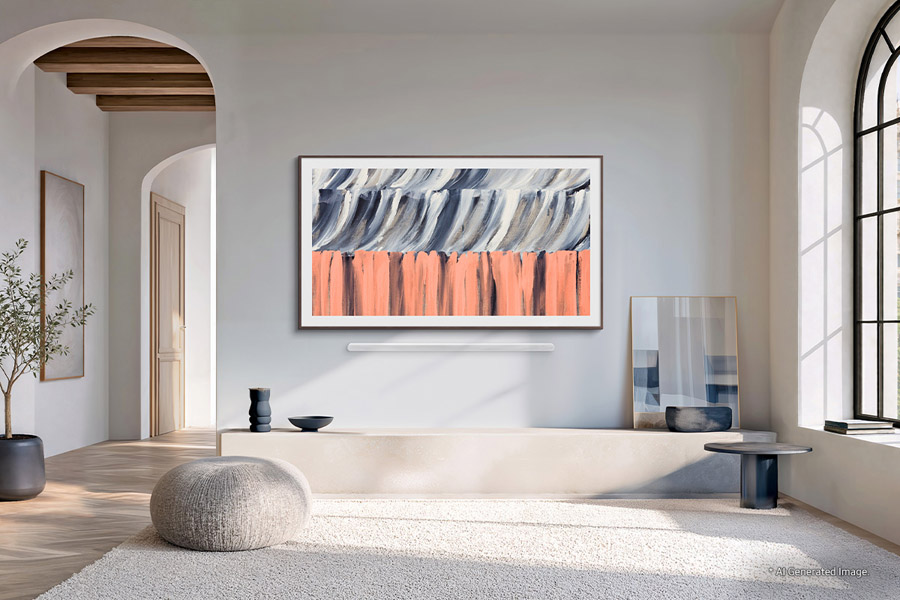
LS03HW_Lifestyle_02-cropped-900px
Samsung The Frame Pro (2026).

Samsung Art Mode and Art Store: Still the Whole Point, Just Smarter

When you turn off a Samsung Frame TV, it doesn’t go dark, it shifts into Art Mode, automatically waking when you pass by thanks to its built-in motion sensor. The Samsung Art Store gives you access to a deep catalog of curated artwork, with more than 5,000 pieces from over 800 artists spanning multiple styles, eras, and regions. Subscribers also get exclusive collections from partners like Art Basel, MoMA, the Art Institute of Chicago, and Keith Haring, among others. It’s not just window dressing either, those subscriptions help support the galleries, museums, and independent artists behind the work, which makes this feel a little less like a screensaver and a little more like an actual ecosystem.

While access to the Art Store is technically free (for up to 30 pieces per month), the whole catalog and certain features are only unlocked with a subscription (currently $5/month or $50/year).

Pantone and Anti-Reflection Matte Display

The Frame adds Pantone ArtfulColor Validation, which is Samsung’s way of saying the colors you’re seeing are actually accurate, not just showroom flashy. It’s also UL-certified for its anti-reflection, glare-free matte display, which does a solid job of cutting down ambient light so the artwork looks less like a TV pretending to be art and more like something you’d actually hang on your wall.

Advertisement

The Frame Pro leans harder into that lifestyle pitch. It’s built to anchor a room visually while doubling as your main display for movies, TV, and gaming. Samsung is positioning it as a do-it-all centerpiece—a customizable TV that can pass as a personal gallery when idle and a full-on entertainment hub when it’s not.

Samsung LS503HE Frame TV Promo Image

Bezel Options

The Frame Pro and Frame provide owners with a broad array of custom Bezel options, such as Modern Brown, Modern Teak, Modern White, and Sand Gold
Metal. Additional authorized Bezel options are available from Deco TV Frames. And adventurous customers can find unauthorized (but compatible) options on sites like ETSY.

Display Technology: Matte Panels, Real Color Accuracy, and Less Glare

The Frame Pro LS503HW series (“The Frame Pro”) incorporates a Neo QLED display, with boosted brightness and enhanced contrast, ensuring your favorite art and favorite shows always look their best – even in bright environments.

Neo QLED displays are LCD-based, which combine Mini LED backlighting with local dimming and Quantum Dot technology. Quantum Dots enhance color range and accuracy, while Mini LED backlighting with local dimming enables more precise light control, especially when rendering bright objects against dark backgrounds. When paired with HDR formats like Samsung’s HDR10+, this combination improves both color volume and overall dynamic range. We should note, however, that unlike Samsung’s traditional Mini LED TV lineup, the Frame Pro does not use a full array LED backlighting system but uses MiniLED edge-lighting instead which does decrease the precision of the backlight.

Advertisement

The Step-down Frame LS503HE Series (“The Frame”) incorporates a QLED display with Samsung Dual LED backlighting instead of Mini LED backlighting. Dual LED is a variation of LED edge lighting consisting of two LED strips, one that emits warm light (yellow) and another that emits cool light (blue). The two strips alternate light output to support a slight improvement in color in combination with the Quantum Dot layer. Unlike The Frame Pro, The Frame does not use local dimming. 

For viewers, Dual LED supports a slight improvement in color balance at the sacrifice of deeper blacks and whiter whites. Although not as precise as a Neo QLED Display, the LS503HE Series still offers acceptable levels of brightness, color accuracy, and HDR support for most room setups. 

Advertisement. Scroll to continue reading.

Additional Features

Wireless One Connect Box (The Frame Pro Only): Samsung is finally addressing one of the biggest aesthetic compromises with wall-mounted TVs—cables. The Frame Pro’s Wireless One Connect Box means the display itself only needs a power cord, while everything else stays tucked away in a separate box. It wirelessly transmits up to 4K at 144Hz from as far as 10 meters (30 feet), which should be enough for most living rooms unless you’re trying to hide it in another zip code. The result is a much cleaner installation that actually delivers on the whole “it looks like art” promise.

Advertisement
QN85LS03HWFXZA_010_R Perspective4_Black_logo_a-900px
The Frame Pro offers a thin profile thanks to a separate wireless OneConnect box that handles all of the connections.

Display Versatility: The Frame lineup isn’t just about pretending to be a painting. When it’s time to actually watch something, you’re getting a full 4K UHD TV with AI upscaling that works scene by scene to clean up lower-resolution content. The Frame Pro steps things up with Samsung’s NQ4 AI Gen3 Processor and local dimming, focusing on better detail retrieval, contrast control, and overall image stability.

Real Depth Enhancer and AI Customization: Samsung’s Real Depth Enhancer adds a bit of perceived dimensionality by separating foreground elements, which can help draw your eye to the subject without overcooking the image. AI Customization Mode goes a step further by letting you pick your preferred picture style during setup, then automatically adjusting settings in real time based on what you’re watching. It’s part convenience, part control—less menu diving, more actual viewing.

Audio Support: For speech clarity, the Frame TVs incorporate the Active Voice Amplifier. This boosts dialogue or key sound effects. Also, the FrameTV incorporates Dolby Atmos, which provides more sound immersion. Also, with Q Symphony, the Frame TV can be combined with compatible Samsung soundbars and Wi-Fi speakers to operate as a single, coordinated sound system rather than isolated components.

Gaming: Gaming support includes Samsung’s Gaming Hub, AI Auto Game Mode, Cloud Gaming, and Motion Xceleration on both series. The Frame Pro supports a 144Hz refresh rate.

AI: The Frame TVs also incorporate Samsung’s Vision AI experience, anchored by the Perplexity TV App. The takes AI on TVs beyond simple voice commands or video enhancements by combining AI audio/video processing, Bixby voice control, Tizen Smart TV integration, and Knox Security into a single, seamless ecosystem.

Advertisement

Slim Fit Wall Mount: Samsung includes its Slim Fit Wall Mount with The Frame, allowing the TV to sit nearly flush against the wall like an actual picture frame. No awkward gap, no obvious hardware, just a cleaner install that makes the whole art illusion a lot more convincing.

LS03HE_Lifestyle_01-900px

Comparison

The Frame Pro
(2026 models)

The Frame
(2026 models)

Model LS503HW LS503HE
Screen Size (Diagonal Inches) 55, 65, 75, 85  55, 65, 75, 85, 98
Price 85″ – $3,999.99
75″ – $2,799.99
65″ – $1,999.99
55″ – Coming soon
Coming soon
Display Type Neo QLED QLED
Refresh Rate 144Hz (VRR Support) 144Hz (VRR Support))
Lighting Technology Quantum Matrix Technology Slim Dual LED
Display Resolution 4K (3840 x 2160) 4K (3840 x 2160)
Anti Reflection Glare Free Glare Free
Matte Screen  Yes Yes
Viewing Angle Wide Viewing Angle Wide Viewing Angle
Dimming Technology (Software-based) Supreme Mini LED Dimming Supreme UHD Dimming
Processor NQ4 AI Gen3 Processor NQ4 AI Gen2 Processor
Upscaling 4K AI Upscaling Pro 4K AI Upscaling
Variable Refresh Rate (VRR) Yes Yes
Motion Handling Motion Xcelerator 144Hz Motion Xcelerator 144Hz
DLG (Dual Line Gate) 240Hz 240Hz
Contrast Enhancer Real Depth Enhancer Real Depth Enhancer
AI Motion Enhancer Pro
Color Quantum Dot Display
Pantone Validated ArtfulColor
Quantum Dot Display
Color Booster Pro Pro
HDR (High Dynamic Range) Neo Quantum HDR Quantum HDR
HDR10+ Adaptive
Gaming
Advanced
Adaptive
Gaming
Auto HDR Remastering Pro Yes
Adaptive Picture AI Optimized
AI Customization
AI Optimized
AI Customization
Supersize Picture Enhancer 85″ Only 85″ and 98″ Only
Bluetooth BT5.3 BT5.3
Wi-Fi Wi-Fi 6E Wi-Fi 6E
One Connect Box Yes – Wireless
HDMI Inputs 5 Ports 4 Ports
HDMI Maximum Input Rate 4K 144Hz (for HDMI 1/2/3/4) 4K 144Hz (for HDMI 1/2/3/4)
HDMI Audio Return Channel eARC eARC
HDMI-CEC Yes Yes
USB Ports 2 x USB-A
1 x USB-C
2 x USB-A
Ethernet (LAN) Yes Yes
Digital Audio Out (Optical): Yes Yes
RF Connection Yes Yes
RS-232C Input Yes Yes
Gaming Support Gaming Hub
Cloud Gaming: – Xbox, NVIDIA GeForce Now, Luna, Blacknut, Antstream, Boosteroid 
AI Auto Game Mode
ALLM (Auto Low Latency Mode)
Gaming Motion Plus
Super Ultra Wide Game View
Game Bar
Mini Map Zoom
AMD FreeSync: Freesync Premium™ Pro  
HGiG
Hue Sync
Gaming Hub
Cloud Gaming: – Xbox, NVIDIA GeForce Now, Luna, Blacknut, Antstream, Boosteroid 
AI Auto Game Mode
ALLM (Auto Low Latency Mode)
Gaming Motion Plus
Super Ultra Wide Game View
Game Bar
Mini Map Zoom
AMD FreeSync: Freesync Premium™ Pro 
HGiG
Hue Sync:
Samsung Vision AI Vision AI Companion
AI Soccer Mode
AI Sound Controller
Live Translate
Generative Wallpaper
Multi AI Agents (Copilot & Perplexity)
Pet & Family Care
Home Insight
Vision AI Companion
AI Soccer Mode
AI Sound Controller
Live Translate
Generative Wallpaper
 Multi AI Agents (Copilot & Perplexity)
Pet & Family Care
Home Insight
TV Art Features Art Mode: Yes 
Art Store: Yes
Art Mode: Yes 
Art Store: Yes
Operating System One UI Tizen One UI Tizen
Free Ad-Supported TV Samsung TV Plus Samsung TV Plus
Smart Home Connectivity SmartThings. Matter, IoT-Sensor Functionality, Quick Remote SmartThings. Matter, IoT-Sensor Functionality, Quick Remote
Smart Assistants (Built-In) Bixby, Alexa Bixby, Alexa
Smart Assistants (Works with) Google Assistant Google Assistant
Far-Field Voice Interactions Yes
Web Browser Yes Yes
Samsung Health Yes Yes
Multi-Device Experience Mobile to TV, TV initiates mirroring, Sound Mirroring, Wireless TV On Mobile to TV, TV initiates mirroring, Sound Mirroring, Wireless TV On
Multi-View Up to 2 videos Up to 2 videos
Galaxy Buds Auto Switch Yes Yes
Works with Apple AirPlay Yes Yes
Works with Google Cast Yes Yes
Daily+ Yes  Yes 
Now Brief
Workout Tracker Yes Yes
Karaoke Mic Yes Yes
Multi-Control Yes Yes
Storage Share Yes Yes
Audio  Speaker System: 2.0.2 Channels 
Output Power (W): 40W 
Dolby Atmos
Object Tracking Sound (OTS)
Q-Symphony
Active Voice Amplifier (AVA) Pro
Adaptive Sound
Bluetooth Audio
360 Audio
Speaker System: 2. Channels 
Output Power (W): 20W
 Dolby Atmos
Object Tracking Sound (OTS Lite)
Q-Symphony
Active Voice Amplifier (AVA) Pro
Adaptive Sound
Bluetooth Audio
360 Audio
TV Design Frame Design (Customizable) Frame Design (Customizable)
Bezel Type VNB (Interchangeable) VNB (Interchangeable)
Front Color Black Black
Stand Type Round Feet Round Feet
Stand Color Black Black
Adjustable Stand: Yes Yes
Security Knox Vault: N/A 
Knox Security: Yes
Knox Vault: N/A 
Knox Security: Yes
Power  Power Supply (V):
 AC110-120V~ 50/60Hz
Stand-by Power Consumption (W): 0.5 
Eco Sensor
Auto Power Saving
Auto Power Off
Power Supply (V):
 AC110-120V~ 50/60Hz
Stand-by Power Consumption (W): 0.5 
Eco Sensor
Auto Power Saving 
Auto Power Off
Included Accessories Remote Control: BT SolarCell™ Remote TM2661H 
Power Cable
Slim Fit Wall Mount: Included
Simple Stand Included
Wireless One Connect Box
Remote Control: BT SolarCell™ Remote TM2661H 
Power Cable
Slim Fit Wall Mount: Included 
Simple Stand Included

The Bottom Line 

Samsung didn’t just stumble into a gimmick with The Frame; it built a category and then spent nearly a decade refining it while everyone else played – and is still playing – catch-up. What still works is obvious: the design remains unmatched, Art Mode is actually useful (not a throwaway feature), and the matte display with reduced glare does more to sell the illusion than any marketing language ever could. The addition of the Wireless One Connect Box on the Frame Pro finally cleans up installation in a way that aligns with the whole “this is art, not a TV” pitch.

What makes it unique hasn’t really changed, but that’s the point. No one else has matched Samsung’s ecosystem: the depth of the Art Store, the partnerships, the motion sensor integration, and the overall polish. Others are making “Art TVs,” but most still feel like TVs wearing a costume. Samsung’s feels intentional.

What’s missing? For all the AI talk, there’s still a lack of clarity around how much real picture quality you’re getting versus Samsung’s more performance-focused QLED, OLED and Micro RGB models. There’s also the ongoing question of value, especially when you factor in Art Store subscriptions and whether buyers are paying more for design than outright performance.

Who is this for? Not the spec chaser. Not the home theater purist in pursuit of perfect blacks in a dark room. This is for someone who wants a TV that doesn’t dominate the room when it’s off, but still delivers a very competent 4K experience when it’s on. If your living space matters as much as your watchlist, The Frame still makes a compelling argument.

Advertisement

For customers who like the idea of an “Art TV” but do want top-notch picture performance, Samsung also now offers the S95H OLED TV. It comes with an integrated picture-frame style bezel, flush wall mounting, Glare Free screen and wireless OneConnect option like The Frame Pro, but with picture performance that rivals the top TVs of 2026.

Advertisement. Scroll to continue reading.

The real question for 2026 isn’t whether Samsung improved The Frame—they did. It’s whether the growing crowd of competitors has figured out how to do it better, or just cheaper. So far, Samsung still looks like the one everyone else is trying to catch.

Pricing & Availability

Samsung’s 2026 4K Frame TVs carry the following prices:

Advertisement

The Frame Pro (LS503HW)

  • 85-inch Class: $3,999.99
  • 75-inch Class: $2,799.99
  • 65-inch Class: $1,999.99
  • 55-inch Class: Coming soon

The Frame (LS503HE)

  • 98-inch Class: Coming Later This Year
  • 85-inch Class: Coming Soon
  • 75-inch Class: Coming Soon
  • 65-inch Class: Coming Soon
  • 55-inch Class: Coming soon

Bonus Offers

Samsung is adding some incentive to soften the blow. Order a 2026 The Frame Pro directly from Samsung.com and you can bundle in the “Picture Perfect” package, which knocks $800 off a setup that includes a white bezel, ultra slim soundbar, professional installation, a one year Art Store subscription, and two years of Samsung Care+. In other words, they are not just selling you a TV. They are trying to finish the room for you.

At retail, the pitch is simpler. Buy either the 2026 The Frame or The Frame Pro and you can take 50% off one of Samsung’s customizable bezel options, which is arguably one of the more important add ons if you actually care about the whole “it looks like art” idea.

As for availability, The Frame Pro is shipping now through Samsung and major retailers, while the standard The Frame is expected to follow later this spring. The official press release did not list the 98-inch screen size announced at CES and confirmed to eCoustics staff in March at an on-site workshop. We’ll update this article if/when we learn more about the 98-inch version.

Advertisement

Source link

Continue Reading
Click to comment

You must be logged in to post a comment Login

Leave a Reply

Tech

iPhone 18 may get little more than a new color while iPhone Fold gets 3D printed hinge

Published

on

A new leak suggests that the hinge of the iPhone Fold will use “chip-level polymer printing 3D technology” and the iPhone 18 upgrades will be limited to color changes.

Silver foldable smartphone partially open, showing dual rear cameras with flash on one side and a tall display with colorful wavy abstract pattern and centered front camera cutout on the other
The iPhone Fold will allegedly feature a 3D-printed hinge.

With Apple’s first foldable expected to debut in late 2026, we’re now seeing more and more claims about its hardware. Following multiple rumors suggesting Liquid Metal would be used for the hinge of the iPhone Fold, another tipster has provided a new tidbit about the component.
To be more specific, a translated post from leaker Fixed Focus Digital on Weibo said that Apple is putting considerable effort into its foldable iPhone. This reportedly “involves chip-level high-molecular 3D printing technology, with further developments in the hinge design still to be revealed.”
Rumor Score: 🤔 Possible
Continue Reading on AppleInsider | Discuss on our Forums

Source link

Continue Reading

Tech

IBM Teams Up With Arm To Run Arm Workloads On IBM Z Mainframes

Published

on

IBM and Arm are teaming up to let Arm-based software run on IBM Z mainframes. Network World reports: The two companies plan to work on three things: building virtualization tools so Arm software can run on IBM platforms; making sure Arm applications meet the security and data residency rules that regulated industries must follow; and creating common technology layers so enterprises have more software options across both platforms, IBM said in a statement.

IBM has not said whether the virtualization work will happen at the hypervisor level, through its existing PR/SM partitioning technology, or via containers — a question enterprise architects will need answered before they can assess the collaboration’s practical value. IBM described the effort as serving enterprises that run regulated workloads and cannot simply move them to the cloud, the statement said. IBM mainframe customers have largely missed out on the efficiency and price-performance gains Arm has already delivered in the cloud. “Arm says close to half of all compute shipped to top hyperscalers in 2025 runs on Arm chips, with AWS, Google, and Microsoft deploying their own Arm silicon through Graviton, Axion, and Cobalt, respectively,” reports Network World.

That gap is precisely what IBM and Arm’s collaboration intends to address. “This is a mainframe adjacency play,” says Rachita Rao, senior analyst at Everest Group. “The intent is to extend IBM Z and LinuxONE environments by enabling Arm-compatible workloads to run closer to systems of record. While hyperscalers use Arm to lower their own internal power costs and pass savings to cloud-native tenants, IBM is targeting the sovereign and air-gapped market.”

Source link

Advertisement
Continue Reading

Tech

HP EliteBook 6 G2q promises endless 5G data and AI power, but hides significant limitations

Published

on


  • HP EliteBook 6 G2q delivers up to 85 TOPS for local AI tasks
  • Always-connected 5G experiences require specific hardware and preinstalled eSIM modules
  • Service works only on compatible commercial PCs running Windows 11

HP has unveiled the EliteBook 6 G2q, an ultraslim AI PC that relies on Snapdragon X2 Elite or X2 Plus processors to deliver up to 85 TOPS of NPU performance for local AI tasks.

This lightweight laptop, up to 15% thinner than its predecessor, claims to offer always-connected experiences through HP Go 5G service.

Source link

Advertisement
Continue Reading

Tech

Amazon Imposes 3.5% Fuel Surcharge For Many Online Merchants

Published

on

An anonymous reader quotes a report from Bloomberg: Amazon will start charging sellers who use its shipping services a 3.5% “fuel and logistics” surcharge later this month, joining the ranks of shipping companies raising prices as the war in Iran pushes oil prices higher. The fees take effect on April 17 for customers of the company’s Fulfillment by Amazon service — which is used by many of the independent sellers who list their products on Amazon’s retail sites — in the US and Canada. Items shipped by Amazon on behalf of merchants who sell on their own sites or at other retailers will carry the surcharge beginning May 2. “Elevated costs in fuel and logistics have increased the cost of operating across the industry,” Ashley Vanicek, an Amazon spokesperson, said on Thursday. “We have absorbed these increases so far, but similar to other major carriers, when costs remain elevated we implement temporary surcharges to partially recover these costs.”

Vanicek notes that the fee will apply to the sum Amazon charges to ship an item, not the product’s sale price.

Last month, USPS announced that it would impose its first-ever fuel surcharge on packages.

Source link

Advertisement
Continue Reading

Tech

Startup launched by former AWS energy team emerges with $7M to help solve data center power crunch

Published

on

Soma Energy’s co-founders, from left: CEO Ath Caramanolis, Chief Technology Officer Mario Souto and Chief AI Scientist Henrique Hoeltgebaum. (Soma Energy Photos)

Soma Energy, a startup founded by former Amazon energy managers, emerged from stealth Thursday with $7 million in funding.

The Vancouver, B.C.-based company has built an AI platform serving power producers and data centers, helping both optimize their energy assets in real time to save money and extend their available power. The technology coordinates resources including wind, solar and batteries and the management of energy demands such as data center workloads.

CEO Ath Caramanolis said you can visualize an electrical system as a complex network of roads and highways on which electrons — instead of cars and trucks — are traveling.

“Our software is sort of a control plane that helps provide the self-driving for electrons on these highway systems,” Caramanolis said in a GeekWire interview.

More efficient routing of electron traffic can bring more power to bear for the grid’s competing needs.

Advertisement

“There is low hanging fruit everywhere, and the opportunities for large energy users like data centers to better utilize the grid exist all across North America,” Caramanolis said.

Industries, utilities and elected officials worldwide are racing to expand energy supply as data centers and electrification of transportation, heating and other sectors drive surging demand. Data centers alone are expected to more than double their power draw — from 82 gigawatts in 2025 to 219 by 2029 — with most of that growth fueled by AI, according to McKinsey.

Amazon hired Caramanolis in 2018 to create the energy optimization team at AWS, which managed about 10 gigawatts of renewable energy across its global network of data centers. Seattle City Light, by comparison, has a generation capacity of about 2 gigawatts.

Caramanolis then recruited Mario Souto, Soma Energy’s co-founder and chief technology officer, to build the machine learning platform AWS used to optimize its renewable portfolio. The startup’s third co-founder, Chief AI Scientist Henrique Hoeltgebaum, is an expert in AI-driven forecasting and anomaly detection for energy systems.

Advertisement

Soma Energy launched in February 2024 and has 18 employees. The startup has deployed 2 gigawatts of assets in the U.S. with customers including several independent power producers and five data center companies — among them H5 Data Centers, whose sites include a large facility in downtown Seattle.

“By coordinating existing resources, we were able to access capacity significantly sooner than expected, accelerating our time to power and removing a critical constraint on expansion,” said Josh Simms, CEO of H5 Data Centers, in a statement.

The seed round was led by Category Ventures, with participation from Haystack, Panache Ventures, RRE Ventures, TO.VC, Uncork Capital and Walter Kortschak. The investment will allow the team to hire new employees in engineering and commercial roles and expand its reach across North America.

“Having managed hyperscale power systems firsthand, the founders built Soma Energy as if they were the customer themselves,” said Villi Iltchev, partner at Category Ventures.  

Advertisement

Source link

Continue Reading

Tech

Dell’s five-second charging keyboard reveals a future where electric cars could recharge in minutes instead of hours

Published

on


  • Supercapacitors turn charging time from hours into mere seconds
  • Fast charging exposes the real limits of lithium-ion battery chemistry
  • Supercapacitor technology lacks sufficient energy capacity for practical electric vehicles

Dell has introduced a keyboard and mouse combo that charges in five seconds and delivers a full day of use.

The new Dell Pro 7 Rechargeable Compact Keyboard and Mouse relies on supercapacitor technology rather than traditional lithium-ion batteries.

Source link

Advertisement
Continue Reading

Tech

Anything Can Be A Router, If You Try Hard Enough

Published

on

If you’re an American and you use the Internet at home, it seems probable that routers are going to be in short supply. The US government recently mandated all such devices be home grown for security reasons, which would be fine were it not that the US has next-to-no consumer-grade router manufacturing industry.

So if you’re in the US and you need a router, what can you do? [Noah Bailey] is here from Canada to point out that almost anything (within reason) in computer terms can be made to perform as a router.

The piece is really a guide to setting up a Linux router, which he does on a small form factor PC and a hacked-together assembly of old laptop, PCI-express extender, and scrap network kit. In its most basic form a router doesn’t need the latest and greatest hardware, so there exists we’re guessing almost two decades of old PCs just waiting to be pressed into service. Perhaps it won’t help the non-technical Man In The Street much, but maybe it’ll inspire a few people to save themselves a hefty bill when they need to connect.

Advertisement

You can read our coverage of the ban here.

Source link

Advertisement
Continue Reading

Tech

Windows 3.1 On A Modern AM5-Based PC Is Surprisingly Usable

Published

on

Although Windows 95 stole the show, Windows 3.0 was arguably the first version of Windows that more or less nailed the basic Windows UI concept, with the major 3.1 update being quite recognizable to a modern-day audience. Even better is that you can still install Win3.1 on a modern x86-compatible PC and get some massive improvements along the way, as [Omores] demonstrates in a recent video.

The only real gotcha here is that the AMD AM5 system with Asus Prime X670-P mainboard is one of those boards whose UEFI BIOS still has the ‘classic BIOS’ Compatibility Support Module (CSM) option. With that enabled, Win 3.1 installs without further fuss via a USB floppy drive from a stack of ‘backup’ floppies that someone made in the early 90s. [Omores] also tried it with CSMWrap, but with this USB to PS/2 emulation didn’t work.

Windows 3.1 supports ‘enhanced mode’ by default, which adds virtual memory and multi-tasking if you have an 80386 CPU or better. To fix crashing on boot and having to use ‘standard mode’ instead, the ahcifix.386 fix for the responsible SATA issue by [PluMGMK] should help, or a separate SATA expansion card.

Advertisement

For the video driver the vbesvga.drv by [PluMGMK] was used, to support all VESA BIOS Extensions modes. This driver has improved massively since we last covered it and works great with an RTX 5060 Ti GPU. There’s now even DCI support to enable direct GPU VRAM access for e.g. video playback, with audio also working great with only a few driver-related gotchas.

Advertisement

Source link

Continue Reading

Tech

Meta Caves To The MPAA Over Instagram’s Use Of ‘PG-13,’ Ending A Dispute That Was Silly From The Start

Published

on

from the silly-times dept

Back in October, Meta announced that its new Instagram Teen Accounts would feature content moderation “guided by the PG-13 rating.” On its face, this made a certain kind of sense as a communication strategy: parents know what PG-13 means (or at least think they do), and Meta was clearly trying to borrow that cultural familiarity to signal that it was taking teen safety seriously.

The Motion Picture Association, however, was not amused. Within hours of the announcement, MPA Chairman Charles Rivkin fired off a statement. Then came a cease-and-desist letter. Then a Washington Post op-ed whining about the threat to its precious brand. The MPA was very protective of its trademark, and very unhappy that Meta was freeloading off the supposed credibility of its widely mocked rating system.

And now, this week, the two sides have announced a formal resolution in which Meta has agreed to “substantially reduce” its references to PG-13 and include a rather remarkable disclaimer:

“There are lots of differences between social media and movies. We didn’t work with the MPA when updating our content settings, and they’re not rating any content on Instagram, and they’re not endorsing or approving our content settings in any way. Rather, we drew inspiration from the MPA’s public guidelines, which are already familiar to parents. Our content moderation systems are not the same as a movie ratings board, so the experience may not be exactly the same.”

In Meta’s official response, you can practically hear the PR team gritting their teeth:

Advertisement

“We’re pleased to have reached an agreement with the MPA. By taking inspiration from a framework families know, our goal was to help parents better understand our teen content policies. We rigorously reviewed those policies against 13+ movie ratings criteria and parent feedback, updated them, and applied them to Teen Accounts by default. While that’s not changing, we’ve taken the MPA’s feedback on how we talk about that work. We’ll keep working to support parents and provide age-appropriate experiences for teens,” said a Meta spokesperson.

Translation: we’re still doing the same thing, we’re just no longer allowed to call it what we were calling it.

There are several layers of nonsense worth unpacking here. First, there’s the MPA getting all high and mighty about its rating system. Let’s remember how the MPA’s film rating system came into existence in the first place: it was a voluntary self-regulation scheme created in the late 1960s specifically to head off government regulation after the government started making noises about the harm Hollywood was doing to children with the content it platformed. Sound familiar? The studios decided that if they rated their own content, maybe Congress would leave them alone. As the MPA explains in their own boilerplate:

For nearly 60 years, the MPA’s Classification and Rating Administration’s (CARA) voluntary film rating system has helped American parents make informed decisions about what movies their children can watch… CARA does not rate user-generated content. CARA-rated films are professionally produced and reviewed under a human-centered system, while user-generated posts on platforms like Instagram are not subject to the same rating process.

Sure, there’s a trademark issue here, but let’s be real: no one thought Instagram was letting a panel of Hollywood parents rate the latest influencer videos.

Next, the PG-13 analogy never actually made much sense for social media. As we discussed on Ctrl-Alt-Speech back when this whole thing started, the context and scale are just completely different. At the time, I pointed out that a system designed to rate a 90-minute professionally produced film — reviewed in its entirety by a panel of parents — is a wholly different beast than moderating hundreds of millions of short-form posts generated by individuals (and AI) every single day.

Advertisement

So, yes, calling the system “PG-13” was a marketing gimmick, meant to trade on a familiar brand while obscuring how differently social media actually works — but the idea that this somehow dilutes the MPA’s marks is still pretty silly.

Then there’s the rating system’s well-documented arbitrariness. The MPA’s ratings have been criticized for decades for their seemingly incoherent standards. On that same podcast, I noted that the rating system is famous for its selective prudishness — nudity gets you an R rating, but two hours of violence can skate by with a PG-13.

There was a whole documentary about this — This Film Is Not Yet Rated — that exposed just how subjective and inconsistent the whole process was. Meta was effectively borrowing credibility from a system that was itself created as a regulatory dodge, is famously inconsistent, and was designed for an entirely different medium. And the MPA’s response was essentially: “Hey, that’s our famously inconsistent regulatory dodge, and you can’t have it.”

The whole thing was silly. And now it’s been formally resolved with Meta agreeing to stop doing the thing it had already mostly stopped doing back in December. So even the resolution is anticlimactic.

Advertisement

But there’s a more substantive point buried under all this trademark squabbling: the whole approach reflects a flawed assumption that one company can set a universal standard for every teen on the planet.

As I argued on the podcast, the deeper issue is that the whole framework is wrong for the medium. The MPA’s rating system was built to evaluate a single 90-minute film, reviewed in its entirety by a panel of parents. Applying that logic to hundreds of millions of short-form posts generated by people across wildly different cultural contexts — a kid in rural Kansas, a teenager in Berlin, a twelve-year-old in Lagos — was never going to produce anything coherent. Different kids, different families, different communities have different standards, and no single company should be setting a universal threshold for all of them. The smarter approach is giving parents and users real controls with customizable defaults, rather than having Zuckerberg (or a Hollywood trade association) decide what counts as age-appropriate for every teenager on the planet.

This whole dispute was silly from start to finish.

Filed Under: content moderation, movie ratings, pg-13, social media

Companies: meta, mpa

Advertisement

Source link

Continue Reading

Tech

Drift loses $280 million as hackers seize Security Council powers

Published

on

Drift loses $280 million as hackers seize Security Council powers

The Drift Protocol lost at least $280 million after a threat actor took control of its Security Council administrative powers in a planned, sophisticated operation.

The attacker leveraged durable nonce accounts and pre-signed transactions to delay execution and strike with accuracy at a chosen time, the platform explained.

Drift underlines that the hacker did not exploit any flaws in its programs or smart contracts, and no seed phrases have been compromised.

Drift Protocol is a DeFi trading platform built on the Solana blockchain that serves as a non-custodial exchange, giving users full control of their funds as they interact with on-chain markets.

Advertisement

As of late 2024, the platform claimed to have 200,000 traders, supporting total trading volumes of more than $55 billion and a daily peak of $13 million.

According to Drift’s report, the heist was prepared between March 23 and 30, with the attacker setting up durable nonce accounts and obtaining 2/5 multisig approvals from Security Council members to meet the required threshold.

This enabled them to pre-sign malicious transactions that weren’t executed immediately.

On April 1st, the attacker performed a legitimate transaction and immediately executed the pre-signed malicious transactions, transferring admin control to themselves within minutes.

Advertisement

Having gained admin control, they introduced a malicious asset, removed withdrawal limits, and eventually drained funds.

PeckShield
Source: PeckShield

Drift Protocol estimates the losses at about $280 million, while blockchain tracking account PeckShieldAlert has calculated them at $285 million.

When unusual activity on the protocol was detected, Drift issued a public warning to users, stating that started an investigation and urging them not to deposit any funds until further notice.

Tweet

As a result of the attack, borrow/lend deposits, vault deposits, and trading funds have been affected, and all protocol functions are now essentially frozen. Drift said DSOL is unaffected, and insurance fund assets are secured.

The platform is now working with security firms, cryptocurrency exchanges, and law enforcement authorities to trace and freeze the stolen funds.

Advertisement

Drift promised to publish a detailed post-mortem report in the coming days.

Automated pentesting proves the path exists. BAS proves whether your controls stop it. Most teams run one without the other.

This whitepaper maps six validation surfaces, shows where coverage ends, and provides practitioners with three diagnostic questions for any tool evaluation.

Source link

Advertisement
Continue Reading

Trending

Copyright © 2025