

Crypto World
Iran’s Telegram ban backfired, stoking crypto concerns


The Iranian government’s bid to shutter Telegram in the country appears to have backfired, as millions of users find workarounds to stay online through privacy-centric tools and VPNs, according to Telegram founder Pavel Durov.
In a post on X, Durov said Tehran’s attempt to clamp down on the messaging app “years ago” has instead fueled a broader wave of circumvention. He noted that tens of millions of Iranians remain connected via VPNs and similar technologies, and he highlighted a cross-border effect as VPN-driven connectivity accelerates in Russia as well.
“The government hoped for mass adoption of its surveillance messaging apps, but got mass adoption of VPNs instead. Now, 50 million members of the digital resistance in Iran are joined by over 50 million more in Russia.”
Decentralized technologies—ranging from blockchain-based messaging to encrypted, distributed networks—are increasingly pitched as a way to counter state-imposed online restrictions and surveillance, offering users a path to private communications even when central authorities exert control.
Key takeaways
- Iran’s Telegram ban did not end use; tens of millions continue to access the service via VPNs and related tools, per Pavel Durov.
- The stance has produced a broader migration toward privacy-preserving and decentralized messaging technologies beyond a single app.
- Even as governments restrict access, parallel connectivity channels such as Starlink and device-to-device mesh networks emerge as potential backstops for communication.
- Evidence from protests in Nepal and Madagascar shows spikes in downloads of decentralized messaging apps during periods of social unrest, underscoring demand for censorship-resistant tools.
- For investors and builders, the episode highlights a growing divergence between regulatory attempts to control information flow and a user base willing to adopt privacy-native infrastructure at scale.
Regulatory push, user resilience
Iran’s January 2026 nationwide internet blackout, enacted amid escalating protests and ongoing regional tensions, marked a decisive move to curb online mobilization. While the blackout remains in effect, residents retain some access through alternative means—most notably satellite-backed networks such as Starlink, which the government has not fully blocked—and through local, privacy-forward apps capable of wading through censorship filters.
Among the most discussed workarounds is BitChat, a messaging application built to operate over Bluetooth and mesh networks. BitChat turns each participating device into a relay node, effectively stitching a communications mesh that can bypass traditional networks and satellite backbones. Its decentralized design aims to keep conversations flowing even when centralized infrastructure is restricted.
The broader ecosystem around decentralized technologies is also expanding to address similar scenarios elsewhere. BitChat’s architecture has drawn attention for its potential to offer an alternative communication channel when internet access is compromised. The project’s technical approach and practical uses were detailed in public repositories and whitepapers, illustrating how mesh networking can complement or substitute conventional connectivity in crisis conditions.
Decentralized messaging in the crucible of unrest
The wave of protests that swept across Nepal in 2025 and 2026 brought a notable surge in interest for censorship-evading communication tools. Cointelegraph reported a sharp uptick in BitChat downloads in Nepal during the social-media crackdown, described as a period when the government’s grip on information intensified. In the same breath, Nepalese protests were described as having a transformative political effect within the month, with the government reportedly toppled by demonstrators in that period.
Similar dynamics were observed in Madagascar, where a related surge in decentralized messaging adoption accompanied political turbulence. These patterns illustrate a practical use case for privacy-preserving and distributed communications during periods of blackout and unrest, rather than a speculative tech experiment.
Proponents argue that the trend signals more than isolated incidents. As governments seek to regulate or disable centralized platforms, users appear to gravitate toward tools that improve resilience, privacy, and autonomy. This shift aligns with a broader discourse in the crypto and decentralized tech communities about building communications layers that remain accessible despite state-level interference.
What this means for markets, users, and builders
The episode offers a tangible case study in how regulatory pressure can inadvertently accelerate adoption of decentralized and privacy-first technologies. For traders and investors, the takeaway is not a call for quick price moves but a recognition that demand for censorship-resistant communications could expand alongside ongoing geopolitical frictions and regulatory crackdowns in various regions.
For developers and infrastructure builders, the narrative underscores several priorities: enhancing the reliability of offline and mesh-based communications, improving the security and usability of decentralized messaging, and developing interoperable layers that can bridge traditional networks with privacy-focused protocols. The convergence of encrypted messaging with crypto-inspired incentives and governance mechanisms could shape new kinds of platforms that prioritize user sovereignty and resilience over centralized control.
While the exact regulatory responses and technological adoption timelines remain uncertain, the Iranian case—paired with parallel developments in Nepal and Madagascar—highlights a clear, growing demand for alternatives that keep people connected when conventional networks falter.
As the situation evolves, watchers should monitor how governments respond to a populace that increasingly expects and deploys private, censorship-resistant channels. The next developments could redefine how citizens, developers, and policymakers think about online rights, access, and the role of decentralized technology in everyday communication.
Source references and ongoing reporting from Cointelegraph and related coverage underscore the continuity of this trend as it unfolds across regions facing varying degrees of internet control and regulatory pressure.



Ethereum's staking queue has grown to unprecedented levels, with 3,394,545 ETH waiting to be staked while only 64 ETH remains queued for unstaking, according to validator queue data. The disparity represents staking demand exceeding exit demand by approximately 53,040x, reflecting intense validator… Read the full story at The Defiant


Coinbase’s Ethereum Layer 2 network Base has launched a new tool that lets artificial intelligence agents directly interact with users’ crypto wallets and decentralized finance applications through plain-language prompts, marking a new step in the convergence of AI and crypto infrastructure.
The product, called Base MCP, connects a user’s Base Account to AI clients such as ChatGPT, Claude and Cursor using the Model Context Protocol (MCP), an emerging standard that allows AI systems to securely interface with external tools and applications.
With the integration, users can ask AI agents to send funds, swap tokens, check balances, review transaction history and interact with DeFi applications on Base without navigating traditional crypto interfaces.
“Base MCP is a first step toward making the onchain economy easier to use via AI,” the company said in a statement. “Instead of forcing users to jump between apps, parse protocol interfaces, or know exactly which action to take, Base MCP lets your agent help you navigate the ecosystem in a more personalized and understandable way.”
The launch comes as crypto companies increasingly experiment with agentic systems capable of autonomously executing blockchain transactions and interacting with decentralized applications. Industry proponents argue that AI agents could simplify onboarding to crypto by abstracting away the complexity of wallet management and protocol navigation.
At launch, Base MCP includes integrations with several DeFi protocols on Base, including lending platforms Morpho and Moonwell, decentralized exchange Uniswap and perpetuals trading platform Avantis.
The integrations allow users to interact with lending markets, supply assets to vaults, manage liquidity positions and trade perpetual futures through conversational AI interfaces rather than dedicated apps or websites.
Base framed the initiative as part of a broader push toward AI-native internet interfaces, arguing that chat-based agents may eventually become a primary method for discovering and using onchain applications.
“Over time, we believe agentic chat interfaces will become an important surface for app discovery and distribution,” the company wrote in its press release. “As more people use agents as their primary internet interface, apps will need a new way to show up inside those environments.”
Read more: Coinbase’s Base to focus on tokenized markets, stablecoins, developers this year

A $250 million medical clinic launched by Cardano creator Charles Hoskinson is shutting down after scaling too quickly and burning through cash left it “no longer financially sustainable.”
When the Hoskinson Health and Wellness Clinic opened in Wyoming in 2023, Hoskinson claimed it would become the “Mayo Clinic of the West,” where a wide variety of specialised healthcare would be available to locals from the rural region.
However, despite the fanfare, in December 2025, two concreting firms created by Hoskinson, which were helping to expand the clinic, announced 136 layoffs. The clinic itself then announced a further 40 job cuts in January.
The clinic, which was decorated with some of Hoskinson’s favourite knicknacks, including talking robots, space NFTs, and Roman coins, subsequently admitted that it had scaled too quickly and was burning through cash.
Hoskinson said at the time, “The blame for growing too fast falls on the Hoskinson family. We moved too quickly because we wanted to say ‘yes’ to every request for help.”
Five months on, the Cowboy State Daily reports that the clinic’s leaders informed staff on Friday that the clinic would shut down on July 31.

Read more: Cardano crisis: senior dev quits after Hoskinson calls in the feds
A spokesperson said, “We have reached the difficult conclusion that the organization is no longer financially sustainable in its current form.”
The clinic posted on Facebook, “We set out to create something very ambitious: a place where patients in our rural community could access advanced care, specialty providers, prevention programs, and modern medical technology without having to leave the region.”
Patients, staff, and the community will supposedly see “an orderly, compassionate, and responsible transition.”
“Our last day of patient appointments is July 31, 2026. Between now and then, our full team remains committed to your care. We strongly encourage you to establish care with a new provider before our closing date so there is no interruption to your healthcare,” it posted.
Hoskinson leaves patients and doctors scrambling for help
Hoskinson claims that his clinic was serving between 18,000 and 20,000 patients. Cowboy State Daily spoke with some of these patients who will be impacted by the closure.
Shawnna Langdon, who lives with aggressive rheumatoid arthritis, relied on the clinic’s vicinity to her home to help with her pain. The next nearest clinic is in South Dakota.
She planned to transfer all her rheumatology care to the clinic this summer, but is now rushing to find new doctors and reschedule surgery that was cancelled.
Other patients took to online forums to express their sadness over the closure. Doctors who were slated to start work at the firm in January were also hung out to dry and told there was no job for them.
One anonymous doctor claimed they completed their background check and fulfilled all the relevant requirements before their offer was withdrawn.
They said, “When I asked them why the offer was withdrawn, they told me it’s a business organization decision. The team decided not to open the position.”
“This has been extremely difficult for me, like right now, personally and professionally,” they claimed, adding that they were preparing to relocate for the job.
“It’s a very hard time for me now,” the doctor added.
The clinic housed Roman coins, NFTs, and robots
Cowboy State Daily describes the clinic as a “personal museum of Charles Hoskinson’s globe-trotting life.”
Dotted throughout the clinic are Hoskinson’s favourite works of art, Roman coins, a replica of the Book of the Dead, and an NFT that was “flown” into space, all on display.
The waiting room is modeled on his favorite Swedish hotel, there’s an “infinity room” that uses mirrors to display your reflection an infinite number of times, and another infinity statue in the waiting room.
There were replica robots from the sci-fi series Lost in Space and The Forbidden Planet, and plans to install several exotic fish and dart frog enclosures.


Read more: Cardano whale slams Charles Hoskinson, calls for voting revolt
The building was also going to include a private “napatorium” where Hoskinson could sleep. The room was inspired by Thomas Edison and his attempts to enter a semi-lucid state where he could come up with creative ideas.
Hoskinson’s mum, Patricia Hoskinson, claimed when showing reporters the clinic that, “He takes power naps, OK, and so that’s where he gets all these brilliant ideas.”
Plans for the clinic also included hanging dinosaur fossils from the ceiling and the inclusion of Godzilla and Mothra figures.
The decision to fill the facility with oddities left some Cardano supporters angry at Hoskinson’s decisions to torch billions of his ADA on a “vanity clinic.”
The X account belonging to former Cardano crypto project Meshnet Capital said, “Talking robots, a napatorium, space NFTs, Roman coins on the walls. Now closing. His bailout token flopped because he already burned the community. Cardano was the slow rugpull.”
Other users complained that Hoskinson spent millions on “personal pet projects,” while some compared him to a “snake oil salesman.”
One former Cardano supporter who goes by the X username “@thecardanotimes,” said yesterday that they devoted their life to the project, and that they’ll “never forgive Charles Hoskinson for his greed, his ego, and now his desperation.”
Read more: Cardano has lost $15B since Trump reneged on Strategic Reserve promise
Hoskinson has yet to address the clinic’s closure on his X account.
He has, however, suggested how to reset the project’s governance structure and put himself forward as a DRap, someone who can vote on governance proposals on behalf of others.
Last November, one of Hoskinson’s senior developers, Roman Kireev quit Input | Output after Hoskinson expressed his support for an FBI investigation into a staking pool operator who “accidentally broke” the network while “vibe coding.”
Protos has reached out to the Hoskinson Health and Wellness Clinic for comment and will update this piece should we hear anything back.
Got a tip? Send us an email securely via Protos Leaks. For more informed news and investigations, follow us on X, Bluesky, and Google News, or subscribe to our YouTube channel.


MicroStrategy, one of the world's largest corporate holders of Bitcoin, announced this week that it purchased bonds instead of additional cryptocurrency. The move marks an unexpected pivot for the company, which holds 843,738 BTC valued at approximately $65 billion—a position acquired for roughly… Read the full story at The Defiant
Crypto World
Ripple News: Squid Raised $6 Million With Ripple Backing, Then Lost Half of It to a Hack Less Than 24 Hours Later

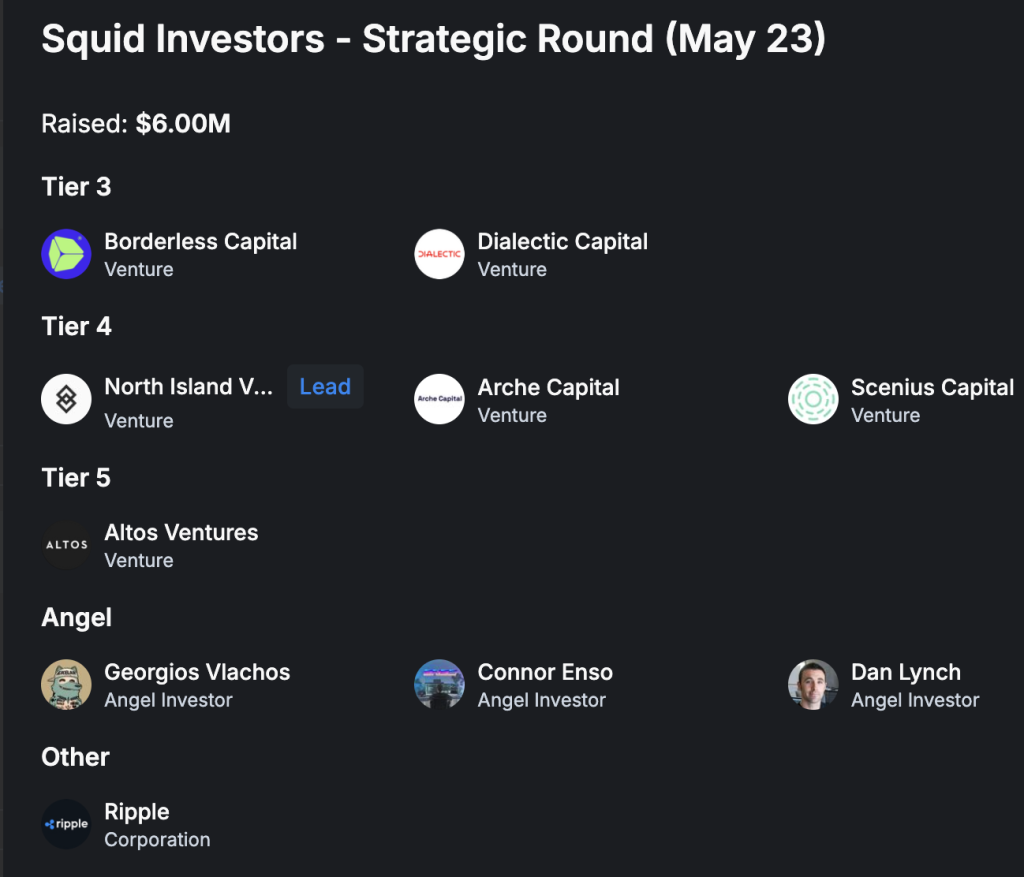
Ripple News: Squid Crypto closed a $6 million strategic funding round led by North Island Ventures with participation from Ripple on May 25, 2026, and within less than 24 hours, an attacker drained $3 million from the protocol.
The exploit hit a third-party liquidity aggregation module integrated into Squid’s cross-chain swap infrastructure, not the audited core contracts.
Squid’s official response has been to distance itself from the breach entirely, stating the team does not know who deployed the specific module responsible for the drain.
— Blockaid (@blockaid_) May 25, 2026
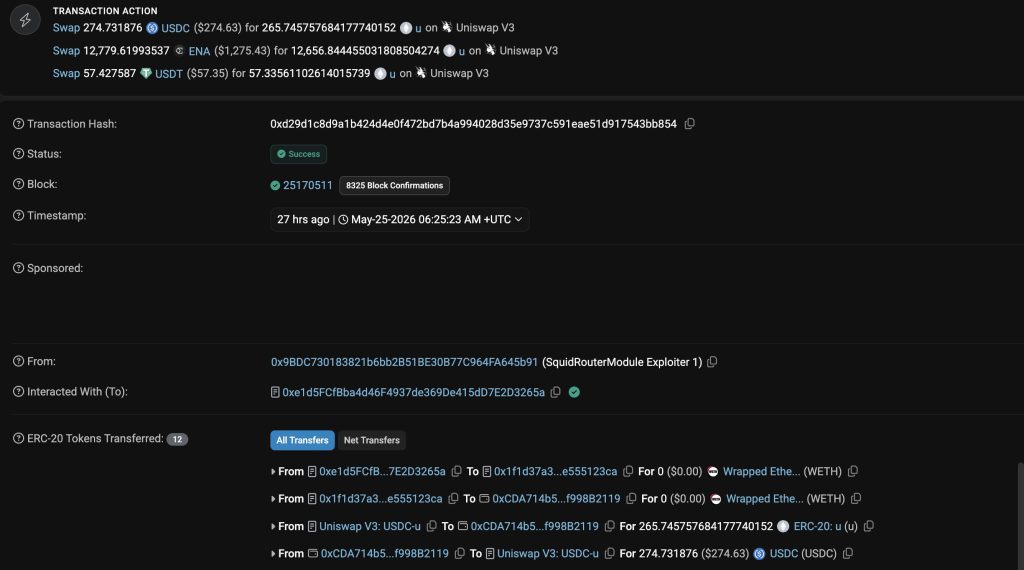
 Blockaid detected an ongoing exploit targeting the SquidRouterModule on Ethereum and Base.
86 Gnosis Safes drained for ~$3M in ~2 hours.
All stolen tokens swapped to DAI via attacker-controlled Uniswap V3 pools.
More details in 
Squid operates as a meta-DEX and chain-abstraction protocol, routing cross-chain swaps across multiple networks through aggregated liquidity layers.
The $6M raise was positioned as a catalyst for expanding that interoperability infrastructure, with Ripple’s involvement framed as a strategic alignment with its broader cross-chain and payments roadmap. That narrative collapsed inside a single news cycle.
Discover: The Best Crypto to Diversify Your Portfolio
Ripple News: How the Squid Crypto Exploit Worked: The Third-Party Module Vulnerability
The attack vector was a peripheral liquidity aggregation module that Squid had recently integrated to facilitate cross-chain swap routing, a component sitting outside the protocol’s audited core contract suite.
The attacker exploited manipulated price feeds or misconfigured access permissions within this module to siphon assets directly, bypassing the security controls that governed Squid’s primary contracts.
This is a structural pattern that has surfaced repeatedly across DeFi exploit history: audits cover submitted components, not the full dependency tree.
The module in question was a third-party integration layer, meaning its trust assumptions, permission logic, and oracle dependencies were never subjected to the same scrutiny as Squid’s native code.
Squid Router’s ResponseSquid Router quickly issued a statement distancing itself from the exploit. The team clarified that the drained funds came from a third-party Gnosis Safe module called
SquidRouterModule, which was neither built, deployed, nor operated by them. They emphasized that their core router contract remained unaffected and that all standard Squid users and integrators were safe.
The team noted the module had integrated with Squid alongside other protocols without any direct involvement from Squid, and urged the community to avoid conflating the two due to similar naming. No action was required from Squid users.
Discover: The Best Token Presales
The post Ripple News: Squid Raised $6 Million With Ripple Backing, Then Lost Half of It to a Hack Less Than 24 Hours Later appeared first on Cryptonews.
Crypto World
The Reason Why Bitcoin’s Largest Corporate Holder Chose Bonds Over BTC This Week (Analyst)
Michael Saylor announced this week that Strategy bought back its own convertible bonds rather than adding more Bitcoin, a move that may have seemed puzzling at first but makes sense once you understand the financial logic behind it.
According to crypto analyst Darkfost, the decision reflects a broader warning signal in equity markets: the gap between what stocks and bonds pay has narrowed to its lowest level since the dot-com bubble.
The Equity Risk Premium and What It Means for Bitcoin
The equity risk premium is the extra return investors expect for holding stocks instead of bonds, and when it shrinks, stocks become less attractive relative to supposedly safe fixed-income assets.
Per Darkfost’s analysis, that premium has just hit its lowest reading since 2000. He also added that the situation is not purely about irrational exuberance, considering that yields are elevated while the S&P 500 is trading in price discovery territory, which has compressed the return advantage of equities.
“A capital rotation is coming,” wrote the analyst. “This chart does not say when or how, but it signals the growing risk in the equity market.”
His argument about Saylor is that buying bonds reflects strategy, not second-guessing Bitcoin. The notes being repurchased are Strategy’s own 0% convertible senior notes due 2029, and buying them back at a discount, roughly $1.38 billion for $1.5 billion in face value, reduces future share dilution and improves the balance sheet.
Strategy had agreed to buy back approximately $1.5 billion of these notes, with Bitcoin sales listed as one possible funding source, with Saylor himself not ruling out selling some Bitcoin before year-end during a May 21 interview with Natalie Brunell.
Accumulation on Pause After a Huge Week
The bond repurchase follows one of Strategy’s biggest buying weeks of the year. As CryptoPotato reported, the company acquired 24,869 BTC for about $2.01 billion on May 18.
That buy brought its total holdings to 843,738 BTC acquired at an average cost of around $75,700 per coin.
Bitcoin is currently trading around $77,000, down roughly 0.8% over 24 hours and about 39% below its all-time high above $126,000 set in October 2025.
In Darkfost’s view, assets like BTC could benefit if capital does rotate out of equities, although he also pointed out that the same flow could just as easily move toward bonds given their current yield dynamics.
However, what he didn’t question is Saylor’s intention, suggesting that buying your own bonds at a discount, with a clear-eyed read on equity market risk, is not the behavior of someone who has lost the plot.
The post The Reason Why Bitcoin’s Largest Corporate Holder Chose Bonds Over BTC This Week (Analyst) appeared first on CryptoPotato.


Staking accounted for 60% of disclosed revenue across publicly listed Ethereum (ETH) treasury firms in 2025, according to a new study from staking provider Everstake released Tuesday.
The finding runs counter to massive combined net losses booked by ETH treasury firms.
Staking Drives 60% of ETH Treasury Revenue
Among companies that separately disclosed staking-related revenue, yield generation has become a key operational signal. For example, Bit Digital reported $7 million in ETH staking rewards for 2025, up 287% year over year.
Everstake said staking is now a “major contributor to reported top-line performance.” The yield uplift arrives just as net losses pile up on the income statement.
Follow us on X to get the latest news as it happens
Treasury firms in with available FY2025 results lost a combined $1.41 billion as the broader crypto market slid. Specific filings illustrate the damage.
- Sharplink Inc posted a $734.6 million net loss on $28.1 million in revenue.
- Bit Digital recorded an $80.3 million net loss against $113.6 million in revenue.
- BTCS Inc. logged a $33.4 million net loss on $16.5 million in revenue.
BitMine Immersion Technologies booked a $9.02 billion net loss across the six months ending February 28. Other firms in the cohort posted similarly heavy losses.
Everstake Co-Founder and COO Bohdan Opryshko said passive holders face structural repricing. He explained that revenue is now being generated primarily from actively deployed assets rather than idle holdings, a shift he believes could help sustain the business model.
“Those that actively deploy capital are setting the new standard. That deployment is no longer limited to standard protocol staking. It includes liquid staking, integration into DeFi lending markets, and more advanced validator-level strategies such as optimized block construction and MEV capture,” he said.
Everstake based its findings on regulatory filings and earnings disclosures from 15 publicly listed ETH treasury companies through May 2026.
Historically, DATs offered the only regulated path to crypto exposure for public-market investors. Spot ETH ETFs have stripped that monopoly, leaving yield as a key differentiator.
On the individual level, many DAT stocks are traded at a discount to their crypto holdings. This suggests an emerging shift in investor behavior, with investors becoming less willing to pay a premium for passive exposure alone. …Put simply, staking has become a structural floor for all DATs seeking to remain relevant in 2026 and beyond,” the study reads.
Whether passive accumulators can survive a repriced market is now an open question.
Subscribe to our YouTube channel to watch leaders and journalists provide expert insights
The post Staking Now Drives 60% of Revenue at Ethereum Treasury Firms appeared first on BeInCrypto.

Decentralized perpetual futures exchange Grvt will work with Plume to launch three tokenized real-world asset (RWA) yield products, offering users access to fixed-income and structured credit strategies through self-custodial wallets.
According to Tuesday’s announcement, the products will be integrated directly into Grvt’s platform and include exposure tied to tokenized institutional-grade assets, including the $2.2 billion in assets iShares AAA CLO Active ETF.
The integration adds three investment products, the Base Yield Fund, Balanced Fund and Opportunistic Fund, to Grvt’s trading platform, allowing users to access tokenized yield strategies from the same self-custodial balance they already use for trading, without transferring assets across separate wallets, brokerage accounts or custody providers.
Plume is a blockchain platform focused on tokenized real-world assets. According to the announcement, the products combine tokenized fixed-income exposure with onchain yield infrastructure built through Plume’s network.
Perpetual futures contracts, or perps, are financial instruments that traders use to speculate on price changes of an asset without actually owning the underlying asset. Unlike traditional futures contracts, perps have no expiration date and investors can maintain their positions for as long as they want.
The total perpetual DEX trading volume in the 24 hours through 8 p.m. UTC on Monday, was $15.2 billion, according to CoinGecko. Grvt’s trading volume was $1.23 billion.

Source: CoinGecko
In February, Grvt integrated the Aave lending protocol to let traders earn yield on margin collateral while keeping perpetual futures positions open.
Related: Banks will run RWAs on two blockchain rails, says RedStone co-founder
Platforms increasingly integrate tokenized RWAs
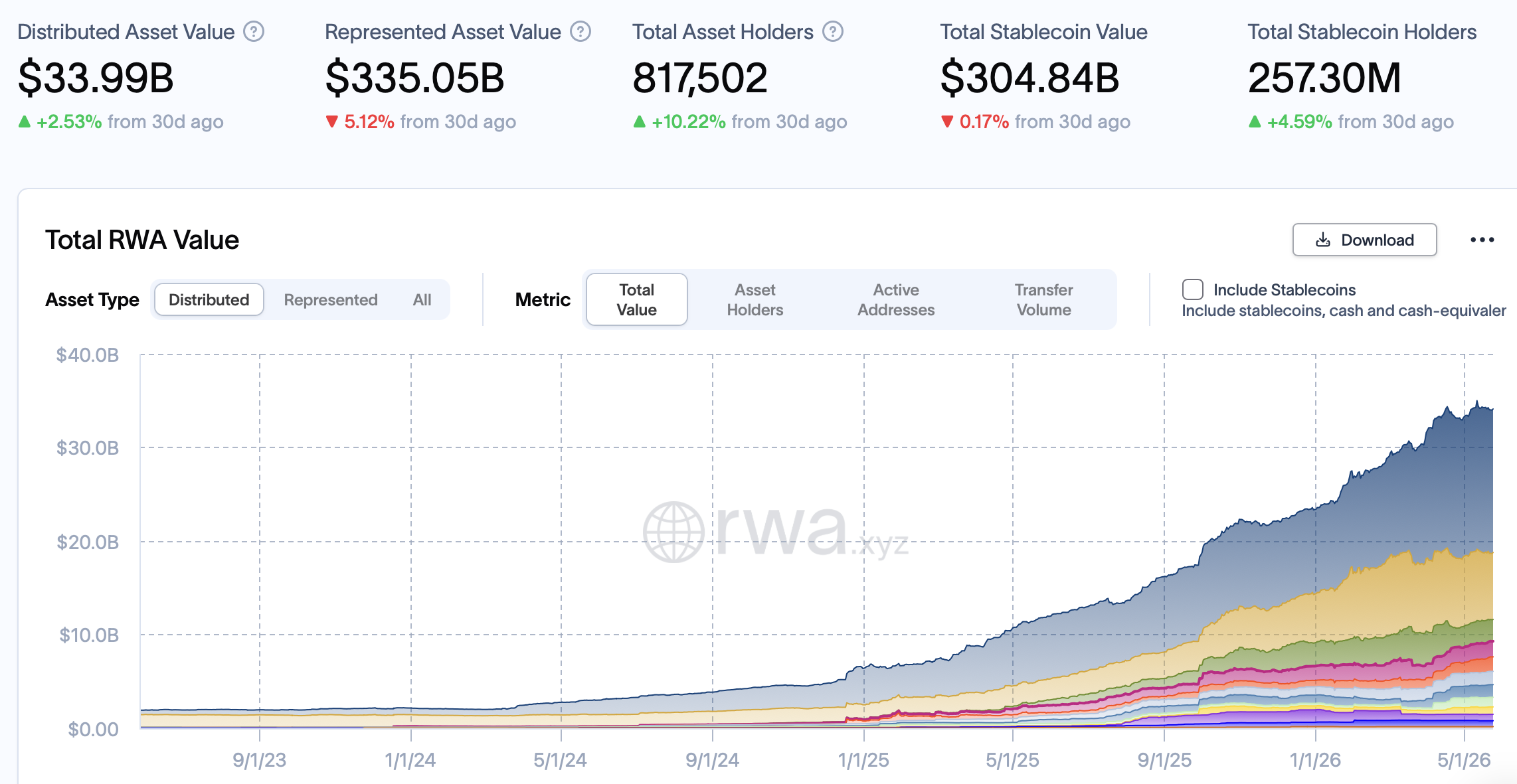
Data from RWA.xyz shows the tokenized real-world asset sector has grown to more than $34 billion in onchain value, up from about $5.8 billion at the start of 2025.
That growth has coincided with moves by crypto exchanges, trading platforms and tokenization companies to bring blockchain-based versions of traditional financial products onchain.
Source: RWA.xyz
In March, EtherFi allocated $25 million to Plume’s Nest protocol to give users exposure to tokenized yield strategies tied to institutional assets and government securities. The same month, Australian crypto exchange BTC Markets said it notified the country’s securities regulator of plans to apply for a markets license to offer tokenized real-world assets, including equities and bonds.
In February, Binance added tokenized equities and exchange-traded funds from Ondo Finance to its Binance Alpha platform, including blockchain-based versions of stocks, ETFs and commodities. Also in February, Securitize partnered with Hamilton Lane, OKX Ventures and stablecoin infrastructure company STBL to launch a stablecoin backed by tokenized private credit assets.
Boston Consulting Group said in a report earlier this month that tokenized funds, collateral and fixed-income products are among the blockchain-based financial products most likely to see broader institutional adoption over the coming decade.
The report said digital assets are increasingly shifting beyond speculative trading toward infrastructure tied to payments, settlement and capital markets.
Magazine: Crypto scammers face death, Aussie CGT makes Asian hubs attractive: Asia Express
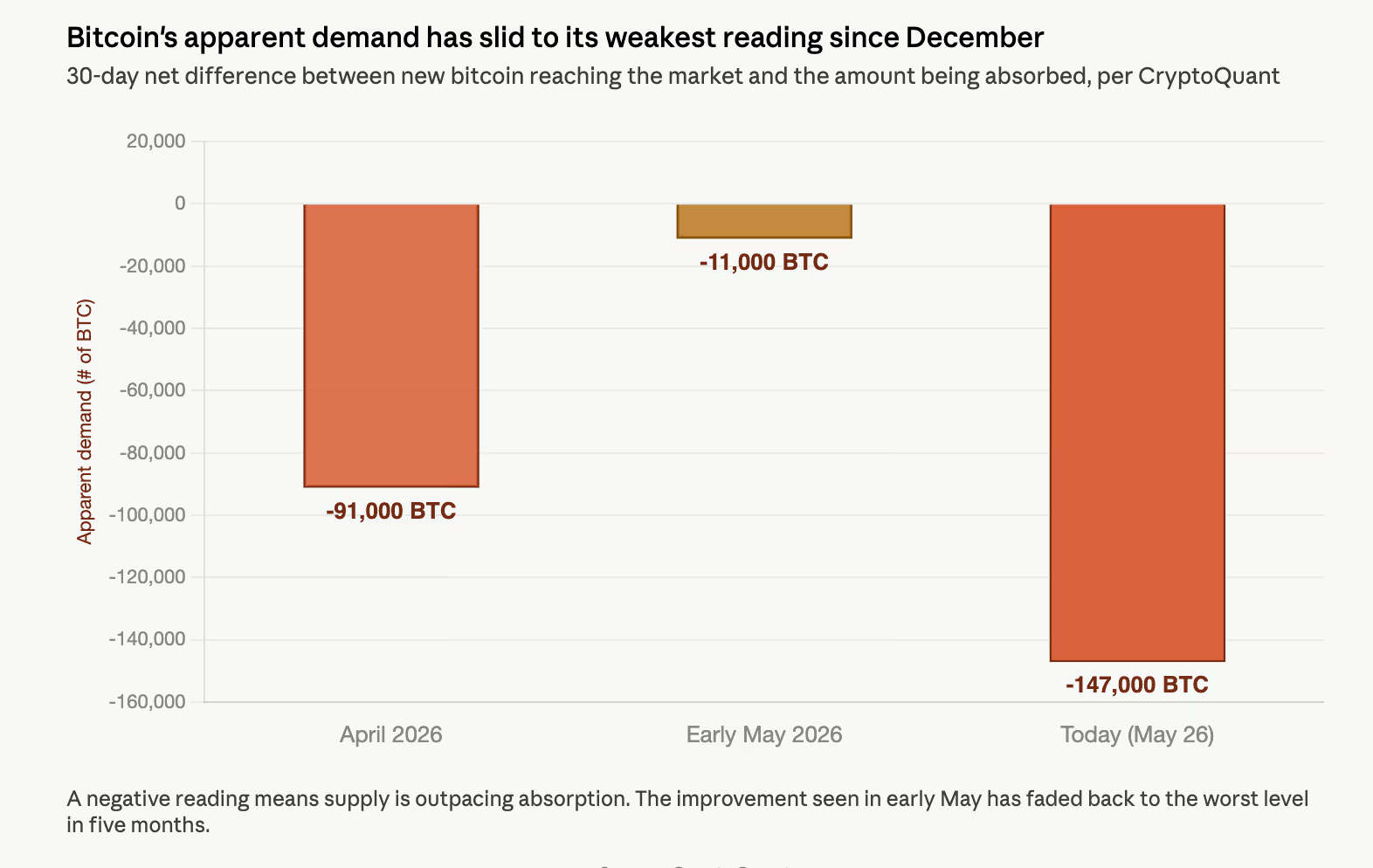
Bitcoin’s rebound is running into a demand problem.
CryptoQuant’s 30-day apparent demand metric has fallen to minus 147,000 BTC, its weakest reading since December 2025, even as bitcoin holds in the mid-$70,000s after bouncing from its April lows near $65,000.
The metric compares new miner supply and older coins returning to circulation with the amount of bitcoin the market is absorbing. A positive reading means buyers are taking down new and reactivated supply, while a negative reading means more coins are coming to market than buyers are absorbing on-chain.
The latter is the issue with the current rally.
Bitcoin has recovered sharply from April, but the move has not yet produced the kind of spot demand that usually supports a more durable uptrend. Earlier this month, data showed apparent demand had improved from -91,000 BTC in April to roughly -11,000 BTC, close to balance. The latest slide back toward -147,000 BTC suggests that improvement has faded.

Other signals have been suggesting the same. The Coinbase Premium has stayed negative since late April, showing U.S. spot buyers have been less aggressive than offshore traders.
It means futures market buyers have largely led the price bounce from $65,000. It matters because futures-led rallies are easier to unwind. Perpetual positions can close quickly when funding shifts or liquidations start. Spot accumulation is usually stickier because buyers put up full capital and take actual BTC, making that demand less likely to disappear on the first pullback.
None of this means bitcoin has to break lower immediately. Weak demand can sit under a range for days or weeks. But it does make the market more dependent on fresh spot buying if bulls want to push beyond the current zone.
If that bid does not show up, the $70,000 area remains the level to watch. CryptoQuant identifies it as the short-term trader realized price, where recent buyers’ paper gains largely disappear, and the incentive to take profit starts to fade.


Pope Leo XIV has released his first encyclical calling for binding international regulation of artificial intelligence, including a direct prohibition on machines making lethal or irreversible decisions.
Anthropic co-founder Christopher Olah appeared at the Vatican as a lay presenter, placing a prominent AI safety researcher alongside the Catholic Church at the center of the global AI governance debate.
The nearly 43,000-word document, “Magnifica Humanitas” (Magnificent Humanity), was released May 25. It warns that the biggest AI developers are private, often transnational entities whose resources exceed those of many governments. Leo argues that concentrated power tends to evade public accountability and can generate new forms of dependency and inequality.
The Vatican’s Case for Slowing AI Down
The encyclical targets disinformation, autonomous warfare, and worker displacement. On AI in combat, Leo is unambiguous.
“It is not permissible to entrust lethal or otherwise irreversible decisions to artificial systems.”
Leo also warns that AI-driven disinformation could steer democracies slowly toward totalitarianism. He calls for clear legal frameworks and independent oversight rather than voluntary ethics pledges from industry.
On employment, Leo argues automation is reshaping the structure of work in ways that do not automatically benefit workers. Greater profits, he writes, cannot justify choices that systematically eliminate jobs.
Anthropic Places Itself at the Vatican’s Table
Olah’s appearance was more than symbolic. As Anthropic’s co-founder, he leads interpretability research focused on understanding how large language models form decisions internally. That work maps directly onto Pope Leo’s demand for AI systems that are transparent and accountable to human oversight.
Anthropic has held a firm stance on AI safety throughout 2026. The company fought US defense restrictions in court and advanced a US-China AI strategy that preserves safety guardrails. Its researchers exposed AI agents exploiting crypto flaws without human instruction, demonstrating what autonomous AI can produce without accountability. BeInCrypto reported on the planned Anthropic-Vatican meeting weeks before the event.
Pope Leo does not oppose AI development outright. His encyclical frames a slower, more deliberate adoption as an act of responsible care, a position that now carries the weight of the world’s largest religious institution.
The post Pope Leo Just Called Out the AI Giants Bigger Than Most Governments appeared first on BeInCrypto.

Ethereum Staking Queue Reaches 3.4M ETH as Exit Backlog Drops to 64 ETH

The Best Frying Pans Of 2026, From Ceramic To Stainless Steel And Non-Stick

Aryna Sabalenka takes advantage of heat wave in French Open win


-

 Crypto World5 days ago
Blockchain.com files with SEC for U.S. IPO
-

 Fashion4 days ago
Holiday Weekend Open Thread – Corporette.com
-

 Business4 days ago
Dell Technologies DELL Stock Surges 15% on AI Server Momentum and Analyst Upgrades in 2026
-

 Crypto World4 days ago
Bitcoin Accumulation Weakens as BTC Realized Losses Hit $600M
-

 Crypto World4 days ago
Space X IPO Is ‘Bad News’ for Tech Stocks: But What About Bitcoin?
-

 Crypto World3 days ago
Robinhood crypto COO Tanya Denisova exits
-

 Politics4 days ago
Makerfield: a tale of two social-media histories
-

 Business2 days ago
NYT Strands Answers May 24 2026 Revealed for Puzzle No. 812 Theme Summer Essentials
-

 Crypto World5 days ago
MicroStrategy’s Saylor Says Miners No Longer Set Bitcoin Price, Another Force Has Taken Over
-

 Tech5 days ago
WhatsApp ads could make Irish debut after discussions with DPC
-

 Crypto World4 days ago
AI infrastructure race heats up as IREN pitches full-stack strategy, WhiteFiber lands $160M deal
-
 Tech4 days ago
A 0.12% parameter add-on gives AI agents the working memory RAG can’t
-

 Tech5 days ago
You Can Now Add ChatGPT To PowerPoint
-
 NewsBeat5 days ago
Charity run by Reform leader Malcolm Offord accused of ‘law breaking’ over Scottish registration
-

 Business4 days ago
Trump Invests $1M-$5M in Kura Sushi USA Chain With 27 California Locations
-

 Tech1 day ago
Microsoft’s quiet Claude Code retreat and the real cost of enterprise AI
-

 Sports5 days ago
2026 CJ Cup Byron Nelson leaderboard: Brooks Koepka finds putting stroke in Round 1
-

 Crypto World6 days ago
Exa Labs raises $250 million in funding led by a16z
-
Business4 days ago
Goldman Sachs reinstates Ageas stock coverage with neutral rating
-

 Crypto World4 days ago
Verus Bridge Hacker Returns $8.5M ETH, Keeps $2.8M as Bounty
You must be logged in to post a comment Login