

Business
Top 10 Best Weapons in Australia’s Arsenal 2026 Led by F-35A Stealth Fighters and HIMARS Long-Range Rockets

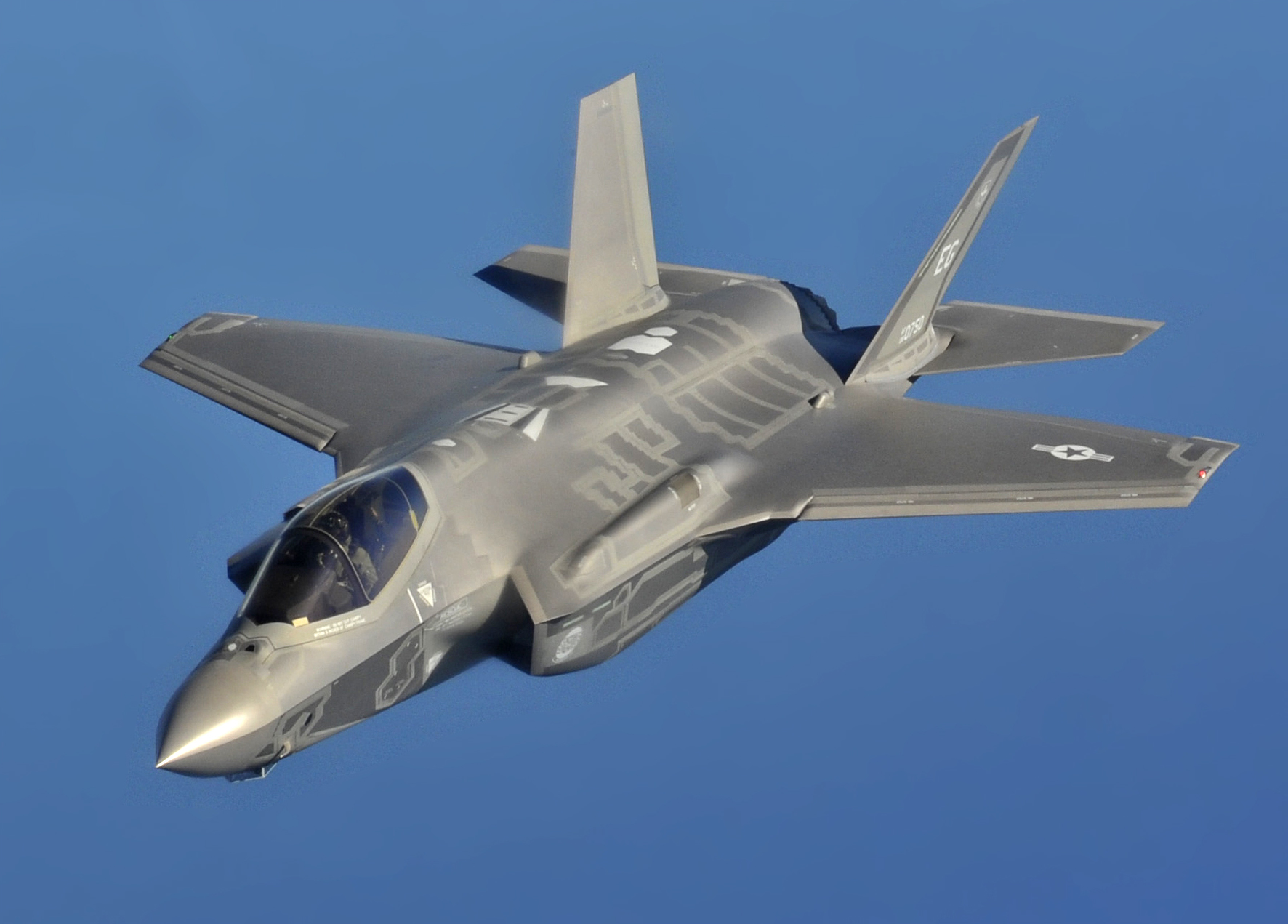
CANBERRA, Australia — Australia’s military modernization drive has equipped the Australian Defence Force (ADF) with some of the most advanced conventional weapons systems in the Indo-Pacific region as of 2026, emphasizing long-range strike, fifth-generation air power and sovereign munitions production to deter potential threats.
With a 2026 Global Firepower ranking around 17th worldwide, the ADF relies on high-technology platforms rather than mass numbers. Key investments under the Guided Weapons and Explosive Ordnance (GWEO) enterprise, AUKUS partnership and integrated investment program have delivered capable systems across air, land and sea domains.
Here are the 10 best weapons in Australia’s arsenal in 2026, ranked by strategic impact, technological sophistication and operational effectiveness based on current ADF capabilities and recent deliveries:

- Lockheed Martin F-35A Lightning II Stealth Fighter — The Royal Australian Air Force operates a full fleet of 72 F-35As, including the latest Technology Refresh 3 upgrades. These fifth-generation stealth aircraft provide unmatched air superiority, sensor fusion and networked warfare capabilities. Armed with advanced air-to-air and air-to-ground munitions, the F-35A forms the backbone of Australia’s air combat power and integrates seamlessly with allied forces.
- High Mobility Artillery Rocket System (HIMARS) with GMLRS and PrSM — The Australian Army has taken delivery of multiple HIMARS launchers, now paired with domestically produced Guided Multiple Launch Rocket System (GMLRS) missiles manufactured in Australia since early 2026. With a range exceeding 70 kilometers for GMLRS and up to 500+ kilometers for the Precision Strike Missile (PrSM), these systems deliver precision long-range fires. Australia aims for high-rate production of up to 4,000 GMLRS annually by 2029, marking a major step toward sovereign guided weapons capability.
- Boeing EA-18G Growler Electronic Attack Aircraft — Australia’s fleet of Growlers provides world-class electronic warfare support, jamming enemy radars and communications while protecting strike packages. The aircraft’s advanced ALQ-99 and Next Generation Jammer systems make it a force multiplier in contested environments.
- Boeing F/A-18F Super Hornet — Complementing the F-35A, the Super Hornets deliver multirole strike capability with a proven track record. Recent integration of the Long-Range Anti-Ship Missile (LRASM) has significantly enhanced their anti-surface warfare role.
- M1A2 SEPv3 Abrams Main Battle Tank — The Army is fielding upgraded Abrams tanks with enhanced armor, sensors and firepower. These heavy armor assets provide mobile protected firepower for high-intensity land operations, supported by new combat engineering variants.
- AS21 Redback Infantry Fighting Vehicle — Produced locally by Hanwha Defense, the Redback offers superior protection, mobility and firepower compared to older platforms. Equipped with a 30mm cannon and advanced optics, it serves as a key component of the Army’s future armored formations.
- Northrop Grumman MQ-4C Triton Unmanned Aerial Vehicle — The first Tritons enhance maritime surveillance and intelligence gathering over vast ocean areas. Operating at high altitudes for extended periods, these drones provide persistent wide-area monitoring critical for Australia’s maritime strategy.
- Tomahawk Land Attack Missile — Integrated aboard Hobart-class destroyers and potentially other platforms, Tomahawk gives the Royal Australian Navy long-range precision strike capability reaching 2,500 kilometers. Over 200 have been ordered, bolstering naval surface strike options.
- NASAMS Air Defence System with AMRAAM-ER — The National Advanced Surface-to-Air Missile System, enhanced with Australian CEA radars and AMRAAM-Extended Range missiles, provides layered medium-range air and missile defence. It ranks among the most advanced NASAMS configurations globally.
- Collins-class Submarines (with future nuclear transition under AUKUS) — While conventionally powered, the upgraded Collins fleet remains a potent anti-submarine and strike asset. Preparations for the AUKUS nuclear-powered submarine program underscore Australia’s long-term undersea warfare ambitions.
These systems reflect Australia’s strategic shift toward “impactful projection” and deterrence through long-range strike and integrated air-sea-land operations. The GWEO plan has accelerated sovereign missile production, reducing reliance on foreign supply chains. Local manufacturing of GMLRS at the new facility represents the first such capability outside the United States.
The Royal Australian Navy benefits from Hobart-class guided missile destroyers armed with Standard Missile-6 and Naval Strike Missiles, while Hunter-class frigates under construction will add further anti-submarine and surface warfare punch. Uncrewed systems, including the Ghost Bat loyal wingman drone and Ghost Shark autonomous underwater vehicle, are advancing rapidly in testing phases.
Small arms and infantry weapons remain modern but receive less public attention. The Enhanced F88 Austeyr bullpup rifle continues as the standard individual weapon, with ongoing evaluations for a future replacement under Land 159. Sniper systems include Accuracy International AX-SR rifles, while new sidearms like the SIG Sauer P320 are rolling out.
Experts note that Australia’s strength lies in quality, interoperability with allies (particularly the U.S. and U.K. through AUKUS and Quad) and rapid adoption of advanced technologies rather than sheer quantity. Challenges include a relatively small active force of around 59,000 personnel and the need to sustain high-tech platforms amid rising regional tensions.
Defense spending continues to grow, with significant allocations for munitions stockpiles, autonomous systems and cyber capabilities. The 2026 National Defence Strategy is expected to further refine force posture, emphasizing northern approaches and maritime denial.
For a nation with vast maritime approaches and limited population, these top weapons provide credible deterrence and the ability to contribute meaningfully to coalition operations. Ongoing investments in directed energy weapons, hypersonic research and AI-enabled systems suggest even more capable platforms on the horizon.
Australia’s defense industry has grown alongside these acquisitions, with local firms contributing to maintenance, upgrades and sovereign production. This approach enhances resilience and creates high-skilled jobs while supporting export potential.
As geopolitical dynamics evolve in the Indo-Pacific, Australia’s carefully selected arsenal of advanced weapons underscores its commitment to a rules-based order and strong alliances. The combination of stealth air power, precision rockets and integrated defence systems positions the ADF as a sophisticated, technologically advanced force capable of protecting national interests well into the future.



Sonny Rollins, saxophone ’colossus’ who honed his sound on a New York bridge, dies at 95

Hansa Biopharma trial results to be presented at ATC in June

Dollar firms after US-Iran strikes spark doubts over peace deal
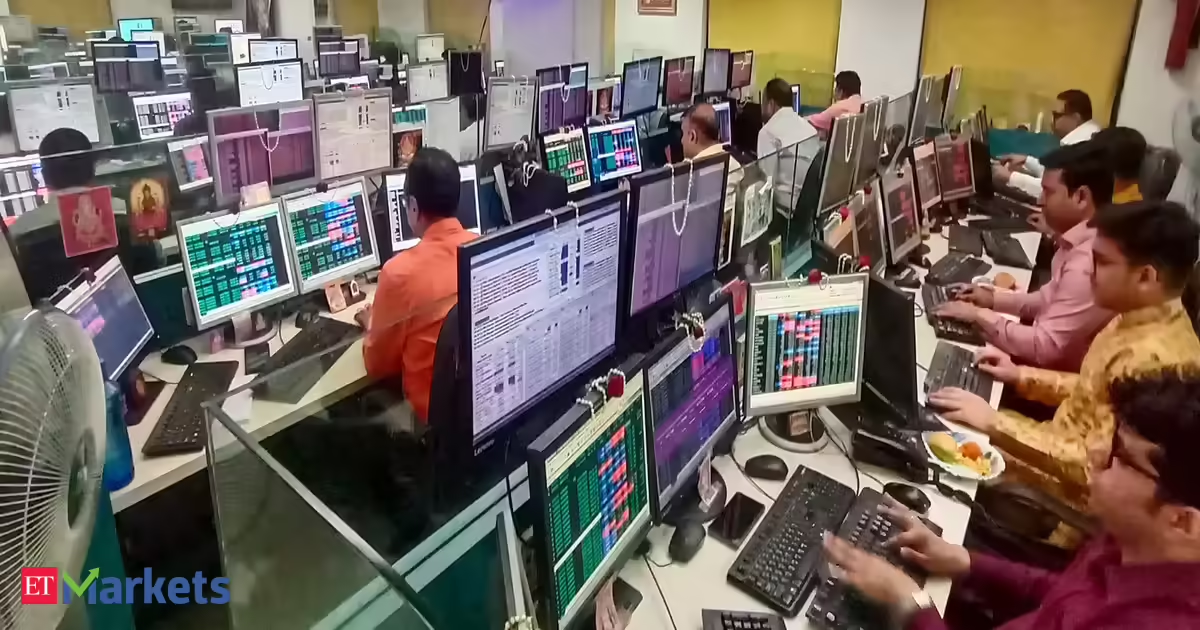
The NSE Nifty 50 advanced 1.3%, or 312.40 points, to close at 24,031.70, reclaiming the 24,000 mark after about two weeks, while the S&P BSE Sensex climbed 1.4%, or 1,073.61 points, to 76,488.96.
Sentiment was buoyed after reports the US and Iran were nearing an agreement that could ease tensions and restore energy flows. US President Donald Trump said over the weekend that both sides had largely negotiated a memorandum of understanding, according to Reuters.
Brent crude declined more than 5% to around $98 a barrel, easing concerns over inflation.
Asian markets rallied in tandem, with Taiwan gaining 3.3%, Japan 2.9%, and China 1%, while Hong Kong and South Korea were shut.

“With every day of delayed truce, there is a chance that the inflation can be higher, so the earlier we have a solution, the better,” said George Thomas, equity fund manager, Quantum AMC.
 Agencies
Lower Risk Outlook
“Even if there was to be a resolution immediately, it would take some time for things to normalise,” said Thomas of Quantum. “While a resolution may not be immediate, incrementally, things will be positive.”
Volatility eased, with the India VIX declining 6.7% to 16.7, signalling that risk expectations are easing. The rupee climbed to 95.23 per dollar Monday, its highest in more than two weeks, versus its previous close of 95.69. Benchmark 10-year bond yields fell to 7.025% Monday, from 7.088% Friday, according to investing.com data. Technically, the rally was aided by short covering, with the index breaking key levels. “Nifty witnessed a decisive breakout and closed strong- driven by short covering,” said Rajesh Palviya, Head of Research, Axis Securities. “Call writers are on the backfoot and if Nifty sustains over 24,000 levels, gains of 200-300 points are expected on an immediate basis.”
Palviya said further gains toward 24,800 levels could materialise if positive triggers emerge on the geopolitical or domestic front. Sectorally, the gains were broad-based, with financial stocks leading the rally as improving macro sentiment supported the space. The Bank Nifty and Nifty Financial Services indices rose 2.3% and 2.2%, respectively, while PSU banks gained 2.9% and private banks 2.1%. Auto and realty indices also advanced. “Banking stocks are available at decadal low valuation which is lending comfort to investors,” said Thomas. “But if this crisis prolongs for a longer time, then there could be an impact on credit cost.”

In the Nifty500 pack, 11 stocks’ closing prices crossed above their 200 DMA (Daily Moving Averages) on May 25, 2026, according to stockedge.com’s technical scan data. Traders use the 200-day daily moving average (DMA) as a key indicator for determining the overall trend in a particular stock. As long as the stock is priced above the 200-day SMA on the daily timeframe, it is generally considered to be in an overall uptrend. Take a look:


BTS takes top award at fan-voted American Music Awards

The island’s market capitalization climbed to $4.95 trillion as of Monday, according to data compiled by Bloomberg. India’s value has dropped to $4.92 trillion. Taiwan’s stock market is now the fifth largest in the world, behind only the US, mainland China, Japan and Hong Kong.
Taiwan’s ascent up the global equity rankings is largely driven by TSMC, which now accounts for about 42% of the benchmark index, representing intense market concentration. The chipmaker’s shares have rallied 49% this year as it has benefited from the artificial intelligence trade, in which its semiconductors have a dominant market position.
The surge in the island’s market value highlights intense optimism in AI that is triggering a global rally in tech shares, disproportionately benefiting manufacturing hubs such as Taiwan and South Korea. India, on the other hand, is grappling with surging energy cost, slowing corporate earnings growth and the lack of companies directly linked to the AI buildout.
Bloomberg“Taiwan’s rising market capitalization is fundamentally a reflection of its heavy concentration in tech hardware, which is currently at the center of the AI investment cycle,” said Yi Ping Liao, a fund manager at Franklin Templeton. “Markets with limited exposure to tech hardware are increasingly being overshadowed by tech hardware–heavy markets such as Taiwan and Korea.”
New regulations are also in TSMC’s favor. Taiwan’s financial regulator last month increased the limit that domestic funds can invest in a single stock. Under the new guideline, funds that invest solely in Taiwanese stocks can hold up to 25% of their net assets in any listed company whose weighting exceeds 10% in the Taiwan Stock Exchange, up from a previous limit of 10%. Currently, only TSMC meets the criterion.
The change may help lure in more than $6 billion of inflows to Taiwan, JPMorgan Chase & Co. said in a research note.While Taiwan has overtaken in market value, India’s $4.15 trillion-dollar economy — among the fastest growing in the world — still trumps the island’s $977 billion gross domestic product, according to International Monetary Fund estimates.
BloombergIndian stocks have fallen this year amid record foreign outflows, driven by elevated valuations and a weakening rupee. Higher energy costs have also stoked inflation concerns and clouded growth prospects.
Global funds have sold nearly $24 billion of local equities so far this year as they chased the AI boom in Taiwan and Korea. India’s gauge is down 8%, heading for its first annual drop after a decade of gains. India’s weight in the MSCI emerging markets index has also fallen to about 12% from 19% last year.
“India has been quite ignored for the better part of two years,” Alison Shimada, portfolio manager at Allspring Global Investments, told Bloomberg TV on Monday. “It is an expensive market so one has to be selective, but I think in terms of financialization of savings, it is very prominent in India and people are moving into financial assets,” she said.

Bank of Japan to monitor Middle East developments for rate decisions- Deputy Gov Himino
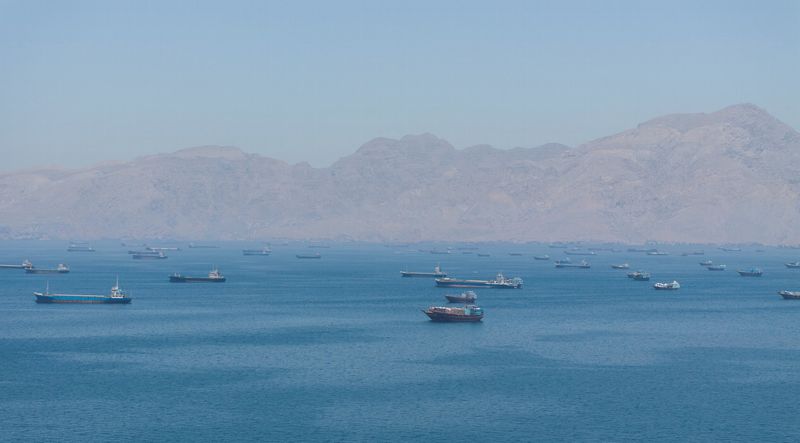

Rubio says Strait of Hormuz has to be open ’one way or the other’


BOJ’s Himino says Mideast developments to factor into rate-hike timing decision

Jannik Sinner, Coco Gauff Eyeing Fast French Open Starts

Microsoft will finally let you uninstall Copilot

Why staying hydrated is essential for people as they age

US brings back mandatory military draft registration

Steven Gerrard disagrees with Gary Neville over ‘shock’ Chelsea and Arsenal claim | Football

Register Renaming | Hackaday

XRP Price Prediction | Why The Institutional Math Doesn’t Add Up | Dana Love, PhD

Ripple XRP: XRP Price Will Eventually Catch Up To Fundamentals Says Oliver Michel

How To Make Money By Selling AI Websites To Businesses In 2026
-

 Crypto World4 days ago
Blockchain.com files with SEC for U.S. IPO
-

 Fashion3 days ago
Holiday Weekend Open Thread – Corporette.com
-

 Business4 days ago
Dell Technologies DELL Stock Surges 15% on AI Server Momentum and Analyst Upgrades in 2026
-

 Crypto World4 days ago
Bitcoin Accumulation Weakens as BTC Realized Losses Hit $600M
-

 Crypto World4 days ago
Space X IPO Is ‘Bad News’ for Tech Stocks: But What About Bitcoin?
-

 Politics3 days ago
Makerfield: a tale of two social-media histories
-

 Crypto World3 days ago
Robinhood crypto COO Tanya Denisova exits
-

 Crypto World4 days ago
MicroStrategy’s Saylor Says Miners No Longer Set Bitcoin Price, Another Force Has Taken Over
-

 Business1 day ago
NYT Strands Answers May 24 2026 Revealed for Puzzle No. 812 Theme Summer Essentials
-
 Tech4 days ago
A 0.12% parameter add-on gives AI agents the working memory RAG can’t
-

 Crypto World4 days ago
AI infrastructure race heats up as IREN pitches full-stack strategy, WhiteFiber lands $160M deal
-

 Tech4 days ago
WhatsApp ads could make Irish debut after discussions with DPC
-

 Tech4 days ago
You Can Now Add ChatGPT To PowerPoint
-

 Business4 days ago
Trump Invests $1M-$5M in Kura Sushi USA Chain With 27 California Locations
-
 NewsBeat5 days ago
Charity run by Reform leader Malcolm Offord accused of ‘law breaking’ over Scottish registration
-

 Sports4 days ago
2026 CJ Cup Byron Nelson leaderboard: Brooks Koepka finds putting stroke in Round 1
-

 Crypto World5 days ago
Exa Labs raises $250 million in funding led by a16z
-
Business4 days ago
Goldman Sachs reinstates Ageas stock coverage with neutral rating
-

 Crypto World4 days ago
Trump Media’s Bitcoin Stash Shrinks Again as 2,650 BTC Lands on Crypto.com
-
 Business4 days ago
Marine engineering firm Avantis eyeing expansion on equity boost
You must be logged in to post a comment Login