














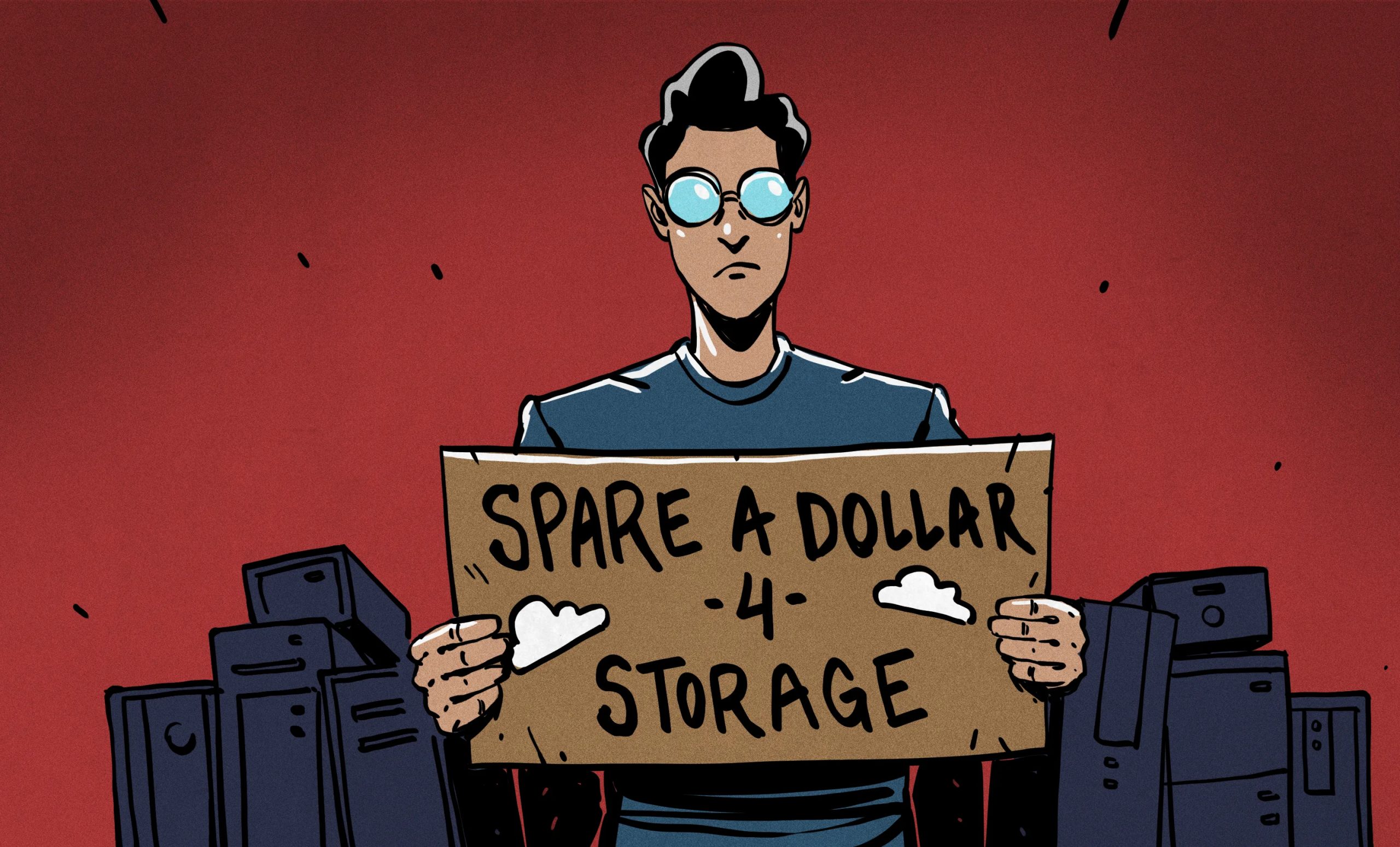
These days our appetite for more data storage is larger than ever, with video files larger, photo resolutions higher, and project files easily zipping past a few hundred MB. At the same time our options for data storage are becoming more and more limited. For the longest time we could count on there always being a newer, roomier, faster, and cheaper form of storage to come along, but those days would seem to be over.
We can look back and laugh at low capacity USB Flash drives of the early 2000s, yet the first storage drive to hit 1 TB capacity did so in 2007, with a Hitachi Deskstar 7k100, only for that level of capacity in PCs to not really be exceeded nineteen years later.
We also had Blu-ray discs (BD) promise to cram the equivalent of dozens of DVDs onto a single BD, with two- and even four-layer BDs storing up to a one-hundred-and-twenty-eight GB. Yet today optical media is dying a slow death as the sole remaining cheap storage option. NAND Flash storage has only increased in price, and the options for those of us who have large cold storage requirements would seem to be decreasing every day.
So what is the economical solution here? Invest in LTO tapes using commercial left-overs, or give up and sign up for Cloud Storage™ for the low-low price of a monthly recurring fee?
It’s Not Hoarding, I Swear
Over the decades of memory storage, there’s been a near-constant flurry of new innovations and technologies, always with the knowledge that in a decade there would be massively larger forms of storage or at least big price drops to look forward to. This is how my first late 90s PC didn’t have just a zippy Celeron 400 CPU, but also a massive 4 GB HDD.
Compared to the 30 MB HDD in the 386-based system that I had before this was massive, but with multimedia content flooding in courtesy of the filesharing revolution, I quickly had to pop in a 10 GB HDD. By the time that I upgraded to a new PC that was considered small, and I found myself well above 20 GB, before soon joining the 1 TB and later the 5+ TB club. By 2012 HDDs were using 2 TB platters, so this was basically becoming unavoidable.
Meanwhile a lot of files were offloaded or backed up onto optical media, both CDs and DVDs. Although ZIP disks also briefly made an appearance in my PCs, optical discs were simply far cheaper and more universally usable.
The Problem
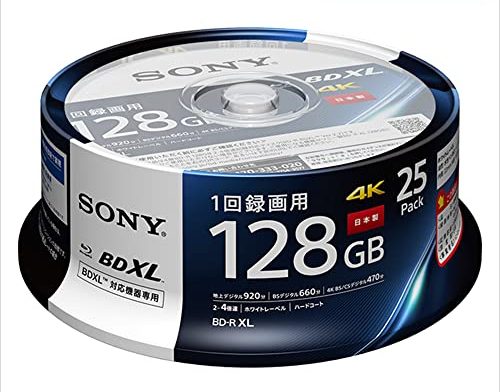
Even before the current ‘AI’ datacenter-induced tripling of Flash storage costs that’s also affecting USB Flash drives and HDDs, optical media had been slowly phased out for a while. Even without checking sales numbers, you don’t have to be a genius to consider it a bad sign that manufacturers like Pioneer are exiting the optical storage market and big names like Sony ceased the production of recordable Blu-ray discs along with MiniDisc and MiniDV formats.
If you have recently shopped around for internal 5.25″ optical disc drives (ODDs) in particular, you may have noticed that these are becoming increasingly more rare and expensive. Even stand-alone BD player options are becoming more limited, with that distinct ‘final gasp’ vibe that comes with a dying format, as with VHS and kin in the past.
Part of the problem can probably be attributed to the move away by content distributors – including multimedia, games and software – from physical media to online distribution methods. This takes the form of streaming services, Software-as-a-Service (SaaS), and online game stores. At this point you do not even need a BD player in your home game console, never mind PC, to install games. Neither do you need a BD player connected to your smart TV as you can just join the new brave world of terminal-based subscriptions.
So with demand for optical media massively reduced by this shift, what’s left for those of us who just want to back up our data in peace and without shelling out too much hard-earned cash?
The Future
The most recent 50-disc spindle of DVD+Rs that I purchased came in at just under €15 for 235 GB, so that’s about 6 cents/GB, and I could have gotten it much cheaper by going for larger spindles and shopping around some. For comparison, SSD storage was more than triple that even before the recent price surge, and HDDs are coming in around that same price tag as well.
A quick look at LTO tapes and drives for sale shows that while tapes for the older LTO-8 standard from 2017 are pretty reasonable, the drives cost an absolute fortune, so you’d have to be pretty lucky to score one without having to pawn off a kidney.
Add to this that LTO tapes are only really guaranteed for a lifespan of 15-30 years and are incomparably slower due to being a linear format. This makes tape storage only really suitable for the coldest of cold storage, and not for keeping some videos around, or for game development resources that you would like to pop in and quickly query without dying from old age while a tape seeks to the appropriate position.
The Solution?
Even assuming that the current insane surge in pricing for RAM, NAND Flash, and even HDD storage is just a temporary blip, and that by the time 2027 rolls around the RAMpocalypse will just be a bad dream to meme about, the basic economics of cost per storage would still not have changed in any measurable way.
The advantage of optical media, especially DVDs, is that they’re a very simple technology, relatively speaking. While there is some impressive technology in the optical pick-up component of an ODD, over the decades they have become highly affordable commodity devices. Meanwhile the discs are very cheap to produce, being at their core just some plastic with a coating on which the bits are written, while being very durable if kept away from physical harm.
It’s also essentially guaranteed that a DVD+R or BD-R will not have its data altered, something which cannot be guaranteed with a USB Flash drive. Filesystem corruption and electrical issues may damage or even destroy the Flash drive.
Although it’s easy to say that one should just ‘stop hoarding data’ or subscribe to some cloud storage solution for potentially infinite money per GB, high latency and the possibility of data loss due to a datacenter issue, there are many arguments to be made in favor of keeping local, offline copies, and that this should be done on highly durable media. We just cannot be sure that optical media will remain an option in the future.
What is your take on this conundrum? How do you manage your storage needs in this modern era, and what are your plans for the future? Please feel free to sound off in the comments.












































You must be logged in to post a comment Login