
Politics
Do Hypoallergenic Pets Really Help With Allergies?


For people with pet allergies, hypoallergenic pets are marketed as the supposed solution — but that couldn’t be further from the truth.
Here’s a hard reality check: your favorite labradoodle, Yorkshire terrier, Siberian cat or other popular “hypoallergenic breeds” can still make you cough and sneeze if you’re allergic to pets, because there is no scientific way to guarantee you’ll have an allergen-free cat or dog.
“I have this conversation almost every day in my clinic,” said Kathleen May, division chief of allergy, immunology and pediatric rheumatology at the Medical College of Georgia at Augusta University. “The biggest issue is the data does not support the existence of hypoallergenic pets.”
Myth #1: The Right Fur Will Prevent Allergies

Connor McManus / 500px via Getty Images
Too many people believe that if your pet has a certain coat texture that sheds less, it means your pet is more likely to be hypoallergenic. But regardless of fur, pet allergens can be found in the dander and skin of your beloved pooch or cat. “When they lick, it’s in their saliva, because they lick their skin,” May explained.
And not even a hypoallergenic dog can prevent your allergy sensitivities.
A 2011 study in the American Journal of Rhinology & Allergy found that households with dog breeds cited as hypoallergenic, including poodle mixes and terriers, had no difference in the levels of the primary dog allergen Can f 1 found in dust samples from those homes.
In fact, a separate 2012 study showed that certain hypoallergenic dog breeds had higher Can f 1 levels in their hair and coat than non-hypoallergenic
breeds did. Labrador retrievers had the lowest allergen concentrations in their hair, while poodles had the highest concentrations of allergens, and labradoodles had the second-highest.
Even hairless cats’ skin can produce allergens. “There is no scientific evidence for a hypoallergenic cat breed, even hairless Sphynx cats produce Fel d 1 [allergen]” one 2024 study found.
Myth #2: The Right Pet Food Can Make My Pet Hypoallergenic
There are popular pet foods and supplements that claim to lower common allergens in your pets. The problem is that pet-allergic people may be sensitive to multiple allergens.
“When you’re allergic to a pet, sometimes you’re not just allergic to one protein fragment,” May said. So even if your allergen-reducing food improves your response to one cat allergen, you may still be allergic to others found on your cat, for example, May said.
“There might be 10 or 20 different allergens that that animal sheds that you can be sensitive to,” May said.
Myth #3: Proper Cleaning Helps Prevent Pet Allergies
If you start sneezing up a storm in a house with a cat, know that you’re not alone. “The reason why the cat allergen is in particular problematic is it’s very small, and it can be inhaled pretty deeply, and it stays in the air for a very long time,” May said.
Some well-meaning cat owners will vacuum right before their cat-allergic family member comes over, but this is actually a common mistake.
If you vacuum right before your cat-allergic friend’s arrival, “it basically aerosolises the [cat] allergen for about three hours,” May said. “So if you could vacuum at least the day before, it would be better than stirring it up that day.”
And don’t believe that simply adding more air purifiers will help lessen one’s pet-allergic symptoms. An additional HEPA filter in a room can remove more airborne particles, but “it’s just not going to be enough to really overcome it,” May said. “It would take an entire wall of HEPA filters to scrub the allergen from the air completely.”
However, if you are allergic to cats, try wearing an N95 mask or a KN95 mask during your visit, because that will help filter out most of the cat allergens you’ll breathe in, May suggested.
Here’s What Actually Does Help People With Pet Allergies

Viktoriya Skorikova via Getty Images
Obviously, limiting your exposure to pets is the easiest solution if you’re allergic to them.
“If you know you’re sensitive in advance, getting a dog is not going to improve your symptoms. That’s the harshest reality,” May said.
But for many of us, pets are family, and we’re unwilling to part ways with an animal we learn we are allergic to. So know that there are certain proven ways you actually can lower your pet’s allergens and your response to them –– and they have nothing to do with getting a hypoallergenic pet.
For one, you should know that the sex of your pet and whether they are neutered can make a difference. “A male, unfixed cat is going to have a higher level of the Fel d 1 allergen than a female fixed cat,” May said. She also noted that if you have a dog, washing them weekly can also diminish the allergens they produce.
The pet’s skin health also impacts what proteins they shed. “If a dog has dermatitis or eczema, the dog is more likely to shed allergens that will bother you,” May said as an example.
One unexpected way to reduce your chances of being allergic to your cat or dog? Be born into a household that has one. A 2002 study in the Journal of the American Medical Association followed hundreds of children from birth to nearly age 7 and found that children who grew up with dogs and cats in the home had a significantly lower risk of developing common allergies later on.
Many of these allergy tips focus on short-term symptoms, but there is one proven way to address the underlying problem: allergy shots. New York City Mayor Zohran Mamdani is famously going this route and is taking weekly allergy shots for seven months in preparation for owning a cat.
Typically, you will get weekly injections for about six months to build up your response to pet allergens, and then after that, you get shots about every two to four weeks for the maintenance phase over the next three to five years, May explained.
“It’s literally a desensitisation,” May said. “You get small but increasing amounts, until you get to a level … that’s likely to be clinically helping you.” Typically, children will respond more quickly to this treatment than adults, May said, but in general, she sees an 85% chance of pet allergy improvement after a year.
Whatever choice you make, know that there are treatments to help you breathe more easily around your pet — as long as you know the difference between facts supported by science and myths.



4 min read
The British people have a proud history when it comes to inventing and embracing new technologies. With support of the great people, towns and villages of Lanarkshire, we led the way in the industrial revolution by harnessing the power of steam.
We transformed the way people around the world communicate with the electric telegraph, the telephone and the fax machine. And we helped rewire the planet through Tim Berners-Lee’s brilliant conception of the world wide web.
Now we are in the age of a new general purpose technology: artificial intelligence. AI is in its infancy, but it is already transforming how we live, earn and learn.
It is leading to the faster diagnosis of medical conditions; enabling scientists to accelerate the development of new drugs; and helping to speed up planning, reduce red tape and free up the time of public servants so they can focus more on delivering for people and less on administrative duties.
Nobody denies that AI also poses challenges.
There are concerns, for instance, about security, the energy and water consumption required for data centres, the impact on some areas of the labour market and the ethics of agentic AI where computers act without human supervision.
These concerns should not be dismissed but nor should they be used as reasons to turn our back on AI and decide we want to opt out of the future. Indeed, to take such a course would be a disservice to this country, our communities and our workforce. It would be to deny constituencies such as Airdrie and Shotts the opportunity to benefit from the jobs, prosperity and enterprise that AI can bring.
Colleagues in Parliament who are sceptical about AI should visit Lanarkshire to see the work that has already started on the new AI growth zone. They will see an area that was at the heart of the industrial revolution now proud to be at the centre of the technological revolution. They will see this investment has also brought hope to a region whose potential, ignored for so long under the Tories, has finally been recognised by this government.
The Lanarkshire AI growth zone will create 3,400 jobs, bring £8bn of investment and comes with a £500m community fund.
AI offers the potential to reindustrialise the areas where deindustrialisation hurt most. It unlocks the skills and potential of companies like DataVita in my constituency, encourages clusters of firms in areas such as medical research to innovate, and supports local economic growth by bringing local young people into secure employment and investing in local community projects.
This is far more than just a large black box. By working with local leaders, businesses, colleges and universities, we can create a tech eco-system built around the powerful resource of computing power.
Data centres are the foundation on which we build the businesses and jobs of the future. And it is no accident that many of the new AI growth zones, such as Blyth in the North East, South Wales and Lanarkshire, are in former industrial areas. Like the mills and furnaces, data centres rely on two major commodities: power and water.
There are legitimate questions to ask about the amount of energy use and the impact on the environment. The ambition is for the Lanarkshire growth zone to be primarily powered by renewables by 2030, while surplus heat from the data centre could be used to heat a new local hospital and agricultural greenhouses.
Anyone who is ambitious about the future of the UK should share the government’s ambition to remain at the forefront of the AI revolution.
Without the computational power provided by data centres, we will not be able to seize the innovation, jobs and wealth that flow from this new technology. We would not just be turning our backs on the future – we would be rejecting hope and opportunity.
Kenneth Stevenson is Labour MP for Aidrie and Shotts
Politics
Politics Home Article | Student Loans To Be Capped At 6 Per Cent As Iran War Drives Inflation


(Alamy)
4 min read
Interest rates on some student loans will be capped at six per cent from September amid the conflict in the Middle East, the government has announced.
The cap will be applied to Plan 2 and Plan 3 loans. The former has been the subject of growing debate in recent weeks, with the government facing calls to ease the financial burden it is putting on graduates.
Minister for Skills, Jacqui Smith, said on Tuesday that while “the risk of global shocks” from the war is “beyond our control, protecting people here is not.”
The move means that no graduate faces an interest rate above six per cent from September for the 2026-27 academic year. The interest applied to student loans is fixed by academic year, using the Retail Prices Index (RPI) value for the year to March of the first year (in this case, March 2026).
It comes after the student loan system has faced fresh scrutiny in recent months, following the government’s decision to freeze the threshold at which graduates start to repay their loans.
Under the current system, those who began university between 2012 and 2022 were placed on a Plan 2 loan and are now charged interest on their loan repayments equal to RPI plus up to 3 percentage points.
Plan 3 loans, also known as postgraduate loans, are those taken out for master’s or doctoral courses by borrowers in England and Wales.
However, monthly repayments often do not meet interest, leaving many graduates with debt larger than what they originally borrowed, years after leaving university.
PoliticsHome reported earlier this year that opposition parties were all looking at how the system can be changed as part of their policy work, while Labour MPs have had discussions with sympathetic ministers about what can be done to address the perceived unfairness.
Smith said today: “We know that the conflict in the Middle East is causing anxiety at home, and while the risk of global shocks is beyond our control, protecting people here is not.
“Capping the maximum interest rate on Plan 2 and Plan 3 student loans will provide immediate protection for borrowers, supporting those who are most exposed within this already unfair system.
“We’re acting now to defend against the consequences of faraway conflicts in an uncertain world. More broadly, we’re bringing back maintenance grants and continuing to look at the broken Plan 2 system we inherited, and the wider student finance system, to make it fairer for students, graduates and taxpayers.”
Prices have soared across the world due to severe disruption to the Strait of Hormuz, a vital trade route, impacting energy and food prices.
The volume of maritime traffic using the route, which is responsible for large amounts of the world’s oil and gas, has plummeted since the US and Israel first attacked Iran, with Tehran threatening to attack ships attempting to pass through it.
The disruption is expected to result in rising inflation in the UK later this year, which would affect a range of areas, including student loans.
US President Donald Trump has warned that Iran must reopen the strait by 1am Tuesday UK time or face increased attacks.
Amira Campbell, National Union of Students President, said: “This government have woken up to the unfairness of student loans, and are taking action to prevent our debts from spiralling further out of control.”
But Campbell said the change “cannot come alone”.
“For most graduates, the impact on their day-to-day lives is felt through the repayment thresholds, which are being frozen for three years and will get very close to the minimum wage by 2030. We still need to see the Chancellor stick by the terms we signed at 17 years old, and raise the threshold in line with our incomes.
“The government have said they will look into the unfairness of the student loan system, and we will continue to hold them to that.”

Maritime union RMT has congratulated members in the Royal Fleet Auxiliary (RFA). Seafarers are taking strike action after overwhelmingly rejecting the latest pay offer.
The union has tried hard to reach a settlement through negotiation. But despite this, RFA managers have continued to table proposals that fall short of members’ expectations.
The sticking point has been how seafarers’ shift patterns stack up against minimum wage legislation.
Strike action is taking place today, Tuesday 7 April, with a further day of action happening on Thursday 16 April.
During strike action, members will continue to ensure the safety of vessels at all times. This includes the management of moorings and gangways.
Seafarers can routinely work up to 12 hours a day. But there remains no clear or transparent formula setting out how pay is calculated against those hours.
RMT general secretary Eddie Dempsey said:
Our members in the Royal Fleet Auxiliary are taking a principled stand today and I congratulate them.
They have made their position clear. They will not accept substandard pay offers and are prepared to take further strike action if necessary to get the pay rise they deserve.
Our members play a vital role in supporting the Navy, often in some of the most demanding and dangerous working conditions.
But they have faced years of below par pay and unresolved concerns about conditions.
The MOD and the employer now need to come forward with a serious, long-term commitment to improving pay and conditions, including ensuring they comply with National Minimum Wage legislation, if they are serious about retaining staff.
Featured image via the Canary
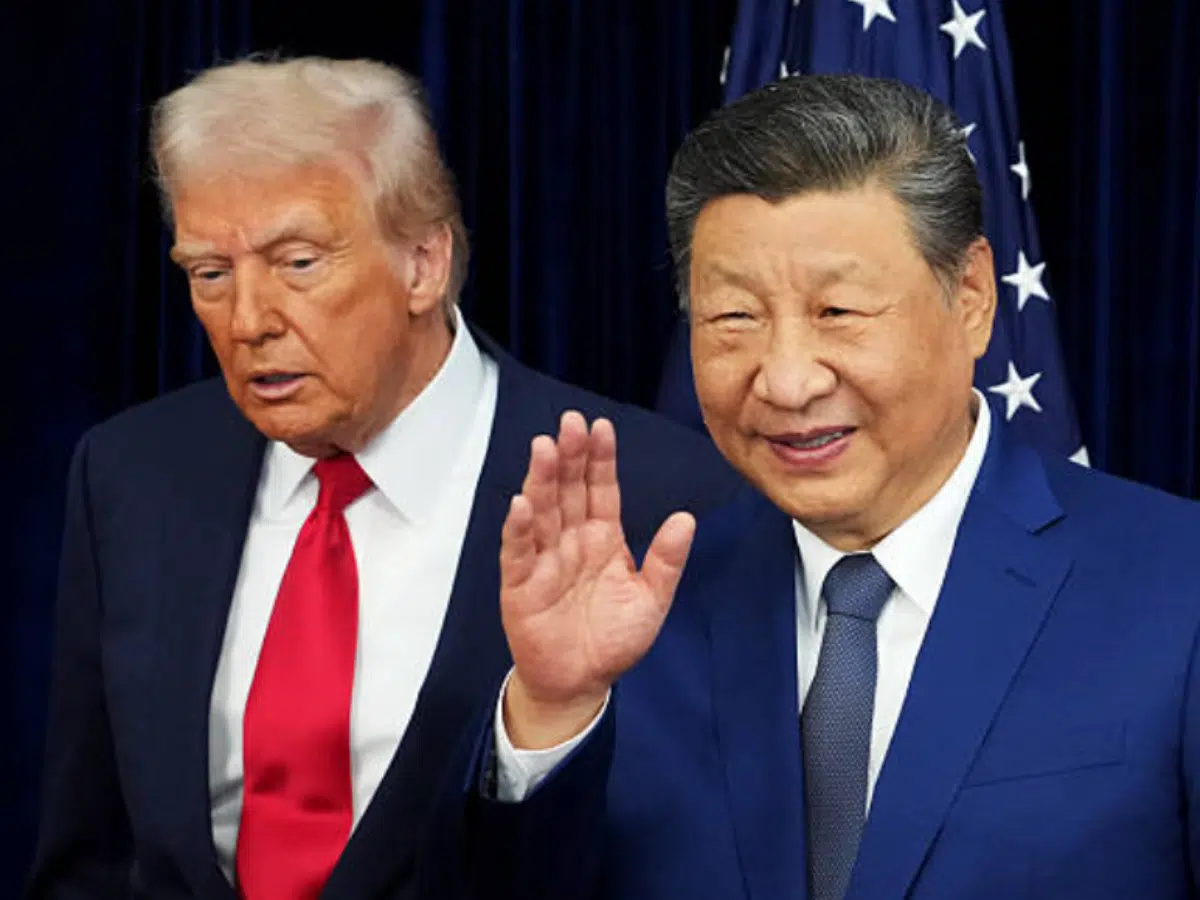
China beat the United States in global approval ratings in 2025, with a median of 36% approving of China’s leadership, compared with 31% for the U.S., according to the latest Gallup polling released last week.
While neither country commands broad support, China surpassed the United States in global approval ratings in 2025, with a median of 36% approving of China’s leadership, compared with 31% for the U.S. pic.twitter.com/7fIXcYzIQc
— Gallup (@Gallup) April 3, 2026
China is letting Trump damage Brand USA
For the last 20 years, Gallup has asked people worldwide to rate the leadership of the U.S., China, Russia, and Germany.
Reactions from X showed many celebrating the US’s fall from grace, especially under Trump.
Arnaud Bertrand joked, sharing the news that Trump is nicknamed “Chuān Jiàn Guó” in China, which means “Trump builds China.”
There’s a reason why Trump is nicknamed 川建国 (Chuān Jiàn Guó) – “Trump build China” – in China. https://t.co/31BSgs1jnl
— Arnaud Bertrand (@RnaudBertrand) April 5, 2026
Make China great again !Trump did it!👏👏👏 https://t.co/qM8egcMZUN
— Rachel(互fo) (@miranda7x07mwq) April 5, 2026
Even the pro-American Economist published a cover of Chinese President Xi overshadowing Trump that read – “Never interrupt your enemy when he is making a mistake.”
We spoke to diplomats, advisers, scholars, experts and current and former officials in China. Almost all of them see the war in Iran as a grave American error. Register for free to read why: https://t.co/0CDHuDCMDW pic.twitter.com/KCTtaPO1Kf
— The Economist (@TheEconomist) April 1, 2026
British ruling class still licking Trump’s arse
Meanwhile, in the American vassal state of the UK, Labour was busy licking Trump’s arse and whitewashing their heinous crimes.
Featured image via the Canary

Vladimir Putin has been slammed for ignoring Volodymyr Zelenskyy’s offer of a ceasefire over the Easter weekend.
An overnight attack on the Ukrainian Black Sea port of Odesa killed three people on Monday and injured at least 16 others.
Ukrainian president Zelenskyy hit out at Russia for continuing its attacks over the Christian occasion, saying: “We have repeatedly proposed to Russia a ceasefire at least for Easter. But for them, all times are the same. Nothing is sacred.”
Zelenskyy said last Wednesday he had spoken to US negotiators about a pause in fighting but Russia had sent more than 700 drones in a rare daytime attack in retaliation.
“Russia is responding with Shahed drones and continues its terrorist operations against our energy sector, against our infrastructure,” the Ukrainian leader said.
“A silence over Easter could be exactly the signal that tells everyone that diplomacy can be successful.”
However, Russia’s foreign ministry rejected the idea as a “PR stunt”.
Despite his frustrations, Zelenskyy extended his offer of a mutual ceasefire on strikes against infrastructure after the weekend.
The Ukrainian president said: “If Russia is willing to stop attacking our energy sector, we will refrain from similar attacks.”
There has been some confusion over recent strikes on Russian oil facilities.
The Russian defence ministry claims Ukrainian drones attacked a major oil shipping terminal in southern Russia early on Monday, though Kyiv said it attacked a different terminal.
Meanwhile, the former chief of the CIA told CBS News that Russia “no longer has the upper hand” in the war.
Retired US Army general David Petraeus said: “Over the last two months, the Ukrainians have actually made greater incremental gains than have the Russians.”
He said while Russia has advantages in manpower, firepower and economic scale, Ukraine has offset those with its innovative drone systems.

Media in Israel have claimed that a warship struck by a Hezbollah missile 68 nautical miles (nm) off the Lebanese coast was British, not Israeli. The Lebanese group had announced it struck an Israeli Occupation Force (IOF) ship with a “naval cruise missile” after several hours of monitoring it preparing to attack Lebanon. There appear to be no disputes that a warship was struck, only about whose navy it belonged to.
The UK Ministry of Defence has denied a British warship was hit. The distance at which the ship was hit means the vessel was very likely within Lebanon’s maritime ‘Exclusive Economic Zone‘ or ‘maritime continental margin’, which extends 200nm from its 120nm-long shoreline, though limited by the presence of Cyprus some 93nm away. It also puts the ship many miles from the RAF’s Akrotiri base, which UK and US warplanes are using to defend Israel and/or attack Iran – and half-way or more toward Lebanon.
Israel claims complicate tense situation
Some news outlets have reported that Hezbollah “mistakenly” targeted the vessel, implying it was operating alongside Israeli vessels in the area – particularly as the group claimed it had observed it for hours making offensive manoeuvres and preparations.
Whether an IOF or UK ship was hit, either scenario poses thorny questions for a Starmer government that has claimed it is only carrying out ‘defensive operations’. Either an IOF warship was hit and Israel has thrown the UK under a bus to deflect for propaganda purposes. Or a UK ship was hit, meaning it was very likely operating offensively alongside Israeli warships.
Foul play from a supposed UK ‘ally’ – or the exposure of more lies from ‘Zionist without qualification‘ Starmer and the UK helping aid heinous attacks on Lebanon, just as it aided Israel’s genocide in Gaza?
Featured image via the Canary

You can judge the cultural impact of a TV series by how much it crosses the threshold into everyday life.
In the case of Friends, the show came to define everything from haircuts (“The Rachel”) to romantic idealism (finding “your lobster”) at the peak of its popularity.
And, of course, it also inspired one of the longest-running TV debates – whether or not Ross and Rachel really were “on a break”.
One of the key plot points of the iconic 90s sitcom was an argument about whether or not David Schwimmer and Jennifer Aniston’s on-off characters were “on a break” when Ross slept with another woman (Chloe – “the hot girl from the Xerox place”), leading to an explosive row.
The incident was the tipping point in a storyline that saw Ross grow increasingly jealous of Rachel’s work colleague Mark, as she clocked in hours trying to climb the ladder in her dream fashion job.
In recent years, thanks in part to Friends finding a home on streaming platforms Netflix and, more recently, HBO Max, younger generations have found Friends and fallen in love with it just as millennials did the first time round.
However, some elements of the show, in particular Ross’s “problematic” behaviour have come under the microscope for not having aged as well.

NBCUniversal via Getty Images
One person who’s also had a rethink when it comes to Ross and Rachel’s rocky patch is cast member Lisa Kudrow, who famously played Phoebe Buffay on the show for its run between 1994 and 2004.
In an interview with Irish radio station Beat 102 103, Lisa revealed that she’s changed her opinion on the couple’s relationship, admitting that it reflected attitudes at the time when it came to women.
“I just saw it recently and I hadn’t seen that episode,” she explained, talking about the infamous season three instalment The One Where Ross And Rachel Take A Break.
She continued: “I watched Rachel having a crisis at work so she was working late – not forever – for a limited amount of time.
“Ross just wasn’t having it as if it wasn’t allowed and guess what? Back then it kind of wasn’t allowed. He was a paleontologist, his career was more important and we all bought into that. Not fair.”
Jennifer Aniston has also admitted that some episodes of Friends haven’t aged too well, either.
“There’s a whole generation of people, kids, who are now going back to episodes of Friends and find them offensive,” she said in a 2023 interview.
She continued: “There were things that were never intentional and others… well, we should have thought it through, but I don’t think there was a sensitivity like there is now.”

NHS England has warned of disruption to its services as resident doctors begin six days of strike action on 7 April.
The government had previously threatened to withdraw an offer of thousands of new training posts for resident doctors, unless the British Medical Association (BMA) called off its strike within 48 hours.
On 2 April, after the deadline passed without any movement from the BMA or resident doctors, the government cancelled the training positions. The strike is now going ahead as planned.
NHS bosses ‘disappointed’
On 6 April, the night before the strike began, NHS England released a statement warning of disruption, which also criticised the BMA:
Disappointingly, the BMA resident doctors committee (RDC) has announced industrial action from 7am on Tuesday 7 April to 6.59am on Monday 13 April 2026.
The announcement of industrial action follows months of intensive talks between the BMA and Government. This culminated with the BMA’s RDC both rejecting the deal their leadership had worked on with us and refusing to put the deal to their membership.
The statement follows on from NHS England’s previous disregard for striking workers. Last year, the Canary reported that NHS boss James Mackey “is known for having a track record for telling hospitals to disregard union-recommended staff safety levels.”
In light of this most recent industrial action, the advice from NHS England remains the same:
Resident doctors can be redeployed during industrial action if this is necessary to ensure patient safety and no other staff are available to cover.
Wes Streeting criticises strike
Secretary of state for health and social care, Wes Streeting, also remains “eager to paint the resident doctors as the villains in the story and turn the public against them.”
Speaking to the Guardian about the cancelled training posts on the first day of the strike, he said:
We rushed through emergency legislation to prioritise UK graduates for training places, reducing competition from four to one to less than two to one. This deal would have gone further by introducing up to 4,500 additional specialty training posts over three years, including 1,000 this April, alongside support such as reimbursing mandatory exam fees that can cost thousands.
Instead of accepting this offer, the BMA rejected it outright and announced immediate strike action. Not only does this torpedo the pay rises and training posts available to resident doctors, but it also puts at risk the recovery of the NHS.
As ever, Streeting places all the blame on doctors themselves, ignoring his own responsibility for worsening working conditions. As the Canary‘s Skwarkbox argued last year:
Streeting and his boss Keir Starmer are not just scaremongering – like any Tories, they are actively and intentionally pushing the NHS further into collapse.
The latest round of strike action will continue for one week, ending on 13 April.
Politics
The House | The extraordinary story of boxing’s racist ‘colour line’ and the fighters who broke it


4 min read
Thankfully the ‘colour line’ is not a phrase often heard today, but the history behind boxing’s racist exclusion of black fighters should not be forgotten.
From the 1870s until the late 1930s, black boxers were forbidden from competing for world titles in a conspiracy maintained by white fighters, administrators and promoters.
This excluded black athletes from a what was one of the great pinnacles of world sport at the time – heavyweight boxing.
There is a long list who should have been given title shots and were not.
Some of them, almost certainly, would have been champions. The most egregious example was Harry Wills, who time and again was prevented from fighting for a world title.
Wills was an exceptional boxer and an unusual character. In an era when boxers, regardless of ethnicity, had a marked tendency to live very fast and die young, Wills lived a very sober life. He invested shrewdly, becoming a successful businessman after his career in the ring was over. He also experimented with diet and different methods of training.
Other black fighters held back by the white establishment included Joe Jeanette, Sam McVey and Sam Langford. Langford in particular was a truly formidable opponent; small for a heavyweight yet often listed among the biggest hitters in boxing history.
The ‘colour line’ effectively broke when Joe Louis became world champion just before the outbreak of the Second World War. But before Louis, another man had overcome the bigotry. Jack Johnson, a black man from Texas, had faced acute racism from birth. He developed into an immensely powerful and skilled fighter who white fighters were keen to avoid.
In 1908, the world heavyweight champion was a Canadian called Tommy Burns. Burns revelled in racism, deploying all the usual vile epithets in his abuse of black fighters. He also clearly underestimated Johnson, who was not a man to be intimidated. Johnson took to following Burns everywhere he went, accusing him of cowardice. He even followed Burns to Australia and turned up every time Burns appeared in public.
This finally got under Burns’ skin. He said he would fight Johnson for the unheard-of fee of £30,000, clearly believing that no promoter would pay such a colossal sum, which just goes to show how wrong you can be. A colourful Australian entrepreneur, Hugh D “Huge Deal” McIntosh, came up with the sum and the fight went ahead. Johnson battered Burns to a standstill over 14 rounds.
The white establishment immediately rounded on Johnson. Distinguished writers such as Jack London and Henry Lawson abused him in the most viscerally racist terms and former champion Jim Jeffries was persuaded to come out of retirement to put the upstart in his place. Fairly predictably, Jeffries also lost.
Back in the US, Johnson was then framed by police officers and the legal establishment and was facing a long prison sentence when he fled to Europe. He was then offered a deal: lose a title fight to white challenger Jess Willard and he would not face prison. Johnson took the deal and Willard became champion. White fighters continued their uninterrupted dominance until the arrival of Louis, who became one of the greatest boxers and athletes of all time.
Jack Johnson was not perhaps an ideal role model. As soon as he had defeated Burns, he made it very clear that he would not face black opponents because boxing white men paid better. Nevertheless, as Ken Burns put it in his great documentary Unforgivable Blackness, “When whites ran everything, Jack Johnson took orders from no one.” That sheer determination and bloody mindedness is at least deserving of respect.
Lord Cryer is a Labour peer, served on the British Boxing Board of Control and is a patron on the East London Boxing Academy
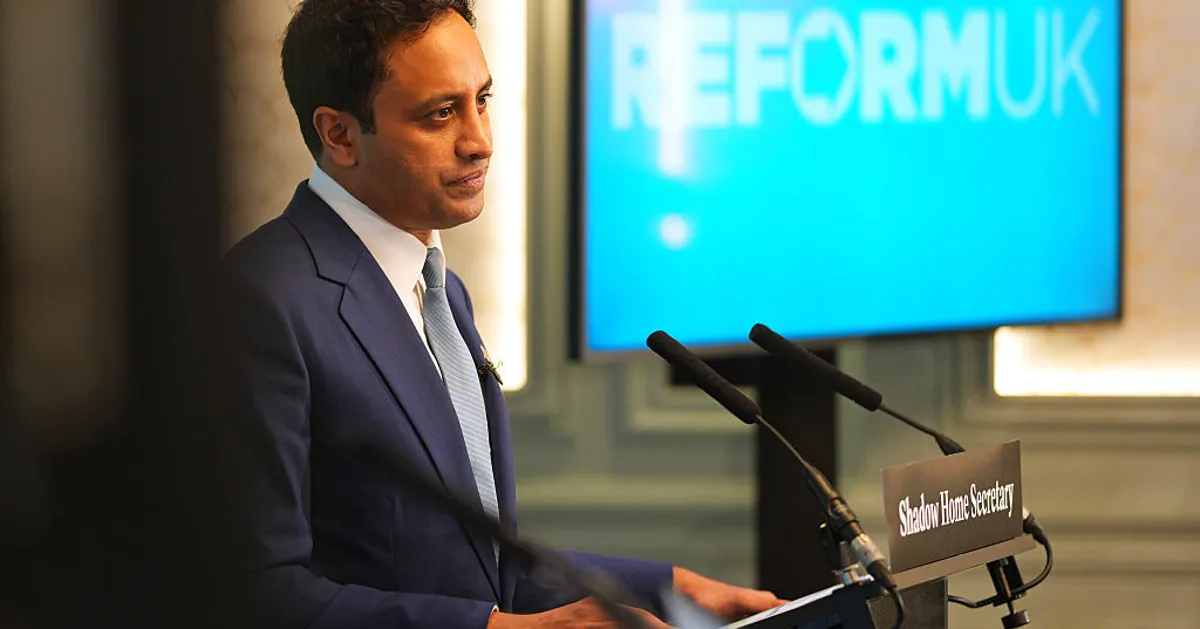
Zia Yusuf has accused Kanye West’s critics of jumping on a “bandwagon” amid mounting anger at the decision to book him to headline the Wireless festival this summer.
Keir Starmer, Wes Streeting and Sadiq Khan are among those who have condemned the move, while home secretary Shabana Mahmood is considering calls for him to be banned from entering the UK.
The Grammy-winning rapper has sparked anger in the past over his anti-semitic remarks, including releasing a song called ‘Heil Hitler’.
Wireless organisers have defended the booking, while West – who now calls himself Ye – has apologised for his previous comments and said he wants to “present a show of change, bringing unity, peace, and love through my music”.
In a statement on Tuesday morning, he said: “I would be grateful for the opportunity to meet with members of the Jewish community in the UK in person, to listen. I know words aren’t enough – I’ll have to show change through my actions. If you’re open, I’m here.”
Asked about the row on Sky News, Yusuf, who is Reform UK’s home affairs spokesman, said: “I think it’s fascinating that you’ve got Tory shadow ministers and the home secretary and the prime minister all weighing in on this particular individual.
“Obviously, he’s got songs that are openly anti-semitic, praising Hitler. It is deeply troubling that those songs would be played at a big auditorium in Britain.
“But what about this Bob Vylan character, who shouts extremely anti-semitic things at concert after concert and broadcast live on the BBC in many cases. Where is the condemnation of that?”
Presenter Kamali Melbourne pointed out to Yusuf that there was widespread condemnation of Bob Vylan following their appearance at Glastonbury last year, and then asked him again if West should be banned rom entering the UK.
He replied: “My view as home secretary would be that would been to have carefully considered in consultation with stakeholders, including the Jewish community.
“But I stand by the argument that it is absolutely a bandwagon that’s being jumped on.”
Subscribe to Commons People, the podcast that makes politics easy. Every week, Kevin Schofield and Kate Nicholson unpack the week’s biggest stories to keep you informed. Join us for straightforward analysis of what’s going on at Westminster.

Taiwan opposition leader’s China visit will only serve Xi propaganda, experts warn
Cantor Fitzgerald reiterates Surgery Partners stock Overweight rating

Solana Foundation launches security overhaul days after $270 million Drift exploit


-

 NewsBeat5 days ago
Steven Gerrard disagrees with Gary Neville over ‘shock’ Chelsea and Arsenal claim | Football
-

 Business5 days ago
No Jackpot Winner and $194 Million Prize Rolls Over
-

 Fashion4 days ago
Weekend Open Thread: Spanx – Corporette.com
-

 Crypto World6 days ago
Gold Price Prediction: Worst Month in 17 Years fo Save Haven Rock
-

 Business2 days ago
Three Gulf funds agree to back Paramount’s $81 billion takeover of Warner, WSJ reports
-

 Sports3 days ago
India men’s 4x400m and mixed 4x100m relay teams register big progress | Other Sports News
-

 Business3 days ago
Expert Picks for Every Need
-

 Business5 days ago
Login and Checkout Issues Spark Merchant Frustration
-

 Sports7 days ago
Tallest college basketball player ever, standing at 7-foot-9, entering transfer portal
-

 Crypto World7 days ago
Bitcoin enters the public bond market as Moody’s gives a first-of-its-kind crypto deal a rating
-
Crypto World6 days ago
Bitcoin stalls below key resistance as technical signals skew bearish
-

 Tech5 days ago
Commonwealth Fusion Systems leans on magnets for near-term revenue
-

 Politics6 days ago
Starmer’s centre has collapsed, and the left was right all along
-
Business2 days ago
No Jackpot Winner, Prize to Climb to $231 Million
-

 Fashion7 days ago
Tuesday’s Workwear Report: Tavira Sculpt Stretch Crepe Trousers
-
Crypto World7 days ago
AI Memory Rout Wipes 9% Off Nvidia Stock: Chart Says More Pain Ahead
-

 Crypto World6 days ago
Why It’s Partnering, Not Issuing
-

 Crypto World6 days ago
Ripple rolls out enterprise crypto treasury platform for corporates
-
Tech7 days ago
AirPods Max 2 review: Familiar features & design, but needs more
-

 Fashion1 day ago
Massimo Dutti Offers Inspiration for Your Summer Mood Board
You must be logged in to post a comment Login