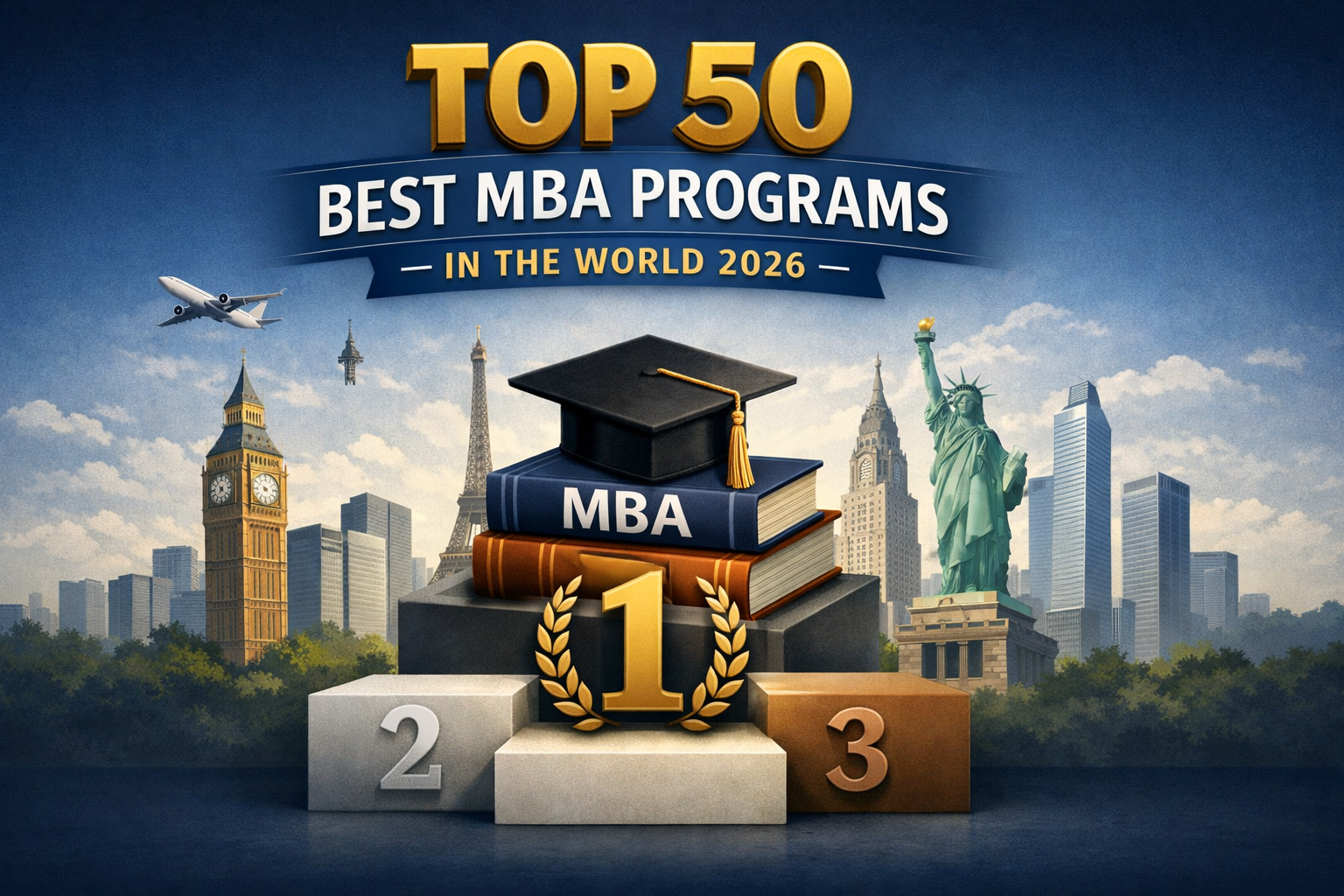
The Wharton School at the University of Pennsylvania has dethroned longtime leader Stanford Graduate School of Business to claim the top spot in the QS Global MBA Rankings 2026, signaling a shift in how the world’s most ambitious professionals evaluate elite business education amid surging demand for artificial intelligence expertise, sustainable leadership and international networks.
Top 50 Best MBA Programs in the World 2026: Wharton Claims QS Crown as AI Reshape Education
As prospective students weigh six-figure investments in full-time MBA programs, 2026 rankings from QS, Financial Times, Poets&Quants, Fortune and U.S. News reveal a highly competitive landscape where American powerhouses still dominate but European and Asian programs are closing the gap with innovative curricula and strong career outcomes.
Wharton’s rise to No. 1 in the QS ranking — its first time at the summit — underscores strengths in employability, alumni outcomes and diversity metrics. Harvard Business School, MIT Sloan and Stanford follow closely in the top four, while HEC Paris claims the highest European spot at No. 5. The rankings reflect evolving priorities: technology integration, global mobility and measurable return on investment as graduates command median starting salaries often exceeding $170,000 plus bonuses.
Business schools are adapting rapidly to an AI-driven economy. Programs emphasizing data analytics, machine learning applications in finance and operations, and ethical leadership in tech-heavy environments are gaining ground. Many top institutions have introduced or expanded concentrations in AI strategy, sustainable business and digital transformation, responding to employer demands for leaders who can navigate disruption.
The 2026 rankings also highlight the growing influence of one-year or accelerated programs in Europe and Asia, which appeal to professionals seeking faster career acceleration with lower opportunity costs compared to traditional two-year U.S. models. INSEAD, IESE Business School and London Business School continue to shine for their international diversity and alumni networks spanning continents.
Advertisement
Why MBA Rankings Matter in 2026
Rankings provide a snapshot of program quality based on factors like academic reputation, employer feedback, alumni salary progression, research output and diversity. However, experts caution that no single list tells the full story. Prospective students should consider fit with career goals, location, culture, cost and specific strengths in areas like entrepreneurship, finance or consulting.
For the class entering in fall 2026, admissions remain selective at top programs, with average GMAT scores often above 700 and significant pre-MBA work experience expected. Many schools report increased applications from candidates with tech, consulting and finance backgrounds, while interest in sustainability and social impact tracks has grown.
Tuition at elite programs can exceed $80,000 per year, but generous scholarships, fellowships and strong post-graduation outcomes often deliver attractive returns. Average salary increases of 100% or more three years after graduation are common among top-10 graduates.
Advertisement
The Top 50 Best MBA Programs in the World for 2026
Here is a synthesized top 50 list drawing primarily from the QS Global MBA Rankings 2026, with cross-references to Financial Times, Poets&Quants, Fortune and U.S. News data for context. Positions reflect a composite view of recent 2026 releases, emphasizing global reputation, employability and outcomes.
1. The Wharton School, University of Pennsylvania (USA) — Tops QS 2026 for the first time; strong in finance, entrepreneurship and global alumni network. Median salaries often top $175,000.
2. Harvard Business School (USA) — Renowned for case method teaching and leadership development; consistently elite across rankings.
3. MIT Sloan School of Management (USA) — No. 1 in Financial Times 2026; excels in technology, innovation and analytics.
4. Stanford Graduate School of Business (USA) — Iconic for entrepreneurship and venture capital ties; high selectivity and impact focus.
5. HEC Paris (France) — Leading European program; strong international outlook and finance specialization.
6. London Business School (UK) — Global diversity and London location drive career opportunities in finance and consulting.
7. University of Cambridge Judge Business School (UK) — Rising fast with strengths in innovation and sustainability.
8. INSEAD (France/Singapore/UAE) — One-year program with exceptional multicultural experience; frequent top-5 finisher.
9. Northwestern University Kellogg School of Management (USA) — No. 1 in Poets&Quants 2025-2026 composite; marketing and teamwork emphasis.
10. Columbia Business School (USA) — New York location and value investing heritage; strong finance and media ties.
11. University of Chicago Booth School of Business (USA) — Flexible curriculum and rigorous economics foundation.
12. IESE Business School, University of Navarra (Spain) — Case method leader; ethics and general management focus.
13. New York University Stern School of Business (USA) — Urban advantage and strong finance, marketing programs.
14. University of California, Berkeley Haas School of Business (USA) — Innovation culture and Bay Area tech ecosystem.
15. Dartmouth College Tuck School of Business (USA) — Close-knit community and leadership development.
16. University of Virginia Darden School of Business (USA) — Case method and general management excellence.
17. Yale School of Management (USA) — Integrated curriculum with societal impact focus.
18. University of Michigan Ross School of Business (USA) — Action-based learning and strong alumni network.
19. Duke University Fuqua School of Business (USA) — Team-based learning and global immersion.
20. Cornell University Johnson Graduate School of Management (USA) — Cornell Tech synergies for digital business.
21. University of Oxford Saïd Business School (UK) — Entrepreneurial and leadership programs with Oxford prestige.
22. National University of Singapore (NUS) Business School (Singapore) — Top Asian program; Asia-Pacific business focus.
23. HKUST Business School (Hong Kong) — Strong finance and Asia strategy.
24. SDA Bocconi School of Management (Italy) — Italian excellence in management and luxury business.
25. University of Pennsylvania (additional programs noted, but Wharton leads) — Consolidated strength.
26. Indian School of Business (India) — Rapid salary growth and emerging markets focus.
27. CEIBS (China) — Leading Chinese program with global outlook.
28. University of Toronto Rotman School of Management (Canada) — Creative problem-solving and Canadian business ties.
29. University of Southern California Marshall School of Business (USA) — Entertainment and entrepreneurship strengths.
30. Georgetown University McDonough School of Business (USA) — International business and ethics emphasis.
31. University of Texas at Austin McCombs School of Business (USA) — Energy and technology focus.
32. University of North Carolina Kenan-Flagler Business School (USA) — Leadership and analytics.
33. Washington University in St. Louis Olin Business School (USA) — Entrepreneurship standout.
34. University of Michigan Ross (additional recognition) — Broad strengths.
35. Imperial College Business School (UK) — Tech and innovation in London.
36. Esade Business School (Spain) — Innovation and sustainability.
37. University of Washington Foster School of Business (USA) — Pacific Northwest tech ties.
38. Rice University Jones Graduate School of Business (USA) — Small class sizes and energy sector.
39. Emory University Goizueta Business School (USA) — Atlanta location and consulting ties.
40. Indiana University Kelley School of Business (USA) — Strong online and traditional programs.
41. University of Illinois Gies College of Business (USA) — Analytics and accounting excellence.
42. Boston University Questrom School of Business (USA) — Digital innovation focus.
43. University of Florida Warrington College of Business (USA) — Value and online strengths.
44. Arizona State University W.P. Carey School of Business (USA) — Supply chain and innovation.
45. University of Maryland Robert H. Smith School of Business (USA) — Information systems and analytics.
46. Carnegie Mellon Tepper School of Business (USA) — Quantitative and analytics powerhouse.
47. University of Minnesota Carlson School of Management (USA) — Twin Cities business ecosystem.
48. Ohio State University Fisher College of Business (USA) — Operations and logistics.
49. Purdue University Krannert School of Management (USA) — STEM-designated options.
50. Texas A&M University Mays Business School (USA) — Energy and agribusiness strengths.
This composite list balances multiple 2026 sources, with U.S. programs occupying the majority of top spots due to resources, alumni outcomes and research impact. European schools like INSEAD, IESE, LBS and HEC Paris offer compelling alternatives with shorter durations and international exposure. Asian programs from Singapore, Hong Kong and China provide regional advantages and cost efficiencies for some candidates.
Trends Shaping the 2026 MBA Landscape
Artificial intelligence has become a core theme. Schools like MIT Sloan and Carnegie Mellon emphasize AI applications in decision-making, while Wharton and Stanford integrate generative AI across curricula. Sustainability and ESG factors also rank higher in admissions and employer preferences.
Advertisement
Diversity initiatives continue, with many programs reporting record percentages of women and international students. Hybrid and flexible formats have expanded post-pandemic, though full-time residential experiences remain prized for networking.
Admissions data show stable or slightly increased applications at top schools, with emphasis on demonstrated leadership and impact rather than pure academics. Deferred admission programs and joint-degree options with engineering, law or public policy attract diverse talent.
Choosing the Right Program
Experts advise looking beyond rankings. Consider:
Advertisement
– **Career goals**: Finance-heavy? Wharton or Columbia. Tech/innovation? MIT or Stanford. International? INSEAD or LBS. – **Location and network**: Proximity to industry hubs boosts internships and jobs. – **Culture and teaching style**: Case method at Harvard/IESE versus experiential learning at others. – **Return on investment**: Factor in total cost, scholarships and salary outcomes. – **Specializations**: Many schools excel in niches like healthcare (Duke), real estate (NYU) or social enterprise (Yale).
Campus visits, alumni conversations and class audits remain invaluable. Virtual information sessions have improved accessibility.
The Broader Value of an MBA in 2026
In an era of rapid technological change and geopolitical shifts, an MBA from a top program still offers powerful advantages: accelerated career progression, expanded professional networks, leadership skill development and access to lifelong alumni resources.
Advertisement
Graduates often move into roles at consulting firms, investment banks, tech giants and startups. Entrepreneurship tracks have produced unicorn founders, while general management paths lead to C-suite positions.
Challenges include high costs and opportunity costs of leaving the workforce. Many schools offer income-share agreements or robust loan forgiveness for public service.
As global economies recover and adapt to AI, demand for business leaders with analytical rigor, ethical grounding and cross-cultural competence remains strong. The 2026 rankings underscore that while elite U.S. programs retain prestige, the world’s best MBA education increasingly comes from a diverse set of institutions delivering tailored, high-impact experiences.
Prospective students should apply strategically, tailoring applications to highlight unique experiences and fit. Early application rounds often yield higher acceptance rates and better scholarship opportunities.
Advertisement
With application deadlines approaching for fall 2027 entry at many programs, now is the time to research, prepare test scores and craft compelling narratives. Whether aiming for the historic halls of Harvard or the innovative campuses of Asia and Europe, the Class of 2028 will enter a business world hungry for principled, forward-thinking leaders.
The pursuit of an MBA remains a transformative journey — one that continues to open doors to extraordinary opportunities in 2026 and beyond.
A prominent luxury wedding planner has directly debunked viral speculation that Taylor Swift and Travis Kelce will tie the knot at Rhode Island’s exclusive Ocean House resort on June 13, delivering a clear message to eager fans and tabloids: “Taylor is not my bride this weekend!”
SEOUL, South Korea — BLACKPINK member Jisoo is receiving an outpouring of praise after gifting her agency staff luxury Dior handbags worth more than 4 million won (approximately $2,652) each, a generous gesture that has gone viral and stood in stark contrast to recent controversies plaguing the K-pop industry.
Blackpink’s member Jisoo
The 31-year-old singer-actress, who launched her own one-person management agency BLISSOO after parting ways with YG Entertainment for solo activities, personally selected and presented the high-end bags to employees as a token of appreciation for their hard work. Staff members shared photos of the gifts on social media, with some posting heartfelt messages like “I love you, CEO Jisoo,” quickly sparking widespread admiration online.
Reports indicate Jisoo spent at least 12 million won (around $7,956) on the gifts for four staff members, with some bags priced even higher. The items came from Dior, the luxury French brand for which Jisoo serves as a global ambassador, adding a personal touch that fans described as thoughtful and meaningful.
The news emerged in early April 2026 through fan accounts and entertainment media, with photos showing elegant Dior handbags in various styles. Employees expressed genuine gratitude, highlighting the gesture as more than a simple perk but a reflection of Jisoo’s caring leadership style since establishing BLISSOO.
In the competitive and often high-pressure world of K-pop, where idols and agencies frequently face criticism over unfair contracts, intense schedules and treatment of staff, Jisoo’s actions have resonated strongly. Netizens and fans have hailed her as a “world-class CEO,” praising her for fostering a positive workplace environment and showing respect to those supporting her career.
Advertisement
One online commenter wrote, “This is how you treat people who work hard for you,” while others contrasted the story with recent industry scandals involving alleged power imbalances and exploitative practices at some agencies. The timing amplified the positive reaction, as discussions about idol welfare, mental health and fair treatment continue to circulate in Korean entertainment circles.
Jisoo, a member of one of the world’s biggest girl groups alongside Jennie, Rosé and Lisa, has built a multifaceted career as a solo artist, actress and brand ambassador. Her agency BLISSOO handles her solo endeavors, including music releases and acting projects, allowing greater control over her schedule and creative direction.
Fans noted that the luxury gifts align with Jisoo’s elegant image and her long-standing partnership with Dior. As a global ambassador, she frequently attends the brand’s fashion shows and events, making the choice of Dior bags a natural yet luxurious expression of thanks.
The story quickly spread across platforms like Instagram, TikTok and X, with hashtags related to Jisoo and the gifts trending. Supporters from the BLINK fandom celebrated the news as evidence of her kind personality, often citing past instances where she showed appreciation to staff and fans alike.
Advertisement
Entertainment insiders suggest such gestures can boost employee morale and loyalty, particularly in smaller agencies where teams work closely with artists. Jisoo’s approach appears to emphasize gratitude and team spirit, qualities that have endeared her to both domestic and international audiences.
This positive spotlight comes amid broader conversations in the K-pop industry about artist-agency relationships. While some groups and idols have faced backlash over reported mistreatment or overly demanding conditions, stories like Jisoo’s offer a counter-narrative of mutual respect and generosity.
Jisoo debuted with BLACKPINK in 2016, and the group has achieved global success with hits like “DDU-DU DDU-DU,” “How You Like That” and “Pink Venom.” The members have increasingly pursued individual projects while maintaining strong group unity, with each establishing personal agencies for solo work.
As an actress, Jisoo has taken on roles in dramas and expanded her presence in entertainment beyond music. Her poised demeanor and versatile talents have earned her a dedicated following, and the recent gift-giving episode has only enhanced her reputation for humility and thoughtfulness despite her superstar status.
Advertisement
BLISSOO has not issued an official statement on the gifts, but the staff’s social media posts served as authentic endorsements of the workplace culture Jisoo cultivates. In an industry where hierarchical structures sometimes lead to “gapjil” — a Korean term for abuse of power by those in superior positions — Jisoo’s actions stand out as the opposite: a leader uplifting her team.
Fans have drawn comparisons to other artists known for generous treatment of staff, noting that such stories humanize idols and strengthen fan connections. The Dior bags, while expensive, were seen less as flashy spending and more as a sincere thank-you for the behind-the-scenes efforts that support Jisoo’s busy schedule of music, acting, endorsements and BLACKPINK activities.
Social media reactions mixed admiration with lighthearted envy. “Jisoo treating her staff better than some companies treat their idols,” one user posted, capturing the sentiment. Others simply celebrated the heartwarming moment in a year filled with mixed K-pop news.
Jisoo’s generosity aligns with her public image as the elegant, warm-hearted “visual” of BLACKPINK, but also reveals a practical side of leadership. Running a personal agency requires managing a small but dedicated team, and investing in their well-being can contribute to long-term success and stability.
Advertisement
As BLACKPINK continues its global dominance and individual members carve out solo paths, moments like this remind fans of the human element behind the glamour. Jisoo’s gift-giving has not only brightened her staff’s day but also provided a feel-good story that resonates far beyond the K-pop bubble.
While the luxury bags represent a significant expense, the real value, many observers say, lies in the message of appreciation. In an era where mental health and fair labor practices gain increasing attention in entertainment, Jisoo’s gesture offers a positive example of how success can be shared.
The story continues to circulate widely as of April 7, 2026, with more fans discovering the details and adding their praise. Whether through music, acting or thoughtful leadership, Jisoo keeps proving why she remains one of the most beloved figures in global pop culture.
For BLISSOO staff, the Dior bags serve as daily reminders of their CEO’s gratitude. For fans worldwide, the anecdote reinforces why they support Jisoo — not just for her talent, but for the kindness that shines through even in her professional decisions.
Advertisement
In the fast-paced, high-stakes K-pop landscape, small acts of generosity can leave a lasting impression. Jisoo’s latest display of appreciation has certainly done just that, earning her even more admiration as both an artist and a leader.
Center for Medicare Director Chris Klomp joins ‘Mornings with Maria’ to outline the Trump administration’s latest Medicare rate update, defend new efforts to curb rising healthcare costs and highlight ongoing moves to lower prescription drug prices a
Falling prescription drug costs are emerging as a key development in the broader push to rein in U.S. health care spending, with new pricing shifts beginning to show up at the pharmacy counter.
Medicare Director Chris Klomp joined FOX Business’ Maria Bartiromo on “Mornings with Maria” to discuss how recent policy changes are starting to impact affordability across the health care system.
Klomp pointed to early signs that pricing pressure is easing, particularly for high-demand medications like GLP-1 drugs, which have surged in popularity but have remained out of reach for many patients. He attributed the recent price declines to actions taken by President Donald Trump to lower drug costs through new pricing initiatives.
FOX Business’ Gerri Willis reports on a Gallup poll showing 61% of Americans are greatly concerned about rising healthcare costs, surpassing worries about the economy and inflation.
“If you need a GLP-1, you’re now paying half of what you were paying just a couple of months ago before he announced those deals,” Klomp said.
Advertisement
Klomp framed the pricing changes as part of a broader effort to address affordability challenges that have prevented many Americans from filling prescriptions.
Woman injecting a syringe of medicine into her stomach (David Petrus Ibars/Getty Images / Getty Images)
“That’s solving the problem for a quarter of Americans who can’t pick up a prescription when they get to the pharmacy counter because they can’t afford it right now,” Klomp said.
The price drop reflects a broader effort to align drug costs more closely with international benchmarks while increasing competition in the market. GLP-1 medications, commonly used for diabetes and weight management, have become a focal point in the affordability debate as demand continues to climb.
Advertisement
eMed chief wellness officer Tom Brady and eMed CEO Linda Yaccarino discuss GLP-1 market growth and the company’s latest funding round on ‘Mornings with Maria.’
Klomp suggested the changes extend beyond a single drug class, pointing to similar trends in other treatments where costs have historically been a barrier to access.
“If you want to grow your family, you need to pick up fertility medicine again. You’re paying about half for those drugs, saving you thousands of dollars per cycle of treatment than you were just a couple months ago,” he said.
The shifts come as policymakers look for ways to reduce out-of-pocket costs while maintaining long-term sustainability in federal health care programs.
Advertisement
“[Trump’s] delivering on affordability for every American family to be their healthiest self,” Klomp said.
PE-backed firm teams up with Royal Fulfillment for centres in New Jersey, Chicago and Los Angeles
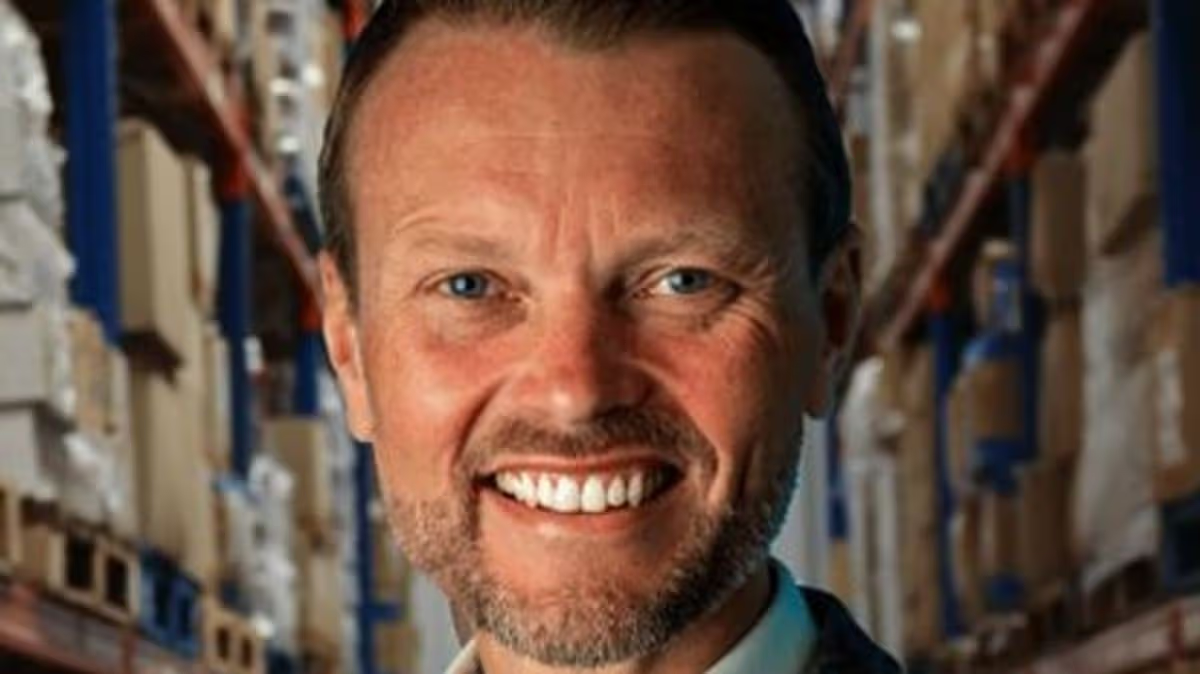
fulfilmentcrowd’s CEO Lee Thompson(Image: fulfilmentcrowd)
Logistics tech specialist fulfilmentcrowd is expanding its US network with new centres in New Jersey, Chicago and Los Angeles.
Chorley-based fulfilmentcrowd has teamed up with American group Royal Fulfillment on the centres designed to “support high-volume eCommerce and B2B distribution across the United States” and to offer coast-to-coast coverage for brands serving the US market. They will replace the group’s two previous US sites.
Royal Fulfillment is a family-run operator with more than 18 years of industry experience. Its centres can handle both direct-to-consumer and large-scale retail distribution, and the business has worked with major retailers such as Amazon, Walmart and Sephora.
Advertisement
Fulfilmentcrowd says its expanded US network will give its customers access to a wider range of US shipping services, including through carriers such as USPS, FedEx and DHL
Lee Thompson, CEO at fulfilmentcrowd, said: “The US is a critical growth market for many of our clients. With this three-centre network, we’re aiming to reduce operational friction at scale, giving global brands the ability to operate domestically across the US with speed, flexibility and cost control built in.”
He added: “This is about more than just adding locations. These centres add to a network that already reflects how modern brands operate: omnichannel, fast-moving and customer-first. Now we can support these requirements across the entire United States.”
Varney & Co. host Stuart Varney warns NYC Mayor Zohran Mamdani’s tax proposals could drive jobs, capital and residents out of New York as a $12.6B deficit looms.
JPMorgan Chase CEO Jamie Dimon warned that New York City and other cities with high taxes and regulatory burdens run the risk of losing businesses and workers to locales with more hospitable business climates.
Dimon released his annual letter to shareholders on Monday in conjunction with the firm’s 2025 annual report and said that companies need to weigh the benefits of operating in places like New York City against areas with lower taxes on businesses and individuals.
Advertisement
“No matter who you are, you need to deal with reality and the truth. The truth is that while New York City has much going for it, particularly for financial companies (because of extraordinary local talent), it also has the highest city and state corporate taxes and the highest individual income and state taxes,” Dimon wrote.
“People often make this a moral or loyalty issue, but it is not. Companies need to remain competitive in this very tough, fast-moving world. And higher taxes lower returns on capital and less competitiveness by their nature,” he said.
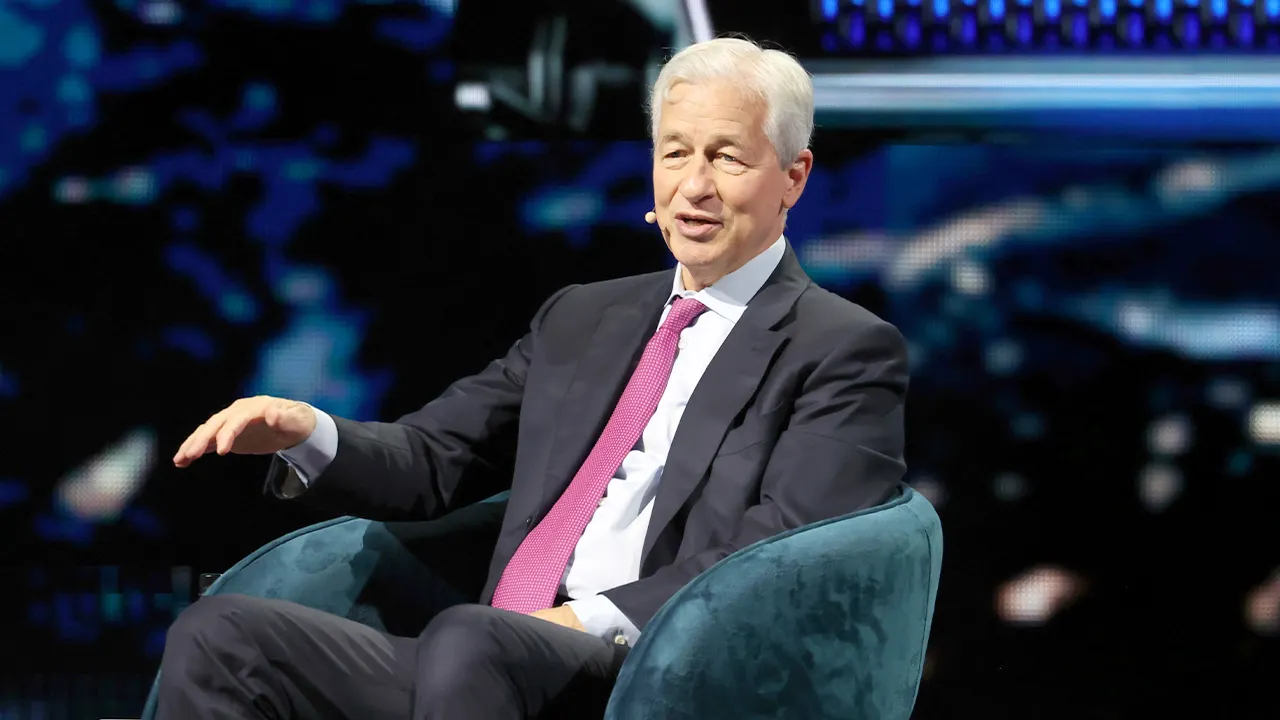
JPMorgan Chase CEO Jamie Dimon said that cities and states have to compete to keep businesses in their jurisdictions. (Alexander Tamargo/Getty Images for America Business Forum)
Dimon said while companies relocating their headquarters or significant aspects of their operations to states with more favorable tax and regulatory regimes may be easier to track, those shifts happen at the employee level as well and can amount to significant moves for the workforce.
Advertisement
“Additionally, individuals vote with their feet – you can already see a fairly large exodus of people and jobs out of some states with high taxes and high expenses (often due to high taxes and regulatory burdens). Sometimes you see companies leaving states, but migration also shows up in shifts of employees out of certain states,” Dimon wrote.
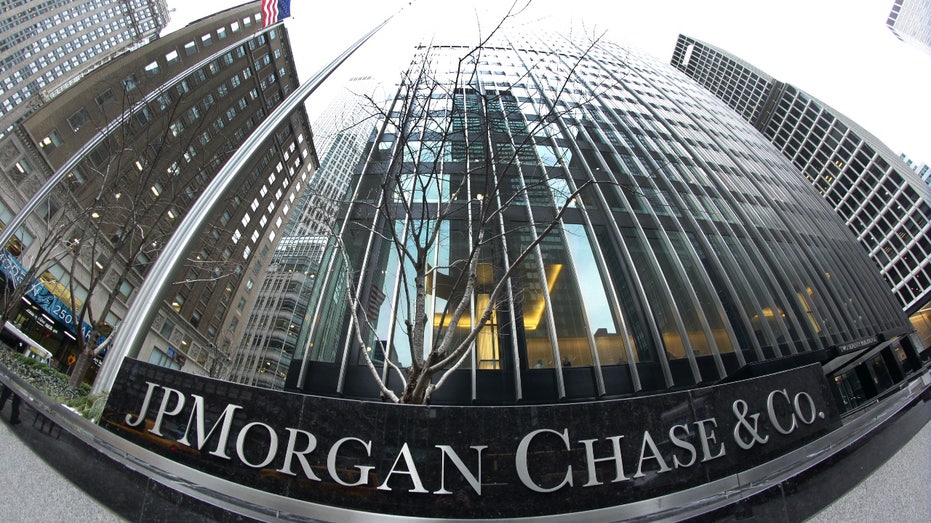
JPMorgan Chase has expanded its presence in Texas while its headcount has declined in New York City. (Tim Clayton/Corbis via Getty Images)
He explained how that dynamic has played out at JPMorgan, which has expanded its footprint in a low-tax state like Texas and will probably continue to do so.
“For example, while New York City is still our company’s global headquarters, we have shrunk our headcount in the city, from 30,000 a decade ago to 24,000 today, and increased our headcount in Texas, from 26,000 in 2015 to 32,000 today. This trend will likely continue,” Dimon said.
The JPMorgan CEO said that he has seen an exodus of corporations out of New York City before that was driven in part by the business climate, adding it can pose significant problems for city governments.
“Sometimes this can be a disaster for a city. I am reminded that in the 1970s, nearly half of the 125 Fortune 500 companies based in New York City left,” he wrote. “While mergers accounted for some departures, the price of doing business in New York City accounted for most: cost of taxes, office rents, labor and so on.”

















































You must be logged in to post a comment Login