Connect with us
DAPA Banner

Tech

Testing Suggests Google’s AI Overviews Tells Millions of Lies Per Hour

Published

on

A New York Times analysis found Google’s AI Overviews now answer questions correctly about 90% of the time, which might sound impressive until you realize that roughly 1 in 10 answers is wrong. “[F]or Google, that means hundreds of thousands of lies going out every minute of the day,” reports Ars Technica. From the report: The Times conducted this analysis with the help of a startup called Oumi, which itself is deeply involved in developing AI models. The company used AI tools to probe AI Overviews with the SimpleQA evaluation, a common test to rank the factuality of generative models like Gemini. Released by OpenAI in 2024, SimpleQA is essentially a list of more than 4,000 questions with verifiable answers that can be fed into an AI.

Oumi began running its test last year when Gemini 2.5 was still the company’s best model. At the time, the benchmark showed an 85 percent accuracy rate. When the test was rerun following the Gemini 3 update, AI Overviews answered 91 percent of the questions correctly. If you extrapolate this miss rate out to all Google searches, AI Overviews is generating tens of millions of incorrect answers per day.

The report includes several examples of where AI Overviews went wrong. When asked for the date on which Bob Marley’s former home became a museum, AI Overviews cited three pages, two of which didn’t discuss the date at all. The final one, Wikipedia, listed two contradictory years, and AI Overviews confidently chose the wrong one. The benchmark also prompts models to produce the date on which Yo Yo Ma was inducted into the classical music hall of fame. While AI Overviews cited the organization’s website that listed Ma’s induction, it claimed there’s no such thing as the Classical Music Hall of Fame. “This study has serious holes,” said Google spokesperson Ned Adriance. “It doesn’t reflect what people are actually searching on Google.” The search giant likes to use a test called SimpleQA Verified, which uses a smaller set of questions that have been more thoroughly vetted.

Source link

Advertisement
Continue Reading
Click to comment

You must be logged in to post a comment Login

Leave a Reply

Tech

Is your data integrity framework just a fancy spreadsheet?

Published

on

Nahla Davies examines what constitutes an appropriate data integrity framework, and how inadequate frameworks damage data quality.

If you asked most companies whether they have a data integrity framework, they’d say yes without hesitation. They’d point you to a shared drive, maybe a Confluence page, possibly a colour-coded spreadsheet with tabs labelled ‘Validation Rules’ and ‘Ownership Matrix’. It looks official. It’s got a logo on it. Someone even added conditional formatting.

But here’s the thing: looking like a framework and actually functioning as one are two wildly different realities. Across industries, organisations are confusing documentation with governance, and the gap between those two things is where data quality quietly falls apart. The problem isn’t that teams don’t care. It’s that they’ve convinced themselves the spreadsheet is enough.

The spreadsheet trap is more common than anyone admits

There’s a pattern that plays out in nearly every mid-size org that’s undergone some kind of digital transformation push in the last five years. Someone in data engineering or analytics gets tasked with ‘building a data integrity framework’. They do their research, pull together some best practices, and create a document. Maybe it lives in Google Sheets, maybe it’s a Notion database, maybe it’s an actual PDF that got emailed around once and then forgotten about. Whatever form it takes, it checks a box. Leadership sees it and feels reassured.

Advertisement

The trouble starts when that document has to survive contact with reality. Data pipelines change. New sources get added. Team members rotate. And that spreadsheet? It doesn’t update itself. It doesn’t send alerts when a schema shifts or when a critical field starts returning nulls at twice the usual rate. It just sits there, frozen in the moment it was created, slowly becoming a historical artifact rather than an operational tool.

What’s worse is that people keep referencing it as though it’s still accurate. Decisions get made based on validation rules that haven’t been reviewed in months. Ownership columns list people who’ve left the company. It’s the organisational equivalent of navigating with a map from 2019 and wondering why you keep hitting dead ends.

And it’s not a niche problem. A 2023 Gartner survey found that poor data quality costs organisations an average of $12.9m per year. That number doesn’t come from dramatic, headline-grabbing breaches. It comes from the slow, invisible accumulation of bad records, missed anomalies, and unchecked assumptions that a static document simply can’t catch.

What a real framework actually looks like

So what separates a functioning data integrity framework from a well-formatted spreadsheet? It comes down to whether the thing can operate without someone manually babysitting it. A real framework is embedded in your infrastructure. It’s automated, observable and responsive.

Advertisement

That means validation checks run as part of your data pipelines, not as a quarterly audit someone remembers to do in the last week of the quarter. It means the data is correctly annotated and that there’s monitoring in place that flags anomalies in real time, whether that’s a sudden spike in null values or a mismatch between source and destination row counts. Tools like Great Expectations, Monte Carlo and dbt tests exist specifically to bring this kind of rigor into the workflow.

It also means ownership is enforced through tooling, not just documented in a tab. When a data asset has a registered owner in a data catalogue, and that catalogue integrates with your alerting system, accountability becomes structural. It stops being something you have to chase people about in Slack.

There’s a cultural component here, too. Organisations with mature data integrity practices treat data quality as a product concern and are better prepared to establish proper AI governance. Product managers care about it. Analysts flag issues proactively instead of working around them. Engineers write tests for data the same way they write tests for code. That kind of culture doesn’t emerge from a spreadsheet. It emerges from leadership, making it clear that data integrity is a priority, not a side project someone handles when things are slow.

The companies getting this right tend to share a few traits. They’ve invested in observability across their data stack. They treat schema changes as events that require review, not things that just happen silently. And they’ve moved past the idea that documentation alone equals governance.

Advertisement

Why it matters more now than it did five years ago

The stakes around data integrity have shifted significantly. Five years ago, a bad record in a reporting dashboard was annoying but manageable. Today, that same bad record might be feeding a machine learning model that’s making automated decisions about credit, hiring or patient care. The blast radius of poor data quality has expanded because the systems consuming that data have become more autonomous and more consequential.

Regulatory pressure is also mounting. Frameworks like the EU’s AI Act and evolving data privacy regulations are putting more scrutiny on how organisations manage the data that powers their products. It’s getting harder to shrug off data quality issues as ‘technical debt we’ll get to eventually’. Regulators want to see evidence of governance, and a spreadsheet with last year’s date on it won’t cut it.

There’s also the competitive angle. Companies that can trust their data move faster. They make decisions with more confidence. They spend less time reconciling conflicting reports and more time actually acting on insights. Data integrity isn’t glamorous, but it’s one of those foundational things that quietly determines whether an organisation can execute on its strategy or just talk about it.

Final thoughts

The uncomfortable truth is that most data integrity frameworks weren’t built to be frameworks at all. They were built to satisfy a request, to check a compliance box, or to give someone something to present in a meeting.

Advertisement

And that’s fine as a starting point. Every mature system started somewhere. But if your ‘framework’ is still a spreadsheet that no one’s touched in six months, it’s time to be honest about what you actually have.

Real integrity requires automation, observability and cultural buy-in. The spreadsheet was never the destination. Treat it as the rough draft it always was, and start building something that can actually keep up with your data.


By Nahla Davies

Advertisement

Nahla Davies is a software developer and tech writer. Before devoting her work full time to technical writing, she managed – among other intriguing things – to serve as a lead programmer at an Inc. 5,000 experiential branding organisation, where clients include Samsung, Time Warner, Netflix and Sony.

Don’t miss out on the knowledge you need to succeed. Sign up for the Daily Brief, Silicon Republic’s digest of need-to-know sci-tech news.

Source link

Advertisement
Continue Reading

Tech

Elon Musk wants any damages from his OpenAI lawsuit given to the AI company’s nonprofit arm

Published

on

Elon Musk is still taking OpenAI to court over its transition to a for-profit company, but today he amended the complaint so that he won’t personally get any of the $150 billion in damages he’s pushing for. The Wall Street Journal reported that if Musk wins in his upcoming trial, he wants any damages should be awarded to the OpenAI nonprofit branch. He’s also seeking OpenAI CEO Sam Altman’s removal from the nonprofit’s board of directors if his suit succeeds.

Musk launched a lawsuit against OpenAI in 2024, claiming that the business had become a “closed-source de facto subsidiary” of Microsoft when it dropped its nonprofit designation. He claims that, as a co-chair of the OpenAI founding group, the change to a for-profit operation defrauded him as a donor. As a result, he’s now claiming that he, or apparently the remaining nonprofit side of OpenAI, deserve a portion of the company’s current valuation.

Considering the reputation Musk, Altman and their various business endeavors have for creating spicy PR situations, it seems likely that the exchanges between the two camps will get more heated as the trial date approaches.

Source link

Advertisement
Continue Reading

Tech

Stolen session cookies give hackers full account access for under a thousand dollars per month without raising alerts

Published

on


  • Storm enables session hijacking that bypasses passwords and multi-factor authentication
  • Attackers can restore stolen sessions remotely without triggering standard security alerts
  • Malware operates server-side to process encrypted browser credentials for stealthy exploitation

A new strain of infostealer malware dubbed Storm is changing how account compromise works, experts have warned.

New findings from Varonis Threat Labs have outlined how this strain moves away from passwords and focuses on session cookies that keep users logged in.

Source link

Advertisement
Continue Reading

Tech

Open Reel Ensemble’s Cyklepedia Spins Wikipedia Knowledge Into Magnetic Tape Music

Published

on

Open Reel Ensemble Cyklepedia Wikipedia Magnetic Tape Music
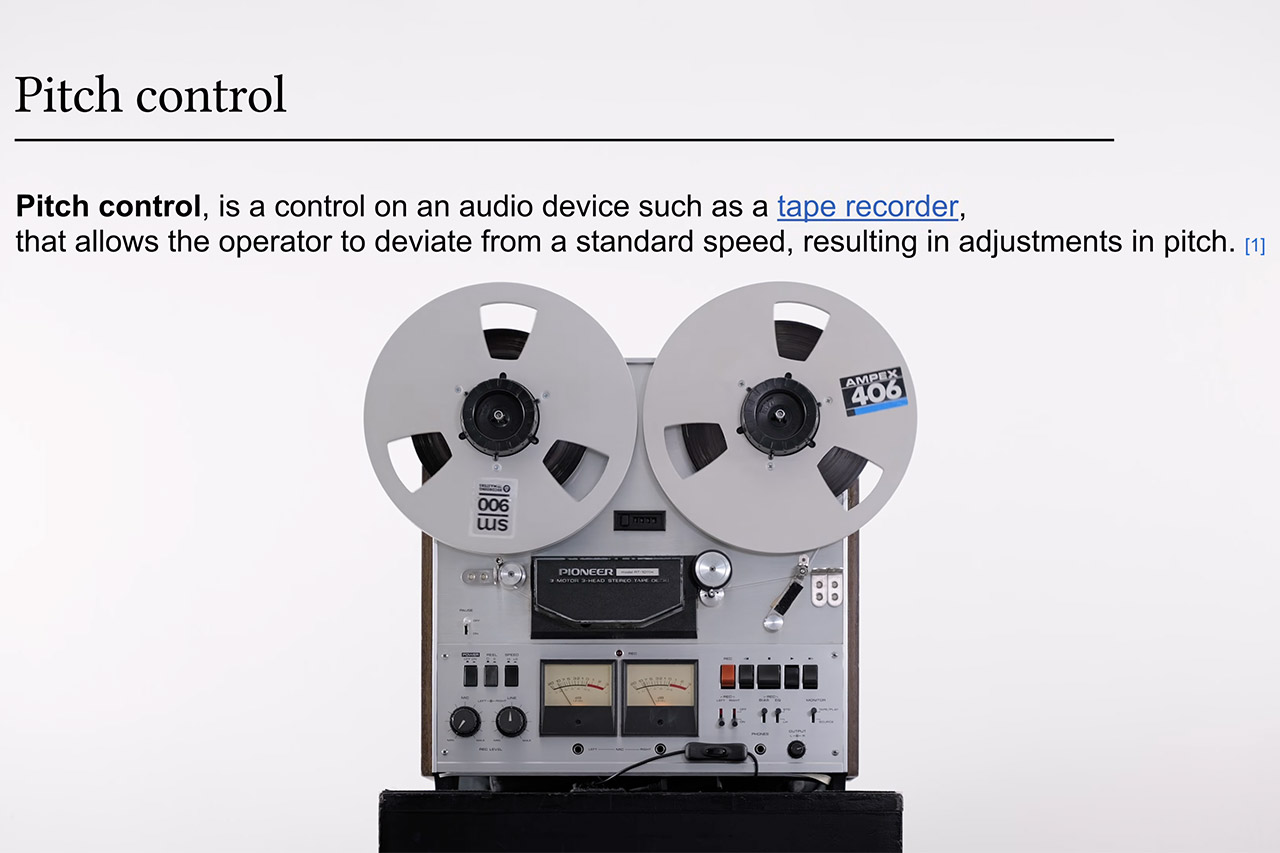
Japanese musicians commemorated Wikipedia’s 25th anniversary with a unique composition made up entirely of Wikipedia entries. Open Reel Ensemble produced the song as part of a virtual birthday celebration, and it’s a true journey because it’s totally made up of ancient reel-to-reel equipment that also function as instruments. Every sound is produced by physically moving the tape over the heads, with no artificial samples added after the fact.


The video shows the trio jamming at a table surrounded by recorders. Snippets of Wikipedia material appear on screen, and the lads are completely freestyling their way through them; grab an entry on how a term is defined, and the machines come to life. One of them is rewinding quickly to fit the description, producing a wonderful smooth swooshing sound across the speakers. Another one goes into fast-forward mode whenever the text flashes by, raising the pitch and adding a little of edge to the beat.

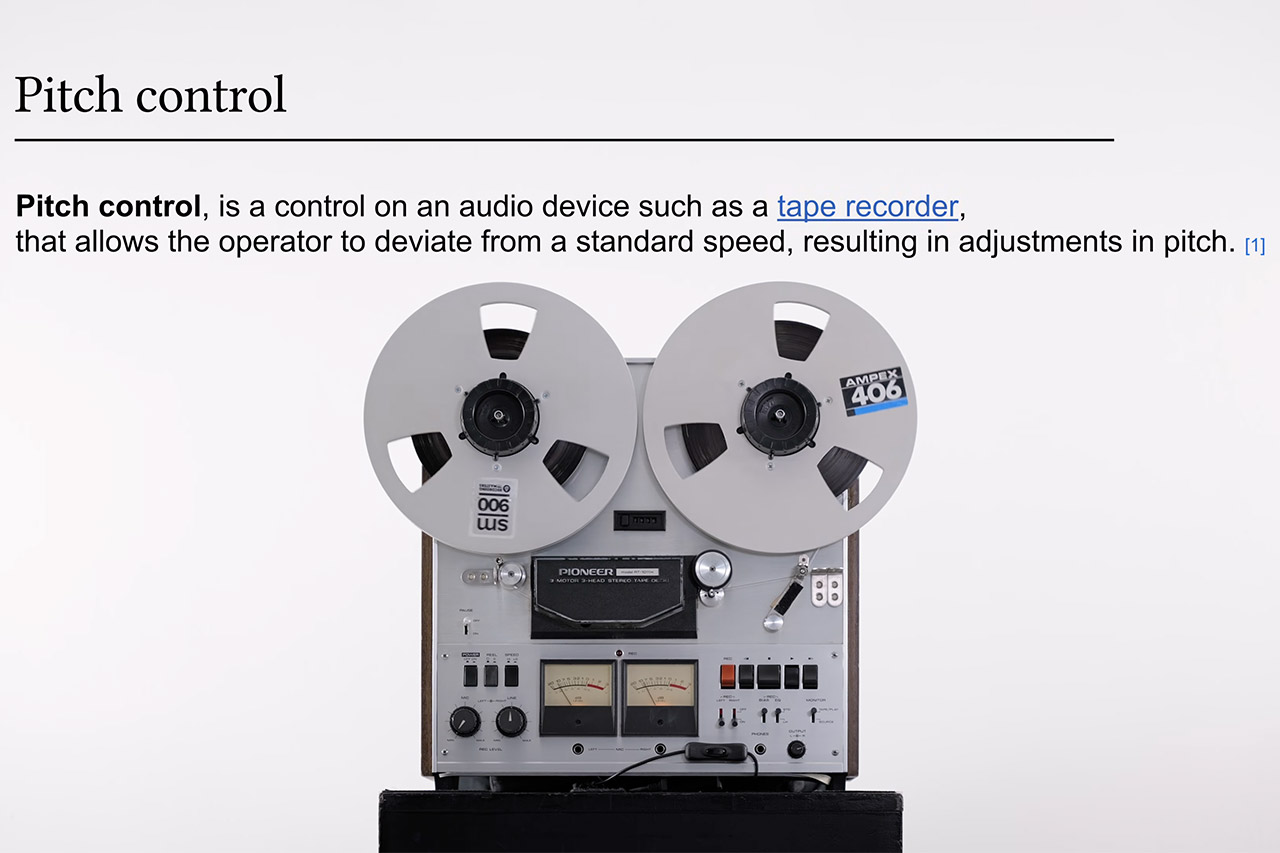
Each one flows seamlessly into the next, and the overall effect just seems natural Pitch control slows down for deeper tones and speeds up for brighter ones. Loops take small pieces and repeat them to create these steady rhythms below, while vibrato puts in some wavey portions by slowly changing the pace. Tremolo reduces the loudness in these rapid little pulses, and when they scratch the tape edges, they make these sharp little snappy noises. Then there are the wow effects, which are simply natural wobbles that go up and down in the same rhythm as your breathing.

Open Reel Ensemble Cyklepedia Wikipedia Magnetic Tape Music
The layers just develop as the devices interact with one another; definition after definition for reel-to-reel recording, tension, cut-up technique, and even magnetic punk all appear on screen, activating their corresponding action. The music remains techno and dance-friendly throughout, but it is all anchored in the mechanical slapping and hissing of the tape. The moniker “Cyklepedia” refers to the entire cycle of information that repeats itself through these physical rotations. Masaru Yoshida composed the song, Haruka Yoshida was in charge of the camera and editing, and the entire group collaborated to bring the performance to life, with even Wikipedia getting in on the action, with the anniversary event playing a role.
[Source]

Source link

Advertisement
Continue Reading

Tech

I’ve Seen Sony’s Upcoming True RGB TV: Here’s Why It Could Be a Game-Changer

Published

on

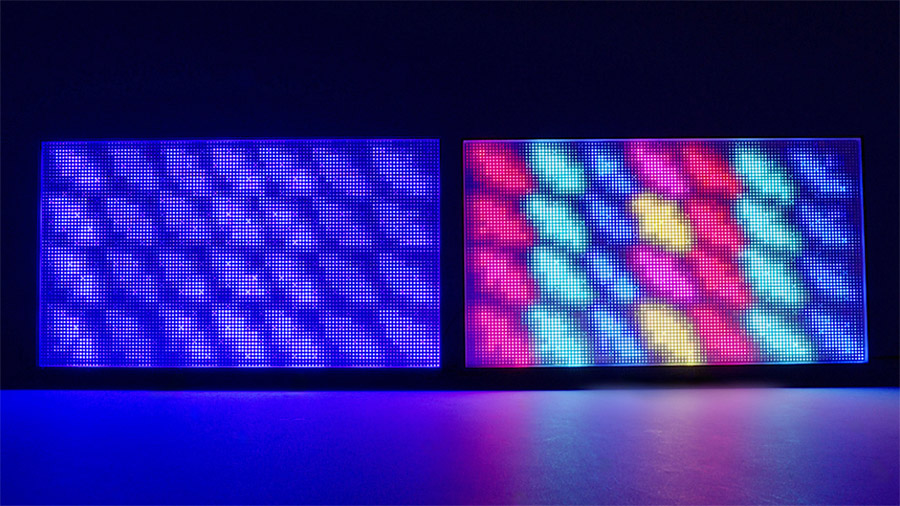
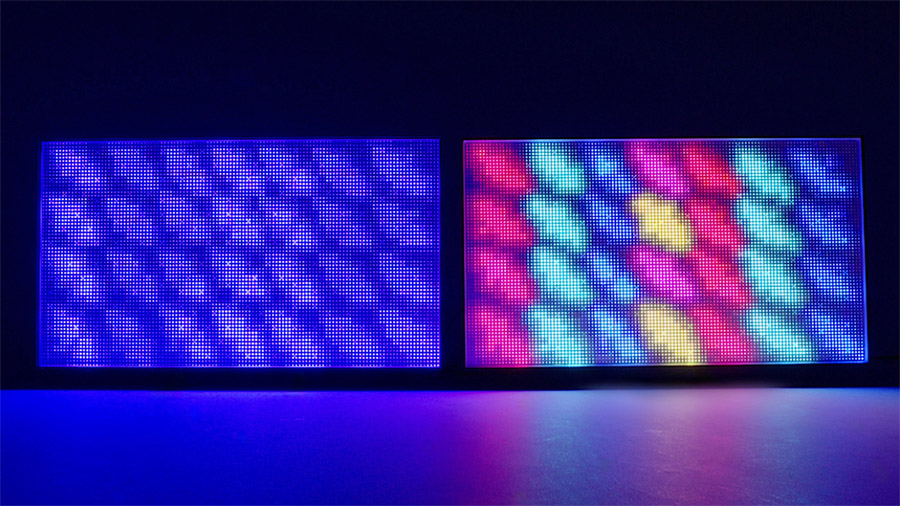
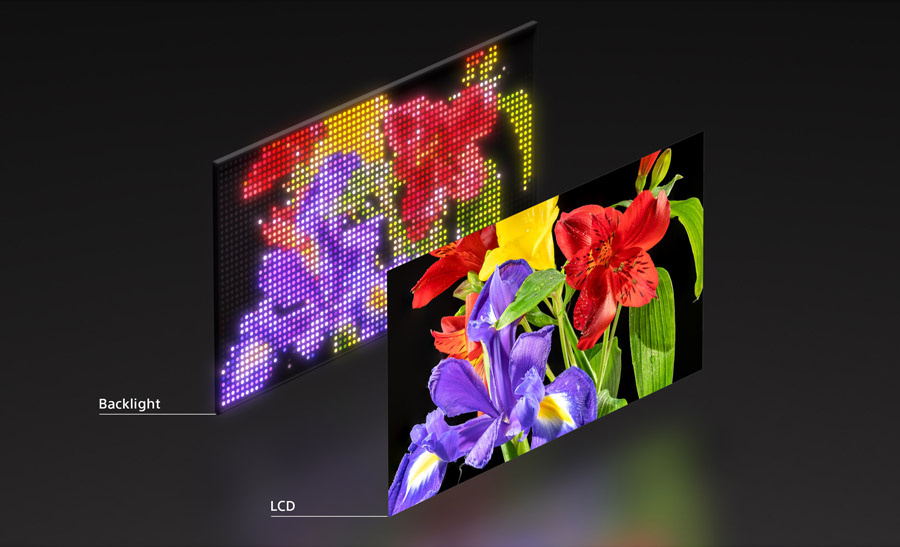
At an event at Sony’s TV headquarters in Tokyo last month, we were treated to some one-on-one time with Sony’s upcoming RGB LED-backlit LCD TV, and I can say this TV is clearly something special. We got to see the new set, which Sony is calling “True RGB,” in its final form and with its LCD panel and screen removed, exposing the RGB backlight unit. Next to it was Sony’s current Mini LED flagship TV, the BRAVIA 9, also in complete form and also with its LCD panel and screen removed, exposing the Mini LED back light unit for comparison.

Sony Mini LED vs New True RGB Backlight 900 px
Sony BRAVIA 9 Mini LED backlight (left) vs. True RGB backlight.

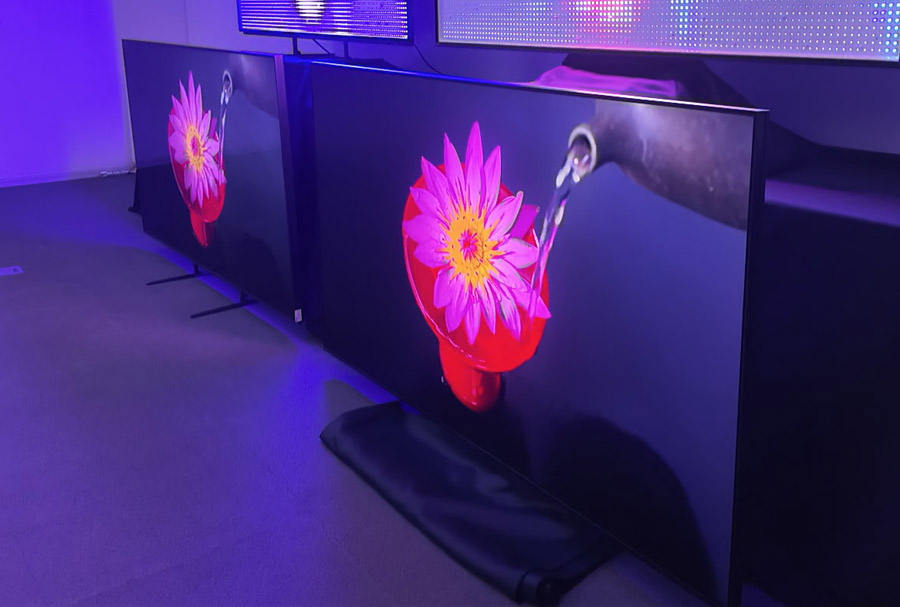
Compared to the BRAVIA 9, the True RGB TV exceeded the performance of that set in just about every measurable (and subjective) way, with wider color gamut, impressive peak brightness and freedom from artifacts like aliasing and color banding. It also had black levels and contrast that will give an OLED TV a run for its money. The new set offered excellent off-axis viewing with minimal dimming and color shift when viewing it from the sides. The upcoming set, which will be publicly unveiled later this spring, does all this while actually using less power than its predecessor, thanks to highly efficient power management and precise control over its RGB backlighting system.

Mini LED/LCD TVs like the BRAVIA 9 have a relatively easy job when it comes to color reproduction. The blue LED elements combine with a quantum dot layer to generate a white backlight. Each pixel on the LCD panel itself creates colors by adjusting the opaqueness of each LCD pixel’s red, green and blue subpixel. Because the backlight is uniform in color, the color filter process is entirely predictable and uniform from pixel to pixel.

conventional-miniled-vs-rgb-miniled

With an RGB backlit TV, the image processor has to decide how to adjust both the intensity of each individual red, green and blue LED diode in each zone of the backlight unit and do further adjustment at the pixel level adjusting each of the red, green and blue LCD subpixels in order to create each pixel’s final color. This two-step process can lead to more accurate and more vivid color reproduction, wider color gamut and higher overall brightness, but at the expense of requiring more processing power. It is just this complexity that has led to Sony taking its time in releasing its first RGB-lit TV of the new era.

Panel Structure RGB backlit LCD TV

At Sony’s headquarters, we got to see the new True RGB set up against several RGB-backlit models from competitors. In this comparison, the Sony True RGB set was better able to remain in its true RGB backlighting mode, taking full advantage of its wide color gamut reproduction with independent control over its red, green and blue diodes, while at least one competitive model switched to a full white backlight whenever multiple contrasting colors were displayed on the screen concurrently. This caused the competing set to lose its RGB color advantage by reverting to a uniform white backlight. And this was evident in visible loss of color saturation.

We’ve seen some RGB backlit TVs struggle with reproduction of multiple colors onscreen at the same time, due to a condition called “color crosstalk.” This occurs when you have multiple colors on screen at a time, or white objects next to or surrounded by colored backgrounds. Some of that background color can bleed into the white due to less than perfect backlight and color filter management. The Sony True RGB set we saw in Japan exhibited none of these color crosstalk issues or color bleed.

Advertisement
micro-rgb-crosstalk-900px
Poor backlight control or color filter management on an RGB backlit TV can lead to color crosstalk. This artifact is shown here on a competitor’s RGB backlit TV where white dots in the image take on a magenta or aqua tinge based on the colored areas surrounding them.

Off-axis viewing and glare reduction were both exceptionally good on the True RGB TV, with the new TV able to maintain its colors and rich black levels, even when viewed from the sides in a fairly bright room. While there was occasionally some mild blooming on brightly colored images set against a black background, the use of RGB lighting elements made these faint artifacts nearly imperceptible. On traditional LED/LCD TVs, the bloom or halo around a bright object is typically white, while on a True RGB TV, the light bloom matches the color of the on-screen object, making it much less noticeable.

True RGB off axis 2 900px
Sony’s True RGB TV (right) maintains good color accuracy, black levels and saturation even when viewed from the sides.

We viewed several challenging 4K/HDR clips highlighting HDR tone mapping and found that the new True RGB set outperformed the BRAVIA 9 MiniLED TV in both specular highlights and shadow detail. And the BRAVIA 9 is already a strong performer for tone mapping, so this was a pretty impressive feat.

Coming-Soon- True RGB 900px

The True RGB TV we spent time with in Japan was a 65-inch version, but, because these TVs use standard LCD “mother glass,” we can expect Sony’s True RGB tech to be available in much larger screen sizes. Certainly larger than OLED TVs which currently max out at 97 inches diagonally. More details will follow later this spring.

April-7-Sony Qualia005 RGB Backlit LCD TV from 2004
Sony’s Qualia 005 TV, released in 2004, was the first LCD TV to feature an RGB backlight unit.

The Bottom Line

While Sony was the first TV maker to use RGB LED backlights in an LCD TV, with the Qualia 005 from 2004, they were not first to market with this new wave of RGB-backlit LCD TVs. Models from Samsung, TCL and Hisense were introduced last year, and second generation models are coming soon from these same manufacturers. LG also unveiled their own RGB-backlit LCD TVs this year, though they are still standing behind OLED technology for their flagship TVs.

Sony has been working on perfecting RGB backlighting in LCD TVs for several years. About a year ago, we saw Sony’s then current prototype RGB backlit TV, which was impressive, but this latest version is even more so. From what we can gather, the company wanted to make sure their version of RGB backlighting was truly ready for prime time before its release. And, from what we’ve seen so far, the wait will be worth it.

Advertisement. Scroll to continue reading.

Stay tuned to eCoustics for more details on Sony True RGB TVs, including industrial design, model numbers, screen sizes, prices and more, coming later this spring.

We’ve Seen the Future of Sony TVs in All its Red, Green and Blue Glory: Here’s What’s Coming

Advertisement

It’s Here! Check Out the 116-inch Hisense 116UX RGB Backlit TV

Sony, TCL Finalize Joint Venture for TVs and Audio; Say Hello to BRAVIA, Inc.

Source link

Advertisement
Continue Reading

Tech

I can’t help rooting for tiny open source AI model maker Arcee

Published

on

Arcee, a tiny 26-person U.S. startup that built a massive, 400B-parameter open source LLM on a $20 million shoestring budget, has released its new reasoning model. Arcee calls the model Trinity Large Thinking — and it’s the most capable open-weight model “ever released by a non-Chinese company,” claims CEO Mark McQuade to TechCrunch.

As that comment implies, Arcee has a goal that I can’t help but root for: It wants to give U.S. and Western companies a model that gives them no reason to use a Chinese-based one.

While Chinese models are extremely capable, they are perceived as risky, putting power, and perhaps data, into the hands of a government that doesn’t share all of the Western world’s ideals.

With Arcee, companies can download the model, train it to their own needs, and use it on premises. Companies can also use Arcee’s cloud-hosted version, accessible via API.

Advertisement

While Arcee’s models are not outperforming the closed source models from the big labs like Anthropic or OpenAI, they’re not being held hostage by the whims of those giants, either.

For instance, Claude, with its exceptional abilities to code, has been a popular choice for users of open source AI agent tool OpenClaw. But Anthropic pulled the rug out from them last week when it told users that their Anthropic subscriptions will no longer cover OpenClaw usage — they will have to pay additionally for that. (In February, OpenClaw creator Peter Steinberger said he was joining Anthropic’s biggest rival, OpenAI.)

In contrast, McQuade proudly points to data from OpenRouter that says it has become one of the top models used with OpenClaw.

Techcrunch event

Advertisement

San Francisco, CA
|
October 13-15, 2026

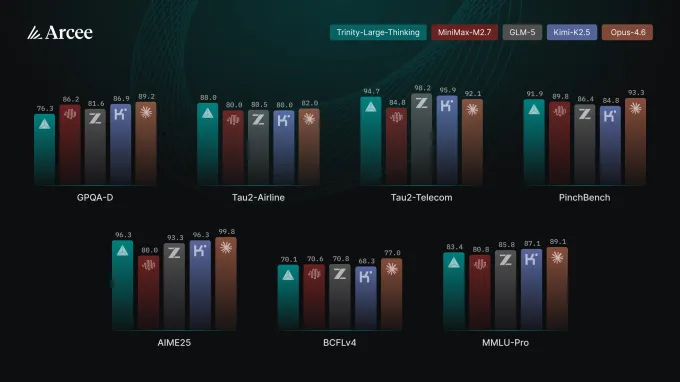
So, how good is Trinity Large Thinking? It is comparable to some of the other top open source models, according to the benchmark results it shared with TechCrunch.

Advertisement
Arcee Trinity large thinking Benchmarks
Arcee Trinity large thinking BenchmarksImage Credits:Arcee / Arcee

As we previously reported, it is not a head-to-head threat to the big cheese among U.S.-built open models: Meta’s Llama 4. But it also doesn’t have the odd, not-really open source license issues of Meta’s model. All of Arcee’s Trinity models are released under the gold standard for OS licenses, Apache 2.0.

Just to be clear, there are also countless other U.S. startups offering open source models and, as a fan of the ingenuity of startups, I’m rooting for them, too.

Source link

Continue Reading

Tech

How Long Can You Drive With Expired Registration? What Florida Law Says

Published

on


The internet has given us many things, including the infamous “Florida Man” trope. That last one isn’t the nickname of an unknown cryptid stalking the swamps of the Sunshine State; instead, it refers to a seemingly never-ending series of headlines featuring random Floridians doing wild and crazy things, usually involving one of the state’s many creatures (think possums, alligators, snakes, and iguanas). Oh, and they’re all true. 

Florida is also home to some truly weird traffic laws, but “Florida Man Drives With Expired Registration” doesn’t have quite the same ring as “Florida Man Ties Elephant to Parking Meter Without Paying Fee.” Still, the rule around expired tags in the state is a bit odd. Fundamentally, though, it’s not too dissimilar to other states: vehicles in Florida must have a valid registration, and letting it lapse can lead to a range of unpleasant consequences. 

However, section 320.07 (subsection 3A) of the state statutes lays out that anyone with an expired registration of less than six months is only committing “a noncriminal traffic infraction, punishable as a nonmoving violation.” There’s also a caveat to this otherwise very straightforward law: Police can’t write up a citation for it “until midnight on the last day of the owner’s birth month of the year the registration expires.” If it’s been expired for more than six months, though, the proverbial can of worms gets opened. First-time offenders may be subjected to a monetary penalty, while second-time offenders could face a second-degree misdemeanor with a $500 fine plus up to 60 days in prison.

Advertisement

Vehicle registrations in Florida

Florida wouldn’t make it difficult for itself, would it? Barring some truly obscure traffic laws that most drivers don’t know about, no, because most registrations expire at midnight on the owner’s birthday. They can be renewed for one or two years, beginning three months before expiration, at least for individual car owners. However, while registration technically expires on the owner’s birthday, penalties can’t be assessed — and the vehicle can still be driven — until the last day of the owner’s birthday month. If and when you do get a ticket, you can either pay the fee (which varies by county, not to exceed $500) or show up for your day in court.

Initially, registering a vehicle in Florida will set you back $225 plus proof of insurance with minimum coverage levels ($10,000 in Personal Injury Protection and $10,000 in Property Damage Liability). Annual license taxes on privately owned vehicles are based on weight. One weighing less than 2,500 pounds costs a mere $14.50, while one weighing between 2,500 and 3,499 pounds incurs a fee of $22.50, and those over 3,500 pounds cost $32.50.

Advertisement

Furthermore, anyone cited for expired tags has 10 working days to obtain a valid certificate of registration. But there’s yet another caveat to this law, and it pertains to active service members. If their vehicle registration expires while they’re deployed, they will not be dinged — as long as the soldier can provide official military orders or a written statement from their commanding officer attesting to their deployment.


Advertisement

Source link

Continue Reading

Tech

MasterPlug Auraline Black Glass Panel Heater Review

Published

on

Verdict

A great-looking convection heater, available in black or white, the MasterPlug Auraline Black Glass Panel Heater is also great value for a smart heater. Its front control panel is a little basic, but the smart app offers versatility and remote control.

  • Great price

  • Flexible installation

  • Useful smart app

  • Feet are fiddly to attach

Key Features

Introduction

Convection heaters might all work in the same way, but that doesn’t mean that you have to compromise on style or features, as the MasterPlug Auraline Black Glass Panel Heater demonstrates.

Advertisement

Available in black or white, this panel heater can stand on the floor or you can wall-mount it to keep it out of the way. Its front control panel is a little basic, but connect this well-priced 2kW heater to Wi-Fi and you get more via the app.

Advertisement

Design and features

  • Can stand on the floor or be wall-mounted
  • Black or white versions
  • Compatible with the SmartLife app

A lot of convection heaters are very ugly, but the MasterPlug Auraline Black Glass Panel Heater is much more attractive than most. As the name says, this heater has a glossy glass finish to it that gives it an air of quality and makes this heater look at lot more expensive than it is. I’ve got the black version, but there’s also a white version.

The eagle-eyed may spot that the MasterPlug Auraline Black Glass Panel Heater looks very similar to the Princess Glass Smart Panel Heater that I reviewed a few years ago. Both have the same finish, screen and controls. While the Princess heater was a 1.5kW model, there was also a 2kW model – the same rating as the MasterPlug here.

However, the MasterPlug version is cheaper at the time of review, and there are a few app differences, too.

Advertisement

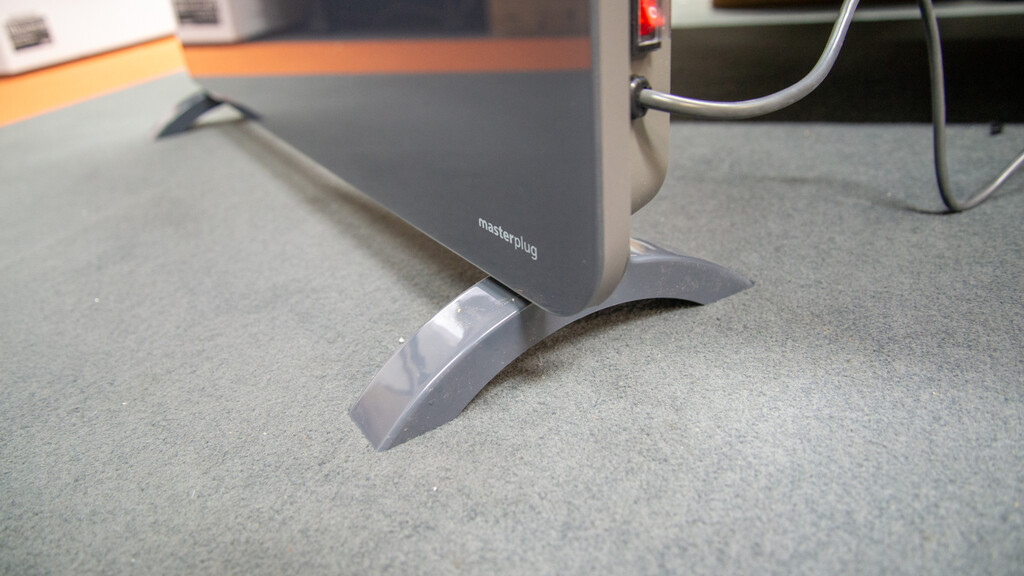
As with the Princess, the MasterPlug Auraline Black Glass Panel Heater can be wall-mounted, or you can attach the provided feet to the base and have it freestanding. The feet are as annoying to attach here as they were to the Princess heater.

MasterPlug Auraline Black Glass Panel Heater legsMasterPlug Auraline Black Glass Panel Heater legs
Image Credit (Trusted Reviews)

Advertisement

Thanks to a deep recess on the feet, the tiny screws are hard to get through the holes. I recommend a magnetic screwdriver to hold the screws while you delicately move them into position.

Once attached, the legs provide a lot of stability, but if the heater is knocked over, tip-over protection cuts the power to prevent damage.

Once plugged in, the heater has a physical power switch on the side that cuts power off. For most cases, you can leave this switch on, but it’s handy to have the option to fully cut power in the warmer months or if you won’t be using the heater for a while.

Advertisement
MasterPlug Auraline Black Glass Panel Heater power switchMasterPlug Auraline Black Glass Panel Heater power switch
Image Credit (Trusted Reviews)

With the main switch on, the heater is controlled via the touch buttons on the front. There’s a simple power button that turns the heater on and brings the screen to life, showing the current room temperature.

MasterPlug Auraline Black Glass Panel Heater main screen and controlsMasterPlug Auraline Black Glass Panel Heater main screen and controls
Image Credit (Trusted Reviews)

Advertisement

The plus/minus buttons let me select the target temperature in 1°C increments up to 40°C. Once the target has been reached, the heater turns off until the temperature drops, and then the heating process starts again.

MasterPlug Auraline Black Glass Panel Heater target temperatureMasterPlug Auraline Black Glass Panel Heater target temperature
Image Credit (Trusted Reviews)

There’s a timer button, which cycles through hourly increments up to 24 hours. It’s handy to have if you want to give a room a boost, but want the heater to shut down after a set time.

MasterPlug Auraline Black Glass Panel Heater timerMasterPlug Auraline Black Glass Panel Heater timer
Image Credit (Trusted Reviews)

Finally, there’s a control to switch between high and low power modes (2000W and 1000W). Lower power mode is useful if it’s either slightly warmer weather and you’re worried about overshooting the target temperature, or you have solar power and want to keep power usage below your energy generation on a bright day.

To get more from the heater, you need to connect it to the app. This heater is compatible with the SmartLife app, where you can mix and match devices from different manufacturers, or you can use the MPSmartEnergy app instead. Both give you the same interface, so there’s no good reason to us the MPSmartEnergy app over SmartLife.

Advertisement

MasterPlug Auraline Black Glass Panel Heater appMasterPlug Auraline Black Glass Panel Heater app
Image Credit (Trusted Reviews)

Be careful, as the app gives the wrong instructions for getting the radiator connected to Wi-Fi: it shows a flashing LED and says to hold the reset button, showing a diagram of someone holding down the power button; the flashing icon is actually on the LCD and shows what looks like a ringed-planet, and the reset button is actually the mode select button.

Once connected to the app, you get the same controls as on the MasterPlug Auraline Black Glass Panel Heater itself, plus the timer can be set in minutes as well as hours.

Advertisement

Scheduling is available via simple rules: you need one for each time the heater should turn on and which temperature it should aim for, and another rule for each time you want to turn it off. It’s handy to have this option, but it’s not as thorough as the full scheduling tool you get with Mill WiFi Max Portable Heater 1500W.

MasterPlug Auraline Black Glass Panel Heater app scheduleMasterPlug Auraline Black Glass Panel Heater app schedule
Image Credit (Trusted Reviews)

What MasterPlug offers over the similar Princess heaters is full energy monitoring in-app, so you can see how much energy the heater is using and how much it has used over time.

Advertisement

Performance

One of the main benefits of a convection heater is that it’s completely silent. Aside from a clunk as the heating element turns on or off, there’s no sound to be heard from the MasterPlug Auraline Black Glass Panel Heater at all.

The front gets hot, but no so hot as you’d burn yourself, but most of the heat comes out of the vent at the top. As the MasterPlug Auraline Black Glass Panel Heater heats up, it causes air to circulate, warming the room.

Advertisement

Testing it in the large front room of the Trusted Reviews Home Technology Lab (just shy of the 25m2 maximum that I’d recommend for a 2kW heater), it didn’t take long to raise the temperature from 17°C to a more pleasant 21°C. For living rooms and larger bedrooms, this heater would be all that you need.

I measured the MasterPlug Auraline Black Glass Panel Heater as drawing just under 2kW on maximum power and just over 1kW on low-power. How much energy is uses will depend on many things: the target temperature, starting temperature, outdoor temperature and target temperature. But, overall running costs are the same for this electric heater as for any other model specified for a target room size.

Advertisement

Should you buy it?

Advertisement

You want a cheap, good-looking smart heater

Versatile with wall- or floor-mounting and a smart app, this heater is well priced and attractive.

Advertisement

You want something smaller or with more features

If you’re limited on space, a fan heater might be better, and many of those can also double up as cooling fans in the summer.

Advertisement

Final Thoughts

Impressively cheap, the MasterPlug Auraline Black Glass Panel Heater also looks great and comes with a very useful smart app to get more out of it. If you want a fan heater or something for a smaller room, then check out my guide to the best electric heaters.

How we test

Unlike other sites, we test every heater we review thoroughly over an extended period of time. We use industry standard tests to compare features properly. We’ll always tell you what we find. We never, ever, accept money to review a product.

Find out more about how we test in our ethics policy.

Advertisement
  • Used as our main heater for the review period
  • We measure the fan speed (if available) using an anemometer so that we can accurately compare performance between models
  • We measure the heat output of the fan and its effect on our test lab.

FAQs

What does the MasterPlug Auraline Black Glass Panel Heater’s app do?

Using the app you can set schedules and more detailed timers, and view power usage.

Advertisement

Test Data

  MasterPlug Auraline Black Glass Panel Heater

Advertisement

Full Specs

  MasterPlug Auraline Black Glass Panel Heater Review
UK RRP £91.99
Manufacturer
Size (Dimensions) 920 x 235 x 430 MM
Weight 7.4 KG
Release Date 2026
First Reviewed Date 26/03/2026
Model Number MasterPlug Auraline Black Glass Panel Heater
Modes 1000W, 2000W
Stated Power 2000 W
App Control Yes
Timer Yes (hourly up to 24 hours)
Heater type Convection heater
Thermostat Yes
Safety features Overheat and tip-over protection

Source link

Continue Reading

Tech

Snowflake customers hit in data theft attacks after SaaS integrator breach

Published

on

Hand sifting through data

Over a dozen companies have suffered data theft attacks after a SaaS integration provider was breached and authentication tokens stolen.

While numerous cloud storage and SaaS vendors were targeted using the stolen tokens, BleepingComputer has learned that the majority of the data theft attacks targeted the cloud-based data warehouse platform Snowflake.

Snowflake confirmed “unusual activity” to BleepingComputer, stating that a small number of its customers were impacted.

Wiz

“We recently detected unusual activity within a small number of Snowflake customer accounts linked to a specific third-party integration,” Snowflake told BleepingComputer.

“We immediately launched an investigation and, out of an abundance of caution, locked down potentially impacted customer accounts. We also notified potentially impacted customers and provided precautionary guidance to help them further protect their accounts.”

Advertisement

Snowflake stressed that the attacks did not involve any vulnerability or compromise of its systems.

As part of these attacks, the threat actor allegedly attempted to use the stolen authentication tokens to steal data from Salesforce, but was detected before they could succeed.

Data theft after alleged Anodot breach

While Snowflake would not confirm which third-party integration partner was linked to these attacks, BleepingComputer was told by numerous sources that the attacks stem from a security incident at data anomaly detection company Anodot.

Anodot is an AI-based analytics company that provides real-time anomaly detection for business and operational data, helping organizations automatically spot unusual changes in revenue, transactions, and system performance using machine learning. Data analytics company Glassbox acquired the company in November 2025.

Advertisement

BleepingComputer was told that numerous companies are now being extorted by the ShinyHunters extortion gang, which is demanding ransom payments to prevent the release of stolen data.

After learning of the attacks, the ShinyHunters group confirmed to BleepingComputer that they were behind them, claiming to have stolen data from dozens of companies this past Friday. They also confirmed their attempts to steal data from Salesforce, but said they were blocked by AI detection.

The blocked attempt comes amid a wave of data theft attacks over the past year targeting Salesforce customers.

The threat actors also claimed the attack stems from a security incident at Anodot, hinting that they allegedly had access to the company for some time.

Advertisement

The threat actor shared some of the companies allegedly affected by the incident, but BleepingComputer will not name them without confirmation.

Only one company, Payoneer, replied to our emails, stating that it aware of the integrator breach but was not impacted.

“We’re aware of a security incident involving a third-party service provider, Anodot. Based on our review, Payoneer has not been impacted,” Payoneer said in a statement to BleepingComputer.

Google’s Threat Intelligence Group, which has been tracking many of this year’s data theft campaigns, also confirmed to BleepingComputer that it is aware of the incident and is tracking it, but had nothing further to share at this time.

Advertisement

BleepingComputer has sent multiple emails to Anodot and its parent company, Glassbox, but has not yet received a reply.

Automated pentesting proves the path exists. BAS proves whether your controls stop it. Most teams run one without the other.

This whitepaper maps six validation surfaces, shows where coverage ends, and provides practitioners with three diagnostic questions for any tool evaluation.

Source link

Advertisement
Continue Reading

Tech

Americans lost a record $21 billion to cybercrime last year

Published

on

FBI: Americans lost a record $21 billion to cybercrime last year

U.S. victims lost nearly $21 billion to cyber-enabled crimes last year, driven primarily by investment scams, business email compromise, tech support fraud, and data breaches, the Federal Bureau of Investigation says.

The figure continues the year-over-year record trend as it is up 26% compared to 2024, when Americans lost $16.6 billion to cybercrime.

A similar uptick was recorded in the number of complaints the Internet Crime Complaint Center (IC3) received, which surpassed 1 million last year, up from 859,000 the year before.

Wiz
Number of complaints (top) and losses (bottom)
Number of complaints (top) and losses (bottom) per year
Source: FBI

The most frequent complaints received last year referred to phishing attacks (191,000), extortion (89,000), and investment scams (72,000), which continued to drive massive losses.

Although smaller in absolute numbers, there were still a significant number of reports for serious attack types such as business email compromise (24,700 cases), data breaches (3,900), ransomware attacks (3,600), and SIM swapping (971).

Advertisement

Investment fraud accounted for 49% of all scam-related incidents recorded last year and resulted in losses of $8.6 billion. However, cybercrime targeting cryptocurrency caused the largest loss, exceeding $11 billion across 181,565 cases.

Cyber-enabled fraud was present in 453,000 complaints and accounted for $17.7 billion of the total losses submitted to the IC3 in 2025.

According to the IC3, Americans over the age of 60 were hit the hardest, with reported losses of $7.7 billion, a 37% increase compared to the previous year.

For the first time, the FBI’s report includes AI-related scams, which accounted for 22,300 complaints and $893 million in losses. These schemes involved voice cloning, fake profiles, forged documents, and deepfake videos.

Advertisement

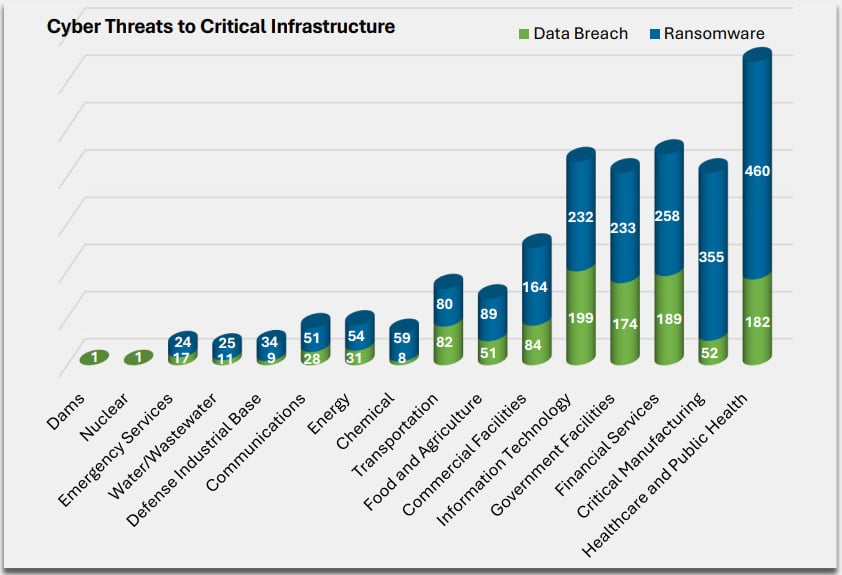
In two cases, attacks targeting critical infrastructure (dams and nuclear facilities), the FBI labeled the incidents as data breaches.

The most targeted critical infrastructure sectors in 2025 were healthcare, manufacturing, financial services, information technology, and government facilities.

Attacks on critical infrastructure entities
Source: FBI

FBI fighting back

The FBI says that it has upgraded its efforts to block attacks, notify victims, and freeze stolen funds, in some cases even being able to retrieve them.

The agency initiated 3,900 Financial Fraud Kill Chain (FFKC) interventions in 2025, successfully blocking a portion of fraudulent transactions. Of the $1.16 billion targeted by attackers, the FBI froze $679 million.

Additional efforts from the agency to prevent cyber-enabled crimes included ‘Operation Level Up’ at the start of the year, a proactive approach to prevent financial losses by identifying and alerting victims of cryptocurrency investment fraud.

Advertisement

Of the 3,780 victims notified last year, 78% were unaware that they were being scammed.

The FBI recommends people not to rush when they receive urgent requests and face pressure tactics, and to use all available means to verify the authenticity of the communication before sending money or data.

Those who suspect compromise by hackers or scammers are urged to report the incidents with full details to ic3.gov.

Automated pentesting proves the path exists. BAS proves whether your controls stop it. Most teams run one without the other.

This whitepaper maps six validation surfaces, shows where coverage ends, and provides practitioners with three diagnostic questions for any tool evaluation.

Advertisement

Source link

Continue Reading

Trending

Copyright © 2025