Storm enables session hijacking that bypasses passwords and multi-factor authentication
Attackers can restore stolen sessions remotely without triggering standard security alerts
Malware operates server-side to process encrypted browser credentials for stealthy exploitation
A new strain of infostealer malware dubbed Storm is changing how account compromise works, experts have warned.
New findings from Varonis Threat Labs have outlined how this strain moves away from passwords and focuses on session cookies that keep users logged in.
These cookies allow attackers to bypass login steps entirely, including multi-factor authentication, which traditionally acts as a second layer of protection.
Article continues below
Advertisement
Session hijacking replaces passwords
Once a session is stolen, the attacker can access accounts as if they were the legitimate user without triggering standard authentication checks.
Storm collects browser data, including saved credentials, session cookies, autofill entries, and authentication tokens, and handles both Chromium- and Gecko-based browsers on the server side, including Firefox, Waterfox, and Pale Moon, giving it broader coverage than rivals like StealC V2.
Advertisement
Unlike older tools, it avoids decrypting this information on the victim’s device and instead sends encrypted data to attacker-controlled servers for processing.
This approach reduces visibility for endpoint security tools, which typically monitor suspicious activity on local systems.
Sign up to the TechRadar Pro newsletter to get all the top news, opinion, features and guidance your business needs to succeed!
Once the data is processed, attackers can restore sessions remotely using tools built into the malware’s control panel.
Advertisement
By combining stolen session tokens with proxy servers that match the victim’s location, attackers can log in without raising suspicion from security systems.
Storm is sold as a subscription service, lowering the barrier to entry for cybercrime by offering a complete toolkit for data theft and account hijacking.
Pricing tiers include a $300 seven-day demo, a $900-per-month standard plan, and a $1,800-per-month team license that supports up to 100 operators and 200 builds.
Advertisement
Even after a subscription expires, previously deployed malware continues collecting data, allowing ongoing exploitation without additional cost.
At the time of the investigation, the logs panel contained 1,715 entries spanning India, the United States, Brazil, Indonesia, Ecuador, Vietnam, and several other countries.
Credentials tagged to Google, Facebook, Twitter, Coinbase, Binance, Blockchain.com, and Crypto.com appear across multiple entries, a pattern which suggests that active campaigns target both corporate and cryptocurrency accounts.
Beyond login sessions, the malware gathers documents, screenshots, messaging app data, and cryptocurrency wallet information.
Advertisement
This capability allows attackers to move laterally within systems, access sensitive files, and potentially escalate attacks into broader compromises that affect entire organizations.
This development shows how techniques once associated with advanced attackers are becoming widely accessible through subscription-based services.
Organizations that rely solely on traditional endpoint protection should be concerned.
However, organizations with strong behavioral analytics and network monitoring may already have the visibility needed to detect the unusual traffic patterns that stolen session restoration inevitably creates.
Anthropic cut its unauthorized share platform list from eight to four after causing panic among investors. It raised $65B at $965B the same week.
Anthropic updated its warning about unauthorized secondary market platforms selling its shares, cutting the list from eight firms to four. The revised version names only Open Door Partners, Unicorns Exchange, Pachamama, and Upmarket. Several of the most prominent names in private market trading, including Hiive, were removed.
The original notice, published earlier this month, stated that any sale or transfer of Anthropic stock by the named platforms was void and would not be recognised on the company’s books. The warning applied to both preferred and common stock. It was the first time a major AI company had publicly named specific platforms as unauthorized.
The result was chaos. Publicly traded funds that marketed exposure to Anthropic shares plunged. Private brokers scrambled to reassess positions. Investors who had purchased Anthropic stock through the named platforms were suddenly unsure whether their shares had any legal standing.
Sim Desai, CEO of Hiive, pushed back publicly on LinkedIn. He wrote that his platform does not facilitate share transfers “without the company’s approval.” After Hiive’s name was removed, Desai wrote that the original post had caused confusion among investors and damage to his company’s reputation.
Advertisement
“Had Anthropic approached us before their aggressive new stance and corresponding public statements (they did not), we would have gladly worked with them to deliver a unified message to the market,” Desai wrote. The criticism is pointed: Anthropic named platforms without contacting them first.
Both Anthropic and OpenAI have long included transfer restrictions in their shareholder agreements. The fine print was widely overlooked by buyers eager to gain exposure to pre-IPO AI companies. Anthropic’s decision to publicly name specific platforms turned boilerplate legal language into a market-moving event.
Anthropic shares were already trading at an implied $1 trillion on secondary markets in April, driven by revenue acceleration from $9 billion to $30 billion ARR in one quarter. The demand for Anthropic stock has been so intense that sellers were naming prices at $1.15 trillion implied valuations. The unauthorized platform warning hit a market that was already overheated.
The timing of the walkback is notable. On Thursday, Anthropic announced a $65 billion funding round that valued the company at $965 billion including the new investment. That valuation eclipses rival OpenAI for the first time. The company is simultaneously raising the largest private funding round in history and fighting over who is allowed to sell its shares.
Advertisement
The $965 billion valuation represents a staggering trajectory. Anthropic closed its Series G at $380 billion in February. Three months later, secondary markets priced it at $1 trillion. The primary round at $965 billion sits between those two figures, validating the secondary market pricing that the unauthorized platform warning was designed to suppress.
The contradiction is structural. Anthropic needs secondary market liquidity to attract and retain employees whose compensation includes equity. It also needs to control who trades its shares to maintain governance, comply with securities regulations, and manage its cap table ahead of a potential IPO. The original warning overshot on control and caused collateral damage to legitimate platforms.
Anthropic is in early IPO talks with Goldman Sachs, JPMorgan, and Morgan Stanley, with a listing as early as October. Managing the secondary market is a prerequisite for a clean public offering. But naming and shaming platforms without prior contact, then quietly removing half the list after the backlash, is not the approach of a company that has its pre-IPO communications strategy under control.
Anthropic did not respond to Bloomberg’s request for comment. The four platforms that remain on the list, Open Door Partners, Unicorns Exchange, Pachamama, and Upmarket, have not publicly responded. The investors who bought shares through the removed platforms now have clarity. Those who bought through the four that remain do not.
Rogue agents are dangerous, but eliminating them is never easy.
Jason Bourne, Ethan Hunt, and James Bond have each run afoul of their governance at various junctures, yet stopping them takes sequel after sequel until all the loose ends are tied up and they eventually die or retire, only to get rebooted.
It’s not so different in the world of AI agents.
Okta leaders, citing the company’s own research, say enterprises are deploying AI agents faster than they are securing them, with 92 percent of executives reporting moderate or widespread use of autonomous AI agents, but only 22 percent saying their organizations have identities tied to those agents.
Advertisement
“That is a real problem,” Okta president and chief operating officer Eric Kelleher said during the company’s earnings call on Thursday. “It’s a measurable, quantifiable exposure customers have right now within their companies, and they need to invest to fix it.”
In short, when agents go sideways, someone has to handle the dirty work.
Okta CEO Todd McKinnon told investors that’s what ServiceNow was asking for when the ITSM market leader came calling.
“What they were really interested with Okta was this kill switch capability,” McKinnon said during earnings. “When agents go awry and agents aren’t following the policy, how do you shut them down? … The one thing we do really well, and that they wanted from us, is the ability to sever the connections, the access tokens, the actual logical connection at the authorization layer to the backend resources, and we’re really good at that.”
Advertisement
ServiceNow has previously said its acquisition of Veza could provide that capability. In a statement to The Register, a ServiceNow spokesperson said Okta serves as the logical connection to backend resources at the identity layer, while Veza gives ServiceNow visibility and control over the permissions graph.
“To clarify how the pieces fit together: ServiceNow’s AI Control Tower is the orchestration and governance layer that monitors risk and detects when an agent is behaving outside policy. When that happens, the platform can trigger remediation actions across multiple identity and access systems, including Okta, which handles token revocation at the authorization layer,” the spokesperson said.
Veza, which ServiceNow acquired earlier this year, operates at a different layer, the spokesperson said, mapping permissions across human, machine, and AI identities at scale, and it lets ServiceNow revoke agent permissions directly within the ServiceNow platform, which is its own “kill switch.”
Advertisement
McKinnon said that he has spent the past six months meeting Okta’s largest customers in person, reaching roughly 75 of the company’s top 100 accounts. The pattern he saw across those conversations was that agents are widely deployed, but the controls around them are immature.
“You’ll have a development team that’s using Claude Code, but it’s connected to GitHub and their Jira system with static tokens in the local developer box,” he said. “So that company is using agents, but they’ve really done it in a haphazard, non-secure way.”
He said the company’s two leading products for controlling AI agents – Okta for AI Agents and Auth0 for AI Agents – are not yet contributing substantially to the company’s revenue, but Okta sees an industry in need just over the horizon.
“It’s going to be big. We’re pouring a lot of R&D effort into this and focused on it. The interest is super high and unlike anything we’ve ever seen,” he said.
Advertisement
McKinnon said that there are several ways to control rogue agents, whether it’s stopping them from running or quarantining them at a network level, but all of that relies on observability and permissions that need to be set from the beginning.
Okta’s proposed answer is to apply the model it already uses for employee and customer access to the AI agents themselves. McKinnon said Okta can identify the agents operating inside an organization, maintain a record of them, and set rules governing what systems each agent may reach.
“We tell you who your agents are. There’s a directory of agents,” he said. “We can scan multiple platforms and multiple systems and give you that source of truth of where your agents are, and we can help you set a policy on what they can connect to.”
For large enterprises running thousands of applications, he said, rewiring each one to accommodate agents is not practical, so Okta instead places an authorization layer around the agents to control their permissions and connections.
Advertisement
Rival identity platform Microsoft Entra also boasts that it has similar capabilities. Autonomous agents authenticate directly with the Microsoft Entra ID platform using their agent identity and the client credentials flow, Microsoft says.
Entra assigns identities to agents, autodiscovers them across an organization, applies Conditional Access rules and permissions, and lets customers disable entire classes of agents in a single operation, Redmond says.
McKinnon said that, while the market is busy hunting for winners and losers in the AI agent race, customers want a secure experience regardless of the vendor. In addition to its work with ServiceNow, Okta partnered with Salesforce last year and AWS this month.
Okta for AI Agents integrates with Amazon Bedrock AgentCore, a fully managed AI service from AWS to provide identity governance for agents, including ownership assignment, lifecycle management, and “the ability to deactivate rogue agents.”
Advertisement
“I think there’s going to be way more working together than people think,” McKinnon said. “We’re really excited about our conversations with Amazon and their AgentCore, Agentforce from Salesforce, and the message from customers is clear. They want this identity layer and this connectivity layer to be independent to give them more flexibility, and I think the industry is coalescing around that.” ®
The Spanish soccer player posted a bunch of images featuring the mystery product.
Lamine Yamal via Instagram
Beats has made a tradition of slipping unannounced products to famous athletes and letting a little mystery drive the hype train, and it’s just done it again with a pair of bubblegum pink (perhaps with a dash of lilac?) headphones. Spanish soccer player Lamine Yamal shared a series of pictures and a video on Instagram showing the headphones hanging from his bag and draped around his neck.
It’s hard to tell for sure if they’re on-ear or over-ear, but they certainly appear to be a new design. We reached out to Beats and the company did not provide any information. The headphones sported by Yamal don’t have the flat headband we see on Beats’ current line, instead featuring a more rounded band design with a wider piece at the top that would sit snugly on the head. If you zoom in, they’re actually pretty different from anything we’ve seen from the company before. Consider us intrigued.
As a tech reviewer, I have a confession to make. Despite my years of testing Windows laptops, I’ve always come back to my MacBook after a review period with a sigh of relief. That’s because, regardless of how expensive a Windows laptop is, it’s never really had the cohesive experience I’ve come to love in Apple’s walled garden. Maybe their speakers aren’t good, or the physical trackpad requires a lot of force to actuate. You get the point. So, when Asus sent over their new executive ExpertBook Ultra, I thought I’d test it out, run a few tests, and be back on my MacBook in no time. Well, that hasn’t happened.
The Asus ExpertBook Ultra is the first laptop I’ve tested that has crossed that threshold of desirability. But what makes a great Windows business laptop? Some might say portability, while others could point to factors like performance, sufficient RAM, and AI capabilities. What if you want all those features rolled into one? That’s what best describes the Asus ExpertBook Ultra. It starts at ₹2,39,000 or $3,499, and is the first laptop to debut Intel’s latest Panther Lake processors. I’ve been testing it for a better part of three weeks now, and this review should help you decide if it’s worth splurging the big bucks.
Asus ExpertBook Ultra Review
Hisan Kidwai
Advertisement
Summary
The Asus ExpertBook Ultra is playing a serious game against heavy hitters like the Dell XPS and the Lenovo ThinkPad series. And there’s something for everyone. The design is exceptional, quite possibly the best I’ve tested, with durability that should withstand anything. The 3K Tandem OLED 120Hz display is perfect, and you won’t have to deal with reflections. Let’s not forget the performance that is comfortably a mile ahead of the competition, in both numbers and thermal headroom
Advertisement
Design & Hardware
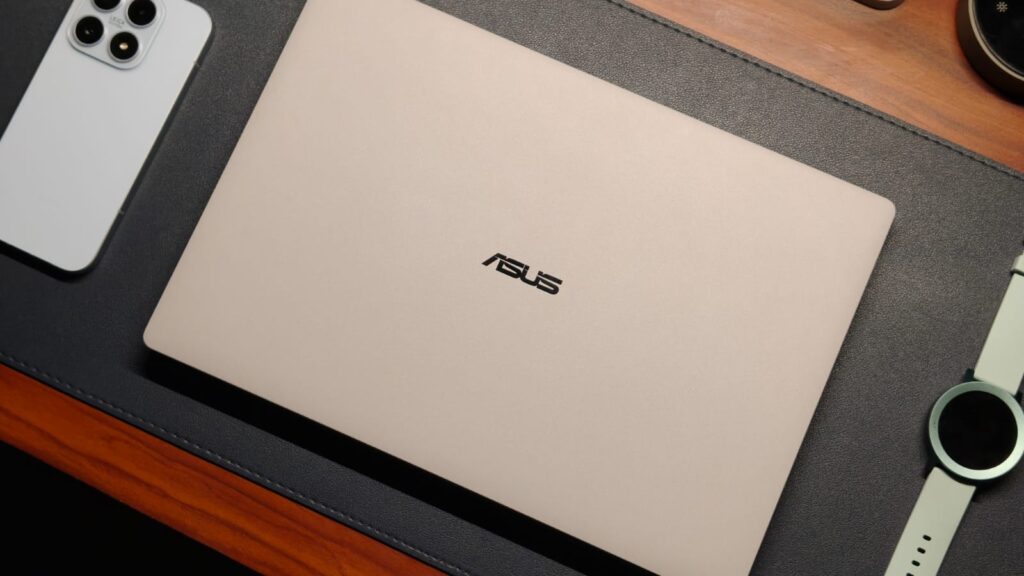
I was one of the few journalists invited to the ExpertBook launch event about a month back, and that’s where I first went hands-on with the laptop. The first thought I had was how different it looks and feels compared to other premium laptops. You might know the feeling of the all-aluminum MacBook, but the ExpertBook Ultra is completely different.
It’s made of CNC-machined magnesium alloy with a ceramic coating on top. It’s hard to put it into words, but the finish feels textured, almost powdery in a way, yet still very premium. You also don’t have to deal with smudges and fingerprint stains on your expensive machine. Color options are limited to two: either black or an off-white. I got the Morn Grey unit, and it’s definitely the way to go. Thanks to the texture, the color shimmers in sunlight, and wherever I went with the laptop, people asked what I was using.
A business laptop is for those who’re running from one office or coffee shop to another, most of the time with a laptop in hand. This means portability and weight are the main concerns. When I first picked up the ExpertBook Ultra, I expected it to weigh a decent amount because of its powerful internals. Well, looks can certainly be deceiving since it only weighs 0.99 kg, which is quite frankly insane. For context, my MacBook Air M1 weighs 1.29 kgs. And this weight difference is noticeable when carrying the laptop every day.
But you might ask, if the Ultra doesn’t weigh much, surely it won’t be durable. That surely won’t be the case, as ExpertBook laptops are the most durable machines I’ve ever tested. I’ve even stood on one, and it escaped without any damage. The Ultra is MIL-STD-810H-rated and should survive several bumps and drops just fine. At the event, Asus also told us to hold it up by the corner of the screen for a photo, which was a weird flex.
Since connecting to other gadgets is a basic requirement in an office, the ExpertBook Ultra has a decent selection of ports. You get dual Thunderbolt 4 USB-C (one on each side), along with a full-size HDMI 2.1, a USB 3.2 Type-A, and a headphone/microphone combo jack.
Best Windows Keyboard & Trackpad Combo
From spending over five years in the MacBook world, I’ve grown accustomed to the haptic touchpad, and it’s easy to see why. A haptic trackpad eliminates one more physical component, making it durable and ensuring consistent actuation energy wherever you click. That’s something Windows laptops have suffered from for years, because clicking on the top corners requires more force than moving a mountain.
The ExpertBook Ultra is one of the few laptops that has fixed this problem, and I couldn’t be happier. The trackpad is a large glass surface that spans edge to edge and comprises six pressure sensors. I found the tracking to be exceptionally good, without that sticky feeling. While the pressure actuation was a little lower than on the MacBook, I got used to it in no time. The palm rejection works beautifully, and the gestures are well supported.
Advertisement
The keyboard is high on the priority list of professionals, and Asus has kept that in mind. The layout is fairly standard in the sense that there is no learning curve. All keys are in the correct place, and even the 1.5mm travel is pretty respectable. The keys feel tactile without making much noise. There are different stages of backlit, and it’s bright enough to overcome the lack of contrast with the white keyboard deck. Still, the best part about the ExpertBook Ultra’s keyboard is that it’s splash-resistant. A small coffee spill or splash of water shouldn’t cause any issues as long as you clean it up quickly.
Display & Camera
We’ve seen OLED displays on laptops for quite some time. In fact, Asus was one of the first to implement it. Still, they are yet to reach the masses because OLED panels, unlike those on phones, consume more power. That’s one problem the Asus ExpertBook Ultra doesn’t have because it uses a 14-inch 3K Tandem OLED with a 120Hz refresh rate. For the uninitiated, a Tandem OLED panel combines multiple layers of light-emitting organic material to deliver higher brightness and lower power consumption. Thanks to this, the laptop has a peak brightness of over 1400 nits in HDR and 600 nits in regular mode.
If I had to use just one word to describe the Ultra’s display, it would be perfect. You can’t get any better than this, with colors that look exceptionally vibrant thanks to 100% DCI-P3 coverage, Pantone validation, and a Delta-E of less than 1. That’s more than enough for creative work like video editing without a hitch. As expected, movies and TV shows were a dream to watch.
That’s not all, as the laptop fixes one major pain point I’ve had with premium laptops. That’s glossy displays. They pick up dust quickly and get dirty with smudges that are almost impossible to clean. With the ExpertBook Ultra, you get a matte glass panel that cancels out almost all reflections pretty effectively, meaning I could work with the sun shining behind my back. Just don’t try this in 45-degree heat. Another upside is the touch functionality. Say what you want, touch is great for working on the go. For the people concerned with durability, Asus has used Gorilla Glass Victus, which is super durable. Enough to withstand over 100 kg of pressure, as they showcased in the event.
The 1080p webcam on the ExpertBook Ultra is perhaps the only thing that’s not very special. It’s decent for calls, and looks comparable to the MacBook. The wide field of view means you don’t have to squeeze into the frame during presentations, and it also supports Windows Hello functionality.
Performance
No business laptop will ever be desirable if it doesn’t have enough power to run multiple apps. Since the Asus ExpertBook Ultra is the first to get the Panther Lake chips, specifically the Core Ultra X7 358H, I was quite excited to test it out. The processor has a total of 16 cores, out of which four are performance cores, another eight are efficiency cores, and the last four are low-power efficiency cores. It’s paired with 32GB of LPDDR5x RAM at 8533 transfers per second and 2TB of Gen 5 storage, which can achieve read speeds over 14,000 MB/s.
As expected, the laptop feels effortlessly fast in everyday use. For example, my work is mainly on Chrome and Slack, where the processor handled everything super efficiently. I could open up more tabs than I need without a hitch, all while still running something in the background. Productivity apps are handled similarly well, and I connected them to my 2K monitor, where the experience was absolutely spotless.
Advertisement
What I found fascinating about the Ultra is that it’s not just a laptop for business people. In fact, if you’re a creator and need a serious on-the-go machine, you actually could take a look here. That’s because I fired up Da Vinci Resolve and tried my hand at editing a 4K reel I shot in Thailand. While my editing skills need a lot of sharpening, the Ultra could handle multiple streams of 4K videos and even play them back without slowing down. I also added some color grading to the videos, and it all went fine. In typical Asus fashion, there are several AI-centric features, such as MyExpert. It’s a personalized AI chatbot that quickly helps with your needs with on-device processing.
Since my skill set with demanding tasks only goes so far, I also ran a series of benchmarks to see how the Panther Lake processor ranks among its peers. Starting with Cinebench R24, the Ultra X7 358H scored 1,019 points in the multi-core test, roughly doubling the performance of the Ultra 7 258H, found in the likes of the ThinkPad X Carbon. With PCMark 10, we saw a 30% jump in the Ultra X7 358H’s performance compared to last-gen alternatives, reaching scores of 9,903.
Graphics in the ExpertBook Ultra are handled by the integrated Arc B390 GPU. Intel’s recent emphasis on GPUs means the B390 means serious business. I put it to the test with 3DMark’s TimeSpy test, where it scored 6,712 points. To put this number in context, though, I also played a series of games. Don’t get me wrong, the ExpertBook Ultra is not designed for serious gaming, but can it play AA or sometimes even AAA games? Yes, absolutely. Starting with lighter titles like F1 2025, I easily got over 100 fps on High settings with XeSS turned off. Kicking things up to titles like Indiana Jones: The Great Circle and Cyberpunk 2077, I averaged around 50-60 fps at 1080p with Ultra detail settings. If you’re concerned with eSports titles like Counter-Strike 2 and Valorant, they won’t break the ExpertBook Ultra, as it can easily achieve full 120 fps at the highest settings.
Battery Life & Speakers
While the 70Whr cell is pretty standard for a thin-and-light laptop, Asus has incorporated a new 2S2P architecture, which, in theory, is more efficient. My testing proved that theory to be right. On an average workday, which includes spending hours on Chrome, watching YouTube, and a few episodes of Better Call Saul, the ExpertBook Ultra lasted me a full day with some charge left to spare. Charging is handled with a 90W USB-C PD charger, which means you can go from 0%-50% in just thirty minutes. That’s enough time to charge between meetings and have enough for your super-long presentation.
Speakers on Windows laptops have usually not been a priority for forever. Most of them fire directly on the table, which inherently limits their output. But the Asus ExpertBook Ultra is the first laptop I’ve heard of that blew my MacBook out of the park. The speakers, of which there are six, sound at least twice as loud, with a wider soundstage, accurate dialogues, and bass that hits the spot. The treble is usually on point. You can make out the different instruments, and the highs don’t screech the ears at all. Almost everyone whom I showed the Ultra’s speakers was in awe of the quality, so you know it’s not just me yapping.
Verdict
Starting at ₹2,39,000, the Asus ExpertBook Ultra is playing a serious game against heavy hitters like the Dell XPS and the Lenovo ThinkPad series. Asus markets it like a business laptop, but my testing found the ExpertBook Ultra to be more capable than just handling spreadsheets. It’s a machine that caters to power users, irrespective of whether they work in an office or from a cozy cafe in Bali, editing videos or programming for their clients.
There’s something for everyone. The design is exceptional, quite possibly the best I’ve tested, with durability that should withstand anything. The 3K Tandem OLED 120Hz display is perfect, and you won’t have to deal with reflections. Let’s not forget the performance that is comfortably a mile ahead of the competition, in both numbers and thermal headroom. Sure, Dell and Lenovo are more established names when it comes to professional laptops, but I think it’s time we give Asus that status as well. And if you’re shopping in the segment, it’ll be a shame not to consider the ExpertBook Ultra.
For Bond fans, it’s been a tough few years. Until this month, the last new Bond ‘thing’ was No Time to Die way back in 2021 — too long to be without everyone’s favorite sexist, misogynist dinosaur. But now, finally, there’s some new Bond to get stuck into… for gamers, at least.
Just a few days ago, 007 First Light finally went on sale on PC, PS5, and Xbox Series X/S (a Switch 2 version is due later this year). This third-person shooter game from IO Interactive is being treated with the kind of fanfare usually reserved for the movies.
If you’re a Bond devotee, owning the game (the recipient of four shiny TechRadar stars in our 007 First Light review) is unlikely to be enough. You’ll be wanting some merch.
Advertisement
Below, I’ve rounded up the best options in the US and UK. I’ll say up top that UK shoppers have a much wider pool of merch to choose from right now. Aside from a range of somewhat uninspiring official T-shirts and a golden controller, fans in the US are limited to the game’s collector’s editions. You can choose between the Legacy Edition (with a rather poorly reviewed golden gun figurine and display stand) or the Collector’s Edition (with an unsettling life-size mask of First Light Big Bad Damien Webb), plus a handful of other physical collectibles and digital goodies with either bundle.
UK Bond-ites have the same special game editions to choose from, too — provided they haven’t sold out. What’s more, they can bypass the official tees because they have a range of premium 007-inspired apparel to choose from, courtesy of British menswear brand Orlebar Brown. You will need slightly deeper pockets, though, because you’d be able to buy 11 First Light official T-shirts for the price of one natty toweling short-sleeved shirt or pair of intimidatingly snug swim shorts from Orlebar Brown.
If you are a deeper-pocketed UK fan, perhaps you should just make your way to Omega and grab yourself a game-themed Seamaster dive watch, which bucks the trend of tie-in merch by being both subtle and stylish. If you’re feeling less flush, there’s always the special edition rum.
One of Prime Video’s most popular adult animated series, The Legend of Vox Machina returns on June 3 for a fourth season. The show, based on the Dungeons and Dragons web series Critical Role, is now set a year after the Chroma Conclave, and the Vox Machina crew has gone their separate ways. When a long-dormant evil awakens, the gang reunites to protect the realm. The show’s core cast is back this season, and keep an ear out for new additions to the voice cast, including Wayne Brady, Kevin Michael Richardson (Kamek in The Super Mario Bros. Movie) and Debra Wilson.
If you’ve bought Lionsgate movies or redeemed codes for them, we’ve got some good news for you: Its vast library is being added to the digital movie locker, Movies Anywhere. That means Lionsgate titles will now sync across any participating digital retailers you’ve linked to your Movies Anywhere account.
Lionsgate says that a selection of Lionsgate movies will be eligible on Movies Anywhere beginning in June, with 225 of the studio’s most high-profile films made be available on the service, which is also a retailer. Going forward, around 100 additional films will be added monthly throughout 2026 and early 2027. According to Deadline, Movies Anywhere has 14.5 million users and its library will expand to nearly 10,000 digital movies with the addition of Lionsgate.
I’m already seeing Lionsgate titles like John Wick, Knives Out, La La Land, Rambo and The Hunger Games listed with the Movies Anywhere badge at Fandango at Home, but none have turned up in the Movies Anywhere catalog just yet. Participating Movies Anywhere digital retailers include Apple TV, Amazon Prime Video, Fandango at Home, Google Play/YouTube, Xfinity, Verizon Fios TV and DirectTV.
For those who purchase digital movies or redeem codes for digital versions of titles from physical media, the Lionsgate move to Movies Anywhere is a big deal (Movies Anywhere is owned by The Walt Disney Company, and Disney initially developed a rights synchronization platform called KeyChest back in 2009).
Some recent Lionsgate films.
Advertisement
Screenshot by David Carnoy/CNET
I and plenty of other consumers find it annoying to buy a movie at one digital retailer, such as Fandango at Home, but not have it available for viewing on another platform I use, such as Apple TV or Google Play. Ideally, if you buy a title, you should be able to store it in one central digital locker and have universal access to it. (Technically, when you buy a digital movie, you’re buying a license to stream it as many times as you want, though you don’t truly own the title).
Prior to this announcement, Movies Anywhere supported most though not all movies from The Walt Disney Studios (including Disney, Pixar, Twentieth Century Studios, Marvel Studios and Lucasfilm), Sony Pictures Entertainment, Universal Pictures (including DreamWorks and Illumination Entertainment) and Warner Bros. Entertainment. No new major studios have been added since 2017.
There was some hope that when Amazon bought MGM in 2022, MGM would join Movies Anywhere because Prime Video was a participating retailer. That hasn’t happened yet, but hopefully the Lionsgate addition will encourage the remaining hold outs, which also include Paramount, A24 and Criterion to join.
Currently, only movies, not TV shows are on the Movies Anywhere platform — there is no TV Anywhere. So any TV series you purchase are not Movies Anywhere eligible and won’t sync across retailers.
The Ferrari Luce, the first electric vehicle in the brand’s history, has generated heated discussion online, as comments and opinions about the design continue to bounce around the web.
The Luce, an electric sedan with a $650,000 price tag that Ferrari presented with pomp and circumstance at the Quirinale in Rome on Monday, has paid dearly for its coming out from behind the curtain. Since Monday, the automaker has been suffering an avalanche of complaints and skepticism about the Luce. It’s not just the price—which is high even for a Ferrari—but what the car represents and how it fits into the brand’s long and storied legacy. The day after the EV’s debut, Ferrari stock dipped 8 percent.
Luca Cordero di Montezemolo, Ferrari’s former chairman, said, “We risk the destruction of a myth.” Carlo Calenda, an Italian senator and the country’s former economic minister, called the release an “aesthetic and technological insult,” and took the opportunity to attack John Elkann—the leader of the Agnelli family, which owns a controlling stake in Ferrari—and his management of the family’s assets. Closing the circle was Matteo Salvini, who as Italy’s minister of transport felt compelled to intervene. His negative assessment, accompanied by an invocation of Enzo Ferrari, demonstrates that anything can be said about the Luce.
Beyond anything one might think, the Luce is a radically different car from its predecessors. It weighs roughly a ton more than a hybrid, uses four electric motors (one per wheel), and is built to seat five people. Its ability to sprint from zero to 100 kilometers per hour in 2.5 seconds is impressive; the instantaneous acceleration even required Ferrari to consult with NASA in order to keep the sensations of such an acceleration from being physically unpleasant. The “engine note” inside the car uses electronically treated mechanical sounds.
Advertisement
We discussed the disruptive and divisive Luce with Maurizio Corbi, a car designer with more than 30 years of experience. Corbi, who trained at the industrial design firm Bertone and later at the car designer Pininfarina, explains why the Ferrari Luce has triggered such polarized reactions, both among insiders and the general public.
“I suspect it’s a powerful marketing ploy,” Corbi says. “They literally threw a boulder in a pond, and that’s all people are talking about. I can’t recall anything similar.”
Advertisement
“The world of cars, and design in particular, follows a fine line. It’s constantly evolving, but there’s always a need for a culture rooted in time. Ferrari, when it comes to road cars, means Pininfarina. The brand’s greatest masterpieces bear that signature. [Ferrari’s] current design director, Flavio Manzoni, has been able to innovate while still keeping a close eye on that tradition. I fear that he too has been affected by this project, because he is too detached from the path Ferrari has taken in recent years.”
The Breathitt County social media settlement totals $27M: Meta $9M, Snap $8M, TikTok $8M, YouTube $2M. 1,300+ school districts have filed similar suits.
The financial terms of the Breathitt County social media settlement have been disclosed for the first time. Meta is paying $9 million. Snap and TikTok are each paying $8 million. YouTube negotiated a payout of slightly more than $2 million.
When the settlements were first reported, only the fact that Snap, YouTube, and TikTok had agreed to settle was public. Meta settled separately. The financial breakdown shows Meta paying the largest share, consistent with the company’s position as the primary defendant across more than 6,000 related lawsuits nationwide.
Advertisement
The 💜 of EU tech
The latest rumblings from the EU tech scene, a story from our wise ol’ founder Boris, and some questionable AI art. It’s free, every week, in your inbox. Sign up now!
YouTube was the only company to include non-financial terms. It agreed to provide the district with training programmes to help teachers use its video product in classrooms. The other three paid cash only.
Breathitt County had asked for more than $60 million to finance mental health programmes and develop lesson plans around the dangers of social media. It received less than half that figure. The district’s superintendent, Phillip Watts, estimated in a deposition that he spent 20% of his working time handling social media-related concerns.
Advertisement
Carolyn McDaniel, the high school principal from 2016 to 2019, said the problem consumed even more of her time. “I had two assistant principals and they spent at least 50% of their time on social media stuff,” she said. “The kids would sneak their phones into class, video fights during the school day, vandalise property and bully one another online.”
The settlements allowed the companies to avert the first trial in the nation over a school district’s addiction complaint. The trial had been scheduled for 12 June in Oakland. The reprieve will be short-lived. More than 1,300 other school districts have filed similar suits. The next bellwether trial is scheduled for February 2027 in Tucson, Arizona.
The Breathitt County terms could signal openness to a mass settlement. Bloomberg Intelligence has estimated the total potential liability at $400 billion. A $27 million payout per district across 1,300 districts would total $35 billion, a fraction of the theoretical maximum but still a transformative expense for companies accustomed to treating litigation as a cost of doing business.
Kentucky’s attorney general is part of a group of approximately three dozen states suing Meta separately. That trial is set for August in Oakland. Kentucky is seeking $40 billion in civil penalties in the state case alone.
The pattern across 2026 has been consistent. Snap and TikTok settle before trial. Meta fights, loses, and pays more. In the personal injury trial, Snap and TikTok settled confidentially while Meta and Google went to verdict. In the school district case, all four settled, but Meta paid the largest share.
Meta launched a new social app called Forum this week, a Reddit competitor built from Facebook Groups. The company is simultaneously launching new social products and settling lawsuits alleging its existing products are addictive. The contradiction is the business model.
The comparison to tobacco litigation remains the most frequently cited framing. The 1998 tobacco Master Settlement Agreement cost the industry $206 billion. Bloomberg Intelligence’s $400 billion estimate for social media exceeds that figure by nearly double. Whether the analogy holds depends on whether juries continue to find the companies liable, and whether the institutional costs school districts claim can be proven at scale.
Advertisement
McDaniel, who now works at a high school in Tennessee, said the social media problems have only intensified since she left Breathitt County. The $27 million settlement pays for the damage already done. It does not pay for the damage still being done. The 1,300 districts waiting for their turn in court are counting on that distinction to matter.
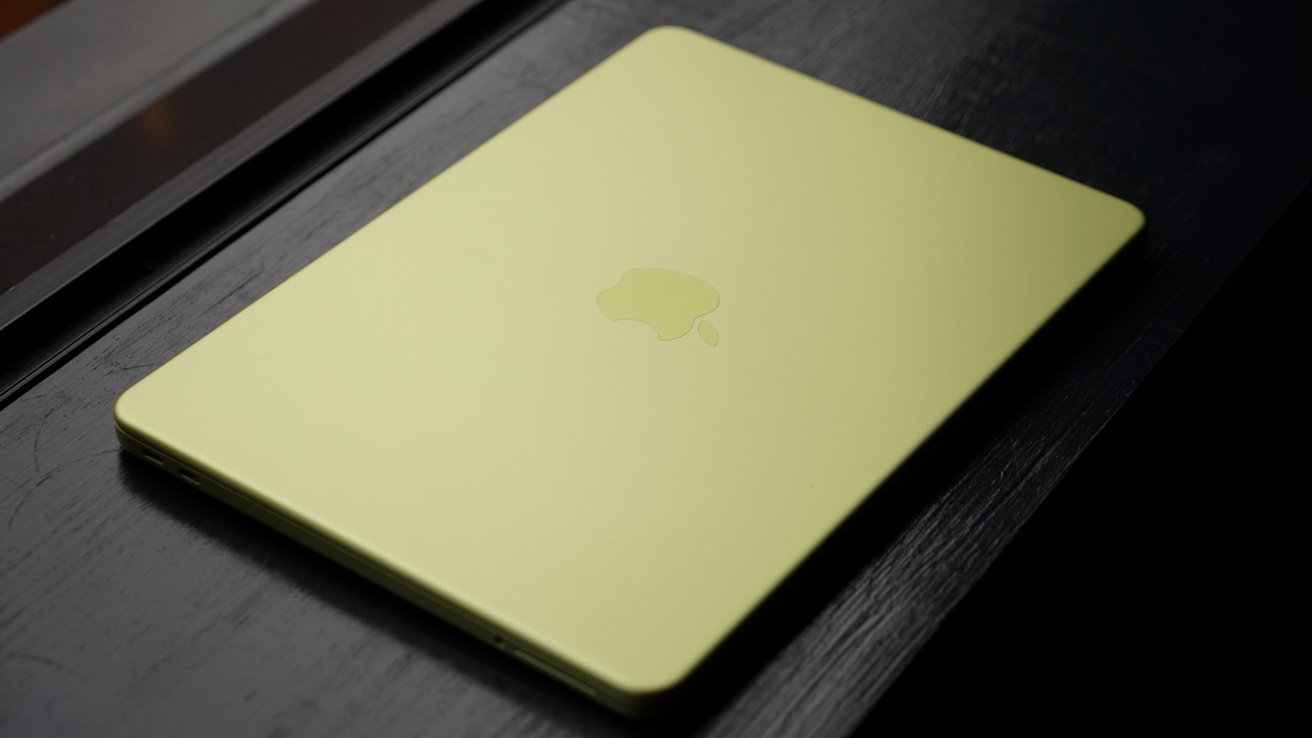
Amid ongoing MacBook Neo shortages, Apple has reportedly tasked suppliers with doubling its original order to 10 million units in an attempt to satiate demand.
Buying a new MacBook Neo today remains an exercise in patience, with deliveries taking multiple weeks. The 13-inch, $599 laptop has proven hugely popular among students and mobile workers alike, so much so that Apple can’t keep up.
Now, a report by supply chain analyst Ming-Chi Kuoclaims that Apple has told its suppliers to produce more MacBook Neos than ever before. After an initial five-million-unit order, Apple has now doubled the figure to 10 million units.
More Neos on the way
Kuo was writing in a lengthy post on the X social network when he noted that “Sunny has become a new Apple CCM supplier, producing the MacBook Neo CCM.” A CCM is a self-contained Compact Camera Module, ready to be used in laptops like the MacBook Neo.
Advertisement
Kuo went on to add that Apple has raised its 2026 shipment forecast from five million to 10 million units.
This news also matches a similar report from earlier in May. Then, analyst Tim Culpan reported that Apple had been forced to order more A18 Pro chips for the endeavor.
The MacBook Neo first went on sale on March 11, 2026, and almost immediately saw expected delivery dates slip by weeks and months. Delivery windows haven’t improved much since.
Apple’s present crack at the low-end of the market sells for just $599. It’s even cheaper at just $499 when purchased in an education setting, or with a military discount.















































You must be logged in to post a comment Login