“The Scuba V3 punches above its weight-class with both outstanding performance and value”
Pros
Lightweight
Cleans well
Intuitive app
Cons
Will not clean the water surface
Mediocre battery life
Instant Insight
I have always maintained that owning a pool is like owning a boat – you will spend 90% of your time maintaining and cleaning it and 10% of your time enjoying it, especially if you live in Oregon as I do. Over the years, we have seen robot cleaners evolve from erratic, cord-tangled wall-bumpers to reliable vacuums, and technology keeps getting better, especially in the age of AI. Priced at $1,199 MSRP (with a street price currently around $970 USD), the Aiper Scuba V3 is not trying to be the cheapest impulse buy at the pool store, but instead, positions itself as a premium AI-driven assistant that brings sophisticated navigation of high-end robot vacuums to the bottom of your backyard oasis.
New for 2026, the Aiper Scuba V3 robotic pool cleaner has new AI features and more value, although it sacrifices some tech to offer such a good value. The Scuba V3 is currently priced between the top-of-the-line Scuba X1 Pro Max ($1699) and the Scuba X1 ($899.99), offering newer AI-focused features for just $70 more. The Scuba V3 is equipped with AI Vision and dToF(Direct Time of Flight) sensors, which give this pool cleaner more of an organized purpose than recklessly bouncing around the pool.
Ian Bell / Digital Trends
During my tests, the Scuba V3 proved to be a reliable, hardy worker with long battery life. If you already have a pool cleaner that is a few years old and working great, it’s not worth spending money on the Scuba V3, but if you are in the market, then I would recommend jumping into the pool cleaner ecosystem. Paired with the Aiper EcoSurfer S2 skimmer, both of these devices should do the job in keeping your pool spotlessly clean.
Aiper V3 Specifications:
Here is how the Aiper Scuba V3 measures up :
Advertisement
Specification
Details
Dimensions (L x W x H)
17.48 x 14.96 x 8.58 inches
Weight (Dry)
18.1 pounds
Suction Power
4,800 Gallons Per Hour (GPH)
Filtration Level
3-micron MicroMesh™ Multi-layer Filtration
Debris Basket Capacity
3.5 Liters
Battery Energy Content
149.76 Watt Hours (Lithium-ion)
Run Time
Up to 150 minutes per charge
Charging Time
5 Hours via Wireless Charging Dock
Navigation Technology
AI Patrol, dToF, VisionPath™ Adaptive Planning
Drive System
Tank treads with dual scrubbing brushes
Cleaning Zones
Floor, Walls, Waterline (JetAssist™)
Design and Weight: Like a paper tank
Like most pool cleaners on the market, the Scuba V3 uses a tank tread design to move the unit around. And like the rest of the products in the Aiper robot pool cleaner line-up, the casing is made up of a piano black finish that looks high-quality. Rather than the gold or carbon fiber surround found on the more expensive Aiper units, the V3 has some light blue trim, which would indicate more of a value virtue signal. Dimension-wise, the Scuba V3 is considerably smaller than the Scuba X1 or Scuba X1 Pro Max, which are not only taller, longer, and wider, but also considerably heavier.
I put some charts below that show the weight of the Scuba V3 compared to others in its price range – it comes in on the lighter side in the comparison (when not wet), which is nice for those who really have trouble pulling these cleaners out of their pool. Aiper sells a caddie to help you transport their pool cleaners to and from the pool, but would surmise that most people can skip the caddie, as the V3 is pretty light.
Ian Bell / Digital Trends
I found that the tank treads did a great job moving the V3 around my pool, and they stuck to the side of the pool without issue, despite a suction lower than that of higher-end models. Underneath, you have four scrubbing brushes – two in the front and two in the back – that do a good job agitating algae, mineral deposits, and debris before the suction kicks in. The debris is funneled into a newly designed 3.5-liter collection basket wrapped in a Micromesh filter.
The overall build quality feels premium; the plastics are thick, the moving parts feel solid, and there are no flimsy latches that feel destined to snap off after a single summer in the sun. I noted in my Beatbot Aquasense 2 Ultra review that they put extra screws and parts in the box, which is a clear sign to me that something is going to wear out.
The Aiper Scuba V3 is a thoughtful and rugged piece of engineering.
Ian Bell / Digital Trends
When you are dealing with robotic pool cleaners, dry weight directly correlates to user experience, specifically, how miserable it is to pull the machine out of the water once it has finished its cleaning cycle. Here is how the competitive landscape breaks down:
The Featherweights (Under 20 lbs): The Aiper Scuba V3 (18.1 lbs) and the Dolphin Liberty 400 (17.9 lbs) are the clear winners here. Aiper managed to pack the V3 with a complex AI vision system and heavy-duty tank treads without inflating its mass. It is incredibly easy to retrieve one-handed using the included hook. We also included the corded Dolphin Nautilus CC Plus (20.8 lbs) as a baseline to show that premium cordless tech doesn’t necessarily mean a heavier machine.
The Middleweights (23 to 25 lbs): The highly anticipated Beatbot Sora 70 (23.0 lbs) sits right in the middle of the pack. While it is about five pounds heavier than the Scuba V3, that extra weight is justified by its internal buoyancy chambers, which allow it to float up and clean the surface of the water (a feature the V3 lacks). The older Aiper Scuba S1 Pro (25.0 lbs) and Beatbot Aquasense Pro (24.3 lbs) also live in this tier, representing the maximum weight most users can comfortably lift without straining their backs.
The Heavyweight (30+ lbs): Aiper’s flagship model, the Scuba X1 Pro Max (33.1 lbs), is an absolute behemoth. While it offers a staggering 5-hour battery life and 8,500 GPH of suction, pulling 33 pounds of dead weight (plus trapped water) out of the deep end is a genuine physical workout.
Ian Bell / Digital Trends
Ultimately, the Scuba V3 strikes a near-perfect balance, offering premium AI navigation in a chassis light enough that anyone in the family can confidently deploy and retrieve it.
Navigation: The most important part of any robot cleaner
I get asked a lot about what makes these pool cleaners so much better than the other, and the answer is simple: Does it clean the pool to your satisfaction, and is it low maintenance? Sounds simple, but as you know, it’s not that easy. Pools come in a lot of shapes and depths, so to get a pool clean, you need a good brain to tell the cleaner how to navigate (and you need long battery life, too).
Advertisement
Powered by what Aiper calls its “Cognitive AI Navium Mode” and “VisionPath Adaptive Path Planning,” this robot uses an integrated underwater camera combined with dToF (Direct Time of Flight) optical sensors. Think of dToF as a form of laser radar; it sends out light pulses and measures how long they take to bounce back, creating a highly accurate 3D map of your pool’s interior. When you drop the Scuba V3 into the water, it doesn’t just wander. It assesses the shape of the pool, detects obstacles with its optical sensors, and plans a precise, overlapping, lawnmower-style route.
Ian Bell / Digital Trends
But the really cool trick is the “AI Patrol” mode. I actively tested this by tossing a handful of fine potting soil and a few sunken leaves into the deep end. The Scuba V3’s camera has a 2-meter detection range and is trained to recognize over 20 different types of debris. As it cruised nearby, I literally watched the robot alter its path, turn directly toward the dirt pile, and suck it up before resuming its standard grid.
It was like watching a predator spot its prey.
There is a very visible difference in how the Scuba V3 seems to navigate compared to the Scuba X1, for example. The V3 looks very “aware” almost like a living being; it’s creepy at first. Furthermore, Aiper equipped the front of the unit with dual LED headlights. This allows the AI vision system to function perfectly during night cleanings, illuminating the murky depths so it never loses its way. And for the privacy-conscious, Aiper guarantees zero image storage and zero image upload – what happens in your pool, stays in your pool.
Performance: Suck it up, kid
In all my robot pool cleaner testing, I am still wondering what the point of diminishing returns is when it comes to gallons per hour (GPH) of suction. Spend more on a pool cleaner and get a higher suction rate, but what is the minimum you need for good performance in the category? I have yet to find that out. The Scuba V3 measures in at 4800 GPH, which isn’t nearly at the top of its class, but not weak either. The higher-end and slightly more expensive Scuba X1 comes in at 6600 GPH, which feels like A LOT more compared to the V3, but in my tests, the Scuba V3 did just fine.
Ian Bell / Digital Trends
During my two-week testing period, my pool was subjected to a barrage of spring pollen, wind-blown sand, and the inevitable barrage of leaves. The V3 offers multiple cleaning modes, but “Auto” (which hits the floor, walls, and waterline) and “AI Patrol” were my easy-option choices. Let’s talk about the filtration first. The basket utilizes a 3-micron MicroMesh filter. For context, a single strand of human hair is about 70 microns thick.
This mesh is so fine that it doesn’t just trap leaves and twigs; it captures that incredibly annoying, cloudy silt and fine sand that usually blows right through the exhaust of cheaper robotic vacuums. You can pull the micro-mesh filter out and use the standard filter if you want. I’m located here in Western Oregon, where I do not need to deal with sand or fine debris, as you might get in Arizona or Nevada, so I typically stick with the standard filter.
Advertisement
Ian Bell / Digital Trends
Wall climbing is where the Scuba V3 truly shows off. It scales the vertical walls of my pool effortlessly. But the standout feature is the JetAssist™ horizontal waterline cleaning. Many robots will climb a wall, poke their nose out of the water, and fall back down. The V3 climbs up to the waterline and then uses a directed jet of water to push itself horizontally along the pool tile, vigorously scrubbing the scum line with its dual brushes.
It looks like it is defying gravity.
It did a solid job of cleaning the waterline, cleaning about 1 inch higher up on the side; it literally hit the brick surround that hangs over the pool. One area that the V3 needs help with (and most pool cleaners do) would be the stairs. The Scuba V3 would make it up the first step no problem, then struggle with the second on occasion. I still had to manually clean the stairs every couple of weeks to finish the job thoroughly, though.
It is important to understand where the Scuba V3 sits in terms of raw power. Here is a quick visual breakdown of how it compares to its direct competitors:
Aiper Scuba X1 Pro Max: 8,500 GPH
Aiper Scuba S1 Pro: 6,000 GPH
Beatbot Aquasense Pro: 5,500 GPH
Aiper Scuba V3: 4,800 GPH
Dolphin Nautilus CC Plus: 4,500 GPH
The Aiper App and connectivity: Now with a weather forecast
I’ve always liked the Aiper app and find it to be easy to operate their products. It’s also easy to set up a new Aiper device with the app. Like their previous products, you need to install the app, turn the Scuba V3 into Bluetooth mode, connect the device to the app, and then set up Wi-Fi. 9/10 on the ease of use scale.
Ian Bell / Digital Trends
I find the interface to be clean and functional. It’s easy to find instructions and support for your product through the app in the event that you throw out the setup guide. Aiper calls their app AI Navium because it’s an “advanced, cognitive AI mode designed for intelligent pool and yard management”. The key selling points by Aiper include:
Cognitive Cleaning plans: It will generate weekly cleaning plans based on AI analysis
Weather/History Sync: Analyzes local weather and past cleaning logs to determine optimal cleaning times
Vision Path Integration: Combines AI vision and dToF (direct time of flight) sensors for precise navigation
Smart Yard management: You can store different yards and products so that the system can schedule devices based on yards.
Ian Bell / Digital Trends
AI Navium is an attempt by Aiper to get you to buy into their entire ecosystem of products so they can fully automate your yard. From sprinkler systems to pool cleaners and pool skimmers. I can’t really give you a detailed review of the AI Navium ecosystem based on a couple of products.
I love the idea of scheduling based on the weather, but it feels more gimmicky than anything. For me, it’s as simple as dumping the cleaner into the pool and coming back a few hours later and expecting the pool to be clean. How the cleaner does that isn’t really important to me.
Ian Bell / Digital Trends
I want to point out, like I do for all of my pool cleaner reviews, that once the cleaner is submerged, you will lose a Wi-Fi connection to it. WiFi signals will not travel through water unless you have a special Wi-Fi communication device like the Aiper HydroComm, which will set you back $300-$400.
The Aiper HydroComm product not only extends Wi-Fi to your submerged cleaner, but also gives you pool chemical readings so you know if you need to add more chemicals to your pool. You decide if you need something like that. For me, personally, I am not changing the cleaning settings mid-cycle, so I am perfectly fine without a Wi-Fi connection while it’s underwater.
Advertisement
Skimming off the top
Image used with permission by copyright holder
The Aiper Scuba V3 does have one feature missing that might be important to a lot of people – the ability to skim the top of the water to get floating debris. Here is why I don’t think this is that important: I would prefer to have a dedicated skimmer like the Aiper EcoSurfer S2 than to have it built into the pool cleaner itself. Once my pool bottom and walls are clean, I will pull the cleaner out, but I like to keep the EcoSurfer S2 running all day and sometimes all night.
Since it’s powered by solar, the battery literally never runs out, so you have a product that will likely suck up the debris before it hits the bottom of the pool. It’s like preventative maintenance, and I think the Aiper Ecosurfer S2 is the best skimmer on the market. Aiper sells both the Scuba V3 and the Ecosurfer S2 together in a package that saves you around a hundred bucks; that’s what I would personally recommend.
If you want a pool cleaner that also skims on the top, there are plenty to choose from, but I highly recommend you get one with long battery life so it has plenty of time to clean the surface. Larger pools might give your pool cleaner an impossible challenge in this department if you do not size up the cleaner’s battery with your pool. You can read my Aiper Surfer S2 review if you want to know more about it.
Battery life
Battery life is what will really matter to you, especially if you have a larger pool. In my real-world testing, a full charge reliably delivered around 140 to 150 minutes of continuous cleaning. For my standard 15,000-gallon pool, this was more than enough time for the V3 to meticulously scrub the entire floor, climb every wall, and trace the entire waterline. Once the V3 was finished with the floor and walls, I had about 30 minutes of batter life leftover, not enough for another cleaning before it needed a recharge, but enough time leftover for me to run some errands and know that it’s still floating at the surface waiting for retrieval (the Scuba V3 will find an edge of the pool and float there thanks to its fans, waiting for you to pick it up out of the pool).
Aiper packs a wireless charging dock with the Scuba V3, which lets you just set the robot on the dock without plugging anything into it. Typically, only more expensive robot cleaners come with a dock like this. The Beatbot Sora 70, for example, doesn’t come with a wireless dock and has a price tag of over $300 more. Using the charging dock, fully charging the Aiper Scuba V3 took a few hours to get to a full charge – pretty standard.
Advertisement
Ian Bell / Digital Trends
The chart at the top of this response illustrates how the Aiper Scuba V3’s battery life stacks up against leading cordless robotic pool cleaners in the $900 to $1,900 price bracket.
As the data shows, the Aiper Scuba V3 ($949) sits squarely in the middle of the pack with its 150-minute run time. Here is a breakdown of what that means for your purchasing decision:
The Direct Competitors: The Scuba V3 goes toe-to-toe with the Polaris Freedom, which typically retails for around $1,300 and offers an identical 150-minute battery life. However, the V3 heavily outperforms the similarly priced Dolphin Liberty 400 (~$1,200), which taps out after just 90 minutes of cleaning.
The Budget Alternative: Interestingly, Aiper’s own older model, the Scuba S1 Pro ($549), actually delivers 30 more minutes of runtime (180 minutes total) for less money. While you sacrifice the V3’s advanced AI Vision navigation and wireless charging dock by dropping down to the S1 Pro, it remains a fantastic option if sheer battery longevity on a budget is your top priority.
The Premium Upgrades: If you have an exceptionally large pool that demands marathon cleaning sessions, you will have to pay for it. The Beatbot Aquasense Pro ($1,861 and one of my favorites) pushes past the 3-hour mark with 205 minutes of bottom-cleaning endurance, while Aiper’s flagship Scuba X1 Pro Max ($1,830 and another favorite of mine) dwarfs the competition with an astonishing 300 minutes (5 hours) of battery life on a single charge.
Ultimately, while the Scuba V3 doesn’t claim the crown for the longest-lasting battery on the market, 150 minutes is more than sufficient for the average 15,000-to-20,000-gallon residential pool.
Durability and Warranty
Ian Bell / Digital Trends
When you drop $1,199 on a piece of technology that lives underwater, you want absolute confidence that it isn’t going to short out or fall apart after a few months. The Aiper Scuba V3 feels incredibly robust. The outer shell is made of a high-impact, UV-resistant plastic that showed absolutely no signs of fading or chalking despite sitting out in the sun for hours on end. The tank treads are thick rubber, showing minimal wear even after aggressively scrubbing abrasive pool plaster for two weeks.
Internally, the brushless motors are sealed tightly, and the elimination of the physical charging port via the new wireless dock removes the most common point of failure for underwater electronics (water leaking into the battery compartment).
Aiper backs the Scuba V3 with a comprehensive 2-year warranty. In the world of pool robotics, 2 years is the standard benchmark, though some higher-priced competitors (like Beatbot) stretch to 3 years. Aiper’s customer service has built a solid reputation over the last few years, offering 24/7 support and a 30-day free return window if the robot simply doesn’t gel with your pool’s specific layout. Furthermore, Aiper regularly pushes over-the-air firmware updates via the AI Navium app, ensuring the robot’s navigation algorithms continue to improve over time.
Ian Bell / Digital Trends
Full disclosure on my part: I only had the Aiper Scuba V3 for about a month, and while I had no issues with reliability, one month isn’t nearly long enough to test a pool cleaner in my opinion. So I’ll come back to the review and update it after I have the Scuba V3 for a while longer. I would recommend checking out the customer reviews on their website and any user reviews that might show up on Amazon, Google, and Reddit.
Should you buy the Aiper Scuba V3?
If you are in the market for a new pool cleaner, I would highly recommend the Scuba V3 and the Ecosurfer S2. With both products, you will have a spotless pool in no time. I think the Scuba V3 is a great value for the price; you get an effective cleaner built by a supportive company, a wireless charging doc and a very intuitive app to use.
Advertisement
How I Tested The Aiper Scuba V3
To evaluate the Aiper Scuba V3, I used it as my exclusive pool cleaning solution for 14 consecutive days in a 15,000-gallon, rectangle-shaped, in-ground plaster pool located in a high-wind environment prone to heavy debris. Testing involved subjecting the robot to both high-load days (deliberately dumping measured amounts of fine potting soil, sand, and larger cherry tree leaves into the deep end) and low-load days featuring standard ambient dust and bugs.
I tested the robot in all available app modes, closely monitoring the AI Patrol’s ability to recognize and divert toward specific debris clusters. Battery runtimes were measured from the moment the robot submerged to the exact moment it engaged its Smart Waterline Parking feature. Navigational efficiency was visually tracked to ensure overlapping floor coverage without repeated blind spots, and the wireless charging dock was evaluated for ease of use and consistent charging times in an uncovered outdoor environment.
Marketing is one thing, but reality is quite another. Like many of us, I won’t forget the claimed “durable” microtwill of FineWoven, the shaky initial launch of Apple Maps, or the infamous butterfly keyboard that was supposedly four times more stable. Remember the promise of AirPower? Of course you don’t.
It’s worth celebrating when the real-world experience does actually live up to the hype, then. And that’s the case with Apple’s Ceramic Shield 2, the tech giant’s latest and unquestionably greatest iPhone glass.
At the iPhone 17 series launch last year, Apple claimed its strongest glass to date offers three times better scratch resistance and reduced glare. Thankfully, after several months of testing it, I’m confident that this lofty claim rings true.
Advertisement
Article continues below
I’ve been using the iPhone 17 series — primarily the iPhone 17 Pro — and the Apple Watch Series 11 since November, and I’m honestly yet to see the kind of scratches I’d been all too used to getting with the previous models of both devices (and I’ve tested every iPhone since the iPhone 12).
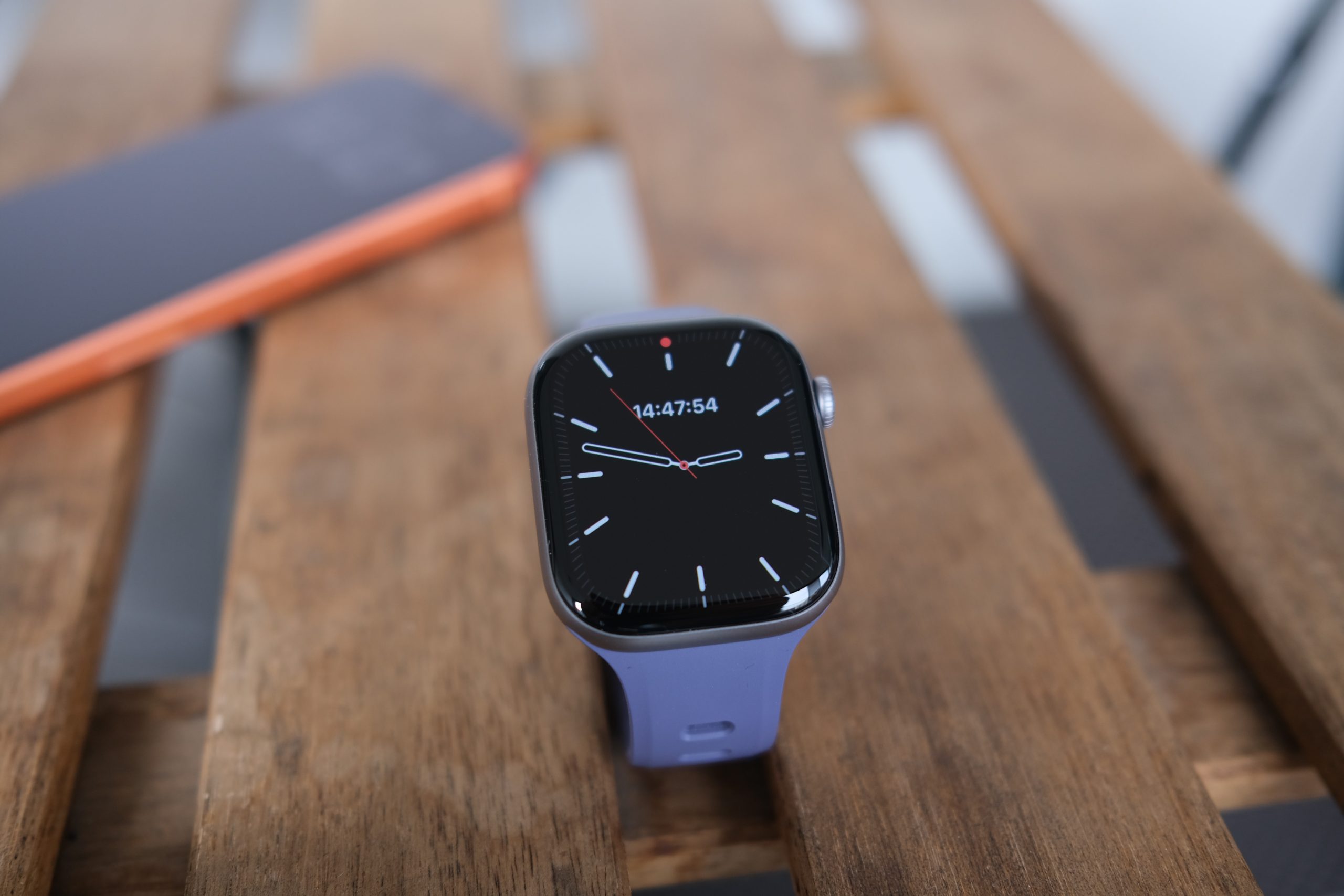
I started noticing the difference on the watch first, which may not boast Ceramic Shield 2 but has a similarly upgraded ‘Ion-X’ display for twice the scratch resistance when compared to the Series 10. Apple says it’s the “toughest glass in the industry.”
Advertisement
The Apple Watch Series 11 (Image credit: Future / Simon Cocks)
In the past, I’d just had to get used to the fact that the previous watch generations would pick up the kind of hairline micro-scratches that you probably wouldn’t see most of the time, but that would be glaringly obvious in bright sunlight or under harsh direct lights. This time, there’s none of that, and it’s not like I’ve got any better at not bumping my wrist into furniture or doorways!
It’s been years since I’ve had a smashed screen on any iPhone, but I did spot marks after only a few weeks with my iPhone 16 Pro. It earned itself a very noticeable scratch in its first fortnight of use. Over the months, it only gained more micro-abrasions all over the screen, and I ended up relying on a screen protector to keep it from getting any worse. Honestly, the story’s been the same with the 15 Pro and 14 Pro, and my handset before that was a 13 mini, which ended up looking like “frosted glass” by the time I was done with it.
Sign up for breaking news, reviews, opinion, top tech deals, and more.
However, with the launch of the iPhone 17 came Ceramic Shield 2, and it’s beginning to look like that was an even more substantial change than Apple made it out to be.
Advertisement
More than just marketing
(Image credit: Future / Simon Cocks)
This glass — developed by Apple and the tough glass experts at Corning — has a denser nanocrystal structure and improved oleophobic coating versus previous generations of iPhone glass. In testing, JerryRigEverything tortured the iPhone 17 and found that it only ended up with light marks at Level 7 on the Mohs hardness scale. Usually, scratches show up at about Level 5 or 6.
My experience is that I just don’t have to be as concerned about my phone anymore. You’d be able to carry the iPhone 17 in your pockets, even with your keys, and you won’t need to worry too much about it starting to look far older than it is. For most people, that probably also means you don’t really need a screen protector.
Speaking of which, tests by Astropad found that using a regular glass screen protector may actually end up cancelling out the anti-reflective effect of your new iPhone 17. That’s definitely worth thinking about before spending the extra cash on a cover. If you do get one, it had better be one with anti-reflective properties.
Obviously, think carefully before leaving off a protector or doing the *unthinkable* and going fully case-free. Apple’s new glass is great, but it’s not indestructible. A devastating face-down drop will most likely still break your iPhone, and sand or quartz will still scratch it, even if metal might not harm it as easily. Planning on ever bringing your phone to the beach? At risk of dropping it onto gravel? Or sending it toppling into a bowl of diamonds? Don’t skip the screen protector.
(Image credit: Lance Ulanoff / Future)
That said, for everyone else living an unadventurous life, you probably don’t need to baby your iPhone anymore.
I know your first instinct is to slap on a glass protector, but it may now be overkill with the latest generation and just an extra expense you needn’t bother with. Sure, some scratches may show up eventually, but I’m not seeing anything like what I’d previously been used to, after months of use.
Advertisement
Overall, I’ve found that the much more “scratch-resistant” Ceramic Shield 2 has ended up feeling like a huge upgrade. What that means in real terms is that you’re not going to notice all that much damage from everyday use, and that most of us don’t need a screen protector on these handsets.
And the great news is that, as of last month, Apple doesn’t sell a smartphone without Ceramic Shield 2 any longer. Even the affordable new iPhone 17e has great durability with the latest glass, so you can grab any iPhone from the current lineup and feel just that little bit safer. Credit where it’s due: Apple really delivered on this one.
IBM has agreed to settle the US Department of Justice’s accusations that the company violated civil rights laws with its DEI practices. According to a press release from the DOJ, IBM will pay more than $17 million to resolve allegations of taking “race, color, national origin, or sex” into account when making employment decisions. This settlement is the latest development in a longstanding effort from the Trump administration to end DEI programs, which was kick-started from an executive order in early 2025.
IBM denied any wrongdoing and said the settlement wasn’t an admission of liability, while the US government said this conclusion wasn’t a concession that its claims weren’t well founded, according to the settlement agreement. According to the DOJ, IBM had violated the Civil Rights Act of 1964 with practices that included altering “interview criteria based on race or sex,” developing “race and sex demographic goals for business units,” using “a diversity modifier that tied bonus compensation to achieving demographic targets” and more.
An IBM spokesperson told Engadget in an email that the company “is pleased to have resolved this matter,” adding that “our workforce strategy is driven by a single principle: having the right people with the right skills that our clients depend on.”
According to Todd Blanche, the agency’s acting attorney general, this action is one of the first resolutions to come out of the Civil Rights Fraud Initiative, which was launched in May 2025. IBM isn’t the only company to alter its policies, with both T-Mobile and Meta agreeing to put an end to its DEI initiatives last year.
Talking with [Tom Nardi] on the podcast this week, he mentioned his favorite kind of hack: the community-developed open-source firmware that can be flashed into a commercial product that has crappy firmware, thus saving it. The example, just for the record, is the CrossPoint open e-book reader firmware that turns a mediocre cheap e-book into something that you can do anything you want with. Very nice!
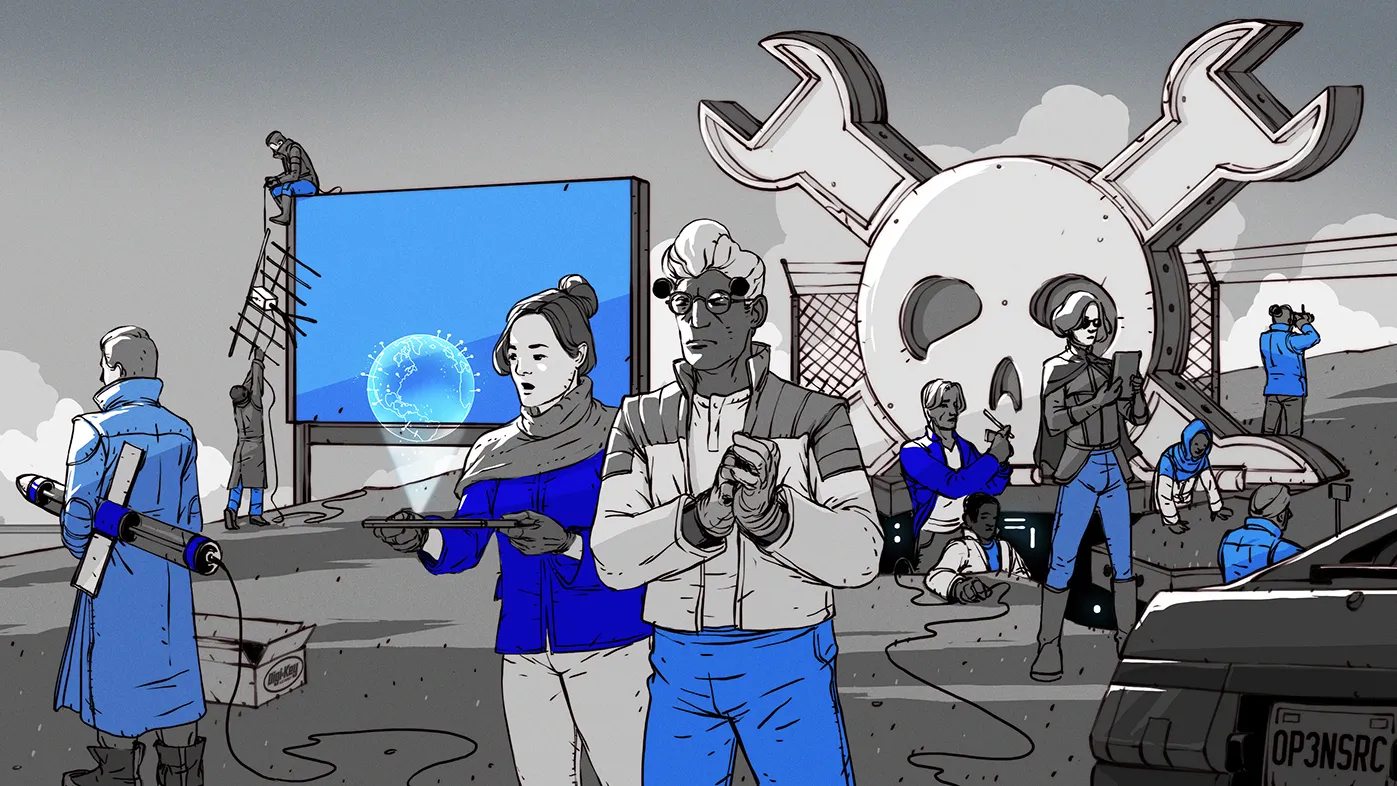
And that got me thinking about “kinds of hacks” in general. Do we have a classification scheme for the hacks that we see here on Hackaday? For instance, the obvious precursor to many of Tom’s favorite hacks is the breaking-into-the-locked-firmware hack, where a device that didn’t want you loading your own firmware on it is convinced to let you do so. Junk-hacking is probably also a category of its own, where instead of finding your prey on AliExpress, you find it on eBay, or in the alleyway. And the save-it-from-the-landfill repair and renovation hacks are close relatives.
First, some of the good news: certain AI models—currently Anthropic’s Mythos, but surely others are well on their way if they haven’t already arrived—turn out to be really good at finding cybersecurity vulnerabilities. As Anthropic itself reported:
During our testing, we found that Mythos Preview is capable of identifying and then exploiting zero-day vulnerabilities in every major operating system and every major web browser when directed by a user to do so. The vulnerabilities it finds are often subtle or difficult to detect. Many of them are ten or twenty years old, with the oldest we have found so far being a now-patched 27-year-old bug in OpenBSD—an operating system known primarily for its security.
That’s quite the tool, if it can help find vulnerabilities so that they can be patched.
But it’s also quite the tool to help find vulnerabilities so that they can be exploited. Like so many tools, including technological tools, whether they are good or bad depends entirely in how they are used. A hammer is a really helpful tool for building things, but it also smashes windows. And with this news, AI now has the capability for some really destructive uses.
To try to prevent them, Anthropic is working with some of the largest tech companies in the world to let them use a preview of its model on their own software to help QA them and proactively patch vulnerabilities. As Casey Newton reports:
Advertisement
Anthropic announced Mythos alongside Project Glasswing, an initiative with more than 40 of the world’s biggest tech companies that will see Anthropic grant early access to the model to find and patch vulnerabilities across many of the world’s most important systems. Launch partners in the coalition include Apple, Google, Microsoft, Cisco and Broadcom.
They’ll be tasked with scanning and patching their own systems along with the critical open-source systems that modern digital infrastructure depends on. Anthropic is giving participants $100 million in usage credits for Mythos, and donating another $4 million to open-source security efforts.
This sounds like a great program. It also should be noted that the Mythos model is not consumer-grade AI; it takes expensive, dedicated infrastructure to run, which means that, at least for the moment, there’s not an imminent danger of it being misused. But trouble is nevertheless brewing, and someday it will be here, which raises certain questions, like:
(A) What about other AI models, which will inevitably be similarly powerful? What if they are produced by less ethical companies, who would have no compunction against rogue actors using their systems in destructive ways that Project Glasswing won’t have intercepted?
(B) And what about every single legacy technology system in use, which Project Glasswing is unlikely to be able to retroactively fix? Large, resourced companies may be able to weather the on-coming storm, but what about your local dentist office? Or a hospital? Municipal IT systems? Networked technology is everywhere, and these smaller businesses and institutions are likely to both have older, unpatched technology and also fewer resources to update and secure them, or deal with the consequences of a hack, which can be devastating for the business or the people they serve.
On the other hand, there does seem to be one other bit of good news with this revelation: governments, including that of the United States, have often engaged in the dubious practice of hording zero-days, or collecting information about vulnerabilities that they then kept secret so that they could exploit them themselves by using them on an adversary. For those unfamiliar, “zero-day” refers to a vulnerability that has yet to be disclosed, which is why it’s on “day zero,” or before the first day of it being a known vulnerability that could now be fixed.
Advertisement
Mythos’s capabilities would seem to obviate this strategy, because suddenly the stash of unknown vulnerabilities isn’t really going to be such a secret, since anyone using the model will be able to find them. Mythos’s existence changes the balance of interests, where the stronger national security play by the government would be to disclose any discovered vulnerability to the vendor as soon as possible so that they can be patched and our nation’s systems more secured. Arguably that was always the better national security play, but now there’s definitely no upside to trying to keep them secret because it now definitely needs to be presumed that adversaries will be able to find and exploit them. They’ll have the tools.
With these AI models we’re going to need to presume that everyone is going to have the tools to know about every vulnerability. Up to now there has been at least the illusion of some security, because vulnerabilities couldn’t be exploited if no one knew about them, and finding vulnerabilities is hard. But now that it will be easy, the risk to the nation’s cybersecurity is greater than we have ever before contended with.
It is also not really a great harbinger that we know about Mythos because… a copy of the software got leaked. It’s just the software that was leaked and not the models it uses to tune its “reasoning,” which means that anyone trying to now build their own Mythos is still missing an important piece if they want to mimic its full capabilities, but they would have a lot. Which is probably why Anthropic has been sending DMCA takedown notices to have the leaked software removed from the Internet.
But doing so raises a related issue: the role of copyright law when it comes to “vibe coding,” or “having an AI system write the software rather than a programmer, just by instructing it on what to do. It’s especially important in light of the cybersecurity concerns always raised by software (and including vibe-coded software, as we’re having to trust that what’s produced does not have vulnerabilities). Copyright requires a human author, which raises the question: can software written by an AI be copyrightable? The answer would appear to be no, unless there was a great deal of creative effort on the part of a human being to instruct the AI or modify the output. But as Ed Lee chronicled, per Anthropic itself, even its own software (“pretty much 100%”) is being written by AI. And if that’s the case, then Anthropic has no business sending takedown notices for its software because DMCA takedown notices are only for demanding the removal of copyrighted works, which, it would appear, Anthropic’s own code does not qualify for.
Advertisement
But maybe it’s better if software stops being subject to copyright. “Vibe coding,” is becoming increasingly efficient, to the point that there is likely no need for copyright to incentivize its authorship. Instead, what public policy really needs to emphasize is that whatever software is produced is secure software. But in many ways copyright obstructs that goal, like through its lengthy terms, which mean that while a copyright holder might not still be maintaining its older software, no one else can maintain and patch it either, without potentially infringing the software’s copyright. Or through its privileged secrecy (unusually for copyright, when it comes to software you don’t actually have to disclose all the actual code to register a copyright in it!) and other powers to lock out security research efforts, like through Section 1201 of the DMCA, when such efforts aren’t specifically supported by the developer–assuming the developer supports any security testing at all, as right now there aren’t necessarily the incentives to make them care about it. Instead public policy has given them the ability, like with copyright, to escape oversight of the security of their software products, even as those products end up embedded in more and more of our lives.
It’s time to change that focus and get copyright out of the way of making software security our top policy priority.
NASA’s Artemis 2 crew captured an iconic “Earthset” picture, showing Earth dipping beneath the lunar horizon. (NASA Photo)
Four astronauts today became the first humans to make a trip around the moon since the Apollo era — and added new pages to history books for the Artemis era.
The Artemis 2 crew reached a maximum distance of 252,756 miles from Earth, surpassing the distance record for human travel that was set during the Apollo 13 mission in 1970 by more than 4,000 miles.
NASA astronaut Christina Koch marked the occasion in a radio transmission from NASA’s Orion space capsule, named Integrity. “We most importantly choose this moment to challenge this generation and the next to make sure this record is not long-lived,” she said.
Koch made history as the first woman to travel beyond Earth orbit. One of her crewmates, NASA pilot Victor Glover, is the first Black astronaut to take a moon trip, and Canadian astronaut Jeremy Hansen is the first non-U.S. astronaut to do so.
The main purpose of the 10-day Artemis 2 mission is to serve as an initial crewed test flight for the Orion spacecraft, which traced a similar round-the-moon course during the uncrewed Artemis 1 mission in 2022. A successful Artemis 2 mission will prepare the way for a lunar lander test flight in Earth orbit as early as next year, potentially followed in 2028 by the first crewed moon landing since Apollo.
Artemis 2’s flight plan took advantage of orbital mechanics and a precisely timed firing of Orion’s main engine to send the astronauts on a free-return trip around the moon and back. The moon’s gravitational pull caused Orion to make a crucial U-turn around the far side, at a minimum distance of 4,067 miles from the lunar surface, and then slingshot back toward Earth.
A scientific swing around the moon
Scientists enlisted the astronauts to make up-close geological observations of the lunar surface during the flyby. Because the Artemis astronauts had a wider perspective on the moon than Apollo astronauts did five decades ago, they could see parts of the far side that had gone unseen directly by human eyes (although they’ve been well-documented by robotic probes).
NASA’s mission commander, Reid Wiseman, found it difficult to break away from moongazing to discuss his observations over a radio link with Kelsey Young, Artemis 2’s lunar science lead. “You’re pulling me away from the moon right now, so let’s go,” he told Young.
Advertisement
Back at Mission Control in Houston, Young took it all in good stride. “I have to say that ‘moon joy’ is the new term that’s already become our team’s new motto,” she told Wiseman.
The astronauts focused on features of scientific interest — including Orientale Basin and Hertzsprung Basin, two multi-ring impact craters that document different geological eras on the far side. They noted subtle shades of green and brown on the mostly gray moonscape. They also took a close look at the south polar region, which is the target for the Artemis program’s first crewed landing.
“The view of the south pole is quite amazing,” Glover said.
Koch marveled over the bright young craters that stood out on the lunar surface. “What it really looks like is a lampshade with tiny pinpricks, and the light is shining through,” she said. “They’re so bright compared to the rest of the moon.”
Advertisement
Emotional moments
Hansen told Mission Control that the astronauts were proposing new names for two craters they spotted on the surface below. “Integrity” was chosen as the name for one of the craters, in honor of the crew’s spacecraft. The other crater was dubbed “Carroll,” in honor of Wiseman’s wife, who died in 2020. After Hansen spelled out Carroll’s name, the astronauts came together to give Wiseman a comforting hug.
That wasn’t the flyby’s only emotional moment. Koch said she felt an “overwhelming sense of being moved by looking at the moon” and comparing it with Earth. Her description of the feeling was similar to astronauts’ accounts of a phenomenon known as the Overview Effect.
“Everything we need, the Earth provides,” she said, “and that is in itself something of a miracle, and one that you can’t truly know until you’ve had the perspective of the other.”
Just before Orion was due to pass behind the moon for a temporary blackout, Glover took the opportunity to refer to the Christian commandment to love your neighbor as yourself. “As we prepare to go out of radio communication, we’re still able to feel your love from Earth. And to all of you down there on Earth, and around Earth, we love you from the moon,” he said. “We will see you on the other side.”
Advertisement
About 40 minutes later, Orion emerged from the other side of the moon, and communication was restored. “It is so great to hear from Earth again,” Koch told Mission Control.
“We will explore, we will build ships, we will visit again, we will construct science outposts, we will drive rovers, we will do radio astronomy, we will found companies, we will bolster industry, we will inspire,” Koch said. “But ultimately, we will always choose Earth.”
Earthset, Earthrise and an eclipse
The behind-the-moon turnaround provided the crew with opportunities to capture images of Earthset and Earthrise — and marked the beginning of Orion’s homeward journey. Back at Mission Control, the support team turned their double-sided mission patches around to change the focus of the patch’s design from the moon to Earth.
But the workday wasn’t yet finished: For the grand finale, the astronauts donned protective glasses and watched as the sun passed behind the moon to create an unearthly kind of solar eclipse. As the sun sank beneath the lunar horizon, they captured pictures of the solar corona.
Advertisement
Glover reported that the corona created a bright halo “almost around the entire moon,” with the lunar surface illuminated ever so faintly by Earth’s reflected light. “It is quite an impressive sight,” he said. “Earthshine is very distinct, and it creates quite an impressive visual illusion. Wow, it’s amazing.”
The sun’s re-emergence from behind the moon marked the end of today’s seven-hour lunar observation session. “I can’t say enough how much science we’ve already learned, and how much inspiration you’ve provided to our entire team, the lunar science community and the entire world with what you were able to bring today,” Young told the crew. “You really brought the moon closer today, and we can’t thank you enough.”
High-resolution images and reports about the observations are due to be downlinked and distributed in the days ahead. Planetary scientists will be poring over the data long after Orion and its crew make their scheduled splashdown in the Pacific Ocean on Friday.
After the flyby, President Donald Trump congratulated the crew over an audio link and called them “modern-day pioneers.”
Advertisement
“Today you’ve made history and made all America really proud,” he said. “No astronaut has been to the moon since the days of the Apollo program. … At long last, America is back.”
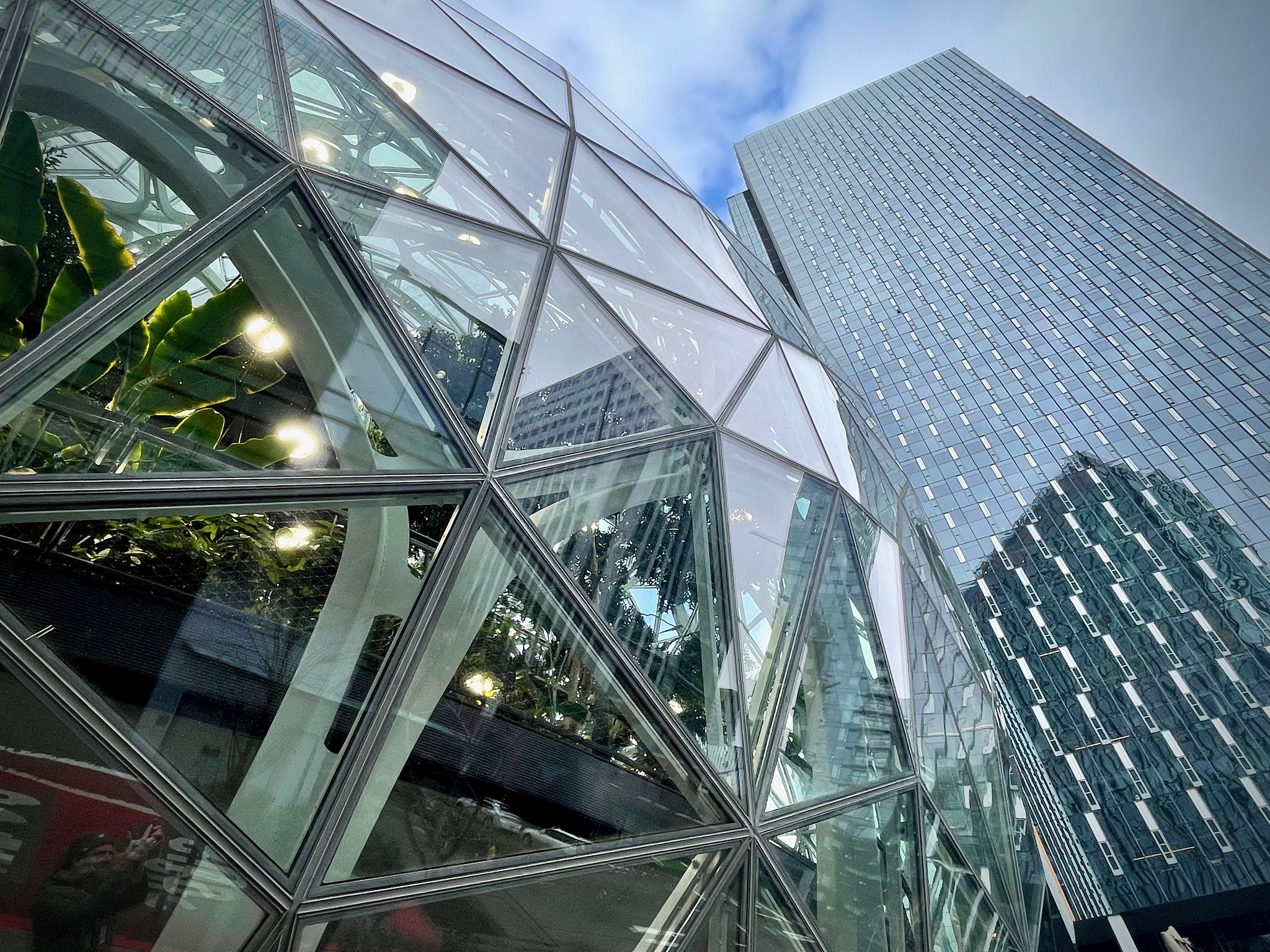
Amazon’s headquarters campus in Seattle. (GeekWire Photo / Kurt Schlosser)
A trio of YouTube producers filed a class action lawsuit against Amazon alleging the tech giant illegally used content from the video platform to train and improve its Nova Reel generative AI model.
The suit, filed Friday in U.S. District Court for the Western District of Washington in Seattle, describes how Amazon allegedly used datasets earmarked only for academic use, circumvented YouTube’s copyright protection measures, and scraped video content. KING5 first reported on the suit.
“In a world where Defendant and others can circumvent technological protections to exploit copyrighted works without authorization with impunity, creators will be less likely to make their creations available on YouTube and other similar platforms, for fear of losing all control of them,” the plaintiffs state in their suit. “The world will be poorer for it.”
Plaintiffs are seeking damages, restitution and injunctive relief, claiming Amazon violated the Digital Millennium Copyright Act.
An Amazon spokesperson declined to comment on the matter, citing ongoing litigation.
Advertisement
Amazon released its Nova foundation models in 2024 via AWS Bedrock. The Nova Reel model can take text prompts and images and turn them into short videos, with features including watermarking.
According to the suit, Amazon deployed automated download tools paired with virtual machines that cycled through IP addresses to avoid being blocked, enabling the unauthorized extraction of data from millions of videos.
The named plaintiffs include:
Ted Entertainment, Inc. (TEI), a California-based media company owned by Ethan and Hila Klein with more than 5,800 videos on YouTube with a combined total of more than 4 billion views. TEI channels include h3h3 Productions and H3 Podcast Highlights.
Matt Fisher, a California-based YouTuber who runs the MrShortGame Golf channel that provides instructional videos and has more than 500,000 subscribers.
Golfholics, a golf-focused YouTube channel with more than 130,000 subscribers and millions of views.
The suit argues the plaintiffs have no way to recover intellectual property already used to train Amazon’s models. “Once AI ingests content, that content is stored in its neural network and not capable of deletion or retraction,” it states.
Dozens of similar cases are working their way through courts nationwide. Among them: the New York Times’ lawsuit against OpenAI and Microsoft, a class action by authors against Microsoft, and a suit from musicians with YouTube content against Google.
Advertisement
Separate lawsuits against Anthropic and music-generation startup Suno over the alleged unauthorized use of books and music in AI training have since settled. A case brought by authors against Meta was dismissed.
In late-stage testing of a distributed AI platform, engineers sometimes encounter a perplexing situation: every monitoring dashboard reads “healthy,” yet users report that the system’s decisions are slowly becoming wrong.
Engineers are trained to recognize failure in familiar ways: a service crashes, a sensor stops responding, a constraint violation triggers a shutdown. Something breaks, and the system tells you. But a growing class of software failures looks very different. The system keeps running, logs appear normal, and monitoring dashboards stay green. Yet the system’s behavior quietly drifts away from what it was designed to do.
This pattern is becoming more common as autonomy spreads across software systems. Quiet failure is emerging as one of the defining engineering challenges of autonomous systems because correctness now depends on coordination, timing, and feedback across entire systems.
When Systems Fail Without Breaking
Consider a hypothetical enterprise AI assistant designed to summarize regulatory updates for financial analysts. The system retrieves documents from internal repositories, synthesizes them using a language model, and distributes summaries across internal channels.
Advertisement
Technically, everything works. The system retrieves valid documents, generates coherent summaries, and delivers them without issue.
But over time, something slips. Maybe an updated document repository isn’t added to the retrieval pipeline. The assistant keeps producing summaries that are coherent and internally consistent, but they’re increasingly based on obsolete information. Nothing crashes, no alerts fire, every component behaves as designed. The problem is that the overall result is wrong.
From the outside, the system looks operational. From the perspective of the organization relying on it, the system is quietly failing.
The Limits of Traditional Observability
One reason quiet failures are difficult to detect is that traditional systems measure the wrong signals. Operational dashboards track uptime, latency, and error rates, the core elements of modern observability. These metrics are well-suited for transactional applications where requests are processed independently, and correctness can often be verified immediately.
Advertisement
Autonomous systems behave differently. Many AI-driven systems operate through continuous reasoning loops, where each decision influences subsequent actions. Correctness emerges not from a single computation but from sequences of interactions across components and over time. A retrieval system may return contextually inappropriate and technically valid information. A planning agent may generate steps that are locally reasonable but globally unsafe. A distributed decision system may execute correct actions in the wrong order.
None of these conditions necessarily produces errors. From the perspective of conventional observability, the system appears healthy. From the perspective of its intended purpose, it may already be failing.
Why Autonomy Changes Failure
The deeper issue is architectural. Traditional software systems were built around discrete operations: a request arrives, the system processes it, and the result is returned. Control is episodic and externally initiated by a user, scheduler, or external trigger.
Autonomous systems change that structure. Instead of responding to individual requests, they observe, reason, and act continuously. AI agents maintain context across interactions. Infrastructure systems adjust resource in real time. Automated workflows trigger additional actions without human input.
Advertisement
In these systems, correctness depends less on whether any single component works, and more on coordination across time.
Distributed-systems engineers have long wrestled with issues of coordination. But this is coordination of a new kind. It’s no longer about things like keeping data consistent across services. It’s about ensuring that a stream of decisions—made by models, reasoning engines, planning algorithms, and tools, all operating with partial context—adds up to the right outcome.
A modern AI system may evaluate thousands of signals, generate candidate actions, and execute them across a distributed infrastructure. Each action changes the environment in which the next decision is made. Under these conditions, small mistakes can compound. A step that is locally reasonable can still push the system further off course.
Engineers are beginning to confront what might be called behavioral reliability: whether an autonomous system’s actions remain aligned with its intended purpose over time.
Advertisement
The Missing Layer: Behavioral Control
When organizations encounter quiet failures, the initial instinct is to improve monitoring: deeper logs, better tracing, more analytics. Observability is essential, but it only shows that the behavior has already diverged—it doesn’t correct it.
Quiet failures require something different: the ability to shape system behavior while it is still unfolding. In other words, autonomous systems increasingly need control architectures, not just monitoring.
Engineers in industrial domains have long relied on supervisory control systems. These are software layers that continuously evaluate a system’s status and intervene when behavior drifts outside safe bounds. Aircraft flight-control systems, power-grid operations, and large manufacturing plants all rely on such supervisory loops. Software systems historically avoided them because most applications didn’t need them. Autonomous systems increasingly do.
Behavioral monitoring in AI systems focuses on whether actions remain aligned with intended purpose, not just whether components are functioning. Instead of relying only on metrics such as latency or error rates, engineers look for signs of behavior drift: shifts in outputs, inconsistent handling of similar inputs, or changes in how multi-step tasks are carried out. An AI assistant that begins citing outdated sources, or an automated system that takes corrective actions more often than expected, may signal that the system is no longer using the right information to make decisions. In practice, this means tracking outcomes and patterns of behavior over time.
Advertisement
Supervisory control builds on these signals by intervening while the system is running. A supervisory layer checks whether ongoing actions remain within acceptable bounds and can respond by delaying or blocking actions, limiting the system to safer operating modes, or routing decisions for review. In more advanced setups, it can adjust behavior in real time—for example, by restricting data access, tightening constraints on outputs, or requiring extra confirmation for high-impact actions.
Together, these approaches turn reliability into an active process. Systems don’t just run, they are continuously checked and steered. Quiet failures may still occur, but they can be detected earlier and corrected while the system is operating.
A Shift in Engineering Thinking
Preventing quiet failures requires a shift in how engineers think about reliability: from ensuring components work correctly to ensuring system behavior stays aligned over time. Rather than assuming that correct behavior will emerge automatically from component design, engineers must increasingly treat behavior as something that needs active supervision.
As AI systems become more autonomous, this shift will likely spread across many domains of computing, including cloud infrastructure, robotics, and large-scale decision systems. The hardest engineering challenge may no longer be building systems that work, but ensuring that they continue to do the right thing over time.
AI is everywhere, the pressure to adopt it is relentless, and the evidence that it’s making us smarter is getting thinner by the quarter.
On New Year’s Day 2026, a programmer named Steve Yegge launched an open-source platform called Gas Town. It lets users orchestrate swarms of AI coding agents simultaneously, assembling software at speeds no single human could match.
One of the first people to try it described the experience in terms that had nothing to do with productivity. “There’s really too much going on for you to comprehend reasonably,” he wrote. “I had a palpable sense of stress watching it.”
That sentence should be pinned to the wall of every executive suite, every venture capital boardroom, and every CES keynote stage where the word “intelligence” is thrown around like confetti. Because something strange is happening in the relationship between humans and the technology we keep calling intelligent.
The machines are getting faster. The humans interacting with them are getting more exhausted, more anxious, and, by several measures, less capable of the one thing intelligence was supposed to enhance: thinking clearly.
Advertisement
The pressure to adopt AI is now so pervasive that it has developed its own vocabulary of coercion.
You need to have AI.
You need to use AI.
You need to buy AI.
Advertisement
Your competitors are already using it.
Your children will fall behind without it.
The language does not come from engineers quietly solving problems. It comes from earnings calls, product launches, and LinkedIn posts written with the manic energy of people who have confused selling a product with describing reality.
In January 2026, at the World Economic Forum in Davos, Microsoft CEO Satya Nadella offered a phrase so revealing it deserves to be studied as a cultural artefact. He warned that AI risked losing its “social permission” to consume vast quantities of energy unless it started delivering tangible benefits to people’s lives.
Advertisement
The framing was striking: not a question of whether the technology works, but of whether the public can be kept on board while the industry figures out if it does. Nadella called AI a “cognitive amplifier,” offering “access to infinite minds.”
A month later, a Circana survey of US consumers found that 35 per cent of them did not want AI on their devices at all. The top reason was not confusion or technophobia. It was simpler than that. They said they did not need it.
The gap between the rhetoric and the evidence has become difficult to ignore. In March 2026, Goldman Sachs published an analysis of fourth-quarter earnings data and found, in the words of senior economist Ronnie Walker, “no meaningful relationship between productivity and AI adoption at the economy-wide level.”
The bank noted that a record 70 per cent of S&P 500 management teams had discussed AI on their earnings calls. Only 10 per cent had quantified its impact on specific use cases. One per cent had quantified its impact on earnings. Meanwhile, the five largest US technology companies were collectively expected to spend $667 billion on AI infrastructure in 2026, a 62 per cent increase over the previous year.
Advertisement
The National Bureau of Economic Research described the situation as a “productivity paradox”: perceived gains larger than measured ones.
There are real productivity improvements, but they are strikingly narrow. Goldman found a median gain of around 30 per cent in two specific areas: customer support and software development. Outside those domains, the evidence for broad improvement was, in the bank’s assessment, essentially absent. The promised revolution, for now, is happening in two rooms of a very large house.
What is happening in those rooms, though, is worth examining closely, because even where AI delivers, something else appears to be breaking.
In February 2026, researchers at UC Berkeley’s Haas School of Business published findings from an eight-month study embedded at a 200-person US technology firm. They found that AI did not reduce workloads. It intensified them. Tasks got faster, so expectations rose. Expectations rose, so the scope expanded. Scope expanded, so workers took on responsibilities that had previously belonged to other roles. Product managers began writing code. Researchers took on engineering work. Role boundaries dissolved because the tools made it feel possible, and then the exhaustion arrived.
Advertisement
I got tired just write it.
The researchers identified a cycle they called “workload creep”: a gradual accumulation of tasks that goes unnoticed until cognitive fatigue degrades the quality of every decision.
Harvard Business Review gave the phenomenon a blunter name: “AI brain fry.” A Boston Consulting Group study of nearly 1,500 US workers found that 14 per cent of those using AI tools requiring significant oversight reported experiencing it, a distinct form of mental fog characterised by difficulty focusing, slower decision-making, and headaches after extended AI interaction.
The workers most affected were not the sceptics or the laggards. They were the enthusiastic adopters, the ones who had done exactly what every keynote told them to do.
Advertisement
The distribution of this exhaustion is not random. Sixty-two per cent of associates and 61 per cent of entry-level workers reported AI-related burnout, according to the Harvard Business Review study.
Among C-suite executives, the figure dropped to 38 per cent. The pattern is consistent with what anyone who has spent time in an organisation could have predicted: the people who make the strategic decisions about AI adoption are not the people who manage its outputs, clean up its errors, and switch between its tools eight hours a day.
All of this raises a question that the industry would prefer to skip over: what, exactly, do we mean when we use the word “intelligence”?
The term “artificial intelligence” was coined in 1956 at a workshop at Dartmouth College, and it has been doing a particular kind of ideological work ever since. By naming the field after a human quality, its founders made a move that was as much marketing as science. It invited us to see computation as cognition, pattern-matching as understanding, speed as wisdom.
Advertisement
Every time a product is described as “intelligent,” it borrows from the emotional weight of a word that, for most of human history, meant something like the capacity for judgement, reflection, and the ability to sit with uncertainty long enough to think clearly about it.
That is not what these systems do. What they do, often brilliantly, is statistical prediction at an extraordinary scale. They recognise patterns in data, generate plausible continuations of sequences, and optimise for objectives defined by their designers.
This is genuinely useful. It is not intelligence in the sense that any philosopher, psychologist, or, for that matter, any thoughtful person on the street would recognise. The slippage between the two meanings is not accidental. It is the engine of the entire commercial project.
Here is the deepest irony: in the rush to surround ourselves with artificial intelligence, we appear to be eroding the conditions under which actual human intelligence operates. Intelligence, the real kind, requires things that the AI economy is systematically destroying: uninterrupted attention, tolerance for ambiguity, the willingness to sit with a problem before reaching for a solution, and the cognitive space to doubt, reconsider, and change one’s mind.
Advertisement
Researchers at the London School of Economics argued in a February 2026 paper that the manufactured urgency around AI narrows the space for democratic deliberation itself, collapsing the future into a single inevitability and leaving no room for the slow, uncertain, distinctly human process of deciding together what we actually want.
There is something almost comic about the situation.
We have built machines that can process language, generate images, and write code at superhuman speed, and the people using them are reporting mental fog, difficulty concentrating, and a growing inability to think.
A senior engineering manager cited in the BCG study described juggling multiple AI tools to weigh technical decisions, generate drafts, and summarise information. The constant switching and verification created what he called “mental clutter.” His effort had shifted from solving the core problem to managing the tools.
Advertisement
Not everyone is compliant. A third of consumers have looked at the AI being pushed into their phones and laptops and said, plainly, no. Workers whose organisations value work-life balance report 28 per cent lower AI fatigue, according to BCG’s research, which suggests the problem is less about the technology itself than about the culture of compulsive adoption wrapped around it.
The question is not whether AI is useful. In certain applications, it clearly is. The question is whether the frenzy surrounding it, the relentless pressure to adopt, integrate, and accelerate, is making us smarter or just making us more compliant.
Sixty-seven billion dollars in quarterly investment. Record mentions on earnings calls. Entire conferences dedicated to the word “intelligence.”
And in a January survey, the most common reason a human being gave for not wanting any of it was four words long: I do not need it. That sentence, quiet and unimpressed, may be the most intelligent thing anyone has said about AI in years. The question now is whether we still have the attention span to hear it.
SiFive, a company founded in 2015 by the UC Berkeley engineers who created an open source chip design, has landed a $400 million oversubscribed round that values the company at $3.65 billion.
This deal is interesting for a bunch of reasons. For one, SiFive’s RISC-V open chip design is based on the RISC processor, not Intel’s x86 or ARM, the two major types of CPUs that currently feed Nvidia’s GPU computer system AI empire.
Also, Nvidia was investor in this round, alongside a long list of VCs, private equity, and hedge funds. The round was led by Atreides Management, founded by former Fidelity investor bigwig Gavin Baker. (Atreides was also an investor in Cerebras Systems $1 billion round). Other investors in the round include Apollo Global Management, D1 Capital Partners, Point72 Turion, T. Rowe Price Sutter Hill Ventures, and others.
SiFive’s business model is like Arm’s was in years gone by — it licenses its chip designs to those who modify them for their own needs and does not sell the chips themselves. (In March, Arm changed its model when it launched the first-ever chip it manufactured, an AI chip, developed with Meta with customers including OpenAI, Cerebras, and Cloudflare.)
Advertisement
SiFive stands in rarified air with chip designs that are open, not proprietary, as well as neutral, not reliant on specific customers. In fact, SiFive hasn’t raised since March 2022, Pitchbook estimates, when it brought in $175 million led by Coatue Management at a pre-money valuation of $2.33 billion. Intel Capital, Qualcomm Ventures, Aramco Ventures, were part of that round.
RISC-V has been, until recently, better known as a chip for smaller uses, like embedded systems. But with this cash and Nvidia’s attention, SiFive is moving into CPUs for AI data centers. SiFive’s designs will work with Nvidia’s CUDA software and its NVLink Fusion, a rack server system that lets different CPUs plug into Nvidia’s “AI factory.”
In other words, as rivals Intel and AMD seek to compete with Nvidia’s GPU, Nvidia is backing an 11-year-old startup that can design CPUs on an open and completely alternate technology.



























































You must be logged in to post a comment Login