Connect with us
DAPA Banner

NewsBeat

35 trees to be cut down for Cambridgeshire city’s station redevelopment

Published

on

Cambridgeshire Live

A former mayor has argued that replacing the 35 mature trees with 49 new ones is ‘clearly inadequate’

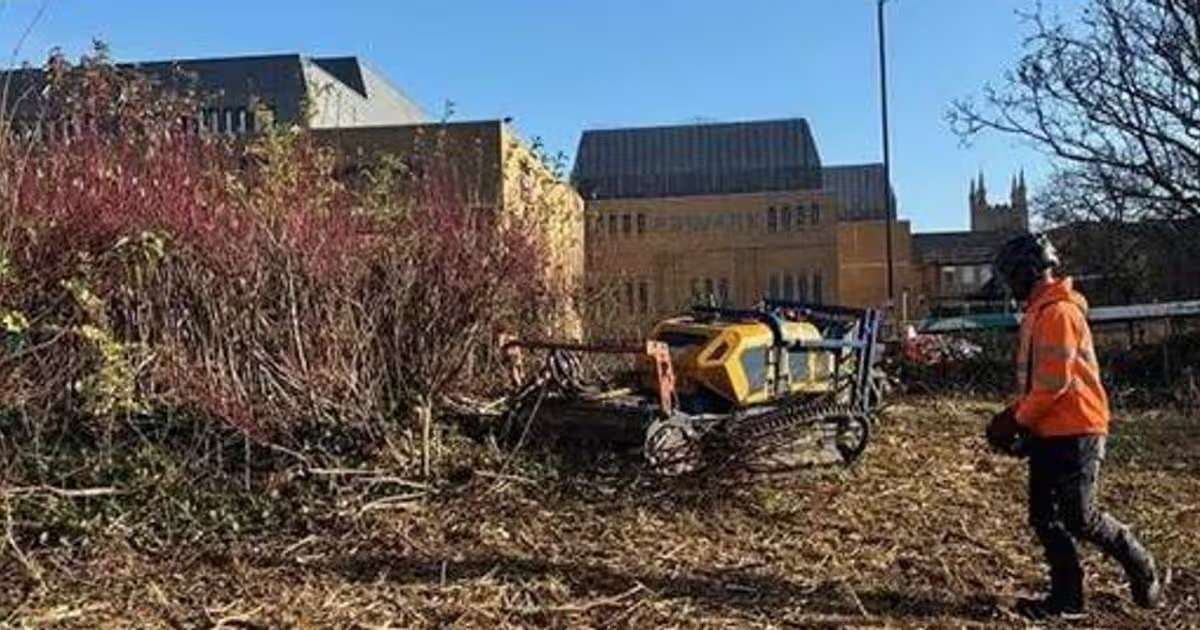
Plans to remove 35 trees around the new pedestrian City Link route between Peterborough railway station and Cowgate have been rebuffed by a former Peterborough Mayor.

Nick Sandford, who describes himself as “fully in support of the Station Quarter scheme”, said he has significant reservations about the proposed removal of so much greenery.

Advertisement

“The trees proposed for removal are not of a great age but still provide significant benefits… in terms of sequestration of carbon, wildlife habitat, air purification, water management and generally improve the feel and appearance of an inner city area like this,” he said.

Mr Sandford served as Mayor of Peterborough from 2023 to 2024, and spent 30 years working for the Woodland Trust. Mr Sandford quoted from the Woodland Trust’s 2020 Emergency Tree Plan which states: “If a tree must be removed, local authorities should implement minimum replacement planting ratios, which stipulate that for every non-woodland tree removed at least three new trees should be planted.”

“Applying this principle of three-for-one replacement planting shows that [the] proposal to replace 35 mature trees with only 49 new ones is clearly inadequate,” he said. “The replanting ratio needs to be increased significantly.”

In addition to a net gain of 14 trees, the plans for the new pedestrian City Link route are also expected to include seven additional small trees and shrubs, as well as a rain garden and Gabion walls. Construction work on City Link is due to start in the first few months of 2026.

Advertisement

Mr Sandford acknowledged how difficult it will be to maximise every single inch of space across the £65 million Station Quarter development.

“I appreciate that there may be space constraints on the site,” he said, “but opportunities could be taken to plant new trees nearby on council land in the city centre – or perhaps on the Embankment – to ensure adequate compensatory planting, which on a three-for-one basis should total 105 trees.

Mr Sandford voiced his concerns after Peterborough City Council’s recent announcement to encourage residents to take part in a public consultation on the proposed plans to fell the 35 aforementioned trees on the eastern side of the railway.

Anyone wishing to have their say on the plans has until February 11 to make representations to Peterborough City Council.

Advertisement

Source link

Continue Reading
Click to comment

You must be logged in to post a comment Login

Leave a Reply

NewsBeat

Car ploughs into JD Gym in Bury as two injured and driver arrested

Published

on

Car ploughs into JD Gym in Bury as two injured and driver arrested

The incident happened at JD Gyms on George Street, with police, fire crews and paramedics all attending the scene.

What happened

According to Greater Manchester Police, officers were called at around 4.45pm following reports that a car had driven through the wall of the gym.

A spokesman for GMP said: “Officers responded to an incident at 4.45pm today at JD Gym on George Street, Bury, with the assistance of NWAS and the Greater Manchester Fire Service.

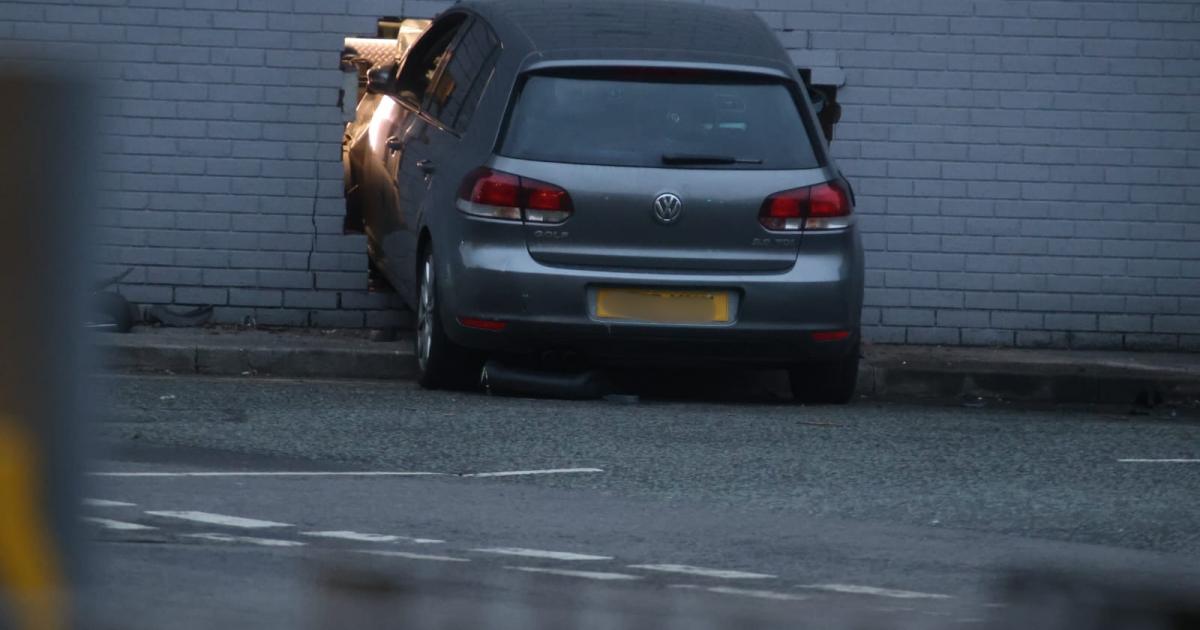
“It was reported that a car had driven through the wall of JD Gym, resulting in structural damage of the building.

Advertisement

“In the incident a man in his 60s has been struck by the car whilst inside the gym and has sustained non-life changing injuries.

“A woman in her 40s has been arrested on suspicion of causing injury by dangerous driving, she remains in hospital at this time.

“If you have any information, please contact officers on 101 or LiveChat quoting log 2424 of 14/04/2026.”

The vehicle appears to have driven directly through the brick wall.The vehicle appears to have driven directly through the brick wall. (Image: Phil Taylor)

Emergency response

Greater Manchester Fire and Rescue Service confirmed crews were called just before 5pm.

Advertisement

A spokesperson said: “Just before 5pm on Tuesday (April 14), fire crews were called to reports of a road traffic collision on George Street, Bury.

“Two fire engines from Bury and Whitefield stations, as well as the technical rescue unit from Ashton, were quickly mobilised to the incident, which involved a car colliding with a commercial building.

“Firefighters extricated a woman from the car, while another man inside the building was also injured in the collision.

“They were treated at the scene by paramedics and then taken to hospital by North West Ambulance Service.

Advertisement

“Firefighters helped make the area safe before handing the scene over to Greater Manchester Police.

“Our crews were in attendance for about an hour and a half.”

Police in the areaBury town centre was brought to a halt this evening (Image: Phil Taylor)

Inside the scene

Footage shared online showed the aftermath inside the gym, with debris scattered across the floor and part of the vehicle visible through the damaged wall.

Gymgoers were escorted out of the building, while emergency services surrounded the scene. An air ambulance was also seen circling overhead.

Advertisement

The vehicle appears to have driven directly through the brick wall, leaving its rear protruding from the building beneath the gym’s signage.

Crime scene investigators were later seen examining the car, which remained embedded in the wall.

Injuries and arrests

A man in his 60s who was inside the gym was struck by the vehicle and suffered injuries described as non-life changing.

The driver, a woman in her 40s, has been arrested on suspicion of causing injury by dangerous driving and remains in hospital.

Advertisement

Police on sceneCSI on scene (Image: Phil Taylor)

Road closures and travel disruption

Road closures were put in place around the busy junction following the crash, causing disruption in the area.

A spokesman for Bury Council said: “Emergency services are currently dealing with an incident at Rochdale Road in Bury town centre.

“Rochdale Road, at its junction with Derby Way, and Clarke Street at its junction with Angouleme Way, are closed in both directions with diversions in place.”

Motorists were warned to expect delays throughout the evening.

Advertisement

Recovery teams are en route as the response continues.

Police on sceneMotorists were redirected (Image: Phil Taylor)

Gym statement

In a statement, the gym said: “Earlier today an incident occurred at JD Gyms involving a vehicle making contact with the exterior of the building, which resulted in damage to part of the gym.

“As a precaution and in the interest of everyone’s safety, the gym will remain closed until further notice.

“Our team are on it straight away and building surveyors are due to attend in the morning.

Advertisement

“We will know more following their visit and will update here.

“If you are a member, you have automatically been granted multi-site access.

“Your JD Gyms app will now scan you in at a neighbouring JD Gyms location of your choice.

“We will be back open ASAP. Thank you for your patience.”

Advertisement

We will continue to bring you updates as this breaking incident unfolds.

Source link

Advertisement
Continue Reading

NewsBeat

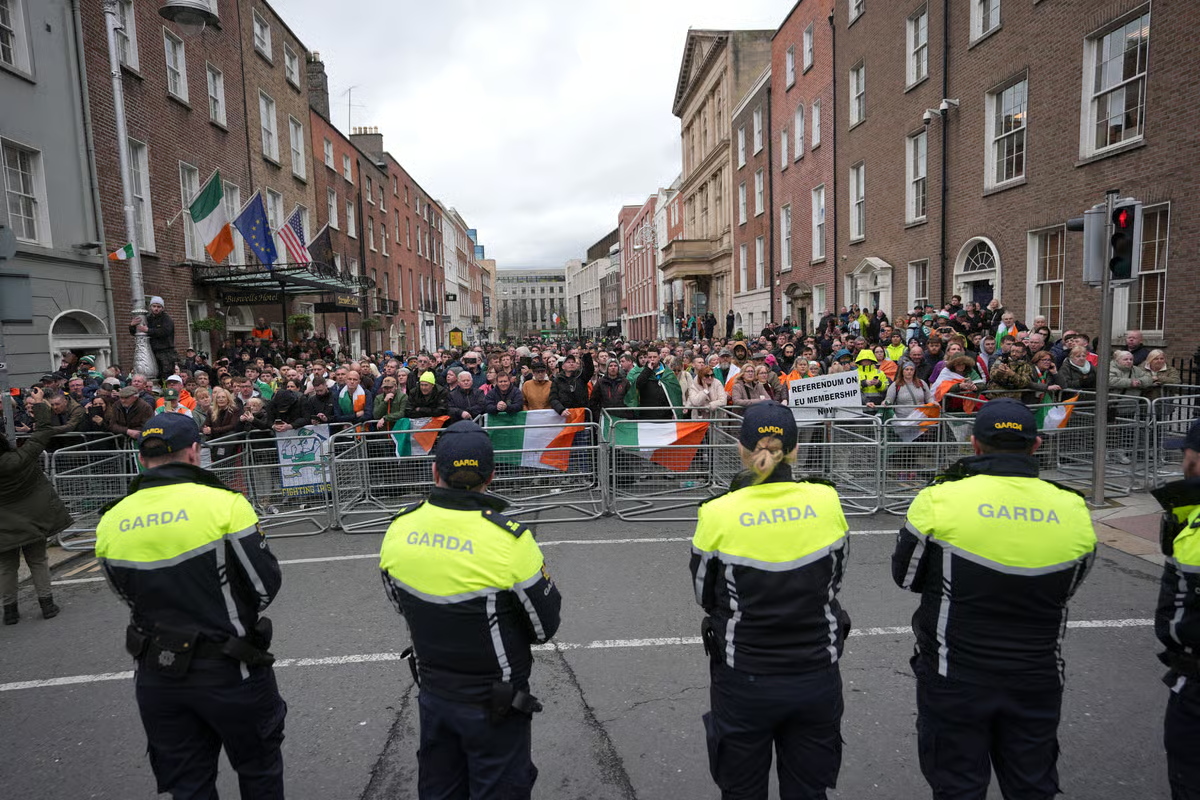
Government survives confidence vote as opposition TDs blast protests response

Published

on

Government survives confidence vote as opposition TDs blast protests response

Holly Cairns, the leader of the Social Democrats, said her party did not support blockades, but said: “People have watched while you’ve wasted countless billions, failed to deliver critical public services, housing and infrastructure, all while giving sermons about the importance of fiscal prudence – that is the backdrop to these protests.”

Source link

Continue Reading

NewsBeat

Atletico Madrid vs Barcelona LIVE: Champions League latest score, match stream, goal updates and fan reaction

Published

on

Barcelona vs Atletico Madrid: Prediction, kick-off time, TV, live stream, team news, h2h results, odds

Diego Simeone masterminded the unlikeliest of victories last week, although his side were aided by a sending off for Pau Cubarsi, who was dismissed for a pull on Simeone’s son Giuliano, who was deemed to have been clean through on goal. Now, it means that Hansi Flick will be without one of his first-choice central defenders this evening, and instead he will likely have to plump for Ronald Araujo or shift Eric Garcia, the former Man City man, back into his natural berth having been playing in midfield.

Source link

Continue Reading

NewsBeat

Would you save more lives or more years of life? A global study reveals how people really think

Published

on

Would you save more lives or more years of life? A global study reveals how people really think

Imagine a stark choice. You can save one person who is likely to live another 30 years. Or you can save several people who may each live another ten years.

Should we prioritise saving more lives – or more years of life? This kind of trade-off sits at the heart of how health systems make decisions.

Yet do people actually agree with that principle? A new international study – based on what people told us during the COVID pandemic – suggests the answer is more complicated than this simple trade-off suggests.

Across many countries, decisions about healthcare spending are guided by a concept known as the quality-adjusted life year, or Qaly. In simple terms, this approach aims to maximise the total number of years of healthy life generated by a healthcare system.

Advertisement

That often means prioritising treatments that deliver more life-years overall. Saving someone with more years ahead of them is typically seen as creating more value than saving someone with fewer remaining years. In practice, this can mean prioritising younger patients over older ones.

This kind of reasoning is used by Nice in the UK – and other healthchare advisory agencies, globally – to decide which medicines should be funded. But it rests on an implicit ethical assumption: that maximising total life-years is the right goal.

Our research asked a simple question: do ordinary people actually agree?

To find out, we conducted a large survey experiment with more than 14,000 people across 12 countries, including the UK, US, China, Brazil and Uganda.

Advertisement

Participants were asked to imagine a life-saving vaccine that could only be given to one group. They had to choose between vaccinating a 55-year-old person (with about 30 years left to live) or one or more 75-year-olds (with about ten years left each).

The scenarios were framed around COVID, but the underlying question was broader: how should we trade off saving lives versus saving life-years?

By varying the number of older people, we could estimate how many lives participants were willing to “trade” to save one younger person.

The results reveal a clear pattern – and one not entirely consistent with the Qaly-based values that underpin many healthcare funding decisions.

Advertisement

People don’t think in purely mathematical terms

Most people did favour saving the younger person. Around two-thirds of respondents chose to vaccinate the 55-year-old rather than a single 75-year-old.

However, when forced to make tougher trade-offs, people did not behave as if they were trying to maximise life-years. If they were, they would have been willing to sacrifice about three 75-year-olds to save one 55-year-old (since 30 years versus ten years is a 3:1 ratio). In practice, they were willing to trade fewer.

On average, across countries, people were willing to trade about two and a half older lives to save one younger life. In other words, public preferences sit somewhere between treating all lives as equal, and strictly maximising total life-years. They don’t fully align with either.

Advertisement

How many 75-year-olds people would trade to save one 55-year-old, by country. A value of three (dotted line) reflects strict life-year maximisation. Most countries fall below this, suggesting people are less willing to trade lives than this benchmark implies. Adapted from Parra-Mujica, F., Roope, L.S.J., Violato, M., Duch, R.M. and Clarke, P.M.

The story becomes even more interesting when we look beyond age. In some versions of the experiment, we also varied whether the hypothetical people were working. This turned out to matter a lot. When both people had the same employment status, one 55-year-old was considered roughly equivalent to just over two 75-year-olds.

Yet when the younger person was working and the older person was not, the trade-off shifted dramatically – people were willing to sacrifice more than three older lives to save the younger worker. And when the situation was reversed – the older person working and the younger not – many respondents preferred saving the older person.

This suggests that people are not just thinking about life expectancy. They are also considering broader social factors, such as contribution, perceived need or fairness.

Advertisement

A gap between policy and public values

These findings raise an uncomfortable question. If health systems are designed to maximise life-years, but the public values something more nuanced, is there a mismatch between policy and societal preferences?

Our results suggest there is. People do care about life expectancy – younger lives are generally prioritised. However, they also place weight on fairness, context and social roles. Their preferences are more nuanced than the strict “maximise life-years” rule embedded in many healthcare decision frameworks.

This doesn’t mean that healthcare decisions should simply follow public opinion. These are complex ethical choices, and expert judgment remains essential.

Nevertheless, ignoring public values entirely may also be problematic. Policies that feel intuitively unfair can undermine trust, which is essential for the sustainability of policies and institutions.

Advertisement

Rather than abandon existing approaches like Qalys, one option may be to complement them. Decision-makers could more clearly include the public’s views by using things like discussion groups, citizen panels or other methods that balance efficiency with fairness.

Another possibility is to recognise that there is no single correct answer. Different societies may reasonably draw the line in different places – and even within countries, views vary by age, politics and experience.

Our study shows that people do not see these decisions in simple mathematical terms. When faced with real trade-offs, they weigh lives, years and social context together. Ultimately, that may be a more realistic reflection of the ethical complexity at the heart of healthcare.

Advertisement

Source link

Continue Reading

NewsBeat

The best Thai restaurants in Cambridgeshire as voted by readers

Published

on

Cambridgeshire Live

If you are looking for a spot for some great Thai food, you might want to try out these three restaurants recommended by locals.

In recent years, Thai food has become an incredibly popular cuisine globally with restaurants popping up across the UK to enjoy. Thai food is a well-loved cuisine thanks to its often reasonable price, large portions, and mix of vibrant flavours.

Advertisement

Cambridgeshire is also known for having a few standout Thai restaurants that can often be found in the most unlikely of places. From traditional British pubs serving Thai dishes to a cosy village restaurant where you can dine in domes, you should be able to find a good Thai spot in the county easily.

If you are new to Thai food or have just moved to the area and are looking for recommendations, these three food spots might be a good place to start. You can find the Thai restaurants that topped our poll below.

3. Sala Thong

Location: 35 Newnham Rd, Cambridge CB3 9EY

Found close to the River Cam in the suburb of Newnham, Sala Thong promises to offer customers “a place where you can relax and enjoy yourself in comfort”. The restaurant has been owned and managed by Aranya for over 15 years and has become a popular spot for Cambridge residents.

Advertisement

The menu is packed with dishes that “have been passed down through the generations” and hopes to show people “how good Thai food can really be”. Sala Thong has plenty of choices in terms of its starters with a sharing platter on offer if you want to try a few different dishes and offers soups, noodles, and rice options for mains.

2. Bamboo Sky

Location: 29 High St, Bourn, Cambridge CB23 2SQ

Bamboo Sky offers a slightly different dining experience thanks to its heated domes covered in fairy lights you can find in its garden. The Thai spot could be a good choice for a special occasion but if you just want to go for its food, you can also sit inside the brightly-coloured restaurant.

In the day, the restaurant serves lighter dishes such as small plates and dim sum as well as its signature specials and more filling options for the evening. Bamboo Sky even serves a Sunday roast where you can try its roast Thai honey red pork with all of the trimmings.

Advertisement

1. The Wrestlers

Location: 337 Newmarket Rd, Cambridge CB5 8JE

It might come as no surprise to those living in Cambridge that the Wrestlers topped our poll. The Wrestlers might look like a very traditional English pub from the outside but the inside holds a menu of popular Thai dishes that are loved by pubgoers.

The pub is known for its large portions and affordable price making it a good spot for those wanting to hang out with friends and enjoy some good food. If you are unable to make it into Cambridge but are desperate to try out the food, Pattaya Kitchen at the Shed in Lode is owned by the same family behind the Wrestlers.

Source link

Advertisement
Continue Reading

NewsBeat

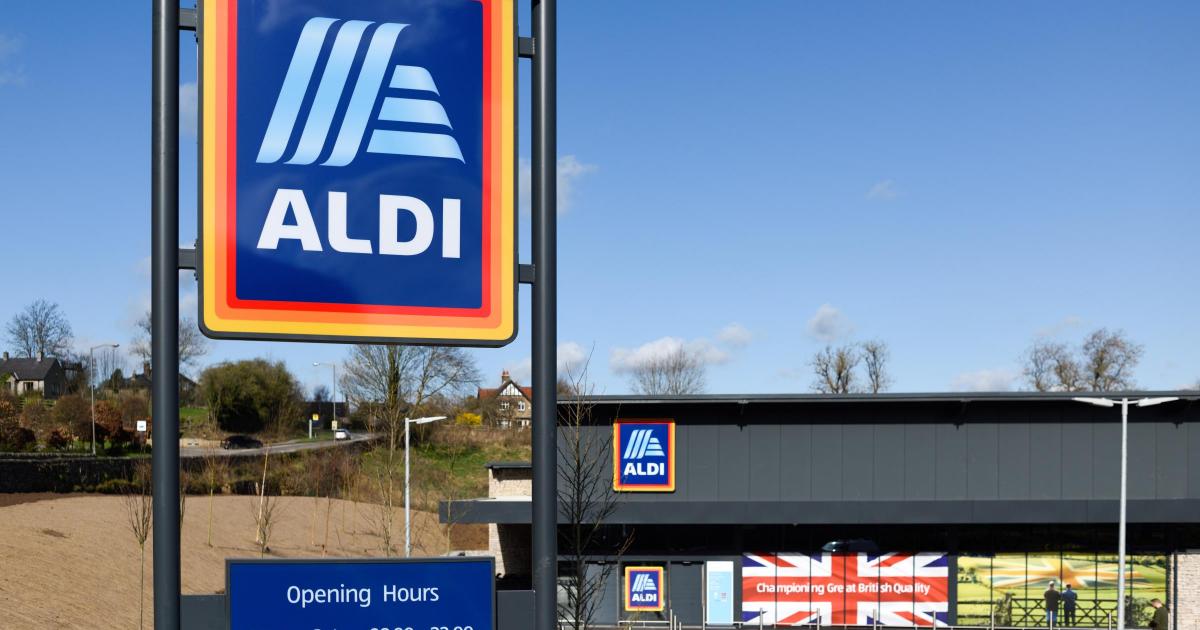
Aldi shoppers angry as supermarket removes free-from range

Published

on

Aldi shoppers angry as supermarket removes free-from range

Aldi originally introduced their dedicated Free From section as a trial in January 2025 and it was reported to have been stocked in 300 of around 1,000 UK stores.

However the supermarket has now confirmed that the trial has ended as shoppers found their favourite products reduced or gone entirely from shops.

Gluten-free shoppers and coeliacs, those with an autoimmune condition that means they cannot eat gluten, lashed out at the brand online.


The History of Aldi


Some said they were “devastated” at the news while one even suggested it should be “compulsory” for supermarkets to sell gluten-free products.

Advertisement

However, the budget giant claim they are “committed” to ensuring customers with dietary requirements will still be able to buy what they need and that they engage with key allergy charities.

An Aldi spokesperson said: “Last year we introduced dedicated Free From sections in selected stores as a trial.

“Whilst this trial has now come to an end, we are still committed to ensuring customers can get everything they need at Aldi and shoppers can still find products suited to speciality diets on our shelves.

“We continue to engage with key allergy charities to ensure that we’re supportive of speciality diets wherever we can.”

Advertisement

Gluten-free shoppers and coeliacs - those with an autoimmune condition that means they cannot eat gluten - lashed out at the brand onlineGluten-free shoppers and coeliacs – those with an autoimmune condition that means they cannot eat gluten – lashed out at the brand online (Image: Kennedy News and Media)

Commenters have taken to TikTok to share their concerns with some branding the end of the trial as ‘absolutely absurd’.

One said: “This is messed up. Some people need this to live. They can’t do that I swear.”

A second complained: “Nooo it was the only bread I had liked and could stomach.”

A third added: “Absolutely absurd, that really sucks if they’re getting rid of it.”

Advertisement

A fourth agreed and said: “This is a disgrace! It’s so limited in most stores for basics like pasta, bread etc without taking away options.”

However, one said: “It is a shame, but as a business they probably weren’t making any profit.

“I don’t think they gave it long enough though because hardly any of my gluten-free friends knew Aldi had gluten-free food.”

Advertisement

Source link

Continue Reading

NewsBeat

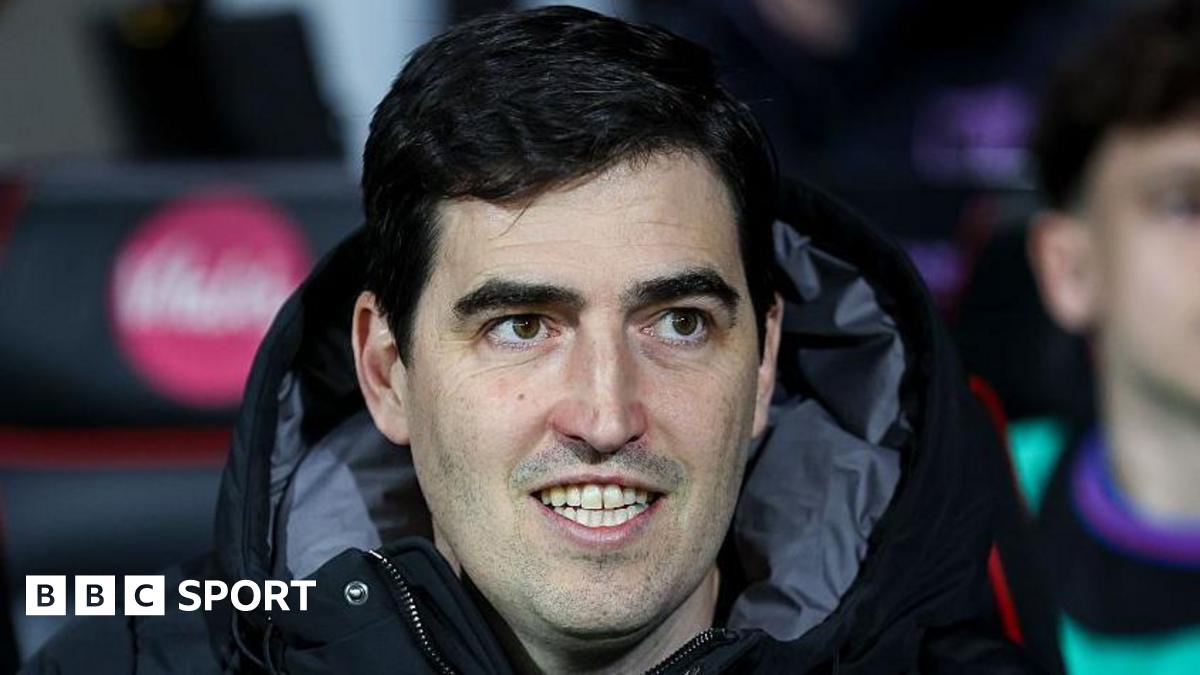
Will Andoni Iraola’s Bournemouth departure speed up the managerial merry-go-round?

Published

on

Bournemouth manager Andoni Iraola smiles as he watches a match

Manchester United co-owner Sir Jim Ratcliffe and his Old Trafford cohorts must decide whether to give Michael Carrick the manager’s job on a permanent basis or look elsewhere.

Carrick has guided United into the Champions League qualification places impressively, but suffered the first home loss of his time in charge against Leeds United on Monday.

Ratcliffe recently praised Carrick’s work since he succeeded Ruben Amorim, another victim of January’s managerial cull, but when pressed on the possibility of him taking full-time control said: “Not going there.”

The World Cup may yet play a part in some clubs’ thinking.

Advertisement

If the highly rated Julian Nagelsmann, currently Germany coach, comes on the market after the World Cup, would United be tempted?

It appears Thomas Tuchel, who has previously held talks with United, is out of the running after extending his contract to be England head coach – but good results at a World Cup can make things change.

Liam Rosenior was a graduate from Chelsea‘s multi-club ownership model when he left Strasbourg to replace Maresca.

The 41-year-old may well be one for the future, but he increasingly looks like someone being asked to take their driving test at the wheel of a Ferrari.

Advertisement

Rosenior drew widespread scorn when he said Chelsea‘s players performed a pre-match huddle before the game against Newcastle United, farcically surrounding referee Paul Tierney in the process, to “respect the ball”.

Chelsea went on to lose the game and matters have not improved since, exiting the Champions League to holders Paris St-Germain as well going down 3-0 in subsequent Premier League games to Everton and Manchester City.

The Stamford Bridge hierarchy has placed its faith in Rosenior, but with discontent among supporters increasing, along with poor results and performances, he must hope the club hold their nerve and keep faith in him.

On Tyneside, Eddie Howe has been under increasing scrutiny despite leading Newcastle United to their first domestic trophy in 70 years – and their first silverware of any kind in 56 years – last season when they beat Liverpool to win the Carabao Cup.

Advertisement

He also took Newcastle back into the Champions League, but this season has turned sour and Howe is another manager whose fate may hinge on what happens in the rest of the campaign.

It is clear the £125m sale of striker Alexander Isak to Liverpool had huge knock-on effects, not least because the £69m signing of Germany striker Nick Woltemade from Stuttgart and the £55m paid to Brentford for Yoane Wissa has, so far, been money badly spent.

The sign of a panic-stricken summer, overshadowed by the Isak saga, can be seen in the fact Newcastle‘s first offer for Wissa, before eventually paying £55m, was just £25m.

Howe has suffered criticism from fans who previously worshipped him as the Magpies went out 8-3 on aggregate to Barcelona in the Champions League and then lost a home league derby to Sunderland, giving the Black Cats a double over their fierce rivals.

Advertisement

It has meant talk about Howe’s future is a live conversation, despite his superb work.

Howe is always well attuned to the feelings of supporters, insisting he would never outstay his welcome, and Newcastle are currently 14th in the Premier League.

Chief executive David Hopkinson hardly threw a bucket of cold water on the speculation with an interview in March when he said Newcastle “were not looking to make a change at the moment”.

Howe still has the club’s support – and he will also have a key part to play when decisions are made at the end of this season.

Advertisement

But whatever happens in Newcastle, it looks set to be a frantic summer in the managerial market.

Source link

Continue Reading

NewsBeat

Five Paddington books to read with your child, and why the bear on the page is different and worth meeting

Published

on

Five Paddington books to read with your child, and why the bear on the page is different and worth meeting

For many children, Paddington is now primarily the star of three movies and a hit west end musical. However, that is not where the bear in a red hat whose adventures involve high-speed chases and marmalade-based slapstick began.

In writing our book on the bear, we have found that the Paddington British writer Michael Bond created in 1958 is a rather different creature from that which we now know. Film Paddington is a slapstick innocent abroad, propelled by plot and peril. Book Paddington is slower, odder, funnier: a small figure of polite chaos who wreaks havoc not because the world is against him, but because he takes it entirely at its word. He is, in the gentlest possible way, a satirist.

Paddington is incredibly popular with children and adults alike. Paddington in Peru broke UK box office records last autumn, the West End musical at the Savoy Theatre triumphed at the Olivier awards this week and is already booking into 2027, and a fourth film is in development. So if you or your children are eager for more we would highly recommend you try Bond’s books.

The books are also ideally structured for reading aloud. Each chapter works as a self-contained episode – around ten to 25 minutes, just right for bedtime – and the comedy builds through repetition and familiarity. Children who already love Paddington from the screen will find a quieter version of him on the page. And the pleasure of reading these together is that parent and child will both be laughing, just not always at the same things.

Advertisement

Here are five places to start.


Harpercollins Childrens Books

This is where Paddington arrives at the station with his label and his suitcase and his jar of marmalade, and the Browns (somewhat impulsively and definitely against Mr Brown’s better judgement) take him home. What follows is a series of gentle domestic catastrophes: a bath that floods the bathroom, a trip on the Underground that goes spectacularly wrong, an attempt at painting that produces an accidental masterpiece.

Start here because it establishes how Paddington works. He is never naughty. He is meticulous, earnest, and operating from a logic that is entirely reasonable if you happen to be a bear from Peru who has only recently encountered escalators. The chapter “A Visit to the Theatre”, in which Paddington cannot distinguish between drama and reality and nearly causes a riot from the stalls, is Bond at his best: a small bear taking the world seriously and the world not quite knowing what to do about it.

Book cover

Harpercollins Childrens Books

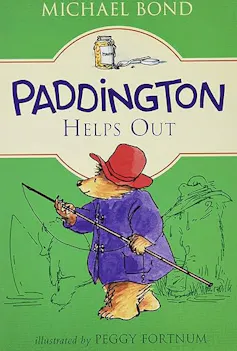
Paddington attempts DIY, enters a painting competition, and tries to help with the laundry. His intentions are commendable and the results are catastrophic.

What makes this book especially good for shared reading is its rhythm. Bond writes set-pieces with the timing of a comedian: slow build, moment of realisation, glorious mess. Children adore the predictability: they can see the disaster coming before Paddington can, and that anticipatory pleasure is one of the great rewards of series fiction.

Advertisement
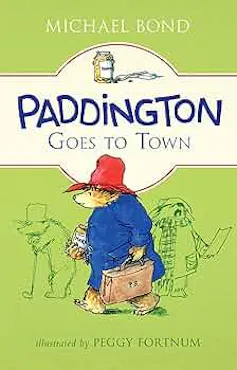
Paddington Goes to Town (1968) cover

Harpercollins Childrens Books

Several chapters here are quietly brilliant. Paddington serves as a wedding usher and interprets the role as requiring him to keep everyone silent. He is mistaken for a waiter at a society dinner and ends up serving the guests something he believes to be baked Alaska but which turns out to be baked elastic.

For parents, the pleasure is in Bond’s comedy of social embarrassment. Paddington moves through the adult world with total sincerity, and the comedy arises from the gap between his good manners and the chaos he leaves behind.

Book cover

Harpercollins Childrens Books

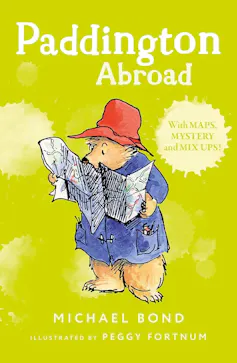
The Browns take Paddington on holiday to France. His encounters with French food, French customs, and French plumbing are some of the funniest passages Bond ever wrote.

This is a good choice if your child is about to go on a family holiday. It captures the comedy of being somewhere unfamiliar and trying very hard to get things right, which is Paddington’s permanent condition. He is always a visitor, always slightly out of place, and always managing to belong anyway.

Paddington Abroad also addresses some of the questions parents might have begun to ask themselves about Paddington’s paperwork – the Browns’ encounter with border control is both comic and discomfiting. Bond was inspired to create the character partly by the sight of wartime evacuee children arriving at London stations with labels round their necks. That quiet thread of displacement runs through the books without ever becoming too heavy. For children who have felt like the odd one out, there is real comfort in it – adults may see more.

Book cover

Harpercollins Childrens Books

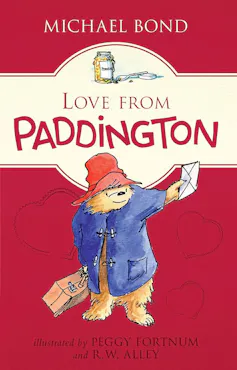
Published when Bond was 88, this is unlike the others. Written as letters from Paddington to Aunt Lucy in Peru, it retells many of his adventures in his own voice: warm, slightly bewildered, full of small asides. The letter format means each entry is short and self-contained, and Paddington’s voice is a pleasure to read aloud.

It is also, in the quietest way, a book about what it means to make a home somewhere new, to miss where you came from, and to feel grateful for the people who took you in. Younger children will enjoy the stories. Older children, and their parents, may catch something else underneath: a gentleness about love and distance and belonging that is never sentimental but always keenly felt.

Advertisement

The films have given a new generation the hat and the marmalade and the hard stare. The books will give them something more: the bear himself, in all his polite, disruptive, irreplaceable glory. Our main advice is: start anywhere. But start together.

This article features references to books that have been included for editorial reasons, and may contain links to bookshop.org. If you click on one of the links and go on to buy something from bookshop.org The Conversation UK may earn a commission.

Source link

Advertisement
Continue Reading

NewsBeat

Concerns raised over huge North Yorkshire solar scheme

Published

on

Concerns raised over huge North Yorkshire solar scheme

Members of the Rooftops Not Countryside campaign group say it is “deeply concerning” that the majority of people living and working near the proposed 500MW Light Valley Solar Scheme are in the dark over the project.

Island Green Power UK Ltd has submitted a development consent order application for a network of seven solar farms on 1,020 hectares of land between the villages of Escrick, Monk Fryston, Hambleton, Chapel Haddlesey and South Milford, between York and Selby.

Louise Billingham, spokesperson for the campaign group, said the group met with community groups, residents and businesses in areas which would be directly affected by the scheme earlier this month.

Advertisement

She added: “What we found was deeply concerning. The overwhelming majority of people we spoke to had no knowledge whatsoever of the proposals, even where their homes or livelihoods sit on the doorstep of the planned development.

“Among those we met were a family whose home borders site four, who have received no correspondence about the plans and whose house does not appear on the Light Valley Solar documents.

“They had no knowledge of the plans until we showed them.”

Members of the group say they have taken to going door-to-door to inform residents due to the lack of awareness.

Advertisement

Mrs Billingham added: “Birkin Fisheries, a local business, had no idea the site extended to the boundary of their property.

“It is a well-known wildlife hotspot, and the owner was heartbroken thinking of the impact in the area.

“An allotment owner from South Milford, who had vaguely heard mention of the plans and assumed it was ‘just a field of panels’.

“When shown the plans, she thought it was a joke. The sheer size and scale left her speechless.”

Advertisement

Members of the group say the lack of awareness has been “sad but not surprising”.

“Actual plans of the seven sites are not readily available,” said Mrs Billingham.

“You can search through over 200 documents on the Planning Inspectorate website to find them, but you won’t see any physical plans in the community where residents can actually look at them to see the true scale and size, and the areas impacted. The plans are effectively inaccessible to residents.

“This isn’t local democracy or working with the community; it is inflicting 2,500 acres of industrial infrastructure on a community largely unaware, and certainly not included.”

Advertisement

Due to the size of the proposed development, the scheme has been declared a Nationally Significant Infrastructure Project, meaning planning permission will be decided by the Planning Inspectorate, rather than North Yorkshire Council.

If granted approval, Light Valley would be larger than the biggest solar scheme currently operational — Cleave Hill in Kent.

The developer says the scheme would provide enough power for 115,000 homes a year.

Anyone wanting to comment on the plans has until April 30 to register with the Planning Inspectorate.

Advertisement

To register, visit https://national-infrastructure-consenting.planninginspectorate.gov.uk/projects/EN0110012

Source link

Advertisement
Continue Reading

NewsBeat

Arrests made as police find 663 cannabis plants in Radcliffe

Published

on

Arrests made as police find 663 cannabis plants in Radcliffe

At around 8am this morning, Tuesday, April 14, officers from the Radcliffe Neighbourhood Policing Team attended an address on Bridgefield Street, following an investigation into drug supply within the local area.

Upon entering the property, officers found six rooms featuring cannabis plants at various stages of their growth cycle, in addition to lighting equipment, fans, pipes, and other drug-growing paraphernalia.

In total, 663 cannabis plants were seized by officers.

Advertisement

The electricity was discovered to have been illegally bypassed, and work is ongoing to ensure it is safely disconnected.

Four men aged between 33 and 55 have been arrested on suspicion of producing a Class B drug and abstracting electricity, and they remain in custody for questioning.

The work comes as part of Greater Manchester Police’s (GMP) wider work in tackling drug supply, which sees everything from proactive patrols to preventative action.

Chief Inspector Michael Barton, from GMP’s Bury district, said: “This was a great result for the local neighbourhood team, who secured four arrests and seized hundreds of plants.

Advertisement

“Drug dealing is not something that is a victimless crime. The violence between gangs and exploitation of vulnerable people is something that we unfortunately see across Greater Manchester – and is something we are constantly working to tackle.

“If you have any information about criminality within your area, please do get in touch with your local team, or contact the independent charity Crimestoppers anonymously.”

Source link

Advertisement
Continue Reading

Trending

Copyright © 2025