Block Inc. shares climbed 4.65% to close at $90.76 on Tuesday, gaining $4.03 on elevated trading volume as investors cheered preliminary signs of strength in the company’s Cash App Bitcoin ecosystem and ongoing execution of its aggressive artificial intelligence-driven restructuring.
Block Inc Stock Surges 2026: Fintech Giant Jumps 4.65% to $90.76 on Cash App Bitcoin Strength
The rally pushed the market capitalization of the payments and financial technology company, formerly known as Square, toward the $38 billion to $39 billion range. It reflects renewed optimism around Block’s dual-engine growth from merchant services via Square and consumer fintech through Cash App, even as the broader market digests mixed signals on interest rates and economic growth.
Block, founded by Twitter co-founder Jack Dorsey and headquartered in Oakland, California, operates two core segments. Square provides point-of-sale hardware, software and financial services to small and medium-sized businesses, while Cash App functions as a peer-to-peer payments platform with banking-like features, including stock and Bitcoin trading, lending and debit cards. The company has increasingly leaned into Bitcoin as a strategic asset and is embedding AI tools such as conversational “Moneybot” for consumers and “Managerbot” for sellers to automate operations.
Preliminary data released April 8 for the first quarter of 2026 highlighted robust activity in Cash App’s Bitcoin ecosystem. The company expects Bitcoin-related revenue, driven primarily by buy volume on Cash App, to reach approximately $1.7 billion for the quarter. However, a remeasurement loss on its Bitcoin holdings tied to the March 31 closing price is projected to impact GAAP earnings by about $172.8 million, a non-cash item recognized below operating income. Full first-quarter results are scheduled for release after market close on May 7, followed by a conference call.
The Bitcoin exposure has been a double-edged sword for Block. While it adds volatility through mark-to-market accounting, rising crypto interest and Cash App’s seamless integration have helped drive user engagement and transaction volumes. Cash App monthly active users returned to growth in late 2025, ending the fourth quarter at 59 million, with primary banking actives — those using more advanced features — expanding 22% year-over-year and generating significantly higher gross profit per user.
Advertisement
Block’s fourth-quarter 2025 results, reported in late February, provided a strong foundation for the current momentum. Revenue reached $6.25 billion, while gross profit grew solidly. Cash App gross profit surged 33% to $1.83 billion, fueled by 69% growth in consumer lending originations to $18.5 billion and healthy expansion in other services. Square gross payment volume also showed reacceleration.
In a headline-grabbing move accompanying the results, Block announced a major workforce reduction of more than 40%, trimming staff from over 10,000 to under 6,000 employees. CEO Jack Dorsey framed the cuts as a deliberate shift to an “AI-first” operating model, expecting $450 million to $500 million in restructuring charges, mostly in the first quarter. The company anticipates the changes will deliver meaningful cost savings starting in the second quarter, accelerating margin expansion.
Investors responded enthusiastically to the combination of leaner operations and raised guidance. Block lifted its full-year 2026 outlook, targeting gross profit of $12.2 billion — representing 18% year-over-year growth — and adjusted operating income of $3.2 billion, or a 26% margin, reflecting 54% growth and approximately six points of margin expansion. Adjusted diluted earnings per share are now guided to $3.66. For the first quarter alone, gross profit is expected to rise 22% to $2.8 billion, with adjusted operating income of $600 million.
The restructuring and AI pivot have sparked broader industry discussion about technology-driven efficiency gains versus job displacement. Block is developing agentic AI capabilities to handle routine financial and business tasks, potentially allowing remaining teams to focus on innovation and customer experience. Analysts have noted that while short-term charges will weigh on GAAP results, the long-term benefits to profitability could be substantial if execution is smooth.
Advertisement
Beyond core payments, Block continues to expand its ecosystem. Afterpay, its buy-now-pay-later service, contributes to consumer lending growth. The company surpassed $200 billion in cumulative credit provided to customers, underscoring its role in addressing lending gaps for individuals and small businesses. Recent product moves include enhancements to Square for restaurants and integration of inventory tools, as well as Cash App features enabling installment plans for peer-to-peer transfers.
The stock has traded in a wide range over the past year, with a 52-week low near $44 and highs approaching $82.50 earlier in the period. Tuesday’s gain builds on intermittent rallies tied to guidance reaffirmations and positive rotation into growth-oriented fintech names. Consensus analyst price targets sit around $82 to $86, with some firms maintaining Buy ratings citing Block’s data advantages, ecosystem stickiness and potential for AI to deepen customer relationships.
Challenges remain. Bitcoin price fluctuations can create earnings volatility unrelated to underlying operations. Integration of AI tools and management of a significantly smaller workforce carry execution risks. Macroeconomic factors, including consumer spending patterns and small business resilience amid higher interest rates, could influence gross payment volumes. Regulatory scrutiny of fintech, crypto and lending practices also represents an ongoing consideration.
Still, many observers view Block as well-positioned in a shifting financial landscape. Dorsey’s vision emphasizes building an open, accessible financial system, with Bitcoin and decentralized technologies playing central roles alongside traditional payments. The company’s liquidity position remains strong, supported by prior share repurchases and cash reserves.
Advertisement
As Block prepares for its May 7 earnings release, attention will center on actual first-quarter metrics, updates on Bitcoin performance, progress on workforce changes and any color on AI initiatives. Preliminary Bitcoin revenue figures have already signaled resilience in consumer engagement, while the aggressive cost restructuring suggests confidence in delivering on higher profitability targets.
For investors, the recent price action underscores Block’s sensitivity to both operational execution and narrative shifts around efficiency and innovation. With gross profit guidance pointing to sustained double-digit growth and margins expanding into the mid-20s, the company is attempting to prove it can deliver scalable profitability in a competitive fintech arena increasingly shaped by artificial intelligence.
Whether Tuesday’s surge marks the beginning of a broader re-rating will depend on confirmation of guidance in the upcoming report and tangible evidence that AI investments are translating into faster growth or wider margins. For now, Block continues to navigate its transformation, blending legacy payments strength with forward-looking bets on crypto, lending and intelligent automation in pursuit of long-term leadership in digital finance.
The deal, which provides an exit for the Development Bank of Wales, has been part funded by UK Steel Enterprise
1st Choice Accident Repair Centre MBO deal, left to right. Mervyn Ham and Mike Summers, 1st Choice; Mark Halliday, Development Bank of Wales.
One of the UK’s largest motor vehicle repair businesses has been acquired in a management buyout.
The deal, for Cardiff-based 1st Choice Accident Repair Centre, the value of which has not been disclosed, has been part funded with an investment of £600,000 from UK Steel Enterprise.
The deal provides an equity exit for the Development Bank of Wales, which backed a previous MBO of the business in 2018. The development bank would not disclosed the return on its equity investment. 1st Choice has expanded significantly in recent years, including the opening of a 30,204 sq ft flagship facility in 2022 following a £975,000 Development Bank loan. The business now employs 37 people and has grown into a £5m operation.
The newly completed MBO sees executive chairman Mervyn Ham – formerly non-executive chairman and principal advisor – lead a strengthened management structure. It also retains founding MBO lead Mike Summers, who brings over 45 years’ sector experience, who becomes a senior advisor to the board while retaining an equity stake.
Eight employees become shareholders. Joining Mr Ham and Mike Summers on the board are Calum Young, part of the original 2018 MBO team, along with Matthew Willecome, Joe Callaghan and Natalie Willecome.
Mr Ham said “1st Choice operates in a sector facing well‑documented pressures – rising repair costs, increasingly complex vehicle technology and the need for continuous investment in skills and performance standards. The business has consistently positioned itself at the forefront of these challenges through investment, strong governance and a commitment to high-quality repair excellence.
“Eight years on from the company’s first buy-out, today’s milestone signals continuity, confidence and a broader ownership model designed to support long-term resilience and growth.
Advertisement
“As a shared‑ownership model, this deal blends the engagement and loyalty often seen in employee‑owned firms with the discipline and performance focus commonly associated with private equity-led structures.
“The development Bank has been an excellent partner over the past eight years, providing equity, debt and property finance that has helped drive 1st Choice’s growth. This MBO represents the next chapter – an opportunity for the management team and our employee shareholders to build on strong foundations and take the business forward with real ambition. Most of the team started as apprentices, and we are now fully committed to supporting them as owners.”
Michelle Noble, area manager at UKSE, said: “We’re delighted to support the management buy‑out at 1st Choice Accident Repair Centre. The team has demonstrated strong leadership, a clear growth strategy and an unwavering commitment to high‑quality service. Their continued investment in people, technology and operational excellence has positioned the business as a leading repair centre in the region. This transaction represents exactly the type of ambition UKSE aims to back a skilled local team building a resilient, future‑focused business with long‑term potential. We’re proud to play a part in their next chapter and look forward to seeing the company continue to grow and contribute to the local economy.”
Mark Halliday of the Development Bank of Wales said: “Our relationship with 1st Choice spans eight years and reflects the full breadth of what the Development Bank can offer – from equity to debt and property finance. The team has grown the business into a market‑leading operation, and this transaction marks a strong and successful exit for us. We’re proud to have supported their journey and wish the new management team every success as they take the business forward.”
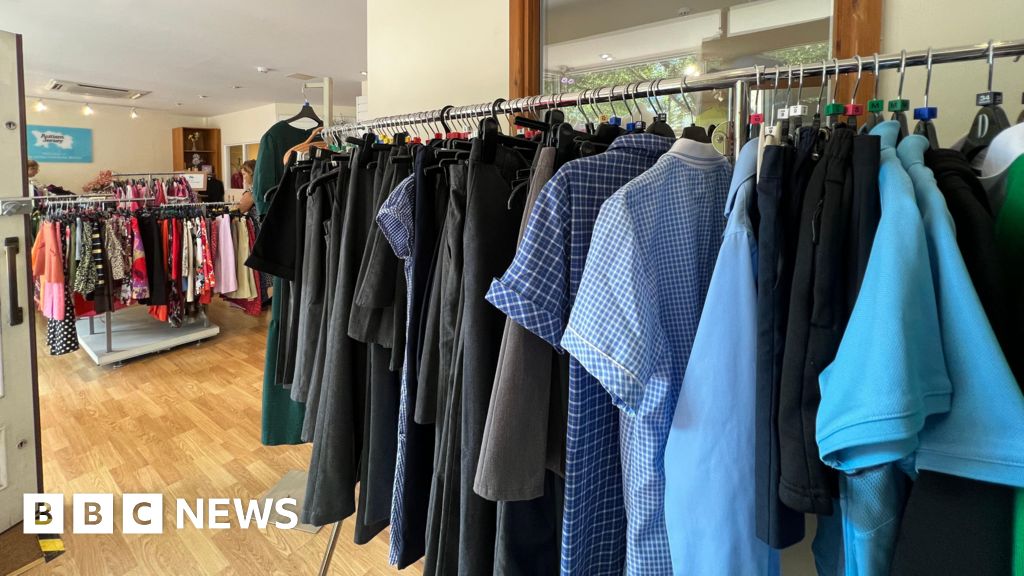
The Minister for Social Security, Deputy Lyndsay Feltham said: “I recognise the cost-of-living pressures many households are facing and it’s important that we help where we can to ease any financial stress on families by ensuring children across the Island have the essentials they need for the new school year.”
NEW YORK — Shares of Robinhood Markets Inc. jumped more than 10% in early trading Tuesday as investors positioned for the company’s upcoming first-quarter 2026 earnings and bet on continued strength in cryptocurrency trading volumes and expanding product offerings.
Robinhood Stock
Robinhood Markets (NASDAQ: HOOD) stock was trading at $78.90, up $7.23 or 10.09%, shortly after the market open on April 14, 2026. The sharp rally came on elevated volume, reflecting renewed enthusiasm for the retail brokerage platform amid recovering crypto markets and anticipation ahead of its April 28 earnings release.
The Menlo Park, California-based company, known for democratizing access to stocks, options and cryptocurrencies, has transformed from a commission-free trading app into a broader financial ecosystem. Its growth has been fueled by rising user engagement, premium Robinhood Gold subscriptions and strategic moves into crypto and prediction markets.
Robinhood is scheduled to report first-quarter 2026 results after the market close on April 28, with a video webcast featuring Chairman and CEO Vlad Tenev and CFO Shiv Verma set for 5 p.m. ET. Analysts expect the report to highlight sustained momentum in funded accounts, assets under custody and transaction-based revenues, particularly from crypto.
Recent monthly metrics have shown resilience. In March 2026, Robinhood reported strong trading volumes, with notional equity and options activity remaining elevated. Crypto trading has been a standout performer, with January 2026 volumes reaching $22.9 billion, up 8% sequentially and 12% year-over-year. The company’s acquisition of Bitstamp has expanded its international crypto footprint and added institutional capabilities.
Advertisement
Robinhood has also deepened ties to the crypto ecosystem. In early April 2026, the U.S. Treasury selected Robinhood alongside BNY Mellon to serve as brokerage and trustee for the Trump Accounts program, a government-backed initiative providing investment accounts for newborns. The designation underscores Robinhood’s growing role as infrastructure in the financial system and could open new avenues for user acquisition and long-term asset growth.
The company has expanded its prediction markets business through a joint venture with Susquehanna International Group. The venture, which closed its acquisition of MIAXdx in January 2026, plans to launch a derivatives exchange offering futures and event contracts in 2026. Customer demand for prediction markets has been robust, with hundreds of millions of event contract trades executed in recent months.
Robinhood Gold, the company’s premium subscription service, continues to drive recurring revenue. Gold subscribers grew significantly in 2025, and management has highlighted higher engagement among paid users who benefit from enhanced margin rates, interest on uninvested cash and advanced research tools.
Broader diversification efforts include retirement accounts, Robinhood Strategies for managed portfolios and international expansion. The company launched a public testnet for Robinhood Chain, its Ethereum Layer 2 blockchain built on Arbitrum, aimed at enabling faster and cheaper on-chain transactions for users.
Advertisement
Despite the positive momentum, Robinhood has faced periods of volatility in 2026. The stock experienced a pullback earlier in the year amid broader fintech sector rotation and concerns over trading volume normalization after the 2025 crypto surge. However, analysts remain largely bullish, with consensus price targets suggesting meaningful upside. Wall Street has cited Robinhood’s ability to monetize its large user base, expand into wealth management and capitalize on crypto cycles as key drivers.
First-quarter earnings expectations center on revenue growth in the mid-teens range, with contributions from transaction fees, net interest income and Gold subscriptions. Consensus estimates project earnings per share around $0.45 to $0.49. Investors will scrutinize guidance for the remainder of 2026, particularly any commentary on crypto market trends and expense discipline.
Robinhood ended 2025 with strong financials, reporting full-year revenue up more than 50% year-over-year and generating substantial free cash flow. The company has been active in share repurchases, buying back millions of shares in recent quarters as a signal of confidence in its undervaluation.
Operational highlights include continued account growth and rising assets under custody, which approached or exceeded $300 billion in recent periods. The platform’s user-friendly interface and social features have helped it maintain appeal among younger retail investors while attracting more sophisticated traders through tools like advanced charting and futures access.
Advertisement
Challenges persist. Regulatory scrutiny of payment for order flow, a core part of Robinhood’s revenue model, remains a long-term risk. Competition from traditional brokers and other fintech platforms has intensified, while crypto volatility can create lumpy quarterly results. The company has also navigated macroeconomic factors, including interest rate fluctuations that affect net interest margins.
CEO Vlad Tenev has emphasized Robinhood’s evolution into a comprehensive financial services provider. In recent interviews and earnings calls, he highlighted plans to deepen crypto integration, expand internationally and build infrastructure that serves both retail and institutional clients.
Tuesday’s trading surge placed HOOD among the top percentage gainers on the Nasdaq, underscoring its high-beta nature tied to equity and crypto market sentiment. The rally appeared driven by a combination of short covering, positive sector rotation and pre-earnings positioning rather than any single new announcement.
Analysts have noted Robinhood’s improving profitability and scale as reasons for optimism. Some forecasts project continued double-digit revenue growth in 2026, supported by favorable trading conditions and market share gains. However, others caution that elevated valuations leave limited room for error if trading volumes soften or regulatory hurdles arise.
Advertisement
Robinhood operates in a highly competitive landscape but benefits from a large and engaged user base. Features such as 24/7 trading for certain assets, fractional shares and educational resources have helped retain customers through market cycles.
As the April 28 earnings date approaches, focus will turn to specific metrics: funded account growth, average revenue per user, crypto notional volumes and any updates on the prediction markets exchange launch. Management may also provide color on banking initiatives and potential new product rollouts.
The stock’s performance in 2026 has been mixed following a strong 2025 run, but Tuesday’s double-digit gain signals fresh investor interest. With crypto markets showing signs of stabilization and new government-backed opportunities on the horizon, Robinhood appears well-positioned to capitalize on retail participation in financial markets.
Longer-term, the company’s success will depend on executing its diversification strategy while maintaining its core strength in accessible trading. If Robinhood can sustain user growth and convert more customers to paid tiers, it could deliver consistent earnings expansion.
Advertisement
For now, shareholders are celebrating the morning’s momentum as the brokerage prepares to showcase its progress in two weeks. The upcoming report could serve as a pivotal moment, either reinforcing the bull case or prompting renewed caution depending on the details.
Robinhood Markets continues to redefine retail investing, blending technology, community and expanding financial products. Its ability to navigate volatility while scaling operations will determine whether the current rally marks the start of sustained gains or another chapter in its high-volatility journey.
Britain’s biggest bank has issued a stark warning that the war in Iran is already corroding global business confidence, as a growing chorus of UK company bosses sound the alarm over spiralling costs, supply chain disruption and the threat of renewed inflation.
Speaking at HSBC’s Global Investment Summit in Hong Kong, chief executive Georges Elhedery told Bloomberg Television that the Lebanese-born banker was “saddened and concerned” by events in the Middle East, and increasingly worried about how long the conflict will drag on. He cautioned that uncertainty had begun to weigh on sentiment and warned the ripple effects would be felt well beyond the region, pushing up the price of oil, refined fuels, fertilisers and metals.
The comments came as Brent crude, which had breached the $100 (£74) a barrel mark on Monday, slipped 0.9% to $98.50 on Tuesday morning, even as an American blockade of Iran’s ports took effect. US and Iranian negotiators are understood to be preparing to return to Islamabad this week after 21 hours of weekend talks in the Pakistani capital closed without a breakthrough.
In London, the FTSE 100 edged 22 points higher, up 0.21% to 10,605. Imperial Brands, owner of the Davidoff and West cigarette labels and a growing stable of vaping products, was among the biggest fallers after it flagged a “more uncertain geopolitical and macro environment”.
Recruiter PageGroup added to the gloom, describing conditions across Britain, Europe, the Middle East and Asia as “tough” and warning that the Middle East crisis was driving an increasingly murky outlook for the remainder of the year. The firm noted that salaries had slipped below levels seen in 2022 and 2023.
Advertisement
HSBC itself is among the European lenders most exposed to the region, thanks to its 31% holding in Saudi Awwal Bank. Analysts at JP Morgan Chase estimate the Middle East generates roughly 4% of the group’s pre-tax profits. However, Mr Elhedery insisted the bank had so far seen only “very benign movement” of capital out of the region, even as some wealthy Gulf-based investors have begun scouting relocation options in Singapore and Hong Kong since Washington and Israel launched strikes on Iran on 28 February.
HSBC chair Brendan Nelson, speaking alongside his chief executive, was blunter still. A peace settlement, he argued, was essential to restoring the flow of global energy supplies, with oil-driven inflation now shaping up as one of the most serious threats facing the world economy. “The longer the disruption continues, the more the indirect effects from higher energy costs will lift inflation and depress growth,” he said.
The warnings are landing hard on Britain’s small and mid-sized manufacturers, particularly those dependent on petroleum-derived inputs. Tom Beahon, co-founder and co-chief executive of sportswear firm Castore, which kits out Premier League football sides and the England cricket team, told BBC Radio 4’s Today programme that input costs had already jumped by 10% to 15%. If the conflict rumbled on for another couple of months, he said, some of that pain would have to be passed on to consumers.
For Mr Beahon, the volatility has been even more corrosive than the headline rises. Polyester and other synthetic fabric prices, he said, had at times leapt by as much as 40% in a single day before tumbling back, making it all but impossible to plan. Logistics has proved just as fraught, with carriers thinning out flight schedules and vessels still stuck in the Strait of Hormuz, though he expressed cautious optimism that a swift resolution could spare customers the worst of it.
Advertisement
Virgin Atlantic chief executive Corneel Koster struck a similar note in comments to the Financial Times, revealing that jet fuel prices were now running at more than double their pre-war levels. Whatever the outcome in the Gulf, he argued, a portion of the energy price shock was likely to prove permanent.
The political temperature is also rising. As chancellor Rachel Reeves flew into Washington for the spring meetings of the International Monetary Fund and the World Bank, she called for a coordinated international response, declaring that the Iran conflict “must be a line in the sand on how we deal with global crisis and instability”.
For Britain’s SME community, already navigating sticky inflation, a sluggish recovery and a tight labour market, the message from boardrooms and bank chiefs alike is unambiguous: the longer the guns sound in the Gulf, the harder it will be to shield balance sheets, margins and, ultimately, customers from the fallout.
Amy Ingham
Amy is a newly qualified journalist specialising in business journalism at Business Matters with responsibility for news content for what is now the UK’s largest print and online source of current business news.
NEW YORK — OpenAI has released its latest ChatGPT update on April 9, 2026, introducing GPT-5.3 Instant Mini as a smarter fallback model and launching a new $100-per-month Pro subscription tier, even as the company faces mounting public criticism, subscription cancellations and security concerns.
ChatGPT April 2026 Update: OpenAI Rolls Out GPT-5.3 Instant Mini and $100 Pro Plan Amid Growing Backlash
The incremental but meaningful improvements aim to enhance everyday conversations and give power users more capacity for advanced coding tasks through the Codex tool. GPT-5.3 Instant Mini replaces the previous fallback model and delivers more natural dialogue, stronger writing and better contextual awareness without appearing in the main model picker.
Users who hit rate limits on the primary GPT-5.3 Instant model will now encounter this refined mini version, which OpenAI says outperforms its predecessor across multiple use cases. The update also expands support for shared Outlook mailboxes and calendars in the Outlook Email and Calendar apps, allowing delegated access for reading, organizing, sending mail and managing events.
Simultaneously, OpenAI introduced a new $100 monthly Pro plan positioned as a direct challenge to rival Anthropic’s Claude offerings. The tier provides five times more Codex usage than the existing $20 Plus plan and includes higher overall limits for demanding professional workflows. Existing Plus and Pro users received adjustments to how Codex credits are allocated.
The April 9 rollout comes just days after OpenAI added ChatGPT integration with Apple CarPlay on April 2, enabling hands-free voice conversations while driving. Enterprise and education customers will receive the CarPlay feature in coming weeks.
Advertisement
These technical enhancements arrive against a backdrop of significant controversy. Reports indicate that more than 2.5 million users have either canceled their ChatGPT subscriptions or publicly pledged to stop using the service following OpenAI’s decision to integrate its models with U.S. military systems. App uninstalls reportedly spiked nearly 300% in a single day, and rival Anthropic’s Claude briefly topped the App Store charts.
Protests erupted outside OpenAI’s offices in San Francisco, reflecting broader unease about the rapid commercialization and military applications of AI technology. Some users expressed discomfort with the perceived shift from a helpful consumer tool to a platform entangled in defense contracts and aggressive monetization.
On April 10, authorities arrested 20-year-old Daniel Moreno-Gama after he allegedly threw a Molotov cocktail at OpenAI CEO Sam Altman’s San Francisco home. Investigators said the suspect believed AI posed an existential risk to humanity. The incident heightened security concerns around the company and its leadership.
OpenAI also disclosed a security issue involving a third-party developer tool called Axios that affected the code-signing process for its macOS applications. The company stated it found no evidence of user data access, system compromise or intellectual property theft, but it has taken steps to strengthen the certification process.
Advertisement
European Union regulators are examining whether ChatGPT should face tighter oversight under the Digital Services Act after OpenAI reported user numbers exceeding the 45 million threshold for designation as a large online platform. The potential reclassification could impose stricter content moderation and transparency requirements.
Despite the turbulence, OpenAI continues to push forward with product improvements. Recent updates to the Projects feature include deep research capabilities, voice mode support, better memory that references past chats within a project, easier sharing of project conversations and mobile enhancements such as file uploads and model selection.
ChatGPT’s model lineup in 2026 centers on the GPT-5 family. GPT-5.3 Instant serves as the default for free and paid users alike, while higher tiers gain access to more advanced “Thinking” and Pro variants with superior reasoning and coding performance. Older models, including GPT-4o and earlier GPT-5 snapshots, were retired from the consumer interface in February 2026, though many remain available via the API.
The company has been rolling out incremental refinements to tone and response quality. A March 16 update to GPT-5.3 Instant reduced overly promotional or teaser-style phrasing, aiming for more straightforward interactions. GPT-5.4 Thinking, launched in early March, combines enhanced reasoning, coding and agentic workflows for complex professional tasks.
Advertisement
OpenAI reported strong financial momentum earlier in 2026, announcing a massive $122 billion funding round in March to fuel the next phase of development. The company claimed revenue had reached $2 billion per month, a dramatic acceleration from $1 billion per quarter at the end of 2024.
Yet user sentiment remains mixed. Some longtime subscribers lament the retirement of favored older models like GPT-4o, which had developed a reputation for being particularly engaging or affirming. Others worry that the push toward higher-priced tiers and enterprise deals is turning ChatGPT into a less accessible tool for casual users.
OpenAI has also experimented with product discovery features that once allowed direct purchases through ChatGPT, though the company has since scaled back Instant Checkout ambitions. Advertising tests continue in the free and lower-tier plans, another point of friction for users accustomed to an ad-free experience.
On the positive side, initiatives like “ChatGPT 26” celebrate student innovators from the Class of 2026 — the first college cohort to experience higher education alongside widespread AI access. The program highlights creative and responsible uses of the technology by young people.
Advertisement
ChatGPT integration into everyday tools continues to expand. Beyond CarPlay, recent additions include improved support for productivity apps such as Box, Notion, Linear and Dropbox, with new actions and writing capabilities.
Speculation about GPT-6, internally referenced in some discussions as “Spud,” continues to swirl. Leaks and analyst commentary suggest it could feature a massive 2 million token context window and advanced persistent memory, though OpenAI has not confirmed a release timeline.
As competition intensifies from Anthropic, Google and open-source alternatives, OpenAI is betting that deeper integration into professional workflows, faster fallback models and premium tiers will sustain its leadership. The company maintains that its models remain the most capable for complex reasoning and coding tasks.
For millions of daily users, the April 2026 updates represent steady progress rather than revolutionary change. GPT-5.3 Instant Mini should make rate-limited sessions feel less jarring, while the new Pro plan caters to heavy users who need substantial Codex capacity for software development.
Advertisement
OpenAI’s release notes emphasize that these changes are designed to deliver more reliable, natural interactions while supporting focused work through enhanced Projects. Memory improvements allow chats within a project to reference previous context more effectively.
Security and ethical considerations loom large. The Axios incident and the Molotov attack underscore the intense scrutiny and real-world risks facing AI companies. OpenAI has reiterated its commitment to responsible development, though critics argue that military partnerships and rapid commercialization conflict with earlier safety-focused rhetoric.
The European Commission’s review under the Digital Services Act could force additional transparency around recommendation systems, content moderation and risk assessments for ChatGPT.
As the AI landscape evolves, ChatGPT remains the most widely used conversational interface, but its dominance is no longer unquestioned. User protests, rival gains and regulatory pressure signal a maturing market where trust, pricing and alignment with public values matter as much as raw capability.
Advertisement
For now, the April 9 update offers incremental reliability improvements and a new premium option for power users. Whether these steps can offset growing backlash and restore momentum will likely shape OpenAI’s trajectory through the remainder of 2026.
ChatGPT users are encouraged to check their settings for the latest model availability and subscription options. OpenAI typically rolls out updates gradually, so some features may appear over the coming days.
The company has not commented publicly on the subscription cancellation reports or protest activity beyond its standard safety and security statements. Sam Altman and other executives continue to emphasize the transformative potential of AI while acknowledging societal challenges.
With GPT-5 family models now firmly established and further advances on the horizon, ChatGPT’s evolution reflects both the promise of increasingly capable AI and the growing pains of its widespread adoption.
























































You must be logged in to post a comment Login