Connect with us
DAPA Banner

Business

Oracle Stock Buy or Sell in 2026? Analysts See 50-60% Upside as AI Cloud Boom Offsets Volatile Start

Published

on

Oracle is the latest global tech titan to announce major digital investments in Southeast Asia

NEW YORK — Oracle Corporation shares have delivered a volatile ride in 2026, dropping as much as 24% year-to-date from peaks near $345 in late 2025 before staging sharp rebounds on strong earnings and fresh AI announcements. As of mid-April, the stock trades around $162-$167, leaving many investors wondering whether to buy the dip or sell amid concerns over heavy capital spending and execution risks in the red-hot artificial intelligence infrastructure race.

Oracle is the latest global tech titan to announce major digital investments in Southeast Asia
Oracle Stock Buy or Sell in 2026? Analysts See 50-60% Upside as AI Cloud Boom Offsets Volatile Start
AFP

Wall Street’s consensus leans decisively toward buying Oracle (NYSE: ORCL). Across roughly 35-40 analysts covering the company, the rating stands at Moderate Buy to Strong Buy, with the vast majority issuing Buy or Outperform recommendations. The average 12-month price target hovers near $245-$261, implying 50-60% upside from current levels. Optimistic forecasts reach as high as $400 from Guggenheim, while more conservative targets sit around $210-$240 from firms like JPMorgan and Barclays. Only a handful of Hold ratings and one lone Sell appear in recent tallies.

The bullish case rests on Oracle’s accelerating cloud infrastructure business, which benefits directly from surging enterprise demand for AI training and inference workloads. In fiscal third-quarter 2026 results released March 10, total revenue rose 22% year-over-year to $17.2 billion, beating estimates. Cloud revenue jumped 44% to $8.9 billion, with cloud infrastructure (IaaS) surging 84% in the period. Remaining performance obligations — a key forward-looking metric — exploded to $553 billion, up more than 300% year-over-year, signaling massive multi-year commitments from customers racing to secure AI capacity.

Oracle has positioned itself as a major player in the AI cloud ecosystem, landing landmark deals with hyperscalers and enterprises including Meta and NVIDIA. GPU-related revenues within its cloud infrastructure segment grew 177% in the prior quarter, underscoring the company’s ability to capture a slice of the explosive spending on specialized hardware. Management has guided for continued strong growth, projecting cloud infrastructure revenue to reach approximately $18 billion for the full fiscal 2026 year in earlier updates, with longer-term ambitions scaling into the tens of billions annually.

Chief Executive Safra Catz and Chairman Larry Ellison have emphasized Oracle’s differentiated offering: a complete stack that combines its world-class database technology with high-performance cloud infrastructure optimized for AI. The company’s multi-cloud strategy allows customers to run Oracle databases across AWS, Azure, Google Cloud and its own OCI, providing flexibility that resonates with large enterprises wary of vendor lock-in. Recent product launches, including agentic AI applications and tools showcased at customer events, have sparked fresh buying interest and contributed to intraday surges exceeding 5% on positive news flow.

Advertisement

Yet the stock’s 2026 performance highlights real risks that give pause to some investors. Heavy capital expenditures to expand data center capacity have raised concerns about near-term margin pressure and balance-sheet strain. Oracle has issued significant debt to fund its build-out, though recent financings have eased liquidity worries. The stock’s pullback from 2025 highs reflects broader rotation out of some high-valuation AI names amid fears of an investment bubble, even as Oracle’s fundamentals show acceleration rather than slowdown.

Valuation remains a point of debate. At current prices, Oracle trades at a forward price-to-earnings multiple in the mid-20s based on growing earnings estimates. Bulls argue this is attractive for a company delivering 20%+ revenue and earnings growth, especially compared to pure-play cloud peers trading at premium multiples. Bears counter that sustained high capex could compress free cash flow in the near term, and any slowdown in AI hype could weigh on sentiment.

Fiscal 2026 has already featured standout quarters. Cloud revenues have consistently outpaced the legacy software business, which has been flat to slightly down as customers migrate to subscription models. Non-GAAP earnings per share have shown robust double-digit gains, with the most recent quarter delivering beats on both top and bottom lines. Analysts have responded by raising price targets post-earnings, with several firms citing improved risk-reward after the year-to-date decline.

Dividend investors find additional appeal in Oracle’s reliable payout, which currently yields around 1.2-1.3%. The company has a history of returning capital while investing aggressively for growth, a balance that supports long-term holding.

Advertisement

Looking ahead, the remainder of 2026 will hinge on several catalysts. Oracle’s next earnings report, expected in early June for the fiscal fourth quarter, will provide updated guidance on cloud momentum and capex plans. Any acceleration in AI-related bookings or margin expansion could reignite the rally. Broader market factors, including Federal Reserve policy on interest rates and overall tech sector sentiment, will also influence performance.

Competition remains intense. Amazon Web Services, Microsoft Azure and Google Cloud dominate the infrastructure market, while specialized AI players and open-source alternatives challenge Oracle’s database stronghold. Oracle’s success depends on converting its massive RPO backlog into recognized revenue without major execution missteps or customer delays.

For growth-oriented investors, the AI tailwinds appear compelling. Oracle’s database moat gives it sticky, high-margin recurring revenue, while its cloud expansion opens a much larger addressable market. Analysts projecting 30%+ revenue compound annual growth rates over the next few years see the current valuation as undervalued relative to that trajectory.

Conservative investors may prefer to wait for more evidence of sustainable free cash flow growth or clearer margin trends before adding aggressively. Those already holding can view the 2026 dip as a potential averaging-down opportunity, provided they maintain a multi-year horizon.

Advertisement

Overall, the weight of analyst opinion and the company’s fundamental momentum support a Buy bias for Oracle stock in 2026. The combination of record cloud growth, enormous forward backlog and reasonable valuation after the pullback creates an attractive setup for patient investors betting on the continued industrialization of artificial intelligence.

Risks include macroeconomic slowdowns that could delay enterprise spending, intensifying competition that erodes pricing power, or unforeseen delays in data center deployments. Geopolitical tensions affecting semiconductor supply chains could also indirectly impact AI infrastructure timelines.

As Oracle continues its transformation from traditional software giant to AI cloud powerhouse, the coming quarters will test whether its aggressive investments deliver the anticipated returns. For now, Wall Street’s collective thumbs-up and substantial implied upside suggest that buying Oracle on weakness could reward those willing to ride out near-term volatility in pursuit of long-term AI-driven gains.

Advertisement
Continue Reading
Click to comment

You must be logged in to post a comment Login

Leave a Reply

Business

Cornwall Chamber appoints interim chief executive

Published

on

Business Live

Current boss John Brown is stepping down after nearly two years in the role

Toby Parkins is the interim CEO of Cornwall Chamber

Toby Parkins is the interim CEO of Cornwall Chamber(Image: Cornwall Chamber of Commerce)

Cornwall Chamber of Commerce has appointed its current president as interim chief executive. Toby Parkins will take the helm of the organisation as it looks to hire a replacement for former boss John Brown.

It is understood Mr Parkins will focus on “maintaining the strategic position” of the chamber as well as supporting the team who deliver business services such as events, membership and trade support.

Laura Whyte, chair of Cornwall Chamber of Commerce, said: “We are extremely grateful to Toby for stepping into this role at an important time for the chamber. His leadership, insight, and deep understanding of our organisation will provide the continuity we need as we look to the future. This gives us the time and space to find the right long-term successor while ensuring our work continues without disruption.”

Mr Brown, meanwhile, will remain on the board and continue to provide support during the transition period, particularly focusing on policy development, according to the chamber.

Advertisement

“I’m privileged to support the chamber during this transition period,” said Mr Parkins. “Cornwall’s business community is resilient and innovative, and I look forward to working closely with the board, team, and members to continue delivering value and impact. One of the main objectives to ensure our next permanent chief executive has a strong chamber to go forward with.”

Mr Brown is stepping down as chamber chief after nearly two years in the role. He is taking up a full-time executive job within a private sector organisation.

“We are proud of the contribution John has made to the chamber and to the wider business community, and we remain firmly on track with our priorities and ambitions to provide Cornwall with a strong, credible and commercially grounded voice,” Ms Whyte said previously.

“We are excited that John will bring his enthusiasm at a strategic board level and with his new role driving crucial new investment into Cornwall, that connection is something we welcome. We believe in celebrating progression, so when talented people step into roles that help drive Cornwall forward, that is something to celebrate.”

Advertisement
Continue Reading

Business

Father and Son Hit With Historic $30K Fines for Deliberately Scuttling Fishing Boat Off Ulladulla

Published

on

Father and Son Hit With Historic $30K Fines for Deliberately

SYDNEY — In what authorities describe as an Australian first, a father and son commercial fishermen have each been fined $15,000 for deliberately sinking their 16-metre trawler off the New South Wales South Coast, marking the inaugural successful prosecution under federal sea-dumping laws for the illegal scuttling of a vessel.

Marcus Clem McDermott, 29, and his father Mark Anthony McDermott, 55, from the Morton area near Ulladulla, were convicted and sentenced in Nowra Local Court on April 14, 2026. The pair admitted to towing the aging fishing vessel, named Maria Louise K or MLK, out to sea and sinking it without a permit on January 24, 2023.

The Department of Climate Change, Energy, the Environment and Water, known as DCCEEW, led Operation Bannerman, the investigation that uncovered the deliberate act. An anonymous tip-off provided video evidence showing the men in the process of scuttling the boat, which was later located on the seabed northeast of Ulladulla. Additional CCTV footage and vessel monitoring systems helped build the case against them.

Her Honour Judge Julie Zaki determined beyond reasonable doubt that the McDermotts agreed to dump the vessel because of its low commercial viability. Purchased in 2020, the boat — originally built in 1970 and previously operated as a commercial trawler in Western and South Australia — had become a financial burden. The men stripped parts from it and sold them before towing the hull out to sea to avoid the $12,700 cost of obtaining a proper scuttling permit or dealing with legitimate disposal options.

Advertisement

The maximum penalty for dumping a vessel into Australian waters without a permit under the Environment Protection (Sea Dumping) Act 1981 is $16,500 or up to two years in jail. In sentencing, the judge noted the offence carried a potential six-month jail term in this specific context but opted for fines, describing the act as financially motivated and emphasizing the need for strong deterrence against marine pollution.

DCCEEW officials hailed the outcome as a landmark moment. A department spokesperson said the fines send a clear message: “The illegal dumping of fishing vessels and other unwanted items or waste at sea won’t be tolerated, and offenders will face serious consequences for their actions.” The sentencing concludes a multi-year probe that underscores the federal government’s commitment to protecting Australian marine environments.

Environmental groups and marine experts have welcomed the ruling, warning that scuttled vessels can pose long-term risks. Sunken ships may leak residual fuel, oils and other contaminants, harming marine life and disrupting ecosystems. Abandoned hulls can also create navigation hazards or damage sensitive habitats such as reefs and seagrass beds. In this case, the Maria Louise K rested in waters off Ulladulla, a popular fishing and tourism area on the NSW South Coast.

The case highlights broader challenges in Australia’s commercial fishing industry. Many older vessels become uneconomical to maintain or repair as operators face rising costs, stricter regulations and fluctuating catches. Proper disposal or recycling of decommissioned boats can be expensive and logistically complex, sometimes tempting owners to take shortcuts. Authorities stress that legal pathways exist, including permitted scuttling in designated areas under strict environmental assessments, but illegal acts undermine those systems.

Advertisement

The McDermotts’ vessel had a documented history. After its purchase in 2020, it operated in local waters before being deemed unseaworthy or unprofitable. Instead of pursuing authorized options, the father and son chose to tow it offshore and sink it deliberately, an act captured on video that proved pivotal in court.

Operation Bannerman involved close collaboration between federal environment officers, the Australian Maritime Safety Authority and local law enforcement. The anonymous tip that included video evidence was crucial, illustrating how public vigilance can aid enforcement of maritime laws. Once the wreck was located on the seabed, further inspections confirmed it matched the Maria Louise K.

Legal experts note this prosecution sets an important precedent. While sea-dumping charges have been used for smaller waste items, this marks the first time the law has been successfully applied to the deliberate sinking of an entire commercial fishing vessel. The outcome could encourage more rigorous monitoring of vessel decommissioning and deter others considering similar actions.

The fines total $30,000, a significant penalty for the individuals involved but well below the maximum. The court considered factors such as the defendants’ guilty pleas, their lack of prior environmental offences and the financial motivation behind the crime. No jail time was imposed, though the judge warned that future cases could result in harsher penalties as awareness of the law increases.

Advertisement

For the Ulladulla community, the case has sparked mixed reactions. The South Coast fishing town relies heavily on its commercial fleet, and many locals understand the pressures facing operators. At the same time, residents and tourism operators value the pristine waters that draw visitors for diving, fishing and boating. Environmental advocates in the region have called for better support programs to help fishermen retire old vessels responsibly.

Broader implications extend to Australia’s marine protection efforts. The federal government has ramped up enforcement of sea-dumping laws in recent years, particularly as concerns grow over plastic pollution, abandoned vessels and industrial waste. Similar cases involving smaller boats or debris have resulted in convictions, but the scale of a 16-metre trawler makes this ruling stand out.

DCCEEW continues to urge vessel owners to seek proper permits and guidance for decommissioning. Legal scuttling is possible in approved offshore sites after thorough environmental impact assessments, ensuring minimal harm to marine ecosystems. Alternatives include recycling programs that salvage steel, engines and other materials, though these can involve transport and processing costs.

The department’s investigation also serves as a reminder of the role technology plays in enforcement. Video evidence, vessel tracking systems and public reporting have become powerful tools in combating illegal activities at sea. Authorities encourage anyone with information about suspected dumping to contact relevant agencies, promising confidentiality where appropriate.

Advertisement

As climate change and environmental pressures intensify, protecting Australia’s oceans has become a national priority. Incidents like the scuttling of the Maria Louise K contribute to cumulative damage that can affect fish stocks, biodiversity and coastal economies. The $15,000 fines per person, while historic, reflect a growing judicial willingness to impose meaningful penalties to safeguard these resources.

The McDermotts have not publicly commented on the sentencing. Court records indicate they cooperated during the later stages of the investigation after initially facing charges in late 2025. The case, which progressed through Nowra Local Court, concluded with the April 14 ruling that has drawn national attention.

Marine conservation organizations say the decision reinforces accountability. “This sends a strong signal that shortcuts harming our oceans will not go unpunished,” one advocate noted. They called for expanded government assistance for vessel disposal to prevent future illegal acts driven by economic hardship.

Looking ahead, the ruling may prompt reviews of decommissioning policies within the fishing industry. Industry bodies have acknowledged the need for more accessible and affordable options for retiring aging fleets, especially as newer, more efficient vessels enter service.

Advertisement

For now, the case stands as a cautionary tale. Two commercial fishermen, bound by family and occupation, chose an illegal path to dispose of an unwanted vessel and paid the price. Their $30,000 total penalty, combined with the public nature of the prosecution, serves as a deterrent for others tempted by similar actions.

Australian waters, home to diverse marine life and vital to the nation’s economy, demand vigilant protection. This landmark prosecution under the sea-dumping laws demonstrates that authorities are prepared to act decisively, ensuring that deliberate pollution carries real consequences.

As the details of Operation Bannerman circulate through fishing communities and beyond, the message is clear: the deliberate scuttling of vessels will no longer fly under the radar. With video evidence, inter-agency cooperation and judicial resolve, the era of unchecked sea dumping faces stronger headwinds than ever before.

Advertisement
Continue Reading

Business

Iran War Could Hit CO2 Supplies by Summer 2026

Published

on

Iran War Could Hit CO2 Supplies by Summer 2026

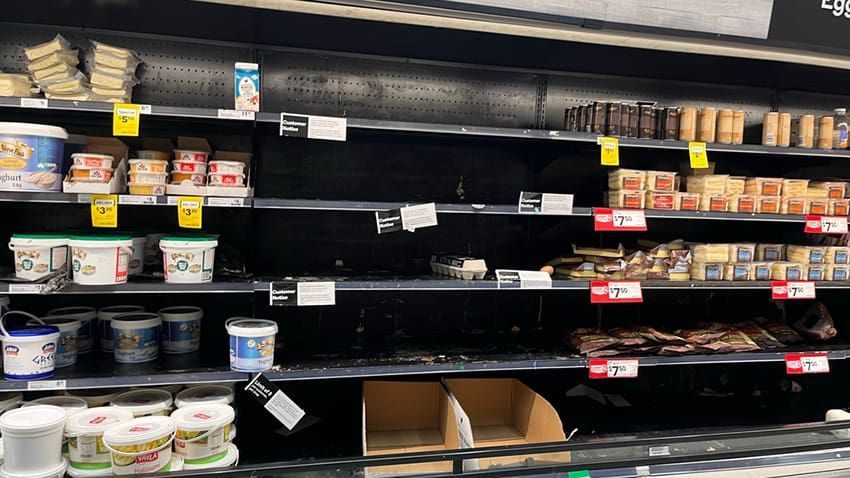
Britain’s supermarkets could be staring down the barrel of patchy shelves by midsummer, with ministers quietly war-gaming a scenario in which the continuing conflict with Iran chokes off carbon dioxide supplies to the country’s food and drink industry.

Whitehall officials have been rehearsing what they describe internally as a “reasonable worst-case scenario” should the strait of Hormuz remain closed into June, shipping routes stay jammed, and a mechanical hiccup at one of Britain’s critical CO2 plants compound the pressure. The exercise, codenamed Turnstone and convened under the Cobra emergency framework, has drawn in officials from Downing Street, the Treasury and the Ministry of Defence.

News of the drill, first surfaced by The Times, has prompted a rapid-fire reassurance campaign from ministers, who insist the planning is prudent rather than panicked. Business Secretary Peter Kyle told Times Radio on Thursday that the leak was “unhelpful” but argued the public “need to be reassured that we are doing this kind of planning”. CO2 supplies, he added, were “not a concern” for the UK economy.

For small and medium-sized food producers, brewers and hospitality operators, however, the contingency talk lands at an awkward moment. The summer trading window, already inflated by the World Cup kicking off on 11 June, is make-or-break territory for independent breweries and wholesalers. A squeeze on carbon dioxide would ripple rapidly through their supply chains, hitting everything from pint pulls to packaged meats.

Carbon dioxide, though a by-product of other industrial processes, is the quiet workhorse of British food and drink. The gas is used to stun pigs and poultry at abattoirs, to pack fresh meat and salad leaves in modified-atmosphere packaging that keeps bacteria at bay, and to put the fizz in beer and soft drinks. It also underpins refrigeration, MRI scanning, surgical procedures and the cooling of nuclear reactors.

Advertisement

The UK ranks among Europe’s heaviest consumers of the gas, a dependency that has already prompted pre-emptive action. In March, Mr Kyle earmarked £100m to restart the mothballed Ensus bioethanol plant on Teesside for a three-month run, specifically to hedge against wartime shortages. On Thursday he argued the Teesside decision showed “we are doing this kind of action behind the scenes to keep resilience in our economy”.

Britain’s largest grocer, for its part, appears sanguine. Tesco chief executive Ken Murphy said the government was “doing the right thing” in preparing for the worst, calling the analysis a reasonable one and welcoming the Ensus reopening. But he stressed Tesco had “seen nothing at this point” in its own supply chain and that none of its suppliers had flagged problems with CO2 availability.

Mr Murphy, whose business has absorbed six years of rolling disruption, Covid, Brexit, energy shocks, inflation, said Tesco was “constantly working on various scenarios internally” and confident it could head off issues before they reached the shop floor. The bigger near-term headache, he suggested, has actually been the punishing weather across southern Spain and north Africa, though shoppers would be hard-pressed to spot the fallout because the grocer had been able to “flex” its sourcing.

A government spokesperson underlined the caveat that “reasonable worst-case scenarios are a planning tool used by experts and are not a prediction of future events”, adding that ministers were “continuing to work closely with business groups to tackle the impacts of events in the Middle East”.

Advertisement

For SME owners watching the tea leaves, the message from Whitehall is calibrated: keep calm, carry on, but don’t mistake the silence on the shelves for complacency in the corridors of power. With Hormuz still contested and the diplomatic track with Tehran far from delivering a durable settlement, the summer trading season is shaping up as a stress test for a supply chain that, as 2021’s last major CO2 crunch demonstrated, can turn from background utility to front-page crisis within days.


Jamie Young

Jamie Young

Jamie is Senior Reporter at Business Matters, bringing over a decade of experience in UK SME business reporting.
Jamie holds a degree in Business Administration and regularly participates in industry conferences and workshops.

When not reporting on the latest business developments, Jamie is passionate about mentoring up-and-coming journalists and entrepreneurs to inspire the next generation of business leaders.

Advertisement
Continue Reading

Business

Electric Van Searches Jump 143% in March as Diesel Fuel Costs Squeeze UK SMEs

Published

on

Crossing state lines can shift commercial auto insurance rules overnight. Each jurisdiction enforces unique regulations, from minimum liability thresholds to additional endorsements for specialized cargo.

British tradespeople and small business owners are turning to the internet in record numbers to investigate a switch out of diesel, with Google searches for “electric vans” leaping by 143% in March, new figures show.

The analysis, compiled by online comparison site The Van Insurer, part of the Howden group, found that enquiries peaked in the days immediately before the Easter weekend, a period that traditionally sees sole traders, couriers and last‑mile delivery operators reviewing the running costs of their fleets ahead of the busier spring and summer trading months.

With diesel still powering the overwhelming majority of the 4.6 million vans on Britain’s roads, the scale of the surge points to a marked shift in sentiment among operators who have spent the past two years absorbing successive increases at the forecourt. Industry observers say the combination of stubbornly high pump prices, tightening clean‑air zone restrictions in London, Birmingham, Bristol and beyond, and the narrowing premium on new battery‑electric models is nudging even the most reluctant drivers to crunch the numbers on an EV switch.

Ed Bevis, commercial director at The Van Insurer, said diesel operators were bearing the brunt of the current squeeze. “Diesel van drivers are being hit hardest by the current fuel crisis, so it’s hardly surprising we’re seeing a sharp rise in interest around electric vans,” he said.

“Many owners are starting to look towards a future that’s less dependent on fossil fuels and less exposed to volatile fuel prices and running‑cost uncertainty. As a result, we expect demand for battery and hybrid‑electric van insurance to accelerate over the coming months.”

Advertisement

For Britain’s army of self‑employed traders, the plumbers, sparks, florists, parcel drivers and mobile mechanics for whom the van is not a vehicle but a livelihood, the economics are increasingly difficult to ignore. Even modest fluctuations at the pump translate directly into thinner margins on already pressured jobs, while the residual values on late‑plate diesel models have softened as buyers weigh the risk of further regulatory tightening.

Mr Bevis acknowledged the financial strain on the sector and said the comparison site was attempting to take some of the sting out of premiums. “At a time when many consumers and business owners are having to count every penny, we believe it’s important to offer meaningful support, particularly for those whose vans are integral to earning a living,” he said, pointing to £500 of free excess protection now being offered on qualifying policies.

Whether the March spike marks the beginning of a decisive migration away from diesel or simply another bout of curiosity from hard‑pressed operators will depend heavily on the direction of wholesale fuel prices, the pace of the public charging rollout and the Treasury’s next move on vehicle taxation. For now, however, the direction of travel in the search data is unmistakable, and insurers, dealers and manufacturers will all be watching the next set of figures closely.


Amy Ingham

Amy is a newly qualified journalist specialising in business journalism at Business Matters with responsibility for news content for what is now the UK’s largest print and online source of current business news.

Advertisement

Continue Reading

Business

Vikas Khemani bets big on IndiGo, BHEL, and PSU banks amid market volatility

Published

on

Vikas Khemani bets big on IndiGo, BHEL, and PSU banks amid market volatility
Carnelian Asset Management founder Vikas Khemani has revealed his top investment picks and strategy amid the ongoing market turbulence, staying firm on mid and largecap exposure while making selective contra bets.

IndiGo as a contra play

Khemani’s boldest call right now is IndiGo. He increased his position in the airline during the recent market fall, citing the company’s status as the lowest-cost market leader in a growing industry. With no meaningful competition expected for the next five years and aircraft supplies lined up, he sees the current dip as a buying opportunity. “If you are getting the stock cheaper for whatever reason and you are happy to take a short-term drawdown, that becomes a very interesting play,” he said.

Power sector: Conventional over renewable

On the power theme, Khemani is bullish but selective. Rather than chasing renewable energy stocks, which he believes suffer from high competitive intensity, he prefers conventional power enablers. Carnelian holds BHEL, which has delivered strong returns over the past two years, and Kalpataru Power, which is active in transmission businesses globally. He sees power demand remaining strong, driven by industrial growth, rising consumption, and the global data center and AI boom.

Banking: Company selection matters more than PSU vs private

Khemani added more PSU bank positions during the market correction, finding attractive risk-reward setups. However, he remains positive on select private banks too, holding ICICI Bank and Federal Bank. His view is clear: the private versus public debate misses the point. Within the same sector, individual stock selection determines returns. He pointed to the very different performance of HDFC Bank, ICICI Bank, and IndusInd Bank as proof that picking the right name matters far more than the category.

Advertisement

No change in market cap mix

Despite the volatile environment, Carnelian has not shifted its portfolio up the market cap curve. Khemani maintains exposure across large and midcaps, arguing that a bad market creates good entry points even in smaller companies. His investment horizon of three to five years means short-term swings do not drive allocation decisions.

What he is avoiding

Khemani was direct about what he steers clear of. He has avoided Zomato parent Eternal despite its wide popularity, saying he does not understand its risk-reward well enough to invest. His broader advice: avoid fads, avoid companies you do not fully understand, and never bet on promoters with questionable quality. He noted that most mistakes in his investing career have come from misjudging management quality, not from getting sector or macro calls wrong.

The EMS basket

On electronics manufacturing services stocks, Khemani said valuations and return profiles have not yet convinced him to invest meaningfully, though he continues to track the space closely.
In summary, Carnelian’s playbook is built on conviction, quality, and patience — buying beaten-down market leaders and avoiding momentum-driven noise.

Continue Reading

Business

Beauty Tech Group profits surge after London IPO thanks to at-home beauty device demand

Published

on

Business Live

Manchester-founded Beauty Tech Group posted stronger-than-expected revenue of £141m, up 39.4%, in its first full year since floating on the London Stock Exchange

A Ziip Dot Nanocurrent and Microcurrent Acne Treatment Device from the Beauty Tech Group

A Ziip Dot Nanocurrent and Microcurrent Acne Treatment device from the Beauty Tech Group(Image: The Beauty Tech Group)

The Beauty Tech Group has delivered better-than-anticipated full-year results following its London listing last year, with revenues and profits climbing sharply as appetite for at-home beauty devices continued to expand across global markets.

Advertisement

The Alderley Park business, which made its debut on the London Stock Exchange in October at a valuation of approximately £300m, said on Thursday that revenue climbed 39.4 per cent to £141m for the year ending 31 December 2025.

Own-brand revenue surged 60 per cent to £140.9m, underpinned by robust growth across all regions and a significant uplift in sales at its flagship Currentbody Skin label, where revenue climbed 59 per cent to £125.8m.

Gross profit rose 53.9 per cent to £88.3m, with margins strengthening to 62.7 per cent from 56.8 per cent.

The firm said the figures surpassed the targets it outlined at IPO, representing its third upward revision since floating on the market, as reported by City AM.

Advertisement

Chief executive Laurence Newman described 2025 as a “transformational year” for the group, noting that its brands were gaining increasing recognition among consumers as demand for at-home beauty technology continues to gather momentum.

The figures represent the company’s first full-year results since joining the London market, having raised approximately £29m in gross proceeds during a rare consumer-facing flotation for the exchange.

The IPO additionally enabled the business to clear its external debt entirely, leaving it with net cash of £40.8m at the year’s close, compared with net debt of £27.1m just twelve months earlier. The strengthened balance sheet, combined with the elimination of pre-IPO interest charges and one-off listing costs, is anticipated to boost earnings and cash flow in 2026.

The Beauty Tech Group distributes products across more than 90 markets, through brands including Currentbody Skin, ZIIP Beauty and Tria Laser. It has established itself in the rapidly expanding market for at-home beauty treatments such as LED masks and laser hair removal.

Advertisement

Tria Laser generated £2m prior to its March relaunch, while ZIIP Beauty sales increased 46 per cent.

The company said it anticipates revenue growth to persist throughout the year, which is currently aligned with market forecasts of £160m. Profit is exceeding expectations owing to improved margins.

Some 80 per cent of the group’s turnover is generated beyond the UK and Ireland, with the business depending predominantly on direct-to-consumer online sales rather than conventional retail channels.

Advertisement
Continue Reading

Business

QuidelOrtho stock plunges on weak revenue guidance

Published

on


QuidelOrtho stock plunges on weak revenue guidance

Continue Reading

Business

PepsiCo (PEP) Q1 2026 earnings

Published

on

PepsiCo (PEP) Q1 2026 earnings

Illuminated logo for Pepsi on a soda fountain in Walnut Creek, California, March 4, 2026.

Smith Collection | Gado | Archive Photos | Getty Images

PepsiCo on Thursday reported quarterly earnings and revenue that topped analysts’ expectations as its struggling North American food business reported a return to volume growth.

Advertisement

Here’s what the company reported compared with what Wall Street was expecting, based on a survey of analysts by LSEG:

  • Earnings per share: $1.61 adjusted vs. $1.55 expected
  • Revenue: $19.44 billion vs. $18.94 billion expected

Pepsi reported first-quarter net income attributable to the company of $2.32 billion, or $1.70 per share, up from $1.83 billion, or $1.33 per share, a year earlier.

Excluding items, the company earned $1.61 per share.

Net sales rose 8.5% to $19.44 billion.

Choose CNBC as your preferred source on Google and never miss a moment from the most trusted name in business news.
Advertisement
Continue Reading

Business

AI-generated images behind increase in insurance fraud

Published

on

AI-generated images behind increase in insurance fraud

“Although those tools are becoming readily available, we’ve also got some very good anti-fraud software that we use that can detect AI, detect whether something has been manipulated, and we’re getting a lot better at detecting it across the market as well,” Haith added.

Continue Reading

Business

Kesha Oayda Plots Music Career Takeoff After Historic Australian Idol 2026 Win

Published

on

Britain's Prince Harry and Meghan, Duke and Duchess of Sussex, visit the 9/11 Memorial in Manhattan, New York City

SYDNEY — Kesha Oayda, the 21-year-old competitive skier from Jindabyne who became the first female winner of Australian Idol in nearly two decades, is wasting no time launching her professional music career following her emotional victory in the April 14 grand final.

Oayda, who edged out runner-up Harlan Goode and fellow finalist Kalani Artis in a vote that drew more than one million responses, claimed the 2026 title with a stirring rendition of Lady Gaga and Bruno Mars’ “Die With A Smile” — the same song she performed in her initial audition. Her win ended a 19-year drought for female champions since Natalie Gauci triumphed in 2007, sparking celebrations mixed with some online debate among viewers.

The prize package offers a substantial springboard. Oayda receives $100,000 in cash, an exclusive recording package with Hive Sound Studios, entry into a prestigious songwriting camp with Sony Music Publishing, marketing and social media support from The Annex, and VIP tickets to the ARIA Awards and TV WEEK Logie Awards. She has already signaled she intends to invest much of the money into her music while helping her family and treating friends to celebratory drinks.

In exclusive interviews conducted hours after her crowning, Oayda expressed gratitude and determination. “I never thought in a million years this would happen,” she told New Idea. “I’m so excited to get straight back into writing music, travelling around doing shows, just spreading my music. That’s the goal: I just want it to work and release music, I can’t wait.”

Advertisement

The young artist from the Snowy Mountains region plans to shift her focus almost entirely to music in the coming months, taking a break from competitive skiing. She told 7NEWS she hopes to enjoy occasional casual “rail jams” on the slopes but will prioritize building her singing career. Growing up in a musical household, with her father performing alongside her during one of the live shows, Oayda has long balanced athletics and artistry. Her local “Jindy Idol” talent quest victories as a youngster foreshadowed this national breakthrough.

Immediate steps include heading into Hive Sound Studios to record new material and attending the Sony songwriting camp, likely in Sydney, which many observers see as a potential new base for her. “It’ll be a busy couple of months and it’s going to be insane, but I can’t wait to get some songs out there and play some shows,” she said. “The work starts now and wherever that takes me, I’m happy to go.”

Oayda has expressed interest in collaborations, naming country artists Morgan Evans and Brad Cox as dream partners. Industry insiders suggest these cross-genre pairings could help her blend pop, soulful ballads and heartfelt storytelling — elements that resonated strongly with voters throughout the season.

Her journey on Australian Idol showcased consistent growth. From early auditions that highlighted her raw vocal power and emotional delivery to standout performances that earned praise from judges and guest mentors, Oayda built a loyal fan base. Her ability to connect personal stories through song, including family influences and her dual passions for skiing and music, struck a chord with audiences.

Advertisement

The grand final proved divisive for some viewers, with social media lighting up over the result and a portion of fans expressing disappointment for Goode. Yet Oayda has addressed any negativity with maturity, focusing instead on the overwhelming support from her tight-knit Jindabyne community and broader Australia. She has thanked voters for placing faith in her and vowed to honor that trust by delivering authentic music that tells her story.

The prize elements provide structured support often crucial for reality show alumni transitioning to the professional realm. The recording package at Hive Sound Studios offers professional production resources, while the Sony camp connects her with established songwriters to hone original material. Marketing assistance from The Annex will help amplify her online presence, where she already enjoys growing engagement.

Attending the ARIA Awards and Logies as a VIP will immerse her in Australia’s entertainment elite, offering networking opportunities that could accelerate industry relationships. Past Idol winners and high-placers have leveraged similar exposure to secure tours, label deals and media appearances.

For Oayda, the path forward involves balancing rapid output with sustainable development. She has spoken of releasing music soon and embarking on live shows across Australia to build momentum while the show’s visibility remains fresh. Touring plans could start regionally, capitalizing on her New South Wales roots before expanding nationally.

Advertisement

Financially, the $100,000 provides breathing room to focus on creativity rather than immediate survival gigs. She intends to repay family support and enjoy modest celebrations before channeling resources into studio time, promotion and potential touring costs.

Broader context shows Australian Idol continues to serve as a launchpad despite evolving media landscapes. While not every winner achieves sustained chart success, several alumni have built viable careers through consistent releases, live performances and strategic partnerships. Oayda’s combination of vocal talent, relatable backstory and post-win work ethic positions her favorably.

Skiing fans may miss her competitive presence on the slopes, but Oayda views the trade-off positively. Music has always been a parallel passion, and the Idol platform has now elevated it to center stage. She remains open to occasional recreational skiing, keeping that part of her identity alive without the pressures of elite competition.

As she steps into the spotlight, Oayda has emphasized staying grounded. Her gratitude toward her hometown and family underscores a humble approach that could resonate with audiences seeking authentic artists in an often polished industry.

Advertisement

The coming weeks will likely see her first post-Idol recordings surface, followed by single releases and performance dates. Industry watchers will monitor streaming numbers, radio play and live show reception as early indicators of her trajectory.

For now, the 21-year-old is embracing the whirlwind. From Jindabyne’s local stages to national television triumph and into professional studios, Kesha Oayda’s next chapter is one of momentum and possibility. With prize resources secured and a clear vision of writing, recording and touring, she is poised to transform her Idol win into a lasting music career.

Her story also carries symbolic weight as the first female champion in 19 years, potentially inspiring a new generation of young women to pursue performing arts alongside other passions. Oayda has already become a role model for balancing dreams, whether on snow or stage.

As Australian music welcomes another Idol graduate, all eyes turn to how quickly and effectively Kesha Oayda can convert her victory into tangible releases and fan connections. Early signs point to an artist ready to seize the moment with energy, gratitude and determination.

Advertisement

The work, as she aptly put it, starts now — and the music world is listening.

Continue Reading

Trending

Copyright © 2025