Connect with us
DAPA Banner

Tech

Adobe Is Working With Anthropic to Bring a Creative AI Agent to Claude

Published

on

Adobe is diving deeper into agentic AI and expanding its partnership roster in a new deal with the AI developer Anthropic. Adobe on Wednesday introduced its latest conversational, agentic creative assistant, which is the technological foundation for its work with Anthropic.

Firefly is the hub for all things Adobe AI, with integrations across other popular Creative Cloud apps such as Photoshop, Acrobat and Premiere Pro. The new Firefly AI assistant is agentic, which means that it can perform tasks with minimal human oversight. You can upload a batch of photos and have the AI edit them for you, automatically adjusting the lighting and cropping, for example. One way to think about it is as a new school AI tool that you can use to do old-school, or non-generative, editing. 

Adobe has been building assistants into its creative software for a while now. It introduced AI assistants in Adobe Express and Photoshop back in October. Agentic AI tools like the kind Adobe is building are becoming rapidly popular across the entire AI industry, with tools like Claude Code and OpenClaw shaking up legacy tech companies.

Advertisement

This new partnership brings Adobe’s creative agent to Claude. This is Claude’s first major creative AI tool, expanding the popular app’s capabilities beyond the coding and enterprise prowess it’s known for.

Adobe wrote in its blog post that it is “enabling creators to access the best of Adobe directly across the surfaces where they work every day,” by bringing its tools to third-party models like Claude. Anthropic declined to comment.

Firefly AI assistant window where the AI is retouching a headshot

This is an example of how the Firefly assistant can make photo edits by itself.

Advertisement

Adobe

More details about the Adobe connector to Claude should be released in the coming weeks, including the exact date it will become available. The Firefly assistant will be released as a public beta later this month.

There are a few other Firefly updates that are available now. Firefly’s video editor is getting better audio, advanced coloring options and more integrations with Adobe Stock. Firefly’s image editing suite is also getting a few upgrades. New Kling models, Kling 3.0 and 3.0 Omni, will also be added to the 30-plus outside AI models that creators can use through Firefly.

Source link

Advertisement
Continue Reading
Click to comment

You must be logged in to post a comment Login

Leave a Reply

Tech

Stealth Satellite TV Defeats Iran’s Internet Blackout

Published

on

On 8 January 2026, the Iranian government imposed a near-total communications shutdown. It was the country’s first full information blackout: For weeks, the internet was off across all provinces while services including the government-run intranet, VPNs, text messaging, mobile calls, and even landlines were severely throttled. It was an unprecedented lockdown that left more than 90 million people cut off not only from the world, but from one another.

Since then, connectivity has never fully returned. Following U.S. and Israeli airstrikes in late February, Iran again imposed near-total restrictions, and people inside the country again saw global information flows dry up.

The original January shutdown came amid nationwide protests over the deepening economic crisis and political repression, in which millions of people chanted antigovernment slogans in the streets. While Iranian protests have become frequent in recent years, this was one of the most significant uprisings since the Islamic Revolution in 1979. The government responded quickly and brutally. One report put the death toll at more than 7,000 confirmed deaths and more than 11,000 under investigation. Many sources believe the death toll could exceed 30,000.

Thirteen days into the January shutdown, we at NetFreedom Pioneers (NFP) turned to a system we had built for exactly this kind of moment—one that sends files over ordinary satellite TV signals. During the national information vacuum, our technology, called Toosheh, delivered real-time updates into Iran, offering a lifeline to millions starved of trusted information.

Advertisement

How Iran Censors the Internet

I joined NetFreedom Pioneers, a nonprofit focused on anticensorship technology, in 2014. Censorship in Iran was a defining feature of my youth in the 1990s. After the Islamic Revolution, most Iranians began to lead double lives—one at home, where they could drink, dance, and choose their clothing, and another in public, where everyone had to comply with stifling government laws.

Photo of a helmeted soldier with a machine gun standing in front of an Iranian flag and cell tower.Iran’s internet infrastructure is more centralized than in other parts of the world, making it easier for the government to restrict the flow of information. Morteza Nikoubazl/NurPhoto/Getty Images

My first experience with secret communications was when I was five and living in the small city of Fasa in southern Iran. My uncle brought home a satellite dish—dangerously illegal at the time—that allowed us to tune into 12 satellite channels. My favorite was Cartoon Network. Then, during my teenage years, this same uncle introduced me to the internet through dial-up modems. I remember using Yahoo Mail with its 4 megabytes of storage, reading news from around the world, and learning about the Chandra X-ray telescope from NASA’s website.

That openness didn’t last. As internet use spread in the early 2000s, the Iranian government began reshaping the network itself. Unlike the highly distributed networks in the United States or Europe, where thousands of providers exchange traffic across many independent routes, Iran’s connection to the global internet is relatively centralized. Most international traffic passes through a small number of gateways controlled by state-linked telecom operators. That architecture gives authorities unusual leverage: By restricting or withdrawing those connections, they can sharply reduce the country’s access to the outside world.

Over the past decade, Iran has expanded this control through what it calls the National Information Network, a domestically routed system designed to keep data inside the country whenever possible. Many government services, banking systems, and local platforms are hosted on this internal network. During periods of unrest, access to the global internet can be throttled or cut off while portions of this domestic network continue to function.

Advertisement

The government began its censorship campaign by redirecting or blocking websites. As internet use grew, it adopted more sophisticated approaches. For example, the Telecommunication Company of Iran uses a technique called deep packet inspection to analyze the content of data packets in real time. This method enables it to identify and block specific types of traffic, such as VPN connections, messaging apps, social media platforms, and banned websites.

The Stealth of Satellite Transmissions

Toosheh’s communication workaround builds on a history of satellite TV adoption in Middle Eastern and North African countries. By the early 2000s, satellite dishes were common in Iran; today the majority of households in Iran have access to satellite TV despite its official prohibition.

Unlike subscription services such as DirecTV and Dish Network, “free-to-air” satellite TV broadcasts are unencrypted and can be received by anyone with a dish and receiver—no subscription required. Because the signals are open, users can also capture and store the data they carry, rather than simply watching it live. Tech-savvy people learned that they could use a digital video broadcasting (DVB) card—a piece of hardware that connects to a computer and tunes into satellite frequencies—to transform a personal computer into a satellite receiver. This way, they could watch and store media locally as well as download data from dedicated channels.

Photo of satellite dishes adorning the side of an apartment building.Many Iranian citizens have free-to-air satellite dishes, like the ones on this apartment building in Tehran, and can thus download Toosheh transmissions, giving them a lifeline during internet blackouts.Morteza Nikoubazl/NurPhoto/Getty Images

Toosheh, a Persian word that translates to “knapsack,” is the brainchild of Mehdi Yahyanejad, an Iranian-American technologist and entrepreneur. Yahyanejad cofounded NetFreedom Pioneers in 2012. He proposed that the satellite-computer connections enabled by a DVB card could be re-created in software, eliminating the need for specialized hardware. He added a simple digital interface to the software to make it easy for anyone to use. The next breakthrough came when the NFP team developed a new transfer protocol that tricks ordinary satellite receivers into downloading data alongside audio and video content. Thus, Toosheh was born.

Advertisement

Satellite TV uses a file system called an MPEG transport stream that allows multiple audio, video, or data layers to be packaged into a single stream file. When you tune in to a satellite channel and select an audio option or closed captions, you’re accessing data stored in different parts of this stream. The NFP team’s insight was that, by piggybacking on one of these layers, Toosheh could send an MPEG stream that included documents, videos, and more.

An illustration of an 8 step process for sending digital files via satellite TV signals. HOW TOOSHEH WORKS: At NetFreedom Pioneers, content curators pull together files—news articles, videos, audio, and software [1]. Toosheh’s encoder software [2] compresses the files into a bundle, in .ts format, creating an MPEG transport stream [3]. From there, it’s uploaded to a server for transmission [4] via a free-to-air TV channel on a Yahsat satellite that’s positioned over the Middle East to provide regional coverage [5]. Satellite receivers [6] directly capture the data streams, which are downloaded to computers, smartphones, and other devices, and decoded by Toosheh software [8].Chris Philpot

A satellite receiver can’t tell the difference between our data and normal satellite audio and video data since it only “sees” the MPEG streams, not what’s encoded on them. This means the data can be downloaded and read, watched, and saved on local devices such as computers, smartphones, or storage devices. What’s more, the system is entirely private: No one can detect whether someone has received data through Toosheh; there are no traceable logs of user activity.

Toosheh doesn’t provide internet access, but rather delivers curated data through satellite technology. The fundamental distinction lies in the way users interact with the system. Unlike traditional internet services, where you type a request into your browser and receive data in response, Toosheh operates more like a combination of radio and television, presenting information in a magazine-like format. Users don’t make requests; instead, they receive 1 to 5 gigabytes of prepackaged, carefully selected data.

Access to information is not only about news or politics, but about exposure to possibilities.

Advertisement

During this year’s internet blackout, we distributed official statements from Iranian opposition leader Crown Prince Reza Pahlavi and the U.S. government. We provided first-aid tutorials for medics and injured protesters. We sent uncensored news reports from BBC Persian, Iran International, IranWire, VOA Farsi, and others. We also shared critical software packages including anticensorship and antisurveillance tools, along with how-to guides to help people securely connect to Starlink satellite terminals, allowing them to stay protected and anonymous as they sent their own communications.

How to Combat Signal Interference

Because Toosheh relies on one-way satellite broadcasts, it evades the usual tactics governments use to block internet access. However, it remains vulnerable to satellite signal jamming.

The Iranian government is notorious for deploying signal jamming, especially in larger cities. In 2009, the government used uplink interference, which attacks the satellite in orbit by beaming strong noise in the frequency of the satellite’s receiver. This makes it impossible for the satellite to distinguish the information it’s supposed to receive. However, because this type of attack temporarily disables the entire satellite, Iran was threatened with international sanctions and in 2012 stopped using the method .

A chart displayed on a cellphone shows internet connectivity in Iran dropped from almost 100% to 0% on 9 January 2026. A graph of network connectivity in Iran shows that on 9 January 2026, internet access dropped from nearly 100 percent to 0. Samuel Boivin/NurPhoto/Getty Images

The current method, called terrestrial jamming, uses antennas installed at higher elevations than the surrounding buildings to beam strong noise over a specific area in the frequency range of household receivers. This attack is effective in keeping some of the packets from arriving and damaging others, effectively jamming the transmission. But it’s short-range and requires significant power, so it’s impossible to implement nationwide. There are always people somewhere who can still watch TV, download from Toosheh, or tune into a satellite radio despite the jamming. Even so, we wanted a workaround that would keep our transmissions broadly accessible.

Advertisement

NFP’s solution was to add redundancy, similar in principle to a data-storage technique called RAID (redundant array of independent disks). Instead of sending each piece of data once, we send extra information that allows missing or corrupted packets to be reconstructed. Under normal circumstances, we often use 5 percent of our bandwidth for this redundancy. During periods of active jamming, we increase that to as much as 25 to 30 percent, improving the chances that users can recover complete files despite interference.

From Crisis Response to Public Access

Toosheh initially came online in 2015 in Iran and Afghanistan. Its full potential, however, was first realized during the 2019 protests in Iran, which saw the most widespread internet shutdown prior to the blackout this year. Wired called the 2019 shutdown “the most severe disconnection” tracked by NetBlocks in any country in terms of its “technical complexity and breadth.” Our technology helped thousands of people stay informed. We sent crucial local updates, legal-aid guides, digital security tools, and independent news to satellite receivers all over the country, seeing a sixfold increase in our user base.

When that wave of protests subsided, the government allowed some communication services to return. People were again able to access the free internet using VPNs and other antifilter software that allowed them to bypass restrictions. Toosheh then became a public access point for news, educational material, and entertainment beyond government filtering.

Toosheh’s impact is often personal. A traveling teacher in western Iran told NFP that he regularly distributed Toosheh files to students in remote villages. One package included footage of female athletes competing in the Olympic Games, something never broadcast in Iran. For one young girl, it was the first time she realized women could compete professionally in sports. That moment underscores a broader truth: Access to information is not only about news or politics, but about exposure to possibilities.

Advertisement

The Cost of Toosheh

Unlike internet-based systems, Toosheh’s operational cost remains constant regardless of the number of users. A single TV satellite in geostationary earth orbit, deployed and maintained by an international company such as Eutelsat, can broadcast to an entire continent with no increase in cost to audiences. What’s more, the startup cost for users isn’t high: A satellite dish and receiver in Iran costs less than US $50, which is affordable to many. And it costs nothing for people to use Toosheh’s service and receive its files.

We aim not just to build a tool for censorship circumvention, but to redefine access itself.

However, operating the service is costly: NetFreedom Pioneers pays tens of thousands of dollars a month for satellite bandwidth. We had received funding from the U.S. State Department, but in August of 2025, that funding ended, forcing us to suspend services in Iran.

Then the December protests happened, and broadcasting to Iran became an urgent priority. To turn Toosheh back on, we needed roughly $50,000 a month. With the support of a handful of private donors, we were able to meet these costs and sustain operations in Iran for a few months, though our future there and elsewhere is uncertain.

Advertisement

Satellites Against Censorship

Toosheh’s revival in Iran came alongside NFP’s ongoing support for deployments of Starlink, a satellite internet service that allows users to connect directly to satellites rather than relying on domestic networks, which the government can shut down. Unlike Toosheh’s one-way broadcasts, Starlink provides full two-way internet access, enabling users to send messages, upload videos, and communicate with the outside world.

In 2022, we started gathering donations to buy Starlink terminals for Iran. We have delivered more than 300 of the roughly 50,000 there, enabling citizens to send encrypted updates and videos to us from inside the country. Because the technology is banned by the government, access remains limited and carries risk; Iranian authorities have recently arrested Starlink users and sellers. And unlike Toosheh’s receive-only broadcasts, Starlink terminals transmit signals back to orbit, creating a radio footprint that can potentially be detected.

A photo of a laptop screen says the user is offline. The internet shutdown in Iran continued after the attacks by Israel and the United States began in late February, preventing Iranians from communicating with the outside world and with one another.Fatemeh Bahrami/Anadolu/Getty Images

Looking ahead, we envision Toosheh becoming a foundational part of global digital resilience. It is uncensored, untraceable, and resistant to government shutdowns. Because Toosheh is downlink only, it can sometimes feel hard to explain the value of this technology to those living in the free world, those accustomed to open internet access. Yet, people living under censorship have few other choices when there’s a digital blackout.

Currently, NFP is developing new features like intelligent content curation and automatically prioritizing data packages based on geographic or situational needs. And we’re experimenting with local sharing tools that allow users who receive Toosheh broadcasts to redistribute those files via Wi-Fi hotspots or other offline networks, which could extend the system’s reach to disaster zones, conflict areas, and climate-impacted regions where infrastructure may be destroyed.

Advertisement

We’re also looking at other use cases. Following the Taliban’s return to power in Afghanistan, NetFreedom Pioneers designed a satellite-based system to deliver educational materials. Our goal is to enable private, large-scale distribution of coursework to anyone—including the girls who are banned from Afghanistan’s schools. The system is technically ready but has yet to secure funding for deployment.

We aim not just to build a tool for censorship circumvention, but to redefine access itself. Whether in an Iranian city under surveillance, a Guatemalan village without internet, or a refugee camp in East Africa, Toosheh offers a powerful and practical model for delivering vital information without relying on vulnerable or expensive networks.

Toosheh is a reminder that innovation doesn’t have to mean complexity. Sometimes, the most transformative ideas are the simplest, like delivering data through the sky, quietly and affordably, into the hands of those who need it most.

From Your Site Articles

Advertisement

Related Articles Around the Web
Source link

Continue Reading

Tech

Snap up this powerful Asus TUF F16 Gaming Laptop with an RTX 4050 for under $1,000 at Amazon

Published

on

If you’re keen to game on the move but also dealing with a tight budget, you’re in luck. Right now, you can buy the Asus TUF F16 Gaming Laptop at Amazon for $999.99 (was $1.199.99). That’s a pretty sweet deal for a gaming laptop which has an RTX 4050 GPU — ideal for 1080p gaming.

The Asus TUF F16 Gaming Laptop is a limited-time deal, so you’ll likely need to move fast. It offers a reasonable set of specs for the price, with a 16-inch full HD+ display with a 144Hz refresh rate working well alongside the budget-friendly RTX 4050 GPU. It also has 512GB of SSD storage, 16GB RAM, and an Intel Core i7-13620H CPU. The laptop looks pretty stylish, too, without completely succumbing to an excessive gamer aesthetic.

Asus TUF A16 Gaming Laptop, which was awarded a strong four out of five stars. It doesn’t quite compete with the very best gaming laptops, but it’s excellent value for money.

It has a good mixture of hardware that complements each component well. It looks pretty sleek yet stylish without being too in your face. It also has military-grade durability, so it can handle a more physical life if needed (but please don’t throw your laptop).

Little details like a backlit keyboard, HDMI port, Thunderbolt port, and plenty of USB ports all add up nicely as well. If you want one of the best laptops around, but also be able to game, this is worth checking out if you’re on a budget and can’t go all out with your purchase.

If you’re interested in seeing what else is out there, there are other cheap gaming laptop deals around. If you want a regular laptop, there are also some strong laptop deals to look through.

Advertisement

Source link

Continue Reading

Tech

FCC hands Netgear an effective monopoly on router sale in the US

Published

on

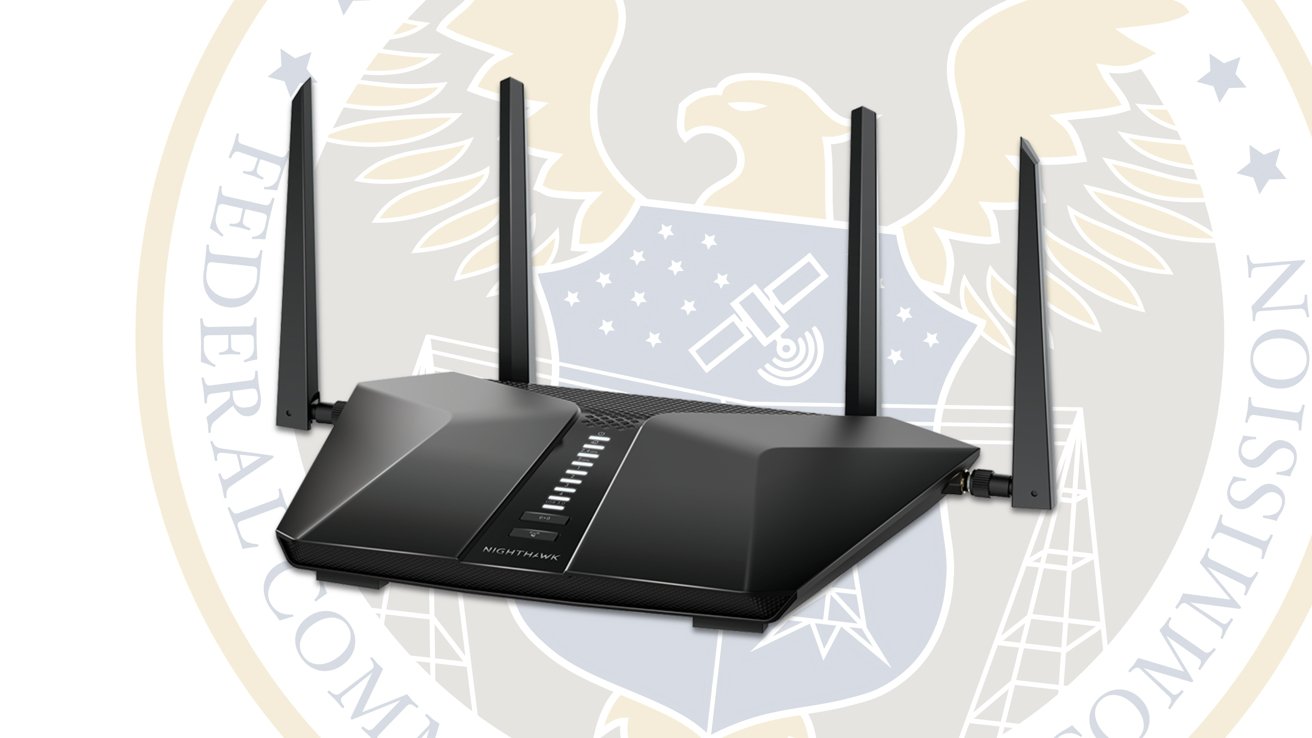
Following a total ban on non-US made routers, the Federal Communications Commission is allowing Netgear to sell wireless routers in the United States, practically giving it a monopoly. However, it’s unclear exactly why that approval was granted.

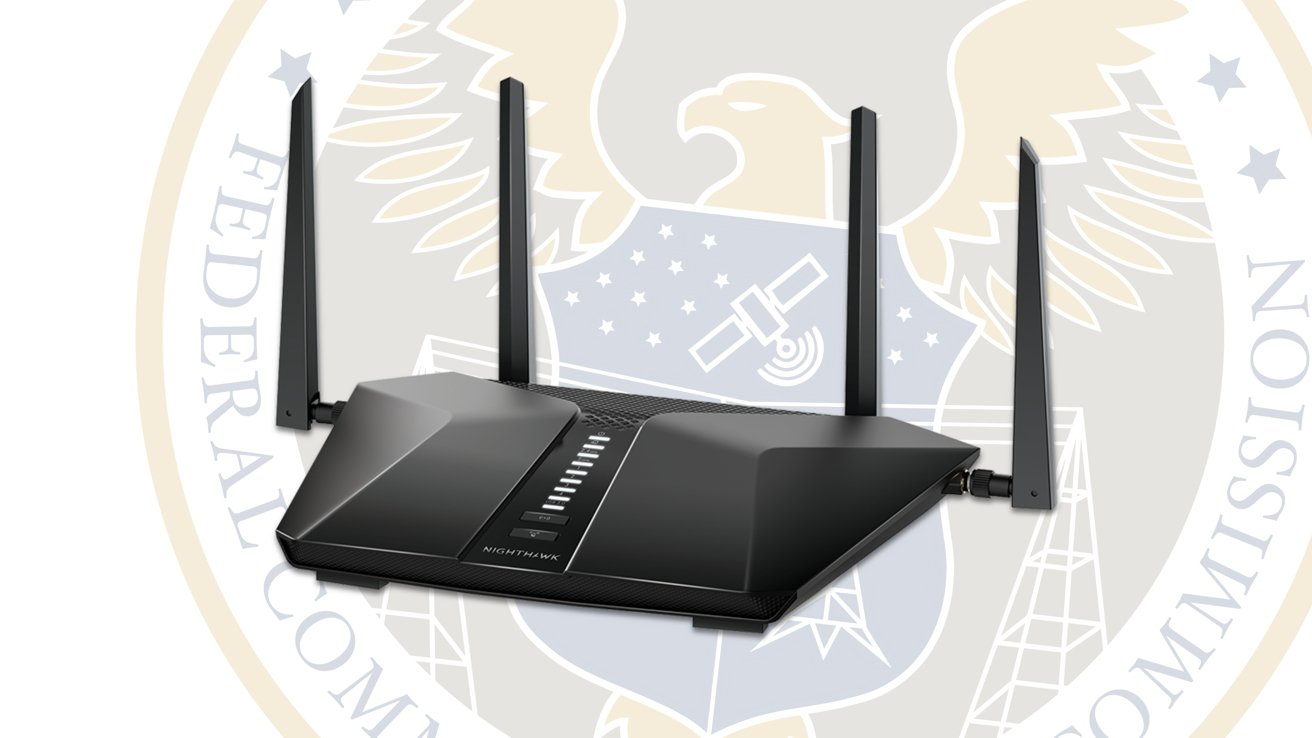
Black Nighthawk WiFi router with four upright antennas centered over a faded Federal Communications Commission seal featuring an eagle, stars, and a satellite icon in the background
Netgear Nighthawk router

In March, the U.S. Federal Communications Commission made the decision to ban imports of all foreign-made routers, due to national security concerns. At the time, no exemptions were made, so the ban affected practically every router being sold in the United States.
However, on April 14, Netgear got a rare reprieve. In an update to the list of equipment and services covered by Section 2 of the Secure Networks Act, the FCC lists Netgear under a very short list of conditional approvals for routers.
Continue Reading on AppleInsider | Discuss on our Forums

Source link

Continue Reading

Tech

Is zero-copy a ‘liberation’ for data teams?

Published

on

BearingPoint’s Shruti Goyal talks about zero-copy architecture and why it’s ultimately a game-changer for data teams.

The world of data architecture, according to Shruti Goyal, has been defined by one process for the last decade: extract, transform and load (ETL).

ETL is a three-phase computing process where data is extracted from transactional systems or real-time source systems, transformed (meaning cleaned, enriched and standardised) into an analytical format, and loaded (or stored) into a data hub or warehouse for reporting and analytics.

“In practice, this meant building complex pipelines using tools like SQL Server Integration Services (SSIS), Azure Data Factory (ADF) and Microsoft Data Pipelines,” explains Goyal, who is manager of data analytics and AI at BearingPoint.

Advertisement

“ETL ensures data is reliable, consistent, and ready for analysis and decision-making.”

However, Goyal believes that after a decade of data dominance, ETL may be on its way out due to the rise of zero-copy architecture – an approach “where data is used where it already lives, without physically copying it into downstream systems”.

“Data is no longer physically moved – instead, access to it is,” she says.

What is zero-copy?

As Goyal explains to SiliconRepublic.com, zero-copy architecture allows users to query, share and access data directly at the source, as opposed to ETL’s transitory process.

Advertisement

Zero-copy enables this by using metadata, permissions and query pushdown “without duplicating the underlying data”.

Goyal says the catalyst for this change is analytics platform Microsoft Fabric, specifically its OneLake storage platform.

“Fabric introduces a unified logical data core that renders traditional data duplication obsolete,” she explains. “The two critical mechanisms are Mirroring, which keeps source systems reflected in near real-time, and Shortcuts, which allow entire multiterabyte databases to be surfaced into an analytics environment in seconds without any physical copying.

“While ADF remains relevant for complex orchestration scenarios, it is no longer the backbone of data movement – OneLake is.”

Advertisement

‘Long-overdue liberation’

Significant changes in any industry can be met with either joy or disdain depending on the circumstances, but Goyal says that for data teams, the so-called ‘death of ETL’ has been described as nothing short of “a long-overdue liberation”.

“Years spent tuning SSIS packages and mapping ADF data flows are giving way to managing metadata and governance policies instead,” she says. “The burden shifts from responding to pipeline failures to maintaining stable, governed shortcuts.

“The skillset evolves accordingly – the focus moves from pipeline engineering toward data governance, metadata management and strategic architecture, representing a significant elevation of the data management role.”

But why specifically is zero-copy being embraced over ETL?

Advertisement

For starters, Goyal says zero-copy is replacing ETL because it is faster, cheaper and “fundamentally more reliable”.

“Zero‑copy architectures replace ETL by letting analytics and AI access live data at its source – eliminating duplication, latency and governance complexity while reducing cost.

“In short, ETL is costly, slow and brittle; zero-copy is lean, live and self-governing.”

Why it’s significant

Goyal believes the transition from ETL is significant because it “represents a fundamental architectural shift”, allowing teams to manage metadata and governance instead of fragmented data copies and “fragile pipelines”.

Advertisement

“The move is from a reactive, maintenance-heavy model – characterised by late-night pipeline failure alerts – to a live feed of the business.

“Over time, this means organisations can make decisions on current data rather than yesterday’s batch, reduce infrastructure overhead significantly and redirect skilled data teams away from operational firefighting toward strategic work.”

Goyal adds that from a data strategy standpoint, zero-copy “changes what is fundamentally possible”.

“When the analytics layer reflects the business in near real-time rather than hours after the fact, decisions can be made on current ground truth,” she says. “The elimination of redundant storage means strategies can scale without proportional cost increases.

Advertisement

“Built-in governance and metadata persistence also mean organisations can trust their data more deeply – enabling AI workloads, reporting and operational systems to coexist confidently on a single, well-governed data estate.”

Don’t miss out on the knowledge you need to succeed. Sign up for the Daily Brief, Silicon Republic’s digest of need-to-know sci-tech news.

Source link

Advertisement
Continue Reading

Tech

‘Trump Phone’ Sees Price Hike, But Still No Release Date (Or Actual Phone)

Published

on

from the sucker-born-every-minute dept

Last year the fraud-prone Trump organization announced a half-assed wireless phone company. As we noted at the time, calling this a “phone company” was generous; it was a lazy marketing rebrand of another, half-assed, “MAGA-focused” mobile virtual network operator (MVNO) named Patriot Mobile, which itself just resold T-Mobile service. So basically just another lazy Trump brand partnership.

The centerpiece of this effort was supposed to be a “bold” new $500 Trump T1 smartphone that the Trump org claimed would be “proudly designed and built in the United States” and released sometime last August. Not only was the device never going to be made in the States (all mention of that was quickly stripped from press materials), the August launch date came and went with no Trump phone.

It’s now April of 2026, and while there’s still no phone (despite a long line of rubes having plunked down $100 deposits), there is a revamped Trump Mobile website and a renewed promise of a slightly different phone, according to The Verge. This includes a revamped and gaudy new mock up of what the gold Trump T1 phone is supposed to look like, should it ever actually be released:

You’ll notice that the phone looks suspiciously like the HTC U24 Pro, a phone released two years ago and available for as little as $460 on Amazon (even less on places like eBay):

While the original “Trump phone” was announced with a $500 price tag, the backers of Trump’s latest grift insist that price was “promotional,” and the full price tag will be closer to around $1000:

“The phone is now listed with a “promotional price” of $499, which used to simply be its standard price. The site is still accepting $100 deposits, with the promise that you can “lock in” the “promotional pricing.” When I spoke to executives Eric Thomas and Don Hendrickson in February, they declared that $499 had been an “introductory” price, which would be rising after the relaunch — though they promised that early buyers would still be charged $499 total, and that the new price would be “less than $1,000.”

So there’s no phone or release date, but there’s already been a price hike on a lazy rebrand of an existing phone they just needed to spray paint gold and slap a Trump logo on. There’s simply no reason that doing this very basic rebrand should have taken so long (assuming they do plan to eventually released a phone), but as a concept the whole thing remains very on brand.

Advertisement

Filed Under: branding, con, donald trump, mvno, smartphone, trump phone, wireless

Companies: trump mobile

Source link

Advertisement
Continue Reading

Tech

The US Government Will Ask Data Centers How Much Power They Use

Published

on

The US federal government’s central energy information agency is planning to implement a mandatory nationwide survey of data centers focused on their energy use, according to a letter seen by WIRED. This survey would be the first effort of its type to collect basic information about data centers.

The letter was sent to senators Elizabeth Warren and Josh Hawley on April 9 by the head of the Energy Information Administration, Tristan Abbey, and comes in response to a previous inquiry from the senators about the EIA’s plans to get more information about data centers. WIRED reported on Hawley and Warren’s letter last month.

“Americans deserve to know how much energy data centers are sucking up and what that’s doing to their utility bills,” Warren told WIRED in a statement. “The EIA’s mandatory survey is an important first step towards holding data centers accountable, but people are hurting right now. I’m pushing EIA to collect and share this data as soon as possible.”

The EIA told WIRED that it doesn’t have any specifics to share beyond what is in the letter to the senators.

Advertisement

The explosion of data centers across the US has caused an outpouring of public concern and proposed legislation to rein in their resource use, as well as put moratoriums on their construction. But there’s surprisingly little official data collected on the industry.

Most details about data centers’ energy use—a particular worry for many voters in the face of mounting utility bills—are considered proprietary business information, and are usually not made public. In response to encouragement from the Trump administration to protect ratepayers, many data center developers are now turning to building their own power sources, known as behind-the-meter power. These facilities—many of which are gas-powered—introduce new concerns around air pollution and climate change. (On Tuesday, the NAACP filed a lawsuit against xAI alleging it was running behind-the-meter gas turbines on a data center in Mississippi without a permit and polluting the community around it. xAI did not immediately reply to a request for comment.)

The EIA conducts mandatory surveys of providers of various types of energy generation, including oil and gas production, electric generation, and renewables, as well as their industrial customers. In late March, a day before the senators sent their letter, the EIA announced that it would conduct a pilot survey in three areas of the country that have heavy data center development: Texas, Washington state, and the northern Virginia/DC metro area.

In the April 9 letter, Abbey says that the agency will announce a second tranche of pilot surveys “covering at least three more states.” Both surveys would be complete by late September. These two pilot studies, Abbey writes, are “a necessary step in the methodical development of a nationwide mandatory survey.”

Advertisement

Information being collected by the EIA from data centers in these pilots, according to the letter, includes not just information on annual electricity use, but also information on behind-the-meter power generation. The surveys, Abbey writes, will also include questions on the classification of different types of data centers; cooling systems; facility characteristics, like square footage; and IT specifications, including metrics on how efficiently a data center uses energy.

The letter still leaves a lot of questions unanswered about the structure of the pilots.

According to the letter, the pilot won’t ask every respondent for the full set of metrics, but will rather tailor questions “to the particular location of each data center facility.” The current pilot also asks the 196 companies identified across the three regions to choose just one location to report metrics on. The EIA did not answer questions about how it determined which locations should receive which questions, or if it provided any requirements to survey respondents about how to go about choosing which data center location to provide information about.

The EIA also did not answer questions from WIRED about when it plans to launch the second set of pilot surveys, the states that will be included, or the possible timing of a national mandatory survey.

Advertisement

Source link

Continue Reading

Tech

Save $100 as the Apple Watch Series 11 drops back to its best price

Published

on

Most smartwatches ask you to choose between looking good and doing a lot, but the Apple Watch Series 11 has never been willing to make that particular compromise.

That combination of capability and design is now more accessible, with the Apple Watch Series 11 available for $299 reduced from its usual $399 only at Amazon.

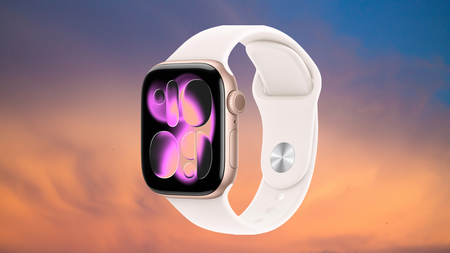
Apple Watch Series 11 on a sunset backgroundApple Watch Series 11 on a sunset background

Save $100 as the Apple Watch Series 11 drops back to its best price

The Apple Watch Series 11 won’t make you choose between looking good and doing a lot, and at this price it’s a lot more accessible too.

Advertisement

View Deal

The health monitoring package here is genuinely broad, covering ECG readings, blood oxygen levels, sleep apnoea detection, and a sleep score that gives you a simple overnight quality rating rather than a wall of data you have to interpret yourself.

Advertisement

New to Series 11 is the ability to spot signs of chronic high blood pressure and send hypertension notifications, which moves the watch meaningfully closer to the kind of passive health monitoring that used to require a clinical setting.

Those health features sit alongside a full fitness tracking suite, with built-in GPS, heart rate zones, training load tracking, and a Workout Buddy feature powered by Apple Intelligence that offers real-time personalised coaching via Bluetooth headphones connected to a nearby iPhone.

Advertisement

The Whatsapp LogoThe Whatsapp Logo

Get Updates Straight to Your WhatsApp

Advertisement

Join Now

The display is a superdurable glass panel rated as twice as scratch-resistant as the Series 10, and the watch carries a 50-metre water resistance rating alongside IP6X dust resistance, so it is genuinely built to go wherever you do.

Advertisement

Battery life is rated at up to 24 hours of normal use, with a fast charging option that recovers eight hours of use from just 15 minutes plugged in, which is the kind of spec that makes forgetting to charge it far less catastrophic.

Safety features including Fall Detection, Crash Detection, and Emergency SOS round out a package that functions as much as a quiet background safeguard as it does a fitness companion or notification hub.

The Apple Watch Series 11 at this price is worth serious consideration for iPhone users who want a wearable that handles health tracking, fitness, and everyday connectivity without needing to think too hard about which one it prioritises, though you will need an iPhone 11 or later running iOS 26 to use it.

Advertisement

Advertisement

SQUIRREL_PLAYLIST_10148964

Source link

Continue Reading

Tech

Latest AI (coffee) buzz: Starbucks launches ChatGPT app to help customers discover their next drink

Published

on

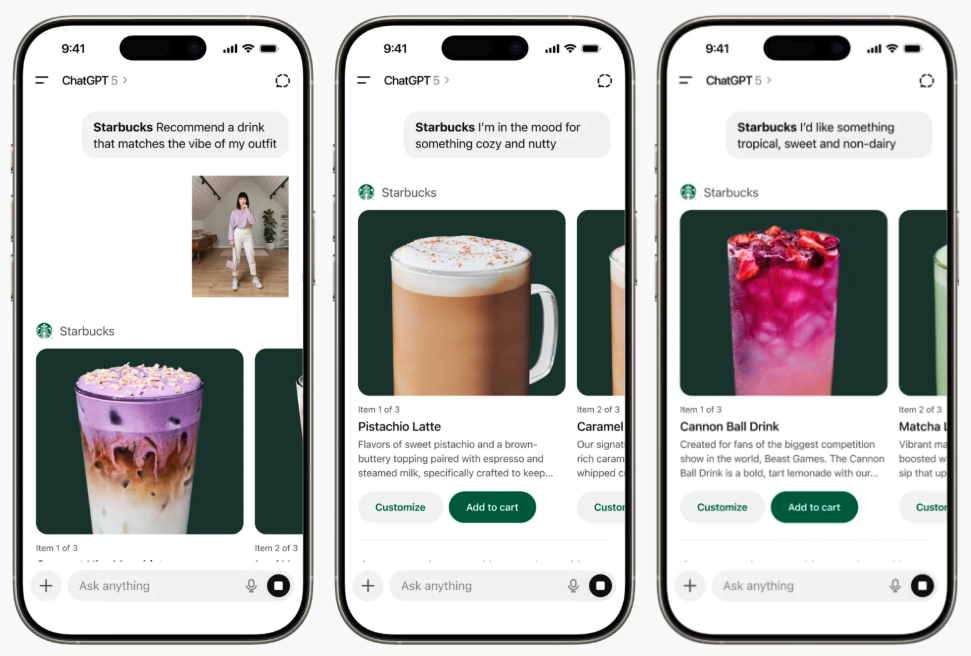
Prompting the Starbucks app inside ChatGPT returns suggestions related to various coffee drinks. (Starbucks Images)

Starbucks is getting in on the agentic buzz.

The Seattle-based coffee giant launched a beta app inside ChatGPT on Wednesday, leveraging OpenAI’s chatbot to help customers discover drinks and capture their “vibe.”

Customers can access the app by enabling it inside ChatGPT’s app directory. Start a conversation prompt with “@starbucks” to customize orders and choose a location to order from. While the order can be started in ChatGPT it has to be finished in the Starbucks app or on Starbucks.com.

You don’t need to just have a drink flavor in mind. The bot will even offer up suggestions based on a photo of your current outfit. Based on what I’m wearing right now, I’m not sure I’d want to drink that, but you get the point.

“Over the past year, one thing has become clear: customers aren’t always starting with a menu,” Paul Riedel, Starbucks senior vice president of digital and loyalty, said in a statement to CNBC. “They’re starting with a feeling. … We wanted to meet customers right in that moment of inspiration and make it easier than ever to find a drink that fits.”

Advertisement

Other companies are leaning into partnerships with OpenAI to reach customers through ChatGPT, including Expedia, Zillow, Target, Walmart and others.

Starbucks is in the midst of an operational overhaul under CEO Brian Niccol, who joined the company in September 2024. Niccol led a similar revamp previously as the top executive at Chipotle, and at Starbucks is pairing old-school service standards with new technology.

One of those new tech components is Green Dot Assist, an AI-powered tool built on Microsoft’s Azure OpenAI platform that helps baristas look up drink recipes, troubleshoot equipment issues, and figure out where to put staff during a rush. The technology went from a 35-store pilot last June to full deployment across North American stores in November. 

The changes seem to be having an impact.

Advertisement

In January, Starbucks reported its first U.S. comparable transaction growth in two years. Both loyalty members and casual customers are visiting more often. Service times at peak are running below the company’s four-minute target, even with the increased traffic.

Starbucks also announced in March that it plans to open a corporate office in Nashville, Tenn., in a bid to grow across North America and establish “a more strategic presence” in the Southeast region of the U.S. The move will impact some Seattle-based jobs related to the coffee giant’s North American supply-chain operations.

Source link

Advertisement
Continue Reading

Tech

Spotify is selling books now

Published

on

A collaboration between Spotify and Bookshop.org that allows readers to purchase physical books in the Spotify app is now live in the US and UK.

Rather than positioning audiobooks as the hard copy-killer, Spotify is encouraging you to see them as complimentary to one another. First announced back in February, the new partnership with Bookshop.org appears to be an acknowledgement from Spotify that physical still reigns supreme in the book world. Bookshop is a digital marketplace that enables indie booksellers to take their businesses online, and Spotify says any purchase made through its app will “directly support those bookshops and the authors who brought the story to life.”

When viewing an audiobook on Spotify, where available you should now see a “Get a copy for your bookshelf” link that redirects you to the Bookshop.org website, which takes over the rest of the purchase and shipping process, reports TechCrunch. The feature is now live on Android, with iOS support arriving next week.

Key to this partnership is the new Page Match feature that Spotify launched in February, which allows readers to sync their progress between audiobooks and physical or ebooks so they can jump between formats seamlessly. When reading a paperback, you can use your phone camera to scan the page you reach and continue from that point in the audiobook. It also allows you to scan ereader pages so you can pick up when you left off in the audiobook, and vice versa.

Advertisement

Spotify has today expanded Page Match to support more than 30 new languages, including French, German and Swedish, while Audiobook Recaps are now available on Android. Introduced last year, initially for iOS users, these AI-powered audio summaries refresh you on your progress before you start reading, becoming available once you pass the 10-minute threshold in a book.

Spotify launched audiobooks in 2022 and now offers 15 hours of free listening time a month to Premium subscribers.

Source link

Advertisement
Continue Reading

Tech

After sale of its shoe business, Allbirds pivots to AI

Published

on

After selling its shoe brand and assets last month for $39 million, Allbirds is pivoting to AI. Of course, the company is also changing its name, since the footwear brand “Allbirds” was part of the sale. Introducing: NewBird AI, a “fully integrated GPU-as-a-Service and AI-native cloud solutions provider,” the company announced via its investor relations site on Wednesday.

The rebranded AI company also announced a $50 million investment from an undisclosed institutional investor in the form of a convertible financing facility.

It’s objectively pretty funny that Allbirds is becoming an AI company — not because it’s unusual for companies to pivot, but because of how extreme this pivot is. The maker of the shoes once craved by the Silicon Valley tech set is now going to be a provider of GPUs. It’s somewhat absurd — and risky — but you can see how the business came to this decision. After the asset and brand sale, Allbirds can keep the public company’s shell (it’s been traded on NASDAQ under the ticker symbol “BIRD”) and then reuse it to invest in the hot AI sector.

This recalls the time in 2017 when the Long Island Iced Tea company pivoted to the blockchain, prompting the stock to jump some 275% after the rebranding. That pivot didn’t pan out, as the NASDAQ stock exchange delisted the stock the following year after Bitcoin fever died down.

Advertisement

Allbirds-turned-NewBird is likely hoping for a different outcome.

The company says that the financing and the asset sale are still subject to stockholder approval, with a meeting planned to take place on May 18. If the sale goes through, stockholders will receive a dividend during the third quarter. The new owner of the Allbirds brand and assets, American Exchange Group, will continue to make products for Allbirds customers.

Meanwhile, NewBird AI plans to use the new financing to acquire GPU assets, which it will offer to customers seeking AI compute capacity. Over time, the company hopes to grow its service offerings through partnerships and even strategic mergers and acquisitions — if the opportunity arises.

Techcrunch event

Advertisement

San Francisco, CA
|
October 13-15, 2026

Source link

Advertisement
Continue Reading

Trending

Copyright © 2025