
Politics
The House | What to do about SLAPPs? Why urgent reform is needed to protect all of us


5 min read
Late one evening last week, a message came through on the encrypted messaging app, Signal – it was from an investigative journalist seeking help with “a pretty scary cease and desist letter”.
As a freelancer, he is being threatened personally with legal action for a recent story with a major UK publication. He thinks the threats are aimed at getting the publication to “ditch him,” isolating him from legal support that would defend him and his story.
Since we set up the UK Anti-SLAPP Coalition in January 2021, such messages for support have steadily grown in frequency. Now, a week rarely goes by without someone – a journalist, an academic, a campaigner or a member of the public – writing to us about a potential SLAPP (strategic lawsuits against public participation). Such legal threats are aimed at suppressing the publication of public interest speech on a wide range of issues; from corruption and sexual assault, to housing, healthcare, and the environment.
SLAPPs work by weaponising the legal process to exert as much pressure as possible. Many cases never reach trial, but can still take months, if not years, to resolve. SLAPP targets can be made to feel they have no option but to settle, apologise and amend or remove the information they’ve published simply due to the financial, emotional and time costs of mounting a defence. If successful, SLAPPs can create a vacuum of information, not only about the original subject matter, but even that a legal challenge took place.
While 40 American states, as well as several provinces in Canada, have been adopting anti-SLAPP legislation since the 1990s, the issue only gained widespread recognition in Europe after the 2017 assassination of the Maltese investigative journalist Daphne Caruana Galizia. At the time of her death, Caruana Galizia, one of the few journalists writing about corruption in Malta, had 47 legal cases open against her.
In 2020, the Foreign Policy Centre surveyed 63 investigative journalists reporting on financial crime and corruption in 41 countries. The findings pinpointed the UK as the leading international source of such legal threats, almost as frequent as those from the EU and the US combined. The following year the high-profile legal actions in the UK against the journalists Catherine Belton, author of Putin’s People, and Tom Burgis, author of Kleptopia: How Dirty Money is Conquering the World, brought a new level of visibility.
By July 2022, in light of Russia’s full-scale invasion of Ukraine and renewed concerns about the level of Russian dirty money and malign influence in our country, the then Conservative Government committed to “decisively… stamp out SLAPPs.” The adoption of anti-SLAPP provisions in the Economic Crime and Corporate Transparency Act (ECCTA) 2023 was a welcome recognition of the problem, but was limited in scope and flawed in design. A subsequent universal anti-SLAPPs Bill, led by former Labour MP Wayne David, only fell away due to the 2024 General Election.
Almost two years later, despite significant cross-party support, and Keir Starmer referring to SLAPPs as “intolerable”, the current Government is yet to act. During a November 2024 Parliamentary debate, 16 MPs from 7 political parties spoke in favour of addressing SLAPPs and highlighted the impact they have, including delaying redress for wrongdoing – from the Post Office Horizon scandal to the allegations against Jimmy Savile and Mohammed Al Fayed. Last year, Index on Censorship published a report about how SLAPPs are silencing survivors of sexual and gender-based violence (SGBV) when they try to speak out and warn others. The current provisions do nothing to protect them.
Since the start of 2026, more than 160 public figures, over 100 academics, and groups of Labour, Conservative and Lib Dem MPs have written to the Government calling for universal anti-SLAPP measures to be included in the next King’s Speech in May. However, recent press reports suggest that plans to legislate further may have been shelved.
Once leading the charge against SLAPPs in Europe, the UK has fallen behind. An EU Anti-SLAPP Directive (often called “Daphne’s Law”) adopted in 2024 is currently being transposed by 27 member states. The same year, the Council of Europe, of which the UK is still a member, also adopted a non-binding recommendation for its members to address SLAPPs.
So what is the risk of doing nothing? SLAPPs utilise various legal claims, but defending a defamation claim to trial in the UK costs at least £500,000, with many cases running into the millions. Preliminary hearings alone can easily run to £100,000. Even the first successful use of the ECCTA anti-SLAPP provisions by the tax campaigner Dan Neidle, cost him over £146k and almost a year to defend. Further legislation to create stronger protections against SLAPPs would cost nothing to enact.
It’s no surprise that many on the receiving end of a legal threat currently comply with demands to amend or remove information from the public sphere. As a result, wrongdoing is hidden and redress is either delayed or completely denied. And the impact? It’s not just on those targeted, it’s on all of us.
Susan Coughtrie is Executive Director of the Foreign Policy Centre, an international affairs think tank, and Jessica Ní Mhainín is Head of Policy and Campaigns at Index on Censorship, a free expression organisation.
The UK Anti-SLAPP Coalition is an informal working group established in January 2021, co-chaired by the Foreign Policy Centre, Index on Censorship and CliDef. For more information – antislapp.uk.


In 2024, Miguel Guzmán, the chief sales officer of Deoleo (a huge olive oil producer which owns brands like Bertolli), said prices were expected to drop by as much as half in early 2025.
That’s because growing conditions had improved in Spain. “The market is expected to begin to stabilise, and normality is expected to be gradually restored as the new harvest progresses and supply increases,” he said at the time.
But over a year on, Filippo Berio director Walter Zanre has said that supermarkets are “taking the mickey” with the prices they expect customers to pay for the product, despite lower wholesale costs.
“We brought prices down twice last year and it’s not all been passed on to the consumer, which is a huge frustration,” he told Sky News.
He added, “The supermarket was surprised at how resilient the shopper was at high prices, so the view is they don’t need to give it all away for nothing”.
In other words, he suggested high prices made them realise just how much more UK shoppers would spend on the product, and they aren’t willing to give that up just because their costs are lower.
We asked the UK Food Council, who said they’d noticed “an upward trend in all food costs” to weigh in on the topic, which they’re “watching closely”.
Why are olive oil prices so high?
“The prediction that prices would halve in 2024 was based on a reasonable expectation,” a UK Food Council spokesperson told us.
“Spain’s harvest was forecast to rebound significantly, and wholesale costs did indeed begin to fall. The problem is that retail prices tend to follow wholesale costs on the way up much faster than they do on the way down.”
To some extent, they added, that can be a reasonable buffer against future risk. In 2022 and 2023, growing conditions in Spain (the biggest producer of olive oil in the world) were so poor that the country only exported half its usual output.
“Supermarkets are understandably cautious – they lock in contracts in advance and factor in hedging costs,” the spokesperson said.
Nonetheless, “the scale of the gap between what brands like Filippo Berio are now charging and what’s sitting on shelf does raise real questions”.
Zanre said that he expected olive oil sales to “fall off a cliff” when they reached their recent price highs. But he added that UK sales only dropped by 20% or so.
“To put it in context: a 500ml bottle of Filippo Berio extra virgin olive oil retailed at around £3.75 in 2022, peaked at roughly £10.50 at the start of 2025, and has since come down to around £7.50 as wholesale prices eased,” the UK Food Council member said.
“That’s still double what it was three years ago, even as the underlying commodity cost has fallen sharply. ONS data from late 2025 showed retail olive oil prices down about 16% year-on-year – meaningful progress, but arguably not proportionate to how far wholesale costs have dropped.”
This is “suggestive”, said the UK Food Council
“Are supermarkets taking advantage of consumers who’ve adjusted to higher prices? It’s difficult to prove intent, but the economics are suggestive. Once shoppers have normalised paying £9 or £10 for a bottle, there’s less commercial pressure to drop back towards £5,” the spokesperson stated.
“That said, increased competition – particularly from Greek and Portuguese oils gaining shelf space – may do more to force prices down than any public pressure campaign.”
Speaking to The Independent, Andrew Opie, director of food and sustainability at the British Retail Consortium, said that supermarkets are doing their best to pass savings on to customers and “operate on very tight margins, reflecting a market driven by savvy customers.
“Olive oil, like many everyday products, is something shoppers can compare across brands and retailers to take advantage of promotions or switch to alternatives that suit their budget”.
Politics
Israeli politicians/media have ’emptied’ the term antisemitism of ‘analytic meaning’, Israeli university finds


A top Israeli university has found that Israel’s leaders and press have emptied the term antisemitism of meaning by using the it as a cheap tool to attack those critical of the settler-colonial state. Tel Aviv University’s global antisemitism report is truly damning — though not without its limitations in regard to Israel’s demonstrably genocidal actions. The assessment even called Israeli government and media behaviour “absurd”.
The study, titled ‘Antisemitism Worldwide; report for 2025‘, said:
Israeli politicians and media have, particularly in recent months, continuously expanded the scope of what qualifies as antisemitism, at times in absurd or hasty ways. In doing so, they do not win arguments or silence critics, as they perhaps believe; rather, they discredit a crucial fight by politicizing it and emptying it of analytic meaning.
The authors stipulated:
The label of antisemitism is harsh and should be applied only after careful consideration and based on solid criteria.
From an elite Israeli university this is particularly damning — even more so when you read the next passage:
The war crimes committed by Hamas justified an unwavering military campaign as well as
retribution against those responsible, including their accomplices. This, foremost, as a matter
of serving the cause of justice.
This historically dubious framing indicates strongly that the authors still hold to Israel’s colonialist state ideology. Claiming a genocidal assault on Palestinians is qualified by the 7 October attack as a pursuit of “justice” is beyond the pale. Yet even these scholars — with these views — concede that the Israeli press and media have diminished the term antisemitism to the level of absurdity.
Shut down the ministry!
In another section, the scholars blast the government of Israel for “draining” the term of meaning to such a degree that they caused harm to the fight against antisemitism:
The government did not carry out even a single significant and effective action and often caused harm. Israeli politicians at the highest levels steadily expanded the scope of the term ‘antisemitism,’ including through cynical and hasty declarations, drained it of meaning, and damaged the struggle against Jew-hatred.
They urged that the ministry for combating antisemitism, which has “failed in its mission”, should be closed:
and its authorities and budgets transferred to Israel’s embassies and consulates, because only ongoing contact, on the ground, with Jewish communities, law-enforcement authorities, and educators, carried out by professionals and based on attentive listening and determined activity, can contribute to the security of the communities.
There is strong sense that the report authors are liberal Zionists attacking the far-right Benyamin Netanyahu regime. But this arguably adds to its power given the withering tone of its findings. And the report also lays into the antisemitism of supporters of Netanyahu’s most high-profile backer: US president Donald Trump.
Trumpian antisemitism
The report’s framing is once again coloured by the author’s apparent commitment to Zionism. For example they say:
The Middle Eastern policies of Trump’s two administrations have so far been, as opposed to a number of careless and dangerous statements he made, by and large commendable.
By this they mean, for example, Trump’s first-term recognition of Jerusalem as the capital of Israel and his aggression towards Iran. Yet they still found:
Trump is also the president who has tolerated, as no contemporary president has, deep seated, loathsome antisemites within his camp, and continues to do so for cynical political reasons.
Adding:
The result is a new culture of everything-goes that is undermining the sense that Jews have had for decades that their future in America is secure.
The report shows us several things. One is that the Gaza genocide and Israeli aggression have caused a crisis at the heart of Zionism. Scholars like these are being forced to tie themselves in ideological knots to stay afloat. And it looks bloody obvious. Zionism’s worst enemy is itself. Because like any colonialist ethnonationalism, it cannot help but contradict itself.
Another is that, as many of us have long suspected, Zionists in Israel and their fellow travelers abroad have reduced a term which should be carefully and properly used to describe a vile form of racism to catch-all slur. And in doing so they have made it harder to face real antisemitism head-on — putting Jewish people in more danger.
Featured image via the Canary
By Joe Glenton


Far-right propaganda outlets are salivating over a new immigration report from an investment bank – that’s mainly because it fearmongers about the Green Party, which has been surging in recent months and presenting a real challenge to Reform UK.
Because the actual report isn’t public, it can’t face proper outside scrutiny. But as a Green spokesperson insisted:
These figures are made up nonsense and we’ve been given no idea how they are calculated.
Green Party: ‘we won’t scapegoat migrants’
The report comes from Simon French, the “chief economist at Panmure Liberum”, which calls itself “the UK’s largest Independent Investment Bank”. And it claims that a Green election win in 2029 would push the country’s population from around 71.5 million to 75.9 million by 2034 (via net migration of about 900,000 a year).
French is a Times columnist who previously worked in government and “had a central role” in pushing through cuts. And he once wrote about “taking a chainsaw to red tape”. But right-wing rags hope we’ll just accept his estimates on immigration numbers without any scrutiny (as they did themselves).
The Green Party has refused to do so, though. Because a spokesperson told the Telegraph that, while it’s “not at all clear” how French got his figures, it looks like he based them:
apparently, on an ‘open borders’ approach, which is not our current policy
They stressed that:
The Greens support a fair and managed migration system – successive governments have presided over a broken and unjust system.
Responding to the Mail, meanwhile, a Green spokesperson placed the focus firmly on economic injustice, saying:
People are concerned about the impacts of immigration because of a massive affordability crisis, but unlike other parties we won’t scapegoat migrants for the unfairness created by our rigged economic system.
An investment bank wouldn’t want you railing against the economic system, would it?
Despite not knowing where French got his numbers from, we do know that even the Tories brought net migration up to 944,000 in 2023. So even if we believed French’s prediction, it wouldn’t be the kind of number the UK has never seen before.
It’s important to remember, of course, that people from other countries contribute strongly to our economy (something the Green Party has openly insisted). It’s also important to remember why immigration happens at all. Because as the Canary has previously explained, the UK has:
- An ageing population.
- Low birth rates.
- Skills shortages.
- A massive underinvestment problem.
- A longstanding addiction to destructive interference abroad which has played a big part in pushing people out of their homes in the first place.
As Green Party leader Zack Polanski has made completely clear, the focus of our rage should not be on ordinary people seeking a new life in the UK. It should be on the putrid economic system that, for at least five decades, has been decimating communities across the country via public spending cuts, with devastating consequences.
In December 2025, Polanski insisted:
We shouldn’t have a race to the bottom on migration. We should have a race to the top on public services!
He’s absolutely right. But investment banks and elitist propaganda outlets are happy with the way the current economic system works, so it shouldn’t surprise us in the slightest that they prefer to spread hate and fear rather than compassion and hope.
Featured image via the Canary
By Ed Sykes
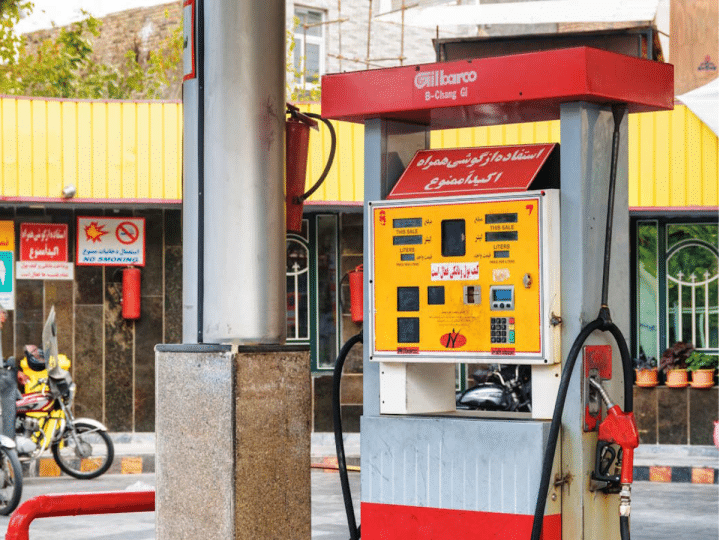

Under state ownership, Iranians pay so little for oil consumption it’s actually a problem. This is somewhat amusing given it shows that nationalisation can dramatically reduce people’s energy bills. Just in Iran’s situation, the price is too low, meaning the government should take more profit and invest it in industries such as education and healthcare.
As a disclaimer for those jumping the gun, this article focuses on only this aspect of Iranian policy, it’s not upholding the overall system of an authoritarian theocracy.
Why is energy so cheap in Iran?
State ownership combined with government subsidies means Iranians pay as little as £0.021 per litre of fuel. The average global price is £1.09, demonstrating how remarkably inexpensive Iranian oil is.
Of course, the cheap oil is also partly because Iran has the third largest reserves in the world.
The issue is that such cheap energy leads to overconsumption. It’s why even under public ownership, finite resources should not be free or too cheap.
Iran’s energy intensity index is one of the highest globally. Plus, 20% of Iran’s daily consumption is made up of oil smuggled abroad and sold to other countries because of the low price at home.
Low cost energy means reduced expenditure for agriculture, delivery and for businesses and people. It’s generally a good thing. But rather than making it too low, profit can be used for public investment in other areas.
Before privatisation, nationalised energy in the UK made significant profit for the public purse, meaning the government can spend more with less risk of inflation.
Green energy over oil
That said, it’s clear that renewable energy is not only cheaper to produce but addresses the climate crisis. We need to move away from oil, no matter what the corporate and state luddites say.
In 2025, Earth Overshoot Day landed on 25 July. That’s the day when, globally, we use the amount of resources that the planet can replenish for the next year — our ecological budget.
This is largely due to consumption of fossil fuels. If we changed to 100% renewables globally, which is entirely possible, it would bring the date back six months.
But Iran does show how much state (or common) ownership can reduce prices for individuals in a society. Amusingly, it’s actually too cheap.
Featured image via the Canary
By James Wright


In the runup to the local elections, we’ve been reporting on the horrorshow that is Reform UK’s campaign. Most of our articles have focused on candidate controversies, and these stories have somehow gotten worse and worse by the day.
For the latest example of this, we present Aaron Lee Taylor:
Taylor has campaigned from Reform’s head office and twice met Nigel Farage, has frequently shared material online that promotes Nazi Germany.https://t.co/om5KugSPN9 — HOPE not hate (@hopenothate) April 14, 2026
 NEW: ‘Hitler was right’, says one of Reform’s top activists, Aaron Lee Taylor
That’s Adolf Hitler, by the way.
The worst Hitler.
The worst person full stop, arguably.
Come and join the Reform UK Party
As Hope not Hate have reported:
Aaron Lee Taylor, who volunteered in Reform’s head office and twice met Nigel Farage has frequently shared material online that promotes Nazi Germany.
Here’s an example of the sort of thing he was posting:

This is something Taylor tweeted on 1 November 2025:
If it’s black send it back
If it’s brown shoot it down
If it’s white it’s perfectly alright (to stay in the UK)
These posts were from late last year. Earlier this year, he began volunteering at Reform’s HQ and taking pics with the top brass Hope not Hate added:
His most recent post in support of Reform was on April 3rd, when he shared an Easter message from the party. We understand that he is now no longer a member of the party. What remains unclear is why Reform appealed to Taylor, an unabashed fan of Hitler.
Yes, very unclear.
We probably shouldn’t be laughing about the UK’s leading political party being up to its elbows in Nazis, but there are two things that could be described as darkly amusing:
- Reform’s laughable vetting process (which they assure us exists).
- The fact that Aaron Lee Taylor is a completely ridiculous figure.
The following image shows Nigel Farage meeting Taylor at the activist’s tanning salon:

That’s right – ultra-racist Aaron Lee Taylor has his own tanning salon.
Saying that, we suppose he’s far from the only orange supremacist in the world:
Does anyone believe Trump‘s BS explanation for posting himself as Jesus Christ?
“Well it wasn’t depicted… It was me, I did post it. And I thought it was me as a doctor and had to do with Red Cross. There is a Red Cross worker there that we support and only the FAKE NEWS could… pic.twitter.com/TwDTvSWnwe — Ed Krassenstein (@EdKrassen) April 13, 2026
Vetting away with it
As Hope not Hate reported, Zia Yusuf said in March that Reform have “the best vetting in the country”. Here’s a picture of Yusuf with Aaron Lee Taylor (tweet taken from Taylor’s Twitter feed):

We’re well aware that Reform’s vetting is non-existent, because we’ve reported the following:
- Reform candidate wants to ‘tear down’ the NHS.
- Reform candidate exposed as a horny nincompoop.
- Another Reform candidate has praised Enoch Powell.
- Reform UK accused of ‘nil vetting’ as another racist candidate exposed.
- Video emerges of Reform’s ‘Nazi salute’ candidate drink driving.
To be fair, ‘non-existent’ is the charitable reading of this nonsense ‘vetting’ process.
The less charitable takeaway would be that this bunch of racists are purposefully enlisting the absolute worst of the worst.
Featured image via Hope not Hate
By Willem Moore

Recently, the Artemis II crew took a trip to the moon and back. The astronauts involved – Reid Wiseman, Victor Glover, Jeremy Hansen, and Christina Koch – were the first to reach the satellite in over 50 years, and spent 10 whole days in space.
A visit to the moon in the age of social media was a beautiful thing. Some people filmed the rocket’s launch from the window of their commercial flight. We got new, beautiful images of the Earth from space.
But while some were touched by the drive, ingenuity, and ambition of the mission, I was left with a more prosaic question: what happens when astronauts need the loo?
How do astronauts poop in space?
Taking a trip to the toilet in a low-gravity environment is no easy feat.
Previous missions, like Mercury, Gemini, and Apollo, had no toilets. Astronauts used to tape plastic bags to their buttocks to capture the waste. Then, after a bowel movement, astronauts would seal the bag and knead in a chemical designed to kill bacteria.
This was, it’s safe to say, less than optimal. In the Apollo 10 mission, for instance, one astronaut is recorded as saying, “Give me a napkin quick, there’s a turd floating through the air”.
But the Artemis II rocket, Artemis Orion, was an exception: it had a specially-designed loo as part of its Universal Waste Management System.
This took the form of a cubicle built under the floor of the capsule, though in a video, astronaut Christina Koch explained: “Once you’re in there… you have no idea whether you’re on the floor or which way your head is facing or anything. You could be floor, ceiling, wall, doesn’t matter.”
For that reason, she explained, you need to use the handholds placed in the walls on the sides of the loo. Sometimes, tethers are used too.
The heavily-insulated walls are designed to muffle the incredibly loud sounds of its plumbing, she continued, which uses air flow to divert urine away via a hose and, the BBC reported, has a “special seat with strong suction which pulls [solid matter] into a container, which is sealed”.
Artemis II’s toilet temporarily broke in space
At one point during its flight, NASA said Artemis Orion II’s loo faced issues.
It was no longer able to dump its waste into space, and the astronauts had to rely on a secondary system of plastic containers too.
“I’m proud to call myself the space plumber, I like to say that it is probably the most important piece of equipment on board,” astronaut Christina Koch said at the time.
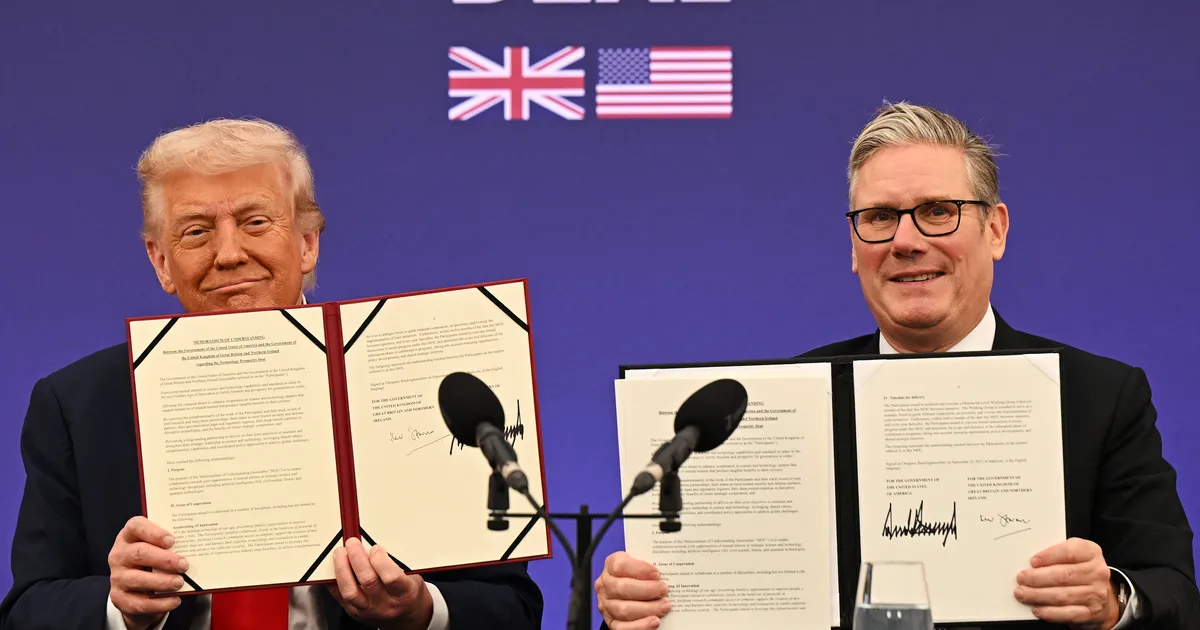
Donald Trump has threatened to rip up the US-UK trade deal as he launched yet another attack on Keir Starmer.
The US president said the agreement “can always be changed” as relations between the two countries remain in the deep freeze.
Trump has made a series of jibes at the prime minister after Starmer initially refused to let US jets use RAF bases to bomb Iran.
He was again repeated them in an interview with Sky News, as he also condemned the PM’s policies on North Sea oil and immigration.
The president said: “I think I like Starmer, but I think that he’s made a tragic mistake in closing the North Sea oil. You see your energy prices are the highest in the world and I think he’s made a tragic mistake on immigration.
“I love your country and I would love to see it succeed, but if you have bad immigration policies and bad energy policies you have the worst of both. You can’t succeed, it’s not possible.”
He added: “A lot of people ask me what I think of [Starmer’s policies] and I think they’re insane … your country is being invaded.”
Asked who the UK is being invaded by, Trump said: “By illegal immigrants from all over the world, including those from prisons, drug dealers, people from mental institutions. Your country is being invaded.”
Last May, Trump said America and Britain had agreed a “full and comprehensive” trade deal that would “cement the relationship between the United States and the United Kingdom for many years to come”.
But the president told Sky News: “We gave them a good trade deal, better than I had to, which can always be changed. We gave them a trade deal that was very good because they’re having a lot of problems.”
His comments come as the UK government tries to agree closer economic ties with the European Union.
Subscribe to Commons People, the podcast that makes politics easy. Every week, Kevin Schofield and Kate Nicholson unpack the week’s biggest stories to keep you informed. Join us for straightforward analysis of what’s going on at Westminster.


Iran’s national football team plans to participate in the 2026 FIFA World Cup in the US despite ongoing military and political tensions.
The national team coach, Amir Ghalenoei, told the Iranian news agency, IRNA:
There is currently no reason preventing us from participating. God willing, we will participate.
He added that the Iranian Football Federation is actively continuing preparations, including playing friendly matches in preparation for the tournament.
In the same context, Iran sports minister, Ahmad Doniamali, expressed optimism about the possibility of participation, provided the ceasefire between the warring parties holds.
He said:
The more normal the situation becomes, the more likely participation is.
Doniamali added, in statements carried by IRNA on Monday, that “the more normal the situation becomes, the more likely participation is”, indicating that the decision is linked to political and security stability.
Iran prioritises player and coaching staff safety
In the same context, the national team coach stressed the need to ensure the safety of the players and coaching staff should the tournament be held in the US, given the current circumstances.
These developments coincide with direct negotiations held in Islamabad between Iran and the US at the end of last week, which failed to produce any tangible results.
The final decision regarding participation is expected to be referred to Iran’s Supreme National Security Council.
US president, Donald Trump, had expressed doubts about Iran’s participation in the World Cup, while reports indicated that FIFA rejected an Iranian proposal to move the team’s matches to Mexico.
Iran’s national team is scheduled to play its group stage matches against Belgium, New Zealand and Egypt in Seattle and Los Angeles.
Featured image via the Gulf Observer
By Alaa Shamali
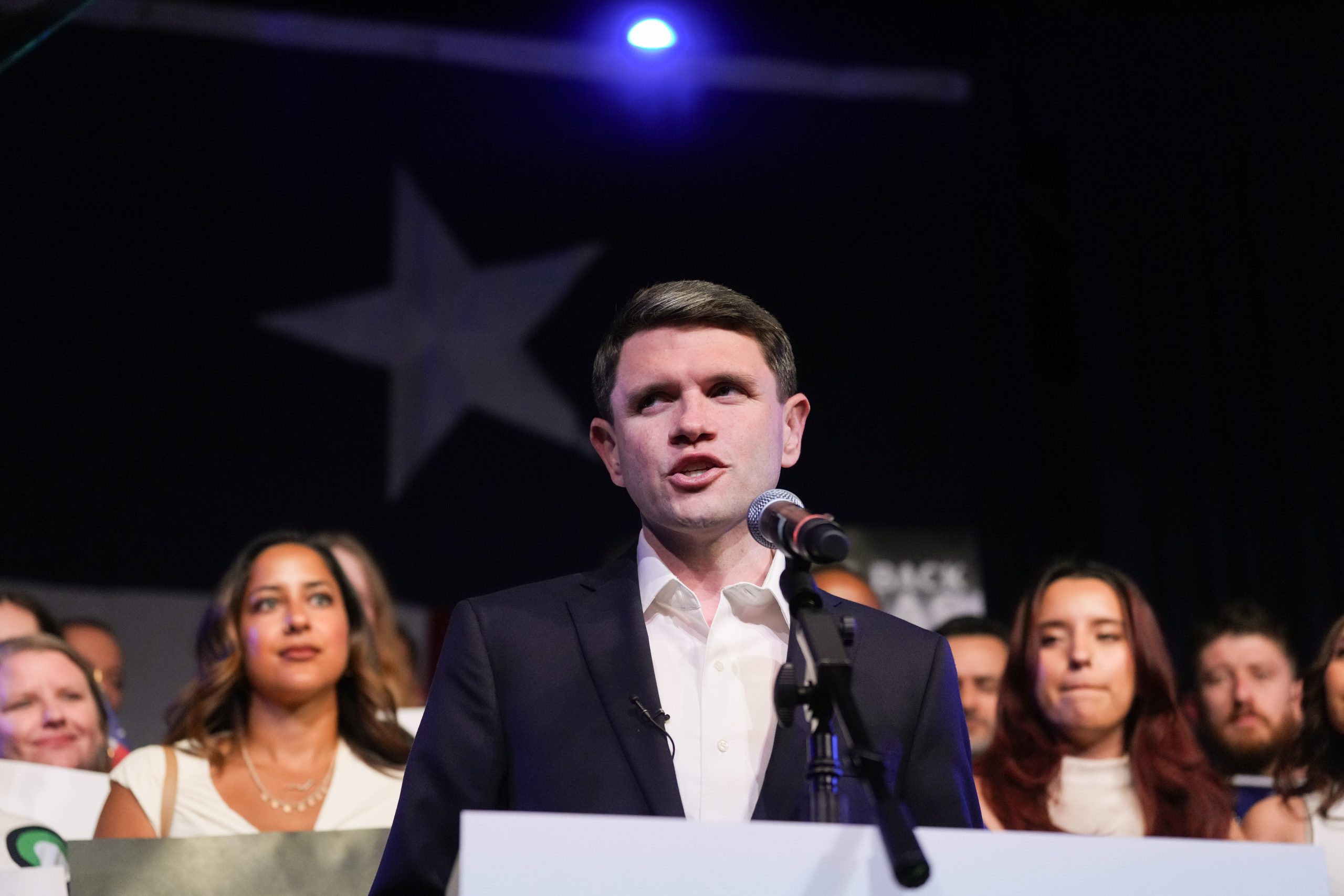

Democrats running for the Senate posted some massive fundraising hauls in the first quarter.
The most striking number so far came from Texas. James Talarico brought in an eye-popping $27 million over the past three months, his campaign announced Wednesday morning ahead of today’s Federal Election Commission deadline, including $10 million since he won his March 3 primary.
Georgia Sen. Jon Ossoff raised more than $14 million in the first quarter, according to his campaign. In North Carolina, former Gov. Roy Cooper raised $13.8 million. In Alaska, former Rep. Mary Peltola brought in $8.9 million, while former Ohio Sen. Sherrod Brown raised $12.5 million in his comeback bid.
The hauls, several of which set records in their respective states, underscore how Democrats are feeling increasingly bullish about their ability to flip the Senate. While Democrats still face an uphill climb due to the red lean of many states on the Senate map, President Donald Trump’s tanking approval ratings and the unpopularity of the ongoing war in Iran has the party feeling optimistic ahead of the midterms.
Democrats facing competitive primaries did not report as strong numbers, as donors split among several candidates. In Michigan, state Sen. Mallory McMorrow brought in $3 million, slightly ahead of Abdul El-Sayed’s $2.2 million. Rep. Haley Stevens, the third candidate in the race, has not yet revealed her fundraising numbers ahead of the FEC deadline on Wednesday. Iowa’s two Democratic candidates, state Rep. Josh Turek and state Sen. Zach Wahls, each raised $1.1 million in the past quarter.
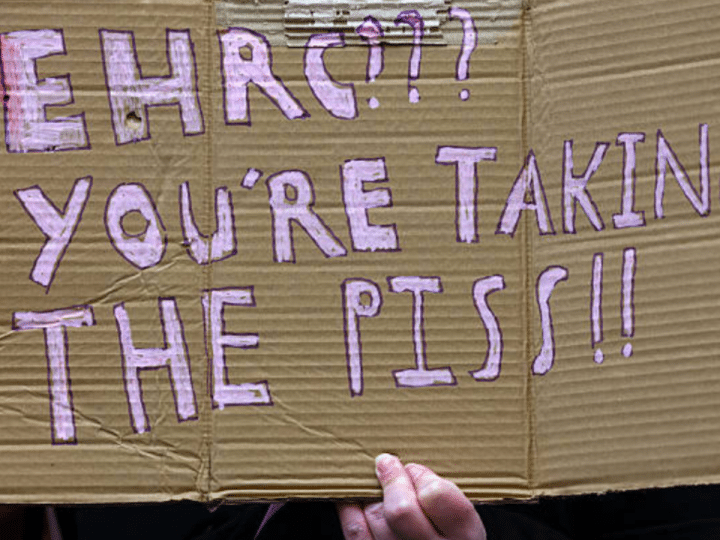

On 14 April, the Equalities and Human Rights Commission (EHRC) announced that it had submitted its latest attempt at a ‘single-sex spaces’ code of practice to parliament. The news comes a year after the Supreme Court ruled that ‘woman’ is defined by sex-assigned-at-birth under the Equality Act.
Women and equalities minister Bridget Phillipson subsequently announced that she will release the new code in May. Ostensibly, and quite conveniently, the latest delay is intended
The transphobic ‘rights watchdog’ was forced to redraft its previous guidance, which called to ban trans people from both spaces aligned with their gender and, sometimes, their sex.
Given its previous abortive attempts, the EHRC’s latest code looks likely to be another anti-trans shitshow.
EHRC: ‘a narrow set of comments’
On 14 April, EHRC chair Mary-Ann Stephenson announced that:
Progress is being made towards accurate and up-to-date guidance on the Equality Act 2010 being available to service providers, associations and those exercising public functions.
The UK government recently provided us with a narrow set of comments on the draft Code of Practice we submitted in September. Having considered this feedback alongside consultation responses and further legal analysis, we have made adjustments where they help the Code provide legally accurate, practical guidance that is useful to duty bearers.
That “narrow set of comments” presumably related to the ridiculous suggestion that service providers should guess at people’s trans status based on appearance and behavior. This was unworkable for a host of reasons, not least because there’s no legal way to establish whether or not an individual is trans.
Following the EHRC’s announcement, women and equalities minister Bridget Phillipson said:
This government has always supported the protection of single-sex spaces based on biological sex. The Supreme Court’s ruling last year brought clarity for women and service providers such as hospitals and refuges, and made clear that protections for trans people remain in the Equality Act.
That “based on biological sex” bit is a bare-faced lie. In fact, the Labour Manifesto previously pledged to make it easier to legally change one’s sex. The party quietly abandoned this promise because of pressure from the far right.
‘Getting it right’
Philipson continued:
The Equality and Human Rights Commission (EHRC) is the independent equality regulator and ensures compliance with the Equality Act 2010. Their Code of Practice on Services, Public Functions and Associations covers all nine protected characteristics and the steps service providers should take to comply with the law. We share the EHRC’s commitment to ensuring duty bearers have accurate and up-to-date guidance on the Equality Act 2010 including in the light of the recent Court rulings.
Those “recent court rulings” include a decision that it is still discriminatory to ban trans people from single-sex facilities aligned with their gender. The fact that the EHRC got this so badly wrong is also proof that Philipson’s claim that the original anti-trans ruling brought “clarity” is another lie.
The women’s minister concluded by adding that:
The government received the updated draft on 13 April. The Code will apply across Great Britain and as we are currently in the pre-election period for the devolved administrations, we are unable to make further announcements on this matter at this time. However, we are taking urgent action to meet our intention of laying the Code in May and as soon as practicable after the election period, for Parliamentary scrutiny.
We are getting it right, showing leadership by implementing the clarity the Supreme Court ruling delivers.
Before an election, ministers observe a ‘period of sensitivity‘. For the Scottish election, this began on 26 March. During this time, MPs should “carefully consider” any primary legislation relating to the devolved government. Further than this:
For Scotland and Wales it is not possible for the respective executives to seek their legislature’s consent for provisions in UK Government Bills that require Legislative Consent Motions during the election period as the legislatures will either be in recess or dissolved.
This is significant because the new code will have to be laid before parliament for 40 days before it becomes law. However, both MPs and Lords can prevent this by passing a motion to reject it.
Laughable claims of ‘clarity’
Beyond the stipulations of the period of sensitivity, the delay is highly convenient in a purely political sense. Namely, whatever Philipson actually comes out with, it’s likely to see her torn to shreds.
The deeply bigoted anti-trans pressure groups will be outraged that they’re not seeing the full bathroom ban they felt was coming. Meanwhile, queer and trans rights groups have been vocal about the fact that Philipson cannot possibly ‘get it right’, as she put it.
Alex Parmar-Yee, of the Trans+ Solidarity Alliance, put it plainly:
The only workable solution is to protect the norm of trans-inclusive provision across the country, in line with international human rights standards and Labour’s own promises to the trans community.
Likewise, trans advocacy and education group TransActual stated that:
Bridget Phillipson’s claim that the Supreme Court ruling on the definition of sex in the Equality Act delivered ‘clarity’ is laughable. The ruling a year ago led to mass confusion, inspired disjointed and discriminatory policies, and created a workers rights crisis for trans people by causing trans people to be outed at work, with some prevented from doing their job at all. The ruling and the draft Code of Practice both inspired institutional and vigilante harassment of cis and trans people based on their perceived gender.
Jess O’Thomson, trans rights lead at the Good Law Project, said:
The EHRC has been gaslighting us for a year, insisting publicly and repeatedly that their legal analysis was unimpeachable. Now it’s clear that they got the law wrong, and they’ve been told to fix the guidance they tried to force through last year. It shouldn’t have taken this long for the EHRC to do its job.
For now, trans communities are faced with yet another long wait. The Commons will return after the State Opening of Parliament on 13 May. It will then break for recess on 21 May.
We don’t know what Philipson and the EHRC’s latest attempt will bring. Until the code is finally published, our place in society remains balanced on a knife edge.
Featured image via the Canary

Bitcoin Eyes Q2 Rebound as Institutions Deepen Crypto Commitment: Nexo

Are Supermarkets ‘Taking The Mickey’ With Olive Oil Prices?

How to know when ‘water shots’ are worth the risk


-

 Politics5 days ago
US brings back mandatory military draft registration
-
 Sports5 days ago
Man United discover Nico Schlotterbeck transfer fee as defender reaches Dortmund agreement
-

 Fashion5 days ago
Weekend Open Thread: Veronica Beard
-

 Politics6 days ago
Malcolm In The Middle OG Turned Down ‘Buckets Of Money’ To Appear In Reboot
-

 Politics3 days ago
World Cup exit makes Italy enter crisis mode
-

 Crypto World6 days ago
Canary Capital Files SEC Registration for PEPE ETF
-

 Business5 days ago
Tesla Model Y Tops China Auto Sales in March 2026 With 39,827 Registrations, Beating Cheaper EVs and Gas Cars
-

 Crypto World2 days ago
The SEC Conditionalises DeFi Platforms to Be Avoided for Broker Registration
-

 Crypto World2 days ago
SEC Signals Exemption for Crypto Interfaces From Broker Registration
-

 News Videos10 hours ago
Secure crypto trading starts with an FIU-registered
-
 NewsBeat3 days ago
Pep Guardiola and Gary Neville agree over Arsenal title problem that benefits Man City
-

 Business5 days ago
OpenAI Halts Stargate UK Data Centre Project Over Energy Costs and Copyright Row
-

 Business4 days ago
Ireland Fuel Protests Enter Day 5 as Blockades Spark Shortages and Government Prepares Support Package
-

 Politics6 days ago
LBC Presenter Mocks Trump Over Iran War Failures
-

 Crypto World5 days ago
Federal judge blocks Arizona from bringing criminal charges against Kalshi
-
 NewsBeat3 days ago
JD Vance announces ‘no agreement’ with Iran over nuclear weapons fear
-

 NewsBeat1 day ago
Trump and Pope Leo: Behind their disagreement over Iran war
-

 Tech6 days ago
A version of Windows 10 released a decade ago is now eligible for additional security patches
-

 Crypto World2 days ago
SEC Proposes Certain Crypto Interfaces Don’t Need to Register as Brokers
-

 Business5 days ago
IMF retains floor for precautionary balances at SDR 20 billion
You must be logged in to post a comment Login