TL;DR
Intel is taking Panther Lake handhelds, a 52-core Nova Lake desktop preview, and 288-core Clearwater Forest servers to Computex 2026, all built on the 18A process that underpins its foundry pitch to Apple, Amazon, and Musk’s Terafab.
Intel will arrive at Computex 2026 in Taipei on 2 June with something it has not had in a decade: a product in every computing category built on a single manufacturing story. Panther Lake, the laptop chip launched at CES in January, is expanding to handhelds with Arc G3 and Arc G3 Extreme processors designed for the gaming handheld market. Nova Lake, a 52-core desktop chip with a new socket and new CPU architecture, will be previewed for a second-half launch. Clearwater Forest, a 288-core server processor that shipped at MWC in March, rounds out the Xeon lineup for data centres and cloud inference. All of them are built on or designed around Intel 18A, the 1.8-nanometre process node that combines RibbonFET gate-all-around transistors with PowerVia backside power delivery and represents the most advanced semiconductor manufacturing capability produced entirely in the United States. CEO Lip-Bu Tan will deliver the keynote. The venue is 40 kilometres from TSMC’s headquarters. The message is not subtle.
The products
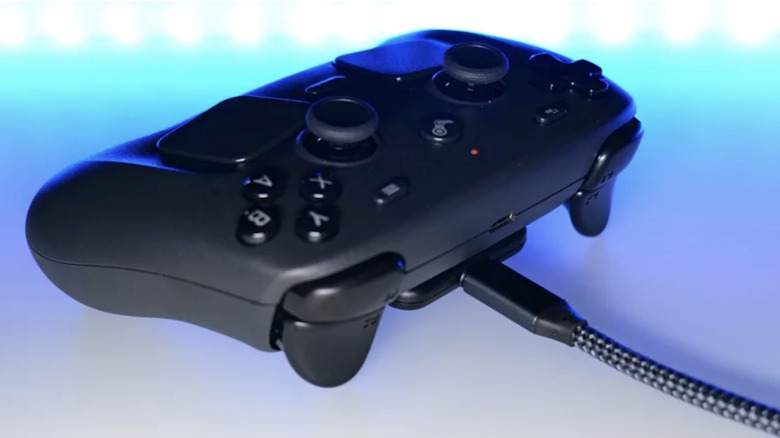
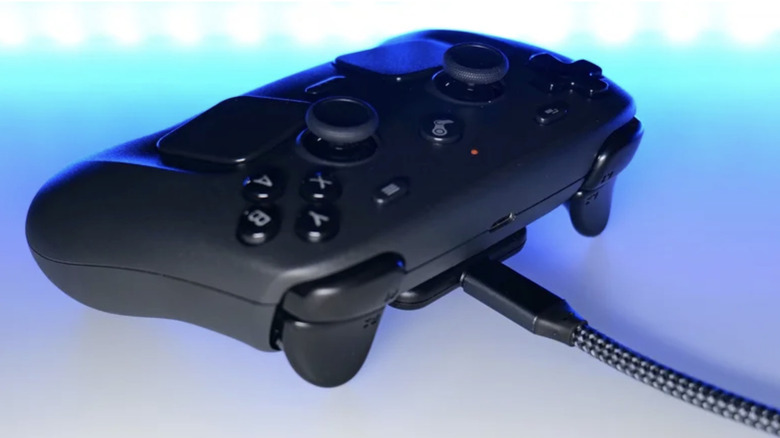
Panther Lake launched as Core Ultra Series 3 at CES in January and is already shipping in more than 200 laptop designs. The chip delivers 180 total platform TOPS, combining 120 TOPS from its Xe3 integrated GPU with 50 TOPS from the NPU 5 neural processing unit, and claims a 60 per cent improvement in multi-threaded performance over its predecessor at equivalent power. The Computex expansion brings Panther Lake to gaming handhelds through the Arc G3 platform: a 14-core design with two performance cores, eight efficiency cores, and four low-power cores paired with a 10 or 12-core Xe3 GPU in a configurable power envelope of 25 to 80 watts. MSI, OneXPlayer, GPD, and Acer are expected to showcase handheld devices running the Arc G3 chips at the event, with reports suggesting a Microsoft Xbox-branded handheld may also appear.
Nova Lake, branded Core Ultra Series 4, is Intel’s next desktop platform and will be previewed at Computex ahead of a late-2026 launch. The chip scales from 8 to 52 cores using new Coyote Cove performance cores and Arctic Wolf efficiency cores, introduces the LGA 1954 socket, and integrates Xe3 graphics, Thunderbolt 5, and Wi-Fi 7. The power range spans 35 to 175 watts, reflecting a design that covers both mainstream desktops and high-performance workstations. Nova Lake adopts what Intel calls a “big last level cache” architecture, a design approach inspired by AMD’s success with large L3 caches that prioritises keeping data close to the CPU cores. Intel’s first-quarter earnings revealed that AI-driven CPU demand is real: data centre and AI revenue grew 22 per cent year on year to 5.1 billion dollars as agentic AI workloads shift processing requirements back toward CPUs and away from the GPU-only model that defined the training era.
The server
Clearwater Forest, formally launched at MWC in March as Xeon 6+, is Intel’s most architecturally ambitious server processor. It packs 288 Darkmont efficiency cores across 12 compute chiplets manufactured on 18A, assembled using Foveros Direct 3D stacking on base tiles built on Intel 3. The IPC uplift is 17 per cent over the prior generation, and the chip targets the cloud inference and dense computing workloads that are expanding as AI deployments move from training to production. The shift toward agentic AI is driving demand for inference compute across every major cloud provider: Meta has committed more than 140 billion dollars to chip procurement from Nvidia, AMD, and Amazon, and the inference workloads those chips serve increasingly require CPU resources for orchestration, memory management, and the real-time decision-making that autonomous AI agents demand.
Intel’s server story at Computex also includes updates on Crescent Island, its dedicated inference accelerator, and Jaguar Shores, a rack-scale computing platform designed for the AI data centre of the late 2020s. Neither product has been formally launched, but both are expected to receive architectural details at Tan’s keynote. The inference accelerator is Intel’s attempt to compete directly with Nvidia’s inference-optimised products rather than conceding the AI accelerator market entirely. Whether Intel can build a competitive inference chip while simultaneously ramping its foundry business and launching three client platforms is the operational question that Computex will not answer but cannot avoid raising.
The process
The thread connecting every product at Computex is 18A. Panther Lake is the first consumer chip built on the node. Clearwater Forest is the first server chip. The Arc G3 handheld processors are the first gaming-focused silicon. Nova Lake will be the first desktop chip, though reports indicate that more than 90 per cent of Nova Lake’s compute tiles will be manufactured by TSMC on its N2 process rather than on Intel’s own fabs, a concession to the reality that Intel’s foundry capacity is not yet sufficient to supply both internal demand and external customers simultaneously.
That concession matters because the 18A node is not just a manufacturing process. It is the product Intel is selling to Apple, Amazon, Musk’s Terafab, and every other company that has signed or is negotiating a foundry agreement. Intel recently hired Qualcomm veteran Alex Katouzian to lead a new Client Computing and Physical AI group, a signal that the company sees local AI inference, the kind of processing that runs on PCs, handhelds, and edge devices rather than in cloud data centres, as the next wave of chip demand. The Computex product lineup is the proof of concept: if 18A can produce competitive chips across laptops, handhelds, desktops, and servers, the foundry pitch to external customers becomes significantly more credible than a roadmap slide.
The market
GitHub paused new Copilot sign-ups after agentic AI workflows consumed more compute than users paid for, an early signal that the economics of agentic AI will push processing toward local hardware. If AI agents run continuously on cloud infrastructure, the costs scale linearly with usage and eventually become unsustainable at flat subscription prices. If those agents run locally, on a laptop with 180 TOPS of AI processing power or a desktop with 52 cores and a large cache, the economics shift from per-query cloud charges to a one-time hardware purchase. Intel’s bet is that the AI PC is not a marketing label but an architectural requirement: the agentic era needs local compute, and Intel’s chips are designed to provide it.
The competition is real. Qualcomm’s Snapdragon X Elite has established itself in the thin-and-light Windows market with superior power efficiency. AMD’s Ryzen AI 300 and 400 series compete directly with Panther Lake in laptops and with Arrow Lake Refresh on desktops. Apple’s M-series processors remain the benchmark for integrated performance in the consumer market. Nvidia’s server GPUs sell for a million dollars each in China despite export controls, reflecting a level of demand that Intel’s data centre products have never generated. Intel’s advantage at Computex is not that its chips are the best in any single category. It is that it has chips in every category, all manufactured on a process node that also serves as the foundation of a foundry business, and the foundry business is the reason Apple is in talks, Musk is building a 25 billion dollar fab, and the US government owns 10 per cent of the company.
The stakes
Computex has been Intel’s event for decades. The show takes place in Taipei, the heart of the global semiconductor supply chain, and Intel has traditionally used it to announce the products that define each generation of PC computing. The difference in 2026 is that Intel is no longer just a chip designer presenting products manufactured in its own fabs. It is a foundry operator competing with the host country’s most valuable company for the right to manufacture other people’s chips. Tan’s keynote will be watched not just for what Intel announces about its own products but for what those products reveal about 18A’s readiness to serve external foundry customers. Every Panther Lake laptop that ships without defects, every Clearwater Forest server that meets its performance claims, every Arc G3 handheld that runs within its thermal envelope is a data point for Apple, Amazon, and every other company evaluating whether to trust Intel with their silicon.
In 2016, Intel was the world’s largest semiconductor company by revenue. By 2024, it had fallen to eighth, behind Nvidia, TSMC, Samsung, Broadcom, Qualcomm, AMD, and Texas Instruments. Its manufacturing process had fallen two generations behind TSMC. Its CEO was forced out by a board that had lost confidence in the turnaround. The stock hit 18 dollars. Fourteen months later, Intel is at an all-time high, its foundry has anchor customers including Apple and Musk’s Terafab, and it is going to Computex with a product in every category for the first time in a decade. The turnaround is real, but it is also incomplete: the foundry loses 2.4 billion dollars per quarter, external revenue is 174 million dollars against TSMC’s 20 billion, and 90 per cent of the desktop chip Intel is previewing at Computex will be manufactured by the competitor it is trying to displace. The 18A node is Intel’s answer to all of those problems. Computex is where it starts proving the answer works.





















































You must be logged in to post a comment Login