
Crypto World
Wall Street won’t buy ‘trustless’ security promises

Crypto exchanges have become the primary venues where millions of people and businesses store and transfer digital money. According to industry data, the crypto market is currently seeing roughly $190–$192 billion in 24-hour trading volume. As exchanges expand into multi-asset venues, the security mechanism evolves beyond wallets into identity, permissions, pricing and settlement. Yet, despite growing pressure from regulators, their security is still failing.
In 2025, more than $3 billion in crypto assets were stolen, according to industry estimates. Moreover, several single incidents caused losses of over $1 billion each. Were these small or underfunded platforms? No.
The largest hacks happened at major global exchanges with ample capital and technology. So, a lack of resources allocated for protection wasn’t the issue — security, still treated as marketing, was.
Much of the industry keeps treating security as a performance rather than an operating discipline. Exchanges invest in what appears convincing on the surface: dashboards, reserve snapshots, protection funds, public statements. It looks reassuring, but it doesn’t prove how risk is managed day to day.
That’s why, unless security is designed to be enforced, not shown off, even the biggest platforms will stay fragile. And when stress hits, that fragility spills over to users immediately.
Performative Security is Dangerous
In fact, what’s happening is what I call “security theater.” It’s when an exchange focuses on looking safe, but not actually being safe. So the focus shifts to optics, such as headlines and polished statements, while the real governance remains weak.
I’ve seen how such a mindset takes hold. When a business is growing, it has to move fast and keep everything smooth for users. In such conditions, security controls are a friction. They slow down decisions by adding extra steps and triggering uncomfortable questions like “Who can approve this transfer?” And “what happens if the wrong person gets access?” That’s why many platforms prefer confidence on the surface over discipline inside.
And the big problem is that this false confidence doesn’t survive stress. In July 2024, India’s WazirX suffered a roughly $235 million hot valuable wallet breach and suspended withdrawals. In my view, that’s a useful reminder of how quickly “everything looks fine” can turn into users losing access to their funds.
And that’s the point. Security isn’t a page, a logo or a fund. It’s the daily rules that control how money moves, who has access and how cases are handled when something goes wrong.
What exchanges must prove to earn real trust
Genuine exchange security is a system that endures stress, and you can test that. From my experience, it has three core traits:
- it proves full backing of customer balances,
- it controls how money moves,
- and it responds fast in a crisis.
Proof-of-reserves is a start toward demonstrating the system can withstand stress. Simply put, it’s evidence that certain assets exist. Still, it says little about what the exchange owes you, what rules apply to your money if the exchange has troubles or whether the numbers are true when many users withdraw at once. That’s why transparency should be two-sided.
It should clearly show assets and liabilities, with an independent check. And the “proof” should be verifiable, for example, through cryptographic methods that allow users to confirm inclusion without exposing balances.
Then comes the part most “security pages” avoid — strict rules inside the company. No single person should be able to move customer funds, unusual activity should trigger reviews, and large transfers must require approval from at least two people. With these controls in place, one compromised account can’t cause a chain reaction across the platform.
Since exchanges are becoming multi-asset platforms, those rules need one more goal: keeping a permission mistake or pricing anomaly from spilling into cross-asset liquidations.
Quick incident response is the final test of real security. A serious exchange knows exactly what happens in the first hour, isolates the breach, pauses critical flows and communicates clearly. Delays and silence don’t buy time; they simply multiply damage.
Of course, these measures don’t cover every possible risk. Even so, they form the backbone of true exchange durability — the kind that prevents routine incidents from turning into systemic failures.
By 2026, ‘trust us’ costs too much
If exchanges want to keep their customers and attract serious, institutional capital, they have to stop acting like performers in a safety show. Reassuring words and polished pages may calm people in quiet moments, but they fail when a big crisis hits.
Big investors have already started treating security as basic counterparty risk. They want evidence of controls, separation of duties, independent assurance, and a response plan that works under pressure.
So, in 2026, a simple “trust us” on a homepage won’t be enough. Can one mistake drain the platform or does the system stop it? Can you prove that with enforced limits and approvals, instead of explanations after the fact? These are questions that everyday users and large investors alike are starting to ask.
After all, security is about building systems that mitigate damage, slow down bad decisions and hold up under stress. Exchanges that make that shift will keep trust. Those who don’t will keep learning the same lesson the hard way.



Allbirds stock explodes after the struggling shoe brand announces a $50M GPU‑fueled pivot into “NewBird AI,” sells its name for $39M, and rides the AI mania wave.
Summary
- Allbirds shares spike more than 400% after announcing a $50 million AI pivot and “NewBird AI” rebrand.
- The company plans to sell its shoe brand and assets for $39 million and redeploy into GPU‑powered cloud infrastructure.
- The move underscores how investors are rewarding legacy consumer brands that bolt on AI narratives, despite weak fundamentals.
Allbirds shares went vertical on Tuesday after the San Francisco‑based shoe maker said it would pivot into AI compute, rebrand as “NewBird AI” and raise $50 million in convertible financing to buy GPUs, sending the stock from $2.49 to an intraday high of $24.31 before closing at $13.59, up roughly 446% on the day. The move comes just weeks after Allbirds agreed to sell its brand and footwear assets to American Exchange Group for about $39 million, a dramatic turn for a company that once commanded a $4 billion valuation at its 2021 IPO.
According to a press release summarized by outlets like Investing.com, Allbirds has signed a definitive agreement with an unnamed institutional investor for a $50 million convertible financing facility, with proceeds earmarked for “high‑performance GPU assets” and a transition to GPU‑as‑a‑Service and AI‑native cloud solutions under the NewBird AI banner. The facility is expected to close in the second quarter of 2026, subject to shareholder approval at a special meeting scheduled for May 18, 2026, for stockholders of record as of April 13.
Allbirds said it plans to use the initial capital to acquire and deploy dedicated AI compute capacity and to lease that infrastructure to customers who need long‑term access to GPUs, citing “increasing GPU procurement lead times” and “historic low North American data center vacancy rates” as tailwinds for demand. The company also flagged a special dividend for shareholders of record on May 20, 2026, funded from net proceeds of the $39 million asset sale once it closes and after costs, likely in the third quarter.investing+4
On X, the pivot drew a mix of disbelief and fascination as the stock’s parabolic move was screenshotted across FinTwit. “Allbirds, the shoe brand, now says it’s an AI compute company,” Bloomberg reporter Tracy Alloway wrote, posting a chart of the intraday surge. Watcher.Guru told followers that Allbirds’ BIRD ticker had risen “over 420% after announcing shift from shoes to AI,” while The Kobeissi Letter described the move as a “pivoting from shoes to AI” that sent the stock more than 200% higher early in the session.
The asset sale to American Exchange Group, which owns brands such as Aerosoles, was negotiated by a special committee of independent directors and must still be approved by Allbirds’ shareholders, with closing expected in the second quarter of 2026. Filing details show Allbirds had a market capitalization of around $20 million to $26 million before the AI announcement, negative free cash flow of roughly $58 million over the last 12 months and revenue declines of about 22%, underscoring the financial strain behind the dramatic strategy shift.
Market data providers including MarketWatch and Yahoo Finance reported that BIRD shares were up between 300% and 600% at various points during the day as trading volume exploded above 100 million shares, a staggering multiple of the recent daily average. At the same time, analysts and commentators noted that the new AI plan still hinges on shareholder approval for both the $39 million asset sale and the $50 million financing, leaving open questions about execution risk, governance and whether a struggling consumer brand can credibly reinvent itself as a cloud‑infrastructure play in one of the most capital‑intensive corners of the AI boom.
Crypto World
XRP Price Prediction: Boundless Brings Privacy to Ripple, But CZ’s BNB Ready to Overtake Crypto Top Four Spot
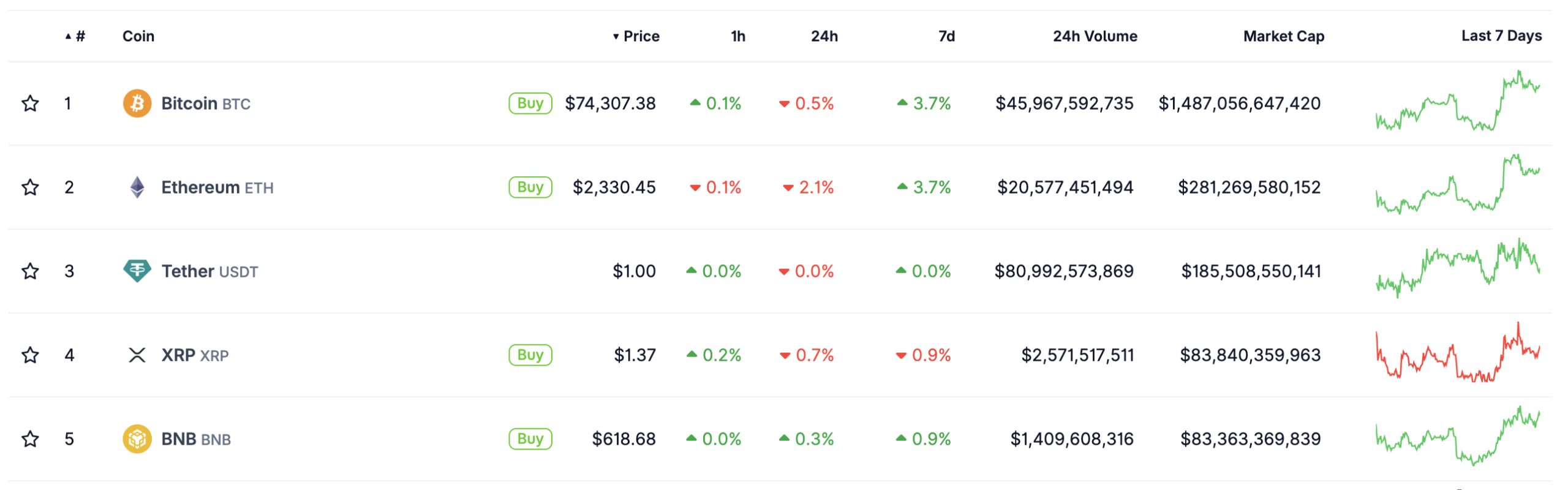
XRP price is trading at above $1.35 as a landmark zero-knowledge proof deployment on XRPL shifts the institutional narrative and prediction. Meanwhile, BNB is circling the top-four market cap rankings with renewed momentum.
This raises a question the XRP community hasn’t wanted to answer. Is Ripple’s position as secure as its holders believe?
XRPL Commons and Boundless have jointly deployed the first ZK proof verifier natively on XRPL, a RISC-V verifier that makes zero-knowledge proofs a native ledger capability. The rollout happened in three phases: verifier deployment, collaborative design of Smart Escrow transaction types with programmable ZK-gated release conditions, and a live developer toolkit with open-source testnet examples.
— Blockchain Daily News (@blckchaindaily) April 14, 2026
 BREAKING: XRP LEDGER INTEGRATES BOUNDLESS ZERO-KNOWLEDGE PROVING NETWORK, ENABLES FINANCIAL INSTITUTIONS TO TRANSACT PRIVATELY ON PUBLIC BLOCKCHAIN pic.twitter.com/uBYkfO3XYX
Smart Vaults are next, targeting a full private transaction infrastructure in which every settlement is screened against KYC inclusion lists and sanctions lists before funds move, with regulator-accessible disclosure on demand. For institutions that currently treat public ledger transparency as a dealbreaker, this is a material change.
Whether the market prices it in the near term is a separate question entirely. XRP’s technicals are consolidating, and broader regulatory developments continue to shape the Ripple narrative more than any single protocol upgrade.
Discover: The best pre-launch token sales
XRP Price Prediction: $1.50 Too Much to Ask?
XRP is currently caught between $1.29 support and a $1.40 resistance that has capped multiple attempts at continuation. The RSI sits in a wide neutral range of 45–50, indicating consolidation without directional commitment. No volume spike has accompanied the Boundless announcement. At least not yet.
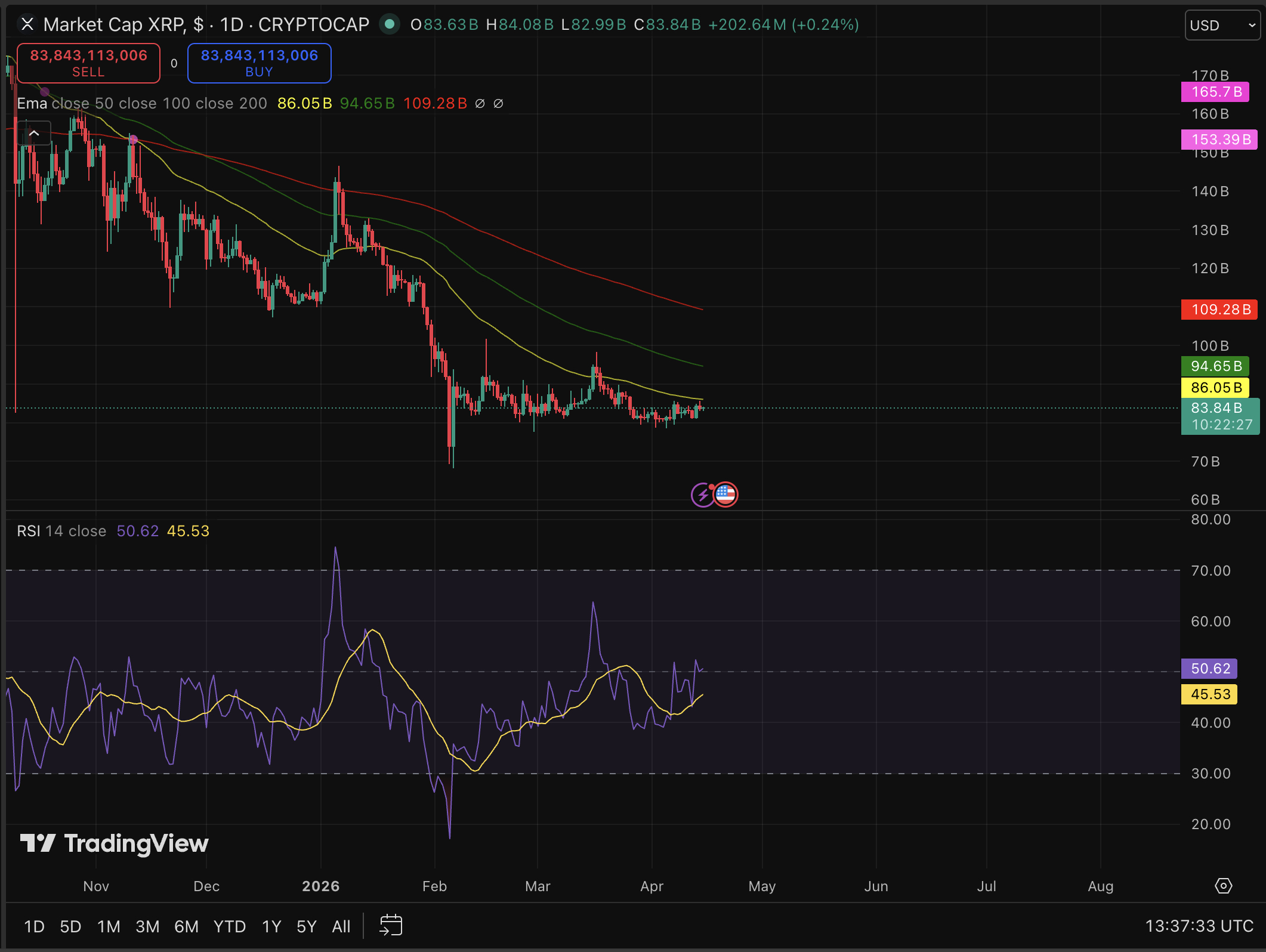
Analyst flagged the setup on April 12: “XRP trades at $1.33… targeting $1.40 by April 2026” amid mixed momentum signals. CoinGecko’s April 6 assessment assigned a 79.5% probability of XRP reaching $1.40 by month-end, a number that sounds bullish until you realize $1.40 is not even $1.50.
MarketBeat’s technical dashboard and longer-horizon analysts like Celal Küçüker, who projects $9 XRP regardless of chart formation, reflect the wide divergence in conviction levels right now.
The ZK development is genuinely significant infrastructure. It just doesn’t resolve a range-bound chart overnight. Rakuten’s XRPL integration covering 44 million users adds to the ecosystem case, but near-term price action remains hostage to broader market sentiment.
Discover: The best crypto to diversify your portfolio with
Bitcoin Hyper Targets Early-Mover Upside as XRP Tests Key Resistance
XRP at $1.37 with a 79.5% shot at $1.40 is a trade, not a transformation. Traders watching consolidation drag on a known asset are increasingly scanning for asymmetric setups, the kind that existed in XRP itself before it became a top-five staple.
Bitcoin Hyper is a Bitcoin Layer 2 project with Solana Virtual Machine (SVM) integration, the first of its kind, delivering sub-second finality and low-cost smart contract execution while anchoring to Bitcoin’s security layer.
The presale has raised $32 million at a current price of $0.0136786, with 36% APY staking available for early participants. The core proposition: bring programmable speed to Bitcoin’s ecosystem without sacrificing the trust layer that makes BTC the reserve asset of crypto.
This is a specific technical gap, and the presale has already crossed $32M in funding as that thesis gains traction.
Research Bitcoin Hyper before the current price stage closes.
The post XRP Price Prediction: Boundless Brings Privacy to Ripple, But CZ’s BNB Ready to Overtake Crypto Top Four Spot appeared first on Cryptonews.
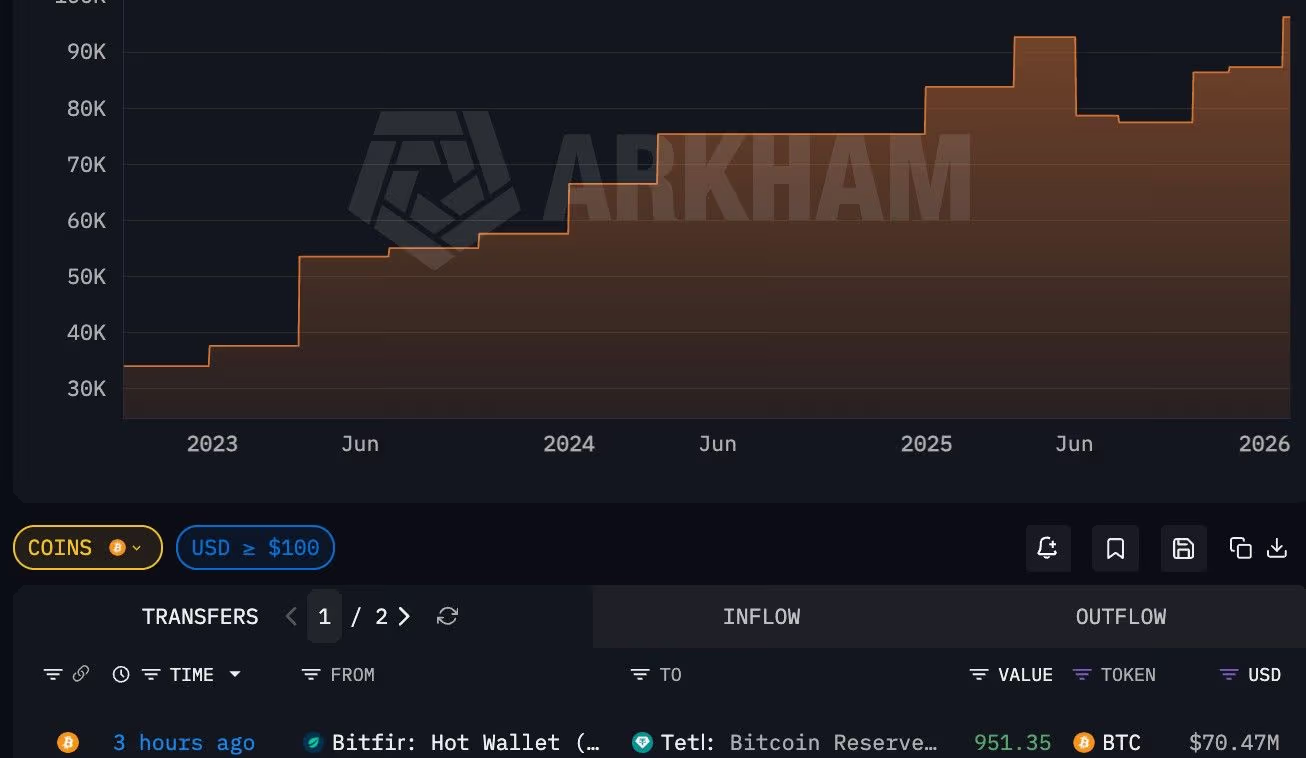
Tether, the company behind the world’s largest stablecoin USDT , added another $70 million worth of bitcoin to its reserves, extending a steady accumulation strategy tied to its stablecoin business.
Blockchain data from Arkham Intelligence shows 951 BTC moved Wednesday from Bitfinex to a wallet labeled “Tether: BTC Reserve.” The address matches one previously confirmed by CEO Paolo Ardoino as the destination for the company’s earlier purchases.

The firm did not respond to a request for comment about the purchase.
The wallet now holds 97,141 BTC, worth about $7.16 billion at current prices, placing Tether among the largest bitcoin holders globally. If Tether was a public company, it would be the second largest BTC holder behind Strategy (MSTR), according to bitcointreasuries.net ranking.
The latest purchase is part of a policy introduced in 2023 to allocate up to 15% of realized operating profits into bitcoin. Unlike digital asset treasuries that raise capital to buy crypto, Tether uses excess earnings generated by its core business.
USDT, Tether’s dollar-pegged token, is the largest stablecoin with a market cap around $185 billion. The company reported more than $10 billion in net profit for 2025, driven by growth in USDT and rising income from U.S. Treasury holdings.
Tether’s reserves are primarily made up of cash-like assets, with up to $141 billion in exposure to U.S. government debt. It also reported $6.3 billion in excess reserves against $186.5 billion in liabilities, offering a buffer above issued tokens.
Alongside U.S. Treasuries, Tether has been building positions in alternative assets. Its latest report also showed $17.4 billion in gold, highlighting a broader diversification strategy.
The crypto’s industry emerging political action committee, Fellowship PAC, rushed out of the gate this month with $11 million in backing, and it’s so far booked $3 million in ad services through a company co-founded by Tether US CEO Bo Hines.
The super PAC is focusing its support on Republican politicians in races for Congress and a governorship, and it so far gathered $10 million from Cantor Fitzgerald and $1 million from crypto bank Anchorage Digital, according to Federal Election Commission filings released Wednesday. Its initial $3 million spent toward political advertising for its favored candidates has gone to Nxum Group, a company that was founded by Hines (who was President Donald Trump’s crypto adviser until he moved to Tether last year), his father and another partner.
While Fellowship has been reportedly associated with Tether from its inception last year and has a senior executive of Tether as its chairman, the bulk of its funding came from New York financial-services giant Cantor, which handles the reserves for Tether’s industry-leading stablecoin business. Cantor’s former chief, Howard Lutnick, now serves as Trump’s Commerce Secretary, and his children have taken over the business.
Neither Tether US nor Cantor immediately responded to a request for comment on their involvement with the super PAC. When Fellowship first went public, it announced it would wield $100 million (an amount that would rival the leading crypto PAC, Fairshake). Fellowship’s treasurer is an executive at Cantor.
So far, the PAC, which hasn’t responded to requests for comment, has devoted $300,000 to support Clay Fuller, the newest member of the U.S. House of Representatives who just took over Marjorie Taylor Green’s seat in a Georgia special election; $850,000 to back Nate Morris for a U.S. Senate seat in Kentucky; and $350,000 to support incumbent Nebraska Senator Pete Ricketts, according to filings with the Federal Election Commission.
The filings disclosed that Nxum has received $3 million in disbursements for advertising. Before now, Nxum didn’t yet have a significant track record in serving PACs or campaigns, with its primary claim to fame associated with $1 million in billboard ads it donated to MAGA Inc. in 2024, shortly after Hines took a high-profile job at the White House.
When its formation was announced last year, Fellowship said it had $100 million in pledged backing and would champion transparency as it supported pro-crypto candidates. That promised level hasn’t yet appeared,
Anchorage Digital — the first crypto-native bank to win a U.S. federal charter — called its contribution an investment in the U.S. crypto policy process.
“Anchorage Digital has made a corporate contribution to the Fellowship PAC as part of our broader, bipartisan approach to advancing regulatory clarity for digital assets in the United States,” the company said in a statement, also posting a message on its website.
Despite involvement from Tether executives in Fellowship’s work, it’s unclear whether Tether or its U.S. arm, Tether US, would be able to make direct contributions to the PAC. Non-U.S. entities aren’t allowed to get directly involved in U.S. campaign finances.
Read More: Super PAC tied to Tether makes first ad buy from firm founded by Tether’s U.S. CEO

Markets are navigating ongoing geopolitical uncertainty with volatility persisting, yet signals of cautious resilience are emerging. The release describes a blended picture where crypto momentum interacts with traditional markets amid potential diplomatic progress and ongoing supply considerations. Bitcoin has risen about 5% over the past week and trades near $75,000, on track for a third consecutive weekly gain. Oil has moved back below $100 as expectations for diplomatic developments support risk assets. The report also notes Iran’s exploration of Bitcoin for payments tied to maritime transit through the Strait of Hormuz and a possible second round of US-Iran talks ahead of a ceasefire deadline. Near-term volatility may persist.
Key points
- Bitcoin up about 5% over the past week, trading near $75,000 and on track for a third straight weekly gain.
- Oil prices retreat below $100 as diplomatic expectations influence risk assets and supply concerns persist in the Persian Gulf.
- Iran is exploring Bitcoin for payments related to maritime transit through the Strait of Hormuz.
- A potential second round of US-Iran peace talks could occur within days ahead of the ceasefire deadline, suggesting near-term volatility.
Why it matters
This combination matters because crypto momentum, energy markets, and geopolitical dynamics intersect in a volatile environment. A sustained Bitcoin rally can influence risk sentiment for digital assets, while oil movements interact with inflation and rate expectations. Iran’s reported use of Bitcoin for a real-world payment flow hints at broader crypto infrastructure uptake. The prospect of renewed talks adds a political factor that could ease or renew volatility, making near-term developments important for traders and investors.
What to watch
- Possible second round of US-Iran talks within days and any ceasefire timeline updates.
- Updates on Iran’s Bitcoin payments plans for Strait of Hormuz transit.
- Bitcoin price behavior around the $75,000 level and any breaks above or below key levels.
Disclosure: The content below is a press release provided by the company or its PR representative. It is published for informational purposes.
Bitcoin Rallies and Oil Pulls Back as Markets Show Signs of Stability
Abu Dhabi, UAE -15 April 2026: Global markets continue to navigate a period of heightened volatility, but recent trends suggest investors are becoming more resilient and adaptive in the face of ongoing geopolitical uncertainty.
Investor sentiment appears to be stabilising, with markets increasingly absorbing negative headlines more efficiently than in previous weeks. Developments that once triggered sharp selloffs are now being digested with greater composure, indicating a shift from reactive behaviour to more measured decision-making.
Cautious optimism is emerging as reports suggest a second round of US-Iran peace talks could take place within days, ahead of the upcoming ceasefire deadline. This prospect is supporting risk assets, as investors rotate away from defensive positioning and cautiously re-enter the market. However, uncertainty remains elevated, and in the absence of a concrete resolution, two-way volatility is expected to persist.
Bitcoin has continued to demonstrate resilience during the current conflict, rising approximately 5% over the past week and trading near $75,000. The asset is on track for its third consecutive week of gains and is up around 9% month-to-date, positioning it for its strongest monthly performance since May 2025. Despite this momentum, Bitcoin remains roughly 40% below its all-time high.
Adding to the constructive narrative around digital assets are reports that Iran is exploring the use of Bitcoin for payments related to maritime transit through the Strait of Hormuz. This development reinforces the growing perception that cryptocurrencies could become increasingly embedded in real-world economic infrastructure.
Meanwhile, oil prices have retreated below the $100 mark, reflecting easing tensions and expectations of diplomatic progress. However, a meaningful portion of supply from the Persian Gulf remains offline, which could place upward pressure on prices in the near term. Persistent supply constraints would have broader implications for inflation, interest rate expectations, and overall market stability.
Commenting on the current market environment, Josh Gilbert, Market Analyst at eToro, said:
“Investors are showing a notable shift in behaviour. Rather than reacting impulsively to geopolitical headlines, we’re seeing a more resilient approach to navigating uncertainty. While there are tentative signs of improvement, markets remain highly sensitive to developments, and volatility is likely to remain a defining feature in the near term.”
About eToro
eToro is the trading and investing platform that empowers you to invest, share and learn. Founded in 2007 with the vision of a world where everyone can trade and invest in a simple and transparent way, today eToro has 40 million registered users from 75 countries.
eToro believes in the power of shared knowledge and that investors can become more successful by investing together. The platform has built a collaborative investment community designed to provide users with the tools they need to grow their knowledge and wealth. On eToro, users can hold a range of traditional and innovative assets and choose how they invest: trade directly, invest in a portfolio, or copy other investors.
Visit eToro’s media centre for the latest news.
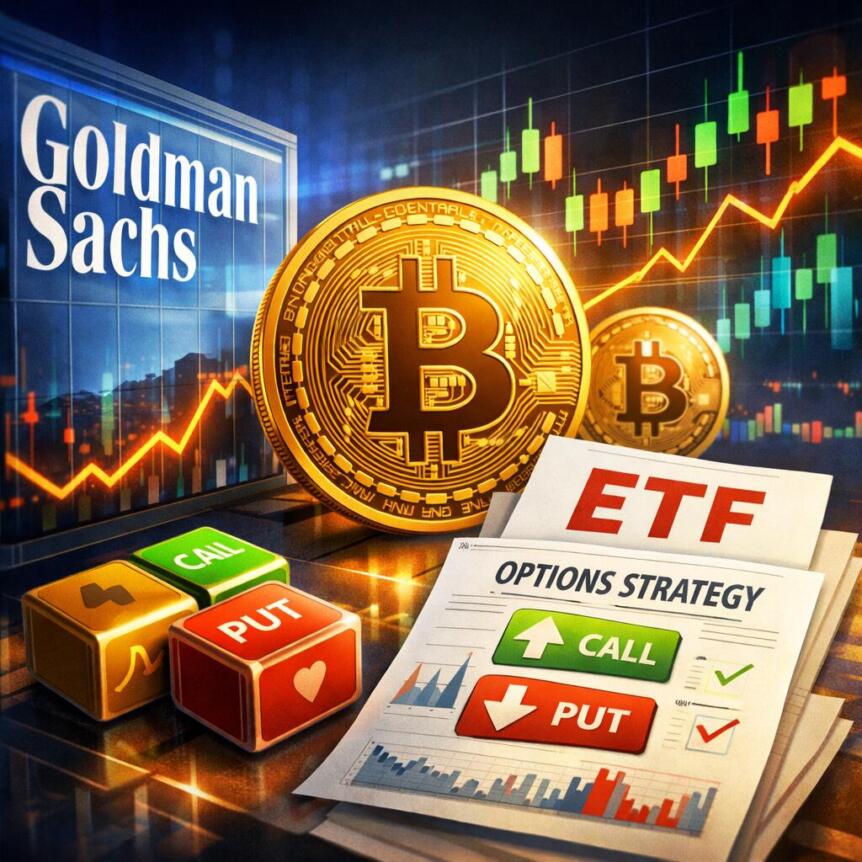
Goldman Sachs has filed to launch a Bitcoin-linked ETF focused on income generation. The proposed fund uses options strategies instead of holding Bitcoin directly. Bitcoin currently trades near $74,591 after a recent market pullback. The firm aims to offer indirect exposure through existing Bitcoin exchange-traded products. It plans to allocate at least 80% of assets to Bitcoin-linked instruments. This structure separates the fund from traditional spot Bitcoin ETFs.
The move comes as institutions expand crypto offerings despite volatile conditions. Goldman manages over $3.65 trillion in assets globally. The filing signals continued institutional interest in structured crypto products.
Bitcoin Exposure Built Through Layered ETF Holdings
Goldman’s ETF will invest in spot Bitcoin ETFs and related derivatives. This approach allows exposure without directly holding the cryptocurrency. The structure also reflects regulatory considerations tied to commodity ownership.
Unlike direct Bitcoin ETFs, the fund sits one layer above underlying assets. Its returns will mirror gains and losses from those holdings. However, the additional layer may create slight tracking differences.
The firm also uses a Cayman Islands subsidiary to support the structure. This setup helps address regulatory limits in U.S. markets. As a result, the product may reach approval ahead of similar filings.
Options Strategy Targets Income but Caps Upside
The ETF will generate income by selling call options on Bitcoin-linked products. This method allows the fund to collect premiums from option buyers. The strategy converts volatility into a steady income stream.
Goldman expects the overwrite level to range between 40% and 100%. This means a large portion of exposure could be covered by options. However, this coverage limits gains during strong Bitcoin rallies.
If prices exceed option strike levels, the fund faces capped returns. Losses on short positions may offset gains from underlying holdings. Therefore, performance may lag during sharp upward movements.
Competitive Landscape Expands with New ETF Models
The filing adds competition to an evolving Bitcoin ETF market. Firms like BlackRock and Morgan Stanley continue to expand offerings. Their products often focus on direct exposure rather than income strategies.
BlackRock’s spot Bitcoin ETF has attracted significant inflows since launch. Meanwhile, Morgan Stanley recently introduced its own spot-based product. These developments show growing diversification in crypto investment vehicles.
Goldman’s approach differs by prioritizing income over pure price tracking. The strategy may appeal to those seeking yield from volatile assets. However, it also introduces trade-offs between stability and growth.
The Commodity Futures Trading Commission (CFTC) is reportedly investigating suspicious oil futures trades placed minutes before President Donald Trump’s Truth Social posts about Iran de-escalation talks.
The probe follows weeks of pressure from Democratic lawmakers who flagged unusual activity in crude oil markets tied to the president’s announcements.
Hundreds of Millions Bet Before Trump’s Posts
On March 23, traders placed roughly $500 to $580 million in Brent and WTI crude oil futures contracts between 6:49 and 6:50 a.m. ET.
That was approximately 15 minutes before Trump posted on Truth Social about productive talks with Iran to de-escalate tensions.
Oil prices dropped sharply afterward, rewarding those who had bet on a decline.
The trading volume at that hour was roughly nine times the average for that time of day, according to CBS News. No public news or catalyst explained the surge when it happened.
“Is this the best timed trade of 2026?,” analysts at the Kobessi Letter posed at the time.
A similar pattern reportedly emerged on April 7, when approximately $950 million in bets on falling oil prices appeared hours before Trump announced a two-week ceasefire with Iran. Oil prices fell about 15% following that post.
Lawmakers Push for Answers
Senators Elizabeth Warren and Sheldon Whitehouse sent a formal letter to CFTC Chairman Michael Selig on April 9. They described a “recurring concern” about possible misuse of material nonpublic government information under the Commodity Exchange Act.
Rep. Ritchie Torres separately demanded that both the Securities and Exchange Commission (SEC) and the CFTC review the trading activity around both announcements.
The White House has denied any involvement. Spokesman Kush Desai called implications of administration insider trading “baseless and irresponsible.”
The CFTC has surveillance tools for futures markets and the authority to subpoena trading records. However, enforcement investigations of this type typically take weeks or months to produce public findings.
No charges or identified traders have surfaced yet.
Oil markets remain volatile amid shifting signals on the US-Iran conflict. Any new announcements from the White House could trigger further scrutiny of pre-announcement trading patterns.
The post CFTC Investigates Suspicious Oil Trades Before Trump’s Iran Posts appeared first on BeInCrypto.
Mythos Causes Security Concerns
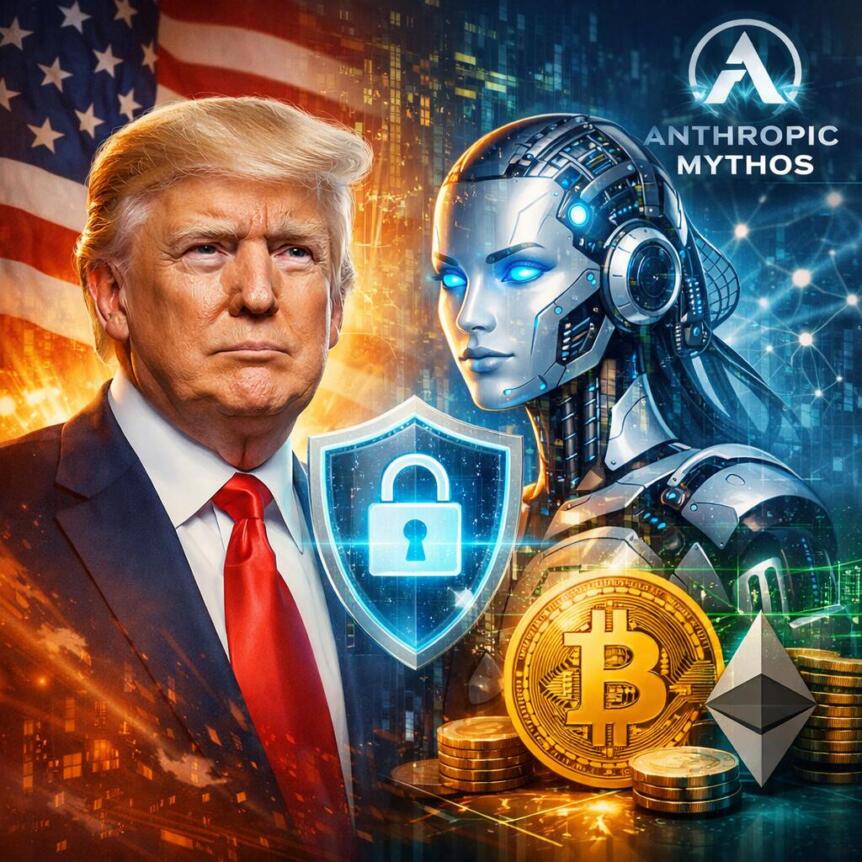
The debate comes after growing interest in the latest AI model Mythos, developed by Anthropic, which has raised alarms in the financial and regulatory sectors. The possibility of the model taking advantage of system vulnerabilities has been noted by government agencies and other large institutions. Regulators have compelled banks to be ready to face more sophisticated cyber threats associated with advanced AI features. Anthropic executives have been talking to policymakers about the risks associated with Mythos. At a recent economic gathering, the company affirmed that it has briefed the Trump administration on the model’s capabilities. The firm also conducted studies indicating that the system could identify and exploit zero-day vulnerabilities in key software platforms when instructed by users.
In the meantime, major crypto exchanges have begun seeking access to the Mythos model to build their defenses. Reports indicate that companies like Coinbase and Binance are already working with Anthropic. Coinbase’s security team noted that discussions continue, and that advanced AI will impact cyber threats and security mechanisms. Megabanks on Wall Street have already taken the lead in accessing the AI model through Anthropic’s limited rollout program. Companies such as JPMorgan, Goldman Sachs, and Morgan Stanley have started internal tests. As a result, these entities seek to evaluate how AI can transform offensive and defensive cybersecurity approaches using the model.
Anthropic launched Project Glasswing to regulate access to Mythos and increase testing in a number of organizations. This program enables institutions to test risk in a controlled setting. Additionally, the program can be seen as an extension of an increased push to create balance between innovation and security controls as AI systems expand their potential.
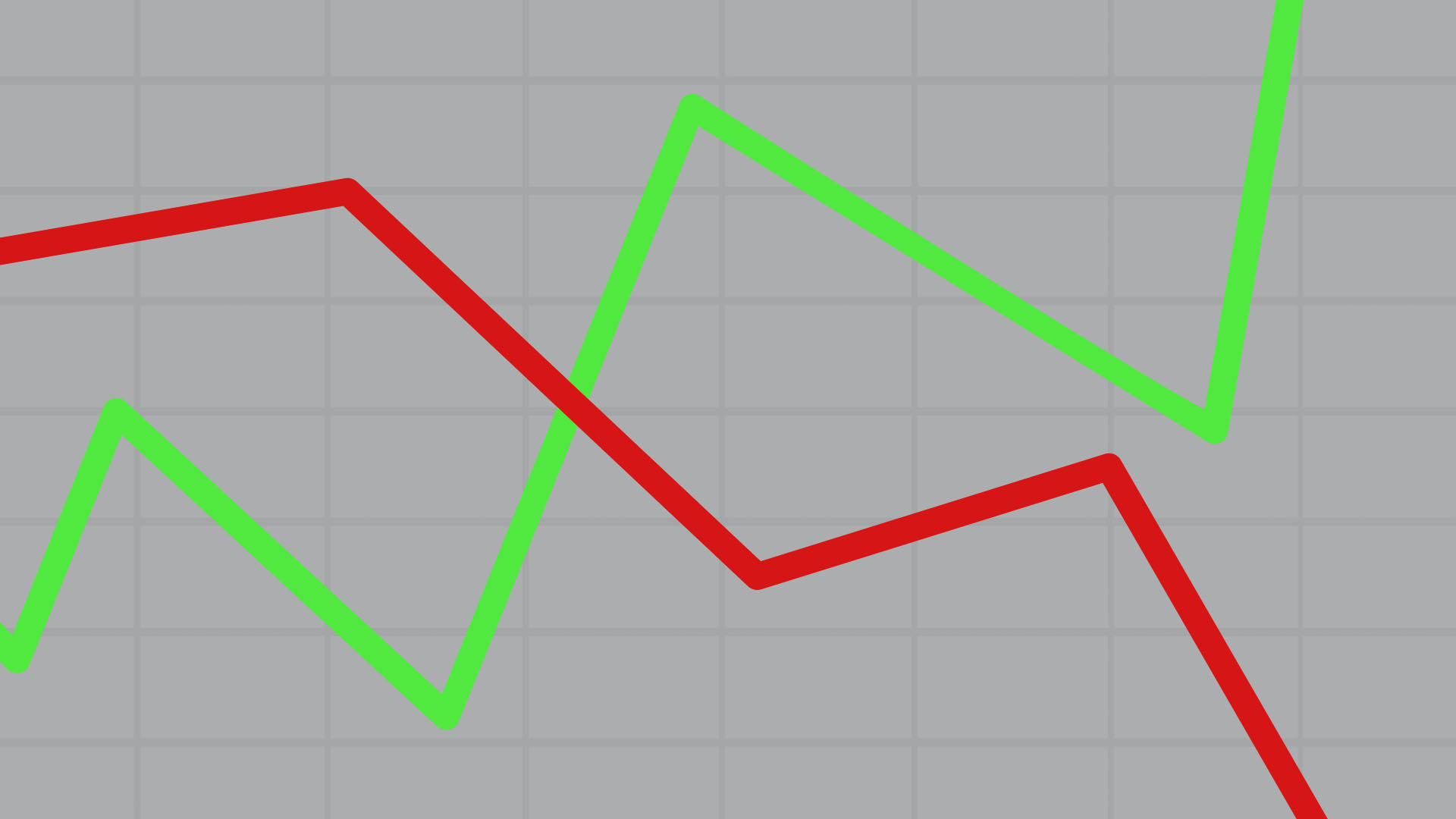
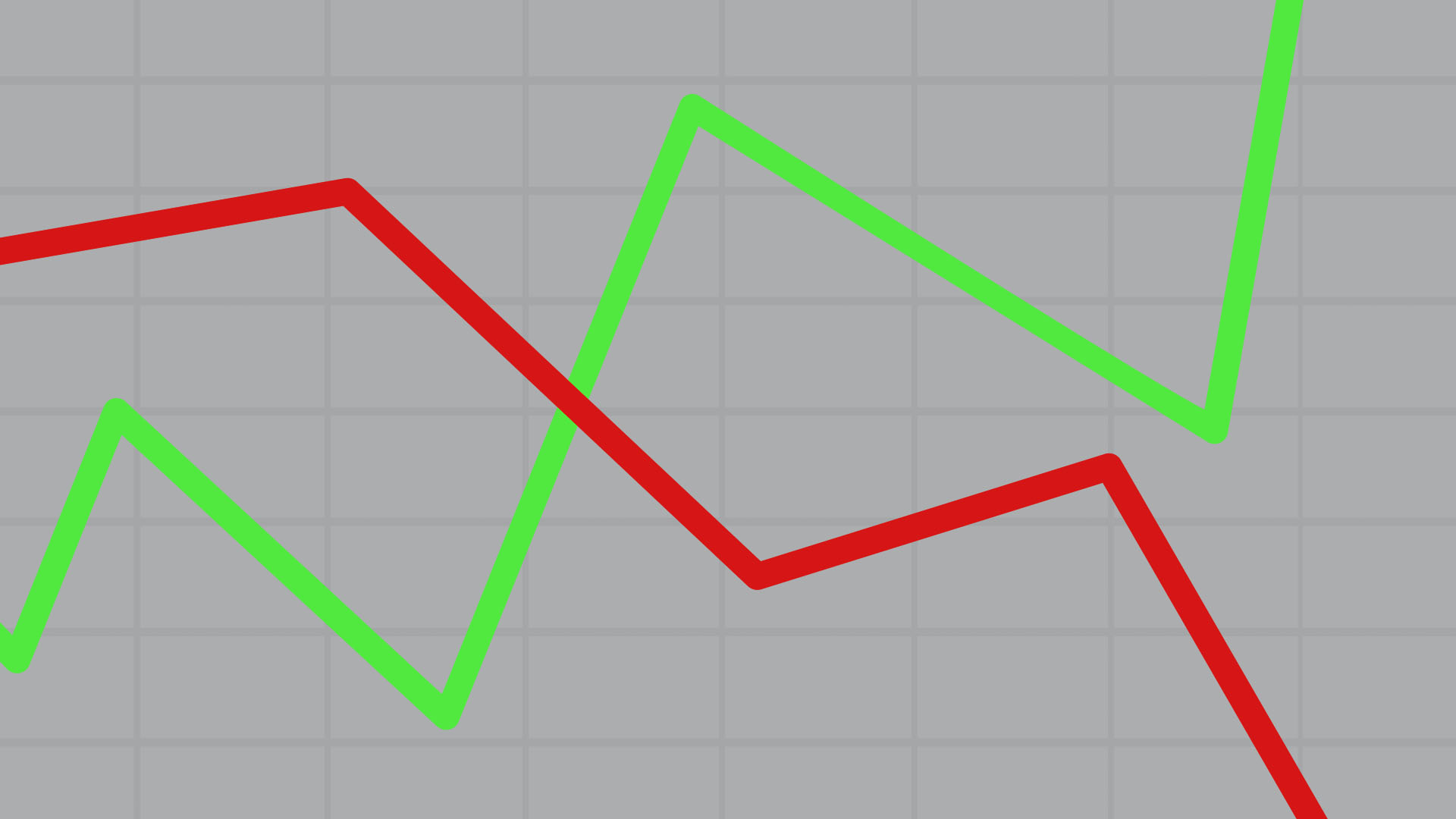
DAO token RAVE rallied to an all-time high of $19.85 this month before dumping down to $11.80 and allowing a patient trader to short a large amount at $19.
Incredibly, however, after the token declined 23% in his favor below $15, his profit and loss figure still read -3,963%.
The trader, who goes by the name “Meekdonald” on X, shared the screenshot of his leveraged ByBit trade on April 15. It showed a 12x leveraged short on RAVE/USDT with an entry price of $19 and a then-current price of $14.70.
Commentators described the token’s rally, which Meekdonald timed to nearly the “pico top,” as a coordinated scheme to lure and liquidate short sellers.
Three wallets held roughly 90% of the token’s total supply.
Nevertheless, shorting it proved incredibly difficult and expensive.
A winning crypto short became a 3,900% loss
The culprit was the astronomical funding rate on ByBit’s perpetual futures contracts.
In perpetual futures, funding rates are periodic payments between longs and shorts and keep the contract price anchored to spot.
When short interest dominates, the rate turns negative, meaning shorts pay longs. The more crowded the short side becomes, the higher the cost.
During RAVE’s squeeze above $19, funding rates on major exchanges reached annualized levels as high as 4,800%. On Binance, the hourly rate hit -2%.
A short seller owed 2% of notional position value every hour, or 48% per day.
Amplify those 48% daily payments by the leverage ratio, and the losses start to make more sense.
At a 12x leverage on a cross-margin position, a -2% hourly funding rate on that notional value could drain roughly 24% of his collateral per hour.
The spot price fell from $19 to $14.70, rewarding his prediction that RAVE would decline in value. However, the cumulative funding payments overwhelmed the unrealized profit anyway, pushing ROI to nearly -4,000%.
The price moved in his direction but short funding rates moved even faster.
Read more: Outdated algorithm caused $650M excess losses on Hyperliquid, report
Social reaction
The screenshot went viral after WazzCrypto’s quote-tweet hit 130,000 views. He rendered his final verdict with a reference to the 1983 film WarGames: “The only winning move is not to play.”
Several replies called the screenshot fake. WazzCrypto defended its plausibility in a follow-up, noting that cross margin at 12x leverage checks out against known RAVE funding rates.
Others learned a broader lesson.
One trader posted that catching RAVE’s exact top wouldn’t matter because funding alone would destroy the position, while another warned anyone planning to short RAVE to watch the funding rate or risk handing all profits to the longs.
RAVE was trading near $11.80 at time of writing, down roughly 40% from its peak above $19.
The funding rate has since fallen from -2% per hour to -0.2%, and on some venues has flipped positive to more normal conditions.
The squeeze is over. Unfortunately, for at least one short-seller, timing the top was a terrible decision.
Got a tip? Send us an email securely via Protos Leaks. For more informed news, follow us on X, Bluesky, and Google News, or subscribe to our YouTube channel.
The feature lets iPhone users in the U.S. and Canada view live price charts for stocks and crypto tokens without leaving the app.
Social media platform X on Tuesday launched Cashtags, a feature that surfaces live price charts and related posts for stocks and crypto tokens directly in users’ timelines.
The feature, currently available only on iPhone in the U.S. and Canada, was announced by Head of Product Nikita Bier, who said the platform influences billions of dollars in investment decisions daily based on what users read in their feeds.
Cashtags work by letting users type a dollar-sign ticker or paste a contract address into a post or search bar. X then suggests matching assets so users can select the right one. Tapping a cashtag opens a dedicated view that shows the asset’s price chart alongside posts that mention it, all without leaving the app. Supported assets include major equities, cryptocurrencies, and memecoins using contract addresses on networks such as Solana and Base.
X has actually offered expanded cash tag functionality before, through partnerships with eToro in 2023 and TradingView in 2022, but this version goes further by adding on-chain asset support and, for the first time, a direct brokerage integration.
That integration comes via a pilot with Wealthsimple, Canada’s largest online brokerage. Canadian users who tap a cashtag will see a button that routes them to a pre-filled trading screen on Wealthsimple, creating what the company describes as a one-tap path from conversation to order entry.
The move fits squarely into a broader race among fintech and crypto platforms to build so-called super apps. As The Defiant has reported, U.S. crypto and fintech firms, including Coinbase and Robinhood, are chasing Asia’s super app model, bundling trading, payments, and social features into single platforms.
Rather than building a brokerage from scratch, X is layering financial infrastructure onto what is already one of the world’s most active venues for real-time market commentary. The company holds money transmitter licenses in more than 40 U.S. states, and its separate X Money payments product has completed internal testing.
Bier added that web and Android versions of Cashtags are coming soon, along with a global rollout of the feature.
This article was written with the assistance of AI workflows. All our stories are curated, edited and fact-checked by a human.

Holocaust survivors, MPs, artists demand Met reverse decision favouring fascist march over Nakba

‘There’s a lot of excitement’: Vancouver mayor Ken Sim explains desire for MLB expansion bid

ASUS Launches Next Gen ZenBook S14, Duo, A-series & VivoBook Lineup In India


![Tom Lee: Important Warning To All Ethereum Holders - The Bottom Is Already In [2026 Prediction]](https://wordupnews.com/wp-content/uploads/2026/04/1776284749_maxresdefault-80x80.jpg)


-

 Politics5 days ago
US brings back mandatory military draft registration
-
 Sports5 days ago
Man United discover Nico Schlotterbeck transfer fee as defender reaches Dortmund agreement
-

 Fashion5 days ago
Weekend Open Thread: Veronica Beard
-

 Politics6 days ago
Malcolm In The Middle OG Turned Down ‘Buckets Of Money’ To Appear In Reboot
-

 Politics3 days ago
World Cup exit makes Italy enter crisis mode
-

 Crypto World6 days ago
Canary Capital Files SEC Registration for PEPE ETF
-

 Business5 days ago
Tesla Model Y Tops China Auto Sales in March 2026 With 39,827 Registrations, Beating Cheaper EVs and Gas Cars
-

 Crypto World2 days ago
The SEC Conditionalises DeFi Platforms to Be Avoided for Broker Registration
-

 Crypto World2 days ago
SEC Signals Exemption for Crypto Interfaces From Broker Registration
-

 News Videos12 hours ago
Secure crypto trading starts with an FIU-registered
-
 NewsBeat3 days ago
Pep Guardiola and Gary Neville agree over Arsenal title problem that benefits Man City
-

 Business5 days ago
OpenAI Halts Stargate UK Data Centre Project Over Energy Costs and Copyright Row
-

 Business4 days ago
Ireland Fuel Protests Enter Day 5 as Blockades Spark Shortages and Government Prepares Support Package
-

 Politics6 days ago
LBC Presenter Mocks Trump Over Iran War Failures
-

 Crypto World5 days ago
Federal judge blocks Arizona from bringing criminal charges against Kalshi
-
 NewsBeat4 days ago
JD Vance announces ‘no agreement’ with Iran over nuclear weapons fear
-

 NewsBeat1 day ago
Trump and Pope Leo: Behind their disagreement over Iran war
-

 Crypto World2 days ago
SEC Proposes Certain Crypto Interfaces Don’t Need to Register as Brokers
-

 Tech6 days ago
A version of Windows 10 released a decade ago is now eligible for additional security patches
-

 Business5 days ago
IMF retains floor for precautionary balances at SDR 20 billion
You must be logged in to post a comment Login